
In September, the weather cooled off nicely, and some of the sheep in my herd were ready to cull for our larders. One animal in particular, our breeding ram for the last 4 years, was on the list, and by the end of the week, I had slaughtered him to hang in the cooler. It’s always hard to choose when breeding rams should go, they play such a crucial role in herd development. I’d purchased this ram from Canfield Farms in Snohomish. It’s my second ram from that breeder, and she keeps great records and registrations on her Katahdin flock. I bought my ram form fertility and good frame size. He threw many great animals, improved my herd genetics with longer backs and higher rates of twins- especially in first year ewes. The breeder, Michelle, was clear about his lineage- that he had some wool, and was more a locker lamb kind of breeder, rather than a quality registered producer, and was therefor not as expensive.
My flock is not registered, and I usually cull most of my lambs for food, so I knew he would not be the animal to grow my flock under. He did improve my lamb carcass size, which is great. I’ve kept two of his great looking ewe lambs for breeding, and they drop twins every time, so I’m happy with his performance, but after 4 years, I’m ready to look for another ram, and have one lined up now for pick up from my sheep mentor on the east side of The Cascades this winter, along with one of her ewes she thinks will be good genetic mix in my flock. I’ve taken my breeding ewe count down to six for this winter, my lowest ever. The choice comes out of responsible herd management around the ecological changes happening in our region.
Western Washington is in a five year mega-drought. This may not seem possible, seeing all the evergreen lushness of The Puget Lowlands. Why, we had over an inch of rain earlier this month, and the grass is starting to come back in the pastures, but within a week of this deluge, we’re dry again on the surface, and in my compost pile, just a few inches below the surface, the soil is bone dry. An inch of rain did not soak down into the ground to water the deep rooted plants. I’ve pulled my flock off the land early, feeding hay and alfalfa now, in September. That’s expensive, and I will not raise my prices, so something has to change. I only bought 1/2 the winter feed I normally do. That’s a lot of savings, but to have only half the normal feed, means only half the herd can overwinter. Timing the ram removal helps lighten the fall feeding load, and he’s hanging nicely in the cooler with 5 other lambs. I’ll cull three more in October, staggering the work between a much needed vacation into The Canadian Rockies for a little RnR.
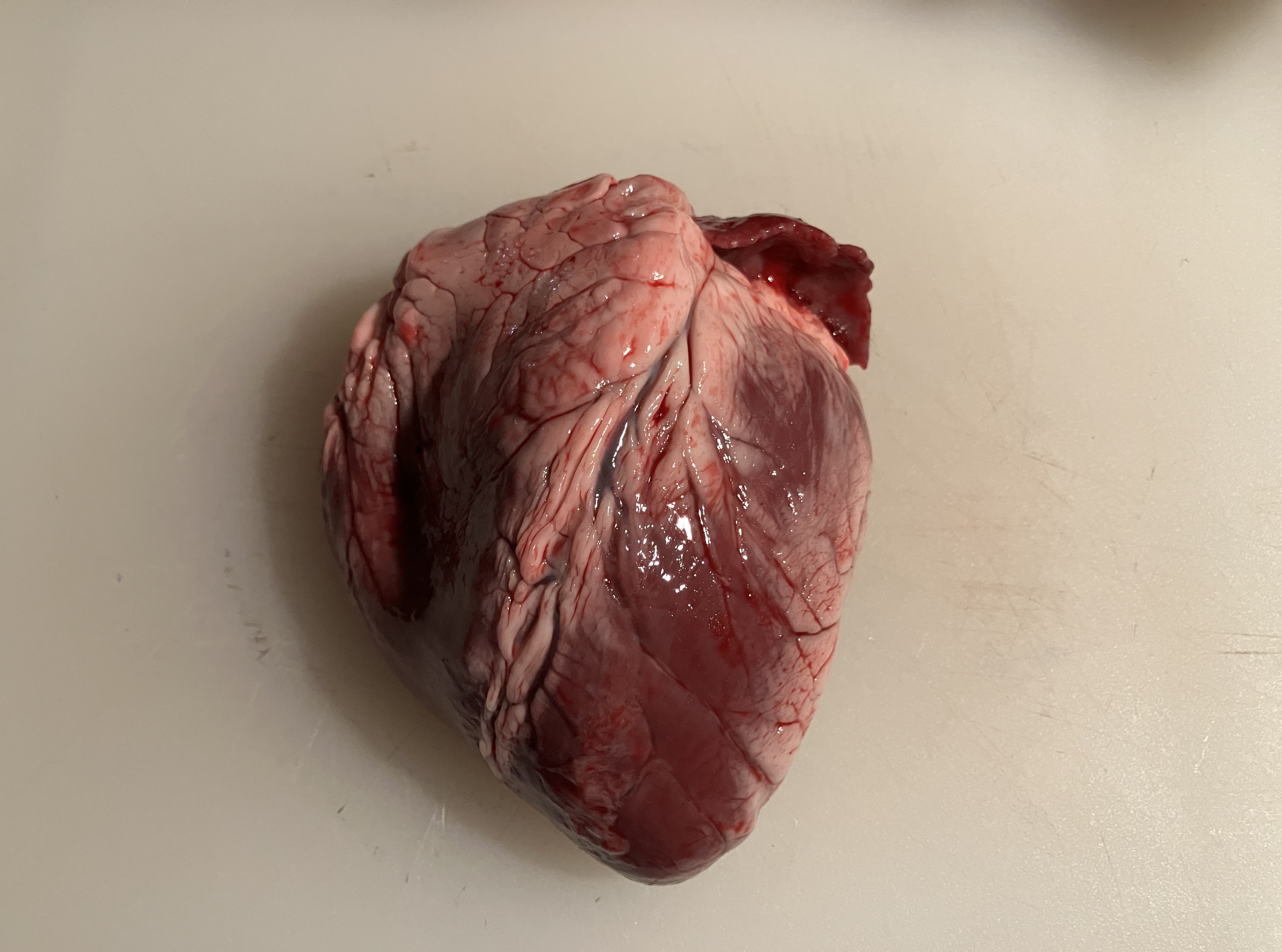
Ok Liz, why did you start off this post with a raw sheep heart? Well, that’s the ram’s heart, and it’s malformed. I knew, as soon as I pulled it from the chest cavity during the gutting process, that there was something off about it’s feel. Yes, I do all my own slaughtering and butchering folks. I can’t stress enough how important this is for any shepherd truly connected to their animals. From birth to death, I’m the full time care taker, steward, and processor of these Katahdins. This fully hands on approach guarantees my sheep the best quality of life with the least amount of stress. I also see the insides of each animal I slaughter, checking health and quality all the way through. Well, with this ram, the heart had a congenital defect, and as I stood with the heart in my had, I could feel that one chamber was hard and thick, while the other was thin and flabby. You can see in the picture above, the left facing chamber seems collapsed, while the right is full- not with blood, but with built up wall muscle.
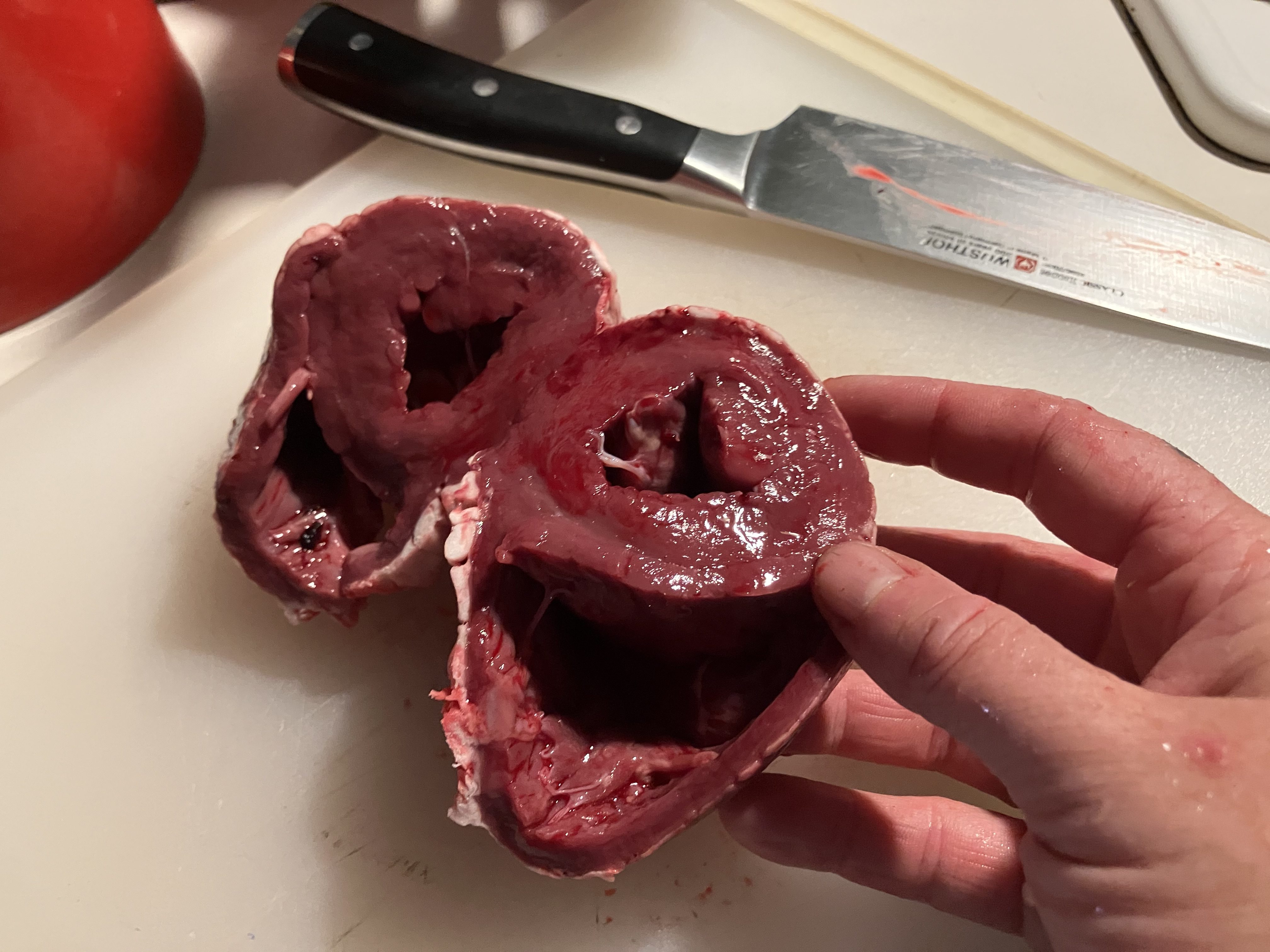
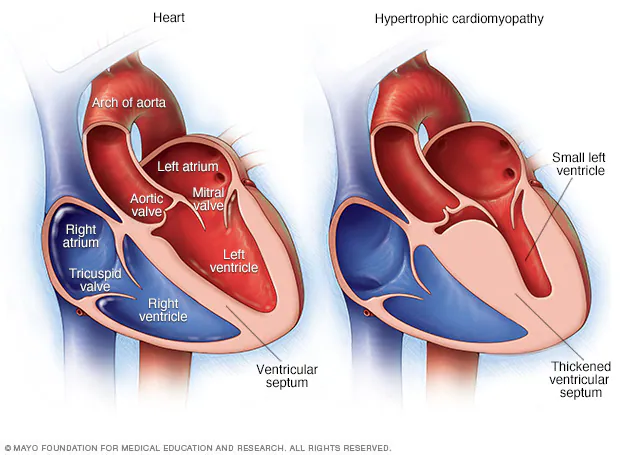
I’m not a cardiologist, but I’ve handled many ungulate hearts in my animal processing career and know what a normal heart should look like- usually by feel alone. I squeeze every heart to make sure any coagulated blood is freed from it before freezing. Organs are part of the full nutritional return from a food animal. You should try to eat as much of the whole animal as you can, because every part has an important nutritional role in your diet. It is ok to eat genetic defected animals? Yes, the genetics of the sheep will not harm me when consumed, but for flock health, I cull any defects when I find them. This is the first animal from my flock with this defect, and he was brought in genetics bred by another farm, but his genes are in my animals now, so I’ll have to keep a close watch on future throw backs.
I did notify the breeder, she admitted that, because she does not see what the butcher does, she was unaware. She also let me know that the organ meat was usually ground up for dog food, and not sold as part of the carcass. That’s most unfortunate, but common today. She said the genes in that ram were part of a quest a lot of breeders have for a certain gene that apparently makes the muscles of an animal double the size the normally are, making for a huge lamb carcass- but it’s a genetic anomaly, and brings with it a lot of other problems. When we breed for certain traits, over time, other less ideal genes that go along with those desirable traits can sneak in. This ram also threw uneven testicles, which is not suitable for breeding, but carries on in her bloodlines. She breeds from both sides of this ram’s lineage. He also threw wool and sometimes, horns, which happens from time to time in general, but I’d never had horns before this ram, and wool was minimal.
Apparently, the double muscle genes come from a wool sheep, that’s been bred into Katahdins to try to get that extra weight development. This chasing of certain genetics time and time again can be costly for the breed in time. Katahdins are focused on a great frame to hold good meat weight already, and hair is imperative to keep the meat mild in flavor. So many choices in breeding, but you have to be ready to cull what’s not working. I had a beautiful golden ewe lamb this year, she was beautiful, but wooly, and her legs were too long for what I’m breeding for- short legs make it much harder to jump the fencing. The last thing you typically breed for in a meat breed like Katahdin is looks. When you start selecting on looks alone, you’ll get a host of bad genetics- just look at the dog and cat world- it’s rife with inbreeding nightmares that most people don’t fully comprehend until the animal is well loved in the home. Imagine if that ram had been a family pet, then one day, they walk outside and he’s dead in the yard, no evident trauma. What a moment for the loving owners- and it’s not their fault.
This did happen to one of my beloved barn cats. He had a congenital defect in his heart and he died at the age of 7. I found him curled up under a chair on the porch. The necropsy showed the heart defect, and my vet assured me I would not have caught it without very specific testing not usually done in cats. He died peacefully in his sleep, but too young. The cat was an accidental litter, a stray male had bred the queen (breeding female cat), so the owner did not know the genetics at all. Muir, my cat with the bad heart, was silver grey, probably bred for the look, but the sire was dumped because the breeders had discovered the bad heart.
Pets are one thing, but food supply is another. The issue is rampant in cattle now. They are often born with foot and leg defects, part of the bulking up we’ve done to cows- the idea that bigger is better, but that’s not always true in the living world. When I had the honor of hearing Temple Grandin speak this summer, she stressed how much genetic defect she saw now in cattle- especially dairy cows. She said the industry was not watching it’s genetics, and focusing on one or two traits, loosing the big picture. It means more cows are lame, in pain, and suffering infections. There are consequences to selective breeding, and without proper oversight- like pulling one or two from a large herd to butcher yourself so you get eyes on the carcass and the organs, which furthers genetic defects that may not show up externally. Responsible breeding is crucial to keeping our livestock healthy and happy.
You as the consumer can make choices too. If you can, find out where your meat comes from; not just where it was slaughtered, but who raised it, who bred it, where it grew up and what it ate. You will be eating what it ate, you will be consuming the stress if the animal was not treated well. These chemical imbalances are being passed on to the consumer. No, the genetically defective heart of one ram is not going to harm me to eat- and I will be eating it, not passing it on to my consumers. If it shows up in any future lambs, they too will not be sold to clients, because they are not top quality, which is what a small, artisan place like this strives for. Leafhopper Farm is committed to healthy, happy animals that live balanced lives through the seasons in their flock, eat mostly what grows here, with no chemical inputs or medications.
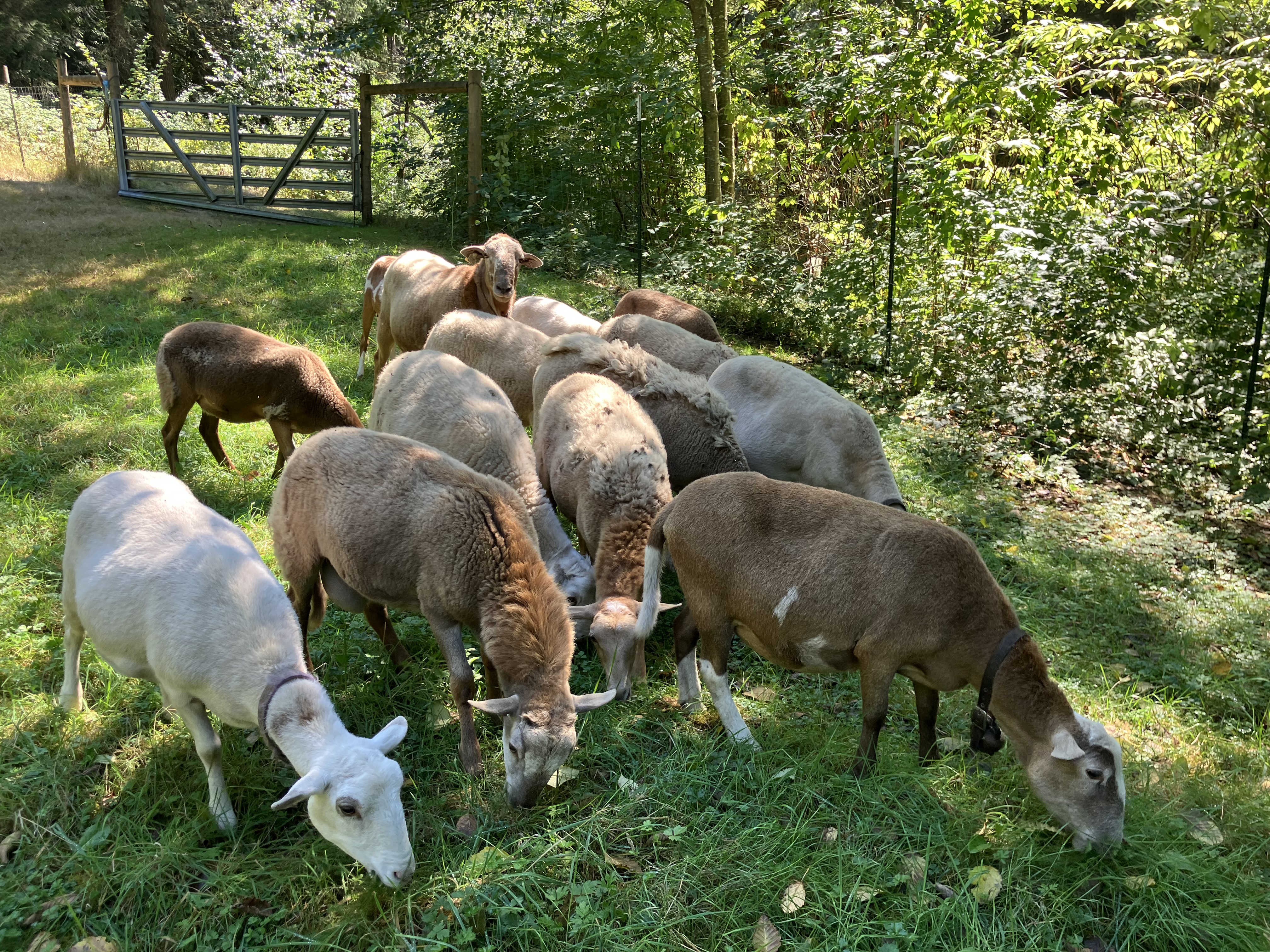
I do worm a sheep if its got a high parasite count- but that is so rare in Katahdins, who have a natural resistance- which we breed for. I also offer all my clients a farm tour upon request, and the opportunity to fully participate in the processing of the animal they purchase live on the hoof. Some clients buy the carcass and do the processing themselves- which is a cheaper deal, because they save on labor, and I’m ok with that. I want my clients to get as hands on as possible, so they are fully connected to their food. That’s a crucial missing piece in society today, and becomes a real eye opener for people who take the time to learn. If you are interested in experiencing such connection, please reach out to the farm- escocrain@gmail.com. I’m happy to talk with you more about options for lamb, geese, chickens, and farm fresh eggs.
Gratitude to all the animals that make this farm possible, and all the people already connected and participating in their food system directly. May good breeding choices continue to offer our clients a great animal at good value, while helping the restoration of the forest here in Western Washington. Thank you to all who buy my meat, give honest feedback, and support my continued improvement of the Katahdin breed. This flock is small, but feeding many, and returning much needed fertility to the land. Thanks to all who steward animals in a good way, and live close to the land with their learning, as well as those who pass it on to the future generations. It’s such a blessing to do this work, and so fulfilling- literally and figuratively. Cheers!


