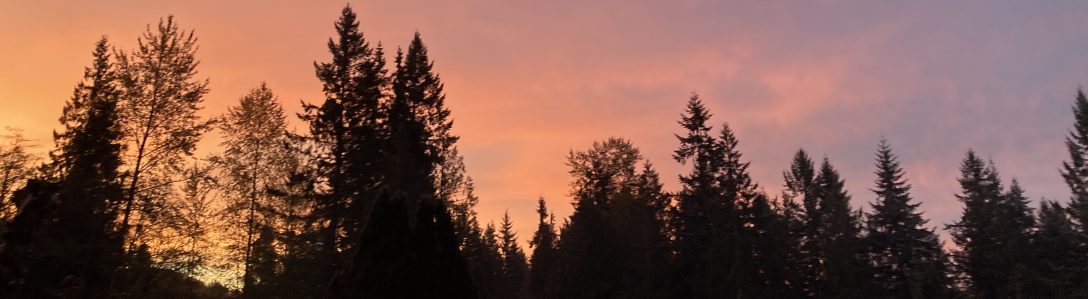
This farm has been in operation since 2013. Its main goal is to help restore the forests by producing manure for compost to enrich the soil and help return a deep root base for the temperate rainforest to return. Current topsoil is about 12-18″, which will not support a forest to old growth size. Soils here were once greater than 16′, easily creating enough root base for the towering trees to stand tall and strong. We will witness countless forests of second growth fall in the coming decades, especially with exponential climate change. In my lifetime, the soil generation will be slow, and I won’t see much of the outcome of my work, as forests take many generations to grow and mature, and thousands more to reach old growth climax. The forests that do grow and fall, will also help make soil and debris faster, so some of the trees that do not fall will make it to old growth age- if humans don’t keep cutting them down.
But how is returning the native forests farming? While planting native trees, we’re also planting fruit and nut trees, keeping some pasture space open for gardens, grazing, and human structures, as well as developing renewable inputs like solar power. The sun is one of are most lucrative crops- and produces year round. Our focus on restoring the native forest canopy will also bring back countless ancestral foods, including wild berries, mushrooms, medicinal and material plants, and as the canopy slowly returns, the native habitat will welcome more wildlife, from song birds to harvestable animals like deer and grouse. The landscape will also begin retaining more water to replenish the aquifer and feed the salmon stream that flows through the land here, spilling into a larger wildlife refuge in the valley that links up to The Snoqualmie River, and then, Puget Sound and The Pacific Ocean beyond. All these precious resources allow us to live here and thrive. This mindset of farming links us into our local ecology, diversifies our production to weather climate change and natural disasters, providing long term stable food crops that fold into the environment to support all life on earth.
A note on organic-
Leafhopper Farm does not use any chemicals, but is not certified Organic because of costs. To use the word “organic” for your pastures or sold products in the USA, you have to have USDA Certification. The word ORGANIC is actually owned and defined by the US government, so you can’t call your products organic, or use that word in descriptions of your agricultural practices. Many growers, like myself, use phrases like “no spray” to clarify no chemicals are used. Other international terms, like “biological“, are used in The EU. I’ve used such language to help describe the care taken here in production of food. Restoration of the landscape remains the priority of this operation, and much of the livestock activity represents the farming interests of this LLC.
CHICKENS-

The farm produces pasture raised layer hens. Our flock consists of mostly Ayam Cemani chickens, originally from Java. These all black chickens lay cream colored eggs, and produce rich dark meat. We are currently building up genetic stock that are more duel purpose. They are very charismatic animals with a lot of charm. In Indonesia, these mysterious dark fowl were known to be close friends with Death. Villagers would keep a cockerel in the front yard as a ward against the mysterious life taker. If Morte came to call, the bird would fast talk his friend into distraction, thus avoiding death in the house. Our flock grazes all day on lush landscape grown without chemicals. Because they are egg producing, a supplement of Scratch and Peck Layer Mash is also given daily. The feed is USDA certified organic, composed of whole grains and a medley of important minerals and vitamins to enhance health and productivity. What comes in must come out, and by feeding a certified organic grain, we ensure our pastures receive only healthy, organic manure from our birds. We never feed the flock pellets grains, which are cooked, and prevent free selection of what each individual bird needs. Our flock is never comprised of more than 30 birds. This encourages a healthy relationship within the flock, without pecking, plucking, or fighting between animals. Leafhopper Farm will continue to raise pastured eggs, which are sold locally direct to customers.

SHEEP-
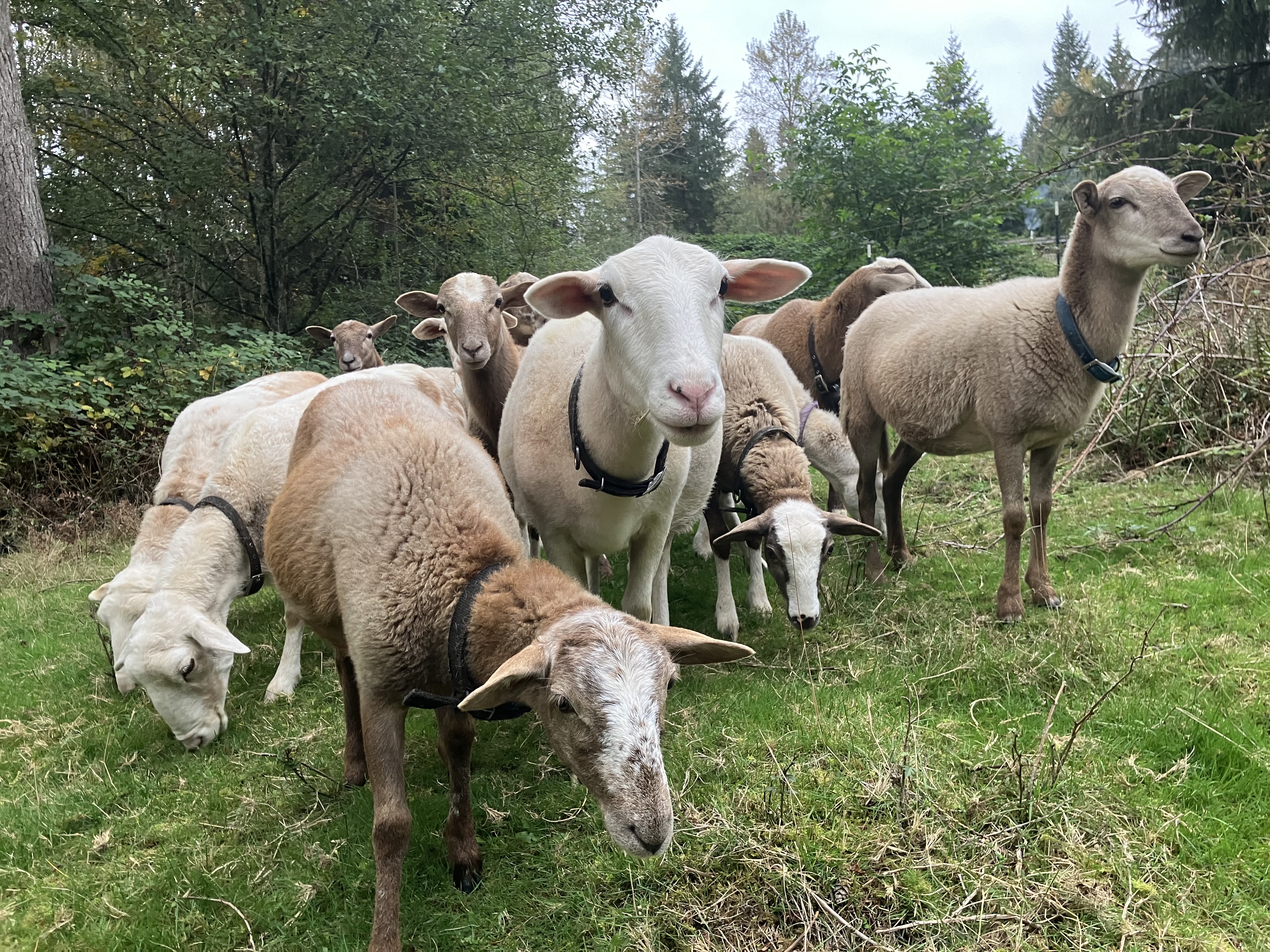
The Farm’s livestock business has produced Cascade Katahdin sheep since 2020. Our chosen breed, Katahdin, is a hardy, hair sheep breed from Maine. These meat sheep are pasture raised; helping to keep our land clear of blackberry, while producing numerous lambs. The animals are sold on the hoof- meaning you have to buy the sheep live. Then, we can butcher and wrap for you, and you are invited to participate in the processing. Leafhopper Farm can also custom plan a starter flock for your farmstead needs. Contact Liz Crain escocrain@gmail.com for more information- we usually have a wait list.

For many years, Leafhopper Farm has raised meat goats, which cleared massive bramble, and opened up the landscape for replanting. This stewardship practice is now shifting as we go from goats, which are like an abrasive scouring pad for the land, to sheep, which maintain a manicured tending of specific pasture spaces with much more limited access to the forest, where most of our restoration work happens. All our stock is contained and rotated using electric mesh netting in a very successful holistic grazing management plan.
GEESE-
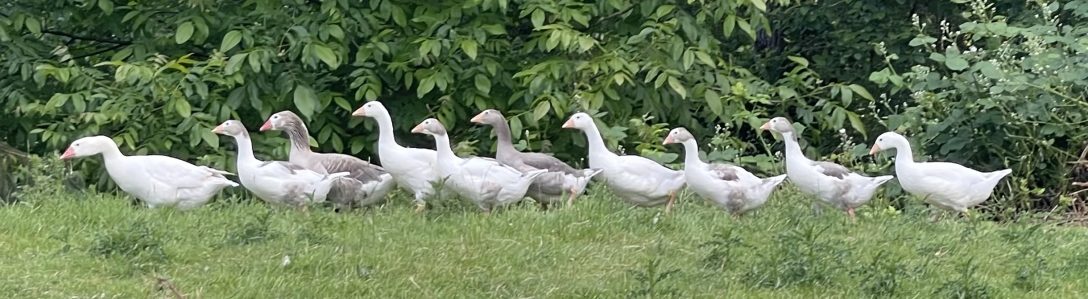
Leafhopper Farm is proud to be hosting a family of Cotton Patch Geese. In their second year, 2025, the mated pair hatched out five healthy goslings. The family wanders freely through orchards, pastures, and a small pond. As they mature, this first clutch is looking very nice. The geese are a new system for the farm, which takes time to adapt and fit. The babies in the pond were welcome, but once the young matured, things got a little messy, so the pond will be separated from the geese during the summer months. Cotton Patch geese are terrestrial, so this waterfowl breed does not need access to swimming to be happy, though it helps a lot during the breeding season to have a larger pool for the birds to swim in during courtship. They are amazing animals that continue to teach many good lessons in animal husbandry. In future, Leafhopper Farm will sell some birds for breeding, these geese provide good down, great meat, some grease, and quiet temperament on the farm.

