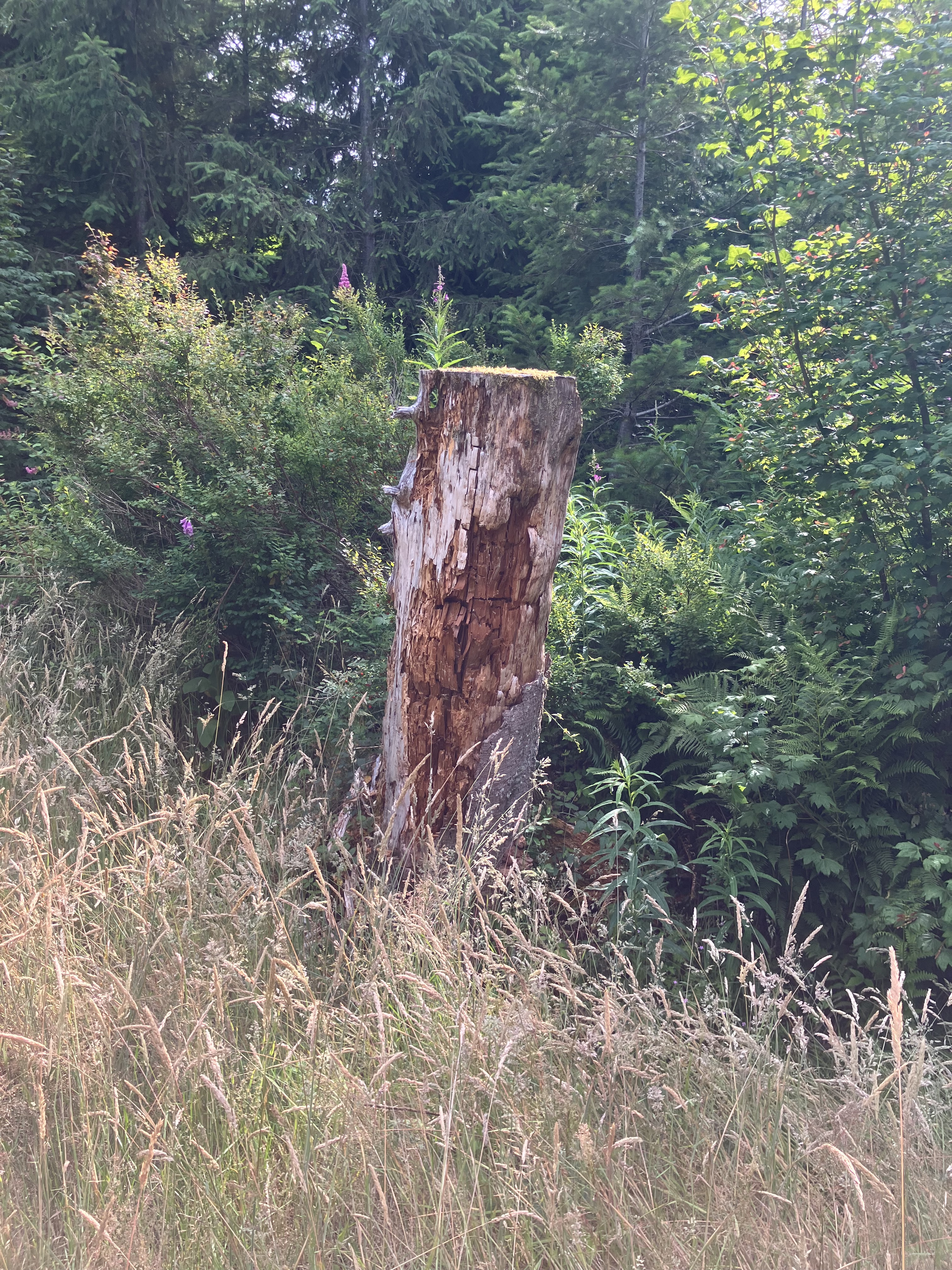
As I walked into a wildlife escapement area at The Snoqualmie Tree Farm, I wondered at all the change in this space since I had been here last 10 years ago. The trees had grown up quite a bit, while the turn off to get to this place had been recently cut, so I missed the turn off the first time. This plantation area changes drastically with every cut, making the landmarks hard to follow, as they are often cut down or grown over. I was returning here, because it was the site of my very first deer harvest, and I wanted to pay homage to the space, my memories of an impactful experience, and to see what’s been growing on in my absence. What met me was a fascinating trialing exercise in bear activity, starting with this large stump at the main gate, standing as a sign post for all who enter. For a moment, I thought the excavation was bird induced, but, as I came closer, I could see the chunks of wood were far too big for any bird to be chipping off the main stump. Instead, subtle claw and bite marks of a large omnivore met my gaze. I was on a bear trail.
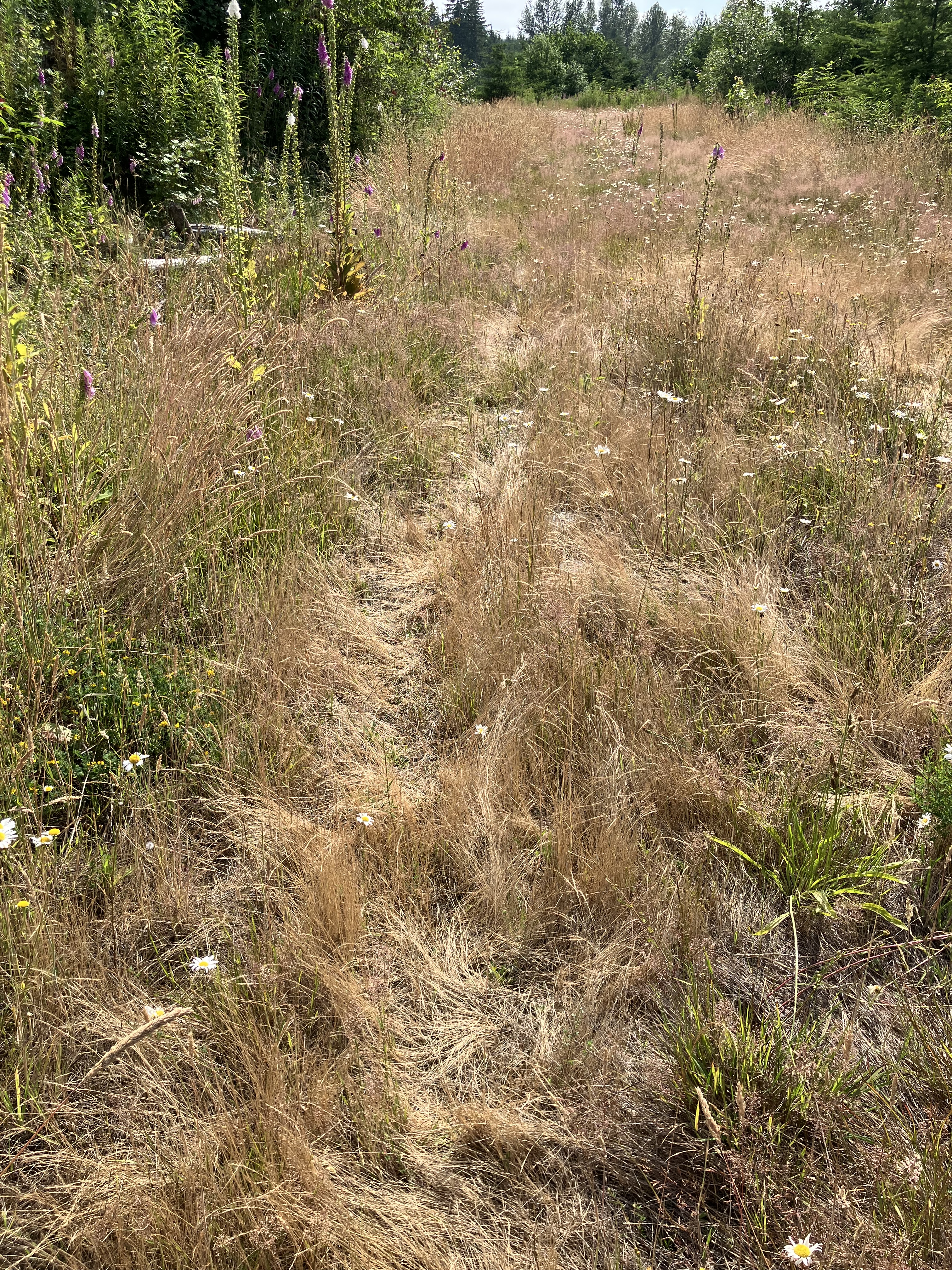
The tall grass on the old logging road showed where these animals had been rolling, laying, exploring, and stump digging for about half a mile. There were countless side trails, none of which I went down, to give the bears some space, and also to prevent accidental encounters. Sows and their cubs are out in these early summer months. There was enough evidence around to show more than one animal had been through, and short stumps are a great place to take the kids for a meal- and to teach. Animals that stay with their young for a period are always teaching. Young animals often mimic their parent as a way to take in knowledge. The trails a mother takes are trails her mother showed her, and her mother before her, and so on. Yes, established bear trails are ancestral. We often forget that wildlife has ancestral lineage, and the learning that goes with it. Salmon will follow the same rout home from the ocean, to the small family stream their ancestors have been swimming to for generations. That’s why, unless you put new fry in at the small stream, no new salmon will swim back there from the ocean. Imagine the impact our encroachment has had on habitat for wildlife.
Luckily, animals adapt, and these bears are learning new routs through an ever changing forest. I was experiencing some of this myself, as I came to the end of the logging road and found no more road to get to where I harvested my first blacktail deer. The road abruptly ended, and a torn up path lay before me, with plenty of replantings to block further site line to the older trees in the distance, where I had set up my tripod to wait for deer, on a huge old growth stump I had wanted to find. The landscape was far too dense for me to climb through that day, and with so much fresh bear sign around, I didn’t want to get too deep in the woods, hemmed in by all the overgrowth. Realizing I was not going to make it back to the exact spot- for now, I turned my attention back to the bear sign and really dove into what I could find there.
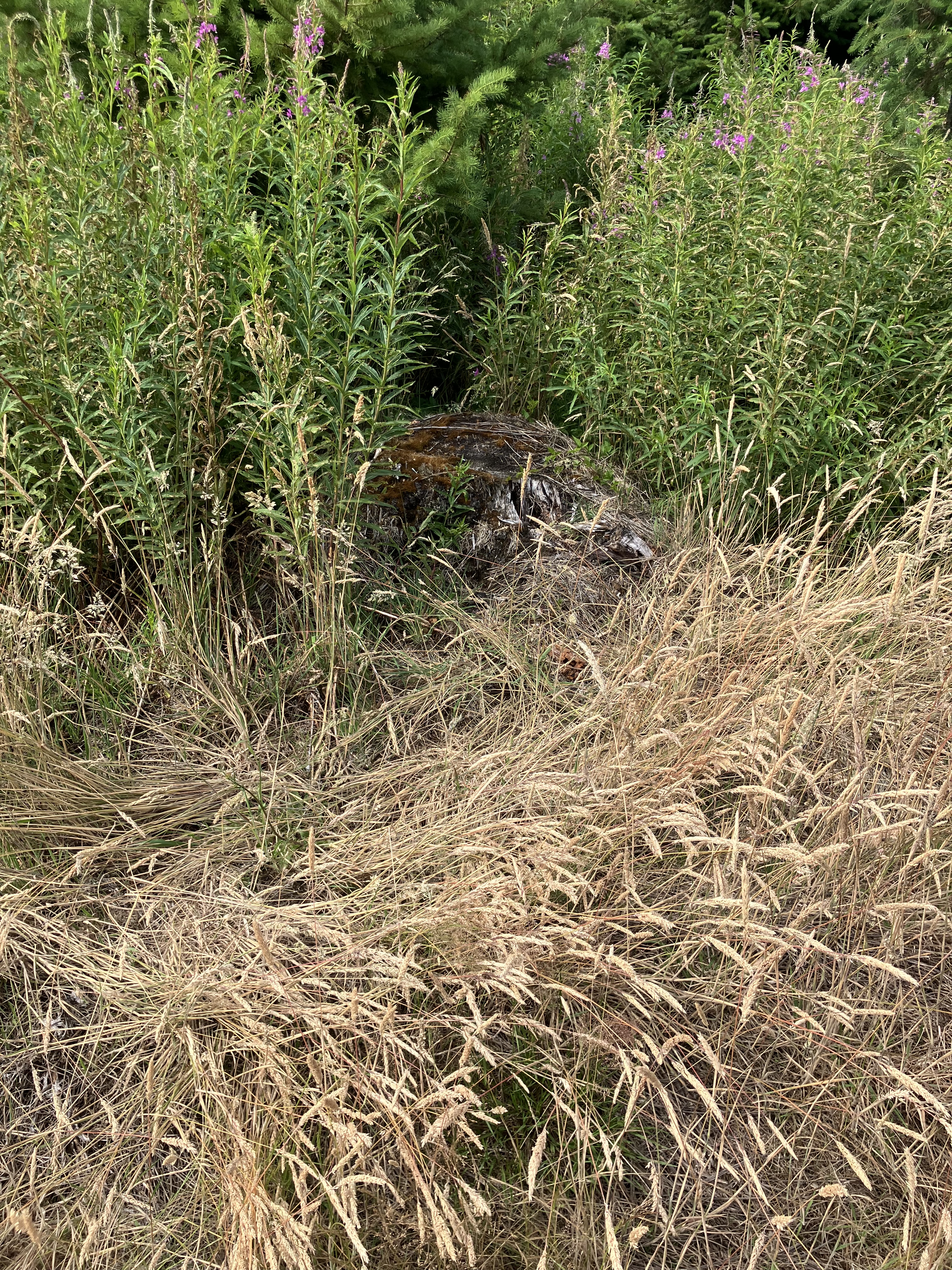
The old stumps were all cashes of food for these hulking, human like opportunists. Insects make up less than 10% of a bear’s diet, but it’s an important protein source when a bear can’t hunt. A sow with cubs would have a lot of trouble bringing down prey with her babes in tow. She would also then put her cubs in danger of running into another bear, especially territorial boars. that might try to kill young cubs. This area was full of stumps and berry bushes, along with plenty of thick cover to dash into at any hint of danger.
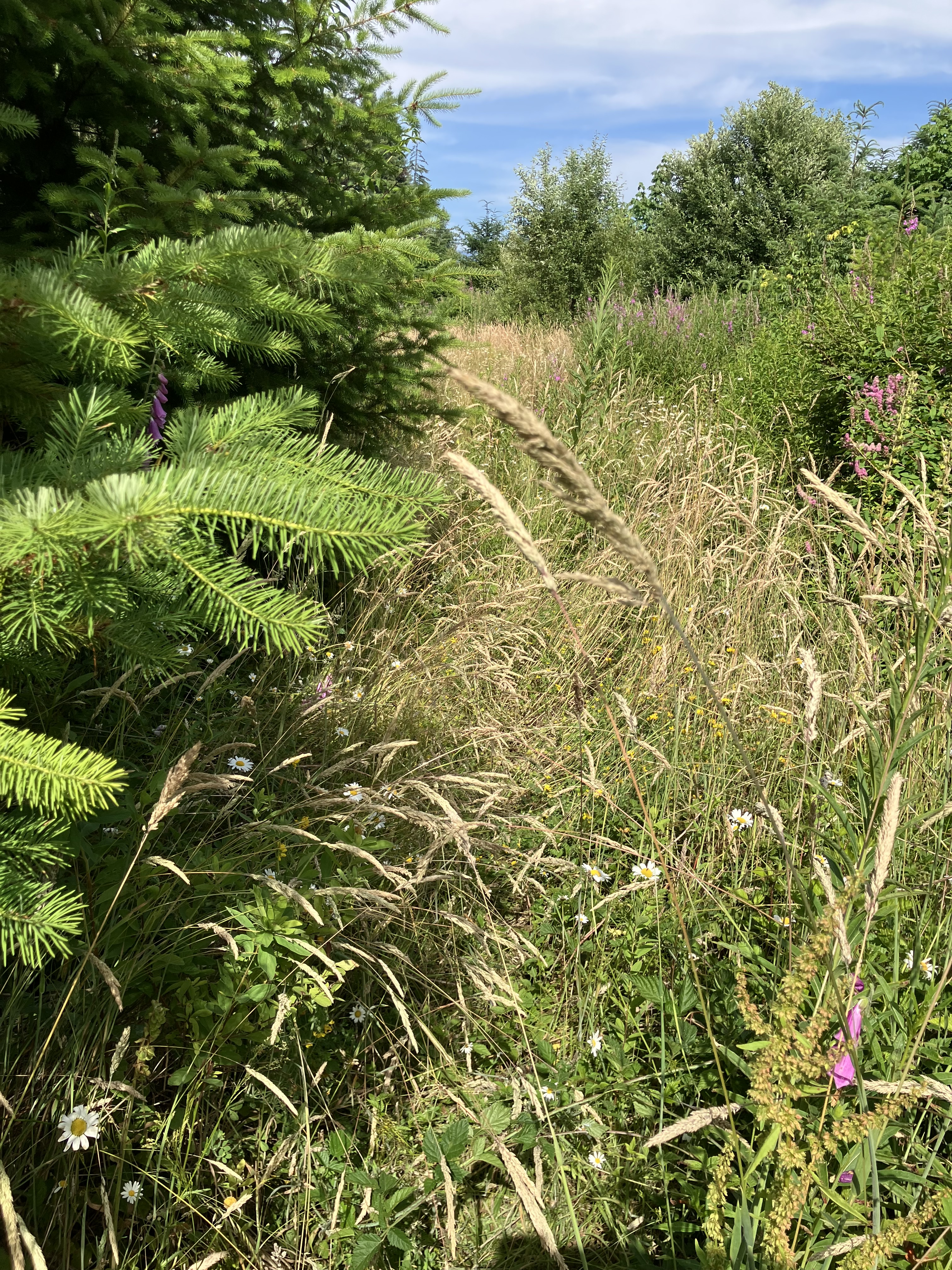
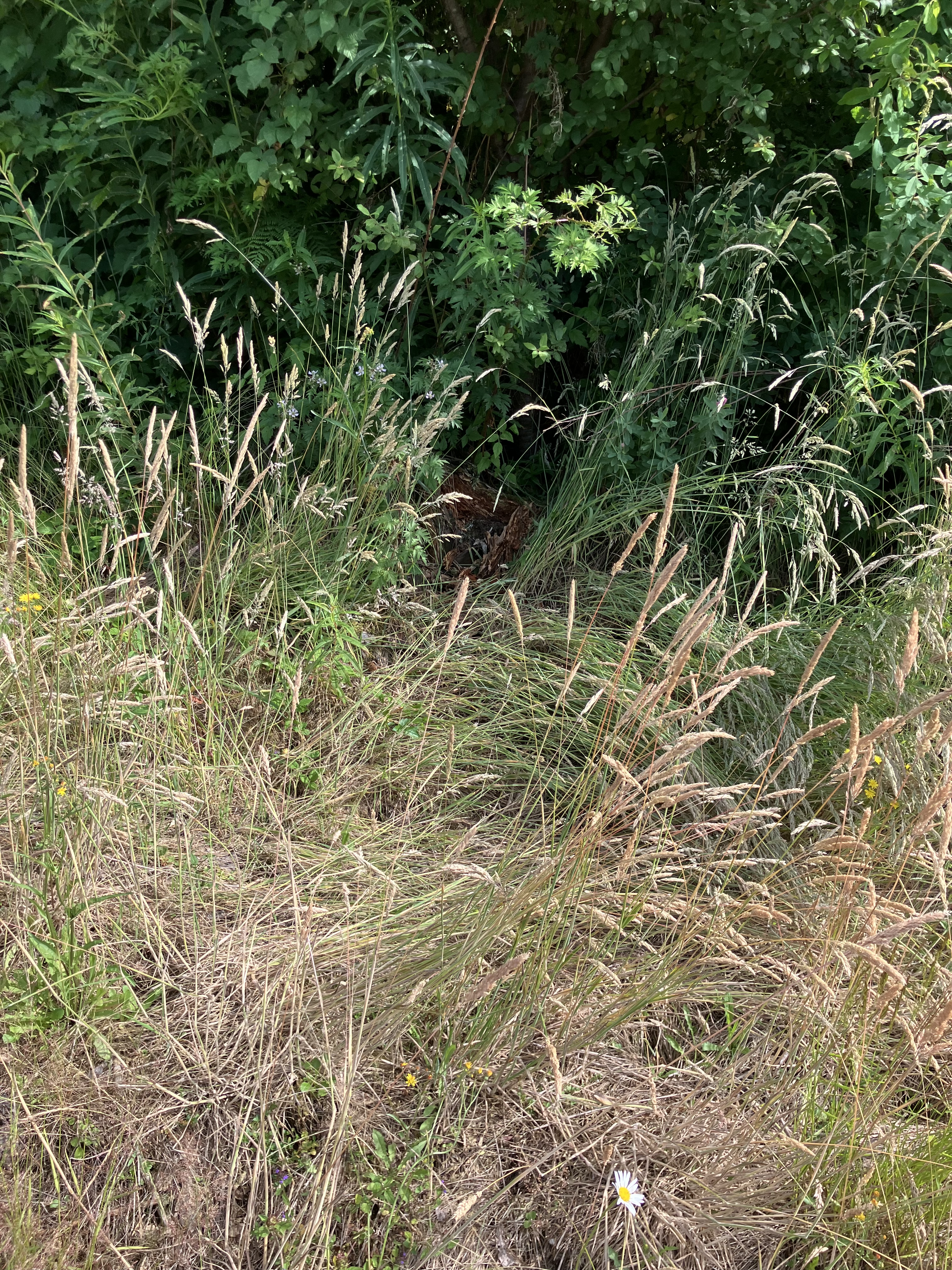
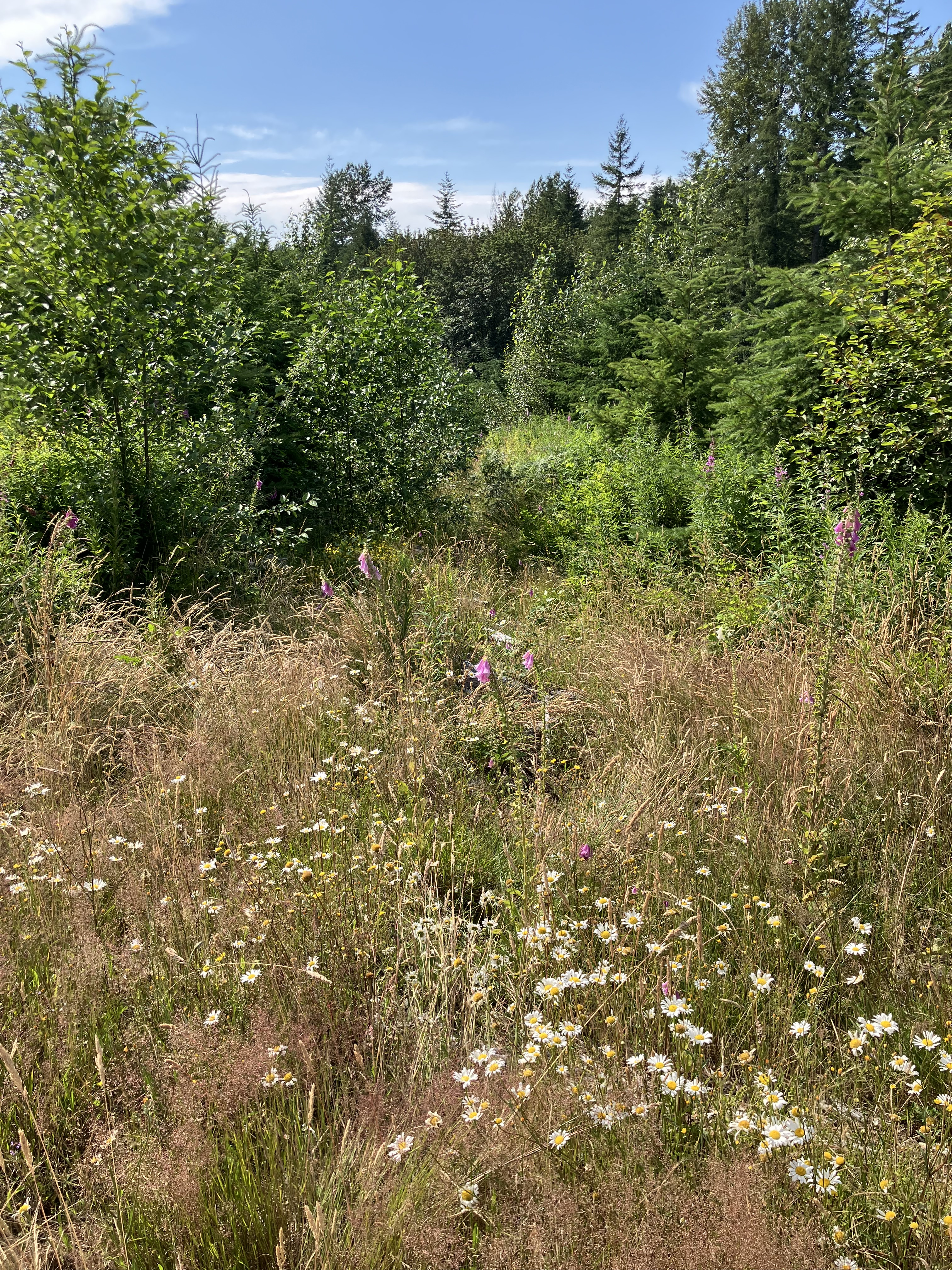
The grasses were great tracking substrate, showing a lot of action in recent days. How do I know the grass was knocked down by animals and not recent rains? Well, the grass stocks were bent in places where the edge of a paw had come down, or a leg swiped the tall grass aside. Bundles swirled around where a foot pivoted, or a body turned. This kind of sign becomes easier to notice the more you look. I could almost see the cubs tumbling around while mom pushed on to the next stump. The grass around each excavation showed a lot of tramped down action. It was great to form a pattern as I encountered more and more feeding stations. The bear certainly left a mark. One trial even went up a steep embankment, where the sow’s foot slipped and she kneed into the ground to hold herself up. This is what makes following animal sign so amazing, you can still picture images of the wildlife and its activities. Though having not actually observed the actions of these animals, I am forming a narration based on tell tale sign and observations to corroborate my story.
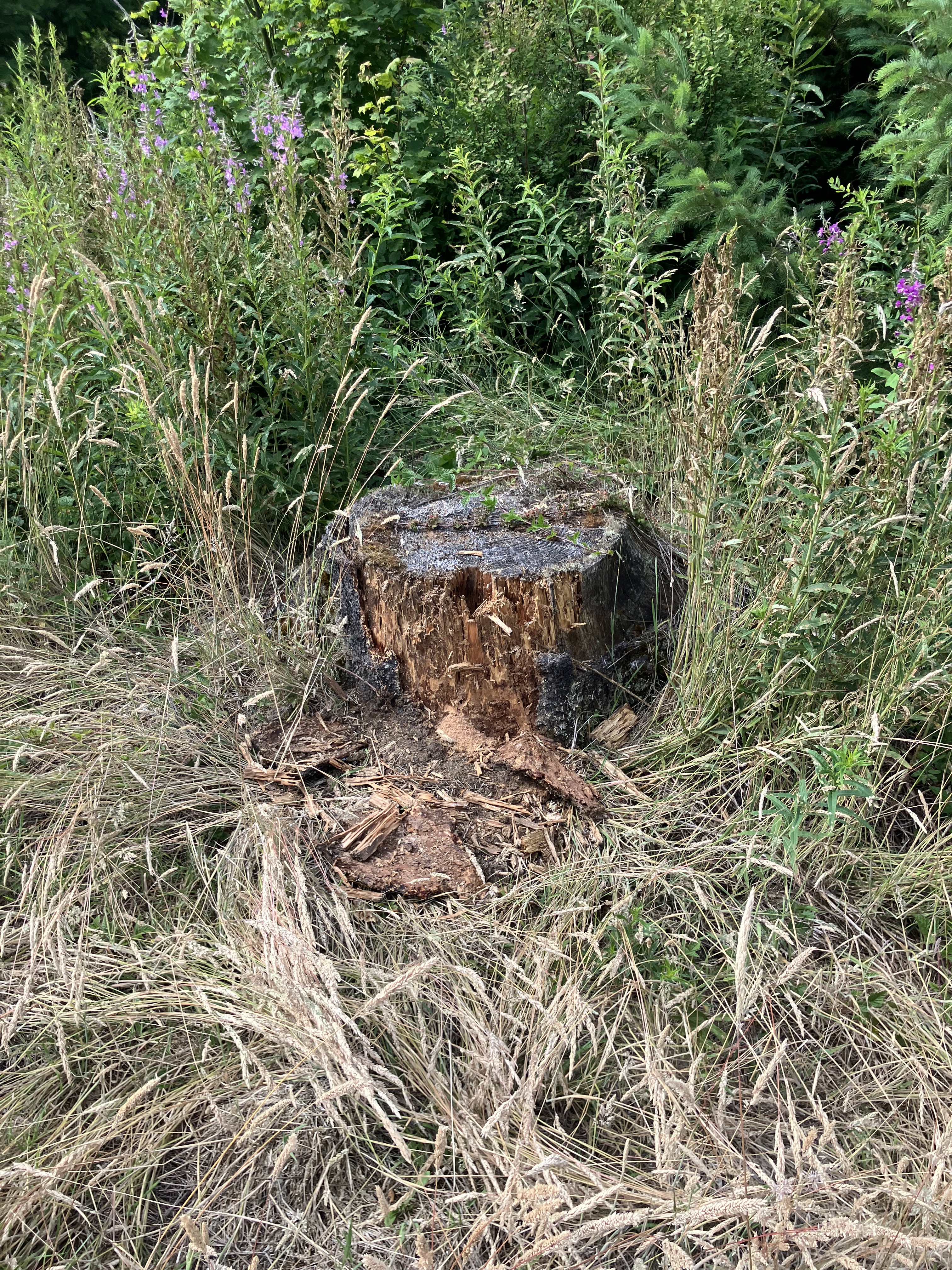
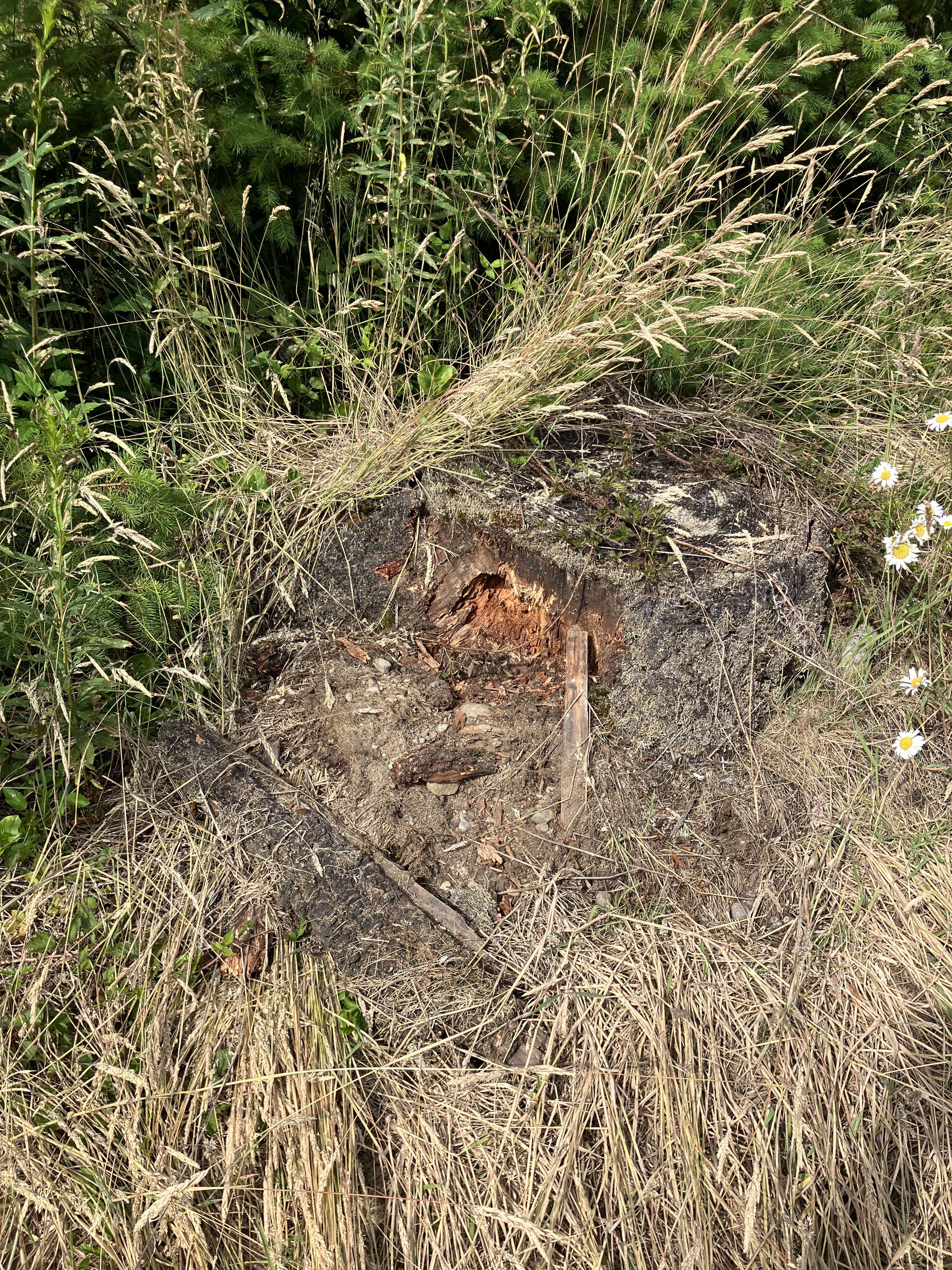
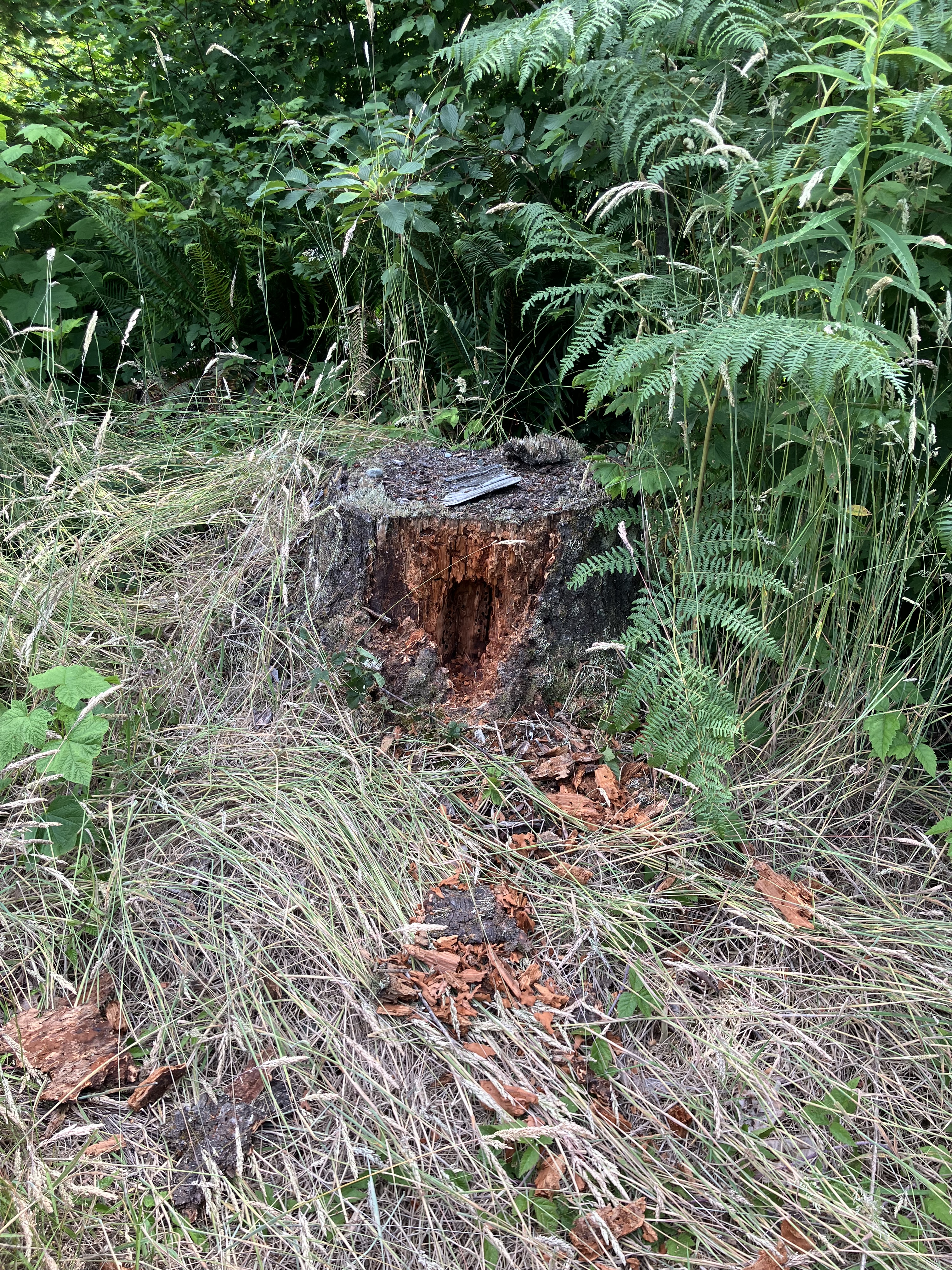
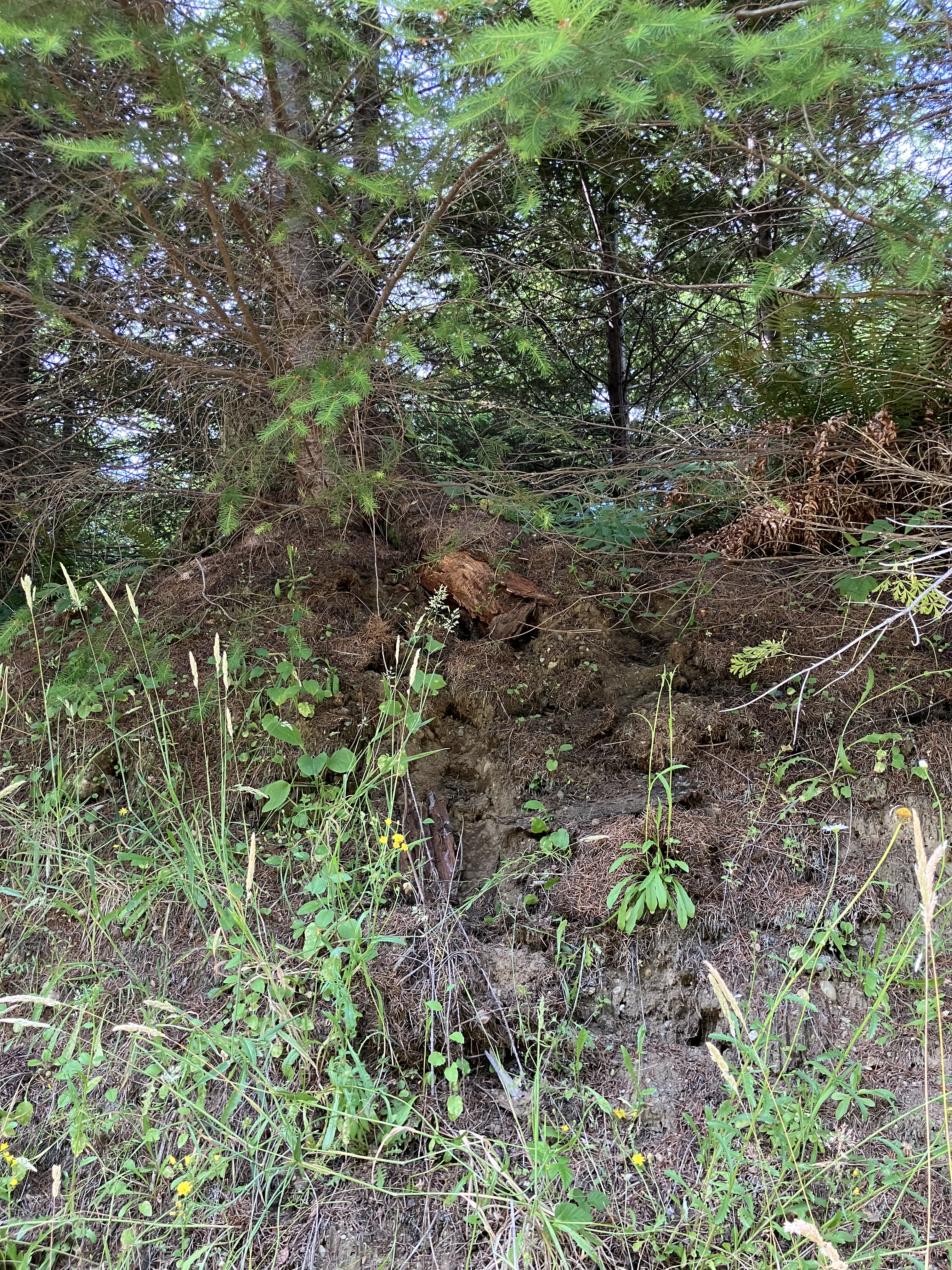
Bears use their claws and teeth to get into a log. You’ll find large chunks of the wood cast off the main trunk, along with bite and scrape marks from the body tools used in excavation. Though ants are a decent food source, the bears are actually targeting brood nests. Larva has the greatest calorie bang for the work the hungry omnivore must do to get at the meal. Of course, mamma bear does most of the hard work to get into the stump, but her cubs watch and learn the whole time, often getting into tighter spots within the log, once the outer layers are torn away. One stump was cracked open, but then left, probably because the sow had already left it, knowing it had no larva inside, a younger cub had mimicked what their mom was doing, but had not quite figured out which stumps were worth excavating, and which ones to leave alone. There was also a lot of clawing on either side of the shallow start, showing short arms and agitated paws trying to get at the tough bark. Note the size of the layers peeled back too- if an adult bear had ripped into this stump, there would be 6-8″ chunks breaking off, not 2-3″.
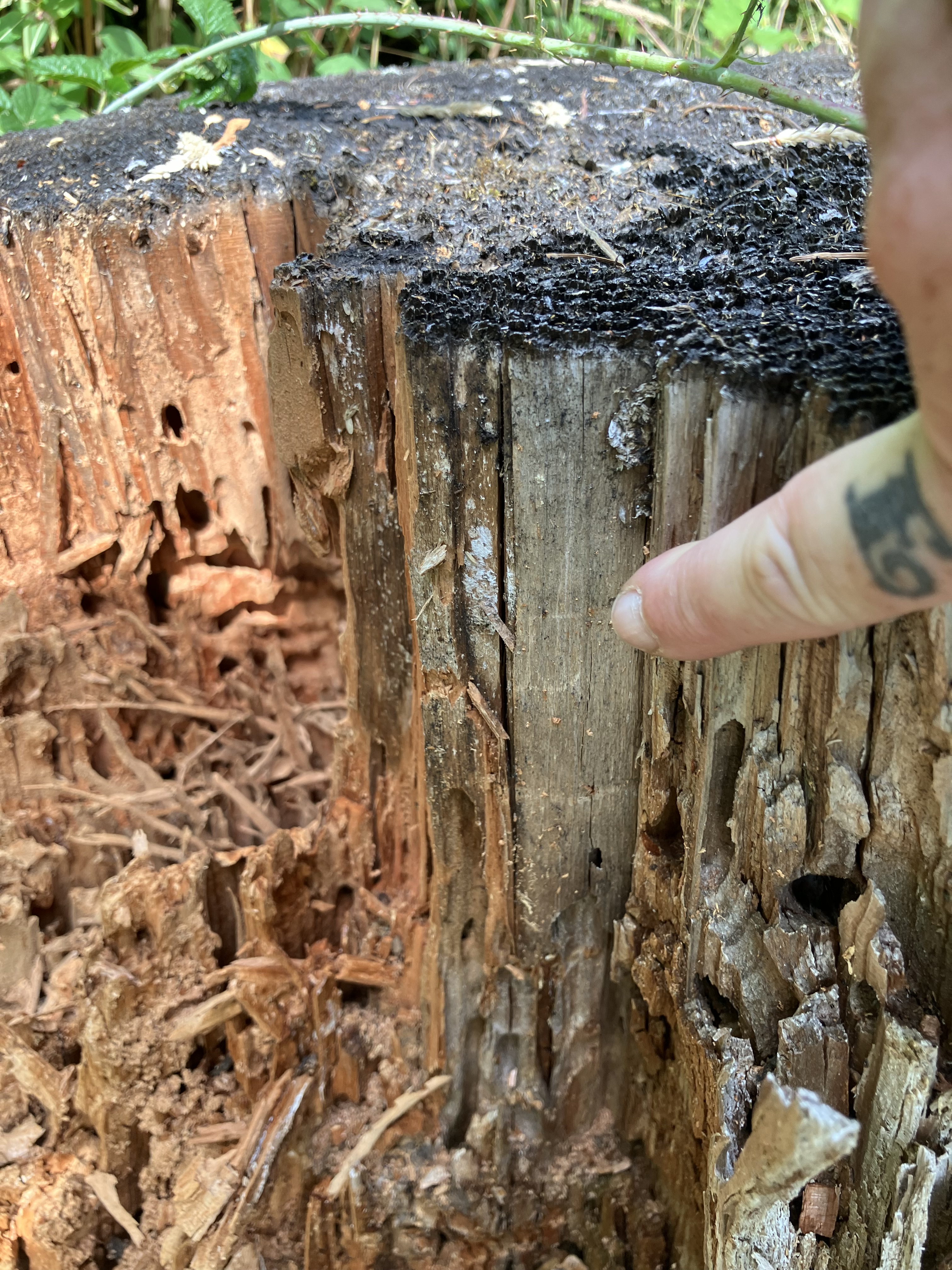
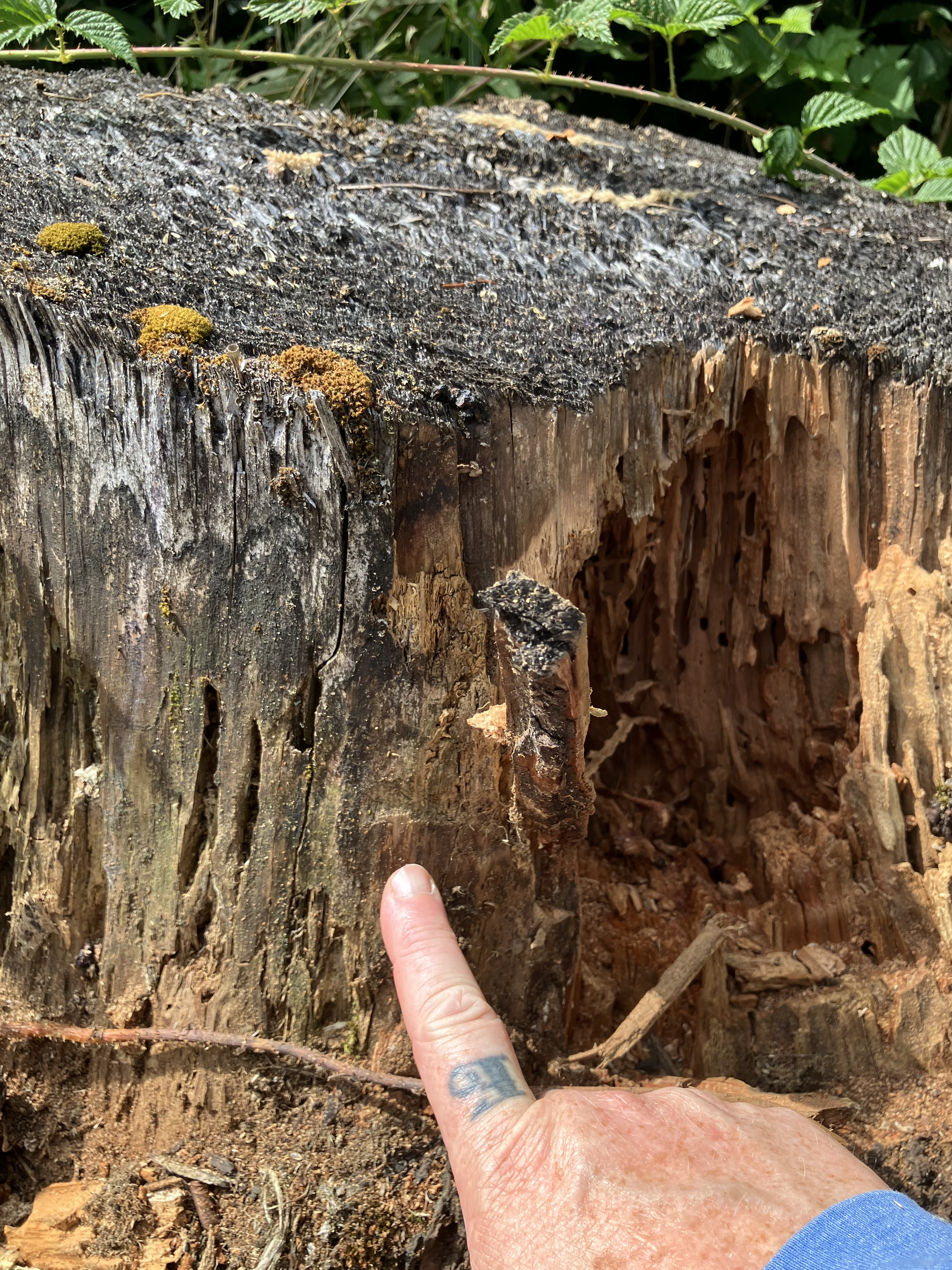
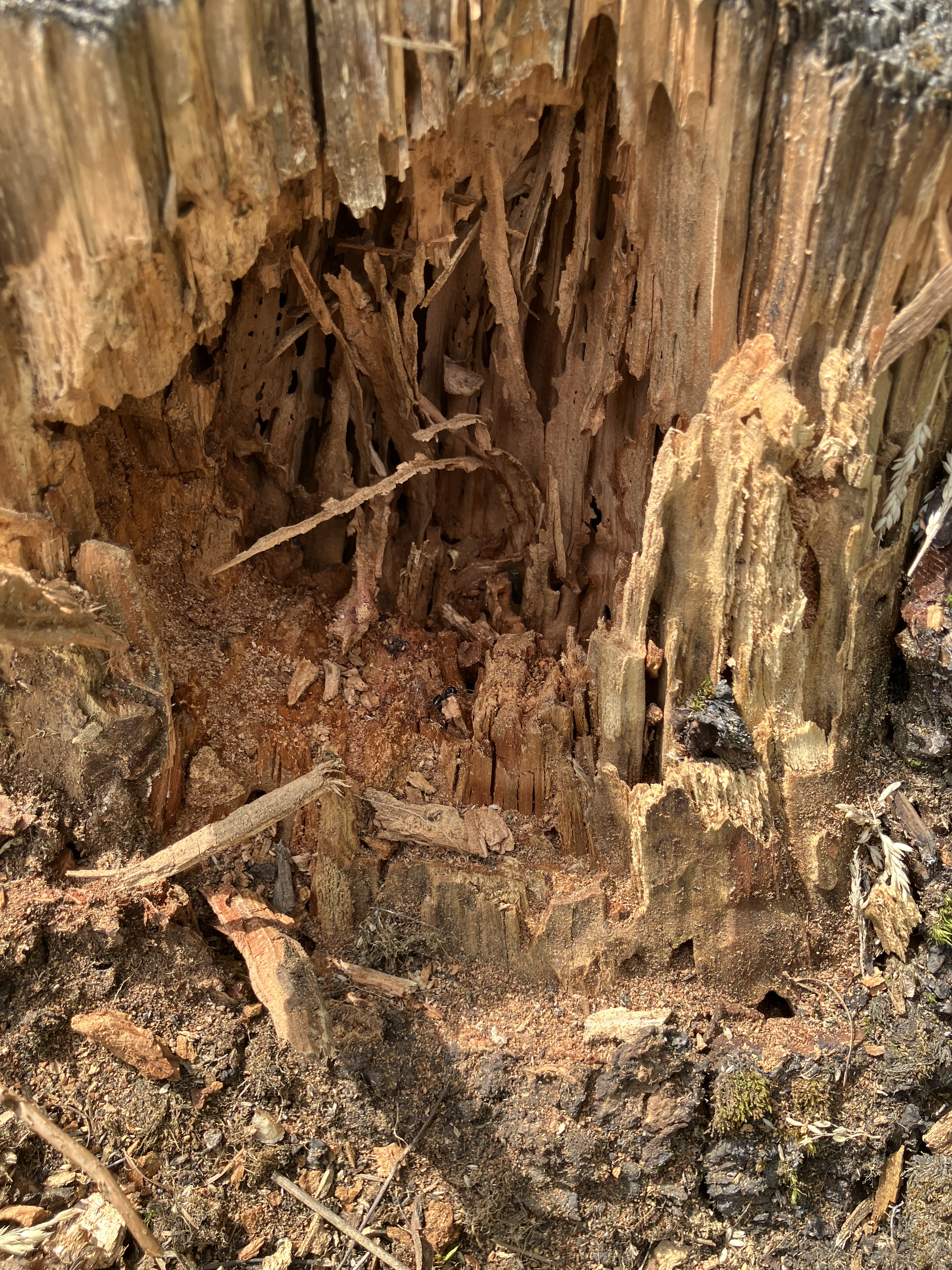
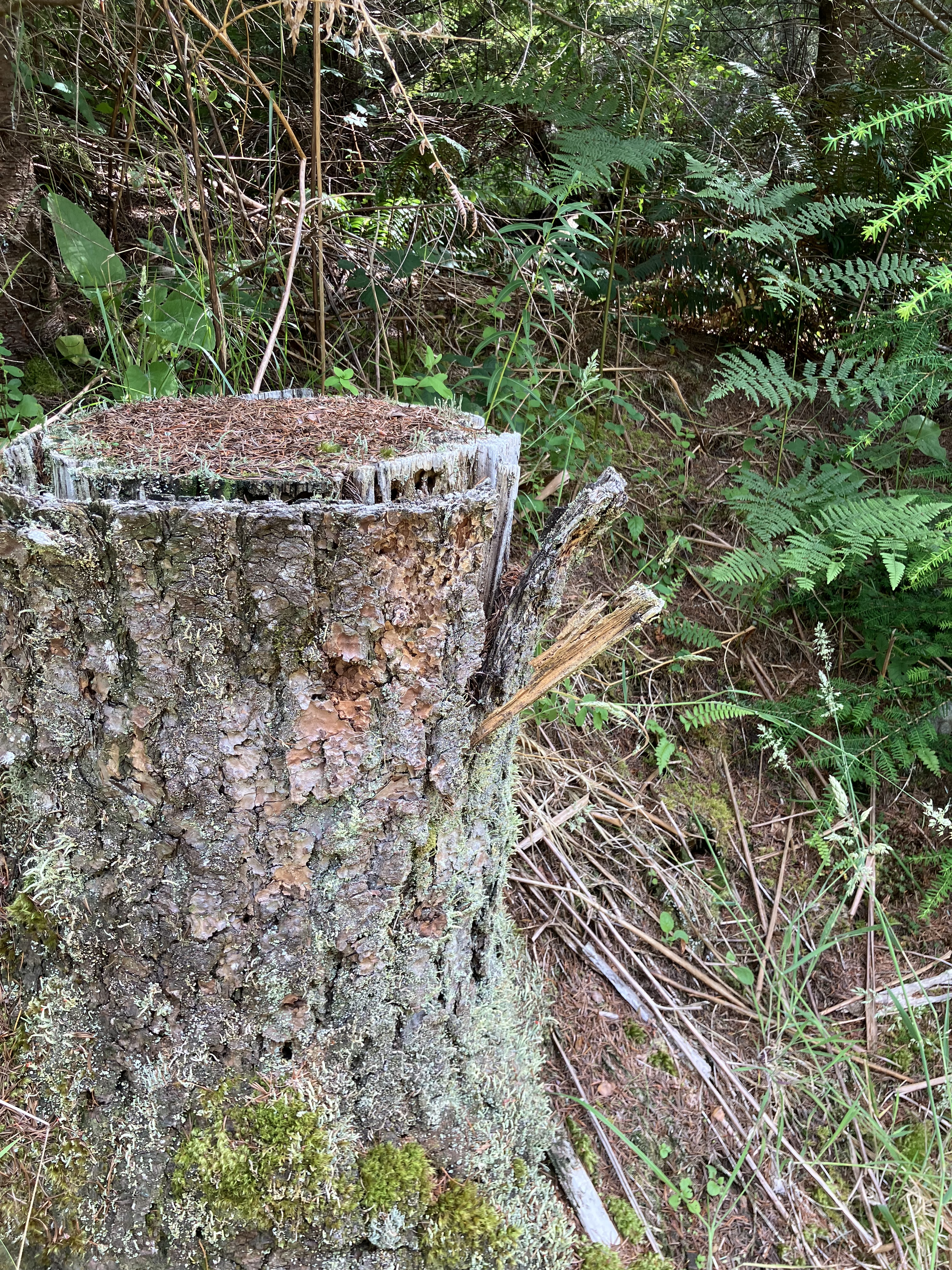
Still, I’m formulating a lot of assumptions out of my observations, so I could be wrong. As I always say of tracking- unless you see the animal actively doing it, you’re speculating from the sign. Tracking should be a most humbling art form, not something to brag about- because you might be wrong. That’s OK by me, I’m just having fun following out the sign and creating a probable narrative. Tracks would be a big help is narrowing my animal assumption down, but I could not find clear ones. However, years of tracking animals gives me confidence in what I did find, and I’ll give a good argument as to why. The biggest hint in these some what obscure tracks is size. There are not many other wild animals in this area that would have the dimensions of these tracks. Cougar, elk, and maybe a large deer could overlap, but not in hand with the location and activity going on. Scat can also be a big help, and the bear scat along this trail was regular, though at different states of decomposition. I share one picture of a great example- full of berry seeds.
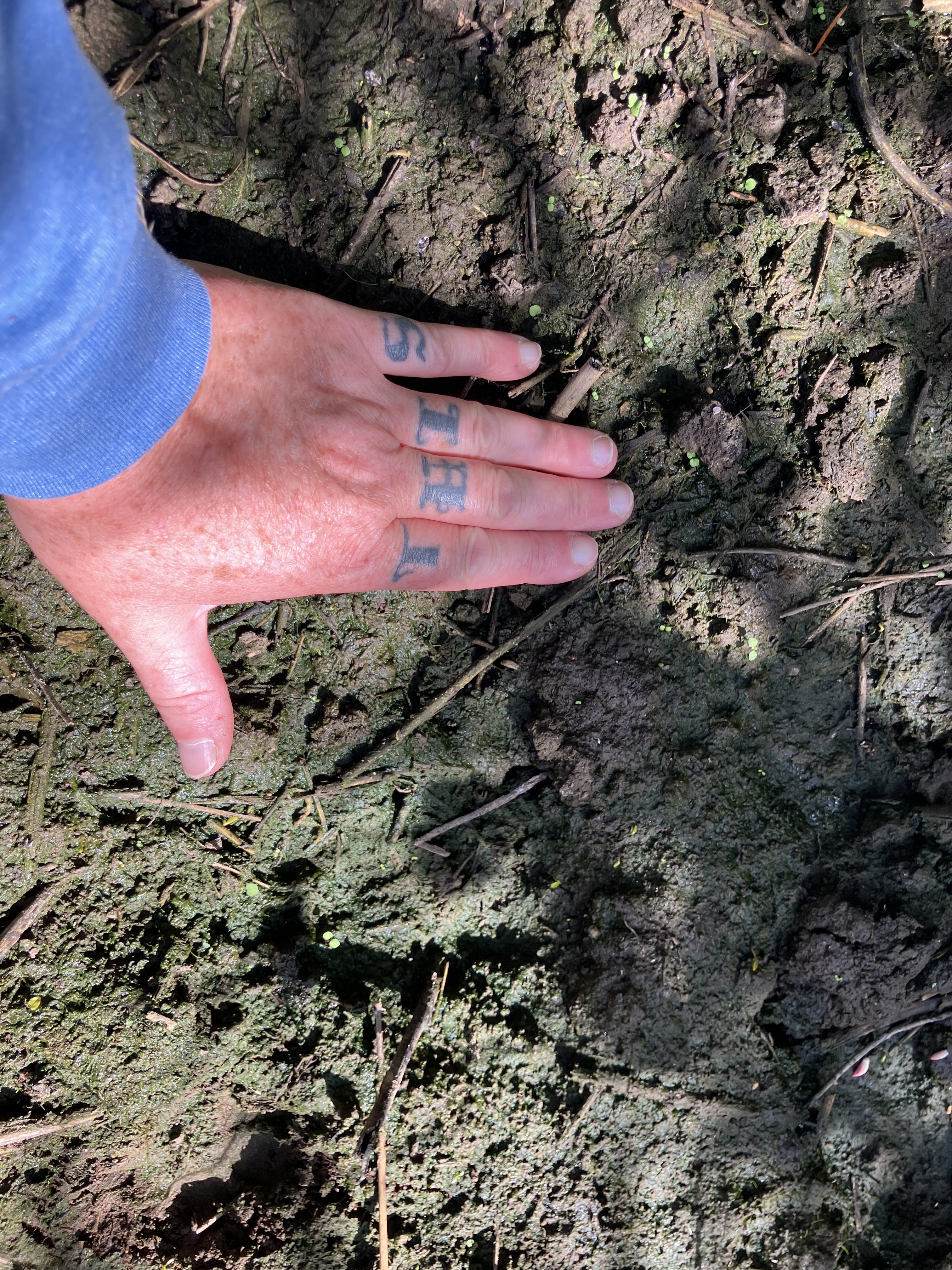
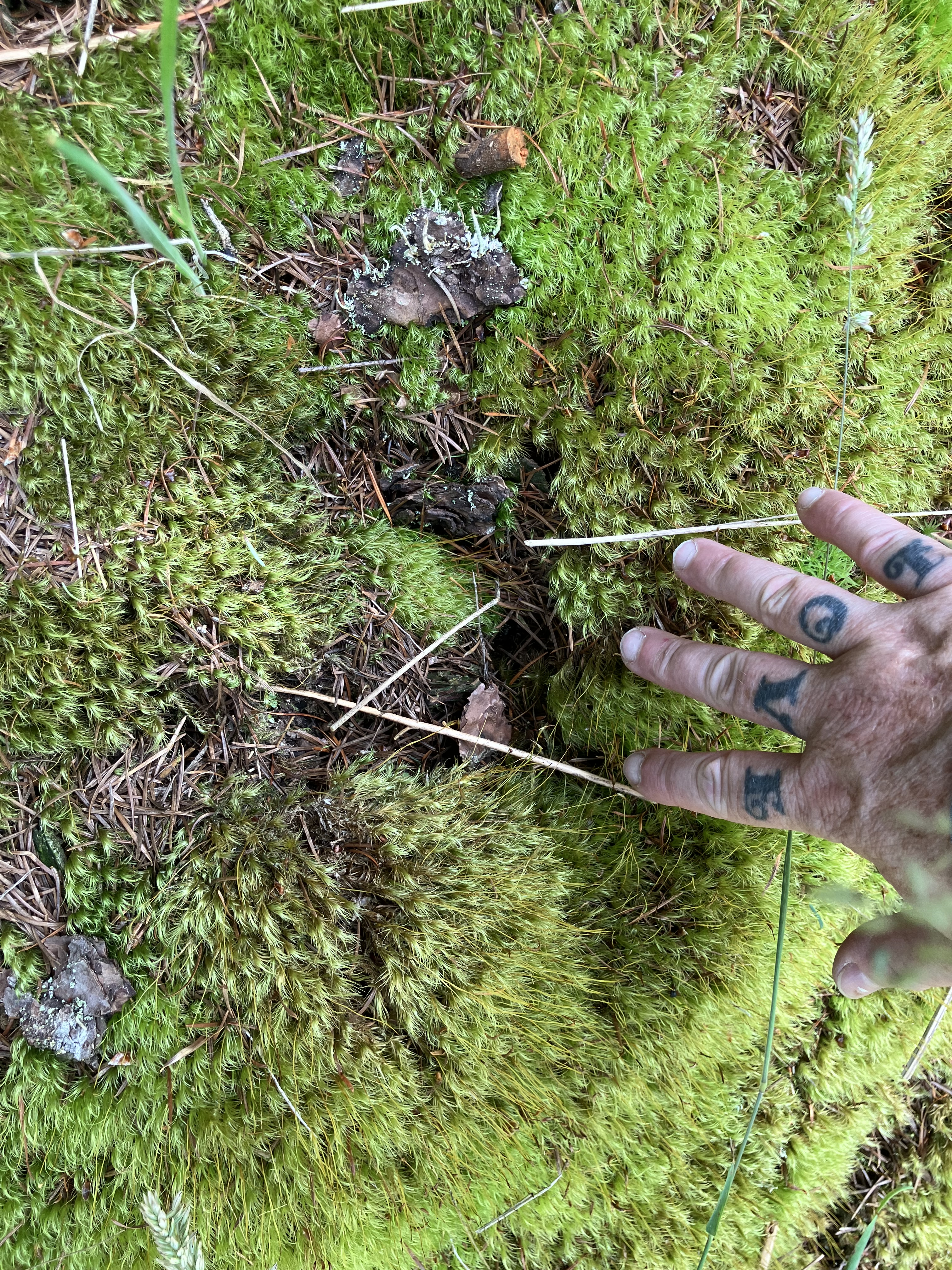
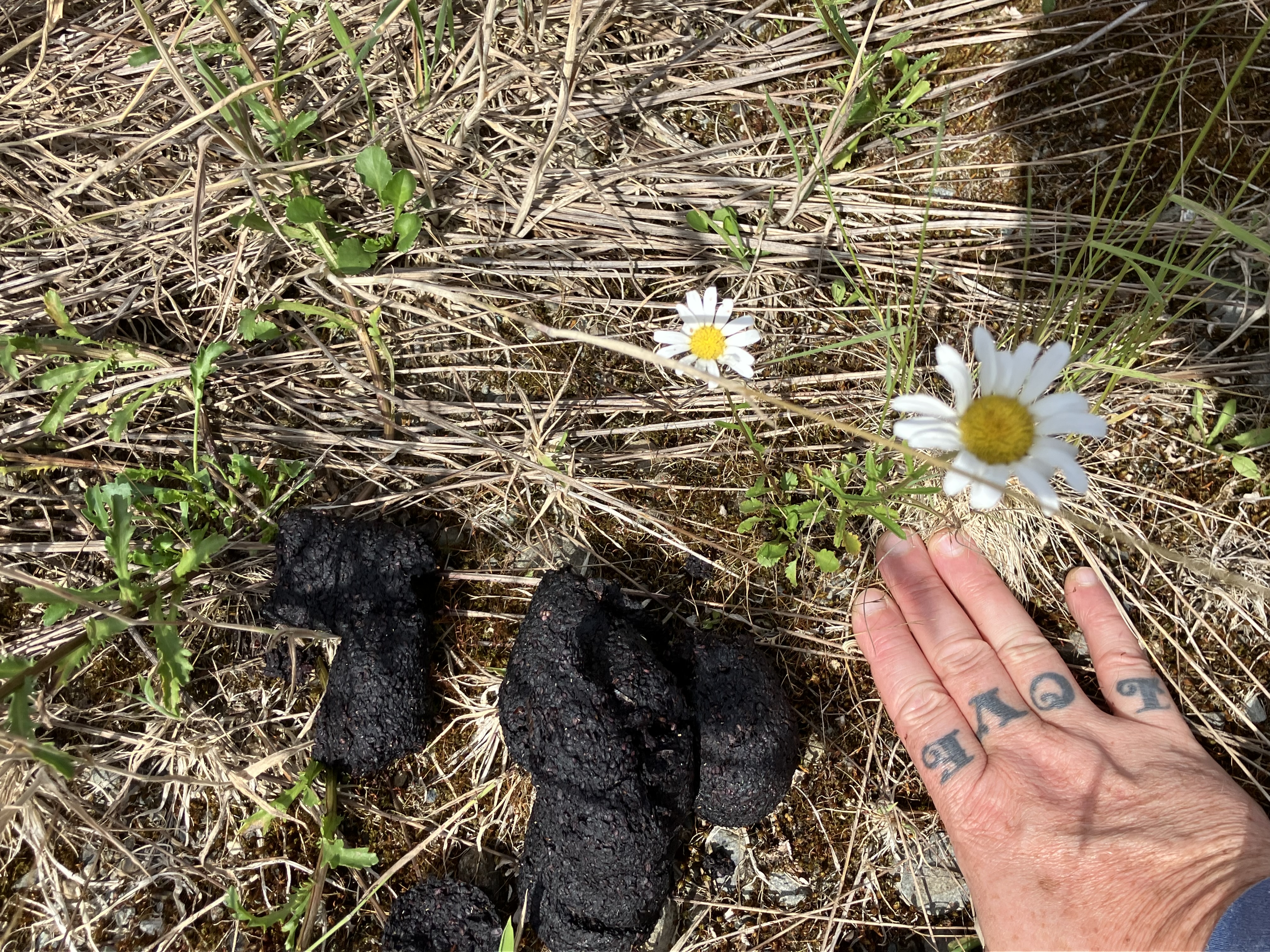
It’s rare to get perfect tracks in the ground, but scat is probable if you know what you’re looking for. A cougar usually scrapes where it poops, often spreading the chunks around as they swipe with their paws- like your cat does in the little box, only wild cats are less about burying it, and more about announcing their presence by taking a dump in the middle of the trail, then scraping- like some dogs do too. Elk and deer do not make a show of where they go, opting to just pop a squat as they move along, and they poop in pellets, not segments, like the bear. Scat, tracks, and feeding sign are all parts of the puzzle when figuring out what animal you’re observing the habits of. My narrative is also taking in time of year, location, and a check through my animal lexicon to make sure there’s not another species lining up with the same traits. Human would be close when comparing scat and tracks, but the excavation of these stumps is something only a bear could achieve at this scale. We may have tools that can tear apart a stump, but our bear hands would be cut up and full of splinters.
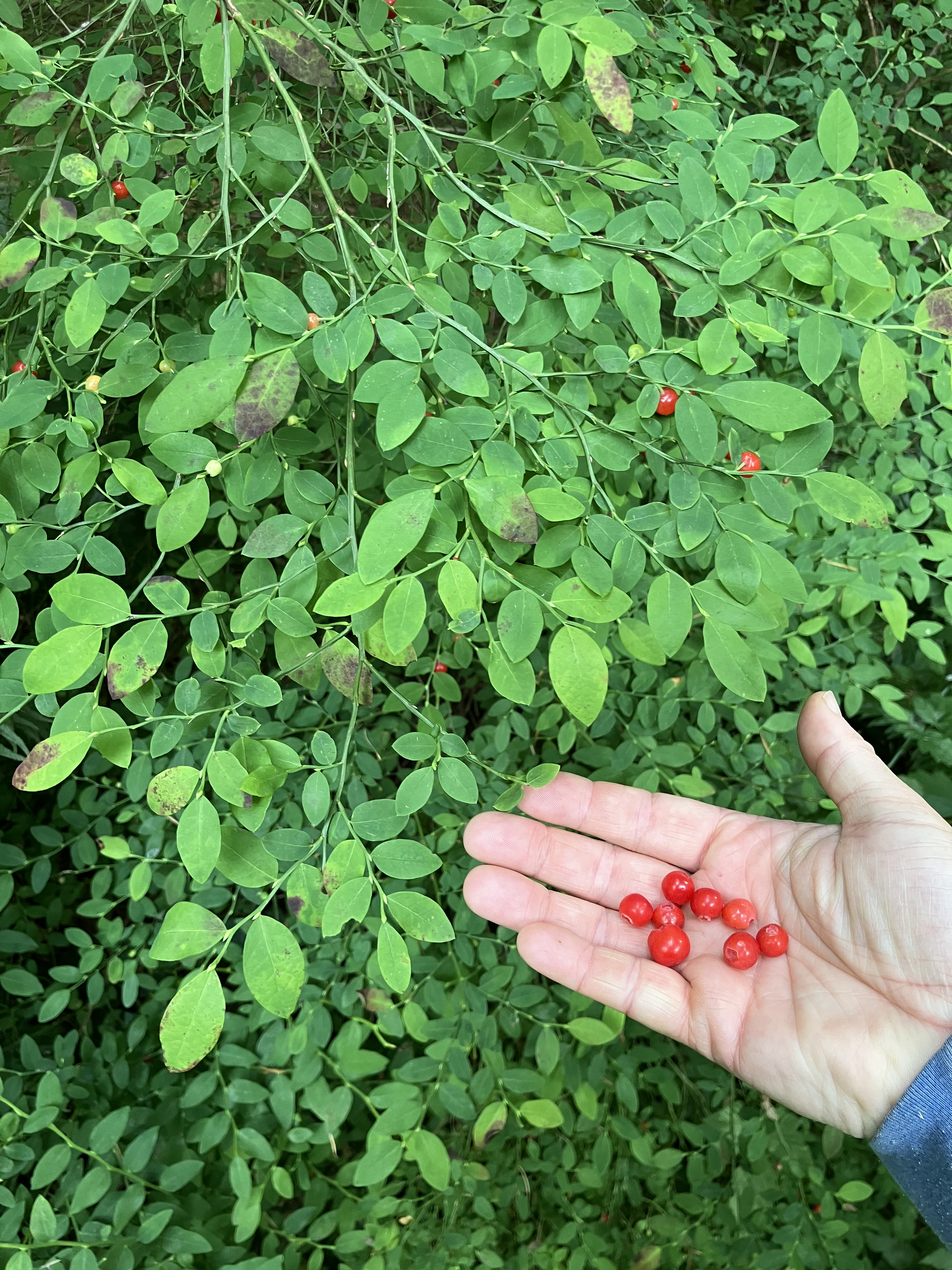
Where I can share a love of larder with the bear, is berries. There were red huckleberries, trailing blackberries, and salmon berries ripe all around. What a great place to come and eat! At the same time- I was a guest in the bear’s kitchen, and kept eyes and ears open for my large predator friend. Though black bear encounters are rare- they can hear and smell you a mile off, and usually go the other way fast- a startled bear can charge, and even attack if provoked. It’s always good to be loud and proud in the woods during active bear seasons- especially when cubs are born. Never approach bears in the wild, they may look chill and tame, even letting you get close, but they are meat eaters, and might stand their ground if they feel threatened. Black bears do tend to avoid conflict, so you should also stand your ground if you suddenly come upon them. Stand tall and shout, wave your arms or your pack in the air, take a wide stance and look as big as you can. Keep yelling until the bear backs off and walks away. Stay firm, bears sometimes bluff change to test your nerve. Actual mailings are rare, and if you can hold your ground to call the bear’s bluff, it will most likely wander away, not wishing for an actual physical encounter, which could lead to it’s own injury. Again, to be clear, we’re talking about North American black bears- not grizzlies. Grizzlies are a whole other species, and I don’t want to get into it here, but in short- grizzlies stalk us, are not afraid of us, and can kill a person quite easily. Do not try to face down a grizzly in the wild.
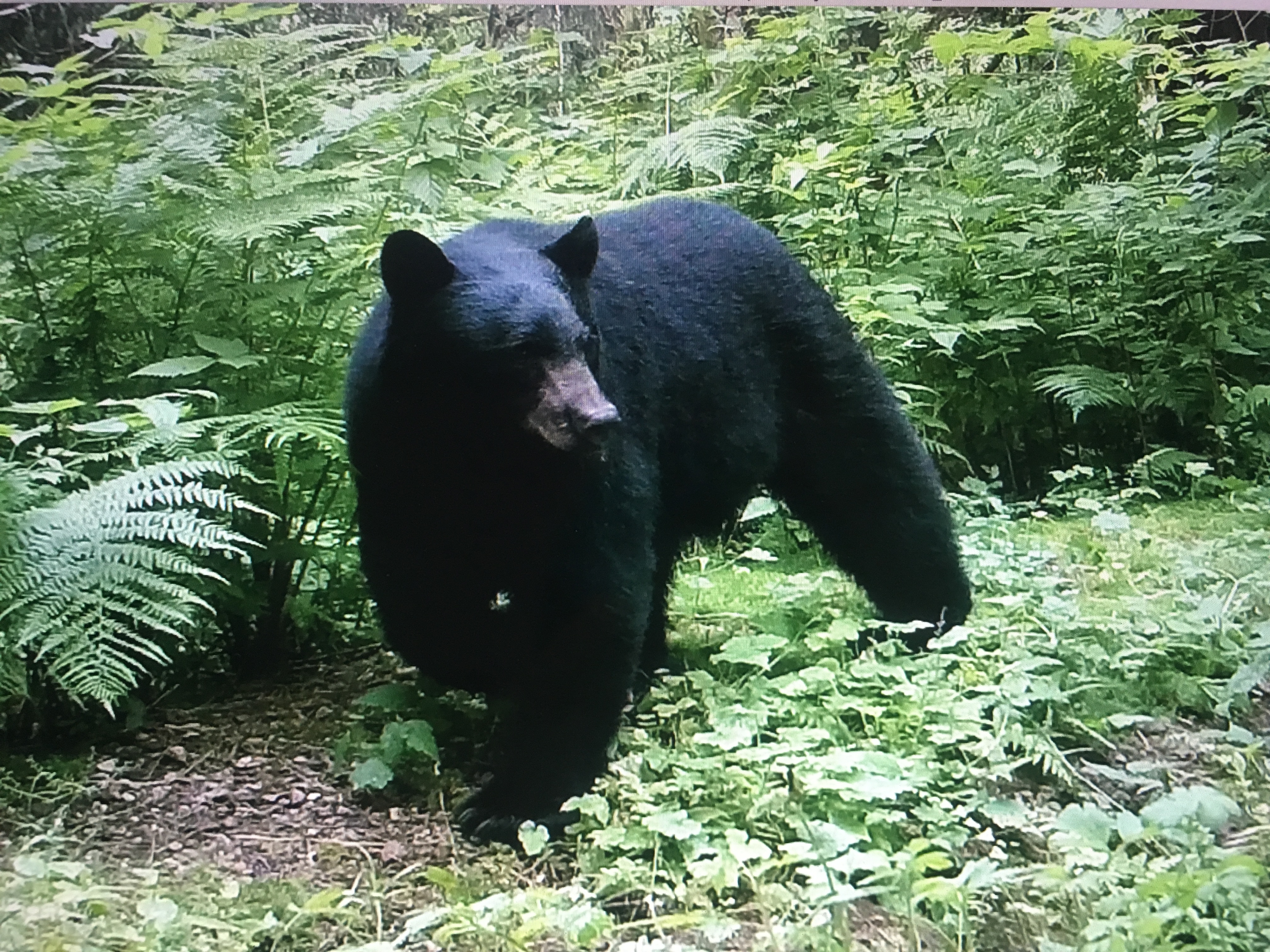
Black bears, like the one pictured above, caught on my trail came on the land in 2018, can be large and in charge. This sow has lived in my neck of the woods of a long time, and has raised triplets in the past- a rare achievement for this species. She and her offspring will be around for a long time, and I am so grateful to this animal for it’s continued lessons in tracks and sign. Studying the natural world will continue to be a life long adventure, and when I happen upon such interesting material, I’m glad to get to write about it and share my learning with you reader. If you see anything in the pictures I’ve shared, please let me know. I’m a life long learner, and appreciate community reflections and shared knowledge. Thanks again to the bears that shared these signs, the habitat they live in, and the opportunity to be in the woods with eyes that can sometimes see the most incredible things.


