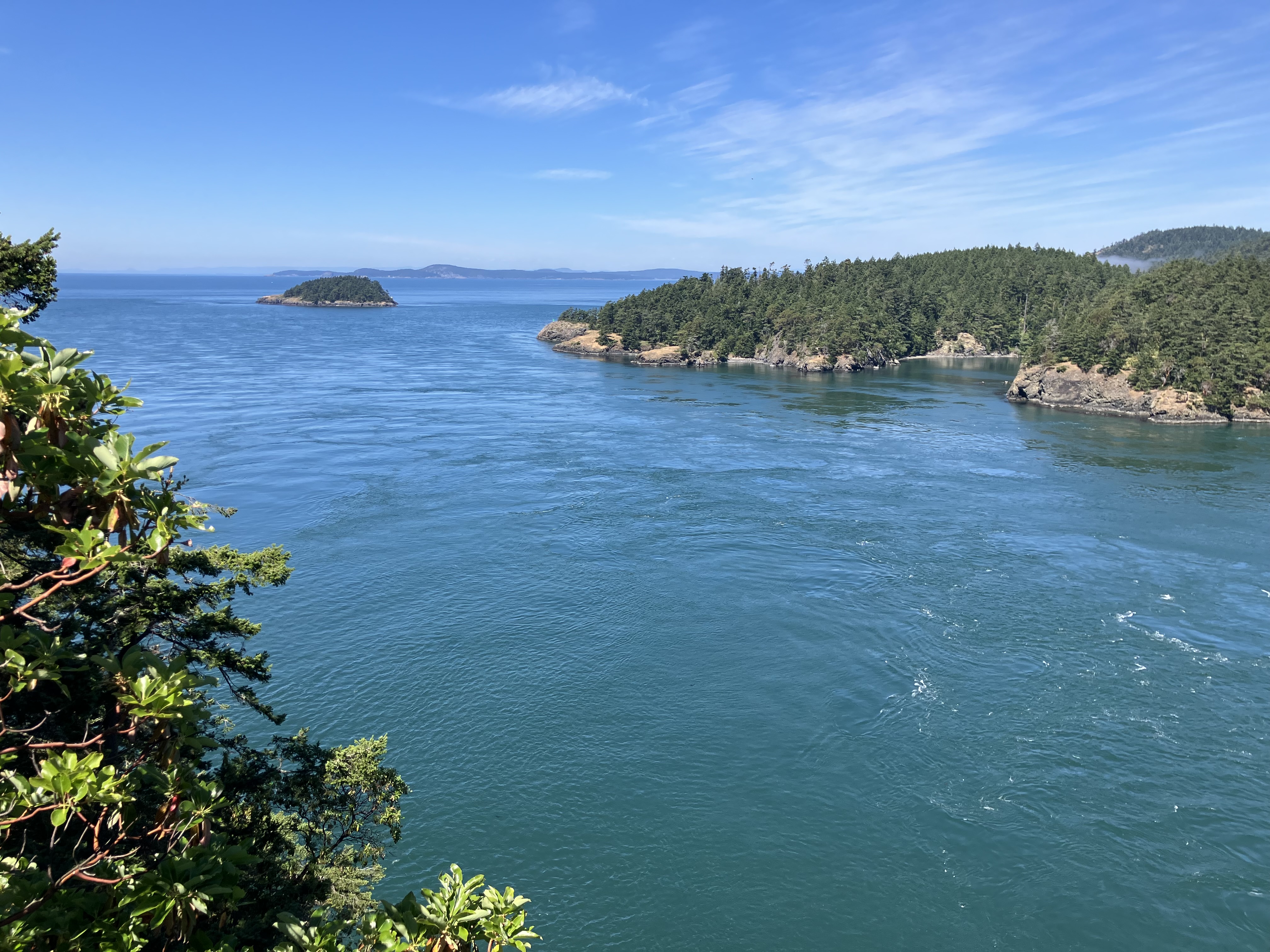
Crossing onto the north side of Tscha-kole-chyduring around Solstice, I found myself reveling again in the beauty of The Salish Sea and surrounding islands. Some friends and I were on a quest for coastal views and beach fun for the young ones- and adults too. Deception Pass State Park rests among dramatic cliffs, gravel beaches, and arching steel bridges intersecting the landscape. Traffic congestion on the small, two lane highway, takes some of the observation magic away, but well worn trails to the beaches below invite numbers of people to hike up and down the shore cliffs; experiencing ocean and temperate rainforest as they converge over rare geologic formations.
Our outing took us to Rosario Beach- named by Spanish conquerors, a stretch of crescent shaped bay, an outer most part of deception pass, which in known as steuds or “dangerous” in Lushootseed. Currents near the narrow straights are quite turbulent, but in the sheltered bay of our afternoon enjoyment, tide pools and gentle waves lent a much calmer presence, with a subtle outgoing tide pulling lazily at floating driftwood along the shore. I watched with interest as a zodiac boat came into the bay, pulled the floating logs into a cable tow, then carry them out to a huge log booms being towed by a tug in the sound. We reported it to the local rangers in the park, and they too were concerned the wood was being taken. It’s against the law to take driftwood from parks, and floating wood creates important habitat for ocean life. However, they can also become dangerous hazards on busy beaches if not given proper distance and respect.
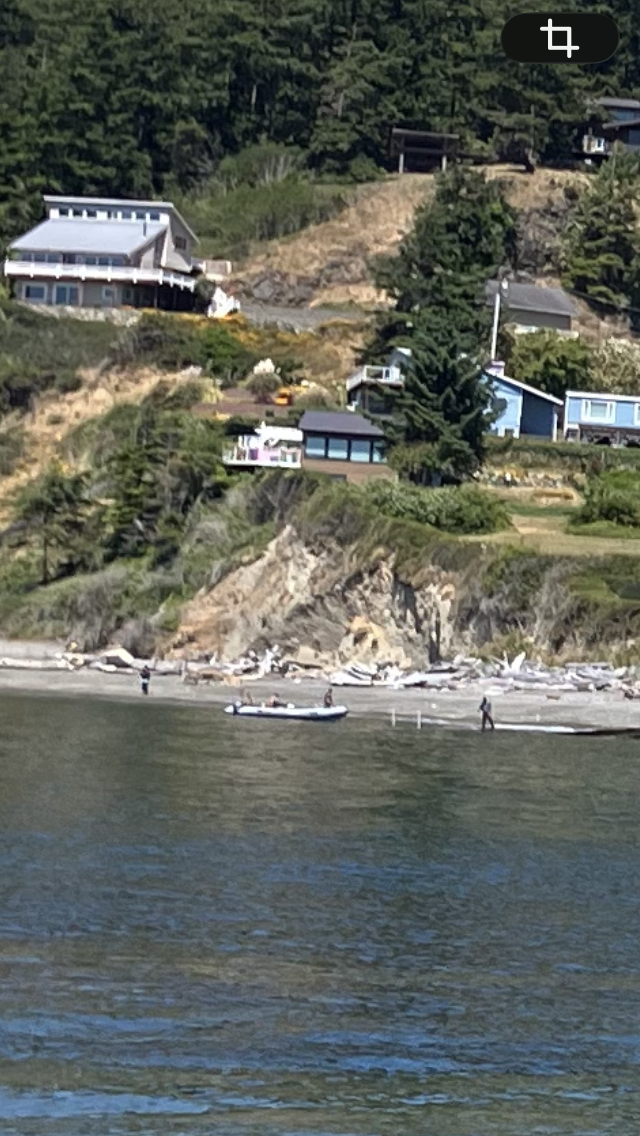
I had a lot of mixed feelings about this roundup of floating logs, but I’m not an expert, though if nature was to take her time, there would be massive floating log rafts all over the sound, bobbing and sinking through the storms and rotting away in time. We don’t comprehend how much habitat was lost with colonial influence over the past 300 years of white men dictating perceived control over nature. In BC, scientific studies point to floating logs as destroyers of shore line habitat, grinding over the rocks in the waves and breaking off important shell nurseries. Well, that’s nature at work, and she has intention in all she does, we may not understand it, but instead of managing it for our perceived needs, maybe we can study some of it in situ to let nature take her course. Log rafts would rack up along shore and eventually sink to create habitat we may not understand, because we’ve not let it build and grow. Navigation of ships takes priority, so perhaps the floating logs are being dragged off to prevent obstructions on more than one level. Still, at this state park, there are no shipping lanes, but there are diving and snorkeling classes, and floating logs could be a danger to folks in the water too, but when will we take a back seat to nature once more?
There were some well established tide pools at our beach too, so we followed an anchored yellow line around the rocks to observe living creatures in community at the tidal edge. You would think hammering metal into the rocks to make a trail might also be impactful to the habitat, but in a busy public park, it’s the only way to help guide eager feet away from sensitive areas. Though one could also say all the rocks are sensitive places, and allowing hoards of people onto them is more determent than it’s worth. I have more mixed feelings about all this, but I was out on the trail enjoying the sites like everyone else, and it was only one small trail, the rest of the rocky pools were off shore and inaccessible to tourists like me.
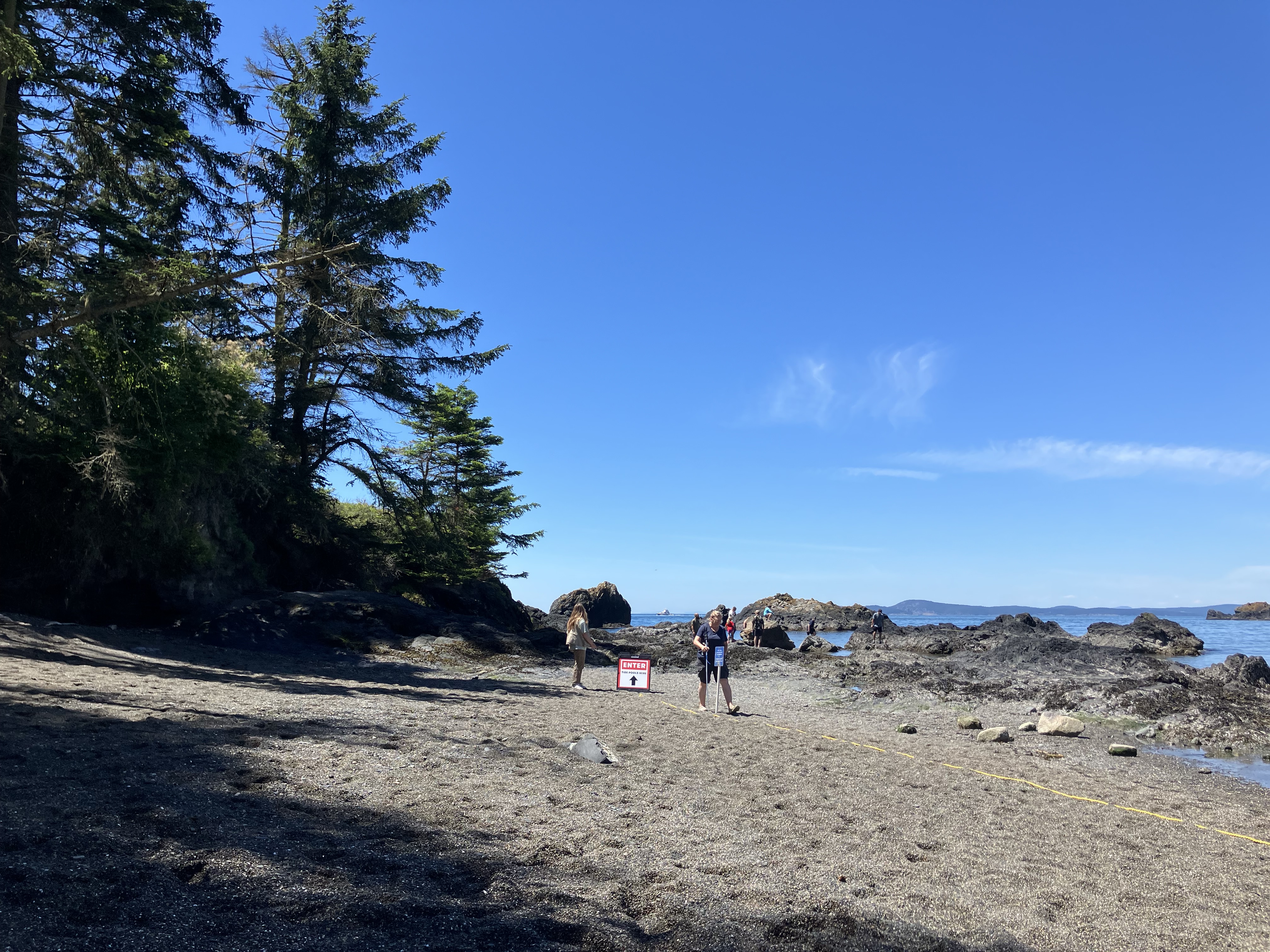
I did like seeing volunteer park interpreters at the pool trail to keep people on track through the tide-pool walk. Though one lady was being a little more in our faces about the rules then I would have liked. I watched a kid make a raft out of two logs and paddle out into the rocks for an adventure- with his Dad looking on. Upon his return to shore, the elder interpreter accosted the family and berated them about something. It put an uncomfortable feeling on the beach and people left to avoid the emotional confrontation. Eventually some rangers (officially paid park enforcers) came and broke up the argument, then escorted the irate family back to the parking lot without further issue. Still, it had been a major disruption to everyone’s day, and could have been handled with far less agitation- whatever the issue was. That’s where volunteers can be a hinder with the public, and more training might be needed to create a better public interface. A much younger volunteer was well balanced in her approach to guiding better conduct, through sharing knowledge and asking questions, she guided a group of young people off the rocks and back onto the path, helping them discover a new appreciation for the environment they were enjoying.
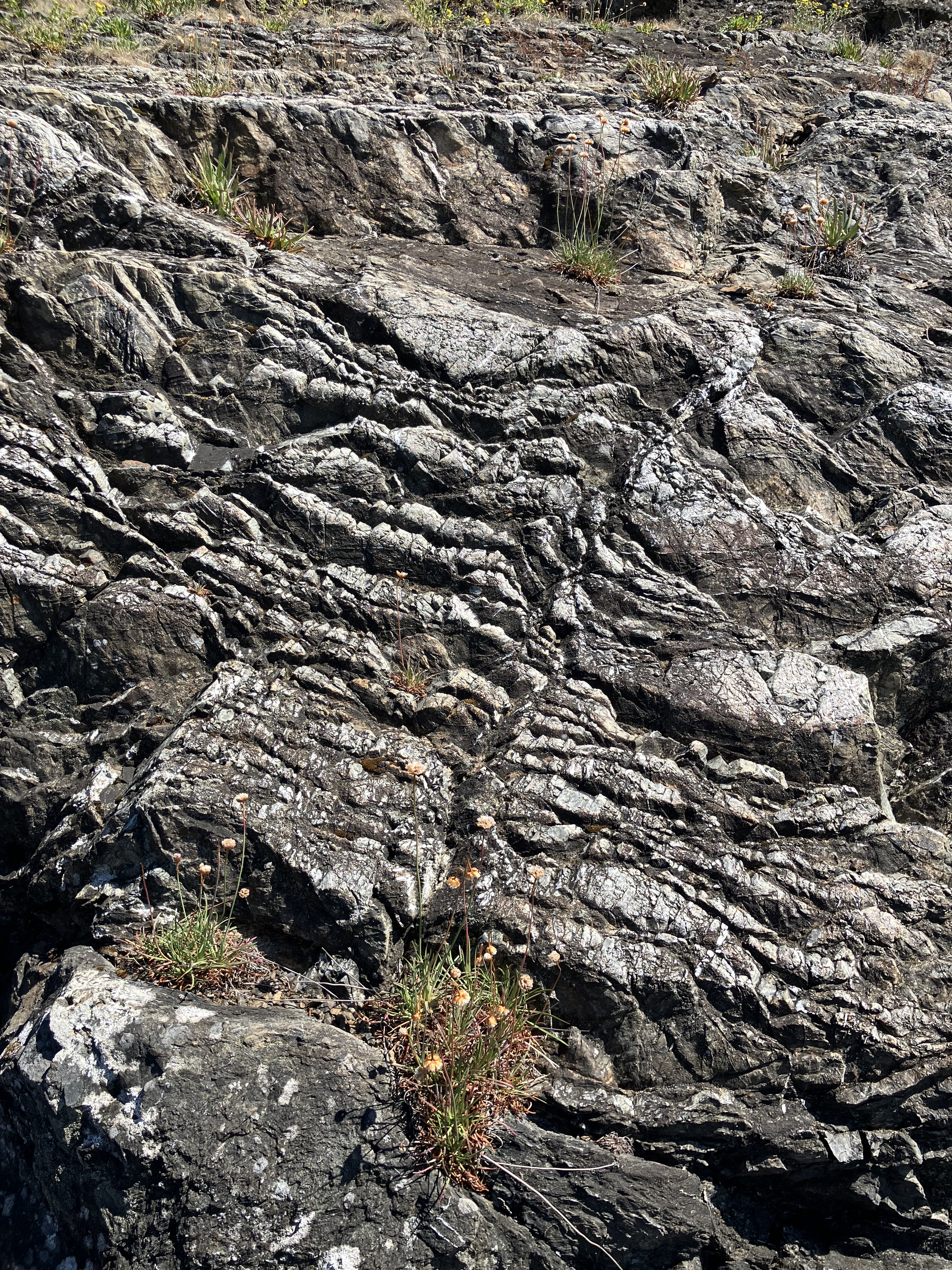
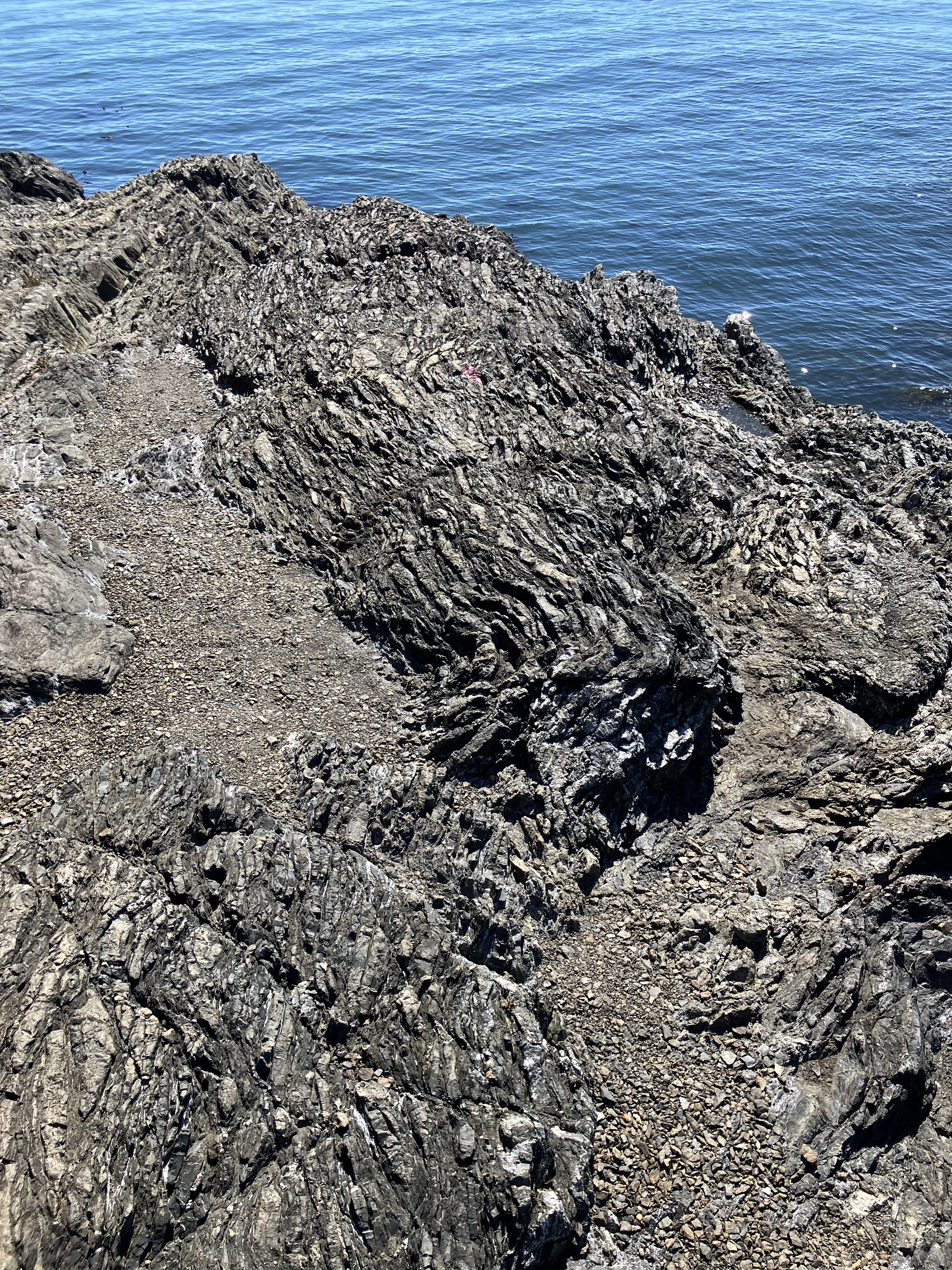
Ko-kwahl-alwoot has more than just tide pools and sunny beaches to explore. There are some incredible geological formations that I was eager to see again on my visit. Ribbon chert is found in this park, and it’s really rare and cool. This video by Nick Zentner, an amazing WSU geology professor shares more below.
My friends and I scrambled up the rocky trail to appreciate this formation, a rare piece of geologic history here in Washington. These rocks are over 100 million years old, and how! It’s amazing to see “basement exotics” on the surface and still together. Washington State has a lot of complex geology, a cake in layers that are often difficult to sort and understand, and this rock is no exception. It’s main formation can be found down in Baja Mexico. This is a theory about tectonic movement, and is gaining a lot of traction now that we have zircon crystal dating. Regardless of what theory you embrace, this rock is something to see, and quite the adventure at Rosario Head. We scaled around these formations and appreciated their unique composition- chert is a great fire making material too. Though I have not tried this type of chert to make fire, it could be used as a striking stone with steel to get a spark. Needless to say, we were not trying to start a fire in the park.
Along with all the cool sea life and rare geology, this place also has some special wildlife about. Cliff nesting swallows were busy feeding eager offspring in the sand cliffs of the shore. We watched a busy bird flying in and out of her little nest cave in the wall to stuff her babes with insects caught on the fly. Can you find the nesting cavities in the earthen layers below?
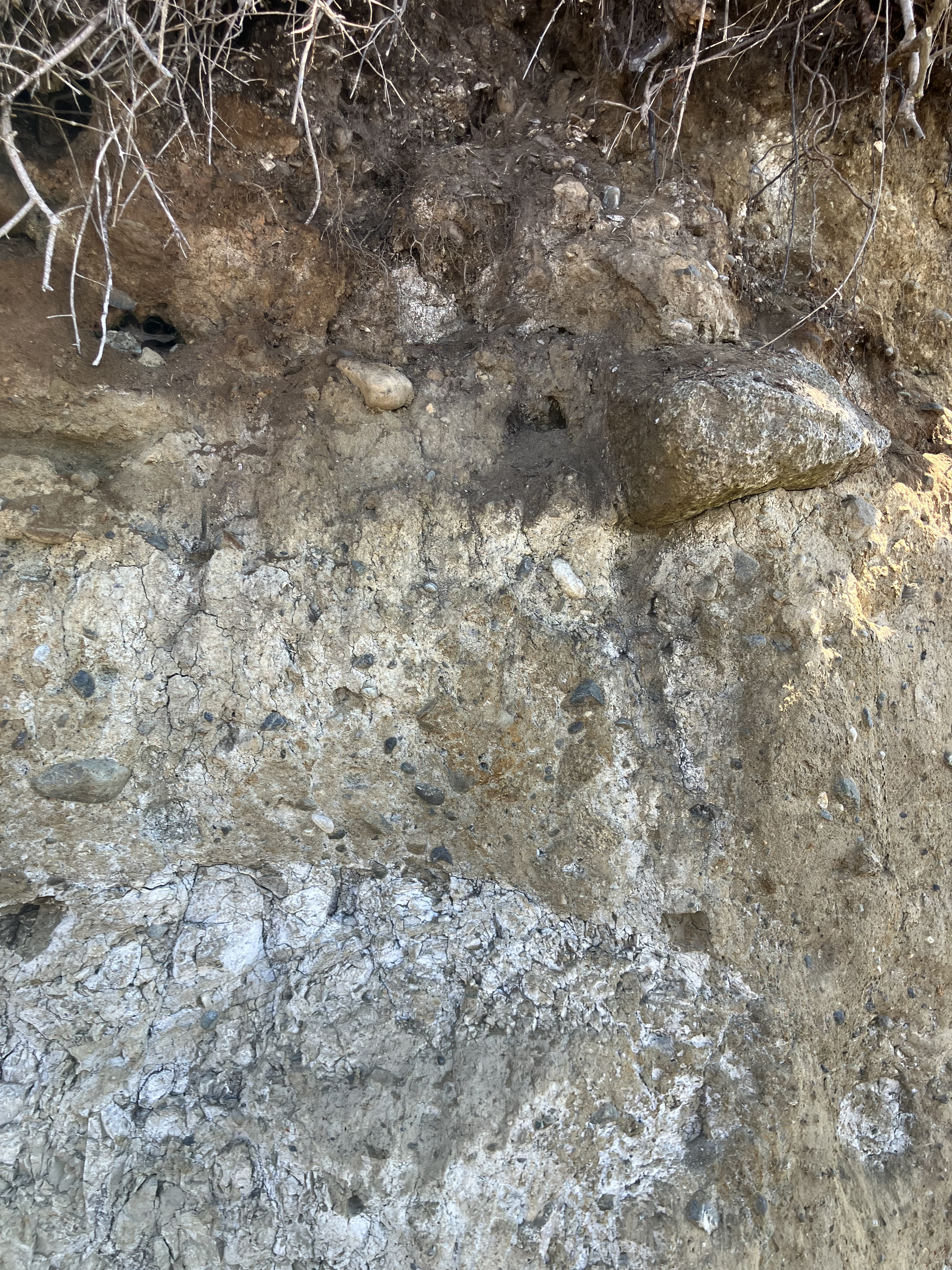
There is so much rich terrain to take in at this place, and all over Washington. In this seashore wall you can see the layers of ash, glacial till, lahar flows, volcanic eruption, and tsunami waves that have come and gone in this active landscape. I don’t quite have the eye or expertise yet in formulating which layers are which, but any eye can see there is a cornucopia of actions in geologic time here on display. There is so much diversity of all kinds here in Washington, from the rocks to the ecology, environments, and many people who call this place home.
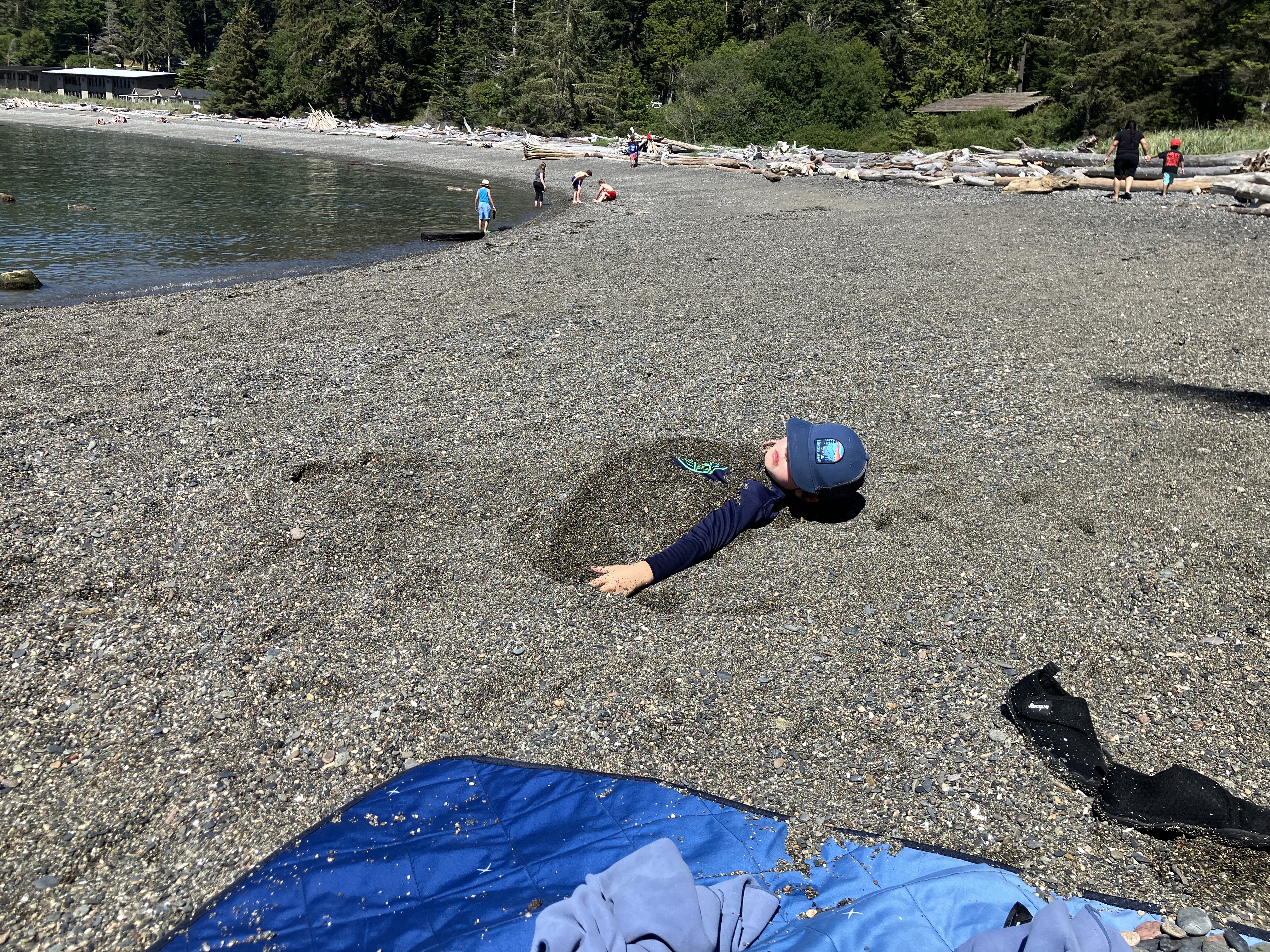
Something else about this beach that may surprise some is it’s composition. There is no fine sand at the beach, but instead, fine round pebble makes up the ground all around. Kids were having fun burying themselves in the gravel, and it made a warm bed to rest in between cold swims. The water here is frigid, and not many people were in the water for very long. Admittedly, that day I chose to stay out of the water and on the beach to keep warm. Later, as the afternoon progressed, the sun warmed up the dark stone and kept us moving into shade to keep from burning. I always recommend broad brimmed hats when you’re on the beach to keep the sun off your face and neck.
We needed our coats when we headed up to the narrows for a look down from the bridges. There was quite the breeze whipping across the gap in the stone cliffs, and it made us chilly right quick. My nerves were also tested from the dizzying heights so I went off the bridge quickly to avoid any vertigo. Shaking trestles, a product of large vehicles coming over the bridge, put me on edge too. I knew we were safe on the steel bridge, but the feeling was unnerving enough to drive me back to solid ground quick.
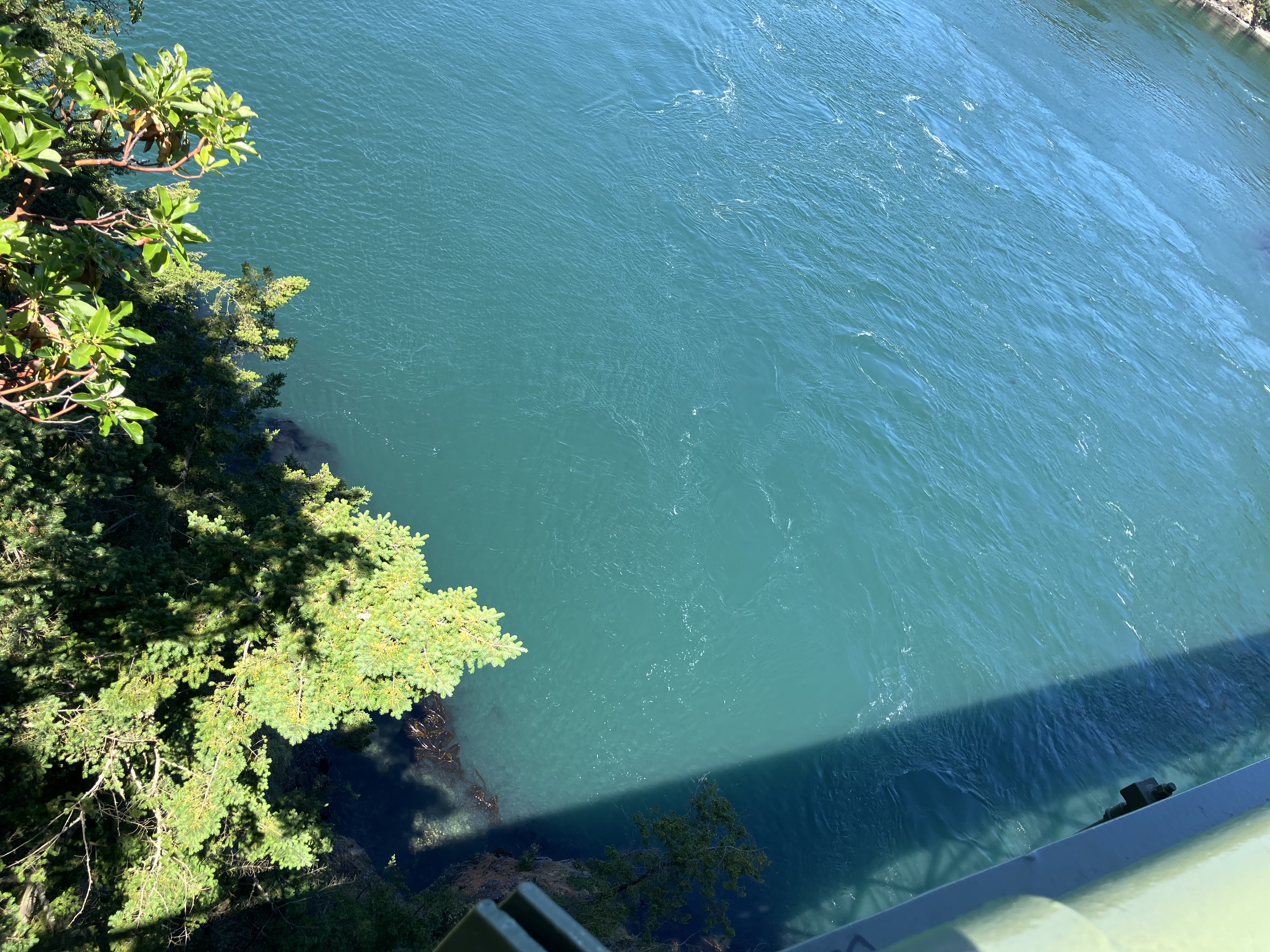
From the edge of the bridge, I watched the churning currents push through the narrow gaps between the islands. I don’t think you would want to be swimming in that mess. It’s a notorious place to bring boats through, thus the deception part of its colonial name. sčud (Lushootseed), refers to hazardousness. The first Europeans to see Deception Pass in 1790 were Spanish, who gave it the name Boca de Flon. I looked up a translation and got Boca “mouth”, but Flon was more difficult, suggesting it was meant to mean “flan”- a caramel cream, which could be the suggested texture of the churning waters. The deception part of the name by English explorers, was a reference to the pass not affirming or denying Whitby Island as an island, which kept sailors guessing. Still, they did not sail through it because it was treacherous water, and still is today.
We stood above watching for a while, then the cold drove us back to the car, and back home to recount our adventures. From the visit to Ko-kwahl-alwoot and sčud, I took away a lot of history, naturalist knowledge, geology, and good memories with friends. It’s a place I would like to explore more in future, along with the other islands of The San Juans. There is not a native name fore the collection of islands as a whole, but there is a land acknowledgment you can read about here. As I have mentioned in my writings before, knowing, or at least hearing the native names of places helps us understand our own history better, so I strive to continue to introduce myself and my readers to these names where I can. I am so thankful for time on the seashore, observing the living world around me, and learning about the special places I call home.


