Above It All

In early May, a dark overcast sky held the earth in shadow. These doldrums are great for working outside, but sometimes have that seasonal affect on the psyche. Any Western Washington inhabitant of several years takes the need for occasional sun and some serious D3 supplement in winter. There are clever ways to find sun in our area, and one of the easiest for me is driving about an hour up. The climb is a joy, heading along the valley river, then the first great step up at the rim of an ice age lake. The great Snoqualmie Falls plummets over a horseshoe drop carved out by tumults of melting ice water from glaciers as the atmosphere warmed. Above this precipice, I catch my first glimpse of the tectonic uplift of The Central Cascades. This is the ridgeline I love ascending to, dipping just over the back side, where peaks and lakes form a legacy of dynamic landscape full of biodiversity and adventure.

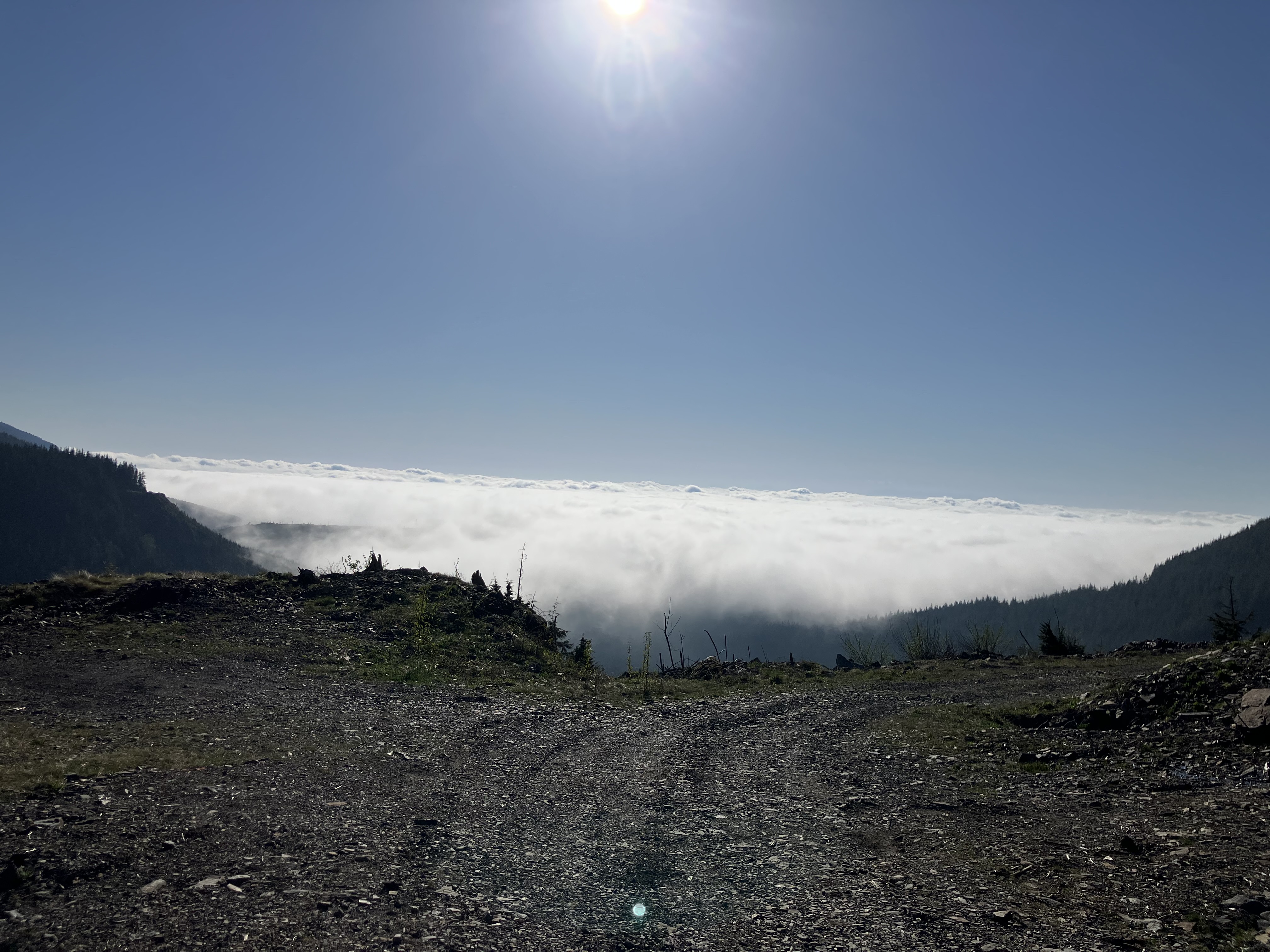
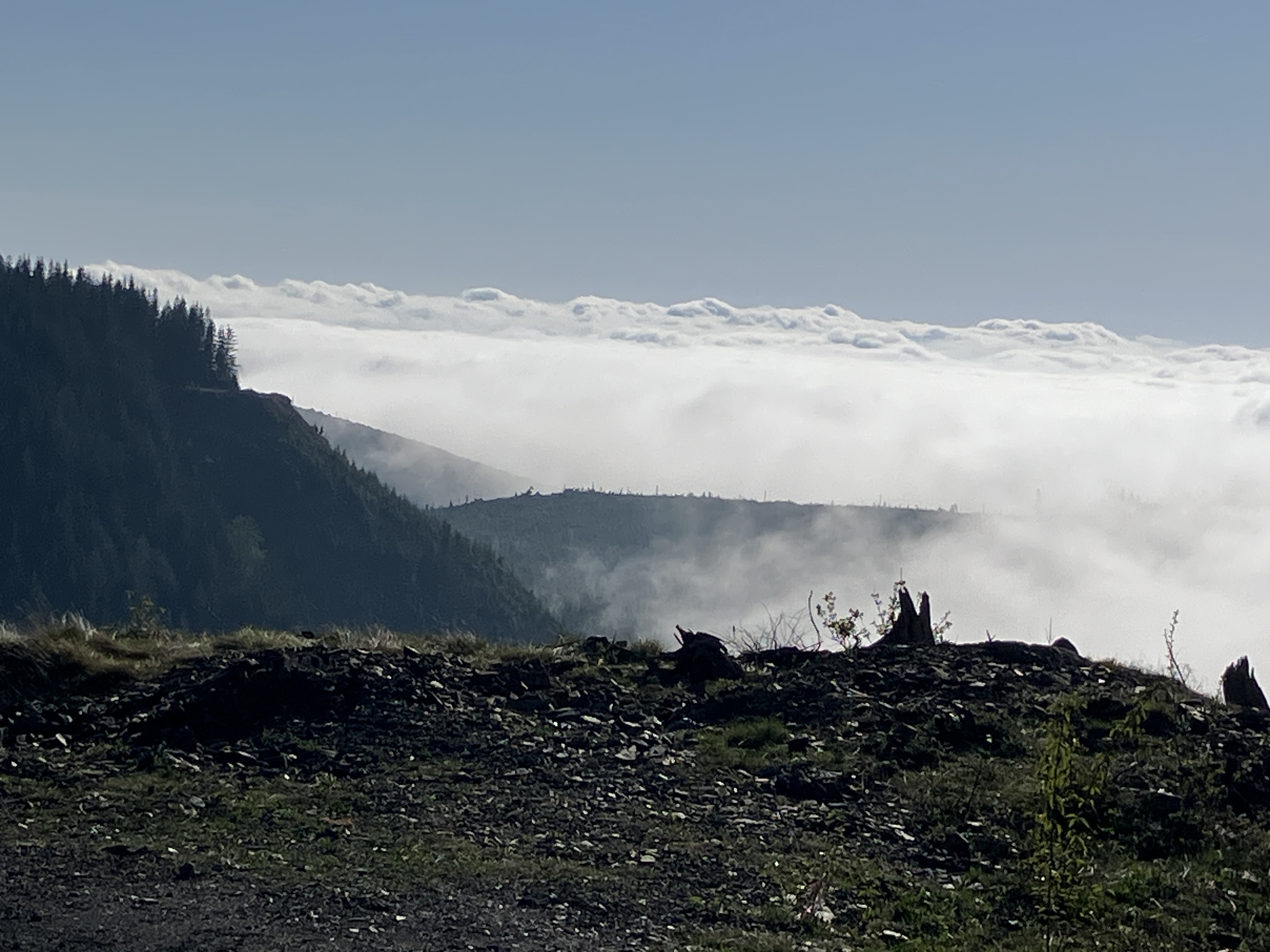
On this particular journey into the wilds, I had an intention to get above the clouds for some brought sunshine and an attempt to walk to the edge of the snow line. Without proper snow gear, I was not excited to summit anything or boldly go up steep incline. A few scenic back roads and switchbacks carried me up the steep terrain divided by alpine lakes and plantation forest plunder. Always a reminder to a point, the tree farm grants incredible private access, but remains an ecological waste land across most of its breadth. I’m a consumer of paper products, and I’ve seen recent new build on incredible scale with laminated timbers in tribal buildings near by in The Snoqualmie Casino. Wood products are much more ecologically sound- composting back to soil, or so the industry wants you to think. What about all the chemicals pumped into wood products? Oriented Strand Board (OSB) does not safely decompose into organic soil folks, and there are countless products of this stuff, common in most modern building.

That’s why the trees are cut, and will keep being harvested in these plantations. There are some beautiful stream buffer corridors along this part of the drive, but I really prefer not to get too attached, because major cuttings continue along all these groves. Still, in my lifetime I will have the chance to see some of these replanted section grow to sizable trees- or perhaps not. Wildfire could sweep through too. Such impermanence, even in forests. I can still drive on a little bit further, folding back into the evergreen patchwork to yet another forest, a place that has limited protections on it, no commercial cutting any more, but that legacy persists, and the promise of letting this place return fully to wilderness cannot be promised, for DNR land, though labeled “public” remains a place where logging operations can continue. In many places, they do. Hopefully, this elevation, combined with the fact that there’s not much timber feet of usable product available. This alpine habitat stunts the growth of many trees, and the older girth Douglas firs have their tops broken off by wind and ice, so the industry keeps their hands off, for now.
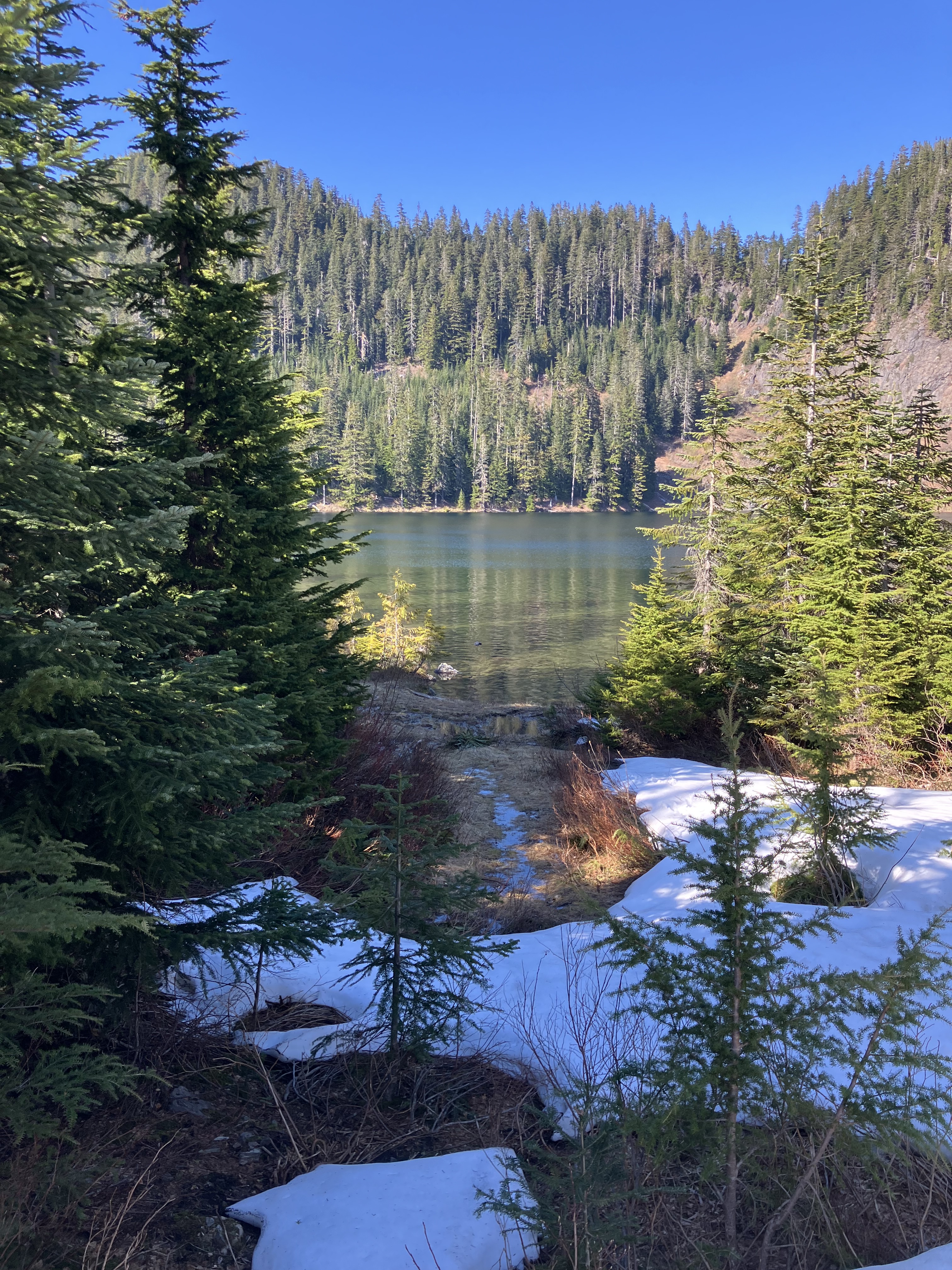
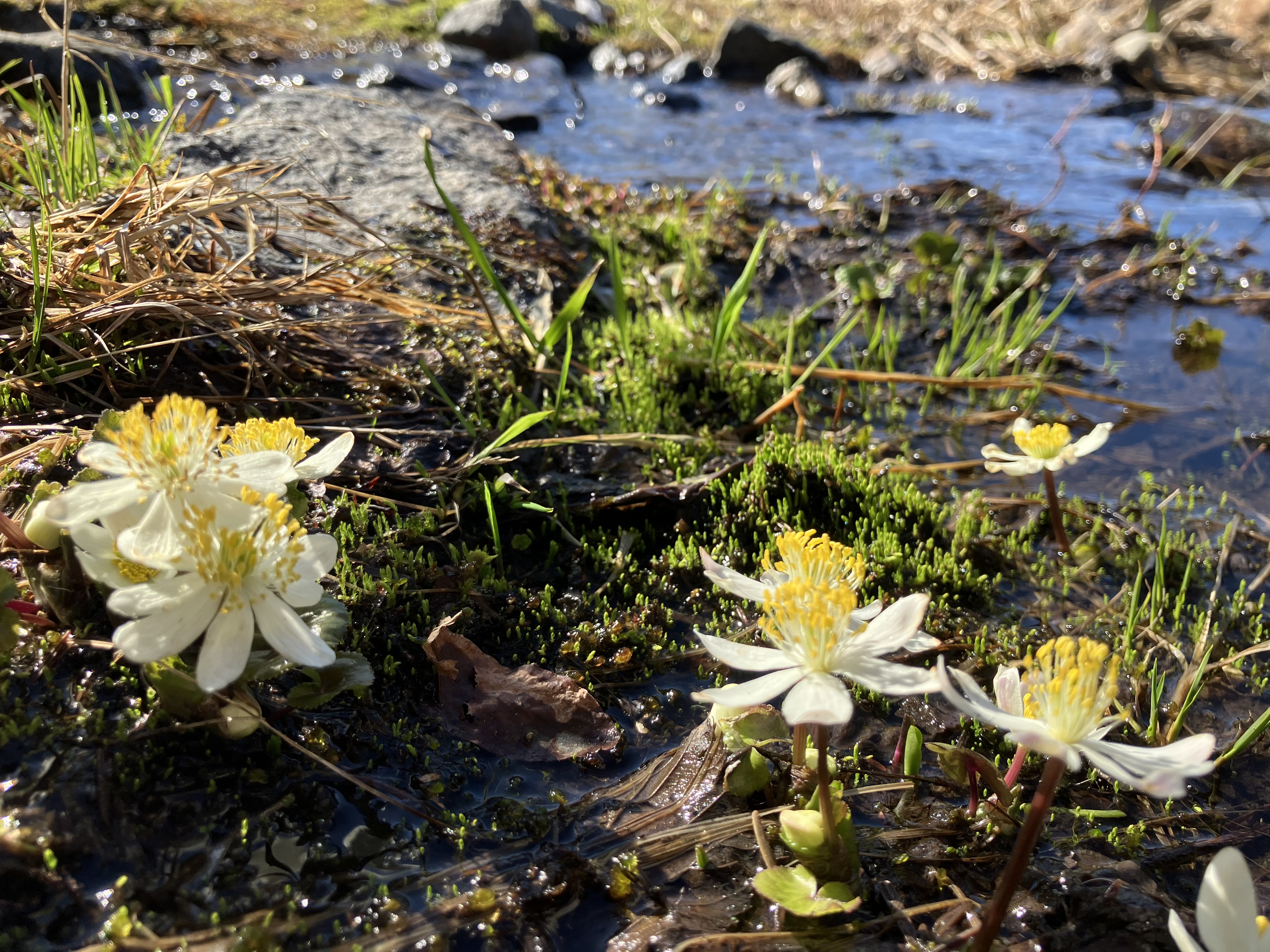
I’d like to say my hikes into these wild places are without a care in the world. A chance to escape the goings on down below in the valley. As all the landscapes are deeply connected together, so too are the thoughts and wonder that traverse the temples of my mind. I’ve got to take up meditation. And so this exploration allows a bit of focus, steps leading towards more quiet wilderness, the hum of insects, trickling beads of melting ice, crunching snow underfoot. I take my first steps into the snow line, it’s only another half a mile in, along the north side of a peak I’ve crested in the past, enough shadow remains to protect the frozen layers for just a few more weeks. Drifts build here, sheltered in a growth of native forest and rocky scree. The seeps hold sediment, washed down from the rocks and trees above. Plant life takes on the hillside with gusto. I’ve never seen some of these flowers before, spring is so fleeting in the highlands. I celibate the flowering saxifrage, slider alder and willow catkins, and fleeting tracks, melting away at the edges of the trail.
This place can calm the soul, even as I witness less snow pack and greater fire risk all around. My mind has to compartmentalize, keep the good vibes flowing along these mountain springs, which feed blue lakes below. Winter’s grip broke a few weeks ago, and all the lush life of this alpine wilderness awakens, all at once. I am awed by the warm light, and take off my jacket, stripping down to a t-shit, the weather will soon melt off the last of this snow, and I can again swim in the lakes in my wet suit. There are Pacific salamanders here, and all kinds of other magical amphibians. Delicate indicators that say the water is still safe to swim in, at this elevation. I begin post holing in the snow, coming to the far end of the three lakes, I turn and head back, my socks soaked, melting snow wicking down into my thin leather shoes. The tread is getting thin, not a place to scamper around on wet rocks in old souls.
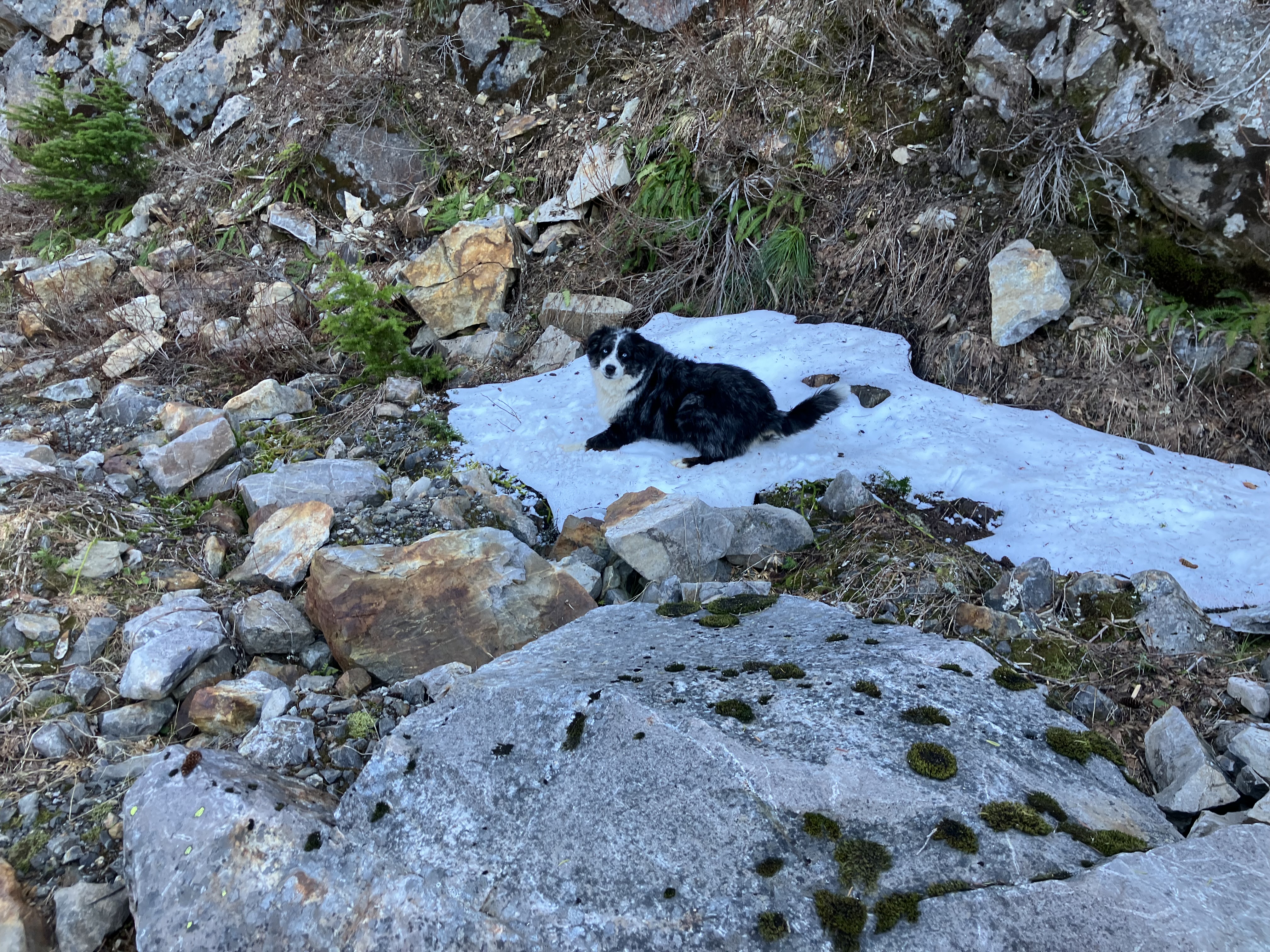
As Valley and I enjoyed the last of winter sport, we came across some of the usual suspects on spring snow melt- fleas. No, not the kind you and your dog need to worry about- these are snow fleas, and boy are they fun to observe. These active little critters are a source of food for many animals. A naturalist in Vermont once taught me that black bears coming out of hibernation survived off the little fleas if the plants weren’t leafing out yet. I’ve sampled a few, and they taste peppery. I think I could spend a few hours gorging on these tiny treats if I was starving like a bear, but today, they were not on the menu, so I pressed on back towards the trail head, feeling the wet socks beginning to soak in. Wet feet in the snow is not ideal, and even after I was through the drifts, I still had a lot of wetlands to cross through before getting back to dry trail. My mind was partially on personal safety, I would have many hours of daylight left, but I had not packed an extra pair of dry socks in the truck, so my feet would be waterlogged for a bit longer on the drive home.

Self-care is a great place to let your mind wander when you’re in the back country. It’s another way to take your mind off the regular grind of life. I say grind because we’re all carrying more environmental stress than ever. How we let it burden us should be a personal choice, but grinding takes its toll. I’m feeling my eyes getting tired as I type on this screen, but I’ll power on through to finish my thoughts on this day hike and the nature I encountered. It’s important for me to log my experience, and share the real time rhythms of the wilderness we’re all just on the edge of, even if it’s only the wilderness of our minds. Perhaps that’s where we go when me meditate- I’ll use that as a questing tool. Questing for meditation, someone laughed at that. Maybe I’m laughing at myself. Always taking the world so seriously. More time slipping on the melting snow up here in the peaks might loosen me up a bit more. Would it be like Nero fiddling while Roam burned? At least I’m not riding an e-bike.
Current Tracking

So, this site is a personal business and lifestyle for a single, queer, feminist, educated, childless cat lady with dogs; raising geese, sheep, and chickens too. It’s a world where people cannot afford eggs any more, and I have buckets from a flock that’s taken 10 years to develop, and could be exterminated at any time should bird flu infect any one bird. Farming is high risk. It’s why so many were consolidated into the industrial food system that feeds the box store buying majority. It’s convenience, to be sure, I still go to the grocery store, and I have 10 acres and an able body, capable mind, and willing community to connect with for financial, social, and emotional support- as well as family. My personal village of loved ones in enough to hold up this amazing experiment in slow food, personal obligation, social networking, and lessons in life, liberty, and the cost of a dream. Most of these blog posts are about the farm and forest relationship, food production, and the day to day realities of restoration forest farming in King County, Snoqualmie First Nation Homelands, here in The Pacific Northwest temperate rainforest ecosystem. What a journey, surreal at times.

After COVID, the social dynamic of this country changed. I went from hosting group classes, to person to person learning with most of my clients. This Spring, 2025, I officially took time off from volunteer teaching hunter education for Washington Department of Fish and Wildlife to focus on mentoring women and girls in outdoor pursuits- from hunting to hiking, back country exploration and basic survival training. I will be leading a course in basic survival this Fall, 2025 for Washington Outdoor Women. I’m excited to follow through on this partnership, which had just begun before the pandemic, and as the world shut down, that organization took a hiatus till this year, and I am glad the opportunity is back online and expanding. Contributing my skills to forward the education of women and their empowerment in the great outdoors remains a steadfast dedication in this life.

Farming economy in King County remains a bit of a challenge. The animals pay for themselves, there’s no question about that, but the continued communication on the human side of investment remains, well, questionable. There seems to be a wealth gap in community expectation- surprise? No. But the reasons fluctuate, like tidal living should, and I’ve always struggled with value vs. true cost of doing this work ethically, while asking for the true price of market fluctuation. For example- I’ve asked for $8/dz eggs on organic layer feed and full pasture access in 2025. That’s a $1 raise in price since 2013, and remains the price through all the crazy inflation of today- because the true cost of these eggs has remained the same, people are just experiencing price gouging from a subsidized industry due to scarcity of layer hens. Right now, bird flu is the culprit, tomorrow, it will be grain costs to feed the animals, then, with funding for research and oversight stripped, our agricultural inspections and protections are out the window and all bets of food safety with them. I sleep at night knowing my food production is part of a living system I myself choose to rely on and be intricately connected to. People want everything cheap- especially food. How we’ve gotten away with thinking food really should not cost anything reflects on the disconnect between Americans and their basic needs.

I have the privilege to live the homestead dream, and have always moved towards this life goal, at first manifesting in my childhood, with a love of nature and outside connection, developing into animal husbandry, and a love all creatures great and small. High school brought summer internships at The Central Park Conservancy where I learned about major city park management and how people have great impact on environment. College found me connecting with Main Organic Farmers and Gardeners Association while I worked on a major in Sociology. I made contact with a board member from MOFGA , and he hired me for paid summer employment as a dairy hand. That was my first lesson in hard farming realities, with paychecks bouncing from month to month and seeing the farmer I worked for overwhelmed by how fast agriculture was changing. He was a shepherd- like Farmer Hoggett from Babe, able to hand shear a full fleece and more. The sheep market had stalled out, so he became a dairyman, and hated it. Lee Straw showed me the future of farming in one summer, and I walked away shaken.

The summer after that, I worked as an intern for an openly gay woman Massachusetts State House Representative and learned a lot about local politics, state legislation, and why I would never make it as a lobbyist. I’d come into that job the summer DOMA (The Defensive Marriage Act) was struck down, and gay marriage was legalized in MA. I was dating a woman at the time, and suddenly felt that my relationship was more valid- how many have questioned the validity of their relationships with another based on gender constructs? What does this have to do with current events at EEC Forest Stewardship? Well, the queer woman running the place is getting agitated by a slow, steady, familiar walk back of civil rights. I’ll step into my woman’s shoes and point out I have less rights as a woman today than my Grandmother. WTF? My gender and sexuality are under attack- gosh, if I was trans, non-white, or unable to pass as straight, a migrant, refugee… how would I stay sane?

The following college summer, I worked as a wrangler for YMCA of The Rockies. I’ve always loved horses, and took a summer job working with them full time in a pictures part of The American West. Colorado treated me well, though working at a summer camp where most of the staff had been campers as kids cultivated a hard social culture to break into, I managed to navigate with a few other “outsiders” and was voted “most likely to run a tattoo shop” by my fellow staff. I was also the wrangler- out of an all women’s crew, who was know as the bronc rider. A week before the kids show up to camp for the summer, we wranglers are arriving to vet a herd of trail horses for the children to ride safely. These poor animals are rented from a large stock yard called Sombrero Ranches. Hundreds of horses are kept on large feed lots in the greater Denver area and then shipped to summer rentals, like YMCA of The Rockies, each season. Well, summer is the start of work for these overwintered animals, and they were fresh under saddle, to put it lightly. I earned my rides; about 20 out of 130 horses in our initial delivery out of a semi truck. We sent 4 back, three would buck under saddle, and one was too old and rickety to risk putting an unbalanced first time rider on.

I shared this story recently, attempting to demonstrate some of my horsemanship qualifications. I rarely mention them in these writings, because I’ve stepped away from horses in my choice of home environment here in Western Washington. Mules or a couple of bog ponies might one day be in my future- and sooner the better, as my body will age out of riding in an equine’s lifetime. That’s sobering limitations for me at 43. So what about horsemanship qualifiers? How do you answer the question, “What’s your riding experience?” I could sum it up as- started bareback before I could walk, under saddle by 5, maybe sooner, Mom would know. I took lessons from 6-11, then a move to Dallas TX suburbs; single parent income would not support riding lessons or a pet horse. Annual visits to Oklahoma offered occasional backyard riding with friends who still had horses. Ranch work for a few years gave me more riding skills and herd management training. In 2011 I went to Mongolia and road on a migration with over 2,000 animals, 16 people, two yurts, and three dogs- one of which had only 3 legs- it was incredible, but what does that have to do with current events here at EEC?

In September, I hope to be back in the saddle for an ACT ride with Daniel Curry. I will have a lot more to share about this bucket list dream to horse pack into back country for a good cause. Though EEC Forest Stewardship is not in current wolf territory, ancestral legacies of wolf, elk, and more remains an intention in the restoration of this landscape. After working with WDFW as a volunteer, I wanted to get more perspective on relationships with wildlife and people. I’m not going to get into all the drama of wolves here in the west. My goal in connecting with Daniel is to gain some perspective, get some time in the saddle, and support a local wildlife conservation effort that one man is struggling to establish with the ranchers in his community. I see similar struggles right here in my own neighborhood that EEC restoration efforts are hoping to address for generations to come. As wolves, a keystone species that once thrived across North America, loose protected status under The Endangered Species Act, I thought it might be good to check in with an in the field boots- or hooves on the ground biologist who is devoting his life to reconciling people with these animals for the sake of all our survival. So riding and stuff.

Over the past few months, as more and more “Oh Sh*t!” moments grip The American Psyche, I’ve found a few glimmers of humor in the great ocean of bile being served up as news in our zeitgeist. Laughter is an important remedy during hard times. As the madness of life continues- I’m grappling with the laughable alongside tears of frustration and outright horror. A lot of my personal rage has manifested in gender dynamics for a long time- thank you feminist upbringing. Here are two snapshots in which women calmly attempt to express rationally while men fight on the street or coup a country in the background. We’re all trying to stay focused while too many man children roll about in the sand box kicking grit into all our teeth. WTF humanity? Have we truly lost our way as a species thanks to idiocracy? I’m going to get back to 4 minute dance fitness breaks and advocating for global unity. How are you taking yourself a little less seriously for the sake of personal sanity? Sit back and binge a couple of good snap shots in time. Truly, “humanity rises and falls as one.” *CRASH*