Above It All

In early May, a dark overcast sky held the earth in shadow. These doldrums are great for working outside, but sometimes have that seasonal affect on the psyche. Any Western Washington inhabitant of several years takes the need for occasional sun and some serious D3 supplement in winter. There are clever ways to find sun in our area, and one of the easiest for me is driving about an hour up. The climb is a joy, heading along the valley river, then the first great step up at the rim of an ice age lake. The great Snoqualmie Falls plummets over a horseshoe drop carved out by tumults of melting ice water from glaciers as the atmosphere warmed. Above this precipice, I catch my first glimpse of the tectonic uplift of The Central Cascades. This is the ridgeline I love ascending to, dipping just over the back side, where peaks and lakes form a legacy of dynamic landscape full of biodiversity and adventure.

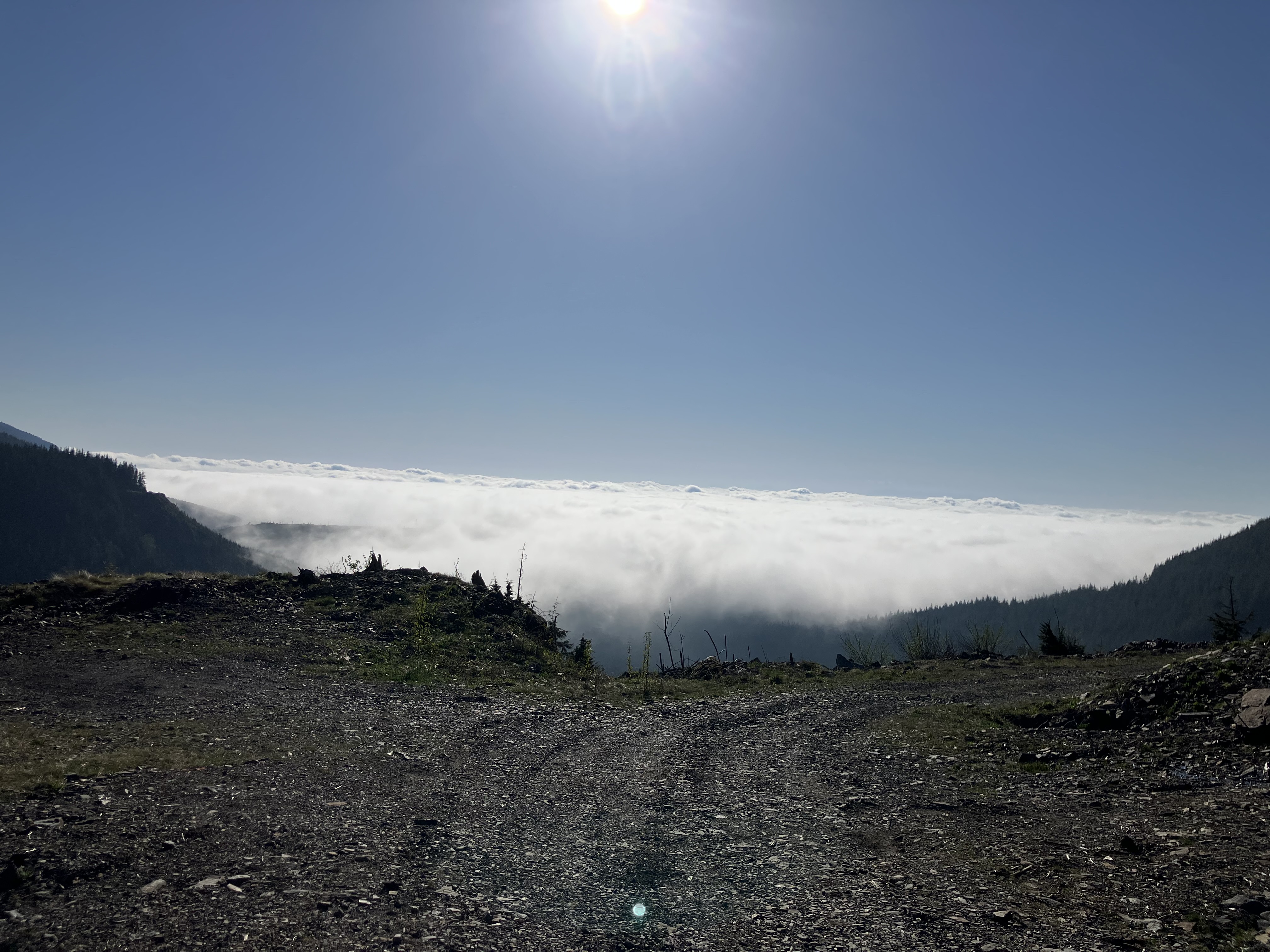
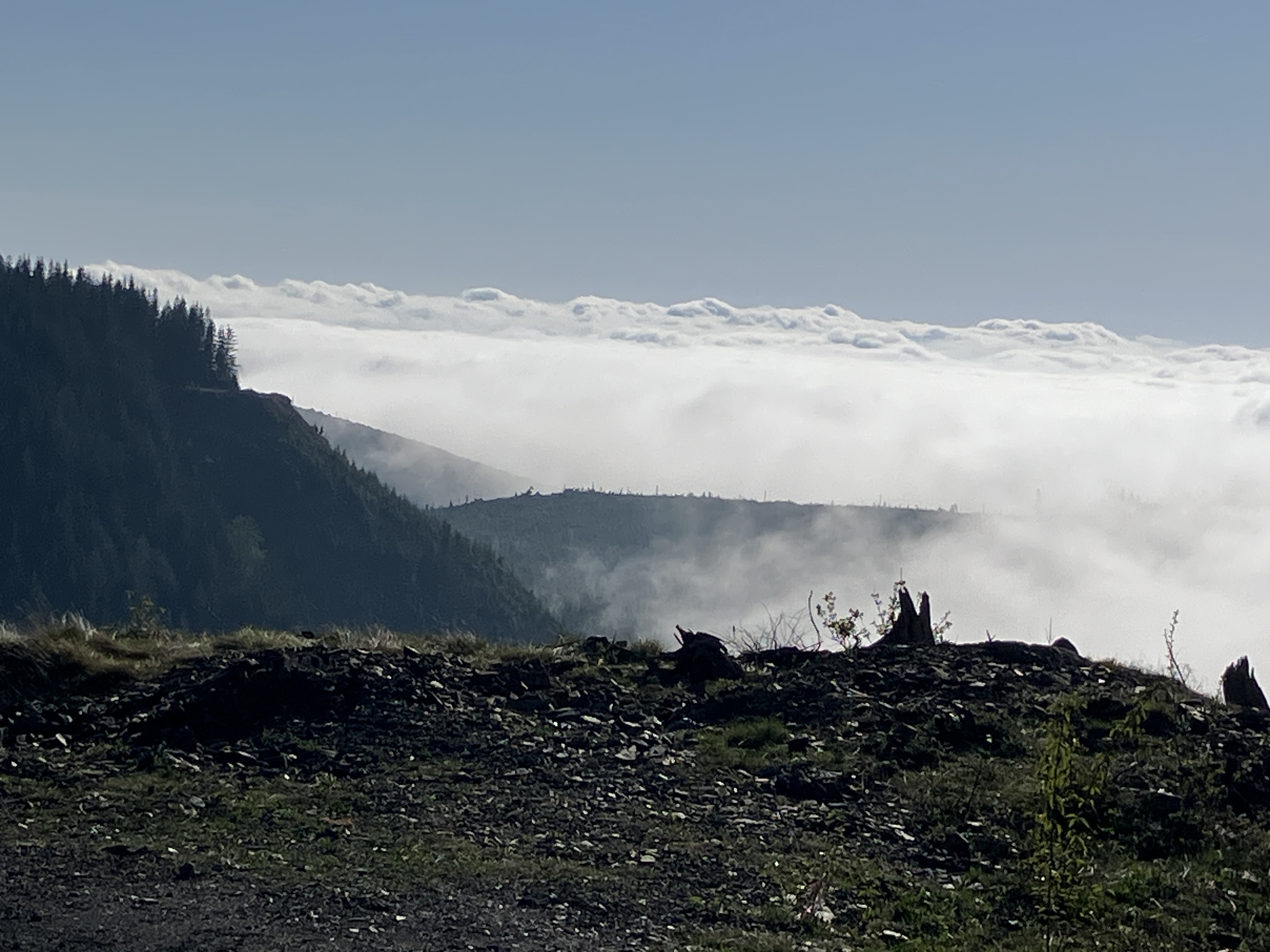
On this particular journey into the wilds, I had an intention to get above the clouds for some brought sunshine and an attempt to walk to the edge of the snow line. Without proper snow gear, I was not excited to summit anything or boldly go up steep incline. A few scenic back roads and switchbacks carried me up the steep terrain divided by alpine lakes and plantation forest plunder. Always a reminder to a point, the tree farm grants incredible private access, but remains an ecological waste land across most of its breadth. I’m a consumer of paper products, and I’ve seen recent new build on incredible scale with laminated timbers in tribal buildings near by in The Snoqualmie Casino. Wood products are much more ecologically sound- composting back to soil, or so the industry wants you to think. What about all the chemicals pumped into wood products? Oriented Strand Board (OSB) does not safely decompose into organic soil folks, and there are countless products of this stuff, common in most modern building.

That’s why the trees are cut, and will keep being harvested in these plantations. There are some beautiful stream buffer corridors along this part of the drive, but I really prefer not to get too attached, because major cuttings continue along all these groves. Still, in my lifetime I will have the chance to see some of these replanted section grow to sizable trees- or perhaps not. Wildfire could sweep through too. Such impermanence, even in forests. I can still drive on a little bit further, folding back into the evergreen patchwork to yet another forest, a place that has limited protections on it, no commercial cutting any more, but that legacy persists, and the promise of letting this place return fully to wilderness cannot be promised, for DNR land, though labeled “public” remains a place where logging operations can continue. In many places, they do. Hopefully, this elevation, combined with the fact that there’s not much timber feet of usable product available. This alpine habitat stunts the growth of many trees, and the older girth Douglas firs have their tops broken off by wind and ice, so the industry keeps their hands off, for now.
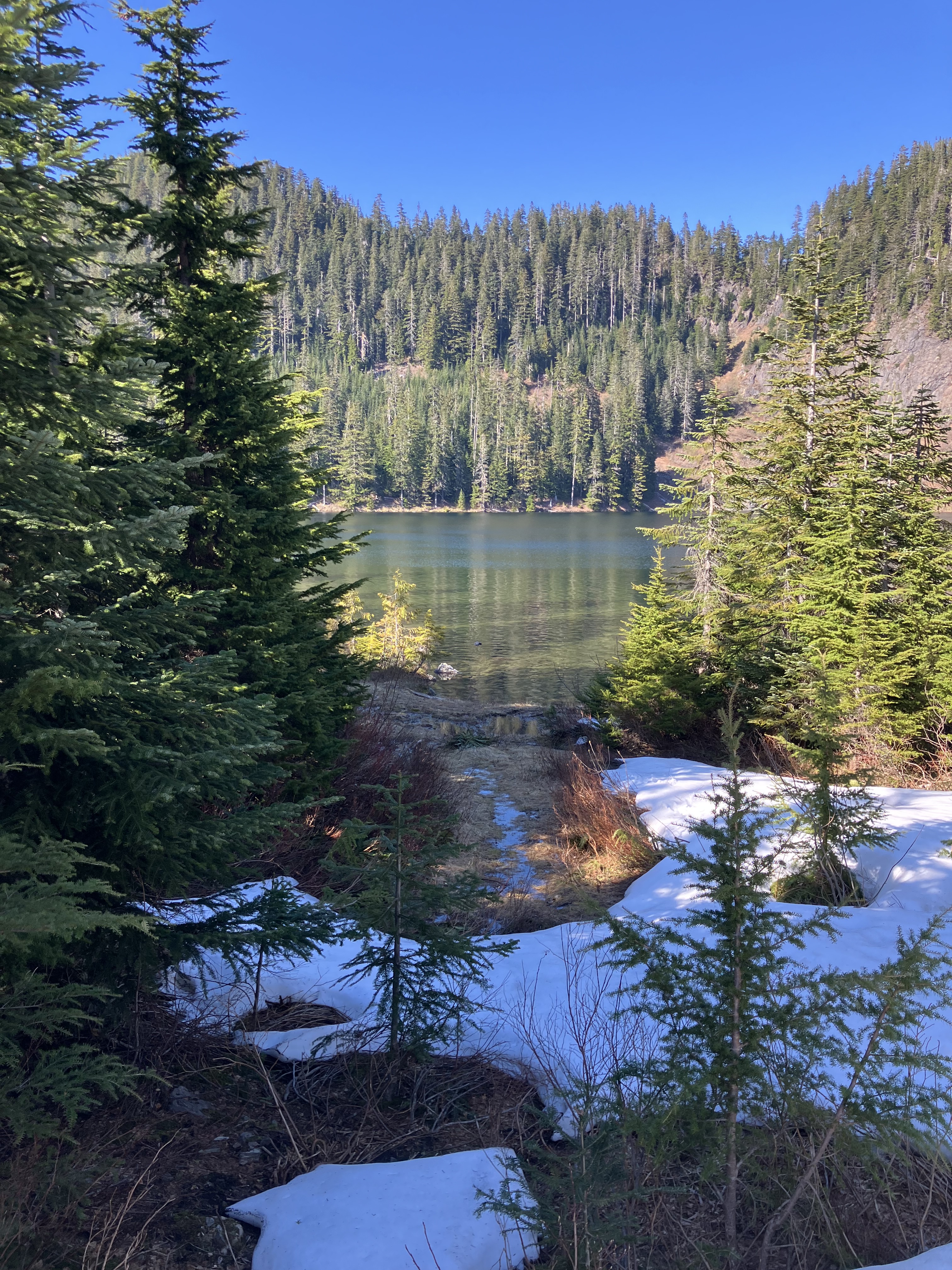
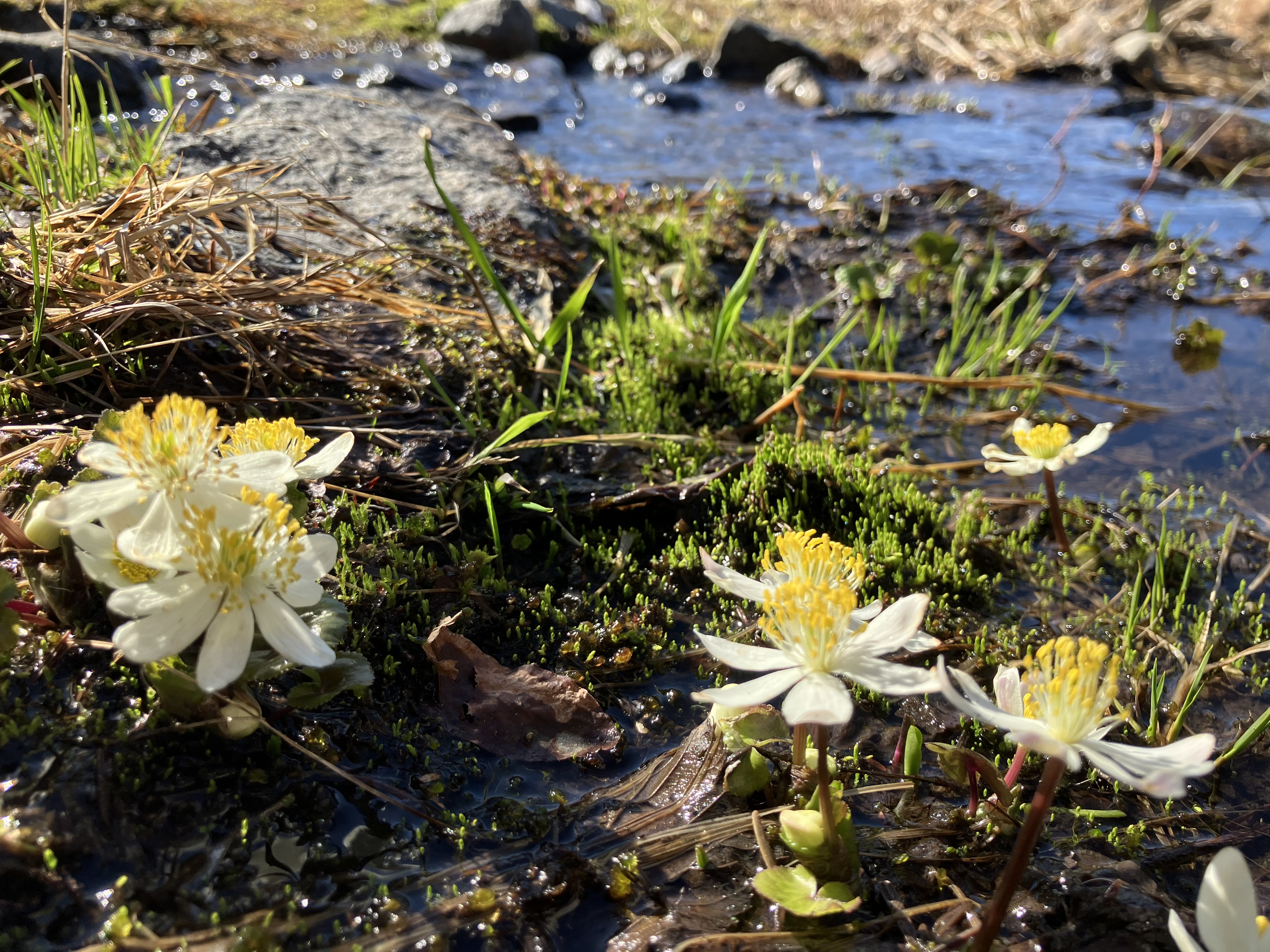
I’d like to say my hikes into these wild places are without a care in the world. A chance to escape the goings on down below in the valley. As all the landscapes are deeply connected together, so too are the thoughts and wonder that traverse the temples of my mind. I’ve got to take up meditation. And so this exploration allows a bit of focus, steps leading towards more quiet wilderness, the hum of insects, trickling beads of melting ice, crunching snow underfoot. I take my first steps into the snow line, it’s only another half a mile in, along the north side of a peak I’ve crested in the past, enough shadow remains to protect the frozen layers for just a few more weeks. Drifts build here, sheltered in a growth of native forest and rocky scree. The seeps hold sediment, washed down from the rocks and trees above. Plant life takes on the hillside with gusto. I’ve never seen some of these flowers before, spring is so fleeting in the highlands. I celibate the flowering saxifrage, slider alder and willow catkins, and fleeting tracks, melting away at the edges of the trail.
This place can calm the soul, even as I witness less snow pack and greater fire risk all around. My mind has to compartmentalize, keep the good vibes flowing along these mountain springs, which feed blue lakes below. Winter’s grip broke a few weeks ago, and all the lush life of this alpine wilderness awakens, all at once. I am awed by the warm light, and take off my jacket, stripping down to a t-shit, the weather will soon melt off the last of this snow, and I can again swim in the lakes in my wet suit. There are Pacific salamanders here, and all kinds of other magical amphibians. Delicate indicators that say the water is still safe to swim in, at this elevation. I begin post holing in the snow, coming to the far end of the three lakes, I turn and head back, my socks soaked, melting snow wicking down into my thin leather shoes. The tread is getting thin, not a place to scamper around on wet rocks in old souls.
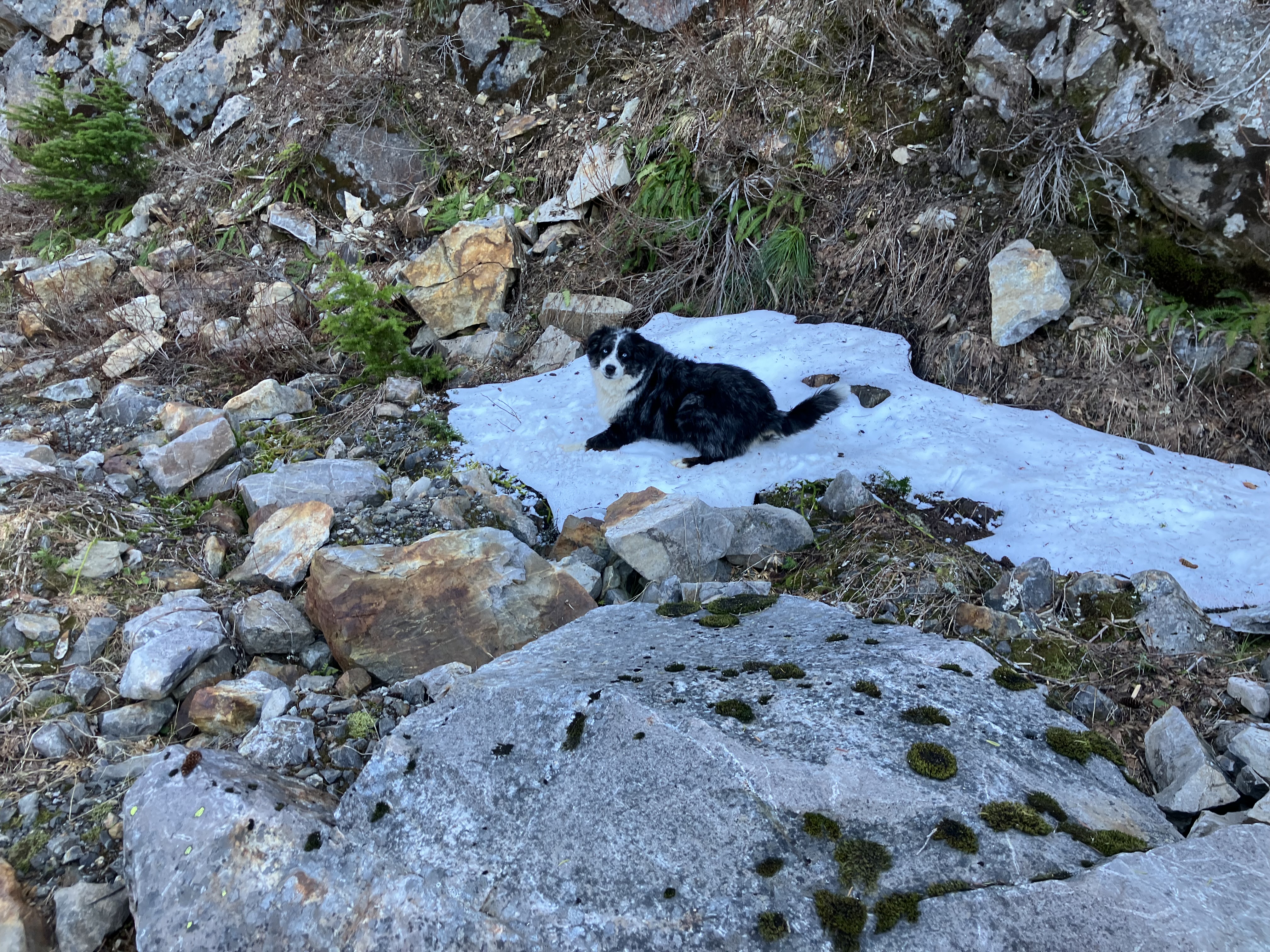
As Valley and I enjoyed the last of winter sport, we came across some of the usual suspects on spring snow melt- fleas. No, not the kind you and your dog need to worry about- these are snow fleas, and boy are they fun to observe. These active little critters are a source of food for many animals. A naturalist in Vermont once taught me that black bears coming out of hibernation survived off the little fleas if the plants weren’t leafing out yet. I’ve sampled a few, and they taste peppery. I think I could spend a few hours gorging on these tiny treats if I was starving like a bear, but today, they were not on the menu, so I pressed on back towards the trail head, feeling the wet socks beginning to soak in. Wet feet in the snow is not ideal, and even after I was through the drifts, I still had a lot of wetlands to cross through before getting back to dry trail. My mind was partially on personal safety, I would have many hours of daylight left, but I had not packed an extra pair of dry socks in the truck, so my feet would be waterlogged for a bit longer on the drive home.

Self-care is a great place to let your mind wander when you’re in the back country. It’s another way to take your mind off the regular grind of life. I say grind because we’re all carrying more environmental stress than ever. How we let it burden us should be a personal choice, but grinding takes its toll. I’m feeling my eyes getting tired as I type on this screen, but I’ll power on through to finish my thoughts on this day hike and the nature I encountered. It’s important for me to log my experience, and share the real time rhythms of the wilderness we’re all just on the edge of, even if it’s only the wilderness of our minds. Perhaps that’s where we go when me meditate- I’ll use that as a questing tool. Questing for meditation, someone laughed at that. Maybe I’m laughing at myself. Always taking the world so seriously. More time slipping on the melting snow up here in the peaks might loosen me up a bit more. Would it be like Nero fiddling while Roam burned? At least I’m not riding an e-bike.
Snoqualmie Valley Flooding

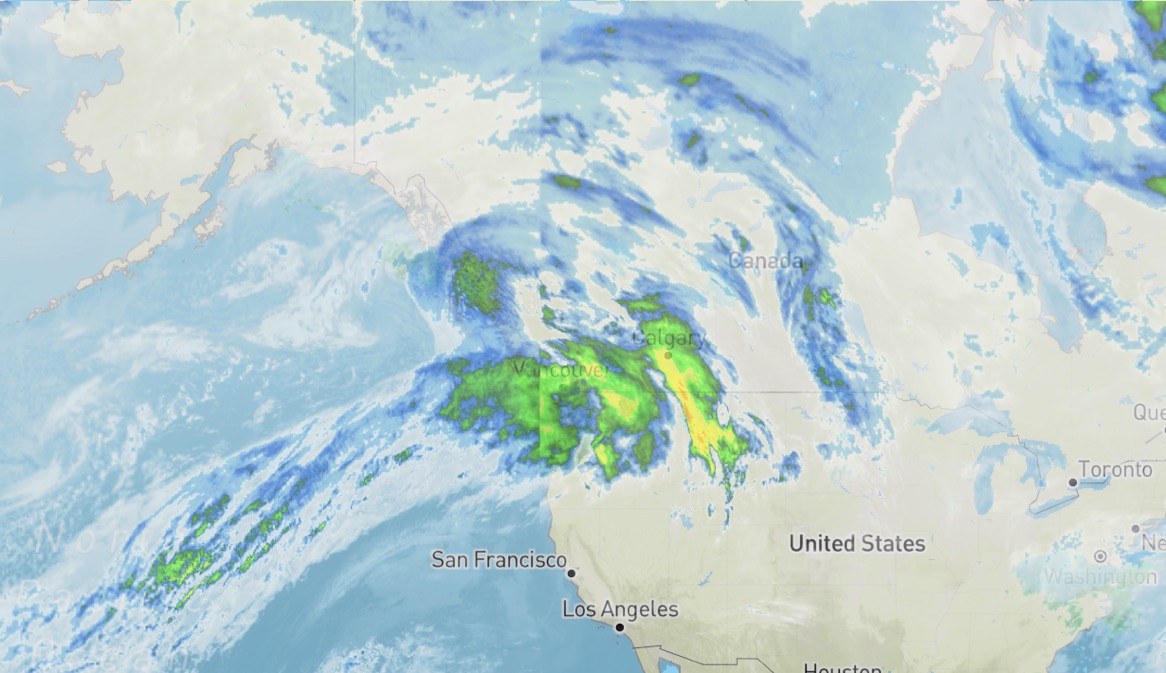
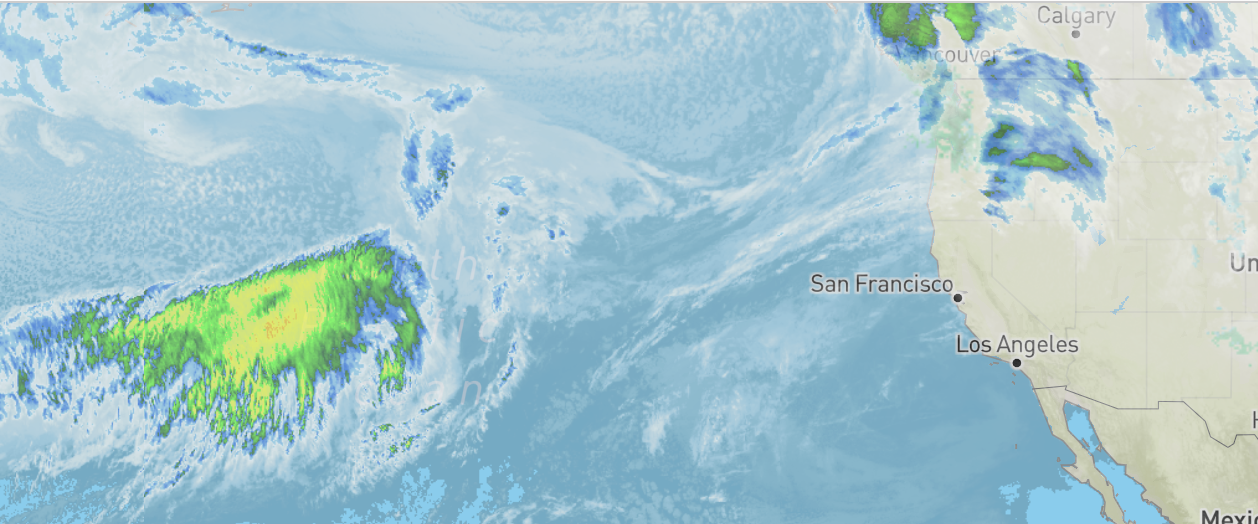
It first showed up on the radar as a ghostly horse head- lurking off our Pacific Coast, gaining speed and intensity over the ocean. Western Washington was already experiencing some rain, with atmospheric rivers projected to arrive the following week. This satellite picture was taken on December 6th. Then on the 8th, a full white horse head struck. I’ve used this animal metaphor along with the satellite shapes to track the history of this monumental flooding. It’s a once in a decade “100 year” flood, with record breaking rivers jumping banks, levies, and bridges across the western part of our state.

Our landscape legacy is temperate rainforest, which was designed to take in vast amounts of water, hold it in dense networks of tree roots, layered debris and downed branches accumulating over thousands of years. So, when European Colonial progress came and clear cut the land, pushing out the tribes of people living there, along with the plants and other animals that had evolved in harmony with the ecology of this place. Now, there is catastrophic flooding and homes threatened or destroyed by water that should be stored in centuries old groves and free to meander across floodplains we egotistical humans sought to dam, canal, trench, levy, and drain- unsuccessfully. Colonial legacy has left a river floor strewn with barns, farm houses, machinery, and the manifest destiny to keep plowing the rich bottom land of a forgone era. The floods will keep coming, 100 year floods are becoming 10 year events, and in my lifetime, 5 year or even annual events. That’s exponential growth folks- keep reminding yourselves that this climate change is exponential.
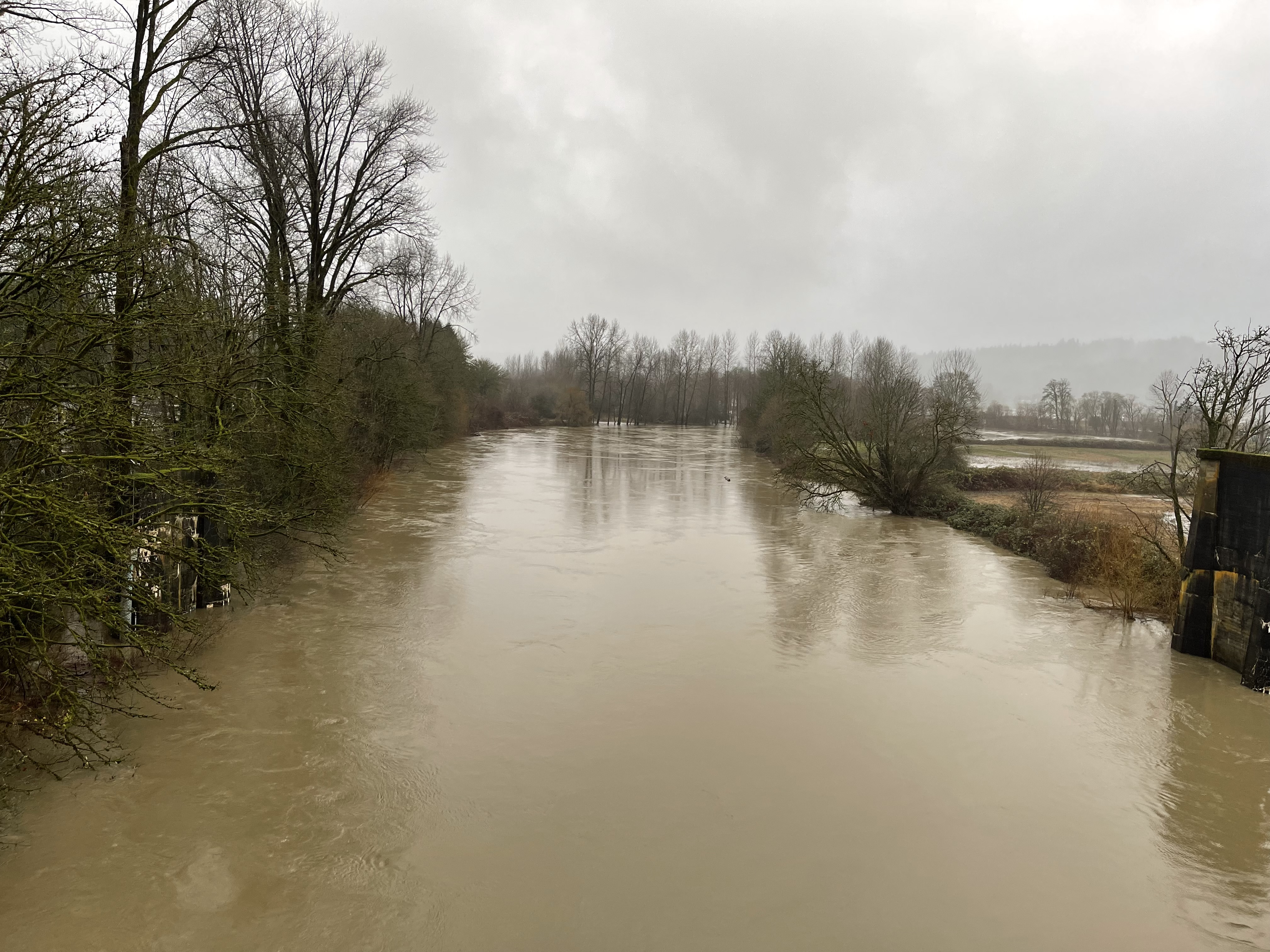
This is our high road out of town- blocked by still rising waters of sdukʷalbixʷ stulʷkʷ (Snoqualmie River)– named after The Snoqualmie Tribe, which still thrives in the upper and lower valley today. I’m starting my learning journey in place names around this beautiful valley, which is called cək’ʷdup ʔə tiił sdukʷalbixʷ (Valley of The Snoqualmie). There is a great webpage on the tribe site to learn more here. The Snoqualmie People have lived with the flooding river and surrounding waterways since the end of the ice age, and probably long before that too. They did not build long houses in the flood plain, or clear the forests and log jams out of the complex natural river meandering terrain that would be found in an intact river system. Logging companies brought rail through their clearcuts to haul out timber and haul in more supplies and workers for other industries that flooded this valley, and all the others at the turn of last century. Progress meant clearing out wilderness for a “god given right” to do with the land as men of a white European background chose. That dominion continues to this day, and farmers struggle to keep a foothold on the land, land which is now polluted by runoff from development, sewage from outdated septic systems and overwhelmed city treatment plants.

People are choosing to continue their lives in the flood plain, and it’s time we take a hard look at our poorly designed colonial agricultural systems that are outdated and soon to be swept off the map by human induced climate change. These storms were forecast several days out. Horse head storm came Monday and Tuesday, then another front I like to call bear head came and dumped an unusual amount of hard rain- we’ve been having harder rain events here for about a decade, and that’s what pushed our stressed river systems to the brink.

By Wednesday evening, the rivers were jumping banks and evacuations were in place. Our main road in and out, Woodinville-Duvall road, was still open into that evening, everyone had a chance to move equipment, pack up and head out of their homes, and get livestock to emergency safe space, like The Evergreen Fairgrounds, which offer free stalls and dry space for livestock. I watched a news segment about a dog shelter in Everette that was scheduled to flood, and they found foster care for every animal there after a public plea for support. Still, some people have chosen to stay home, and they are now being evacuated by emergency services, which have to put their lives on the line needlessly. This is important to reflect on when you think you’ll just sit tight in a projected flood warning- you are putting other people at risk when you don’t heed evacuation warnings. So, on Thursday morning, December 11th, some people were still shocked to find the city cutoff by flooding.

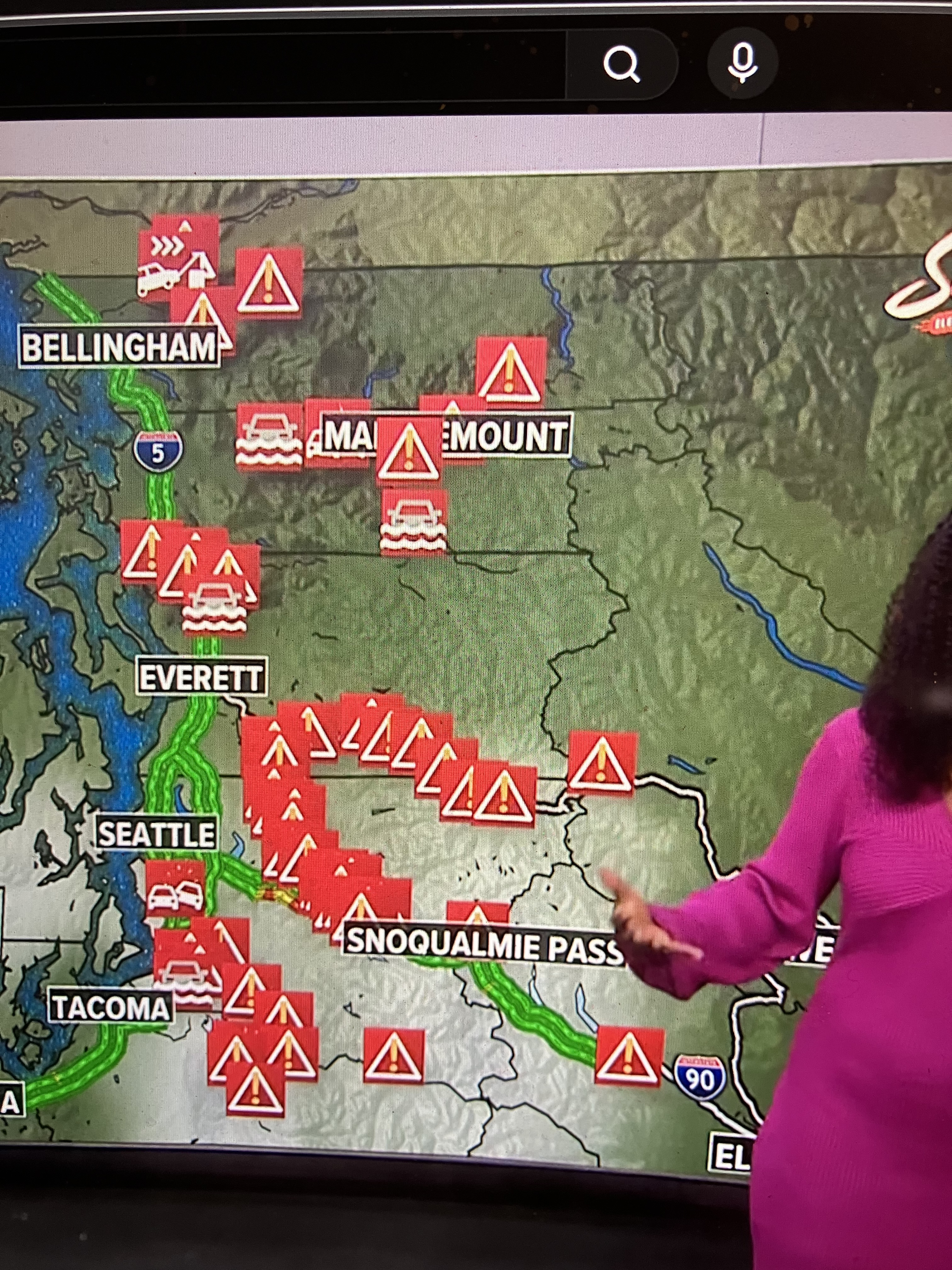
It was not a surprise folks- and we’ll be an island for at least tonight and most of tomorrow, then a break before another round of rain will potentially raise the rivers again- hopefully not as catastrophically as today, but flooding will continue throughout the winter, along with landslides. That’s what happens when it rains a lot around here. Since today was indeed a special day of extremely high flood waters, I did take a few hours to explore and document the water works in the valley. Lots of other folks had turned out- school was canceled, and a lot of folks could not drive into work this morning because of the flooded roads. Duvall is an island right now- in the sense that no public roads are open due to flooding. But it was a great day to get out on foot to see the water level rising and celebrate this some what rare event for the town.

There were all kinds of strange sites to take in- from flooded playgrounds to loads of water over roadways. Our river was almost unrecognizable without clear banks, and waterfowl was flying in from all over to enjoy the banquet of washed up worms, plant life, and insects. We saw fleeing voles, winding snakes in the water, and graceful swans overhead. The eagles were chirping eager meal calls as fish swam into shallow fields and pastures, obfuscated by mud. There was a smell- some what organic and definitely sewage in nature wafting from the currents. I heard a mother tell her child not to put his hands in it. Agricultural runoff is a major problem in our valley- and any crops touched by floodwater cannot be sold for human consumption. Think about that for a moment. Yet a few people had their shoes off and were wading in- hmm… raw sewage anyone? Further up stream, on the other side of the valley farms runoff and city sewage treatment plants, the water smelled fishy, rather than poopy, and ran clearer.

The sound of the water reminds me of it’s power, even shallow over the road here. The current was peeling the tar off the mending strips on the road. Grass and other debris floated by, and the off white color of the road strip tells me there’s still silt and other microbial things floating in the current. But the sewage smell was gone, replaced by fish and other river smells you expect to encounter in clean running wild water. It was over topping the highway and running into a cattle pasture on the other side. Though the cows are gone now, their manure is still on the surface of the soil, and will be carried off into the river and on down stream. This river connects with another further north, then they braid into a third and pour into slews that eventually connect to x̌ʷəlč (Puget Sound). You can find more place names in Lushootseed here, which is the native language shared by The Snoqualmie Tribe, and other tribes of areas surrounding The Salish Sea. I’ve found that at least hearing the native place names of the area helps me to begin acknowledgment of the people that have lived here in relationship with the waters and land since time immemorial.

Flooding like this is why most native tribes paddled canoes to get around. These floods would not prevent much transportation if it was all by boat as it once was. One of many reflections I had standing on the shore looking off into the watery abyss which swallowed the roads. I heard one woman ask a police officer, “when is this going away so I can get out?” to which he replied, “Oh I don’t know.”. The forcast last weekend was clear- it was going to flood, last night I knew the roads would be cut off by morning, and still, some people were clueless- perhaps because weather and flooding is not the normal day to day around here- and in most places. Come the rainy season, which is actually late in arriving this year- we are still 8″ behind in rainfall this year, flooding does happen, and landslides, which closed are two main east/west routs in and out of Western Washington. The road were looking pretty treacherous this morning, and with flood waters rising throughout the day, it was not going to get better over time.

What a great day to sit back and enjoy the ride- and thankfully, the farm, animals, and people at EEC Forest Stewardship were dry and safe on the hill. To be clear, flooding is a scary thing, and there are many people right now in low lying areas that are frightened and in a panic about what to do and where to go, but we have to acknowledge that flooding is a cyclical part of life in this area. The warnings went out days before, and help was available for those in need. Those who asked, received it, including on the spot rescue when people chose to cross road closed signs to push through and got flooded in their cars. Again, rescue crews were put in harms way because of selfish egos. Please respect road closures and warnings from public servants in your area. It might also be smart to keep one eye on the weather near you to prevent surprise catastrophes. If you are looking at buying property near waterways, check flood histories first and understand the risk of living near water of any kind in the Anthropocene.

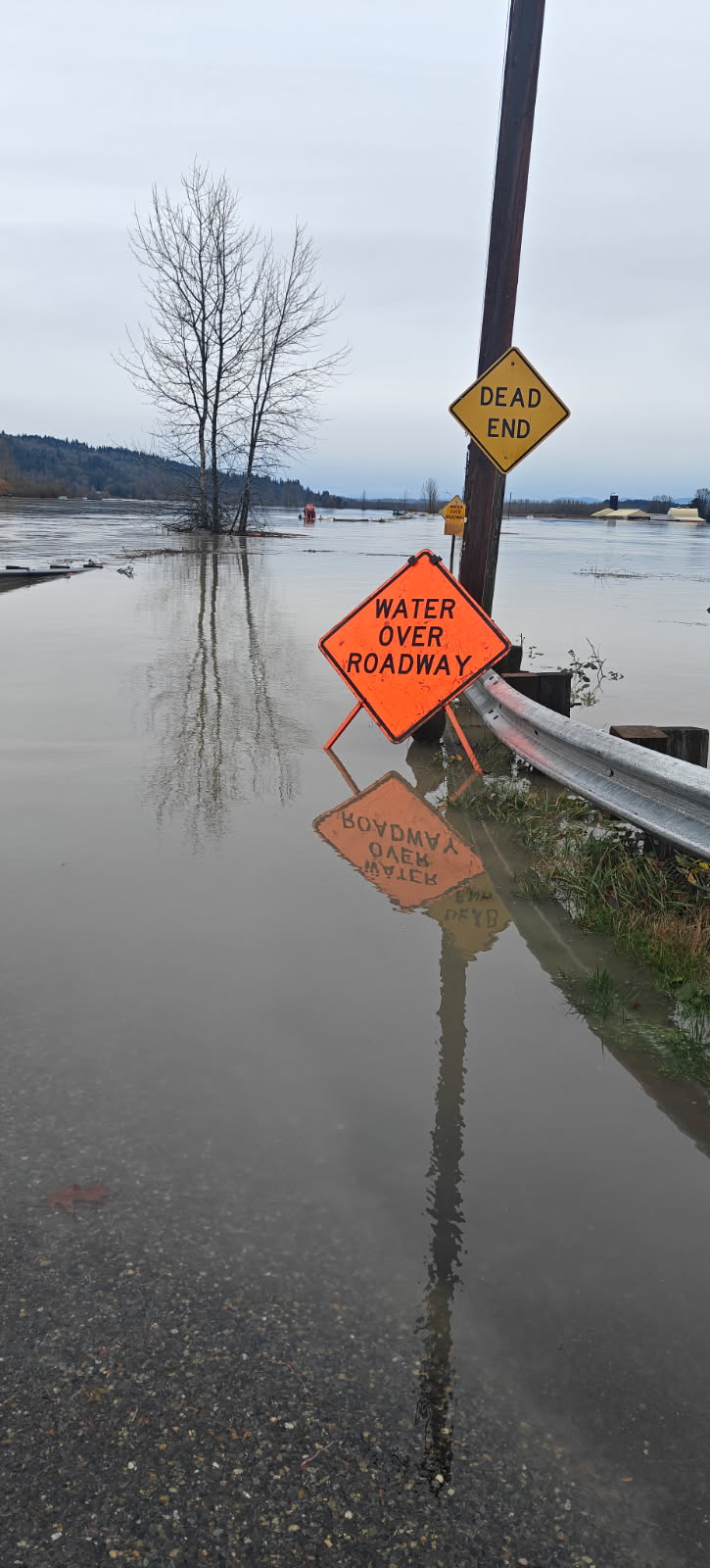
The morning adventure around the flooded roads of our town was epic- with pictures of all the cutoffs due to water over the roadways. This shot of the 124th bridge shows how much water is over the road. This access was flooded out on Wednesday, late morning. I was just driving back from picking up some paperwork in South Seattle, and had to take a detour up the road to Woodinville-Duvall rd., which is now flooded. At that time, the road was only just underwater, but now, no one could get through, no matter how jacked up their truck might be. On my way out of this area, I watched a guy launching a boat from the roundabout. That was surreal. We were not sure why they were launching into a major flooding river, but did not stick around to ask. Let’s hope it’s not another cause for rescue workers to be out trying to save people that had no business being out on the water at this time. Again, the best thing you can do in an event like this is stay out of the way and not try to be a hero. We parked in a designated parking area to look-y-loo. We did have to turn around in the middle of the road that was closed on north hyw 203, but there was no traffic, and we did not try to forward the road into the water- others did, and that’s what will get you swept off the road and into trouble. Please think about the other people who will have to come get you if your antics fail.

Now, the storm is letting up, and I can still see a horse head throwing its weight around in the atmosphere above, though now it’s facing out to sea in a farewell. I’m going to keep calling this horse head storm. This might not be the only post I make on this flooding, but today’s adventure is fresh in my mind, and I wanted to get these pictures out there for folk who are curious about what’s happening in our small valley during a 100 year flood. Thanks to all the rescue workers and civil servants spreading clear communication about safety, flood dangers, and where to seek aid. The weather folks have been clear and concise, with lots of great updates as the weather continues to change. Thank you to everyone who stayed home, came out on foot to share the majesty of our local waters, and kept out of the flood to keep others safe too. Another rain event is scheduled for early next week, hopefully by then, our valley is drained out and back to normal flow so it can buffer this next storm without cutting off the access. However, it’s always an adventure when Duvall reaches island time.

Book for Our Insane Times

Earth Emotions, Glenn A. Albrecht | 9781501715228 | Boeken | bol.com

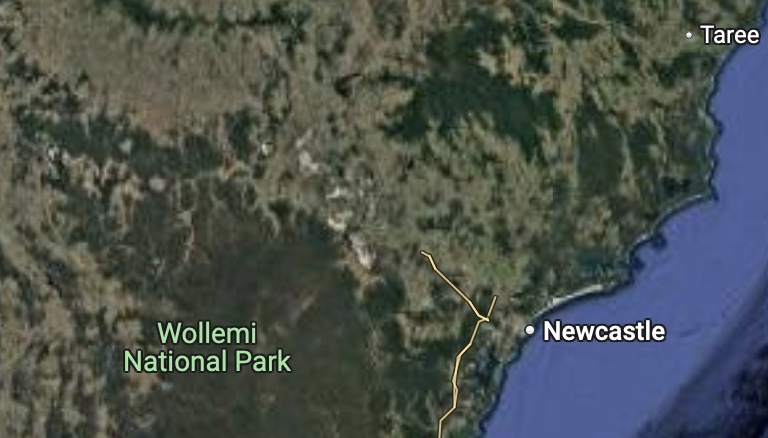
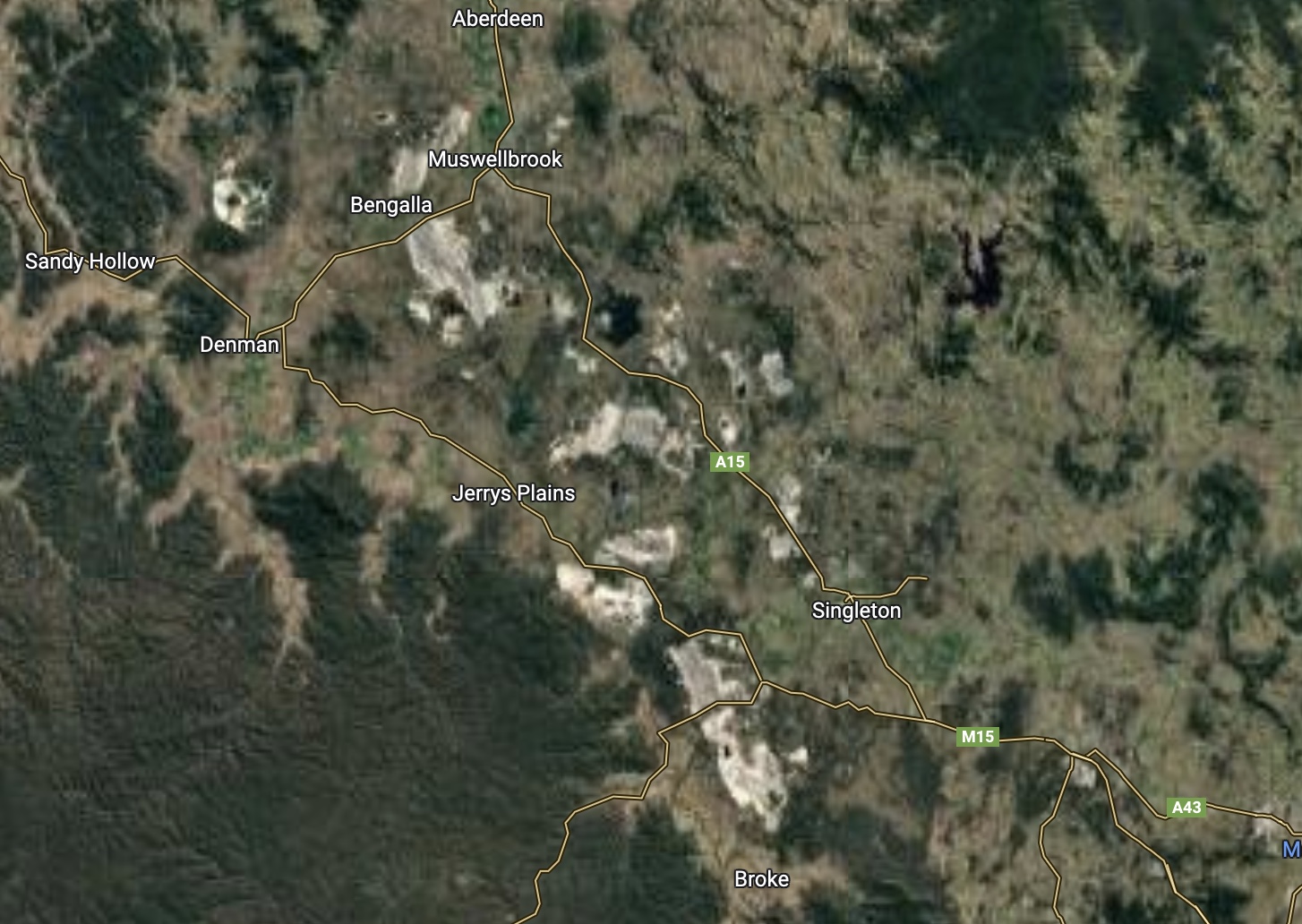
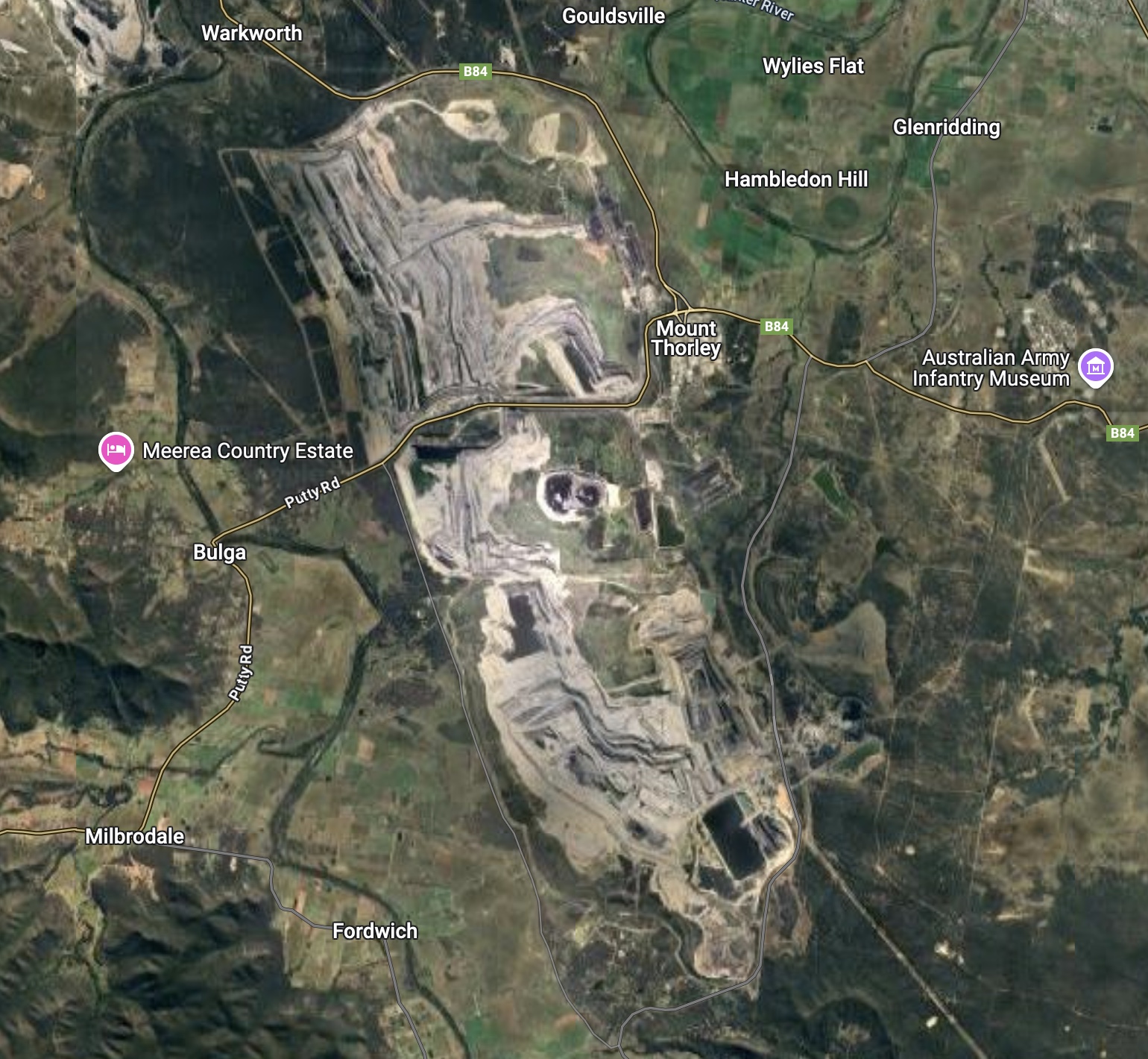
I’m reading Glenn Albrecht’s book: Earth Emotions New Words for a New World with an online book club led by Rowen White. She encourages new language to help us grasp the times we are living in. I approached this book with interest, and so far, the reading journey does not disappoint. In digging a little deeper into the author and his journey, I felt compelled because he pulled so much of the narrative I use in trying to grasp the current epoch: Anthropocene. The book helps transcend from this nightmarish necrophilia towards our planet, into a future of re-connection with place and the living world in The Symbiocene. He uses the example of his home in New South Whales Australia, in The Hunter Valley, where mining operations have destroyed much of the ecology and special places he knew and loved as a child. Though hard to fully comprehend, these mines are the largest active open face mines of their kind in the world- and many operate 24 hours a day. Below is a series of satellite photos of the mines- which you can see as white splotches from space.

This area is already stressed by drought and logging- which still goes on today. Massive wildfires in 2020 decimated much of the forests. Mining is not highly regulated in NSW, or much of Aulstrallia. There is a history of imposing colonial extraction throughout the continent. For Glenn, this experience with human destruction of environment continues to evolve as the mines grow, and neighbors once excited about the economic opportunities for the local economy, are now awestruck by the destruction and intrusion of industry into their lives. This story frames Albrecht’s concepts, as he takes us on a tough journey into phonetics, philosophy, and a collective thinking that bridges us from wanton destruction towards restoration and collaborative connection through place. The reading is thick, and I am looking at his concepts through many lenses to help me better understand how to reshape my own language towards Symbiocene. Earth Emotions tends to the lexicon with grounding stories of place, along with collected sources from around the world.

Albrecht’s argument for our individual choice in moving away from destructive, towards productive restoration and return to our ecology through community, grounds the idea of collective into daily action and vocabulary to evolve out of a society of fear and into direct connection with abundance through cooperation. Recognizing the complexities of life and how we as humans, part of this living world, live within ecological systems or parish in an artificial world of self-destruction. Both are happening at the same time. For the human psyche, this reading releases guilt, reshapes reality, and shines a little light on a future of harmony and refocusing on the finite time we have to thrive on this earth.

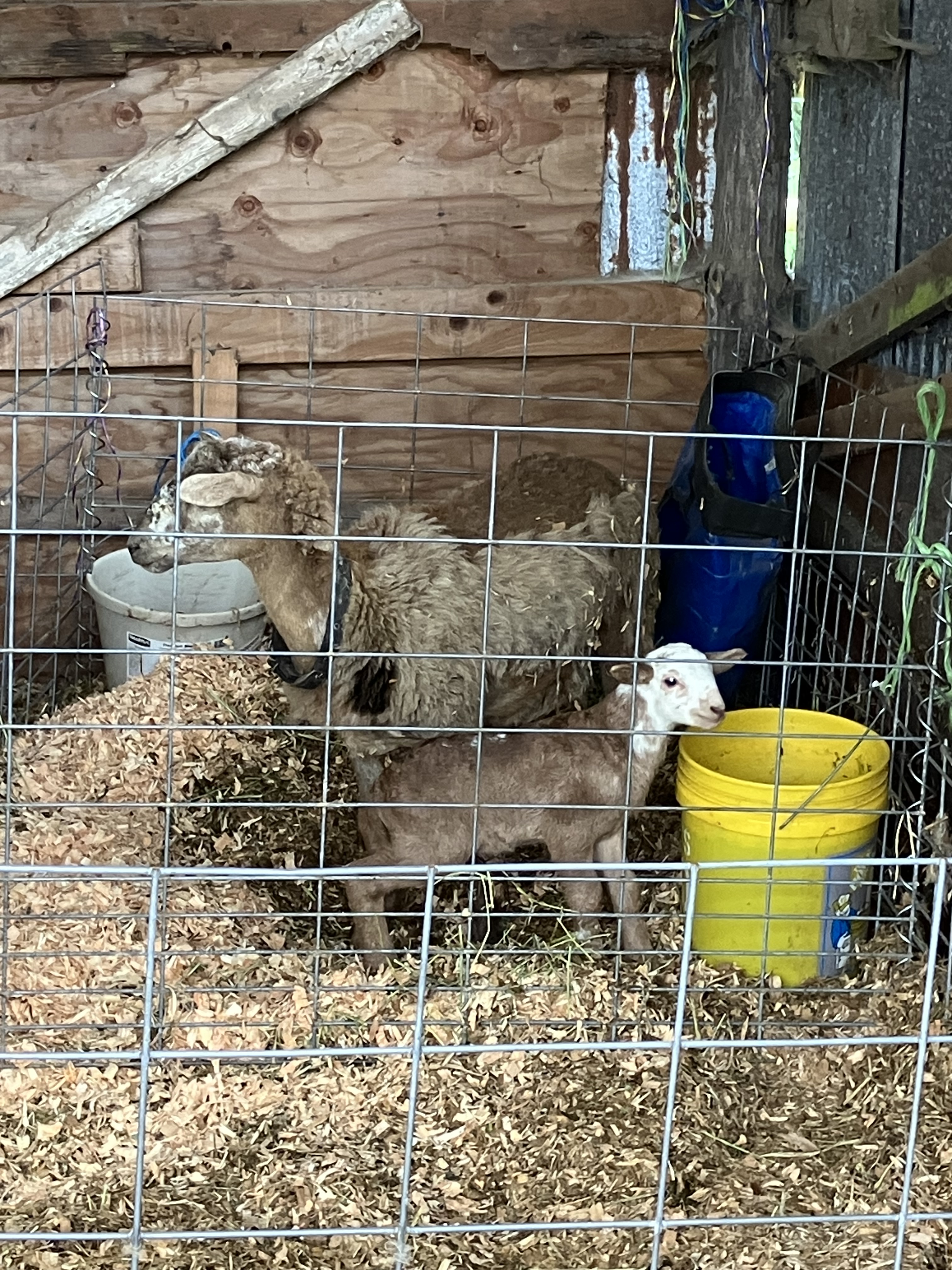
This is my first ecophilosophy read, and I recommend looking at other outside sources while reading this book- I’ve noted many in the text of this blog for a start. It’s refreshing to read in the direction of affirmation in my work, I was truly blown away at hearing so much familiar thinking, thus grounding my own vision of the world more soundly in an insane place. Excuse me now while I go feed the sheep and visit the newest lamb to our flock, Quern.