
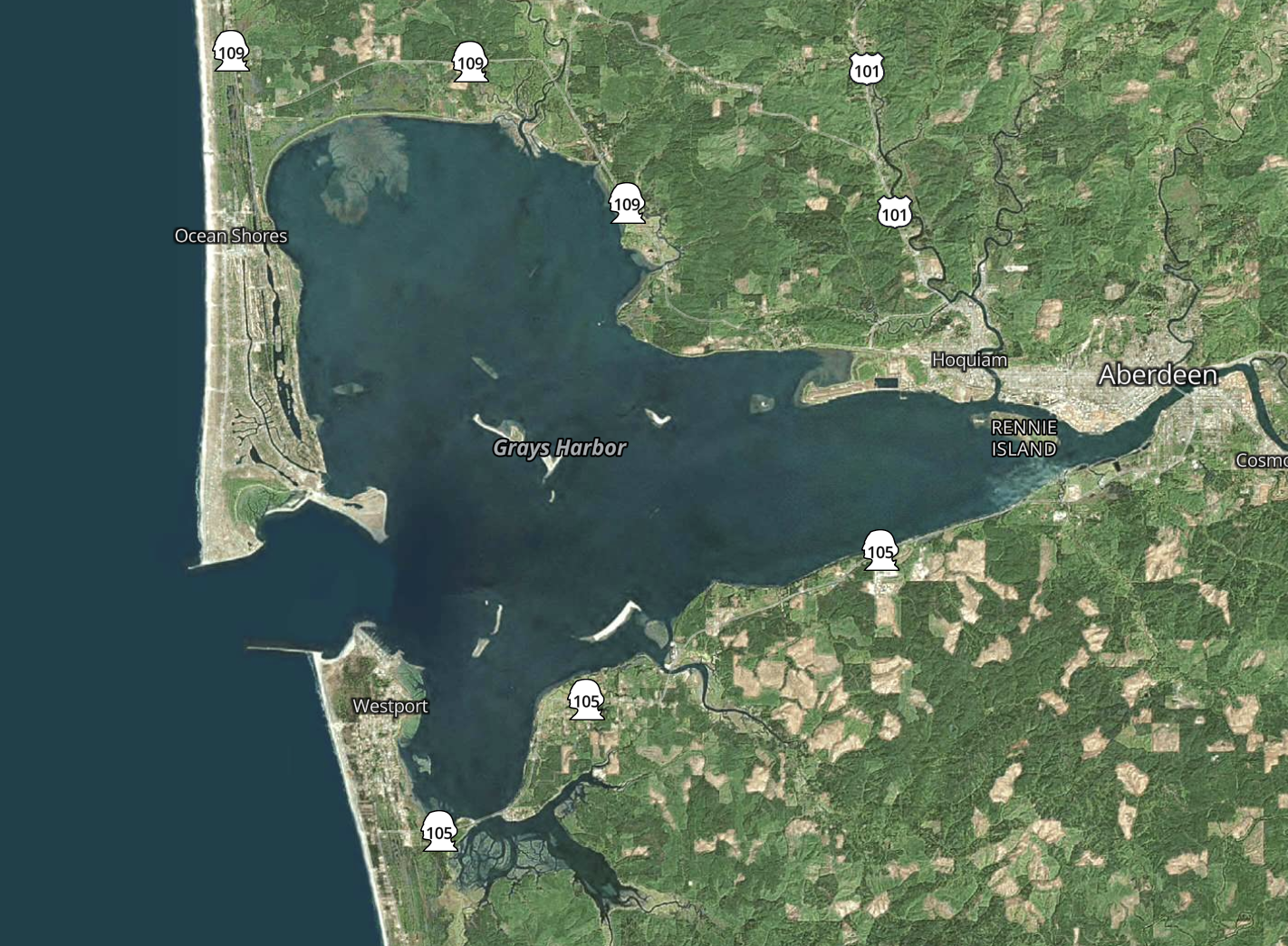
The waves were big in Westport on Saturday here in Western Washington. It’s a rare treat to get to the outer coast for a show like this, and I took full advantage of two big weather systems moving through. Our timing was perfect, with the rain holding off until we had taken in the full force of Mother Nature’s Pacific Ocean in her glory. Though the breakers had been much higher through the night, and evidence was washed all over the walking trails of the area, we still got in an impressive show. With swells cresting out at 20′ in some sets, the waves came crashing in with gusto. We had debated where to head for the viewing, between Ocean Shores and Westport. Since Ocean Shores was in a state of emergency because of wave damage, we headed south around Grays Harbor to enjoy the sea action.
Though Westport is not the most dramatic wave action spot on the west coast, it is still very impressive to see all the water washing in. Next week will be a king tide, but luckily, the weather is supposed to calm down quite a bit, thus saving the shore from yet another pounding. However, the rise in sea level and the exponential growth of violent storms will continue to hammer away at shorelines around the world. Now is the time to retreat from coastal living if you can.
I’m fascinated by evolving weather patterns on this earth, and imagine what the exponential factor will look like in another decade. Waves that were 30′ high in this last storm, might be 50′ by then. 8-10″ of rain will be feet of deluge, and those Kelvin waves I’ve mentioned before, could also add to the drama. Since so many people are living along coast lines, there will continue to be massive shifts in climate refugees into more interior spaces, away from coastal flooding. This will cause crowding and resource depletion throughout the world, and potentially breakdown the already delicate systems we humans rely on for survival. There are so many unknowns, but plenty of known cascading events happening right now that can shape our understanding and preparations for future breakdown. If you can, move inland now, to higher ground. I do not recommend investing in coastal property, unless rock bottom prices for short term enjoyment is in your budget. For a lot of people, the coastal home or condo they bought as an investment many decades ago, is now a lost hope. I think this might be why so many people are still holding on to their homes in these ravaged places.
I have some family that has property on Nantucket Island at Surfside. The homes are fishing shacks on skids. If the shore moves, the homes can be pulled back from the edge quite easily. That was smart building in the 1930s along this barrier island. At that time, people understood how the island sands could shift, and never built permanent homes that would one day wash away. But shacks don’t build a good tax base, and the rich can usually pay their way through red tape and environmental restrictions to build what they want. This is the case in Nantucket, and surrounding homes are huge mansions that are stuck where their foundations were poured. Meanwhile, the little family fishing shacks may not look impressive, but they are designed to adapt to changing shorelines, and I think we could all take a page from this smart building, though I think trophy mansions are not easily built on skids. The utter hubris of our opulent wealth is on full display in these attempts to hold back the tide.
For the next few decades, continued shore loss will be a great lesson in Mother Nature’s power. Millions of people will be evicted by waves, and in a lot of countries, especially southeast Asia, those populations are poor. Bangladesh is one of the hardest hit. It’s such a statement of America, that the coastal living space is mostly owned by the rich, while in other more flood prone countries, the poor have been put on the vulnerable coast. There will continue to be great change in our coastal water and its inhabitants. Considering how much of the world’s economy relies on the coast, it will be a huge detriment to the global economy as the sea levels continue to rise. Communities are still slow to respond to these fast changing times, and as I see more condos going up on our shores, I wonder how and why local government continues to allow such development.
In Westport, the damage was minimal, but Ocean Shores is quickly eroding away, and the communities there continue their lives in seeming denial of what’s happening. Do you know someone living on the coast and experiencing flooding? Are you one of those people stuck in their coastal home with no chance to sell? How are you adapting or planning? I’ve watched more and more homes, especially in California, ransacked by ocean waves that continue to batter the coast as more and more storms come in this unprecedented El Nino season. The waves may wane from time to time, but more storms are on the way, and greater sea-level rise is sure to come to our coasts. Stay tuned for more wave action witnessing as we track more big waves and impressive shore action here in Western Washington.


