
Blacktail have little space to run away in, so they excel at being invisible to begin with. With the development of large laws in neighborhood, the blacktail have moved into the suburbs and enjoy near invincibility in human environments. Deer are smart and adaptable, they have moved into our protected manicured yards and cultivar garden with enthusiasm. In what is left of forested land in our area, plantation lumber industries cut and replant monocultures for thousands of acres. Blacktail deer do not migrate like the rest of their species; instead, they live in a small habitat of only a few miles. These ranges are productive ecologies full of good grazing and browsing, at least, when it was intact old growth.
Now, the deer range through neighborhoods, and occasional cut through forested property like mine, to get to other pastures and orchards nearby. This young spike buck had been moving through the area for a few years now, and I’d recently been siting him with a couple of does. On the afternoon of my harvest, I had been at The Snoqualmie Tree Farm most of the day scouting and hoping to come upon a buck. For almost an hour, I trailed a pair of doe moving up from the river, where they had gotten a drink, and some wetland brows before climbing up into the high country for the afternoon. Probably to bed down and enjoy a good afternoon nap in the sun. Deer prefer to bed down on high ground, so danger has to climb up towards them, and they can easily hear it coming, then ghost away down the opposite side of the rise.
The leader was darker, she knew where she was going, the other lighter brown doe easily followed her, and the two disappeared into the brush and saplings without second thought. Yes, they are both in the video above, but the darker doe is already further up the hill as the lighter brown doe moves through center frame. Both are completely gone from view before ever leaving frame. This is how I encounter blacktail on most sightings, when I do see them, because blacktail are illusive. To have a young buck step out at the gate, grazing happily along the driveway on a sunny afternoon was quite a gift, and I took it.
I’d been driving back from my hunt, when I spotted the does that wander through occasionally, crossing the road. I looked around to see if the young buck was with them, but saw nothing else moving through. My mind was on transitioning from hunting to my annual breast exam appointment. I parked outside the gate so i could leave quickly. Unloading the first of two trips back to the house, I went in and grabbed a quick bite to eat, showered, and got ready for my appointment. My second trip to the car was to unload my gun and hunting gear. As I came through the gate, I saw the buck grazing there, about 20 feet from the truck. Should I take this opportunity to hunt, potentially being late to my appointment?
Yes, I could cover the deer in a tarp by the shop and clean it after the appointment. Quietly, I got out my rifle while checking the area to make sure I had a safe, clean shot. The deer was accommodating, which reaffirmed my ambition. Loading the cartridge into the chamber, I slid the bolt into place and took a knee. The buck was in a perfect broad side position. Slowly, I squeezed the trigger, but nothing happened. The safety was off- always my first through when there is no ignition. Then I tried firing again, still nothing. Now the buck was quartering away from me, but still quietly grazing there alone. I pulled out the round and checked it, the pin had hit the charge cap, but not hard enough. I manually moved the firing pin, making sure it was supple. Then, loading another round, I slowly moved closer to the buck, realigning my position to broadside again. The buck stayed there grazing, that told me this was my deer. Putting the rifle back to my shoulder again, I knelt and took aim, slowly gauging my breath to maximize marksmanship. This time the round exploded out of the barrel without hesitation when I squeezed the trigger. The deer rose into the air, his front end trying to bound away.
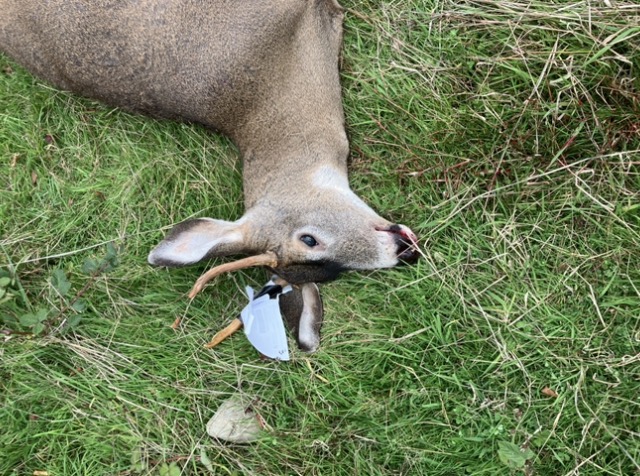
My shot was true, and the animal fell to the ground and lay still. Pausing to unload my gun, I turned to return the firearm to its case. I then sent a text to my neighbors, letting them know why a loud shot just rang out, and that all was well. Then I approached the animal with my tag, cautiously poking the eye before taping the tag to the buck’s spike antler. They were excited for me, and came to view the deer, as well as offer loading assistance, which I happily accepted. Together, we got the modest buck into the bed. After another round of thanks and congratulation. I drove the buck down to the shop, covered him with a tarp, then went back to the house to change out of my bloody jeans, and into clean cloths for my mammogram. I was right on time to my appointment, and following that (tests came back clear), I returned home to gut and skin my beautiful harvest.
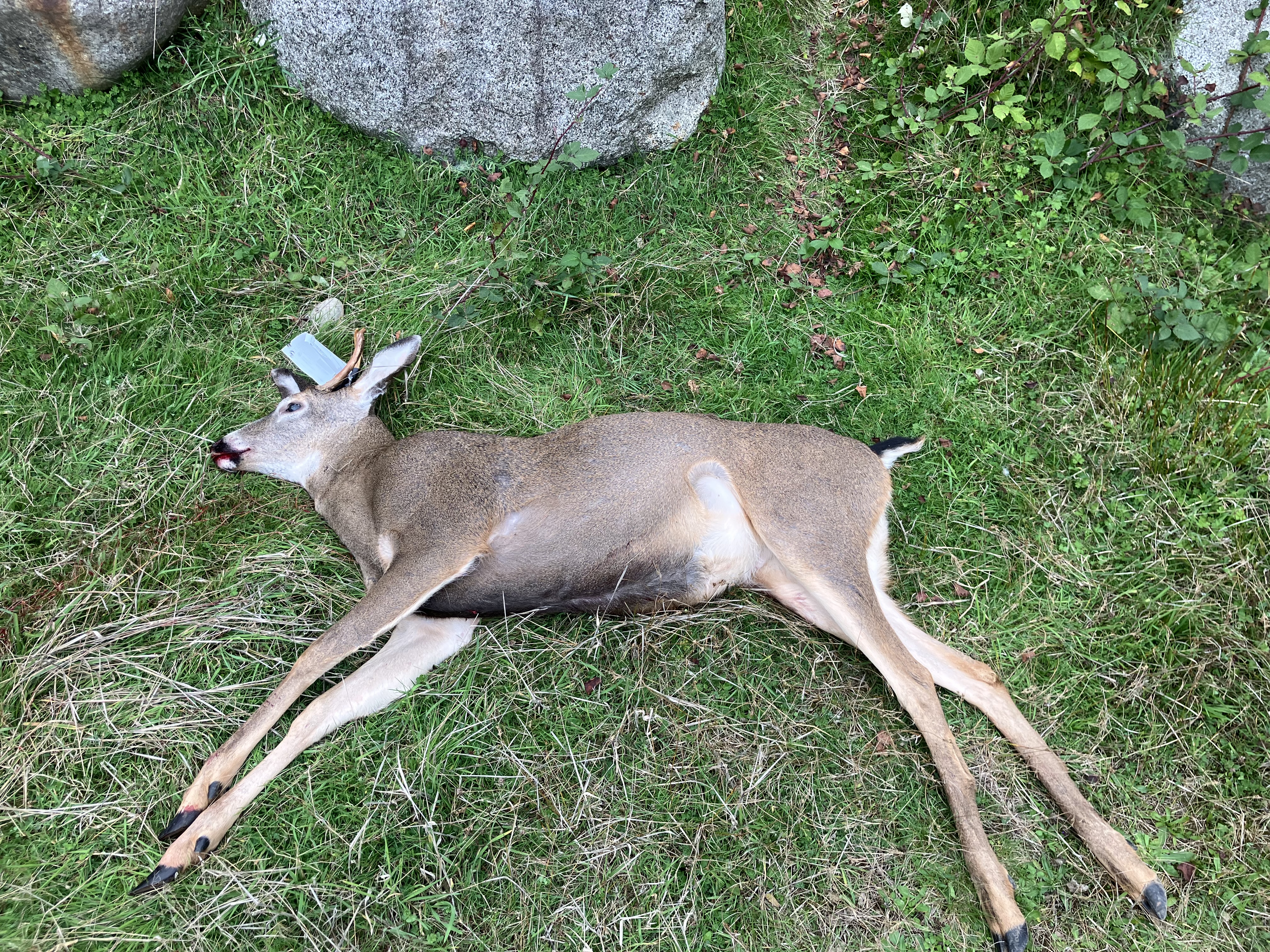
Taking a close look at this deer, you might see it’s darker in tone, to blend into shadow. Blacktail deer thrive in forests, relying on cover, rather than speed to avoid danger. These deer will stop and look first, but can flee if the need arises. Long, slender legs make for good stilting through slash on the forest floor, or legging it up a hillside or down a road to get away. These animals have adapted to live with us as we reshape the land all around, tearing down wild habitat to suit our domestic and economic desires. Habitat destruction is the number one issue facing wildlife today. If you would like to see more deer, elk, eagles, seals, orca, and all the other living creatures on earth, support habitat restoration and ecological protection of your local land.
I know this is usually much easier in more rural places, but city scapes can create greenbelts for wildlife, and include habitat design into highrises for birds and insects. In more rural areas like mine, we could prioritize habitat for wildlife on larger scale, opening up migration routs for elk, helping blacktail by not spraying herbicides in clearcuts so the browsing is still available to the ungulates and other wildlife. The spreading of treated city sewage in those timber plantations and state lands is also not helping the ecology folks, so write to press the issue with your local representatives. Also, restoring part of your acreage into habitat is always helpful. Even if you have a suburban lawn, you can plant a boarder around it of pollination plants, understory native plants that wildlife likes, and fence your garden well to keep deer out. Keep your dogs on leash when you’re in public land where deer shelter to rest. Dogs often chase deer, and the deer do not have that extra energy to burn, while your dog gets fed daily by you, and has lots of extra energy it could be running off with you, on leash. Or, in a well fenced yard chasing a toy. Please keep your dogs away from deer, and keep them leashed in the deer’s habitat.
I hunt each year as part of my covenant with the deer nation, in hopes of connecting the wheel of life in another circle of survival, relationship with this place and its abundance, and in deep reverence for the taking of life to give life. Many deer graze and brows on the land I care for today, and many future generations to come will continue to thrive in this habitat. Gratitude to the opportunity for this connection, the chance to eat what grows here, and to stay close to my food and the land that provides. Thank you to the deer and what they continue to teach and offer, thanks to my mentors that taught me these ways and continue to guide me, and thanks to the community that support my quest for the deer each year, then partakes of the harvest with me through the cold dark months ahead.


