
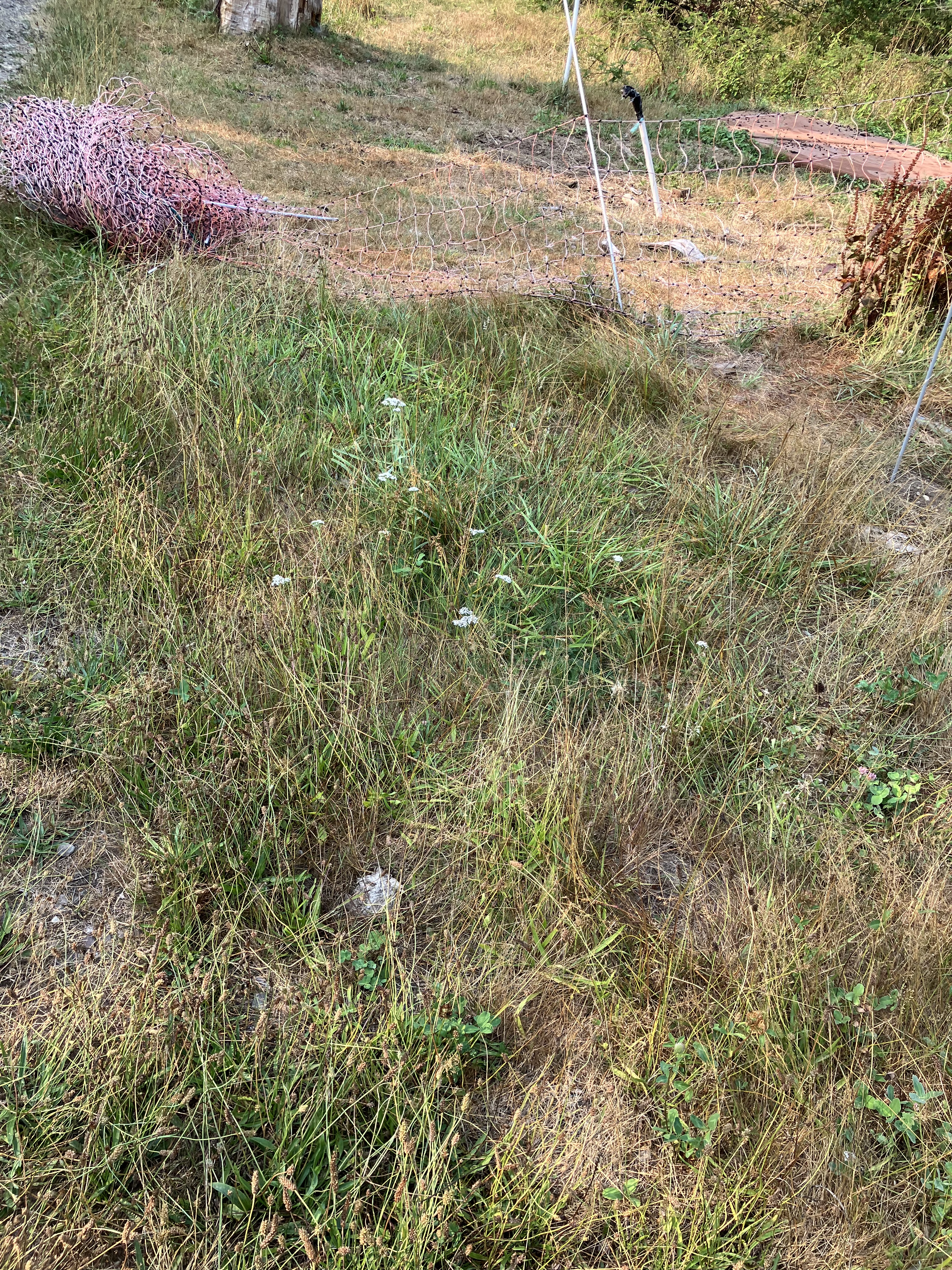
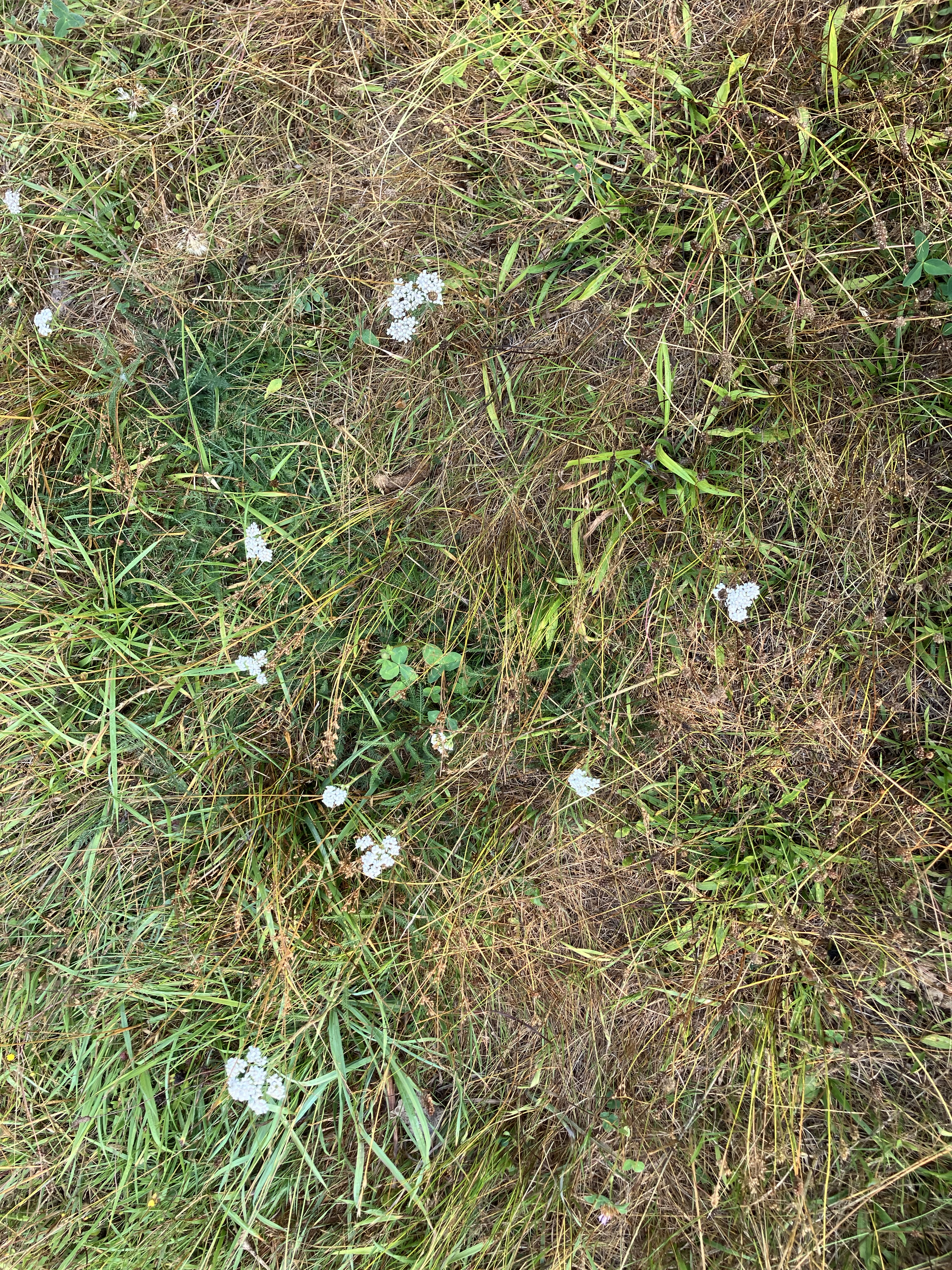
There are great ground covers springing to life in the fields at EEC Forest Stewardship. After several years of intentional reseeding, rotational grazing, and patience, some of the diversity is beginning to shine through. These pictures were taken in August, with no irrigation. Green is the key to seeing a good pasture landscape at a glance, but peeking into the detailed patchwork of many different plants- not just grasses, from broad leaf plantain to self-heal, the herbs are blending well. Why is this good news? Not just the resiliency of our pastures through the dry season, but also a myriad of dietary options for our grazing stock- geese, chickens, and sheep. There are also more flowering plants throughout the growing season for our pollinators. Rotational grazing keeps the pasture’s well mowed, but there are rest periods between animals, allowing a full lifecycle for the vegetation.
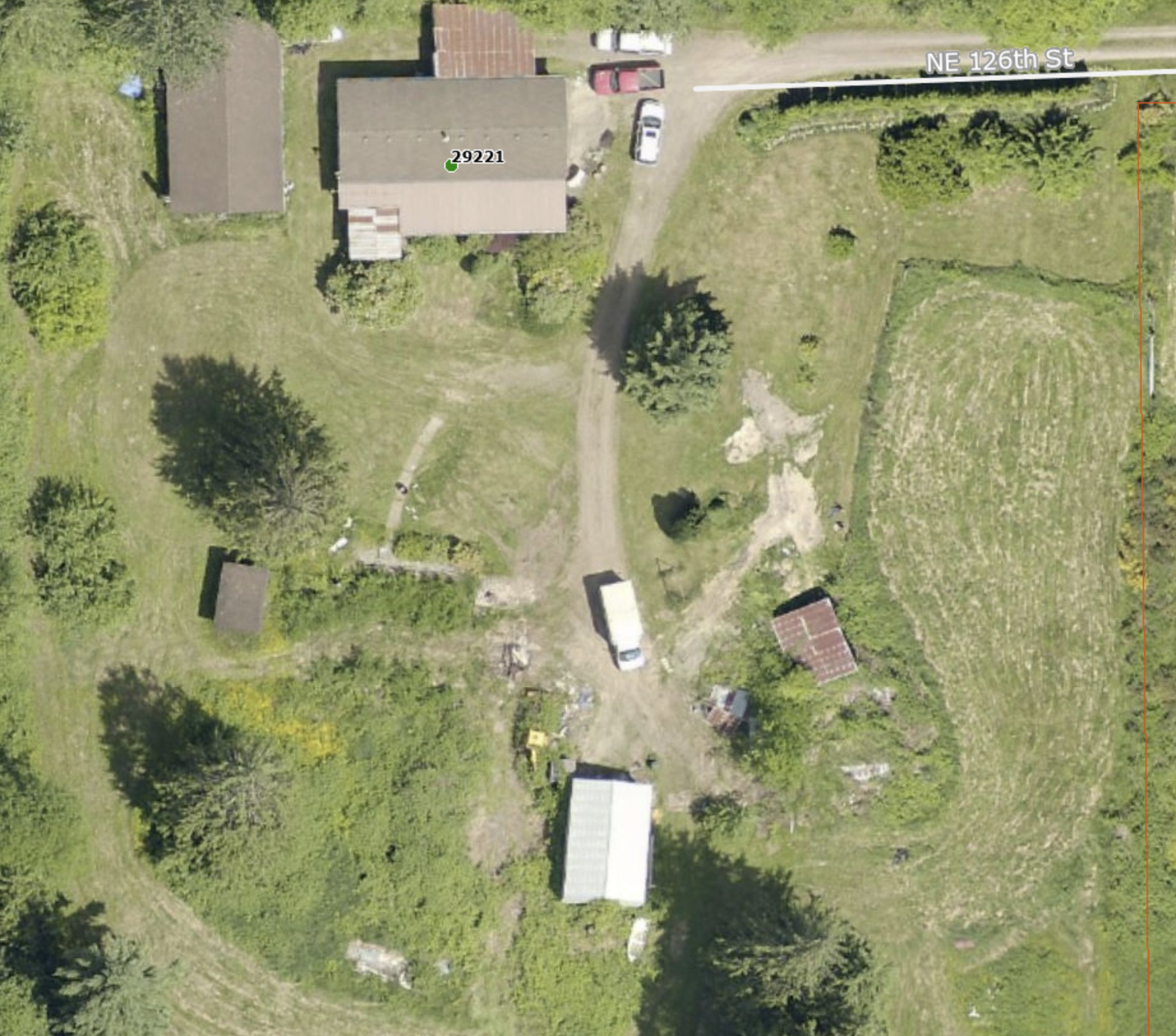
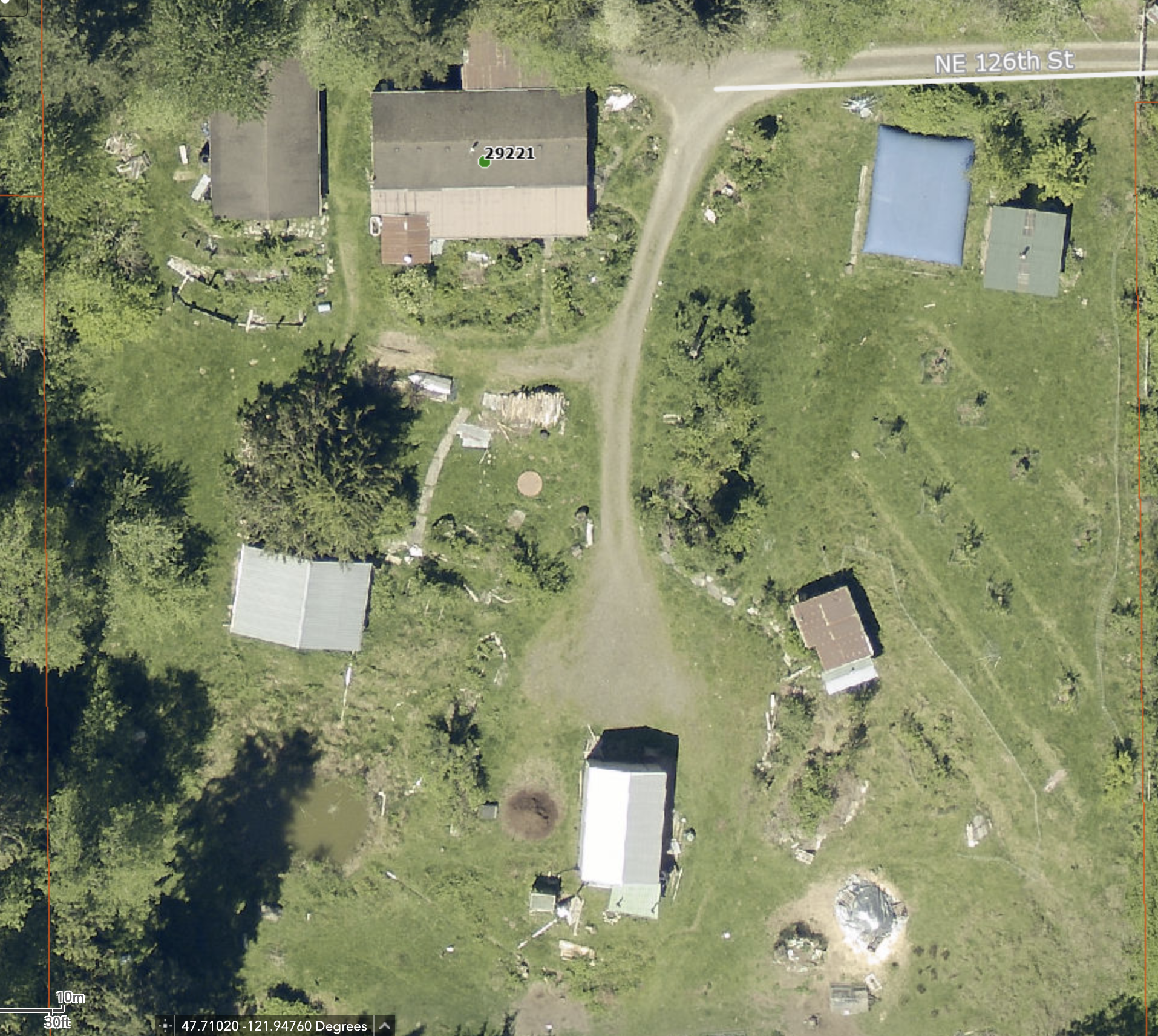
There are also patches of ground where more recovery is needed. In less productive areas, I usually mulch the space with cardboard and reseed in the spring and fall. I’ve got all the pasture spaces grided out for rotation, and each one is about 50×50′. Each quadrant gets about a truckload of aged manure spread on it every few years, just to build soil faster. The improvements are easy to see from aerial photography. The left hand photo is the land the year before I took ownership. 14 years later, the landscape shows a much more enhanced space of production and restoration. Diversity of plantings, water catchment systems, gardens, orchards, and improved infrastructure have grown these first few zones of cultivation to retain water, build deeper roots to keep the soil in place and restorative.
I don’t mow. The sheep do the cutting of fields now. In some places, along building edges and sometimes to clear bramble trying to establish at the edges of my fields. There are long lists of future improvements for this land, especially where people live and work in these upper zones of the landscape. One other large new system not shown in the recent 2025 photo is our new solar array, between the house and the water pillow (cistern). The continued planting and improving pasture, edges, and groves, as well as the majority of the land not pictured below. The additional acreage is dominated by larger forest stands, salmon stream, and a huge back field currently developing a chestnut grove.
This is indeed, a lot of area for one person to tend alone. I keep the systems I manage as automatic as possible- I don’t have to stretch the vegetation towards the sky, or peddle photosynthesis. Nature does so much of the work on her own, I love helping her out by putting more diverse plantings out in her domain. That’s the beauty about our role in the landscape, we can shape some of the plants and animals towards our own needs, while maintaining a healthy ecosystem everyone can thrive in. What I’ll get done in my lifetime is modest, on the grander scale of evolution, and with the climate heating up, we’re bound to see a lot of favored species change in the next few decades. The wildlife and native plants continue to show what’s changing and what’s adapting well.
In our 3-5 months of dry season, the land must be able to keep its self cool and damp just beneath the surface. Seeing the pastures green assures me there is still good water near enough to the roots of these plants to keep things lush and growing. We’ve had over a month of no significant rainfall here, and in the picture below, the green side is ungrazed, the brown side is grazed to short cropped grass. It’s like a cut lawn going brown in the summer without irrigation. Many domestic lawns are now being grown with this in mind. Water scarcity is already happening in a lot of this country, as well as around the world. I’ve not irrigated either side of this pasture, but the rested side is looking green because it’s had a recent chance to grow and recover its lush protection from the sun and wind evaporation.
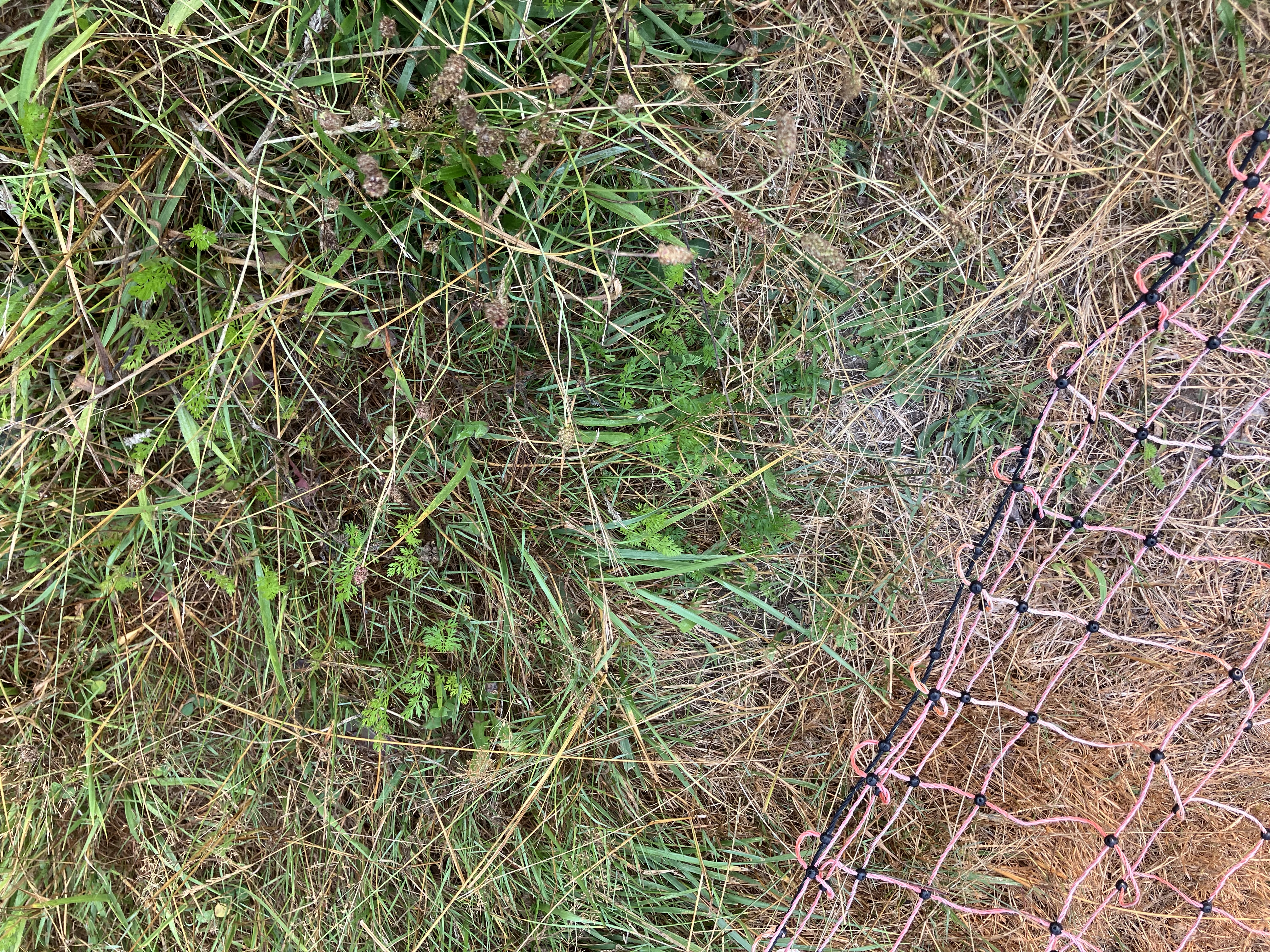
It’s crucial to keep the moisture in the soil for a lush, green pasture. Looks tell you some of what’s going on, but looking a little closer to see what individuals are supporting your pasture diversity is also important. Choosing to manage pasture space with grazing animals, rather than a mowing machine, also influences what gets cut and what is left behind. Below, the sheep have been grazing this pasture for about a week, and still, there are a lot of grasses seeding out and being left behind by the animals. This happens when I don’t pressure the sheep in a field. In the drought months of summer, I move the sheep more often, and let these thatch grasses cover the fields to protect them. The growth is still low, not a fire danger, as the vegetation is still low to the ground, and banking green just under the dried out seed stalks above. If we have an extended drought into fall, I can put the sheep back on this smaller clearing, hemmed in with electric mesh netting until they graze it down.
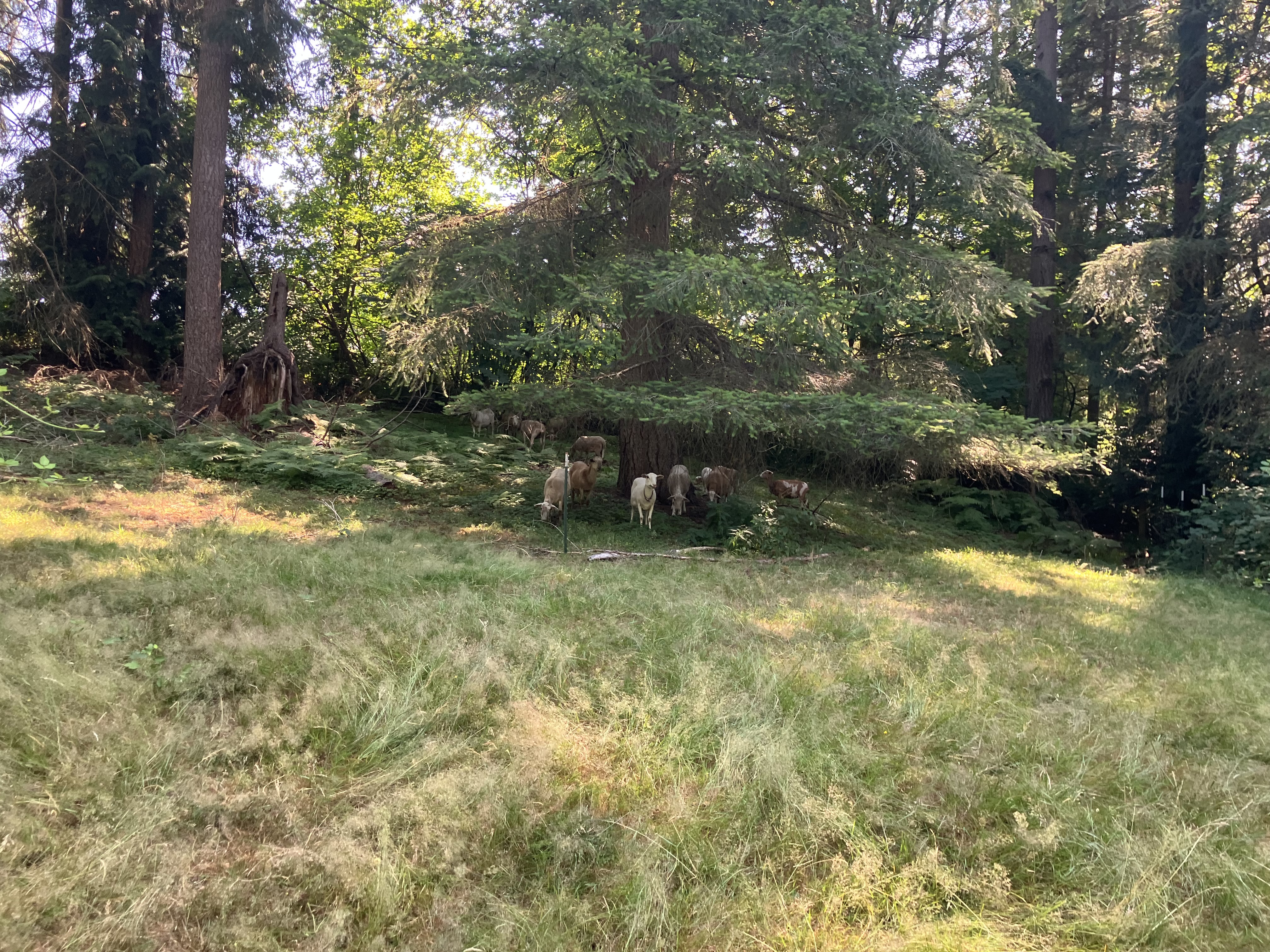
Clients sometimes ask me for specific rotational plans on my farm, something predictable and easy to follow so they don’t overgraze, or under-graze their land. There are general schedules you can follow, based on herd numbers, pasture productivity, and specific acreage, but the variants go far beyond these basic measurements. How much rainfall is your pasture receiving? What kind of forage is available? Are you using a multi-animal system? Is the land naturally productive or in need of amending? Will you vary your fields with crop rotation or reseeding? The option are seemingly endless, and for the management on this landscape, taking things a week at a time has come in handy for me with my animal numbers. The geese are still teaching me how they best fit into these cycles, as the numbers vary year to year with each clutch hatched. What I do know, is geese do graze a lot, and they like already grazed by the sheep spaces best. Each breed of animal will have its own set of needs and favored brows.
My Katahdin sheep brows, which a lot of other sheep breeds do not, so I take that into account. I try to always have vertical planning in my pasture use, especially along edges of trees, fence lines, and larger forest groves. These transition spaces are great for shrubs and climbing vegetation, like blackberry. No, I do not plant or encourage blackberry, but I do let some trellis out for the sheep in late summer. The flock will happily reach up to brown berries and the protein rich leaves of this invasive bramble. Note the broad leaf growth in the above pasture close ups- clover, vetch, sedges, and rushes are also present in many of my grid pasture spaces. These areas are usually also lush in late summer, if I don’t overgraze them. Timing comes with observation, and that’s the only way to catch a field before its been too eaten down. Sometimes I miss my window, but that’s not the end of the world either. The landscape here continued to recover, and more and more plant life is successfully establishing as my understanding of this small vignette expands.
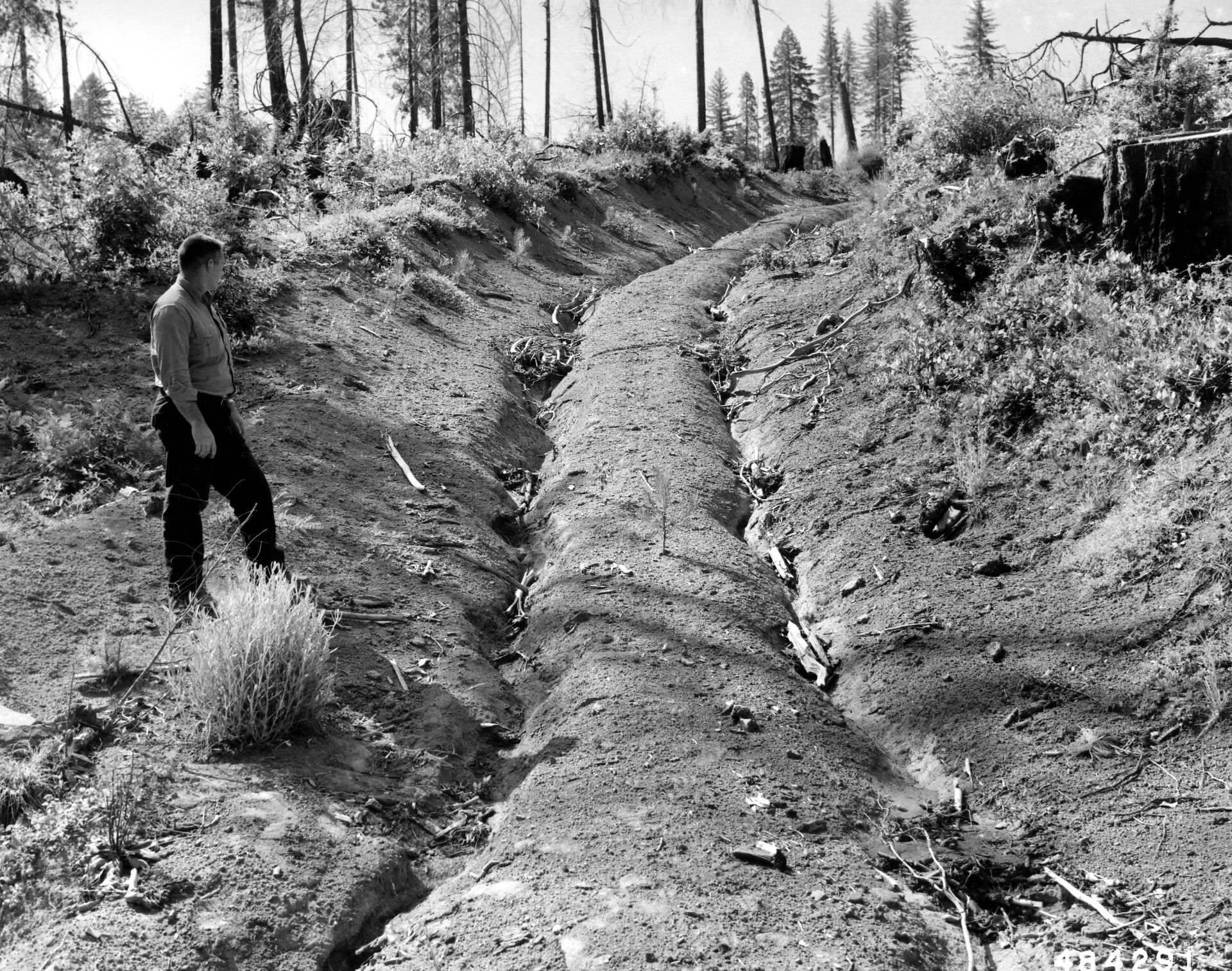
There are also crucial missing pieces in this ecology, that I try my best to artificially replace- like sheep to make up for a lack of elk and large deer populations that would be moving through. Mob grazing and all that dropped manure from the sheep certainly add something, but are not the same as the natives that once dominated old growth forests- also removed, but slowly growing back- at least part way. I say this because there is not enough topsoil to hold mature old growth trees, so a lot of the current canopy will eventually fall to help build proper ground cover for the giant 12′ diameter old ones to return. Forest planners today seem to miss this important detail in planning the restoration of our native temperate rainforest. It is almost impossible to estimate the amount of topsoil lost when the first clear-cuttings happened along the west coast. The best guess is tens of feet. Today, sediment from erosion due to clear cutting continues to dump thousands of tons into our rivers and out into Puget Sound each year. Below is a picture from Oregon showing the erosion in the 1950s.
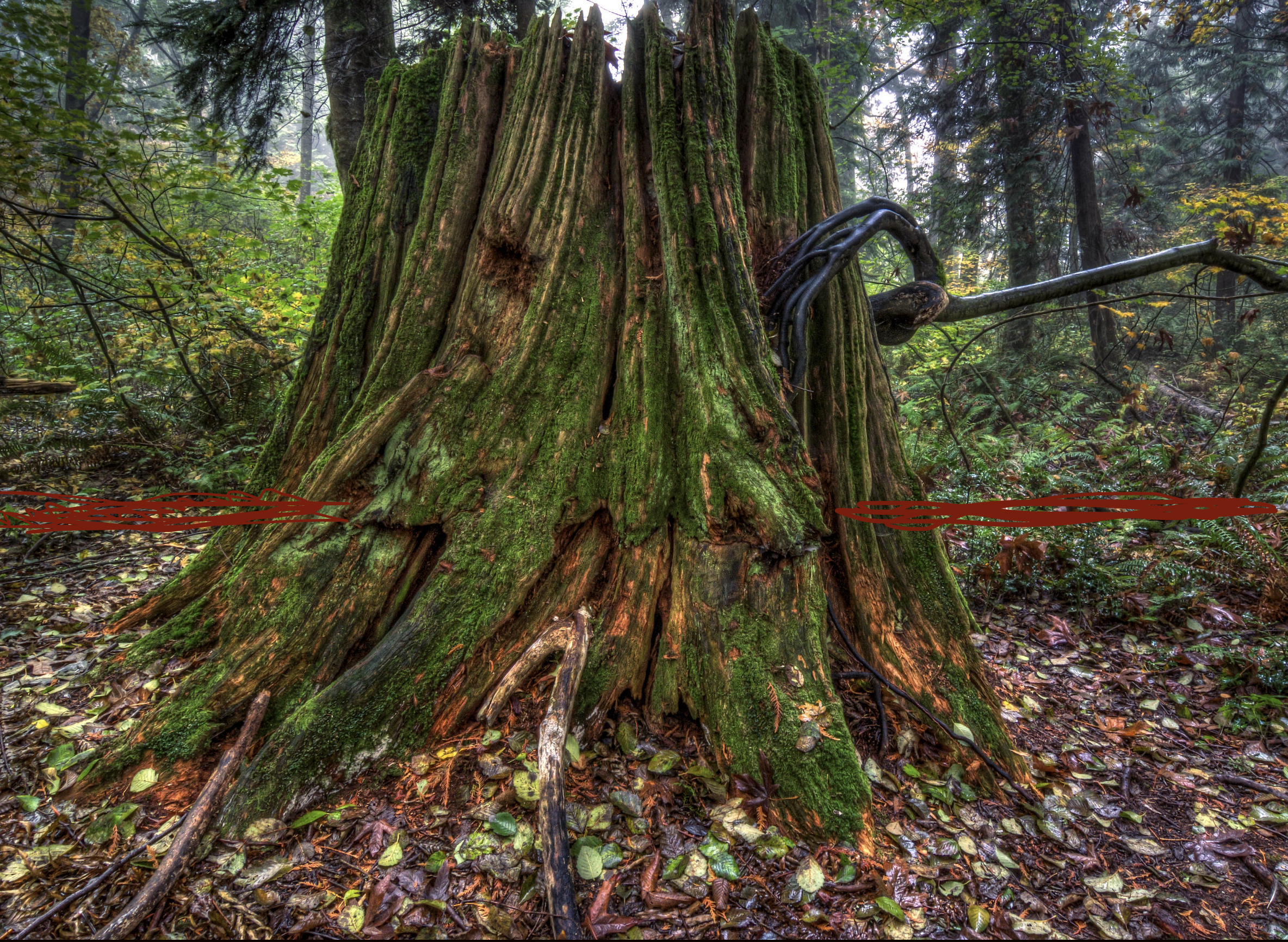
Above is an older tree cut at the turn of the century (before motorized chainsaws) note the springboard holes. I’ve marked where the original soil line would have been on this tree. It’s at least 5-6′ above the current topsoil today. You can see where the trunk base flared out against the rocks and soil that used to be there. This tree was probably about 100-150 years old- which is young for a red cedar, which can be thousands of years old if left to grow. What a lot of us think of as old growth, is actually still a young tree in forest ageing in The Pacific Northwest, again, we really can’t imagine what was here when the first cuttings began a century and a half ago. This stump is about a 6′ diameter, but early logging pictures tell us it’s a baby.
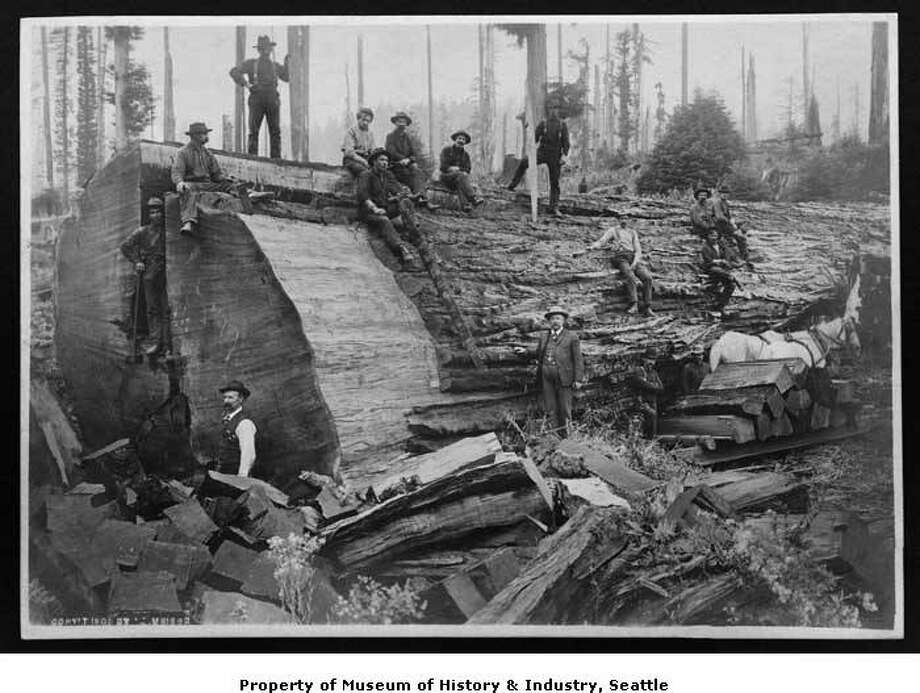
So what does this have to do with pasture improvement? Why am I not just planting cedars and returning all this land to forest? It’s going to take several lifetimes to bring back the topsoil these giants will need to stay rooted, especially as our climate becomes more violent and unstable. Wind storms knock down lots of trees each year in our area, and that wind is only going to become more powerful as storms increase in power. We are planting trees here at EEC, but we’re also working to build resilient landscape for the coming storms. This modest 10 acres continues to build fertility and bank water in our earthwork systems. The rich pasture area is banking soil for future forests. We’ll keep doing our small part one grazing rotation at a time, with sheep that are thriving, and providing meat to the community. No grains, no antibiotics, no hormones. This land is chemical free, because our animals are not fed concentrations of medicated chemical feed.
Here at EEC Forest Stewardship, the ecology of this landscape remains intact and in recovery. We’ll continue to maintain healthy pasture management, rotating our animals and reseeding for recovery. There are more and more patches of new plantings in our forest edges each year, and eventually, most of this property will be reforested. A few open places will remain, because transition zones in a forest are great for diversity. People also like sunlight, so having an open area to the sky where you have your home is important for mental and physical health. Many of our favorite food crops also like sun, so pastures keep enough open space to plant and cultivate too. We’re still reforesting most of the land in time, but grazing will continue at Leafhopper Farm for many decades to come.


