
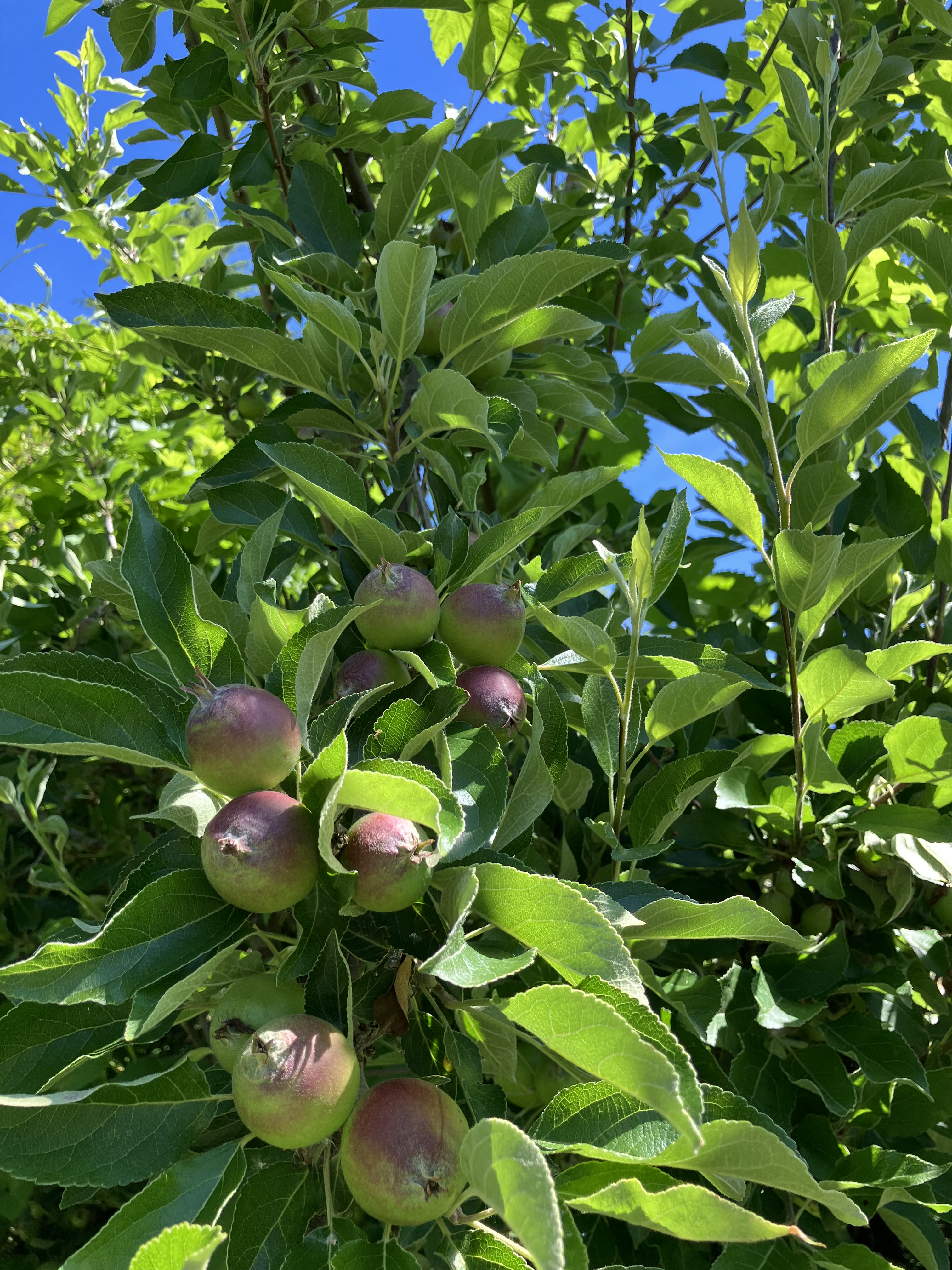
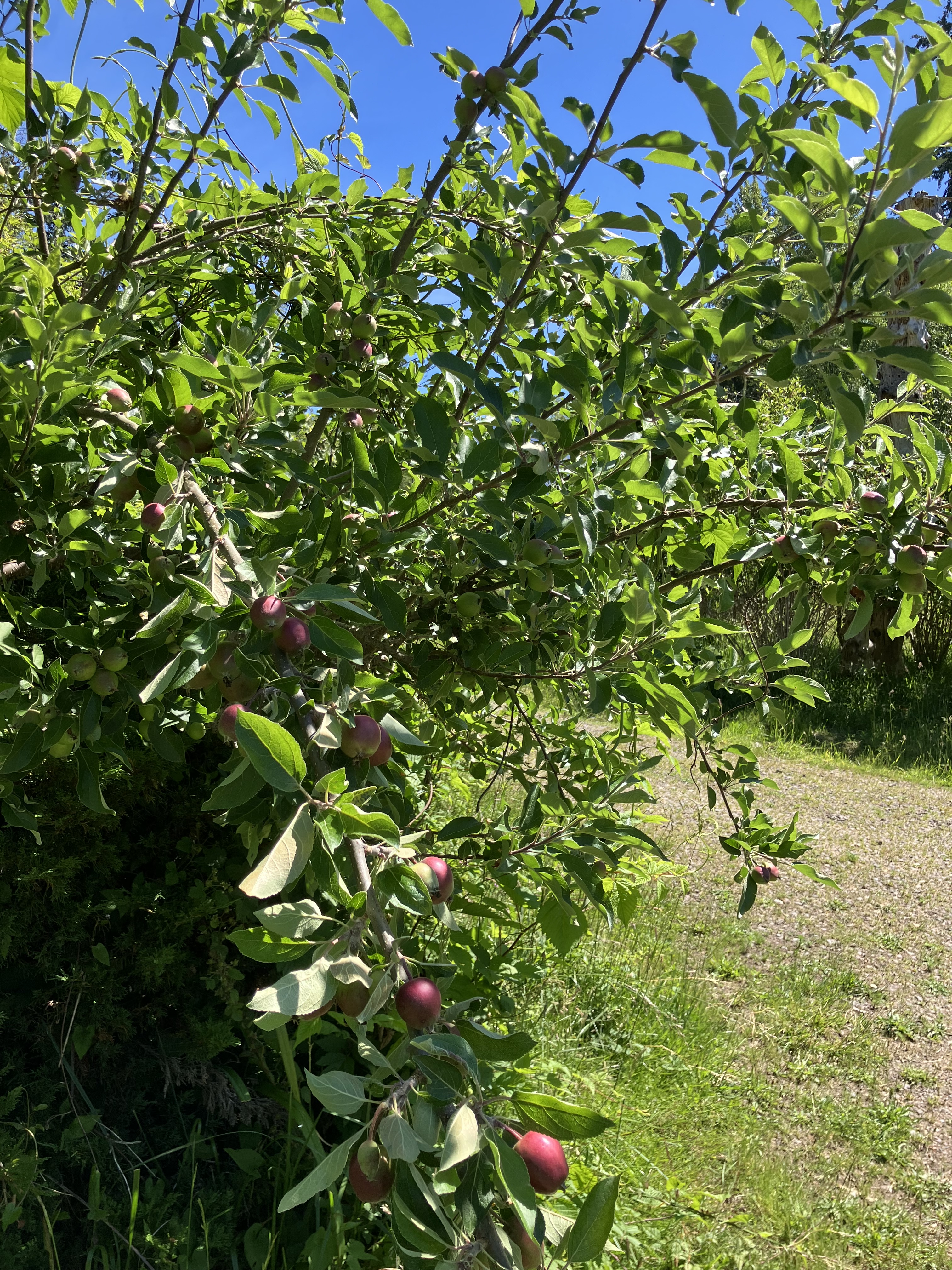
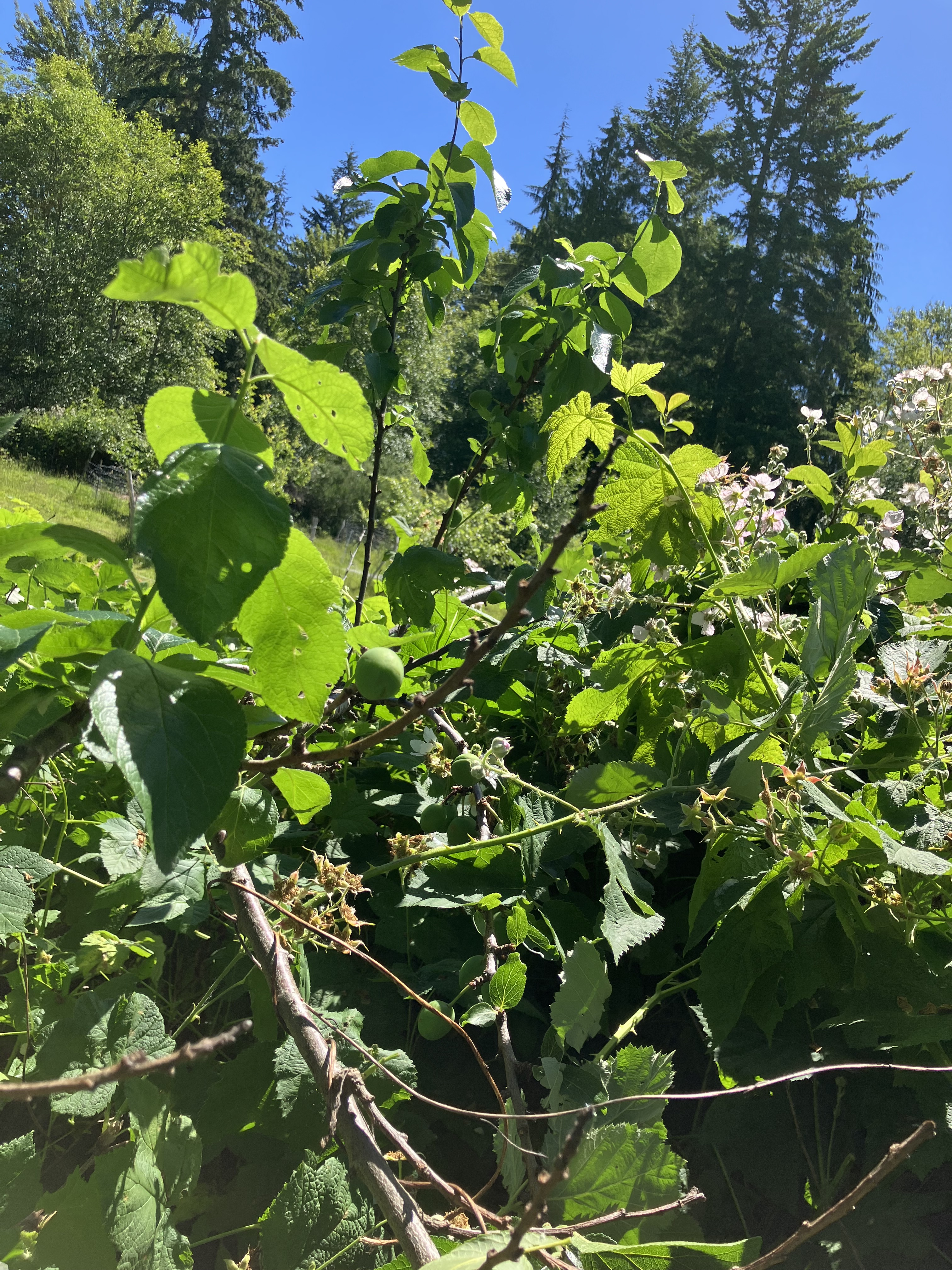
The fruit is on here at EEC Forest Stewardship, and we’ve picked cherries, harvested plums, and await the early summer peach and apple harvest that’s still developing on the branch. Pears and quinces will come in the fall, but young fruit there is also looking good. Overall, the orchards are developing nicely. There is enough fruit for me, a few friends, and a little for the wildlife too. The birds got about half my cherry crop this year, as I delayed in getting my ladder out there to pick the high stuff, so the birds helped themselves. I’m not mad about it, as the wildlife needs some fruit too. I will regret letting them have so much, because I won’t have any to freeze for winter enjoyment, and I’ve taught the birds to come in now- which is hard to stop once they know the timing on ripening fruit.
Industrial orchards use netting to protect cherries, and we won’t do that here, so I have to dissuade the birds by getting to the fruit first. Starlings are the worst pest bird in the orchard, and a flock of them can empty your trees in hours. Luckily, I don’t have enough cherries here to call them in. The woodpeckers go for the pears and apples in late summer, early fall. Again, I can’t fault them for taking advantage, but I am motivated to pick the fruit fast to avoid ruined flesh still on the branch. The woodpeckers peck into the fruit, but leave it hanging, so then a lot of bugs and other opportunists move in. I cant say enough about timing- keep an eye on things as they start to ripen, and pick a lot before it’s fully ripe for best harvest numbers. Most fruit can finish off the tree, so plan for ripening inside if you can. I also pick up all the dropped fruit from the ground to avoid leaving an alluring odor around to entice bears. This is crucial to prevent bears learning that your orchard is a good larder to come check on in the Fall.
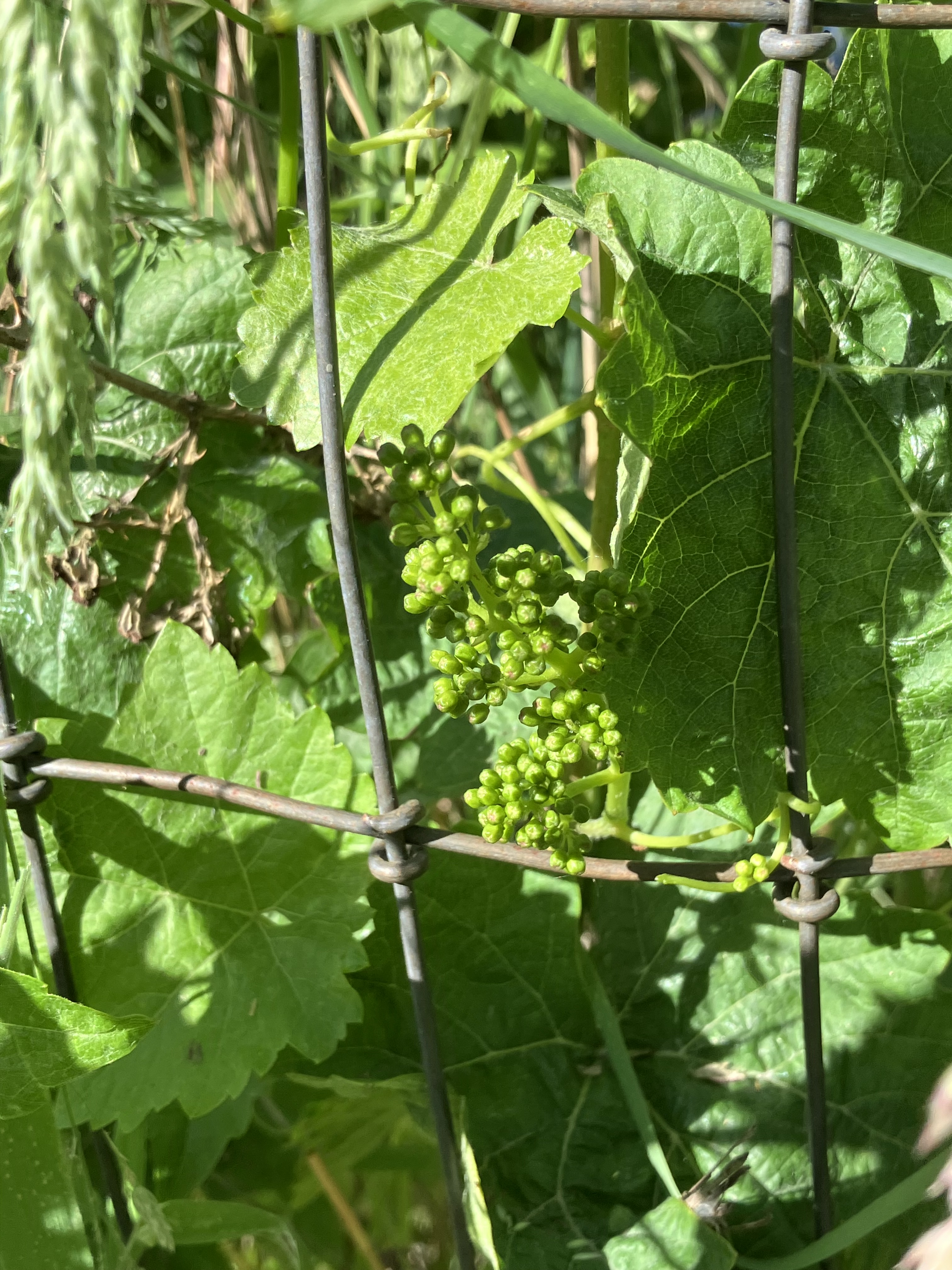
The grapes are also doing well this year, especially our white wine verities from Austria. The wine grapes are neglected, but that’s what makes them thrive somehow. My table grapes get watering and a lot of babying- it’s time for another pruning already. Grapes need pruning to let the energy of growth go to the fruit, rather than the vine. I’ll drag the ladder out for that work too- but why am I hesitant with the ladder? It’s one of the most dangerous activities on the farm- or anywhere. Ladders are a fall risk- a big one, and I’m usually alone when in need of them, so I don’t climb high up- which is sometimes what’s needed to reach the top tier of the plant for proper pruning. Who said orchard care was easy? Not me! I tend to fall behind in my pruning, it’s a lot of work on the older, well established trees, but worth it to keep production up. Most fruit trees also have good years, and bad ones, but that rhythm is somewhat unpredictable. This year, the cherries were less productive, but last year they were amazing. What will next year bring?
My Asian pear tree looks like a modest harvest this year too- but it’s still putting on fruit for the next few months before harvest, so a lot could change. The apple trees are already dropping some of the load- shedding weight to keep their branches from breaking. I’ll still have to do a lot of pulling before the mature fruit comes on, but it’s what I would call a mast year in apples here. That is, if they hold on till they ripen. Sometimes, my apples shed too much fruit in anticipation, and then I’m let down a bit. But the trees know what’s going on, I’m the one needing to catch up.
There is so much to learn about fruit trees, and I’m still quite the novice, so thanks to the trees for continuing to show me the way. Sometimes I’m blind to what’s happening, like drought stress. I don’t usually see it till the tree sheds all her fruit in one go- and that’s usually the older, well established trees that don’t get watering help. My young orchard is irrigated in the summer, which keeps the fruit on and the young trees developing nicely. Sometimes I loose my harvest to a bear- once so far, but it’ll be back again to check each year now, so I have to be ready and ahead of it with the harvest. Other challenges like leaf curl, aphids, bacterial bark infection, and apple moths can put a dent in the harvest, the possibilities are endless, so I keep a good record of which verities seem to protect themselves well- I don’t use any sprays on my fruit trees, which makes their cultivation a little more challenging. In the end, you get what you put into your fruit trees. Mine are productive, healthy, but sometimes temperamental about water, weather, and pests.
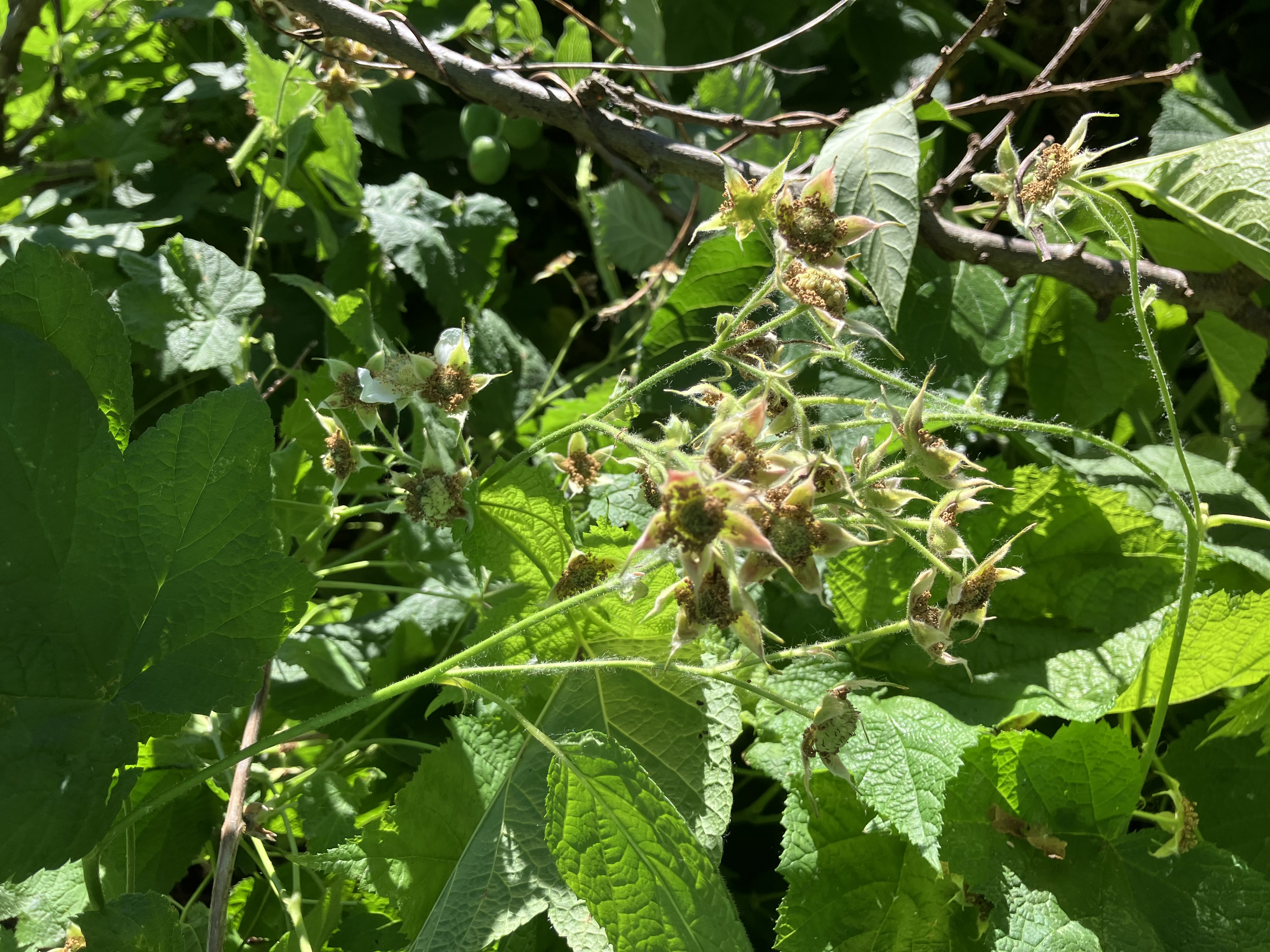
One fruit shrub I’m not yet having any luck with is thimble berry. The fruit starts to set, then dries out before maturing into fine red clumps of deliciousness. I think they need more water at a crucial time in their development, and I have not gotten the memo yet. I know this native plant will one day produce, but it might need a little more help form some watering at the right time- which I have yet to fully understand. Sometimes, it’s a mistiming on pollination too. Cherries bloomed early this year, before most of the pollinators were out- so there were not many fruits. Sometimes there is a late frost, which kills off the buds throughout the orchard. That’s not the case this year- thank goodness! The key in keeping an orchard is having a diverse planting of different verities. That way, if one or two are having an off year, a few others can make up the difference. It’s working here so far, and I’m about ready to make another investment in new plantings based off the knowledge and observations I’ve made over the past decade and a half. With any luck, we’ll be picking fruit on this landscape for generation to come.


