
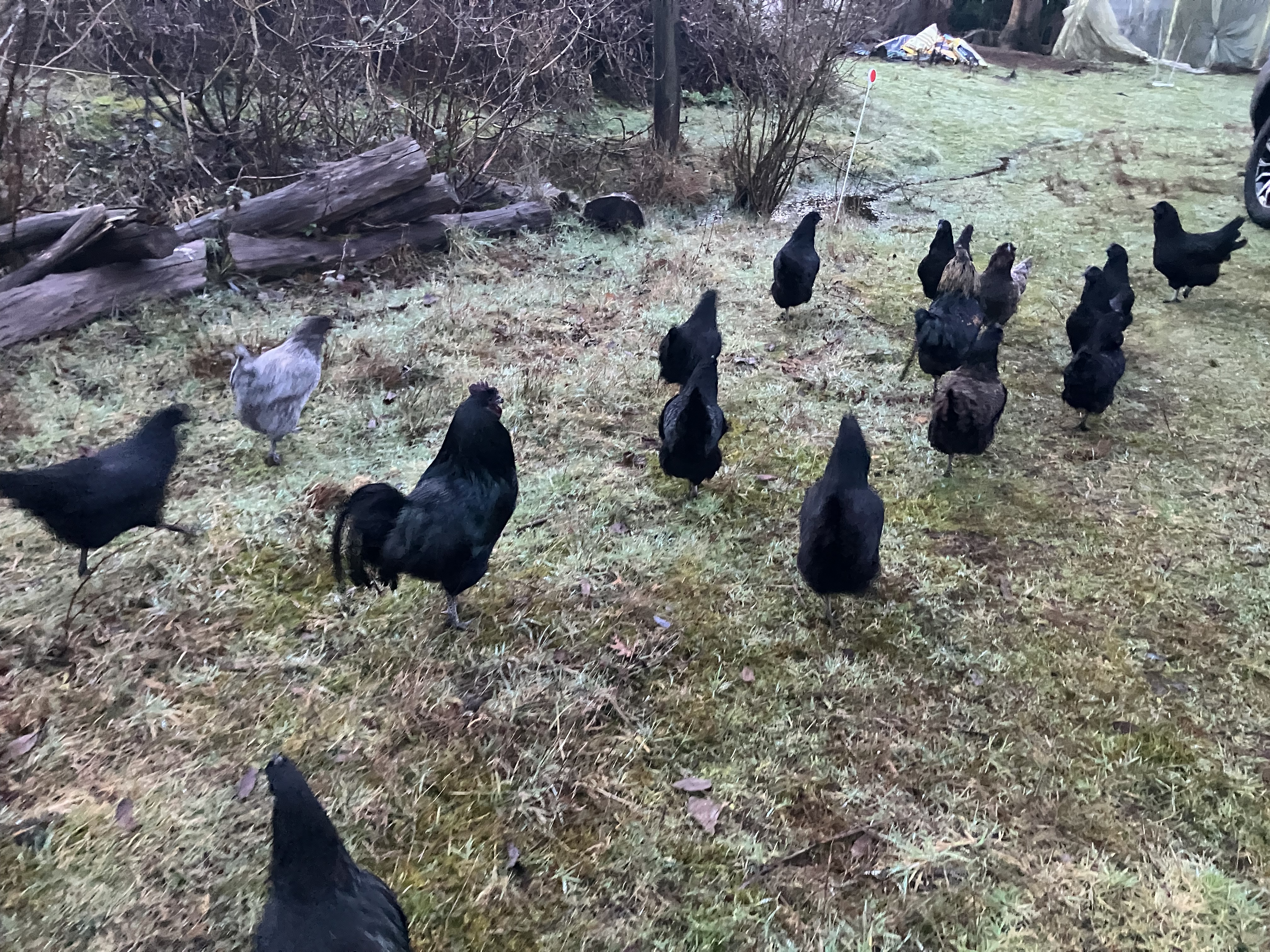
This is my little t-rex army. They produce nice healthy eggs to eat, decent meat on the bone, beautiful feathers, and countless daily tasks to bring fertility to the soil here at EEC Forest Stewardship. Chickens are always a gateway livestock animal for new farmers, and I encourage everyone with the right land to get some. The key is feeding them the right diet, so what they are spreading on your landscape is good organic matter. Though people complain about the expense of organic grain, it’s worth it to keep our pastures healthy with the right balance of nutrients to grow healthy greens for healthy animals and people. If the birds were on a conventional diet- that would be what they would spread all over the land, and cooked pellets are nutrient poor, and not good for the soil. I think farmers often forget what goes in will come back out again, and so, to keep up affordability, they buy the cheaper stuff, but it will reflect in the health of the land and the birds themselves. I don’t offer my birds any other inputs- the organic scratch and peck layer mash is all they need. It includes oyster shell, trace minerals, and no corn or soy.
The birds reflect this good diet, along with the free ranging they do on healthy pasture. I’ve never had flock issues like plucking, pecking, or bullying of certain birds. I think this is partially diet, and also number of birds in the flock. I never go over 30 at one time. This is the magic number for flock health, and keeps everyone feeling like they have the space they need, while allowing two well behaved roosters to cover the hens. It is suggested you have no more than 15 hens per rooster, so 29 hens and 2 roosters works perfectly. I highly recommend this flock size for a modest farm or homestead. Yes, commercial flocks are much larger, but usually, when you’re looking at industrial chicken operations, you’re also looking at confinement on dead ground, because a pasture must be tens of acres to host such flock numbers full time. Commercial flocks also have lots of plucked feathers, pecked hens, and generally unhappy birds that don’t move around much. My birds come running to greet me in the morning, and work all day to glean, scrape, and till the soil.
A happy flock makes happy eggs, and a happy farmer to care for the birds. I don’t have to fight off angry roosters, wrestle with hens on the nest for eggs, or worry about a bird getting beaten up by the others over space or food. I also don’t have to train the birds on what to do at the farm. They are diligently gleaning pest bugs, moving raw dirt around to make sure it’s well aerated for future planting, and they spread nutrient dense manure all over the upper fields, where our fruit trees and berry bushes are in need of extra fertilizer. The guano is priceless, as the cost of inputs continues to rise, we’re glad the birds are putting down good poo in the fields- and spreading it too, so no machines are needed. In commercial fields, they have to mechanically spread manure, and spray crops to keep bugs under control. Not so at Leafhopper Farm, but again, scale is important. We are not supplying our local grocery store with eggs, we now only sell directly to our clients, by word of mouth. Monthly subscriptions are offered during the summer months, but in winter, laying slows to a crawl, because my hens do not get put under lights to artificially keep them in full time production.
Following the natural biorhythms of the flock ensures their best quality of life, with a break in winter to let their bodies rest and build up some winter fat to keep warm. Could you imagine eating eggs only during the warmer months? Well, that would be true seasonal eating. You can pickle eggs, and I know why you should if you want to enjoy them in bulk, year round. That’s right- a lot of people don’t know that to keep eggs coming year round, birds are put under lights to keep them producing. This stresses the birds, and certainly shortens their lives by several years, but commercial birds are only kept in production for a few years- five at most, most only three. Then they are slaughtered and put into animal feed or sometimes soup stock and what not. You will not see layer hens wrapped up in your local supermarket- they don’t have the meat frame to carry enough edible muscle mass. That’s why meat birds are a different animal completely. Though here at Leafhopper Farm, we’ve been selectively breeding for a more duel purpose bird, with egg laying and some meat to the bone. Duel use birds are more of a heritage thing, because that industrial bird is bred for one thing- eggs or meat, and never both, because that would be a waste of expensive inputs for less output.
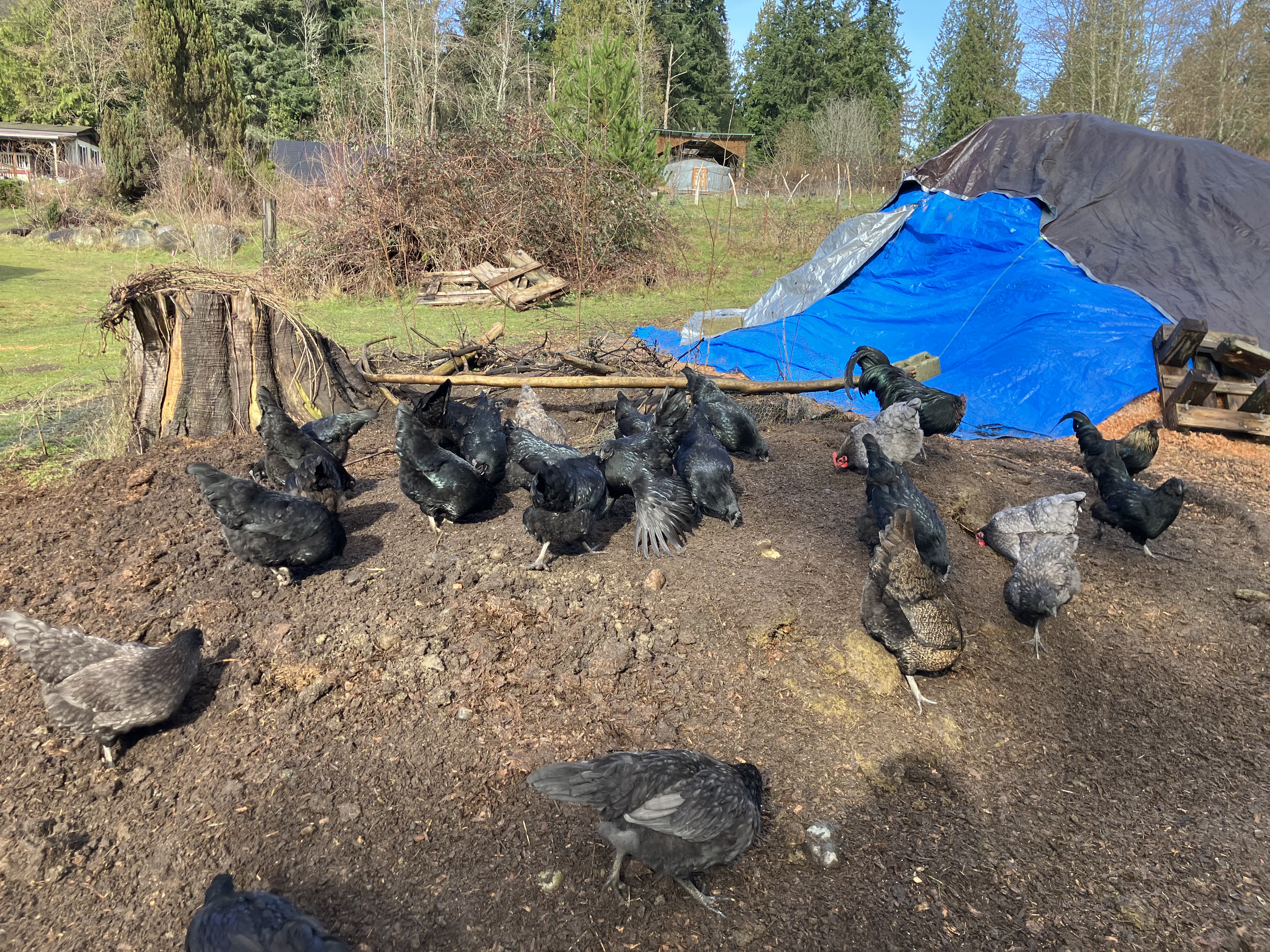
Duel use animals have to compromise somewhere- so they lay less eggs overall. and will never fully bulk out like a meat animal would. That works just fine here on our small farmstead, as we feed all our poultry the same great organic grains and accept that not all the hens will lay an egg every day. I think that would be exhausting, and not much of a life for the animal. Quality of life for all things growing on at our farm remains a priority. I want all my animals to get good pasture time to move about in their natural state, as well as healthy, well rounded diet that includes as much fresh veg as we can provide seasonally. In winter, the hens still peck around in the frosty pasture, and remain active year round in the fields. This keeps the fertility banking in the soil for future planting. We don’t need to put supplemental nutrients in our pastures to keep the soil viable. One expensive organic grain purchase covers all those other bases. Even the much needed lime is there from ground limestone. Our other major soil amendment, magnesium, is also in the layer feed, so the soil gets the extra nutrients it needs from the organic feed. I wish more farmers knew this, or even thought about it. One expensive input carries everything our pastures need to remain productive and sound. And our birds spread it, till it in, and all without an ounce of fossil fuel for the labor.
Imagine if industrial farming could pick up on this simple solution to getting the birds fed, fields fertilized, and the farmer’s mind at ease with reduced costs all around. The land here reflects this smart system of small scale production, and it leaves me feeling good about my livestock practices, as well as producing a happy, healthy flock of birds. So, next time you hear the phrase “bird brain” give the chickens a little credit- they are working hard each day without any need for pay. They just get a good organic meal and all the pasture they want to wander in. I get the best eggs you’ll ever taste, good pasture care, and piece of mind in knowing what I’m eating was eating the best it could before coming to the table to feed me. That’s worth the investment- and how!


