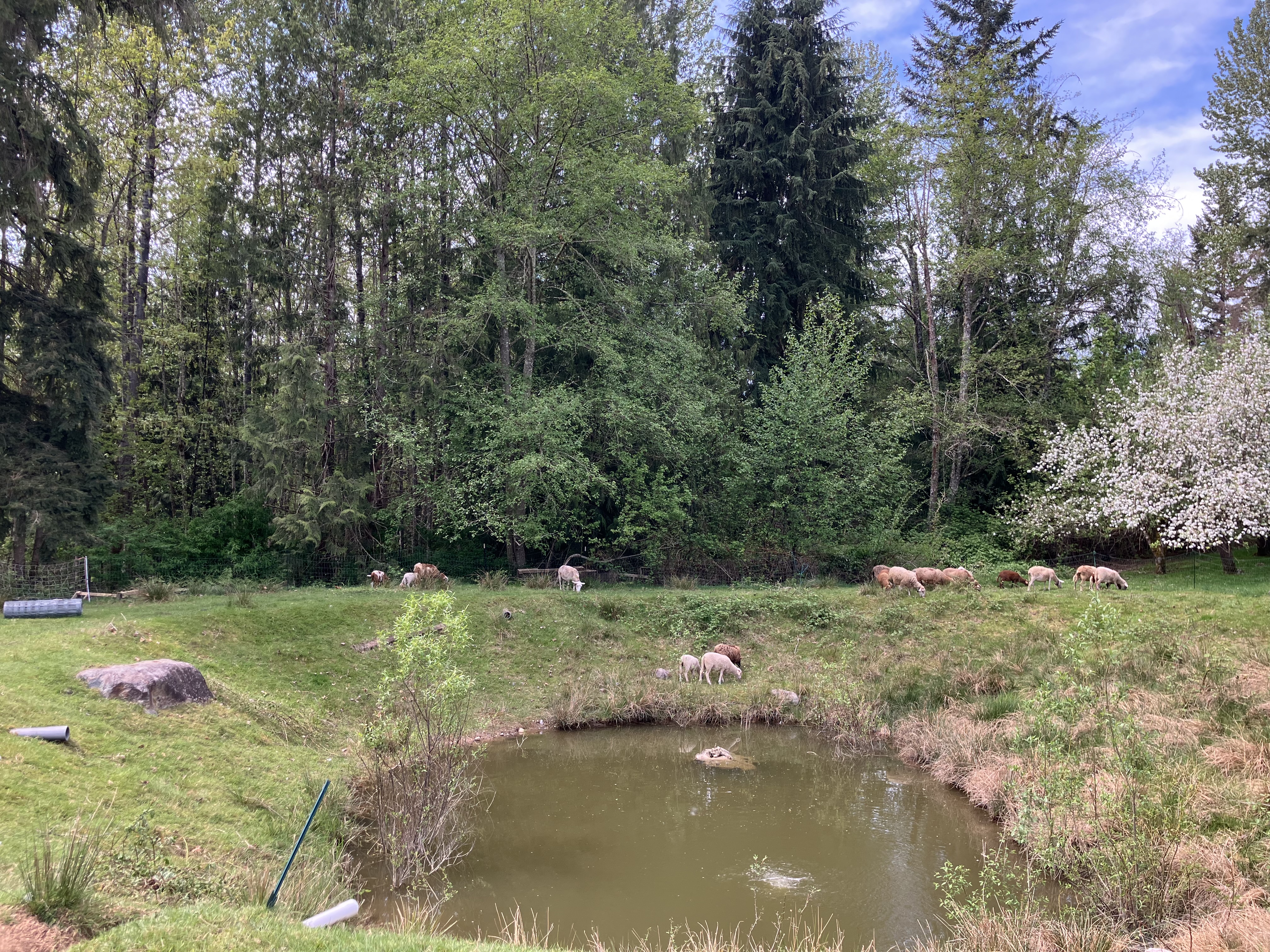
It’s early May, 2026 and the pond is waking up with a flush of new koi fry. I’ve been waiting to see the young fish come up from the bottom, where they overwinter in a sort of hibernation. It’s been warming up fast here, and the fish are finally kissing the surface once more. I love these suprises on the land, though I expect it at some point, things vary year to year, and this year, the fish were a little later in surfacing, but here they are, and oh how they are thriving.
I don’t feed the fish, they survive off what comes into the pond naturally, from bugs to small frogs and other aquatic life. The koi have been living on their own in the pond now since they were introduced in 2016. Because the pond is completely isolated from wild water, it’s ok to bring in fish. If this pond drained into the creek below, we could not put fish in it. That’s important to remember when you are bringing in a new aquatic species. Make sure your domestic water is not connected to any wild outlet, or what you introduce can spread to the wild, and that can be a very bad thing. Carp (the foundation species of decorative koi) are invading The Great Lakes, and out competing a lot of yummy eating fish. Carp are great survivalists, which makes them a good candidate for farm ponds, as they can survive in much warmer water than a lot of our native fish. Our pond also has an aerator, to keep the water oxygenated. Oxygen in water is crucial for fish survival. There are several places now in wild water, especially off the coast of major rivers, where “dead zones” have formed. These are currents where nitrogen is carried from agricultural runoff into the ocean to eddy about. Nitrogen starves the water of oxygen, thus suffocating any life in that concentration space. There are global maps of the worst areas, most near industrialized farming along the coasts.
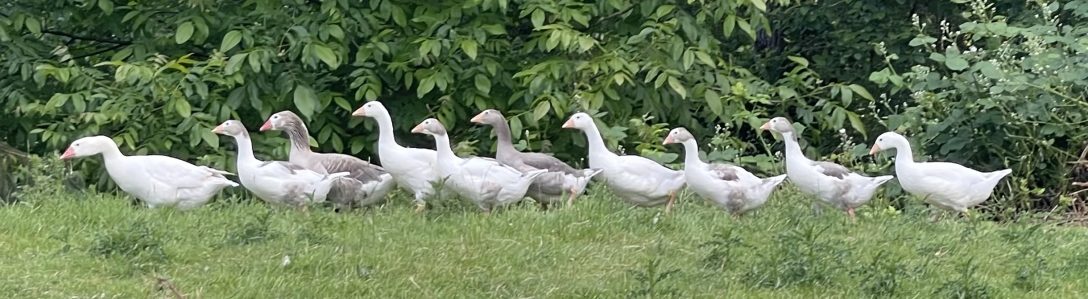
Putting an aerator in the pond keeps enough O in the H2O scene, thus helping the fish get a little extra boost in their habitat. But the water in the pond is not crystal clear. That’s partially due to all the fish swimming around up and down form the bottom, but it’s also about bird traffic. The geese love the pond, and prefer being in it when they can. I’ve begun regulating their use of the water feature, as they can really muck it up. Waterfowl are messy, and too many birds can fill the pond with experiment, disrupting the PH balance and inviting bad algae blooms. We had a bad algae breakout a few years ago, after I raised about 20 runner ducks, which found their way into the pond. It took some serious filtering to clean up the aftermath. Point is- a pond needs a lot of tending and protecting, especially if it’s a closed system without much inflow or outflow. This pond is spring fed, along with rain catchment from the gravel drive above. swales and pipes redirect surface water into the huge pond basin. It still has not crested at the outflow yet, but every once in a while there will be a bad storm that dumps a lot of rain. That fills the pond to almost overflow, but it still remains below the overflow system. There is an additional catchment basin next to the pond, in case it overflows. If you build a pond, you should have at least one overflow catchment, or more, depending on size and water retention. We had an engineer come give his blessing on our design. I wanted to make sure that even if our pond berm failed, the water would not be a threat to downhill neighbors, and it’s not at all.
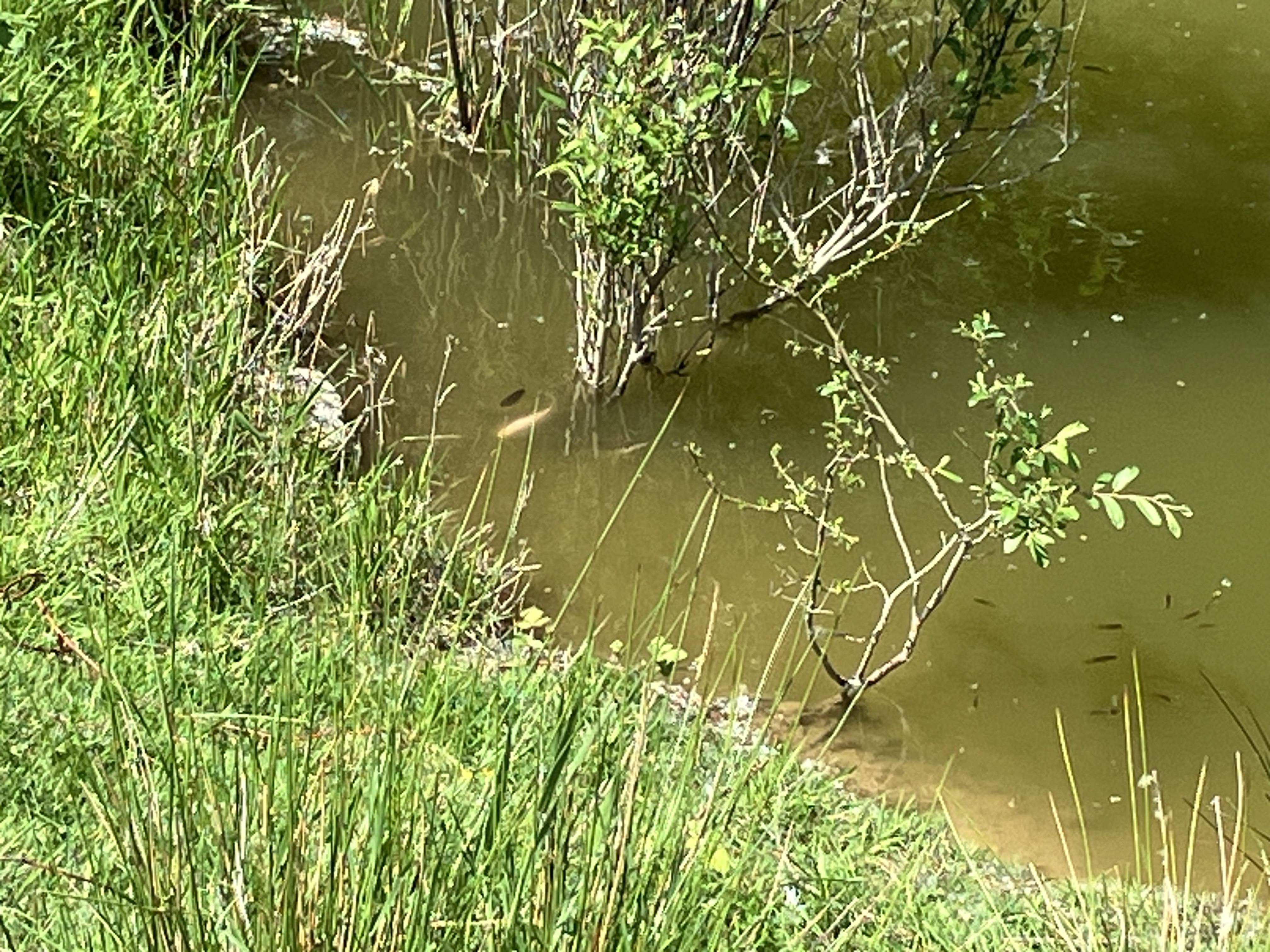
Over the years, I have also made sure to keep the banks relatively clear of brush. There are a few young willows I keep for shade, but they are trimmed back each year to prevent overgrowth. I want to be able to see the surface of the water to monitor cleanliness. Yet fish do need shelter from the hot sun, and a place to lay eggs. The small fry also need a place to shelter from bigger fish, and there are some bigger fish in the pond now. I tried to take pictures, but it’s hard to tell size in them. Some of the more mature fish look about 6-8″ long, but I have not captured any to officially measure. I will try putting a pole in later this summer. I think some of the fish are large enough now to harvest and grill up for eating. Carp are bony fish, but make excellent soup stock. Is this aquaculture? Not really, but it’s a great passive system that does continue to produce fish with no extra feed. That’s certainly production, though on a small scale.
The fish survive cold winter by sleeping on the bottom, and this pond is deep enough to protect them through the cold months. If your pond is too shallow, which most koi ponds are- so you can see and enjoy the fish, you need a heater for the winter. This pond is certainly deep enough, so no extra heat is needed. Imagine paying to heat a pool you never swam in? No, we won’t be heating the pond, only oxygenating for now. And so, we have several generations of koi now, with more on the way. Imagine when the long term survivors get to a mature age and size. I look forward to seeing the unique markings of the fish as they grow larger. For now, it’s just hints as tones other than brown- though many of this young fish are mud colors- that’s the carp genes coming back in. If we don’t eventually put more koi color genes in, the fish will all revert back to brown carp colors.
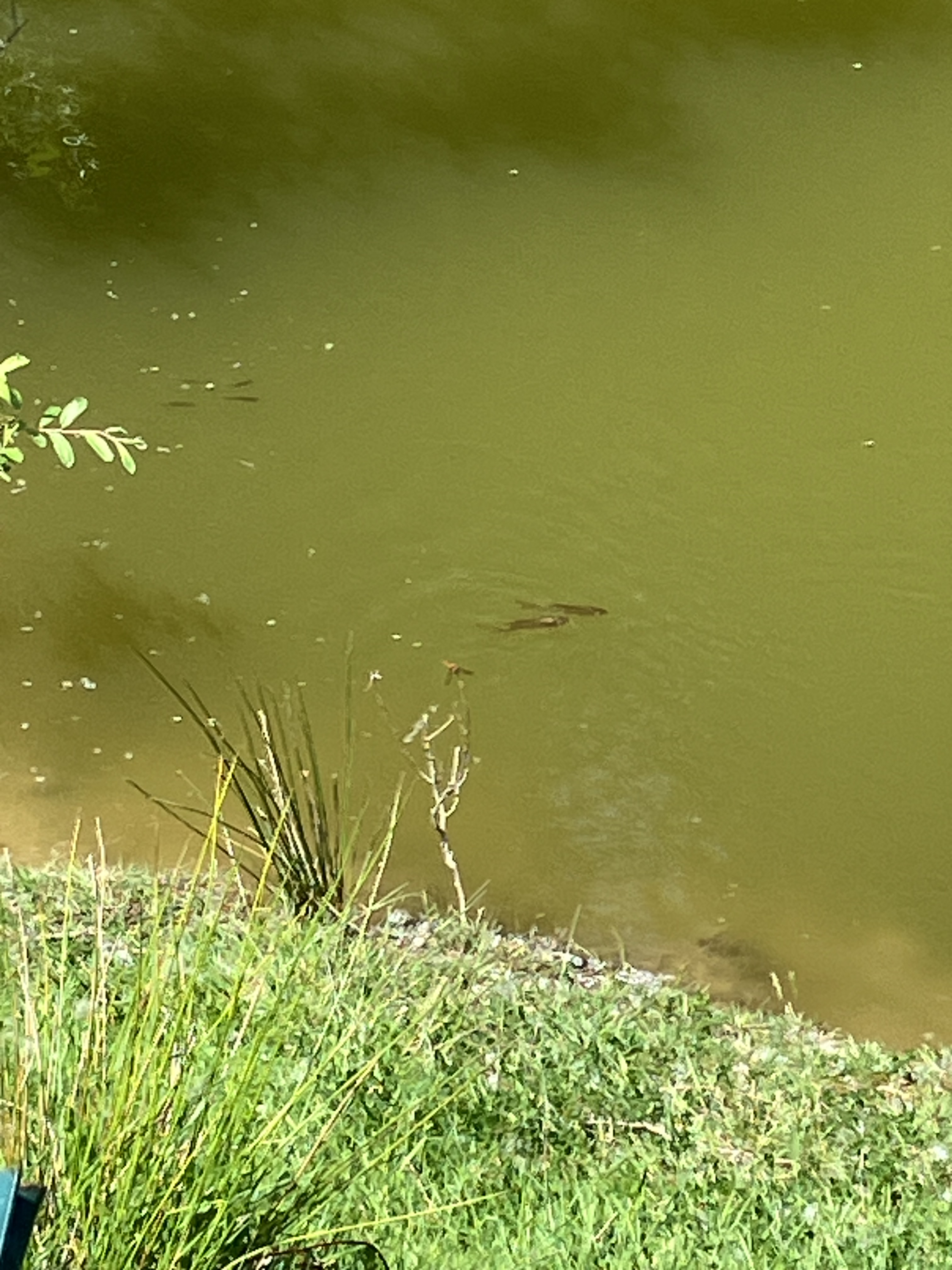
So, as we enter into the summer months, it will be exciting to see how many fish are getting bigger, if there are any eating sized yet, and how many we’ll loose to wild birds. Yes, great blue heron and kingfishers visit the pond once in a while. I’m sure they get quite a feeding, but that’s what the pond is there for. I did build it for the herons, and any other wild bird in need of a quiet place to hang- though our barn cats would pressure any nesting around the water. We also get raccoons once in a while, and they are not great neighbors for our fish or the chickens and geese that the farm does raise. With the poultry now sequestered being portable electric mesh fencing, the pond can thrive with fish and other wildlife that wishes to partake. So much gratitude to water, fish, and self-sustainability.


