
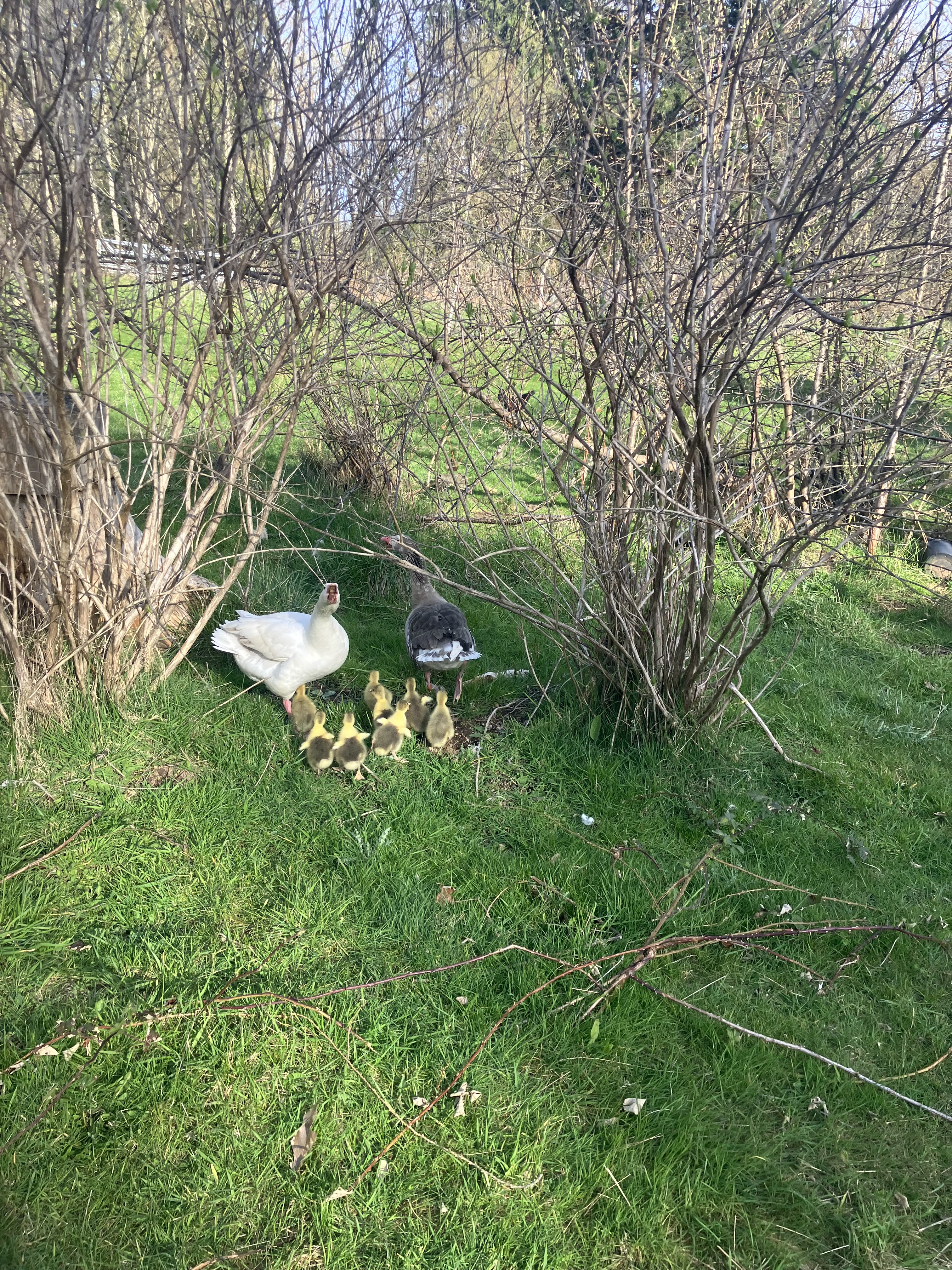
This amazing pair of Cotton Patch geese have hatched all eight eggs the goose laid this year. It’s a wonderful feat- or so I was told. The more I let these two wise birds take charge, the better their hatch rate. Some of the goose hatching instructions out there are so intrusive, but I guess if you are betting the farm on your geese alone, there’s a lot of documentation for assurances. I think if I got in the nest every week to weigh and check eggs, my goose would leave the nest. During her brooding period, I was in to feed and water daily, but never approached or caused her to lift off the eggs. Also, while she was laying, I found an egg just outside the stall where she was building her nest, so I picked it up out of a rain puddle and set it in the nest. All of her eggs hatched, so even the lost one outside recovered. That’s impressive to me. Taking the eggs to incubate separately was a nightmare too, and I lost 3 out of the four I took. The 4 I left with the goose hatched with no issues. The one that hatched in the incubator was not healthy, and he died soon after I introduced him back to his parents and the nest. In short- let the goose alone.
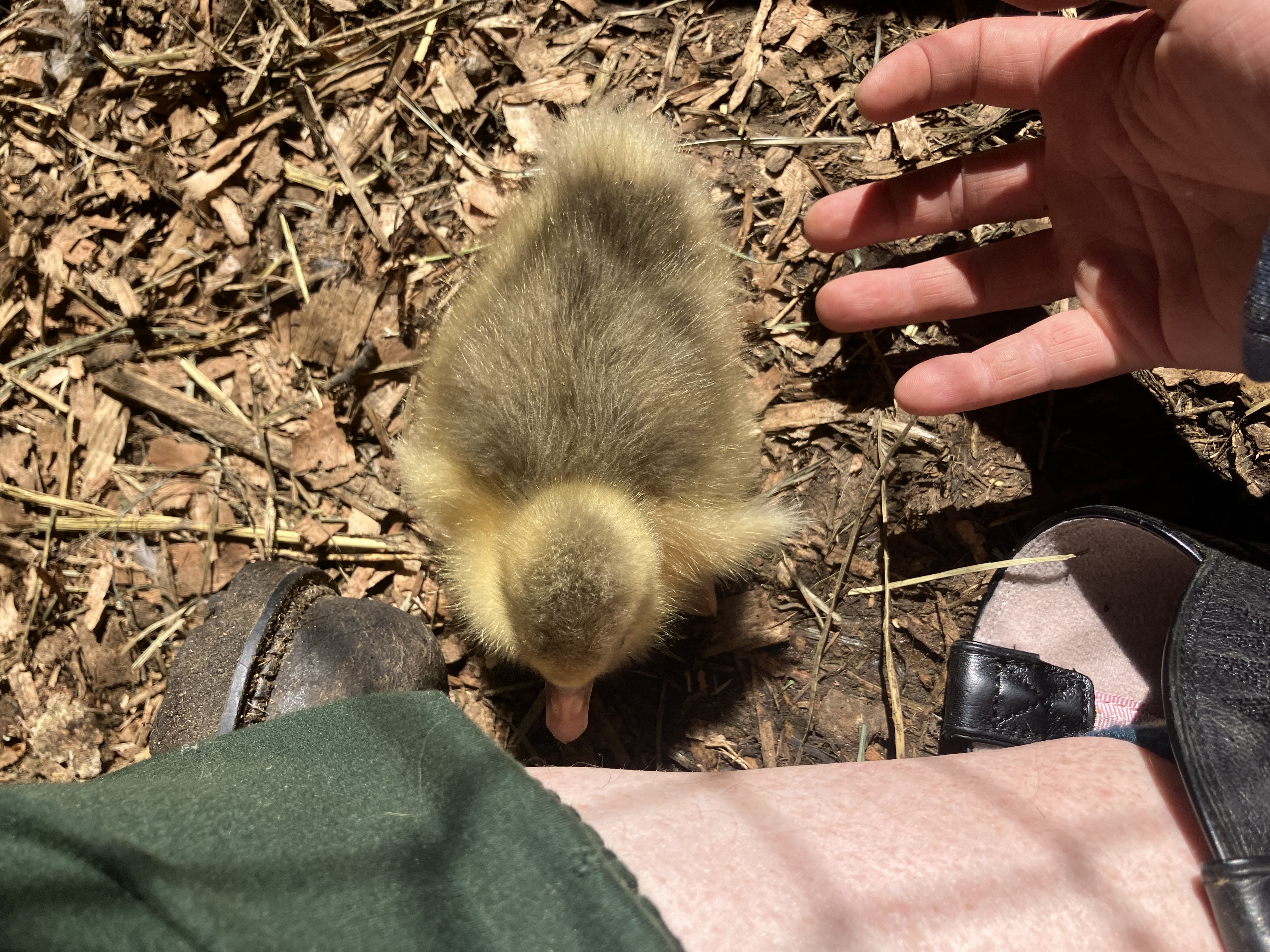
The goslings are healthy, waddling on the move with mom and dad all over the front pasture grazing, and down swimming in the pond. This environment seems to suit the birds well, and the young family easily maneuvers around the other animals, including chickens, a herding dog, and cats. None of the other animals would dare take on an upset gander. The white male with blue eyes bulks up and hisses loudly at anyone coming too close. Lady gander gathers her young and scoots them along while her hubby keeps direct eye contact with threats. Though these geese are protective, they rarely lash out, and certainly have not chased anything or any one on the farm. This is a more unique trait of the Cotton Patch breed, as most geese are considered territorial and aggressive. Still, I have received wing beats on the shins and it’s not fun.
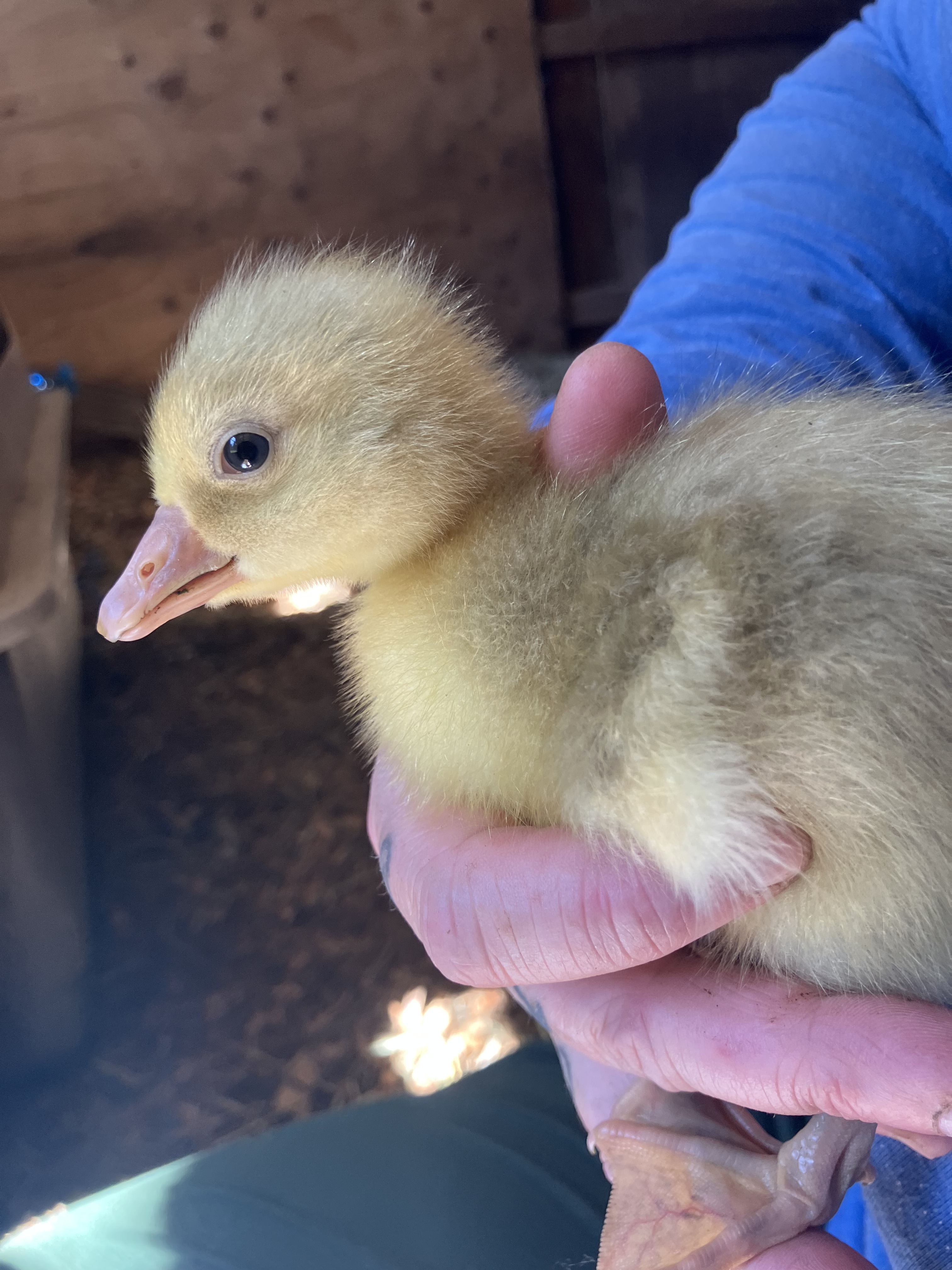
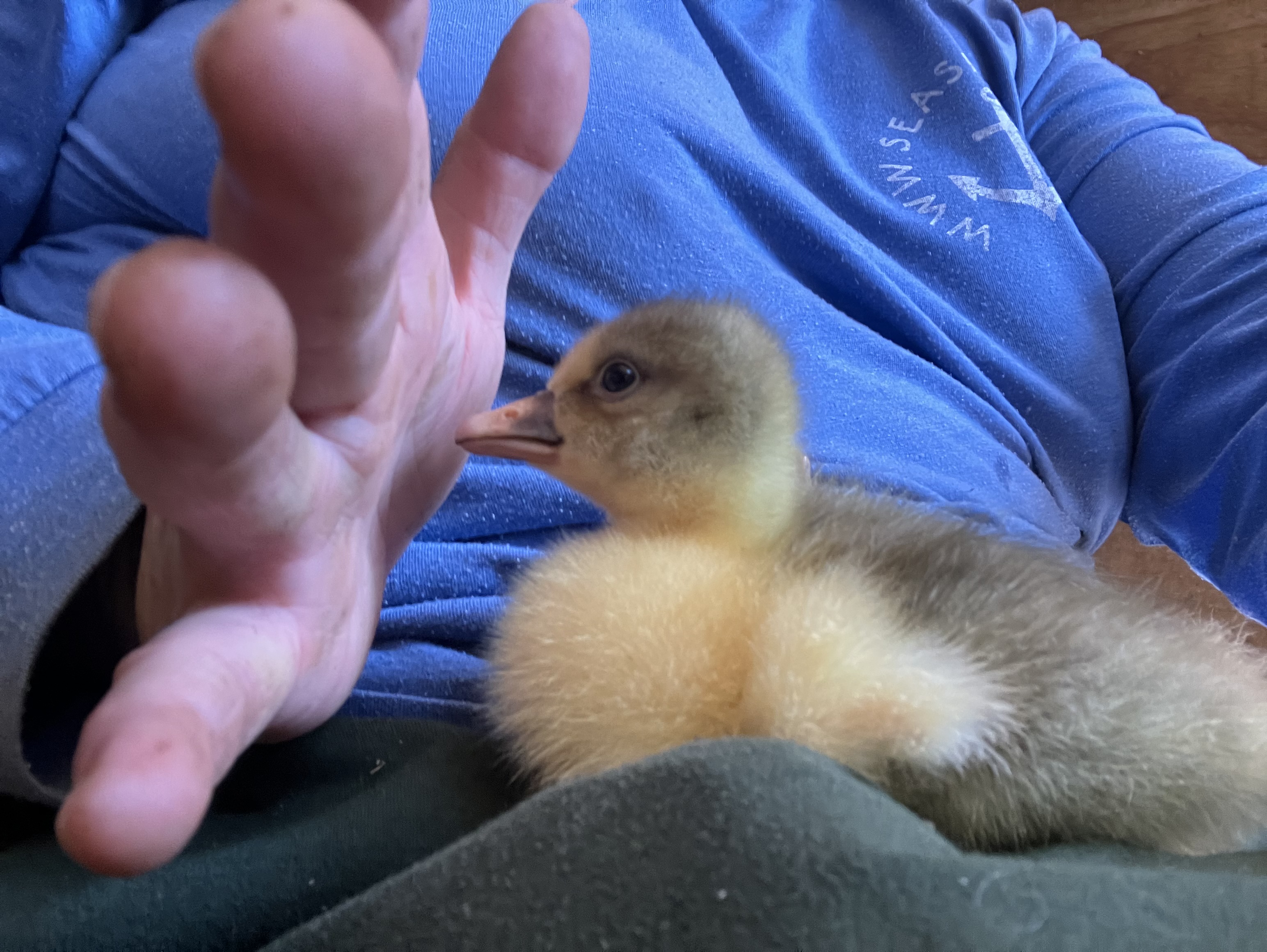
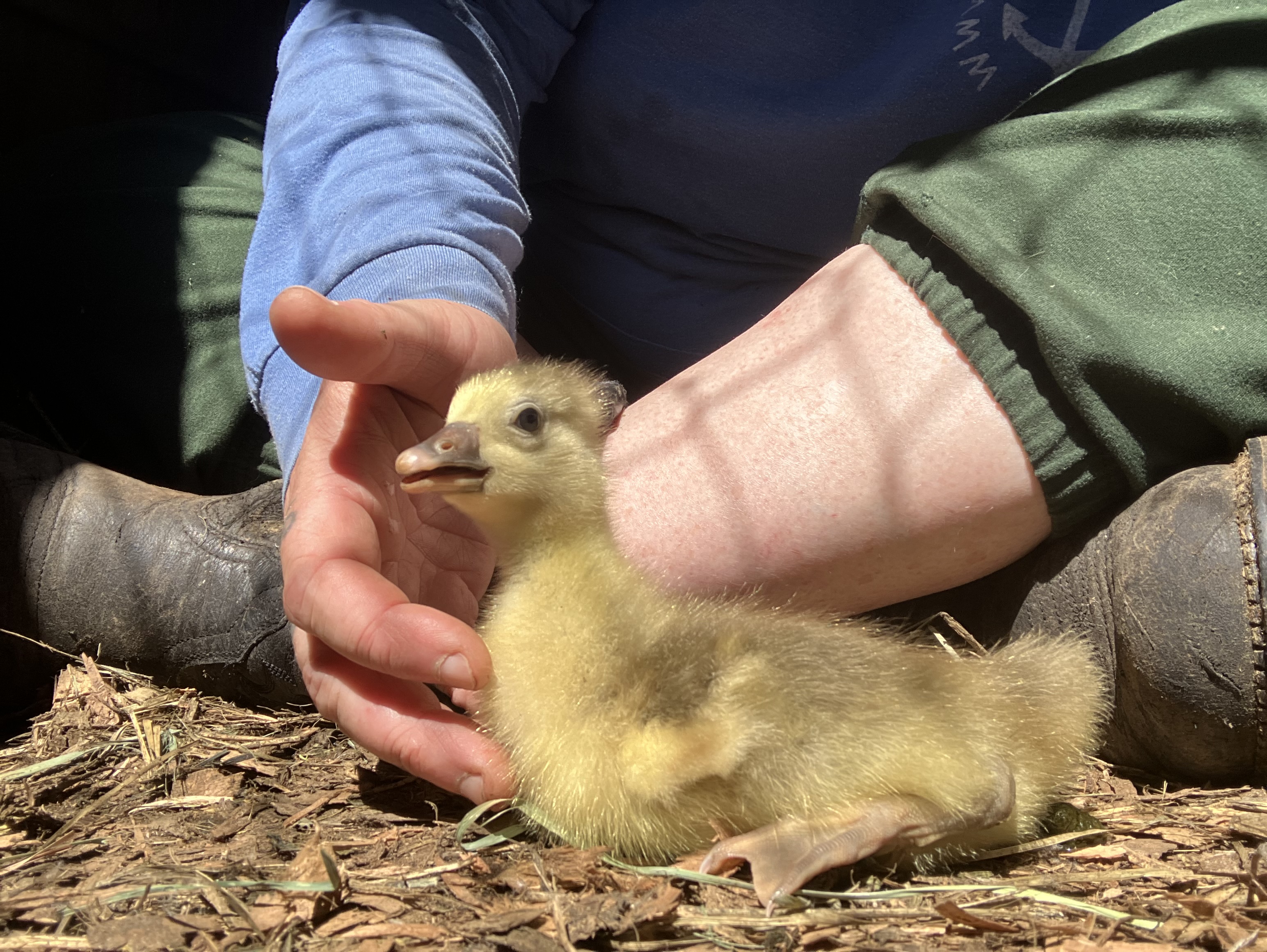
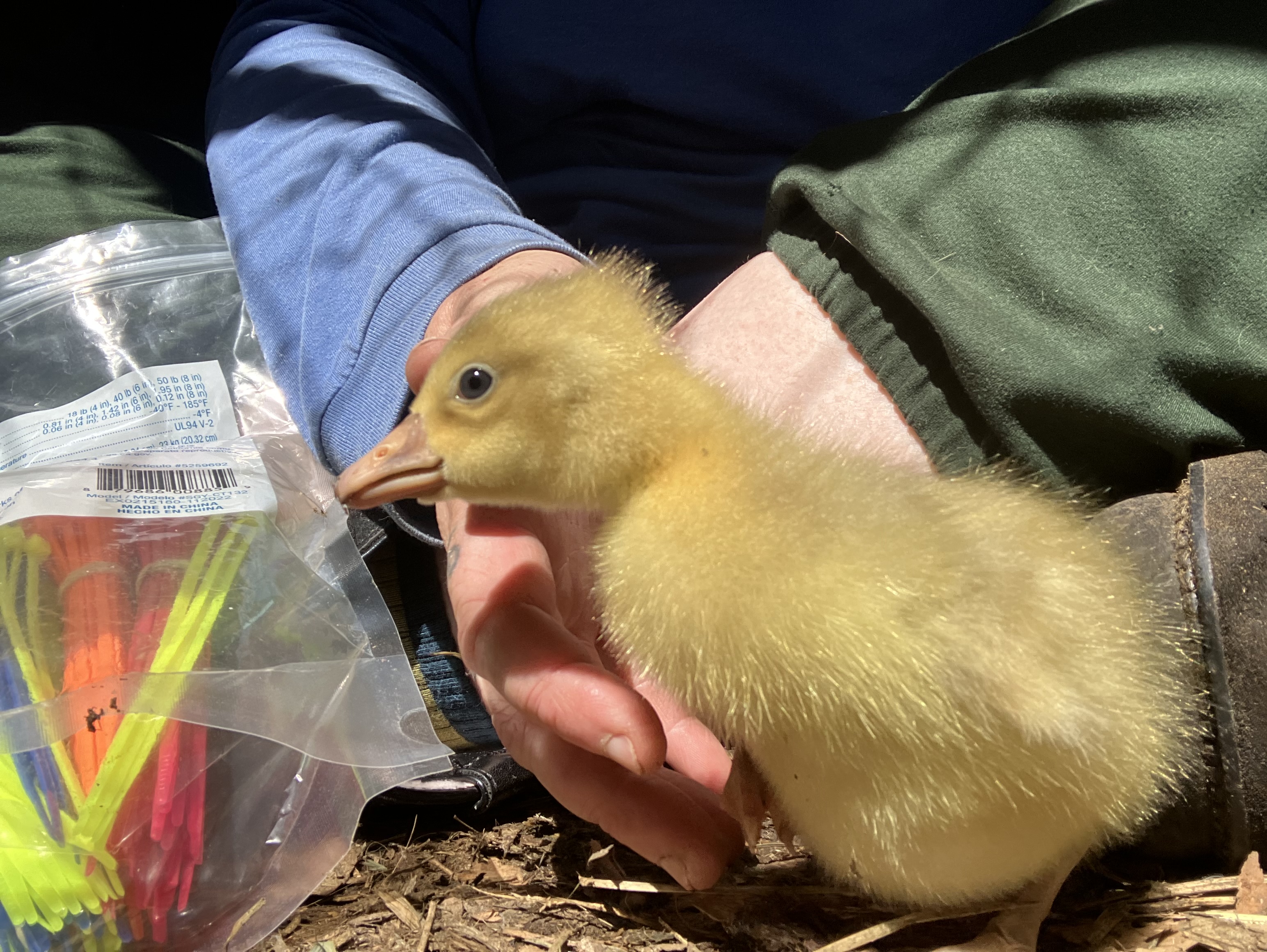
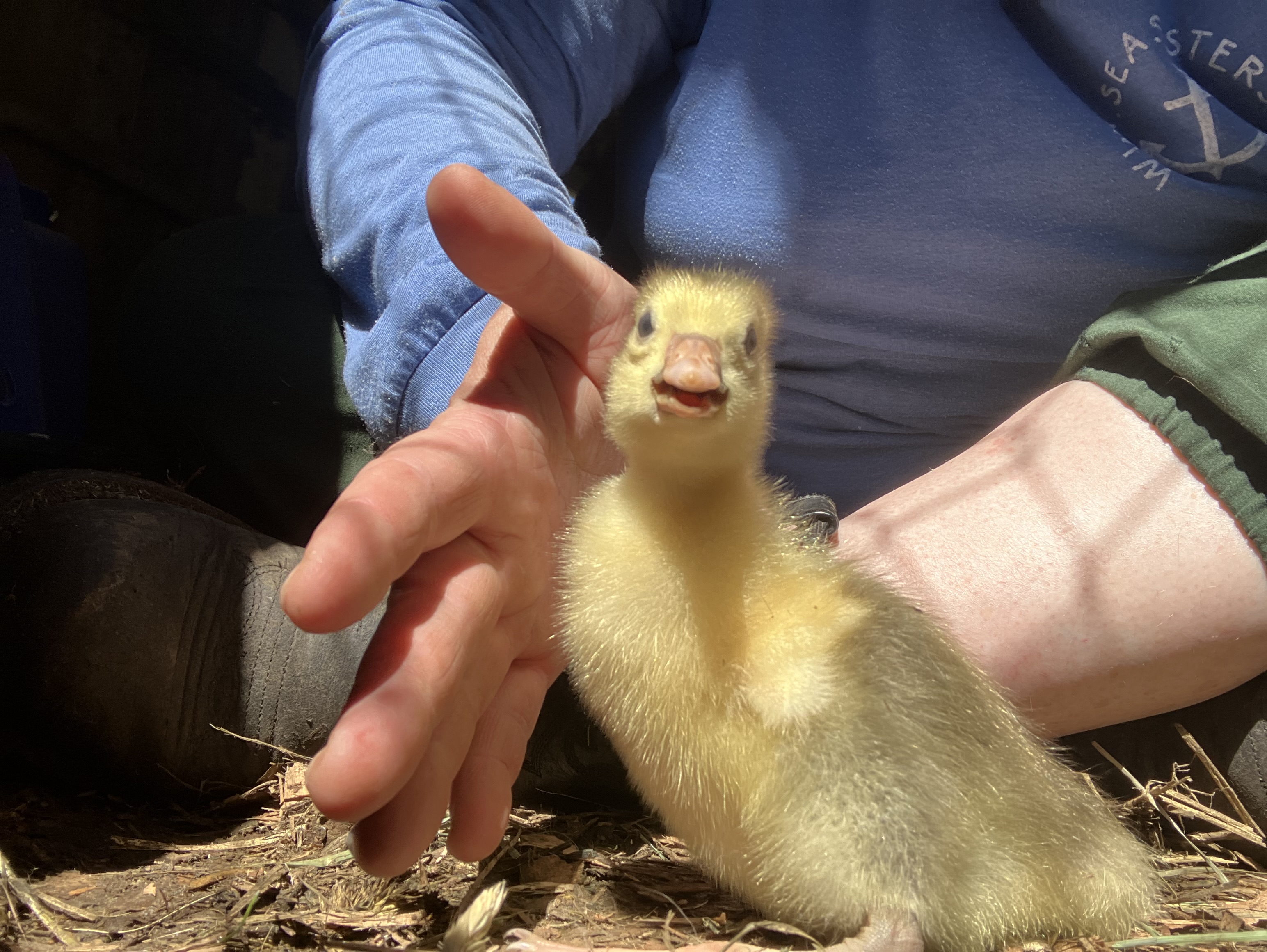
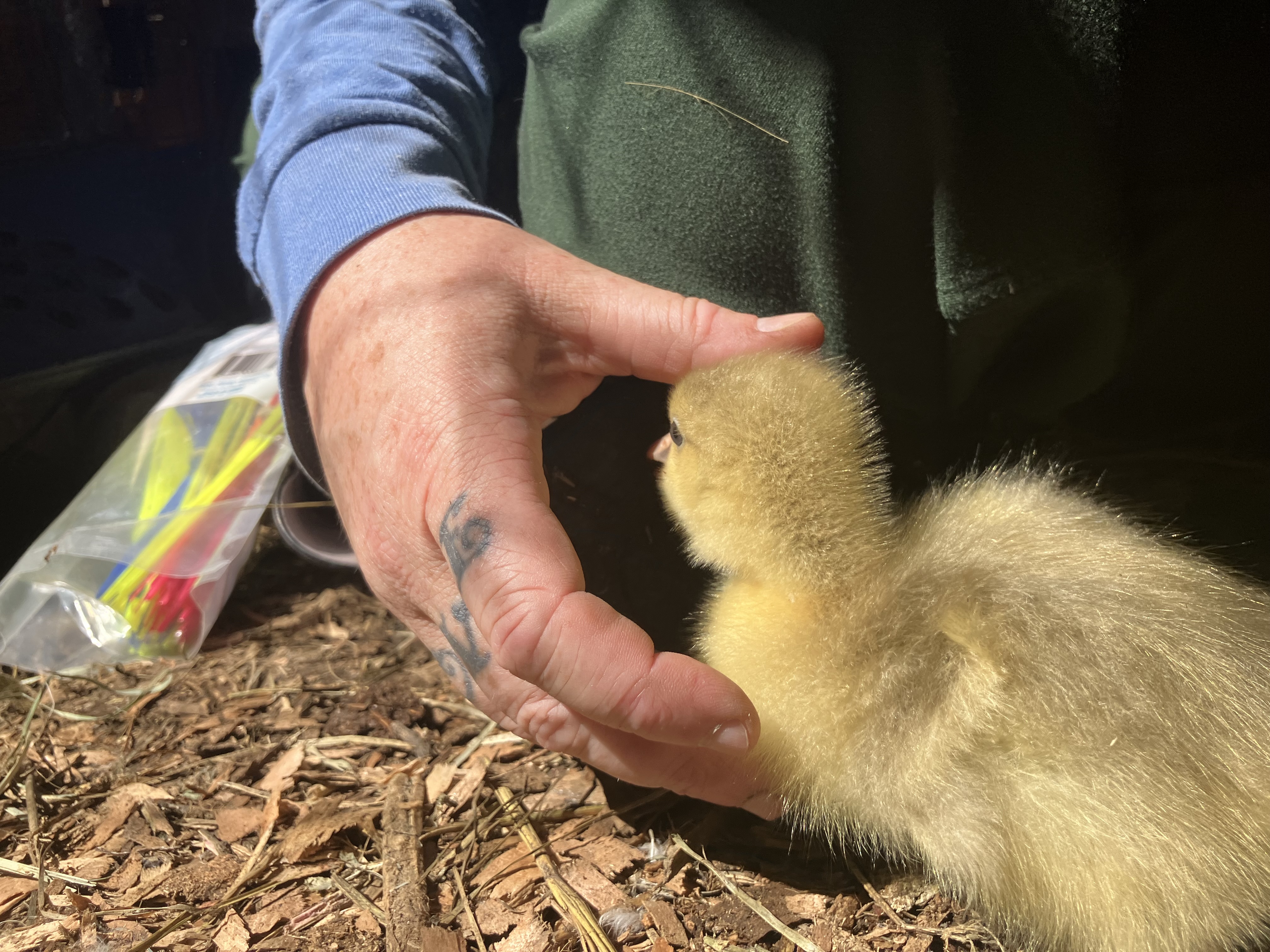
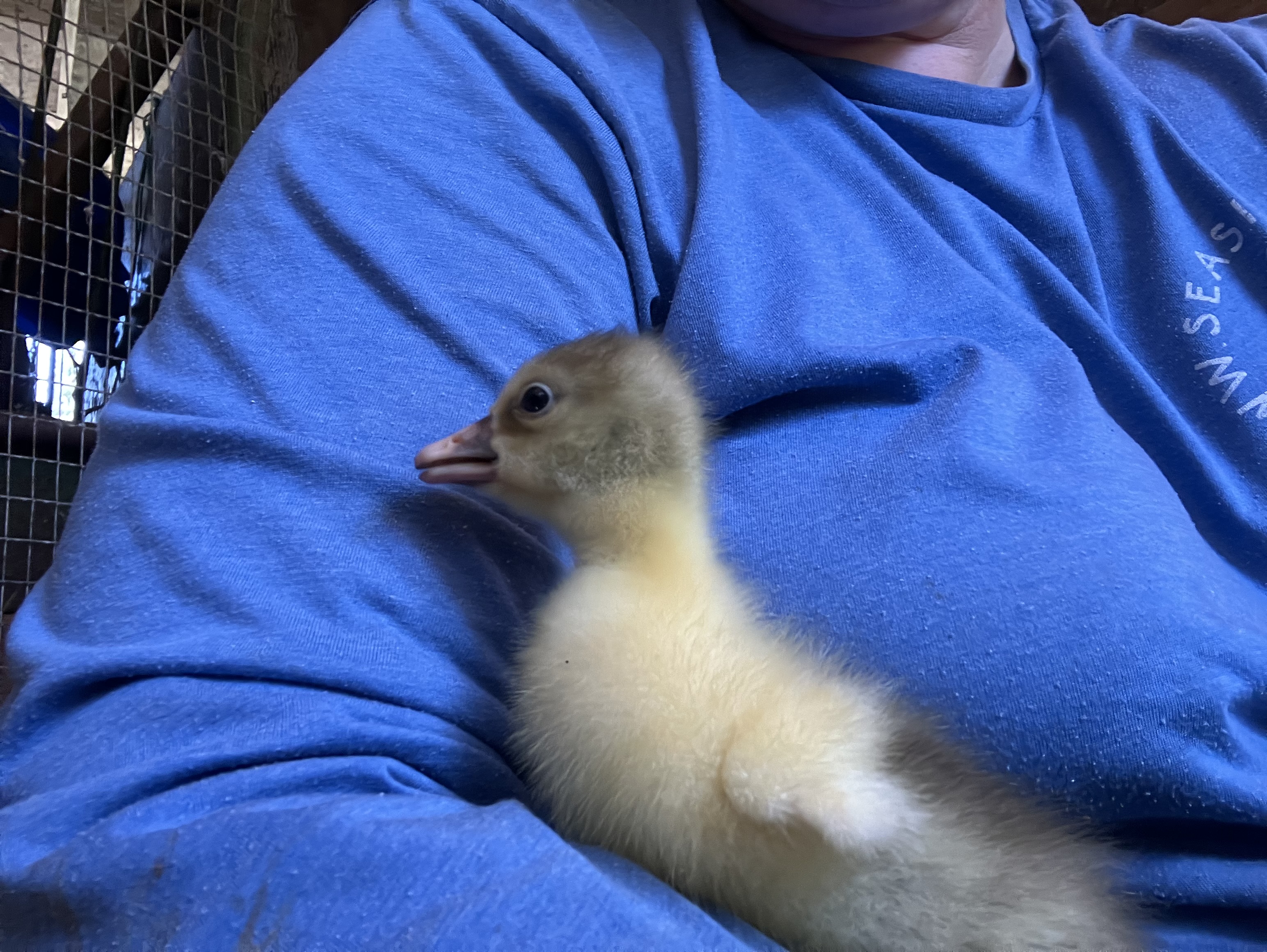
On their 6th day of life, I began my first attempt at documenting each gosling. The marks they are born with show what dimorphism of the breed they posses. The subtle differences in coloration are hard for my novice eyes to grasp, but I am starting to see the white tip on the wing of goslings that are pied carriers. I’m also noticing which goslings have no dark coloration on their necks, indicating pied or saddleback. Once these goslings grow up, the subtle markings are gone, and you’re left with white or nearly solid white ganders, while the goose has noticeable grey patches or a saddleback. The top left gosling looks like a male coloration, with the white wing tip indicating the pie carry trait. These differences help track genetics, and keeping the dimorphisms alive in the breed. I’ve got a long way to go in understanding these markings, but in time, I’m sure it will all make sense.
Because Cotton Patch are a rare heritage breed, there’s not a whole lot out there about them. Living with these birds has been the best teaching for me. In this third season of hatching, the lessons reflected well in eight healthy chicks. There were five last year, with two eggs never hatching, and one gosling drowned in a water bucket later that summer, leaving us only four to reach maturity. I slaughtered them, because I had not properly documented their markings to know the sexual dimorphisms, and I was not ready to keep more or sell. This year, I hope to have all that well accounted for to offer a few of the goslings from this clutch for sale. It will be important to reduce my flock numbers before late summer, as hosting 10 mature geese on this farm would be a little too much. It would be great to sell a pair of males for another beginner to test them out. I like to try out a breed before fully investing in breeding stock and going year round with a livestock system. Buying young animals in the spring/summer, then butchering them in the fall, gives you a growing season to get to know how you like the breed, but a way out in case it does not work.
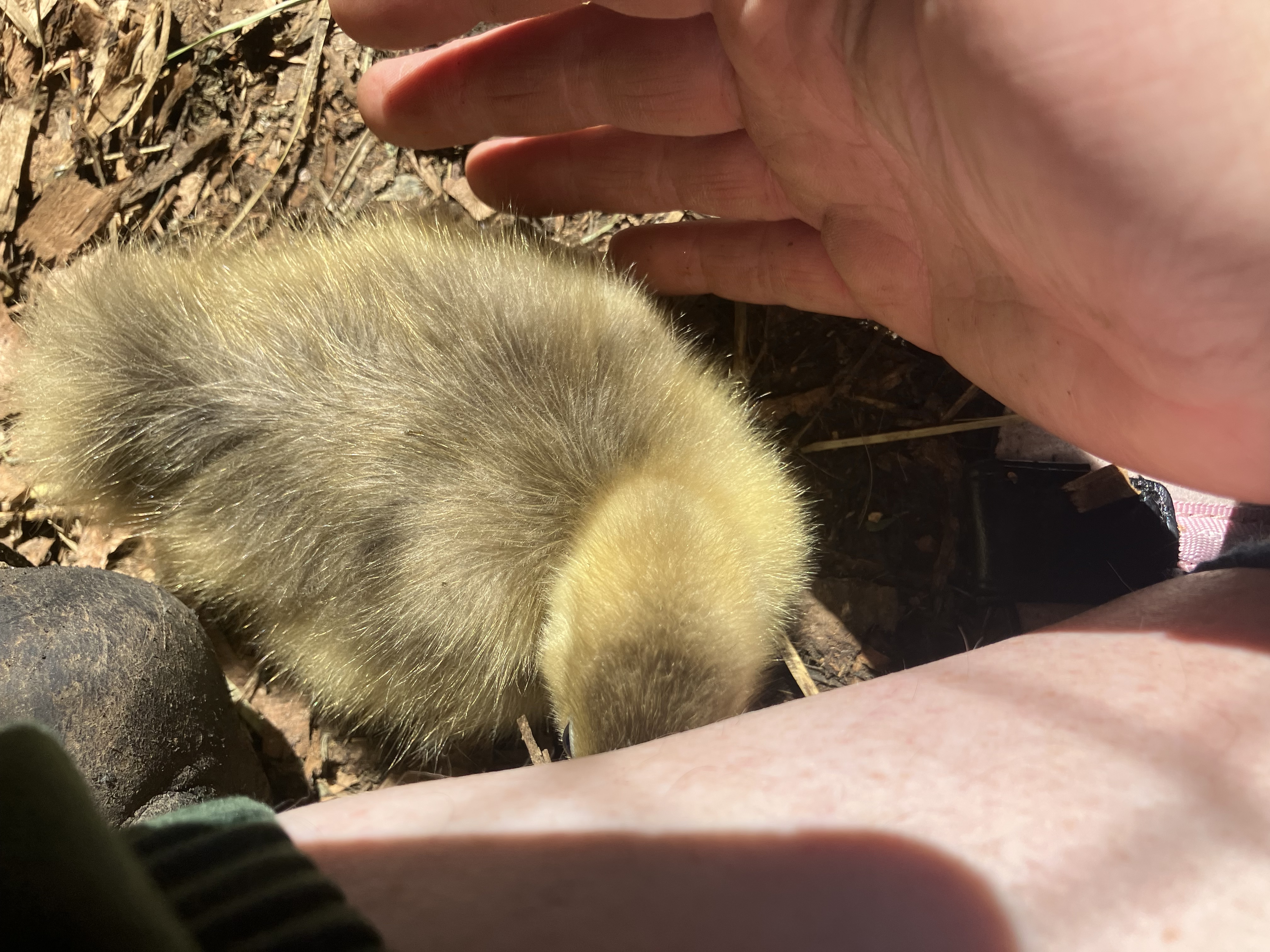
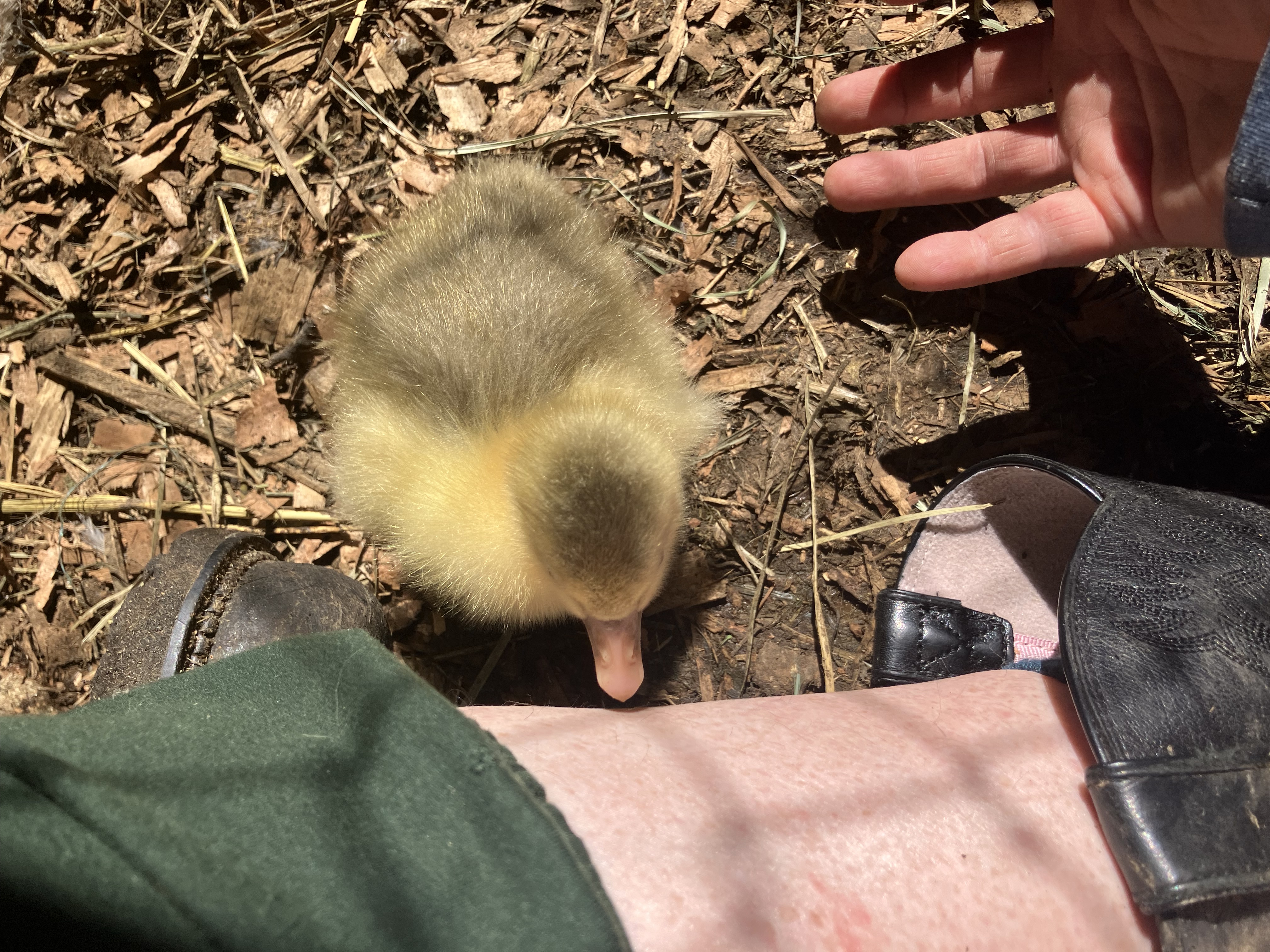
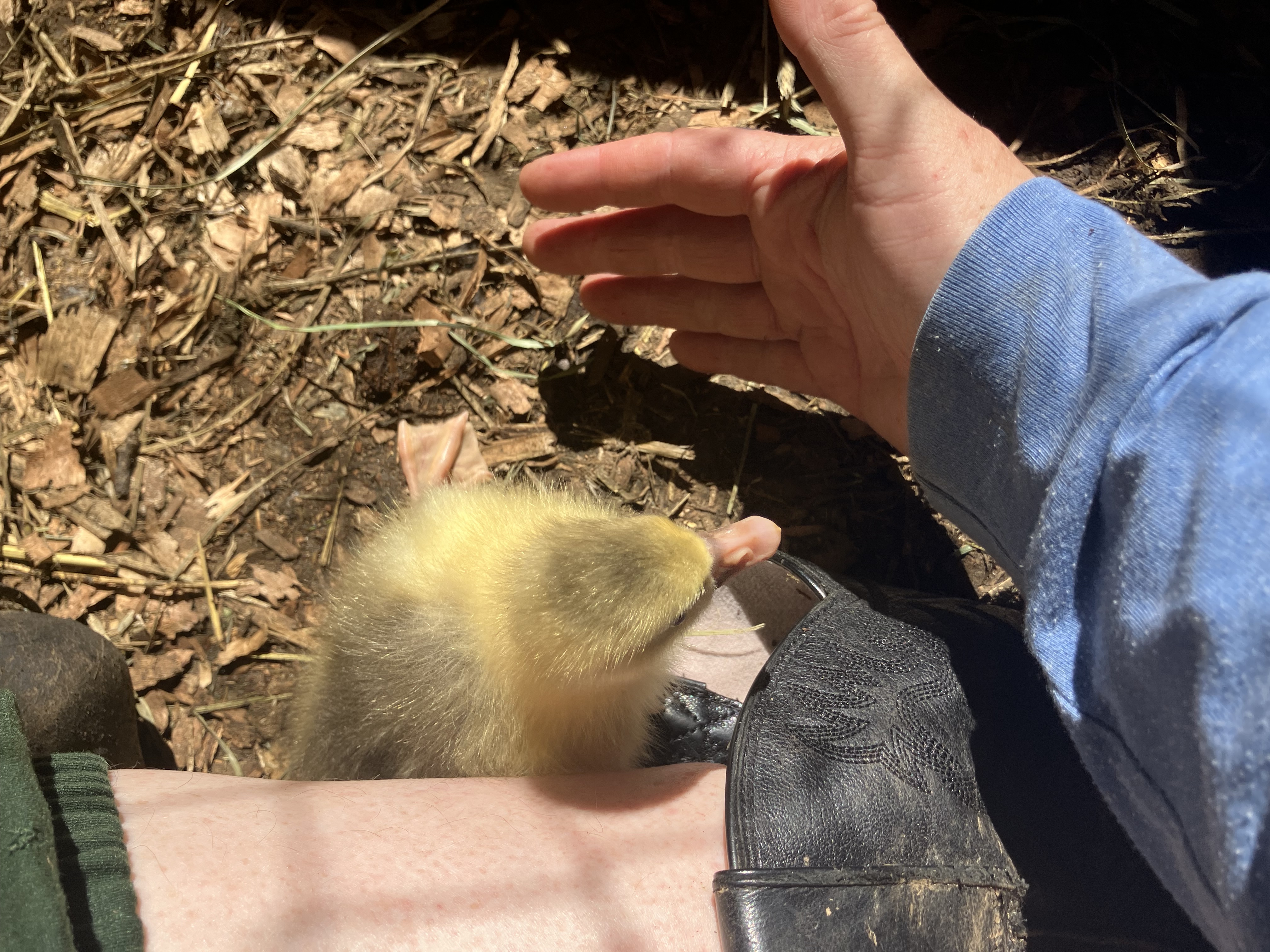
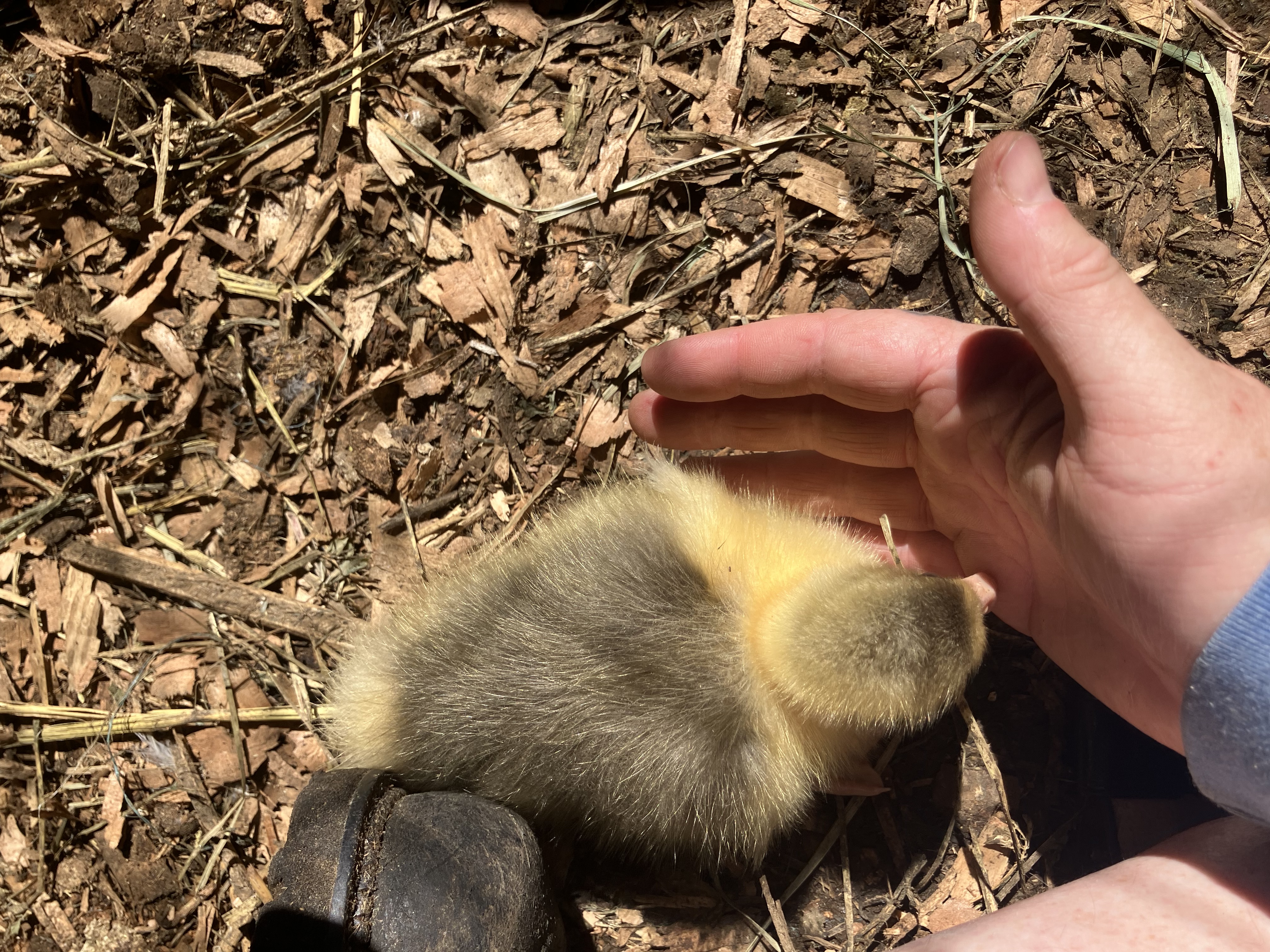
Can you tell which of these goslings is solid light? Don’t worry, I’m still getting an eye for it too. The first one, top left, is a gander with solid coloration and pie-carrying (the white tip on the wing). The rest seem to have breaks in their color at the neck and/or chest. This signals they are all saddle back/pie coloration and most seem to also have the white wing tip, meaning they are carriers too. The top left bird also has lighter coloration, indicating male, it was noticeable to me when I was banding them. I’m going to make a chart for this, and try to get clear examples. There is some literature, and I’m studying what seem like obvious traits in description, but again, my new to it eye struggles. I’ll have another couple of weeks to look over these special markings, then the geese will grow out these minor differences and all start to look either male (white) or female (mostly grey with patches or saddle and a white belly). I love this learning adventure!


