
It was a late fall day and I had a bucket of native plants that needed a new home. A few days earlier I’d been on my driveway pulling up all the young alder trees to re-home them away from main thruways. Now I had a combination of canopy and understory plants that were ready to put back in the soil in there forever home. I’d been eyeing one of my worm cities as a possible location. It had some good legacy stumps and banked fertility in some piled compost of sheep barn bedding which had been cooking down for over a year and was ready to host new plantings. I was going to shovel the whole thing into the bed of my truck to transport across the property to another raised bed that needed some topsoil. Then I thought about how much work that would be, and decided to bring the plants there and make a nice tree island.
A tree island is my name for a small cluster of trees holding a little island forest habitat, surrounded by open pasture. One might call it a grove, but I like the idea of an island of raised habitat on the landscape. To prep the “bed” I turned the surrounding soil up onto the old pile until there was a substantial mound. Then I planted the shorter understory plants on the south side, mulching them with some shavings. It’s important to keep track of young plantings if you can. I use bright orange flagging tape to show where things are. I also snuck a couple of oaks in for long term growth. On the north side of the mound I transplanted the red alders from the road. They are already over head height in stature, and will easily keep above the smaller plantings as everything sets. It certainly transformed a muddy stack into a beautiful bed of young native plantings that are sure to add layers of vegetation, diversity in ecology, and change in terrain for the eye, to name a few benefits of establishing a tree island.

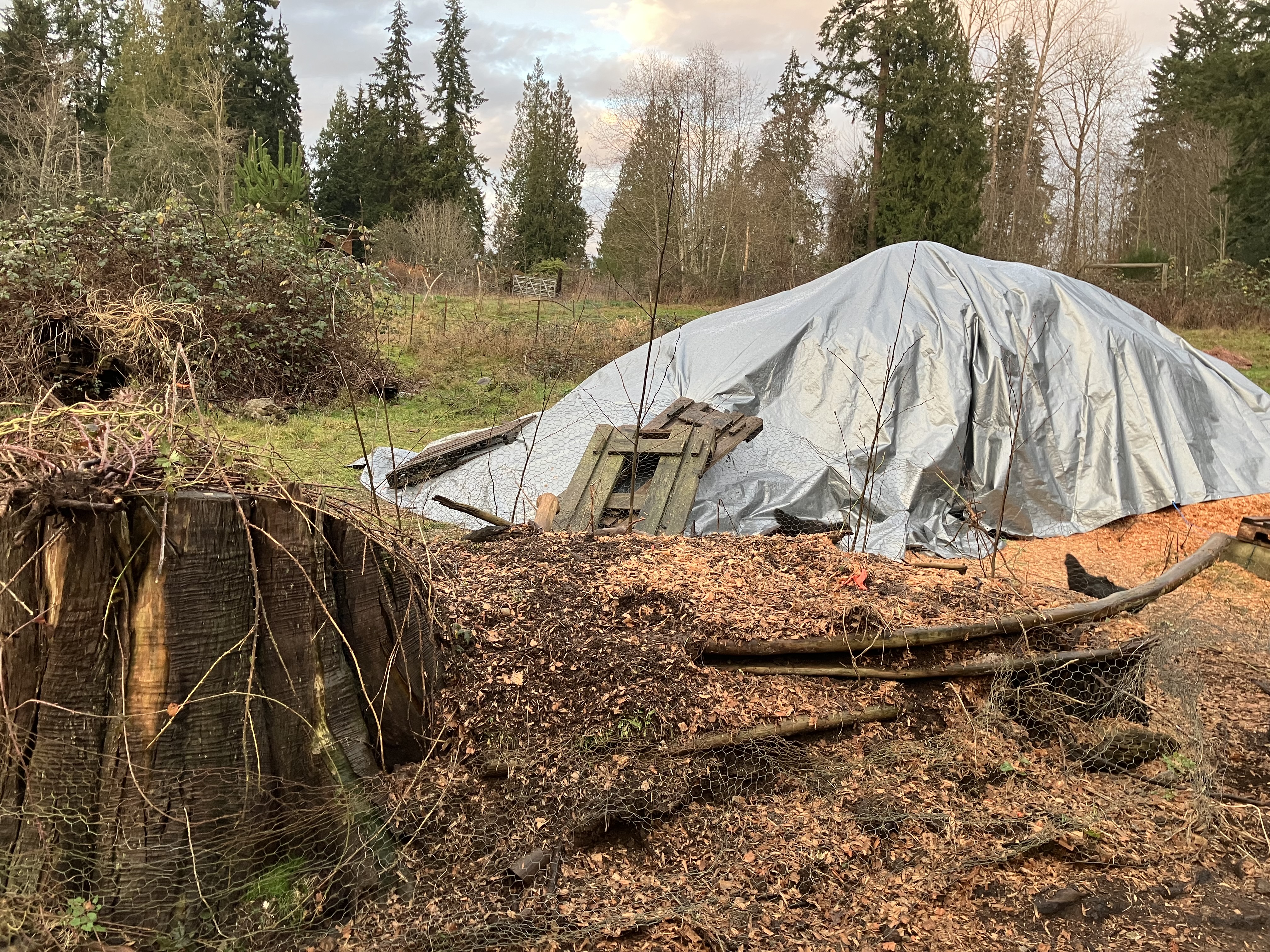
This is also a berm, well drained in flood months, yet mulched to keep summer sun off the soil. More layers of animal bedding that is nitrogen cold, will be spread in lower outer rings to be turned into more compost as soil builds. alders will be thinned and even pleachered to allow sunlight north of the mound where other swales and more established tree islands are set and growing for a decade. The south facing hillside gently slopes on the north end of the property, so I’ve planned sun isles through the future standards that will litter the upper pasture and main living area of the land. Oaks will eventually be harvested for wood heat, some acorn production similar to native hazel, and savanna silvopasture with deciduous nut and fruit trees dominating the canopy.
This tree island will host 20-30 years of alder and oak growth, while hosting long term hedge and shrub species for pollination and further starvation food wildlife habitat. Our chickens will use the young stands as shelter and as summer clutch rearing habitat until chickens are phased out of restoration plans for EEC Forest. Though chickens are a jungle fowl, avian flu and other bird carried pathogens in our area might cause the necessary culling of flocks if infected. Leafhopper will comply with any state mandates, but if our animals are slaughtered, we will not plan future production livestock and phase towards total rewilding sooner in the 60 year lifetime plan of my direct work with this landscape, in hopes of cleaner air, soil, and water for future generations of all living things.
These tree islands will thrive and grow with or without human tending, in a succession stand of oak savanna, the most successful forest in this soil, with the glacial till drainage, and sloping topography. Layers of slide alder, hazel, and in seasonally flooded areas of the land, willow to root long term understory deciduous drought resistant hundred year canopy return. There are enough maturing trees already on sight to produce native coniferous species as long as current climate allows. That’s where I try not to scry the future few hundred years with too much confidence. Soil building takes thousands of years, in which time, for this rather active geologic web of tectonic sudden upheaval and strata volcanic presence invites. Paring that with exponential climate instability with the not so subtle storms of wind and water, drought and fire to uncharted ferocity akin to fears of AI.
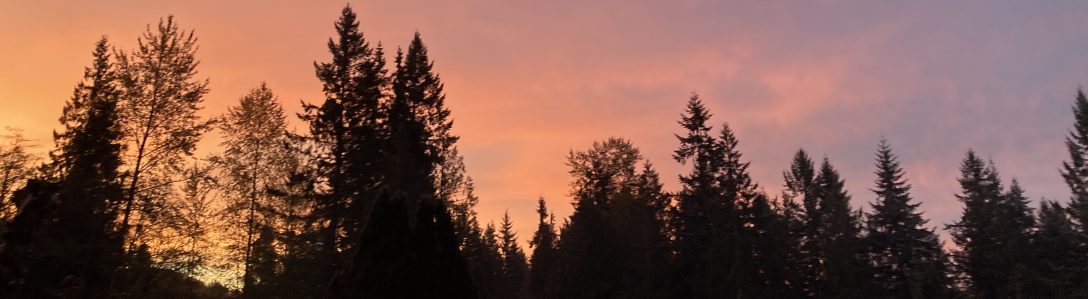
The weather is happening in real time, and when it’s privatized by that shadow cabal known as prosperity to the few at the cost of the many, we’d all earn some ancestral wisdom in looking up at the sky, watching the light, clouds, wind, and colors of seasonal shifts and nature’s language of entropy, which is usually experienced by us as slow and uneventful- most of the time. Hopefully the trees survive into some forest cover, and nuts offer food source that even humans can eat. This tree is fire friendly, drought tolerant, and could fend off blackberry with chemical warfare. They are spaced well from the long term establishment of understory shrubs planted in the island ecology. Mock orange and service berry are drought tolerant, also friends of fire, and offer food, materials, and medicine. Together, these plant companions will establish a long term cooperative adaptation, and provide layers of abundance and regeneration for the landscape through all of nature’s change.
 EEC Forest Stewardship