To most, this might look like a green wall of general vegetation, not a natural fence to a small garden. The hedgerow planting runs north to south along the east wall of this high use seasonal kitchen garden. Plantings include cultivars mixed with native plantings that need added protection. Within this well set wall of green you will find Pacific Crabapple, twin berry, Nootka Rose, mint, day lily. buckwheat and more. The livestock love browsing this hedge too- and it makes a great snack bar for the animals without letting them into my vegetable patch. Natural fencing has been around for centuries. Setting hedges to keep animal out- or in, remains a tradition around the world. From stacked stone to dead hedges of spiny acacia branches, humans have built walls, but growing them, while weaving the branches into each other as the wall establishes, gives boundary with food, medicine, and materials built in. There is maintenance required to maintain a hedge, but if you have browsing livestock- like Katahdin sheep, and a good pair of shears for cutting small branches, you can tend a small hedge with minimal effort.
Another important aspect of hedges, habitat, offers small creatures of the clearing a place to nest, seek shelter, and build community. Lady bugs, juncos, and bumble bees all clamor in the hedges. These walls of living biodiversity offer greater support to the garden inside. Pollinator species are well established, birds glean pest bugs all around, and many plants grow where an otherwise stagnant fence would stand. It’s important to remember the nesting season in the hedges, and avoid trimming and harvesting during these more sensitive times. I have found letting the sheep brows the hedge during nesting season, in the spring, does not disrupt the birds. Letting flowers bloom and fruit is also part of the timing with hedges- that’s why it’s best to cut them back every few years, or in the case of a small kitchen garden hedge, weave the longer branches back into the lower hedge to thicken the structure and prevent overshadowing of the garden. Birds love nesting in a thick hedge for protection.
It’s Spring, 2025, and I’m about to shape this small hedge before too many blossoms open up. The taller branches are just starting to overtake the edge of the garden, so I’ll bend them over to reinforce sideways growth while thickening the wall. I’ve found that reburying some of the lower branches will re-root some species- the crabapple does so in this hedge. Without cutting anything, I manage to tuck the hedge back in on its self. In time, some parts die and snap off, building carbon in the soil below. I’ve been using this technique with this small garden hedge for almost a decade. It’s thriving and hosting a variety of wildlife while keeping the garden safe from deer and sheep. This action is also mimicking the effect of another large herbivore not around this ridge-yet. Elk would come crashing through the understory, browsing down brush and shoving over smaller understory trees like the crabapple with their large antlers during the rut. For now, my hands do the work of keeping the hedge down while enjoying a kitchen garden.
So, this site is a personal business and lifestyle for a single, queer, feminist, educated, childless cat lady with dogs; raising geese, sheep, and chickens too. It’s a world where people cannot afford eggs any more, and I have buckets from a flock that’s taken 10 years to develop, and could be exterminated at any time should bird flu infect any one bird. Farming is high risk. It’s why so many were consolidated into the industrial food system that feeds the box store buying majority. It’s convenience, to be sure, I still go to the grocery store, and I have 10 acres and an able body, capable mind, and willing community to connect with for financial, social, and emotional support- as well as family. My personal village of loved ones in enough to hold up this amazing experiment in slow food, personal obligation, social networking, and lessons in life, liberty, and the cost of a dream. Most of these blog posts are about the farm and forest relationship, food production, and the day to day realities of restoration forest farming in King County, Snoqualmie First Nation Homelands, here in The Pacific Northwest temperate rainforest ecosystem. What a journey, surreal at times.
After COVID, the social dynamic of this country changed. I went from hosting group classes, to person to person learning with most of my clients. This Spring, 2025, I officially took time off from volunteer teaching hunter education for Washington Department of Fish and Wildlife to focus on mentoring women and girls in outdoor pursuits- from hunting to hiking, back country exploration and basic survival training. I will be leading a course in basic survival this Fall, 2025 for Washington Outdoor Women. I’m excited to follow through on this partnership, which had just begun before the pandemic, and as the world shut down, that organization took a hiatus till this year, and I am glad the opportunity is back online and expanding. Contributing my skills to forward the education of women and their empowerment in the great outdoors remains a steadfast dedication in this life.
Farming economy in King County remains a bit of a challenge. The animals pay for themselves, there’s no question about that, but the continued communication on the human side of investment remains, well, questionable. There seems to be a wealth gap in community expectation- surprise? No. But the reasons fluctuate, like tidal living should, and I’ve always struggled with value vs. true cost of doing this work ethically, while asking for the true price of market fluctuation. For example- I’ve asked for $8/dz eggs on organic layer feed and full pasture access in 2025. That’s a $1 raise in price since 2013, and remains the price through all the crazy inflation of today- because the true cost of these eggs has remained the same, people are just experiencing price gouging from a subsidized industry due to scarcity of layer hens. Right now, bird flu is the culprit, tomorrow, it will be grain costs to feed the animals, then, with funding for research and oversight stripped, our agricultural inspections and protections are out the window and all bets of food safety with them. I sleep at night knowing my food production is part of a living system I myself choose to rely on and be intricately connected to. People want everything cheap- especially food. How we’ve gotten away with thinking food really should not cost anything reflects on the disconnect between Americans and their basic needs.
I have the privilege to live the homestead dream, and have always moved towards this life goal, at first manifesting in my childhood, with a love of nature and outside connection, developing into animal husbandry, and a love all creatures great and small. High school brought summer internships at The Central Park Conservancy where I learned about major city park management and how people have great impact on environment. College found me connecting with Main Organic Farmers and Gardeners Association while I worked on a major in Sociology. I made contact with a board member from MOFGA , and he hired me for paid summer employment as a dairy hand. That was my first lesson in hard farming realities, with paychecks bouncing from month to month and seeing the farmer I worked for overwhelmed by how fast agriculture was changing. He was a shepherd- like Farmer Hoggett from Babe, able to hand shear a full fleece and more. The sheep market had stalled out, so he became a dairyman, and hated it. Lee Straw showed me the future of farming in one summer, and I walked away shaken.
The summer after that, I worked as an intern for an openly gay woman Massachusetts State House Representative and learned a lot about local politics, state legislation, and why I would never make it as a lobbyist. I’d come into that job the summer DOMA (The Defensive Marriage Act) was struck down, and gay marriage was legalized in MA. I was dating a woman at the time, and suddenly felt that my relationship was more valid- how many have questioned the validity of their relationships with another based on gender constructs? What does this have to do with current events at EEC Forest Stewardship? Well, the queer woman running the place is getting agitated by a slow, steady, familiar walk back of civil rights. I’ll step into my woman’s shoes and point out I have less rights as a woman today than my Grandmother. WTF? My gender and sexuality are under attack- gosh, if I was trans, non-white, or unable to pass as straight, a migrant, refugee… how would I stay sane?
The following college summer, I worked as a wrangler for YMCA of The Rockies. I’ve always loved horses, and took a summer job working with them full time in a pictures part of The American West. Colorado treated me well, though working at a summer camp where most of the staff had been campers as kids cultivated a hard social culture to break into, I managed to navigate with a few other “outsiders” and was voted “most likely to run a tattoo shop” by my fellow staff. I was also the wrangler- out of an all women’s crew, who was know as the bronc rider. A week before the kids show up to camp for the summer, we wranglers are arriving to vet a herd of trail horses for the children to ride safely. These poor animals are rented from a large stock yard called Sombrero Ranches. Hundreds of horses are kept on large feed lots in the greater Denver area and then shipped to summer rentals, like YMCA of The Rockies, each season. Well, summer is the start of work for these overwintered animals, and they were fresh under saddle, to put it lightly. I earned my rides; about 20 out of 130 horses in our initial delivery out of a semi truck. We sent 4 back, three would buck under saddle, and one was too old and rickety to risk putting an unbalanced first time rider on.
I shared this story recently, attempting to demonstrate some of my horsemanship qualifications. I rarely mention them in these writings, because I’ve stepped away from horses in my choice of home environment here in Western Washington. Mules or a couple of bog ponies might one day be in my future- and sooner the better, as my body will age out of riding in an equine’s lifetime. That’s sobering limitations for me at 43. So what about horsemanship qualifiers? How do you answer the question, “What’s your riding experience?” I could sum it up as- started bareback before I could walk, under saddle by 5, maybe sooner, Mom would know. I took lessons from 6-11, then a move to Dallas TX suburbs; single parent income would not support riding lessons or a pet horse. Annual visits to Oklahoma offered occasional backyard riding with friends who still had horses. Ranch work for a few years gave me more riding skills and herd management training. In 2011 I went to Mongolia and road on a migration with over 2,000 animals, 16 people, two yurts, and three dogs- one of which had only 3 legs- it was incredible, but what does that have to do with current events here at EEC?
In September, I hope to be back in the saddle for an ACT ride with Daniel Curry. I will have a lot more to share about this bucket list dream to horse pack into back country for a good cause. Though EEC Forest Stewardship is not in current wolf territory, ancestral legacies of wolf, elk, and more remains an intention in the restoration of this landscape. After working with WDFW as a volunteer, I wanted to get more perspective on relationships with wildlife and people. I’m not going to get into all the drama of wolves here in the west. My goal in connecting with Daniel is to gain some perspective, get some time in the saddle, and support a local wildlife conservation effort that one man is struggling to establish with the ranchers in his community. I see similar struggles right here in my own neighborhood that EEC restoration efforts are hoping to address for generations to come. As wolves, a keystone species that once thrived across North America, loose protected status under The Endangered Species Act, I thought it might be good to check in with an in the field boots- or hooves on the ground biologist who is devoting his life to reconciling people with these animals for the sake of all our survival. So riding and stuff.
Over the past few months, as more and more “Oh Sh*t!” moments grip The American Psyche, I’ve found a few glimmers of humor in the great ocean of bile being served up as news in our zeitgeist. Laughter is an important remedy during hard times. As the madness of life continues- I’m grappling with the laughable alongside tears of frustration and outright horror. A lot of my personal rage has manifested in gender dynamics for a long time- thank you feminist upbringing. Here are two snapshots in which women calmly attempt to express rationally while men fight on the street or coup a country in the background. We’re all trying to stay focused while too many man children roll about in the sand box kicking grit into all our teeth. WTF humanity? Have we truly lost our way as a species thanks to idiocracy? I’m going to get back to 4 minute dance fitness breaks and advocating for global unity. How are you taking yourself a little less seriously for the sake of personal sanity? Sit back and binge a couple of good snap shots in time. Truly, “humanity rises and falls as one.” *CRASH*
The young fruit trees continue their growth here at EEC Forest Stewardship. Blooms are a sure sign of health and happiness, along with active pollination and the forming of fruit on the stem. Flowers were out early this year, and pollinators have been slow in their arrival, so some trees may have a lot of great blossoms, but as the petals fall, no bulge at the base means no fruit on the stem. The later flowering fruit varieties should be more successful this year. Sometimes, the early fruit comes with a warm spell, activating the pollinators early enough. This year, there has been no warm, up, which is normal for Spring in this area. Most of the native plants flower later in the Spring, closer to mid-May or early June. In years of tracking the fruit here at EEC, our production varies often. A bumper corp year usually comes with cool Spring temperatures, but a lot of good rain. Our precipitation has been waning in recent years, especially in Springtime, when you would expect more consistent showers.
The younger fruit trees will take time to establish and adapt to these changes as they grow. I’ve alreadt noted quinces thrive, and cherries that dodge blight do well. Apples are hit or miss, with some loosing their grafts and going feral- we’ll graft onto those soon. Nut trees are starting to pick up in production, though it takes a good 8-10 years for one tree to mature enough to be commercially viable. Good thing we’re not working to become an industrial nut farm. Fruit trees are a part of working more food production into the landscape here, and also keep alive some very good apple strains that do produce well in a changing environment. Heritage varieties were developed before modern pesticides, so they are more resilient to many pathogens and pest insects that would plague orchards with modern industrial varieties developed for good looks, shipment resiliency, and size; while relying on harsh chemical protections applied by the farmer.
No toxins are used at Leafhopper Farm, and EEC Forest Stewardship remains a restoration forest with no use for chemical treatments in a healthy restored rainforest. Fruit tree cultivars are not part of a wild temperate rainforest, but they are a great short term tree that builds hard wood and fleshy fruit to feed us while we work to restore native plants over time. Many replacement species are already established and growing nearby. Oso Berry, Saskatoon, and mock orange are all understory trees that will help to establish the landscape for larger trees to come. Much of the northern most point of the EEC property remains open to cultivation and human habitation, so we don’t plant large evergreen trees while people are still living here. This allows for a clearing with good sun for our cultivation areas near housing. The majority of the property is being reforested, and the understory native fruit bearing species are thriving. In many parts of our cultivation, we mix native and non-native together for diversity. Below you see oso berry with a cultivar apple. There is also currant, hops, rose, and a cultivar cypress shrub in this planting, part of the kitchen garden hedge that protects the veggie patch from chickens and sheep.
Mom’s Orchard is still focused on individual fruit trees in what looks like a more traditional orchard layout- rows of young saplings with a manicured ground to prevent competition with food trees. Each tree is fenced to protect it from our livestock and the wild deer that roam through. The older, more mature trees up hill, are almost tall enough to take away the temporary protections, while there is a row of very young trees at the lowest point on the slope that are as of yet fenced. I was hoping once the upper area of the property was fully fenced, we’d stop having deer visiting, but they do still jump in occasionally. The sheep can be kept off the trees in future with electric mesh portable fencing. What I plan to do next is add in understory crops like comfrey and beans, wildflowers and ground cover like kinnikinnick. In diversifying the understory of this orchard, we’ll help to layer support for the fruit trees in fellow plants that act as companions by exchanging surplus resources with the trees to enhance overall soil health and root networks.
two apple trees that have lost their main graft- some fruit is still produces, but new grafts will be applied to the healthy root stalk- which can also be propagated.
Science has proven forests are collaborative. Though also competing for sunlight, the nutrients needed in a forest ebbs and flows; being easily exchanged, between growing things in the mycological network. The collective forest does not hoard extra resrouces, but stays in a give and take with neighbors and stands, cultivating diversity, equity, and the inclusion of healthy soil below our feet. This is how a living ecosystem thrives. Talk about trust, everything in the forest participates in fair exchange- but that’s environmental. Cooperation always outlasts conflict, though conflict is necessary for evolution. This is the constant shifting entropy encompassing all things- and it’s not woo woo, it’s the living, breathing world we humans are a part of- but back to the fruit grove. This orchard still reflects a typical planting for industrial layout. The trees are planted in rows for mechanical access- in this case, chicken tractors and electric mesh movable fencing, sheep grazing, and slope staggering for maximum sunlight. This site offers some good orchard planning tips. Here in Western Washington, south facing hillside is great for the diverse range of fruit species we’re hosting. Pest cycles, climate extremes, and continued cultivation in diversifying the understory will have Mom’s Orchard a thriving food forest for generations to come.
There’s a late arrival to the flock this Spring. On May 30, our first year ewe Pandora surprised me earlier this month by bagging up. It was three weeks past my official Ram exposure to the ewes, but I also realize I put him back in with them on pasture later, after I thought the gals had finished cycling. Well, I really don’t read the signs well when a ewe drops into heat. Apparently Pandora was late to the party, but still ready to dance. That’s ok, I really should just leave the ram in till late winter- but I don’t like feeding him alfalfa, or letting him bully the gals off their food so he gets his own digs in the winter, but I let them all go on pasture together because there is enough food and space for them all. When the ewes are heavily pregnant, the ram is removed until after all the lambs are born and stable. Oakie is a good ram in the flock most of the time, I don’t see him bully lambs unless it’s over food- until the rut. By then, all the lambs should be sold or slaughtered, so he does not have to fight with other rams for the ewes. But that might change this year, as I am looking at overwintering one of my ram lambs, who is turning out very well.
Quercus is a ewe lamb in my favorite line- her grandmother is Lickety-Split, who was the first lamb born at Leafhopper Farm, out of Ingrid, who was the lead ewe and my favorite friendly sheep. Not all sheep are friendly with people, many prefer distance and an occasional polite hand sniff when they do get close. I don’t mind if a sheep is shy, as long as I can handle them when I need to. If a sheep is prone to panic when I come into the barn, I tend to cull them because it’s not helpful to keeping a calm herd and handleable (domestic) animals. Quercus’ Mom, Pandora, is a little shy, but not panicky. She let’s me offer a hand sniff, and will stand when I catch her collar and look her over. It’s important to look over your animals often to make sure they don’t have any hidden injuries or other ailments that take some visual checking. When I came into the pen to check Pandora’s new lamb, she stood by, sniffed my hand, and stood while I looked at her new born to make sure everything was ok. That’s a sure sign of calmness in a ewe that I appreciate, and her little lamb shows the same temperament. This is a big reason I love this line in the flock. Lickety-Split comes right to me for head scratches- even in the field, and the rest of the herd usually follows her over for social time. Some might call her a Judas Sheep, but she’s my Bellweather. She even wears a bell. Her granddaughter might be a future lead ewe herself one day.
For now, Quercus enjoys her new life in the flock and gets a wander around the pasture, close to momma and grandmomma in the field. She’ll have a lot of catching up to do before running around with the rest of the lambs from this year. They are all growing very fast because they are all singles and getting exclusive rights to mom’s milk. It’s a first here at EEC, to have all singles, but that’s ok, everyone is healthy and happy, and we have a great sized flock. May the herd continue to show good development as this grand experiment in Katahdin Sheep continues.
You may know this mountain as St. Helens, but it’s called many other things by the people who have lived ear it for thousands of years. Tribal people have always been well aware of it’s unstable rage, from smoke to fire, this mountain pours out volcanic violence with little warning. Perhaps if the volcanologists had payed more attention to the tribal stories and oral histories, they would have understood the danger in 1980, when once again, the mountain erupted on the north side. Yes, in tribal oral history, Loowit would throw fire to the north at her sister Tahoma (Rainier). They were in a fight over their husband Pahtoe (Adams). Because there are so many tribes, there is not one single name or story for the various landmarks across the landscape, but this general theme seems to dominate within tribal lore. For a more complete list of tirbal names and stories, I loved this site.
Loowit is not a National Park, but a National Monument. This is a distinct difference; it’s a downgrade from park. Washington State has a few active strata volcanoes, and only one of them, Tahoma, is a National Park. Loowit was Weyerhaeuser territory in the 1980s, and the timber giant was not excited to give up land with forest, but after the blast, so much land had its trees blasted right off, that the company agreed to give up some land for a monument, in return for a lot of federal aid to rebuild access, and future promises about long term management, which is still under debate. With the current administration as of 2025, things don’t look good for the forests around this unique peak. Now that almost half a century has gone by, the timber has had a little time to come back, and nature’s incredible resiliency has dollars signs hanging from the branches now.
There is an incredible diversity of species and elevations of ecology around Loowit. The undisturbed areas of study after the blast to see how nature returns have brought countless understandings to restoration on disturbed landscapes. There are some folks tired of these ongoing studies, because it keeps people out of areas they once had access to. Though the land is considered public, it falls under protections as a monument, and is the only place in the world this crucial recovery research can go on. There are still vast areas of access for recreation, including two beautiful lakes, three educational centers, miles of trails, including back-country winter access. In planning my own trip to the mountain in May, 2025, I found more than enough free direct access, along with plenty of nearby free fishing, boat access, and well marked trails- some of which we could take the dog on. I would say Loowit is balanced for research observation, wildlife habitat, human recreation, and preservation of delicate ecology found no where else on earth for future generations.
In trying to find good maps online, I continued to realize how controversial this area of the country continues to be. Below is a map of the monument, which we never saw while there. We came right before official opening season, so we missed what I’m sure are amazing presentations by the park staff and volunteers that work at the monument seasonally. I bought a map at the gift store- which was open. It was still just a trail map, and didn’t have the park buildings or information on what was currently open. I’d been to this place in 2009 when I first came to Western Washington. We drove right up to Johnston’s Observatory and hiked a short loop from the education center. It was mind blowing then, but far more barren a landscape. Coming back 16 years later, I could tell the vegetation had grown in quite a bit more, and the logging trucks were running every ten minutes down highway 504, the only way out of the woods on the west side of the mountain.
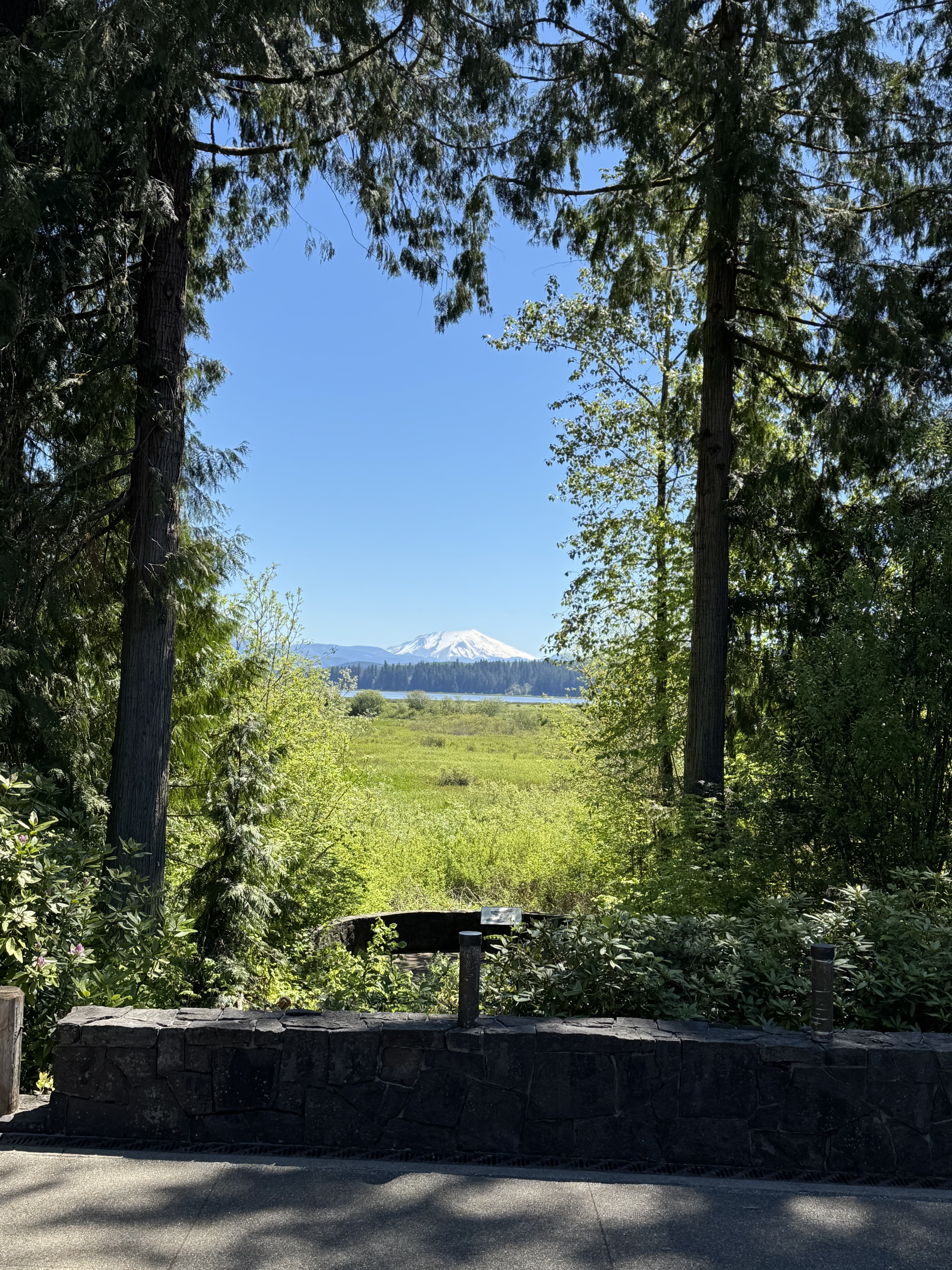
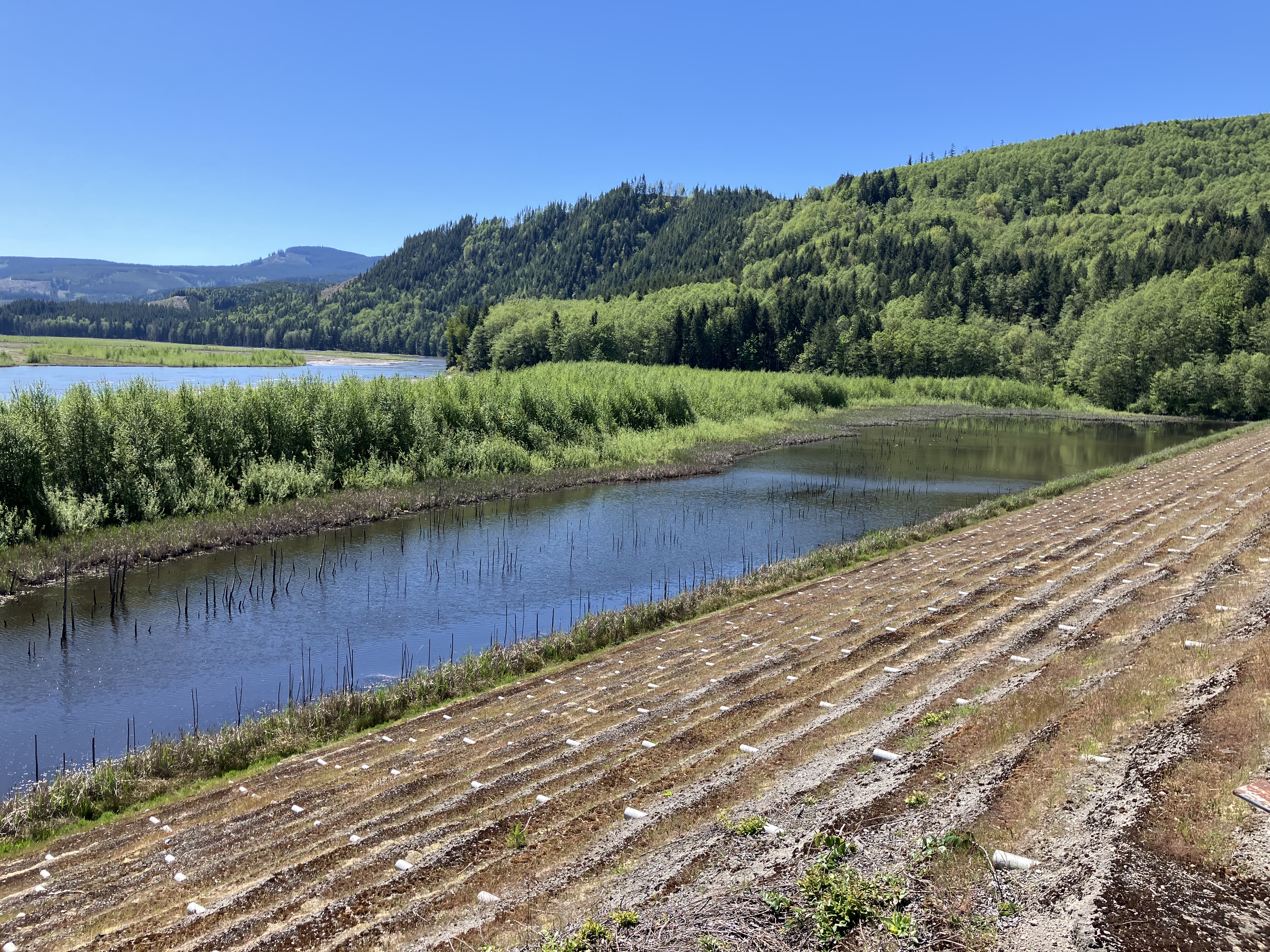
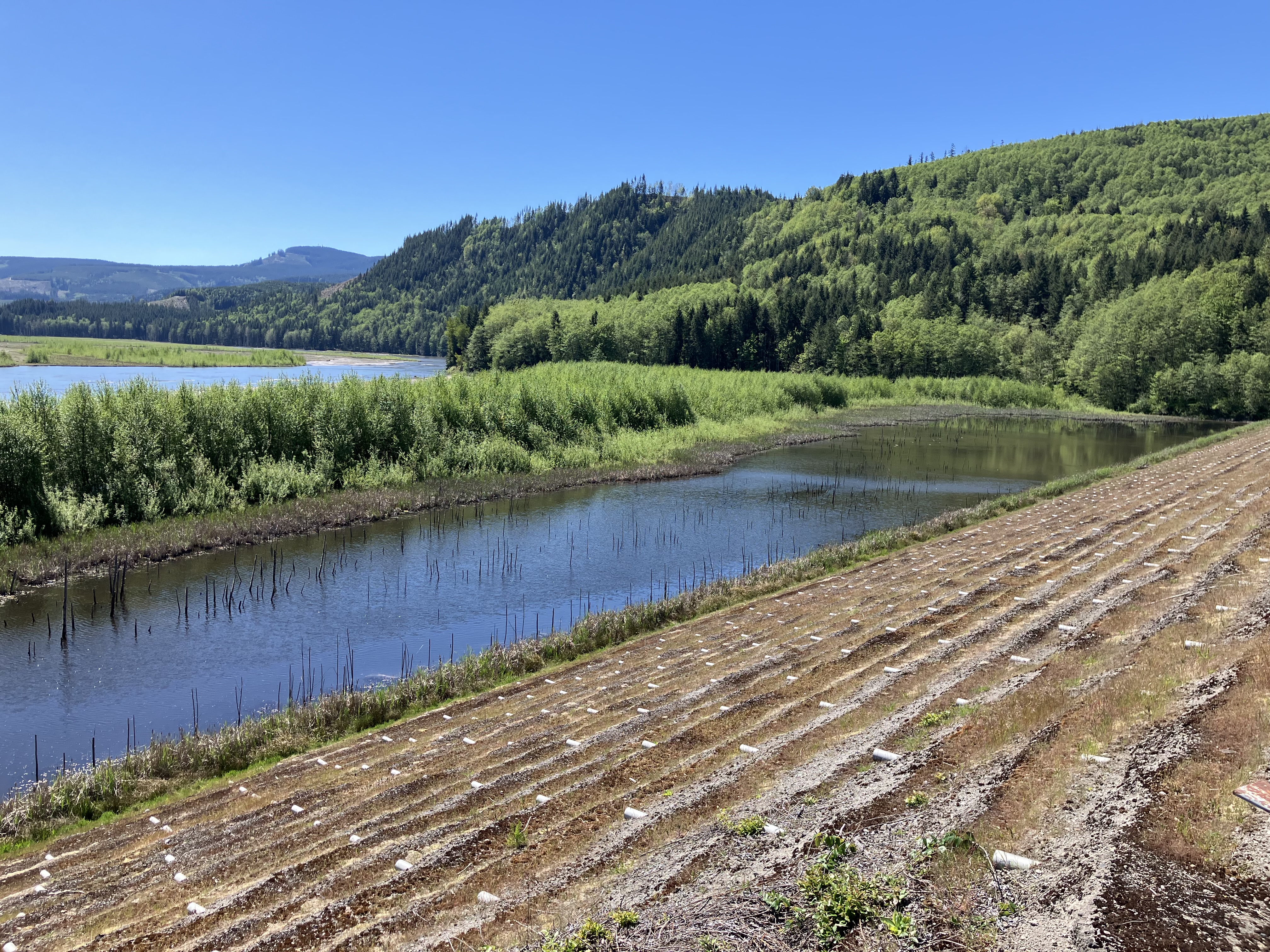
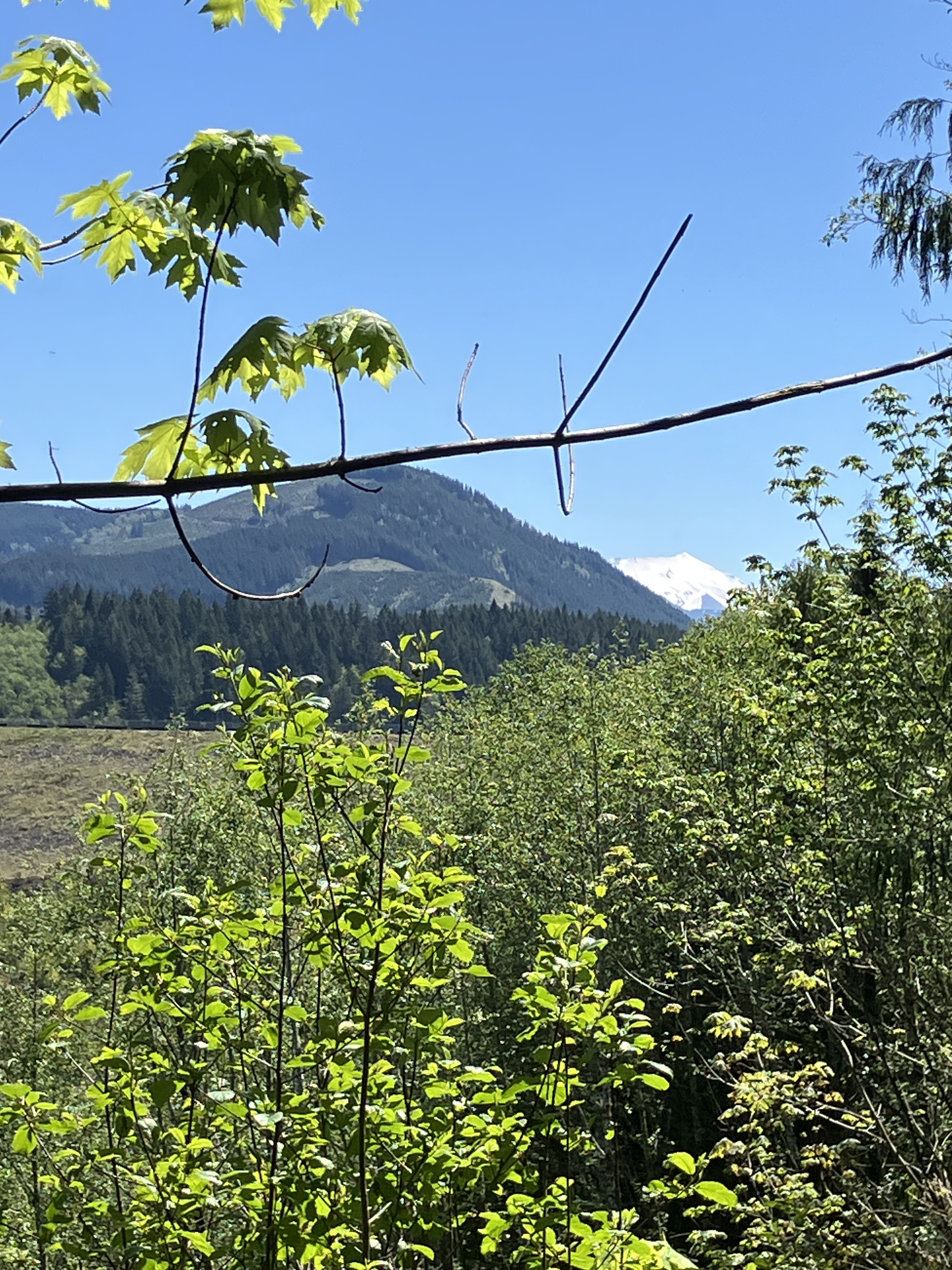
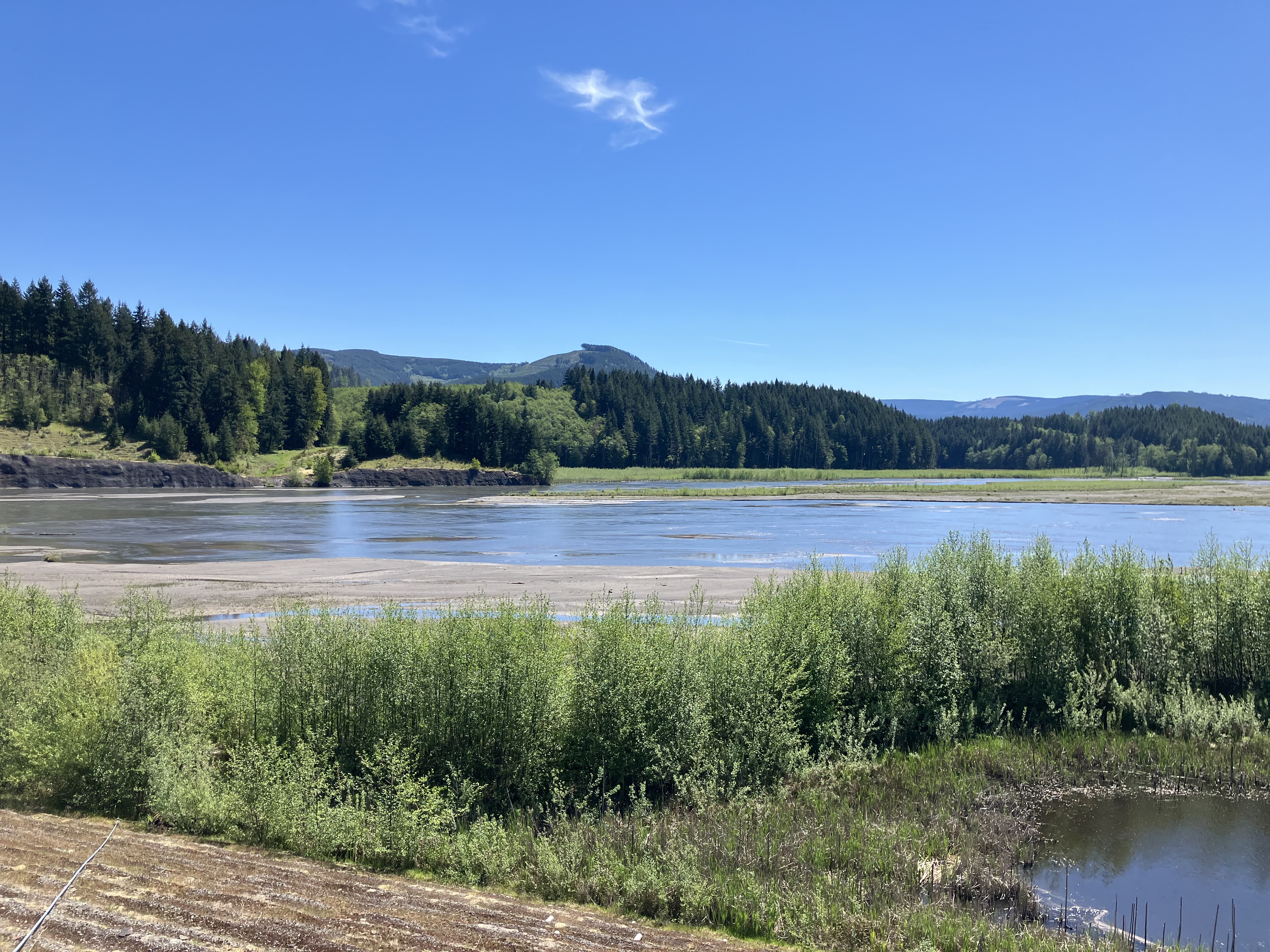
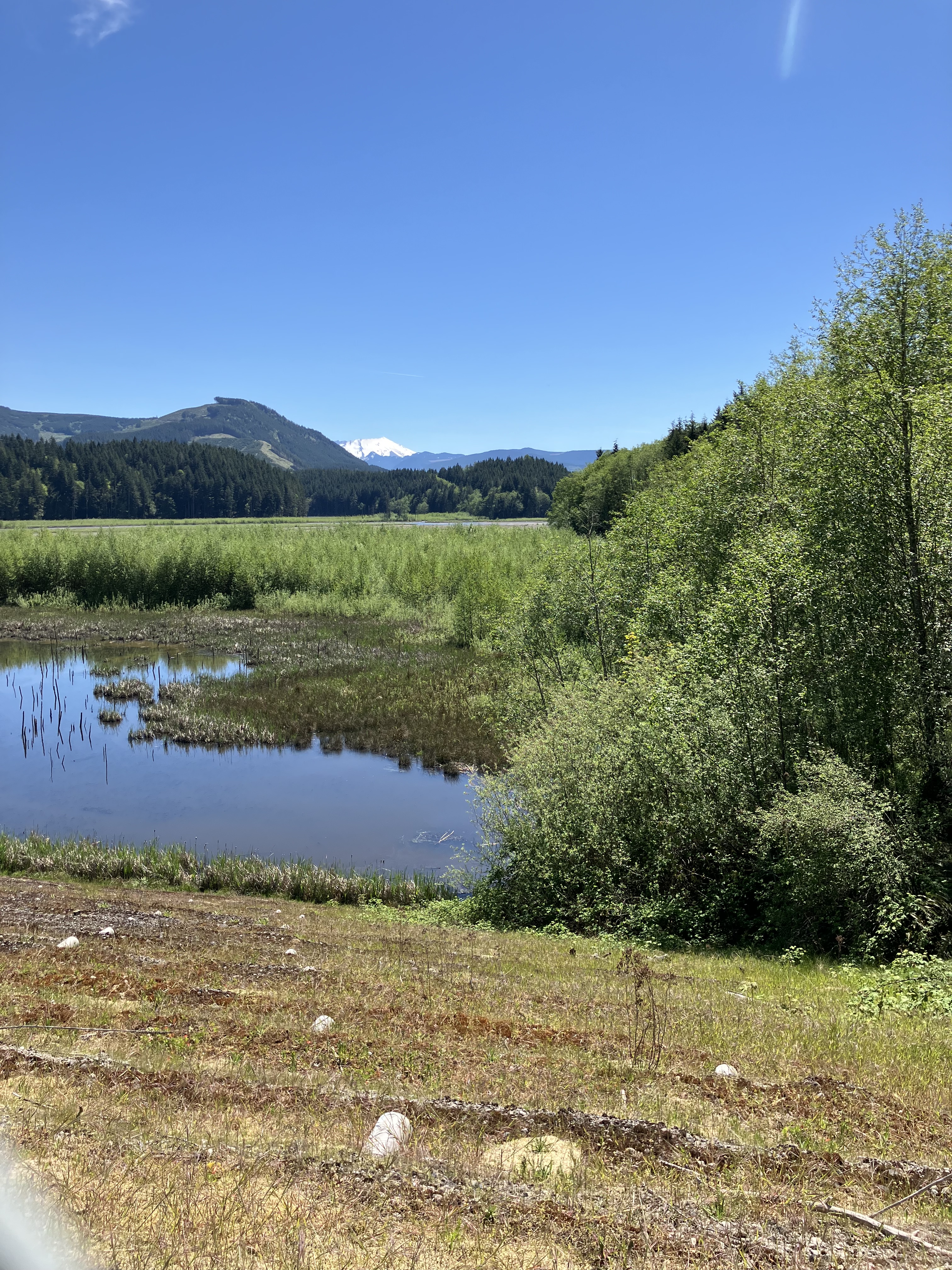
We stayed at Silver Lake, near the town of Toutle, which was the major emergency evacuation point during the mountain’s eruption in 1980. The area is about 20 miles from the volcano, and just at the edge of the blast zone. The Toutle River famously carried most of the lahar, which came off the mountain during the eruption. There is incredible video of this part of the disaster, which you can find here. The mud flows caused by lahars further down river, blocked several of the tributaries feeding into Toutle, which formed Coldwater, Castle, Spirit, and Silver Lakes. All five are now monitored and maintained by The Army Corps of Engineers to prevent future flooding in the towns and cities down stream. A huge sediment dam was constructed, to slow erosion as the ash and debris from the 1980 eruption continue their journey down from the mountain over time. This large man made structure offers an easy hike, some good signs with interpretation of the area, and interesting views of Loowit from the valley floor.
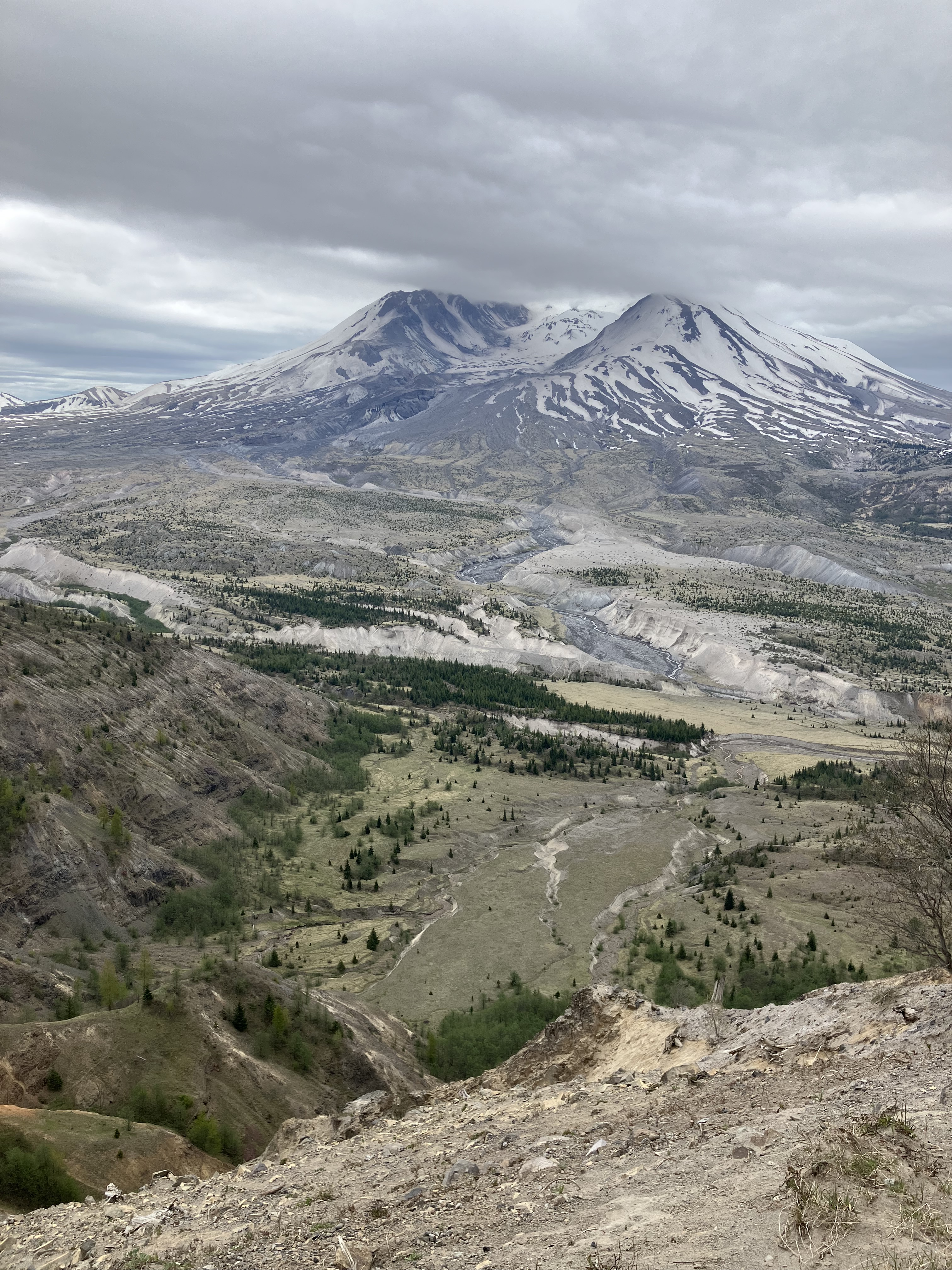
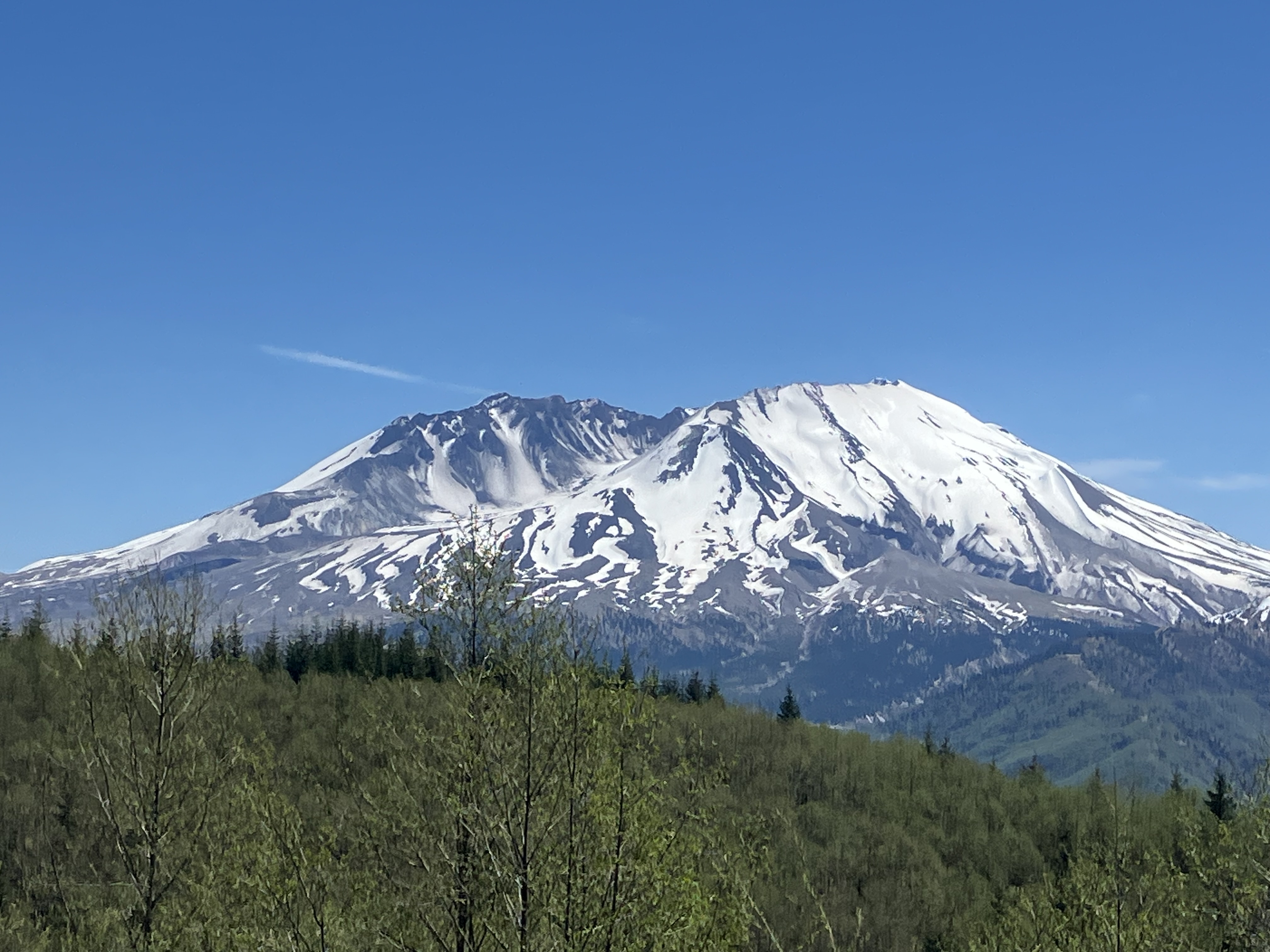
Scale is difficult to fully comprehend in this landscape. Form twenty miles away, the mountain looks like a sleeping strata, like all the other cone shaped peaks in the region. It takes some time, traveling over many ridges and across great gullies, winding towards what is slowly revealed to be a towering cauldron. Loowit has thrown out her peak to the north, at her sister Tahoma; opening her head in a rage, which still shows in leveled forests and hummock valleys all around. At each view point, we stopped to look in awe at this dynamic peak, still smoking as a new cone begins to rise from shattered center. Our minds reeled that the though of all that power, erupting violently from earth’s center. There were some not so subtle hints on the landscape, reminding us that we had stepped into the blast zone, where nothing had survived this cataclysmic geological change.
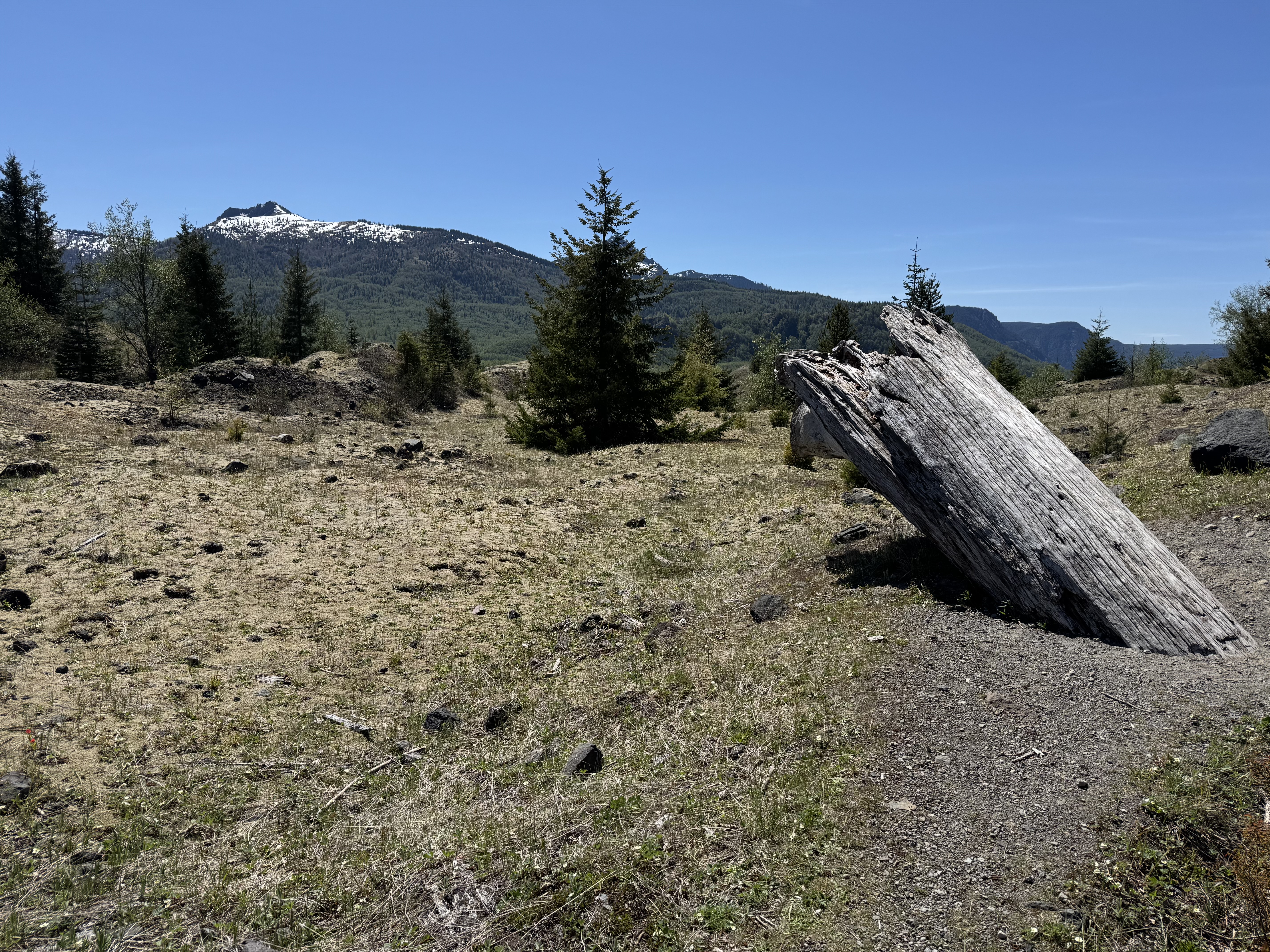
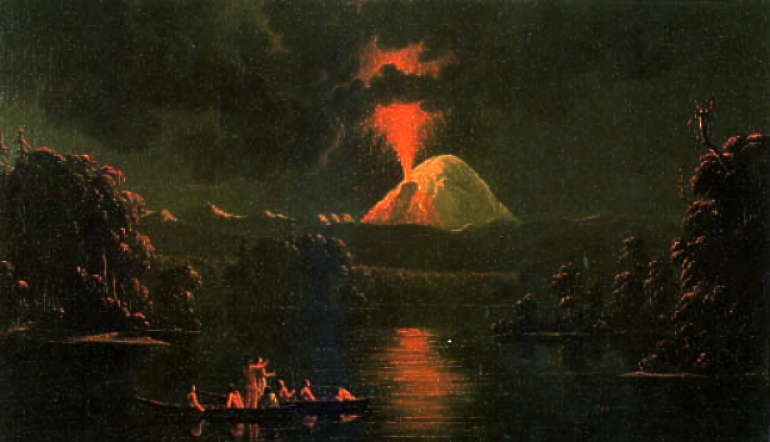
On The Hummocks Trail #229, you can see an old growth log sticking out of the hundreds of feet of ash and rubble, which came crashing down the northern side of the peak in May of 1980. Still the largest recorded landslide in human history, the eruption of Mt. St. Helens still haunts the landscape with evidence of many more sudden earth changes dating back thousands of years. Now, 45 years after this famous eruption, Loowit continues her recovery, with mother nature’s strong will to survive. Massive replanting were begun only a year after the catastrophe; Weyerhaeuser didn’t want to waste any growing time on the seedlings that would eventually repopulate the mountain slopes and ridge lines now cloaked in layers of ash, along with layers more under the loose topsoil, a legacy of unstable tectonic activity here in The Pacific Ring of Fire. Tribes that lived in the area for thousands of years, still hold oral histories that warn of the youthful vigor on Loowit’s slopes. Paul Kane, early colonial explorer, painted this eruption below in the 1700s.
This eruption, like all others spoken of by the tribe, happened on the north or northwest side of the peak. What happened in 1980? The same thing. I fact, a bulge began forming a week before the final cataclysmic end. It still puzzles me that a young Dr. David Johston and his colleges were camped out on the opposing ridge line northwest of the volcano. On May 18th, Johston happened to be taking his watch, and was able to get in a final radio call to The USGS stationed in southern Washington State:
“Vancouver, Vancouver, this is it!“
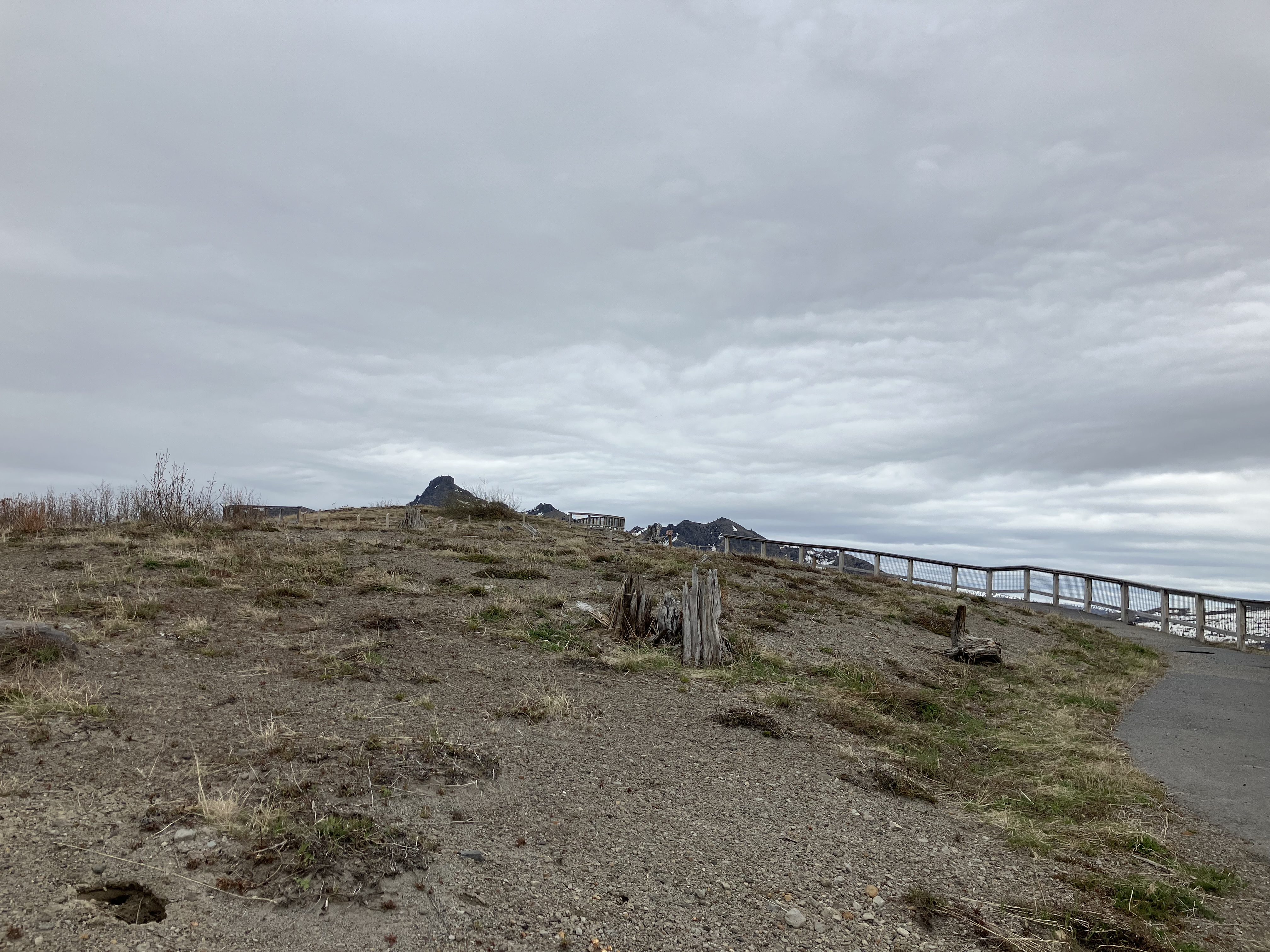
The transmission was cut off by the explosion, which came crashing over the ridge, and many beyond. As my friend and I began our ascent towards the observatory that now bears his name, we walked amongst thousands of tree trunks on the ground facing to the north/northwest. They lay in alignment with the blast, which leveled thousands of acres of forest, both young and old trees, nothing withstood the amount of force coming out of that mountain. I made a little video showing the explosion coming over the ridges and traveling past our trail.
The sign of devastation remains deeply instilled in these ridges. For us, it was a magical walk through recent geologic upheaval, along with some good ecological restoration. The studies on complete desolation and recovery after volcanic inhalation remains ongoing, with so much great scientific discoveries and advancement. Better satellite tracking to monitor active volcanoes world wide, understanding of how quickly the environment can begin recovery after a major eruption, and much more. Just walking along the ridge-lines that were once buried in hundreds of feet of ash and rock, now hosting young forests, wildflower meadows, and crystal clear lakes that had been boiling churning muddy messes right after the blast. It is truly a testament to natures resiliency, when left to make her own recovery. On nearby hills that were replanted for the timber industry, clear-cutting continues. Mono-culture forests for profit are raked down and replanted, reducing soil health and removing tons of biomass that would have fed future forest layers imperative for old growth trees to mature. Truck after truck sped past us on highway 504, carrying off the very trees that might have stabilized the ashen soil and prevented landslides.
Instead, more cutting continues, destabilization of the hillsides remains a threat to the communities living down stream, and our tax dollars go to propping up logging, rather than supporting the much larger tourist industry around the mountain. I found it very interesting that so many trees are cut while the community remains concerned about landslides and flooding. Even highway 504 has been washed out a few miles from its end at The Johnston Observatory. Though it was very cool to have a private time at the center on that special ridge with a perfect view into the volcano’s crater, it makes this magical learning center less accessible to the public, and the road is not slated to be reopened until 2027. The Observatory will be staffed through the warm season, but without maintenance, the road cracks and weathering of trails erodes infrastructure, causing more expensive upkeep in the long run. Cuts to state park funding might soon see this amazing place shut down, or worse, sold into private hands, or handed back over to Weyerhaeuser.
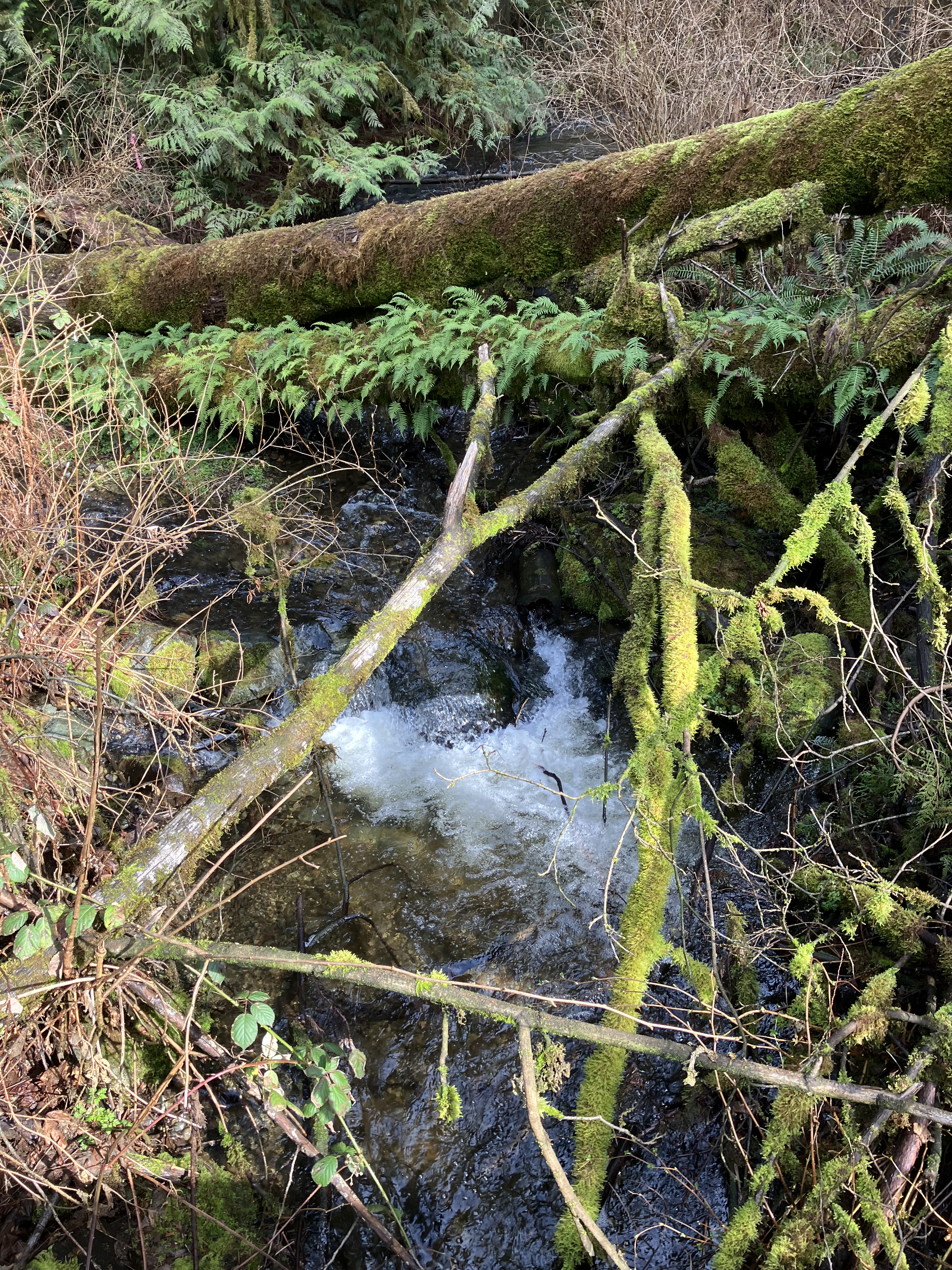
What a wonderful opportunity to return to Loowit for connection with the active tectonics of this region and reminders of the dynamic landscape here in The Pacific Northwest. There is rich geologic history of this region, along with endless landscapes and incredible topographic features like active strata volcanoes. Was I concerned about a sudden eruption? No. Do I think there are more eruptions in the future of this volcano’s life? Of course. There are also four other strata volcanoes in our area, along with the threat of The Big One, an earthquake that would level Seattle and send tsunami waves into The Skagit Valley, salting the soil where most of our produce grows. Drought worries me the most in day to day life on the land. I spend more time watching my creek flow and observing soil health than thinking about the next mountain to blow her top here in Western Washington. What I do love is all the on site learning to be had here. I can visit an active volcano just a few hours from home. It may not bee spewing lava, but it’s left a legacy of learning I’ll not soon forget. Gratitude to the mountains, our time sitting with them and listening, for regrowth and recovery in time, and all the scientific studies helping humanity better understand their place in this world.
It’s time for an update on our resident Ram, Oakie. The other day, my Mom was surprised to hear I overwinter a ram. It struck me that I have not talked more about the husbandry planning here at EEC Forest Stewardship. A lot of thinking goes into livestock, like planning out any garden, crop fields, or timber lot, one has to know soil productivity for growth of maximum pasture to feed the most animals- simple math really, or not. What kind of animals? What kind of ground? How much supplement is needed? Weather patterns, pollution, climate change, and on through till we finally realize what a complex system already thrives dynamically through the ages without our interference- but not at the maximum yield for human induced money profit. But what of the ram Liz? Ok, let me say, it’s not ideal to keep any intact male animals larger than a goose as domestic stock in your day to day routine. I have raised a few buck goats, kept them for a few years, and then, when I first shifted to sheep, I would get a ram lamb with my starter flock, with the intention of slaughtering him and getting another seasonal ram lamb the following year, and so on. This is an easy way to keep fresh genetics, and avoid handling rams throughout the year- because it can be a real safety constraint. Oakie is my fourth overwinter ram, he’s the second genetic strain from Canfield Farm, and his genetics are showing great improvement to the flock so far.
I’m planning to build a more permanent structure for the rams to accommodate having two or three overwintered to perpetuate starter flocks and long term genetic diversity. Oakie is a great foundational sire, and I look forward to seeing the family tree grow. The current rams lambs I’m looking to overwinter, include “Q”, and “Quinn”. The later is a serious long term contender, because he has the short legs and long back structure, with mild temperament I appreciate in my rams. It’s a top quality I breed for to keep my flock safe to handle; capitol definition of domestic. “Q” is a little less quiet in nature, but still manageable on the scale of ram lamb handling- they are springy young ones, with a lot of vitality to grow into.
above: “Q” and “Quinn” below:flock with “Quinn” out front, female lamb “Quasar” (red cape), behind her dark brown “Q”- all keepers, 2025
The flock development has been up and down with community needs. There is one listed right now for sale, available May 2025. It includes the other dark brown male lamb, pictured above to the left of “Q”, out front. Behind him, the two year old ewe, Opal, and her female lamb from this year, Quartz. The trilogy is well socialized and Opal will be a great lead ewe for the flock over time. She and her daughter are distant enough genetically to keep a good mix in the genes for several years as this flock develops over time, or the group will make a great summer feast of the lawn and fill the freezer with good local meat. All of these animals have been bred, born, and raised here at EEC with good pasture grazing and forest edge browsing on native vegetation of The Central Cascades.
Managing these feeding cycles is an ongoing quest for maximum yield and restoration enhancement. The old vision of clearing the land for open pasture was guided by the outdated model of maximum solar gain for seasonal growth, rotating crops through the growing season and tilling the ground between seeding. This method might be best in some situations, but in most soil, tilling breaks up the complex nutrient highways built by the living microbes within a soil network. Science is just now beginning to see the incredible production of intact soil systems in agricultural sights that have shifted to organic growing and no till methods of restorative farming.
In my decade of close relationship with restoration on a landscape that was once old growth rainforest, clearcut, farmed intensively to clear most of the flat land for cultivation of field crops, and animal grazing. Often, there is stunning dynamic change on this landscape, the sloped topography is sometimes illusive, especially as understory begins to return. Earthworks have also helped terrace the landscape to slow entropy and sequester water. Returning the complex layers of temperate rainforest, with the biomass layers to tend old growth trees will take many generations to come- thousands of years. To dive a little deeper, I looked up “pasture production equestion” -with the spelling error, and this was the second hit after the Penn State article referenced above.
Dr. Edward B. Rayburn “Pasture Production” 1998
All of these factors are constantly changing in the greater equation of human management. Mother nature has been honing a much more complex set of frankly, unimaginably complex systems of evolution she’s been studying and working on for millions of years- billions if you begin to fold in universal scale. Let’s get real, people are mere apes in the scheme of nature as a whole. Yes we’re invented tools, like so many other animals, and yes we took those tools to the next level, but to what end of success, merit, and true richness for all? Well, if you think it’s not about you, keep scrolling this screen with no intention. If you have intention, may it be for the good of all, or nothing. Separating ones self leads to death. Maybe that’s the road, but not for a thriving world. That’s the direction I hope to step towards with each day’s adventure. How can we put that into a binary framework- I don’t know, I’m just a shepherd, but AI still can’t fully map Mother Nature’s complexities. I keep using her as a strong indicator of the life vibe in our survival. But then there’s Oakie and his place on this small acreage that will not support an intact rainforest alone.
In my lifetime that’s left, another 50 years or more if I’m lucky, the livestock systems at EEC will shift, canopy will continue to return, and one day, sheep will no longer graze these hills. Oakie is a legacy of a few more decades at most, and he will see ten more years if he’s lucky, five would be more likely, because younger rams will out-compete him for dominance, and he will be too old to protect himself in the herd. My humane care of each animal prioritizes quality of life. That’s the covenant of keeping these little lives in this restoration system. Within the next 20 years, the landscape will have enough growth to host wildlife needed to keep most of the forest thriving and healthy. By then, hopefully, this forest will have survived a good natural fire. That may sound terrifying, and most likely will be, but the chances are growing with each drought our region encounters.
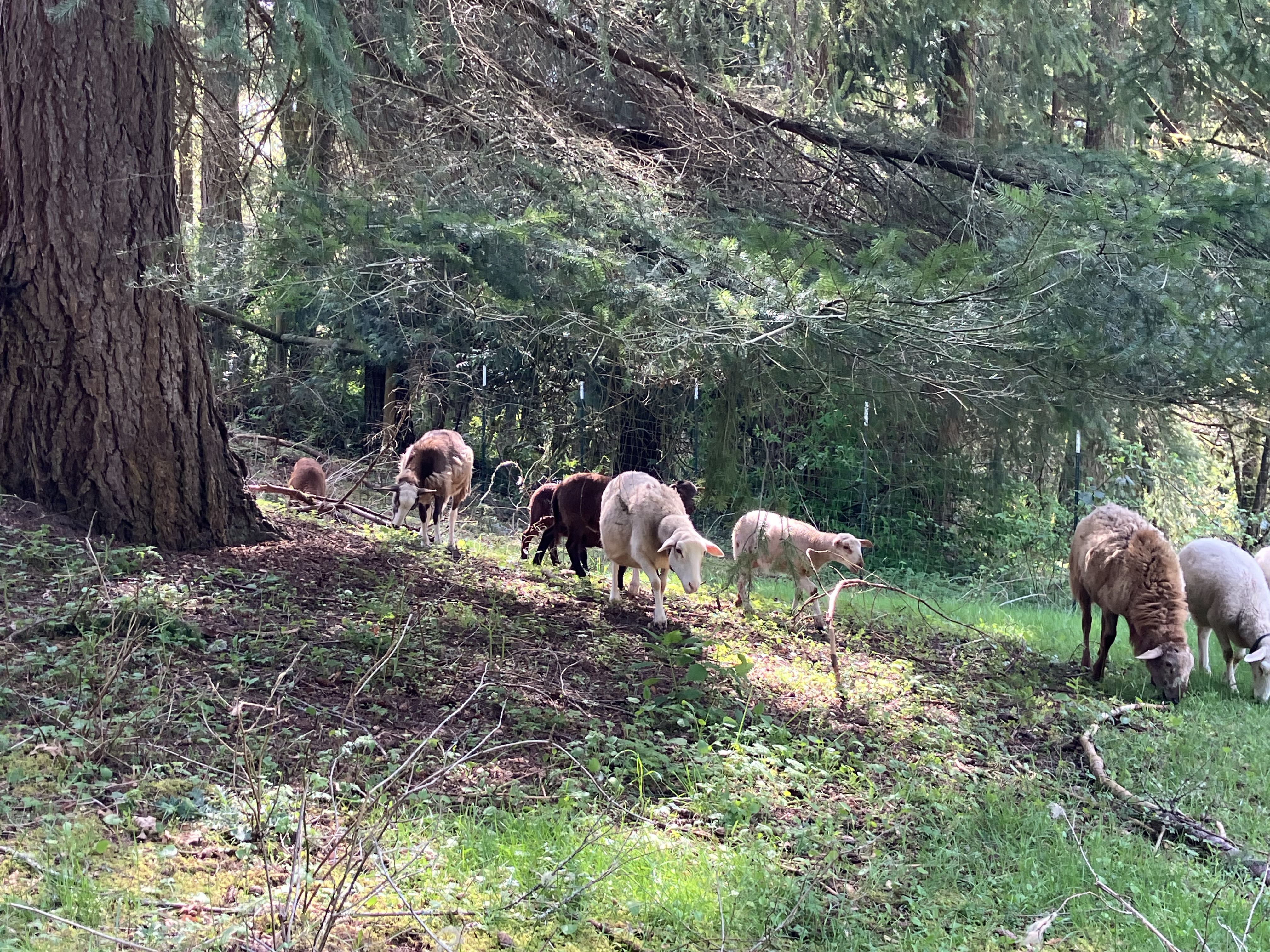
The sheep graze back most of the fire hazard. Woody debris breaks down into compost quickly, retaining a lot of surface water. Low hanging skirts on trees shade their roots, keeping the wet soil around their bases to deflect slow, low burn temperatures that would normally move through a natural burn area. In the picture above, The sheep have had access to the foreground to brows back, but above, in the background, another layer of understory bramble awaits their dining pleasure. Other areas of understory are fenced off, allowing the restored native plantings a chance to set and protect vulnerable soils, rooting the terrain in place for longer, slower growing trees a place to take hold. So, what governs these sheep on the landscape, and the future of rams at Leafhopper Farm goes far beyond mere pasture production economies. When we branch out and truly measure the full potential of these lifecycle in the context of restoration, rather than limited sheep production, we have opportunity to fully incorporate more of the rich, diversity of ecology to the best of it’s ability after millions of years of evolution.
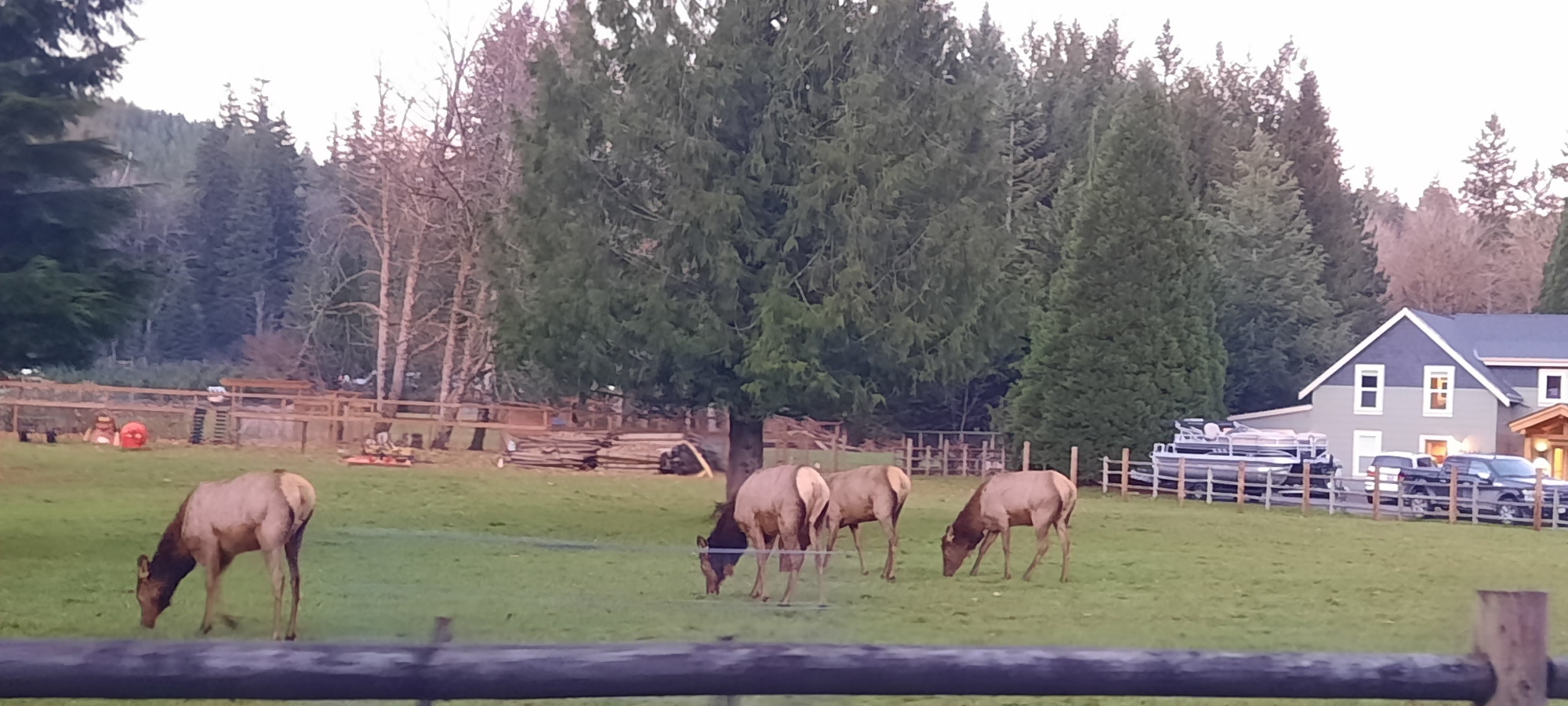
Snoqualmie Valley Roosevelt Elk on Tate Creek mc-mansion horse pasture
If we began to plan for elk to return, inviting them with good willow, young alder, and diverse understory for good browsing, they will have a place to return to. With all the development that continues to push them out, removing the complex systems they evolved in to simple golf courses and horse and cattle lots, the elk shrink away and disappear forever. There are elk in The Snoqualmie Valley, and their numbers have grown to outpace the limited habitat left in the area. They are pressed out of the agricultural river valleys and out of the livestock pastures, including the ones I have fenced here at EEC, but the long term plan here is for their return. Wildlife cannot survive without place, and in these more rural acreages, especially in water ways that are crucial to a healthy ecology across the region, public and private land owners should be doing their best to restore the land for native species so they can continue to adapt with the greater ecological changes facing our planet today.
Oakie is doing his part in restoration here at EEC Forest Stewardship by eating his way through the landscape. His genetic gift to the herd will continue to produce healthy lambs that grow up strong on the vegetation that grows here where they live. The complex micro level of biology between the ruminant’s gut and green plant matter builds the incredible unseen biome of bacteria and enzymes that keep soil alive and capable of growing all this important biomass- from our food crops to our animal feeds. It’s also the living soil that supports all life on earth, including the precious temperate rainforest that we’re trying to restore. The sheep may never fully understand that important role, but their presence is imperative to the restoration of this ecosystem. Gratitude for their original instructions to eat veg and build meat for us to eat. Thanks to all the growth and learning going on in this place.
There are numerous patches of hair, fur, and wool littered around the woodlands of EEC Forest Stewardship at this time of year. Soft pastels on green canvas, the art of scent makes clear statements of domain for the hair of this fluffy first coat shed. I’ve brushed out a “standing” -where this animal waits in place long enough for me to brush with a shed scraper- also used on horses. This large guarding animal makes their own scent signs on the landscape by rubbing tall grasses and clumps of vegetation, along with urinating. If this animal really wants to make a point, they use their large paws to scratch into the grass and soil, leaving physical markings, as well as scent and sheds. It’s worth noting his rout and placing groomings as a long lasting security. As the season warms up, more predators and their young will join us on the greater landscape of this region. We host lions, bobcats, and bears. Luckily, or sadly, depending on glass half full or empty beliefs, wolves are not present. Coyotes take a far second place as the most prolific and daring predators in the basket. When the elk fully return, the wolves will come too. Maybe some of The North Cascade Grizzlies will migrate down- but that will likely be long after my stock and I are gone from this living community. Gratitude for playing a part now.
In the action of brushing out my dog’s coat with intention, grafting lines of protection- warding, like a witch in the woods- how thrilling! It really is about creating lines of defense for the farm. As livestock are phased out, and forest replanted, long term wilderness will be the “order” of this small patch of “ownership” in a greater temperate rainforest ecology trying to claw back some semblance of resistance in this ever changing Anthropocene. So, using tools available, I impose human ambition of ownership in a small place, while also making slow, but growing accommodation to wilderness- towards old growth situ state. Acknowledging that part of that return would include tending by First Nation People, with intention to restore old growth capacity. What does that look like? The whole basket of wildlife precense- all the indicators, from marbled murrelets to Pacific giant salamanders. That will take generations of our lifetimes, and thousands of years more to achieve.
A little dog brushing folds in with keeping livestock, more imposing, but without the massive influx of biomass in manure, this soil cannot hold old growth trees. In fact, the cataclysmic instability of the greater landscape- strata volcanoes, tectonic uplift, and Pacific Temperate conditions, allow for the growth of massive ecological rainforest biome. In a world that needs to sequester carbon from the atmosphere to survive, old growth rainforest could start today with a meager investment of space and a blink of an eye in geologic time to right the atmosphere for human life to survive. It will take massive forest replanting and responsible tending- allowing the forests and wildlife to return. Humans as a species has taken so much, but we can give back just as generously. It would take that upper 0.001% of billionaires loosing their holdings to make the change, and the military industrial complexes would have to be dismantled, but hey, that’s a graspable target of mindful thriving we humans could achieve. I’ll start with dog grooming, shepherding, shit shoveling, tree planting, and a little blip in time where something was growing in the right direction.
For the wooly ones, itchy feelings signal scratchy rubs on anything that will take some of the winter coat off. There is no shedding comb for these gals, it’s fence posts, tree trunks, and even the feed troughs as rubbing stations. Once in a while I can pull some larger mats off, but the sheds are relatively smooth, with a mid look akin to mange in the worst state of transition. Hair sheep shed naturally, no shearing necessary. There is a little wool in the mix, enough to felt something with the hair, but you would not spin anything usable from these flocks. Their locks fall as calcium rich fodder in the soil building mix. Elk and deer shed their coats seasonally too, so the ground expects these shedding amendments, like the feathers from the chickens as they take dust baths, and all the muck out of their asses, the greatest worth of animal exchange with their plant prey. Incredibly complex microbial words infuse the soil and its surroundings with the living matter that forges super highway systems transporting all the necessary nutrients needed for thriving environments woven out of millions of years of evolutionary wisdom. Humans are indeed apes on this time scale, and should revert to their basic needs until capable of comprehending this small state of being in grand scale universal.
Our newest member of the flock, Quern, was born April 28th to Parsley Patch. He will bring his own unique biological signature into the soil her at EEC. His mom’s genetics were also completely home grown here; two generations grown from the landscape they were born into. Their bodies match this land more closely than mine ever will, even after twelve years of relationship, I was not built from the molecular signatures of this place. We don’t spend a lot of time thinking about this part of our creation. I’m full of signatures from Illinois corn, Oklahoma beef, Texas wheat, Nebraska Soy, and much more. There was no garden at my Mom’s house, or my Dad’s. My Grandparent’s kept kitchen gardens, and used chemicals in them. The commercial store items we keep eating are from such a chemical and atomic mishmash of biology grown all over this earth. What if we lived closer to where we are from? What if the majority of our diet was local? How could you implement this for yourself? Then you could shed your own closely linked outputs back into the land where you live… wait, but that’s a whole other talk, one you’ll find in previous writings on this blog.
At EEC, what we shed here does stay on the land. We host a well cared for septic system, so what we eat does stay close to home. The farm humanure system is not at work now, but has been and will be again, as the most efficient design for the composting of human manure. Human unine is great for marking territory to keep out predators. I’ve written about that practice and how it helps here at the farm. You can collect it and dump it in more exposed places. If we put our hair, and nail clippings into our kitchen compost, we could add our own calcium to the soil too. It’s great when passive systems fold in to help human ambitions in a balanced way. Brushing the dog is a more active implementation, and I could always pull the sheep’s shed as it loosens, like the vikings did with their Soay sheep. That’s how they collected the wooly hair of their flocks to make sails, tapestries, and clothing. I’ve pulled some shed from my sheep, but it bothers them when I pull it, and I’m not making sails. The shedding is natural, and spreads naturally too. Embrace the passive systems when you can, says the lazy farmer.
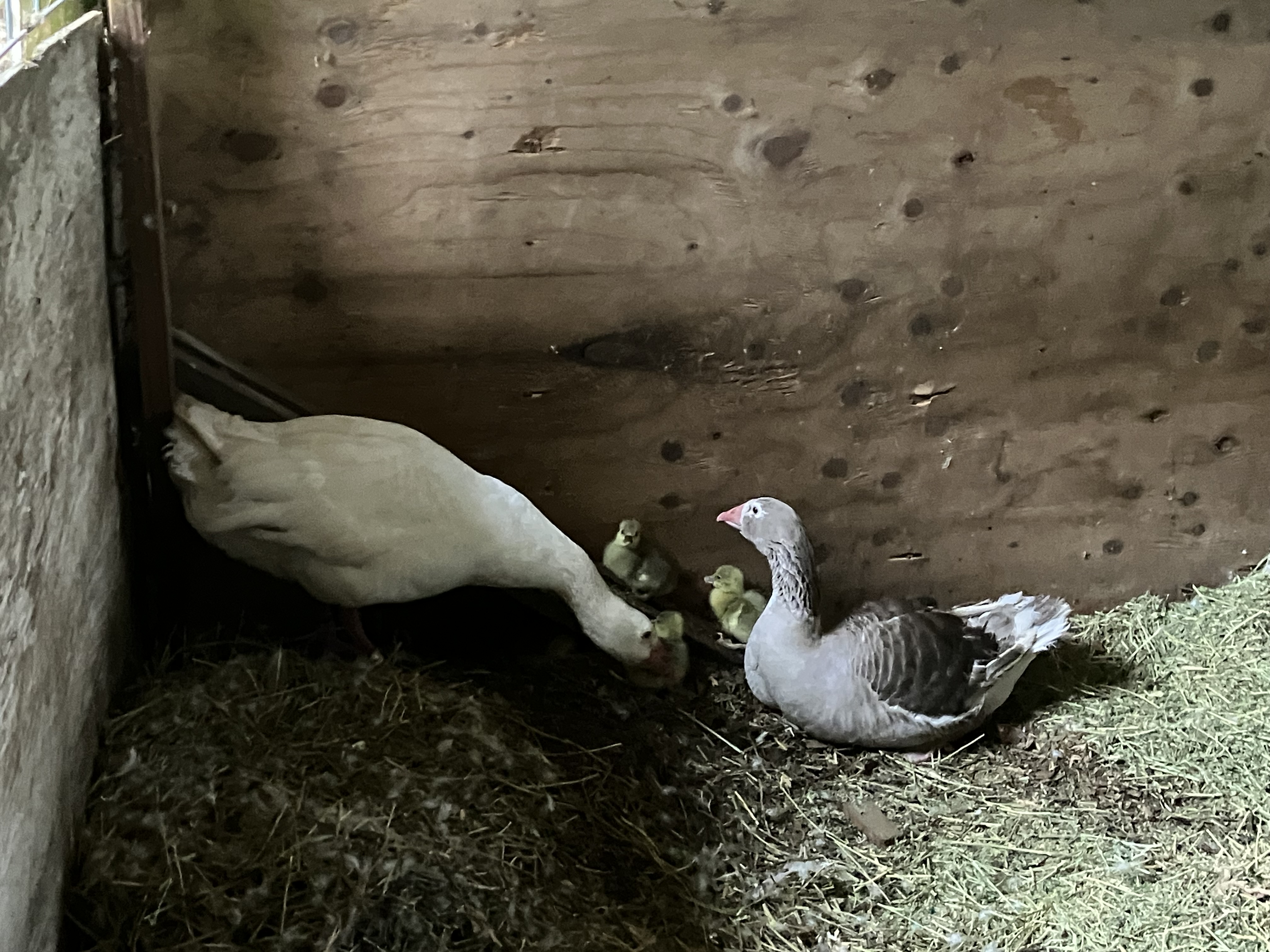
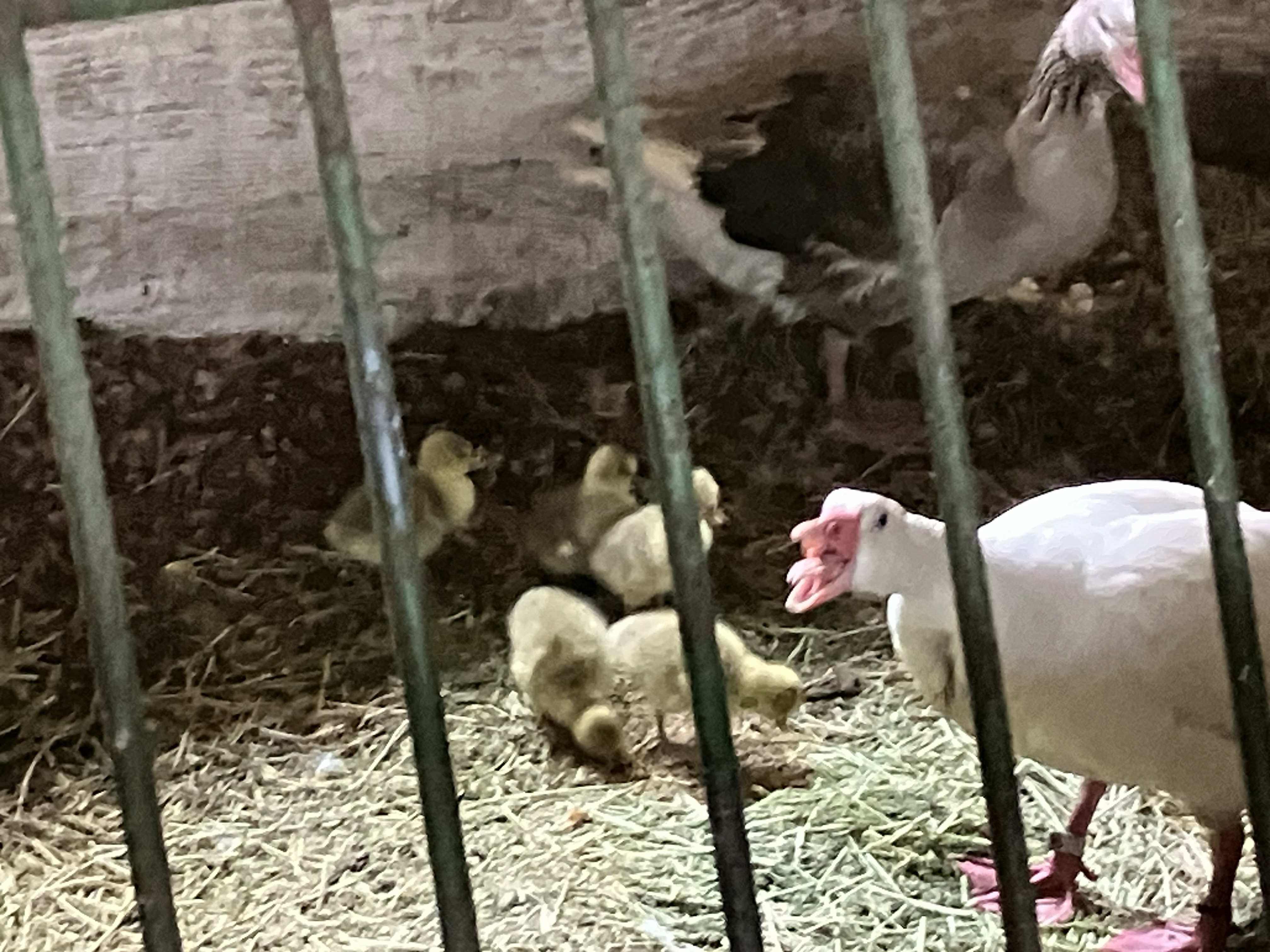
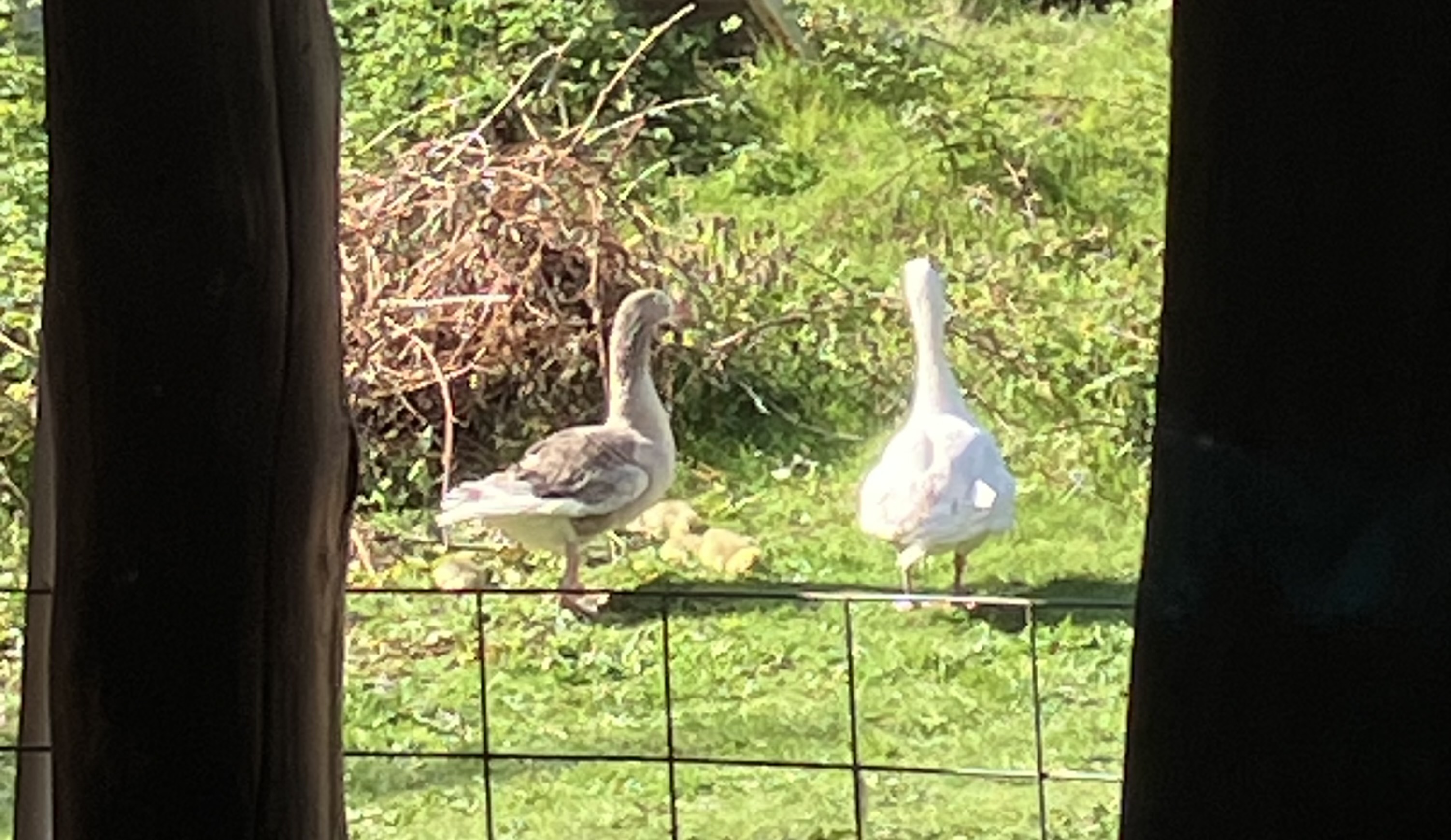
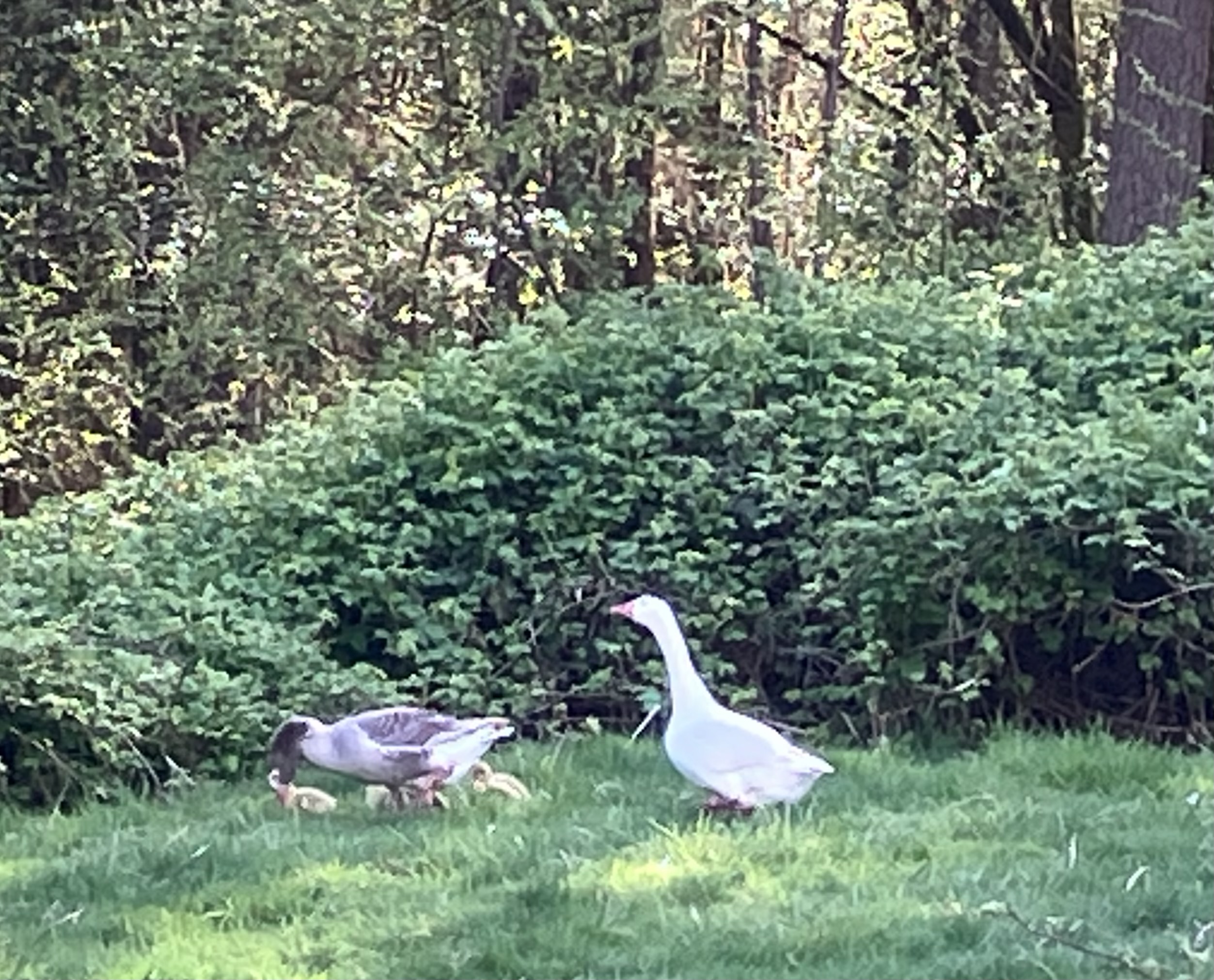
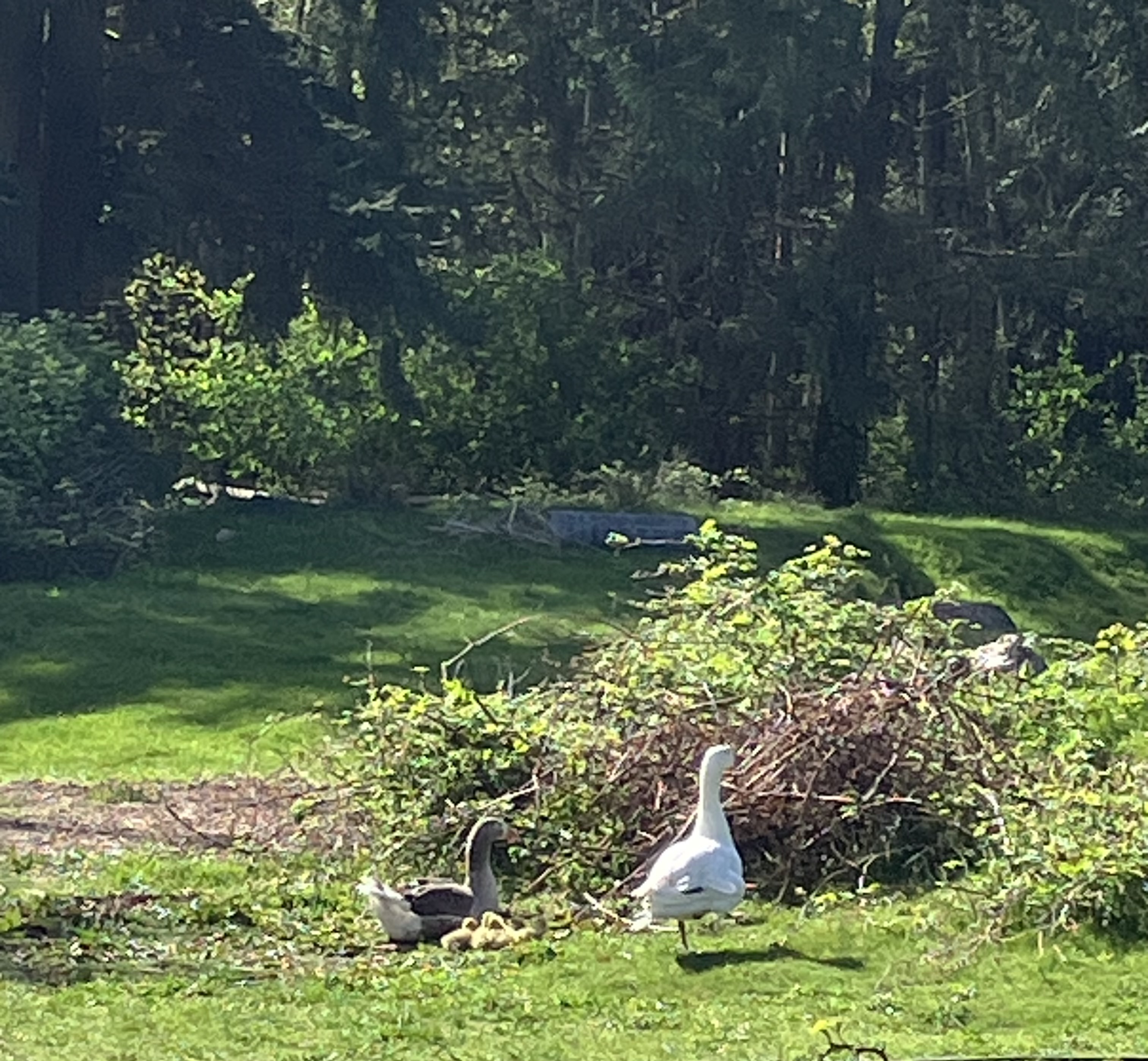
Our Cotton Patch geese hatched out a brood of five goslings in late April 2025. Mom had nested up a month before, and Mr. Gander was not allowing any visiting time in the nest area. I’d moved the water and food stations over by the gate to better accommodate nesting time. Within a few days of bonding, the Goose was eager to get back on living ground and to introduce her young brood to the farmyard. The gander remains the agro-protector, and the whole livestock commune had gotten the short message with sharp beak and hard wing “thwap!”. I had my hand bludgeoned a few times when I took a dead hatch chick out of the nest to keep things clean. Luckily the fresh comfrey poultice kept swelling down, and I was able to keep using my hand. Herbal medicine does the trick when administered timely and fresh.
This week, just before the start of May, I let the gaggle have a wander and enjoyed watching the young ones learning their way around. Diligent parents continue to helicopter in the best ways with these babes, offering the basic life lessons in what to eat, what to avoid, and how to be geese on the land. I’m enamored by the intelligence and intention of these animals, and the lessons they continue to offer here at Leafhopper Farm. Five new goslings carrying new genetics in a heritage breed perfect for small scale homesteads. There is some potential risk having a waterfowl species during bird flu, so we are not planning any expansion to the Leafhopper flock in the next few years. Instead, the mated pair will remain our only full time resident geese. We are breeding for genetic diversity, so any breeding stock will be immersed into existing flocks to save the breed. The high breed standard requirements mean most will be culled and eaten in the fall. Updates on these fabulous birds will continue- stay tuned!
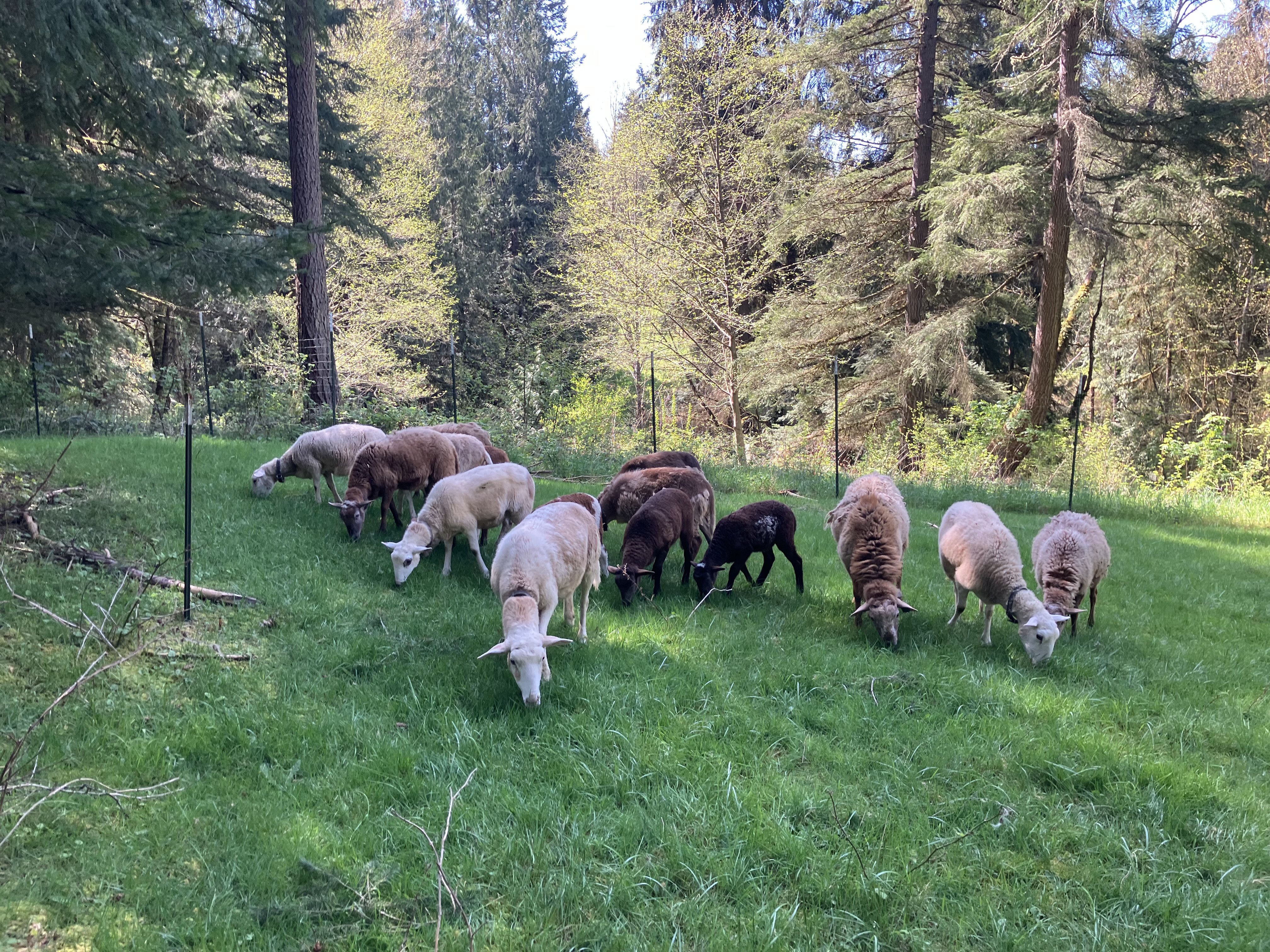
The whole flock got an afternoon on fresh greens across the landscape here at EEC Forest Stewardship. We’re about to have another round of lambs drop, the last due by mid May at the latest. Okie, our ram, had a great cover rate in the herd again this year, and his second batch of lambs show good health and mild temperament. All are eager to get some new grass and mixed vetch and broad leaf shrubs into what has been a winter diet of alfalfa. The land is bright and awakening with buds and tender leafy greens, which are perfect feasting for lambs and nursing ewes. The landscape is still tender after winter’s dormancy, so grazing is limited each day and the sheep are still enjoying a supplement of alfalfa. Full time rotational grazing will start in a few more weeks, one all the lambs are dropped and the temperatures remain above 40F. So far, the Spring of 2025 has been mild and sunny. This is not ideal, because we need rain. Moderate drought conditions are currently affecting our region, with the summer outlook even more dry.
The sheep want to be on fresh pasture, and they call from the barn with passion when I come down to check water and feed. It’s important to watch grazing impact in the early days of pasture growth, and the forest floor is vulnerable, with most of the young tree seedlings germinating right now. This is why certain parts of the forest understory are fenced off completely, otherwise the sheep would graze away all the young growth. These browsing sheep love taking broad leaf snacks from the shrubs and trees, as well as grass and vetch. If they graze away all the young growth, it will be harder for the ground cover to remain thick and healthy. This is the dance year to year with grazing. Things are so different through each season. Last Spring I was able to constantly have grass and keep grazing. This year, things are lush, but fragile. I’ll be culling more sheep earlier this year, and planning to buy hay sooner.
In time, the number of sheep in our Cascade Katahdin flock will shrink to make way for recovering forests. This year, the lambing is low- where usually each ewe has twins, this year is all singles. One of my oldest ewes had a stalled birth, in which her lamb died before birth and both animals were lost. It was a rough lesson in letting an older ewe breed. I’d planned to cull her last Fall, but decided not to, and now I’ve learned that lesson. It’s the journey through farming, there can be hard losses in a very real living world. I would struggle to handle all the failures on a much larger scale. I don’t want to grow callous to it either. Leaning into instinct with farming has never led me too far off the mark. There are no rule books to follow with nature’s adaptation. I’ve remained attentive to the subtle changes in weather each year. It was a pleasant surprise to have the mild summer we encountered in 2024, but I don’t think we’ll get the same generous rains in 2025.
Right now there is good sun, lots of new growth, and plenty of hungry mouths mowing the lawn and keeping the shrubs trimmed back. With the right amount of mobile fencing and conscious rotation, the pastures here at Leafhopper Farm will continue to supply wonderful local lamb, eggs, and chicken on small scale to friends and neighbors here in Western Washington. Much gratitude to the animals, plants, and people coexisting on this wild and wonderful earth. May we continue to work towards small scale, local production for the people by the people. May the sacred waters that keep all live conscious continue to bring us quenching relief when we are in need of life giving hydration that is safe to drink.
Help by going here and writing a letter to stop commercial logging in what’s left of older forests that could reach old growth status in our lifetime. Legacy Forest Defense Coalition of Washington is helping to awaken awareness of the cutting of 100 year or older stands of what’s left of older trees in America. I receive updates through the forest defenders with clarity on who to write to and how to stop sly commercial interests from taking the very last stands of what will be old growth in our lifetime. 90 year old trees are rare now, and should be dominating so much of the landscape if we the people were better stewards of place, understanding that there is documentation of what was before we logged, burned, tilled, seeded, and mangled with our delusional dreams of domination over the life that dictates our very being. It’s the ultimate golden calf depicted in so many pop culture references, there’s really no excuse for modern main stream media educated scrolling gen dumb phone addicts to survive. Sorry, but if the trees could speak- “The Ents are going to war!” -J.R.R. Tolkien








 EEC Forest Stewardship