
Another beautiful fall weekend with Washington Outdoor Women. After some terrific rain on Friday as we arrived, the weather held for a cool couple of days, ushering in Fall and bringing us into our warmer gear. Participants joined there fellow outdoor enthusiasts in everything from fly fishing and archery to shellfish processing and introduction to survival skills. So many incredible women attended, learned, and shared their experience with one another. This learning environment is so important for us as women. We do learn better together, and being instructed by our fellow women gives us the relating we need to see ourselves in the field. Leadership should look like the people it’s leading, and I hope that one day WOW can have an independent women filled board of trustees, to fully support the amazing team of women organizing and running the events for this thriving women’s non-profit.
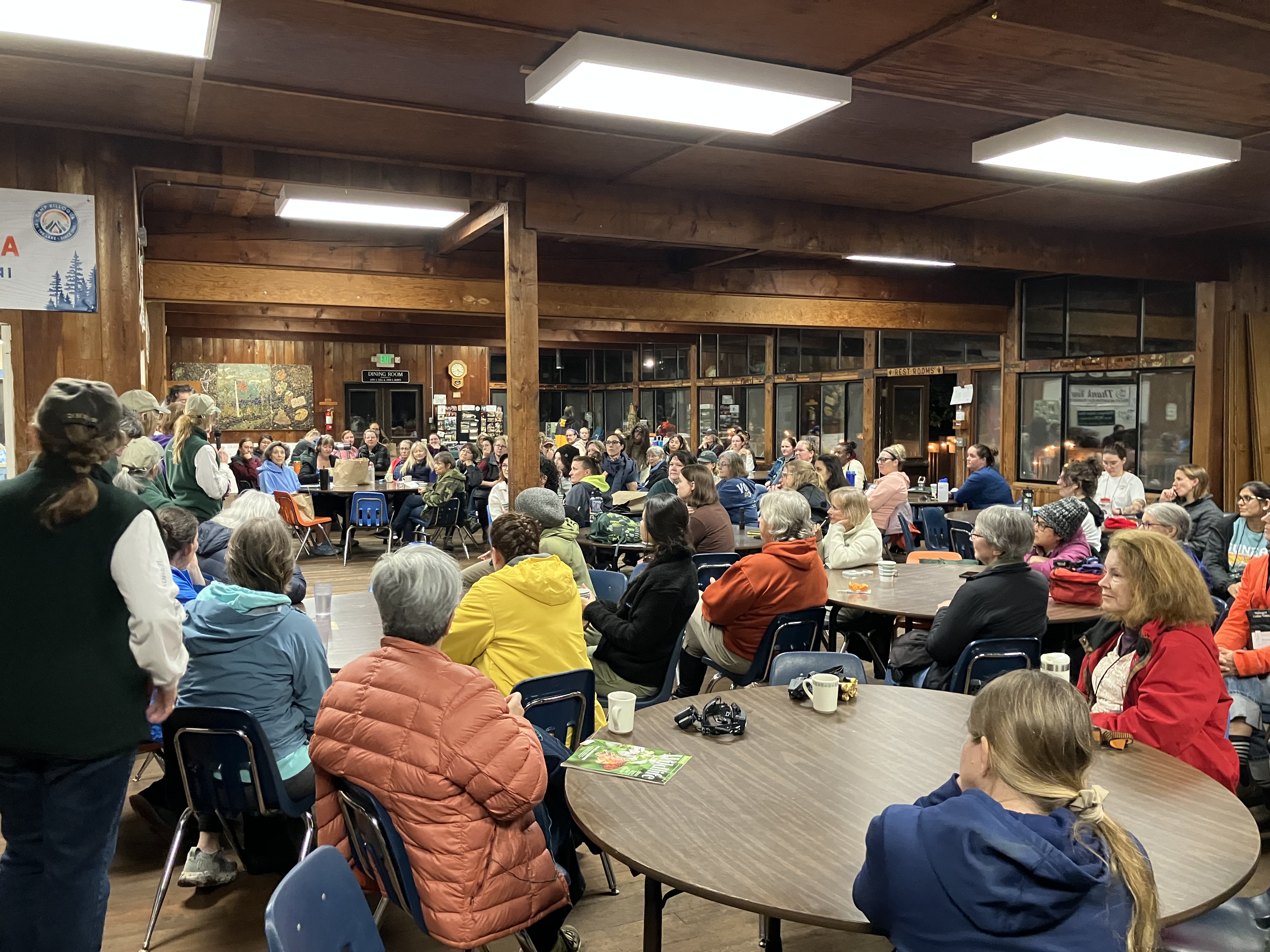
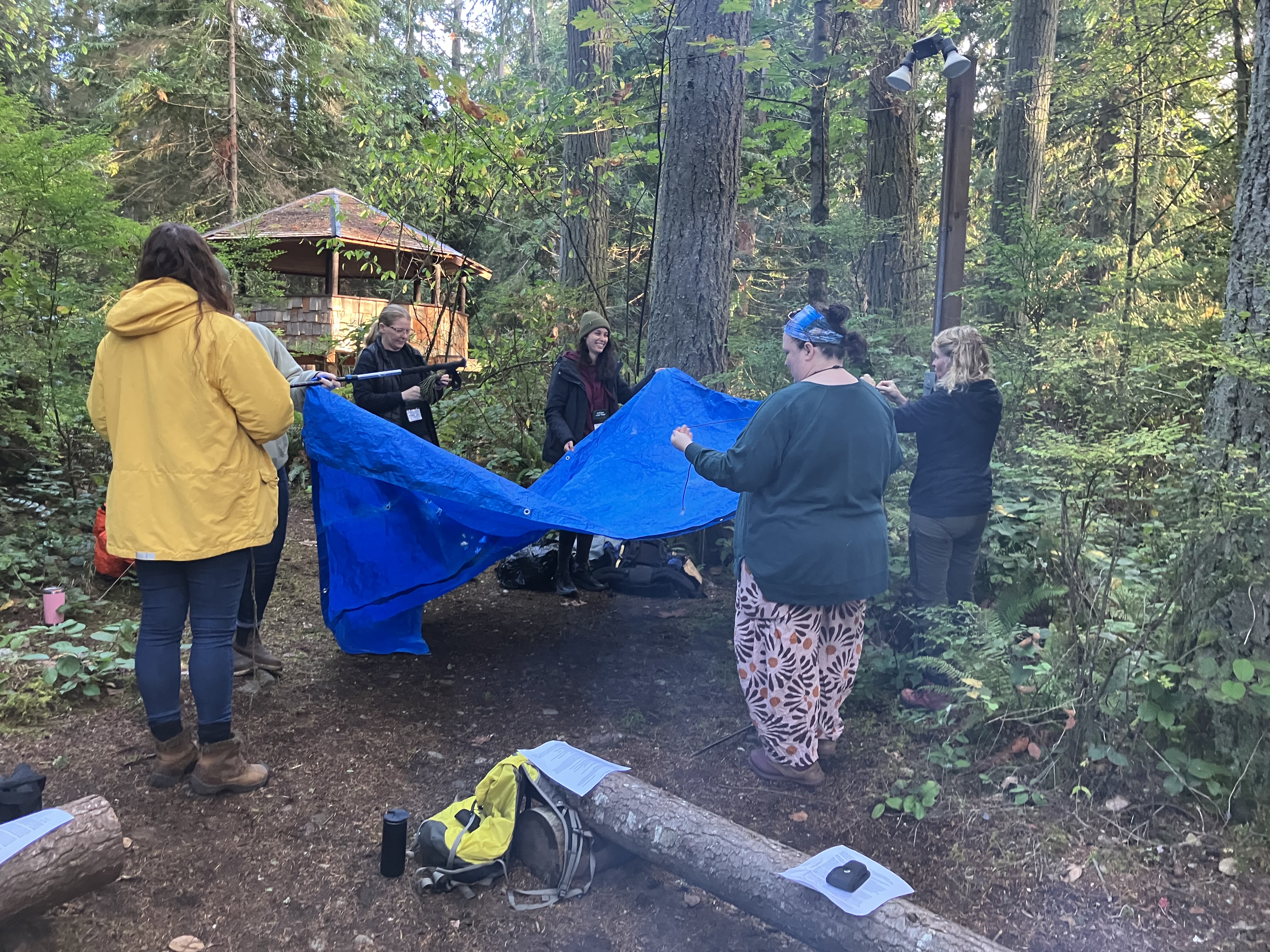
For the second year, I attended as the Introduction to Survival Skills instructor. It was wonderful to be in a new setting at Camp Killoqua on Crabapple Lake, north of Marysville. Here we enjoyed waterfront views of some incredible sunrises, and had access to several wonderful spaces to teach, cook, sleep, and learn. Survival students met at a fire pit to learn the basics of mindset and preparedness-two of the most important things in survival training. Students were eager to learn how to build a survival shelter, where to find water, how to prevent themselves from ending up in a survival situation to begin with, and how to survive if they do. Participants built 5 minute shelters with some day pack 10 essentials, then learned about fire and how crucial it is to survival in our climate. We discussed wildlife, including how to store food safely if there is a bear around, and even what to do to protect yourself in the rare event that wildlife is getting too close. Of course, we all agreed a strange person in the woods is a lot more dangerous than any wildlife, but knowing how to get loud and big deters most threats.
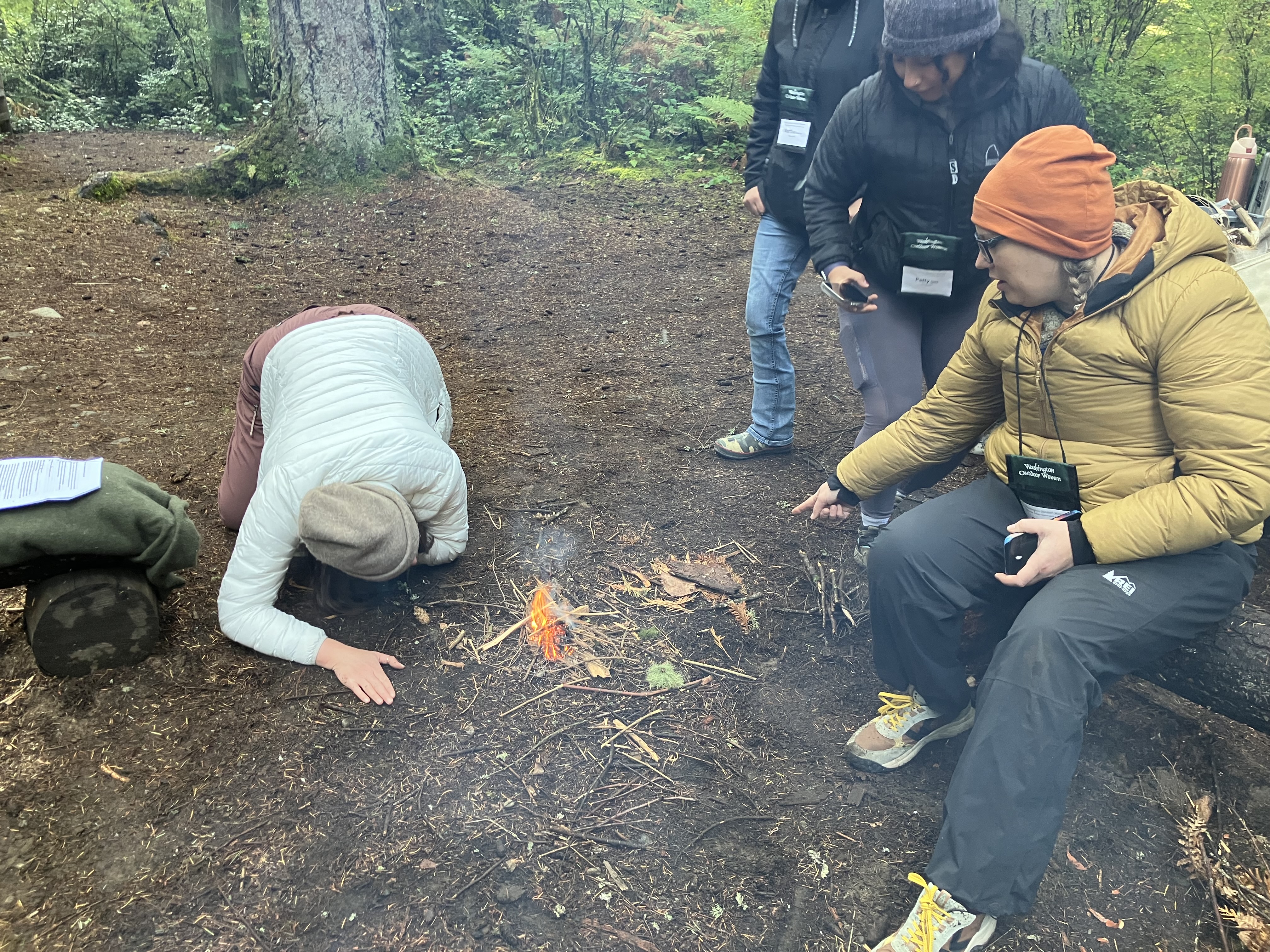
With each of the two classes, I offer the basics of survival, and then ask my participants if there is more they want to discuss or work on. Both groups were drawn to fire making, and we had a lot of fun working with magnesium strikers, small tinder bundles, and the challenges of one match fires. I recommended my students read Jack London’s “To Build A Fire“. It’s an important lesson in the challenges even a simple match stick fire can bring, and the consequences of luring ourselves into a false sense of security. Survival situations seem to happen out of the blue, but are often the outcome of poor planning and a lack of good judgment. As I continued to stress to the group, as we sit by a warm fire, well fed, and together, it’s easy to talk about what we should do. However, when we are cold, tired, hungry, and let our emotions run away with us, mistakes happen, and actions that were once simple, become very complex.
How you adapt and recover in complex situations reveals your survival capability. So many of the women participating recognized times in their lives when they have let emotion take the wheel, often leading them deeper into danger, from not eating and drinking enough on the trail, to prioritizing getting to the top, rather than acknowledging the bad weather setting in and turning around. One basic practice I shared that we can all work on in our day to day lives is mindset. The best place for that is sitting in your car in traffic. How do you deal with this common situation? Do you get mad? Do you yell at the other drivers? What if you turn on your favorite audio book instead? Or blast a good song and sing out your frustration? This is sharpening your mind in the same way you would sharpen your knife. Keeping our senses sharp and honed to each situation we find ourselves is the foundation of survival. May we all continue to recognize the power of our minds, and the strength of learning in community.


