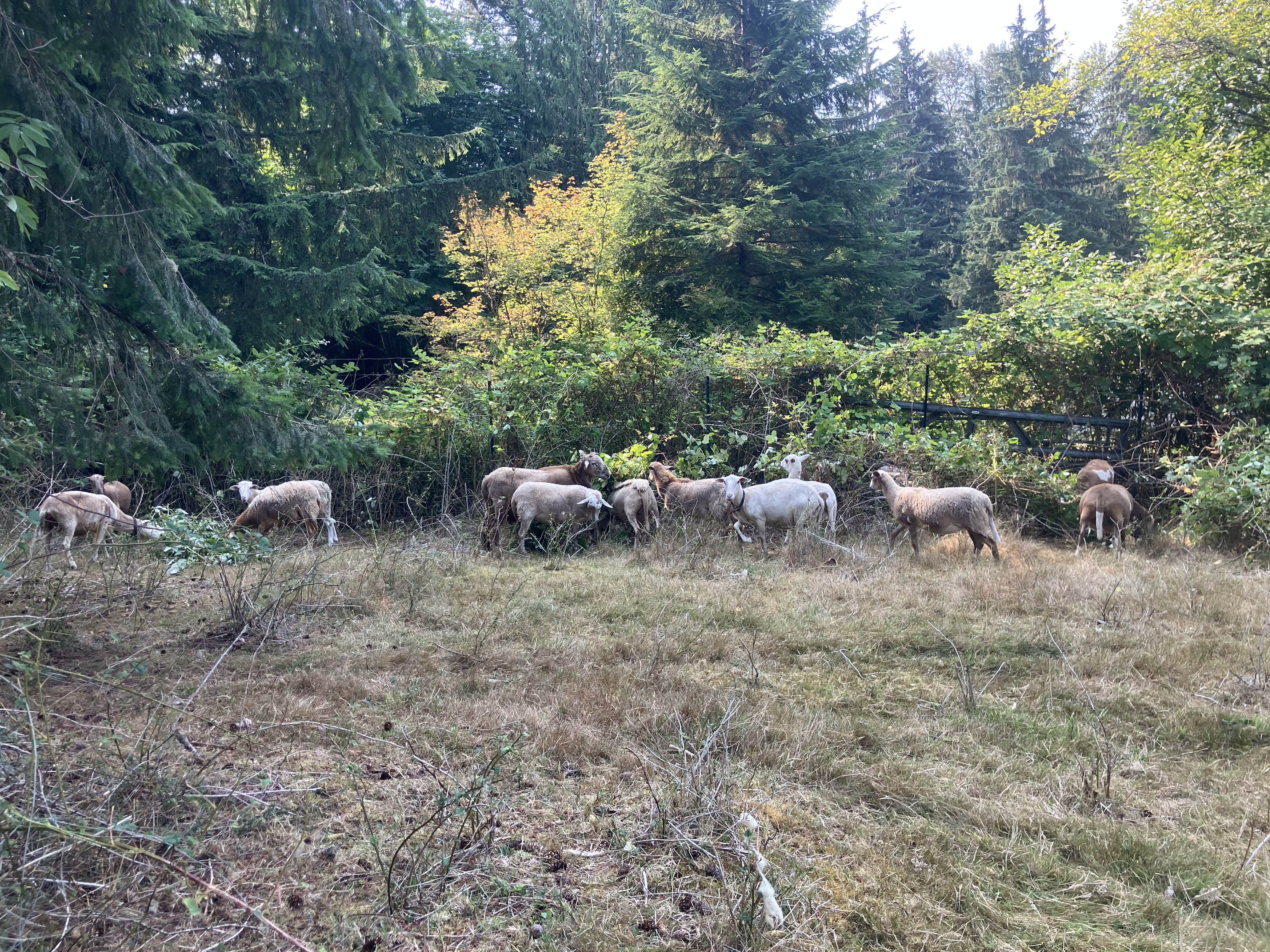
The late August drought has come, and September will not bring enough rain to recover these pastures. It’s become a rhythm to buy hay early for a better price, and to prepare for bringing the sheep into the barn early to rest the parched landscape. I’m in the process right now of planning an irrigation setup in our zone 2-3 areas of the property to keep a part of the pasture green and growing at the end of summer. My other hard but firm choice ahead is shrinking the herd size. I’ve got 5 ewes picked out to over winter and breed in the 2027 season. That will be the smallest ever, because our drought stricken land needs a rest, and I want to cut down the parasite load on the acreage. One of my oldest ewes came out of her weening with a bad parasite load and could not recover. She had a lot of stress on her, and I thought it best to cull, as she was not showing good natural resistance, which Katahdins are known for. It’s best to remove those weaker animals, rather than treat and keep the weak genetics in the flock. To keep a breed hearty and productive, you have to have a sharp culling plan to ensure good breeding. That’s ethical livestock management, along with good rotational grazing schedules, clean barns, fresh water, and good winter hay.
Recently, because of the continued drought conditions here, I’ve been planning to shrink my herd, and this year, a lot of signals came to say, “do it now”. Last fall my herd contracted ORF, which is treatable and the sheep got through it fine. Then, a couple of young lambs showed signs of pneumonia in the spring, and I had to cull them quick to prevent infection spreading. Again, they were weaker lambs, and this is not uncommon, but in my flock, it is. Now, at the end of August, I’ve had a parasite scare with that ewe, and it feels like it’s time to take several steps to prevent more illness. A heavy cull this fall will give the barn more space, the pasture a rest through a couple of years, and allow me to pick out some new genes for this modest flock’s future.
I also sold several sheep in early summer, so our numbers went from 20 in the spring, down to 13 for the summer. This was my looking ahead to summer drought stress on the pastures, and it’s still a challenge. Culling down to 5 ewes for this winter, and my breeding ram, is the plan. If I want to go a step further, I can even cull the ram, skip a breeding year and let the ewes rest, then bring a new ram in and start over. There is a lot of luxury in this planning, because the flock is not about making money- though it has not fallen below breaking even yet. Being able to cull down and skip a breeding year to rest the pastures and the ewes would never fly in an industrial setting, or even a USDA labels “small farm” of 500 animals. Anyone bought in on a commercial level has to press all they can get out of their animals, and have to work like dogs doing it. This is not what our covenant with the land should be, because it’s the land giving us these animals, and sustaining them. With a flock of 5-6, I don’t have to buy much winter hay, which saves a lot on the biggest cost going into maintaining these sheep on such a small acreage. We’ll see what kind of lambs come next year, then I will make a decision about the ram, and numbers for the following year.
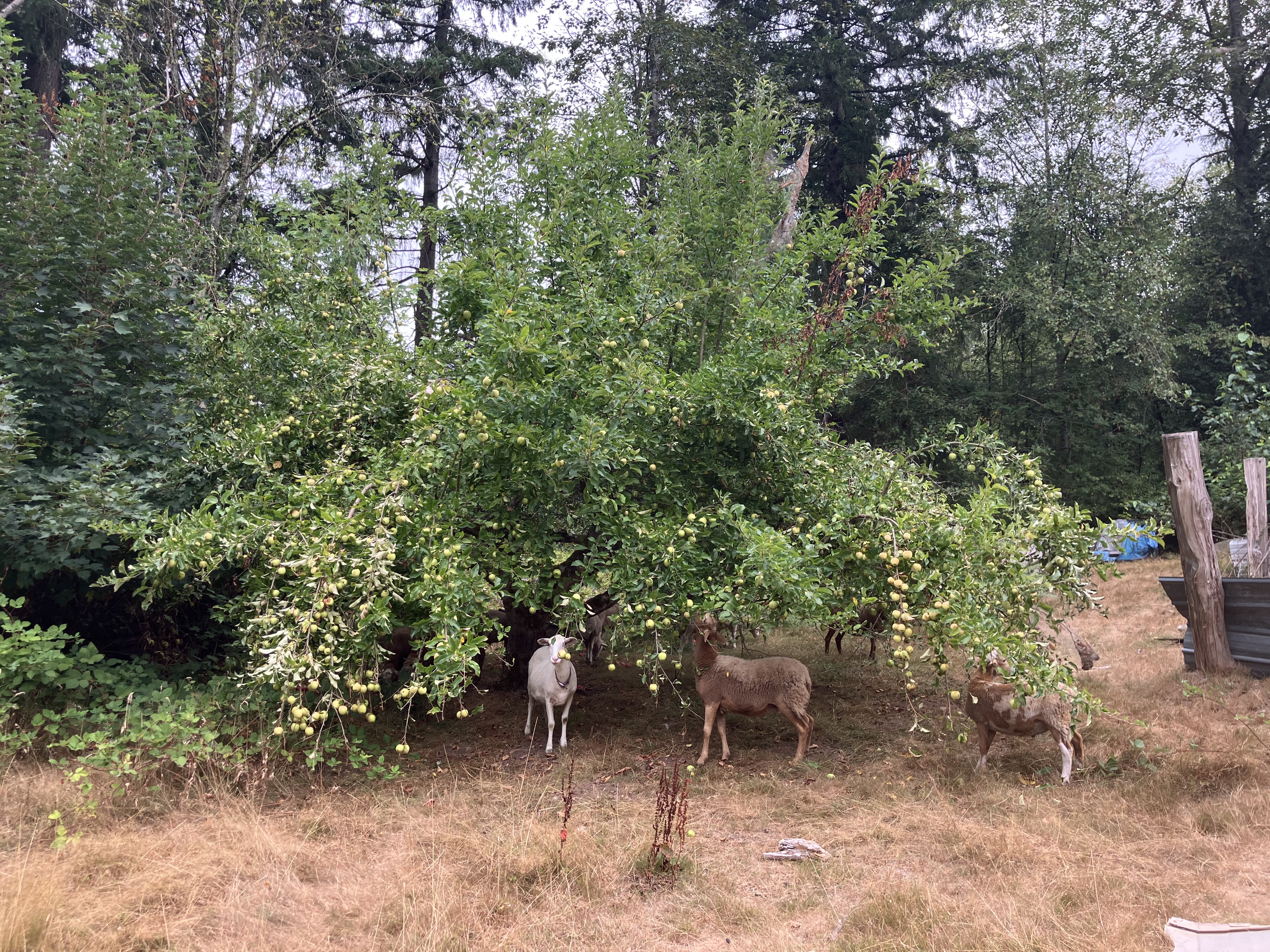
Even with the drought, resiliency on the farm abounds. Our orchards are overflowing with an excellent fruit year, and everyone on the landscape is enjoying the boom times in the trees. I am still giving the flock daily time out on the land, but it must remain more restricted until the rains truly return. By October, if it’s raining regularly, some of the land will return to it’s lush state, but the loss of light will slow all growth on the ground till next spring. This is why my sheep spend most of the winter months in the barn with good alfalfa and fresh dry shavings to sleep in. The ewes will also be growing new lambs, and prefer to lounge and eat through their pregnancy. I time my lambing for late winter, so the young and their mother’s remain in a safe, dry, warm environment through the vulnerable first few months. This extra care ensures daily interaction to socialize the lambs, a good eye on everyone to catch any health issues that might arise, and careful feeding of high quality alfalfa, minerals, and fresh water.
In the winter, I spend a lot more time in direct contact with my sheep, watching and observing temperament, the flock hierarchy, and progression of the ewes’ gestation. Lambing is where this breed shines, with the ewes usually having a flawless birth on their own. I show up to check the lambs, give them additional wiping down a sexing, then let the hormonal bonds do their work. Katahdins are excellent mothers- if you continue to breed for it. One of the ewes we’ll be culling this year refused one of her twins at birth. Now, she did have twins as a first year breeder, which is great, but she kicked one away and would not feed it. Her other genetic issue is wool- enough still on her back and not shedding off naturally, that I have to cull her. Katahdins are hair sheep, meaning, they cannot build up wool and stop shedding naturally. If the breed becomes too wooly, it will loose the traits bred into it. Wool brings lanolin and shearing into the mix, which makes the meat greasy and the extra task of shearing labor, and it is labor.
If I was caring for a backyard flock of pet sheep, I would be way less worried about all the breed traits and not breed. This is crucial responsible management of animals- any domesticated animals you choose to keep. Breeds take a lot of work to develop and maintain, and they have important roles they were developed for. Katahdins are great browsing sheep- meaning they eat brush and bramble, as well as grazing, and they shed their hair, independently give birth, mother well, and resist parasites, which are all great things in a sheep. On top of that, they are bred for great mild flavor, and that’s why they don’t have much wool, and instead, put that energy into making meat for us to eat. If I expect these traits to remain, I have to breed towards them with consistency. One other example of culling I’m selecting this year- natural polled animals, which Katahdins are, and yet, the older genetics can slip in form time to time, and in one of my ewes, her ram lambs have horns, so she’s being culled too. You don’t want Katahdin sheep to revert back to these carefully bread out traits, or they are no longer Katahdins.
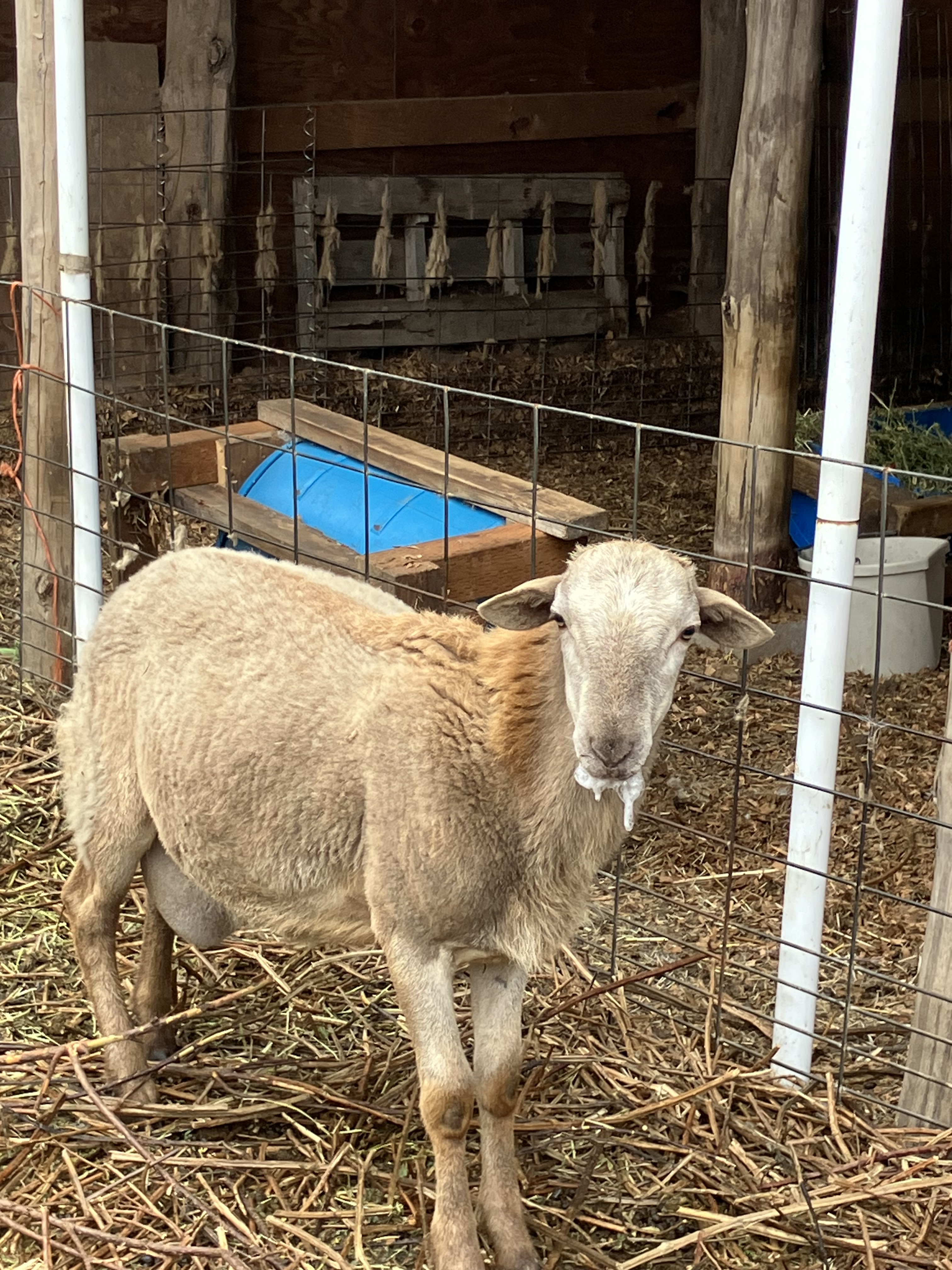
I had one other scare in my flock the other day, and it was a first for me. My best ram lamb showed up in the barn frothing at the mouth. It happened at the same time I was culling the old ewe, who was too susceptible to parasites. I was emotional for a moment- “What next!?!” I cried, setting down my slaughter knife to check on this ram lamb. He was not choking, and he took some water, so I went and culled the ewe, then came back again to check on the lamb. He was still a little disheartened, head and ears down, but the froth was gone. My sheep mentor looked at a picture I sent her, and suspected he’d eaten something that didn’t agree with him. Part of me was haunted by the thought that he might have pneumonia, but the symptoms were not the same. He didn’t cough, and eventually, rejoined the herd and recovered well. I was so relived. There has been a lot of health issues with the sheep this year, and having to cull my best ram lamb would have been devastating, especially as the promised donation lamb to a non-profit I volunteer with. It’s been a heck of a year for this flock.
Katahdins remain an important system at EEC Forest Stewardship. They are building the soil for a future forest, and adding fertility too. The sheep graze open fields to keep fire danger down, and I don’t have to mow. These browsing sheep take out blackberry, glean fallen fruit from the trees, and provide meat to our table, and the tables of friends and neighbors. It’s a joy to work with these animals, and a heck of a learning journey too. As I write, I am listening to their bells as they walk behind the house, savoring some of the summer blackberries growing on our north fence line. What a privilege to caretake this flock, and the land here, being fed by it in return. The work can be strenuous and heartbreaking, but the rewards are basic needs met, restoration to the ecology, and a lot of thriving outside. Thank you to all who help make this work happen, in supporting me, buying this incredible meat from these great sheep, and reading my reflections and lessons learned. May this end of summer find you all in good health and happiness.


