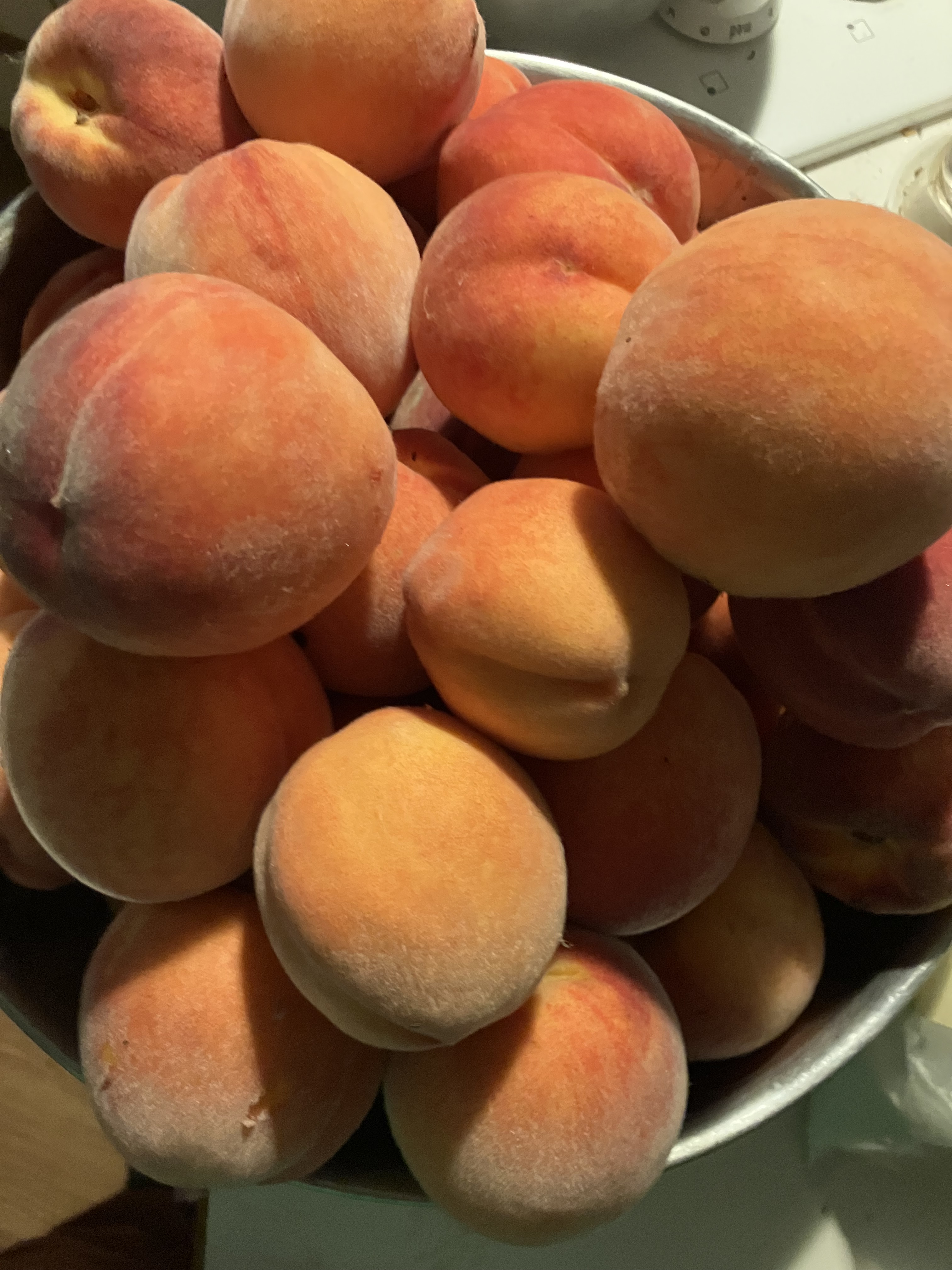
Fruit is on here at EEC Forest Stewardship. My favorite taste of this summer bounty are fresh frost peaches from our only tree. It’s the most juicy, sweet, delicious thing to bite into a fresh peach form this self-pollinating espalier tree on a south facing wall. Peaches can be a challenge to keep here in The Pacific Northwest, especially with all the dampness in spring, which invites bacteria causing leaf curl, and mildew on fruit not picked in time. For this little tree, nothing had dampened its production or thriving in its special bed by the kitchen. Because of the location, the peach gets great irrigation, lots of sunlight, and the reflecting heat off the building to keep bacteria at bay. This tree also has fungal infection from time to time- most commonly Leucostoma, causing an orange jelly to ooze from the trunk. All of these issues make growing peaches here a challenge, but this little tree has taken it in stride, and still produces a number of delicious fruits each summer.
There were originally 4 peach trees planted on this land in the first few years while I settled in. All but this one have died. I’d recommend the self-pollinating frost peach on a south facing wall as the best chance form growing this coveted fruit in our environment. Self-pollinating so you don’t have to worry about keeping a second tree alive, and to optimize fertility of your tree. The peach can sometimes bloom early up here, and miss a lot of its pollination friends. Having a self-pollinating tree helps in a poor timing year. Spend time learning your peach tree’s cycle of production. This year, the frost peach is off the hook- I’ve been picking pounds and pounds, freezing some for next winter, but eating as many as I can in celebration of summer.
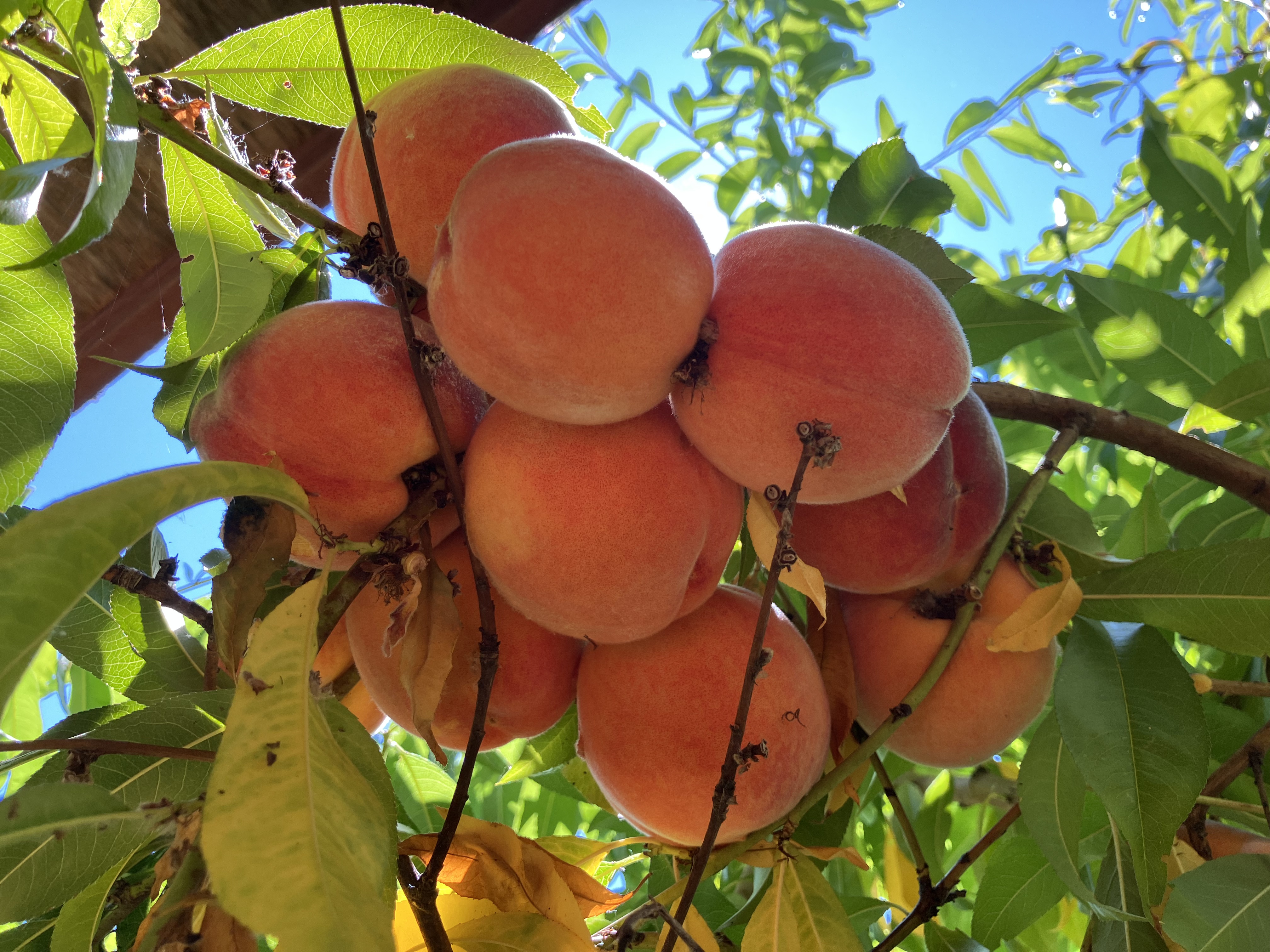
When I say the fruit this year is off the hook- I mean exceptional pollination to maturity. The bunch pictured above is typical of every branch. There was also a concerted effort to keep the tree well watered. This tree is up against a building with some overhang, so it’s not sitting in water during the wet month. Dry soil also combats fungal and bacterial invaders. The tree is also well sheltered from wind, letting the fruit stay on more easily during weather events. All these important advantages give us a bumper crop of peaches in early August, 2026. Friends who have shared in this bountiful harvest have also raved about the flavor and taste of these home grown frost peaches. We’re glad to share abundance, and get feedback about our crops. A neighbor raved about her cobbler with Leafhopper Farm peaches. Gratitude to sharing the literal fruits of our labors, and shared enjoyment of the summer season.


