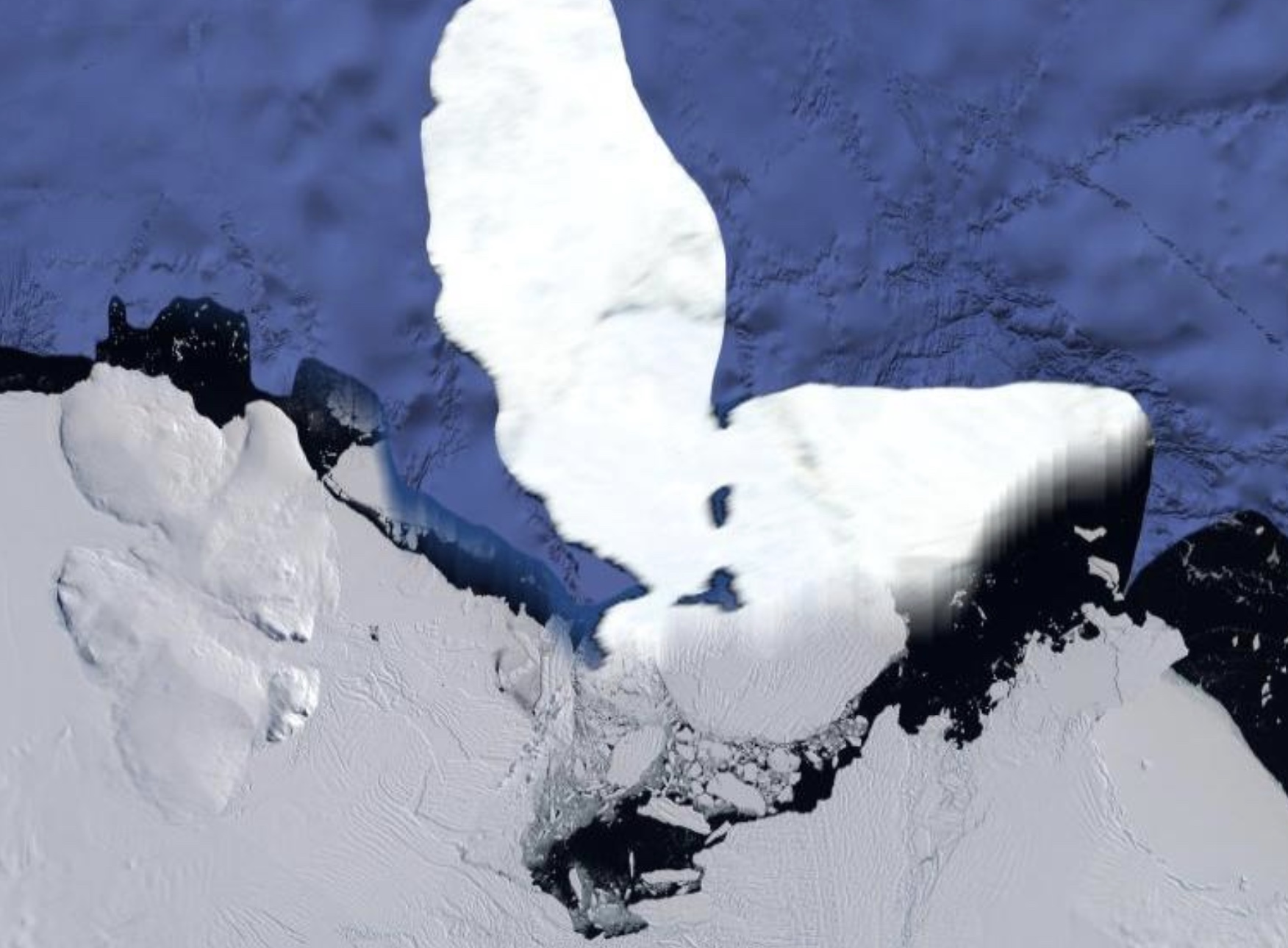
This is the Google satellite image of Thwaites Glacier. You can see a little signature of the ongoling melt by the ice breakup right along the edge. Now, what you are not seeing is how extensive the breakup is, extending further out into the ocean beyond, though obscured by strange white smearing and blobs of color that easily abstract what’s going on. Below are some clear satellite images to help bring the reality front and center.
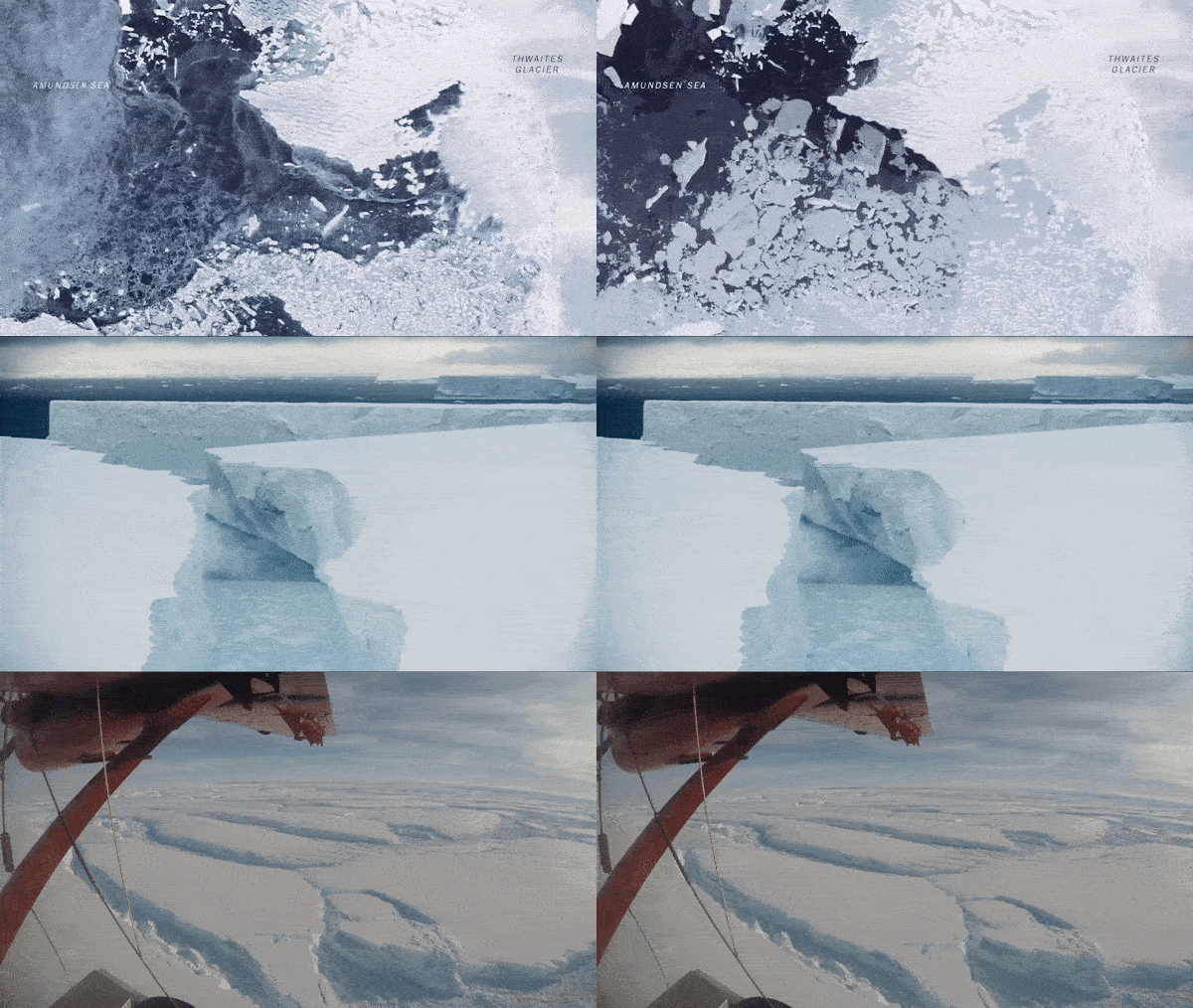
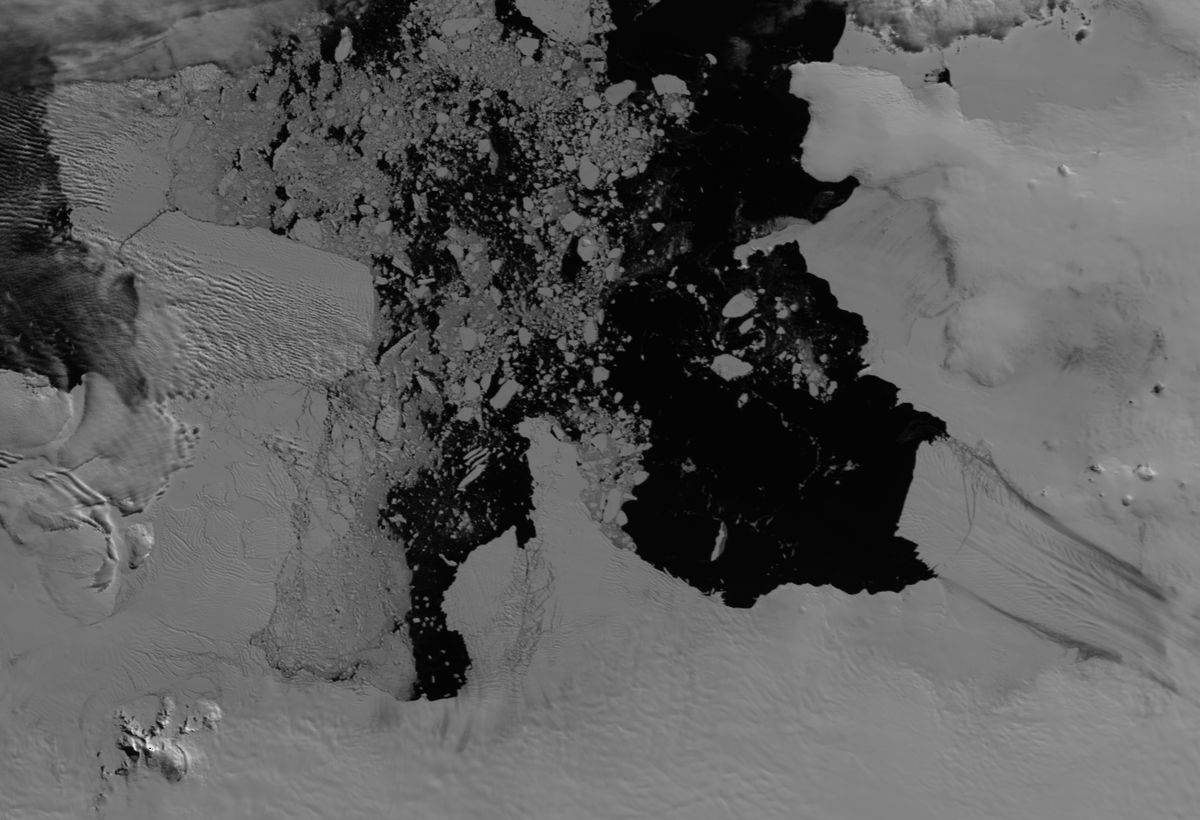
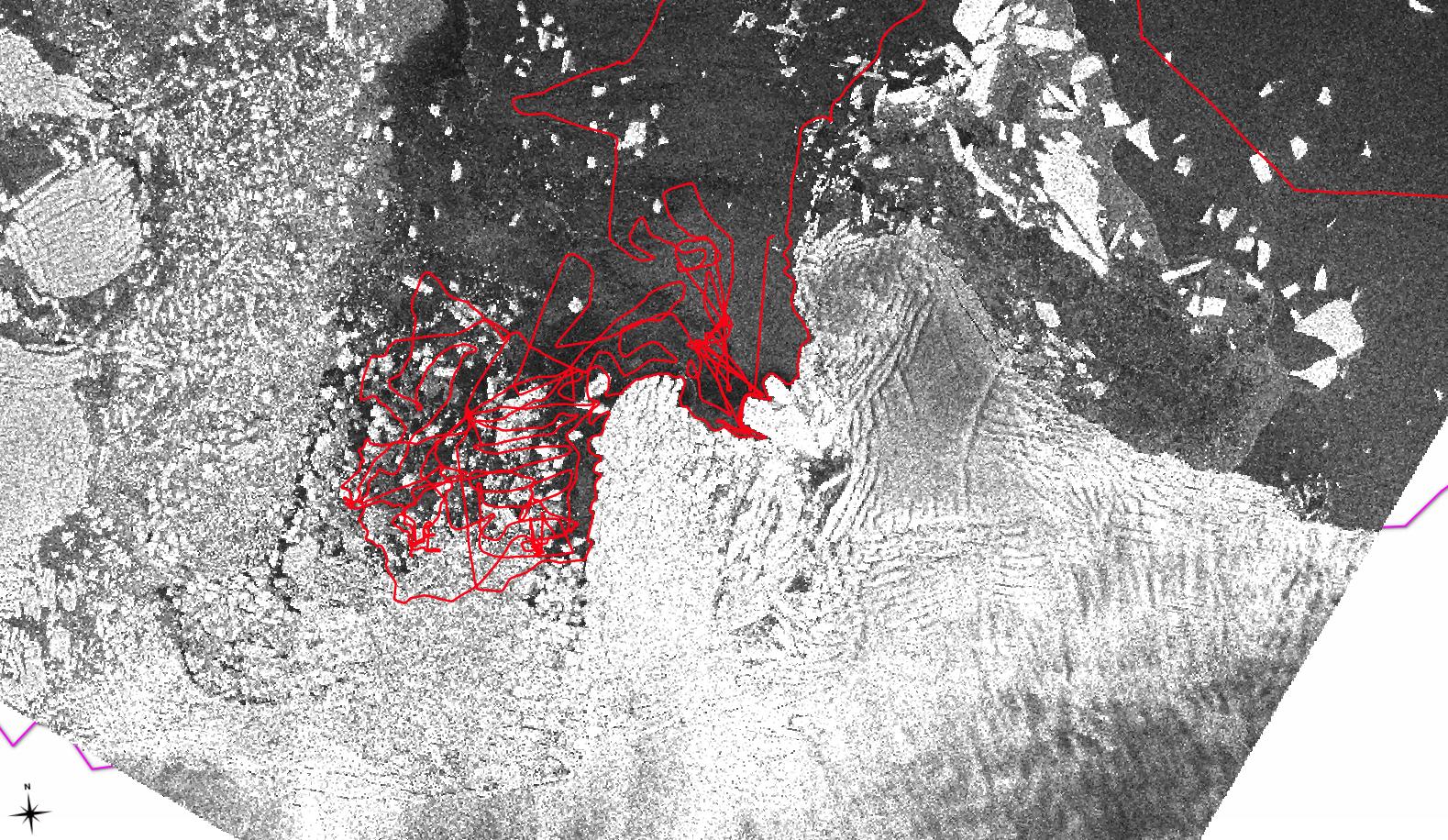
In short, this glacier is breaking up very fast, being undercut by warm waters flowing in from the north, ocean currents that carry tropical temperatures down under the ice, melting it far below our visual comprehension. This ice melt is huge, and when it’s done, the sea-level will rise around the world at least 2 feet, and more in some places, like the southeastern US. Thwaites is also known as “The Doomsday Glacier“, because the world coast map will be redrawn when it’s done melting out. Yes, if just that glacier melts, but it’s not just this glacier, all around the edges of Antarctica, the edges of ice are unraveling, cracking off and melting at different rates, depending on where the ocean currents blast the ice with warm tropical water. Even where there are not strong currents, the ice is still in retreat.
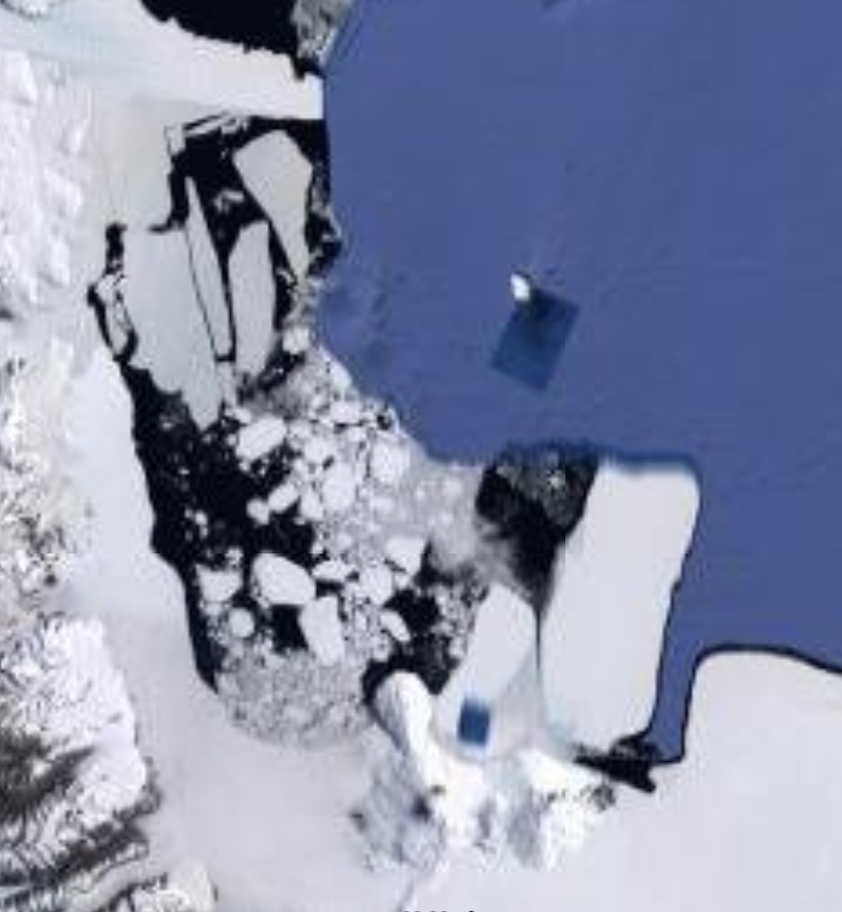
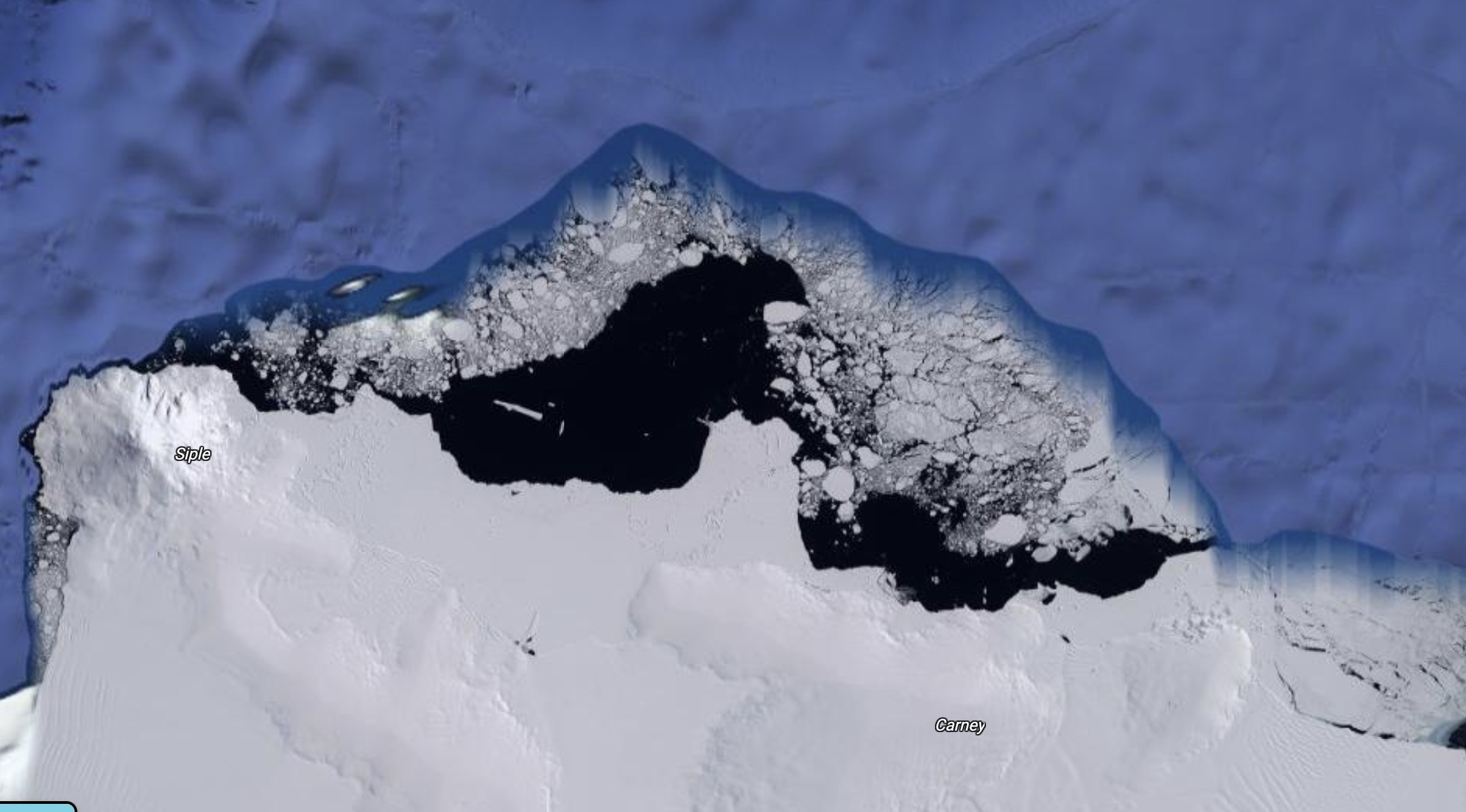
Satellite imagery is had to bring into proper scale for our monkey minds, but it’s big stuff when you’re talking about the 5th largest continent on earth. Thwaites glacier is about 74,000 square miles in area. That’s about the size of my home state of Washington. There’s a reason it’s going to have such a profound affect on our ocean waters. The MacAyeal Ice Stream, pictured above left, is also a major ice melt happening in Antarctica. Imagine those icebergs, or sheets breaking off, and know some of them are larger than eastern US states. The ices at our poles are always seasonally dynamic, but in recent decades, someone turned on the hot tap (CO2), and we’re watching a mass melt off that remains exponential and impossible to reverse.
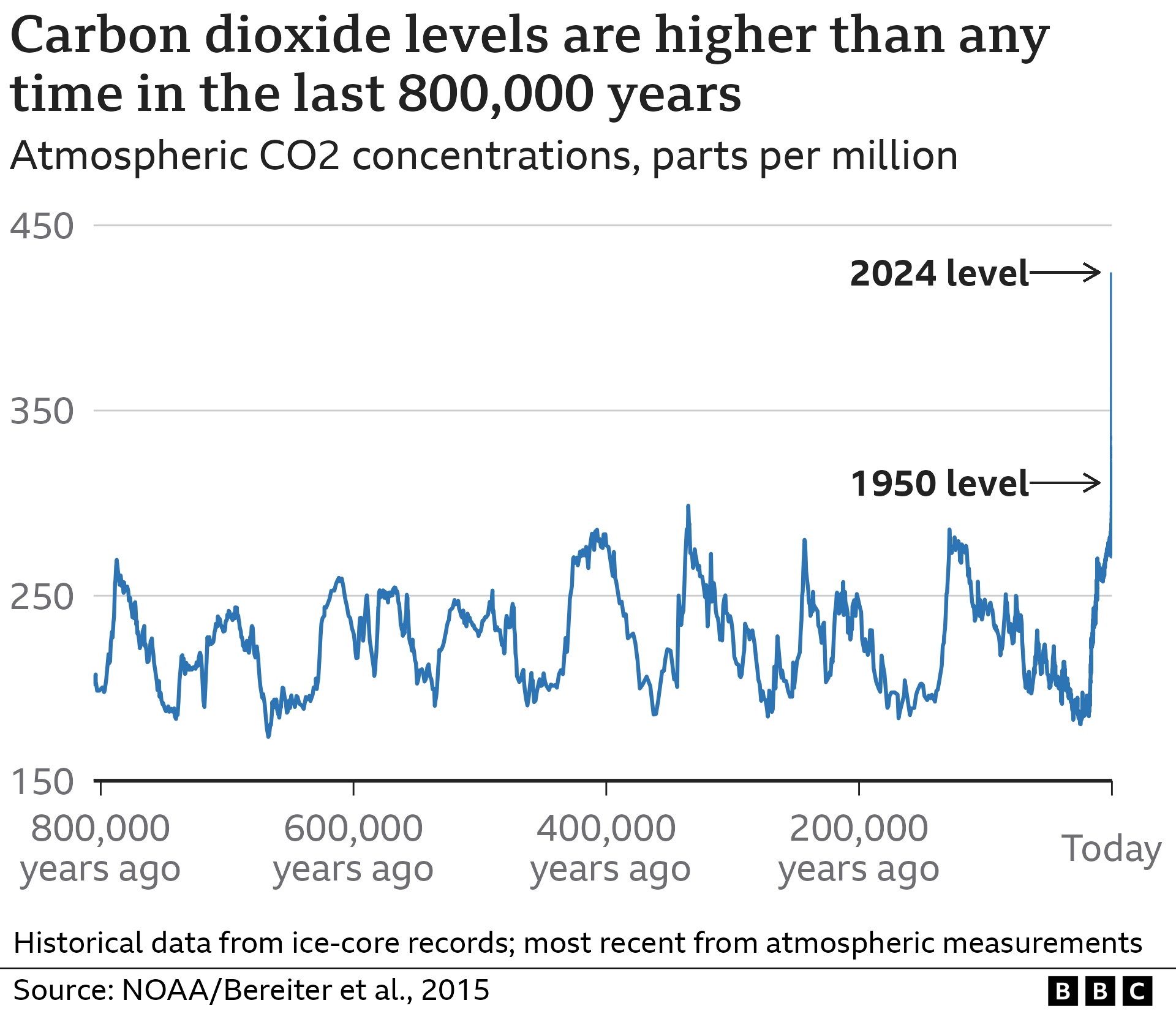
Thank you NOAA, though on the federal website now, it’s just the map of our record since modern record keeping, which, though constantly growing, does not quite hit the mark on our obvious human cause of that CO2 growth since industrialization. It’s crucial that we at least grasp our very recent growth in global output and personal responsibility in this climate change. The knowledge out there is endless, and research still continues today. I’d recommend a recent NOVA episode on PBS about Arctic and Antarctic climate history. Scientists are working hard to collect data to help shape our understanding of the dynamic change in store for our planet. If we can plan ahead a bit, we could figure out adaptation for the rapid climate shifts heading our way. Please be encouraged by a PBS Newshour story about more research being continued on this issue, it sometimes may feel like USA has gone off the rails with climate science and fallen into complete denial of reality, but no, many educators and scientists continue to get the message out about this crucial survival issue.
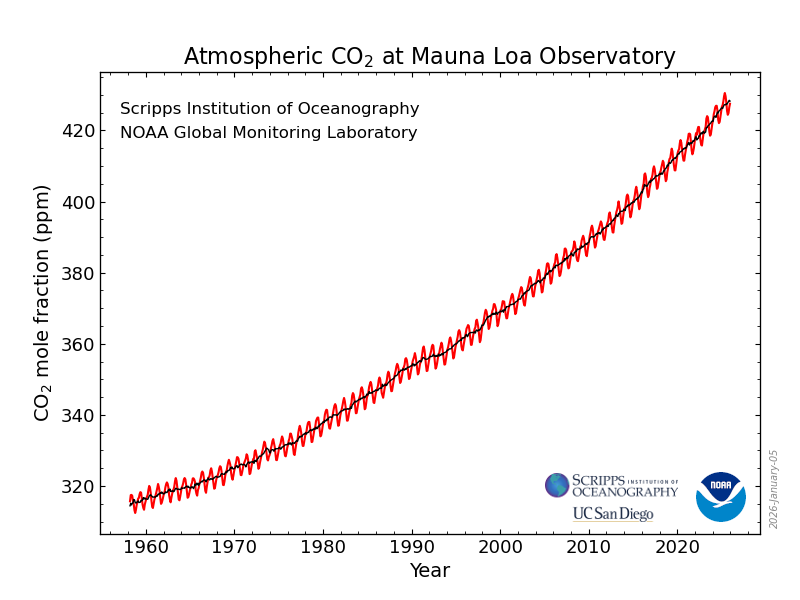
This is not writing to scare you, but to prepare you for what’s coming in our generation, the next, and those thereafter. We won’t be well settled on Mars before these events come to a head, and coastal cities not already preparing are places to move away from if you can. The storms and violent weather patterns are only going to get worse, and it may be scary to some, but to me, it just means adapting and doing our best to understand why, and what we can do to build resiliency. Visit your cost lines and try to imagine two feet of rise, then a meter of rise, and enjoy the beach while you can. I’d seriously reconsider any beachfront property investment, and avoid basement apartments in coastal tide areas.
It became quite real to me when Sandy hit The East Coast. Places I had known in NYC, when I lived there, were underwater. I’d never seen anything like it. Now flooding in Manhattan is common place, but it was not a few decades ago. That’s measurable change that sends a chill up my spine. With exponential melt happening in our poles, these floods will become common place, and eventually, the water won’t go away after the storm. In another 20 years, I believe this will be happening in low lying areas of coasts all over the world. That’s what I still have trouble comprehending, what a global catastrophe flood would do. COVID game me some idea of global shutdown, but how will the vast majority of world population move inland and re-home at the same time? How will our finite resources handle that kind of migration? Our infrastructure won’t, not without planning now.
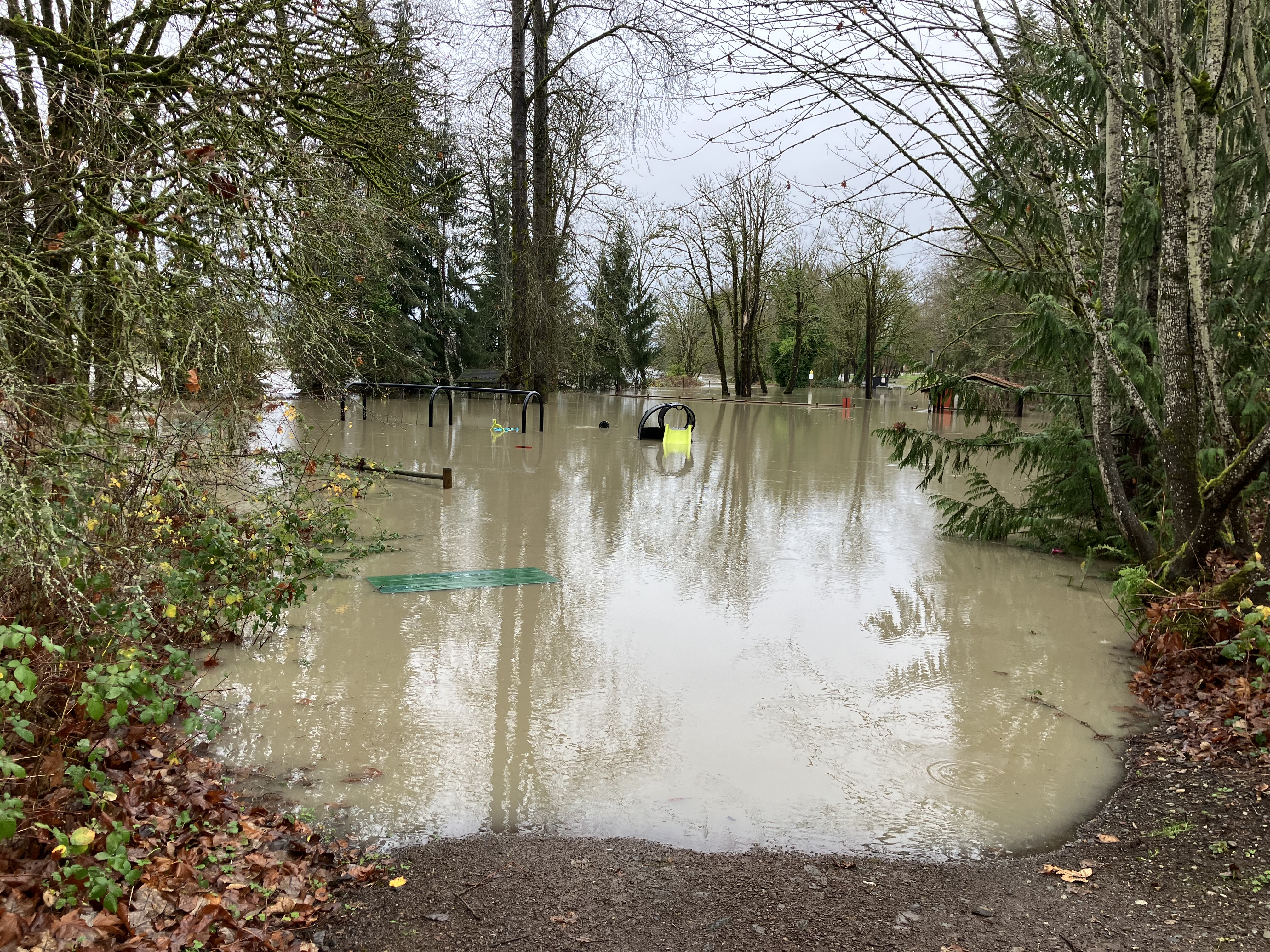
My town flooded in Fall, 2025. It was not unheard of, and I’d experienced higher flooding about a decade before, but this was the second 1,000 year flood in a decade, and multiple 500 year floods have come in that time too. What does that say about exponential change? Here’s another bean for your thought pot, our town is 30 miles inland. We’re not coastal, but close enough to feel the effects of sea-level rise and climate change. In another fifty years, our river could have back tide flow, causing salt burn in our agricultural fields. It’s already happening in The Middle East. I was in Jordan in 2018, and saw a rose farm shut down by salt in the aquifer. It’s also starting to bother the farmers in our Skagit Valley up north. The tidegates there are aging out, and the ocean keeps pressing in. This seawater intrusion will also salinize wells and water tables further inland as sea-levels rise. We’re not talking about this enough.
I know it’s a lot, and so many will be affected, but you can start learning now, forming your own plan of adaptation, and making smart choices when and where you can. I’ve talked about daily changes we can all make in these writings, and online is a treasure trove of many options and ideas still. The most important thing you can do is accept this change is coming, and learn what might be expected, especially in the next 20-30 years. It will be in my lifetime, and probably yours. But hey, I also choose to live in one of the most technically active places on earth, where there is more than likely going to be an unimaginable great quake nearby within my lifetime too, so how do I sleep at night- scale. The geologic scale of a great quake means we could wait another 2-300 years before it happens, or tomorrow. I get into my car often, never thinking about that very high risk, probably the most perilous thing a person does almost daily- but we don’t think too much about it. The climate change challenge is at least a weekly thought in my head, but I also made plans over a decade ago, and here I am, up 600′ of elevation, on a relatively stable ridge, with a lot of fresh water, ecology, and temperate climate.
I’m not saying we should all go start a farm on a ridge somewhere- a lot of people in Asheville had hill farms, that Hurricane Helene wiped out. Fire will wipe our farm off the face of this earth very quickly- when it comes. That’s the most likely scenario for Leafhopper Farm, but EEC Forest Stewardship would be right back to planting native trees and shrubs, relocating logging road edge side ground covers to the landscape, which has millions of years of ecological fire relationship. The plants and animals rebound quickly after mass devastation strikes. Just look at lawilátɬa. Dynamic landscapes are resilient to change of all kinds, that’s what makes this area so special to me. Even after the big quake, the land will continue it’s abundant rejuvenation. Those are the lessons I take in every say I step outside and reflect on this land. It’s been through a heck of a lot in this century alone, including the complete removal of forests thousands of years old. I believe they will be back here one day, with humans continuing to live along side, perhaps more closely intertwined with the natural world as we once were.

 EEC Forest Stewardship
You obviously don’t know what you are talking about. You’re an alarmist bullshitter. There are compensatory systems in play that you fail to mention. Read the room. No-one is listening to your ‘climate crisis’ fear-mongering anymore.
LikeLike
Jim, your anger is fear, fear of change, fear of taking responsibility. Your words are not your own, and reflect an attachment to something hateful. I’m sorry for your loss in critical thinking and hope you can return to a love of learning. I leave your understanding at the door of our future, and send you a caring hug of recognition.
LikeLike