Ulster County, NY Reflections

Being back east is always a trip- both in the actual day long travel by air, as well as driving hours into the real wilds of an old New England woodland. While back east, I had the wonderful opportunity to visit some friends who bought land near New Paltz, NY. They finally got their house built and were able to host me for a few precious days of good reunion. Whenever I am in a landscape, my vision of what is and what was comes to life. This place has a long history of colonial influence and change, with little left of the original landscape to go by. Even in what is now a rural part of upstate New York, the evidence of human induced ecological genocide is all around. Thankfully, land can heal, will heal, with or without people helping, and it’s important to remember this whenever you encounter degradation. What might look like a typical hard wood forest, it a legacy of over-harvest, erosion, and chaos at the hands of early Dutch settlers trying to make a home in a place far from what they knew back in The Netherlands.

We have to first acknowledge the original people of the area, like all parts of America, First Nation’s were here before colonial invasion. The Haudenosaunee people, known as The Iroquois Confederacy, call what is now New York State, and much of the area around it, home. These tribes are still alive and present, both in their native lands, and in communities around The Country. Though we European late comers rarely see these people around, and often think they are gone, the tribes are active and aware, still seeking to be recognized and respected as the original tenders of this space, place, and time. Let us speak these tribes back onto the land, and carry their original instructions of land stewardship and community in our hearts as we stand now in the places they call home.

New Netherlands was New England’s big brother in the rush to settle The New World. Newness has a ripe quality of untouched, unspoiled- words of industrial opportunity and willed aggression. There’s enough out there about this struggle of European dominion over wilderness, played out in The Old World and still felt there today. I’ve written often of the environmental cost of colonial industrial resource extraction and how it plays out in our world today, and this post is no exception. See it.

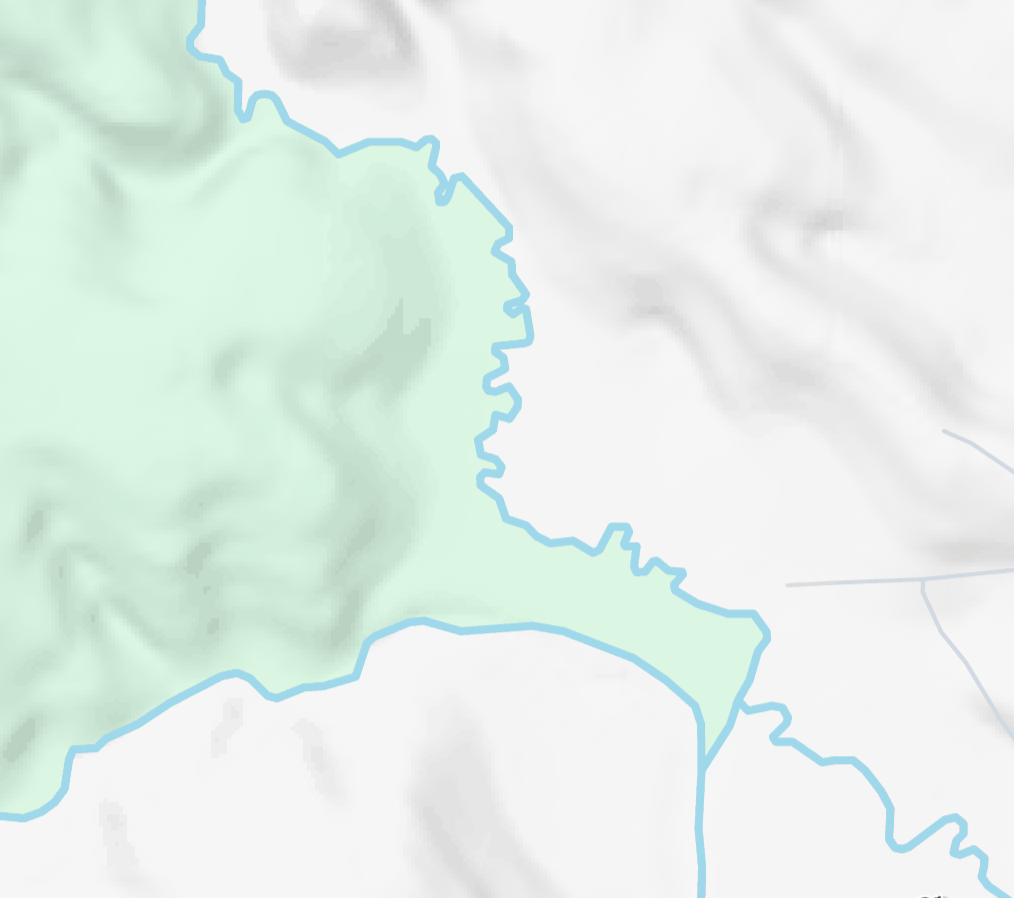
I stood looking down the sharp slopes, off the ridge that drops dramatically down to the creek below. Erosion hit this place hard after the initial clear cutting of the woods. It’s been cut at least twice, with no sign left of the old growth stumps. Such relics were burned, pulled, or slowly ground down under the hooves of overcrowded livestock. After the trees were removed, rains and melting snow came roaring down the gullies, carrying off rich topsoil and the seeds that would have germinated into new forests. In this particular landscape, now parceled into several properties of a few acres each. The Dutch grave stones tell of one family’s attempt to settle and manage a cherry orchard, shipping the fruit along the canal established in the 1800s, which connected to The Hudson River from Pennsylvania, and offered a direct water rout to New York City, once New Amsterdam. The building materials, coal, and agricultural products that left this landscape for the big city took quite a toll on the living world, but people made a lot of money, and progress was made. The farmers here were encouraged by the profitable markets, and set about straightening the creek and draining this marsh to create more arable land for production. Below you can see the creek and its unnatural straightness. I’ll also share a terrain map to see this creek compared to it’s untouched sister over the next ridge.

The family that settled here came from an ancestry of lowland dwellers; sandy bogs, tidal marshes, and expansive fens bordering the ruthless North Sea back in Europe. They were industrious farmers that reclaimed land by draining it, and that’s what they did here, even though it’s a far cry from tidal shore. Still, there is good soil in wetlands- peat moss and layers of rich organic material that can grow anything. Once drained, the land could be tilled and planted, or turned into good pasture for animals. Dairy was huge in this area of Ulster County, and with the advent of pasteurization, milk could be shipped by train. The area was booming economically, and maximizing anything off your land was paramount. I can only imagine the mud and muck labor that went into digging out these wetlands and establishing the cherry orchard.

By then, most of the American Chestnuts were killed off by blight, and the entire forest makeup shifted. Millions of animals would have starved to death without that crucial abundant nut source, and what was left by the mid 1800s was shot and trapped for meat and the dying fur trade. I say dying because fur trapping had already wiped out the prized fur bearing species like otter and beaver, fox and martin. Without the balance of predators, forest habitat, and healthy genetics from a thriving population, wildlife in the area. crashed, and what we see today is a shadow of what once was. What there is a lot of now, is ticks. I was constantly pulling them off me, shaking them out of my cloths, and checking everything that felt like the tickle of squirming insects on my skin. The ticks carry Lyme disease, and you don’t want it, trust me.

Another imbalance in this wrecked ecology is the age of the trees. There are no young seedlings or saplings in this landscape, well, a few beaches and crabapples, but no pines between germinated two inch seedlings and still maturing 80 year trees. I’ve encountered an ancient Eastern White Pine on the corner of a property in NH once, its diameter was 8 feet at the base. The branches of that majestic old growth pine are the size of the current mature stock in these woods. It’s hard to see what is not there, but young pines are a huge missing piece in this woodland, along with other young trees like oak and cherry. I tried to capture the amount of germinated stock that is present, as well as where it’s missing all together. On a drive through the area, I was able to see younger pines along the roadside in some places, so they should be present in our woods, but they are not. I hazard a guess they’re being eaten each winter by rodents under the snow, but that’s just a guess.

The leaf littler is slowly building up again, covering the ground to protect it from erosion, but there is still damage being done, and ruts of lost soil are growing every year. At the same time, there is attempted healing, as the erosion pulls down the banks, the trees fall in too, making mini dams and slowing the water on it’s way. In time, log jams will cause the creek to jump it’s banks, flood the surrounding lowlands, and in many more centuries of work, restoring the wetlands that once were. It will take more than vegetation to do this work, the native wildlife must return, and with it, the detail work of eating and pooping that disperses seed, churns up soil, and adds vital micro-nutrients to the soil for long term forest health. Vanished species like elk and the billions of birds that once darkened the skies on migration are necessary to return this landscape to what it once was, but this dream will not be reached, so long as people continue to develop and squander the land, rather than working with it, and returning the space to habitat for wild living things.

Like the small steps we’re taking at EEC Forest Stewardship, the small steps in Upstate New York can be pivotal to starting that rewilding. Replanting native vegetation, slowing and sinking surface water, allowing space for wildlife to live, seek shelter, breed, and raise young. Accepting we are only one small part of the complex living earth is the first step to seeing what you can do in your own small way to help return the natural world to a balanced state- and that state looks different to everyone, so finding common goals in your community helps tie together the end goal in conservation and restoration. As I’ve shared with these beautiful friends back in New York, your local conservation district is a great place to start. Most counties in The US have them, so look yours up and support them- invite them to your property if you steward land of any size, and if you don’t have land, you can still volunteer to help protect lands that are in the care of your conservation district, which is still making an important contribution to conservation in your area.

The adult pines are still dropping their seeds into this forest, making space for a new generation each year, and in time, with some help for land stewardship practices, younger trees can begin to return, and a wetland can be restored. Imagine the possibilities once a landscape is back on track to becoming whole. Well, you don’t have to completely imagine, here are just a few examples of active restoration work that has saved wild places all over our country, and the world. Coming back around to this little forest and stream in upstate NY, I’ve shared a vision of BDA (beaver dam analogues). Slow the water, meander it into the wetlands to sink in, and allow the natural habitat to restore over time. It’s a small step in the right direction for a landscape patiently waiting for some TLC.

The people that settled here in early colonial pushed inland to exploit natural resources were caught up in economic schemes for personal gain, and to be clear, that’s still a thing all over the world. But you can stop this cycle by not participating or supporting thoughtless exploitation through voting for progressive conservation minded politicians, donating time, treasure, and talent to your local conservation organizations, and spreading the word to family and friends. Though the legacy of our ancestors has left a lot to be desired, there is always opportunity to change out ways. Please join me in working towards restoration, it’s the best way to heal our earth and ourselves through re-connection to our own rewilding too. Much gratitude to this wild earth for continuing, especially those white pines still dropping seed each year for a new grove of young trees that might one day come. Thanks to all the original people of this landscape, who remain, and keep asking for better stewardship and land back practices that help return our lands to wilderness for a future where people, plants, and animals all thrive together in an intact natural world.
Solar Power comes to EEC Forest Stewardship

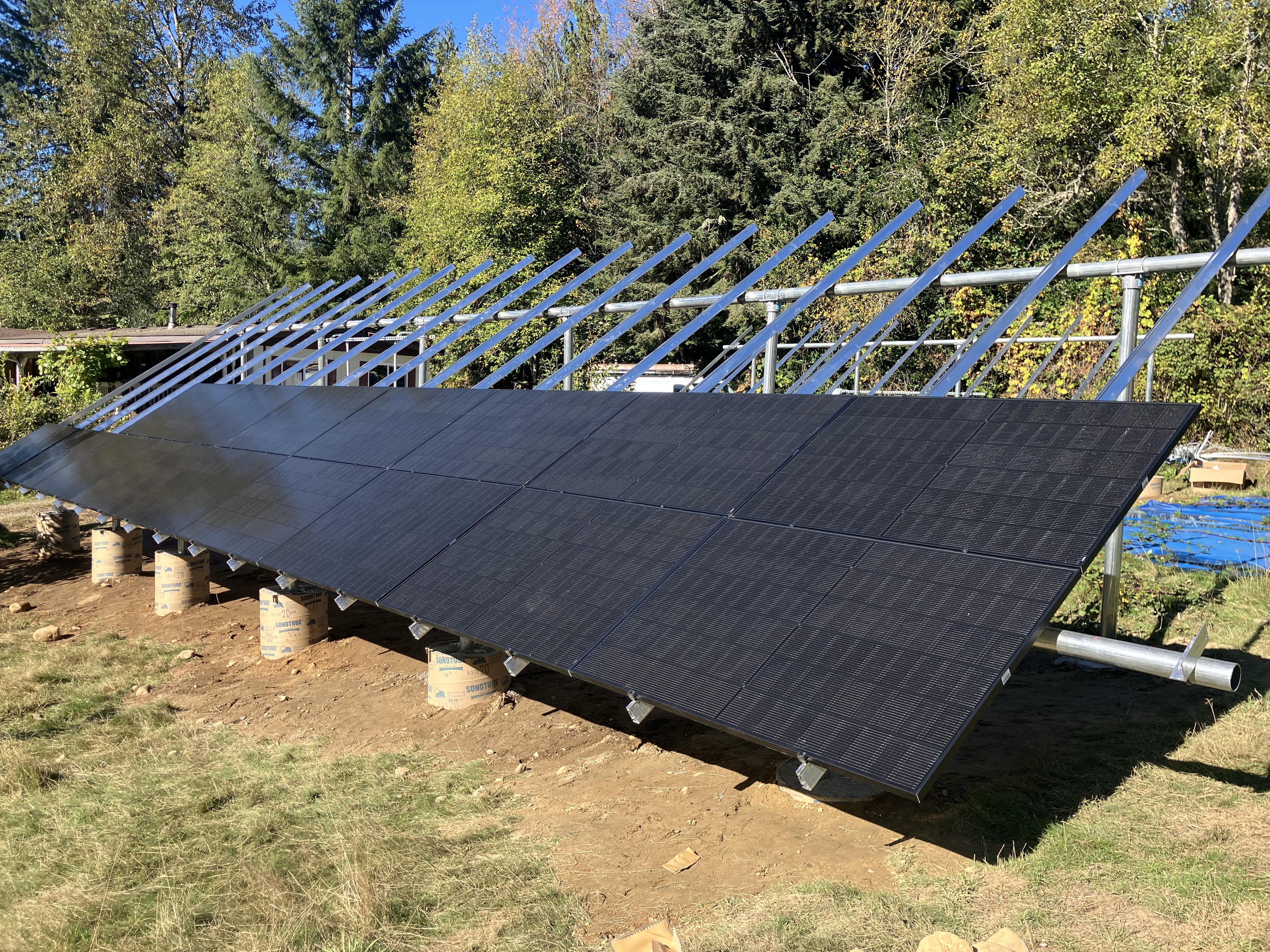
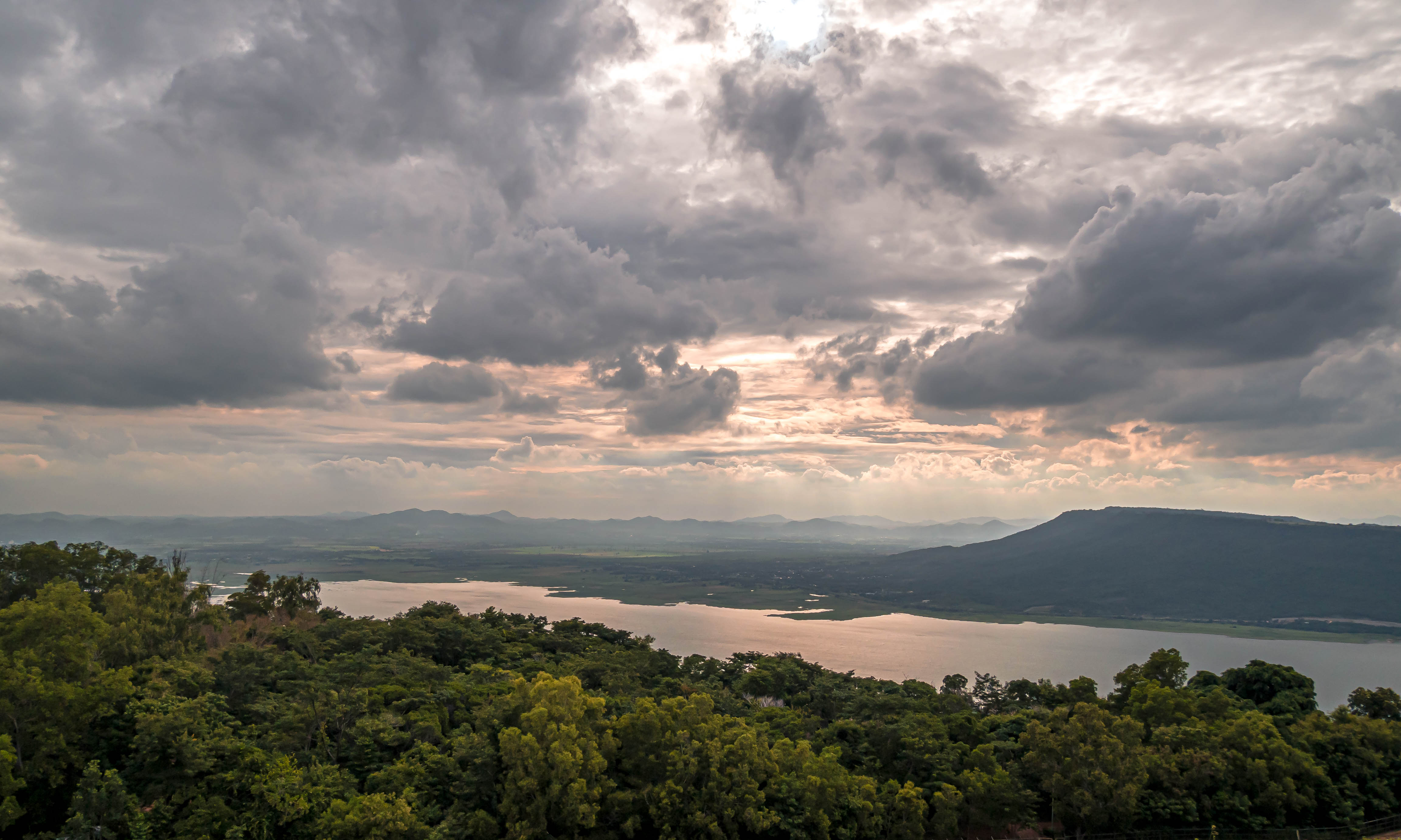
We’re catching some rays- in a very real way, at EEC Forest Stewardship. For a decade now, the vision of green power has been in the planning, and at last, a system is built. Northwest Electric and Solar constructed the large array in the perfect location for sun activity- as pictured above, this sun trap, south facing, highest point on the landscape, was clocking 14.9kW at the time of this photo in late October, 2026. That’s about the equivalent of a home generator’s capacity. This array is larger than our current capacity, so we can still get enough on cloudy days to cover our load. Since we’re tied into the grid, our extra production goes back to the grid, and we get credited for our production to lower our energy costs, or negate them all together. This scale will also accommodate future demand, as prices rise and infrastructure upgrades. Leafhopper Farm could one day power an autoclave for mushroom production, or passive heat to a scaled up commercial meal worm operation. Possibilities are endless with a green energy source like this.

Now, there was a lot of mining that went into this boost to the green energy wash. In the short term, solar panels are built from mined materials and rare earth. Long term, they will continue to produce energy cleanly once in use. No more carbon will be burned for the next 20 years. That’s the limited warranty, the panels will harvest for the rest of my lifetime; by then, we’ll see where the world is with climate change and technology. The science is in on solar panels being a successful way to curb carbon consumption and CO2 release. I’m making enough power with this system to also offset some of my neighbor’s needs, thus extending the impact of clean energy in my neighborhood. At the same time, solar panel demand far outpaces production in the US, where these panels are made, in Washington State, in Bellingham. That’s a big part of why I went with Northwest Electric and Solar; they source their materials in state, right up the road. It’s not perfect, I’m sure most of the parts are coming down from Canada, where mining laws are much more lenient and international Canadian owned and run mines are importing the minerals to supply the manufacturers up north. I’m also aware that the technology my chosen installer uses is TESLA, but it’s the best technology out there today, hands down.

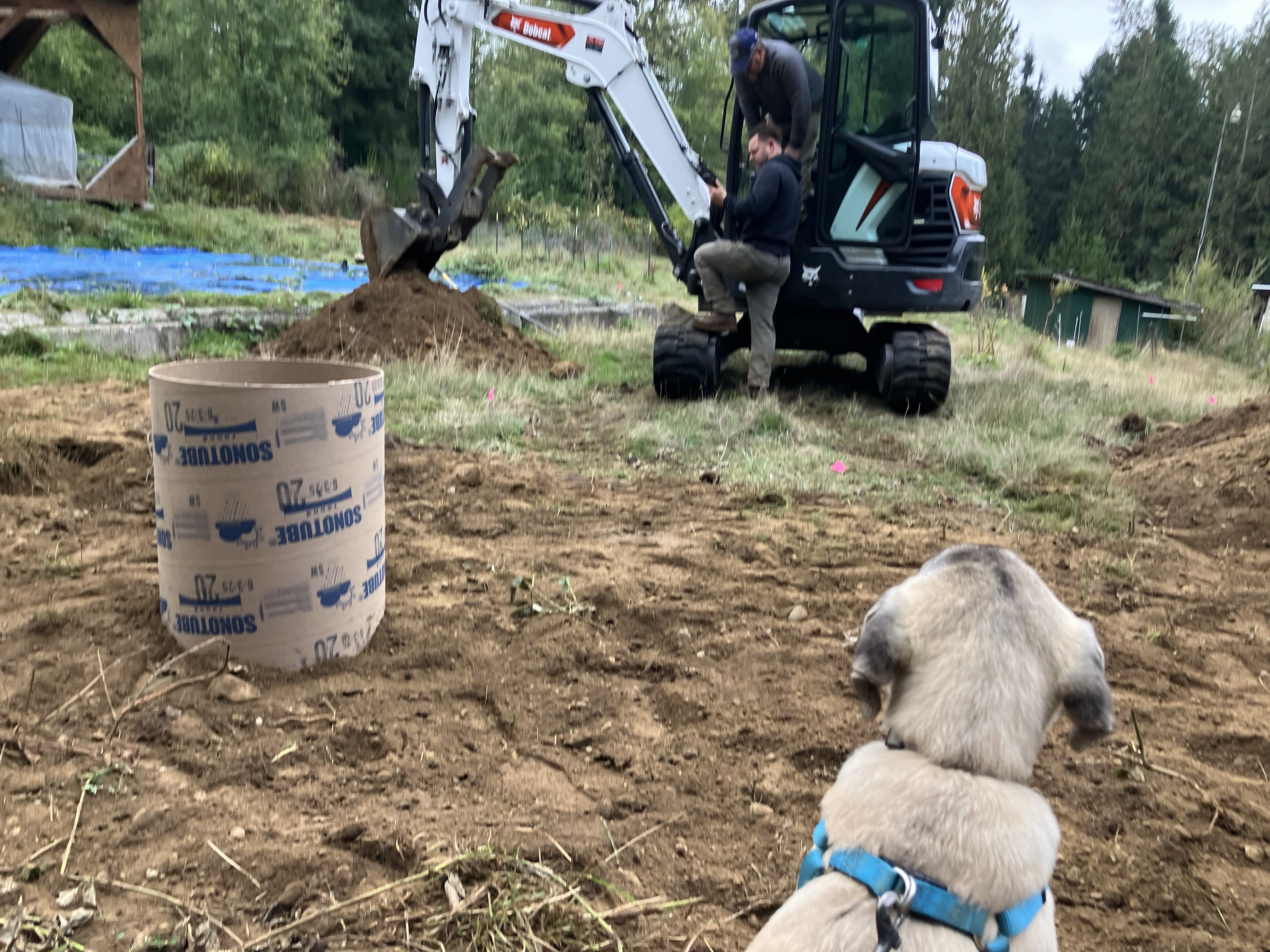
Our first task was to dig and set the footings, because this system is ground mounted. I opted for this setup because our current infrastructure is not capable of carrying the panels safely, and the scale I was looking for required a lot of space, and we have that in a prime spot, so I took advantage of my fabulous south facing top field for instillation. The dig crew carved out 24 footings, each one 6′ down. After years of drought, the layers of sediment were dry for most of the dig- only one low spot was damp at the bottom, the rest was quite dry and easy to dig. We did encounter 3 wheelbarrow sized glacial erratic boulders, but quickly lined them up along the road as a buffer to the solar system on the turn of the driveway. I love featuring glacial boulders where I can to remind us all of what shaped this ridge and the valley below. Most of the dig went smoothly, and a slight hiccups in measurement communication did nothing to hinder the overall build.

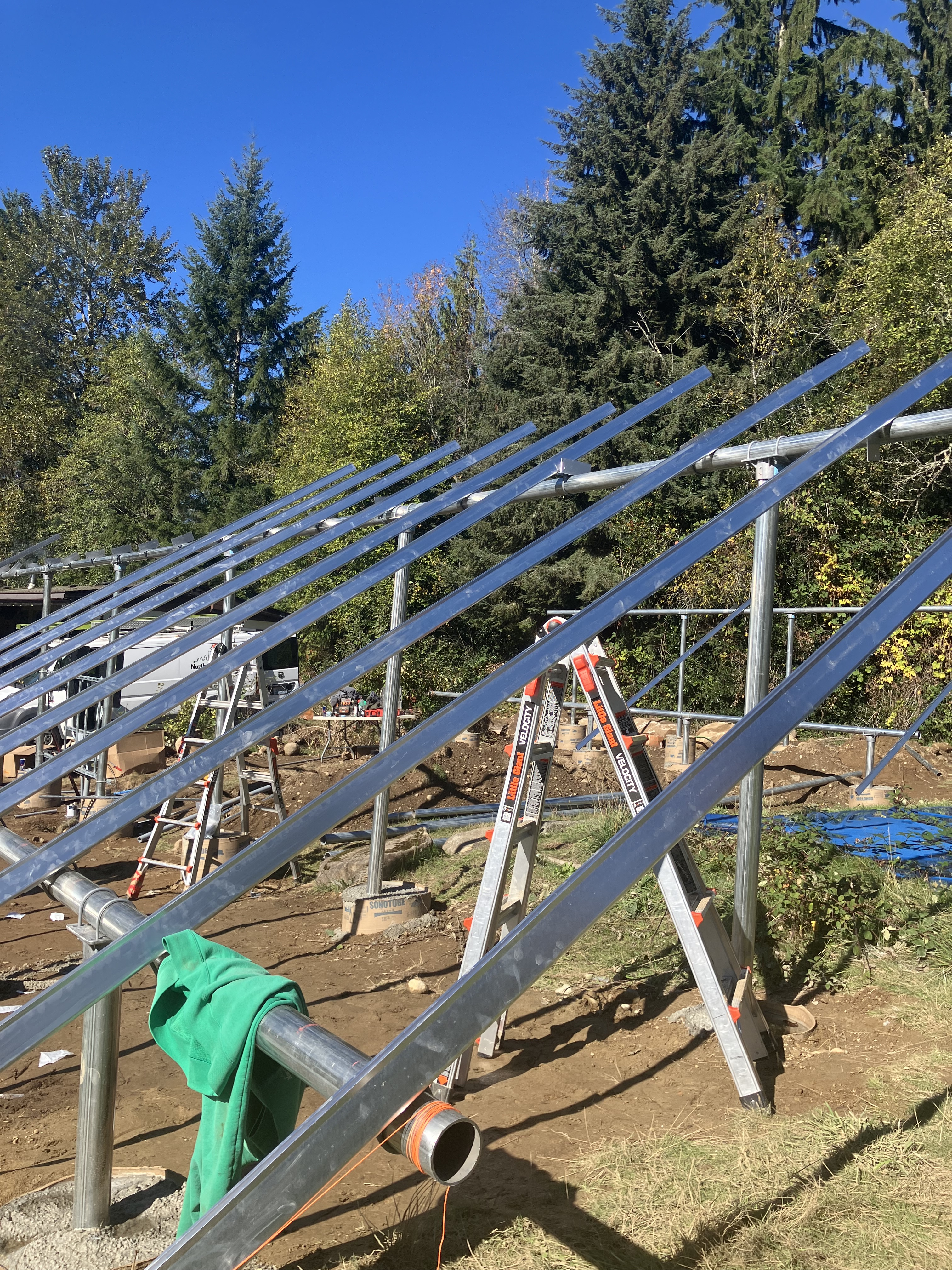
After the digger left on Sunday evening, I had a better comprehension of how big this project would be, at least the ground layout. It would be on Monday, that construction would begin on the main aluminum frame to hold the panels in each of two arrays. The team showed up predawn, at 7am to start constructing the scaffolding to hold up the structure. For two days the crew hammered, measured, drilled, and set framing. They worked efficiently, diligently, and to the specs with familiar ease. I appreciated the talent and smart planning the electricians put into construction. Though much of the technical jabber was far beyond my understanding, the crew happily explained things as they went, checking in with me on progress and planning as they went. I was welcomed on site, and happily made lunch each day for everyone. This important investment means a lot to me, and the farm, so being present to learn, document, and be available to the work crew as support ensured my own understanding of the project, face to face relationship with my amazing team, and kept me up to date on progress. Overall the instillation went quite smoothly, and my on site team was wonderful to work with.

After the first few days of on site work, I began to see the full width and breadth of this project, and marveled at what was going to be accomplished. This system would be much larger than my original concept of a solar panel setup from a decade ago. I had pushed for the scale up, to cover much of the properties future needs in one package. I will put hot water solar and a few electrical panels on the pole barn when that upgrade comes, but having a grid connected long term system with aggregation to both meters became the smart design for future planning. I can always add more, and go off grid with a proper battery system. Today, it’s about keeping my overall electrical costs down while returning excess to the grid. The system will produce enough power, even in winter to keep up with the property’s needs and a little extra to give back. We do get credited for the extra power, in case we draw more in winter then we produce. But with the scale of this design we should have what we need during daylight hours.

Why not batteries? The technology needs to get better. There will be storage built in when the designs are optimal, I still see room for great improvement before batteries become a household staple- especially in recycling once they age out. This brings us back to the green wash that comes with solar idealism. Manufacturing these renewable energy sources still costs us environmentally, and the panels will leech, very minuscule amounts, of input materials from the panels themselves, into the soil here. This build is all inputs from outside the land- not holistic at all, but the science still supports this alternative energy in the long run, and I’m already seeing my returns. So much energy comes from the sun, it makes all life on earth grown and thrive. If we turn to this natural source of power, along with wind, we can make a huge difference on our block, one source at a time. As the system continues it’s collecting, I’ll have firm figures to share regarding the payout on this long term investment in something we’re sure to need.

The first set of panels came at the end of week 1. Seeing them mounted gave me such joy. This is the future, and more home owners should be looking into taking this investment and upgrade seriously. As I watched the shade spot grow behind the array, I wondered what king of plantings I’d be experimenting with to replace the pasture in this location. Sheep will still be able to graze around the arrays, but the shade would demand a shift form full sun to full shade. Luckily, a lot of native Pacific Northwest plants prefer full shade, so filling in the soil with proper cover crop will not be hard. I might even use the structure to form shelter- and rain catchment for sure. Because the arrays are neighboring the pillow tank, runoff can be caught and stored in the tank for future irrigation down slope. I will first have to test the runoff, to make sure it’s safe to use- this is the thinking we often forget with petroleum products and heavy metals often used in solar panel production. Unless the panel breaks open, this should not be an issue.

There is still a lot of learning to come. After this new build settles in, I’ll have a lot of fun figuring out best use of the space, optimal growing, and water directing. Luckily, the rain is about the arrive, and I’ll have many months through 2026 to learn what comes next. So much gratitude to my team of electricians and apprentices who worked for 2 1/2 weeks to complete this instillation. Gratitude to the science and intention moving us closer to a better, cleaner energy use culture and way from fossil fuels. Special thanks to the sun, that life giving energy source that has raised countless generations of life on this earth while keeping enough distance not to cook us- yet. An so much good solar power to this home, business, and surrounding neighbors.

Farming Sense

We the people have taken so much from this earth, digging beyond our own capacity for profit. That skimming of cream off the top has ended, and now, with desperation looming, there is a fork in the road. Choices are not easy, and making sacrifices can be scary. The 97F temperature in early June, 2025, has normalized in our minds; though about a decade ago, that temperature would have raised a few eyebrows. A wrongful death suit here in Washington State, is going national, sending new aid to the human fight against corporations. Humanizing our climate plight remains crucial, as pointed out by a legal expert at the end of the referenced article above-

“The advantage of this lawsuit is that it puts an individual human face on the massive harmful consequences of collective climate inaction,” Kysar said in an email to NPR. “Not only that, the complaint tells a story of industry betrayal of public trust through the eyes of a particular person.”

We can’t all go join a lawsuit, but we can all think of other ways to invest in helping to fight ecological abuse in our own back yards. So many of our lives are now driven by profit. We some how get trapped in “just getting by” mentality, and to be clear, scraping pennies and budgeting every expenditure to get buy, still debiting on credit-cards, is another norm for most today.

I’d like to target this article to a specific group of us; if you own a car, have home internet, and most of your neighbors are white, you live in some real privilege. Take the money out of it for a moment and reflect. White collar work usually includes healthcare, families get tax exemptions and child credits, single people of similar economic status subsidize that in their taxes. Are you reading this and getting defensive? I sure am. My privilege is paying for others? Yes, and it should be, but unfortunately, even more of my work and income, and yours, goes to tax breaks for a top group of billionaire investors who will never know or care about you or me.

We’re so caught up in economic fairness, worried about fraud and abuse in the government. Thousands of hard working civil servants- the majority of government- just got fired and sent to the public job market, where there is a struggle to keep people employed. The Private sector lays in wait, eager to fire another round of their own workers to snatch up government employees who already work for a lower wadge than most others in their field nationally. I hope your thinking wheels are spinning now, seeing the future of wadges in this country plummet. This is the plan, subjugate through economic kidnapping. We’re all being held hostage and forced to participate. Yay! For us, there is still voice and action that could be heard- through protesting, writing representatives, and voting in local elections- or better yet- running! Who has that time and wants to be a civil servant? SERVANT? So much gratitude to those who do!

We are slowly turning into an autocracy too America. Elections are bought and sold, votes in congress too, thanks to Citizens United, and with the current administration, what’s left of the public sector will be privatized and we’ll be living as feudal corporate vassals- thanks Netflix and Amazon Prime- for those of you already fully institutionalized in this addictive consumer convenience. My shit smells too- I love watching movies and most of them are on streaming services, including AppleTV. I’m also watching the protests in L.A. right now. ICE agents and Federal Marshalls (fascist goons) began beating and chemically hazing the crowds, which feels a little too much like Germany in the 1930s. America was into Hitler for a little while. We really don’t have the best track record in supporting global Democracy, specifically in the Central and South American countries where so many immigrants to The USA come from today.

In L.A., the protestors struggled to stop the illegal seizure of their friends, neighbors, and co-workers off the streets and out of businesses in broad daylight on a Friday afternoon. By Saturday, our POTUS called for National Guard to go into California. False flag for sure, and excuse me if I get a little ticked at the thought of this happening in my town tomorrow, or the next, day, or the next. We are all culpable in the end for pretending we do not see, and the economic toll will come, if not an actual raid on your place of work, school, church, or neighborhood grocery store. How do we push back without being wrongly detained? Who are the people really making these raids? In Oklahoma, a mother speaks out. The terror is real for so many, and fear is spreading. I’m not asking you to go get arrested in L.A., but there are small steps of resistance to take today.

Toiling soil, tending stock, cultivating rich diversity to restore forests, healing rainforest abundance, regenerate and regain partnership with the earth- can that be enough? I don’t think so any more. Not with the suffering and abuse now escalating- I already failed neighbors in Oklahoma by leaving. That State needs liberal healing as much as ecological, but that fight looked too daunting, and the conservative lasso had strangled any hope for the feminist heart I bare. I failed my homelands. The red clay and sandstone canyons remain a love song in my soul, the main part of literal matter that grew my body to what it stands as today- that chemical structure carries the signature of ancient shallow seas imbued in sedimentary sentimentalism, or terra crafted memories etched on this body. (see Developmental chondrocyte heterogeneity)

Making a living while remaining in Oklahoma was not in the cards for this privileged life, I could get out of town, another marker for those of us feeling squeezed financially in these current events. How many times have you moved by choice? How many times was it not your choice? Discuss. Severing our connection to place links us all to that great new term Solastalgia. It’s part of the underlying stress humans carry now, and pulls us into a never ending cycle of hard times in this Anthropocene. Remember, positive mindset is the ultimate survival key, so turn towards abundance and seek in as locally as you can. Root down and invest, trust, plan- make your own community great for yourself, that puts the power in the people, rather than corporate dependency, which we’re all deeply embedded in through social conditioning.

When I worked in a Vermont Coop a few decades ago, people always commented on how much more expensive the organic produce was compared to the conventional, and that’s still a thing today. Why? Cost of living continues to rise for us all, but food prices have only just begun to creep up, sending many into a slight panic. We’ve been paying too little for too long, because of industrial agriculture, and it’s never been fair to farmers. Yet as a small farmer, when I ask for the actual price my food costs to produce here in King County, some people bulk. Why would they pay me when they can pay Costco or Walmart for a real deal? I don’t know, maybe as a way to support the true cost of food and buy from people you know who practice the regenerative farming that could bring back ecological balance to our world? Worthy? That’s up to you, and your wallet, and your choice to invest in what matters most, which is sadly, a price point. Welcome to Plutocracy– where we are ruled by the rich.

I can speak for my own experience here in King County Washington- I live in the most costly county in my state. Washington is the 10th most expensive state in the country to live in. I get a heck of a lot out of that, from social safety nets to one of the top public libraries in the country. King County is extremely expensive for families, but cheaper on the national average for single people like me. Still, I end up paying more in some taxes to support social systems I am not a part of directly, like schools, but hey, educate these kids, because many will stay and work here in future- I hope, so I want them well educated, it makes for a better community. We do have some very good public schools, in affluent cities and towns. The Riverview School District in my hometown gets an overall B+ rating and is #33 in the state out of 242. I’m engaging more as a mentor volunteer in one of our local middle schools and high schools. I hope to learn more and continue supporting and investing in local education. The farm donates a lamb each year to Empower Youth Network to support mentoring in our schools.

For children and community to grow and thrive, there also has to be clean water, soil, air, and food to eat. This is another way EEC Forest Stewardship is deeply invested for human betterment. If we are not restoring our ecology, we will be embracing toxic poisoning. I choose not to embrace that where I can, and it’s hard, because we use a lot of fossil fuels even when we’re not driving. Agriculture is #4 in top polluting industries, while transportation is #2. The food you buy in the store contributes to both, making it #5 on that list. There is a lot to break down here, but this leads me back to why buying local is so important, and paying for local is more expensive- Leafhopper Farm receives NO government subsidies, it stays afloat through it’s own production and my personal financial independence. I do all the work, from raising and caring to slaughter and butchering- all by hand, all with love and care for the poeple who will buy and eat this meat, investing a little more for a long term future. If I calculated my full time working on this farm into the food prices, no one could afford my meat or eggs. The crucial restoration work these animals do is not part of the price either, that bonus goes to the land, which regenerates for long term community health- that’s priceless.

The Farm Bill?

This video caught my eye on the tube and so I took a moment to watch. There are a lot of mixed messages in the information, and some outright contradictions that the journalists who compiled this information do not pursue- maybe they will in future. I’m going to point a few things out and try to address them.

Commodity crops (soy and corn) vs.

The 1996 Farm Bill removed regulations on how much of certain crops could be grown, in favor of how much a farmer could make in the global market. This took larger, mostly corporate farms- the top 2% of farms, a lot of income. This happened because of corporate agricultural business lobbying for more government subsidies to make more profit. Let’s take a deeper look at these top percent of agricultural business, which dictates The Farm Bill.

Check out the #1 agricultural corporation in The World, Cargill– specifically it’s criticism arounf child labor, union busting, land grabs, and deforestation. These are the guys pushing palm oil over jungles and cheap child labor for investment gains. Number two in the world of agricultural big business is our old friend Monsanto– which merged with Bayer (#3).

John Deere is #4, and that’s all heavy equipment for the industrial farming- no small farm can support such massive machines, yet most of the technology that helps larger farms today is run by this company. They are in trouble with The Feds over right to repair and walked away from DEI. To name a few issues not in their Wiki page.

I would divide farming definitions of size by heavy machinery used. If you use more than a couple of tractors to do your farming, you are not a small farm. For people who use no large farm equipment (Leafhopper Farm LLC) in their practices, there is already the reward of not getting caught up in the costly nightmare of large equipment and the fossil fuels to run them. Yes, those who grow in that way are producing little in comparison, but if everyone with only a few acres practiced small scale- or were compelled to as part of the responsibility of owning farmable acreage, there would be an abundance of food in our communities, and we could move towards free food for all. I truly believe this based on my own production.

The #5 largest agricultural business is Syngenta AG– which has all the chemical fertilizers and seeds. Its stock is owned by a Chinese state owned company. People are so worried about Tick-Tock, well this company controls the majority of toxic chemicals used in food production. Do your own deep dive on these horrific affairs.

#6 is the main drive behind commodity crops in the US- Tyson Foods Inc. The meat industry is controlled by two main players and Hormel is the other one. We grow all that soy and corn for the animal feed these companies control. The video points out that The US is the top world producer of meat, and that industry gets $64 Billion in trade from it. Your local meat growers, who do not export, are not getting any say in The Farm Bill, and certainly won’t see any revenue support from it. Take it from a local sheep producer like me.

Now that you understand who the real players are, think about how much government subsidy is really going to them. As the video shows, many mid-sized farms that are still family owned, rely on the handouts through these big corporate influences running the show. Almost all farms have to get at least some of their inputs through these companies, and so they defer to those interests, because the big companies are the only ones representing themselves in congress through lobbying. There are individual farmers that still spend their precious winter months off in D.C. trying to protect family farm legacies, but that’s not where the money is. As Locust Farm’s owner said- he gets about $500 a year in federal support, and that’s not enough to cover anything.

About 9 minutes into the film, bio-fuels are briefly mentioned, and that’s another critical part of the Farm Bill web they should have looked at a little more closely- but it’s not related to their alarmist title “Why US Farms Are Struggling” if you think farming is only about food. Fuel is what runs most farming today, and that fuel is also starting to take priority over food. We can’t eat fuel, and it’s production is killing the environment which is our food, and water, and air. We are animals that can’t survive without clean environment.

At 9:30, the medium sized farm owner went into the small town economy talk, which again, this video seemed to step right over and not address. But pivoted back to human health, and it’s here I would like to make another point. The family farms that are bought into financial ties with these controlling corporate agricultural businesses can’t escape. They know that all rural business is tied into the corporate web, which they are beholden to. If they break from the norm, they have no income, and the rest of the town business goes bust. They already are bust. The medium sized farms are debt slaves. They pay any profit back into the farm for the massive inputs industrial farming demands. It’s a loose loose for farmers and the land, and it’s killing both.

For the little farms still being family run, suicide rates are high. This video does not get into this sad fact, but it must be mentioned here. Besides all the financial worries, farmers rely on the seasons and weather patterns, which are now becoming extreme. For corn and soy, this is not so scary, because the commidity crops are protected by The Farm Bill. But for the food crops that we really need in day to day living as people, there is little support or care, because salad greens and carrots are not profitable in our current federal programs and we can just import cheaper goods. How is that helping the farmer? The video does go there at 9:40, but then allows The Secretary of Agriculture, Thomas J. Vilsack, to “see things differently”. That’s it? WTF? Where is the journalism here?

At this point in the film, I was wondering what this was all about. The title is “Why US Farms Are Struggling”, yet this film is trying to talk about The Farm Bill as… good or bad? I think bad, but it’s so illusive on a real point beyond things are messed up and small farms, which grow most of the actual healthy food for us to eat, are not going to be around much longer. That is true, the way things are going environmentally. But when you go to the grocery store and reach for something that is no longer there, what then?

I’d like to close this little exploration with another video to help us see what’s happening in a close allied nation to our own. One we are working very hard to open more food imports to- England.

I’ve been following Flank Farm for a few years. I like that it’s run by a woman, trying to survive in the small farming world, and that the second generation is trying to help bring the story of family farming to a wider audience. England just passed a budget that will deeply impact family farms. What this woman farmer shared at 6:00 is what I think about all the time in farming. Our food web is vulnerable in so many ways. We can’t eat money. What will happen when food distribution is disrupted again like 2020 and COVID? For England, a small island nation, the affects are tremendous. Here in The US, we are building similar cracks in food systems by letting big money control our basic needs. The corporations are not living people, as so, they devour us as their income. Start planting your gardens now, and connect with other growers. When this system fails, backyard gardens and a few fruit trees down the street are all that will stand between our society and starvation. Get planting now and learn what’s growing on locally where you live.