Welcome “Quercus”, Our New Ewe Lamb of 2025

There’s a late arrival to the flock this Spring. On May 30, our first year ewe Pandora surprised me earlier this month by bagging up. It was three weeks past my official Ram exposure to the ewes, but I also realize I put him back in with them on pasture later, after I thought the gals had finished cycling. Well, I really don’t read the signs well when a ewe drops into heat. Apparently Pandora was late to the party, but still ready to dance. That’s ok, I really should just leave the ram in till late winter- but I don’t like feeding him alfalfa, or letting him bully the gals off their food so he gets his own digs in the winter, but I let them all go on pasture together because there is enough food and space for them all. When the ewes are heavily pregnant, the ram is removed until after all the lambs are born and stable. Oakie is a good ram in the flock most of the time, I don’t see him bully lambs unless it’s over food- until the rut. By then, all the lambs should be sold or slaughtered, so he does not have to fight with other rams for the ewes. But that might change this year, as I am looking at overwintering one of my ram lambs, who is turning out very well.

Quercus is a ewe lamb in my favorite line- her grandmother is Lickety-Split, who was the first lamb born at Leafhopper Farm, out of Ingrid, who was the lead ewe and my favorite friendly sheep. Not all sheep are friendly with people, many prefer distance and an occasional polite hand sniff when they do get close. I don’t mind if a sheep is shy, as long as I can handle them when I need to. If a sheep is prone to panic when I come into the barn, I tend to cull them because it’s not helpful to keeping a calm herd and handleable (domestic) animals. Quercus’ Mom, Pandora, is a little shy, but not panicky. She let’s me offer a hand sniff, and will stand when I catch her collar and look her over. It’s important to look over your animals often to make sure they don’t have any hidden injuries or other ailments that take some visual checking. When I came into the pen to check Pandora’s new lamb, she stood by, sniffed my hand, and stood while I looked at her new born to make sure everything was ok. That’s a sure sign of calmness in a ewe that I appreciate, and her little lamb shows the same temperament. This is a big reason I love this line in the flock. Lickety-Split comes right to me for head scratches- even in the field, and the rest of the herd usually follows her over for social time. Some might call her a Judas Sheep, but she’s my Bellweather. She even wears a bell. Her granddaughter might be a future lead ewe herself one day.

For now, Quercus enjoys her new life in the flock and gets a wander around the pasture, close to momma and grandmomma in the field. She’ll have a lot of catching up to do before running around with the rest of the lambs from this year. They are all growing very fast because they are all singles and getting exclusive rights to mom’s milk. It’s a first here at EEC, to have all singles, but that’s ok, everyone is healthy and happy, and we have a great sized flock. May the herd continue to show good development as this grand experiment in Katahdin Sheep continues.

Wine Time

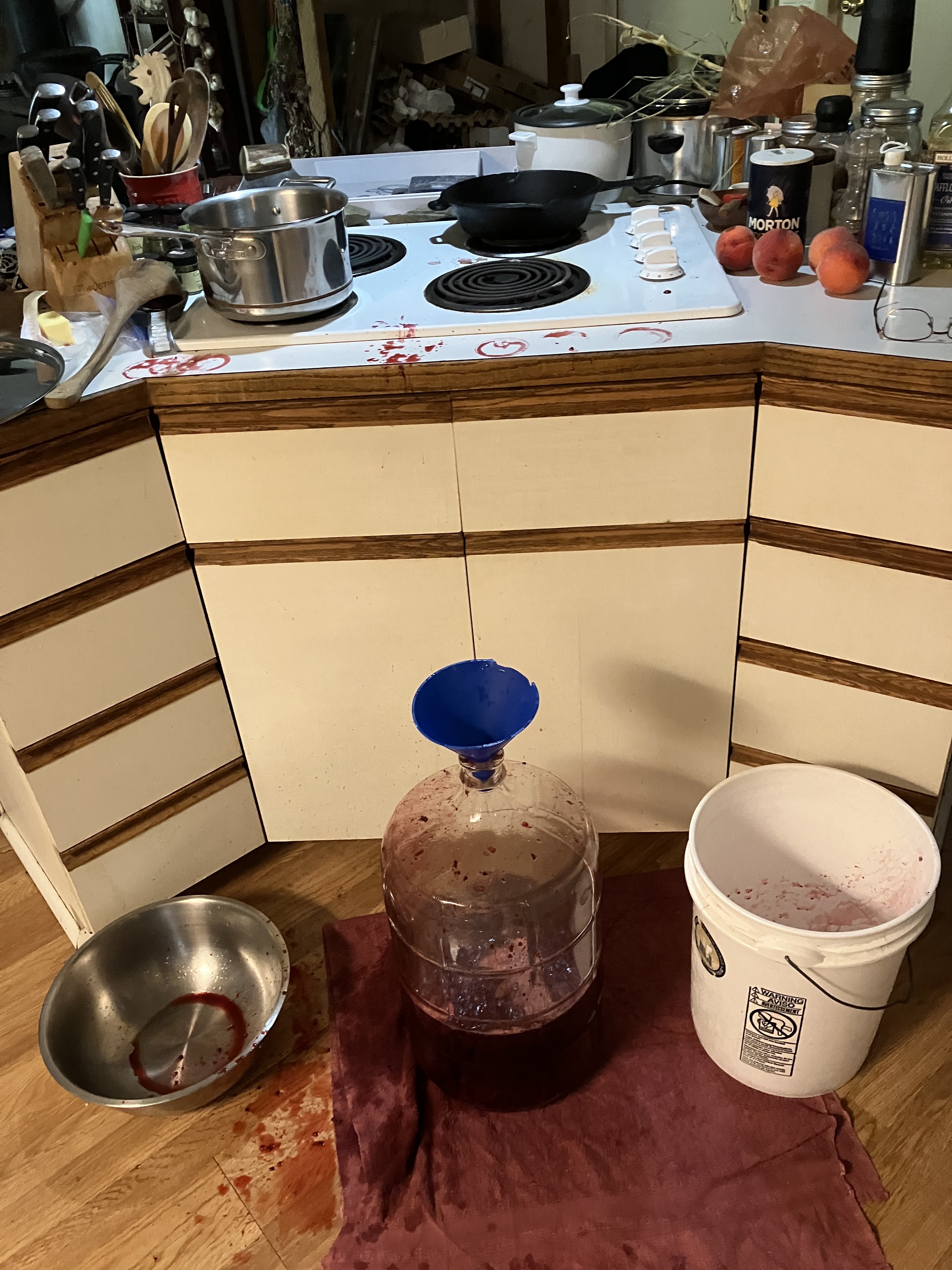
In August, the blackberries were harvested from the vine in vast quantities- over 10 lbs, and cooked into a tasty stew for a special fermentation fest. Hours of picking, cooking, and filling glass carboys has brought us 10 gallons of wine this year. The work was worth it- as I’m already taking some sample taste of the fruity punch and it’s delicious. A few months of lay down time after bottling will bring out this amazing festive beverage for winter holiday cheer when most needed. The steps to making your own house wine are relatively easy, and with a few store bought ingredients (mostly sugar), you’ll have a delicious drink to share with friends, family, and neighbors.

Getting the berries into the carboy is always a messy task, but the reward is worth every step. Buckets of berries go into this recipe, but you can make your own on a much smaller scale. You’ll need to find a good red wine yeast to put in with your pounds of sugar to make the fermentation happen. Sterilizing everything is also crucial to keep out unwanted molds and bacteria. The actual time fermenting is also short for berries. I’ve had mine in the carboys for just a couple of months. After the first six weeks, I racked the wine- taking out the fruit and adding another round of sugar to make sure the yeast has a good supply of food. It’s also important to keep your fermenting food out of sunlight. I wrap my carboys to keep out the light. You’ll need airlocks to let out the gas that forms as the yeast eats the sugar. Bubbling airlocks are a sure sign your fermentation is active and good.

Bottling also takes some glass and corks- and a corking mechanism. It takes some muscle to get those stoppers into the bottles, but uncorking later in the year will be worth all this effort. Make sure your bottles are also well sterilized before starting the process. After many hours of hard work, this home made wine will last us through the cold months ahead, and make a great holiday gift to all in need of a little cheer. Thanks to better living through chemistry!

Why Livestock?

Leafhopper Farm LLC was created to use domestic animal systems of grazing and foraging to regenerate soil health and fertility. A recent movie that gives great information on why livestock are so crucial to regenerative farming practices is laid out beautifully in “Sacred Cow“. This film explains how domestic stock, when raised in harmony with their surroundings, rather than industrially in crowded pens with overflowing manure pollution. There are also topics in human misdirected diet scemes, degradation of land through industrial practices, and crucially, how we can mend the land, refocus our livestock systems in favor of animal well being, while also acknowledging the cycle of death and rebirth in our world. I’ve cropped a scene where James Rebanks, author of “Pastoral Song“, lays out the argument for rewilding hand in hand with regeneration to support people within the ecological landscape. His farm is an analogue for Leafhopper, and you’ll see some similarities. The sheep are deeply ancestral for many of us, and play a vital role in wet, cool, hilly regions of our world- the marginal land in traditional agricultural thinking.

For EEC Forest Stewardship, the animals of Leafhopper have also been bringing back nature’s neighbors- such as moles, frogs, red wing blackbirds, great blue heron, salmon, and much more. By removing chemical treatments, harsh overgrazing, and monoculture, we’re inviting the wild spaces to return within our modest acreage, which in turn, helps to weave the surrounding wild parts into a stronger framework for nature to thrive. Slowly, the land has responded with more vegetation and resiliency to drought, floods, and future fires. We’ll keep folding the animals in to improve overall productivity, diversity, and adaptation.

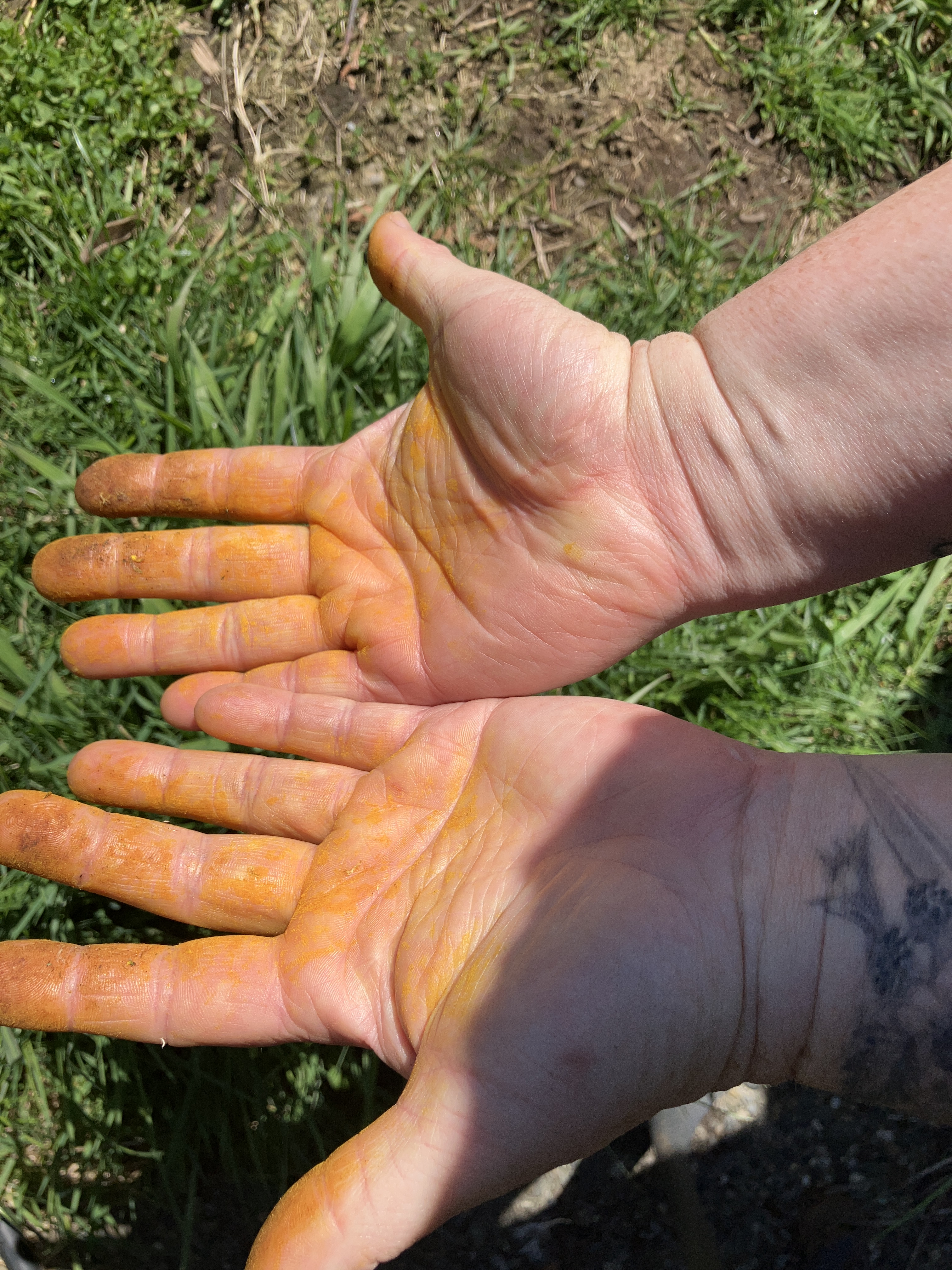
A new batch of chicks develop in the incubator, our geese are starting to nest, and we’re still waiting for two more first year ewes to lamb (8 lambs and counting). Dandelion and nettle harvest are on- I got my favorite hand stains this last weekend picking the delightful flowers.

Our young chocolate lily and camas bulbs are also up and running for a second year- and we sent last year’s seed harvests back to Oxbow Farm for germination of more native plants. It’s certainly the time of rebirth here at EEC. With all the new life and energy bursting forth, we give thanks for all the creative force thriving and jiving all around.

As the season continues to unfold, we look forward to new fruit blossoms, more lambs, baby chicks, and the weeds too. Blackberry is set in it’s hedges for the year, and we’ll look for the berries in August. With Spring comes tempests, and we’ve already had our first real hail. Yup, not the little grapple from recent climate change past, but full on pea sized hail now, and probably not for the last time. Enjoy this brief but spectacular footage of this first for us here at EEC Forest Stewardship.