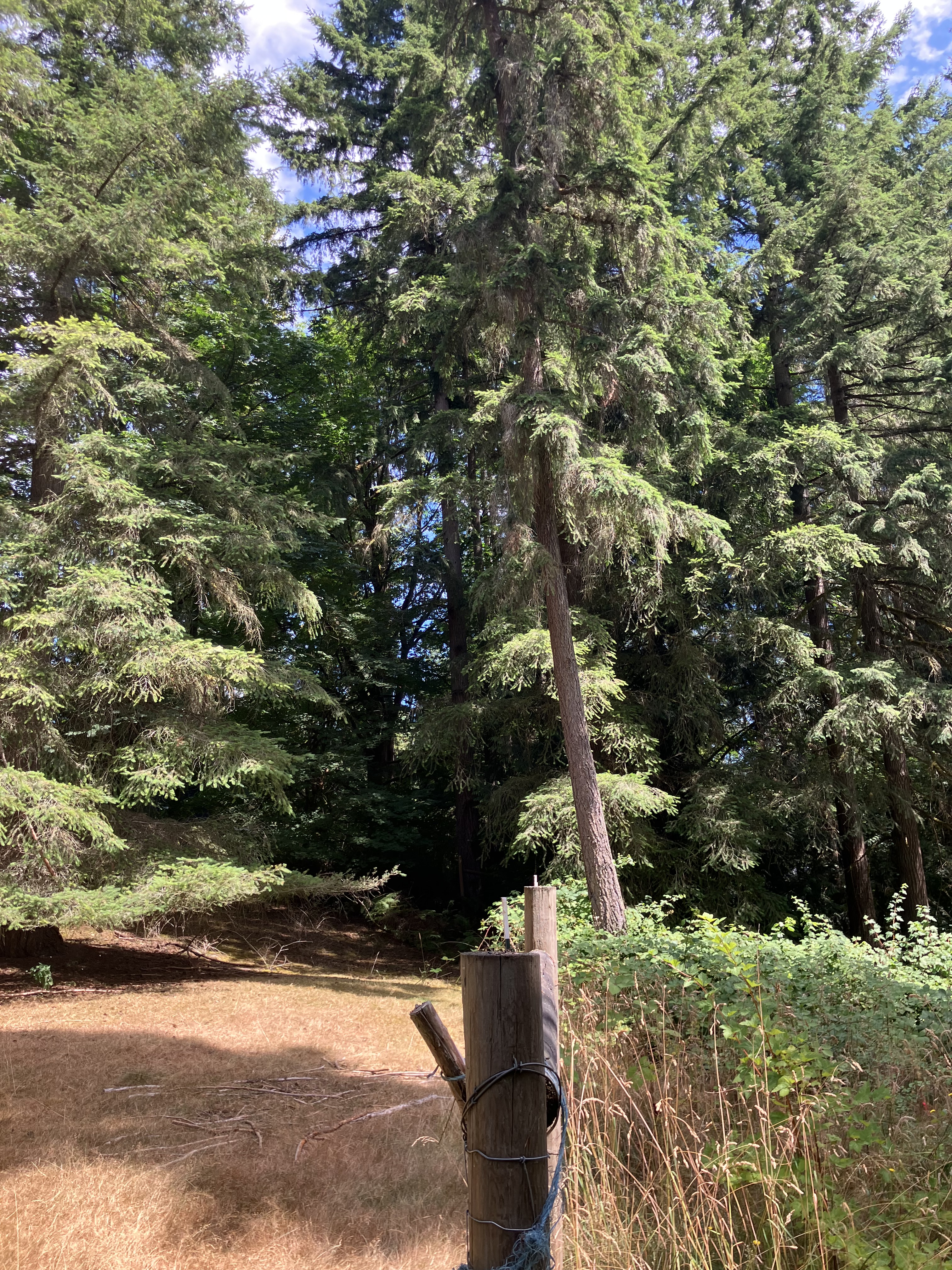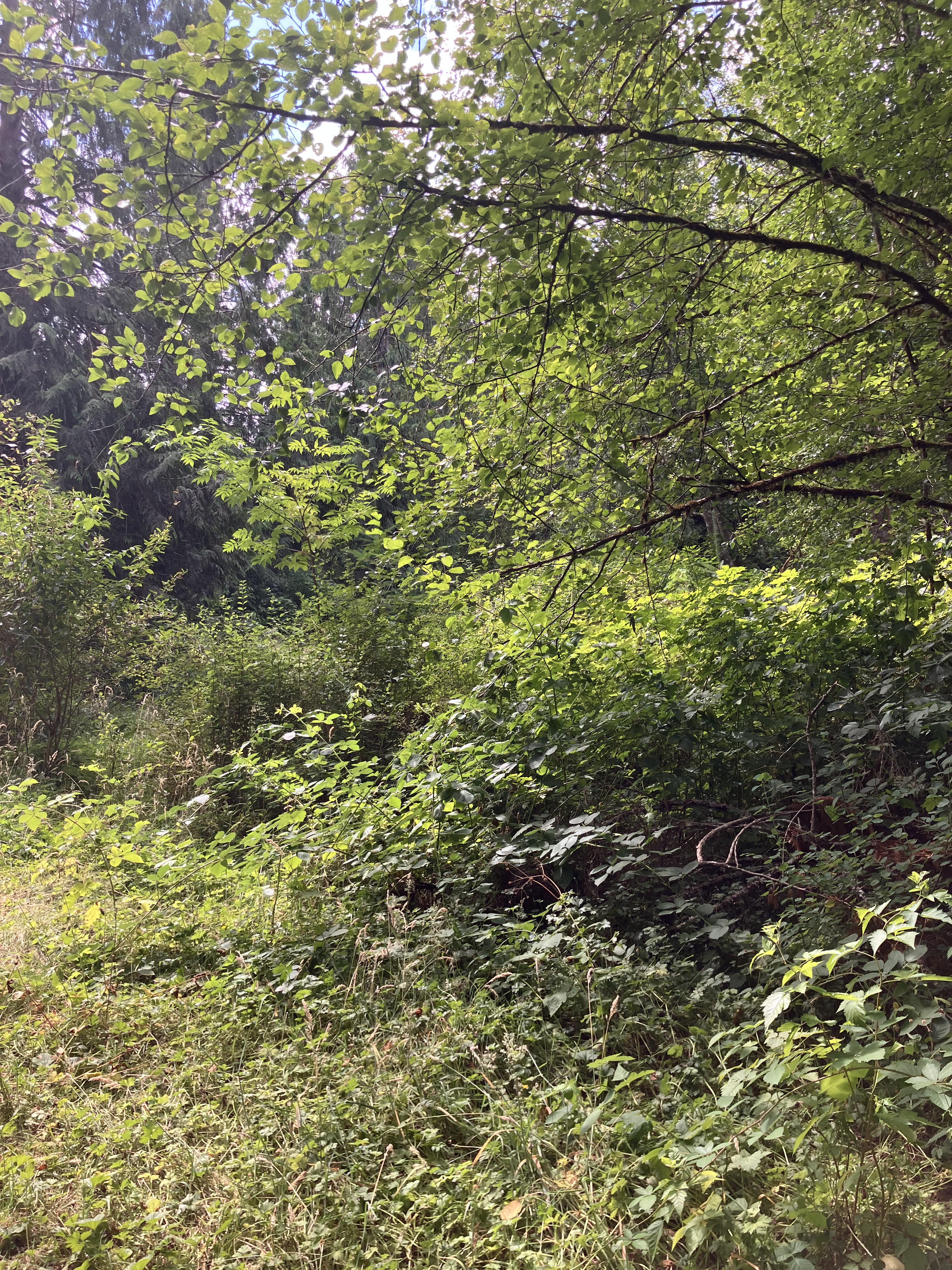
Summer Livestock Updates

The cotton patch geese are growing up here at EEC Forest Stewardship. Goose and Gander parents are naturals, with the babes picking up all the good lessons in how to glean, swim, clean themselves, and avoid hazards like eagles and territorial roosters. This family flock has also learned how to navigate the electric mesh netting and where to graze after the sheep have rolled through. We’re keeping the gate closed now to make sure the geese stay on the farm. They have been known to waddle quite a ways into neighboring fields if left to their own devices. Luckily there is plenty to do here in our fields, so the geese thrive and jive close to home. Most of the young ganders form this clutch have evidence of grey feathers in their plumage. I’ll wait to make a final inspection once they are fully mature, but male cotton patch should be solid white, so this group of young males will be feeding the farm and friends later this year and into the next. The mater pair will continue their work and be a fixture of Leafhopper Farm’s soil restoration plans. For now, managing one pair is plenty. If in future we shift gears and want more birds, there is an amazing breeder here in Washington to support out plans.

In Cascade Katahdin news, the lambs are growing up so fast! All singles this year- very rare, but the babes all had all the milk form mom, so each babe is large and filling out nicely for the fall. Right now there is a plan to cull quite a few animals this year. I overwintered 10 ewes, and think it was just a few too many, though looking at past flock records, I’ve overwintered ten in the past, but this year, having all singles, I am trying to figure out what happened to cause the low birth rate this year. Most of my reading says it’s about how much protein they get right before breeding, so I’ll make sure to have extra mineral and protein blocks available. Okie, our ram, is looking very good too. I wrote an earlier piece on him this Spring. With two years of breeding at this farm under his belt, I am starting to see what I like from his genetics, and what’s not so exciting- like horns. Yes, a ram lamb was born this year with parts of his horns intact, so he and his mom will be culled. It’s important to keep the breeding standards of a given breed to ensure the characteristics that are wanted.

This year, Spring and Summer weather has been blessedly mild, allowing for good pasture growth and lush food for the herd. As I type, on July 3rd 2025, the clouds are moving in, and we’ll only reach about 70F today. What a wonderful day! Tomorrow’s explosions will find me in the mountains on a high alpine lake hike for a few days. The sheep, after observing for seven years, are not adversely affected by the fireworks. Gill, our livestock guardian dog, is also unphased. I can not say the same for Valley, so she will join me in the mountains to avoid the stress of a loud weekend. I wish the other wildlife- especially the small birds, could know to flee in time. Such massive explosions cause small animal brains to hemorrhage if they are caught by the blasts. Night time flashes of light and loud booms scares many daytime birds into the sky at night in great confusion. Finding their bodies on the ground with death masques of shock and horror helped me step away from a beloved childhood tradition.

Have you ever looked so closely at a thing you can shut out everything else in the world going on? Like reading these words right now. I’m writing them with the awareness of a Douglas squirrel alarming from high branch of young red alder in front of me to the north, the whirling circular song of Swainson’s thrush, staccato with robin alarm every sixteenth .p9 (cat jumped into my lap and typed her own notes) Now she is climbing me- the squirrel call heightens intensity. A plane flies by, but the words keep translating across these page and then your lovely eyes follow the breadcrumbs like stars for a captain. If only we could read the landscape like this- moment by moment, because in thinking about this so deeply, trying to translate the importance of each cycle, instead of living it- I miss out on exactly what is going on and being fully present with it. The barking dogs down the hill to my southwest. Knowing the directions and seeing them in my head. Stretching mind’s eye into the topography and going down that hill to see the farm where the golden retriever lives and knowing the neighbors there. Connection to place and people.

The animals are always there helping me learn languages of the landscape. Because of the low mineral count in these soils, due to complete removal of canopy cover and the ability to slow and sink vast rain events, the chickens need certain supplement inputs to stay healthy. Calcium to grow healthy bones, beautiful feathers, and a protective shell on those precious eggs is imperative, and not easily found in the landscape here. Scratch and Peck layer has that supplement in a loose form within the mix. Each bird can selectively take in what they need. Pellets do not allow this self selection, so some birds are over-supplemented, or under, with no way to easily regulate intake. Pellets are also brought to a high temperature, thus killing many of the beneficial living biome the birds are also expecting in the grains within the pellet. The steam is added to kill off any harmful bacteria, like salmonella, but I ask how the source creates such a high count of these bacteria in the first place.

In doing a little reading, I found that animal byproducts and soy are the most contaminated. The grain my gals get has not corn or soy, and no animal byproducts. It’ also certified organic and yes, expensive compared to many other cheaper steam treated crap on the market that will keep your birds alive and healthy enough for the few years of productive laying you’ll get out of them. You may also see a greater depletion in landscape around the coop as they spread the crap you feed them into the soil. Concentrated flocks will spread concentrated amounts. The flock here at Leafhopper Farm has about an acre of well established diversity in fruits, flowers, forbs, grasses, and more. The coop cleanings go into ageing compost for later use in the garden. All the manure is as clean as it’s source, which to this day, in twelve years of feeding, the land and animals remain healthy and clean eating. This trickles up to the sheep and what they are also eating- the same greens grown by the chicken poop, which then adds in nitrogen neutral sheep poop and the ruminants brows the landscape. What a great, restorative cycle from one clean input source.

What you put in is what you get out. The sources really do matter, and your animals will show you what’s missing, in their health and well-being. Weight can fluctuate a bit- more noticeably in the sheep, especially when they are nursing, some ewes are better at transferring nutrition than others, and that goes into the long term breeding shifts I make for the health of the herd. Long term breeding lines are great at transforming the brush and grasses into good meat and healthy carcass size throughout birthing cycles. The ewes that don’t are culled out over time, but it takes a few years of observing lifecycles before making such choices. I had a ewe who became Skelator each lactation cycle, but her ewe lambs did not carry on the habit, so she was not culled for that trait alone. Not many sheep are culled for a single flaw- unless it’s a huge one, like horns. Ability to convert pasture to meat each year is greatly increased by rotational grazing methods, which are in full swing by early July 2025. Rains and cooler temperatures have given us a very productive second growth after initial Spring grazing rotations. Careful planning and reseeding has brought in clover, plantain, yarrow, dandelion, dock, and several grasses in a pasture with additional hedges to brows, creating that diverse diet from no chemical methods of holistic, restoration farming practices.

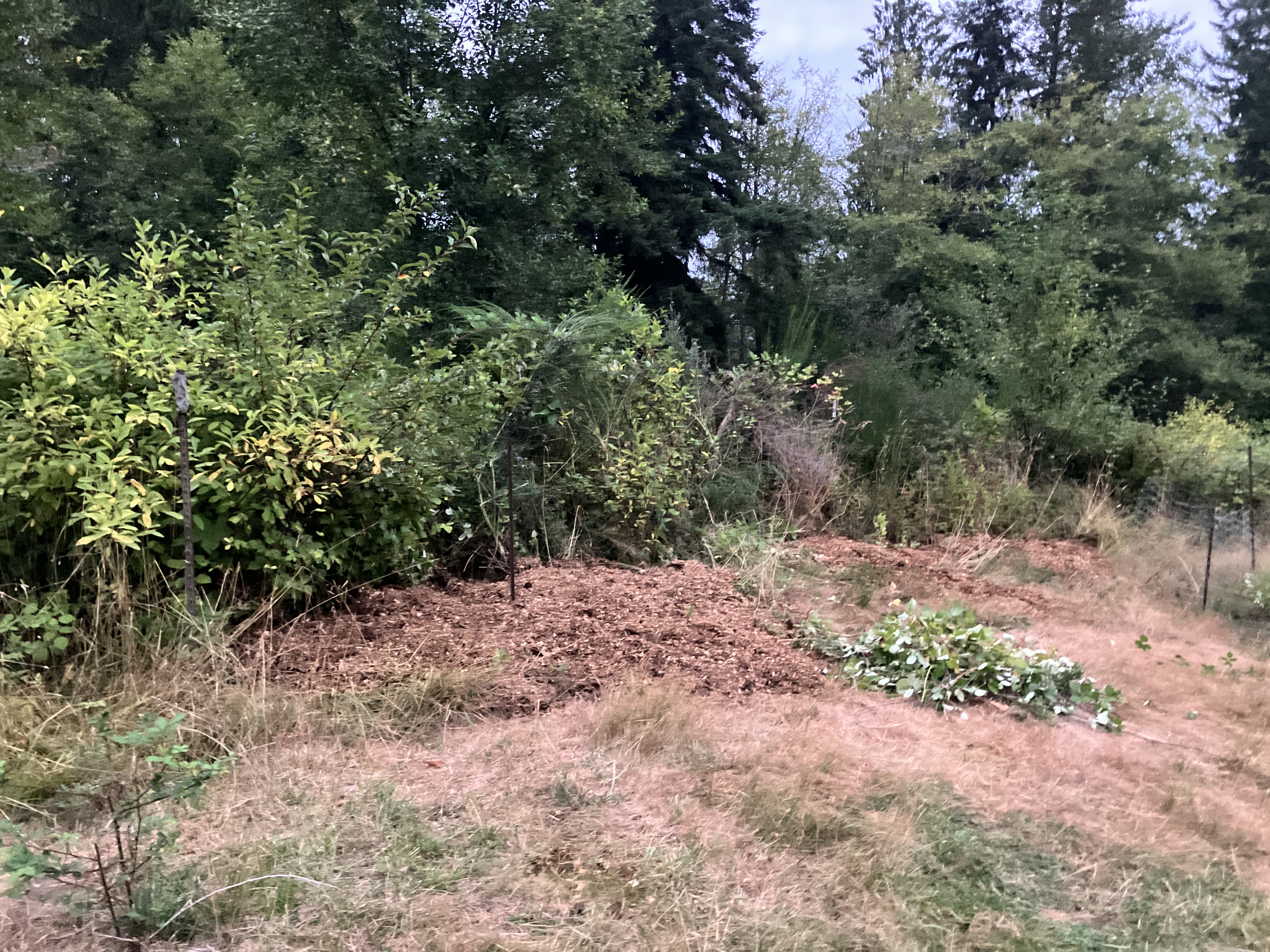
Poultry remains the foundation stock of any farm- in being the most prolific and, usually grained in one form or another for maximum production. The surrounding vegetation gets the benefit of all the manure laid down from good inputs, and lush garden, pasture, forest, hedgerow, and stream thrive with more diversity every day. There are some more heavily used areas of the ground that are without much diversity- from the building footprints to heavily rocked driveways, but beneath them, the soil lives on. Near the coop and barn structures, there is a lot of restoration happening to reintroduce more plant-life. The soil had been canopied by some older red cedars, which put out chemicals to make it hard for other species to survive. This legacy left the ground in transition, with much of the over winter barn muck piling on to dilute the tannin soil. Now burdock and dock are working on compaction from decades of cows and horses too. The flock loves dashing around in the knee high leafy forest where insects are returning in droves. The best kind of landscape has the many sounds of buzzing and chirping from the small creatures that are so crucial in our living systems of ecology. Though some of the bugs are less welcome, all play intricate parts in nature.

The chickens are thriving on a landscape at it’s growth peak. As I move the young hatch of chickens from their youngster pen to the coop, where an established flock will need a few days of integration with the newbies. Young birds need a group of buddies for successful mixing into an adult flock. After a decade of lessons and learning by doing- with a flock of about 30 birds, I’ve found that a 10 young birds is ideal for introduction, and six minimum for survival. Small groups of five or less get fragmented by the larger flock and picked off. Safety in numbers really does apply in this species. After three days of confinement- with extra feeding, the whole group gets let out again to free range and the young birds now know the coop is home. With the introduction of 10 new birds, I’ll need to cull at least that number in the Fall to keep the healthy number preferred in this system. 30 remains the magic number, for the flock health, with two roosters. I get more than enough eggs to sell and share, as well as keeping grain costs manageable.

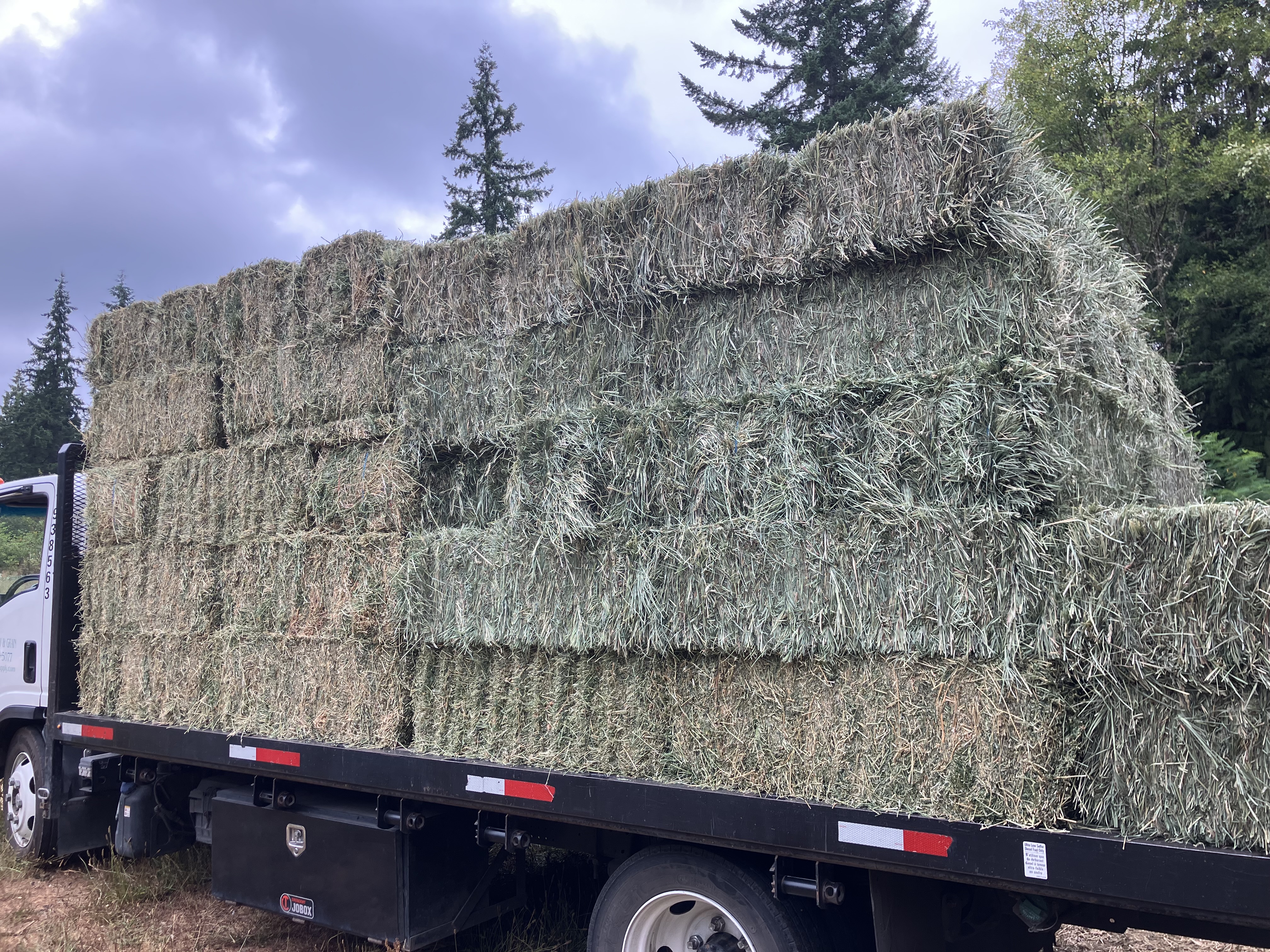
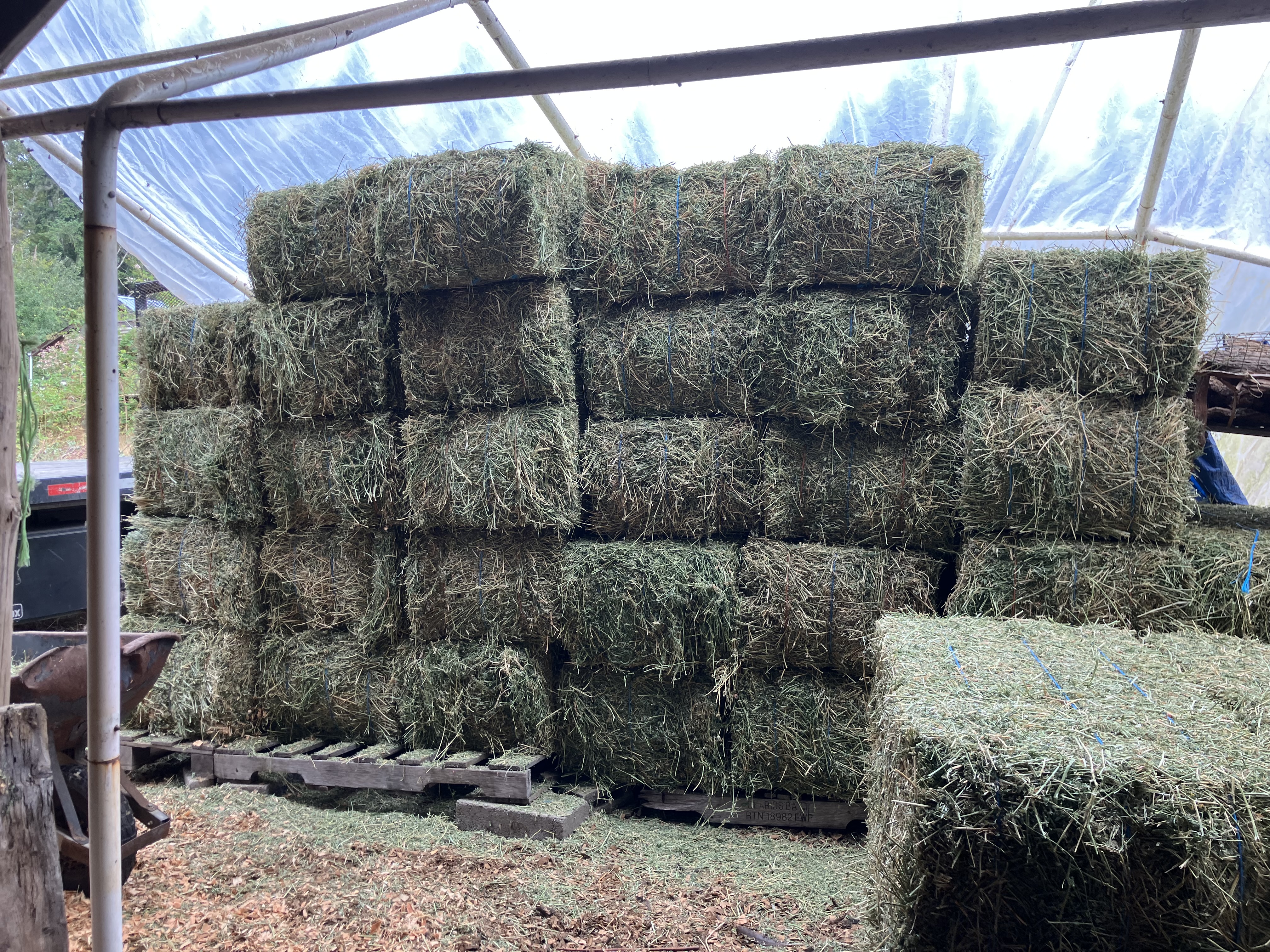
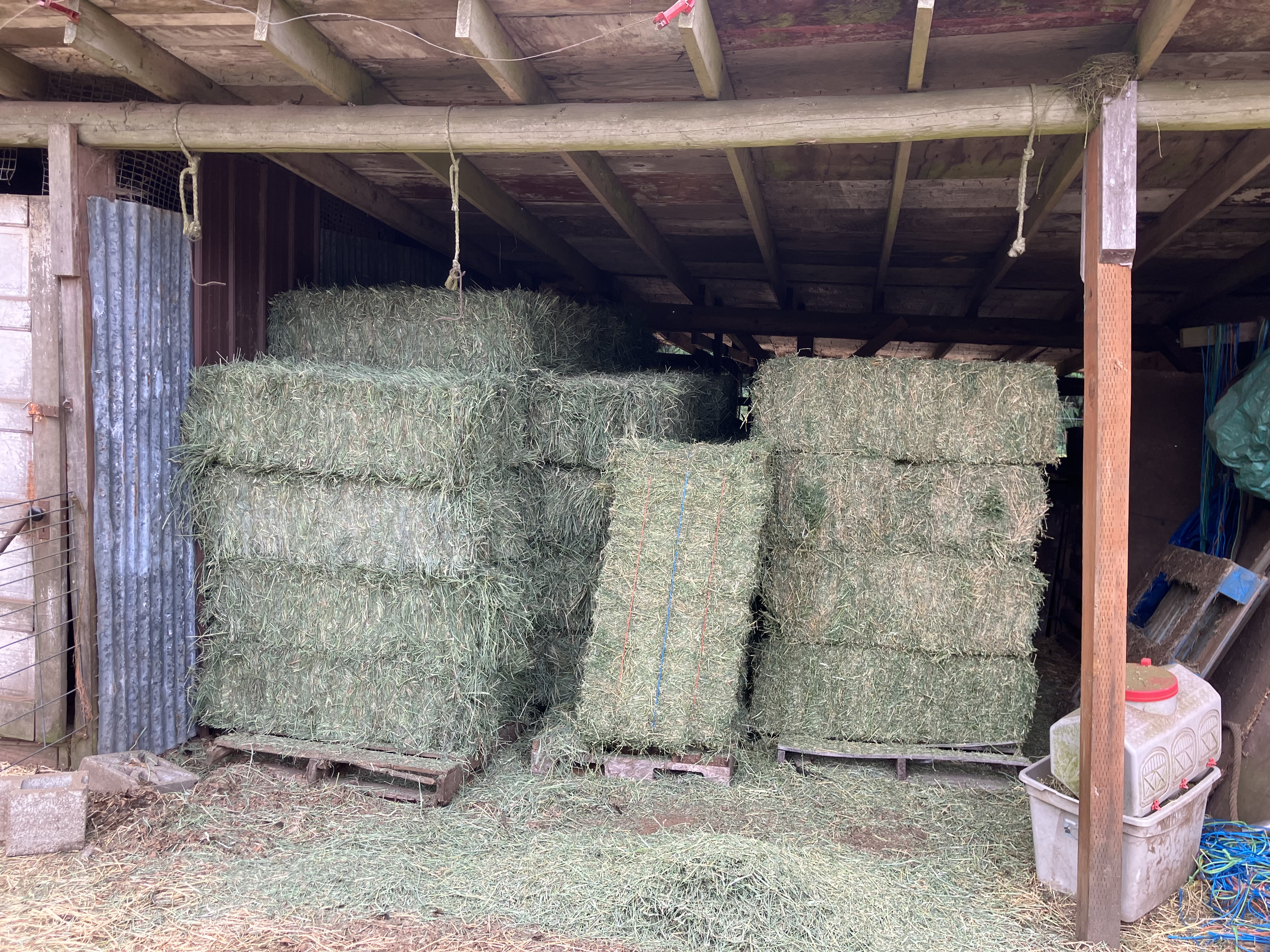
The system does grow and shrink with the annual cycles of abundance and dormancy through the seasons. This is why culling is done in Fall. It also happens to be cool and better for meat during slaughter. My current flock of 18 sheep is grazing fine on the landscape while there is an abundant growing season, but as the summer waxes into full heat, without rain, the grass slows it’s growth and once green pastures lay dormant and yellow through the hot long days. If I’ve managed things well in rotation, there will be enough pasture to get the herd through to fall, when shorter daylight hours slow pasture growth to near stand still, and the plants pull all their energy back underground, into the roots till Springtime and longer days signals a renewal in growth. In winter, pregnant ewes are fed alfalfa twice a day while growing lambs for next Spring, the hens low down laying to rest their bodies and make it through winter, so they don’t eat as much. I actually feed the same organic grain serving year round, in the growing seasons, there are a lot of fresh greens and insects to supplement egg laying. In over a decade of forming the rhythms of this farm, the animals have been stellar at showing me the seasons and what needs to be done. I can’t imagine not working with the animals and having them as crucial labor on the landscape. It’s a lifetime of learning and I’m so grateful for this opportunity.

Alpine Cascade Adventure

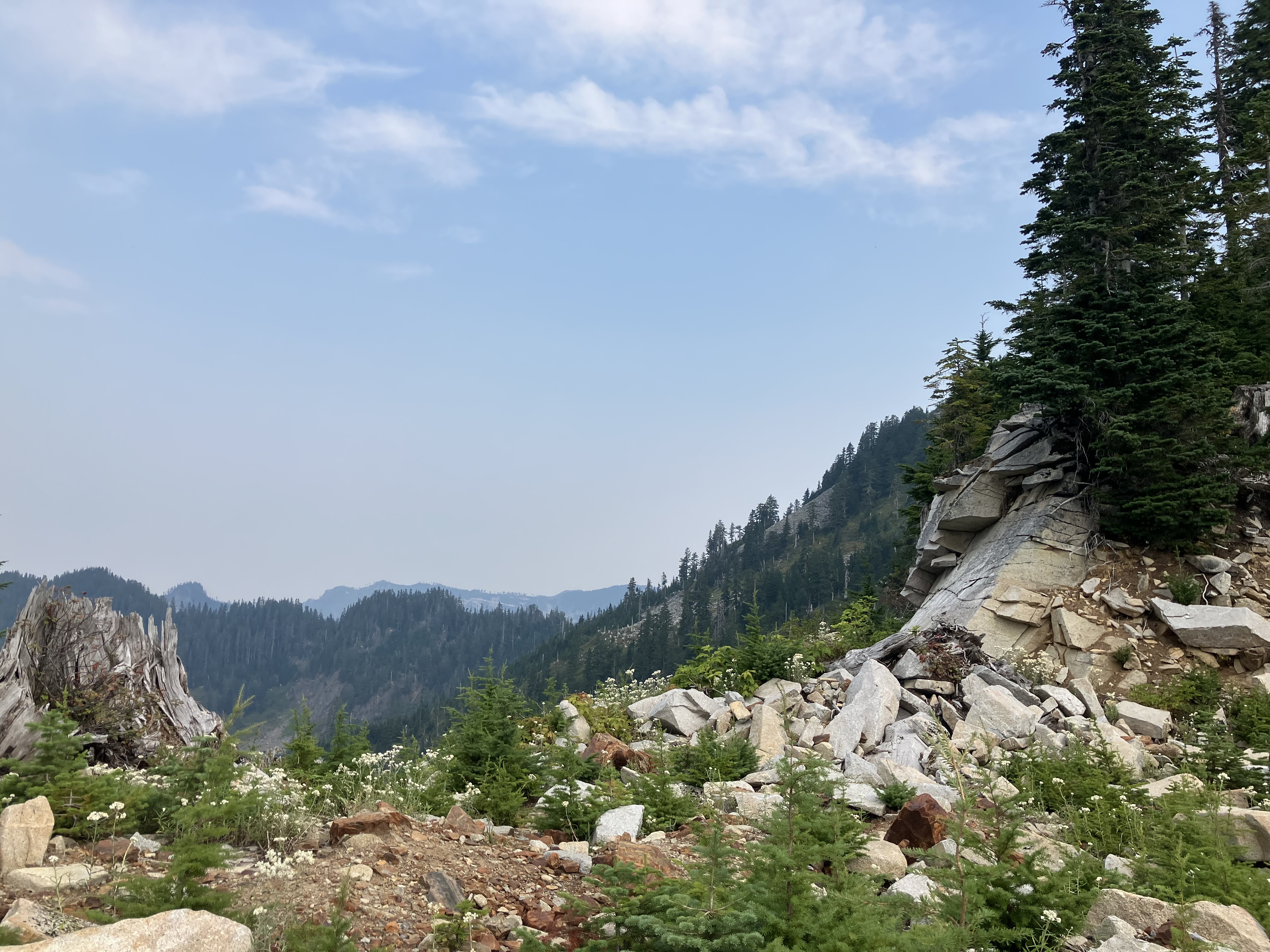
Around the 4th of July, I headed up into The Cascades with a friend to explore some high lakes and backpack at elevation. Following the west fork of Foss River, we began our hike in a beautiful valley flanked by high peaks that we would soon ascend to. Trout Lake is a familiar camp site just a mile and a half in from the trail head. I’ve enjoyed camping there a few times, but never traveled much further up trail towards the higher lakes. Climbing what would be over 3,300 feet of elevation with full pack seemed daunting, but the beauty was mesmerizing, and stopping at different water features throughout the hick helped break up the endless climb. Val carried her own pack and together, we took each switch back and scree scramble in stride. I was very proud of my legs for carrying me and all my gear without too much struggle. It was some great strength training to step up and down the large rock steps throughout the trail. 1900 feet in less than two miles carried us to the outflow of Copper Lake, where we planned to set up camp for the weekend. it was a pleasant surprise to find plenty of space to set up our tents overlooking a beautiful turquoise cove.

At 4,000 feet of elevation, the blueberries were not out yet, but a thick layer of yellow tree pollen ringed Copper Lake. We had to venture out on the rocks quite a way to find a clear space to filter our water, which tasted cold and crisp from melted snow. Fish were kissing the surface from time to time, but a few hours of fishing with all kinds of bait and tackle yielded only a bit or two, no catches. That’s ok through because we packed great camp food- hotdogs for all! It’s amazing how good food tastes after long hikes, and how little hunger I feel when I am on the trail. There are blood sugar moments, and my friend hiking with me, who also happens to be a doctor, knew when we needed to break for a snack and water. It made for some good self care on the journey.

Much of our hiking was along the outflow from Copper Lake, which was one of many alpine lakes we encountered on our adventure. Near to Copper Lake is Lake Malachite, which we dropped our packs at the turn off to hop up to- and it was a hop, lots of rock stairs and climbs- glad we didn’t take the packs with us on that little side trip. After appreciating Malachite, we returned to the trail to Copper Lake and soon found ourselves crossing the outflow and appreciating the scenery of craggy peaks all around. The last of the snow was still clinging to a few scree piles, reminding us of how high up we were in the mountains. Our first evening, the alpenglow was beautiful. We sat and watched the colors stretch out across a partly cloudy sky as the smoke drifted up from a cozy cook fire. We had fabulous weather too, with sunny days and starry nights, just cold enough to appreciate the sleeping bag zipped up.

The night was cool, but I slept snug in my tent in a down sleeping bag. The next morning, we awoke to swarming bugs and were thankful we’d packed bug nets for our heads. It made the morning in camp easier- bugs are a big challenge in the mountains most of the warmer months. Others who had not packed bug protection were heading back down early. We happily put on our day packs and began the trek to Big Heart Lake, stopping at Little Heart Lake on the way up. We knew the hike would be another couple of miles and another 1,000 feet or so of elevation. It was a comfortable traverse with such light gear. The dogs didn’t have to carry packs either. Big Heart Lake was full of activity, from fellow campers to day hikers looking for a nice rock to perch over the blue waters. A breeze chased off the bugs, so we spent a pleasant afternoon fishing, swimming, and chatting about life. We watched one woman inflate a small boat, then load herself and her pointer in for a row. They made it just out to the open water, then the breeze held them back until the intrepid paddler turned and headed back to her launch point.

Still no fish caught, but we did catch a look at several other adventurers with floats, bug net reading chairs, and other dogs on the trail. It was an amiable group, all finding some shore line and a few hours of peaceful mountain bliss in the warm afternoon sun. I ended up getting a little sun burn on my ankles and feet, but well worth it for the relaxing time on the lake. As the shadows began to stretch along the shore, we packed up and headed back down to Copper, noting the light change on the peaks around us and how high we had climbed. The bugs slowly began to return as we headed back to Copper Lake and our camp, but our bug nets continued to keep out the unwanted pests and we moved back down without struggle. The varied thrush calls were lovely, echoing across the pristine blue marble surface of the water and weaving through the fir trees.Most of the forest in these mountains are very old, through they do not have the same size as valley trees. Altitude and tough winters, as well as wind, keeps these old giants slow in growth but no less noble in stature.

At the end of our second day, we had completed our planned trip up and back from Big Heart Lake, and were now ready for another evening of good food and plenty of sleep for our return hike the following day. It was truly a gift to be in the quiet of the back country instead of down in the loud bangs of Independence Day for white land owning men from England. Please do chew on that reflection for a moment. For almost 100 years after July 4th, many people in The United States were enslaved, unable to vote, and otherwise thought of by free white European men as subordination or even subhuman. Many of these abuses continue today in our country, so celebrating anything on July 4th is a little shortsighted. Having the freedom, time, money, and equipment to hike into the back country is indeed a privilege. I will say that everyone we saw up there was white. There was an even split in presenting genders, yeah ladies! I was not surprised to see no children up here, it’s a heck of a climb. An odd teenager did lank through, but little kids would not make it up this mountain, and I was glad to see none around.

The trip was a chance for some peace and quiet, along with vast vistas and some good working out to reach our rewards. As we made our decent, the outflow of Copper Lake came pouring down the mountain side, one great falls churning down the steep slope. At a lower part of the falls, we stopped to filter water and cool off for a bit. My hiking friend had bruised her leg on a rock and took time to soak it in the ice cold water, which helped a lot. I took time to wash my face and hands after filling the water bottles. It was the best water I’ve had to drink in a while. I tried to take a picture of the huge old growth tree that had uprooted and fallen near the water, but it’s hard to see in mere digital form. Most of these pictures do little justice to the actual scenes we encountered.

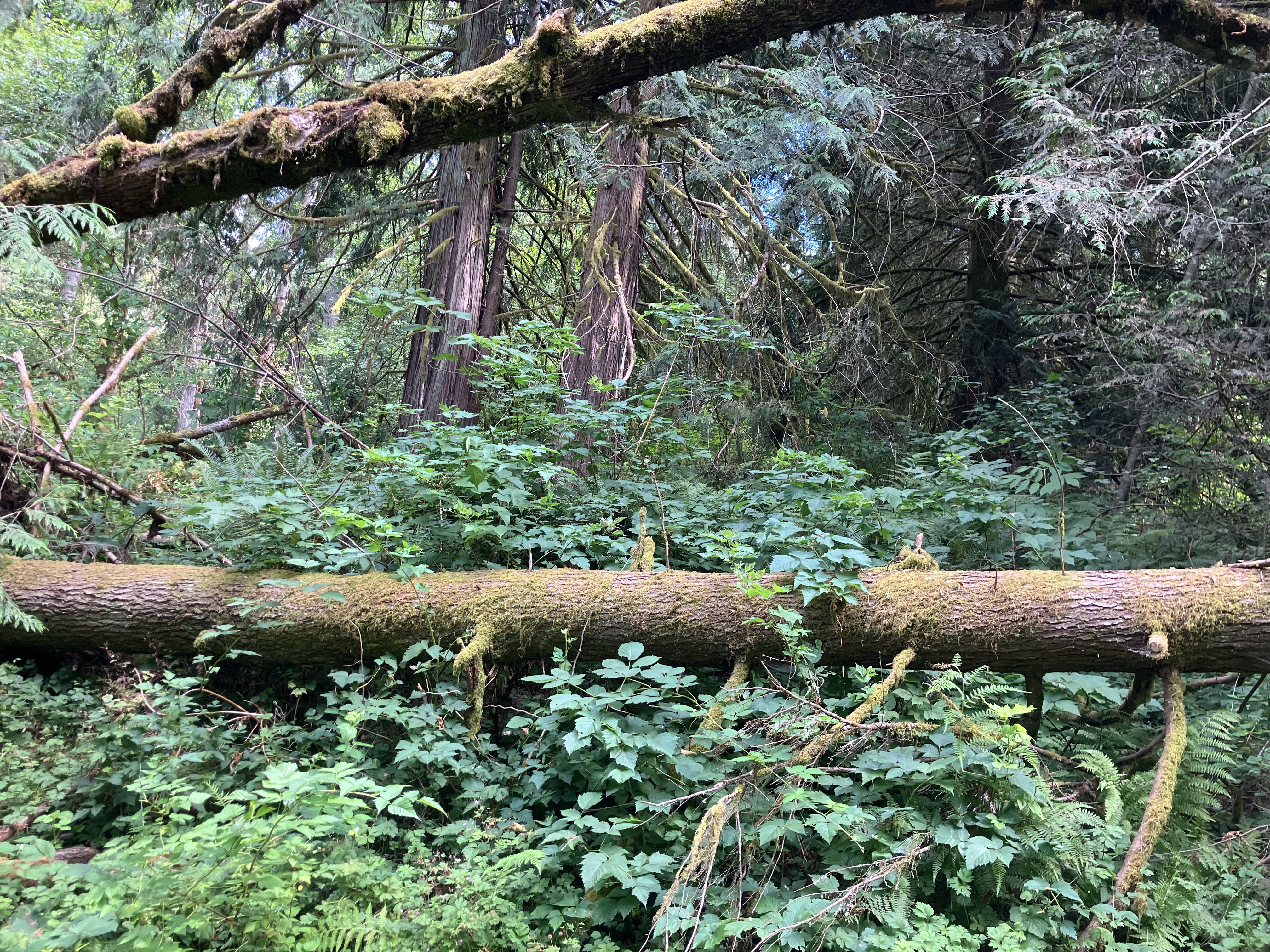
To the right in this picture, you see a standing root structure over three stories high. The tree attacked to it stretched out across the forest for a few hundred feet. The scale is vast and difficult to capture on film, but you can see some people standing to the right below the tree to get some idea of size. In this lower forest, incense cedar, mountain hemlock, and grand firs dominate the forest canopy. A few red cedars and alder grow close to the river, but most of this sub-alpine forest remains hemlock and fir. There is no evidence of major industrial forestry in these hard to reach steep slopes, but by the time we had returned to the river valley, the old familiar stumps of felled giants returned as witness to the logging carnage through the last 100 years in The Pacific Northwest. I am so glad there are places to climb up to for a chance to visit more intact ecology of the region.

It was a good challenge to get up into the alpine lakes with a pack and take two nights to rest in the forest high above. What an amazing place Washington State is. As my friend and I reflected on our trip, we both agreed we’d rather be up in The Cascade Mountains than any beach in the world. On a holiday weekend, to be quietly ensconced away in the forest by a still blue lake is a dream come true. May I get a chance to have many more, because there are hundreds of lakes in the mountains here to explore, and it will take the rest of my life to see most of them. Gratitude for the opportunity to be out, that we were safe, that gear worked, animals were cooperative, and the weather too. Glad for a hiking buddy who remained supportive, lively, and open to exploring and climbing up up up into the wild yonder. Thanks to all the stones that held us, the water that quenched our thirst, and the good food that kept our energy up throughout the trip. This place remains a beloved place to explore and learn from.

Alpine Bear Tracking

On the last day of June, 2025, I drove up to the alpine region of the tree farm for cooler air and some good back country time. At SCM Lake, I took a trail I had been told circumnavigates the lake, but I did not expect this to pan out, especially because this area of DNR land has gone back to nature in the last few dacades. There is some minor trial maintenance happening by hikers passing through, but it will take a lot of hours with hand saws and clippers to push back the slide alder and willow reclaiming the old logging roads. Yes, this area was clear cut by industrial lumber industries. I think it took till the 1960s to get up this high, but the much of the old growth trees were chopped and hauled out by trucks. You can still see the sun bleached stumps on the slopes as testament to the forest that once stood. New trees are establishing, and a few old giants- mostly wind topped and therefor unappealing to the lumber market, stand as beacons on high scree fields or along the lakes that dot the low pockets between ridge lines.

The trail I chose goes south of SCM Lake, along one of the old gravel roads. Sixteen foot high willows bend their branches out into the sunlight along these clear avenues along the steep mountain sides. There were large boulders to scramble around, along with crumbling frost heave edges to avoid. My dog Val picked the trail through some slide alder, but eventually, I had to choose my own way through the woven branches, not being low to the ground and able to slide under the low branches and arching canopy all around. It was still smooth travels, and I began to pick up on the wildlife trail I was following. What moved through these highlands and matched my size? Elk, deer, cougar, and bear. As the road began to climb up, ascending to the ridge line above, I began to look around more closely for animal sign. Scat is common along wildlife trails, and I soon came upon some old, but interesting segments of poo. The masses were white with bone and age, sun bleached, and probably buried under snow for a bit of time this winter too. What I guessed were rabbit bones volunteered themselves out of the decomposed hair and powdered remanence of the scat. I could not tell what animal might have left this dump in the woods, but the bones told me predator of some kind. Later, I stepped over a massive pile of salmon berry seeds. Since the plants are only just flowering at this elevation, I concluded the pile was left in Spring of 2024, and, because of the size, that a bear used this trail. Coyote will also have seeds in their poo, but not such a massive pile as this. It was a dinner plate’s worth of spread, no coyote could crank out that kind of refuse in one movement.

I walked about 100 feet along the overgrown road, looking for more recent evidence of wildlife activity. I came to a place in the trail where the animals went up a dirt and clay bank, leaving the road for the thick woods, probably heading up into sheltering spots on the higher ground. There were many tracks in the dirt, but no recent bear. I figured the bears would be more interested in seeking fresh plant growth, young leaves and flowering herbs covered the area. I began to note each species, all in flower, or close to it.

It was amazing to see all the diversity, even after man’s cutting, rocking, and compacting of the environment for industrial profit. With the current administration governing our public lands, these areas could easily be logged again, and soon. Because there has only been one major harvest in this delicate alpine environment, many of the native plants survived because of seeds still in the soil, which were allowed to germinate. Most commercial timber forest does not get a second chance like this. It is cut within 40 years, sprayed with toxic herbicides, and planted with a monoculture again and again. These alpine elevations with steep mountainsides were deemed too difficult to cut, and too slow growing to be considered for long term commercial use. If they are cut again, we’ll loose what’s left of the native plants already endangered by our profit greed.

At a fork in the road, I came upon a scat made this season, maybe only a few days ago, but my aging knowledge of animal droppings is not strong. I do know it has rained here recently, but the poo was relatively intact, so it could have been dropped the night before. I knew it was bear, by the size and shape. Cougar scats are very segmented, full of hair and bone, and usually, accompanied by a scrape or two in the substrate. This poo was slightly soft and piled, full of Spring vegetation, which is watery, causing the scat to soften. Big cats don’t eat veggies. I captured a picture with my foot to help with scale, this is a massive poop, no coyote or bobcat could drop such a pile. Bear are active and around, I grew excited at the thought of seeing one. My pup Val was not as excited, she sniffed, wandered, and checked a few old burrows, but gave no signal that any large wild omnivores were around. Most dogs will pick up on fresh scent, subtle noises, and alert accordingly if wildlife is nearby. My climb continued up into bear country.

At the top of the ridge, the road ended, fading into dense spruce and mountain hemlock groves that can latch on and hold on very steep ground, forming clusters of evergreen canopy. It takes these higher elevation trees much longer to grow, so they are smaller looking than low elevation trees of similar age. I slipped under what was probably a 60 year old mountain hemlock, trying to get a view from the top of the ridge. Below me to the north was the western edge of SCM Lake, and towering above on all sides were more ridges and mountain peaks of crumbling granite and basalt. It was a heck of a place to call home. Carefully, I picked my way back through some loose scree to the road and pushed through some more thick brush to another viewpoint to the west. More rock lined ridges and pipe cleaner spruce forests dotted the landscape. Though all this climbing, a chorus of varied thrushes murmured through the mountains, casting a magical spell over the whole wilderness. It was sunny and cool, breezes brought the fresh lush space alive with dancing treetops and rustling willow branches. The mental unwinding in these highlands remains priceless, and the privilege to come here, taking the time to access far wilderness on a Monday afternoon.

As I turned to pick my way back down from this trail’s end, Val became quite animated and headed off the south side of the ridge, away from the road and our path. She came into a clearing of small boulders and began sniffing all around excitedly. I assumed she was tracking a marmot or pika, but then I saw some truly fresh bear sign and join in my dogs excitement.

Cambium feeding is why tree farms don’t like bears. In Spring, when the saps start flowing in trees after a slow winter, bears seek out the sap by tearing off part of the bark at the base of younger evergreen trees. In a more natural forest, like this one, allowed to grow back from seed, the trees are spread out and diverse enough to handle these predator encounters, but in a monoculture tree farm, bears will come into a whole forest of young trees and hit them with gusto. Sometimes, the cambium feeding kills the young tree, but the one above it more typical; small tear which can heal over time. In the picture above you can see bite punctures on the trunk where the bear bit and stripped this piece off. This could also be a territorial mark to let other bears know who lives here. Val remained on the scent, running around and looking off in different directions, listening, but the bear was long gone. It might have been just off the top of the ridge when we came along, but would have quickly descended away without our ever knowing. I am always blown away by how fast and quietly bears move through thick cover to get away. Some might wonder why I was not more concerned, but between the dog and all the options for the bear to get away, the chance of an actual encounter were slim to none. The few times I’ve ever seen a bear, it was usually the hind end diapering into the brush. Black bear are not usually combative or threatening at all- unless you encounter a sow with cubs. I saw no sign of young bears, yet kept an alert ear and watched my dog’s behavior closely throughout the hike.

We left the clearing and headed back down the road. I kept an eye out for more cambium feeding, but saw none along the gravel road, which was not a huge surprise considering most of the trees on the road are deciduous. It felt like we’d stumbled into the bear’s living room, then headed back out onto the street to give it space at home. Of course, the whole area is the bear’s home, since black bears are known to travel several miles in search of food. They tend to stick to familiar paths and home ranges, not migrating over vast territories. If their larders are drastically changes, say, with clear cutting or the development of a neighborhood where forest used to grow, the bears die out, because they have great trouble relocating to unknown areas where they did not grow up learning about food sources from mamma. Bear trails are often ancestral, meaning many generations of bears share the same larders. The trail I was on today is a well established bear trail, also used by other wildlife traversing the area. Roads are often used by wildlife to get around. They seek convenience the same as people, only we make vast cuts into the landscape to extract natural resources on industrial scale, not on foot with our bare hands like the other animals. It’s sometimes quite hard to fully grasp human scale on the natural world, but it’s short sighted at best.

As the shadows lengthened across lichen shag walls of blue basalt, evening settled across the mountains as we headed back to the truck. Crossing the outflow of SCM Lake, I took a moment to face the ridges, thanking them for holding so much wildness, and teaching me so many good lessons when I visit. Ancientness holds strong in rock, tree, and the very earth holding it all together. The bear roams here in wholeness, and I hope to take a small piece of that sense back to my own land for some grounding. Thrushes will be singing the same songs in the valley, where EEC Forest Stewardship stands on its own ridge line where bears often roam. All this is connected through our very being, and when we take time with out wilderness, we become a little wilder ourselves.

bəlalgʷəʔ

Pilchuck is a name most people living in or near Snohomish County know well. Apparently, it comes from Chinook Jargon– a pigeon language developed for trading. The Lushootseed language, endemic in the area, calls the mountain bellybutton, or bəlalgʷəʔ. Like an alter risen into sky, this beautiful lone peak was thrust up by the great Cascadia Plate, her quartz monzonite granite exposed to the elements as wanting feet and hands scramble to reach her 360 views. In mid-June, the snow above prevented summiting, which was never the goal of this day’s adventure. The journey rather than destination, but we drove up 3,000 feet to park at the trail head, so we were already at the destination when we started. The vast base of this peak is still actively logged, and the familiar monoculture stands of Douglas fir surround the lower section of this majestic peak. From the trailhead up, you’re lost in a mixed coniferous sub-alpine slope, with talus edges and a few lone older growth giants. There is subtle evidence of clear cutting old growth long ago. A hundred years later, the legacy stumps are shrouded in new trees, well on their way to old growth standing, by our country’s legal definitions. Because it’s a popular public trail, this part of The Bake Snoqualmie National Forest is protected from logging, for now.
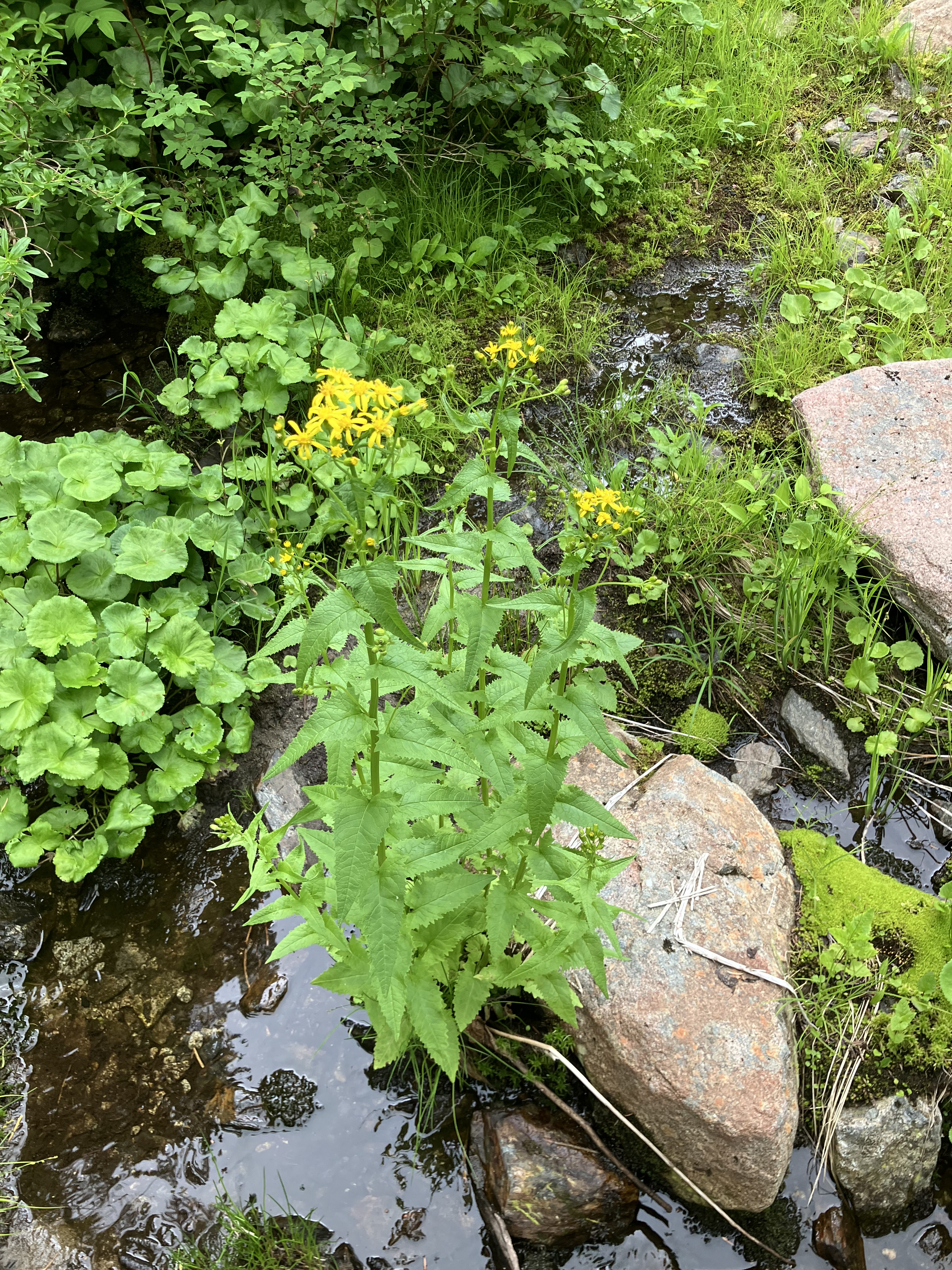
As my legs carried me up through familiar Cascadian landscape, I heard a woodpecker feeding it’s young in an old hemlock snag, a Clark’s nutcracker silently watched from above as the noisy brood cried out. There are so many layers to a naturally regenerating forest, from the understory of vine maple and younger tree nursery, ground species like sword fern, huckleberry, and oval leaf blueberry gave way to hellebore and heather as we climbed higher. Thick mossy forest floor cradled fallen trunks and glacial till, which held the trail in a sheltered embrace. Above 4,000 feet, the stunted mountain hemlock dominated a sparse treeline where massive scree fields of white rock asked our feet to scramble up a red stained trail through the fallen debris. Some salmon berry clung to the shaded edges of the rocky slope, while a few braver rhododendron and silver firs hold their own where the soils allow. The ecology of The Cascade Mountains is complex and ever changing through the elevations. Our observations of this biodiversity were as breathtaking as the mountain its self.

As we mounted the trail’s accent towards the peak, most of the herbaceous lush landscape relented to craggy mountaintop sparsity. No soil and the harsh exposure to bitter cold and biting winds keep the barren rockscapes clear. Water still finds a way down these steep slopes, cascading from melting snow still piled high in the sheltered crevices of this boulder field. We chose to turn back at the base of these impressive falls, drinking in the vastness of this alpine landscape. Lines of trees along natural granite retaining walls offer little cover. The final ridge of Pilchuck beckons to those wishing that panoramic view, but haze in the valley cut short the vision on this day, so we did not miss much. Drawn in by the sound of splashing wild water, a breeze of cool mountain air flushed us back down from the exposed mountainside back down into the evergreen forests below. A lone pika alarmed in her harsh sequels as we scrambled back down the boulders and melt water muck below. I will say, the forest rangers are keeping this trail in great condition, with signs of recent boardwalk construction along the delicate wet meadows of this alpine habitat. It will be another few weeks before most of the wildflowers bloom.

The natural beauty of this hike was like so many of my hikes in The Cascades of Western Washington, gorgeous, with wildlife observation, new plants to think about and try to ID later with a field guide, and plans for future exploration of the area- out of season, like we did on this day. In summer, when the snow has melted and wildflowers bloom, the crowds will descend on Mt. Pilchuck for an easy hick with a view. Considering only half the parking lot was full on this partly cloudy June morning was a sign we were visiting at the best time to avoid crowds. I can see this peak being a nightmare to approach during the high summer influx of tourists and weekend warriors from nearby Seattle. I would not recommend this hike to families with small children or people with any impaired movement. The trail has some scrambling points with larger granite stones and steep steps to get up and down. There is a nearby easier hike with a view of the peak from a lower lake. I might enjoy that one next time just for a different view and experience.

When I set an intention to visit a place on our public lands in and around my home, there is a mindset of reverence for the original people who once tended and thrived with these forests and mountainscapes. I look at the devastation colonial extraction culture brought to these wild places and give thanks for those lands that are now protected from such extraction, but overcrowded with people eager to make it to the top for another 360 view. If we were more mindful of our encroachment, and took more time to reflect on what once was, will be, and should be in future regarding our connection to these special places, we might have more relationship with these beautiful places. We might then look at the less beautiful places and reflect on how we take care of all the land, not just high peaks or sandy beaches. The industrial runoff and septic overflow washing into our waterways is still happening. Commercial timber operations are still going on just up the road and out of view of the majestic peak you’re trying to get a picture of. These abuses to the landscape are even present at the Mt. Pilchuck trailhead, where erosion from foot traffic has demanded the construction of massive rock filled causeways to keep all the scrambling feet and hands from pulling apart the very trail they travel.

Looking down into the valleys below as we climbed, I took note of the clearcuts, development, and highway cuts along the rivers where town build ups string along the bottom land cleared long ago for European settlement. This mountain is protected because it’s remote, but was still logged in the early days of colonialism. The legacy of a few trails to high craggy peaks will not replace the endless clearing of temperate rainforest, but it might give a small glimpse into what could be if we showed better stewardship and maybe took a picture from the road instead of getting to the top for that selfie. Still, a good hike up and back down again in The Cascade Mountains is part of why I choose to call this area home. Access to so much public land, well maintained trails, and incredible biodiversity is not easy to find in this chaotic extraction world we live in today. Such a blessing to have the time, health, and appreciation for this place and the ability to explore it for the rest of my life.

Bird Language

When I’m out on the landscape, there is a lot of audio going on, from two stroke lawn care machines, leaves rustling in a breeze, and all the wonderful bird language. There is no soundscape more natural than birds- from singing to little companion chirps, birds fill our forests, hills, and neighborhoods with the music of life. It was interesting to see an NPR story about why birds sing that described their early morning dawn chorus as “racket”. That disturbed me, because bird song is (mostly) beautiful, and if we reflect on what a silent spring would mean, I hope to keep hearing birds throughout the day wherever I am.

Yesterday, I was walking to the back field where the sheep have been grazing for a few days. As I descended to the creek, I could hear a commotion of bird alarms in the forest, and watched as several small passerines scooted through the branched, chirping loud staccato notes. Other birds were hissing shrill squawks while juncos clicked like a person might cluck to a horse. The sounds were familiar to my ear, and I eagerly began spotting through the trees for a likely culprit to warrant such alarm. Something grey silently drifted off between leafy branches, away from my position, to the south, across the creek and up into another stand of red alders in the pasture where the sheep were grazing. I was not alarmed like the other birds, because this silent predator was not after my livestock. No areal predator threatened my sheep, and the chickens were far away to the north, back towards the house and barn. Who was I now searching for as I climbed up the other rise from the creek to the gate into the back field?

My herding dog Val, was looking around for what was causing the racket too, but she caught the scent of a rabbit and bounded off into the shrubs. I was looking upward, listening to the bird alarms and trying to see through thick foliage without tripping as I waded through tall grass and a few bracken ferns. I could now hear the more exotic cries of a western tanager, newly arrived for a brief summer hangout before returning to overwinter in Central America. I watched it land on a bowed branch and make a fuss, then my eye followed the branch and came upon what all the birds were so concerned with- and rightly so!

If the birds had not been alarming, and my ear had not picked up on the commotion, I would have missed this beautiful nature mystery. Noticing vocal changes in the bird language of a place will tell you what’s going on around you. I’ve been rewarded for listening to birds on many occasions, and still have a lot to learn. One time, robin alarms kept me safely distant from a cougar that was following a jogger just ahead on the trail. I found the jogger paused at a waterfall and let him know who else was in the woods with us. The robin let me know first, before I saw the fresh tracks and began trailing the big cat from a safe distance. I could hear the birds moving off with the lion through the thick woods, and knew to wait and stay well away until the alarms faded off into the woods.
My chickens use bird language, and will make specific alarm calls when they see certain sized objects in the air- like airplanes. They give a loud croak and look up at the sky. The whole flock will pick up on this call and look up, then they calmly move towards cover. My pup Valley has picked up on this alarm from the flock, and will growl or bark at what’s flying through above. Hawks, eagles, and accipiters have not hung around long when this cacophony goes off. It’s a fabulous build in protection for all the animals, and even the cats take notice, scurrying off under the house or into the grain room if the chickens start calling out warning. It takes the whole collective to stay alert, and the combines vigilance of both wild and domestic keeps the farm safe and sound. That, and putting away the chickens at night.

Shellfish Harvest

Even the rocks, which seem to be dumb and dead as the swelter in the sun along the silent shore, thrill with memories of stirring events connected with the lives of my people, and the very dust upon which you now stand responds more lovingly to their footsteps than yours, because it is rich with the blood of our ancestors, and our bare feet are conscious of the sympathetic touch.

from siʔaɬ‘s 1854 Oration ver. 1

I was thinking so much about these words from siʔaɬ (Chief Seattle), walking over a bed of non-native oysters planted here by Japanese and American scientists trying to keep the oyster industry in Washington alive over 100 years ago. The introduction was very successful, yet the native oysters of the region were suddenly being out competed by this invasive species. In much the same way First Nations in and around Puget Sound were colonized, this beach in Hood Canal became endemic with Pacific Oysters. Walking in black muck boots, I felt the crunch and smash of shell and crustaceans with every step. It was low tide, and the best way to dig for clams and harvest oysters on the beach. I was participating in this harvest with Washington Outdoor Women, an organization I will be instructing with later in the fall. Today, we were participants with the other women in the field learning about bivalves and legal harvesting. Our instructors were WDFW shellfish experts, also all women, who guided us in the legal, safe, and ethical harvesting of clams and oysters. I was there to harvest wild food and work with other women in the field.

There was endless learning for this landlocked Oakie- I’ve never dug for clams in my life. I have shucked oysters, in The Netherlands, but they were bought and brought home, not harvested in the wild and shucked on the beach. The experience was positive, with a lot of support and comradery. There was also some deep reflection on what brought us to this place and what it meant to the native people and native sea life still present, but silent to our rakes and knives. When I’d first arrived at the beach, I lit some sage and asked permission to be there, thanking the ancestors who cared for this place, thanking the tribal people still present and carrying the memories of deep connection with these lands. I gave tobacco as a token of exchange for the food I would harvest that day. There are all small things in the greater picture of colonial decimation caused by thoughtless taking, but that mindset can change to one of reverence and gratitude over time. My actions would attempt to stitch some acknowledgment into frame.

40 eager women swept down into the rocky terrain with shovels, rakes, and sunglasses. I was glad to be supporting the group learning about the ecology, history, and protections on these beaches. It was still through a colonial lens, but tribal histories were acknowledged, colonial impact was spoken into our learning, and yet, no one was hindered from harvesting. Why should it? I am still sitting with that question. In the moment, I was comfortable putting my rake in the sand because I was there to learn and share. I gave all the clams and cockles I gathered to others at the end of the day. There was a set limit of 40 clams we could take. The oysters had to be shucked on the beach, the shells left behind to keep building the reef for future oyster growth. Native oysters did inhabit the reef, though the Pacific were there to stay. We were limited to 16 oysters each. This activity, and the history around me was palpable. My rake pulled up sea worms, sand shrimp, and small crabs. I could not grasp the number of small things I killed in my quest to dig clams. I acknowledged the slaying out loud, recognizing that in the very act of living, we are killing- and dying too.

Maybe this experience gave me a little more insight into the words of siʔaɬ as he warned the colonizers of their shortsightedness. Even in the 1800s, he could see the colonial disconnect between people and place, the inherent sickness in naming nature the other, disassociating from or dominating of that other. I’ve sat by a wild creek in the mossy understory of oaks back in Scotland, perhaps there my feet touched something sympathetic. Why not at Rendsland Creek here in Washington? But didn’t it? Didn’t I feel sympathy through my actions and recognize that connection? This could be a step in solistalgia, moving towards recognition and retelling for The Southern Lushootseed speaking people like siʔaɬ. I recognize the change, and consequences of colonial influence on this landscape. Shucking oysters in the middle of a shell reef, I wonder what this place would look like if the native oysters could return, why they aren’t and what my place here represents. Then I eat from the land, in that moment, hearing the sizzle on cast-iron, a gas stove cooking the harmful Vibrio bacteria that thrives in shallow warm water. Many new to the area colonists became very sick and died eating shellfish from these waters, hard lessons were learned. Not enough to stop people coming to Seattle and wanting oysters.

This abundance came at a cost. Out time harvesting for an afternoon negligible to the population of Pacific Oysters proudly proclaiming their place on the landscape. I know most of the women at the workshop would not come back to this beach again, but they might be digging somewhere else soon. We all will eventually. In standing on this reef in the here and now, I am still seeing the world through a lens of privilege in being a white woman in a place subjugated by people like me looking for money and place- just place, or place to be a part of? I choose to be a part of, and in being a part of, I take in as much of the picture as I can grasp, which is still far short of the thousands of years Lushootseed people have been a part of this place. How do I exist here now? Though a willingness to learn, accept, and still be a part of. Gratitude for the change to walk on this earth, to eat from it’s bounty, to share such abundance with others, and to keep acknowledging those who came before with a sympathetic touch.

Spring Wood Harvest

As the weather warms up, more time outside and more daylight abounds. I’m taking weekly trips into The Snoqualmie Tree Farm to hike, fish, and gather firewood. This last task, wood gathering, is a regular gym workout and stock of fuel for the coming Winter. The tree farm lays aside some of the harvest for recreational pass holders to cut and haul for personal use each year. Seasonal harvesting from these specific piles are allowed in Spring and Fall. The wood has to be cut, to fit in the truck bed, about 10-12′. I haul the logs home to buck in a place with quicker access to emergency assistance if something happens while operating the chainsaw. These lengths are heavy, so I use a lot of smart lifting and counter levering to load and unload. Still, this is that free gym workout with winter heat pay out.

Hearth and home are one to me. Anywhere I can sit with flames on a cold day or dark night offers some of the best comfort I know. Learning that the energy to induce that flame and heat, comes from years of sun energy growing the tree can be hard to grasp. Comprehending this cycle, we realize how basic an exchange of combustion for heat sustains most needs. When wood burning becomes more than hearth, to aid industry and mass production, the balance of sun, wood, and heat fall out of alignment. To heat all the homes in this valley with wood heat, we would need all the wood harvested in the tree farm, and more. How do we acknowledge, much less live within the constraints of our natural world? Our own shortsightedness, to see nature as mere object, will be humanities downfall as a species, so get outside please. The natural world is not a things sitting on a shelf, to be looked at, taken from, and used at will, for convenience. Our convenience is killing us. Wood smoke could one day be the death of me, but it won’t be for sitting around a fire, it will be because I work outside, and wildfire smoke has become almost a yearly occurrence.

Thinning the commercial forests is imperative to prevent hot, fast fires that destroy the landscape. Wildfire in an environment that evolved with it over millions of years, would have the balance of animals and plants to allow a healthy water table and reasonable grazing to keep down fuel. Slow burns would scorch the landscape in a wildfire, but not destroy the land utterly. Within a year new vegetation springs up, and the old trees easily survive a ground fire with low temperatures, thus preserving the forest canopy. Clear-cutting, an industrial concept, scrapes all the trees off the landscape at once, even on slopes where erosion threats are high. The cut pictured above is only starting, the full cutting will include both the right and left stands on this hillside. Note the age of these trees, like the others I bring home- they are all under 30 years of growth, maybe even 20. It’s not a well aged forest at all, the industry needs chip board and laminates, not timber for construction. The age of epoxy is here, so wood products can come from young growth, allowing for more product in a shorter time- or does it?

Humans like to convince ourselves we can get more from less. The fact is, nature remains in balance at all times, so taking all the trees away, released huge amounts of carbon back into the atmosphere, and the climate will adjust to less living vegetation by accommodating drought and fire to burn off all the excess. We are the collateral of our own actions, and we’ll learn responsibility whether we like it or not. To survive this change, adaptation will be imperative. Small local action is necessary for thriving through these dramatic and sometimes violent changes. Stepping back from online shopping and streaming entertainment or social media is a first great set of challenges. After that, you’ll have time for social connection with friends and neighbors, work that truly feeds your gifts and therefor, your joy. There is also the practice of letting go. Things are not needs, and convenience kills. In taking firewood on as a need, prioritizing that need, winter heat, accepting the time and physical work to produce it, and the time in tending fire through the cold months, I ground myself to a more basic rhythm dictated by survival instead of convenience. Survival is not a convenience, but a hard won gift from this earth.

At the same time, I love hot water on tap, water that turns on at a facet head, and the filters that keep sediment out of the shower head. I’ll enjoy this convenience while it lasts, but also remain attentive to hauling water, gauging rain catchment, and planning for what will happen after the well runs dry, or more likely and earthquake takes out the well bore. The hauling I do is minimal because of smart rain catchment and collection points. The setup of firewood on the land echos similar principals of design that are the premise of permaculture, but also the foundations of comfort in this life. Convenience and comfort are two different things; we would do well to mark this and learn the differences for the sake of our species. What does that look like? Where can you make a reduction in your consumption? Where can you make a quality of life choice?

Within and around the tree farm where I harvest my firewood, there are many avenues of beauty and awe. Though much of the acreage is in active logging cycles, which is a far cry from sustainable, a few old growth trees continue to grow, and token ridge lines like Mt. Si, are kept “pristine” for public viewing. More often, the timber industry forest ridges look like the landscape pictured below, taken in the tree farm, on a mountain side not facing public view. The taller trees left on this mountainside, are along a creek with what was once federal setback laws, now abolished and left to state regulation. Luckily, in Washington State, there are standards, but minimal at best. I have seen evidence of cutting much closer to wild waters in this tree farm, and with current state funding crippled by withheld federal dollars, there will be more abuse and less oversight in these commercial industries. This is another reason I come to the tree farm, to have some oversight of the surrounding forests and waterways that make up my habitat- our habitat as a species.

If we are not looking beyond our neighborhoods, into the greater landscape that makes up our water systems, ecological framework, and wildlife habitat, we are ignoring our very survival. When I drive up into the mountains beyond my town to collect a heat source for the winter months, I am looking at my drinking water sources, checking wildlife activity and presence in the woodlands that will later produce food for my table, and sustain a complex web of life that I rely on for my existence. Eyes in the woods witness the toll planted mono-cultures and continued cutting have done to the creeks and rivers, filling them with sediment, blocking the fish and other marine life that once thrived here. I see the forest of young trees being cut, never reaching a ripe old age, there are no stands of old growth anywhere for miles, just a few stand alone trees, which cannot support wildlife like the endangered Marble Murrelet, which needs square miles of old growth forests to properly nest and thrive. We took that away from the birds, but also ourselves.

As I cut and stack wood, looking around the clearcut that provides this fuel for my winter hearth, I wonder at the ease machines clear these trees, grabbing with metal claw, a saw slipping through fibers of hard grown sun energy now being harvested by a fossil fuel energy that took even more time to create. Perhaps that’s the missing link for mankind, time, and the geologic time we’re just a blip in. This encourages me to step back into my work, hauling the sun energy imbued in this wood back home for hours of bucking and splitting- using more fossil fuel energy to amass enough cords to heat my home next season. In my own backyard, I plant willow, alder, and hawthorn for a future of small wood harvesting, without any machines, to one day heat my home with material harvested closer to hearth and home. Always working towards a smaller footprint, thinking of a future where my mules and I pack a load of firewood from only a few miles at most, on foot, or hoof, to heat as ancestors have heated centuries ago. In reaching for this relationship with forest and fire, I hope to weave part of my ancestry’s quality of life back into my own.

A Story of American Farming

If only we would all start a “farm” in our backyard. “farm”= producing some food- any food. When we put all our eggs in any one basket, there is huge risk in the investment. This film talk about the state of our agricultural system in 2023, so the recent government changes (some of which have been profoundly painful for farming), are not reflected in this story. Shout out to the farmer raising Katahdin Sheep- I could tell by the hair. Second shout out to Seattle protests against WTO in the 90s. I was in high school and became aware of the problem with international corporate monopolies on our food system, on all living systems. Neo liberals believe lower prices through monopolization is good- well, it’s not, it’s really not- it’s about profit for steak holders, not community. American ideals of greatness have been hollowed out- the foundational values of “everyone can” has shifted to corporation addiction. Hog farmer Webster Davis said it best in his poem towards the end of this watch- “Where or where has prosperity gone?”

Website to Farm Action, the organization farmer Joe Maxwell helped found.

Rose and Chick in Hand

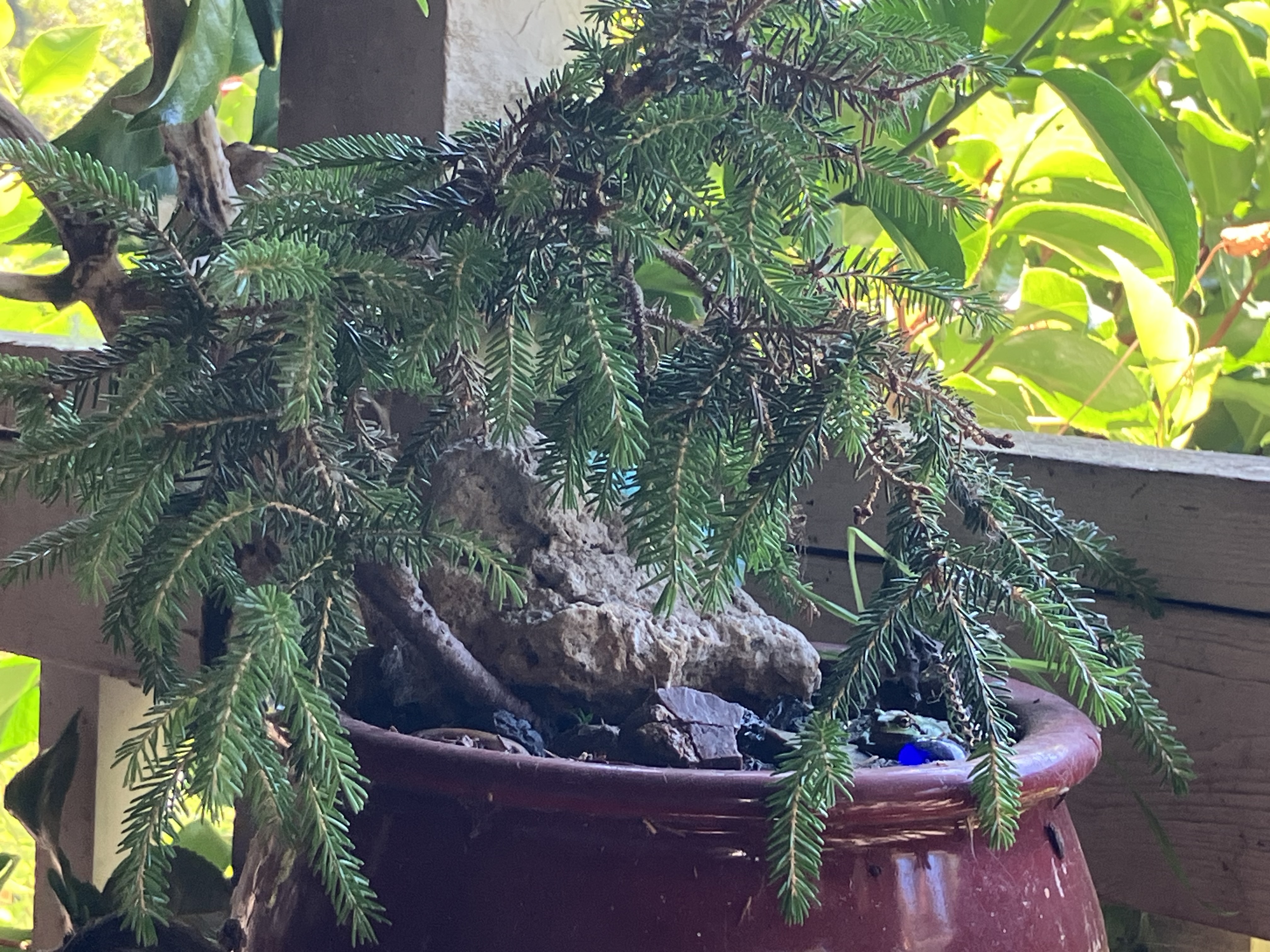
When mourning routine brings a fresh heirloom rose and newly hatched chick to greet the day, something amazing is happening. Growth of lush gardens full of food, medicine, and beauty- with a lot of weeding. Chickens that are healthy, happy, and able to hatch out a fresh batch of young ones for the continued cycle of life. The fresh rain from last night gives the landscape a damp freshness, with tons of slugs prowling the garden. I’m on another gathering mission shortly to pluck them for the chickens. Two buckets stand full of weeds for the sheep, and a rogue ewe stands ready to drop her first lamb into this world. What a full and productive place to live. EEC Forest Stewardship is a lifestyle, with constant projects, fast reaction time in sudden emergencies- like a lamb caught in the fence, or geese slipping out the gate and down the road to a neighbors house on an adventure. There are days when I miss things, like a drowned gosling stuck in a water bucket in the night and becoming hypothermic, or a devastating weed like morning glory getting into the garden through some composted manure from another farm. Those blind spots can cost time, money, and heartbreak. Not everything about this life is cute chicks and a bed of roses. However, the vast majority of days in the field are nurturing and fulfilling, which makes it a priceless opportunity.

Another ewe is being crossed off the flock list, because her first lamb, a ram, has some stubby horn bits on his head, meaning that line has to go, as Katahdins must remain poled- meaning no horns, which makes them much safer to handle. Many sheep and cow breeds are horned, but go through disbudding to remove the horns. These methods use scalding with heat or chemicals to remove the root of the horn to stop future growth. If we can naturally breed out horns to avoid this process, I’m all for it. So this ram lamb and his mom are on the cull list to prevent horns from returning in this breed. That was a 5 minute reflection as I fed the weeds to the flock this morning. I already had the rose in hand, so taking a moment to smell the deep perfume of this blushing beauty helped steady the genetic consequence. There is so much complexity in working with the living world, so much I never see or understand, so much more I want to know, experience, and repeat. That’s the gift of this lifestyle, a daily ritual of opening my eyes to new plants, animal behavior, and a slow awakening to the more subtle changes over nearly a decade and a half of being with place, rooting in for a lifetime if I can.

This is a snapshot of recovery in progress, right by the creek, there is a buffer of ground protected from cutting in the 1970s, when EPA standards came into effect and America agreed leaving some protected space next to wild water would help prevent pollution and erosion in our vital freshwater streams, rivers, and creeks. In Washington State, salmon protection helped strengthen the buffers to a whole 25′ on both sides from the center of a small creek’s bed. I’m sure there was good science backing this measurement to include the fluctuation of water’s flow from season to season, as well as nature’s tenancy to move a stream’s bed over time, waxing and waning the topography with flooding and erosion events, which dictate a stream’s path, unless we canal and cement a wild water’s pathway to accommodate human expansion.

Luckily, this creek did not suffer such fate, but it was dammed, rerouted, culverted, and largely forgotten until the 1990s, when a local man dug up his ancestral family homestead maps and saw the creek labeled and designated as having salmon in it. I wonder how many tribes would have oral histories on that creek, and many others lost in colonial expansion and domination of the landscape for extraction gain. The entire property, and hundreds of miles in all directions was timber land, clearcut and hauled by mules, oxen, and later rail to the ship yards and rail lines owned by many of the same people directing timber harvests and mining. The hills and ridglies of The Snoqualmie Valley, and thousands of other valleys all over this earth, have been clear cut, burned, railroaded, and paved to give us access to more resources for the rich at the great cost to the land, and human health long term.

Replanting the forest, extending stream buffers to over 100′, replanting that with native plants, both trees and crucial understory, this is the slow road to recovery for our lands and the health of all life on earth, not just people. In caring for place, rooting in, being more connected directly to the rain coming down right now, giving me a window to write and reflect, knowing it will stop again in a while and I’ll be back outside weeding and wondering at the living world that I am a part of. There is still a railroad cut through this land, a shadow of the iron horses and desperate immigrants looking for a way to survive in The New World. The Snoqualmie people will not be in these historical photos, they did not put the rail in, or cut the trees- though their future generations, caught up in the extraction culture of colonial abuse, have become tree cutters. This capitalistic genocide still holds them today on token land grants, a legacy of original people who have lived here in these woods, by these rivers, with the salmon, elk, and cedar tree; these people are still holding a history of living in harmony with the earth, not raping her for petty cash. It is rape- in the sense of taking needlessly by force, with violent acts, again and again.

These subtle walls of green are returning, through all the pillage and waste that came for over one hundred years to this place, now reforming, reshaping the story from blight to light. Ferns, snowberry, salmonberry, tailing blackberry, and the cedar, hemlock, and fir trees sheltering them from above are witnessing the return of salmon, the sounds of elk bugling nearby, and hear the creek flowing once more, skipping over rocks and bubbling down from the spring fed hillside to the great Snoqualmie River below. This is the poetic journey I’ve woven into in this blink of consciousness on earth, one heart beating in time with the opening of a rose, or the peeping cry of a new chick hatching forth. When I can ground in those sounds, there is healing. When I can hold the harvest in hand and smile, this is the good life, may we all find our way back to planting and watching ourselves take root once more.

Farming Sense

We the people have taken so much from this earth, digging beyond our own capacity for profit. That skimming of cream off the top has ended, and now, with desperation looming, there is a fork in the road. Choices are not easy, and making sacrifices can be scary. The 97F temperature in early June, 2025, has normalized in our minds; though about a decade ago, that temperature would have raised a few eyebrows. A wrongful death suit here in Washington State, is going national, sending new aid to the human fight against corporations. Humanizing our climate plight remains crucial, as pointed out by a legal expert at the end of the referenced article above-

“The advantage of this lawsuit is that it puts an individual human face on the massive harmful consequences of collective climate inaction,” Kysar said in an email to NPR. “Not only that, the complaint tells a story of industry betrayal of public trust through the eyes of a particular person.”

We can’t all go join a lawsuit, but we can all think of other ways to invest in helping to fight ecological abuse in our own back yards. So many of our lives are now driven by profit. We some how get trapped in “just getting by” mentality, and to be clear, scraping pennies and budgeting every expenditure to get buy, still debiting on credit-cards, is another norm for most today.

I’d like to target this article to a specific group of us; if you own a car, have home internet, and most of your neighbors are white, you live in some real privilege. Take the money out of it for a moment and reflect. White collar work usually includes healthcare, families get tax exemptions and child credits, single people of similar economic status subsidize that in their taxes. Are you reading this and getting defensive? I sure am. My privilege is paying for others? Yes, and it should be, but unfortunately, even more of my work and income, and yours, goes to tax breaks for a top group of billionaire investors who will never know or care about you or me.

We’re so caught up in economic fairness, worried about fraud and abuse in the government. Thousands of hard working civil servants- the majority of government- just got fired and sent to the public job market, where there is a struggle to keep people employed. The Private sector lays in wait, eager to fire another round of their own workers to snatch up government employees who already work for a lower wadge than most others in their field nationally. I hope your thinking wheels are spinning now, seeing the future of wadges in this country plummet. This is the plan, subjugate through economic kidnapping. We’re all being held hostage and forced to participate. Yay! For us, there is still voice and action that could be heard- through protesting, writing representatives, and voting in local elections- or better yet- running! Who has that time and wants to be a civil servant? SERVANT? So much gratitude to those who do!

We are slowly turning into an autocracy too America. Elections are bought and sold, votes in congress too, thanks to Citizens United, and with the current administration, what’s left of the public sector will be privatized and we’ll be living as feudal corporate vassals- thanks Netflix and Amazon Prime- for those of you already fully institutionalized in this addictive consumer convenience. My shit smells too- I love watching movies and most of them are on streaming services, including AppleTV. I’m also watching the protests in L.A. right now. ICE agents and Federal Marshalls (fascist goons) began beating and chemically hazing the crowds, which feels a little too much like Germany in the 1930s. America was into Hitler for a little while. We really don’t have the best track record in supporting global Democracy, specifically in the Central and South American countries where so many immigrants to The USA come from today.

In L.A., the protestors struggled to stop the illegal seizure of their friends, neighbors, and co-workers off the streets and out of businesses in broad daylight on a Friday afternoon. By Saturday, our POTUS called for National Guard to go into California. False flag for sure, and excuse me if I get a little ticked at the thought of this happening in my town tomorrow, or the next, day, or the next. We are all culpable in the end for pretending we do not see, and the economic toll will come, if not an actual raid on your place of work, school, church, or neighborhood grocery store. How do we push back without being wrongly detained? Who are the people really making these raids? In Oklahoma, a mother speaks out. The terror is real for so many, and fear is spreading. I’m not asking you to go get arrested in L.A., but there are small steps of resistance to take today.

Toiling soil, tending stock, cultivating rich diversity to restore forests, healing rainforest abundance, regenerate and regain partnership with the earth- can that be enough? I don’t think so any more. Not with the suffering and abuse now escalating- I already failed neighbors in Oklahoma by leaving. That State needs liberal healing as much as ecological, but that fight looked too daunting, and the conservative lasso had strangled any hope for the feminist heart I bare. I failed my homelands. The red clay and sandstone canyons remain a love song in my soul, the main part of literal matter that grew my body to what it stands as today- that chemical structure carries the signature of ancient shallow seas imbued in sedimentary sentimentalism, or terra crafted memories etched on this body. (see Developmental chondrocyte heterogeneity)

Making a living while remaining in Oklahoma was not in the cards for this privileged life, I could get out of town, another marker for those of us feeling squeezed financially in these current events. How many times have you moved by choice? How many times was it not your choice? Discuss. Severing our connection to place links us all to that great new term Solastalgia. It’s part of the underlying stress humans carry now, and pulls us into a never ending cycle of hard times in this Anthropocene. Remember, positive mindset is the ultimate survival key, so turn towards abundance and seek in as locally as you can. Root down and invest, trust, plan- make your own community great for yourself, that puts the power in the people, rather than corporate dependency, which we’re all deeply embedded in through social conditioning.

When I worked in a Vermont Coop a few decades ago, people always commented on how much more expensive the organic produce was compared to the conventional, and that’s still a thing today. Why? Cost of living continues to rise for us all, but food prices have only just begun to creep up, sending many into a slight panic. We’ve been paying too little for too long, because of industrial agriculture, and it’s never been fair to farmers. Yet as a small farmer, when I ask for the actual price my food costs to produce here in King County, some people bulk. Why would they pay me when they can pay Costco or Walmart for a real deal? I don’t know, maybe as a way to support the true cost of food and buy from people you know who practice the regenerative farming that could bring back ecological balance to our world? Worthy? That’s up to you, and your wallet, and your choice to invest in what matters most, which is sadly, a price point. Welcome to Plutocracy– where we are ruled by the rich.

I can speak for my own experience here in King County Washington- I live in the most costly county in my state. Washington is the 10th most expensive state in the country to live in. I get a heck of a lot out of that, from social safety nets to one of the top public libraries in the country. King County is extremely expensive for families, but cheaper on the national average for single people like me. Still, I end up paying more in some taxes to support social systems I am not a part of directly, like schools, but hey, educate these kids, because many will stay and work here in future- I hope, so I want them well educated, it makes for a better community. We do have some very good public schools, in affluent cities and towns. The Riverview School District in my hometown gets an overall B+ rating and is #33 in the state out of 242. I’m engaging more as a mentor volunteer in one of our local middle schools and high schools. I hope to learn more and continue supporting and investing in local education. The farm donates a lamb each year to Empower Youth Network to support mentoring in our schools.

For children and community to grow and thrive, there also has to be clean water, soil, air, and food to eat. This is another way EEC Forest Stewardship is deeply invested for human betterment. If we are not restoring our ecology, we will be embracing toxic poisoning. I choose not to embrace that where I can, and it’s hard, because we use a lot of fossil fuels even when we’re not driving. Agriculture is #4 in top polluting industries, while transportation is #2. The food you buy in the store contributes to both, making it #5 on that list. There is a lot to break down here, but this leads me back to why buying local is so important, and paying for local is more expensive- Leafhopper Farm receives NO government subsidies, it stays afloat through it’s own production and my personal financial independence. I do all the work, from raising and caring to slaughter and butchering- all by hand, all with love and care for the poeple who will buy and eat this meat, investing a little more for a long term future. If I calculated my full time working on this farm into the food prices, no one could afford my meat or eggs. The crucial restoration work these animals do is not part of the price either, that bonus goes to the land, which regenerates for long term community health- that’s priceless.