Spring Planting Begins!

There’s a warmer breeze blowing in from the south as March swings us into Spring here at EEC Forest Stewardship. Val watches the ravens going back and forth through the forest, building a nest and keeping a low profile. I’ve also been hearing a great horned owl nearby, also marking out nesting territory. Predator birds tend to set up in the family way earlier in the season, to get a head of their neighboring prey animals, which will start nesting up in a few more weeks. Here on the land, soil has loosened up after winter’s harsh grip, letting loos and preparing for new germination and growth activation in plants all around. It’s a great time to be transplanting and seeding out cold hardy crops like spinach and carrots. I picked up an order of native plants from a local conservation district plant sale and got to sinking the little rootlets before the next rains come. The order included some drought tolerant species like larch and ponderosa pine. In ten years, the native plants have shifted with the projections of climate change. I’m thankful to start rooting in more of these more resilient species here at EEC.

The larches are a first time planting here, along with incense cedar, more commonly seen down in Oregon and California. This is the future of our forests and things dry out in summer and freeze up in winter. The more dramatic shifts will demand plants adapt quickly, more quickly then they’ve ever adapted before, and the plants are not keeping up. I’ve celebrated the first sightings of naturally reseeded native trees on the landscape in March of 2025- in our fenced protected area of habitat in the lower pasture. The seedling western hemlock and red cedar are a first in over 50 years for this landscape, and it’s an exciting signal of nature’s resiliency- if we just give her space and time.
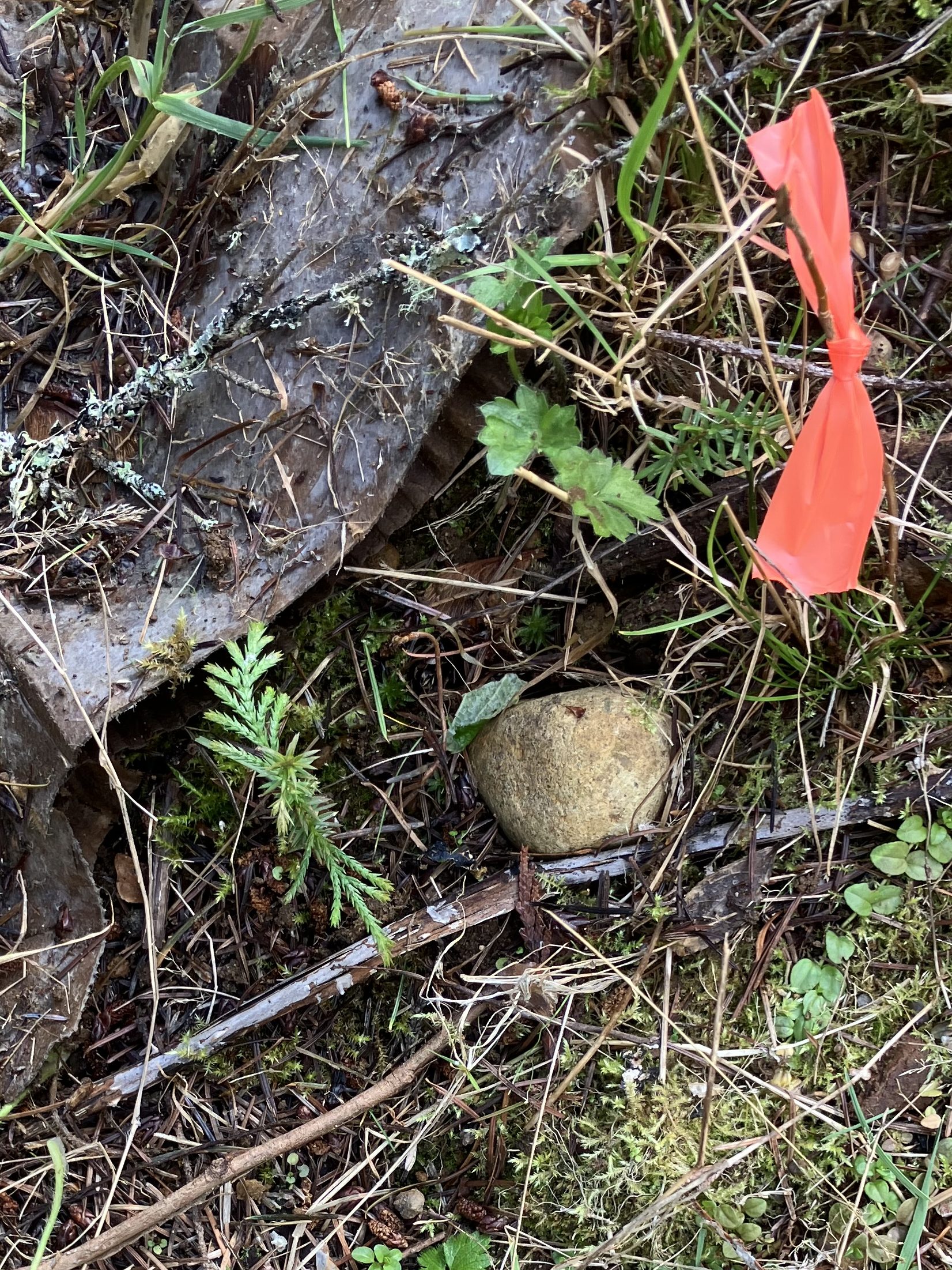
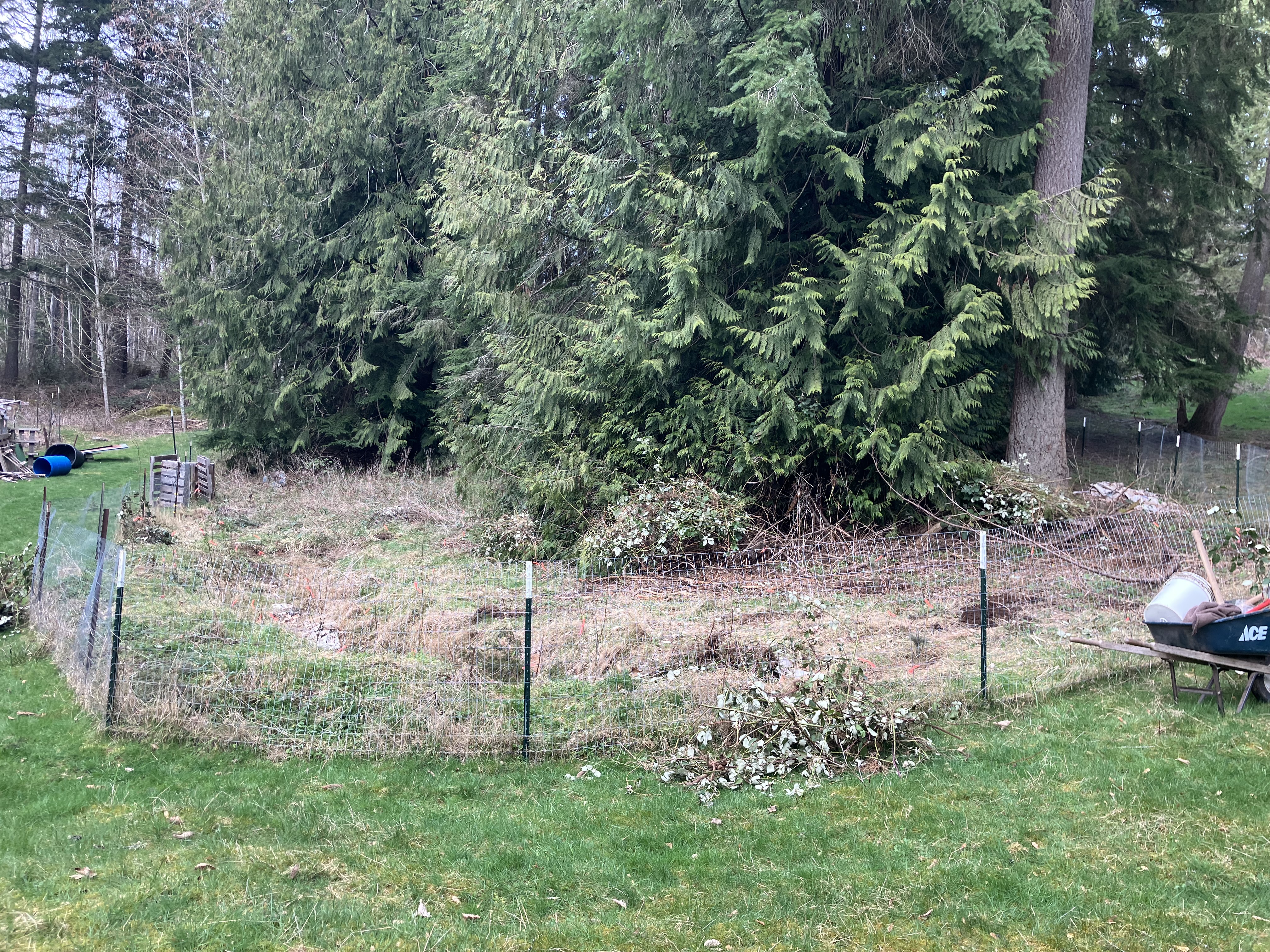
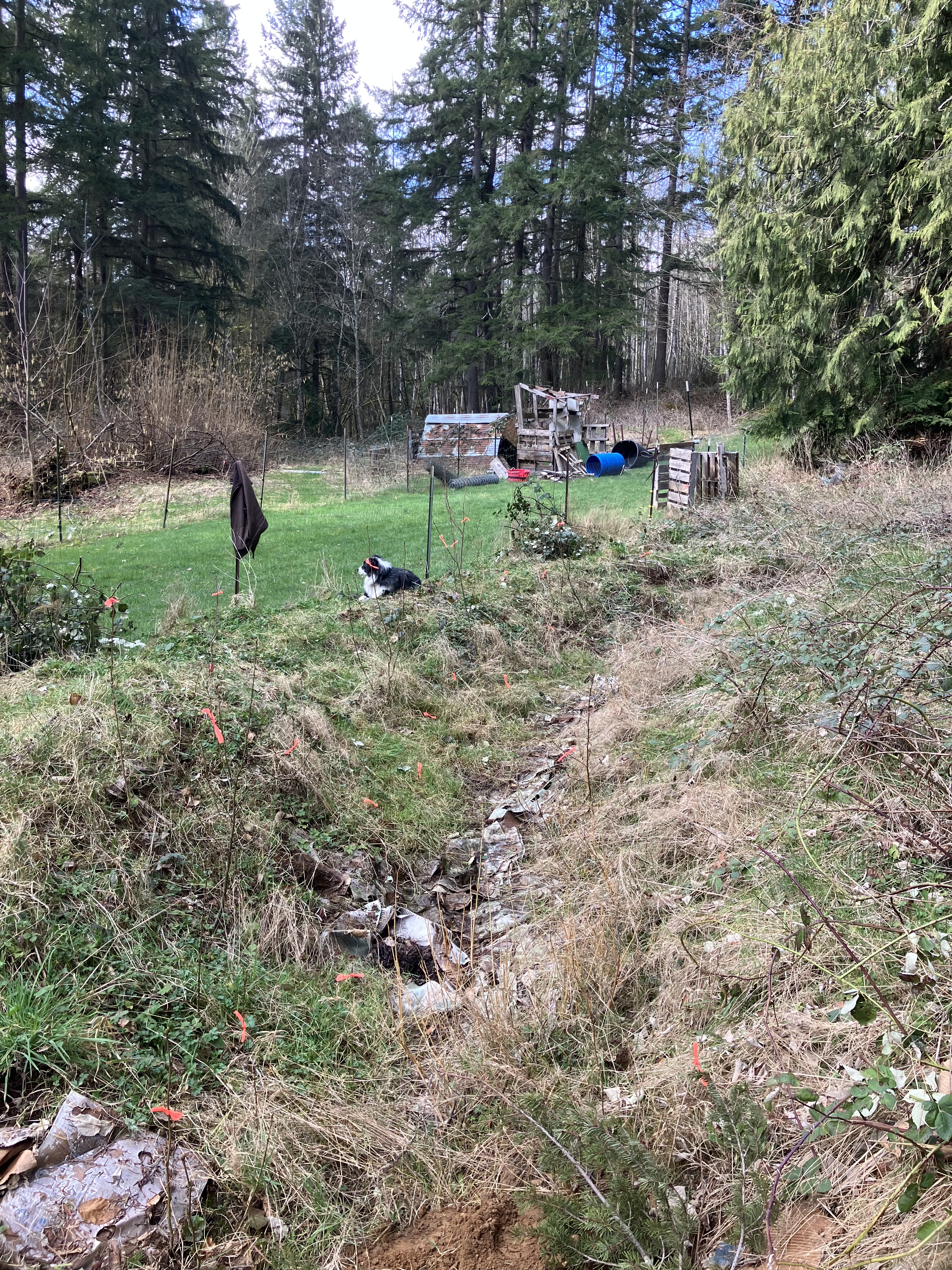
There is also an orange flagged planting of a native slide alder, which will be a great understory companion to the evergreen natives as they slowly grow. This activity is happening in the bottom of a swale, where recently disturbed soil invited the seeds to germinate from the surrounding, more mature grove nearby. Why has it taken 50 years to see this usually annual occurrence in an in-tacked forest? In two words- livestock degradation. This pasture has been so heavily grazed- especially in the decades leading up to my purchase of the property. When I first came to this landscape, there was evidence of tree bark stripping by starving animals- an often occurrence in properties where people age out of their ability to fully care for their animals, but can’t let go. Cows and horses stayed on the land for too long, stripping it of all ground cover- from sword fern to seedlings of all kinds, these pastures have not been given the time or space to renew themselves, until now.

I took a few hours this week to clear out the last patch of blackberry in a recently fenced off habitat restoration area in this middle pasture. There is already a second fenced space next door, where pigs, goats, and sheep had all helped to fully clear the space during the first few years of my stewardship here. This new space was hand cleared of blackberry over time, then replanted initially with more deciduous and understory varieties, and now, I’m putting in a couple of evergreen trees and a few current shrubs to diversify this planting even more.
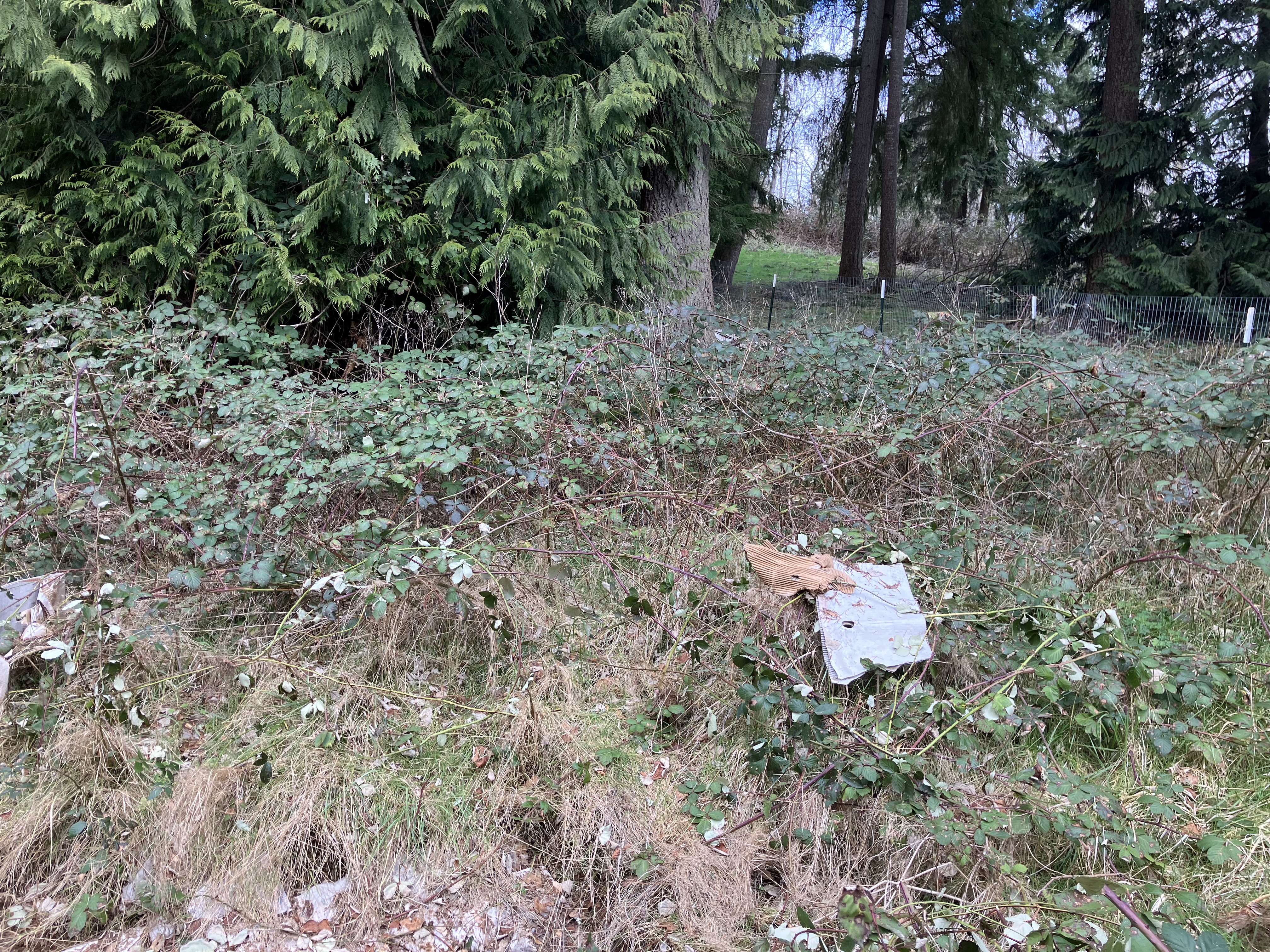
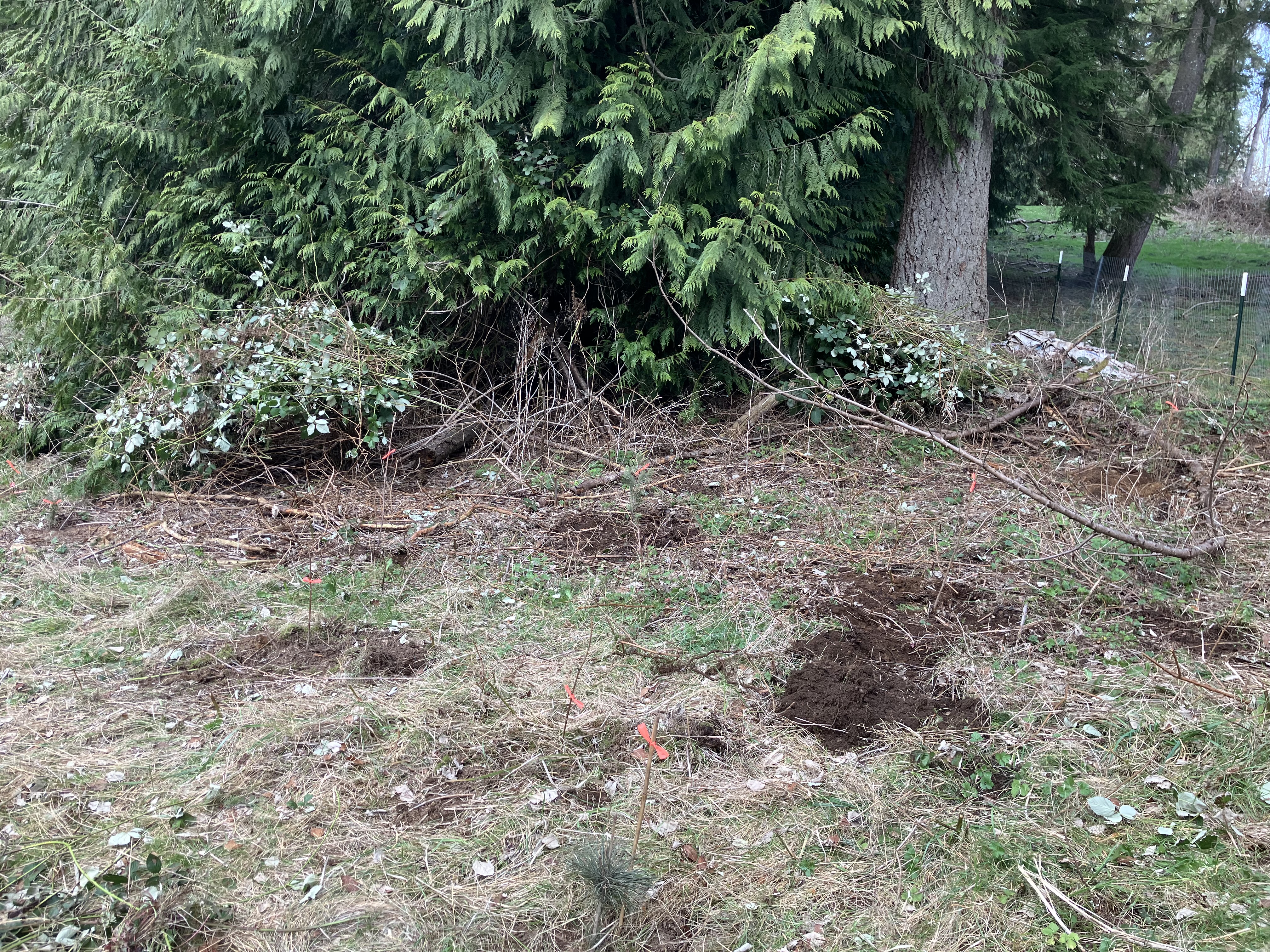
It’s always hard to fully capture the work done, and this final clearing took about 4 hours, with an additional two for replanting and flagging of already established native plantings from a few years before. It was a very rewarding project that I’ve been looking forward to. It marks a final major blackberry hurdle in this pasture, and sets up the restoration in this area for the long term. I’ll have to keep weeding out the space over the years, until the plantings fully establish, but then, like the wildlife habitat corridor at the creek, this space will fill in and also become self-sufficient as a regenerative forest, still leaning in the temperate rainforest direction, but with a new mix of adaptable species that will help keep this forest healthy in the long term climate shift projections.
Backyard Chickens?

In a nutshell, if everyone, or even a few people each block in neighborhoods where backyard birds are allowed, get birds, the concentration of vectors spreads the flu rapidly. Also, the price to keep chickens will be much more, if only in your time, than paying the price for eggs at the store. If you have several acres and time to raise chickens, and can raise a flock of 20-30, it’s worth your time and cost. People living in under an acre can have a little coop with a few chickens, but the cost, care, and disposal of the nitrogen rich excrement will become a hassle not worth anyone’s time. It also attracts rats, which are yet another vector. There are vaccines, but for the worth of each chicken, the vaccine is too costly, and must be repeated every year. The greater problem is crowded industrial coops where these super flues grow out of antibiotic resistance. This resistance is achieved in these massive operations, and then spreads into wild populations, which then carry it around the world. We cause it, and nature evolves into a more pathogen based environment where we humans loose the survival race.

So, don’t get chickens in a small backyard space, because the song sparrows and crows will connect with your birds, passing on the virus. Which is also getting into domestic pets. Your dogs and cats will be in close contact with your chickens in a small backyard setup. On the bright side, animals that survive the flu become more resistant, until the strain mutates, at which time more animals and people will become ill. This is how viruses work, and they’ve been around since the dawn of life, millions of years before we evolved into being, so microbes certainly have the upper hand in that survival race we’re all running. Eggs and fried chicken are wonderful foods, which we’ve bought as cheap goods for generations in this military industrial complex. But that cheapness of life- because the chickens are living beings, just like the trillions of acres of mono-crop corn and soy being grown in the same mechanized way we think solves world hunger, that cheapness is killing. It’s killing our water- that other thing we need to live, poisoning it with nitrogen from the runoff of chemical fertilizers and animal waste. It’s killing our soil with the same chemicals that are sanitizing all the microbiology that soil and plants need to live. We put all our eggs in one basket and now the basket has been dropped, and all the eggs are breaking. What can we do?

Pay for eggs and chicken, and make them special, like all food should be. We’ve been subsidizing food until it’s become a cheap commodity, rather than a crucial part of our survival. We have tricked ourselves into thinking our finite resources are endless. We still treat grocery stores as errands, when these food palaces should really be a signal that something in the environment is very wrong. When our warehouses of gluttony turn our minds against connection with food, it’s easy to turn us from all the living world we rely on to exist. That’s what these screens have done. Now we’re bitching about prices, instead of asking what’s being done locally with land and food production to protect against virus outbreaks and tariff wars. We’d see a lot more resiliency, diversity of food choices, and support of local economy. We’d also have times of plenty, and times of scarcity, with limitations on how much- something humanity is deaspartly in need of- restraint in consumption.

This frightens us- the thought of starvation, famine, that’s why we convinced ourselves that through a magical technology of some kind, we’d transcend the limitations of our environment. No, that’s a god head patriarchal colonial thinking that gets humanity nowhere. Dominion is short sighted, cooperation and collaboration are survival necessities. All life relies on other life to exist. So how do we move towards this future? Well, here’s one concept- low tech. Here’s an amazing pair of scientists engineers working towards a better future for all. Biggest take away- grow some bugs and/or mushrooms, not backyard birds.

Early Spring Already?

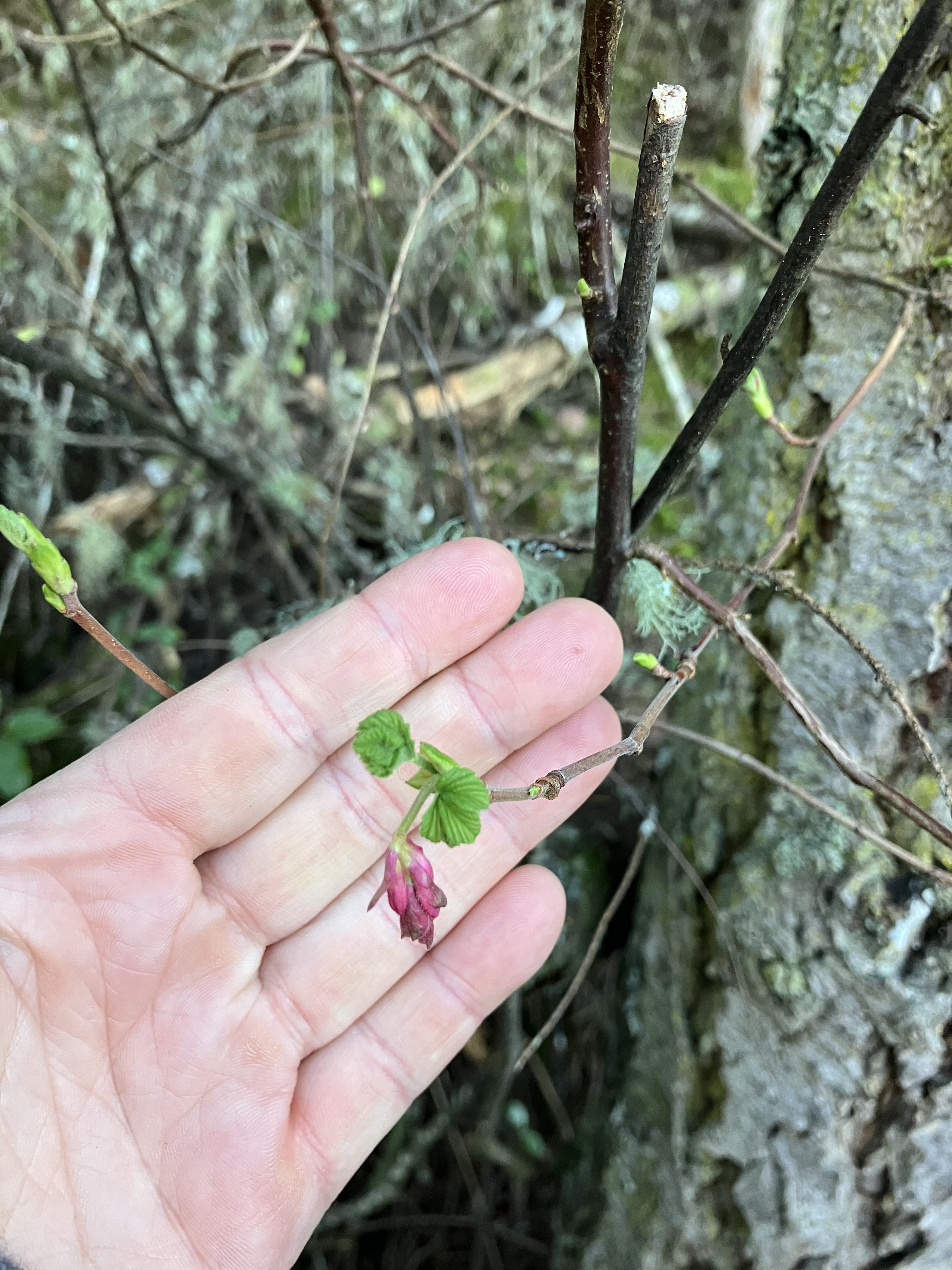
At sea level, flowers are blooming on The Pacific Coast of Western Washington. This red flowering currant Ribes sanguineum was blossoming out in the afternoon sunlight on Whidbey Island in mid February. Our temperate climate does offer an early spring, along with evergreen trees, which keep a thick, lively forest active and growing year round. Like the mushrooms, which can fruit at any time if micro-conditions are right, many of the native plants in this area are opportunistic. Erigeron glaucus was blooming on the path edge at Rosario Point. This ground was well drained, south facing, and backed by a reflector wall of higher growing vegetation, which sheltered it from wind. It’s also rooted in at the seaside- hence the common name, seaside daisy. These small reminders of warmer times to come are a welcome sight when back at home, a few hundred feet higher in elevation, ice and snow still grip the ground.

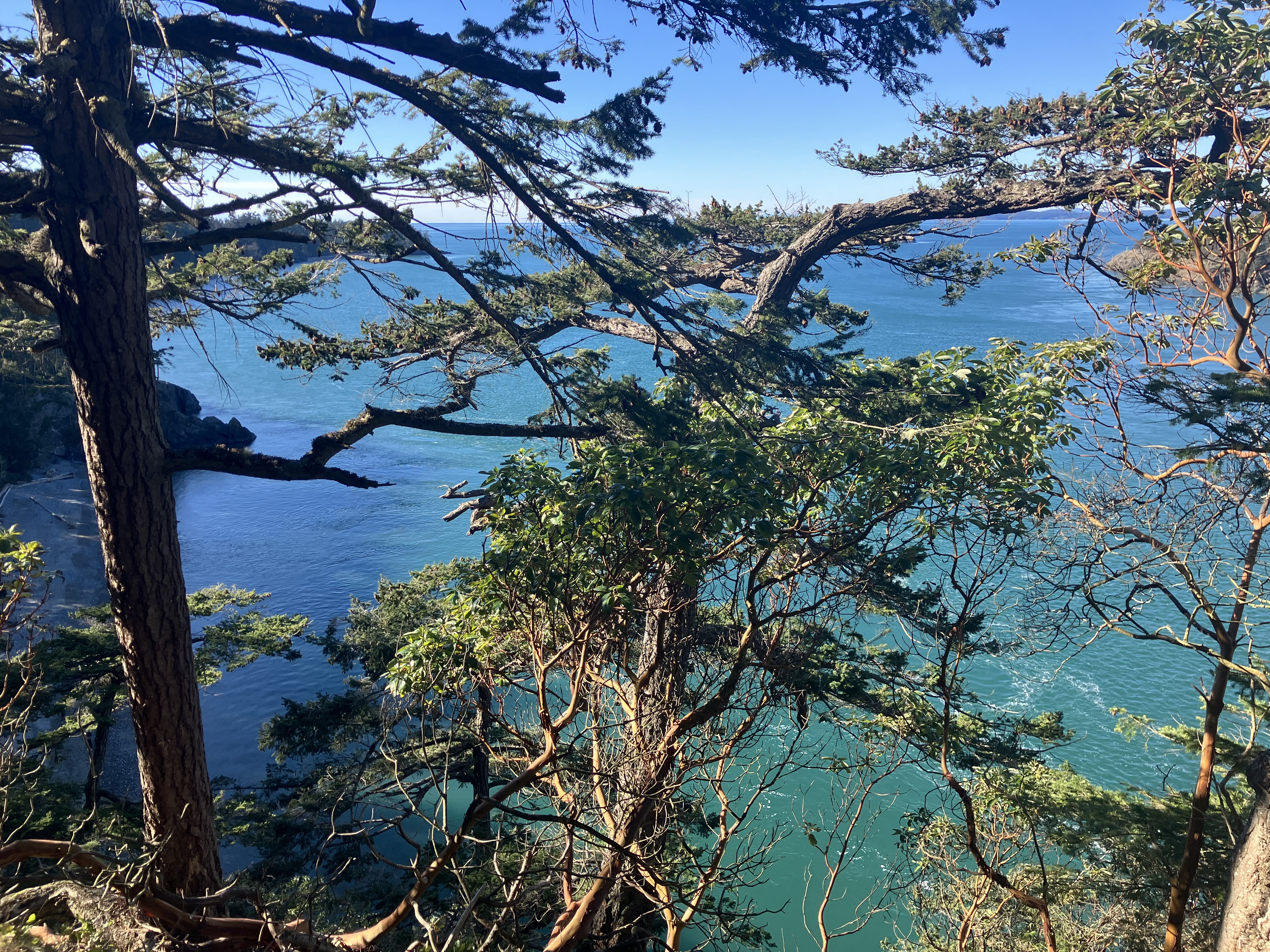
Such beauty in small things, and slowing down helps to catch a glimpse of these warm places and well lit spaces. Greater sea scapes with turquoise blue water and dark velvet pine stretch gnarled branches over gently rippling sunlit cove.

There are actual shore pines on the shore. It’s great to see longer evergreen needled true pines in these coastal forests. Manzanita trees also weave unique shed bark trunks and branches in Arizona desert shades of burnt orange and clay brown, which pop against the cool waters below. That afternoon sun dancing off the currents, flickering shadows under the canopy of waxy emerald leaves and broom branches of craggy fir and shore pine. Layers of flowing tide, our movement through these framed moments, like the coast of Greece, islands with rocky shores, gulls crying off across the bay, yet flitting chickadees from the forest call us back to Pacific latitudes, a great rainforest towering at our backs bridge two worlds of ancient sea bed, upheavals in the rock layers now holding these towering trees onto the island’s thin skin. Erosion plucks at every glacial deposit, cracking into even the most stoic sediment. Volcanic signatures building fresh layers of time out of the fissures in these active tectonics that shape our western shore. Rooted deep beneath these living trees, the ground rumbles with future upheaval on the way, but for today, the forests doze on stable pitch.

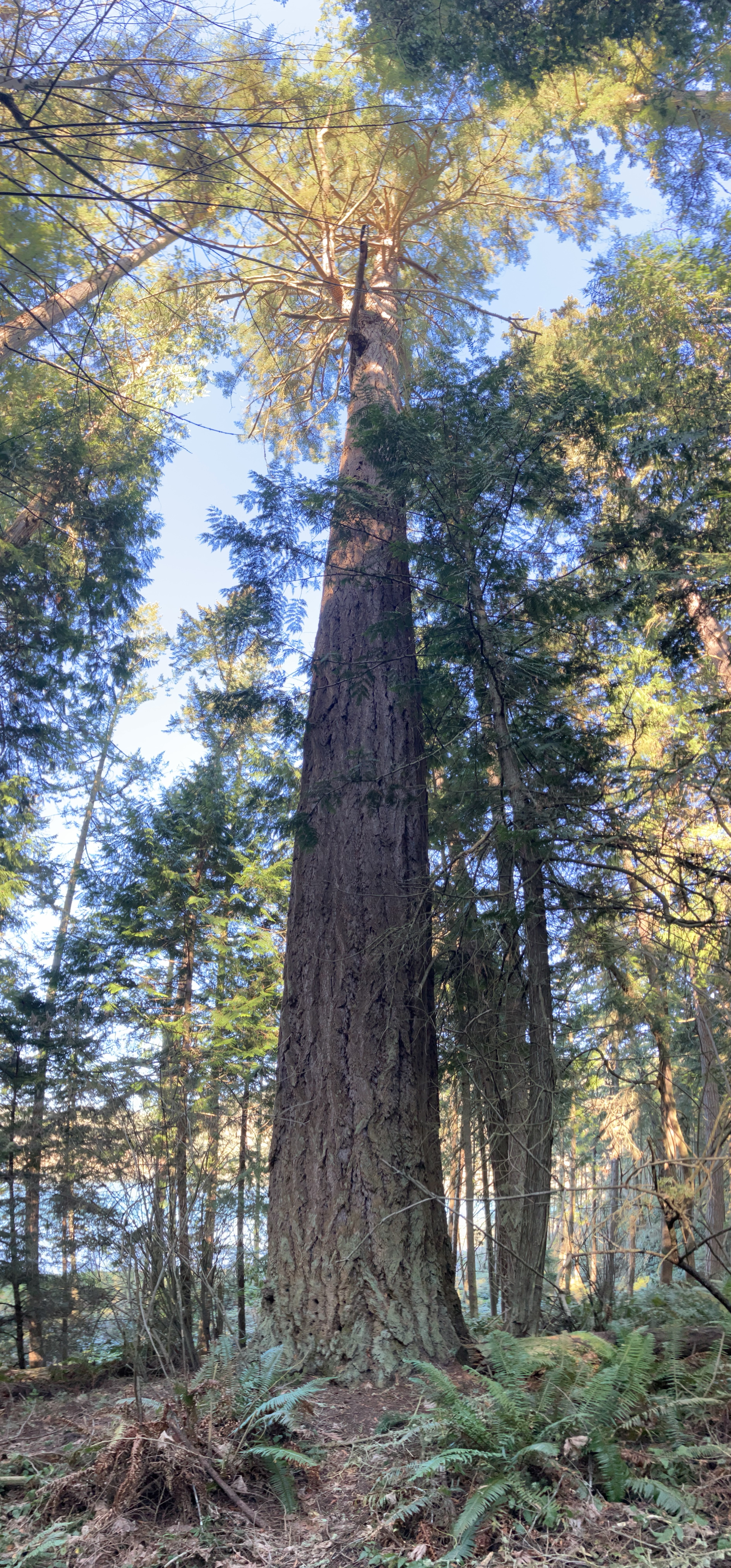
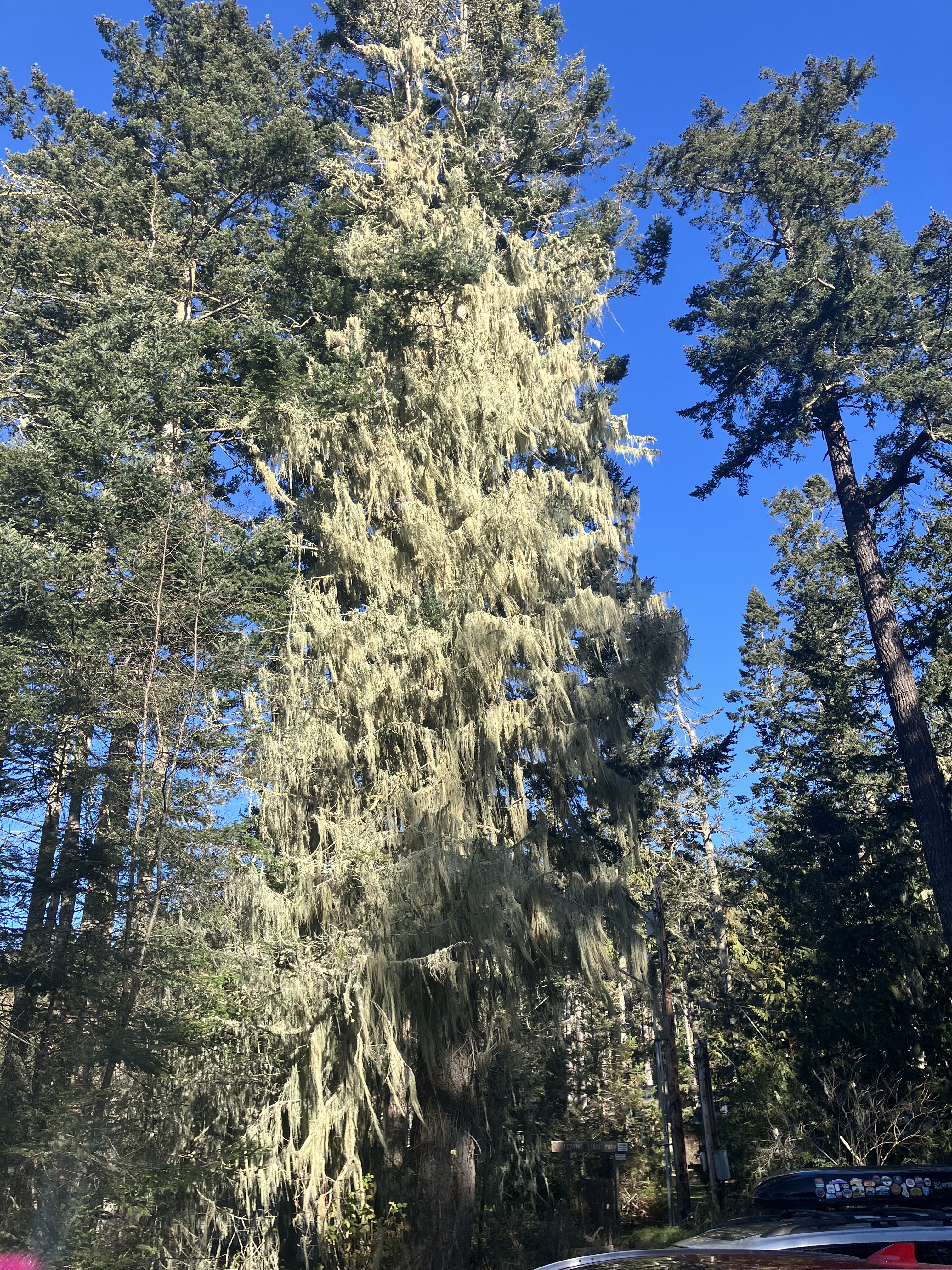
It’s very hard to take a picture of giant trees, but this attempt invites some token perspective of size. Towering up over 120 feet into the air, this centurion of age will live a long, full life- one of the few older growth protected trees left to enjoy. Note the large bases of each branch high above- these several feet thick, mature branches are what the critically endangered marbled murrelet needs to land and nest on for the success of the species. This rare bird is endangered because there are not enough old growth trees with the size and literal girth needed for proper nesting. It’s one of countless man made detriments to our own home, which can only be remedied in another hundred years of letting the forest regrow- which we are not doing, so the birds will go extinct. The birds can’t just nest in a token tree at the park, like the one pictured above; they need at least 500 acres of intact mature forest. Outside of a few national parks, that are still not recovered to mature old growth in most areas due to initial clear cutting, there are no forests dedicated to old growth maturity.

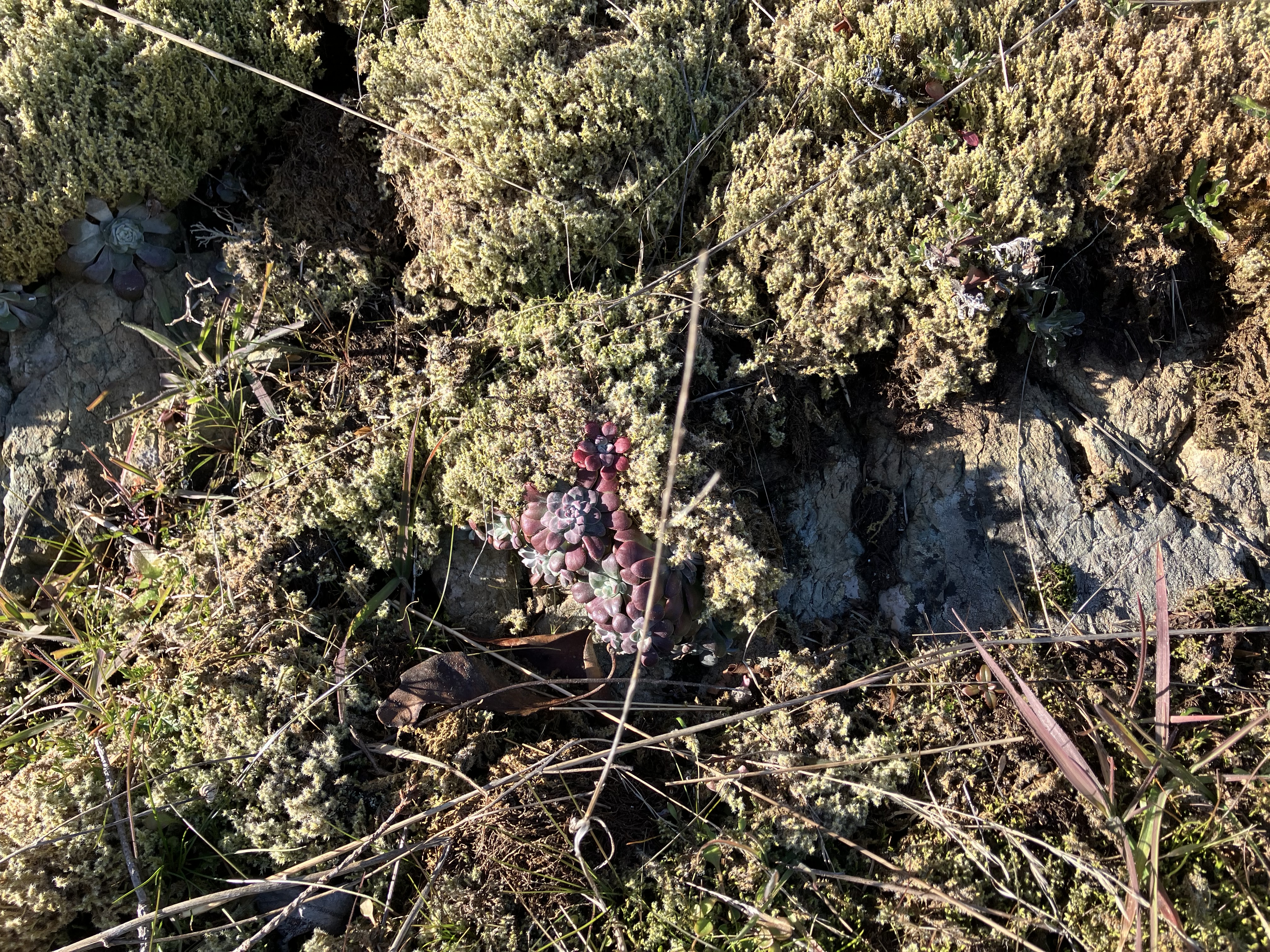
Most of the environment is made up of mini worlds- micro climates where niche species take up residence and make a splendid home. These colorful sedums Sedum spathulifolium were a rare treat to see in the wild. They were not flowering, but certainly set off the rocky outcrops around one of the island points. Washington has a ton of moss species too. Bryophytes are not my strong suit, but I appreciate learning the sometimes very subtle differences between species when I can. Red stemmed feathermoss is one of our more common ground cover mosses, along with Usnea– a lichen of important medicinal healing. The Usnea is most often found in trees. Pictured below is a rather exaggerated case of this medicinal lichen in a tree at Rosario Point. There are several beard lichens in the Usnea family, all are great back country emergency wound packing material. Thankfully, we did not need any on this enjoyable trip.

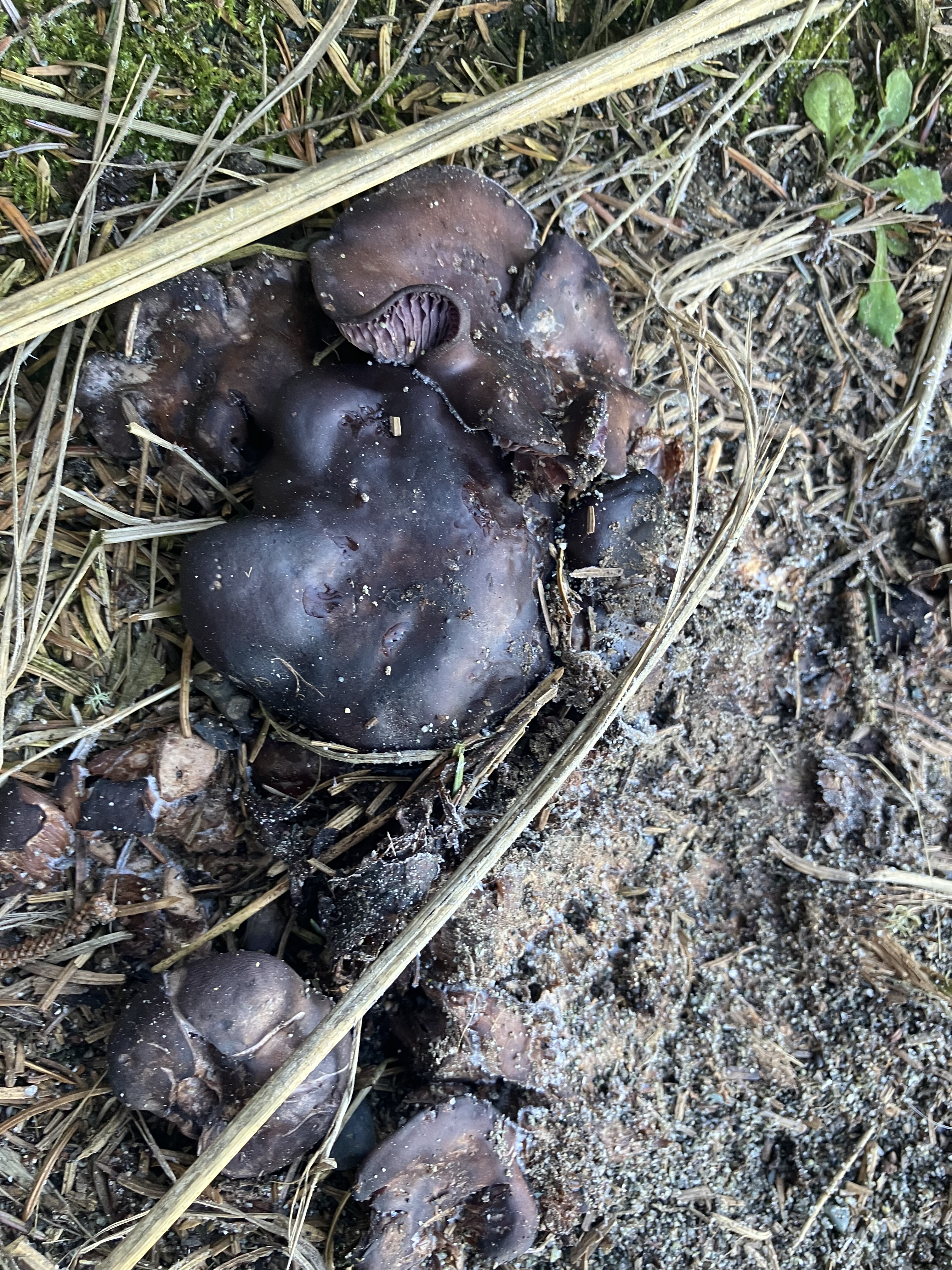
Of corse, no trip into the wilds of Western Washington is complete without a good mycological find. I only took this one photo, and handled them without disrupting the bloom, so no stipe observation or knowledge of spore print. Purple gills are some what rare, and the cool to the touch wax cap sent me towards a couple of guesses- Pseudoomphalina angelesiana or perhaps Leptonia subviduense. They felt meaty, but were fruiting in a sandy, not so familiar coastal ecology, so I consider this mushroom still a stranger to enjoy through observation only. There are endless lessons in the fungal world, along with the rest of nature- endless in details of complexity. I enjoy dipping into some of that knowledge, and connecting with new mysteries for future investigation.

By the end of the day, trekking around Whidbey Island had been full of signs of spring and sunny reminders of the warmth to come. While at home, the buds were just starting to grow, full flowers unfurled, and the ocean’s vast expanse, framed by majestic tectonic uplift; brought the full picture of Western Washington’s dynamic ecological orchestration into view.

Playlist Share

Time for a fun music post. I’ve never talked about the music often playing at EEC Forest Stewardship. Winter is a good time to build playlists and collect some new beats for revving up into spring work here on the farm. As little lambs awaken, seeds start to shake under ground, and my own body begins preparing for the shift from cold dark, to warm light. It helps to have a few days of 60s and 70F with full sun to awaken movement and growth. At the start of The New Year, my music was festively seasonal, with lots of medieval choral arrangements, Celtic traditional, and some classic carols. I discovered the Welsh tradition of Mari Lwyd, and found the artist Calan, who preforms a traditional song for the ghost horse of deep winter on the album Nadolig yng Nghymru (Christmas in Whales). My other favorite from this playlist is Spem in alium, arranged by Thomas Tallis on the album Great British Choral Works. Wonderful winter music to lift the spirit and bring the body into dance.

After the light began to return, I shifted listening out of the holiday spirit and took a deep dive into feminist rap. Yes, it’s a right turn from carols, and certainly an uplifting direction to continue in the vein of after recent election catastrophes. There are more recognizable names on this playlist, from Lizzo to Missy Elliot, but please also take a moment to check out epic women like Nitty Scott. Her album Creature! is amazing, and as potent a personal story as Kendrick Lamar’s Pulitzer Prize winning album DAMN. If you have not listened to the first rap album to win a Pulitzer, I highly recommend it. But back to the feminists- OSHUN vol. ii. They are best known for 100k, but Omgoddess and Techs are lyrical lessons with sharp tongue wit. Another great woman artist on the list is Ana Tijoux. Her album Vengo will have you up and in the fields planting seeds, or at least moving your hips and toes to her marching rhythms with full brass band on her title track. Once you are up and moving, keep the beat hot with some Arabic Pop by Ben Haana Wa Maana. Their album DAM, not to be confused with Lamar’s DAMN, holds a power pack of club beats and a front woman who will knock you out with her compelling voice. If these women don’t get a rise in you, you’re probably missing a pulse.

If you’re not ready for the cultural shake up of rap, then try these other strong women singers who will still have you dancing and swaying through whatever work you happen to be engaged in. I’ve had Elastic Heart, by Sia on repeat from time to time. I know her album 1000 Forms of Fear came out in 2014, but I’m usually about a decade behind on what’s hot. Another kick ass all women band from a few more decades back is Fanny. Who? Yeah, they were an incredibly influential rock band from the 70s- but you’ve never heard of them because they were women, and founded by a fabulous Filipino Americans, bassist Jean and her sister June Millington, a savant on guitar. I’ve got all their albums, but a highly recommended first listen is Fanny Hill. To learn a heck of a lot more about this group, please watch the PBS special Fanny, The Right to Rock. Another ground breaking album to check out is The Navigator, by Hurray for the Riff Raff. Their song, Pa’lante, is about pushing through and not giving up. The album reaching through the music into your soul.

These artists help me get through my day, offering literal beats to the rhythm of my day. These playlists motivate, escalate, and elevate my mind, body, and soul. So much gratitude for the creative energy put into every song, and with it, every scoop of my shovel, every push of the hay rake, and each task to be done. Let the music live through us, and the words of every song bring us closer to connection and understanding. Hearing something different might spark a new idea in this world. That’s the gift of these talents, laid out on the stage for us to witness and mull over. Please share more tracks and beats with us in the comments below. I’m always up for a new listen, or discovering old songs that have yet to be heard. Enjoy these tracks and tell me what you think.

Island Retreat

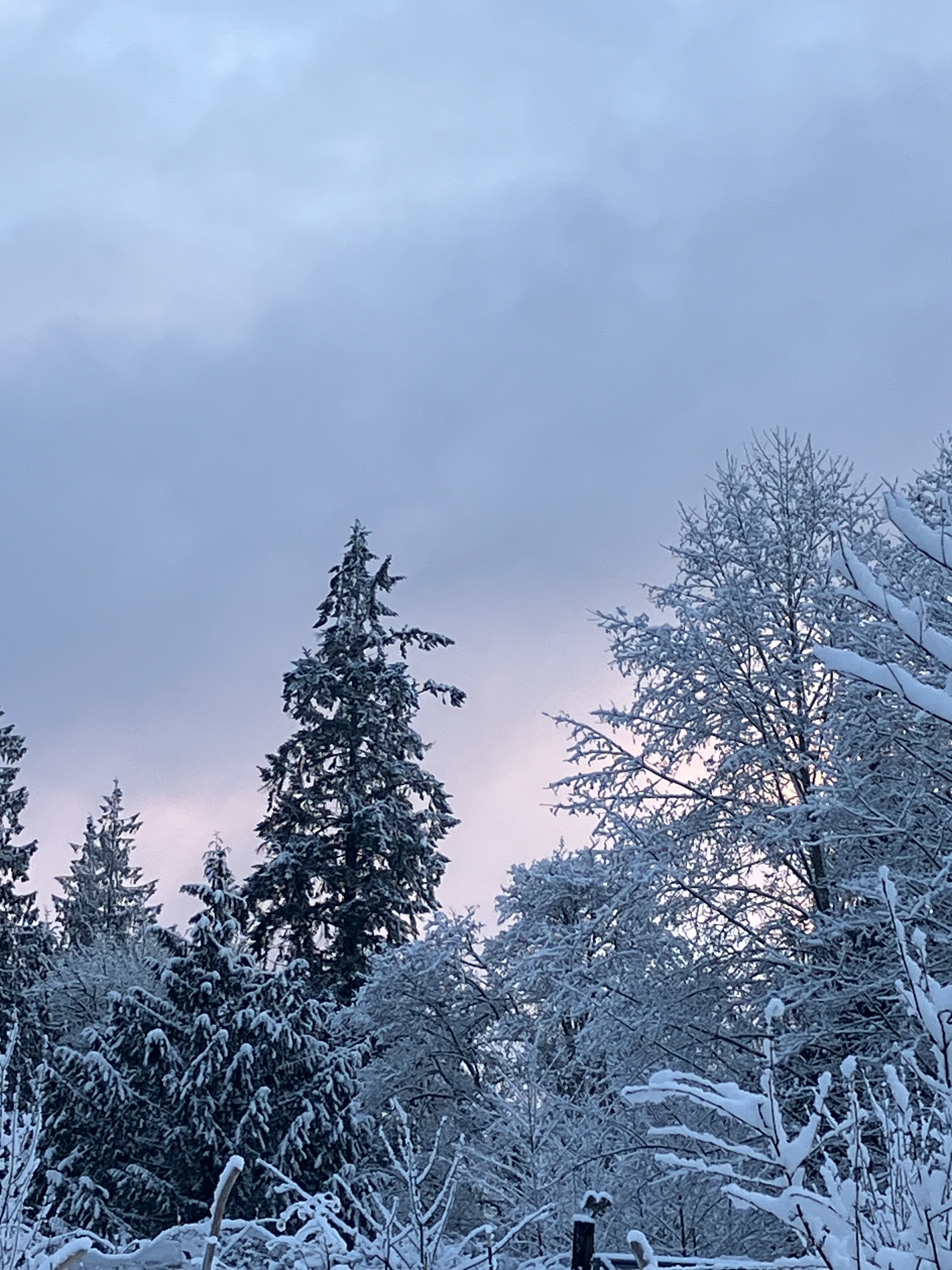
On an early weekday morning, I woke before sunrise to check for any sign of lambing. It’s been a quiet, cold winter. Snow has continued her white cloaking in the night. By dawn, a fresh dusting alights on every surface. Still, spring bird song echos softly from a red berried holly. Chickadees begin flitting in and out of the twin-berry shrubs. Then a puffed out robin lands in the Pacific crabapple tree, gleaning some of the dry berries at first light. Steel grey skies echoed the mute hard cold at the tip of each finger as I broke ice. The ritual of slow awakening on a molecular level; stepping into the cold, catching the weight of a full bucket without slipping. Balance practice first thing in the morning. I stretch on the way to the barn. Each glove holds enough warmth to keep feeling in the hands. Cracking each trough, filling thirst; heavily pregnant ewes sipping greedily. I wanted some hot chocolate.

Finishing feeding time, topping off all the waters, then closing up the hay and latching the grain room, I put eyes on the geese- I’ve got to get their nesting area improvements done, they are getting ready to brood up. Not today, today I am getting away to a temperate island adventure. This is why I live here; temperate ecology for long term survival. The farmstead is located in The Central Cascade foothills, which do get a little to a lot of snow in winter, for a few weeks. and in rare cases a month or two at most. We’ve been in a winter wonderland, and I was feeling a call to shores just below our Cascades in The Puget Sound and Salish Sea. In less than an hour, a local friend and I were on the ferry and on our way to Whidbey Island.

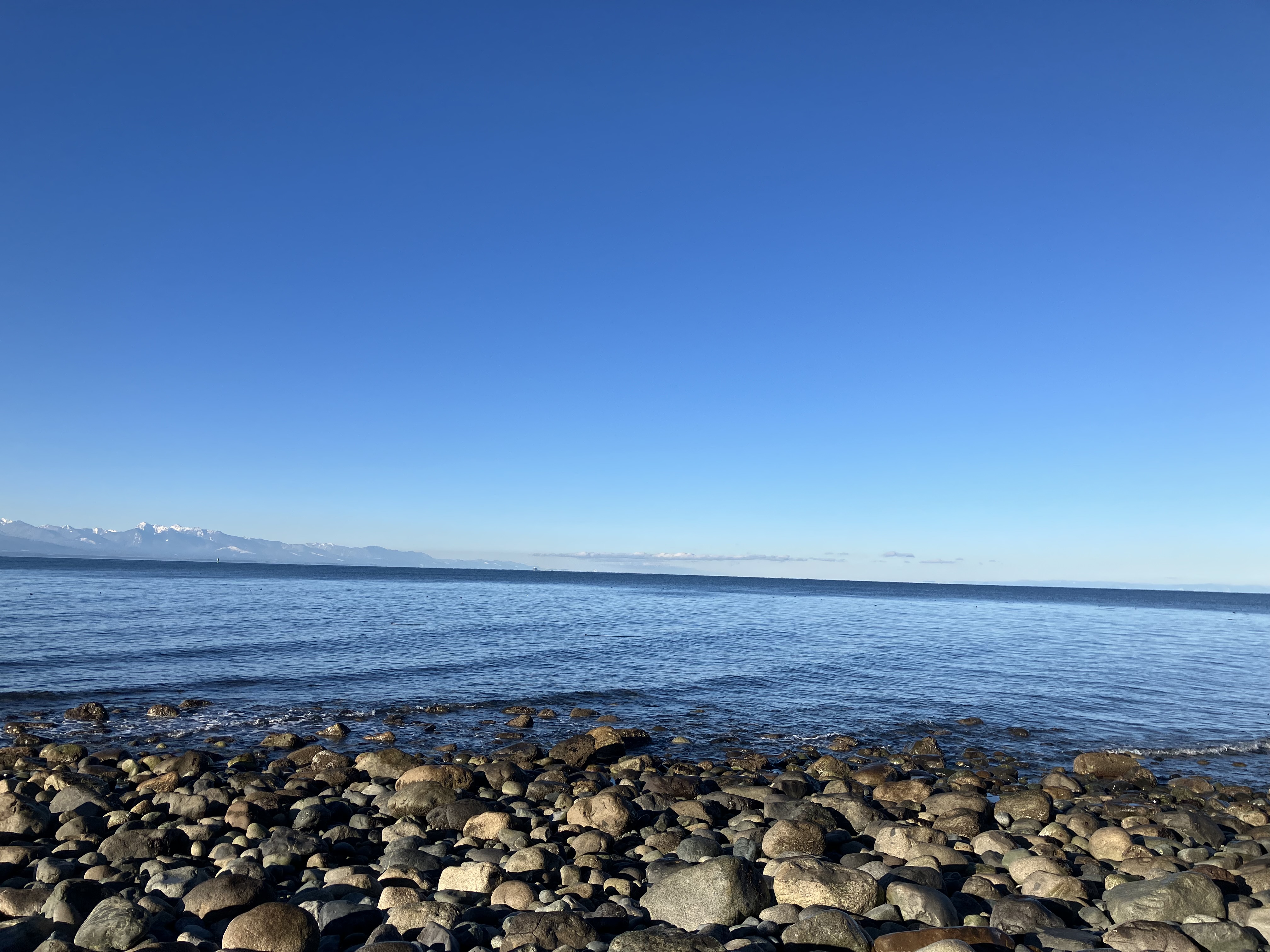
Standing in the sun on glacial sediment from The Cordilleran Ice Sheet. We look out at The Strait of Juan de Fuca, flanked by The Olympic Mountains and Peninsula on the left (southwest) and Vancouver Island on the right (northwest). Fort Ebey State Park offers beach front access from nearby parking. It’s a great place to land when arriving, allowing us to dust off the transition and sink into shore and salt time. The color and shape of cobbles littering the ground mesmerize the eye with geologic time. Tectonic uplift and volcanic activity also contribute to the unique geological diversity of The Pacific Northwest. We watched a number of sea birds straining through the tide feasting in abundant ocean larders. There were seals playing in the surf, and gulls calling above. After a while of observing, listening, and being still, we saw what we thought might be sea otters floating on their backs a few hundred feet from shore. What a complete transition from the snowy foothills where I had started my journey earlier that morning. Now, the sun was up and we were off to explore the island on an unusual sunny winter day.

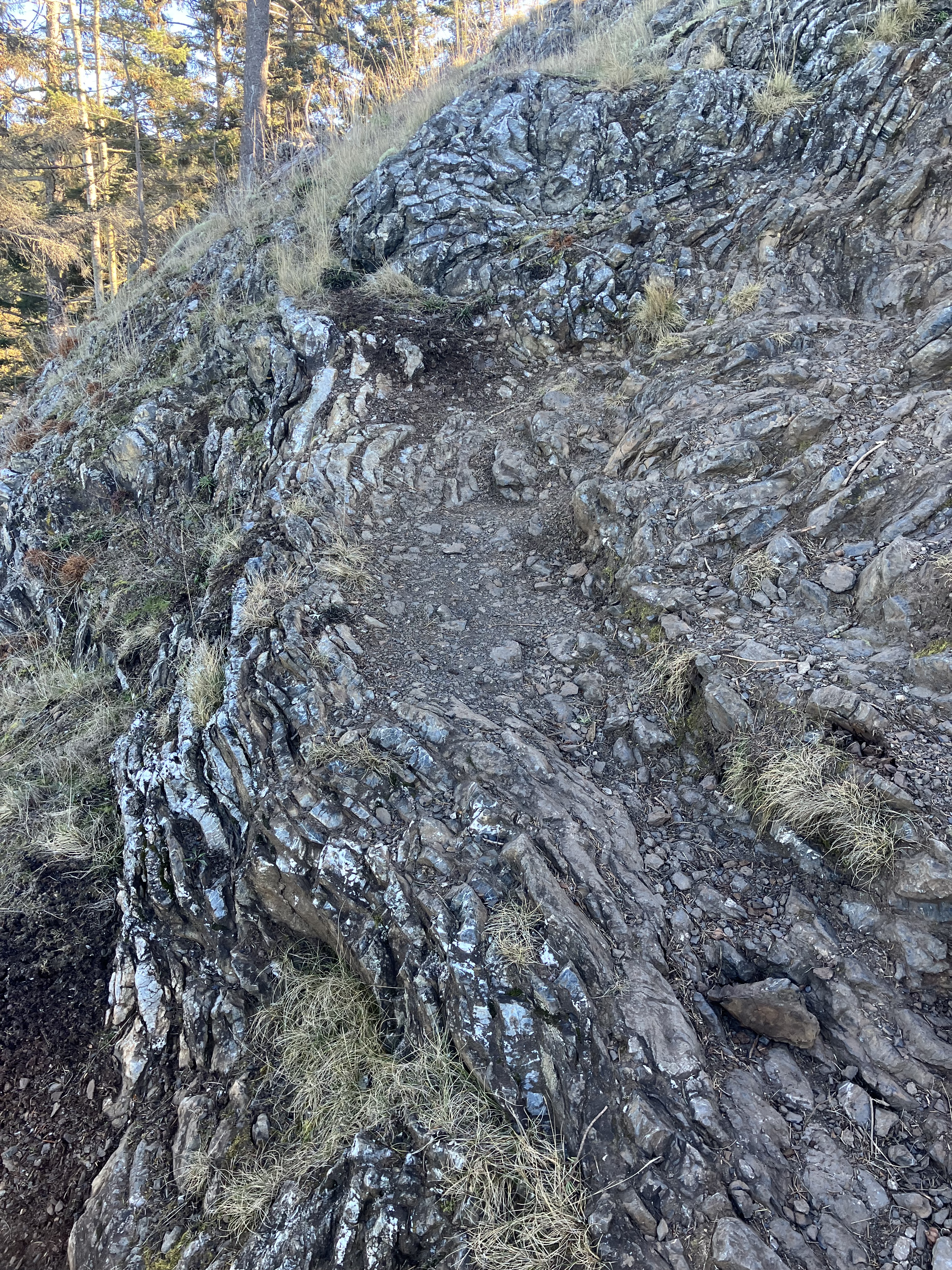
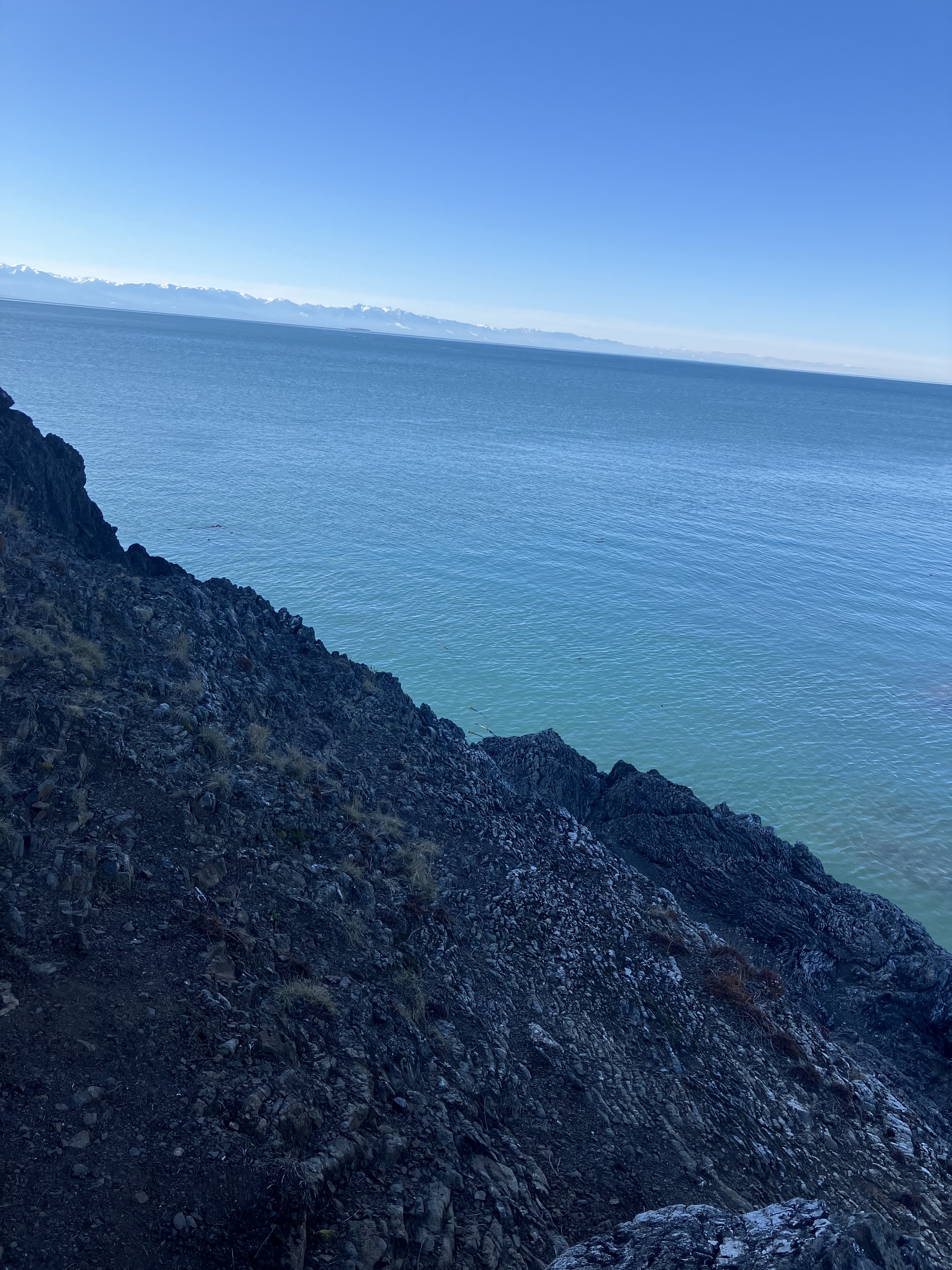
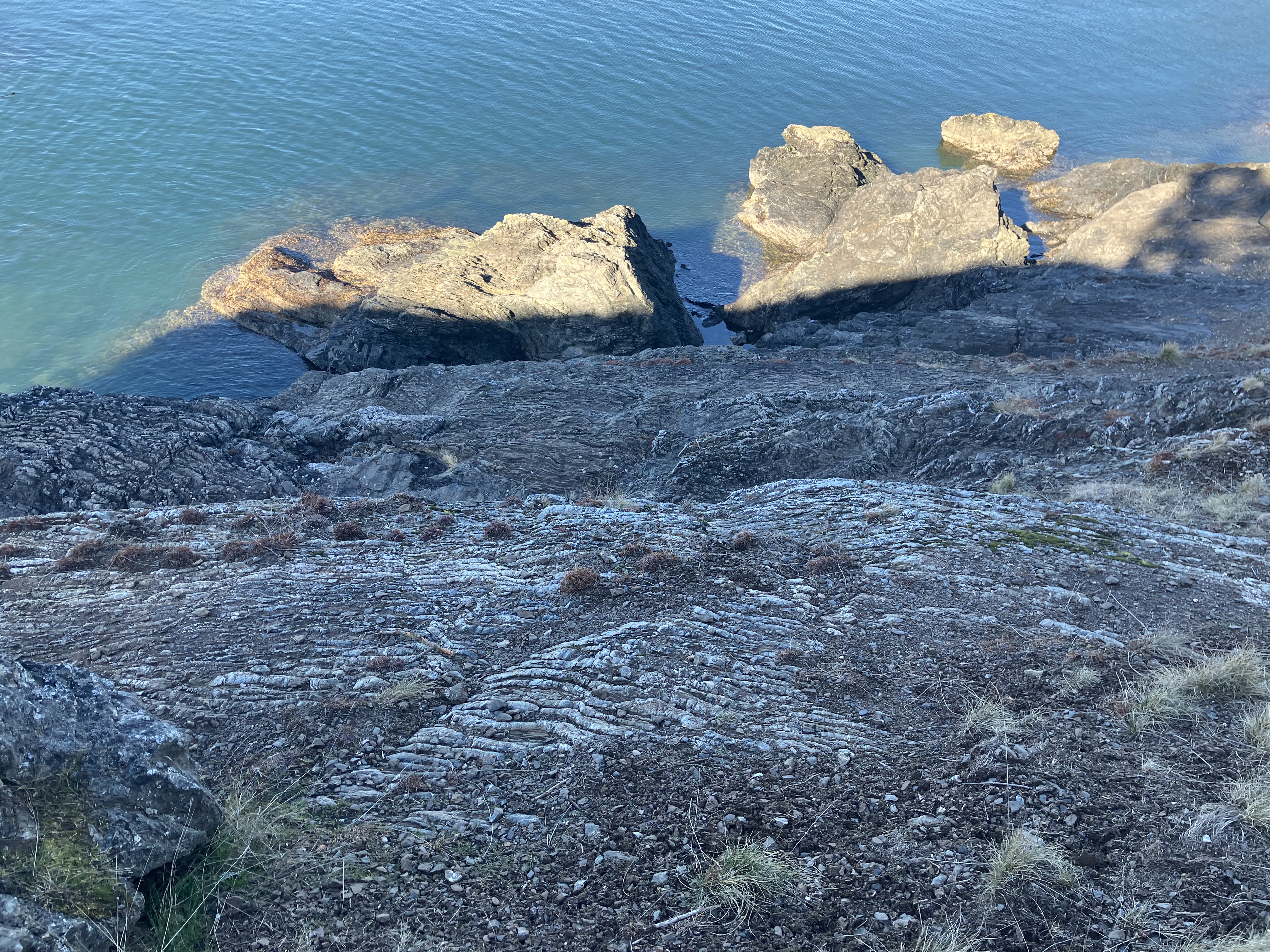
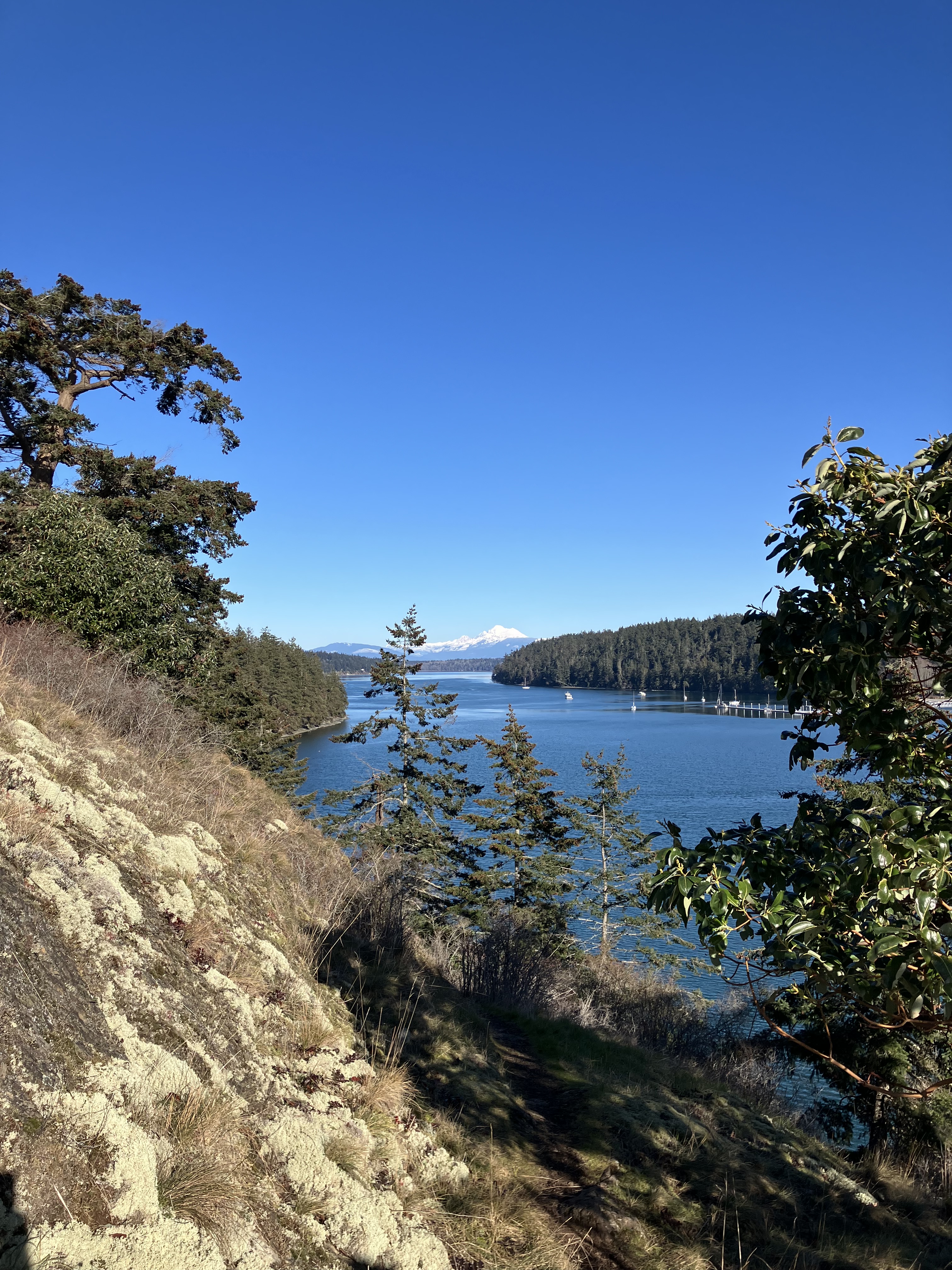
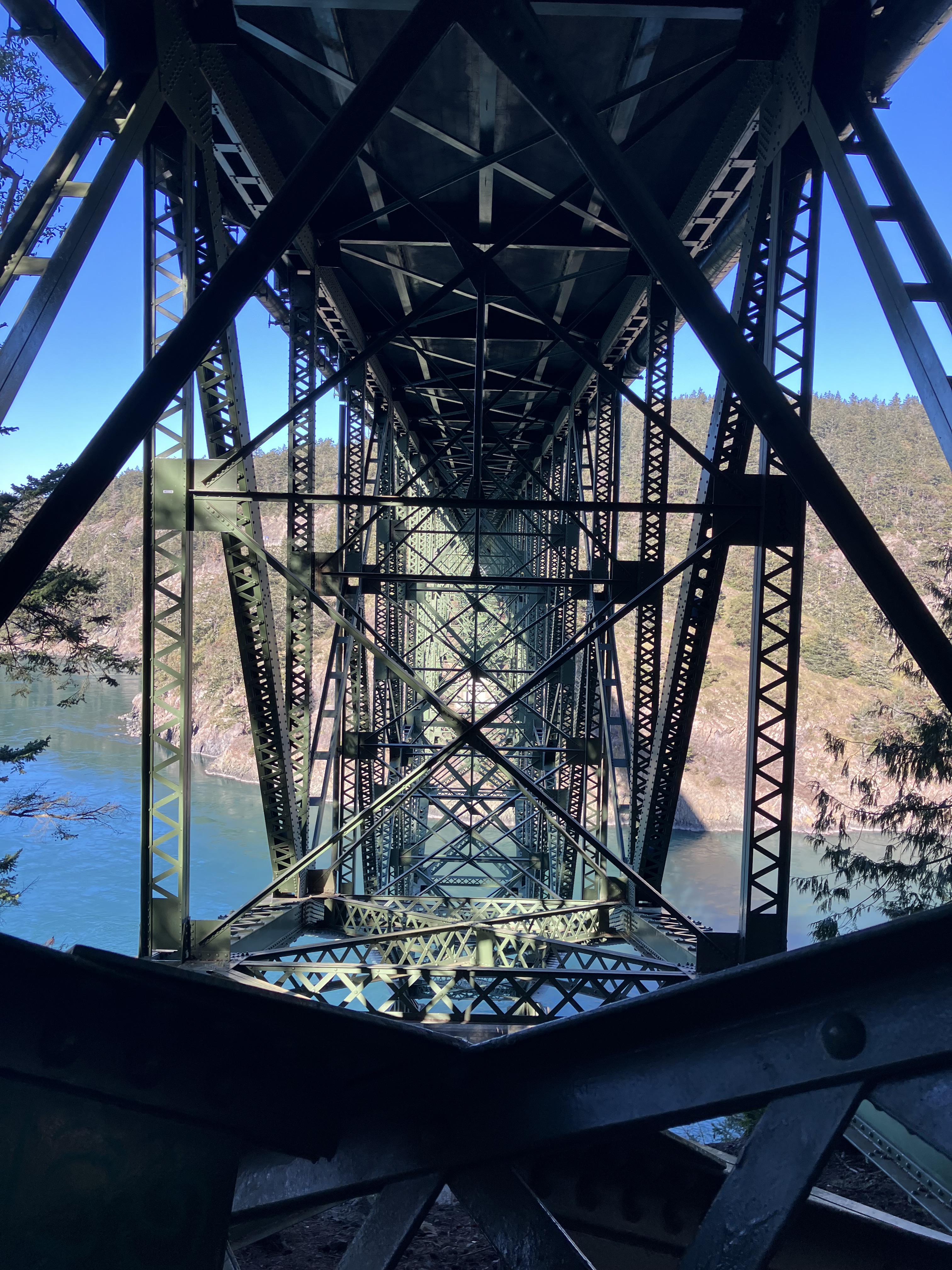
We continued to sit near the ocean shore, enjoying some breakfast and sipping the hot coco I’d made for the trip. As the warm sun hit our backs, we shared memories of the island and out last visit there together, then we watched other people begin to arrive at this easy access beach front in the state park. A pair of adolescent bald eagles were soaring in and out of the trees near us, chirping and landing together in a series of vocal whistles and acrobatic flights through the forest and over the beach. Ducks dove away as the large birds circled above. Their imposing brown bodies blended into the gnarled tops of a windblown Douglas fir tree where they perched and watched the sea birds. We packed up and headed north to a unique geological site near Deception Pass. Rosario point is a special place, where you can observe ribbon chert. One of the only places you can find this formation in the state of Washington. I was eager to witness this rock myself, and, as we stepped out onto bare ocean rock, I quickly located the chert formations and eagerly took these photos to share.

Nick Zentner, our own amazing local Washington State University geology professor, gives this informative talk on site at the ribbon chert formations. It’s a pilgrimage for some people, and I’m lucky to live within a few hours of its charming face. The point has a wonderful loop trail, which can be a scramble up in a few places if you want to get to all the view points, but there is an easy walk in and out access trail for those looking for an easier time. A winter mid week trip is ideal, try for a sunny clear day so you can see everything. The views of surrounding mountain ranges and island crags feels vast, yet remote. There were people around, but you could still find little private spots to take in the ocean and put your hands into smooth pebble beaches. There are plenty of coves and other longer trail systems within the park to explore.

We’d chosen to go to the far end of the island and slowly work our way back to the ferry by the end of the day. Deception Pass can be a mob scene, but today, other than a little road work (thank you infrastructure upkeep and the people who do that hard and dangerous work), we had parking wherever we went and had private trails and beaches most of the time. It was beautiful, and warm enough to be comfortable outside. The islands are always micro climates with sun catch, making the beaches warm and inviting, though the water is still frigidly cold. We were not there to swim, but the dog had some fun in the surf fetching beach wood sticks. There is an easy trail from the parking lot down to the dramatic pass, where it’s so narrow, the tide rips back and forth through the narrow opening, creating splendid drama across the water.

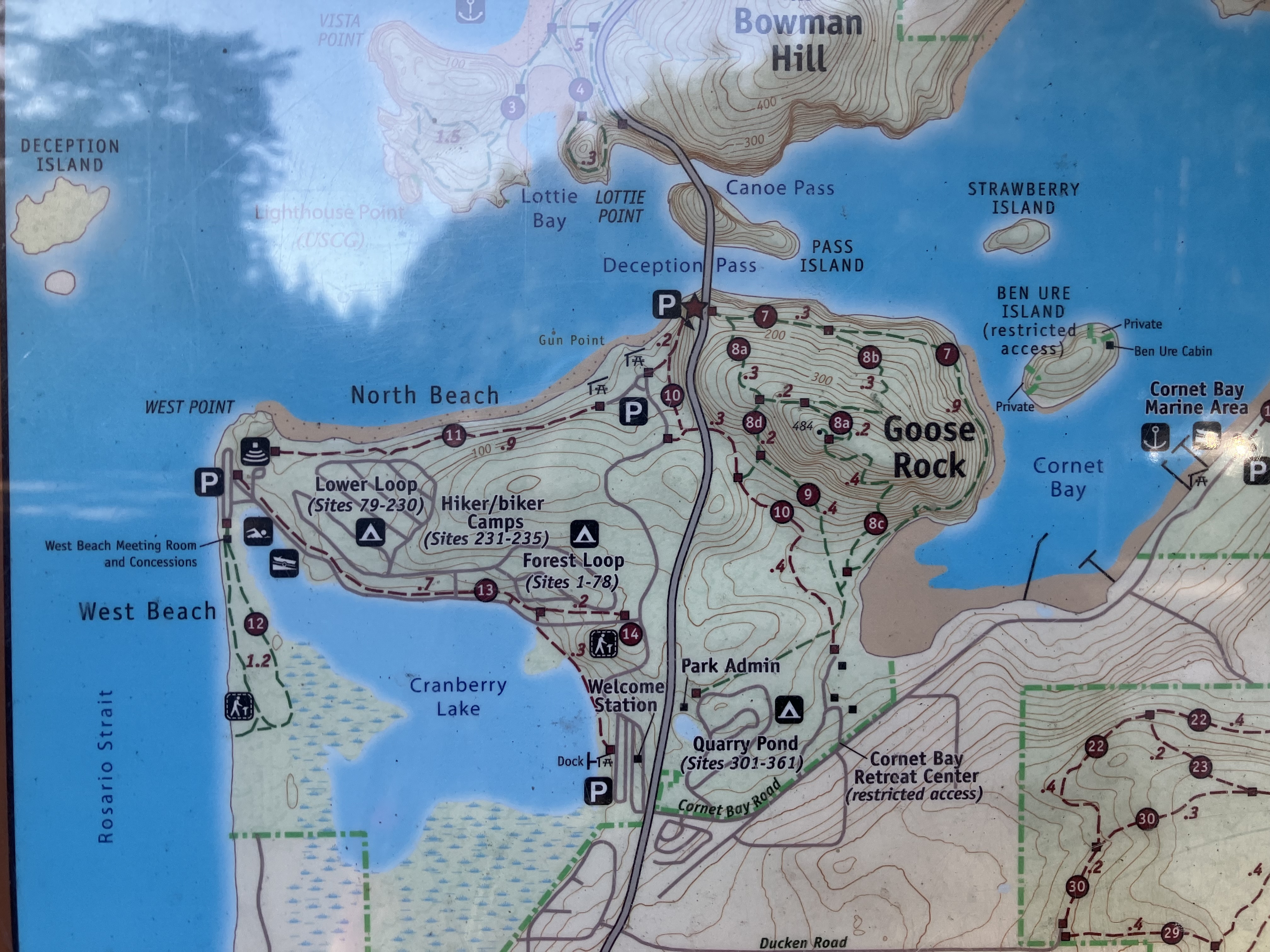
We climbed around on the rocky outcroppings and enjoyed witnessing the tide’s change. After a good time on North Beach and some rock hopping in Mac’s Cove, we climbed back up to the trail head and began a hike around Goose Rock Point. The trails were well marked at the starting point, but we began to question our direction a few forks in, sticking to the shore and edging around the outside edge of the small peak. There were several shore access points, but we were moving with intention, and eventually found signs that did point the way home- over the top of the point, so we had an unexpected climb up and out at the end of our hike. There was no real fear of getting lost, but we did not want to end up on a trail taking us further and further away from where we had parked.

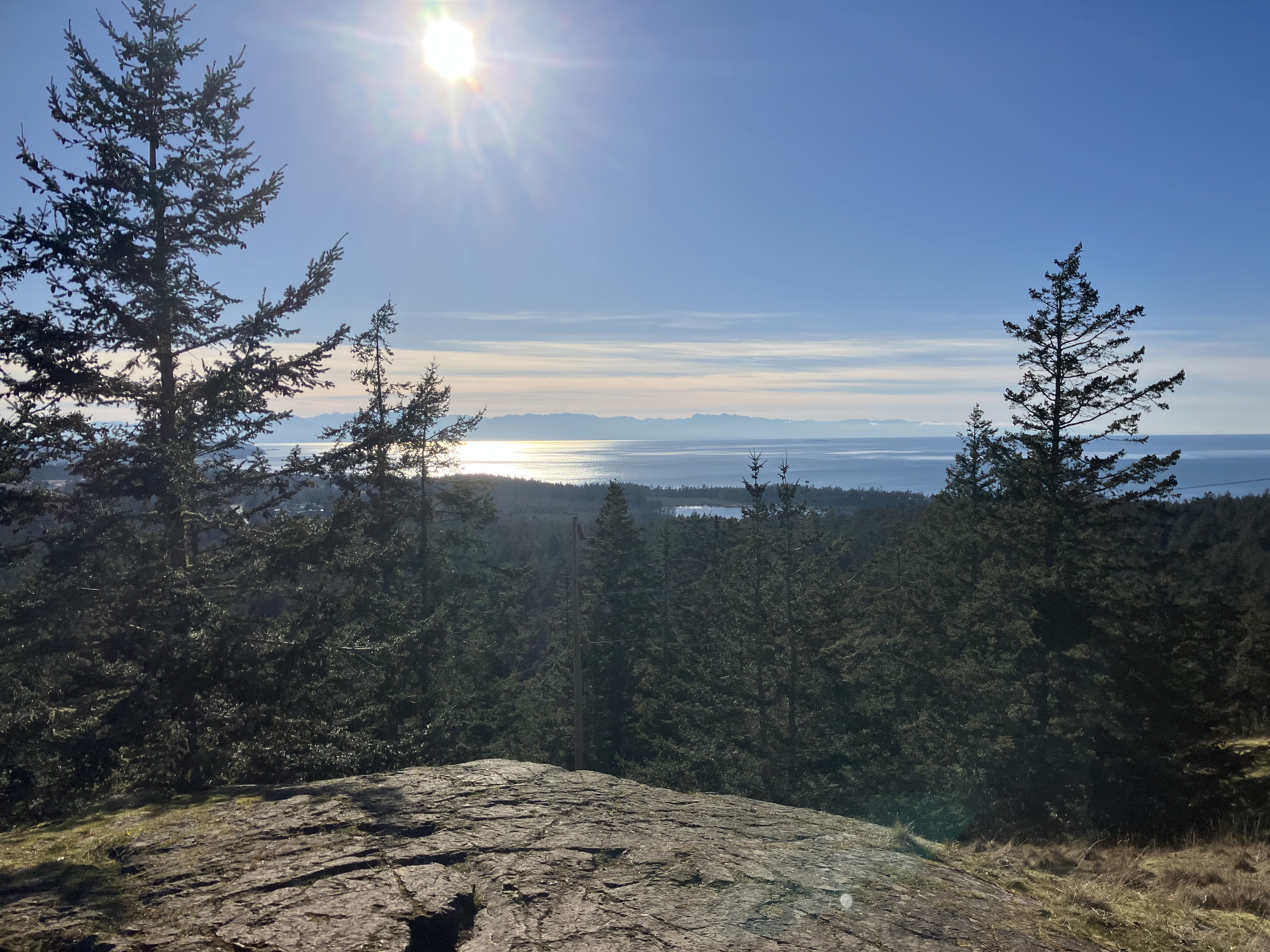
Granted, I had taken a picture of the map before we headed out, but forgot about it when we were in the thick of things. All was well in the end, and we got an unexpected view form the top of Goose Rock. This park has a lot of space to explore, and the trails are not miles and miles, so even if you take a wrong turn, you’ll eventually hit a major road and know where you are. There are also great camping sites for when the weather is a little warmer. Again, in high summer, this place is a mob scene, so plan a trip to visit in early spring or late fall if you want to camp. The area is full of opportunities to explore, enjoy island time, see unique rock formations, and still get home that same day. We planned to have dinner in old town Oak Harbor, which was splendid. The old town is further east from the main road and strip mall hub near the Naval Air Station- which does fly a lot of jets earlier in the day. By late afternoon, things had quieted back down, and we enjoyed our hike around Goose Rock without disruption.

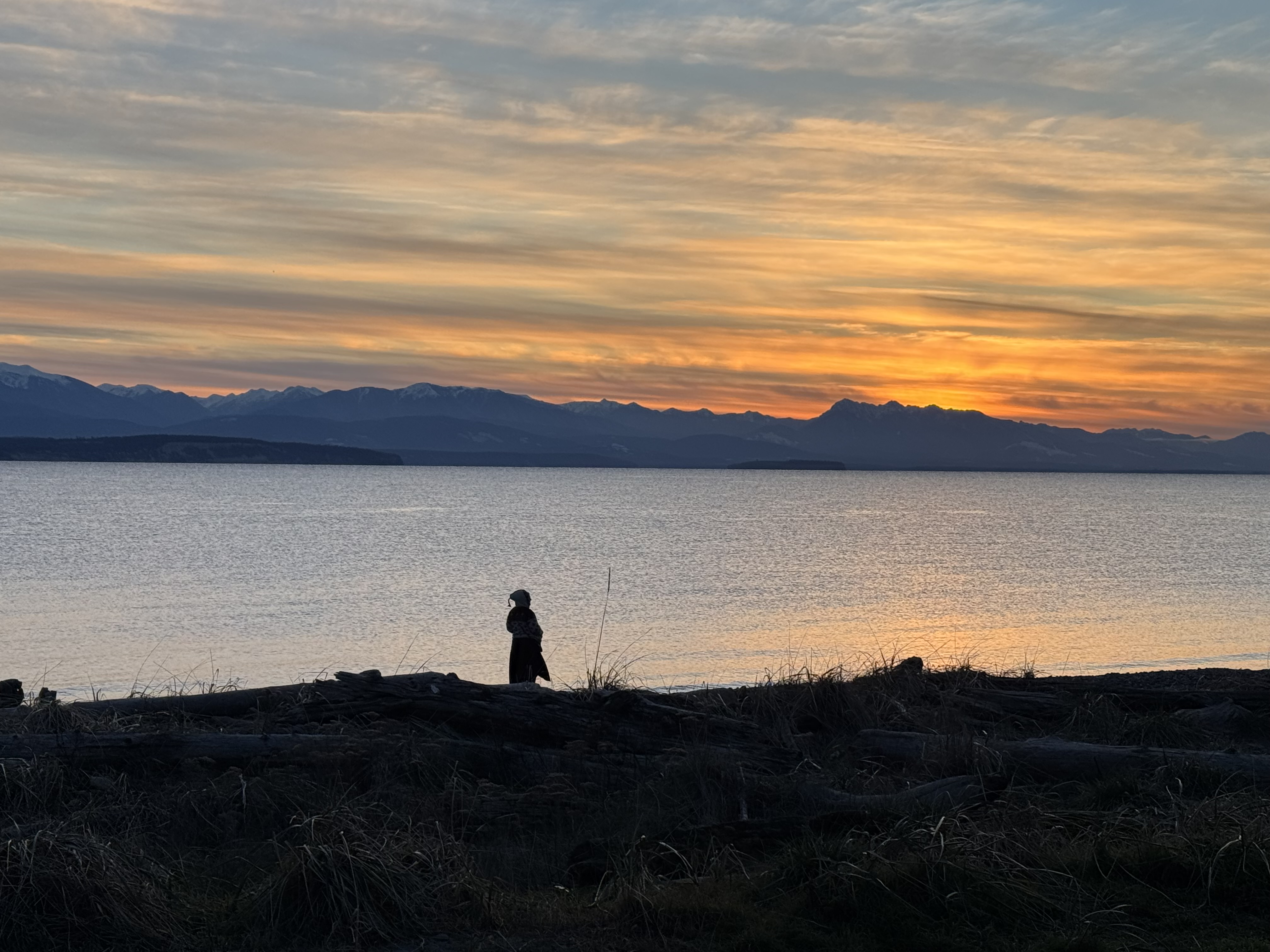
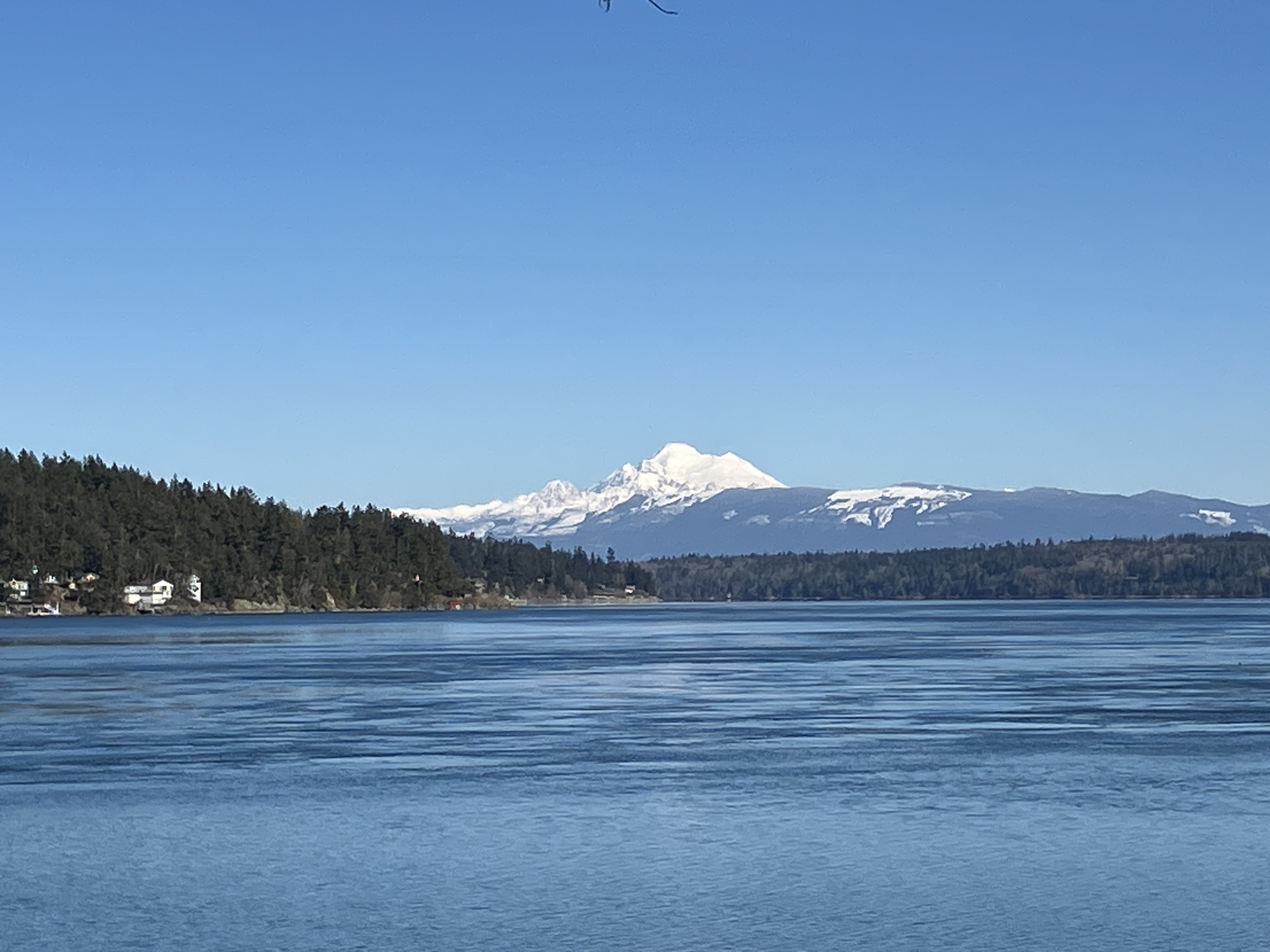
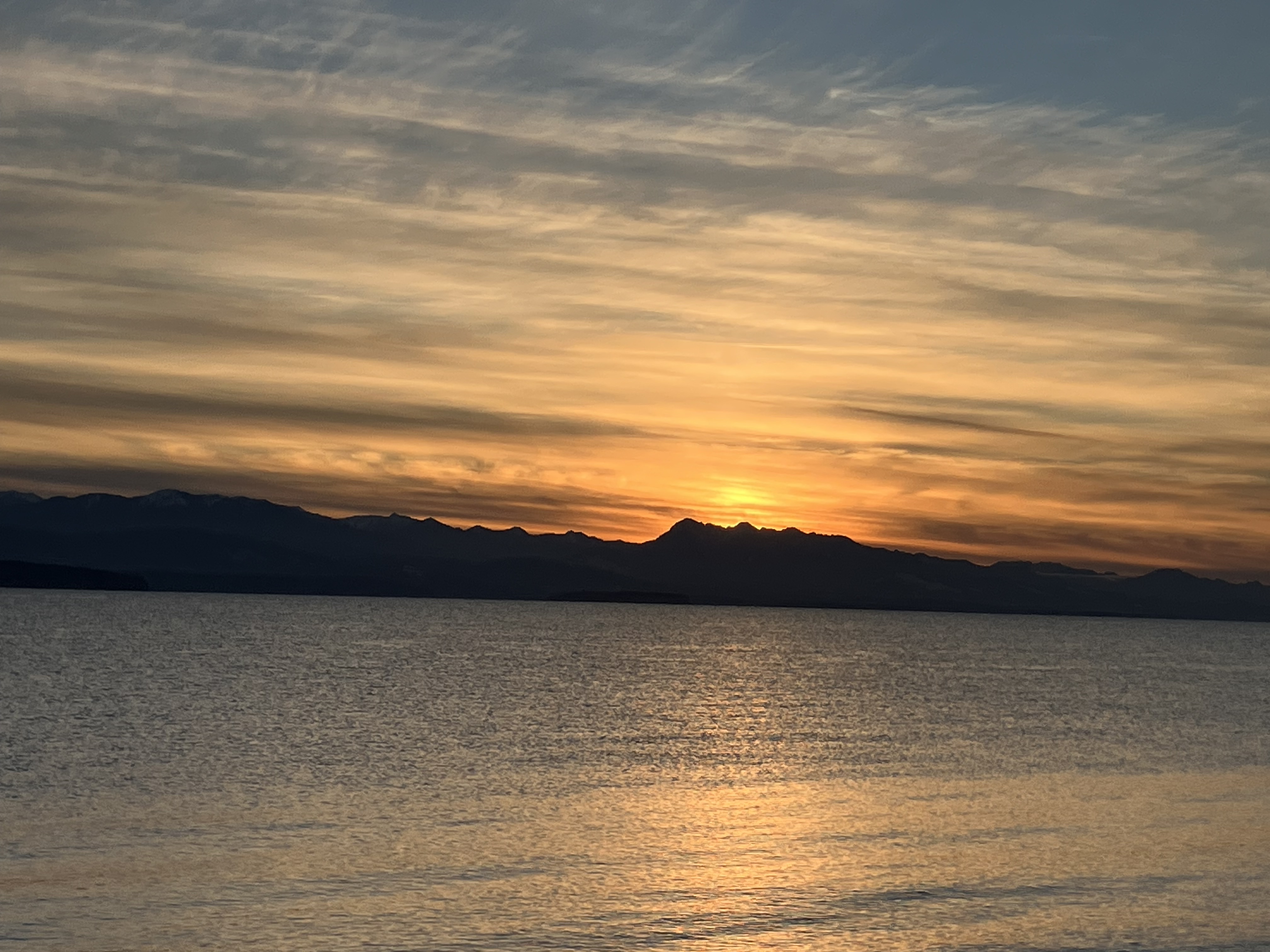
After a fine meal at a local Irish Pub, we climbed back into the truck and headed towards the ferry. On our way back, we took a moment to drive back to the coast to watch the sun set. It was a magnificent site from the west shore of Whidbey Island looking out to the Olympic Mountains. We’d had a full and fun day on the island, far from snow and ice at home. In just a few hours, we had escaped to warmer wilds and beach front fun. Now it was time to pack up and head back to the farm. I love living in such a dynamic place here in Western Washington. From mountains to sound, there is access to snowy peaks or temperate beaches even in the darkest winter months. My spirits are recharged in just a day trip to coastal relaxation. What a wonderful place to call home.

Lambs Abound

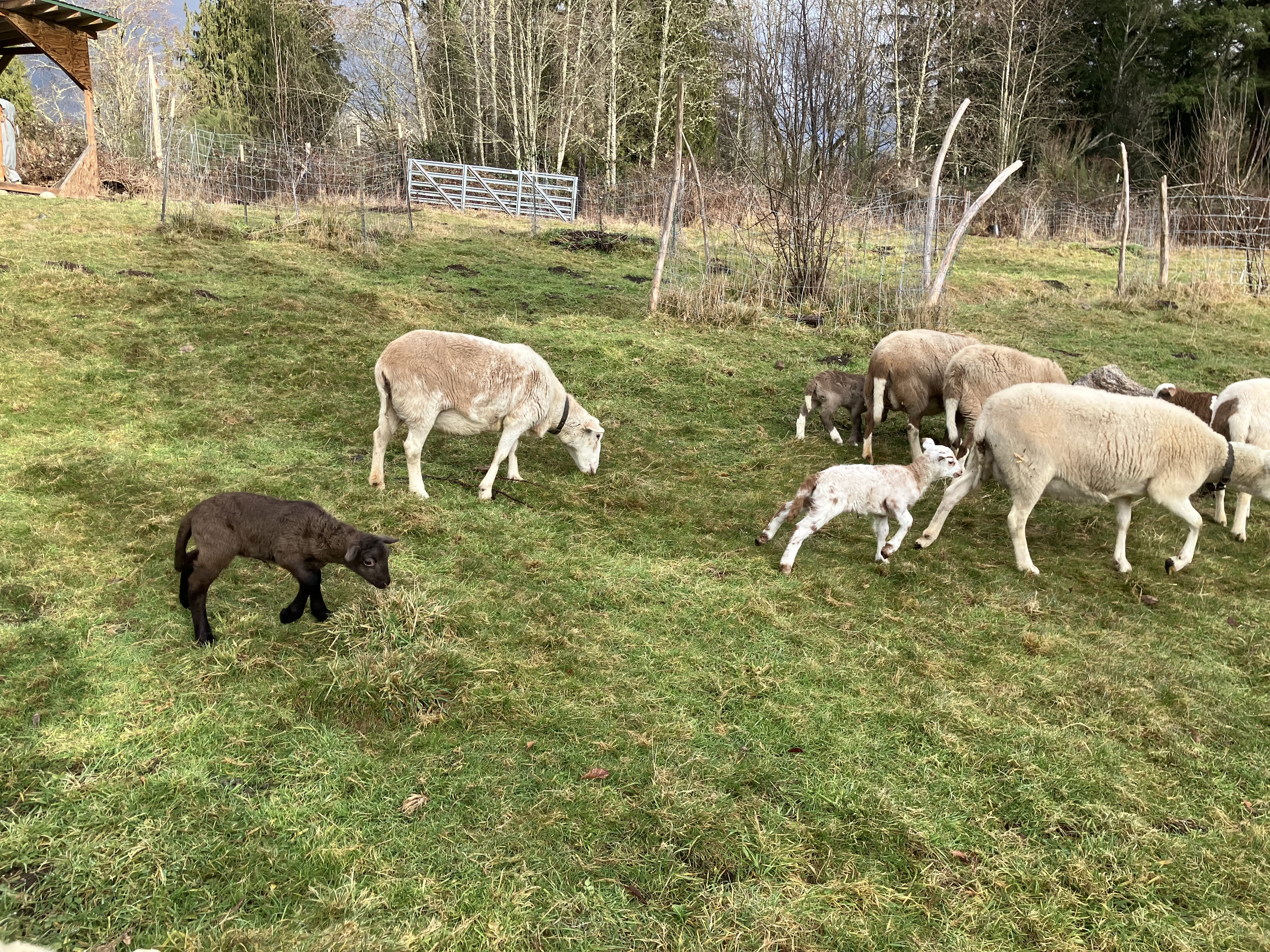
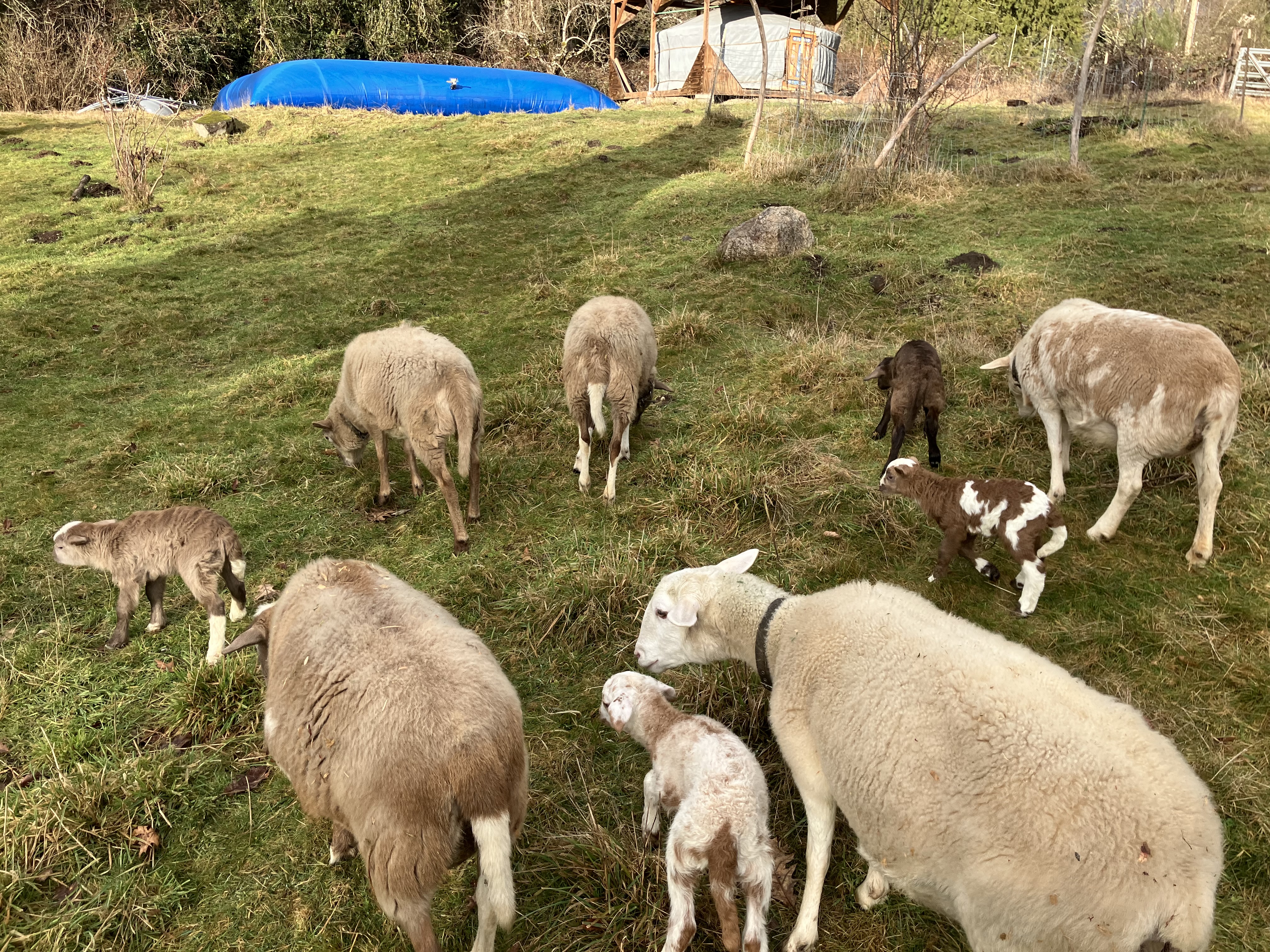
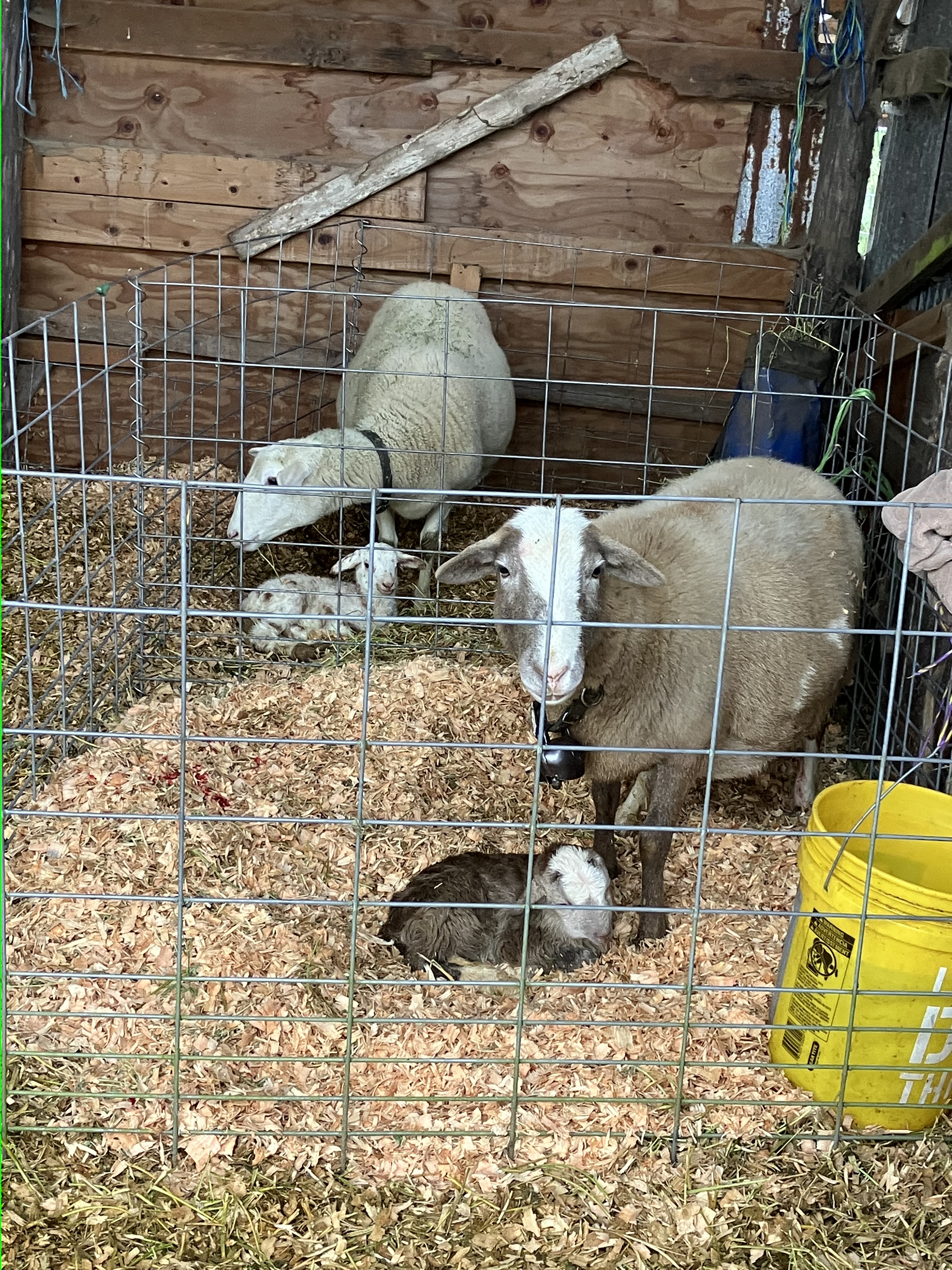
The year of “Q” is off to a strong, healthy start- thankfully, that’s the norm with our wonderful flock of Cascade Katahdins, now in their 6th year at Leafhopper Farm, restoring topsoil and fertility to EEC Forest Stewardship for the long term forest canopy yet to come. Each new year, a different naming letter is chosen to keep track of sheep through the generations. This year’s names include Quasar, Quinn, Quartz, and “Q”, the gadget lab guy from James Bond, pictured above in dark brown. Leaping away with the rest of the flock is speckled Quasar. She’s a lively young ewe lamb with a very curly neck fleece. Something unique to the lambing this year is singles. All the babes born so far are single lambs- from mothers who usually drop twins. This leads me to believe the ewes were not properly flushed when breeding started in the fall of 2024. Flushing means to give the ewes more food so they put on a better condition weight, thus upping ovulation fertility by 10-20%. I’ve never really thought about purposely fattening up my ewes for breeding, the breeding season starts in late summer, when pasture this year was green and lush. In past years, if we had a bad summer drought, I’d be haying the ewes in August, and they would still have good weight on and drop twins, but this year, for some reason, the ewes are dropping singles.

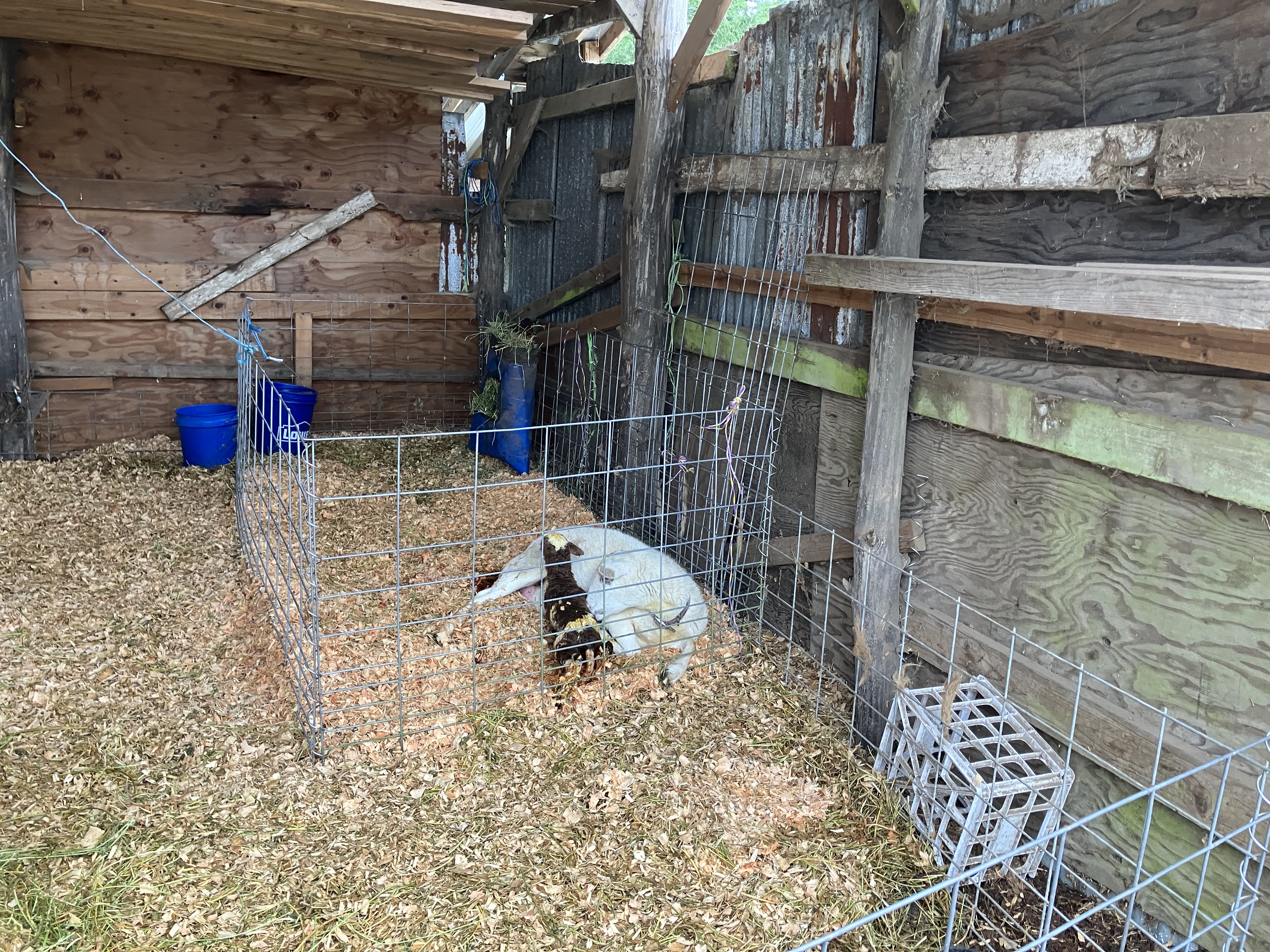
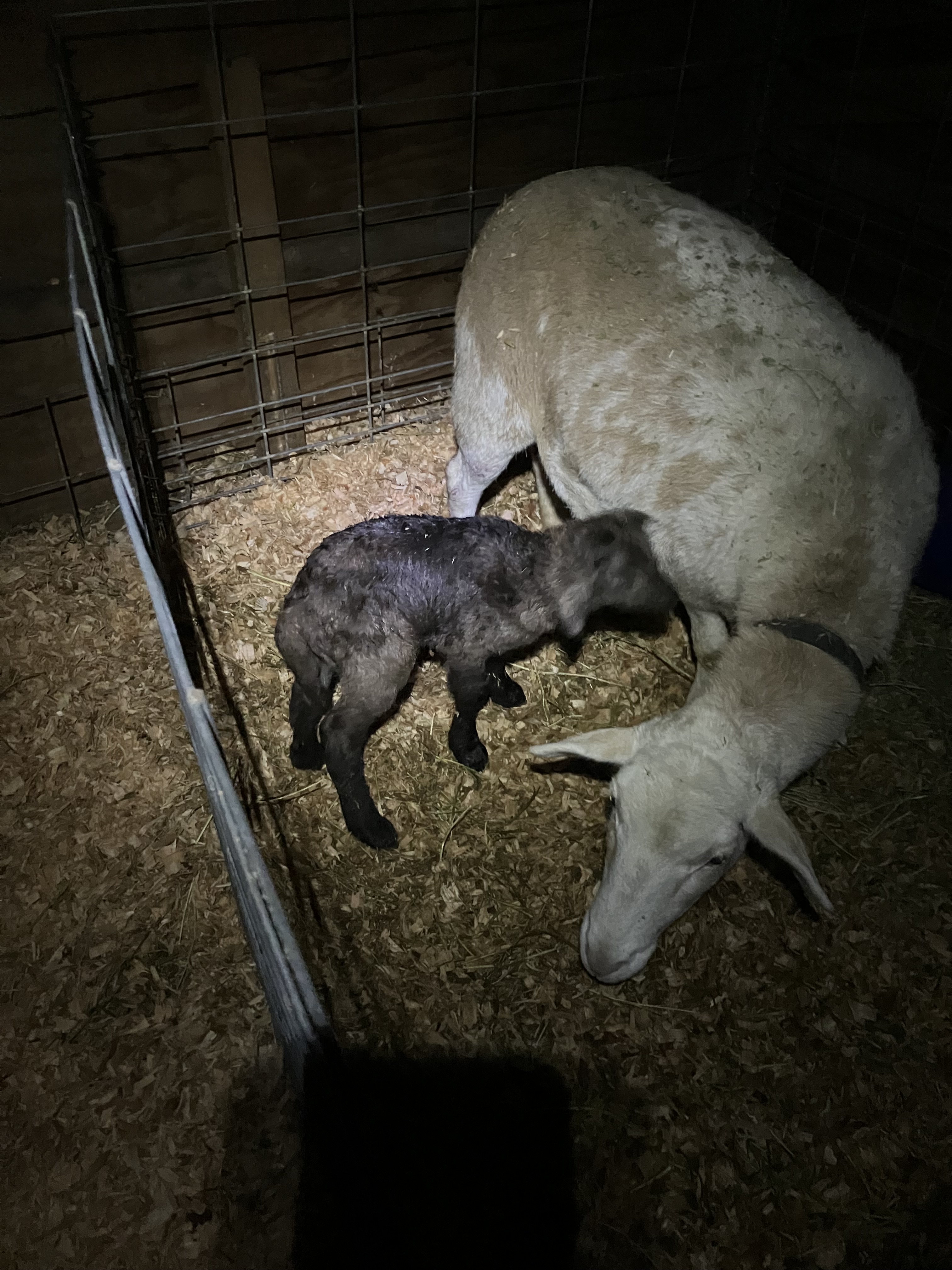
Our most recent lamb as of Feb 20th, 9:30am is Quartz out of Opal, pictured above right after birth. I was there from the start of this ewe’s labor, and am deeply honored to witness the whole experience, from start to finish. Opal has had both her lambings with me present, and it’s truly amazing to support her in this vulnerable time. She was cuing me in about nearing labor with swollen vulva and that morning, while I was feeding, she began actively ground pawing and pacing in the barn. I’m always excited when this behavior starts, and ran back to the house for fresh towels. When a new lamb drops, it’s helpful to wipe off their face and main body to help warm them up faster and awaken them. I do still put them right back with mom so she can lick them down and bond.

I’ll note here that the other ewe in this video is Hattie, our eldest lady in the flock, and the last from the original herd that came from the east side when I first invested in Katahdins. She is not Opal’s mom (who is also in the flock), but she knew what was going on, and tuned in. I might be anthropomorphizing- it does happen, but it looks like Hattie is really attending Opal’s labor. The old matriarch is also pregnant, so she might also just be hormonally attracted to the situation- or both.

I separated the ewe in labor so she could have access to food and water, space and fresh bedding. Giving a ewe space is helpful, but not crucial to a smooth birth. Katahdins have excellent birthing and mothering skills. This is a big part of why I love this breed. Surprisingly, not all sheep are good at birthing or mothering. We’ve pushed sheep to make more lambs at a time, stressing their bodies and shortening their lives- I would also argue, this tactic for profit max from finite nature gives the ewe a lower quality of life. Sheep are certainly more stressed in large, industrial flocks. Mothering skills are not needed because bottle “mommies” (large tanks of heated powder milk replacement) can feed all the lambs that don’t take to a mom, are not able to get enough from a ewe with two teats trying to feed six, or some other causality in the race to make more lambs. This kind of profit driven nature is nothing more to me than bad breeding. Karahdins are known for being fertile, but I only ask two lambs from a ewe as the ideal. That’s the number of teats a ewe has, and that’s the best design for her womb.

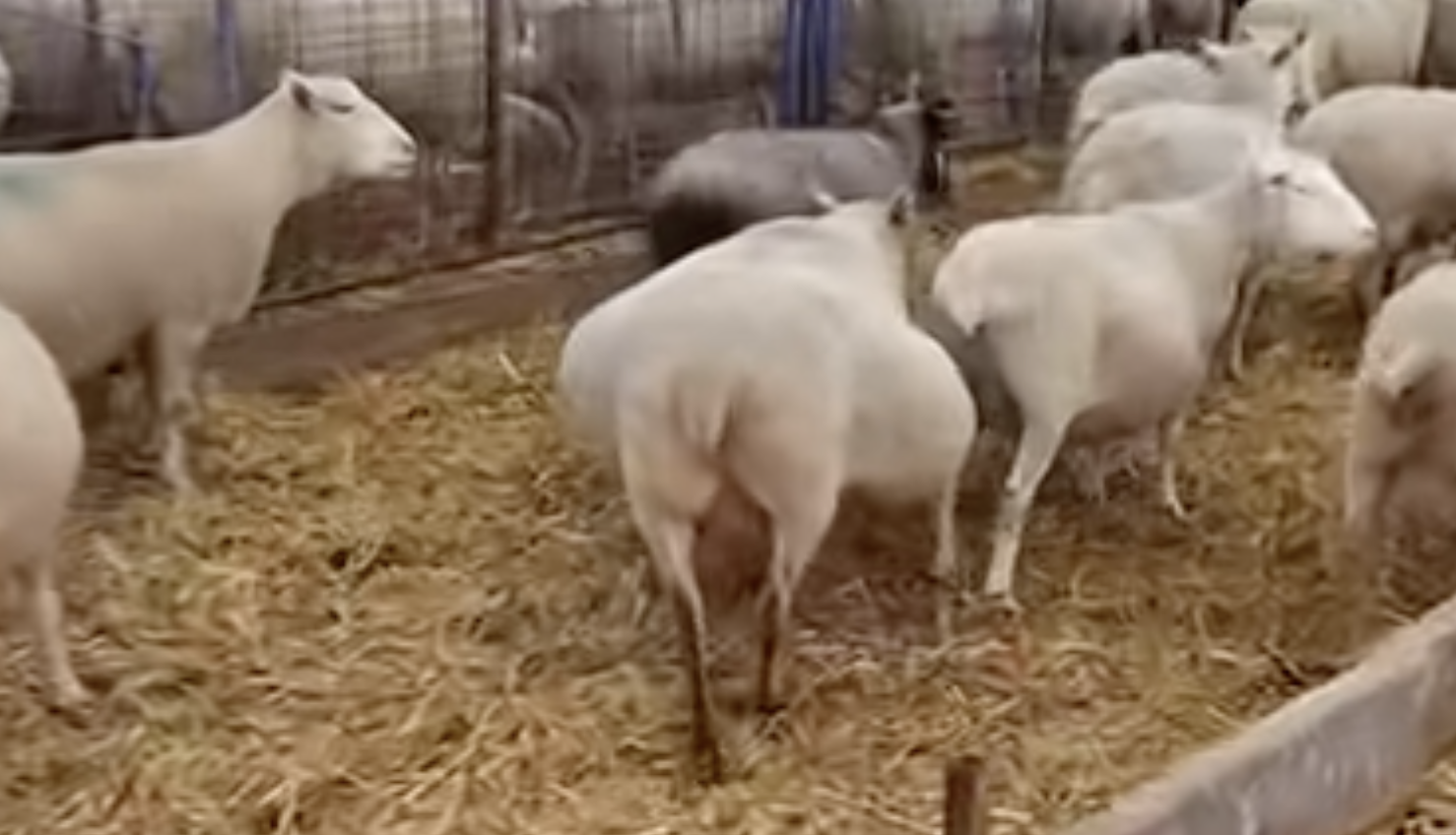
The ewe pictured above is not a Katahdin, and not from this farm, but they are wool sheep in an industrial operation pushing for the most lambs possible. I’ve watched some of the drama this farm faces during a very stressful lambing season, but they make money to support the costly industrial expenses linked to this method of agricultural production. Yes, this system feeds more people, but at what true cost to the people and animals involved? A hundred small acreage farms like mine would have to exist to replace this production, but if they were all working like mine, and we could cost share hay, localize pasture rotation and land restoration plans, as well as connecting more people directly to their food, and not sending truckloads of animals to big slaughter houses and feed lots, the world could be a better place, with regenerative nature a passive return. We have a long way to go for this vision to reach the shelves at your local supermarket, but again, that’s not the vision. Super box stores do not connect you to your food or local restoration farming. They never will.

Leafhopper Farm will sell lambs again in the fall of 2025. Two are already spoken for, and we hope the ewes produce at least another four. We do keep a wait list, which is the best way to secure a lamb. Annual subscriptions take priority, so please let me know if you want to be a yearly buyer- that’s the most helpful way to invest in this small scale operation. We don’t ask for deposits, because until the lambing season is done, we can’t promise numbers. Don’t count the chicks before hatching and all that smart farm talk. The single lambs will be much bigger this year, so prices are going up a little bit. I’ll have full details in another update this summer. For now, the exciting lambing season continues in leaps and bounds.

Lambing 2025 Begins

The ewes held out till a greatly appreciated change in weather brought temperatures up out of the teens and back into the just above freezing optimal environment for lambing to begin. It’s been a later season than expected, though I put the ram out a little early this year. Timing is liminal in nature, unbound by hours, days, or breeding calendar expectations. Industrial commercial farming has invented controls through chemical and physical forces, which do constrain timing and success- at the cost of much effort and expense, still it’s profit driven, and will work long enough to get a pay out in the short run. We do the same thing with people, treating them as numbers with risk and return priority. The US conservative government knows more people means more debt slaves to capitalize on, and if they are born out of unwanted pregnancies due to the oppression of women, they are more likely to be debtors, held in the private prison system, or any number of other predatory money making abuse schemes inflicted on the many by a select few. But This is about lambing, so let’s get back to counting sheep.

The first lamb born at EEC this year is “Q”. He’s a healthy, dark brown single. It was a bit of a surprise, his dame usually throws twins, but she has skipped the past two years, so it was a celebration of her rekindled fertility. The following day, more vulvas were swelling up, signaling imminent labor in the flock. Once lambing starts, the hormonal signal moves through the whole barn, and ewes who are around the same time of pregnancy, drop together. I

t was by chance I canceled some weekend travel plans, and was there to fully drop in with the ewes. Katahdins are great mothers, and usually have smooth deliveries when they go down. Early signs of labor include continually pawing the ground, rubbing against things with their sides, and laying down. Being with the ewes to observe these behaviors reassures me of the ewe’s health and well-being throughout delivery. I’m on hand to assist and aid in connecting the ewe with her new lamb. I’m also watching to make sure the afterbirth is fully passed out of the birth canal, and that no second lamb is stuck. Other observations at the birth include seeing the new lamb suckle successfully, take in the colostrum, and that the ewe bonds well to her baby.

For the first round of lambing, the veteran ewes lead the charge. All three moms bonded right up to their single lambs and passed their afterbirths in a timely manner. I was a little concerned about one ewe who was so large, I actually did a check on her uterus to make sure there was no second lamb stuck. She was empty, so I sat back in relief and watched new born babies awakening into the world for the first time.

The ewes murmur to their lambs even in utero, so the babies know their mom’s unique voice when they are born. Here, Lupita cleans her lamb while making the murmur noise to link sight, sound, touch, and smell between the two beings. There are a ton of hormones going on too, along with many other chemical reactions we can’t see, and barely begin to understand. I’m sure a lot of mothers are smiling as they read this, knowing only too well how complex birthing really is, and the lifelong bond between mother and child. Though sheep are more herd driven than family bound, they do often stick together in family groups within the larger flock. The Leafhopper Farm Cascade Katahdin flock is so small, all the ewes are related in one way or another, so the flock is also fully family. Industrial flocks of thousands, often with many important individuals brought together to form vast herds, fracturing the familiar structure within them. EEC Forest Stewardship incorporates sheep in the restoration forest as place holders for the vast elk and deer herds that colonial expansion eradicated over a hundred years ago. Now our modest flock of sheep browses it’s way through select forest groves and across rotating pastures within a tight grazing landscape, turning vegetation into manure compost and quality clean meat for the community.

The sheep will slowly be phased out in another decade or so, as the goats were before them. We’re slowly rewilding the landscape, transitioning intensive farming into reforested mix of native and climate adaptive species with a focus on food, medicine, and materials people need to live lightly on the landscape. I remember this long term vision every moment I’m working with the sheep on this land. Our relationship, shepherd and flock, stretches back thousands of years in evolutionary history. Domestication of plants and animals allowed humans to build great civilizations, though I sometimes doubt the disruption in nature’s balance which has led to where we are today- an abusive race of people to our planet, even as some try to live lightly where they can. It’s a loosing battle against time, but these little lambs aren’t concerned with such vast concepts. A shepherd should be ignorant too, but an educated woman in 2025 can’t help but see the discrepancies and sigh. Instincts cannot be denied.

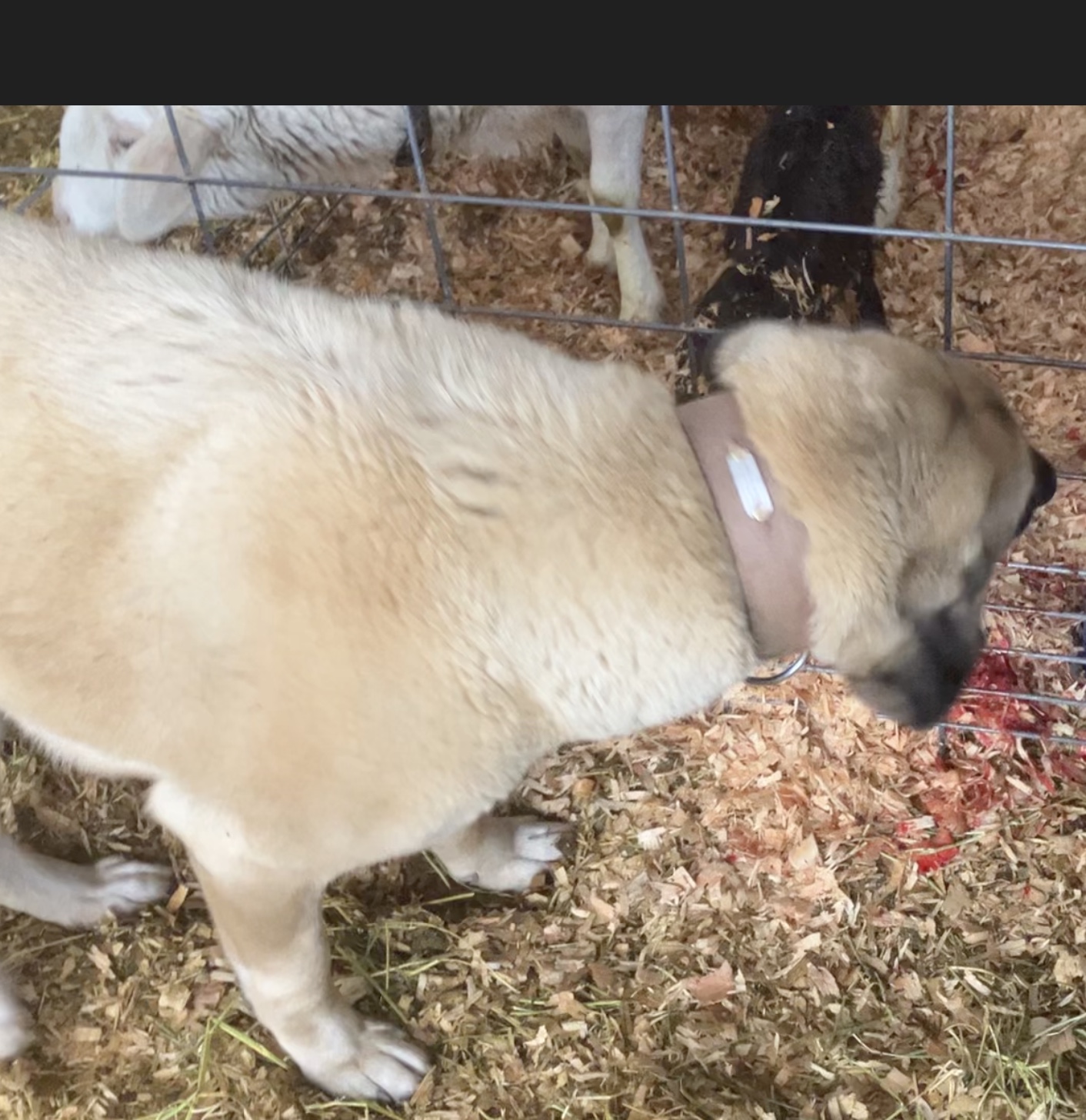
Speaking of instinct, Gill, our LGD Kangal is on duty too. He loved lambing time, and eagerly yelps when he hears a ewe in labor. To quiet him down, and sooth everyone involved, he comes into the barn to help. This lets him bond with the new lambs, and clean up the smell of blood so predators are not attracted to the birthing pens.

If a ewe does not eat her placenta after giving birth, I give it to Gill. He appreciates the rare delicacy of nutrient dense feasting. Still, his sensitive being knows the difference between snack bits and new lamb. He’s never harmed the newborns, and is allowed to stick around by the vulnerable ewes, who often butt away other curious ewes. He’s sleeping with the flock for the next few months, keeping watch and supporting the flock as he always does. What an amazing partner in this sheep venture.

Two more lambs come at the same time within 36 hrs. of the first drop. Also singles out of ewes who usually drop twins, I’m starting to realize I’m in an off year of production, most likely caused by overfeeding the ewes just before breeding. This happened because we had a mild summer with lots of rain, which gave the pastures a lushness, which lasted well into fall. Usually, in late summer the land dries up, and new growth slows down till the fall rains return. The ewes are naturally slimmed down, which encourages more regular ovulation with higher egg release, resulting in better chances of twins.

Overeating may have hindered fertility this year, but every lamb has been large and healthy, which will mean good weight on the bone come slaughter time in the fall. The two ram lambs are looking good, both brown. The single ewe lamb is a splatter of brown freckles on white. She also has a high count of wool in her coat, but she’s got a large frame, and might be a keeper for carcass size in future lambs. It’s really too early to tell much out of this bunch, but they are all healthy and content in the barn, with healthy happy mums feeding them ample milk from productive udders. That’s plenty of wins in the agricultural world here at EEC.

The Price of Eggs

We take food for granted, have for the last couple of generations. My Grandmother remembered livestock at home. My mother did not have livestock. I have livestock because of a lifestyle moving towards slow food. There are eggs in the coop to enjoy, though I am not a big egg fan, I do like to bake with them, and sometimes scrambled with cheese melted in. Chickens at EEC Forest Stewardship play many roles on the landscape, eggs are sort of a bonus item, but I feed a grain with high protein for laying hens, so the input cost is high, egg prices help offset this expense. The grain is made in state, fully organic, and without corn and soy. There are freeze-dried meal worms in the mix. It’s the top quality grain available, and I should be charging $12 a dozen to make all the dollar expense back. However, the birds spread the high nutrient dense excrement across the fields, which would take machinery, additional cost in fertilizer, and time to equate that additional “work” done passively in my free range flock. They provide feathers- a rich calcium source for the land too. So much additional abundance, I only charge $10 a dozen now, finally raised up from $7.

In winter, the laying rate drops to 1-2 eggs a day. It’s typical in commercial operations, to keep lights and heat on the birds to keep them laying full time. This is a ton of added stress on the birds, and they live much shorter lives. Keep in mind all commercial eggs, no matter how organic and good, are forcing production out of their flocks for our modern consumer demands. It’s industrial farming, like any other livestock operation. At EEC, there is not added light and heat, so the ladies get the dark time of year off to rest and recoup. The cold months demand a lot of extra energy keeping warm, so the hens get that energy instead of having it taken by egg laying. It’s a better quality of life for the birds, and the live longer and lay longer. If commercial flocks were allowed this time off, we would all pay a lot more for eggs in winter, or even go without. Perhaps more folks would have backyard birds, but no, the avian flue is haunting agriculture. It’s why egg prices are so high.

In past blogs, I’ve talked about the potential for a sudden cull, and it’s ever present in the back of my mind. I’m planning to purchase some new layers next spring, but now hesitate, because of the risk of flue. I’d not thought this would be a major issue in my lifetime, but it was out of ignorance. As agriculture continues to industrialize, more and more concentrations of animal bodies and excrement, means higher chance of virus mutation and infectious spread. The same goes for people in densely populated cities, Though we like to think our own sewage treatment plants are enough, these concentrated infrastructures, usually along rivers and ocean shores, regularly discharge overflow into our wild waters, in much the same way lagoons outside commercial hog pens breech during floods. Chicken poop ended up in cow feed, which was news to me, but part of how bird flue jumped into dairy cows. It’s industrial choices like this which get us into trouble with the greater biology nature compels to stay in balance.

There is hope that new flocks of young pullets will soon be replacing the millions of birds culled, but the flue is still rampant, meaning more flocks will be culled, and I don’t see the industry rebounding any time soon. EEC cannot meet the demand of current clients, and cannot grow the flock here beyond about 30 for the health of the flock, land, and me- I work with them, clean up the coop, have the risk for contracting the avian strain if it does get into my flock, but I’ll still only charge $10. It’s still steep, but more in line with what we should pay for eggs from well kept flocks. That’s still just breaking even, not making profit to reinvest. Luckily, EEC is not branching out into industrial egg operations, so we don’t need to take out a lone to keep up. The meat chicken industry, which is really on another level from the egg producers, is a dark world of bad businesses and farmer abuse, not to mention the animal cruelty. Battery hen operations are just as abusive, but there are different business practices with the farmers. The industry has not made any promises about production returning to a rate in which the prices can be lowered. In the current profit nihilism of investor greed, we’ll probably never see egg prices lowering- why would they?

This collapse in the industrial food system should be a warning for society that there is great change coming. Food will become more and more expensive. It has been a scarce resource for many in this country already, especially lower income households, but the implosion is falling outward now, into suburban markets where shelves are sometimes empty now. With certain government shifts also coming on fast, we will see more agricultural fails, especially with the health system crippled, and our research on the dangerous viruses like avian flue put on hold. Four years may not seem like a long time, but in just a few weeks, the unraveling of governance will trickle down into our food systems. California farmers are concerned after a couple of reservoirs released water under Slander and Chief ordered action to extinguish the L.A. fires. Incompetent, in that non of that water flowed to L.A. and the farmers are now worried they won’t have enough irrigation water for the summer drought season, thus lowering food production.

What can we do to lower egg prices? How about asking what an egg is worth and why? It might come down to having chickens or not having chickens, or it might turn into no eggs, because the flue will take out all the birds, then cattle, which we have not been culling- because cows are holy- no, it’s because the cows are a heck of a lot more expensive, and it would destroy a dairy farm if you culled all the cows. Many chicken farmers are being put out of business or closing shop anyway because they can’t take the financial risk any more. Dairy farmers are taking a hit if their cows don’t recover from the flue, or get reinfected, but mass culling is not happening-yet. Don’t panic! The CDC guidelines regarding avian flue are still accessible. I encourage everyone to keep an eye on this site, and follow the agricultural information to know what’s in store for our groceries to come. Or just wait to see which shelves empty next.

If you can get a few backyard birds and not cuddle them, maybe invest in the spring. Applesauce is a great egg replacement in baking, I learned that when I lived with vegans in Vermont many years ago. There are lots of alternatives, but for many, the classic egg plays a deep roll in American dining. I understand why it’s such a blow to be paying a real price for them now. It is no laughing matter for people who truly rely on eggs as a cheap form of protein- that’s what Mom raised us on. I’m not sure what alternative she might have used, I’ll have to ask her. We certainly would not have raised our own birds, most people can’t do that, for a number of reasons. Practically, investing in local farmer’s markets, connecting with your nearest farming community by attending tilth meetings or investing in coops can strengthen local production and economy. Avoiding the bulk box stores when you can is the first major step towards reconnecting with local produce, another action would be to eat in season with what’s actually available. There are many ways to strengthen food webs and your place in them. What regular eats in your home can you shift to a more local source? You don’t have to change everything overnight, but having a stronger knowledge and connection to the basic needs makes for a more resilient self and community.

Winter Mushrooms

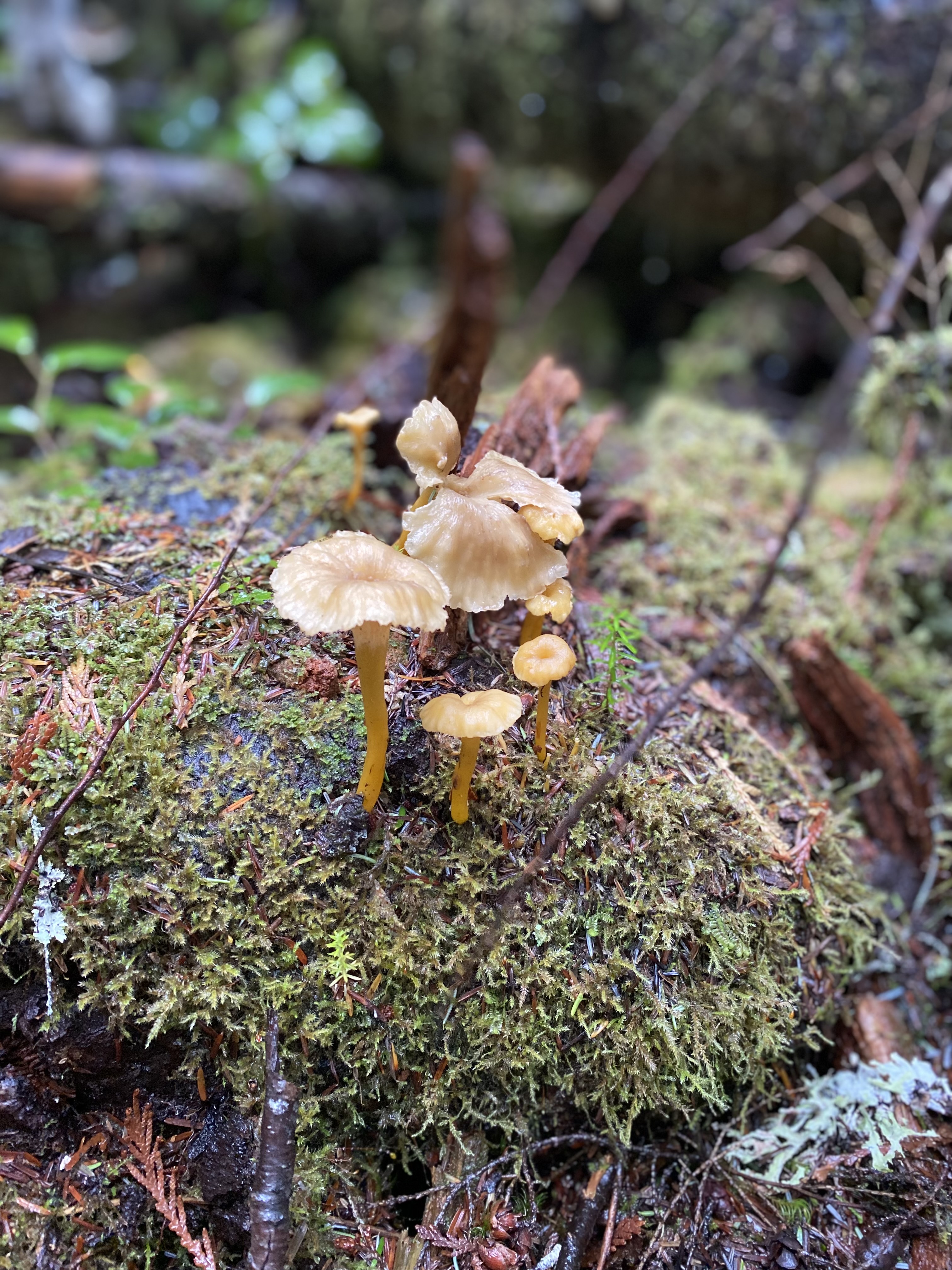
Winter chantrelles are a thing folks- this is a great picture of the species in a group also reflecting age stages. The floppy torn caps are older, and larger, while the bright yellow smaller fruits are young and ideal for harvesting. This species is often overlooked as a harvestable culinary mushroom, but it’s got the chantrelle subtle flavor typical of the family, and is most often fruiting December through February at lowland elevations free of frost. I’ve often found them on rotting stumps in large numbers. They were clumping up on large branches in a second growth buffer for The Snoqualmie River. I often note larger specimens in more mature forests along rivers. Perhaps it is the combination of forest age and nutrient dense floodplain soils that offer mushrooms a chance to maximize habitat conditions. Imagine what our bounty of wild food could be if we allowed nature her time and space to regenerate.

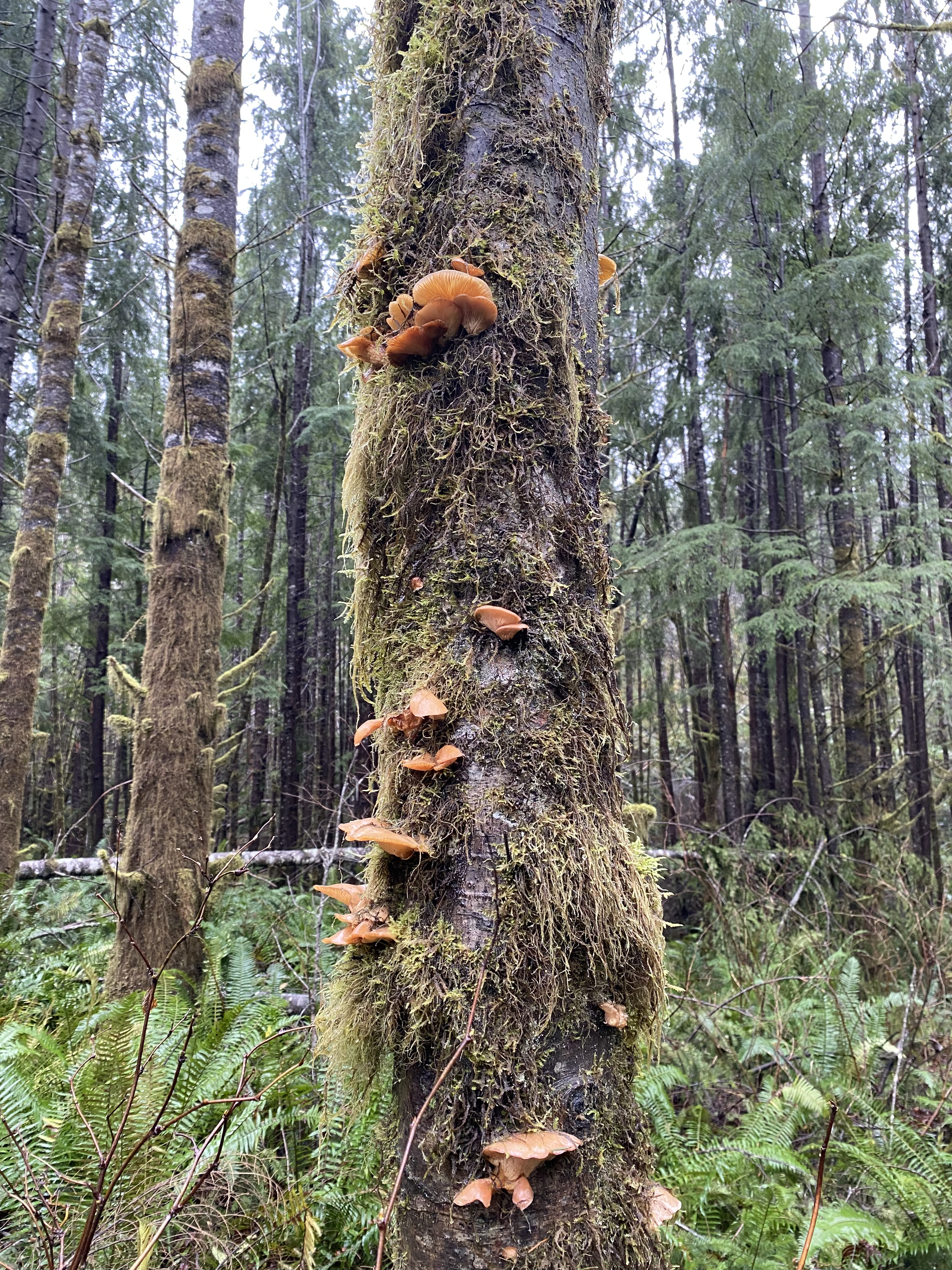
Winter oysters are also available in the woods during the cold dark times of year. They can be cream colored or blue-grey. These specimens are lighter in color, but also older, and blanching. They are growing on alder. I’ve also seen them fruiting on birch. They are a shelf mushroom. Even if a heavy freeze comes, this species will hold it’s meaty flesh together and remain edible through it’s fruiting. These mushrooms usually bloom in larger standing dead groves, and are usually plentiful where present. Note fruiting locations, as they will continue during optimal conditions in the wood for many years. Even after alder snags fall to the ground, oysters will still fruit off them for a few more years, until the wood is too broken down and leeched for their needs. When the environment signals change, a mushroom rely on future spores to regenerate in new parts of the forest to maintain the species. The past generations decline and disappear, allowing the space to change and regenerate. Imagine if a mushroom tried to keep in place and remain decomposing the landscape. Inputs would have to be brought in to maintain the mushroom habitat, completely disrupting the natural cycle and degrading overall production capacity.

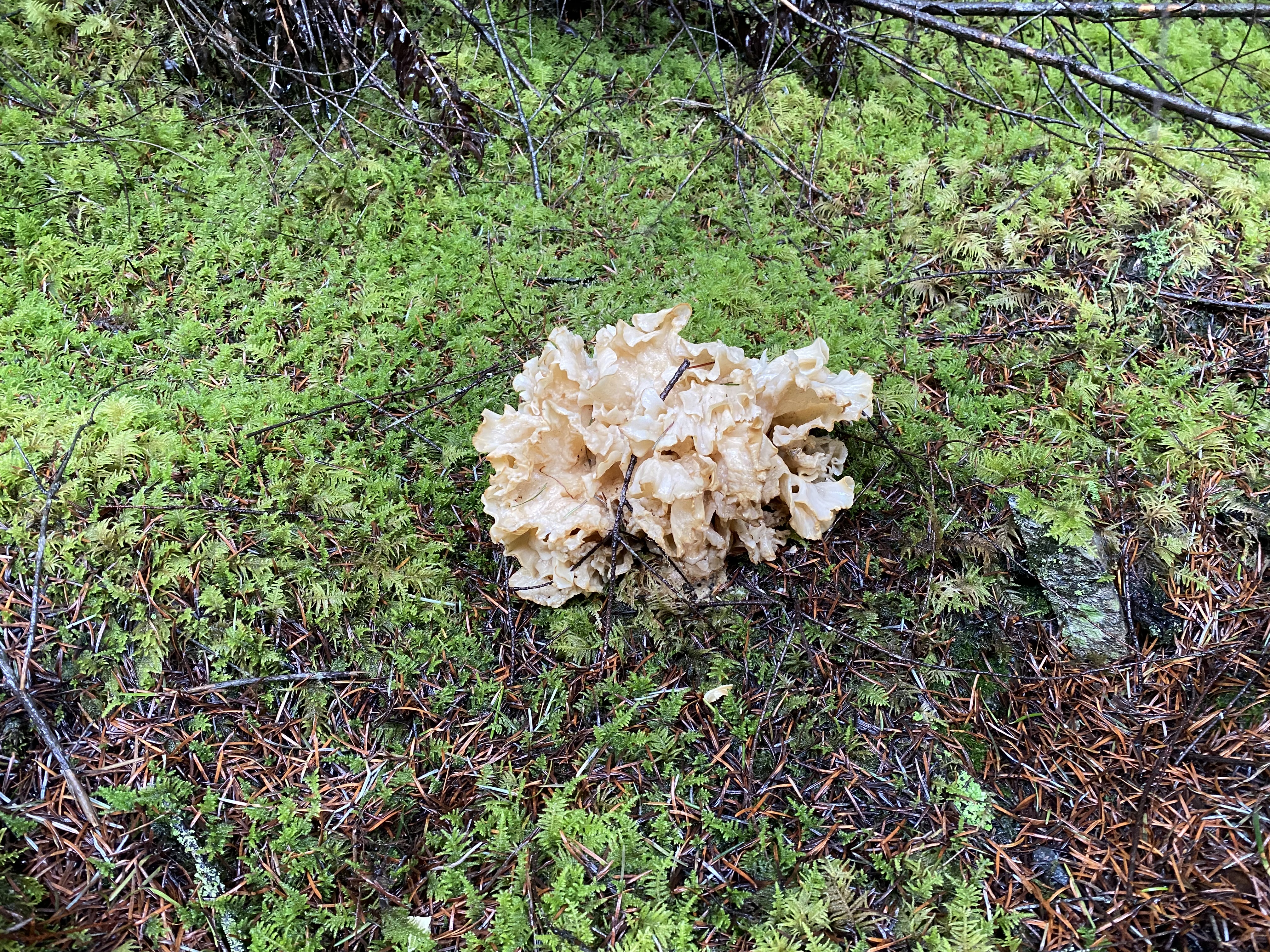
This noodle mushroom, also known as the cauliflower mushroom Sparassis, grows up from the root of surrounding fir trees. It’s parasitic, but not aggressive in a grove. This one was past it’s prime, but still a good find in winter- it would have been fresh a few hours ago. The fruit of some mushroom species can spoil fast, but with no way of timing wild flushes, getting eyes in the woods and dirt time seeking the fungi friends makes for the best opportunity in harvest success. Sparassis is edible, and does taste like egg noodles, but you have to spend some time carefully cleaning them. Their basidiocarp grows around anything it comes in contact with while forming on the ground- needles, twigs, moss- and you’ll need to cut those bits out before cooking. This mushroom is meaty and nutritious, but very subtle in flavor, so add plenty of veggies, savory broth, and flavor to bring out the best culinary experience when eating.

All three of these mushroom varieties are great edible delights to hunt in the woods. They also have no poisonous look alike, but like I always say, if you are going to go hunt mushrooms to eat, go with someone who knows and do not take chances. A brave mushroomer is a dead mushroomer, so stick to what you know. My mentee- who also took and shared these pictures while we were out, took the photos to help her ID the mushrooms and learn, but we chose not to harvest any, and that was fine. I’m picky about what I’ll pick in the wild, both to conserve what is there, and because I want fresh food. With mushrooms, fresh is always best.

Gratitude to the fungal kingdom, the ecology that supports it, the cooperation of the life that surrounds us, and our place within it. So much good food if we keep tending wildness.

Death Based Economy?

The scientists in this film sum up what this blog is trying to address. In being a small farm with local inputs, EEC Forest Stewardship is trying to shift a small 10 acre plot into an abundant forest farm. In restoring a little patch of ecology, we hope to form some small place of adaptability and resilience in this fast changing ecological response to human abuse.