Forestry Management and Barn Build

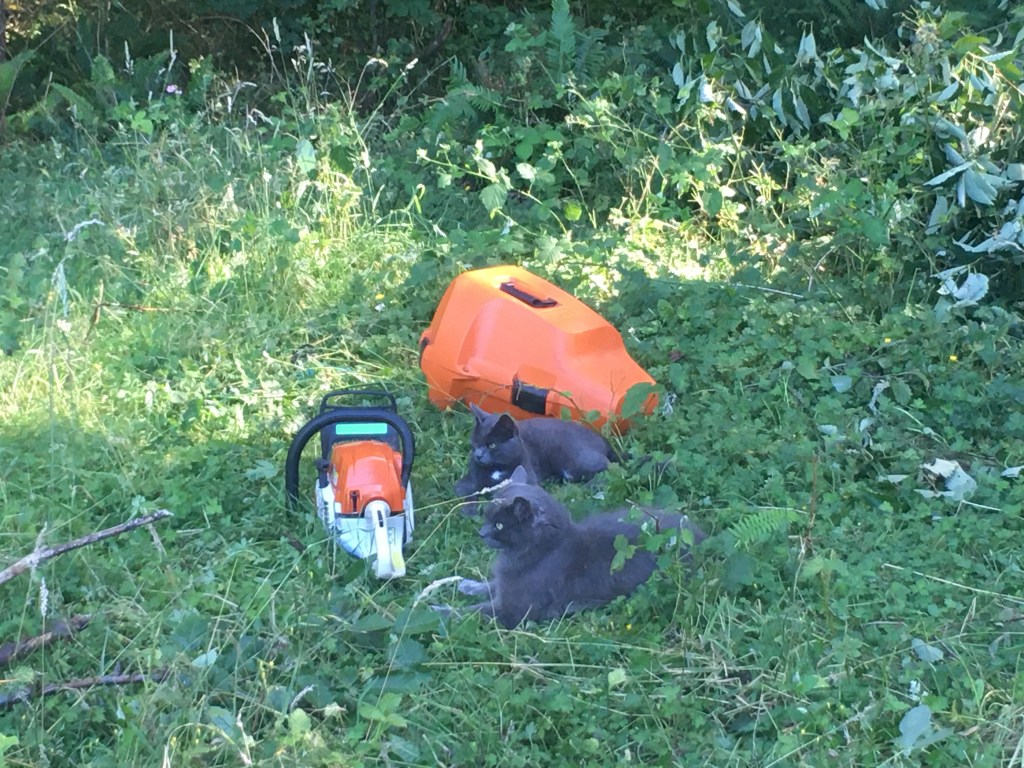
Our hard working cats take a break in the shade during the hottest days of the 2020 summer.

Part of any forest stewardship plan is “management” of the woods; this can look like very little actual work within the landscape, once it’s rehabilitated. Maturing forest can work towards climax without any help from people- though there are few thriving examples left to point to, because of man’s impact. Many smaller acherages in this area of hill country, western Washington presents properties which have not been stewarded at all, or poorly, since their clear cutting in the 1800s. Lands left to naturally reseed are doing alright, and at EEC, there are some good acres of this on site.

Other acres and edges, were evergreens did not reseed- remained open, likely related to short term livestock operations, or attempts at hay fields, which, on wet hillsides is quite challenging. Other lots are overgrown with blackberry, or dominated by choked red alder stands, where evergreens will take a long time reseeding successfully into the area once more. One of our management plans to help speed up the re-establishment of evergreen stands is by cutting down the red alders and planting native evergreen tree root stalk in the opened up under story.
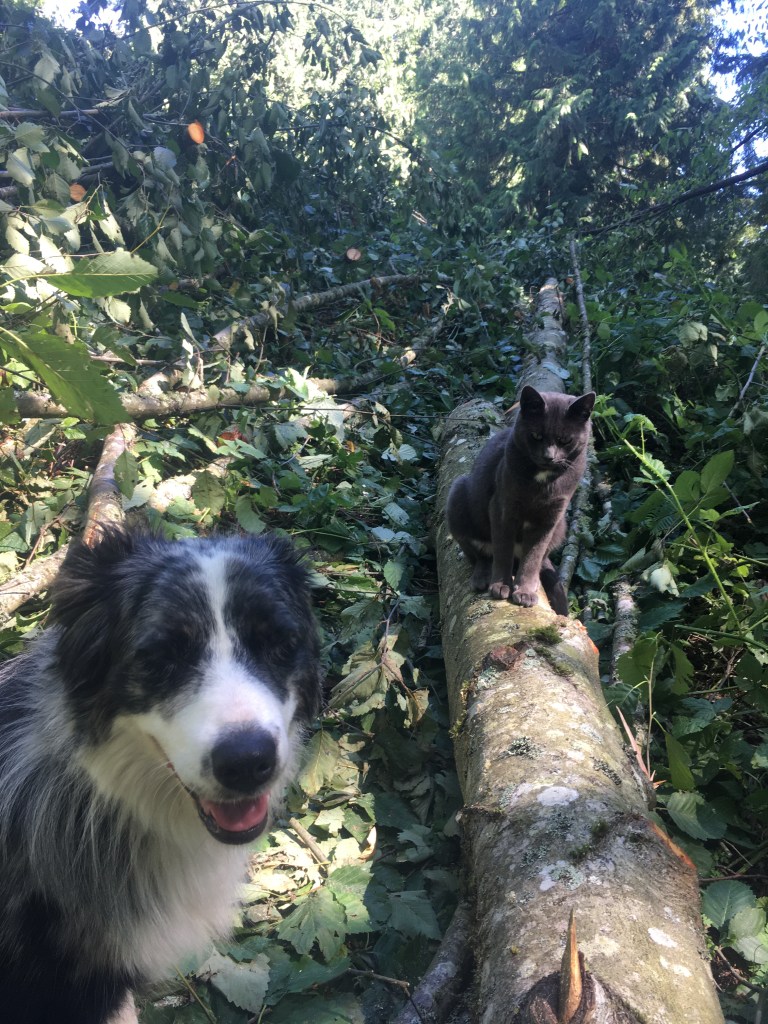
Valentine and Dorian explore a recently dropped red alder. This tree is about 2o years old, and its growth rate has almost come to a stand still. Neighboring alders were already standing snags, as further south, maturing evergreen trees, which naturally seeded on the land after clear cutting, are now high enough to block out light. The evergreen seedling we’ll be planting in to replace the alder thrive in dappled low light when they are small, as they usually mature under the sprawling ceiling of old growth parents of intact canopy. Ecology is so complex, and that’s an understatement.
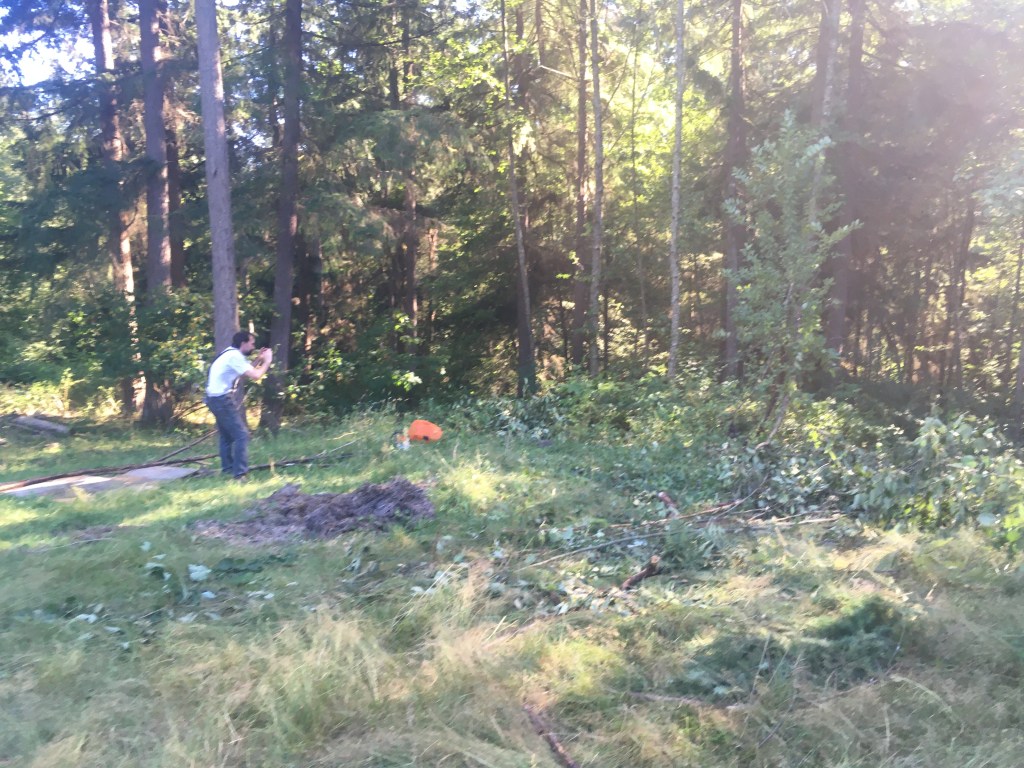
My partner takes photos of our cat company in the forest

Above is a picture of the area we’re working on. This 1/2 acre stand includes maturing evergreens to the south, and a pasture, which remains open and in use, and the stand of alder and cherry to the west, on a slope, which we are thinning back and replanting with more evergreen species, like western white pine, Douglas fir, and a few deciduous species like cascara and big leaf maple. We’re staying away from hemlock, because it’s getting too dry in our fast changing climate to support wet environment species, which are sensitive to prolonged drought. Red cedar is also on this list, and unless you are planting them next to a seep, spring, stream, or wetland, you’ll see them drought stressed, and in 100 years, they will be drought stricken like the hemlock.
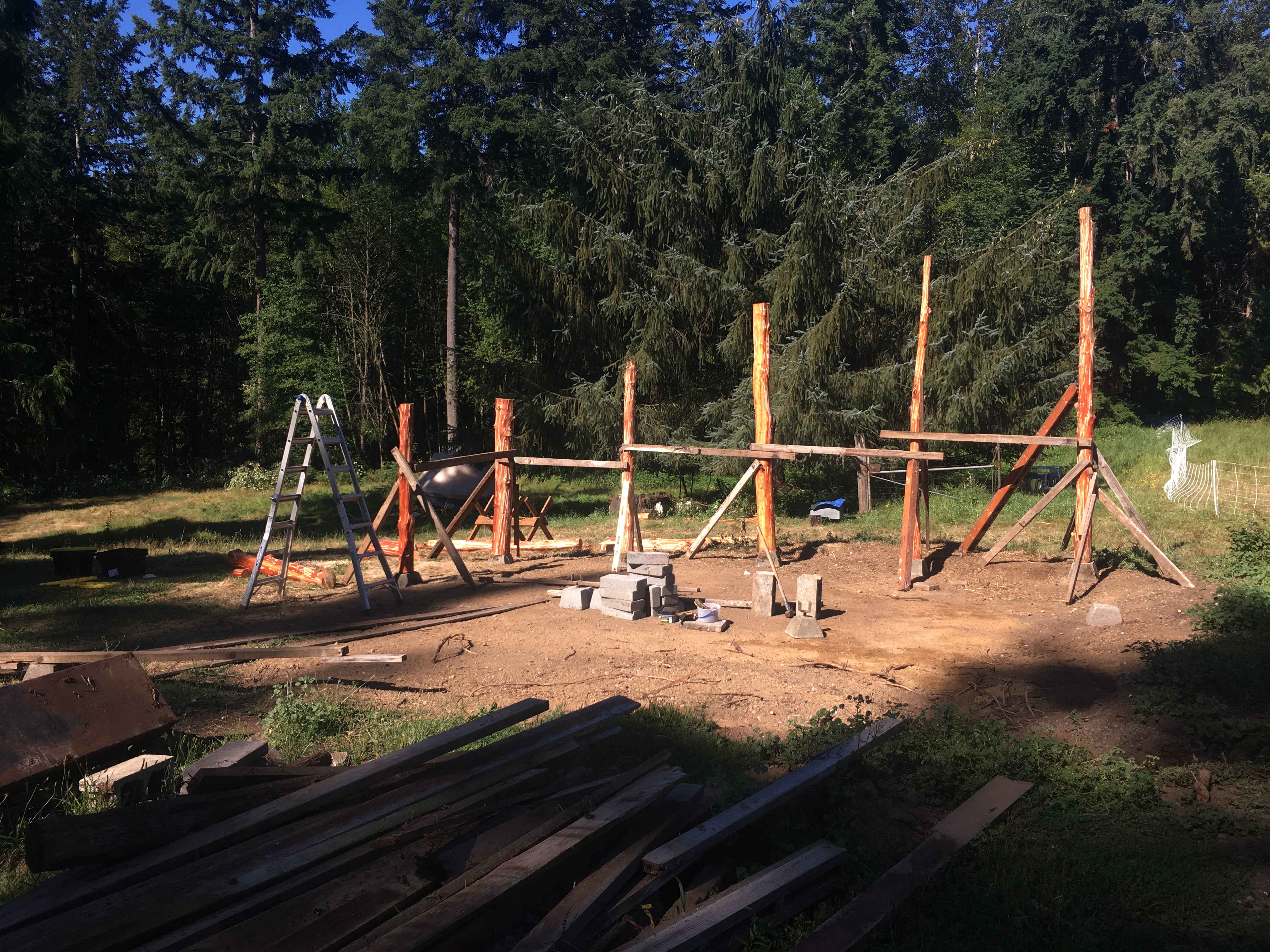
With tree cutting comes a lot of wood, and there are many options for what to do with the logs. Ideally, we would leave them on the landscape where they fall, adding that incredible nitrogen rich biomass to the soil for our future forest. However, another part of EEC Forest Stewardship involves connecting stewardship to place; what better way than to use timber from the land in a building project. Our old sheep shed was on its last leg, so we scraped the structure and begun a new barn in its place. Our red alder from the forestry work will become vertical pillars in our new building. The structure fits within the old footprint of the shed, with an open plan interior for maximum diversity of use. It’s going to be completely full of lambs by next spring.
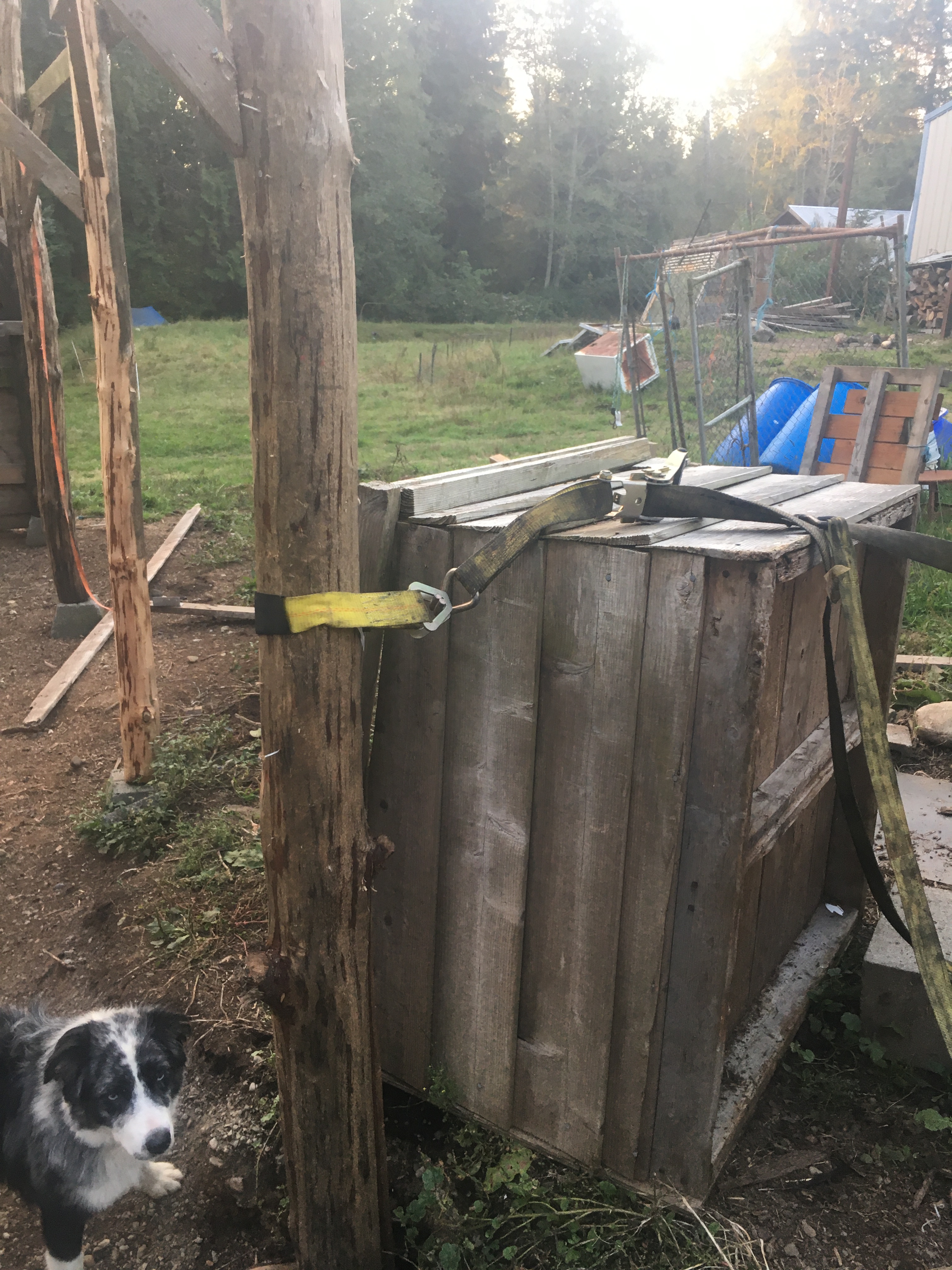
Taking on a self build barn was not my first choice of projects, but I have to give a very special shout out to my partner, who has spent the entire summer and fall of 2020 throwing up a complex building by him self, with little experience. He does have rigging training, and utilized it to level the beams as the bones were lay- so to speak. I did a lot of log stripping, and hauling, but my other half really built the barn, and entirely on his own. These are the supportive ambitions which make EEC Forestry a community vision. I’m not a builder, but someone else is- and can see the value of sharing their work. Gratitude for all the diversity that helps get things done.

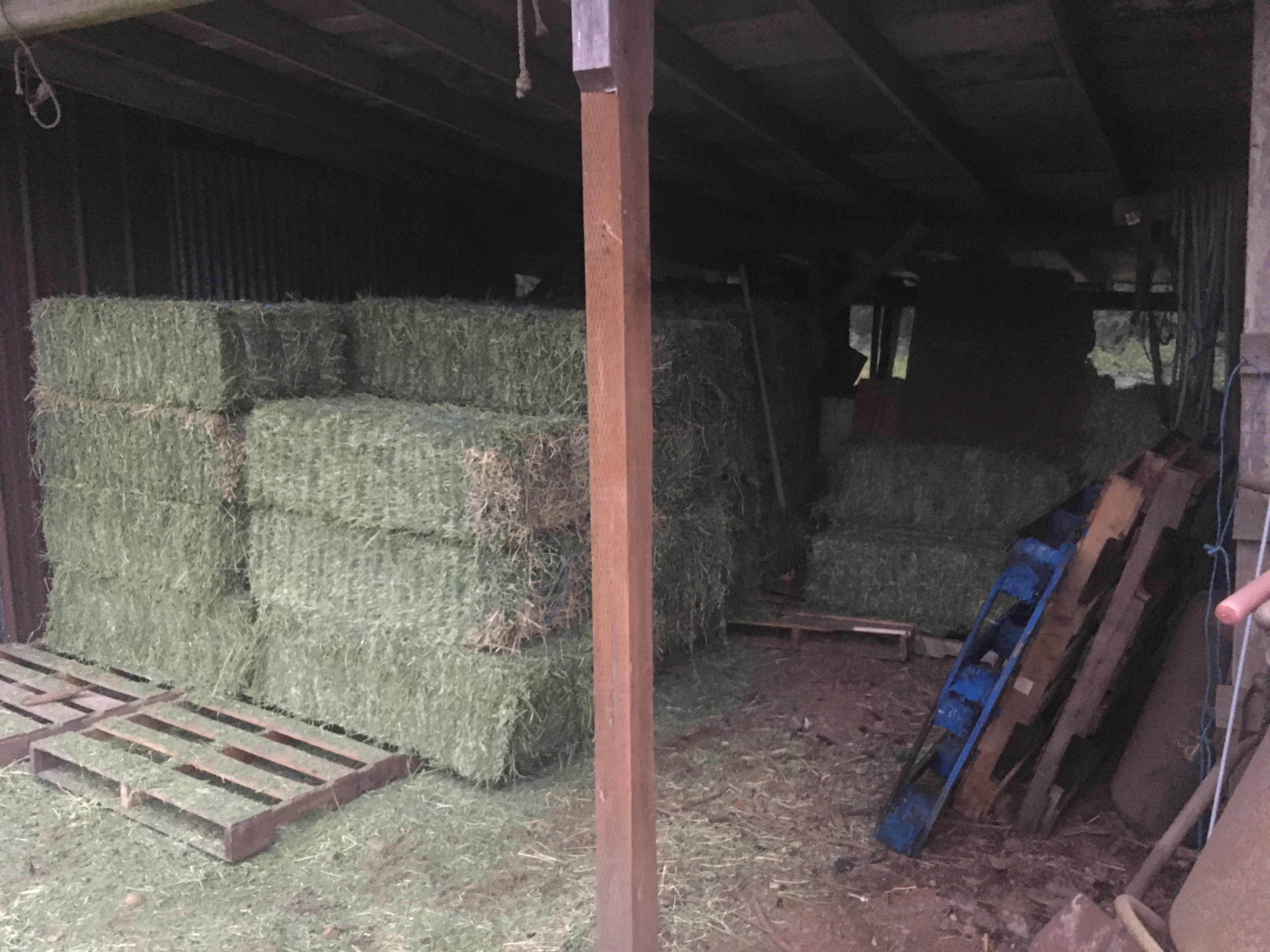
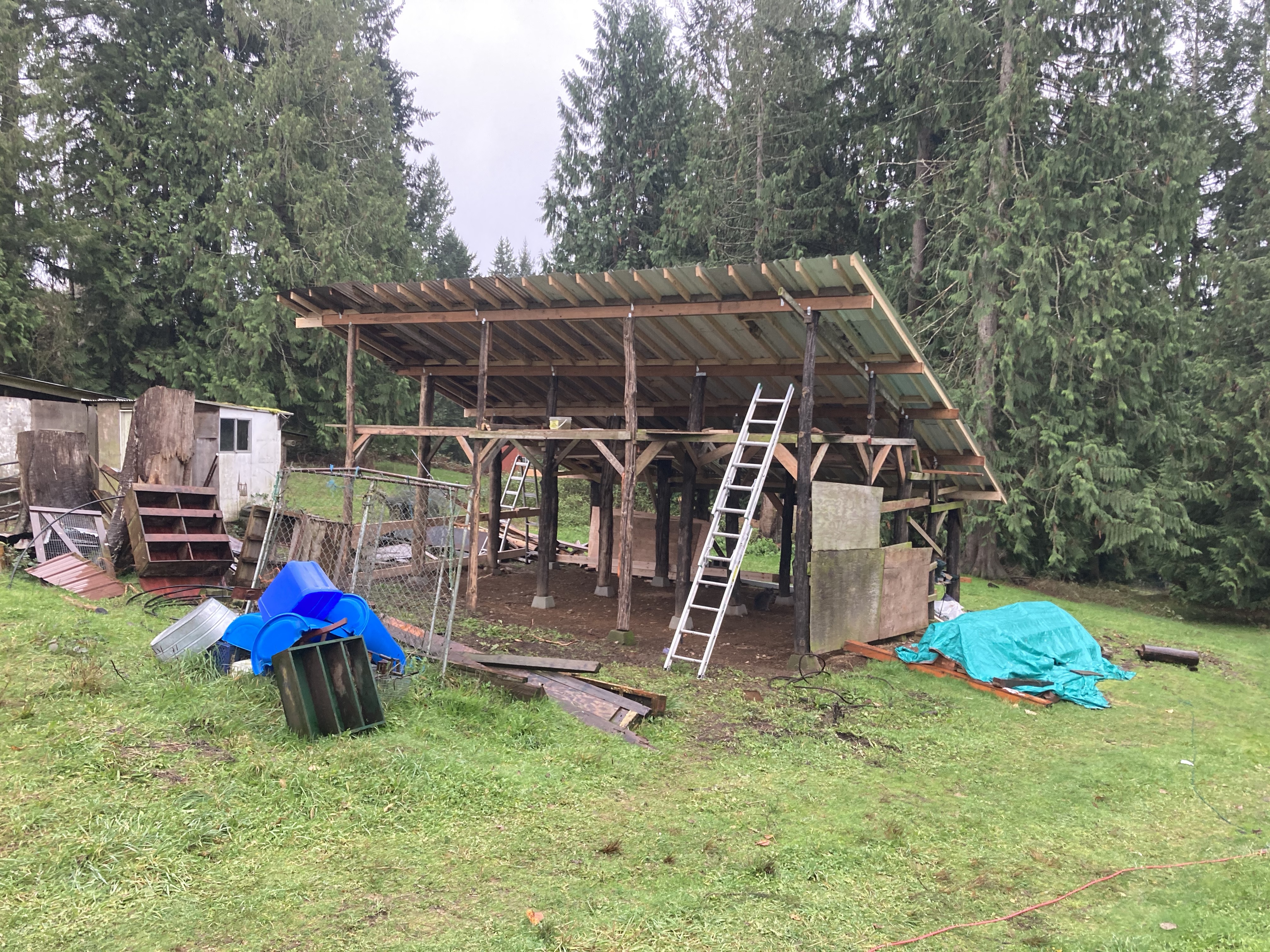
As with most self build projects, the going is slow, but the roof will be on tight by the end of November. This barn will have a small loft for a few bales of straw and bagged shavings, but our hay will be stored in another lean-to nearby. It’s important to keep hay in its own shelter, if possible. This divides the risk of fire threatening stock (like storing your firewood away from the house). Temporarily (winter 2020), our winter alfalfa ration stores in another covered space that is also sheltering the chicken coop, and sheep. Talk about putting all our eggs in one basket- but many farms do! Limited covered space in our Pacific Northwest climate can be tricky- especially with flooding and livestock.
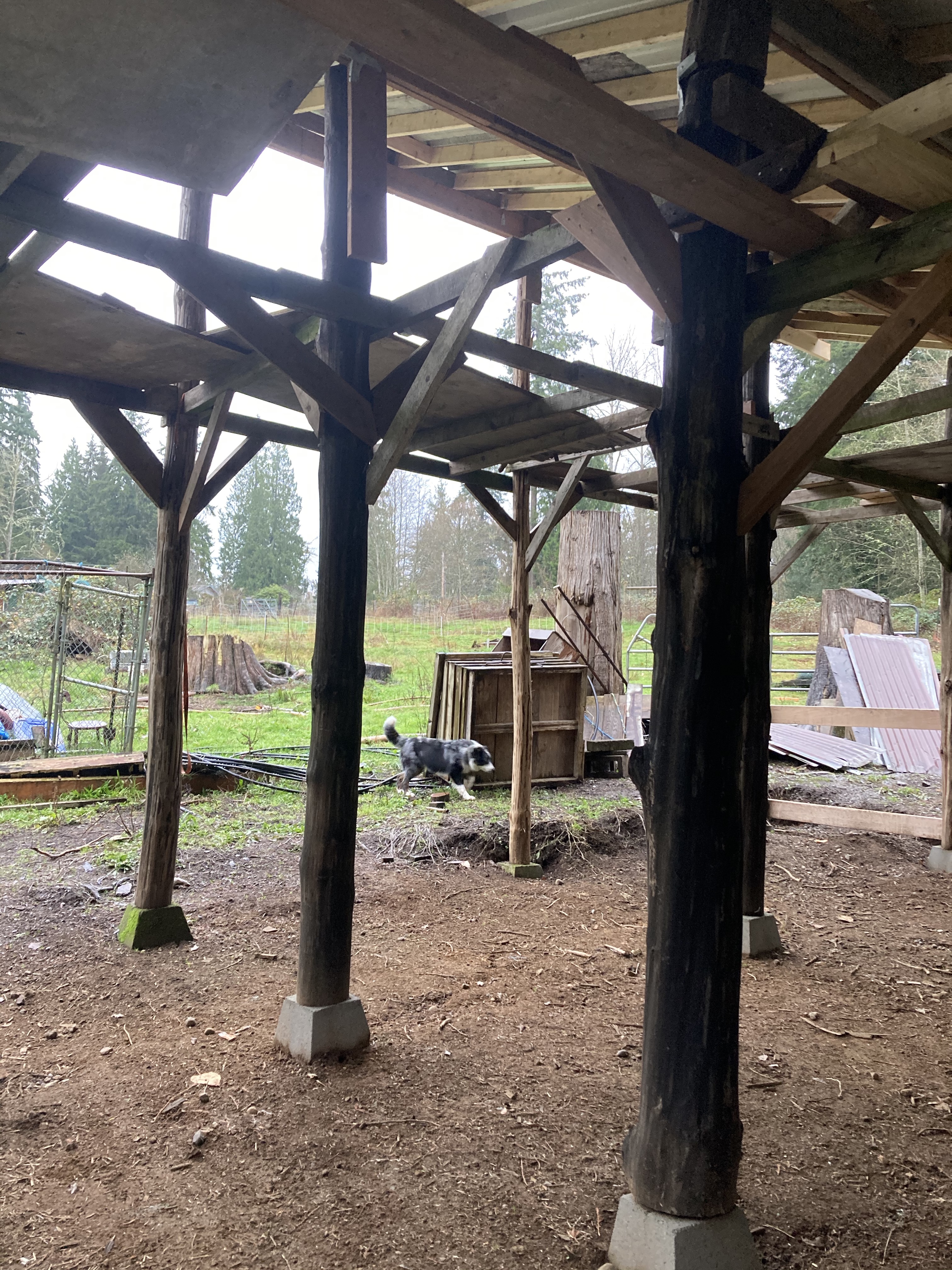
The log posts sit on cement blocks, and hold aloft a sloping roof, one pitch- like the previous shed before. The water collection off this structure will be worthy of a cistern, and we’re planning to move a few cistern to accommodate the new flow. I’ve even been thinking of ways to divert the water towards the pond, or at least into a grey water catchment. Designing drainage (or better yet- retention) is a crucial part of any building in our climate. Thousands of gallons will come off this new building, and it has to go somewhere. If we do nothing, it will erode the bank down hill from the structure over time, taking away the stable foundation for the structure. With a gutter, cistern, and some long hose, we can at least set up a winter diversion system till the dry months return. In the summer, we’ll dig to lay pipe and redirect the roof catchment permanently.

This is one of the largest self-builds we’ve attempted at EEC Forest Stewardship, for agricultural use. It was a great ambition, slowly coming to realization. As of November 2020, we have a roof on, with enough materials on hand to finish outside walls and loft. Inside the barn, I’m keeping the floor plan open, so animals can be moved and penned as needed. Lambing will start in a few months, and I want to have small pens for the ewes and their offspring set up, along with a larger general milling space for the girls who are not ready to drop yet. We’ll be overwintering out young ram, “Lotto”, who was purchased this year from Canfield Farm. This new barn will allow space for him too- out of the way of the girls when they are balloons about to pop.
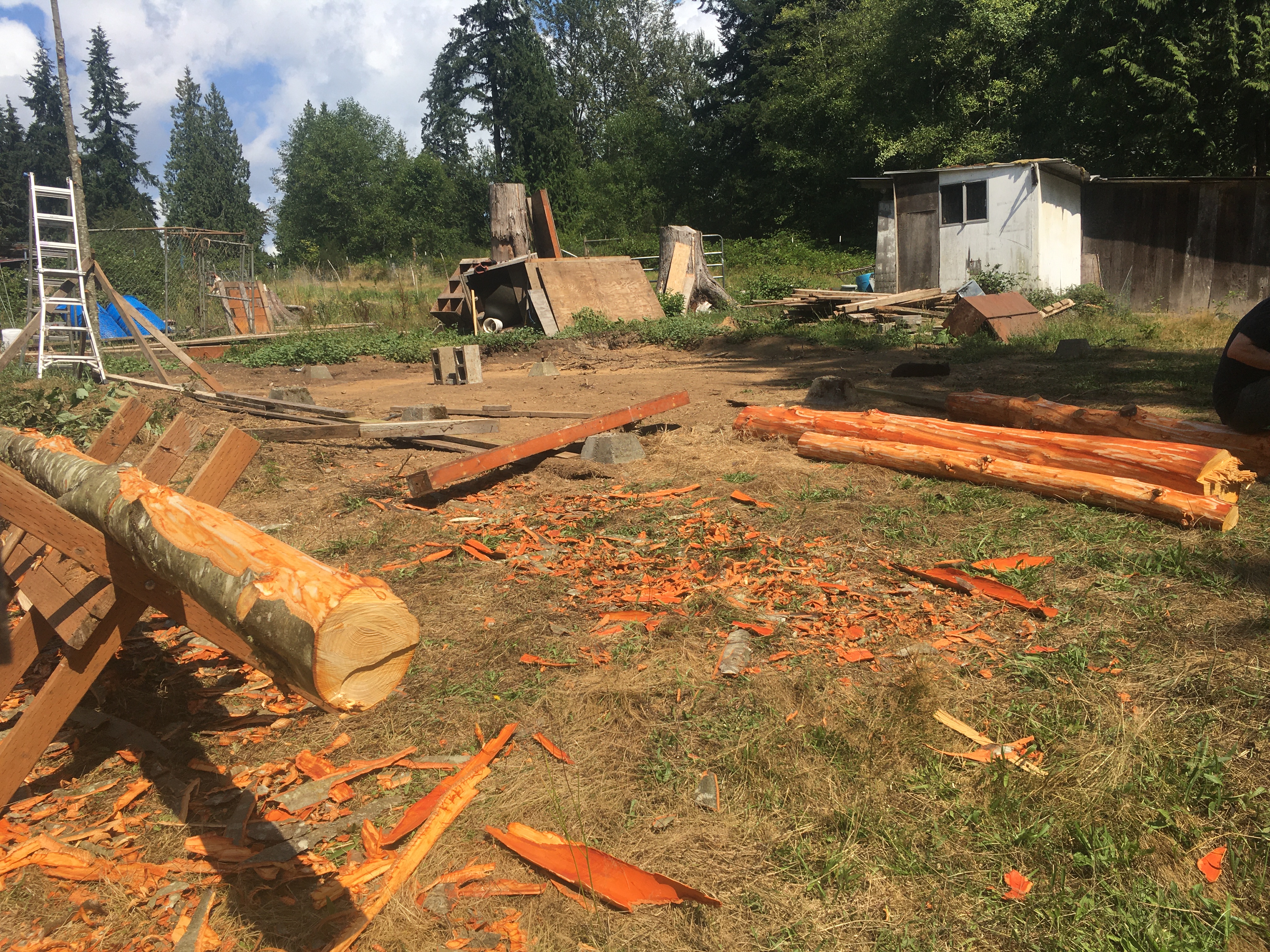
Turning logs into a solid structure was not an overnight process, and there is still a lot to be done before the building is completely finished, but the work has been so rewarding, and cost effective. We’re also ahead of our forest stewardship plan by a few years now, having taken down a considerable number of alder to open up planting for new long term old growth evergreen trees. One thing to note about red alder, through it is a hard wood, it will rot fast if exposed to damp conditions, so make sure your structure is water tight. We’ll be sheltering our logs with a 2 foot overhang, and additional wall liners, including metal skirting on the weather prone southwest side of the structure.

Putting up a barn in 20202 was not originally on the schedule either, but when the materials collect, and a willing builder shows up, you activate. We received a donation of metal roofing from a neighbor, and had a lot of standing lumber from other building projects, which could be cobbled together for this barn. We did still buy additional lumber and hardware, but the overall cost of this build was about a quarter of what it would have been with a professional building team, though finished much sooner. Gratitude to my beloved partner for finishing this monumental task, the shelter now provided for the animals, and the stewardship of our forest.
New Security- A Lesson In Sensitivity

We’ve got a new dog in town at EEC Forest Stewardship. After loosing three sheep to predation this year (a record), we decided to address the issue in the most humane way possible- LGD. Livestock Guardian Dogs have been working with herders for thousands of years. Not to be confused with herding dogs, guardian dogs watch the flock, but do not move them around. Our herding dog, an Australian Shepherd named Valentine, moves the sheep around the land as needed- mostly blocking the sheep from running away as I move them to the pasture on foot. It’s an extra pair of legs which can move fast and assist me in herding the sheep. She’s a great assistant, and does alert bark at mischief in the field, but could not defend the sheep easily against predation.

We’ve seen many threats on the trail cam this year- two cougars, coyotes, bobcat, and bear. These are all serious animals who would happily chow down on livestock- and since that’s their nature, which we can’t fault, it’s our responsibility as good livestock owners, to protect both the wildlife and domestics from coming together in a fatal way. Many ranchers use poison, guns, or traps to kill off unwanted predators- but here at EEC, we belive in working with nature, rather than against it. Our ancestors came up with a great answer to this biological challenge- they bred BIG dogs with courage.

Meet Gill, a 120 lb Anatolian Shepherd from Turkey. He’s only two- and still growing. These dogs are called Çoban Köpeği in Turkish, which morphed into Kangal in English, and later Anatolian for the region of the world where they originated. It is important to note that Turkey does not recognize the Anatolian breed, and will not call them Kangal once they are exported from the country. Hence- Anatolian Shepherd, and the AKC recognition of Kangal as the same breed in America. Over 6,000 years ago, herders created this magnificent animal to protect their sheep from wolves and bears. Gill was bred in Turkey, but found his way to the USA as a family dog in a large home with children. He was socialized as a puppy in a daycare, and showed fantastic temperament with small children. Unfortunately, for the family that purchased him, Gill was not a good house pet. Not many LGDs (Livestock Guardian Dogs) make it in the home- they are large, barking behemoths, with strong instincts to protect their territory. They are NOT attack dogs- and should never be trained aggressively towards people.

Gill showed aggression towards other dogs, especially around food and toys. He was not getting the work he needed in a family home, and was quickly put up for adoption with a local Anatolian rescue. At the same time, EEC Forest was experiencing a predation crisis, after coyotes attacked and killed our breeding ram in broad daylight. Our forest has not seen this kind of bold attack before. One theory is the fact that in the past year, a neighboring farm has brought in 3 LGDs, which are deterring the predators from that property, and funneling them over to our land. Loosing this ram was the final straw, and rather than standing out in the dark with a gun like a mad woman, I took a better path towards deterrence by looking for a dog. My mentor in sheep has an Anatolian named Topher (Christopher). Since she acquired him about 8 years ago, she has lost 0 sheep. He has a great temperament with people, and tolerated Valentine on many a visit. He is also calm, steady, and imposing- all at the same time.

I cannot stress enough the challenge of taking on an LGD. These breed is large, imposing, and easily domineering if not properly trained. Gill is already 2 years old, has never worked with livestock, and has some bad habits from being inside all the time. It was clear from my talks with the fostering family that he needed a job. All working breeds need a job- and if you do not provide one, they will make one up. This can be a nightmare for the owner, as in this case, even in foster care, Gill was obsessed with guarding the back yard from rabbits. He barked day and night if any of the fuzzy creatures came into the clearing just outside the fenced yard. It was driving the fostering family nuts, and they were thrilled to help him find a farm with real work.

Here at EEC, Gill will have a great job protecting a flock of sheep, exactly what his instincts desire. Though he has never been employed in this work before, his natural talents are awakening fast, and he’s amazing. On the first evening here, he settled in next to the sheep in our new barn, and though it was his first time sleeping outside, you could see the relief in his frame as he flopped down on his dog bed to sit with his flock. They are his sheep now, and I’m doing all I can to bond him to them- rather than me. Though he sees me as boss (I feed him), he will eventually be completely attached to his flock (we hope), and will move around the land with them making sure all is well. That said, we are investing in 6′ woven wire stock fence for the entire property to keep him where he should be. LGDs will often wander, or chase a predator down no matter what. Anatolians are known for sticking with the flock, but will chase down a threat if they can- which includes other dogs not properly introduced (we’ll come back to this).

They are agile and motivated, so you must have a good fence. In the mean time, we’re tethering him for his own safety, and letting him have good walks around the property on a long leash so he can map out his territory and know the boundaries. His introduction to the animals on the farm is also a delicate process. Because he has no formal herding experience, livestock can seem like a great game- chickens flap and run, and he wants to chase- but firm correction and oversight are teaching him that the farm animals are not toys. He’s picking up fast. The sheep are also getting used to him, though they are still separated to ensure the safety of all animals. Soon we will have an introduction, on the long line, to show him the sheep are there to protect, not play with. He seems to be getting the message already, and has taken his duties on patrol quite well.

When I walk him, he takes one of two circular routs around the property. I do not allow him to explore or wander in the wildlife corridor, as that’s where the predator animals are welcome to traverse, and Gill must learn it is NOT part of his territory. I can’t stress enough the important training which will go into his establishment as a good LGD for EEC. Don’t think you can just go buy a dog and put it in with your animals to solve any problems. Please don’t do that- guardian dogs are running on great instincts, but need the human guidance to learn good habits in the field. Gill will take months to fully establish here on our farm, and his success will depend almost entirely on my strict teaching. He has to trust me and know we are working together, and the rest of the community living here will have to buy in.

LGDs bark, and some breeds are very constant with their alarming. Anatolians are less vocal, but still alert and deter with loud vocalizations. Up until the neighbors brought some in, we never dreamed of having them because of the disruption. But now that the barking is established in the neighborhood, and predators are zeroing in on the farm without a large dog, EEC Forest had to adapt, and we selected a breed that is quieter- relatively. Gill does bark, but he’ll quiet down once he sees something is not a threat. So far, the other members of our community have been understanding, and say he’s not too bad. But months down the road, that feeling may be quite different. It’s a balance of good protection without sleep disruption, and Gill has shown remarkable adaptation and restraint.

On his second day at EEC, Gill met our stock dog Valley. The two have had a few great play dates, but these are both working dogs, and too much play can be a distraction. It’s a challenge to work two dogs at once (in two different jobs). On Gill’s third day, we pushed the envelope and let him walk out with the sheep. Valley was moving them, and all was good. The sheep and Anatolian had a moment, sniffing one another, instinctively, Gill moved out ahead of the sheep and they followed. Valley drove from behind, but as we went through a gate, valley suddenly broke out and ran after Gill (through the sheep). They had ran through that gate together earlier that morning, setting a precedent. The sheep ran back to the barn, Gill continued to sniff around, and Valley went back to the house for some down time.

The following day, I took both dogs out in the morning. Without sheep, I worked with Valley to stay behind Gill and I as we walked the property. At each gate, we went through some clear signals to wait, get back, and move through. The character of these two breeds came out in force. Gill will wait, if I have his leash and can gently pull (like reigns on a horse). Valley has to lay down or she’ll keep weaving back and forth behind us. Anatolians are not obedience dogs, they will be mindful of boundaries that are set, and generally, respond to commands like “leave it” or “wait”, but that’s the limit of this breeds training. Gill is uncatchable- hence the long line, and he will go on patrol no matter what, once let out to do so. Valley wants to run, move, and drive, but she is also much more malleable to training.

I’d like to brag about my Australian Shepherd, Valentine, for a moment- though she is not a guard dog, she is a dedicated companion who aims to please. Her ability to read a situation and anticipate has astonished me on several occasions. In this new relationship with Gill, she’s starting to shine. After only a few corrections, she began to understand that we let the Anatolian lead in our walks. At one point, we changed directions and moved towards Valley. She could have engaged Gill in play, but she was in the work with us, and as I said, “get in back” (which I’d never used before as a command), she darted around my left side and got behind us. It was a great moment of complete cooperation and communication.

So much learning in this new partnership- like all relationships, though non-humane companions are always a bit more challenging with a language barrier, not to mention, species. What Gill is teaching me- priceless awareness of self and environment. Another training reflection that comes to mind is a walk yesterday afternoon in which the two pups were playing in the back field (without sheep). A sharp barking from the neighboring yard suddenly drew Gill and Valleys attention. I did not have hands on the leash and watched in distress as Gill began charging towards the fence where this other agitated K9 was dissenting. It could have been a bad scene.

Anatolian Shepherds are serious guard dogs. Please understand that this dog is about protection from other predators- not people, though some idiots do try to make them aggressive towards people, and woe to both the dogs and the people who try. This breed was developed in Turkey to guard flocks, and as the dogs became too old to go out into the surrounding hillsides, they would stay at the village watching over the people, especially young children. All Aantolians had to be good with humans, and were selected for temperament for thousands of years. However, the drive to protect against other animal threats was encouraged, and unless an animal, especially predators like dogs, are properly introduced into an Anatolian’s flock/pack, a strange dog is a wolf in the eyes of the Anatolian breed, sometimes called “wolf killers”.

male Anatolian (Kangal) on right- ears are cropped in Turkey

Gill stood at the edge of the hedge barking in high alert as the neighbor dog continued his complaint. This was an important training moment. I did not want to stop Gill from alarming, or showing good guarding instincts, but I did want to shift away from the neighboring fence to deescalate the aggression. Grabbing the leash (much like the man on left pictured above) I gently gave a tug on the leash and called Valley to come with me. Both dogs shifted, still in erect postures of protection, but moving calmly with me across the field. We went back into patrol mode- with Valley being more interested in maintaining contact with the neighbor- most likely with play drive in mind. Gill went back to sniffing the trail ahead, ambivalent to the neighbor dog now that he could see I was non-reactive.

If I had yelled at Gill to shut-up or stop barking, coming on with high energy agitation, I would have been reinforcing the protection message to Gill, imprinting on him a feeling of aggression from me (pack leader) when another dog barked. This breed, as I have mentioned before, is not an obedience champion. They are pure instinct, reading the sensitivity of their pack at all times, guarding the flock by keeping a close contact energetically as well as physically. We as people, especially “Westerners” are not so in tune with our energy or physical communication. It’s part of the domestic sedentary prescription, which most people in America take. Screen time isn’t helping, so our general ability to relate animal sensitivity continues to wane. It’s an argument to remove animals from most households- *gasp*.

coyote photographed at the sight of our ram’s slaughter on the night after the kill

Gill will continue his work at EEC Forest Stewardship, keeping the flocks safe and teaching us all about the importance of staying connected. The coyote will still be moving through with his agenda, and Gill will be there to help remind all visiting predators, that this forest is a predation free zone. Our trail cams will continue to monitor activity around the landscape, and especially in the wildlife corridor, where the habitat still belongs entirely to the wildlife, including out resident cougars, coyotes, bears, and bobcats. My hope with this project is to demonstrate how agriculture and wilderness can thrive together. I don’t have to shoot something wild and not considered a food source. The sheep don’t have to keep being sacrificed on the landscape. What amazing continued experimentation between wild and domestic living!

Mycological Magic

Crackly Cap Boletes and Chantrelles in the frying pan make a delicious fall treat for us to eat. It’s best to cook these friends- and most mushrooms, for about 10 minutes on med/high heat to “sweat” out excess moisture. Don’t pour off the broth- it’s fantastic, in reduction, as added flavor. Add some oil after the sweat is over (butter is always best); salt to taste. Cook the mushrooms in oil until desirable texture is reached- I treat chantrelles and most boletes like onions, wishing them to be caramelized, but not scorched. Simple cooking brings out the best flavor, but mushrooms can also be incorporated into almost any dish.

There are many amazing mushroom cookbooks, and the online world of recipes adds endless possibility. Often when wild harvesting, you come across a large cash of fungus, so knowing the best way to preserve mushrooms can be helpful. Most either freeze or dehydrate well, but check an experienced source for specific verities. I just learned how to process Chicken of the Woods (Laetiporus), which involved blanching before freezing the “meat”. It was a little more processing, but worth it for the two large (gallon) bags now in the freezer for a winter treat. Knowing the freshness of your harvested treasure is also crucial in both eating and preserving.

Chicken of the Woods has a fast and furious bloom, often getting too woody for palatable pleasure within a day. Learning to see and feel the ripe nature of a mushroom is an art form in its self. Laetiporus‘s common name refers not only to the taste of this saphoridic (wood eating) fungi, but also includes texture. In the picture below you can see how a fresh fruit tears apart like tender chicken. If the mushroom is overripe, it will break apart like brittle chalk. The tactile experience of working with mushrooms adds to the fun, as well as reinforcing proper mushroom processing. I think sometimes people have “bad” (taste) experiences with culinary mushrooms, because they were not harvested or prepared properly. Experience is the key to ensuring a yummy taste, so spend time with the fruit, and read up on other first hand accounts.

tender chicken
overripe chalk

Mycology is a deep knowledge- constantly changing as we learn more about these amazing lifeforms. Eating them is an adventure, though to be clear- only a few species are easy to identify and prepare correctly, so go with someone who you trust as a knowledgeable mushroomer. With that in mind, there are a couple of great edible picks here in The Pacific Northwest, which many people enjoy, so don’t be shy about asking experienced pickers. If you are a newbie to the field, please don’t assume- for instance, chantrelles are said to not have any dangerous look alike species (in some circles), but I have taken numerous first timers out and asked them to bring me examples of what they think chantrelles are. I’ve had all kinds of mushrooms brought to me as potential chantrelles- from sulfur caps to jack-o-lanterns, basically, anything that looks yellow/orange.

Finding a mushroom takes a trained eye, and new pickers really don’t have myco-vision yet. There are endless subtle differences between species, and some, like spore shape and DNA, cannot be identified with the naked eye. The academic world of mycology is ever expanding, and as we learn more, we discover that human understanding is, as usual, grasping at just the tip of the iceberg of knowledge. But to enjoy a good feast of mycology, you only have to know one or two good eating mushrooms well. So don’t be hindered by fear- find a mushroom picker friend and forage together for some good learning time. Also feel free to take samples for identifying from any species you find. Just be disciplined about keeping edible mushrooms you pick in a completely different container/basket to prevent any mixing.

Hunting is Conservation

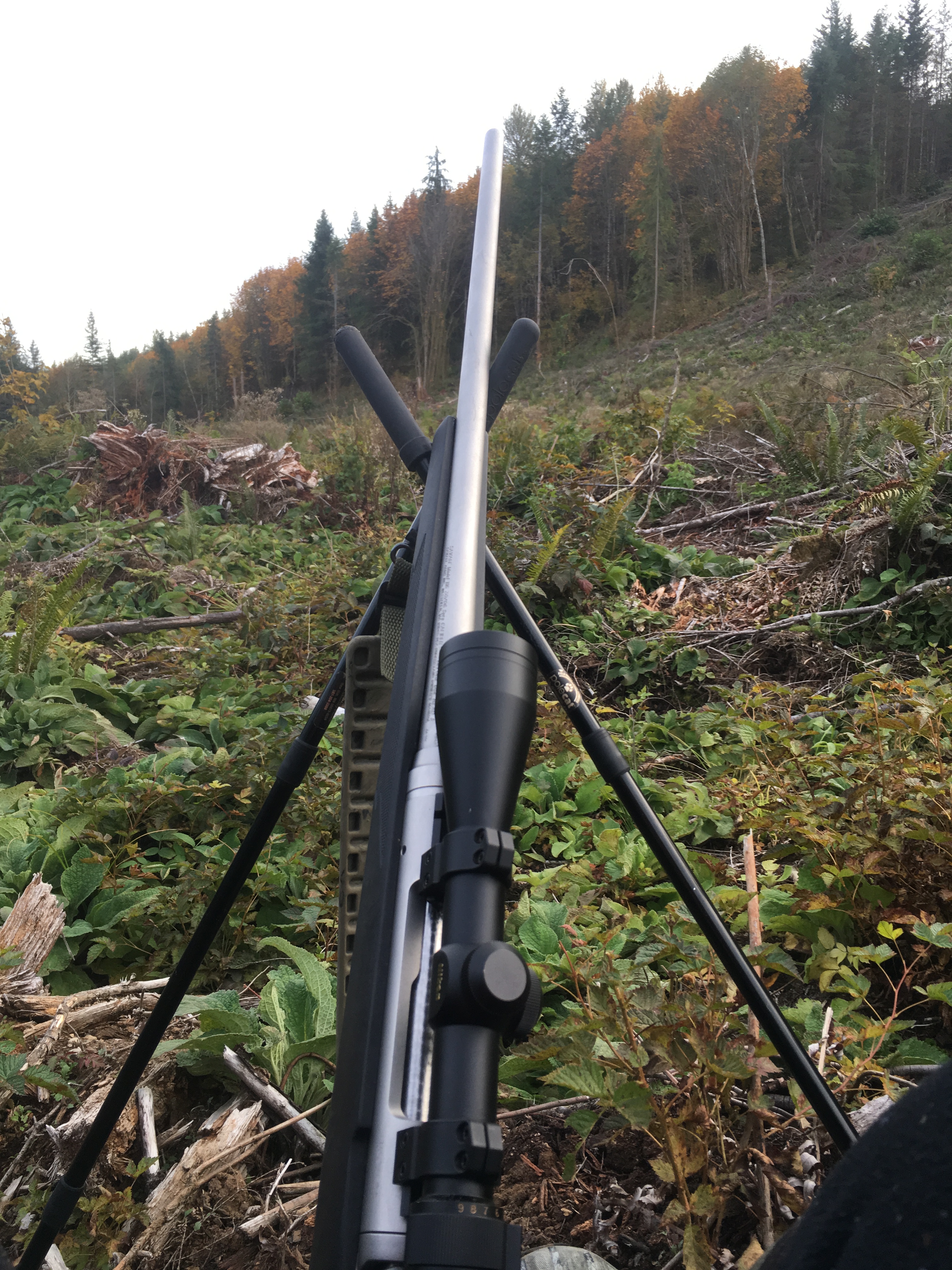
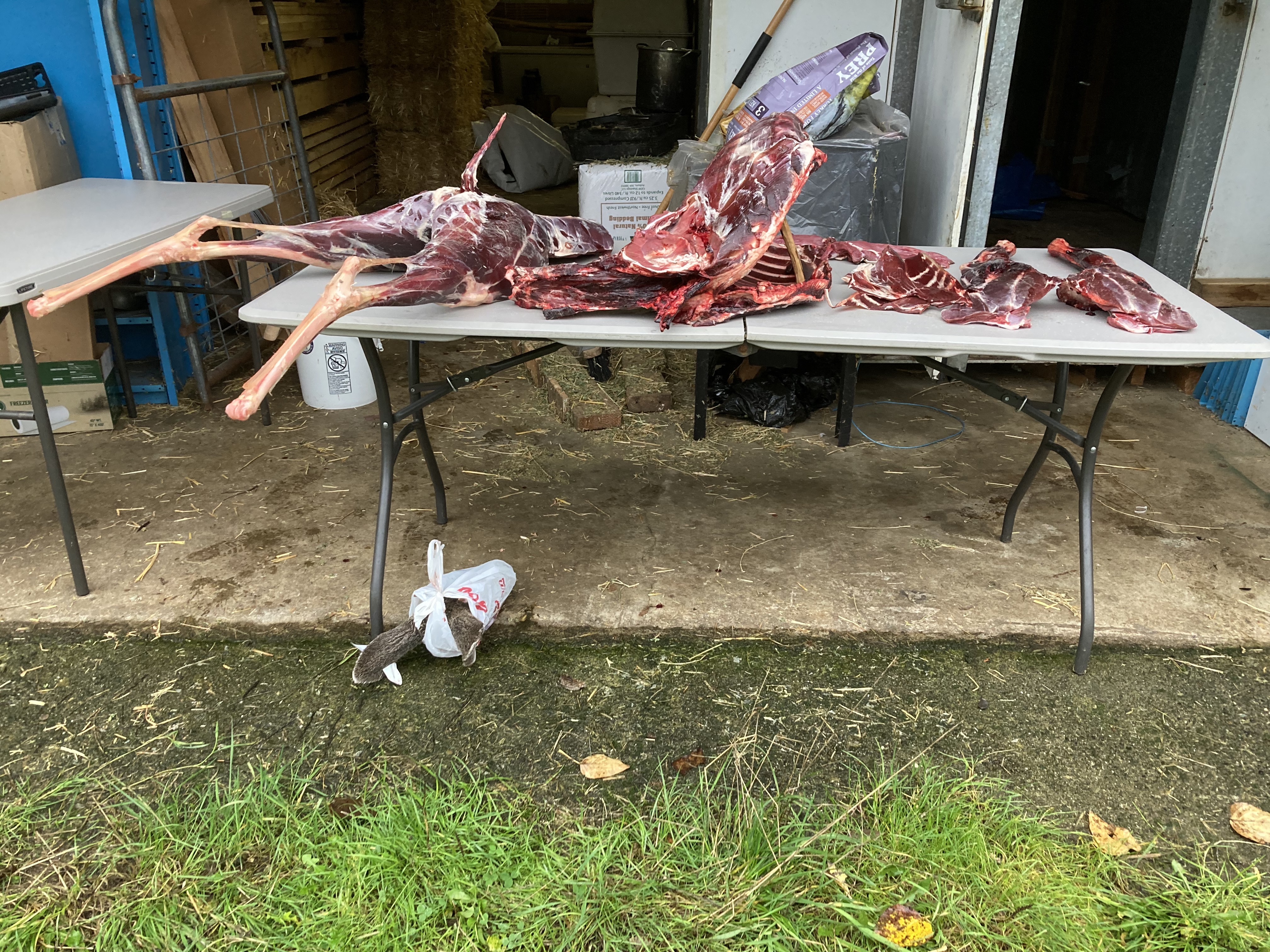
This year, fall 2020, I harvested another black-tail deer from the land here at EEC Forest Stewardship. It was a wonderful gift from the land, and part of the stewardship practice here at EEC. For many, hunting is a very controversial subject, and I’ve talked about it a few times in this blog, so forgive me if I’m repeating myself to some readers. I am a passionate and ethical hunter, also a hunter education instructor here in Washington. My love of harvesting my own food has compelled me to hunt, and share this invaluable legacy with others to preserve access to the privilege of harvesting wild food.

Many other countries have no access to public land, or enough habitat to allow hunting. Here in America, hunting is conservation- all tags, licenses, gear (including camouflage clothing and ammunition) gives a percentage to conservation of land for public assess. The land bought with this money is public for all, not just hunters, and thousands of acres have been put into public domain through hunting. Wildlife biologists who study these public lands are funded by hunting. It’s how legal limits of each species, where they can and cannot be hunted, and general health monitoring of the ecosystem takes place. Hunters fund more wildlife studies on public land, than any other institution in this country.

Hunters have eyes in the woods, and observe wilderness first hand through scouting and siting during the hunt season. I hunt mostly in a recreational forest that is also an active logging facility. 100,000 acres spread across several miles directly east of EEC. Animals that roam there are linked to our forest, so what’s happening at the neighboring forest will have direct impact on EEC Forest Stewardship. When I’m scouting the clear-cuts, I am aware of how many there are, where they were made, and how the wildlife is reacting to the change in habitat. I see the streams nearby, and check to see they have a good buffer of trees still in place. Observing other indicator species, like salamanders and the croaking of Pacific Green Tree frogs lets me know the wetlands are intact. Bobcat returning to her den in a slash pile shows me the loggers did leave behind shelter for the wildlife. I would not see all this if i was not out hunting in these woods. It’s part of my greater stewardship of place.

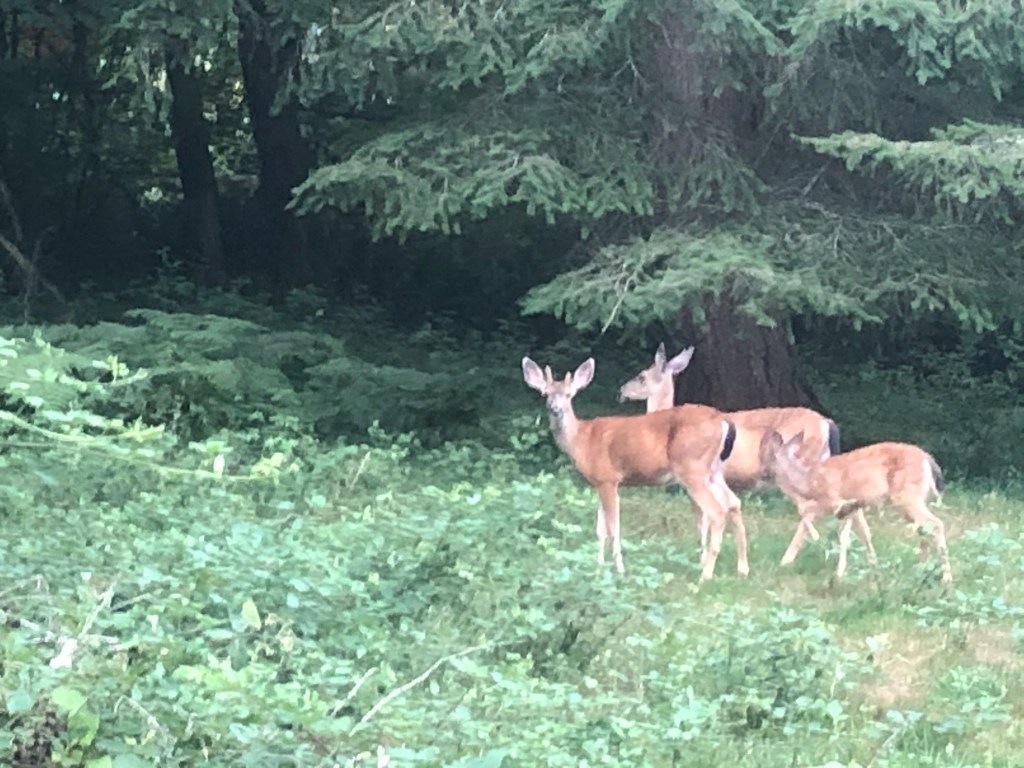
When I set intention to eat something from the wild, I want to know that it is clean food. One might think, wild=clean, but this is no longer the case. Hunters back in New England will know what I’m talking about- there an horrific wasting disease is making the resident white tail deer population sick and mangy. The meat is diseased, and not recommended for human consumption. Hoof and mouth is also haunting wild animal populations, and more infection will come as domestic cattle continue to range unimpeaded into public lands where they infect wild deer and elk populations. This cross contamination might one day completely infect all wild populations, leading to mass killings- like the COVID infected mink. Harvesting wild game allows me to check the health of our resident deer population. I can look at the animal, his organs, and the amount of fat on his body to see that he is a healthy deer. So greataful for this good food, and all the nutrition it will give us this winter.

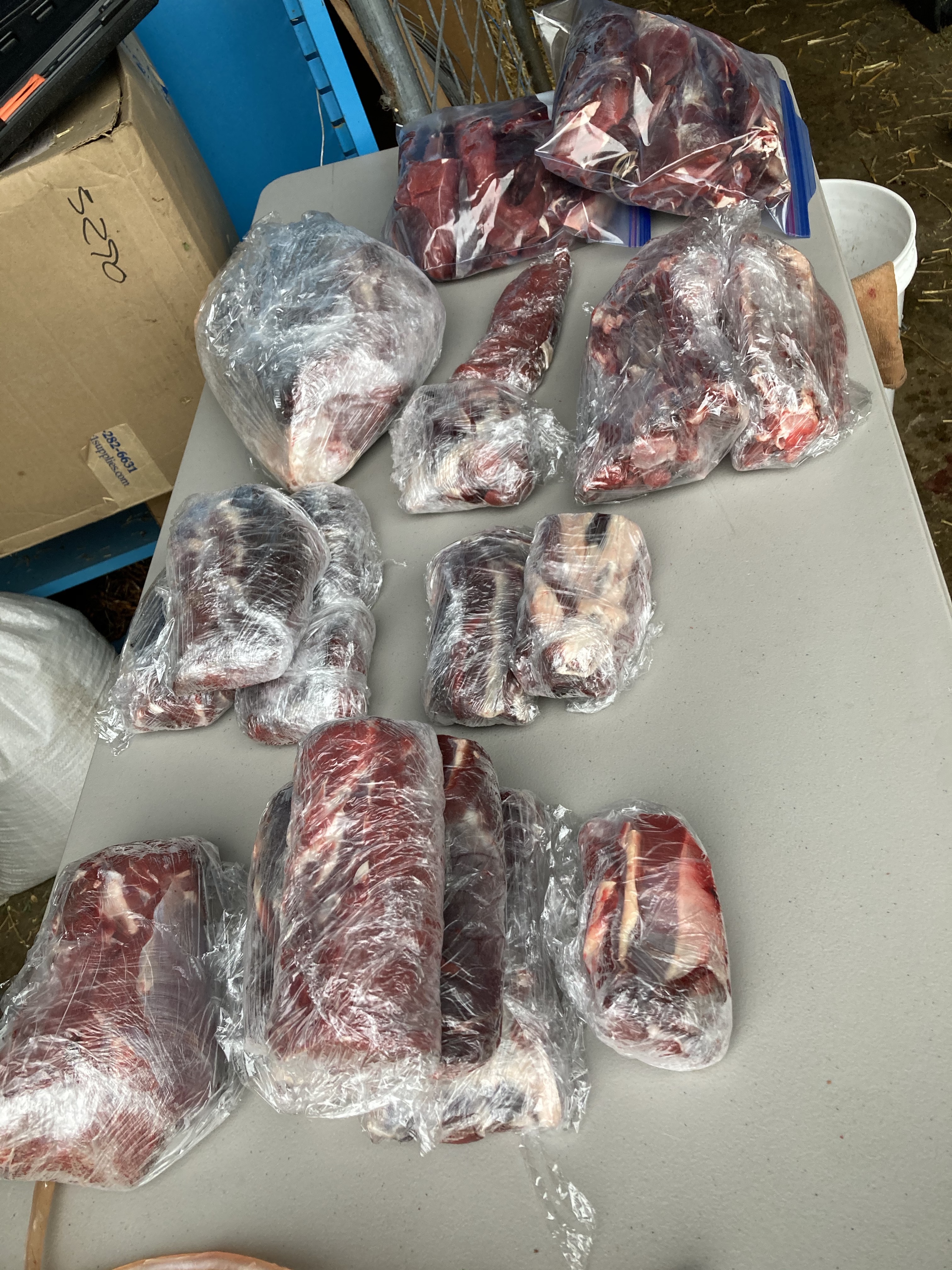
After harvesting the animal, I age the carcass in our walk in cooler for a few weeks before butchering. The amount of food from one animal is more than enough for me and my partner to share through the next year. Between that and our livestock, we don’t have to buy any commercial meat. That keeps our money out of industrial fast food feed lots. It also reinforces my direct connection to my food, from birth to death- even this deer was eating off the land which I tend, and enjoying all the rich biodiversity planted at EEC Forest Stewardship. In return, the deer feeds me, and I again plant more food and restore more habitat for the deer. It’s a restoration cycle which benefits all life.

Not all hunters respect the privilege of hunting, or tend good relationship with the land. But I do, and I greatly appreciate the practice, and recognize that it could be taken away if we as hunters do not show respect and good stewardship to place. The numbers of hunters in the field continues to drop over time, and this will lead to a loss of presence in our wild lands, lands that will instead be developed in the interest of other natural resources, like fossil fuels. In hunter education, new students are taught the concepts of carrying capacity, habitat restoration, and ethics of hunting to improve habitat and wildlife populations. Conservation is hunting, and by harvesting wild animals on the landscape, we weave ourselves into nature.

Lamb Jam Forest Land

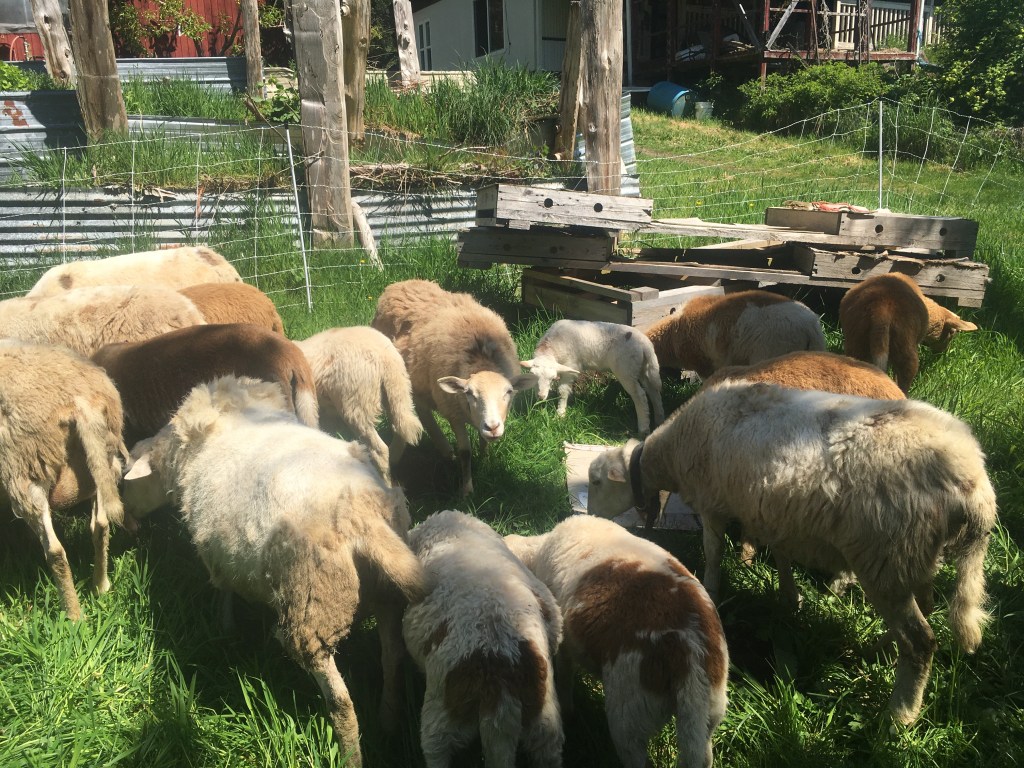
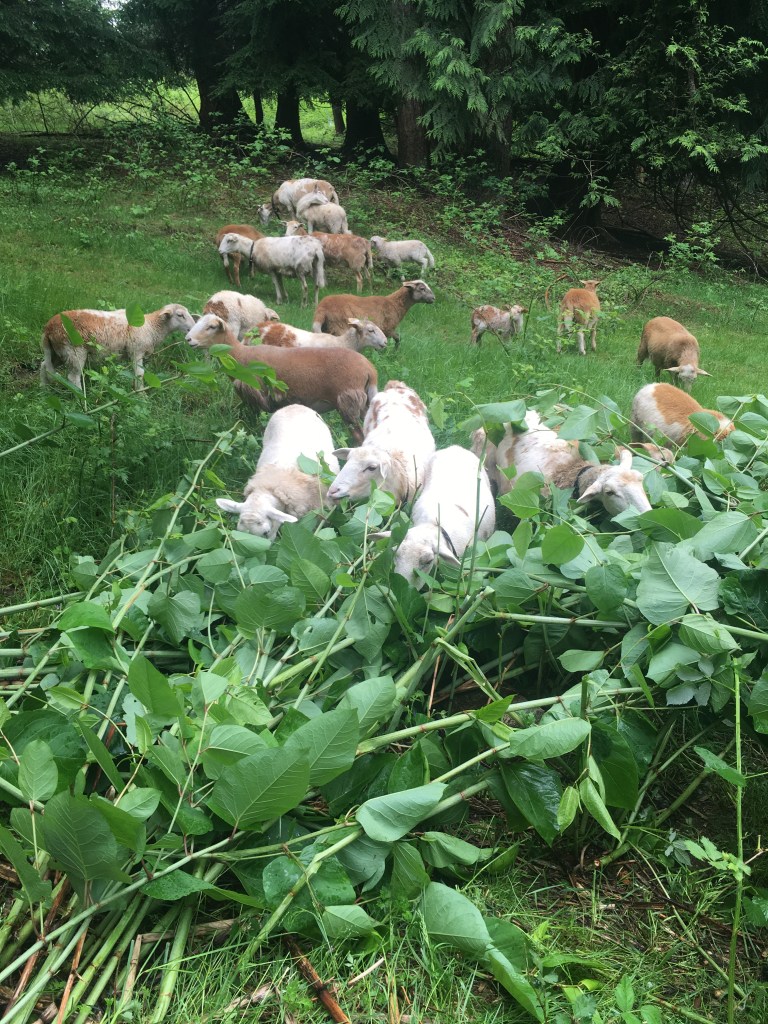
The grass is growing fast as hooved herbivores process the landscape. What a transformation we’re witnessing- mere grasses, forbs, and shrubs turn into prime lamb deliciousness. The sheep are entirely driven by mowing down lush green pasture, something EEC Forest Stewardship has. Though some of our pastures are transitioning into old growth forest, that shift will take generations, and intermediate care of the still open ground between plantings should be managed to ensure healthy restoration. Blackberry and grass are tenacious tenants of the land, and shading them out with trees is the slow, but effective answer.

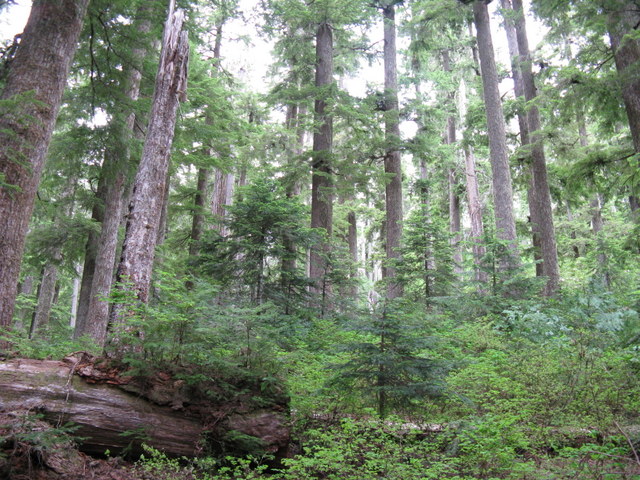
The intact forest, pictured above, has a partially closed canopy, allowing dappled light through to the young trees below. On the forest floor, a thick layer of debris and rotting branches and logs weaves an intricate web of life, including nurse logs for young trees, the future giants of the forest. When EEC forests reach this stage, we’ll have only a few sheep tending, and light activity on the land. Katahdin sheep are foragers- allowing them to eat beyond grasses. This diverse browsing instinct mimics deer and elk more closely. Perhaps at this stage in our forest’s regeneration, elk might be wandering through.
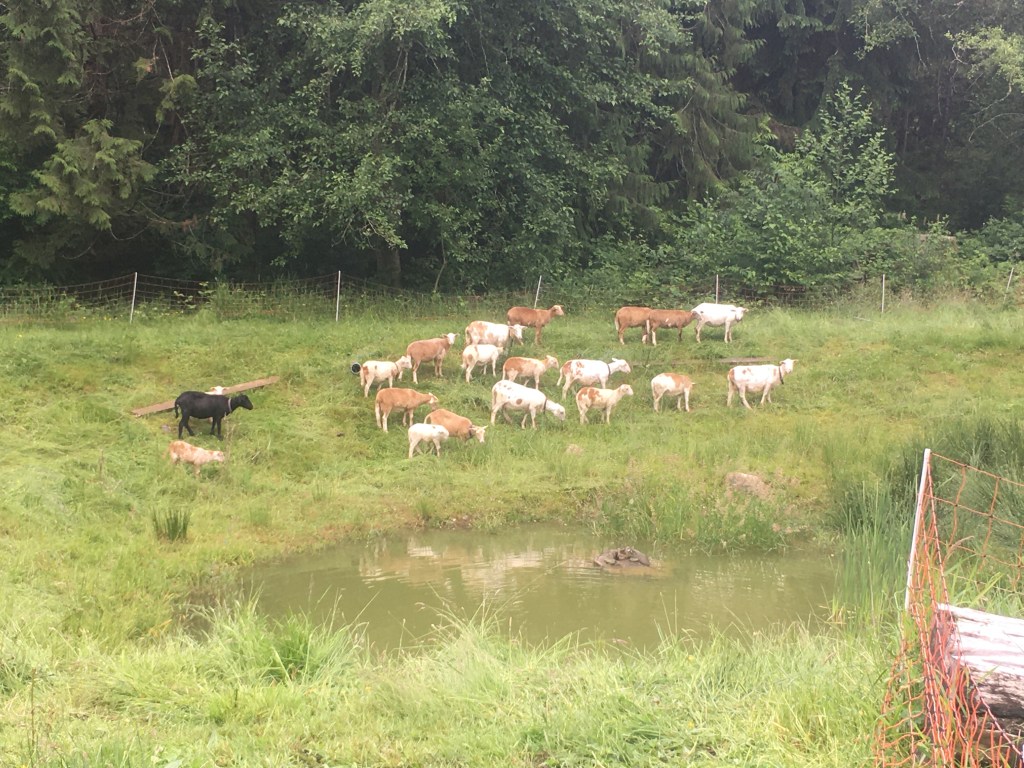
The sheep are not only producing meat, but also playing an important role as invasive managers. They happily eat knot weed, blackberry, and canary grass. They poop out fertility for our young trees, and continue building biomass to support a climaxed forest one day. That fertility can be too much, if the numbers of sheep become too great to be supported on the landscape. Carrying capacity is crucial to understanding how stock work the land. There are so many irresponsible livestock owners who think you just turn an animal out onto a field and that’s that. It’s why so much desertification happens in ecosystems that were once rich and abundant. Mankind takes so much for granted. I’ve had sheep on the land for only two years, but before that there were goats (less in number) and throughout all eight years I’ve been here (Summer 2020) chickens and goats have managed the landscape.

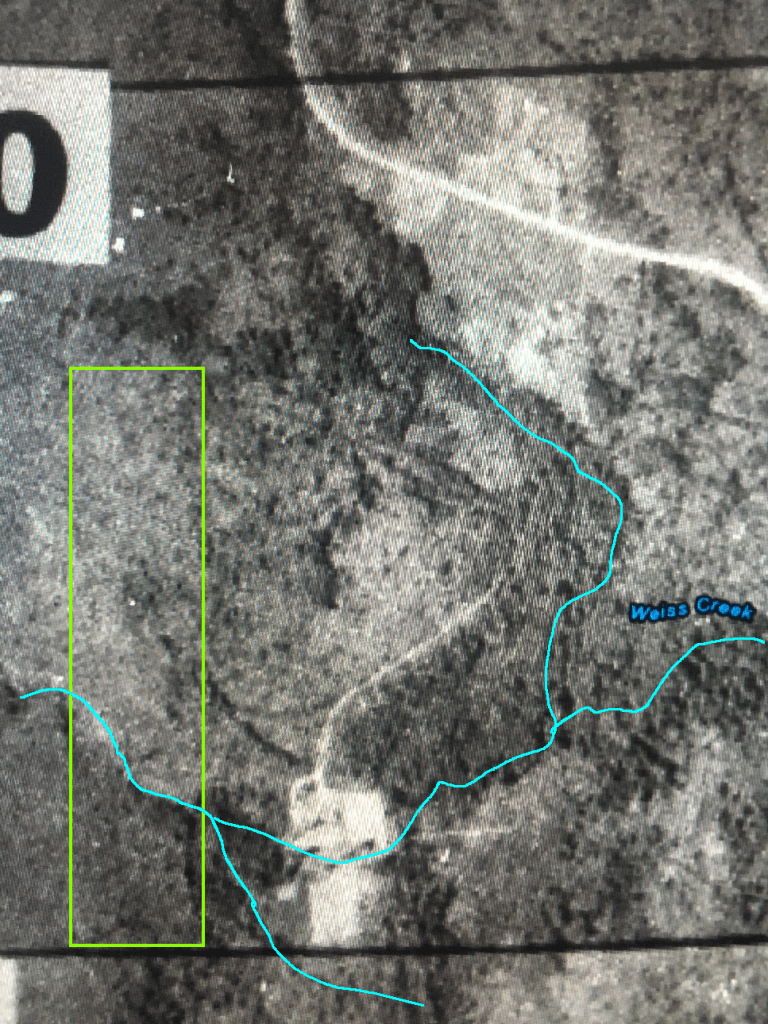
Above is the earliest photograph of EEC Forest Stewardship land (boxed in green). Here, by the 1930s, all the old growth had been cut, clearing the land for dairy farms, which quickly began developing throughout the Snoqualmie Valley. Many cuts were not replanted, and so, natural seeding began. This is evident on the northern part of EEC, above Weiss Creek, also drawn in and labeled. Just to the right of our Forest Stewardship property, there is a dark grove, left untouched. This grove is still untouched today, with a few second growth giants hiding within. To the right of the old grove, there is massive disturbance- right in the middle of the creek. I’m not sure what was going on, but all evidence of human activity is covered over in alder trees today.

The 1930s aerial was taken about a decade before my northern neighbor built a dairy farm in what is now a sensitive wetland area. There are very few evergreen mature trees on the property, and most are ironically, near the farm house.

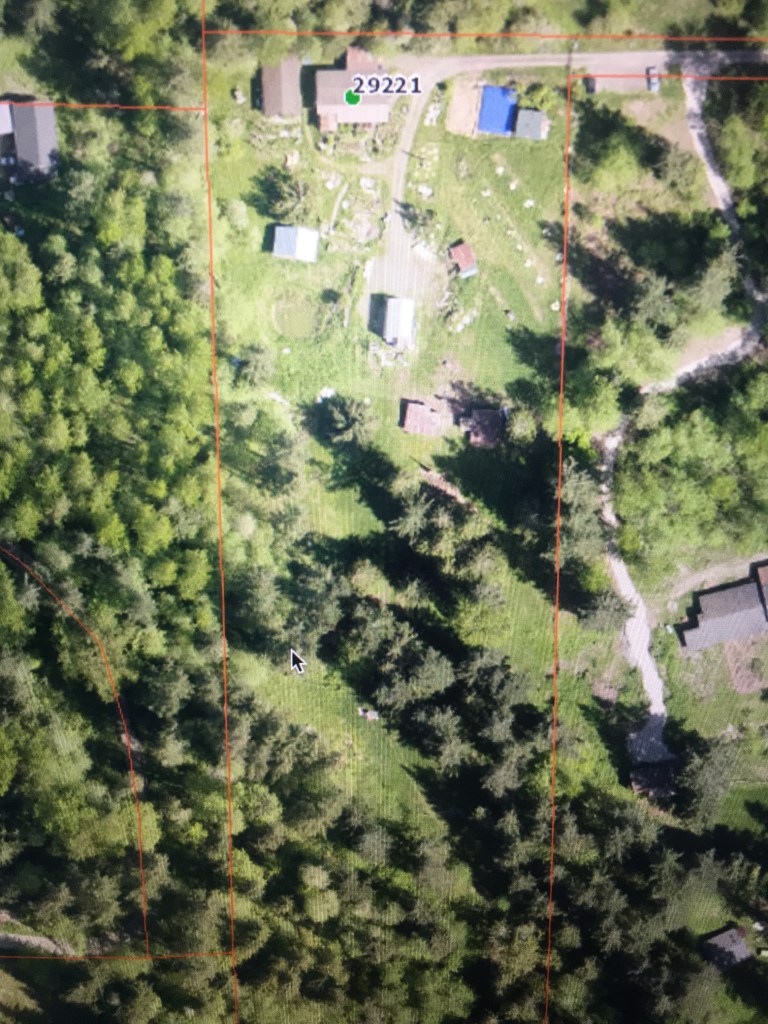
Near the living spaces of our Forest Stewardship acreage, the clearings are maintained to access what light we can for more intensive agricultural pursuits, and the psychological benefit of sky and light. Looking at the aerial photo below, it’s easy to see how eventually, the south grove of evergreens will one day breech our skyline, hemming us back into canopy as well. It will be well past my lifetime. When the light goes out, this land will have transformed back into healthy forest, and should be capable of stewarding its self. A few walking trails, with information about the restoration of the forest, will allow community a place to enjoy trees, streams, and wildlife. Till then, EEC will continue to produce clean food and healthy habitat for people and livestock; working towards the restoration of temperate rain-forest.
created by dji camera

Unsettled Beauty

winds of change

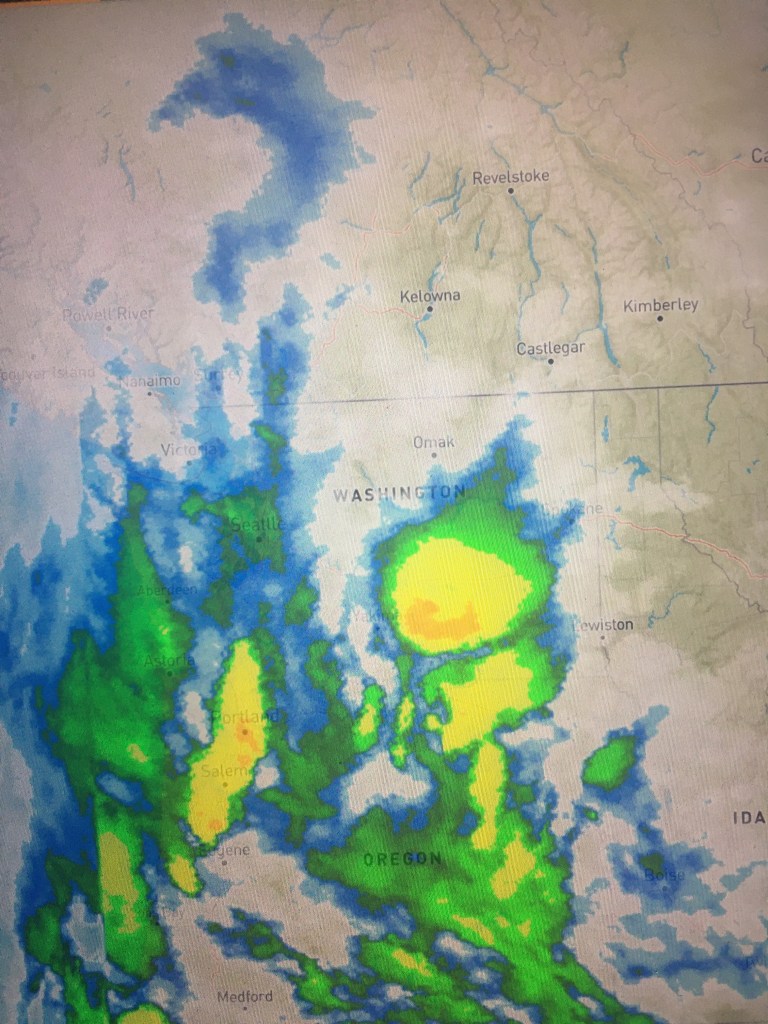
The growing demand for change billows up, like the fantastic cumulonimbus clouds gathering in our skies. Recent storms have produced record breaking cloud tops for Western Washington- which means the true power in these thunderstorms is awesome. I’m a gal from Oklahoma, where not only the wind comes sweeping down the plain, but also the storms. Moving to Washington, I found that if a t-storm did occur, it was brief- with only one or two claps of thunder. Over the past two years, storms, especially in late Spring, have become real beasts. Last June, 2019, we had record breaking lightning strikes in the greater Seattle area. Perhaps as climate continues to claim, these more turbulent weather patterns will become the norm.

One morning, in early June, the NOAA weather radio alerted us of powerful thunderstorms erupting in the early morning across our state. It actually alarmed twice, which I’d never experienced before. In less than an hour, I’d rushed to put away all the animals and tie down any loos tarps around the property as thunder rumbled almost continuously all around. The storm warning predicted 60mph winds, with catastrophic lightning strikes. We missed the high winds, but had at least two strikes on the land. It was such a unique situation, yet the forecasters have continued to warn that these formations will continue as the pressure systems grow.

A quick note on weather formation and why these storms are happening. When clouds rise up high into the sky, they become dense and cold. If the ground far below remains warm- heated up by warm Spring weather- this convection stirs up the atmosphere and brings turbulent weather down upon us. That film at the top of the page shows the stirring of the air as warm and cool air collide through an unstable front. The jet stream also plays a role in this upheaval. During the winter, the jet stream sits over Washington state, bringing us all the tropical rain from The Pacific, keeping us soaked. In Spring and Fall, the powerful stream of air moves, traveling up into Canada in the warm months, allowing high pressure systems to bring all the sun, and then falling back down into Washington in the Fall. These transition times are unstable, with cold and warm air moving together in turbulent systems of change.

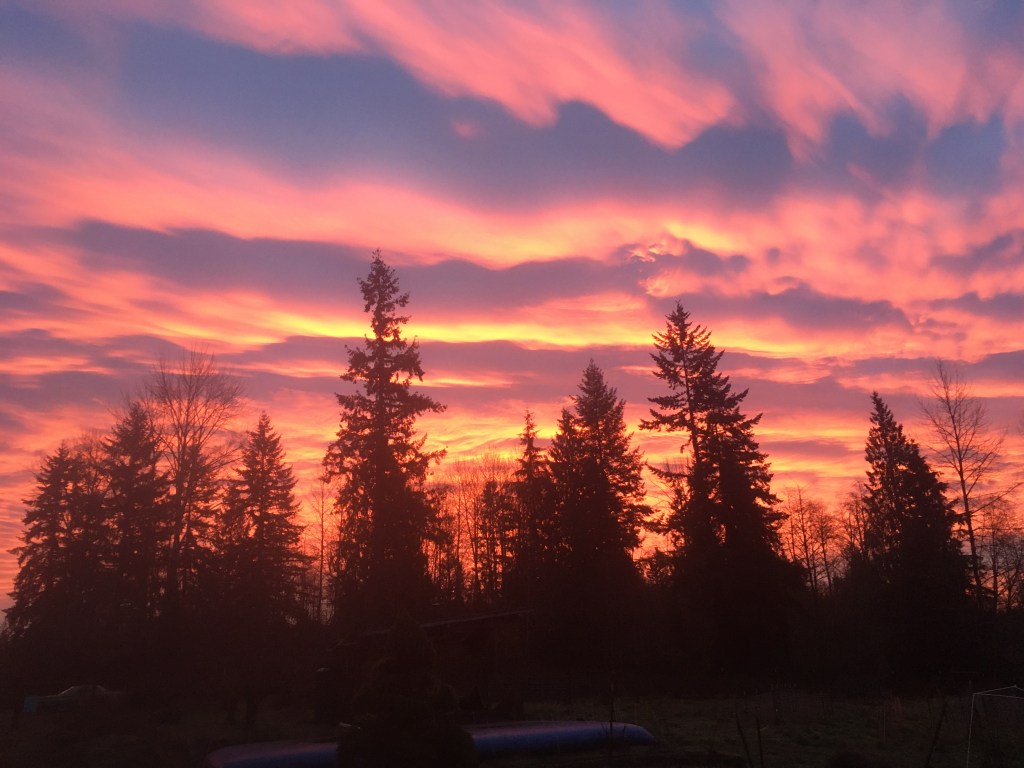
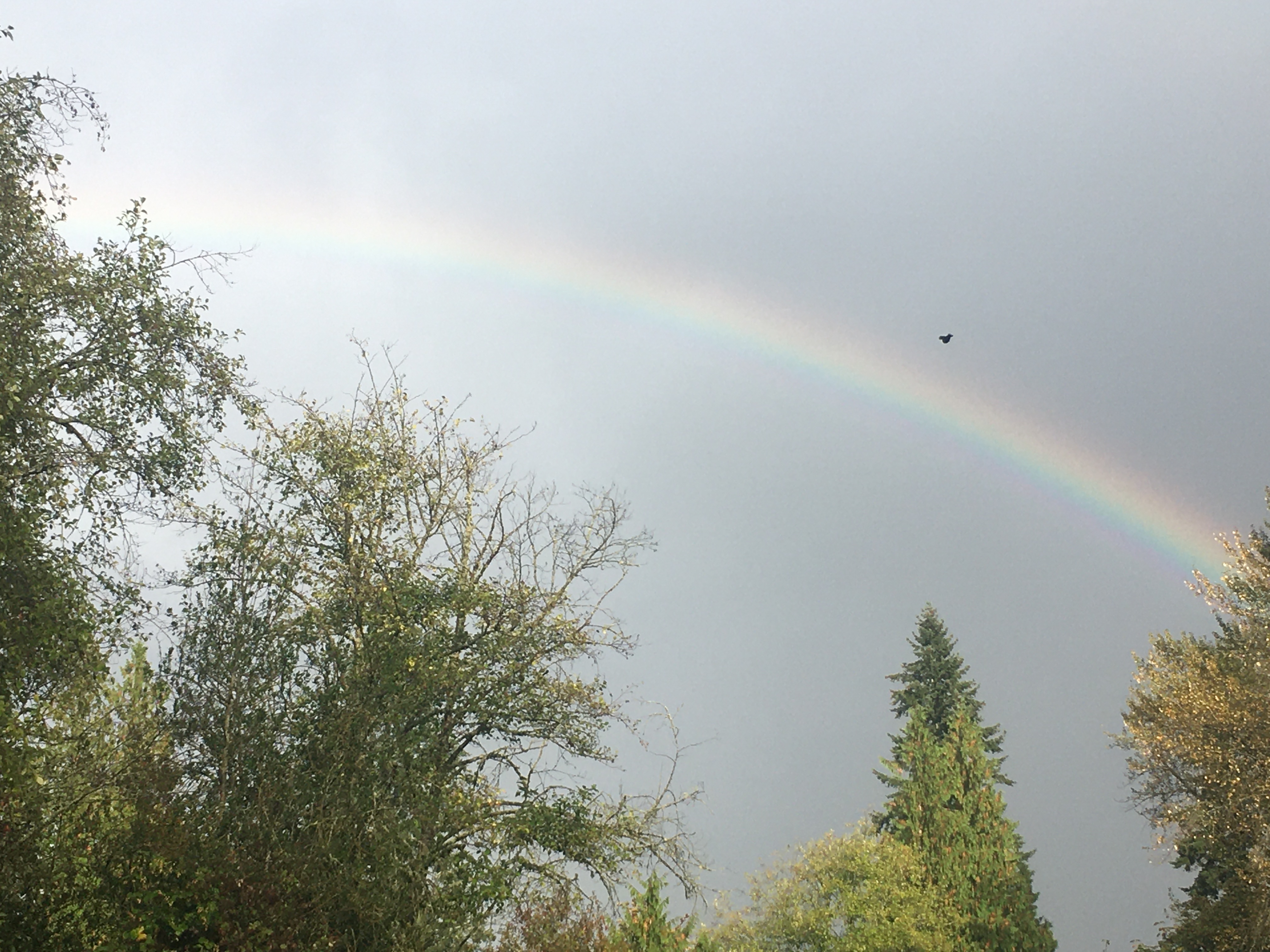
Change is often bumpy, as settled ways become upended, bringing instability and concern. It is good to be aware of changes, especially in the air currents, and in social shifts as consciousness continues to grow. Having an understanding of the weather, even on a seasonal level, can help us prepare for change. Strengthening our resiliency towards both social and meteorological instability takes a lot of learning, and adaptability. The success depends on flexibility, morphing into new shapes, and releasing the old. This is always a struggle in human evolution- how to evolve without loosing the familiar. But mother nature never rests, and what may have always been predictable, such as weather, is changing fast.

Here at EEC Forest Stewardship, we are constantly reworking our adaptations to work with weather, rather than against it, because in the end, nature’s fury will win. So, what to do? Here’s a short list of examples being implemented at our property now:

-steeper roof pitch on all future buildings to address heavy snow loads in winter

-metal large gauge gutters to handle intense rain events

-replanting of all steep banks on the property to combat erosion and land slides

-selecting livestock that can handle the range of temperatures and climate in our area

-retention of water and its even dispersal across the landscape to prevent flooding and drought

-watching weather patterns to be aware of impending storms and dramatic shifts in temprature

In October, 2020, we had an incredible arctic storm arrive before Halloween. Usually at this time of year, we receive wind events, which knock out power and bring down any loose branches and trees. It’s intense, but this year, it came with extreme cold. How cold? Well, we went from the usual 40s at night to teens in one weekend. In my 10 years of living here, I’ve never experienced such a shift so early in the fall. It’s hit farmers hard, and put stress on the animals, who are still shifting their own biorhythms from summer to winter. Our saving grace was having a prediction of this dramatic change in time to winterize our pipes and set up shelter for the animals against the freeze.

These events will continue, and rather than feeling like we’re always trying to catch up, we’ve initiated full engagement with these climate extremes, and braced for change. It would be unsustainable to constantly fight it, fear it, or deny these climate shifts. Sadly, a lot of people are afraid, feeling helpless, and unable to adapt. Layer COVID-19 into the fray and you’ve got a perfect storm. At EEC Forest Stewardship, we’re battening down the hatches and checking our tie downs on the hay. Embracing the new change that’s arriving, and celebrating another day of thriving abundance here in Western Washington.

Unwanted Companions

Introducing fertility inputs to the soil is usually seen as a good thing- nitrogen, carbon, and potassium are the most common, and many people use compost, manure, or wood chips as inputs with these elements. In our enthusiasm to build fertility at EEC Forest Stewardship, during the early days, we said “yes” to a few offered free inputs which, on reflection, might have been a naive impulse. The long term costs of adding biomass from outside a holistic system can be underestimated- here are some examples we’re struggling with at EEC.

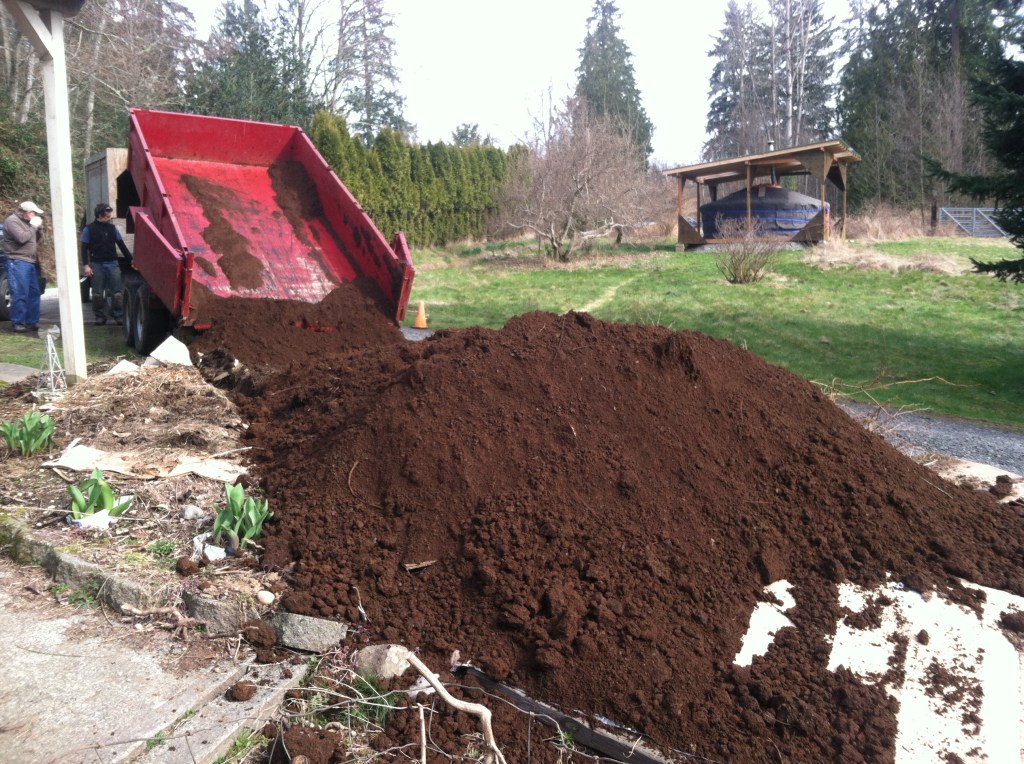
It was late winter, and I wanted to get a start on veggie gardens by the house for the upcoming growing season. It had taken over a month to dig out all the rhododendron on the site. We removed them because they were very toxic to goats, and they did not priduce anything people could eat, so we dug them out. Should have sold them, but it was already enough work to get them out. The we were left with a tattered plastic covered mulch bed with some large holes. A neighbor offered free composted goat manure from her barn. I said yes, knowing how good the manure would be to jump-start the gardens. In general, manures are great inputs for your soil, especially gardens, which are often employed in growing vegetables, which require a lot of inputs to produce consistently year after year.

A dump trailer arrived with the rich brown and black soil, I saw some paddock gravel sprinkled in, but didn’t care so much, as the manure was at a perfect rate of decomposition for the gardens. The trailer backer right onto the garden location and dumped about two tons of ready to garden soil. Instant garden! I was thrilled, and began planning out all the patches and rows for my first ever garden. That was 2014.

A few weeks later another offer from the same barn came for free manure compost. This soil was from a different barn, and seemed more composted, darker in color, showing more carbon base. I asked that it go on the edge of my land outside the fence, for easy access with a truck when we needed some. It worked well as a staging area for biomass (with permission from the neighbor). I would bring my 10 gallon pots to the soil pile, fill up, and return them to the greenhouse for planting. Some of the soil was simpy shoveled into the back of the pickup and driven to a site on the land where a raised bed was going in, or fresh soil was needed to amend fruit trees, etc. That rich manure compost went to many areas of the land, and fostered some great young plants into fruition. But the soil brought something else with it, and we did not find out what until it was too late.

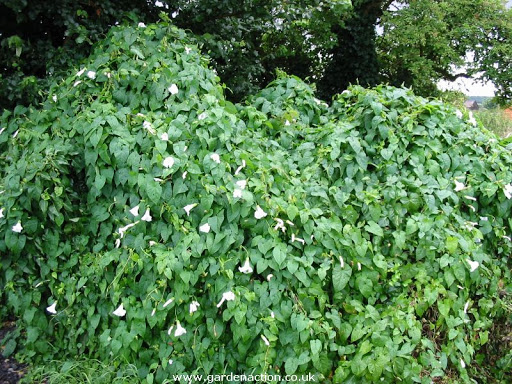
I honestly don’t know if the soil came with it or not, the seeds of this tenacious weed spread quickly thorough any landscape where it is introduces, and can lay dormant for years. I’m talking about common bind weed, or morning glory. It’s a vine with a lot of reach- over 30 feet below ground, with roots that bear tiny hair like rootlets, which can form new plants easily if left in the soil after the larger roots are pulled out. In short, you can’t weed them out like most other plants. They thrive on disturbed soil, and love a good pruning back, which then stimulated the rootlets underground to grow faster. You may think you only have some on the edge of your land, but it reaches under the soil, across the lawn 30 feet, then pops up in your garden, then under the ground another 30 feet to your orchard, throwing up new sprouts along the way. A truly abundant species, in the worst way.

Morning glory has been present at EEC for five years now, and has spread across the entire upper 3rd of our property. It’s not covering everything, not at all, as I pull most of it up, and let the sheep eat the rest, or most of it. However, the plant spreads under ground, and since I initially took soil from the infected pile, and dispersed it around the landscape, it’s come on 5x as strong. Where the sheep can get at it, things are managed, and the spread has stopped. In the kitchen gardens, I have to spend 4x as much on weeding. In other parts of the property, I won’t know it’s there until the white flowers pop out in late summer. Cone flowers form, seed is inevitable, so I have to throw away any flowering plants I pull.

example of bindweed takeover (NOT at EEC)

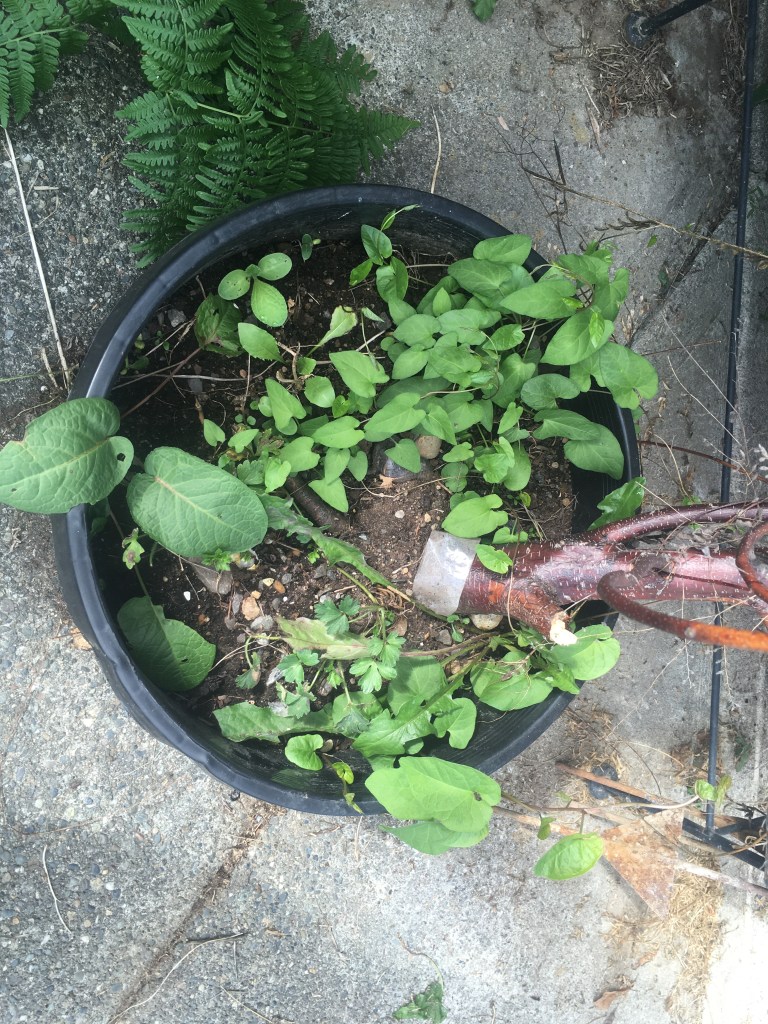
Over the past few years, I’ve stopped moving soil around from the gardens, and quarantined older potted plants. One is photoed at the start of this post- a young river birch which is now hosting the unwanted weed. I’ve since watched many more bind weed populations springing up around our grater area, so the seeds might have already been in the area, and just spread into my soil once it arrived. I cannot confirm this, but the weed is here now, and ready to take over. It’s more work I don’t need, but a necessity to prevent complete takeover, especially in the food gardens. It’s the current worst offender, next to blackberry, which at least offers a sweet treat in late summer. But weeds are just the beginning- what other unwanted companions can be lurking in other biomass inputs?

Where the composted manure pile lay, we began staging all our biomass; including hauled in logs and brush, which were then placed into different areas of the property in need of woody debris (like bare spots caused by erosion from increasing heavy rains). I did check all the brush and logs for invasive such as beetles, fungus, and weeds. But can you ever really be sure of your source when it comes to biomass? Full logs betray most rot and fungus if you look close and know what to look for- I’ll not get into that today, but here’s a great website to learn more.

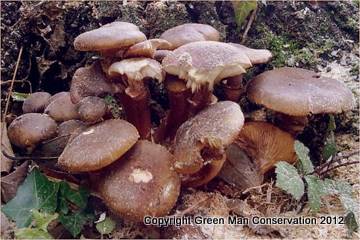
The two main fungi which are bad news here in The Pacific Northwest are honey fungus (Armillaria mellea), a parasitic fungus causing an intensive white rot, signifying the death of tree. Considered to be one of the most dangerous parasites known to trees. The other is laminated root rot, Coniferiporia weirii (formerly Phellinus weirii), a fungus (may also be called P. sulphurascens in some reports). Infection spreads from tree to tree, eventually leading to root decay. Trees are infected and killed regardless of individual vigor. It attacks mostly firs, and since our forests are dominated by the Douglas fir, and it’s the tree in timber commercial harvesting, it’s considered a huge threat.

honey mushrooms are edible if cooked- (do not pick without expert confirmation)

How would inputting biomass from outside our land invite these fungi? Well, if you’ve ever said “yes” to free wood chips from a local arborists, you might have invited it with open arms. The risk of wood chips being infected cannot easily be gauged, but think of this- most arborists are cutting down diseased or otherwise compromised trees. If they know the true cause of the rot, they might be able to self quarantine infected wood, by staging it in a contained facility- but there is not anything like that set up in our area (that i know of) for the simple fact that fungus like the laminated root rot can live on in dead wood for decades. If you were to lay that wood down on the ground somewhere, the fungus would travel in the soil to the nearest healthy tree; wood chips would infect in the same way on your land, so watch out!

We’ve covered two major input sources which can have drastic consequences for your land if you invite them in. Keep in mind there is a host of bacteria which can also hitch a ride in biomass, as well as parasites (for animals and plants). Does this mean don’t get inputs? No, but it does mean really think hard about where you source your materials from, and be very weary of free biomass- it’s usually tainted with no legitimate place to go. I’ll share one more example, not a fertility input, but another free biomass I turned down, with better foresight.

the pond in late summer with Katahdin flock

Our pond is dug into glacial till- meaning it will never fully fill, and hold that volume of water without being lined in some way. We’ve priced out thick liners, and that’s expensive- as well as easy to puncture and damage. The best option would be clay, and there is a lot of blue dolomite clay in our region. However, it’s still pricey, and takes machines to haul in and place- adding up to similar costs as the plastic liner. Clay is our preferred option, and in late 2018, I got an offer for three truckloads of free dolomite clay. It was being taken off site in Seattle that day, and had no scheduled place to go, so I could have it for free- in return for taking such a large amount of biomass on short notice. It was so tempting, and would have been enough clay for the pond. But there was also a red flag- the clay was coming from Seattle. I asked where in Seattle, and the reply shocked me- Fauntleroy Ferry Landing in West Seattle.

Why? Well, The Puget Sound is amassed with pollutants; toxic industry litters the coast throughout the sound, and West Seattle was no clean oasis in the sea of filth. On top of that, it’s clay dug out of salt water- to line a fresh water pond? No, it would have killed the pond, and the ground around it, and maybe even my well, if the salts were to soak into the ground and into the water table. What a potential nightmare! Of course I said “no”, and the clay went who know where after that, (scary). This is how our good intentions with regards to inputs can cause great harm. Please, if you take away one thing from this writing- know your inputs, what they are, where they come from, and the questions to ask before saying “yes”. Otherwhise, you might end up with some very unwelcome companions.

Food Wise?

Online farming? Well, holistic systems thrive on big data. Know the who, what, when, where, and why before you design. This talk by Erin Baumgartner illustrates the inefficient design of many “modern” systems of distribution, as well as the cost of focusing on profit, rather than quality and human impact.

Holistic thrives on local, grass roots, and regeneration, to name a few. EEC Forest Stewardship not only stewards forest for long term canopy restoration, but also works the land agriculturally, using livestock and perennial plantings to enhance fertility and diversity on the landscape. We think globally and act locally by selling directly to consumers, and making sure out food is cost effective for us, and our patrons. We do the raising, slaughtering, and butchering on site, eliminating costly industrial processing, expensive packaging, and feed lots. Our animals are relaxed, never experiencing the stress of transport or strange handlers in a frightening slaughterhouse.

We raise only what the land can support, choosing ecology over profit. Raising a smaller flock of sheep keeps the farmer less stressed too. The animals themselves are grateful to have enough space to be animals in, with a safe number in the herd to allow security without cramping, which would lead to more stress. It’s not a model of production at all, not in the industrial sense, but enough to pay for its self, provide safe, healthy food, and regenerate the environment, instead of destroying it.

Even with all our work to keep costs manageable and animals healthy, we still have to go outside the land to find enough inputs for our animals. Winter hay is a must; we don’t have access to flat bottom land acreage, so we buy from the east side of the state. That’s usually the case with most hill farmers. We’re certainly not growing the grain for our laying hens either, but we source from a local fully organically certified producer (Scratch and Peck). I do not grain my sheep, but sometimes, they get organic bread from our gleaner friends.

Your investment in small, local producers- however you can, is something. It goes a long way in creating a secure food system. By consuming local and organic where you can, you’ll be investing in more than good food, you’ll also be paying for better health. Commercially gown crops are often empty of nutrition and taste. What they are full of is chemicals, which will pass on into your body when you consume it, and so many do, and so many more can’t afford anything else. Even worse, and addressed in this film, is the lack of access to healthy, locally produced food.

I’m not sure if the internet is the answer, but I appreciate the big data now being collected. Having briefly run an egg coop through online sales similar to the ones Erin speaks of, I agree the process is more holistic, but also still creates limited access. Any eggs we sold in our neighborhood grocery stores were there because I went in with them in person and made the sale- there was no online interest. Our eggs that were selling bulk online went mostly to restaurants in Seattle. That’s who would pay for our eggs so the farmer’s actually got a decent price, but it was still short of what the eggs cost to produce. Our small coop would never see any subsidies. That big ag money goes to the huge factory farms- one machine supporting another- so don’t buy in.

The Candle At Both Ends

At a glance, it’s obvious that The West Coast is on fire. Drought stalks these lands, and has for decades. The cost of a warmer, dryer trend equates to more burning. Climate change will reshape the world, and society is left behind in the ashes. People are at fault for these occurrences. Large timber stands, managed in mono-culture mass plantings, where crowded groves of densely planted evergreen trees, creates enough biomass to incinerate on a temperature level never reached in old growth forests. Well spaced, mature forests could easily defend against fire. Trees stand well spaced and well insulated with thick bark against low temperature brush burning below an intact canopy. With those canopies chopped down long ago, the cracked earth is parched and vulnerable to flame.

In western America, vast developments of suburban sprawl have crept up into the forest hillsides. EEC Forest Stewardship is an example of this sprawl, though on the west side of The Cascades, there is more moisture and less fire hazard. Still, the long summer months have invited fire danger into our temperate rain-forests, and when things light up in this region, it will be a living hell. Oregon, our neighbor to the south, is seeing west side burning this summer, and record breaking destruction across the state. Further down in coast in California, day has become night, with haunting orange skies of warning.

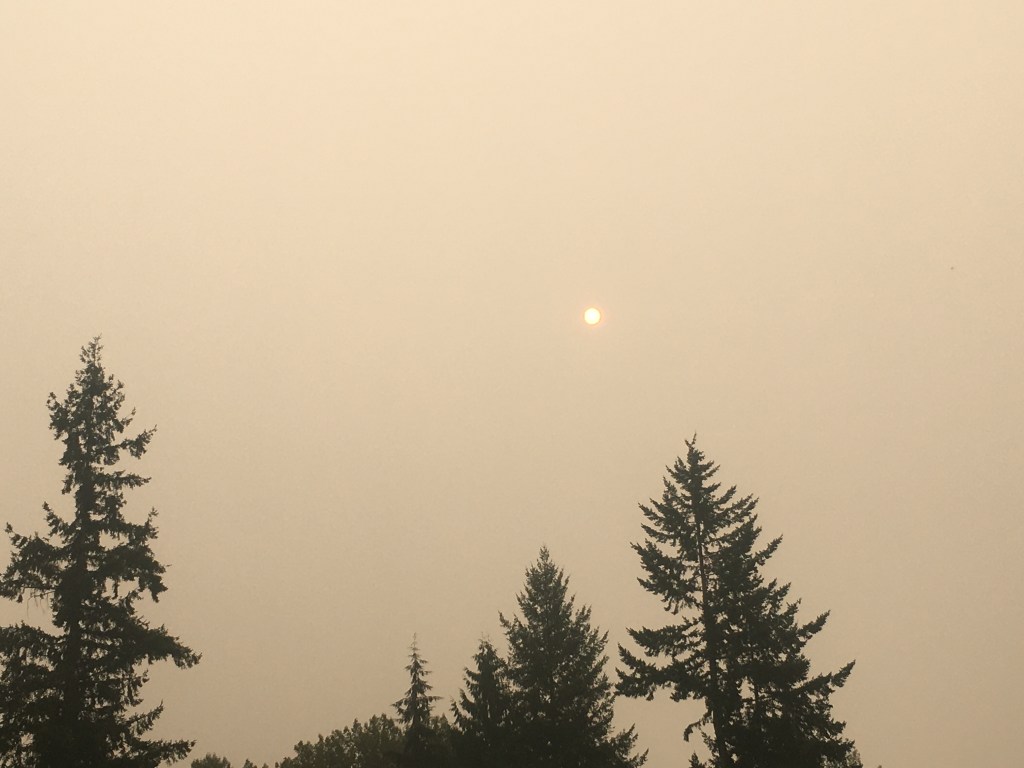
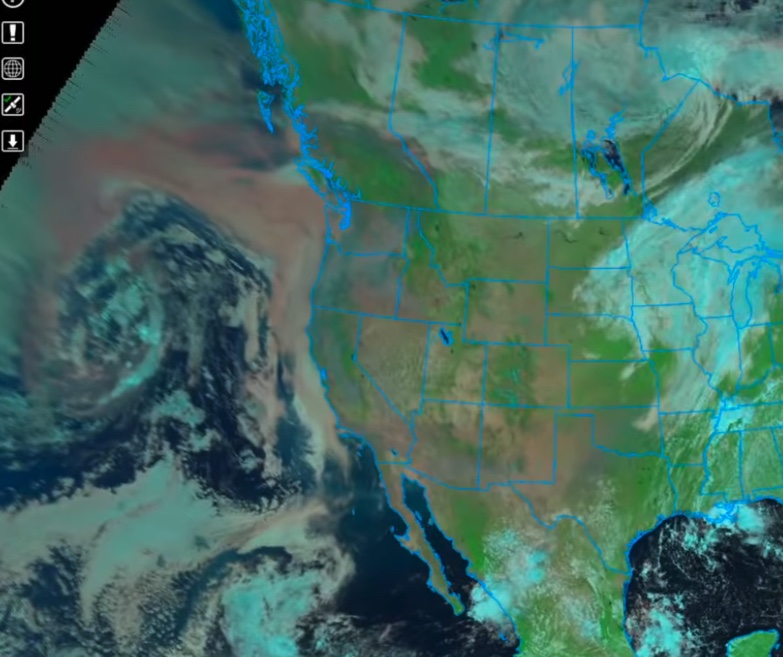
Dense fog, not unusual in The Bay Area, but certainly unusual in that this fog carries dangerous smoke particles, which harm the lungs and leave ash residue on every surface. The particles are so thick, they block out the sun, plunging daytime temperatures into what some scientists are comparing to a nuclear winter. Here in Western Washington, the daytime temperatures have fallen into the 50s and 60s (from 80s-90s), with the sun blocked out enough to turn our sky a dim orange too. Though it’s not as dramatic as the sky above in California, the air is still thick with smoke, and more than an hour working outside leaves me with a headache- even with a mask on.

In ten years living here, this is the worst smoke we’ve endured. So much gratitude for the fire staying away. We are not in any threat at this time for fire danger or evacuation. Many friends on the other side of the mountains have not been so lucky. Like the fires in 2015, 2020 is turning out to be the worst burn in state history, with whole towns wiped right off the map for good. Again, in the familiar desert step of our eastern lands, sage grouse might now be decimated, and winter kill from loss of habitat will have far reaching consequences for our wildlife populations- let alone the trees and plants which eek out a survival in these often harsh landscapes.

Take care in living away from it all, tucked in your pocket of forest somewhere off the main road- for nature can be a cruel teacher, and in this lightning fast changing world, climate will overtake us. At EEC, we “manage” our forest with the understanding that it could burn, and through we hope fire will only come to our land in a prescribed, well controlled burn, mother nature might have other plans. It is a recognized part of living in the west. For all communities, this is a time to be aware of climate change, especially how it will affect your area. If not fire, floods, if not floods, winds, ice, drought; the growing extreme of these environmental feedback loops will only intensify with time. Find out what’s in store for your region and take all preparatory steps possible to be ready for change. Regardless of what kind of change comes, it will come, and the projections are grim.

created by dji camera

One of the biggest steps taken here at EEC Forest Stewardship, involved preparing for continued drought on our landscape. Investing in a 20,000 gallon pillow tank has given us late summer water security, should out water table ever drop below well depth (so far, it never has). This tank is also for emergency defense. If fire was threatening the property, we could use the water to dampen the land around our house, or other buildings as needed. With the aid of a water pump, we can pressurize the hose from our tank and spray down and surface in need of hydration quenching. May fire never be the reason for this use! We hope to only irrigate fruit trees and pasture space with this tank. But, it’s also a piece of mind in this wildfire nightmare in these modern times.

Without fire there is still smoke. This particulate fog in the air does a different kind of damage- one we may not see, like the charred remains of buildings in the fire, but scaring and internal injury does occur when breathing smoke. Even though we can wear masks and stay inside to protect against smoke, our livestock is outside and exposed to the toxic air. Though this exposure is limited, it will continue to lengthen as the summer turnings expand, and they will. Inside our house (a 73 double wide) there is no central air or heating. We have a wood stove in winter and open windows at night in summer. It works perfectly well when there is clean air, but now, we’re sealed in. Fans are blowing to circulate what’s here, but it’s stuffy, and the smoke is still getting in. We’ve planned to invest in portable air filtration, which we’ll hopefully only have to run a few weeks out of each summer season. I’d like to recognize that this is not the solution to climate change, in fact, a step backwards because of the energy we’ll be using to run it, the materials to make it, and replace the filter again and again. It’s not sustainable, but at this point in time, not much of humanity is.

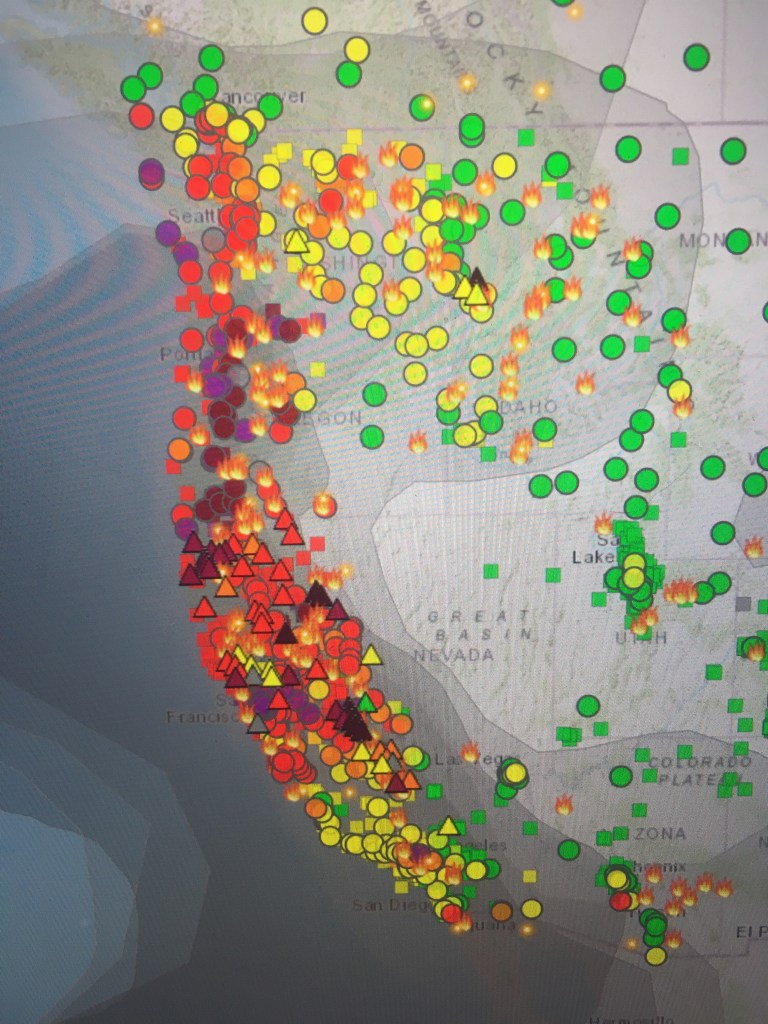
In the haze, trees keep growing taller, sheep keep nibbling at the grass and bramble, and we keep planting for the future at EEC. There’s talk of rain the forecast later this week, and a shift in the winds from The Pacific, which might lighten the haze for a while. The map above shows how extensive the smoke is off shore, so I’m not sure where the relief will come. Note the spiraling weather system further off the coast- it’s entirely generated by smoke particulates gathering moisture. Climate scientists are still racing to compile data as records shatter, heat indexes swell, and air quality dwindles. Once we set these consequences into action by continuing to burn carbon and expecting all the amenities of modern living- well beyond the necessities, we cooked our own goose. Let us hope generations in the future will understand, if they survive.

We’re Still Here

There’s a certain point in the summer where we at EEC get caught up in all the “growings on” here on the land. It’s been a busy summer of work and play, with little time for computer antics. But an update is overdue, and as the land begins to slow back down with the loss of light, as fall approaches, I’ve taken a moment to sit down and catch up.

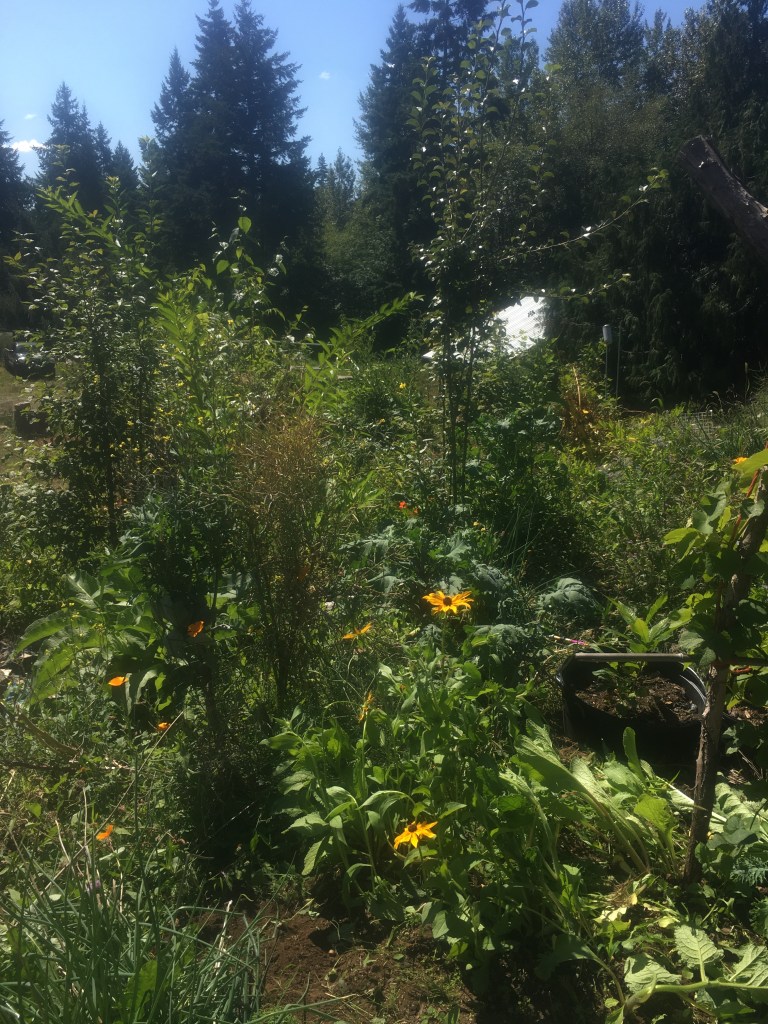
The kitchen garden has become a wild plant paradise, with black eyes Susan and pear tree root stalk, chives, American chestnut seedlings, comfrey, and more. Natural reeseeding of kale keeps our salads fresh, but I’ve never been a vegetable gardener, and that’s a fact. Why? Because I love working with animals and trees, that’s my passion. Growing garden vegetables, like broccoli and carrots, takes a lot of work to get right, especially in this soil. We have to constantly amend vegetable gardens with so much nutrients to keep those grocery store favorites in stock, when so many large greenhouse growers in our valley already have the veggies going and sell them locally at an affordable price.

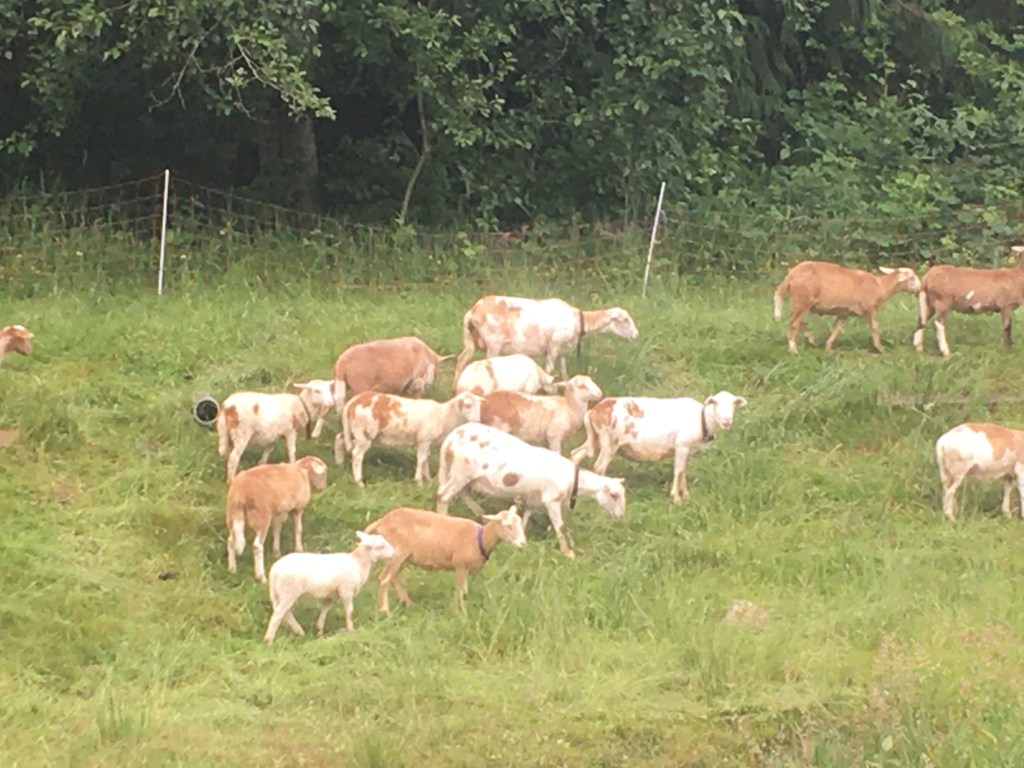
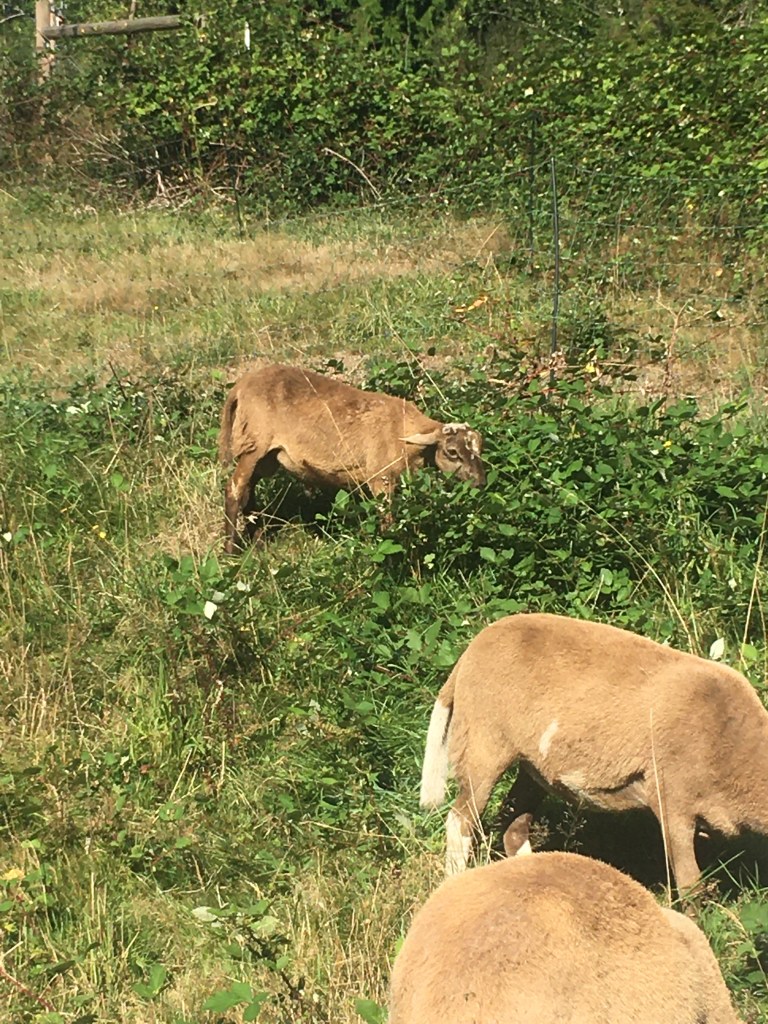
The sheep are so wonderful, large, and sentient. They water themselves (as long as some is available), they feed themselves off the landscape, and are manageable in reasonable numbers. I don’t have to weed sheep, just de-worm them occasionally and trim hooves every few seasons. They eat the weeds, and mow the lawn, and put great fertility back into the soil. Sheep also need to move around, so they keep me on my toes moving electric fences and keeping them safe from predators. It’s fun, constant (like gardening) but I get to work with animals, my passion.

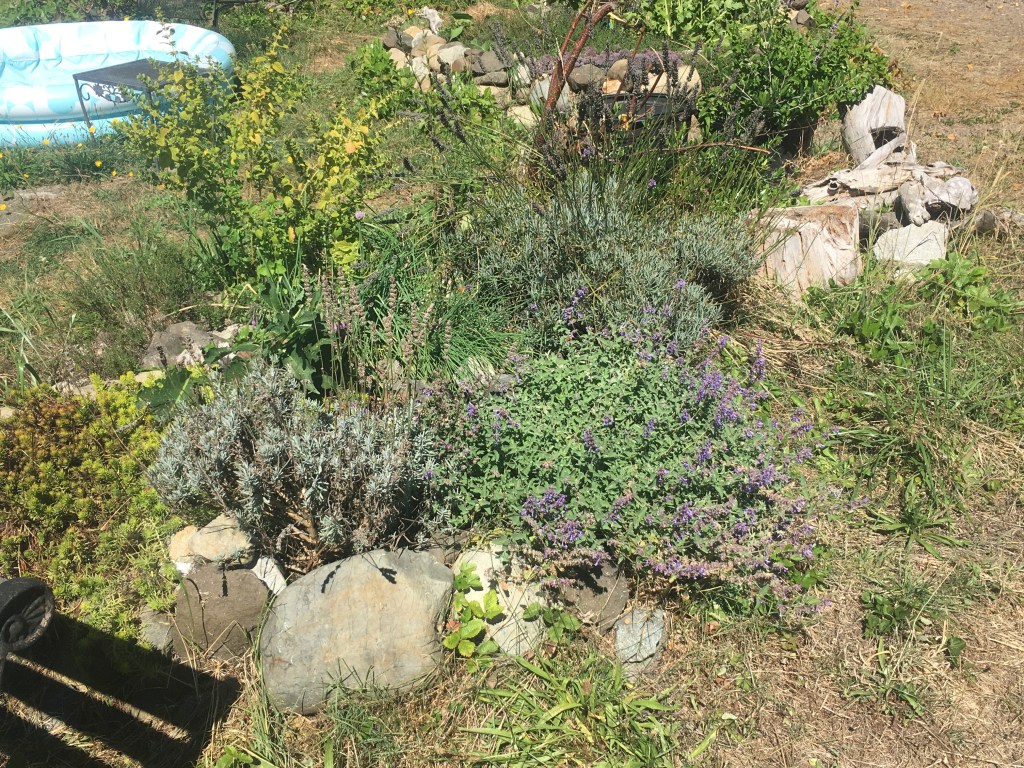
The her spiral, key hole garden, and other rockery beds in the house gardens are thriving, and could use a trim back. I harvested lavender earlier in the summer, and left more for the pollinators, who need it most. There are still not enough flowers on the land, and that’s going to take time, which we have at EEC Forest Stewardship. Smaller rock gardens are easy to manage compared to large (anything over 4×6′) vegetable gardens with limitless space for both food and weeds.

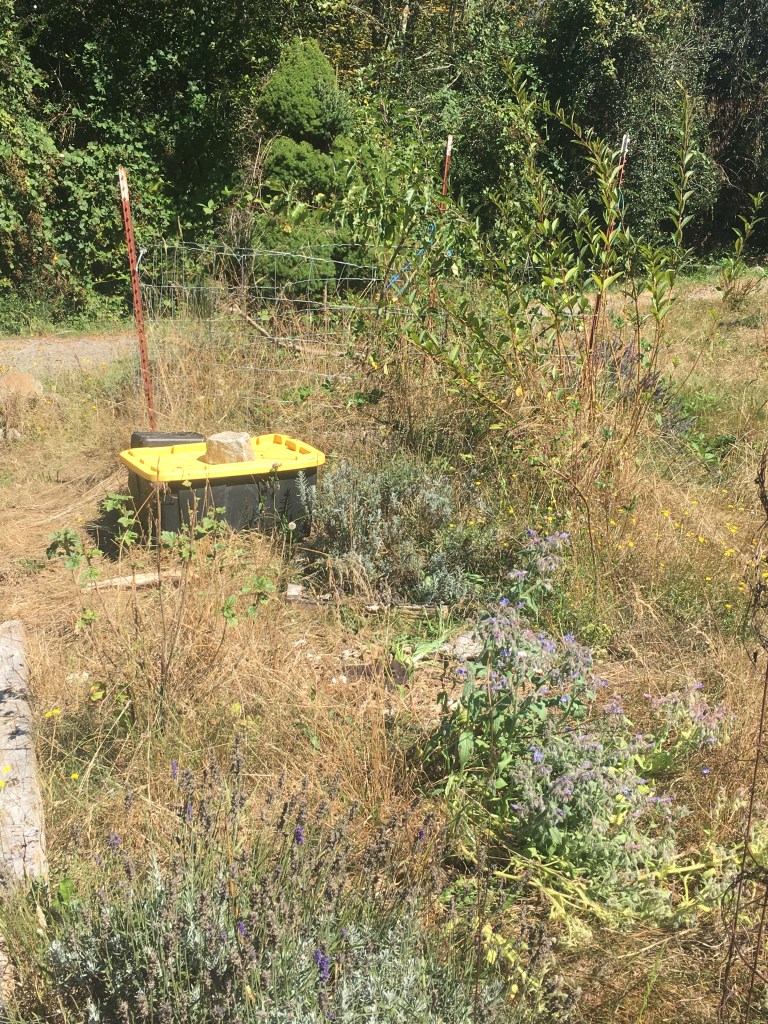
Edge spaces, along the driveway for example, foster an in between place where I’ve begun cultivating long term hedge species like native twin berry and current, as well as some hybrid experiments, like the fenced edible crab apple, which is managing to survive in a low water zone with a little help form his companion plantings. I’ve co-planted the cultivar with native crab apple as a comparison. The borage survives almost anywhere, reseeds throughout the growing season on it’s own, can be eaten, and is the #1 pollinator station chosen by the insects. Some gardeners complain it’s a weed, but what an easy weed to pull, and what it offers far outweighs the weed negatives in my gardens.

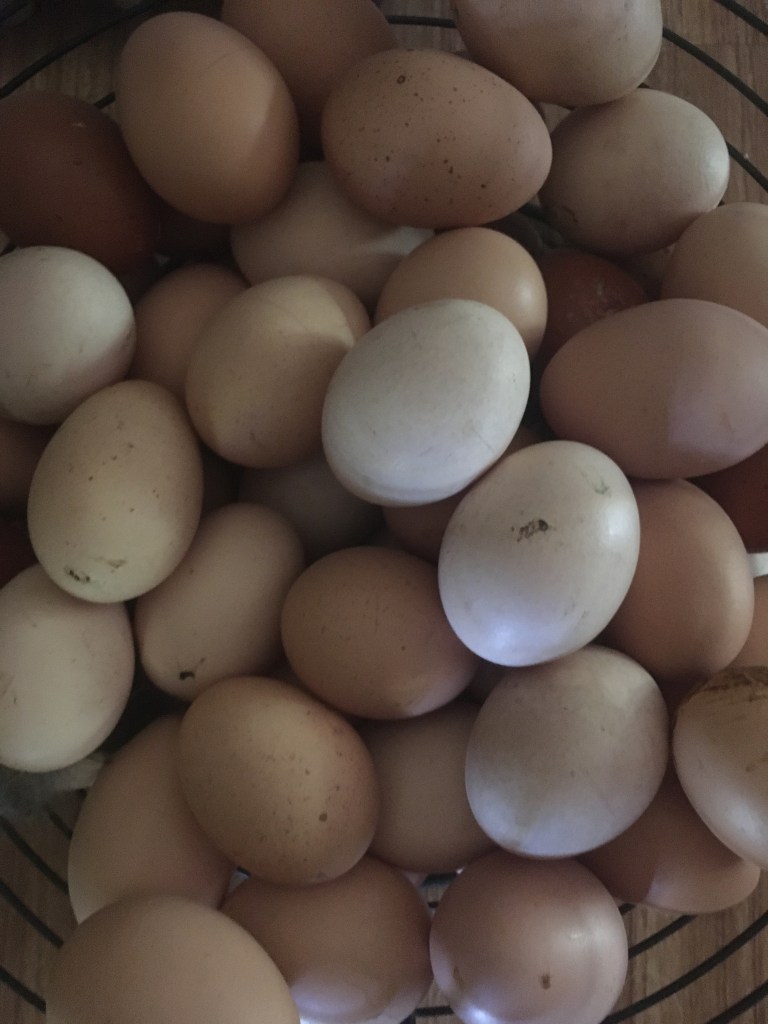
Hens are at is too, producing the best eggs I know. We’re selling a few dozen locally, but I’m planning to keep the flock to under 30, and not produce on a larger scale, as the commercial price does not add up to the true cost of producing happy hens who lay nutrient dense eggs. It’s very important to realize just how subsidized commercial farming is now. Those bleached white eggs in the store with the thin shells and watery goo some call an egg dripping out of them, priced at $2.99, are sad examples of food, and are worth less than the money you pay for them. But for so many, and soon, so many more, food at all is better than none- and “affordable” food is best. It’s what low quality nutrition will do to the body long term, which sometimes keeps me up at night.

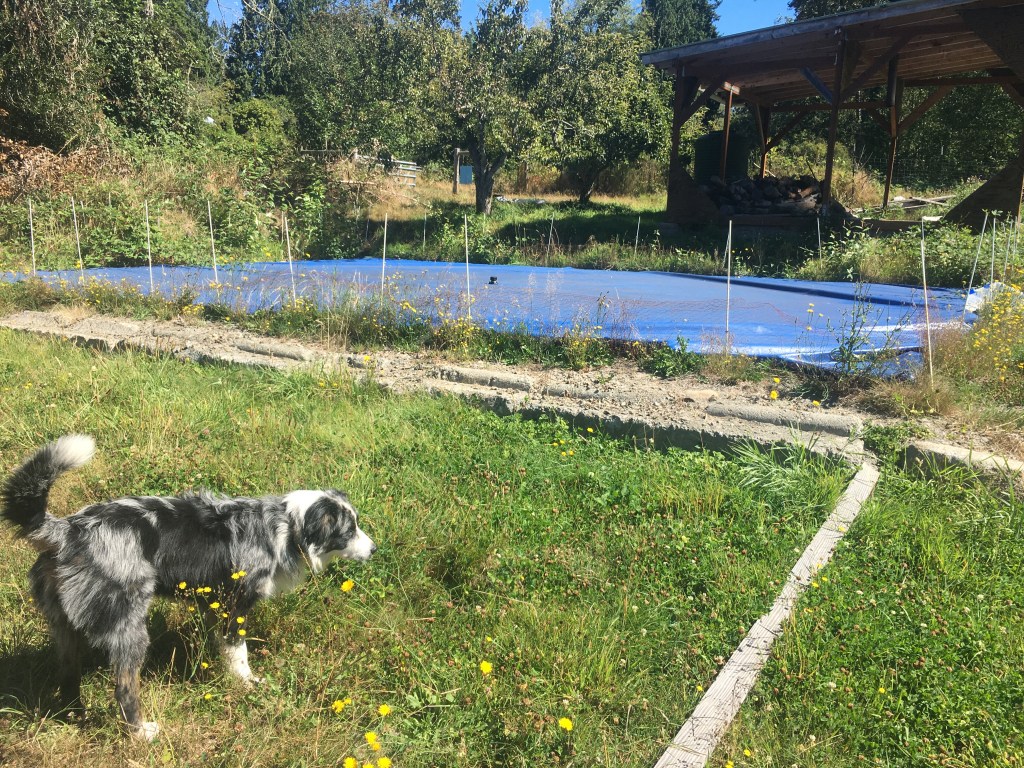
This summer we flood irrigated with the pillow tank for the first time. I might add that it was no flood, even with a fire hose. We’ll be designing a slow drip irrigation system off the tank now. Without an electric pump, the water does not have enough force to flood anything as it spills out of the hose. That’s ok, we’re learning a lot about the physics of water. The orchard still received a good watering as we moved the hose around. By the way, a 100′ fire hose full of water is quite heavy.

This is a shot of full flow from the hose. It’s just not going to flood the swale fast enough before it all soaks in. Such a great lesson in water system design. When, after only a year of planning, we implemented all these large scale plans, it was immediately apparent to me that the systems were too big to manage, and that as an individual, I had to scale things back down to my needs. Luckily this world is full of flex, and since the problem is always the solution, it’s been possible to rebuild off the plans already in place, and re-imagine out systems to work within the constraints as they change. This is the mark of any good land steward, because the land is in constant flux, and human imposed systems must change to work with the land as needed. So many of us big brained humans think we can change the land to suit us. In some ways yes, but our little brains can’t fully comprehend the complex web of nature, and we often “monocrop” a space to fit our limited understanding at the cost of a healthy working whole.

Back in sheep land, we just introduced a new breeding ram to the flock. This wonderful guy came locally from Canfield Farms in Snohomish. Michelle’s been running Katahdin sheep there since 2010. Her records are amazing, and though I will never match them, I’m so excited to have this contact, and she got into sheep through dog trials, so I have now met a local sheep dog trainer too. Can’t wait to introduce her to Valentine.

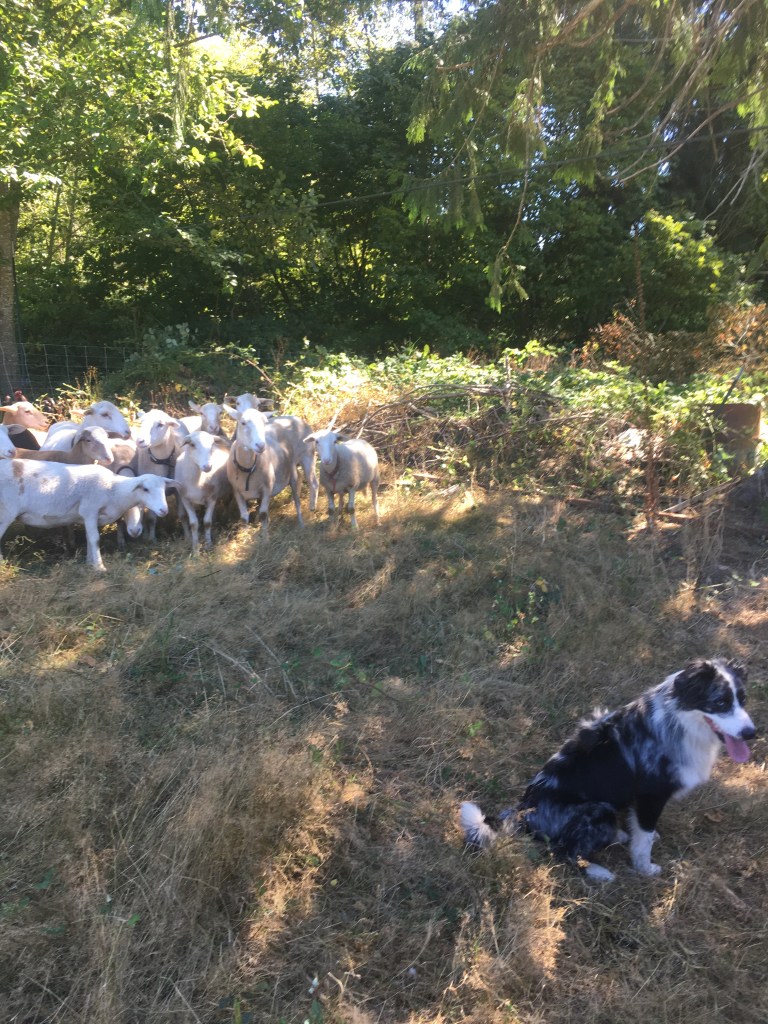
Speaking of, this dog has come a long way in less than two years. She’s now capable of moving the sheep for me. In the picture above, she is sorting chickens out of the flock to help me get them back to the coop side of the fence for feeding. This pup knows her stuff, and can tell the words “bird” from “sheep” without hesitation. She loves to work, and does it well. There’s still the challenge of keeping her form occasionally jumping up at new people in her excitement to greet them, but she does know how to “calm down”. And labor day weekend, she had a chance to really show her training when a young 4 year old visitor to the farm spent two days playing with her. By the end of that enjoyable time, Valley was happily playing fetch with the child without jumping on her, and knew to stay with the little girl when she wandered around on her own. Now Valentine has a new young friend, and a fan.

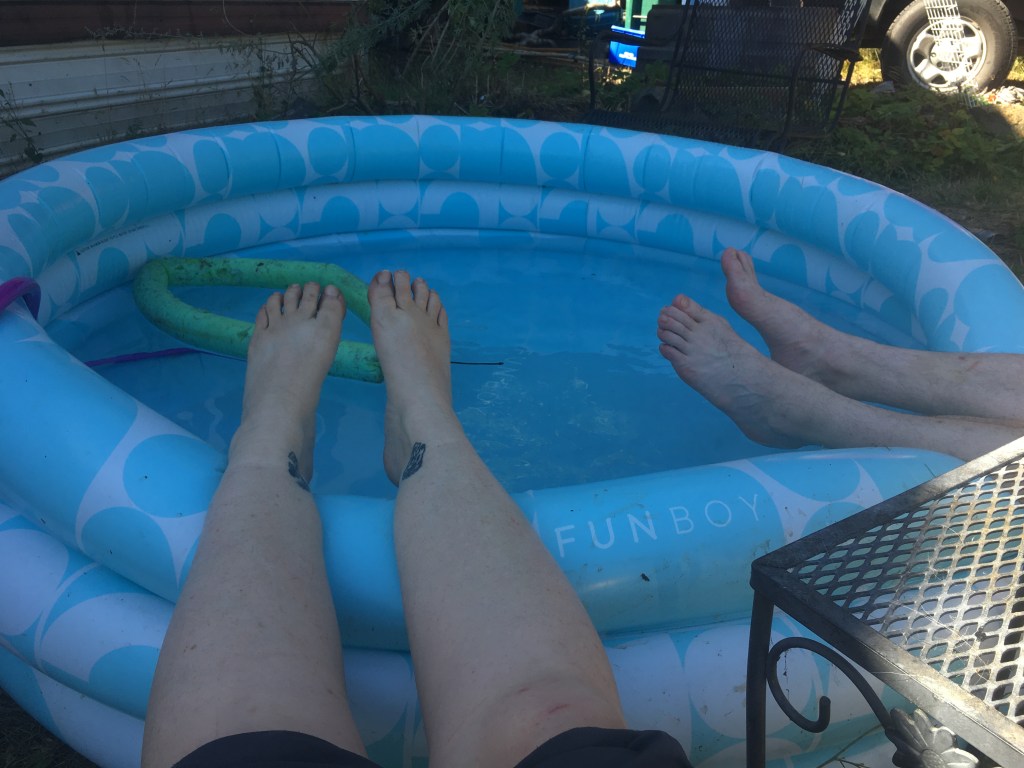
It’s not all had work and no play. My wise Mother sent us a blow up kitty pool, which I scoffed at, until it was full of cool water in the shade at the end of a hot day of working outside. We’re grateful for an oasis in the heat of summer. Thanks again Mom!

Though the world may be full of strange times, EEC Forest Stewardship continued to thrive here in Western Washington. It is such a privilege to spend my life in this work, with all the opportunities to be on the land, cultivating good food, great ecology, and some wonderful forest. Lots more to come as I get back to writing about this place and all the amazing things to come. Thanks to all who read this little blog and take interest in the world of small scale land stewardship. Have a great rest of the summer!