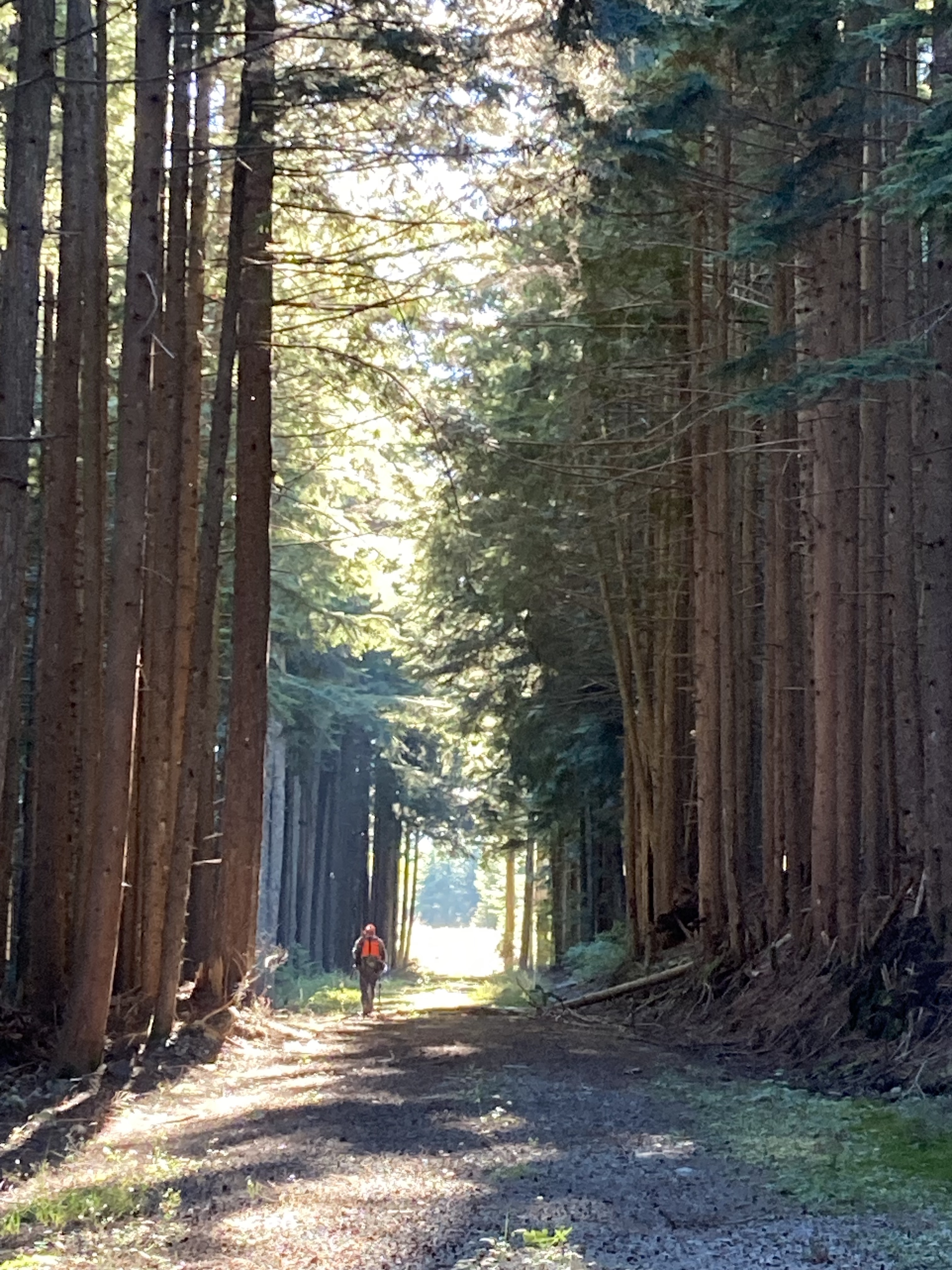
Big Dog is working and playing- with a little help from PawOpedic out of Issiquah, WA. Above, out Kangal moves with his sheep back to the barn- on leash here because we’re between fenced pastures in the wildlife corridor along our creek. Livestock can move through, but not be left to wander into the forest grazing. They catch a quick bite of grass along the road as we transhumance. What a world it would be indeed if there were no gates or fencing- we could walk like this for miles- but no need with enough well managed space within our bounds for now. Gill does not mind, as long as he gets to patrol, which, once back inside the fence, he can. The guardian of our farm is physically fit, though requiring a brace and over-site in his rounds. The routine now involves more leash time to make sure his weaker leg has enough warmup time before Mr. large and in charge prances off to check the fence lines.
While the ewes and lambs rest in lush pasture, Gill keeps up the pace to make sure all the perimeter markings are up to date with scent communication. Fresh lines keep visiting predators aware that this territory is well maintained by a resident farm friend, who will happily give a bark reminder that the animals within are not available for consumption at this time. Our only predation last year happened when I was away, and a helpful farm sitter was taking Gill in the barn during the day, and away from his post with the geese. There is sometimes a great misconception that LGDs (Livestock Guardian Dogs) are like pet dogs. They are not. LGDs have extremely thick winter coats to keep them very comfortable outside in most temperatures. Gill’s Kangal roots are from the Anatolian Mountains of Central Turkey. If I brought him inside my winter heated home (68F), he would be miserably hot and uncomfortable. Also, he would be away from his favorite, and most helpful job- night watchman.
Kangals love night watch- that’s why you’ll see them sleeping a lot during the day, they guard best in the dark, when predators are much more active. This does not mean they are unaware during the day- Gill alerts at anything out of the ordinary- not the deer who come through by the creek a few times a day, but at the bear lumbering through, who produces a distinct sound, smell, and energy that Gill’s 5,000 year development as a guardian animal protecting flocks against wolf and bear. He is not phased by construction work going on next door, or people walking past in daylight having a conversation. But he would bark if people walk by at night. These dogs know intent, and nothing gets past them. Once in a while I have to check myself with, what I perceive as a normal action- walking into Gills area with a shovel to clean- which he sees as me coming at him with a weapon. It only happened once, and his reaction was to tuck his head and tail and turn away from me, slinking off behind his chalet. I froze in that moment, horrified at my own naivete.
Gill came to Leafhopper as a rescue 3 years after being born in Turkey, and found on the streets of Istanbul. He was well socialized and good on leash, with the obedience expected of his breed- aloof, but well aware, and patient. He warmed to the sheep immediately, and took on the job as flock guardian willingly. His appreciation of daily rhythms- including guarding, making the rounds, scent marking, and smelling the news, Gill settles into a bone chew, nap, or lazy lean against his chalet. He’s tethered there a bit, but it’s nearest the barn and at his favorite watch spot in that pasture. The Chalet offers full shelter and luxury comfort both inside and out, and Gill has put in a few custom holes to lay in to keep his core warm or cool, depending on the time of year. His other big asset for outdoor life is his wardrobe, which is more well stocked than any manufacturer could supply.
Right now, Gill is shedding his second coat. His first came out in March, before it was even above freezing- and he was so relived when I brushed him out. The second coat takes more time, and drops a lot more hair. I’ll keep brushing through the next few weeks, and thankfully, the weather has stayed below 80, so he’s not uncomfortable. Mind you it’s May, and because of climate change, we’ve had more and more April/May 80s days, but this year, cooler temps prevail. I brush Gill out in places I like his scent to be strong- like the gates of pastures, and around the barn. I’ll even take gathered hair to the chicken coop, and spread it around. That’s a scent guard. A lot of his shed will end up in bird nests too, and what stays on the ground will add calcium to the soil as it breaks down.
Gill is also very devoted to his flock. Taking him away from his job and his pack stresses the guy a bit, and since his whole world is security, he will take on said task with gusto where ever he’s established, so the truck is his when he’s riding in it to the vet- his only trip off site. Now, he was well socialized as a puppy to take in and accept change and newness with guided support, but Gill is at his most relaxed and happy near the barn with his flock. That job and stable surroundings, with good training; creates the dog’s best life and role on the farm. He’s a working breed through and through, and has the great temperament with people that Kangal’s are celebrated for. This dog remains a crucial part of our operations, as a respected co-worker and friend. With his loyal support and kind nature, both the animals he protects, and the wildlife he warns off, remain safe. Thank you Gilly-Bean!
Leafhopper Farm is all about insect helpers, and know how important they are to the environment. But only recently, has it begun to become apparent how much more is going on in an insect’s mind, that’s right folks, insects have brains, and they think- a lot, and learn, and can be trained. Check it out!
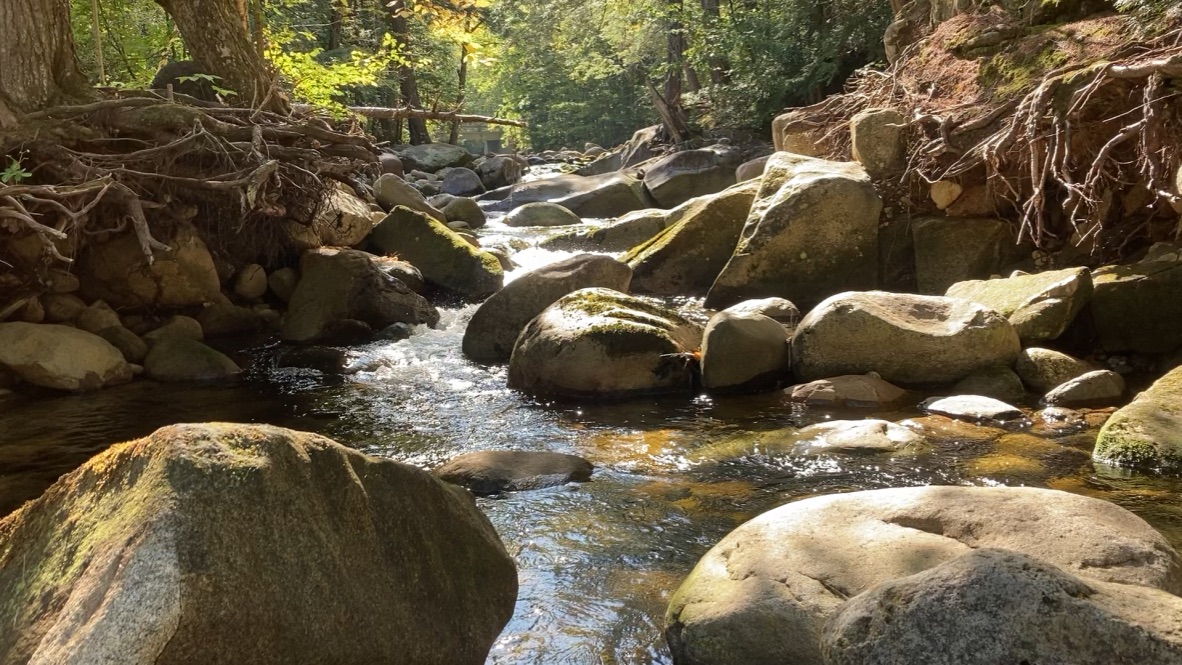
In February, 2024 our elder Big Leaf Maple began a final bow to the ground. The upper branches of this giant wove into other surrounding trees as it fell, slowing its final decent, for now. Hoping the root ball was still connected, I have chosen to leave the tree as is to allow spring bloom, summer leaf out, and fall drop before trimming some of the branches blocking the access. No part of the bridge was harmed, though a beefy branch did fall onto the bridge and needed to be removed. Much of teh debris that came down fell on the banks of the stream, building a natural mesh of organic matter to help hold the steep wall of clay and gravel. So much of the original stream bed of our creek was eroded away after two rounds of clear cutting, and without more restoration down stream, flooding and erosion will continue to damage the landscape.
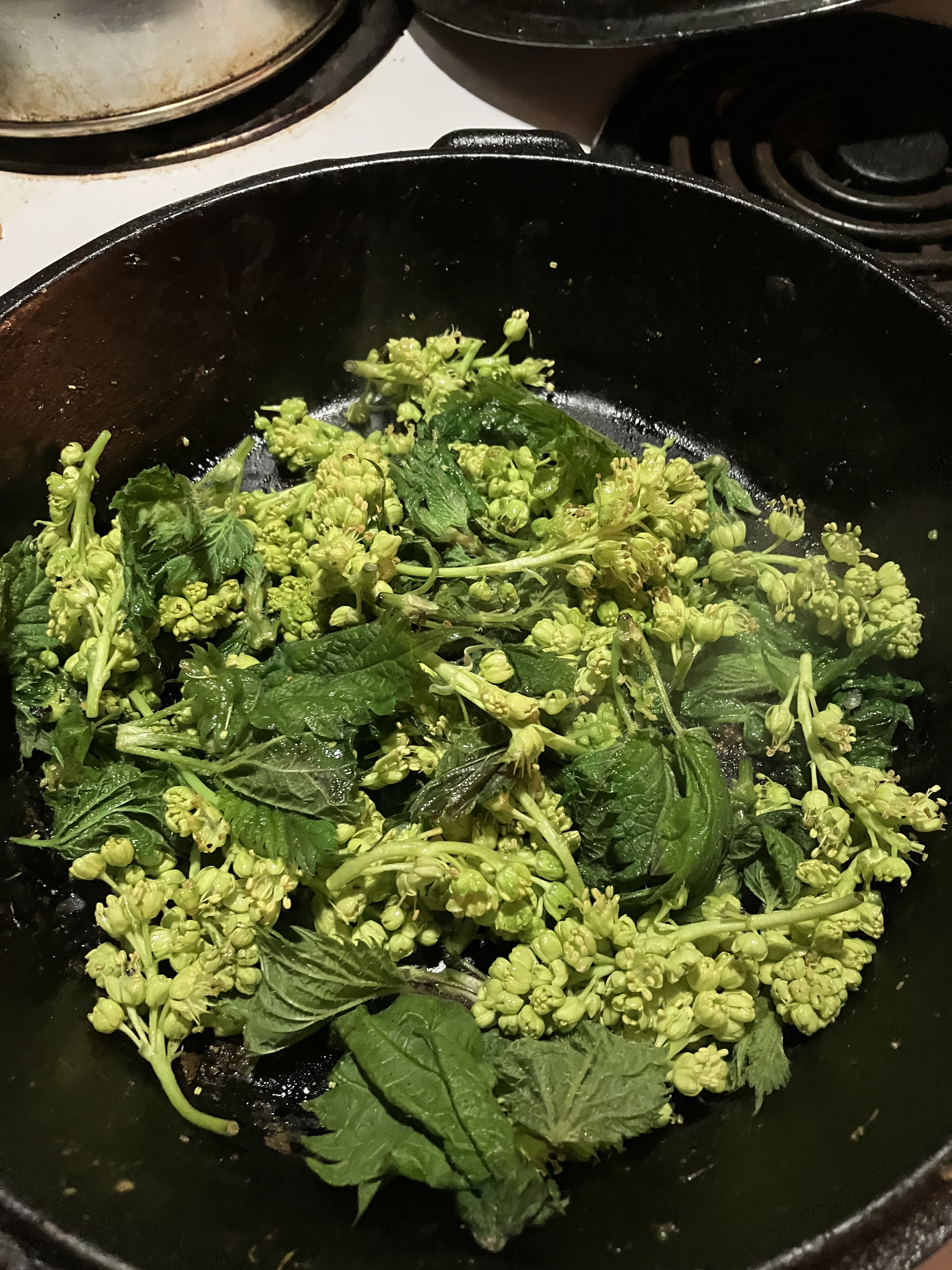
Allowing trees to fall and stay where they land builds fast forest floor and water retention, encouraging resiliency in the face of drought. Along with all the wonderful restoration rolls a fallen tree offers, our maple also gifted us with edible flowers. As the cascading blossoms unfold, we took and afternoon to harvest a bag or two for the table at home. Since the branches of this tree are now in reach, we had an easy time picking this spring feast from our grove.
For my first taste of maple blossoms, I added some nettle, butter, and salt, then mixed into a greater fried rice dish with egg and pecans. Just a sprinkle of summer sausage and the full range of flavors came through in this delicious dinner. To eat from our trees, fed such nutrition from the land, this is the dream. Finding feast where they land enables a deeper connection to our ever changing woodland, reminding us that even falling trees are full of treasure to enjoy.
Leafhopper Farm LLC was created to use domestic animal systems of grazing and foraging to regenerate soil health and fertility. A recent movie that gives great information on why livestock are so crucial to regenerative farming practices is laid out beautifully in “Sacred Cow“. This film explains how domestic stock, when raised in harmony with their surroundings, rather than industrially in crowded pens with overflowing manure pollution. There are also topics in human misdirected diet scemes, degradation of land through industrial practices, and crucially, how we can mend the land, refocus our livestock systems in favor of animal well being, while also acknowledging the cycle of death and rebirth in our world. I’ve cropped a scene where James Rebanks, author of “Pastoral Song“, lays out the argument for rewilding hand in hand with regeneration to support people within the ecological landscape. His farm is an analogue for Leafhopper, and you’ll see some similarities. The sheep are deeply ancestral for many of us, and play a vital role in wet, cool, hilly regions of our world- the marginal land in traditional agricultural thinking.
For EEC Forest Stewardship, the animals of Leafhopper have also been bringing back nature’s neighbors- such as moles, frogs, red wing blackbirds, great blue heron, salmon, and much more. By removing chemical treatments, harsh overgrazing, and monoculture, we’re inviting the wild spaces to return within our modest acreage, which in turn, helps to weave the surrounding wild parts into a stronger framework for nature to thrive. Slowly, the land has responded with more vegetation and resiliency to drought, floods, and future fires. We’ll keep folding the animals in to improve overall productivity, diversity, and adaptation.
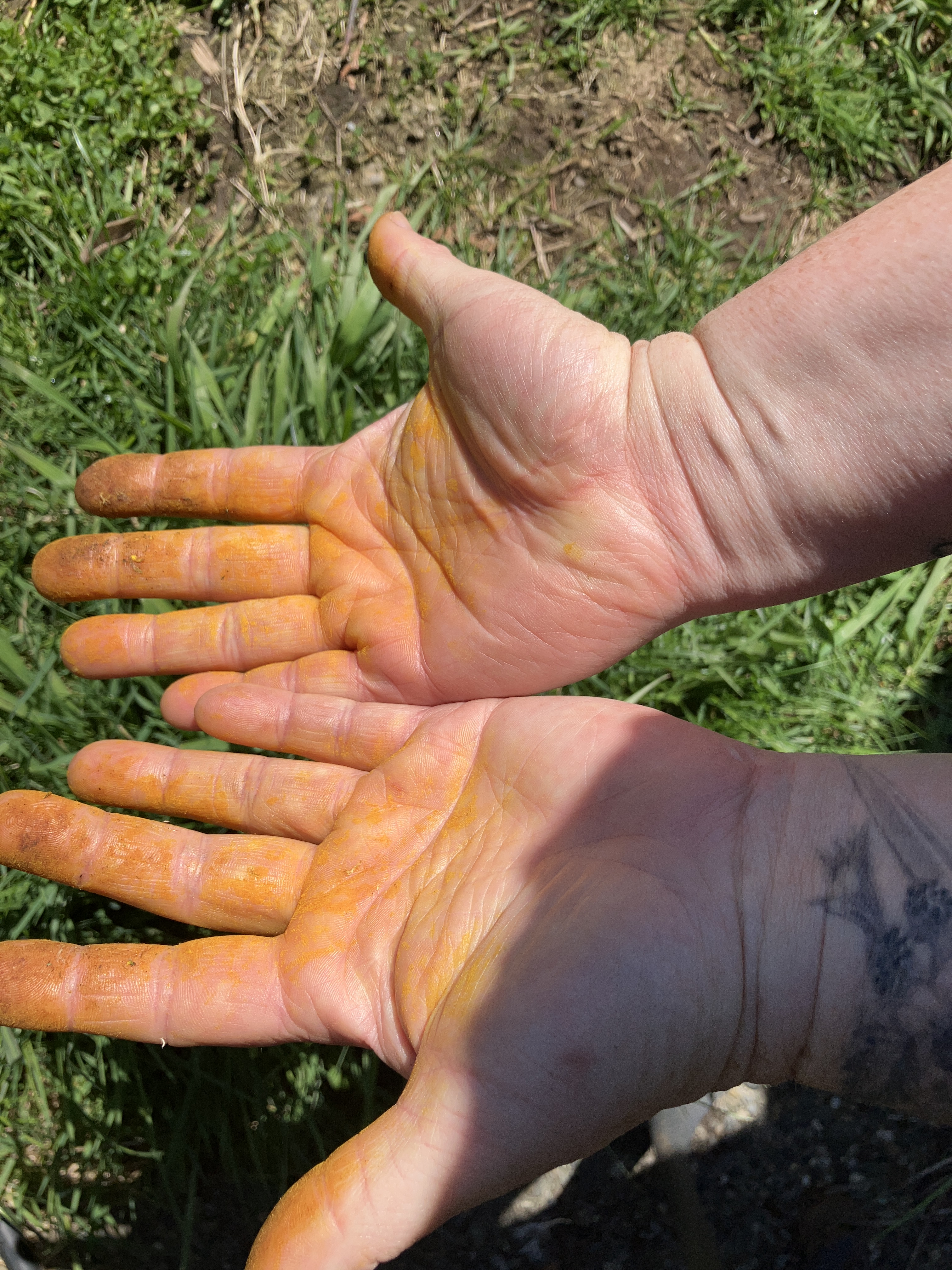
A new batch of chicks develop in the incubator, our geese are starting to nest, and we’re still waiting for two more first year ewes to lamb (8 lambs and counting). Dandelion and nettle harvest are on- I got my favorite hand stains this last weekend picking the delightful flowers.
Our young chocolate lily and camas bulbs are also up and running for a second year- and we sent last year’s seed harvests back to Oxbow Farm for germination of more native plants. It’s certainly the time of rebirth here at EEC. With all the new life and energy bursting forth, we give thanks for all the creative force thriving and jiving all around.
As the season continues to unfold, we look forward to new fruit blossoms, more lambs, baby chicks, and the weeds too. Blackberry is set in it’s hedges for the year, and we’ll look for the berries in August. With Spring comes tempests, and we’ve already had our first real hail. Yup, not the little grapple from recent climate change past, but full on pea sized hail now, and probably not for the last time. Enjoy this brief but spectacular footage of this first for us here at EEC Forest Stewardship.
Hello, welcome to a New Year. There’s a fresh batch of lambs here at Leafhopper Farm, and the forest all around is alive with bursting buds and early alder pollen- yes, it’s late February, Spring for us here in Western Washington. Our Oso Berry is unfolding white petals of elegant cascading blossoms. Blackberry leaf buds are spring forth, signaling my clippers and maddock to get in their last removals before bird nesting commences. Hard working dogs alert at hawks in daytime and coyotes at night. Hens are laying- a dozen eggs, still at $7 here, but the grain price is up, so egg-flation might hit soon. Free range gleaning, Scratch and Peck feeding, hard working birds. Two clutches hatched this winter, with a third planned for March. Our land will host a second Women and Girls’ Hunter Education Class in April. Much to look forward to.
But enough about Worm City, we’re moving these blog updates to Monthly’s while I take 10 years of these call and responses with land living and sew a few chapters for a fine harvest of stories- both lessons and givebacks, into a book. There are tears, but more laughter in the paragraphs of fantastic exploration and good reflection within. Soils and toils have begun to weave growth and light, both outwardly in stem and leaf, hoof and bleat, but also inwardly, as I continue this work and vision that is EEC Forest Stewardship and Leafhopper Farm. Gratitude to all who shape and support this thriving life!
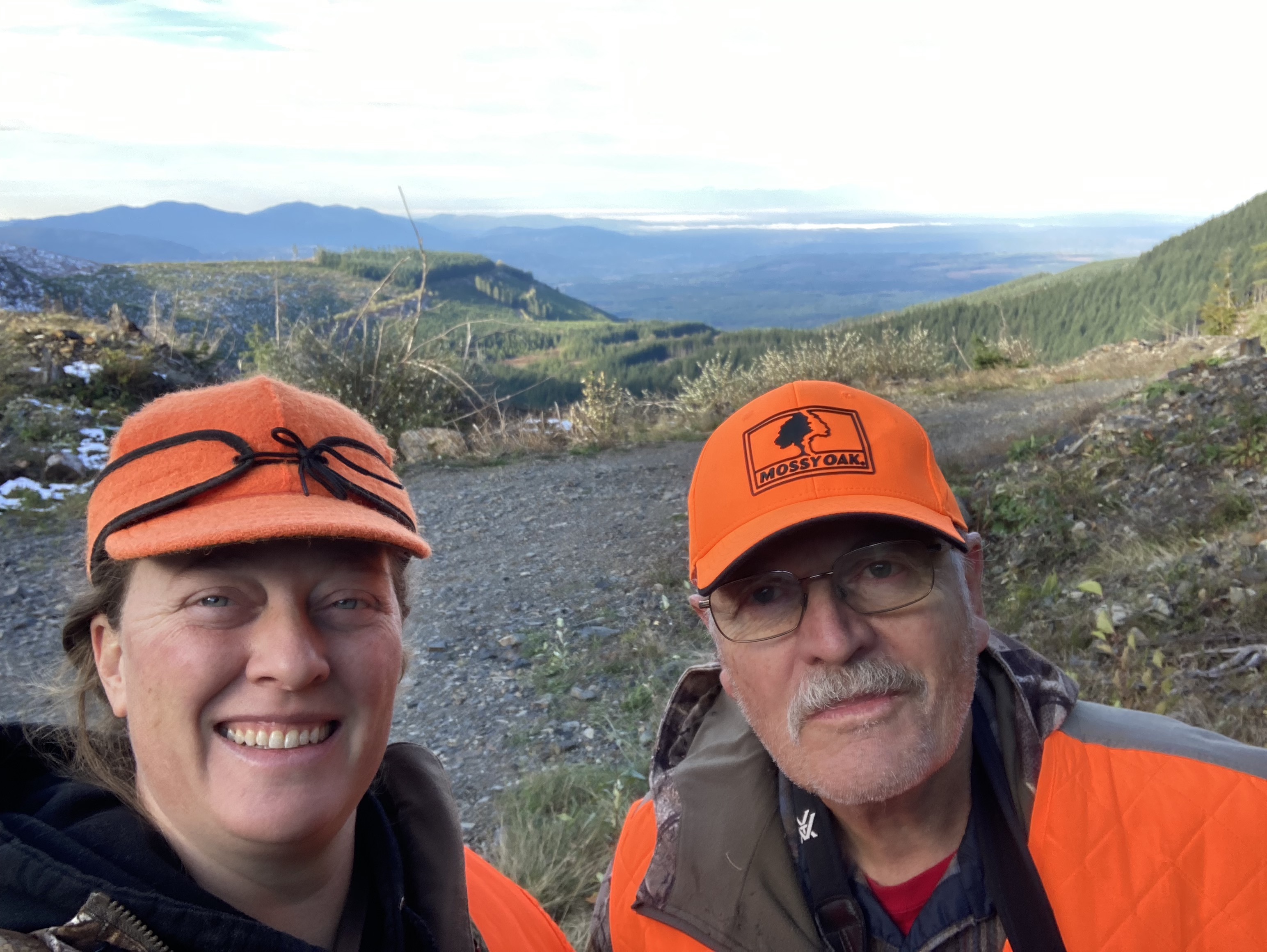
It’s such an important part of sharing experience and wisdom, the simple act of connection, an invitation to join, follow, and watch. Though I harvested my deer earlier in the season this fall, I could not pass up an opportunity to head out into my beloved woods with the person who connected me with my passion for hunting here in Washington. Wes grew up in these forests around Snoqualmie, and has spent a decade sharing these special places with me in an attempt to pass on his knowledge and love of the outdoors. My grandfather also connected me at a young age, and I am so grateful for the people in my life who saw my love of wilderness and helped me embrace it.
I spent my own childhood catching anything that moved with my bare hands- except snakes! The days of barefoot creek wanders and horned toads scurrying thorough hot red sandstone cliffs lining oak scrub woods in Oklahoma set a tone of nature connection. My grandfather picked up on this soulful draw, and taught me the song of the red bird (cardinal), how to catch a crappie, and why asparagus needed to be cut young. When I moved to Washington, I was not expecting to become a hunter. The notion of killing a large animal had remained daunting. I’d harvested a few road kill deer in my life, but perusing big game in the epic forests of The Pacific Northwest seemed a step beyond my capabilities, until I met Wes during a long bow making workshop. Wes and his wife Sharon, also an accomplished hunter, gave a talk on bow hunting and how to get certified though hunter education for legal harvesting with proper tags. It was an informative and motivating talk, after which, I approached Wes and Sharon to ask what to do next. They said to get certified and then contact them. So I did, and it changed my life.
Since getting certified and starting on the road to harvesting wild food, there’s been a lot of learning. Wes has been there through most of it, coaching my shooting, honing my sights, and building up my confidence through encouragement and just the right amount of push. The opportunity to observe and shadow a man so gifted and connected to nature has deeply influenced my own place and self-identity. I don’t walk into the wilds with just anyone- especially with guns and the intention to kill an animal. This truly sacred act is one best done with someone you trust. For me, Wes is family, and he has taken me places I’d never have gone alone. This mentoring has deep purpose in us humans, and sharing talent, expertise, and confidence is a priceless thing, given without expectation when given freely. I don’t think Wes would have been as invested if I was not following through on my own. My first deer harvest was entirely solo. I kept going out, got certified as an instructor myself, and have taught with Wes to ensure our privilege to hunt remains strong.
This is an important part of mentoring, to ensure the continued knowledge and experience grows through future generations. We are not blood kin, but Wes is family, he and I are both non-parent adults, but see the sacred bonds that form through mentoring and know you don’t have to have kids to teach, share, and devote time to supporting young people. Mentoring is a way to give stability to kids in need of safe adult connection. It’s a worthy way for me as as confirmed non-mairrage/non-parent to still be deeply connected to the future generations, helping to cultivate joy, confidence, and personal growth- for me and my mentee. I’ve not only continued to mentor in the hunting world, but also in our local school system, to ensure the gifts I received in time and energy from other loving adults keeps growing. I think it’s one of the most profound ways to thank my mentors- passing it on. What a world we could live in with more adults being kind and connected to youth around them.
What Wes has offered me is priceless, and I know I will proudly carry on his lineage of nature connection and profound respect for the living world I am a part of forever. I also have a vision of being in my 70s some day with a shadow of my own who keeps the learning alive. In laughter, celebration, and gratitude to all who connect, share, and care. Thank you all for giving me such light in my life, and the skills to be thriving in this world.
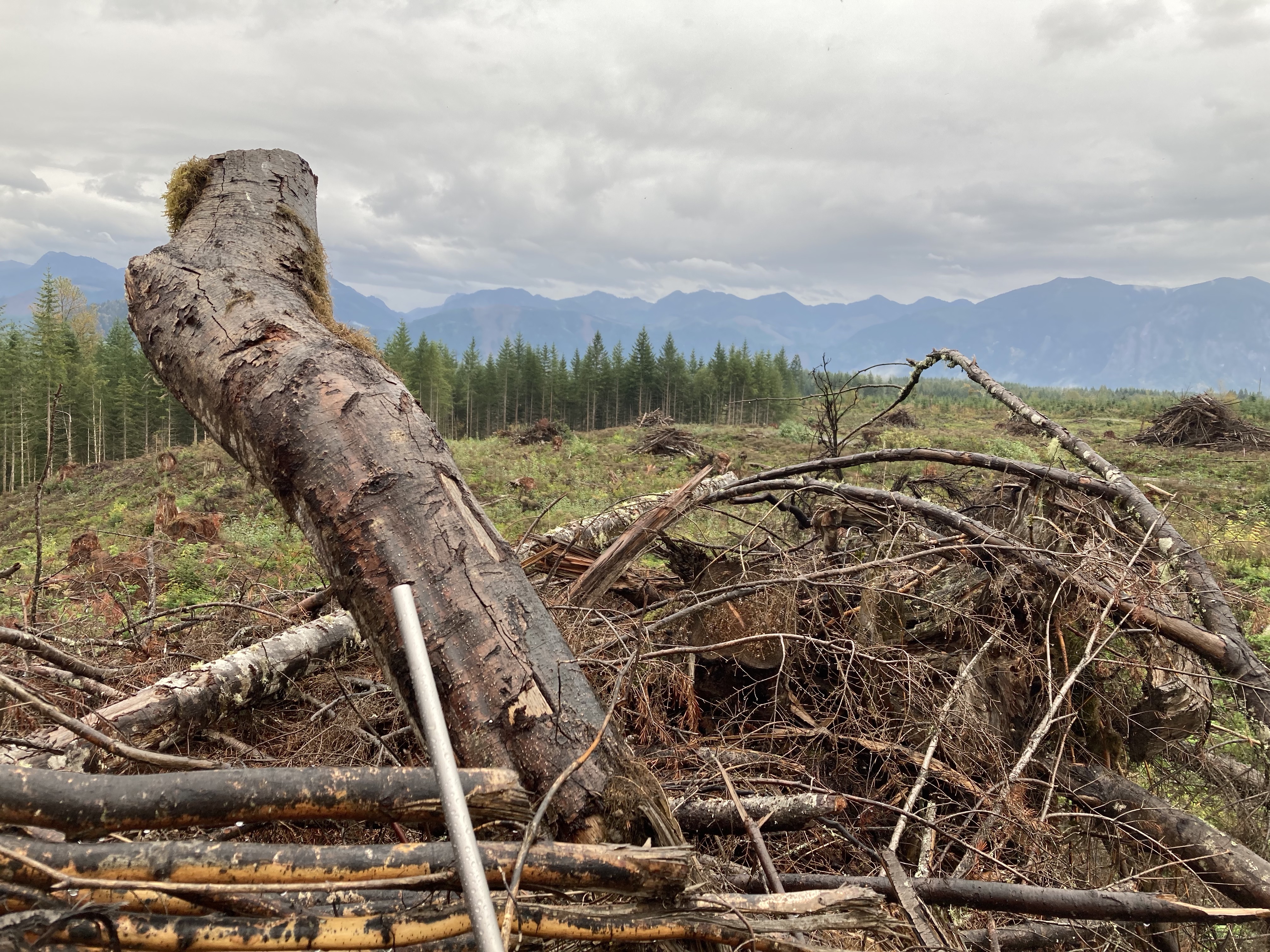
The birds had us this year, with cold, wet weather and gusty winds, the morning was adventuring and scouting, with good company and great land exploring. My hunting buddy also taught me a lot about state forestry practices and improved habitat initiatives- including snag preservation and leaving larger trees, already well established, to improve future groves. There were hundreds of burned acres we witnessed, but stayed out of, for a myriad of reasons, including erosion prevention and completely denuded landscape, which gave no cover, food, or shelter to wildlife; thus barren of Turkey. Environment is unraveling, yet also spinning new webs of restoration, sometimes tangled, uncomfortably rough, wearing raw emotion.
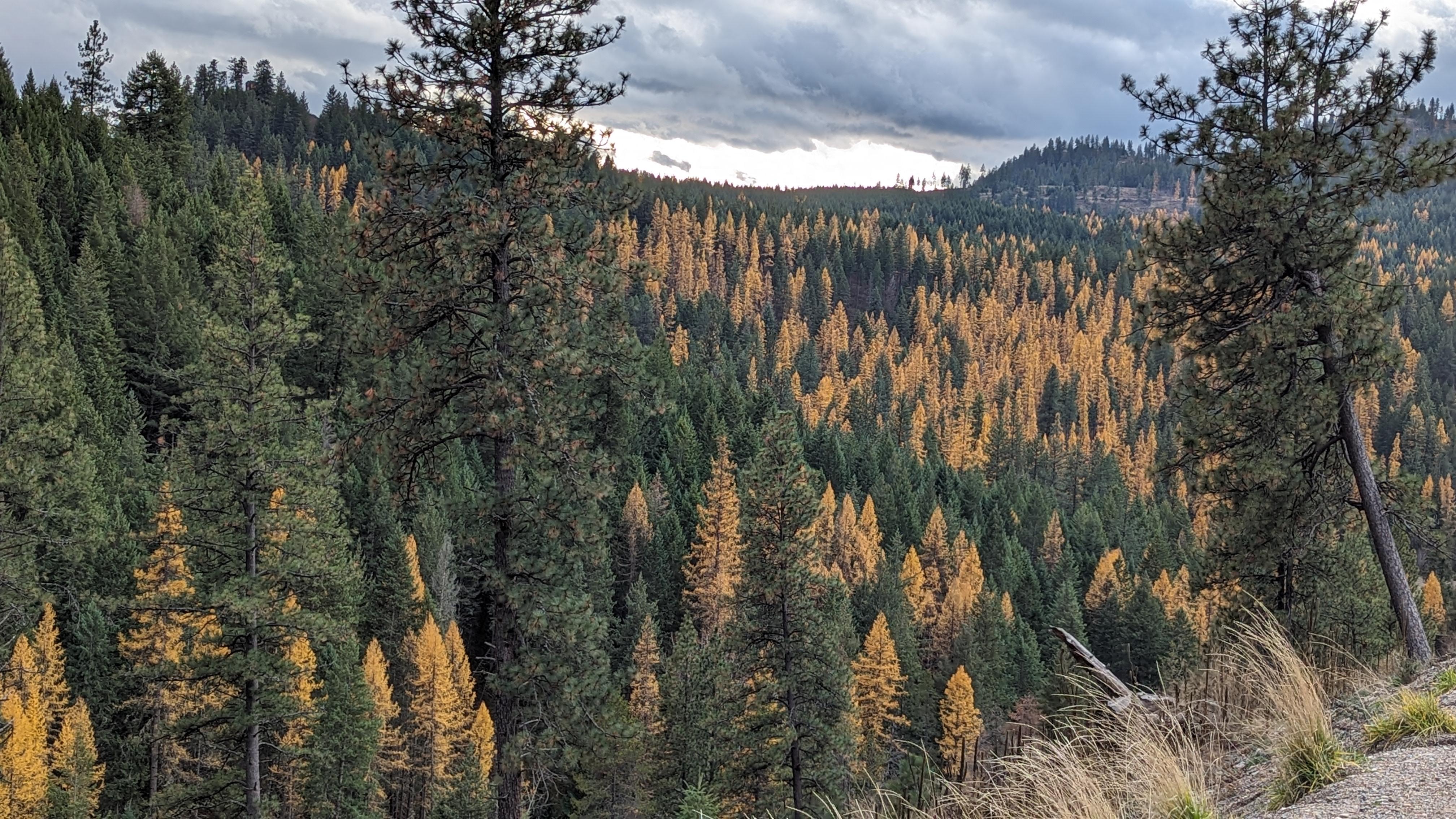
Dynamic movement up and down ridges and hills, circling tight patches of public land, and seeing the human nature of ownership, and short sighted carved up natural resources. Turkeys were brought to Washington State by ignorant colonizers. Ecological preservation had no cognitive ring to end industrial extraction genocide- it’s still only buzzword with little substance for profit father god. That’s to take in, with slow breath, then exhale in disgust and live on. Stepping back into the field, where a friend and fellow environmentally aware woman, hunter, and professional conservationist shared pursuit of invasive species offering a good meals and well earned dirt time. Possible harvesting of our favored galliformes– the heaviest member of that order. We were mesmerized by larches still grasping their needles of golden majesty. What spelndor set against dark green fir and pine, undulating in the wind, up and down hillsides, an ocean of once flowing forest now worn to patches dotting here and there.
Turkey like large open spaces, and fire naturally accommodates this, opening up new seed dispersal avenues for terrestrial birds to scratch and peck at, spreading vegetation and new plantings throughout exposed soil. Surprisingly, humans clear with even more enthusiasm- with no intention of restoring habitat for anyone but themselves. The productivity of barren land declines into desertification. Agriculture relies on inputs- heavy labor extraction, and exposes ground eroded by the elements, robbing the land fertility. Many clearings here in east central Washington are residential development. The resort sprawl off Waitts Lake caters to many an exposed cut and unchecked edge clogged with young pines and brush. A resident flock enjoys dust bathing and endless forage in the needle beds and weedy mounds between RVs and little cottages all in a row.
Our other major sighting on our one full day of hunting, reside at the municipal water treatment plant. How delightful, a sort of hot springs, if you will. These birds are fat and sassy. One tom was actually presenting to a mixed flock, which stirred up the other males and sent the hens scurrying off to forage in peace. It was out of season for courtship, but an El Nino year paired with exponential warming climate makes for confusing times. Our red alders are still clinging to green leaves in late November. Change continues, though on a much faster track than most of us realize. Still, turkey adapt well, and have established a thriving presence around the country.
Where a new species establishes, it usually pushes out another- directly or indirectly. Our native grouse populations on the east side of the state have been deeply affected by fires in the past decade. Habitat loss has and will always be the number one harm for all wildlife, but we like to skip over ourselves as responsible, thus putting more effort into profits as usual. The amount of subdivided lots for sale around The Coleville National Forest was a little shocking. Countless 5-10 acre lots with fresh clearings, barbed wire fencing, and an RV or trailer home on a freshly poured pad mark each domain. It did remind me of EEC lands back in Duvall- a lot of similarities could be drawn. But these lots are recent development in an area with high fire risk, slower recovery time, and strained resources. Turkey thrive here, but grouse and elk struggle in an ever shrinking habitat.
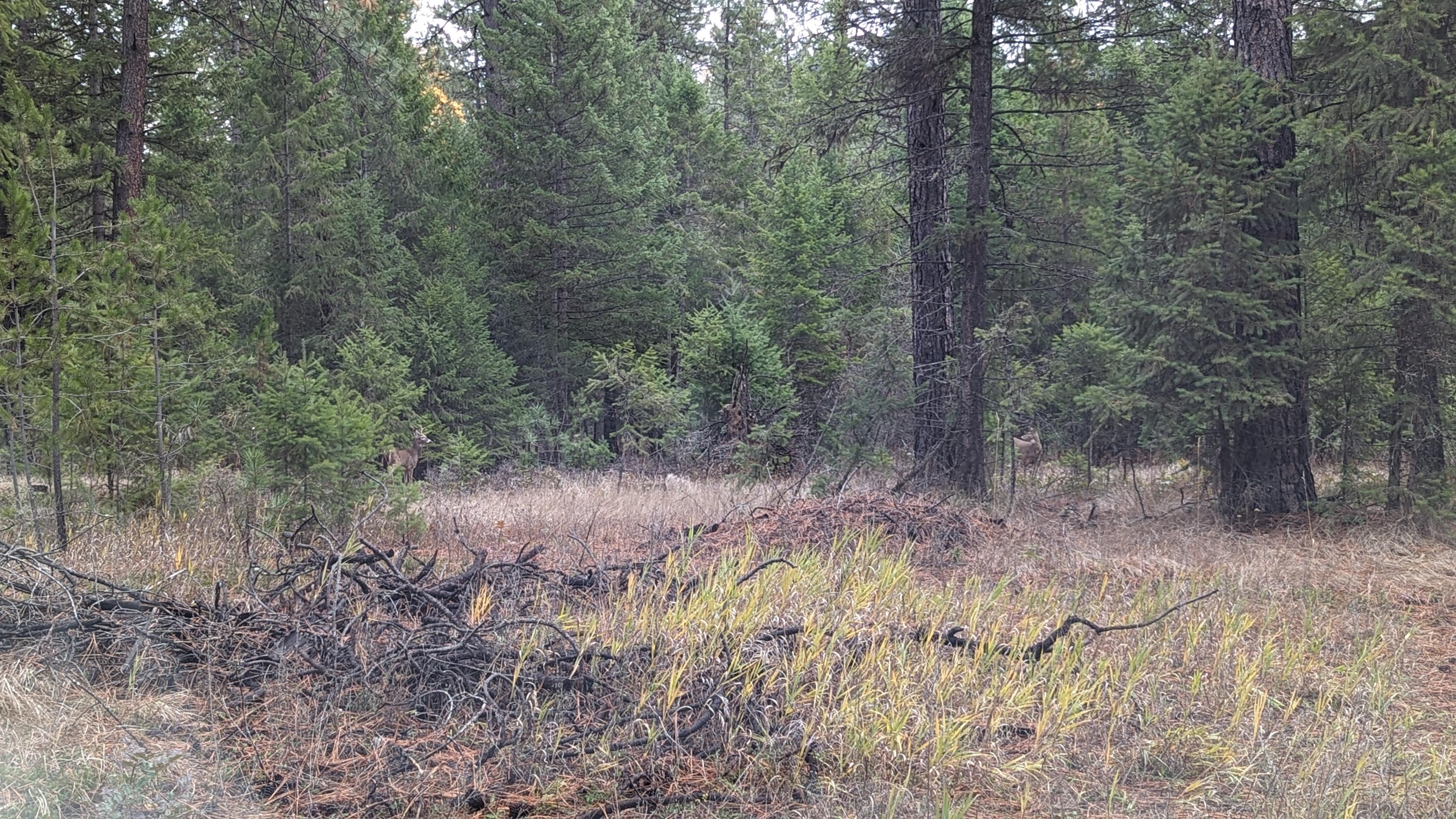
On our hunt, we followed a pair of mule deer through a stand of more mature forest, but quack grass chokes out native ground covers like kinnikinnik, a favorite ground bird foraging berry in late fall. Invasive plants exacerbate burn hazard in the environment. Evidence of much needed fire control could really help these lands, but too much fuel has created tinder boxes, and we continued to see vast acres of hot burn, scorched earth across many hilltops. We never saw any evidence of turkey in these overgrown, forb-less ground spaces. Though fire does play a crucial role in habitat restoration, it takes years for the land to fully recover from hot burns, and often, development uses the scorched earth as an excuse to barge in and build on “destroyed” land. Thankfully, science is showing us how important it is to let burned soils rest, or even encourage reseeding with straw mulch where applicable. The wild turkey support recovery by spreading seeds, scratching up the soil, and pooping fertility across vast acreages. Though they are invasive, these birds are also filling gaps in the ecology, where once thriving populations of grouse would have played a similar role.
The season is not over yet, and another trip to the east side this winter might allow for more hunting opportunities, but it’s a heck of a drive to turkey territory, and our home flock of Cotton Patch Geese are thriving here at EEC Forest Stewardship. Still, getting out in the larch and pine forests over The Cascades is always a great change of ecology and learning adventure. So much gratitude to the land, friends who share a passion for hunting, and the living world we are deeply connected to once we’re out in it.
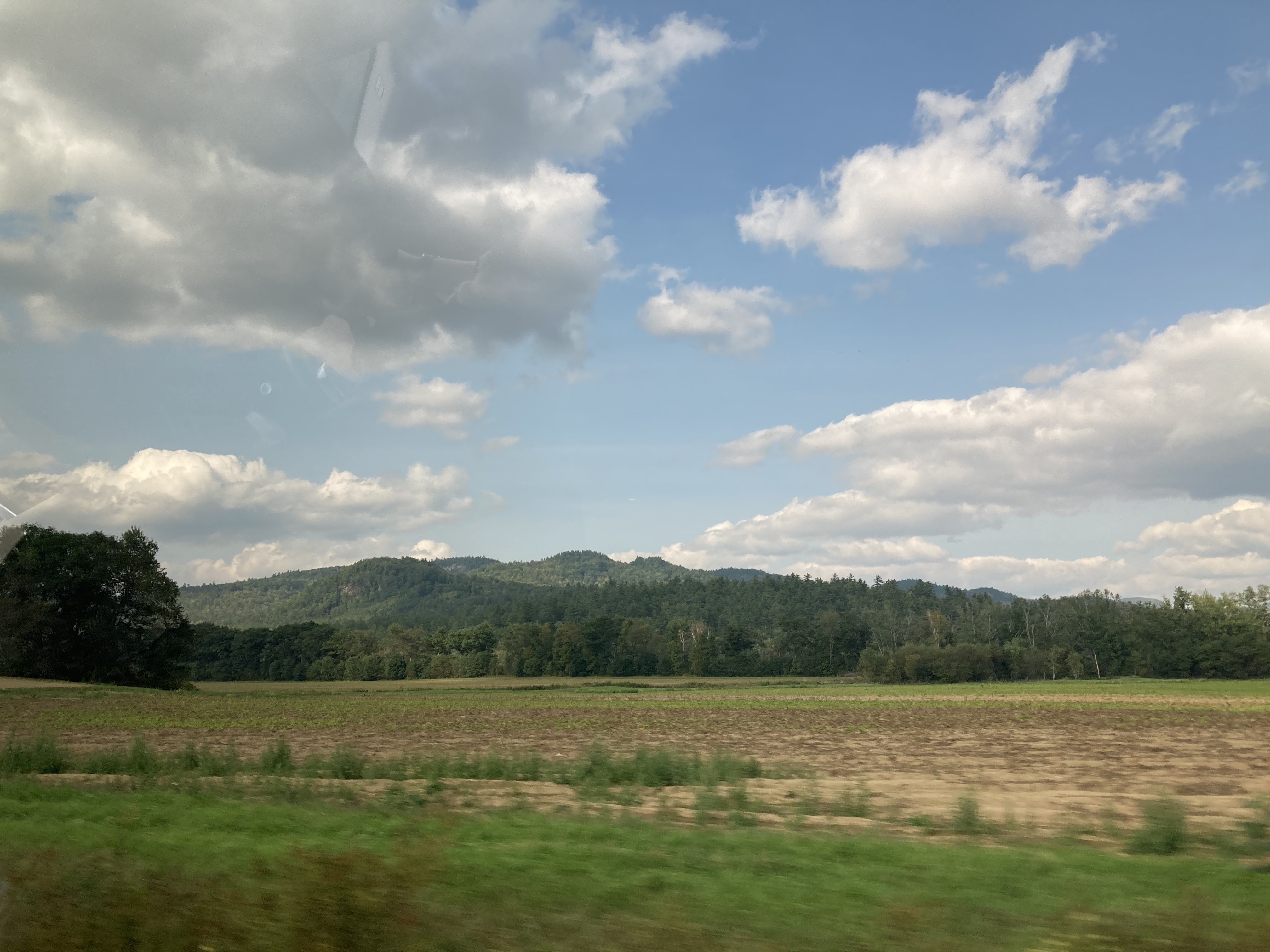
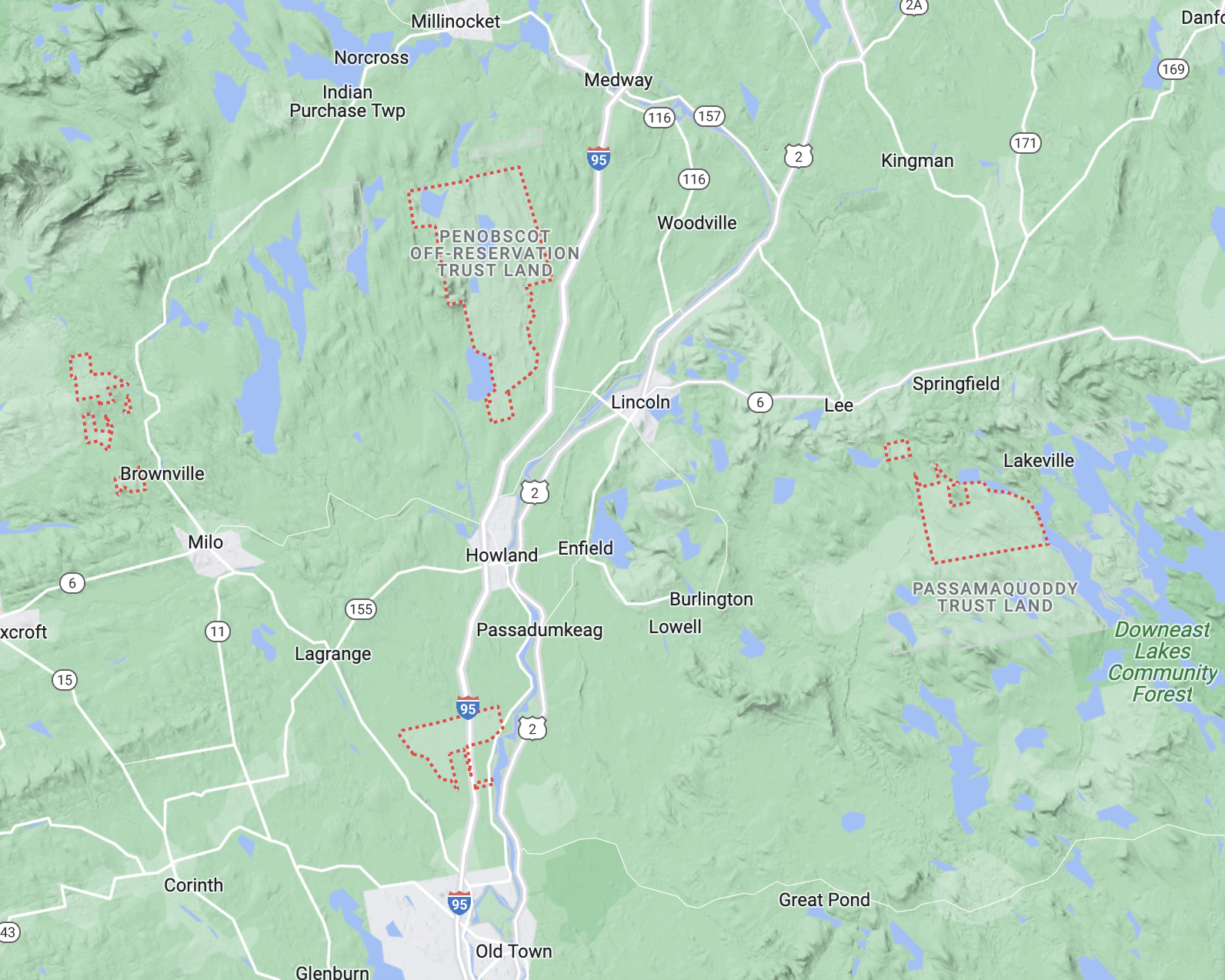
Rolling hills and monumental wonder towering in the distance, these hard wood oak and maple dominate deciduous forests mingle with occasional white pine and red cedar. We’re on The East Coast of USA- New England- where the history comes from. Bottom river farmland called to early settlers (1700s in what is today The State of Maine), and as infrastructure blossomed on the ocean shores, inland resources in good logging timber, right of ways, and mining shafts sprouted like weeds in the fertile land. Pushed out tribal people echo in place names- Massachusetts. The Penobscot people remain recognized in the area today. Below is a map of their currant reservation trust lands in Maine. Place remains important to most First Nations’ Peoples, their deeply rooted link to ecology and society woven within habitat once depended on by all, reduced to oddly shaped cut outs of a once vast and thriving wilderness.
As colonial settlement established along The East Coast, fortunes blossomed as extraction industry raked in endless woodland timber for export back to Europe, where all the great forests had already been cut to supply overpopulated regions for too many generations. Now these same families who destroyed their own lands came to America for more. England owned The Colonies initially, but by the founding of Andover in today’s Oxford County, ME, a revolution had put the lands of New England under a star spangled banner and veterans who fought to form a new nation were moving into the more remote reaches of wilderness in search of space to survey, develop, and capitalize on. Andover, ME Wiki entry describes a snapshot of its early Colonial settlers.
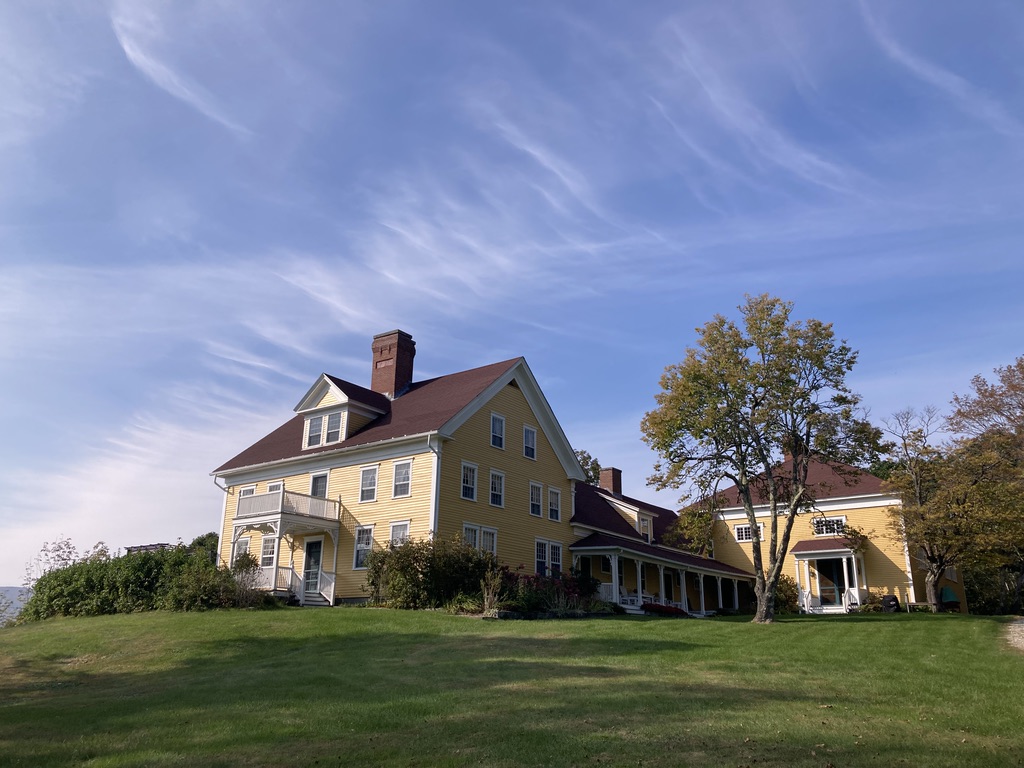
The town was first settled in 1789 by Ezekiel Merrill and his family who were transported there from Bethel, Maine, in canoes managed by members of the local Pequawket tribe. The first saw-mill was built on the East Branch of the Ellis River by Col. Thomas Poor in 1791 and was used to provide the lumber for the still standing Merrill-Poor House.
What a house! Imagine showing up along the banks of a river to build a life, believing you are compelled by a “God given right”, and motivated by economic industry to begin cutting the forest en-mass, while digging up ground for smelting and future rail expansion to bring more destructive hands to the region for personal gain. The family lore today continues to claim Indians were supportive of Ezekiel Merrill and his vision to settle the wilds of Maine. Most new settlers to the area were seeking a better life, but still, generations later, we don’t fully comprehend or acknowledge the harm done. Perpetuating a story of Indian Princesses as a token of good intention does not change a simple fact looming like an elephant in the room. The tribes are gone, many in New England are extinct, and the European lineage continues in a legacy of resource extraction enabled by railroad expansion and manifest destiny.
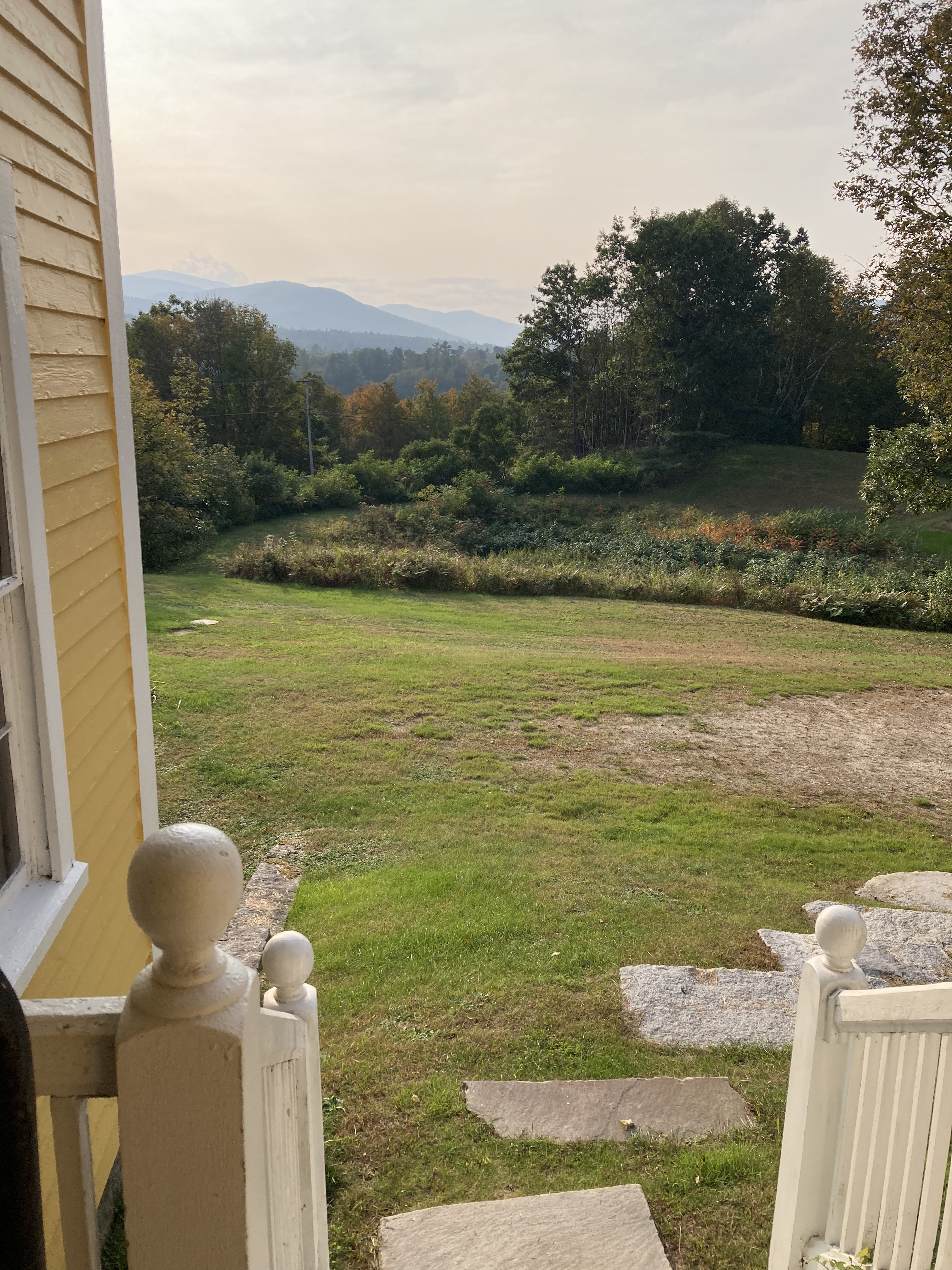
Looking out from the house, over the green forest hills and open fields of once cultivated land, progress rests its laurels on saw mills, lake front homes, and Appalachian Trail adventure. Smoke from wild fires, a climate change disaster, looms in a discolored sky. Through the process of gentrifying, colonizing, and capitalizing on the raw essence of nature, we ignore the consequences of our greed in generational extraction economy, and continue to accept old notions of convince and prosperity, without measuring our quality of life, or projected long term survival as a species. Sadly, this mindset will not give way to reason, and we continue to propel ourselves into greater disparities and divorce from reality into economic fantasy.
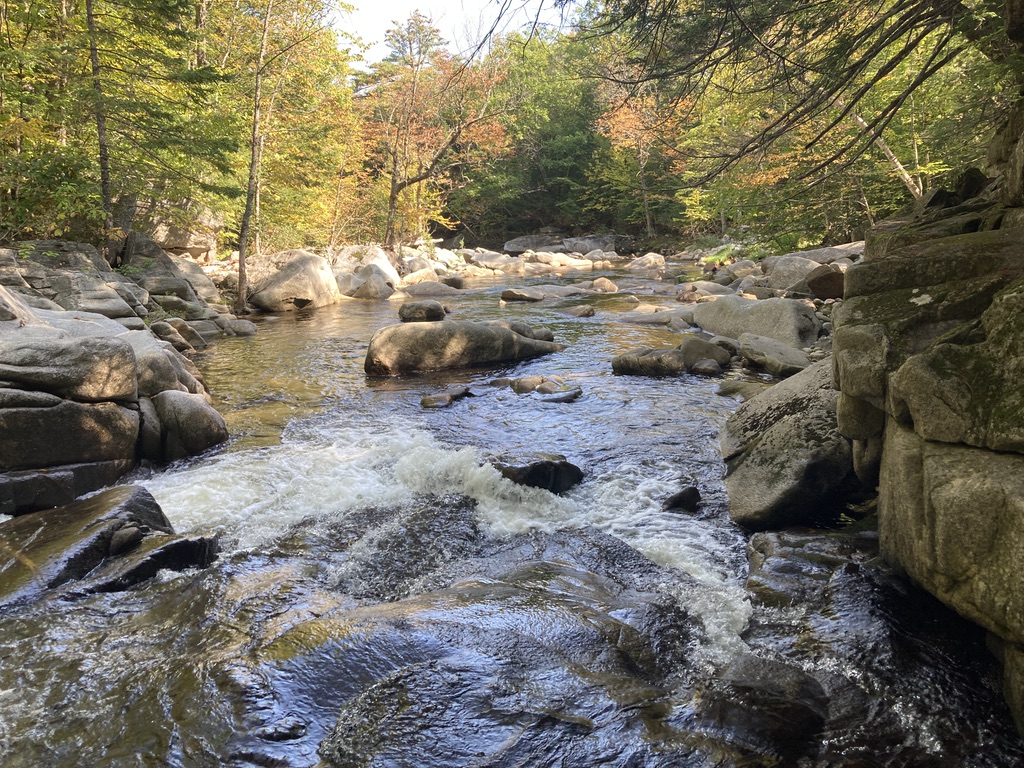
What is next for this great house and surrounding country side? The current generation is struggling to figure out how and why. This house holds childhood memories of fantastic summers swimming in nearby creeks where trout fight on the line and a fish dinner still offer solace in a strange world of upside down priorities and selective history. Under the very stones of this historic family home, perhaps a tribe once harvested food and lived without the need of a mill or flag to claim any land. Place is not something to own, but to be a part of. After only a few generations, Merrill House was used seasonally, with little interest in staying beyond pleasant vacation weather. By then, the tribal peoples were completely removed from the landscape, and Eurocentric narrative subdued any guilt of personal responsibility for “the natives” or the ecological devastation that will take many more generations to recover- if ever.
Still, the family history is impressive, and a lot of American economic life prospers today because of early settlers with great ambition. We learn that this kind of drive rewards- and the records of wealth glimmer in faded velvet furniture and brass lighting fixtures. Memoirs and diaries tell of decadent dinners and high powered board meetings at great oak tables, deciding the future of industry in New England. As the application for historic preservation of the house and grounds states, in Yankee Family, a study of the Poor Family, James R. McGovern describes this grand space as:
“A house which had once declared the needs of a successful American frontiersman now bespoke those of an industrial lord, Will Poor, who often came to Merrill House to entertain his business and personal friends. Visitors were fascinated by its beauty then, just as they are today, Merrill House looking much as it did when Henry and Will Poor lived there.“
Lording over wealth may sound great, and prospects one hundred years ago, before income tax, made unimaginable wealth for a select few white European men, and today’s generation still craft the country for their earning prowess, learned from their forefathers. Fortunes may be won and lost, but tribal nations lost homeland and will never get it back. Imagine having everything you need, being deeply rooted somewhere for thousands of years, then within two generations, being almost wiped out completely by frontiersmen importing disease and colonial laws your culture has no concept of. In 1755, the governor of Massachusetts put a scalp bounty on The Penobscot (greater Abenaki), who were becoming “hostile” as more settlers pushed them out of their ancestral lands. The fur trade had also reduced wildlife down to unsustainable numbers, causing winter starvation for many First Nation People. After reading The Phips Bounty Proclamation, I found it hard to understand why any Abernaki, especially an “Indian princes” would help English settlers with their colonizing, unless coerced under duress.
It might make our ancestors look a little less draconian to slip in a sympathetic story of noble savages, but we ourselves are the true savages, and continue to perpetuate dominion today. Americans are not generally thinking about how to live together, with the land, as one people. It’s not in our cultural heritage to share or believe we are owned by the land- just the opposite in fact. Our justification for this continued shortsightedness? The fear that someone else might come and take it from us. We perpetuate this action ourselves, believing we have a right to things, not that we have a responsibility to tend and let live. Standard and Poor continues to reaffirm economic dominion, along with a legacy of historic homes, lands, and titles we stole from people we thought less than ourselves, and still do. Not many people are signing up to give stolen land back, but we can at least stop claiming to have been friends with the best intentions for our tribal neighbors in the early days of America’s founding.
It was not by accident that this post happens on American Thanksgiving. Please take a moment to look up which tribes once lived where you and your family are now and take a moment to give thanks for the people who were tread under our stars and stripes as we perpetuate The American Way- a way of prosperity through taking what is not ours to claim- place. It is our place now to look at the history and learn the truth about our ancestors and the abuse they brought upon a land never intended for them. Though acknowledgment and the renewal of America’s true history, we can perhaps, better understand what it takes to perpetuate mass consumerism and convenience for the few at the cost of so many. How can things change? It’s starts with learning the truth about out past and at least accepting our ancestor’s failures to avoid repeating the same mistakes. Check out Land Back movements around the world and ask how you might help.
The blacktail deer season was quite a ride of crazy weather and illusive ungulates. The first week of hunting was warm and a mix of wet and dry. These conditions left the deer nocturnal and tucked away during the day. I saw very few deer during my daily scour across the landscape. In places that had a lot of sign and key features like cover, food, and water were not enough to entice the deer out and about. Mushrooms were present though, and I still took home food each day I was in the field, which made up for the vanished blacktail I was so desperate to find.
I did notice the Snoqualmie Tree Farm, where I usually hunt each fall, was spraying a lot of their clear cuts, something they usually wait to do after hunting so deer are not off put by the chemicals, and the brows is still present to lure them out into the open. It might also be the quantity of Seattle treated sewage now being spread within the forests and young plantings. So much smelly mess, heavy metals, and prescription drugs are now sprayed in concentrate on the forest floor- the deer have to be reacting to the grossness and moving away. These are theories, and I’m a “young” hunter- having only been in observation and direct connection with our local blacktail populations for about 10 years. It was noticeable that no deer were out during the day. My hunting mentor, who grew up in the area perusing the same deer populations, has seen fluctuations, but never so few deer by the end of the season.
There were a few wet days where I thought surly I’d at least see a few does wandering by- my tag was for a buck, but seeing the does early on can bring in the bucks as the rut comes on later in the season. Still, there were no deer to be seen in the forest, but my sits were rejuvenating and rewarding none the less. By Friday of the first week out, I did a 6 hour sit on a stump in the fluctuating mists of an incoming cold front, which dropped temperatures during the second week of hunting into the 20s each night. The cold did seem to stir up a bit more movement in the deer, but sudden temperature swings usually give me seasonal ills, and I had to take a few days of rest to hunt hard during the final few days of the season. I did have a very close encounter with one young buck in a neighbor’s yard, but it was an off limits place to harvest, so I sat on the wet ground of my driveway hoping he might wander over, instead, he bedded down as it got dark and I headed back to the house to dry out.
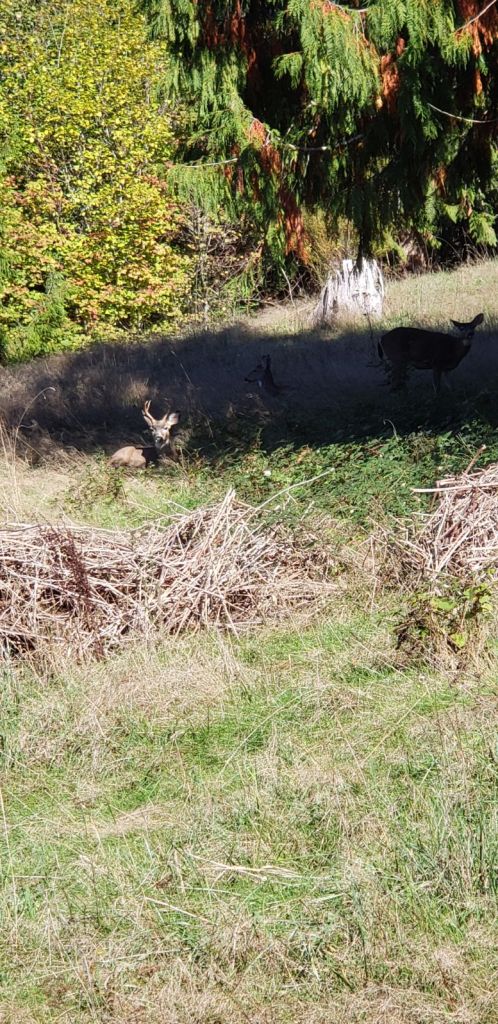
It was a little disappointing, but a great affirmation that my ethics and continence remain upright and true. Even though I knew the neighbor was not home, and could have shot that buck and got him over the fence with ease, it was not legal or ethical. This is the mature mark of any good hunter. I enjoyed sitting so near the buck, and hope he has a chance to grow up so I can have a chance to harvest him legally, ethically, and safely in a future encounter. I always count moments like this as good karma earners. I make the right decision and let the moment go, allowing more better chances down the road. This payoff rang true a few days later, when, on an early Sunday afternoon, another more supportive neighbor called me to say there was a nice 2 point buck in her yard with a herd of does just basking in the afternoon sun.
This is the second year a neighbor has helped me connect with my buck, and I am deeply grateful for all the support from friends and family in this special time of harvesting wild food. The privilege to hunt must be earned through safety training, following the laws, and being a good example in the field as a responsible, safe, and law abiding hunter. This character has earned me occasional invites to hunt surrounding private property, but such relationships take time to cultivate. When I hunt this neighbors land, I use a self imposed firearm restriction. No high powered rifle near homes or livestock. I use a shotgun with slug, meaning I have to be within 25 yards of my target, giving the deer more advantage, but keeping the surrounding neighborhood in mind. These deer are also near a ground transformer. When you are hunting near any infrastructure, it’s wise to restrict your tools to accommodate better safety as the conditions change. My rifle with scope is ideal for vast clear cuts and further shots. Around development, sticking with a short range tool, like a 12 gauge slug, is best. A good hunter will know that even if the regs say they can, conditions may dictate otherwise. Taking extra steps to ensure safety appeals to private land owners who are generous enough to let you hunt their land. Demonstrating a willingness to follow instructions, remain flexible with requests, and offer fair compensation for the opportunity are crucial to receiving future invites.
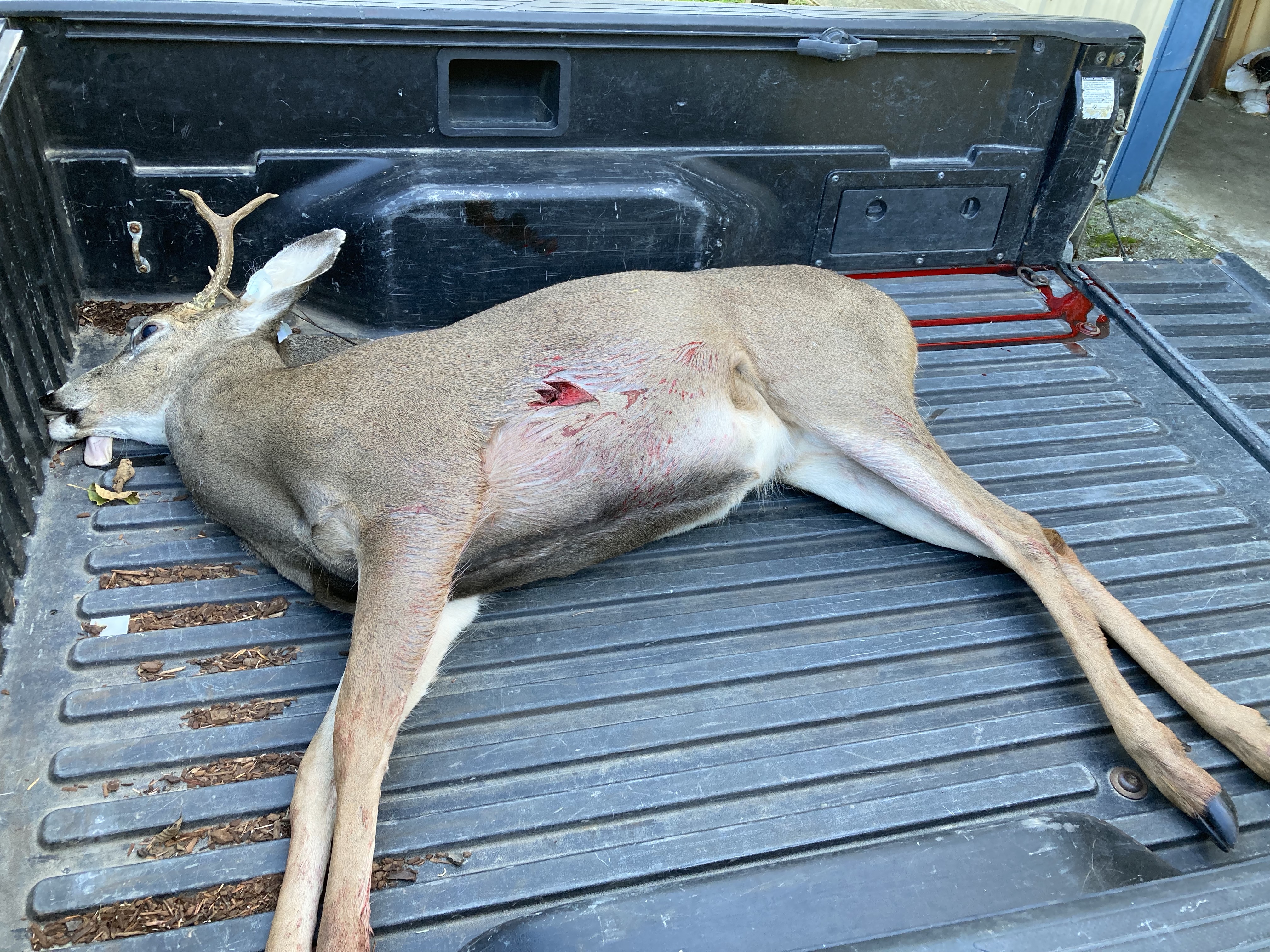
On this lucky day, I headed over quickly, but calmly, and had my partner come with as backup, asking him to stay in the truck while I was in the field to avoid any mishaps. Deer are wild, and might wander any direction- making sure everyone not in the hunt is in a sheltered place is important to prevent any injuries or spooking of the blacktail. While my partner waited in the truck, I walked quietly down to the field where the buck was last sighted and found him grazing lazily on the same slope. Then a minivan drove by and nearly drove me into a state of worry, but the friendly neighbor drove on by and waved. The buck stayed in the field, oblivious to the passing car. I was so thankful and encouraged. Stepping closer, I set up my shooting sticks and loaded my long gun. The buck remained passive, so I risked getting a little bit closer for a better shot. It was a clear, consice moment. The buck turned full broadside and continued grazing as I peered down the iron sights and honed in on the heart and lungs, just behind the shoulder. Taking careful aim, I took a few slow, deep breaths, and on the final exhale, I squeezed the trigger.
No matter how many times I’ve fired a gun, the initial impact is always jolting. My eye has to stay trained in on the deer I’ve just shot. The buck jumped straight up several feet in the air, then bolted up the hillside and out of sight above. It’s not a good idea to chase after your quarry, as you risk driving it further away in panic. I calmly walked to the spot I believed the bullet had made contact with the blacktail and began planning my trailing path to where I thought the buck might have traveled. My fear was a bad shot that might have crippled the deer but not killed it. There was no initial blood trail, as it takes time for the blood to pool and begin leaking out in visible traces. The right thing to have done in that moment would have been a spiral walking pattern out from the deer till I picked up the trail, but I went on a larger loop around the property fence checking for sign as I circled back down and around to where my partner was eagerly waiting with the truck. A few moments later my partner and I were back up the hill looking for the blood trail together. Fresh eyes always help.
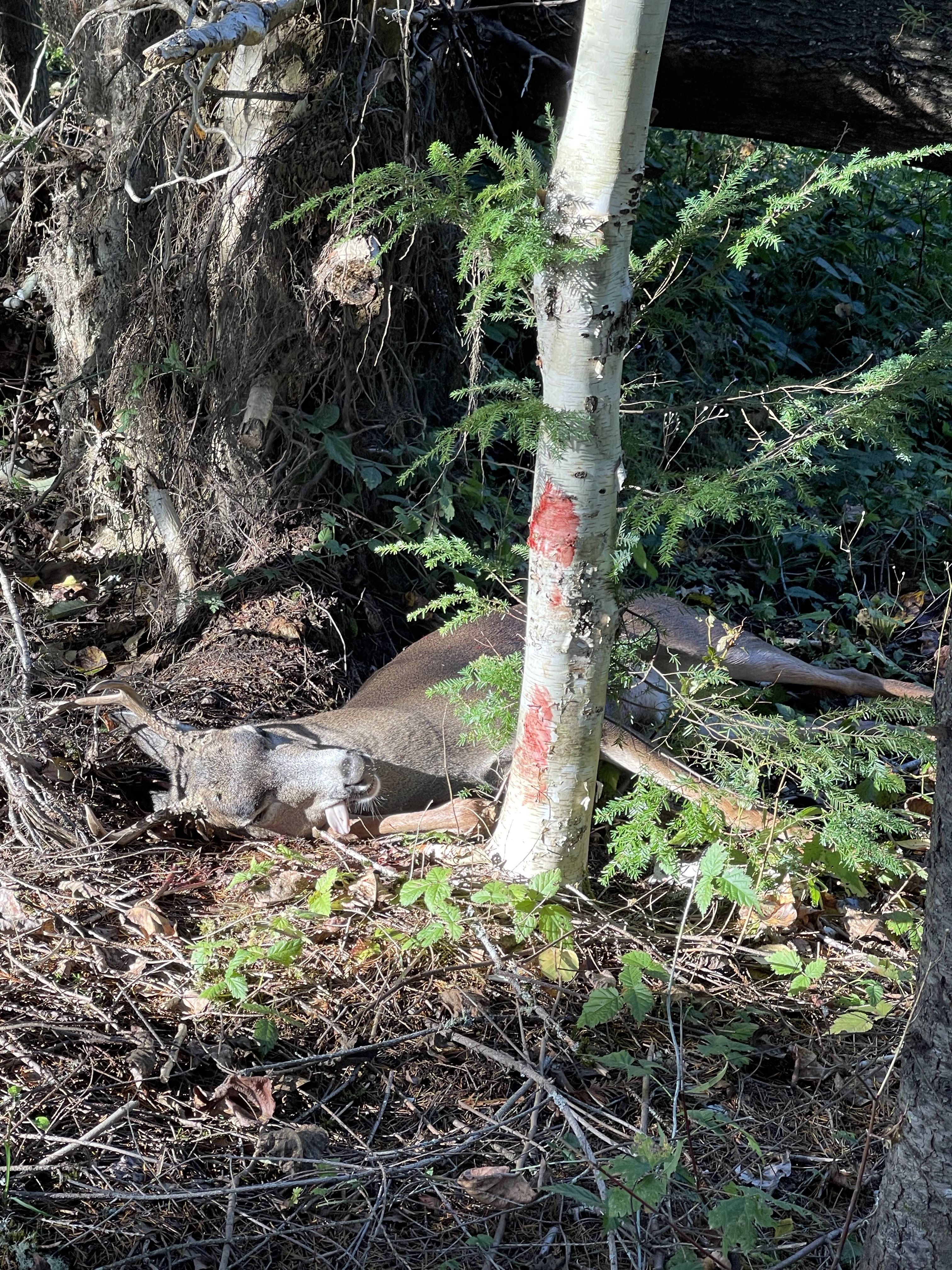
As we searched, the herd of does were still in the field, and the largest doe, matriarch of the group, went up the hill and banked right, then came back down the hill a few feet from us, signaling the transition to another field down below. I thought she might have gone up to check on the buck, so we went up and right to seek him in some thick cover in a stand of red cedars. The neighbor had heard my shot and come around from the barn to check in. She offered to help find the blood trail and went left up the hill. A moment later she called us to her, she had found the blood trail. We followed her as she followed it out- moving a few more yards into another stand of trees blazed with blood from the deer bracing along each trunk before tumbling into the recently cut bows of a fir tree. It was wonderful to watch my neighbor in her learning journey, and having her find the deer. We sat down together with the deceased animal and shared gratitude and marveled at the health of the deer.
After some time reflecting and giving thanks for a good hunt, we carried the buck to the truck and loaded him up for the ride home where we would process him. Our deer season falls around Halloween, and I’m always a little sensitive to the real gore involved in hunting- especially large animals. The shot was clean, a double lung puncture, which is the best and most humane shot for bringing down a large mammal with the least amount of suffering. That blacktail buck went less than 20 yards from where I shot him, and was dead within seconds. The muscles were relaxed, the animal did not linger or suffer beyond the initial shock of impact. It it imperative to succeed with one shot one kill when hunting. Only ever take shots you can make- and know your range by taking time at the range to both sight in your rifle each season and check your accuracy. These actions will help to ensure your successful hunt and gauge your abilities. But the real work begins after you’ve harvested the animal and brought it home.
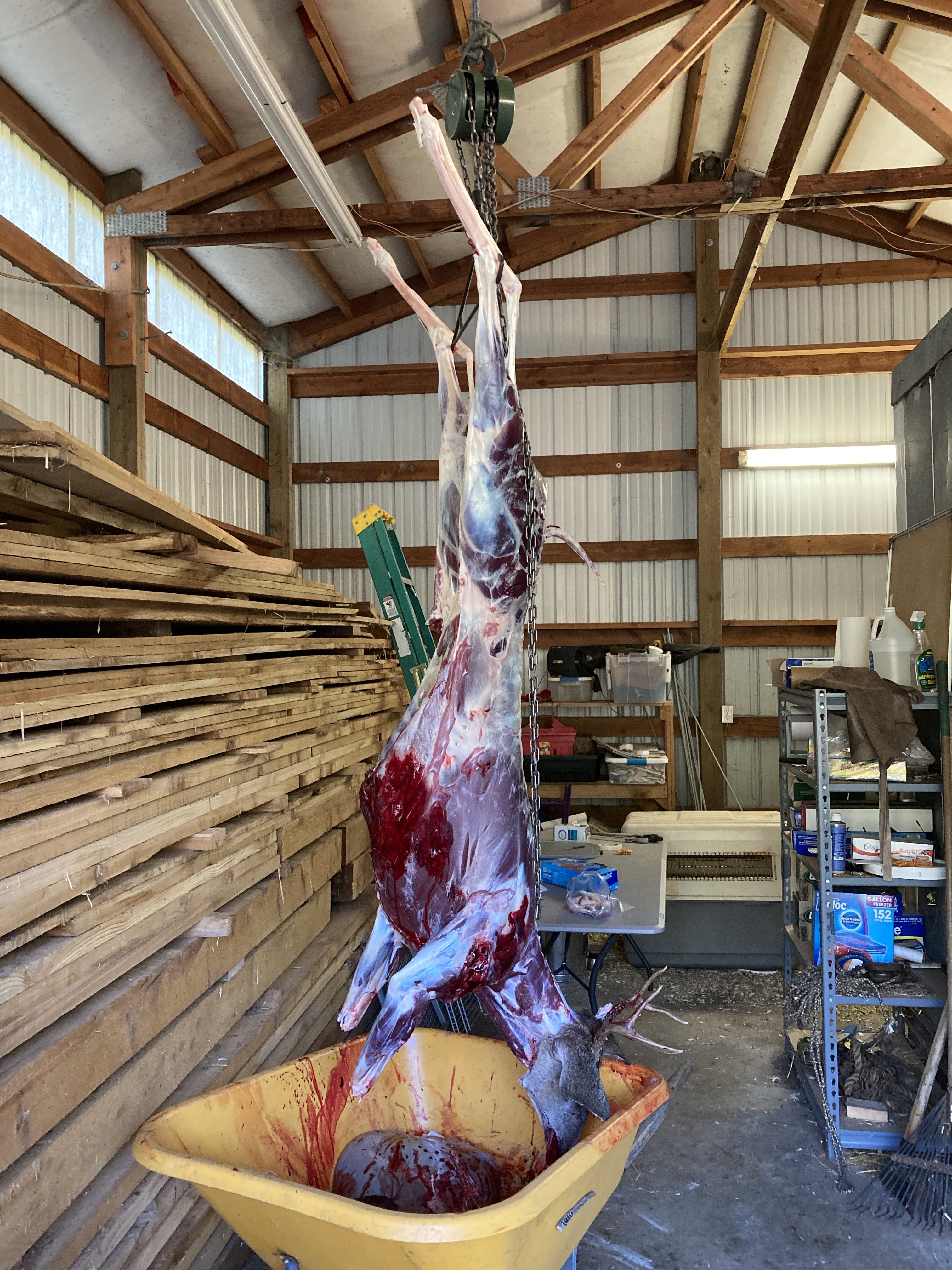
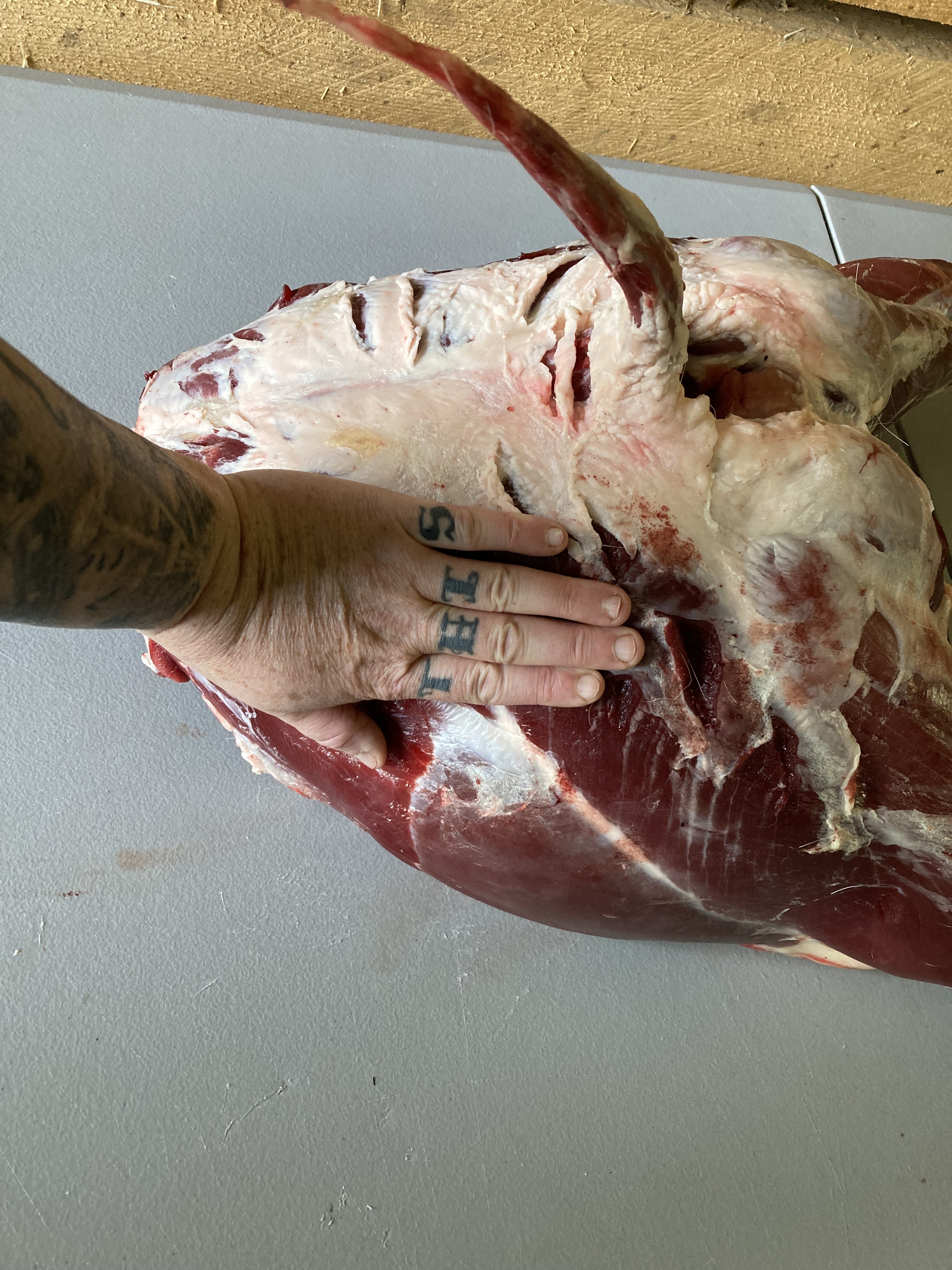
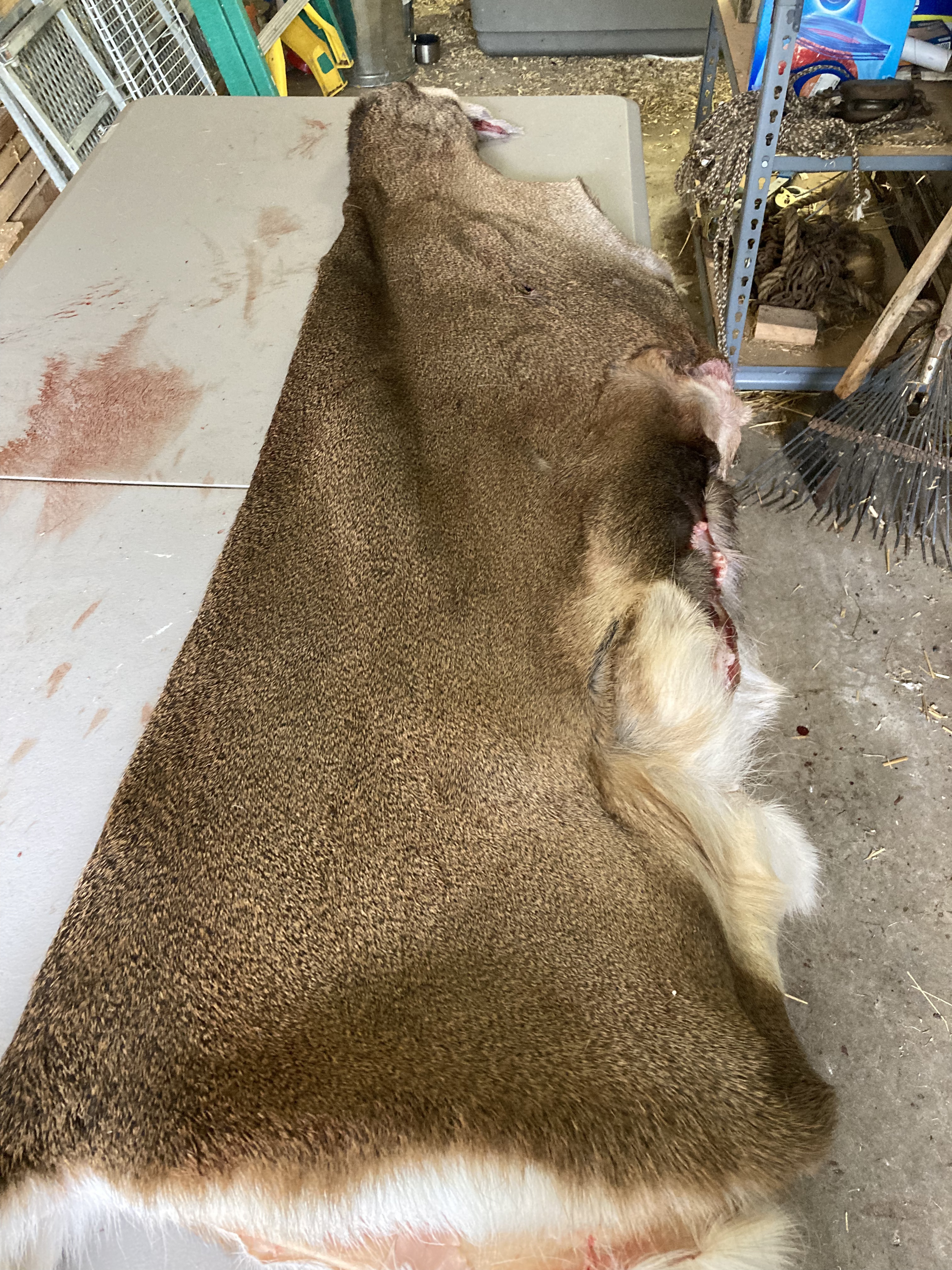
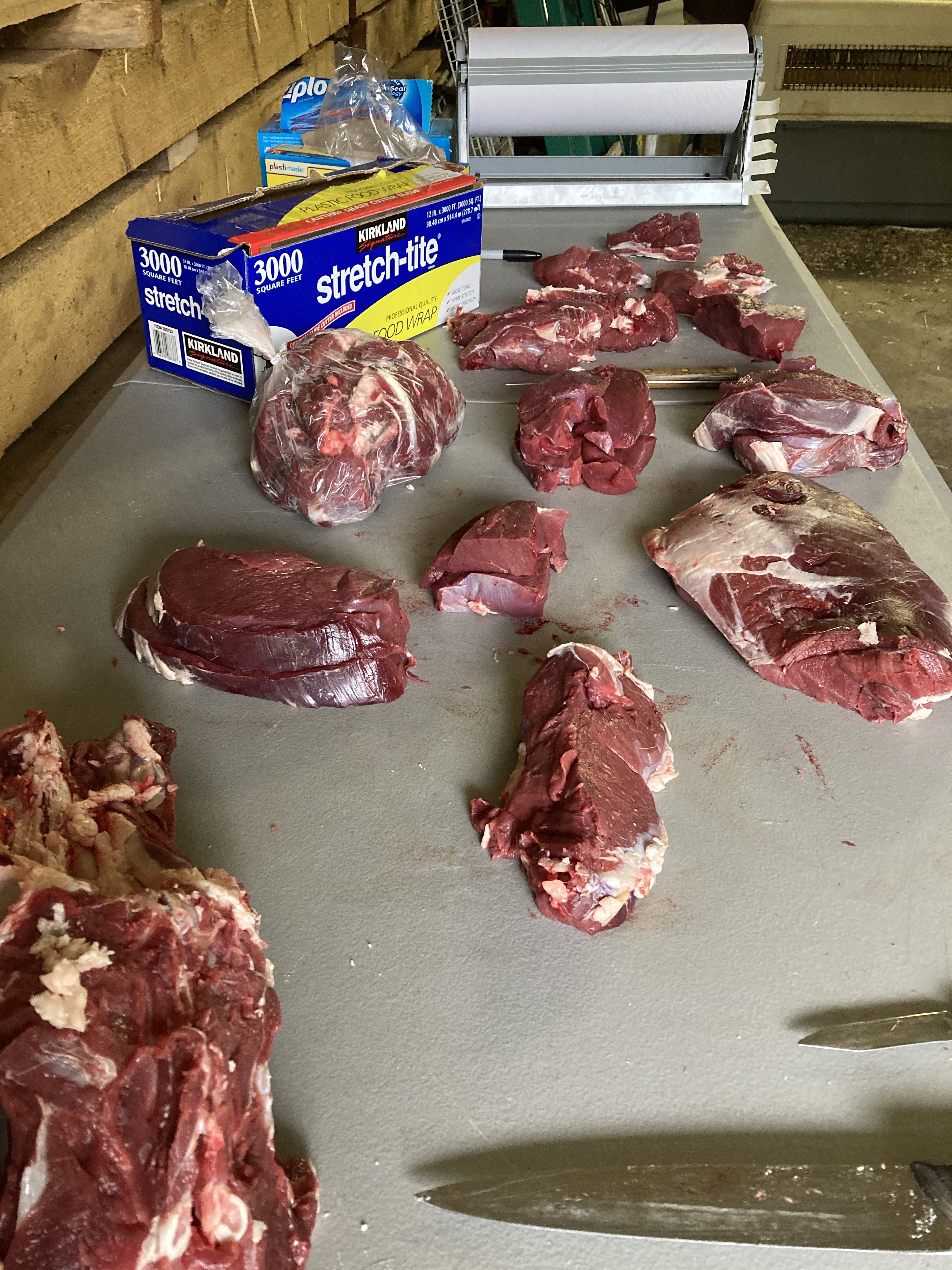
The buck did look so good- clean healthy coat, glossy hoofs, strong muscles, and great fat store for the winter. As I began processing, I marveled at how much meat this buck offered for our larder and continued in thanksgiving for such a precious gift from the land. My neighbor had requested the hide, which I took more time removing to preserve quality. Then I broke the carcass down into manageable parts to hang in the walk in cooler. The meat would hang for a few days to age a bit before being butchered and wrapped. Read more about why I choose to age my venison here. In a nut shell, you want to give the natural enzymes in the meat a chance to begin breaking down the protein of the muscle to improve overall tenderness and flavor.
From field to freezer, this year’s journey to harvest a blacktail buck was long and full of good learning. The reward of harvesting wild food- specifically a deer from my neighborhood who most likely fed on my land at least a few times in his life is wonderful. His life feeds us, as we feed his future generations and become the grass ourselves in a beautiful lifecycle that continues in sacred relationship. The connection to place, the plants and animals within in, and the affirmation that hunting the deer is an important covenant I share with this place fulfills a deeply sacred place in my soul. This is why I hunt, to learn, remain connected, and weaving a rich tapestry of life and death to sustain abundance and belonging. This meat will be shared too- with neighbors, friends, and at our own table through the coming dark and cold times. This is the gift from The Deer Nation to The People who take on the mantel of hunting. Even when we do not harvest successfully, our time in the filed with our senses reaching out with such intention is so profoundly nurturing. This time outside brings me closer to my place in the world and relationship with myself and the wilds all around. Eyes in the wilds also see what mankind has done or not done in good stewardship with place, and keeps an alerted vision of what’s happening in our greater backyard and how it impacts everything.
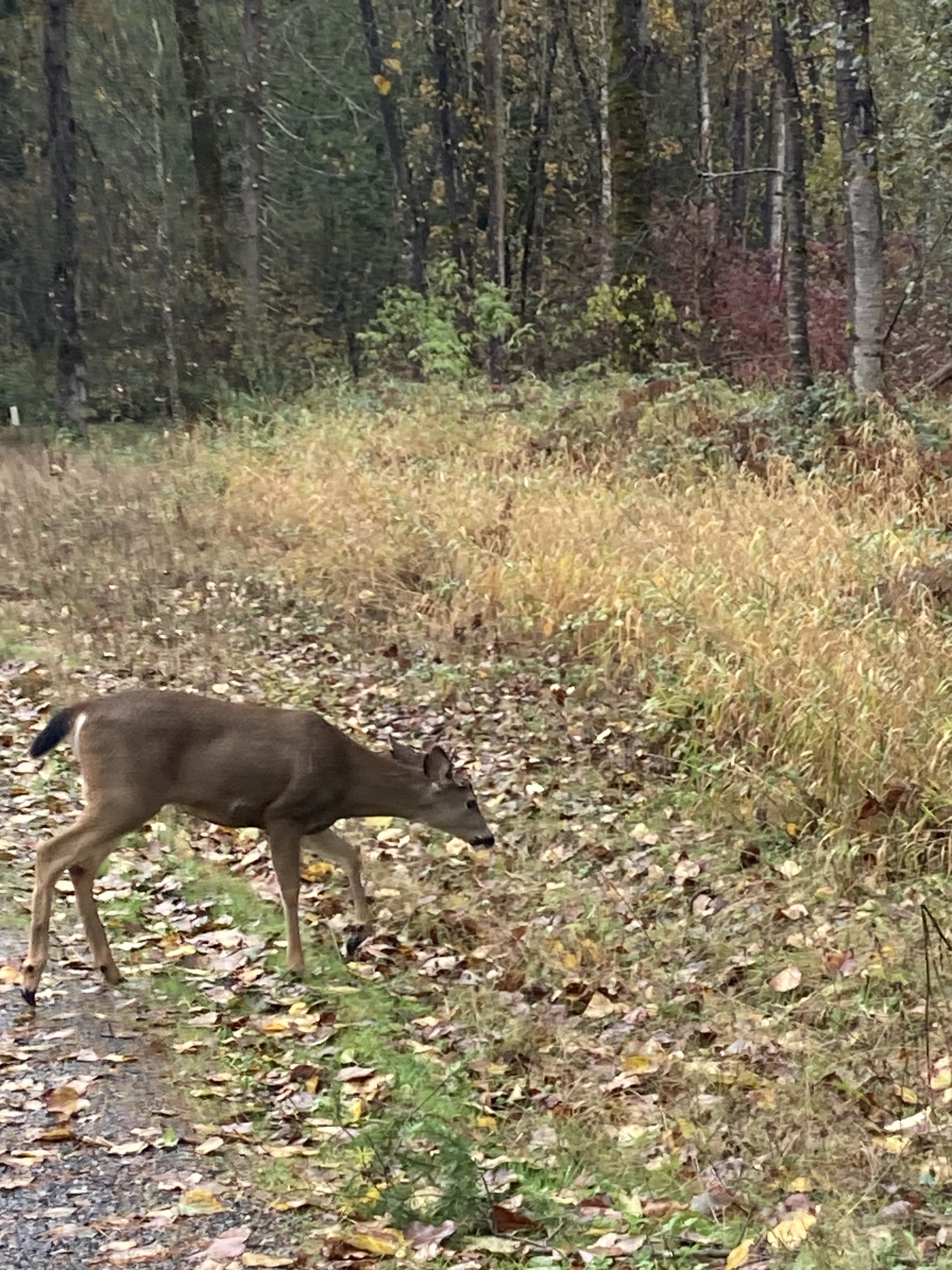
A week after my sit with the spike I did not harvest, my partner and I spotted him on the driveway coming home the other day and were deeply distressed. Though he was moving fine, and grazing, we could see one of his spikes was askew and he had a festering welt on the right side of his stomach. We could not get a closer look, as he moved on without too much delay, but we knew he was hurting. My partner guessed he’d been shot but only maimed and not killed cleanly. I thought because of the bent antler, that he might have been hit by a car. Either way, this deer was not given a clean death, and like many misused wild creatures, suffers inhumane abuse. We hope he makes it through the winter and heals. The fact that he was moving well and eating is encouragement, but wild animals are very good at hiding weakness when being watched by potential predators. He strut his stuff and moved on through the brush, ghosting away to more larders nearby. It is always so painful to see human induced suffering on wildlife like this. That’s why hunting is such a privilege and should never be taken for granted or abused. Only take clean shots you can make, and follow through by trailing your intended harvest to make sure that animal is properly dispatched.
If you hit a deer with your car and it’s not dead yet, call fish and wildlife or 911 to get the word out for law enforcement to come end the animals suffering. Countless more deer are killed by vehicles than hunters each year, and a good book to read right now for more learning is Crossings by Ben Goldfarb. It’s about roads bisecting wildlife habitat and the unimaginable losses in wildlife because people don’t slow down. There is profound research and potential solutions offered to help us better understand our impact and ability to help wildlife adapt to our non-negotiable “necessities” for convenience. Spoiler- nothing short of removing roads will work, but well constructed bridges and underpass wildlife crossings do help mitigate some losses. The best thing you can do right now is maintain speed limits, drive slower at dawn and dusk when wildlife is more active, but harder to see, and heed wildlife crossing signs. I almost hit a young two point buck driving in the dark morning predawn on the first day of hunting season. I did manage to slow down in time, and he stood there looking at me as if to say, “slow down or you’ll miss the hunt”.











 EEC Forest Stewardship