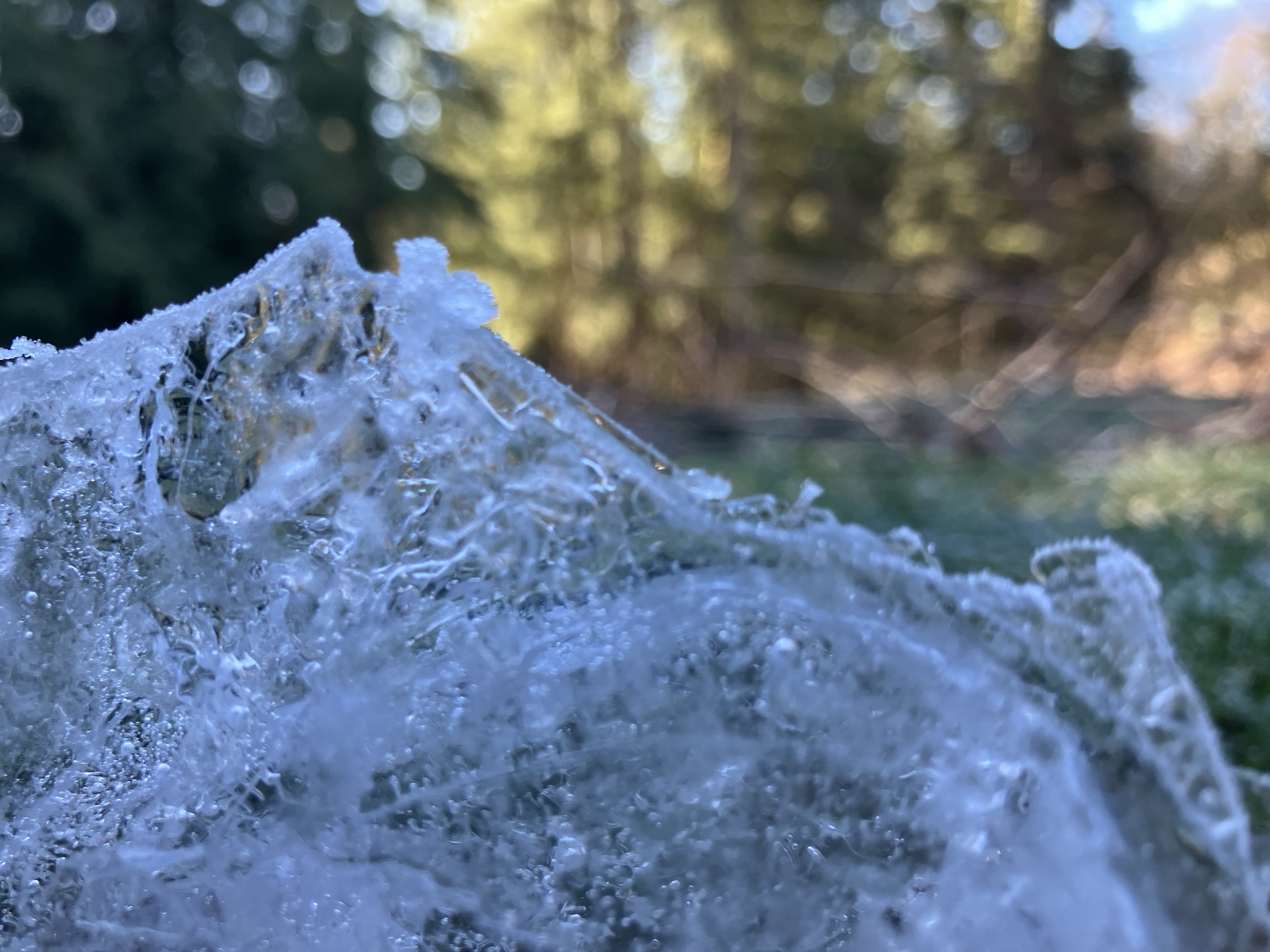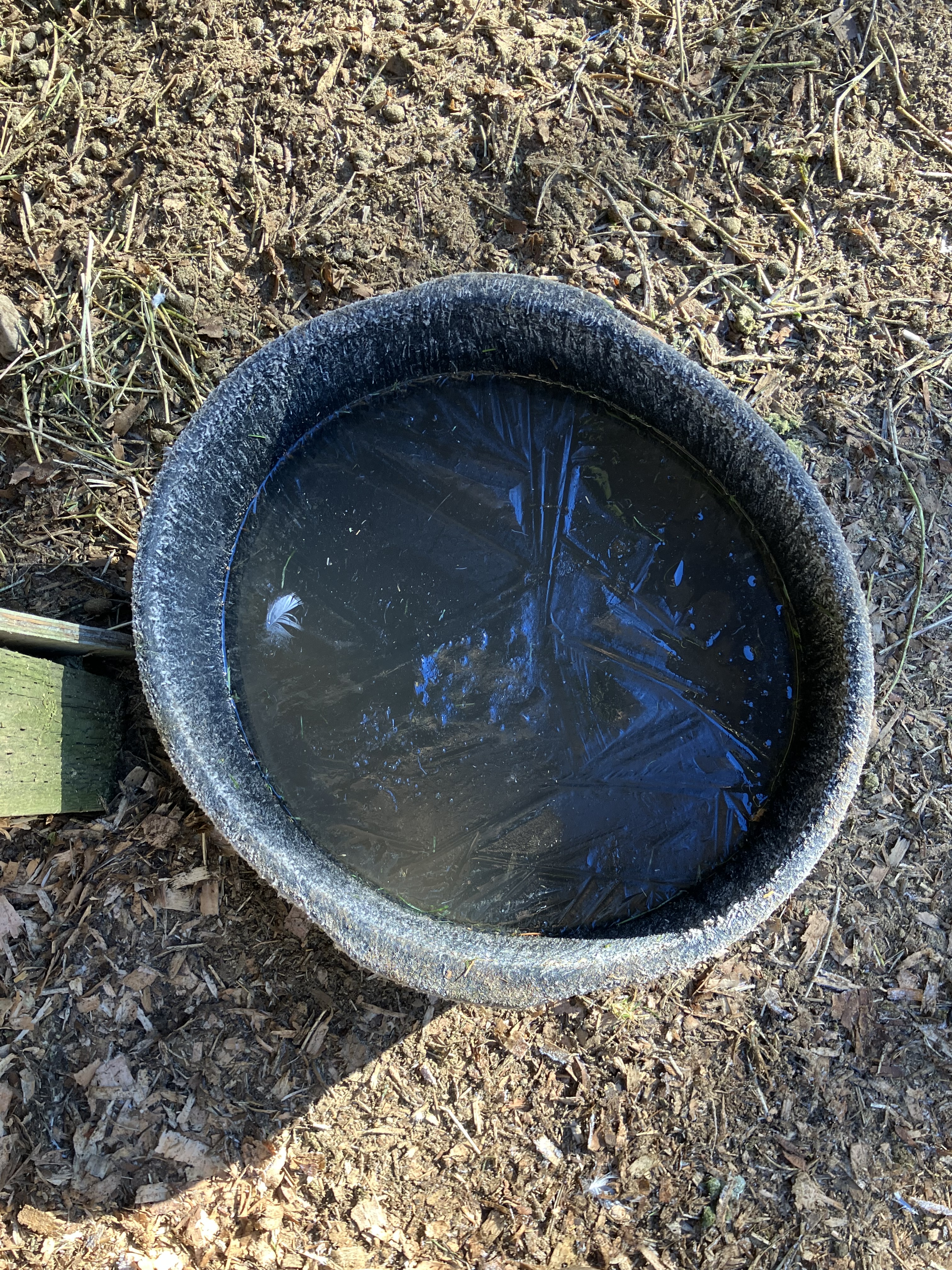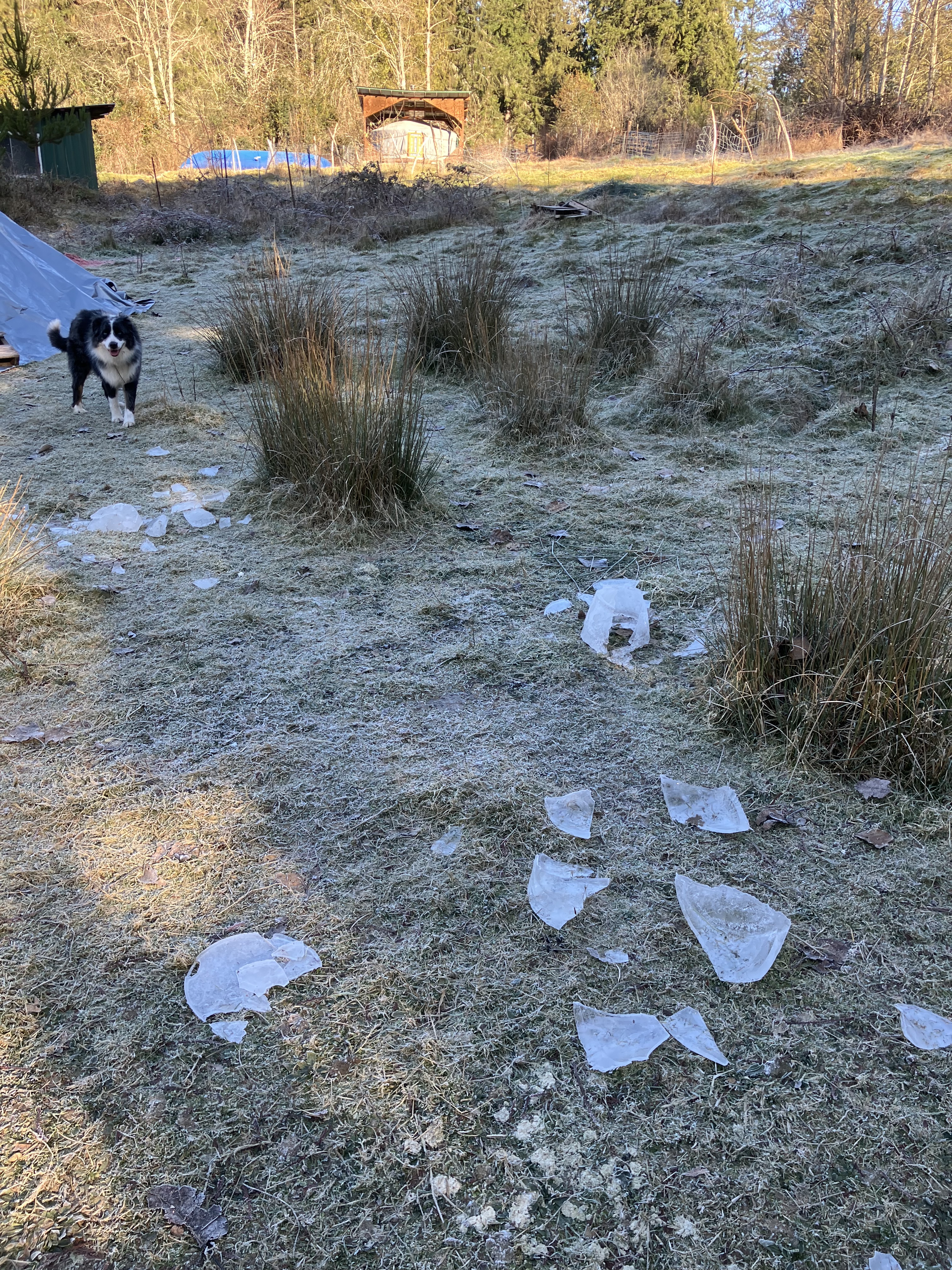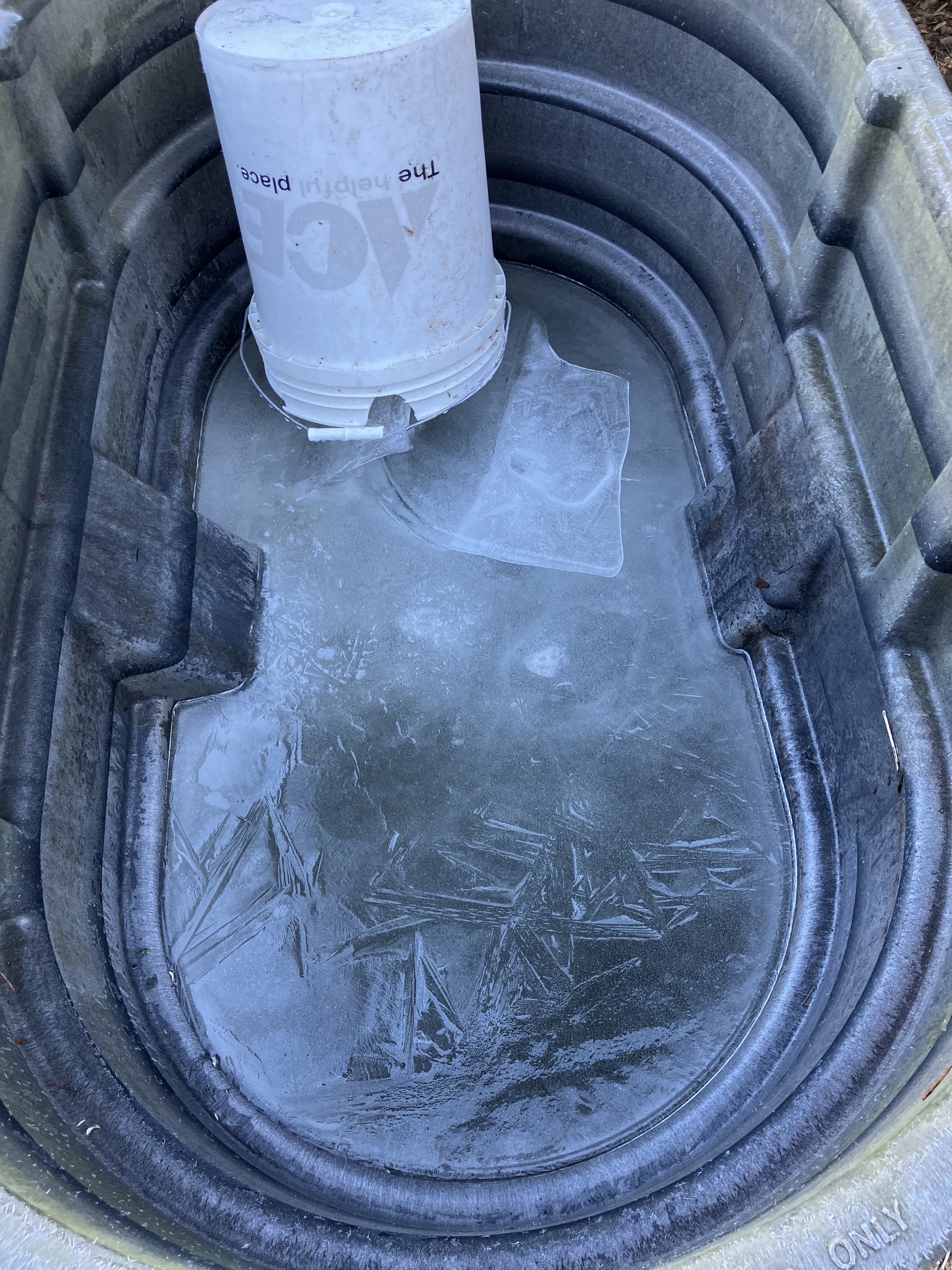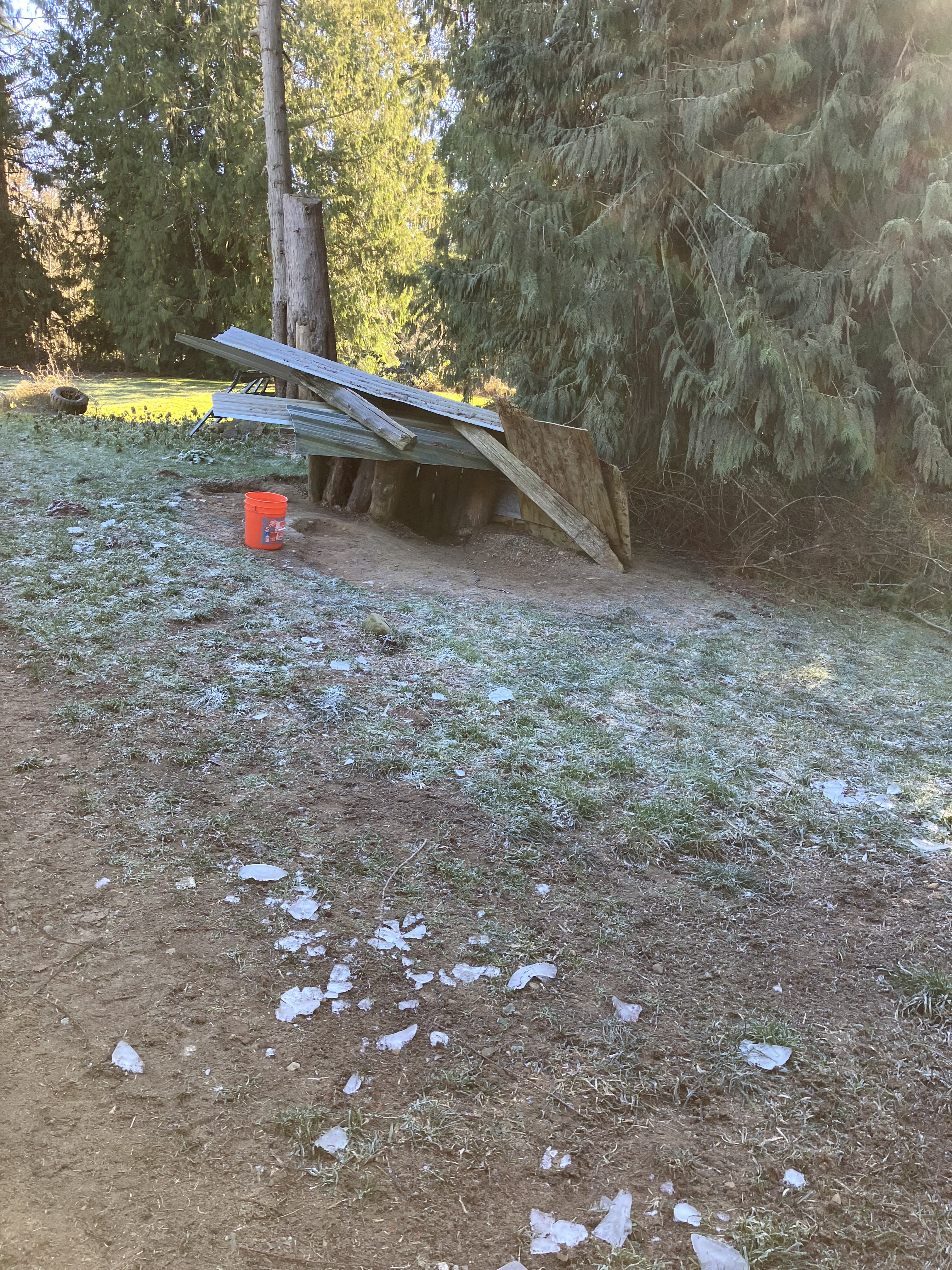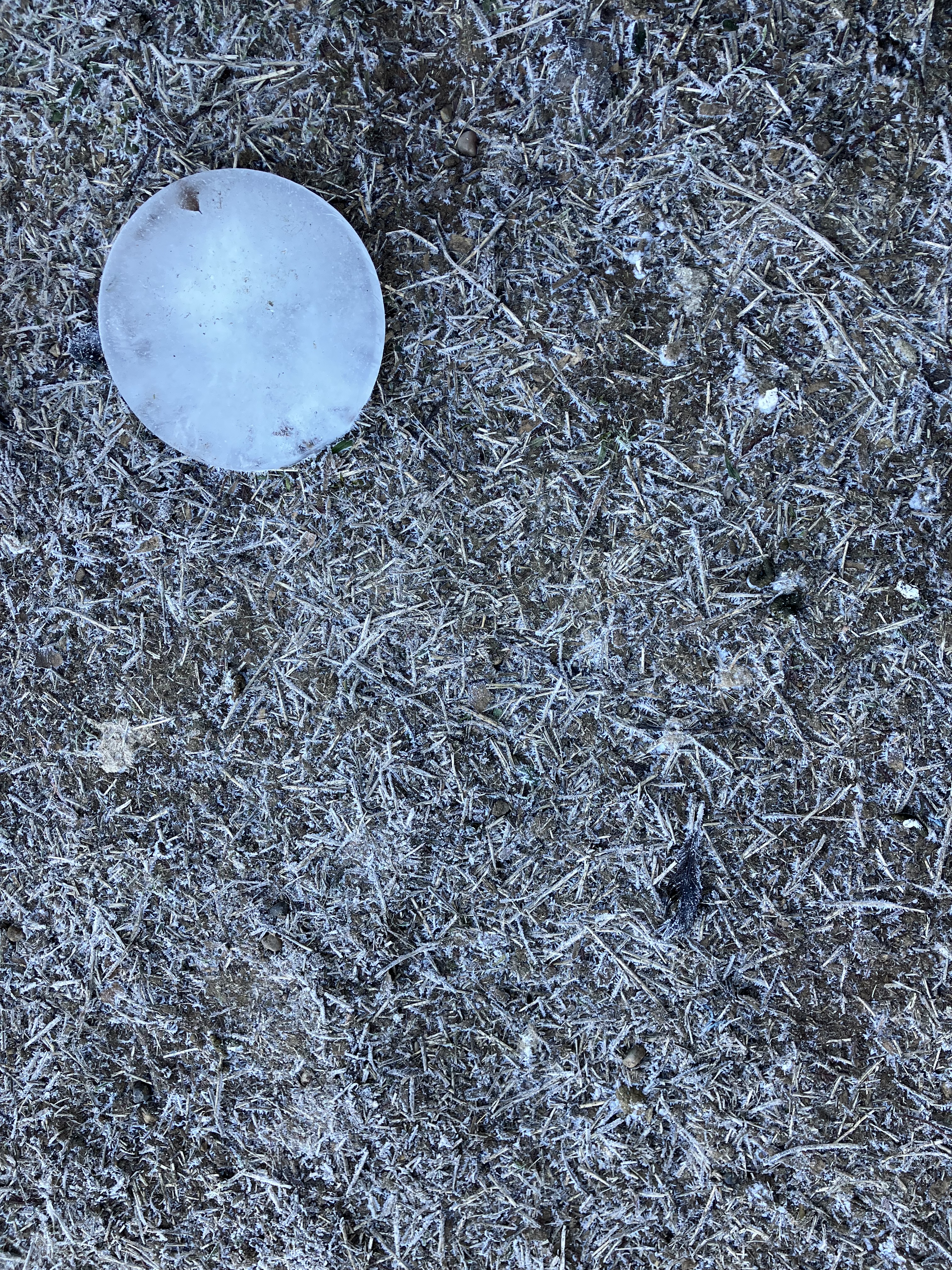
Hard step into what only a week ago sunk my feet into slick mud. The benefit is access, yet frozen water does not accommodate swallowing when we’re taking a drink. Most people would opt for plug in heaters, but not at this barn, we’re off grid, and until the investment of solar panels, the place is a little more work, but worth the observations and good animal husbandry. I like be attentive to the watering needs of my animals, it says a lot about their health and well being. The well water is well above freezing, and when I deliver it to them, it stays unfrozen through the day. In the evening, a second well water helping keeps much of the ice out. Edges still form around the edges of the buckets over time, so I rotate them out every few days for a passive solar deicing. The system folds in well with my trough cleaning duties anyway, and I don’t find I’m spending that much more time- the well is on the way to the barn, and the extra carrying is part of my complementary gym system, so I’m getting a well earned work out with custom weight lifting. What a life!
I’ve learned not to fight the ice, but to use patience and timing to aid in preventing build up. There are some systems that have to be abandoned in the short term. Temperatures have remained below 30 at night for almost two weeks. During the day, valuable sunlight raises the ambient air to well above freezing, and direct rays soften everything enough to knock out and refresh. The large open trough, which I usually scoop water from for the flocks and dog, remains full through winter rains. I leave the big trough to melt when temps warm up in a few more days- or after the snow storm this weekend? The start of February 2025 might see us get a dusting, or blanket of that white stuff associated with the season at hand. It’s a wild new frontier in weather folks, I’m excited.
The geese are protesting this hard knock. The Cotton Patch originate in southern regions, where the material crop grows. I explained that even Louisiana is experiencing sustained freezing after a polar vortex bullied down from Canada. That’s what we get for calling it the 51st state- poor Porto Rico? So ice- yeah, that’s how my mind works. Shattered fragments scattered around the farmyard. (this metaphor is not lost on me) But here in Western Washington, the temperate returns, and all the clutter will slow melt back into the soil, hydrating and setting up for the spring sprouting soon to come. The Osoberry is my favorite timer for Spring’s return- it’s already got plump buds, you’ll see white cascading raceme flowers by March. Stinging nettle is popping up in the sunny spots. Microclimates are key here in Cascadia. If you know where to look, there’s always something in the pantry. With the ground as hard as rock, most of the food my livestock enjoys comes from a bag or bale; inputs still coming in on the almighty dollar. Thanks to all who buy food from this farm- it keeps overwintering possible.
I’ve talked about taking the animal systems down to a sustainable number for the farm to be completely self sufficient, but it would then be a homestead, not a farmstead. It might come down to that in future- that’s sort of the retirement plan. Today, ice is the trending encounter here at EEC, and it’s nice to see a solid freeze come, because it’s killing off some of the bugs and fungus and other living things that need a cull. These are such crucial cycles in nature, signaling my own body to get more sleep, slow down when it gets dark, rest. So I do. It’s a pleasant time to enjoy the hearth and home. Gratitude for this fire that warms my house and tends my spirit through the dark times. It makes going out into the cold to break ice and carry water good to endure.
Light and time flow through ice- it’s in the shadows. Marking the melting point of each crystal, vanishing in the greatest magic- movement. Each blade of grass suspended in white frost, erect presence crunching under foot. Tracks of crushed green vegetation, erased by dawn stretching out across field and forest, deconstructing water, so many chemical changes in an instant, over and over again. This hold of winter’s grip- squeezing molecular structure so tight, the ground swells into crystal fingers pushing up out of the soil. This hardening of the ground becomes muddy in the warmth of the sun, but returns to concrete at dusk. Stark changes throughout the day, keeping me on my toes as I water and feed the flocks. The animals know change is in the air.
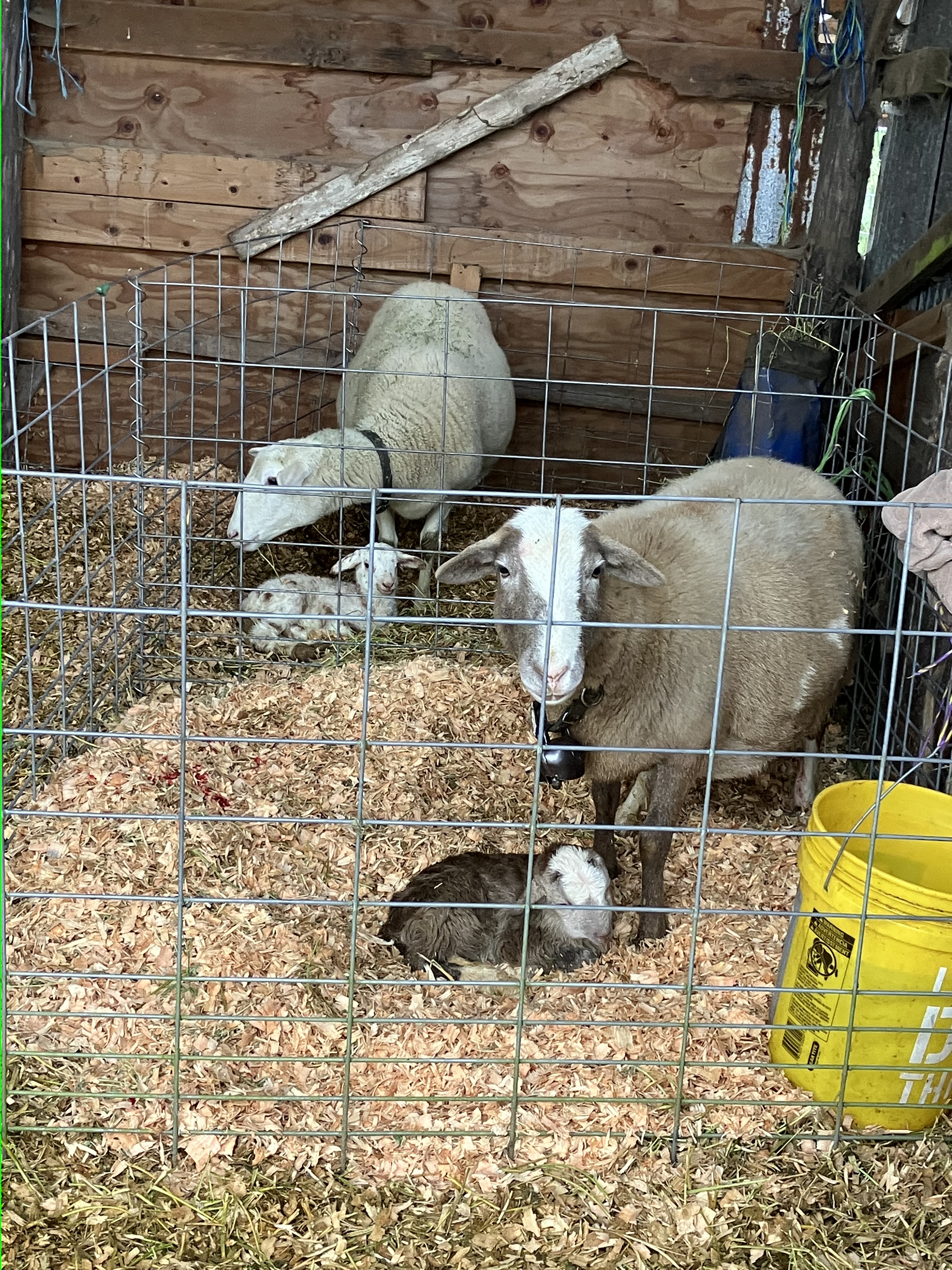
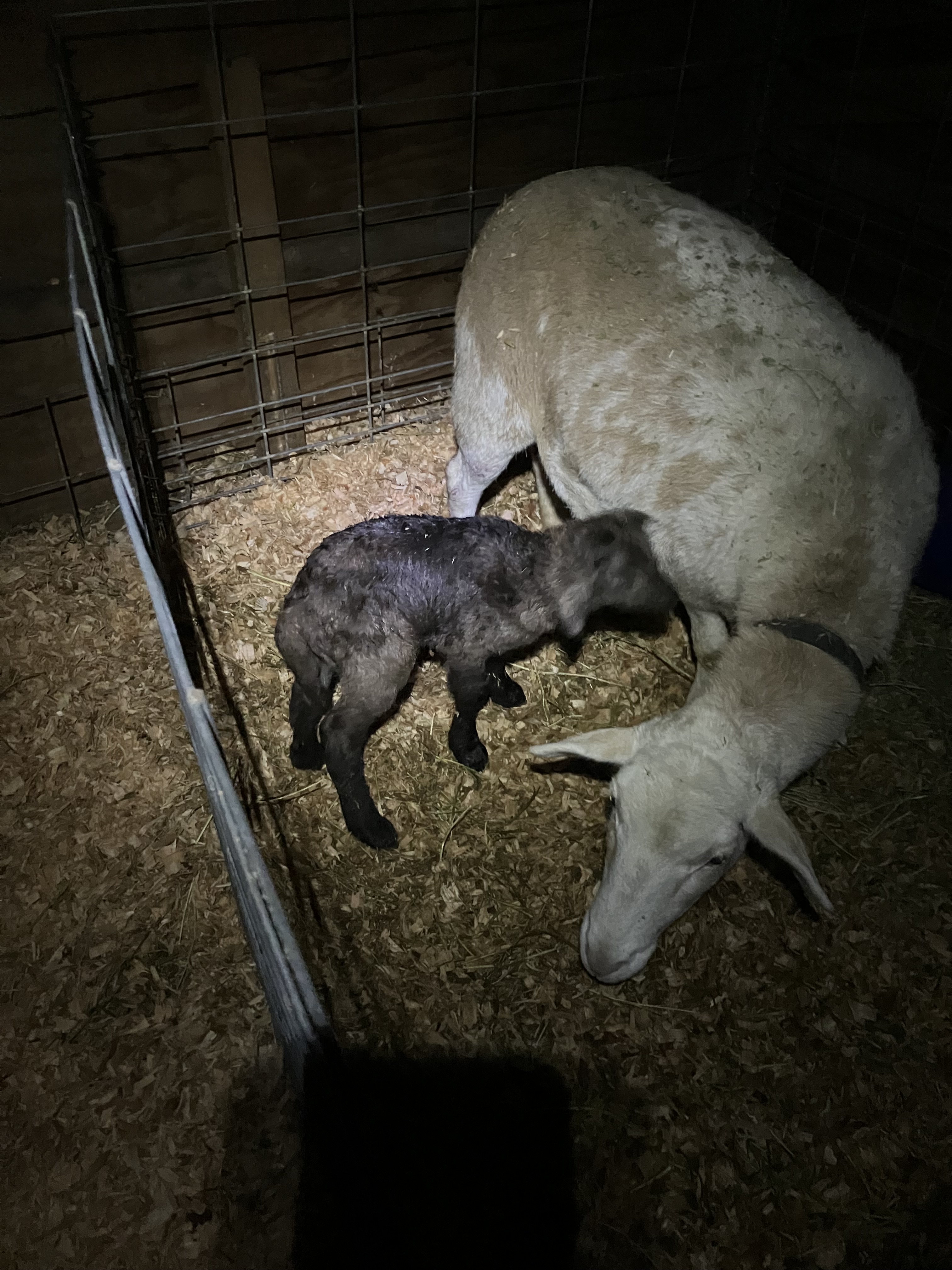
When I get up each morning, I put on gloves, layer to keep out the cold, and head to the well house where empty buckets await. 10 gallons go to the sheep, then another 10 between dogs, chickens, and geese. It’s a little more hauling, but again, I’m there in person, checking things, noticing two of my sheep are looking ready to lamb soon, and noting it’s time to add fresh bedding in the barn. Being present in these more extreme weather changes is crucial to good animal care. The flocks drink more when it’s cold, so again in the afternoon, I make the rounds of each trough, carrying another 10 gallons to top off water and lift out any remaining ice. As it shatters around me on the ground, I think about the next warming time, and know all this clutter will melt away on it’s own. Waiting out winter is an art we spend half our lives learning. The other half we sit in the warmth of a wood stove with hot tea in hand, thankful for a warm home and working well house.
Our monkey minds like repetition and the familiar. Those aspects are almost opposites in many ways- repetition being a form of learning, while the familiar stagnates the mind, allowing little nuance for evolutionary thought. It does not seem to be nature’s way in holding things the same for too long. Diversity and constant adaptation run a muck in what we as mere humans see as one easy to take a glance at landscape. This field pictured above, the bramble and overgrowth might make it hard for some to identify as field, there are trees around, but a white electrical tape on the fence line creates transition between field and grove beyond. A withered brown pile of bracken fern collapses in the background. Because I know the species, I can see the delineations, even without man-made cues. But what I can’t pick out so easily are the changes happening. The soil and what’s growing on within it cannot be perceived from this perspective. Time of day is hard to put down, other than recognizing it is not first light or dusk. There were some birds calling and flitting around, which are not easy to find in this image. While you are looking for birds, did you find the deer? She just moved into some cover, but she’s close, and her black tail is highlighted.
I only saw her on my drive because she had been standing in the field just moments before I took this picture. I’d stopped to take photos of her when I first saw her as I drove by. The deer feel sight on them, and will find relief from a predator stare by ghosting into thick brush and shadow to avoid a direct sight-line. Deer are great at standing still, it’s really the best way to avoid being seen. She was positioned as narrowly to the road as she could be while grazing, and stopped to hold a pose when I slowed to take photos.
Her body slowly shifted left towards the brush to get away. Why did she not just run away? Because I had not chased towards her. If she had bolted, I might have given chase. Most predators want to catch something, run it down. We’re taught not to run from predators, but to face them and project size and might. Deer don’t want any confrontation, and try to quietly disappear. Those long stilted legs will still carry them swiftly if they do need to run, but thick brush won’t allow much dexterity for fast movement.
The dynamic connections passing across place through time are crucial to understanding the connectiveness of all things. What we see in a gimps of that living structure, is only the tip of so much complexity thriving and reliant together in community. The blackberry needs sunlight, so it takes over ungrazed or mowed pasture. Grasses and forbs feed several species, one of which is present in the doe that browses through. She is keeping a cleared hoof-path through the open-ground, with side trips to cover and a knowledge of maneuvering through the underbrush. Deer can duck down- even crawl on their knees to get through tight forest spaces. Other hedge edge neighbors include raccoons, opossum, and rabbit. Most of those smaller furies are out at night, a perspective even less of us spend much time observing.
Nocturnal observing is not our strength. As daylight treetop dwellers, our ancestors stayed off the ground and away from predators, who usually hunted in the cloak of night. Today, tools like headlamps and guns make us feel less vulnerable in the dark, but our senses are altered, and perceive places much differently than during the day. Even with the headlamps of my truck pointed at him, this mature buck blurs in my camera’s attempt at capturing movement at dusk. Our eyes can still make out an animal form, and might even clue in to the antlers and general shape of a buck, but without crisp outlines, out minds throw into question what we perceive.
These images are at close range, looking at a focused part of a much bigger whole. Most of the time, our procesing works best with a single frame, or a set of consecutive images of familiar style. Movies are best with plots lines and characters we feel something towards. Nature has been treated like the other for so long now, she’s usually just background noise to what we want to focus on. We look for the deer at dusk on the road, but it’s really the road we’re following. The convenience of travel, pavement and cars, give us such advantage, but it’s been a real tragic saga for most deer populations across this country and the world. Rather than holding that thought and questioning automotive centric living, we push the deer into a ditch and keep driving.
We look at the road and see the deer in our peripheral, then it’s gone, fading into the tall grass and overgrown bramble, into the backdrop of our important lives. As a hunter, I see the deer as a crucial part of my survival, as a winter food source I can count on each year. When I see deer, I look at them when I can. Checking their health, looking for mange, ribs, or a thick healthy neck in fall. These deer I’ve shared in photos today are my home animals, the deer that live around my own home, and share the land with me. They are still numerous and healthy, but if that balance starts shifting, I know to pay closer attention to greater goings on in my neighborhood.
The plants already tell me the water table is dropping. Our creek flooding in winter remains lower each year. Their will be record breaking storms to come, but the rhythm of familiar is unraveling. This is what we can all take more time to see and adapt with. Humanities’ best work happens in times of great adversity. I am watching the fires in Los Angeles in January, 2025. It could be here next, we’re only one drought summer away from total devastation, but the waters are still around, for now. Because the deer have survived our devastation, and still roam through the fields and along our roads without fear. We too must adapt and make changes to stay alive, sometimes crossing a road and not getting hit, risking to gain. This is nature’s lesson of finality.
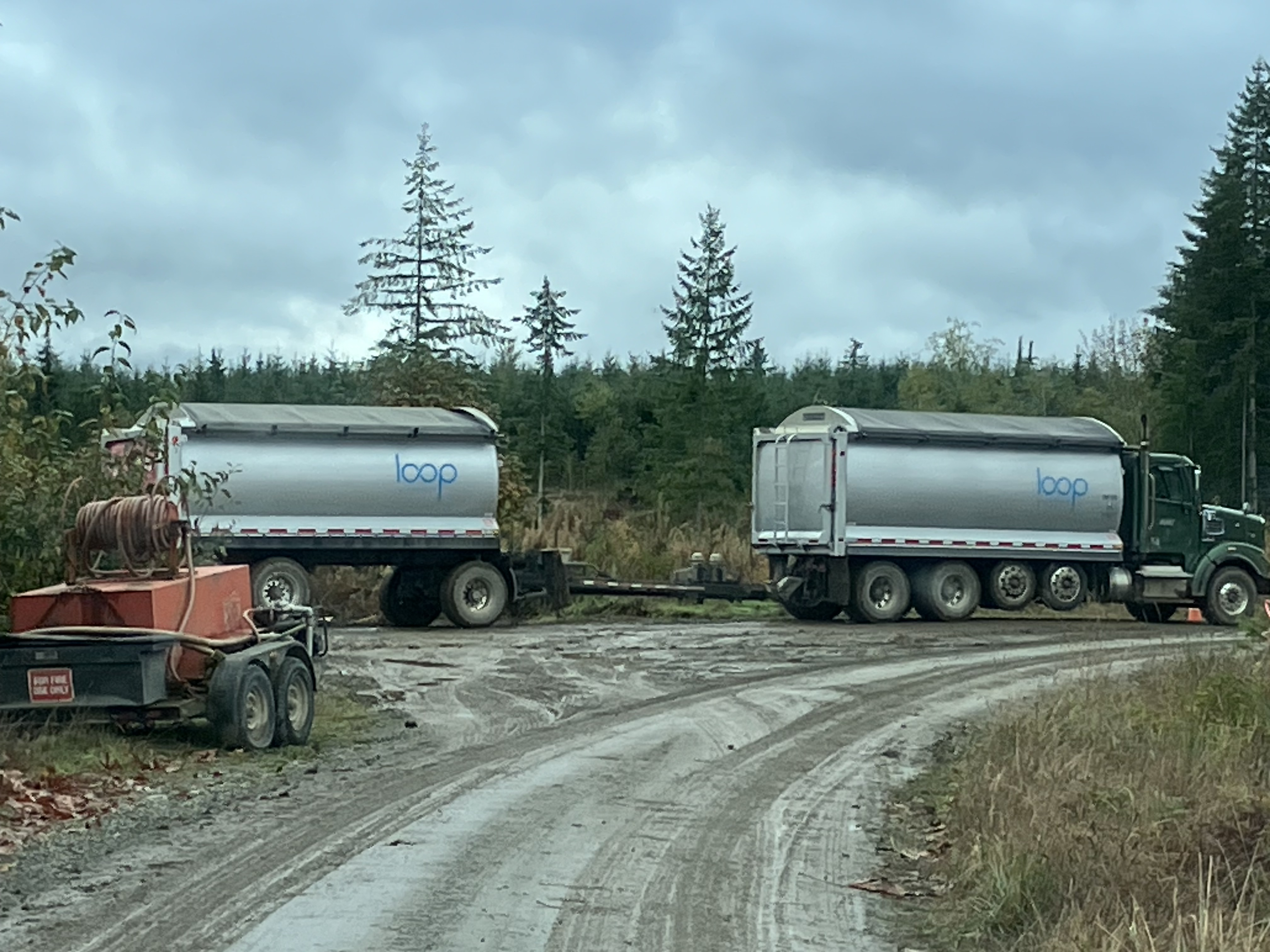
LOOP system in The Snoqualmie Tree Farm operated by Campbell Global, J.P. Morgan Asset Management
This truck is death on a pale horse. There’s something going on in the woods here in Western Washington, and across the country in our agricultural fields. It’s a practice that’s not getting enough attention, and I’ve spoken of it before. Forever chemicals are being spread across the land as the answer to “What do we do with all our poo?”. I shit you not- we’re spreading it on food growing soil and in the woodlands which filter our drinking water. Yes folks, you’re eating and drinking toxic sludge, and it’s killing you. Forever Chemicals are linked to cancer, birth defects, and much more. Yet the industry spreading the poop says it’s our own fault these chemicals are in the sludge. They also want you to know it’s not in the sewage treatment, just the sewage- which is spread on the ground, after treatment.
Today’s writing is about forever chemicals, but I will also mention heavy metals and prescription drugs are also in our sewage. Washington’s LOOP system reported a short list of metals well below EPA minimum concentrations here. Please know the research is slim in this arena, but the idea to spread sludge on our croplands and forests is still in action in almost every state, with no guardrails on some very dangerous chemicals. I’ve shared information in the past regarding the consequences of spreading biosolids in agricultural soils, and you can review that info here. In a nutshell, biosolids contain forever chemicals, and if they are concentrated, which is inevitable in treated sewage, the soil and water in areas where this toxic mush is spread becomes contaminated and unsafe for people- not to mention every other living thing affected. Why is this happening? Surly there is oversight. Sure, in theory.
There are no measurements of Forever Chemicals in offical studies. The EPA has not created measurement standards yet, but The European Union has. Their exact mesurment maximums are set here. Many other harmful chemical toxins are present in biosolids. In the EPA list above, I looked up two components to find out more. 4-Nitrophenol is used as a pH measurement (the color changing strips), but no studies on genotoxicity or carcinogenicity have been done. Hexachlorobiphenyl, a PCBs, which Washington State is trying to phase out of industrial production, because of its toxicity. We know this compound is present in biosolids, along with countless other with little known about their long term affects. It’s starting to cause noticeable changes in the environment, and in 2024, the EPA began trying to establish measurements for data analysis to set standards. They have a “roadmap” for drinking water standards. There is no actual regulation and testing going on publicly yet.
I’m not a chemist, but the idea of even considering treated sewage as organic seems negligent on the part of regulatory authority. Because of how widespread forever chemicals already are in the environment at dangerously high levels- where most of the studies being conducted are tied to drinking water at this time. 4 parts per trillionth is the going safe number for drinking water, which echos the EU standard. Web MD put out a helpful info sheet on PFSAs here. The current national database measuring PFSAs in our water can be found here. All this information may seem like a lot, and some of the data is still young, but we’re starting to realize just how much toxicity is now swirling in our very bodies, and consumed literally in what we eat and drink on a daily basis. It’s contaminated, and farms all over the country are waking up to government seizure of property, animals, and crops, while polluters continue to sidestep clean water protection, ignore contamination of industrial byproduct, or flat out blame the public for it’s household items purchased.
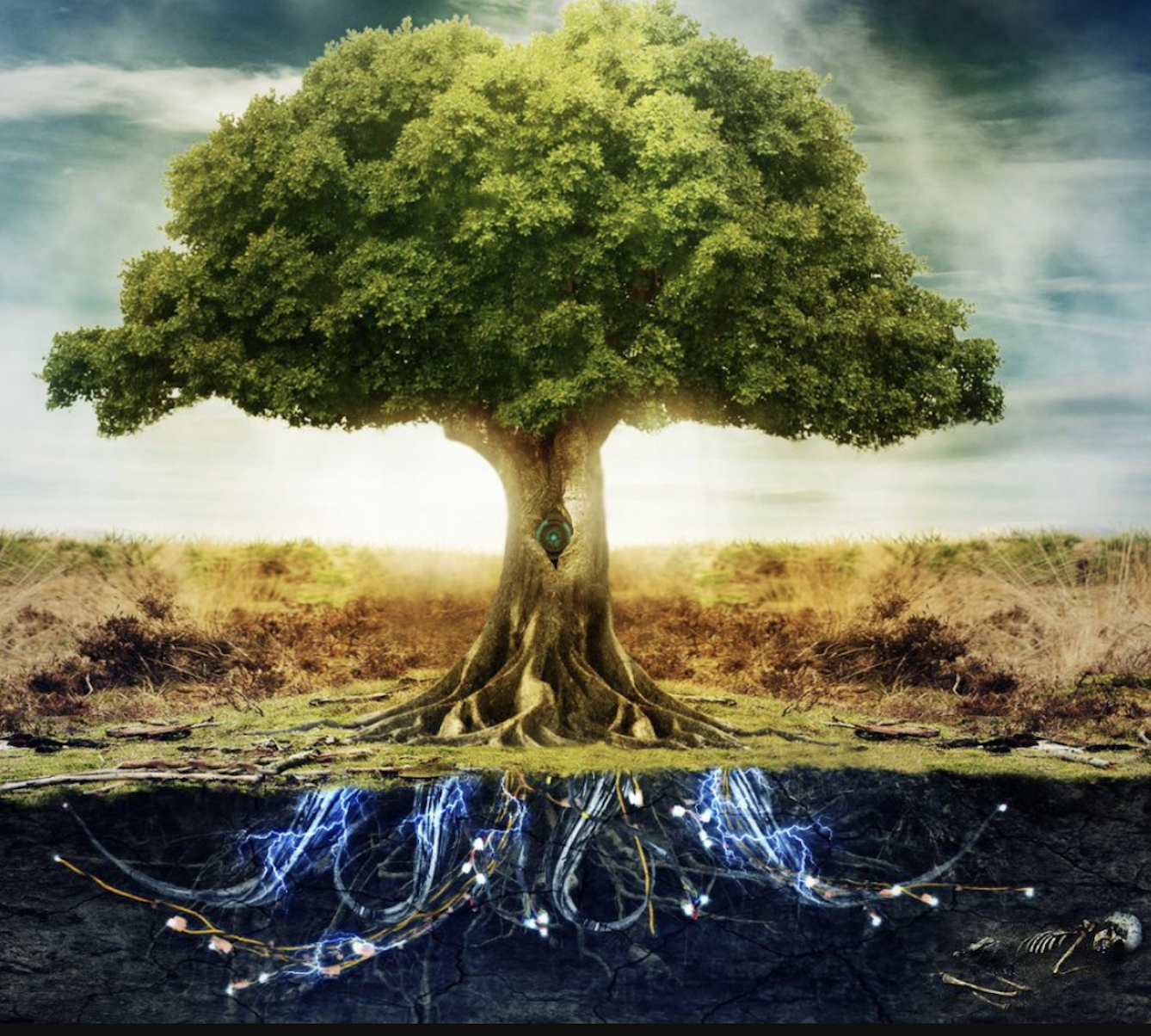
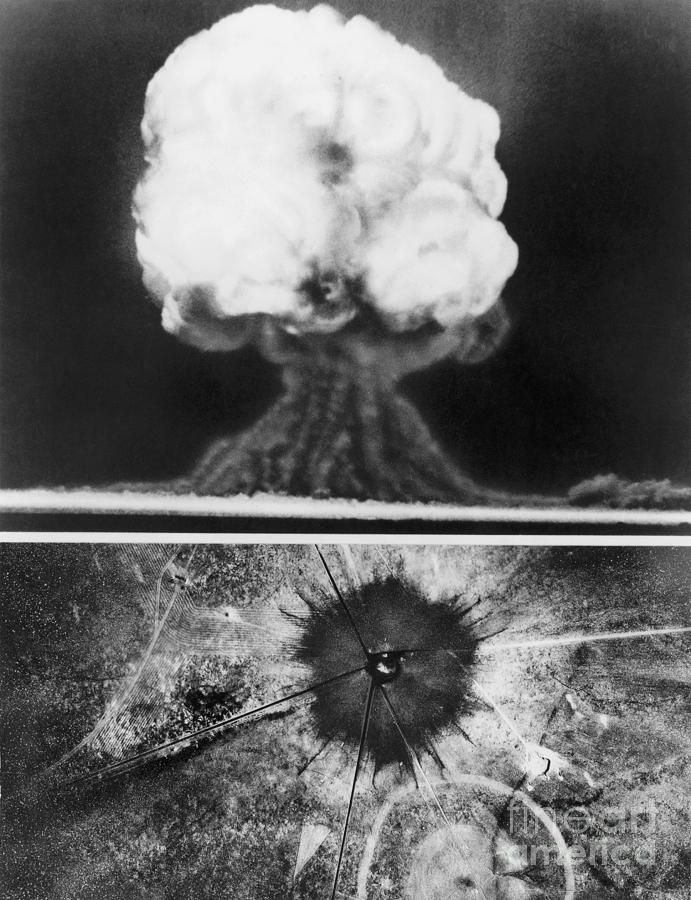
It is our fault, as a society, for not taking the time to learn about our chemistry before we unleashed it on ourselves. Out of sight out of mind- like nuclear waste, air pollution, water contamination, and food toxicity. If the water is clear with only a little chlorine smell, it’s clean right? Our healthcare system won’t put the finger on environmental cause, just keep donating to cancer research and we’ll see. Better living through chemistry, and technology- both of which are the mass polluting causes of our very extinction. Soon everything will be “all natural” because after all, even plutonium is organic.
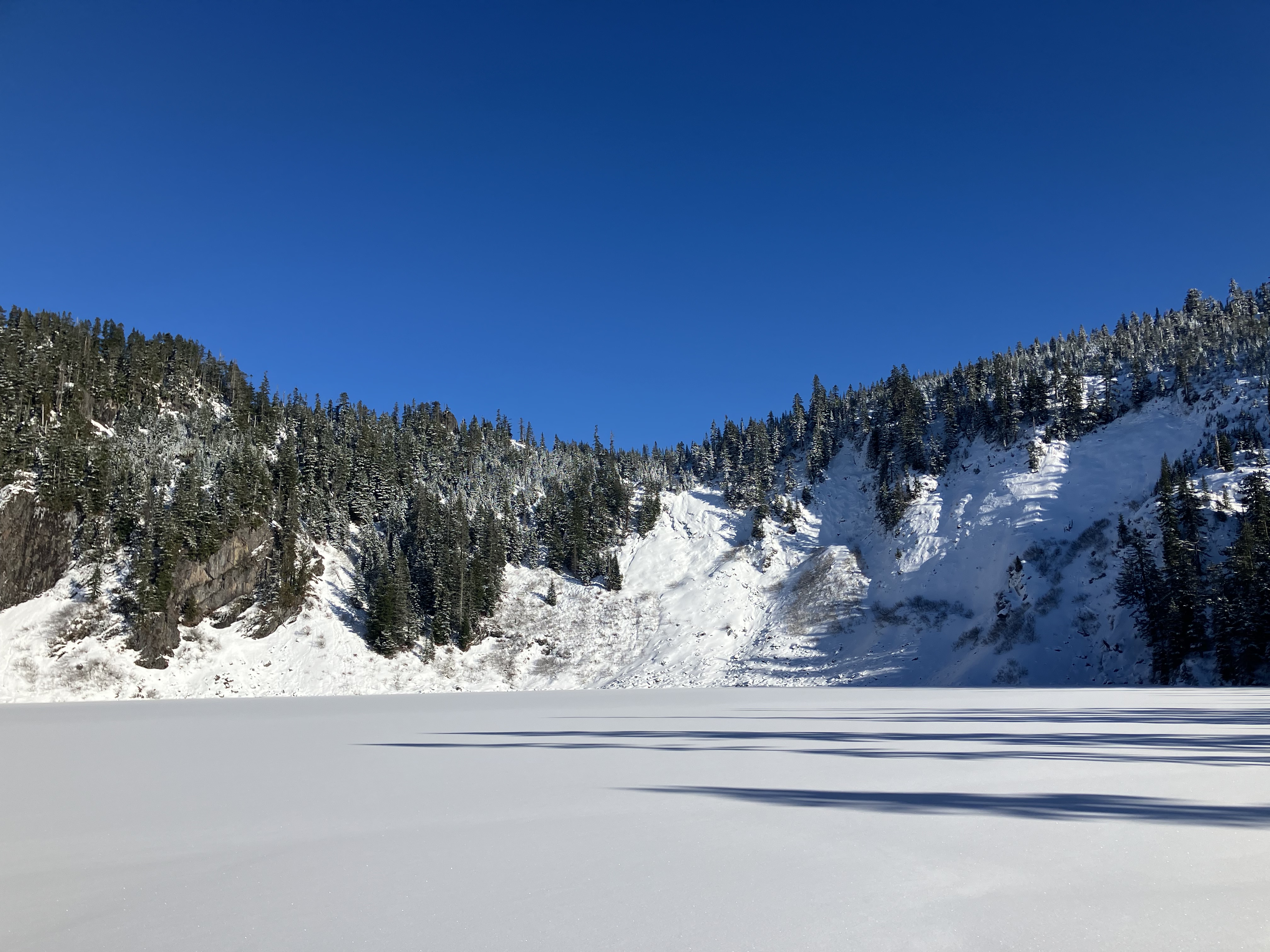
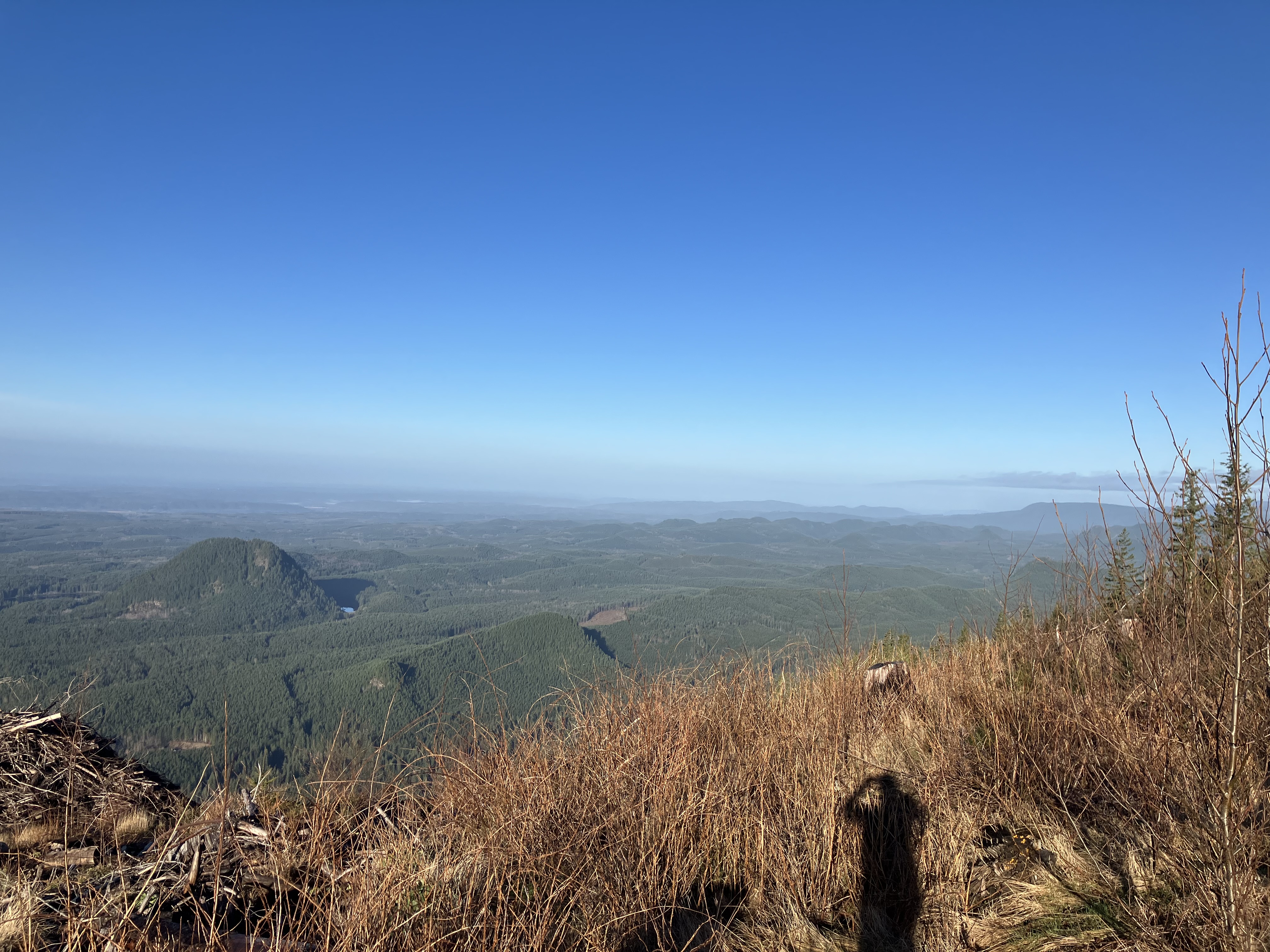
First thing in the morning, a friend and I took off into the wilds of The Central Cascades. It was cold, and there was a fresh dusting starting at about 1000′ of elevation. Our intentions involved snow shoeing to a lake at 2600′. The dusting was easy to drive through, allowing the trucks to get up rather steep mountain climbs without much concern. I’d already spotted a few tracks along the side of the road as we drove, but knew they would still be there on the way back. We topped the major climb onto an upper plateau with excellent views of the greater Puget Lowlands, Bellevue, and Seattle; with The Olympic Mountains as a spectacular backdrop. It’s a great place to take a few pictures on a clear day, which we were enjoying as the sun rose over the eastern crest of Mount Si.
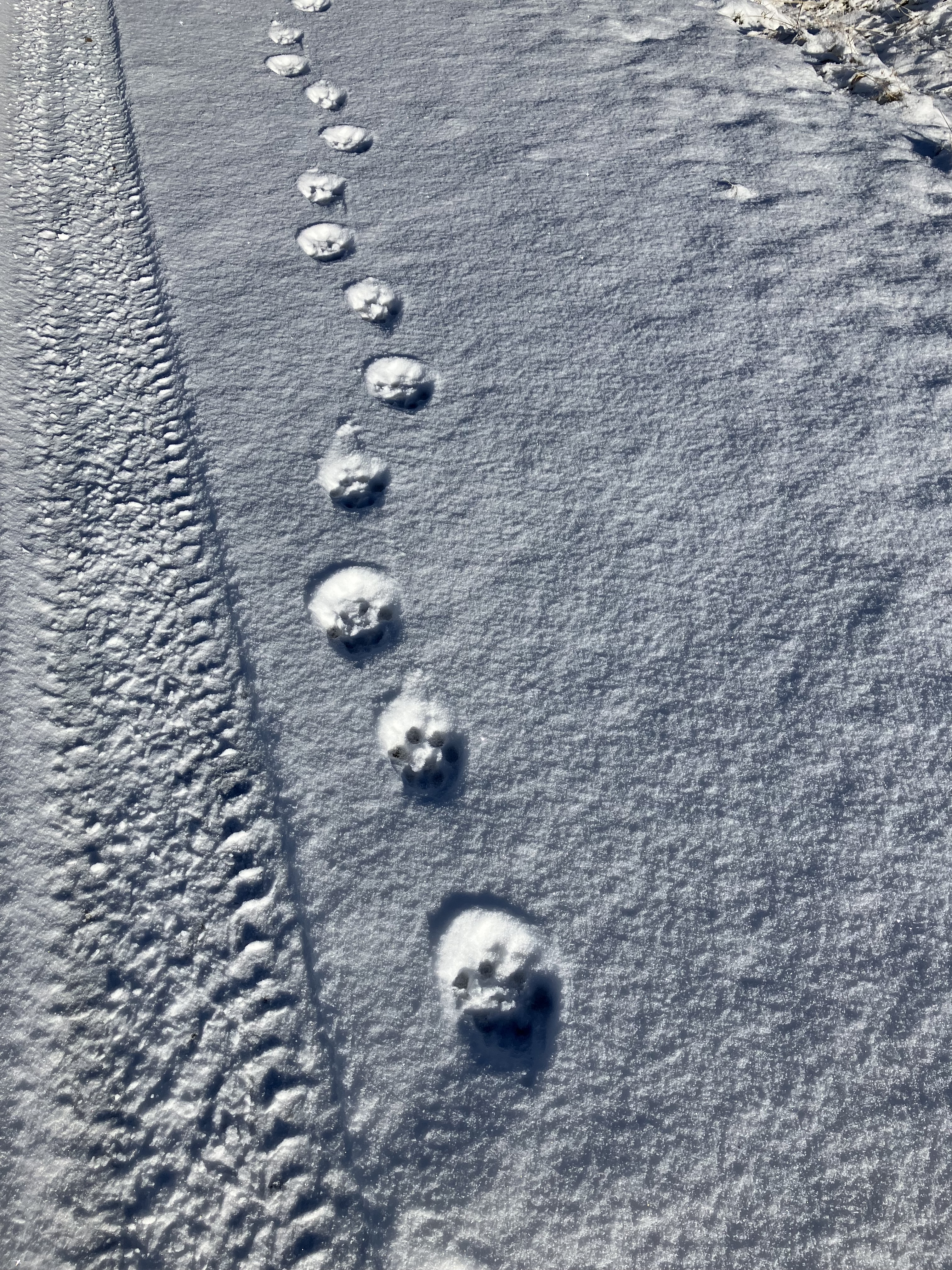
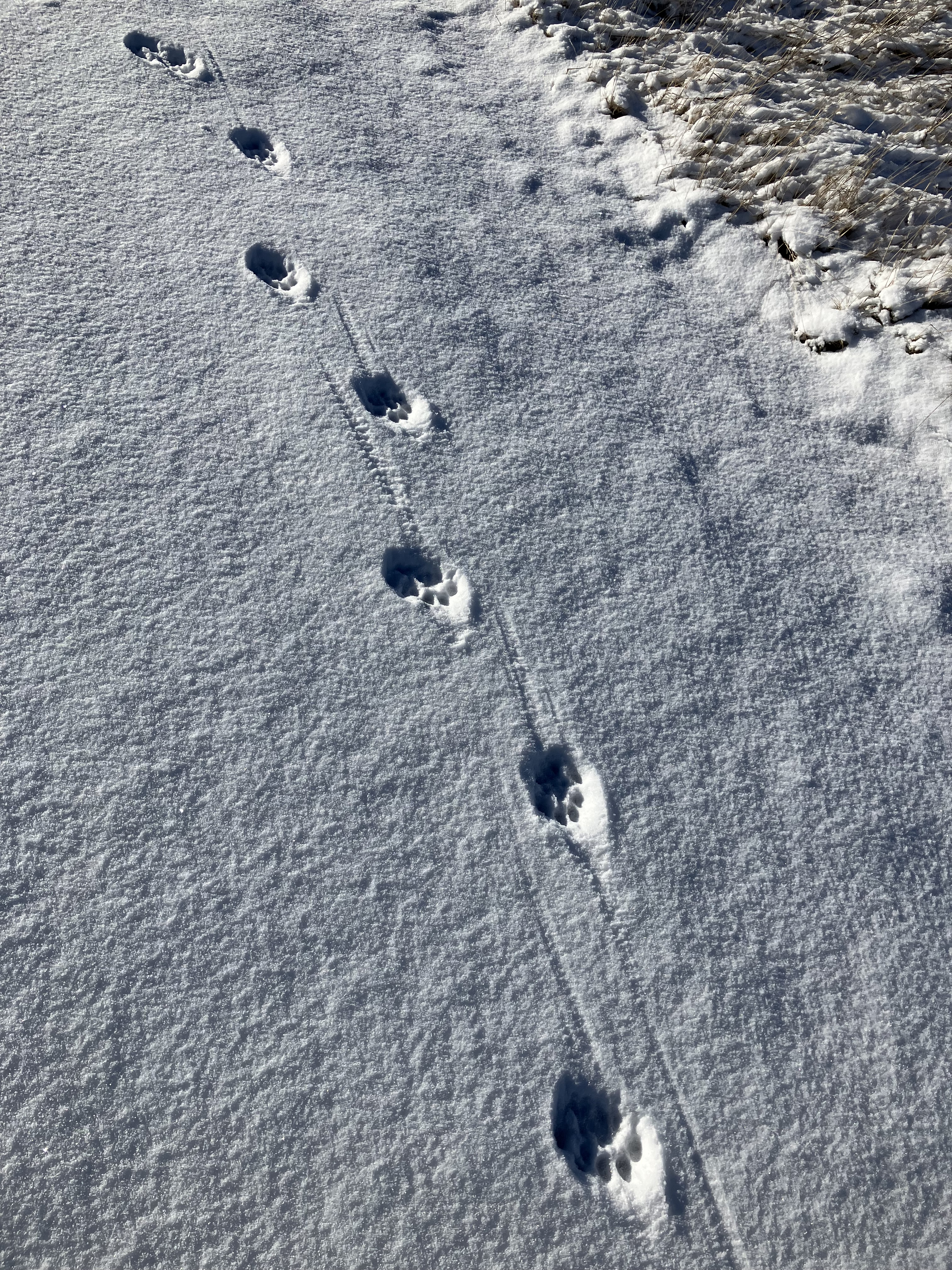
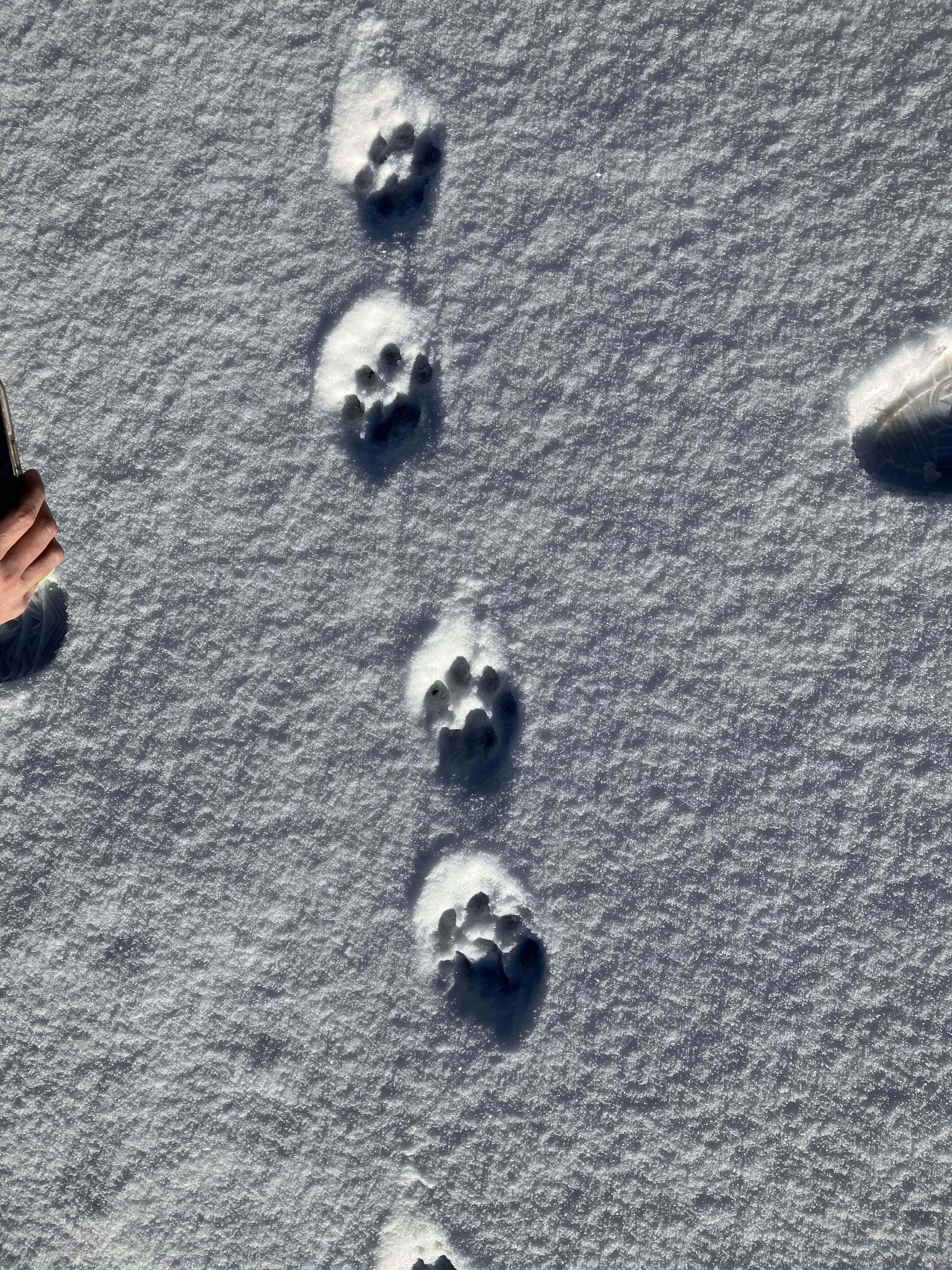
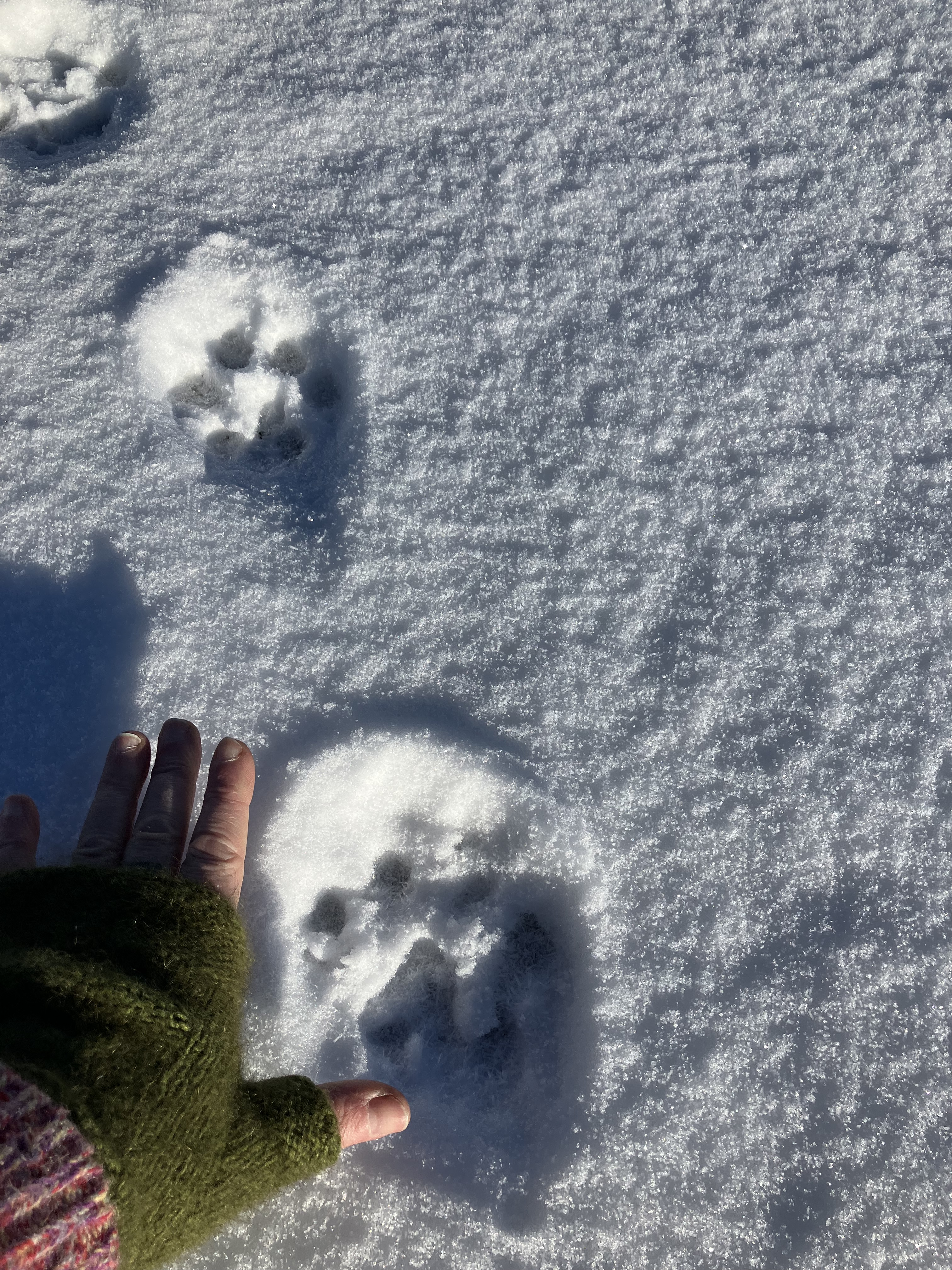
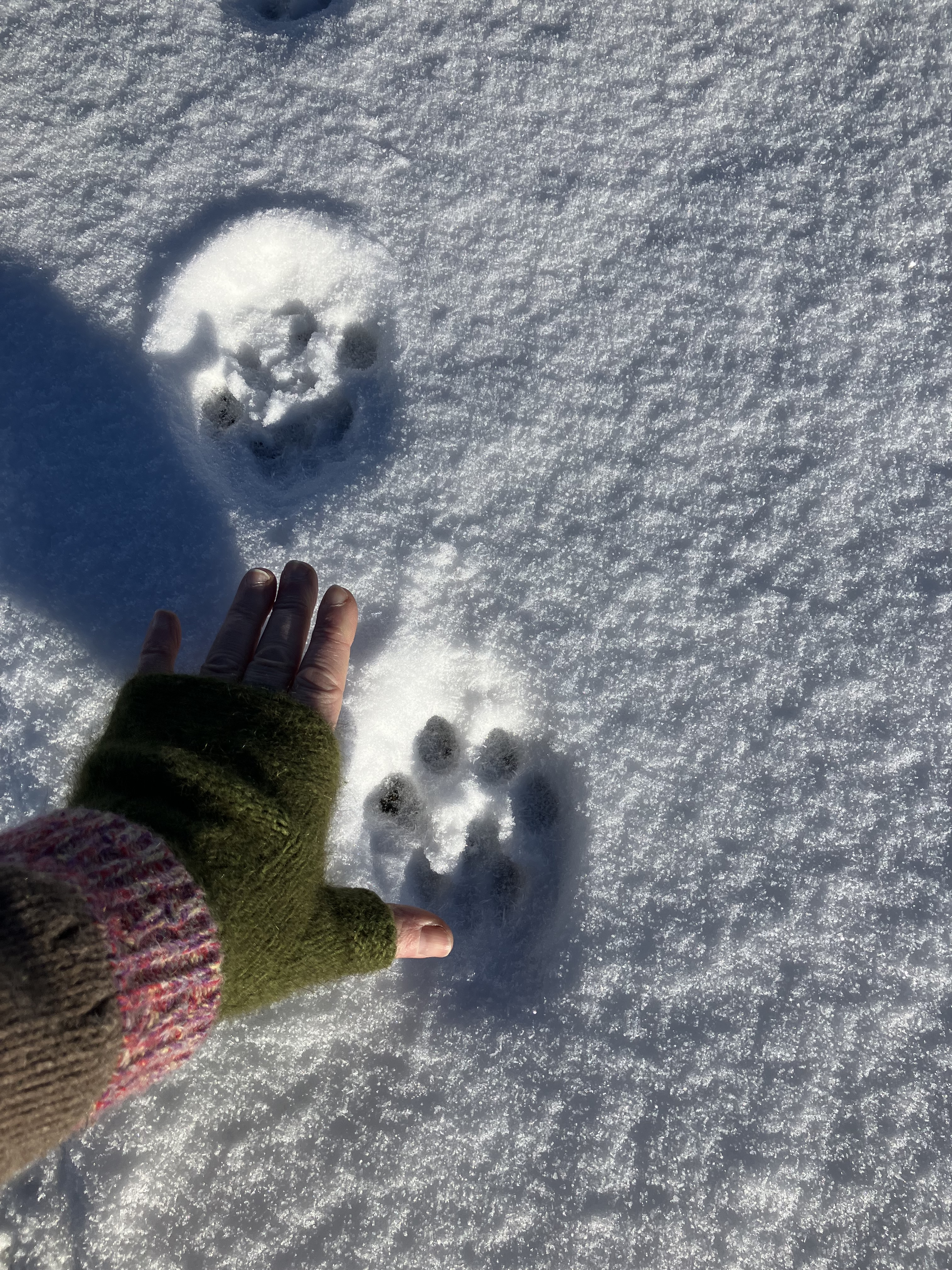
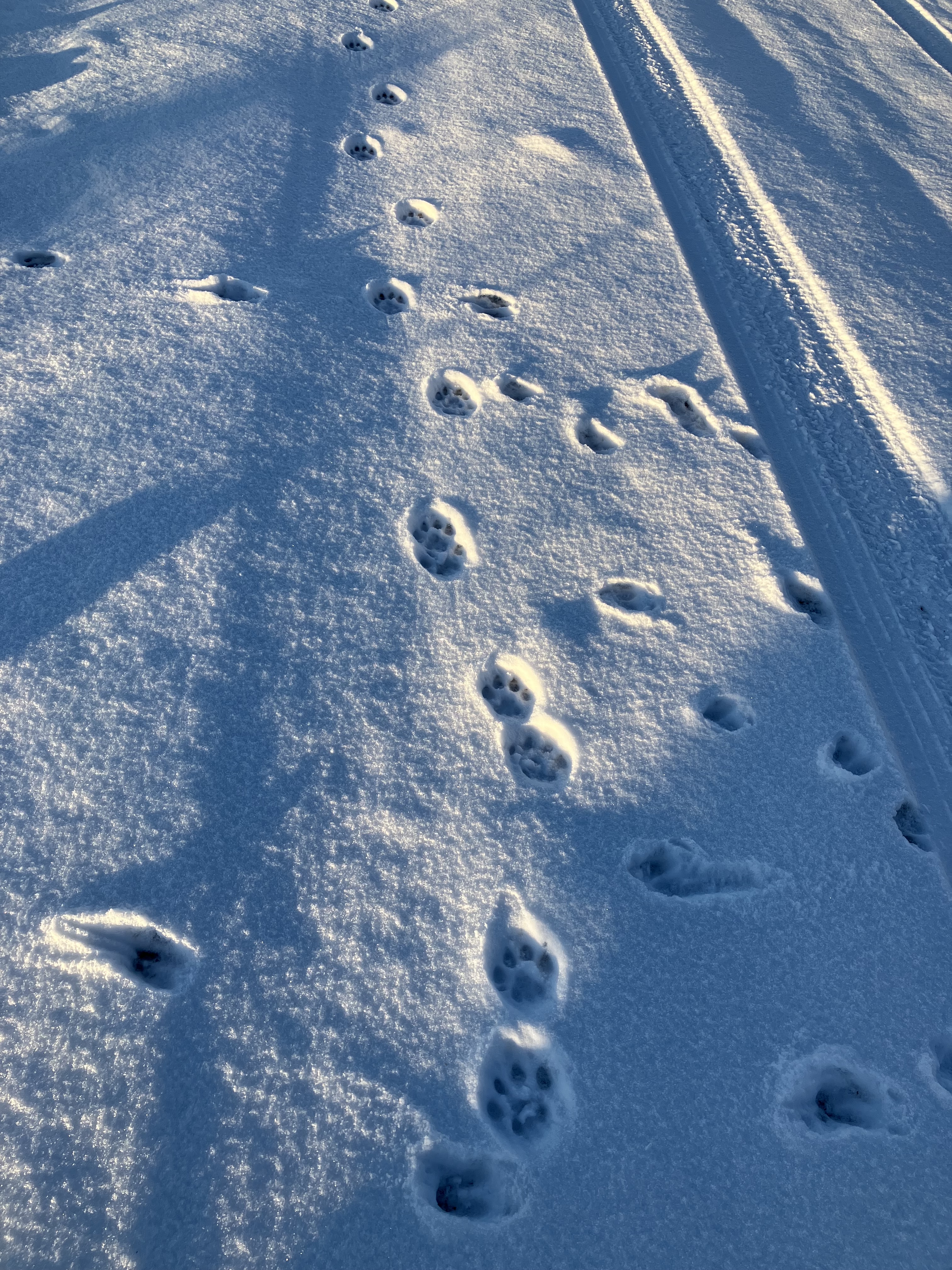
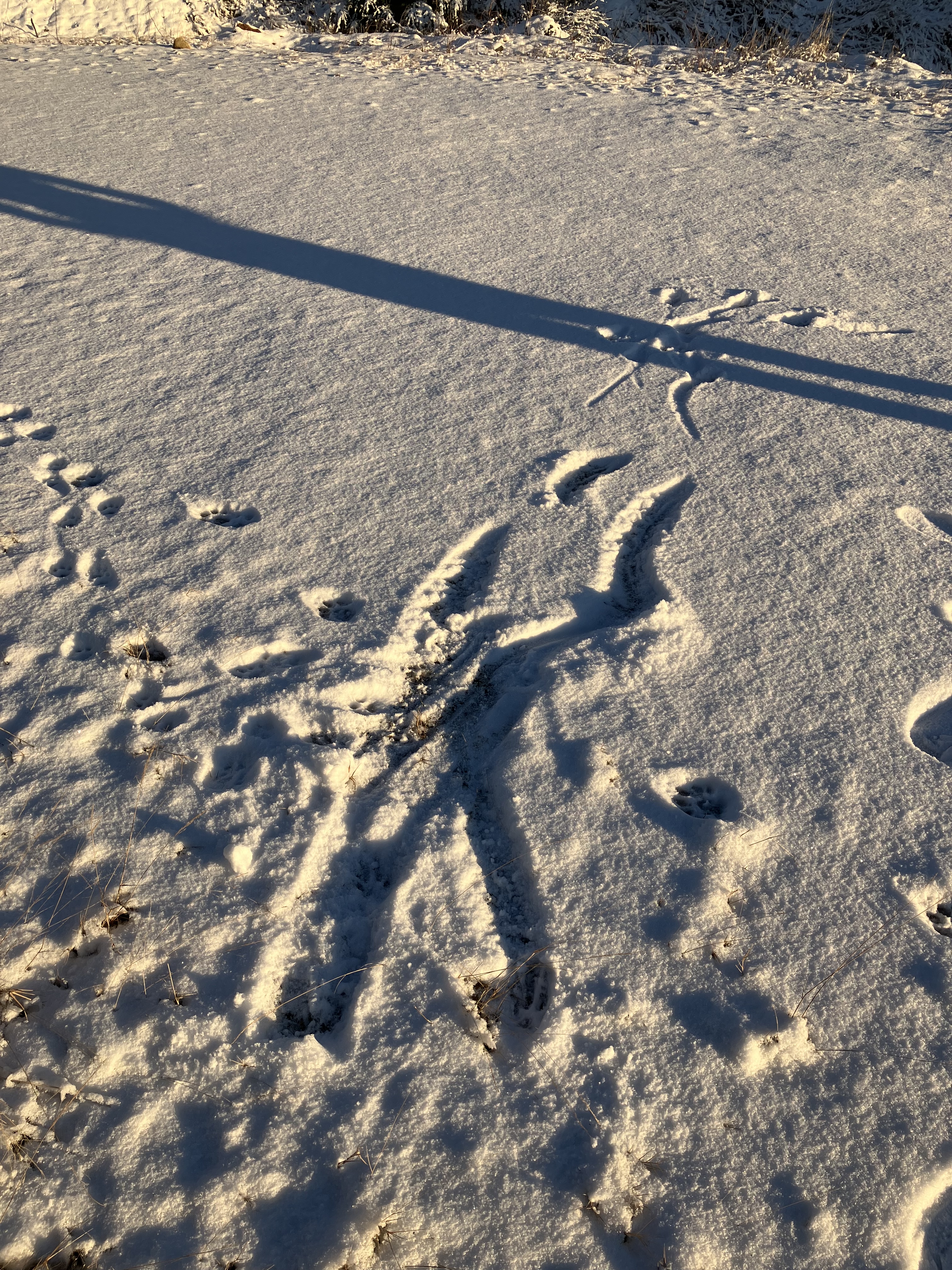
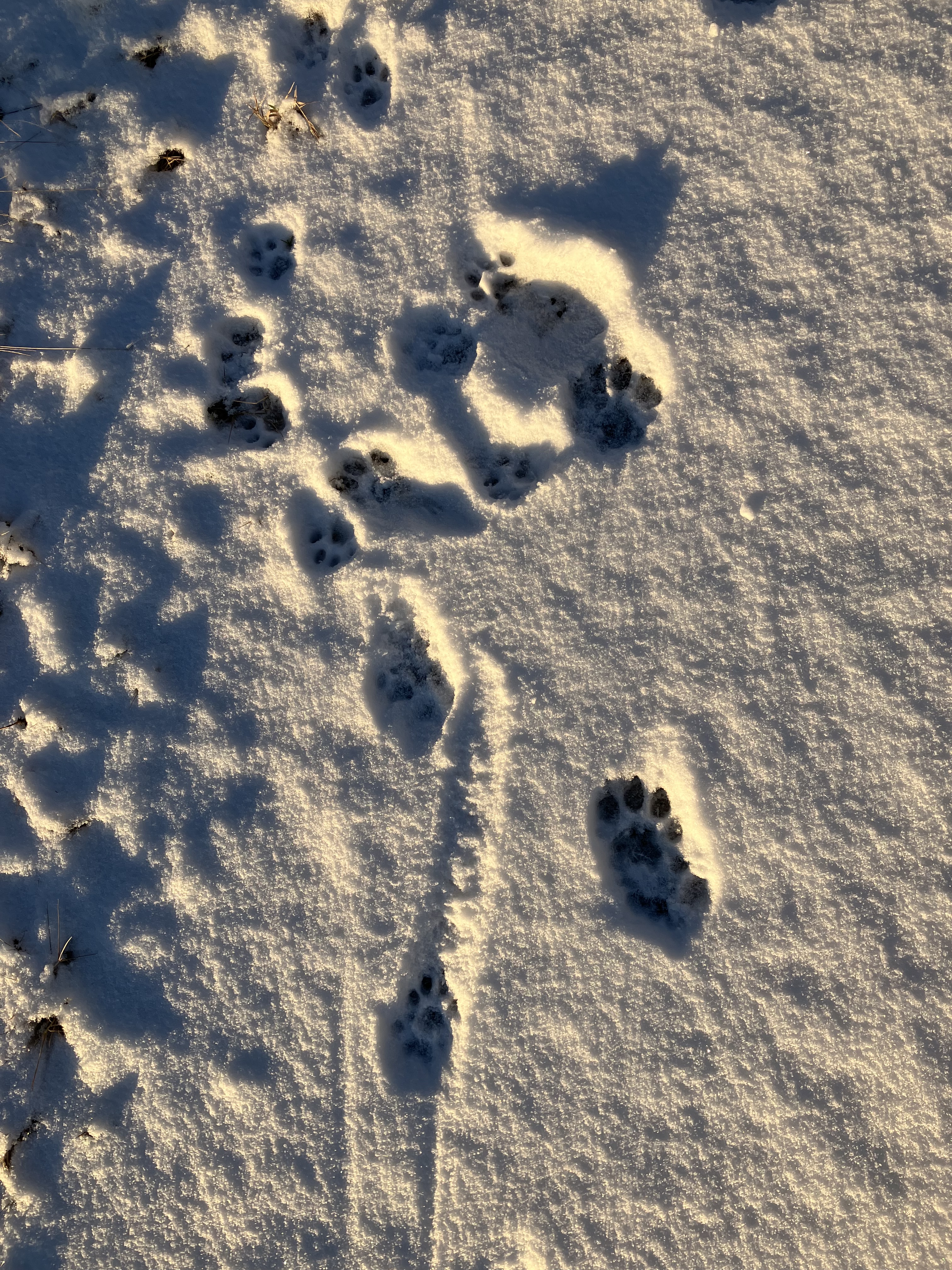
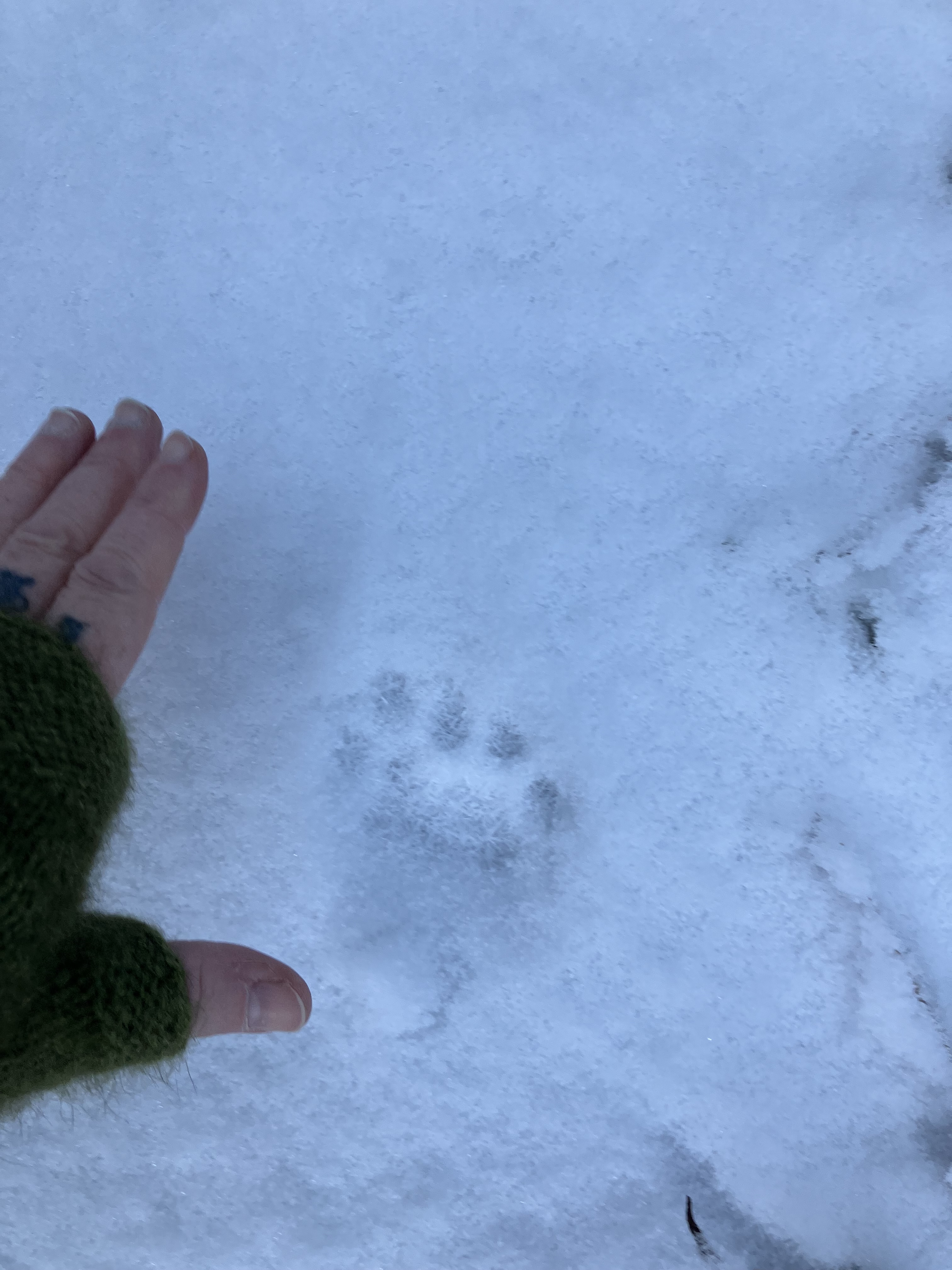
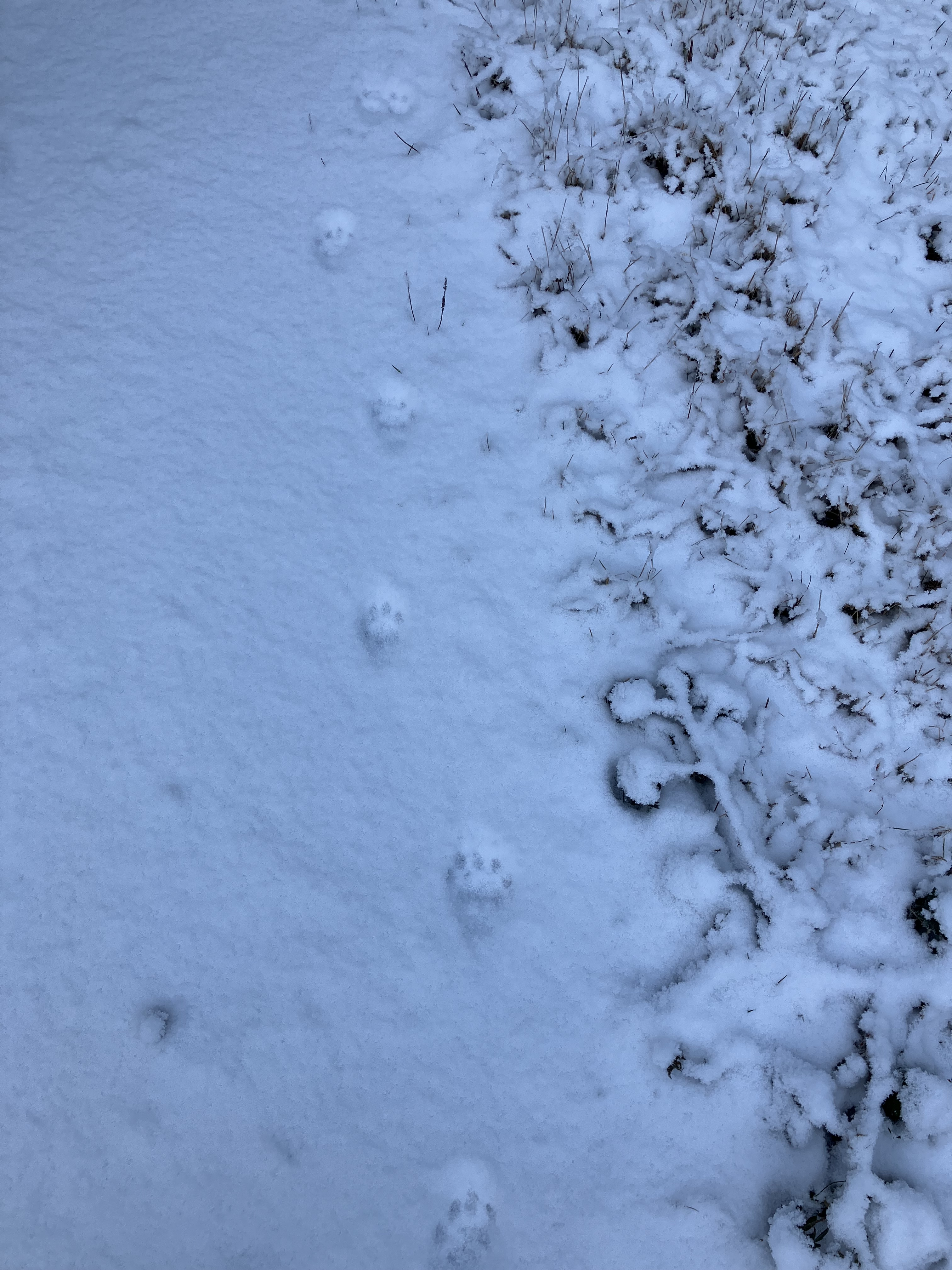
As we stopped to take in the crisp morning light, I took a closer look at the tracks along the road and smiled, it was a cougar trail, fresh, and probably heading away from the sound of our approach. The conditions were ideal for tracking, every detail of each step was captured clearly in the fresh snow. Slight dragging of his paws as he shifted down hill, turning his head to glance at tracks where some deer had come through earlier. In the moment, my buddy commented they were sad not to have brought a gun for personal protection. I pointed out we had three dogs, and that the cat was moving away from our presence. It was good to be aware of a big cat in the area, and acknowledge apex predators are always around in the wilds of The Pacific Northwest. Awareness of all hazard potentials should be in the back of the mind of any outdoor enthusiast choosing to adventure in western woods. My friend agreed, and pointed out that the cougars are invisible when there is not fresh snow to track in.
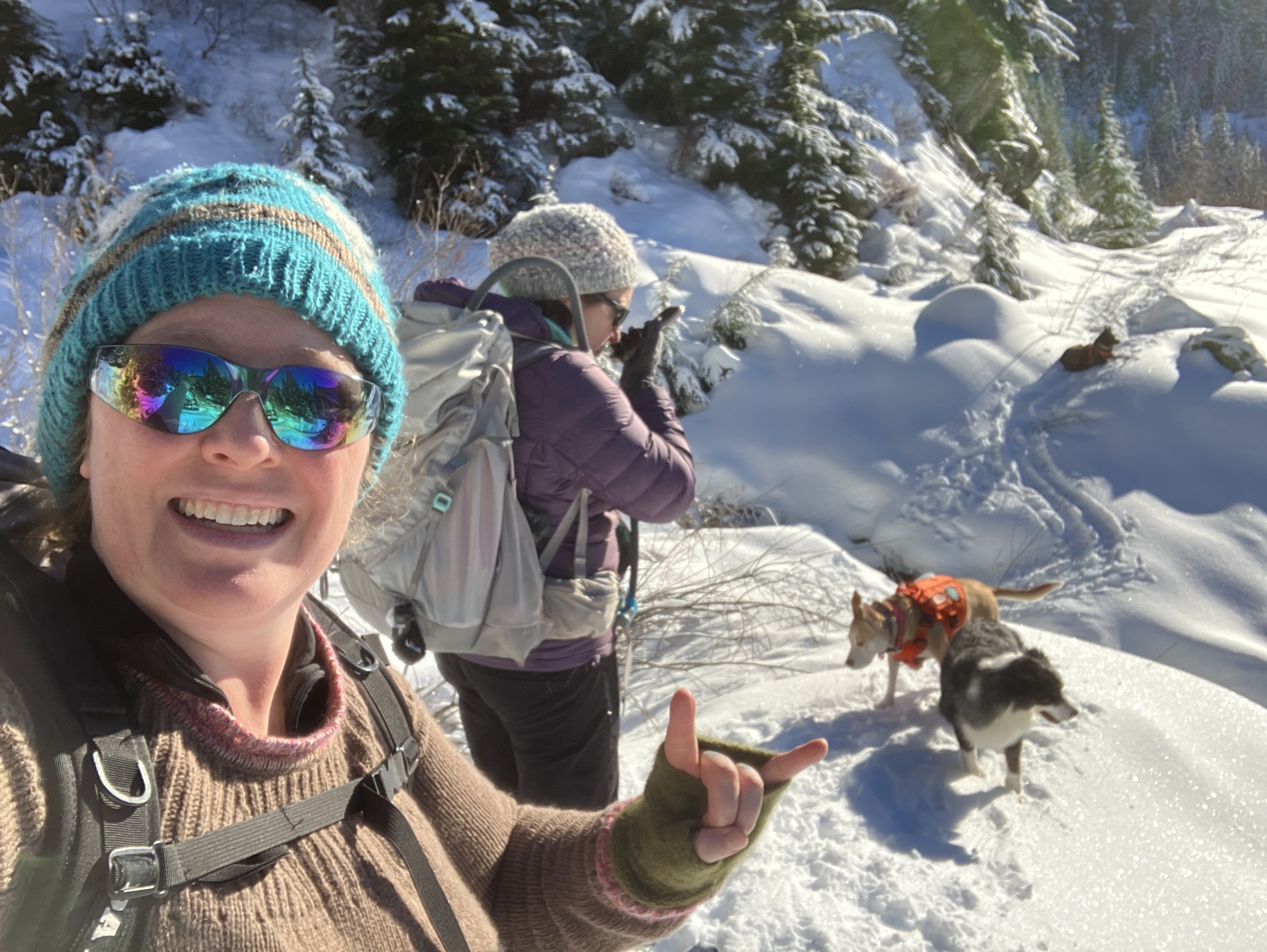
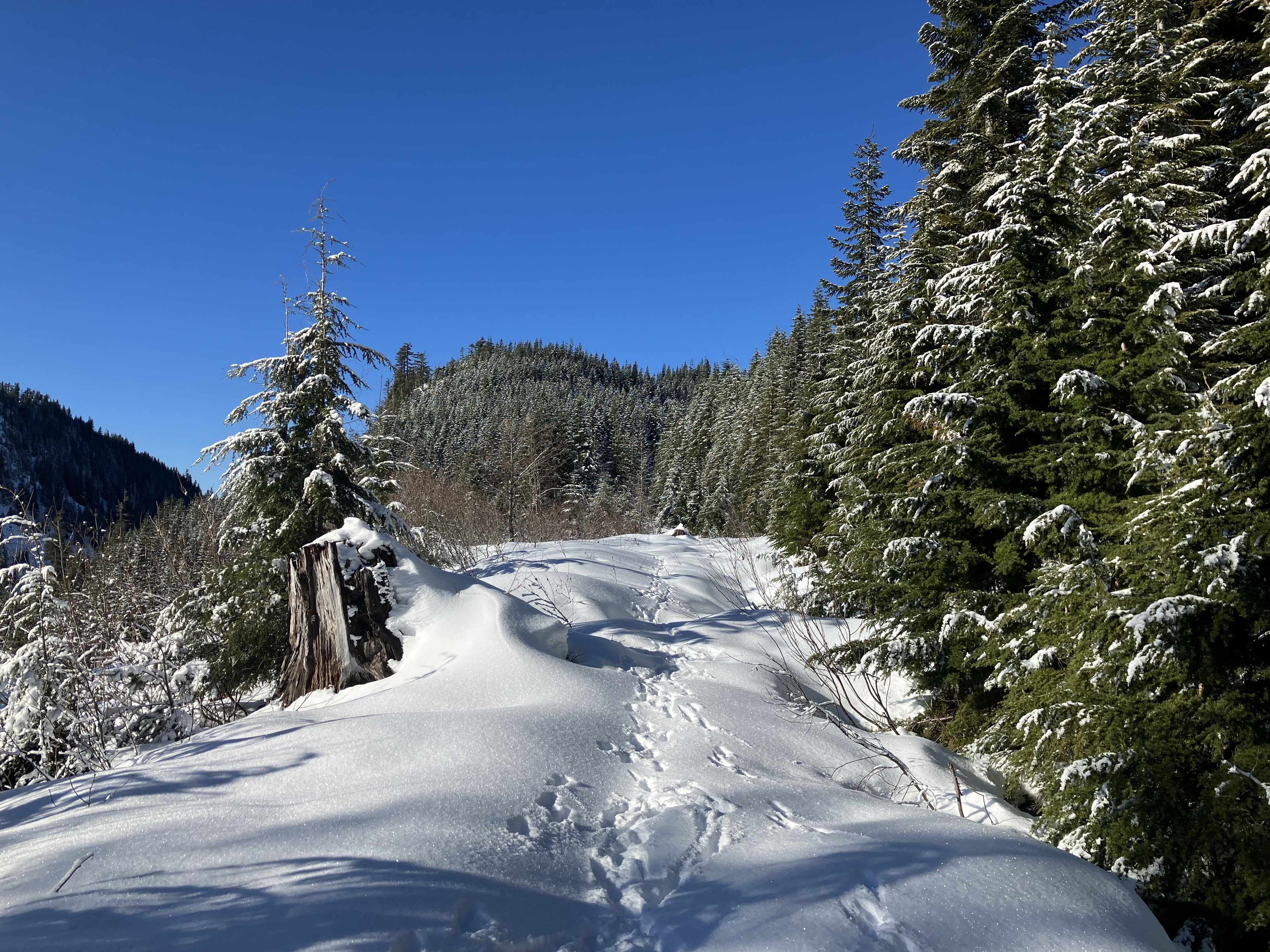
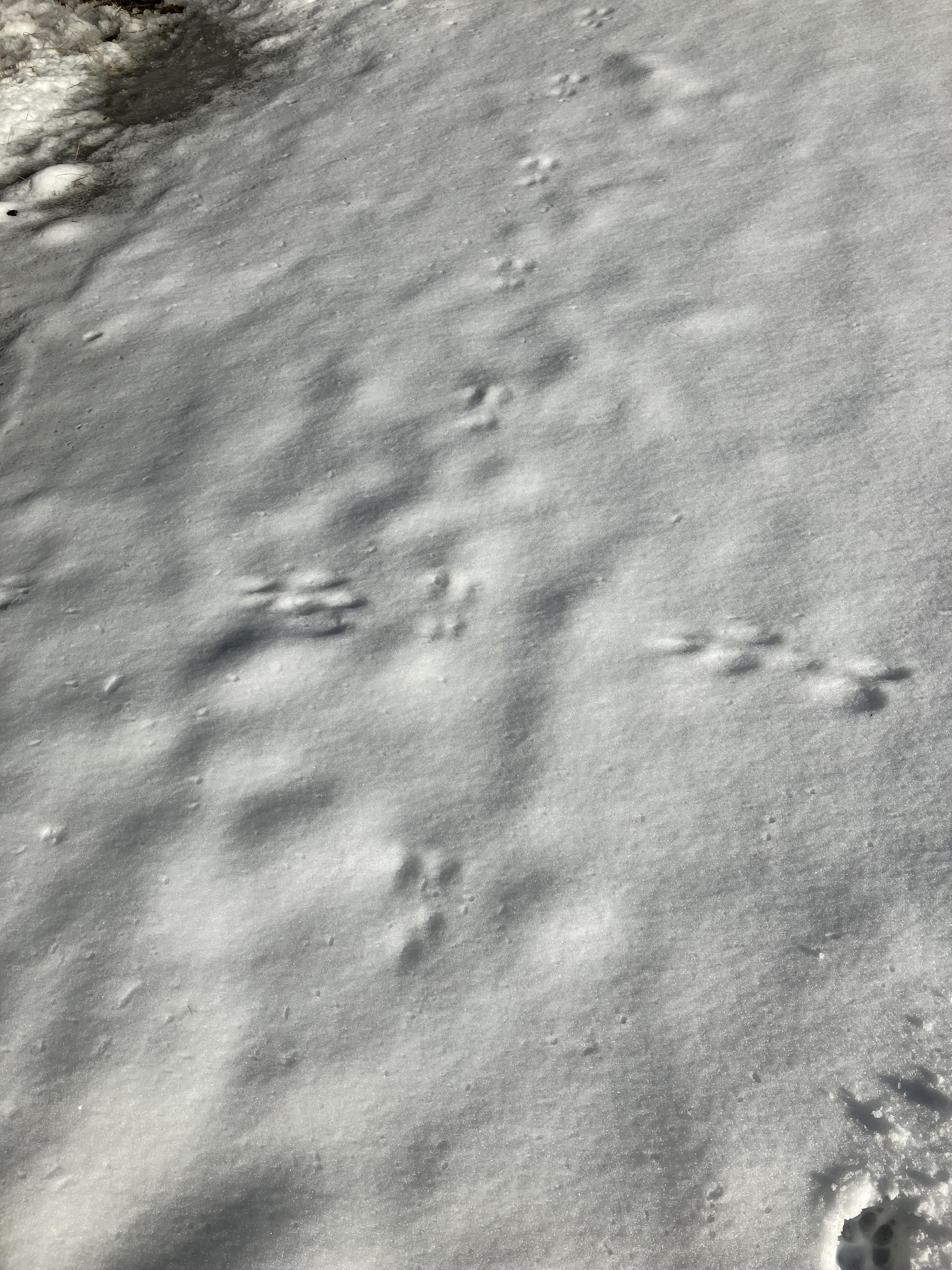
After some good appreciation of our big cat friend and his reveal in the sign we’d had the privilege to find and learn from, along with acknowledging all the other creatures and lessons being offered that day, we continued our drive towards the trail to our lake destination with renewed vision for tracking. No other tracks showed up on the road, but after a bit of hiking up into thicker forest on DNR land, we began to see two animals common in the area- snow shoe hare, and Douglas squirrel. Getting a good read on the differences between these two sets of tracks is a great journey of never ending lessons. The dogs friends we had with us were not helpful track observers, more like track and sign destroyers. It was still good to have them along, and they often pointed us towards sign we might have missed, being deficient in smell and hearing, compared to our canine friends. Still, if tracking is your focus in an outing, leave the pups behind for the best results in learning and observation. That goes for seeing wildlife as well. We were plowing through the woods with our enthusiastic pack, working on a destination and good movement, as well as observation. It was a magical day.
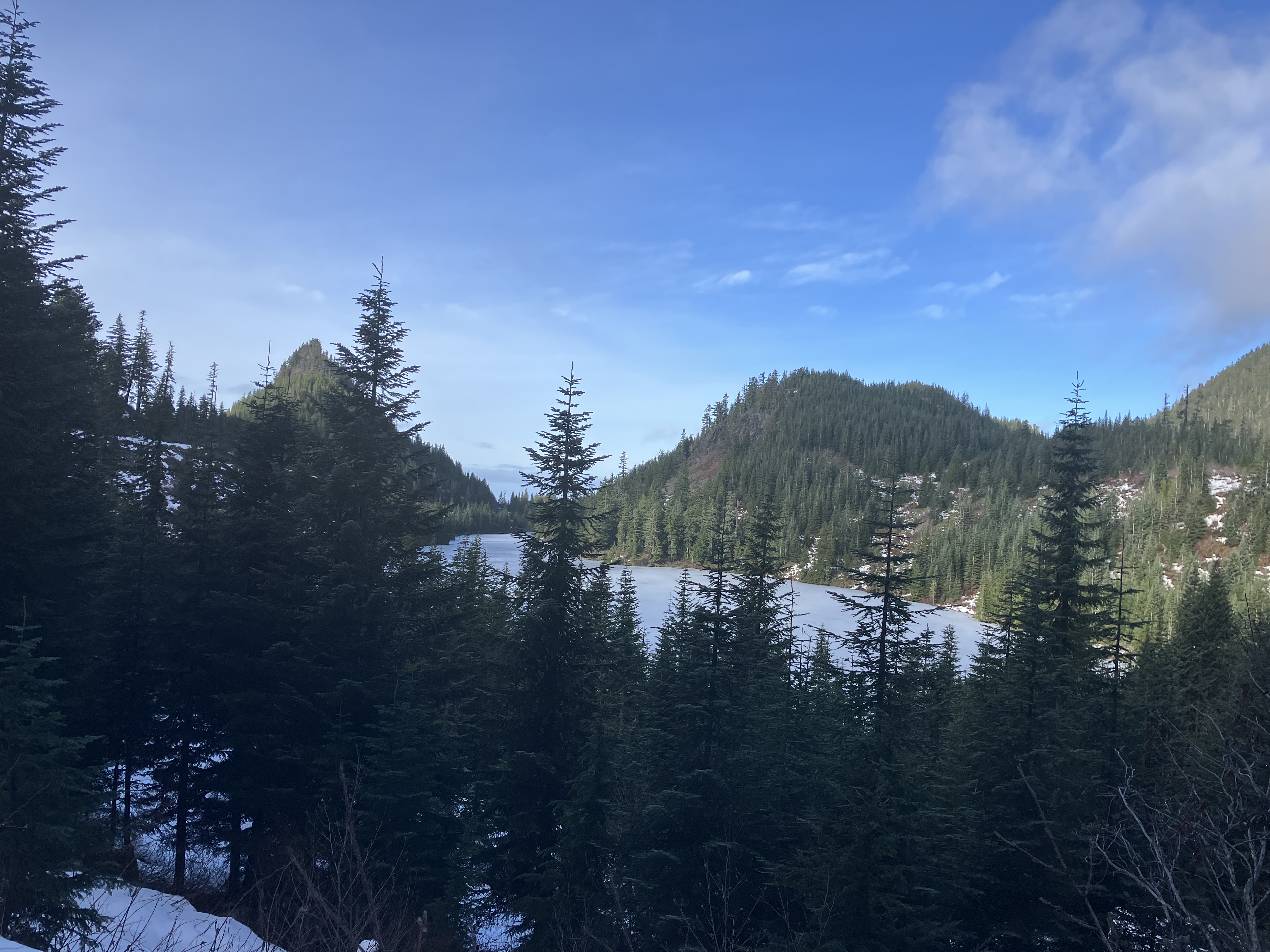
The adventure into back country winter wonderland took a little over 4 hours round trip. We walked until the snow was too deep, then put on our snow shoes and headed on up through three alpine lakes on a slow, but steady climb with panoramic views. Our trip up was breathtaking, as we were breaking trail and often crossing over shallow crevasses of creek flow. The dogs sometimes let us choose the best crossing routs, Other times, they picked a path and we sometimes followed. Snow shoes do not have the same advantage as clawed 4×4 paws along steep banks. Luckily, we managed to ford crossings without major incident, and the water was inches deep, so there was no real worry if we stepped in. At one point, the bank was so steep, I got on my knees to climb out, pulling myself up the slope on all fours. It was a great time, I really do love full immersion in the landscape.
The texture of frozen water can vary so much, our dusting lay on firmer base, which held us up on our hike. As we ventured deeper into elevation gain, the snow volume mounted until our path widened and obstacles shrank beneath the thickening quilt of white. The snow changed the landscape considerably. My familiarity with landmarks remained strong, as the surrounding peaks, forest groves, and well maintained trail carried us confidently past the first lake, onto and around the second, and up over a saddle, dropping down a gentle path to the third. By then, we were ready for a snack and some rest in the sun upon the frozen “field” stretching out before us. I was comfortable stepping onto the shallow (inches) area of the lake I am familiar with from swimming in summer. We did not try to go out into deeper areas to stay safe. The sun was warm enough to relax in, and even the dogs lay down to catch a rest and maybe a taste of our snacks, no! They would earn their kibble though. We all worked hard through the snow, enjoying the cold winter sport of mountain adventure.
On out return. the trail was made, and we could take our time enjoying the snowshoe hare flitting in and out of the spruce and mountain hemlock underskirts, where tree wells that endanger skiers, offer shelter to small mammals living under the snow. A few fresh squirrel crossings appeared on our way home. We were becoming familiar with the trail sign and could spot what pattern heralded which species. Snow tracking on fresh powder makes the game of spotting wildlife sign easy and enjoyable for all skill levels. Stories fill the forest for all to explore and discover.
As we packed up to head down the mountain, I took another look down the draw, back into the valley and cities, then beyond to the towering range on The Olympic Peninsula and appreciated the vast place we live. My company and I were in awe, slowly driving back along the road home, stopping to observe the change in those cougar tracks after a day in the sun. There had been a few very light breezes, but nothing besides time and some UV had done much to change the sign of our carnivore friend. As we trailed along, a new set of tracks appeared that had not been present in the morning on the way in. The cougar tracks remained steady and direct in a streight line heading east to west up a side road, avoiding our vehicles as we had come driving up the mountainside earlier that morning. Now, another cat had appeared, coming down out of the clear cut to the side road and cutting across the easy terrain, then catching the scent or sign of the cougar and hanging a left to come right into the larger cat’s trail. It marked the intersection of the two paths, then paralleled, before stepping right into the tracks of the cougar, pacing slowly up the hill.
Our narrative built on the possibility that the bobcat was trailing the cougar in hopes of some scraps form a meal. There is a possibility that the smaller set of tracks could be a younger cougar, but it would be quite small for the time of year, and hours behind mom. The cougar tracks are large, and I leaned towards thinking it was male, but I’m not positive, and it would be hard to make any assumptions, only educated guesses.
The light was warming as the sun began to touch a ridge line to the southwest. A warming uplift rose against the mountainside and we watched a family group of bald eagles kettling up into the sky in the evening light. It was magical, and a beautiful symphony of gliding wings and soaring spirit, stretching down into our hearts as we witnessed an ancient sunset ritual preformed with each sun cast approach, the golden hour signaling the exchange of day to dusk.
Much further down the road, after we had descended from the plateau and the kettling great birds, I checked the set of tracks passed earlier that morning. It was another cat, though these were very clearly bobcat and solo. It had skirted close to the brush along the roadside, and ducked down into the forest before the bridge, not using it to cross the sizable creek. The tracks pick up again on the other side of the road where the smaller predator feline popped back out of the brush and trotted on down the wide, easy lane. Three wild cats in one day, what a gift! The snow tracks melted away as we drove further down back towards the great valley rivers and home.
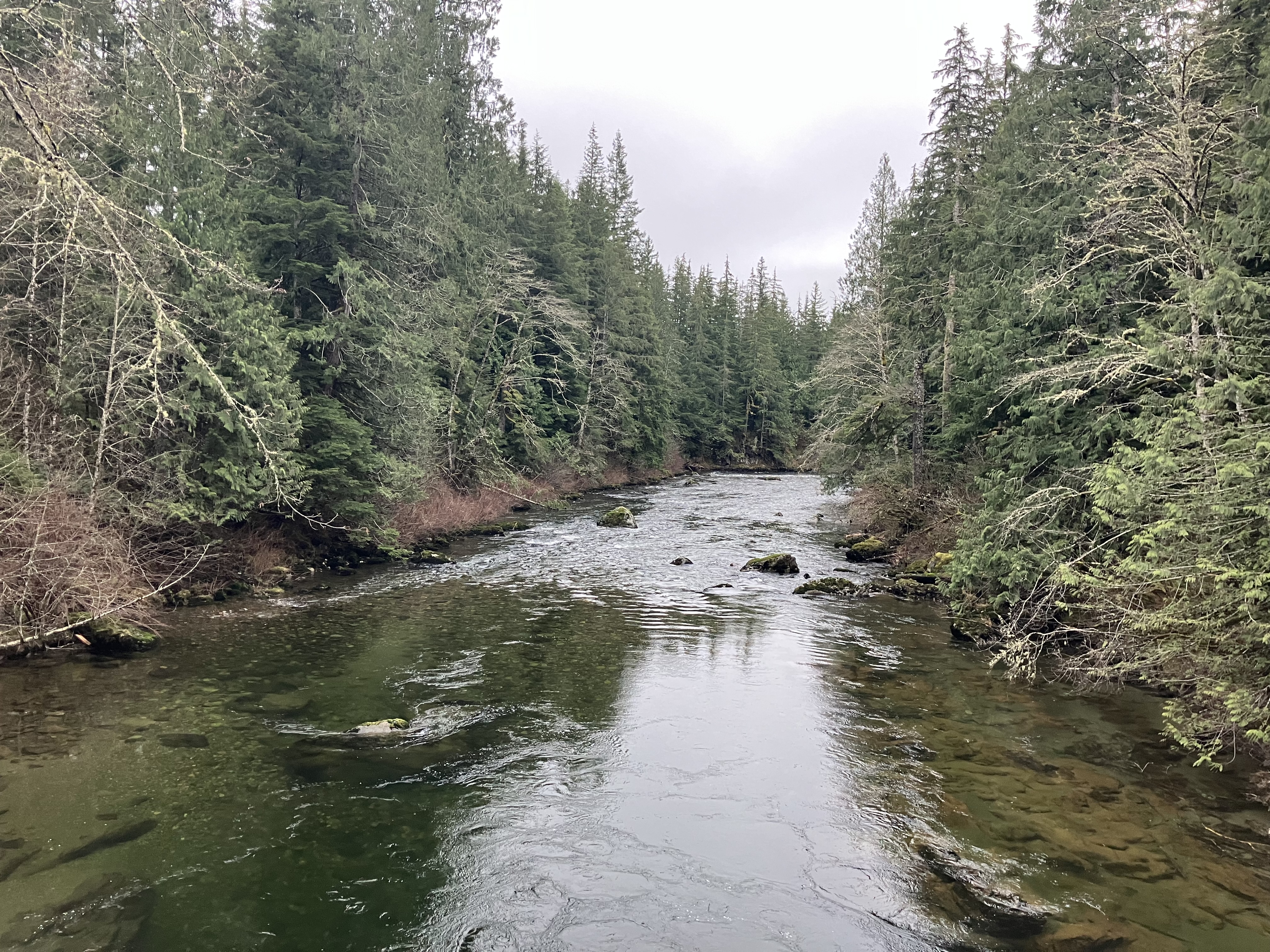
Pacific coastal rainforest is lush and full of activity, even in January. It’s also been a mild winter by the start of 2025. Snoqualmie, the river moon valley, ropes through ancient glacial lake bottom in echos of evergreen forest, now twigs and matchsticks more often than old growth. Still, a wide, deep river sister follows a signature ice groove along a managed forest with minimal setbacks bordering erratic boulders and cement rebar bridges, which I drive on this vantage, overlooking salmon dreams, whispering needles, scaled harmony. Poetic bliss, if the fish were here, historic numbers are a song on the wind. Oral history told by important kin to the fish nation, and I wish them well in their defending. Water, life giver, purity and quantity, though still deeply rooted in a cycle, became a hostile combatant to man made disruptions. Snoquamie Falls is the natural dam of this fork of flowing water that floods human endeavor and becomes a monster. It’s only our own projections, along with construction of our own egocentric ambitions to monetize the natural cycles of crucial complexity we prefer to destroy. A destructive lineage tracing back to those mammoths people are talking about resurrecting. But I love to digress- or transition?
There is this place, where water brings abrupt frocking, these transition zones are all part of wonder in nature, scaling upward, a few thousand feet from mere home ground 4-600′. An alpine lake reflect that hint of robin’s egg blue, and bird song echoing the winter quiet into melodic texture of branching twig cracking under the tire turning my box of metal ride up a final steep climb and into that white track of temperature trigger of physical form. Ice at the root of such garb, on a molecular level. Not like the lake, which rippled invitingly, etching the elevation in charcoal, navy oceans of deep stone trappings. There’s actually a quarry, right at the final turn around the climb and gaining a last look at the tranquil, the truck, pup, and I raddled along the very stone taken from the abrupt change, yet another transition, quick, and then gone around the switch back, and the next bend into daylight’s shining embrace.
Roads stretch flat, a pure white water, yet also still and sharp, like my mother’s linen, the folds of time, layers of second and third dusting, There is not enough to ski, slick, in full sun, soft to the step, but shallow; scraping of an oil based product I’m also heavily wrapped in as a final shell of protection from cold habitat, crisp in step and hiking upward in a steady climb across clearcut, with recent replanting- our “plant a tree” farewell songs of loss for commercial gain, and home grown, local; part of the effort to fold in recycling and our waste systems… but I digress, I guess, again, as one wheel in the universe of life- I can’t start musing on what is without what for. Therefor, Boldly choosing to move forward and literally climb into the first peaks, it was a delight to park, let the dog out for some good snow time, and let my body fall into rhythms of ancient tellings, smells you only get outside- even if they are tainted with traffic exhaust and the smell of oil cooking, sloppy grease traps, or the sour sick whiff of freshly spread manure from industrial agriculture, not to mention build up of us, the settlers. Less than aware ancestors cut old growth hillsides over one-hundred years ago, then another generation got the second growth with the understanding of a last good harvest. In my lifetime, by third growth, commercial development of the valley below into the cities at mouths, deltas, or filled in wetland from here to the sea, inland waterway often clogged with meth shellfish, motor traffic, diesel, hydraulic oil, ballast putridity, and the last orcas evolving to tolerate the conditions we the people have rendered uninhabitable, all the transitions are still part of the the same living network of collective survival, technology cannot bring us closer to said resources without destroying them, and our very beating hearts.
Every important piece of ecological functioning uninhibited, deepens purity of the sources; from the water sheds, to an even more crucial system of long term filtration. The ground is not being poked here for intentional deep well disposal of industrial shit. Our needed comforts, like my synthetic sports wear, still produce these unwanted waste chemicals, and even the wash water from my laundry, and in many homes, the petroleum based detergents, will end up in our water. The heavy metals in all our systems, even personal digestive tracks of the many billions carry these toxins, gaining them at first conception, through genetic marks they leave on us, our biorhythms, leading to cancer, or signaling our lives as having gone too far into comfort as a magical remedy to the realities of life? How am I coping? Maybe I light up a joint, take a drive into the mountains to move and observe, reflect and grow into place with purpose, driving into the edges of wilderness, pushing out a few deer, squirrels, snow shoe hare, and countless other beings already fully immersed in themselves and their place where wildness is required for long term survival. I did leave the truck a couple of miles back, hopefully it remains dependable as a ride home.
The survival rate varies form species to species, but our race, the human populous at large, would not last long out here alone, but together, with enough others, you can transition beyond mere castles in the sky longing, and into community building. Building is what got us here, or so I’m told by the western centric narrative of “U-S-A” chanting idiocracy we just voted in a second time. What a transition that will be. Look! The rabbit’s made the sign of the cross- nature is protected! I recall Magic The Gathering, in which, I’d cast the card Circle of Protection White, and the next four years would be shut out, returning me to reality after the tornado, house dropped on the witch’s sister, and a yellow brick road we’re all still following towards The Emerald City. Pay no attention to the man behind that curtain and keep clicking the red slippers repeating, “There’s no place like home.” This was not what I was thinking as I climbed at the time, but something triggers in the back of my mind at the thought that these lands that I walk are stolen, by our own negligence and people. We’ve taken the bait, hook, line. and sinker. Now, past the tipping point, while walking in fast melting snow, the waters that would have to keep our wells wet and the animals, all of us, alive through hotter and hotter summers. This is something I now think of with each drive up. But look at that view, and the bought access and freedom to some here, so American.
The clear cut gives us this lovely view looking back down the draw I’ve been ascending, a reasonable road hike to about 1200′ of elevation gain at a modest slope and a couple of stream crossings- over bridges. This is the private commercial timber products operation, which literally built (and still does) the civilization enveloped in a beautiful transition of cloud, water in a most haunting, yet crucial part of temperate rainforest ecology. Beyond the inversion, jetting peaks of The Olympics rise into a well named National Park of excellent wilderness, and beyond, the Pacific coast. Layers of so much nature you might be lured into the false sense of abundance in natural resources and the basics for survival, but it’s not enough to sustain this population, and that’s another thought tucked away in the brain, which sets off alarm bells, but the temperate rainforest is where I want to be for the best chance at survival if the comforts were lost through unpredictable happenings of this earth.
I reflect on L.A. right now, and what mental health workers are calling immediate steps in transition, encouraging victims of fire to plan in small graspable moves, get food, water, shelter, the usual survival drill. I do not mean to say this tragedy is simple or usual, though it is man made. Development greed and continued denial of human overstep wherever and whenever we want. As I watched and listened to the governor of Cali proudly say he would wipe ecological restrictions out of rebuilding requirements, I could see the lineup of future fire destruction in these overpopulated places and grieve. When temperate forests dry out in prolonged drought, fires will happen for us too. Rain is good, waters must run deep to keep us safe from fire’s consumption. Before I share with you the magical tail of temperate, I’ll anchor my wander in the picture of this aspect, under the veil, and you can see the developed world at work.
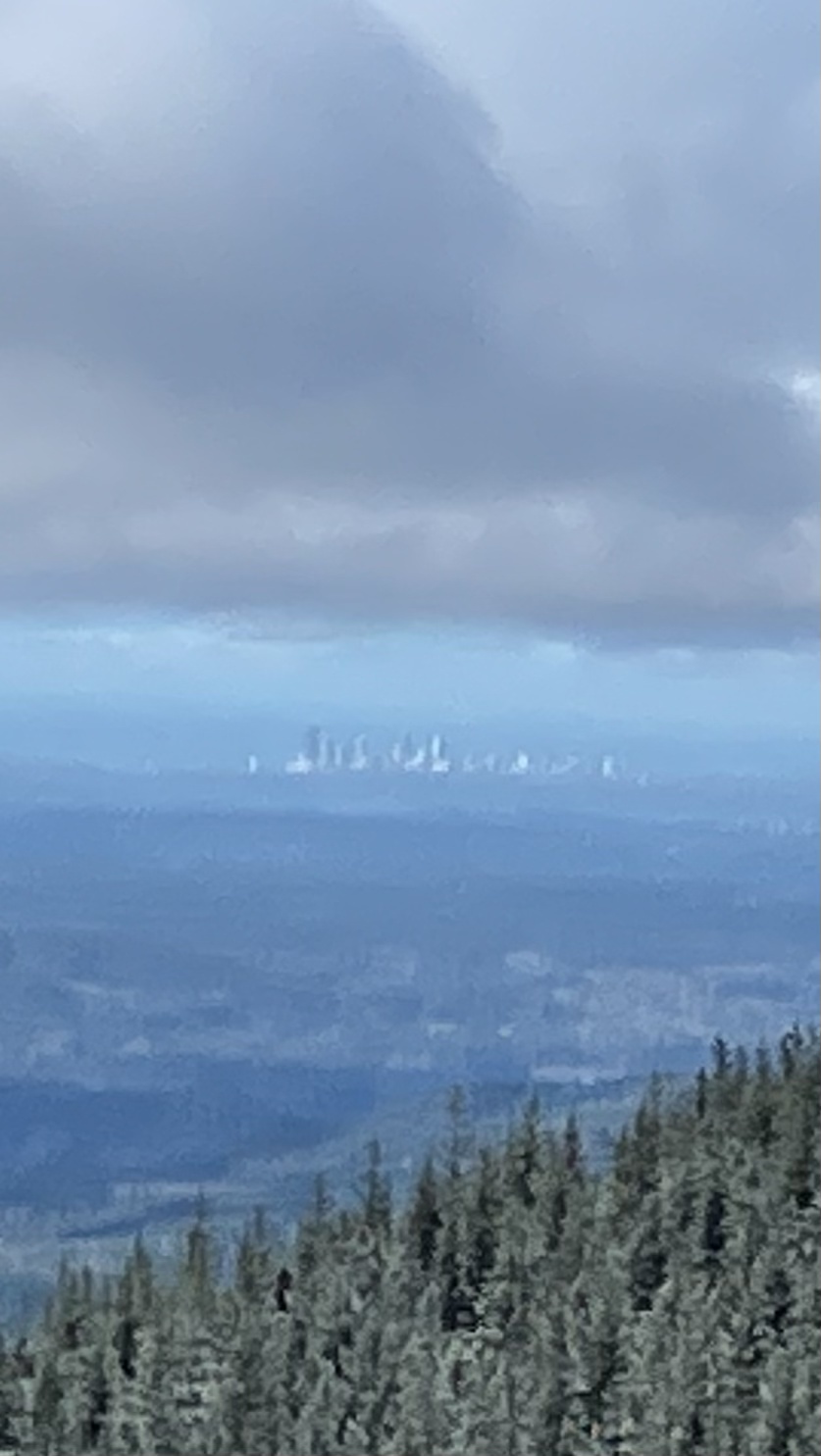
It is a city in the clouds, and a micro-macro in computer technology, the birth of such spells and casting now ruling our consumer, social, and soon to be political personalities far off, as though in a distant land. It’s like that here, what a privilege, in a private acreage, admiring the spectacle, and being one at the same time. Wait, what? Let me draw your attention to the patchwork quilt in the rolling hills and valley below. That’s where the farm is, and where I sleep. There are still some standing groves of second and third growth, maybe some that might be left for a few generations before falling into manipulative speculation or castration of wildness for all. I’ve cut trees, asked and paid others to do so on the landscape I sometimes curate with my own ideas of stewardship transition, of wandering as a right, possession of pace and space, wherever my feet are planted.
Brave little wetland setbacks that have been granted, in more recent tending of this land, a common thread in developing, to build, taking is the order of business. Order, tight squares in neat harvesting, these hills could be rice fields, no, we have not cut our jungle usefulness as a resource that can be swiped, bundled, and chopped into board feet. Left face of this rise out of the Snoqualmie Valley and Rattle Snake Ridge beyond, where there are timber investments from LMNO alfa-beta medatronic meta-gaming. Metagaming mother nature, for those of you more hip techno-files out there AIing the you know what out of finite, as I type, or hike, loosing steam, but looking back at the time and space passing, appreciating where and what I can be doing to transition. How about casting a spell?
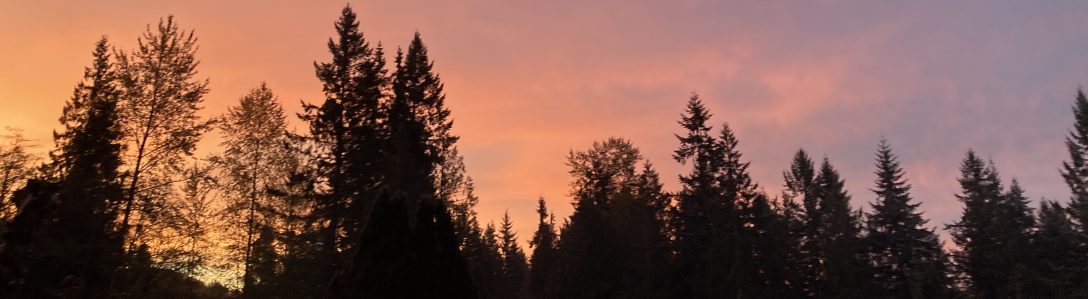
Spellbinding, movement, frozen, liquid, bubbling chatter under thin ice. Here, the freeze is only skin deep. Snow is blanketing the open space, but where the stands of uncut forest remain, there is open ground, and a wall of sun catch for the south facing hillsides. Still, erosion pulls at the road cuts, scabs put down to give people, like me, easier access to the first peaks left behind ice flows a mile deep in memories compressed into stones, layers of boulders and pebbles give way to allochthon signatures, vaulted granite base with volcanic wedded basalt linger. Not quite spires, but no less towering in formation, the scent of alpine spruce has overtaken cedar and fir domain with the stiff bristled hardy stands at the edge of the commercial boundaries, beyond, more transitions of mountain scree, frozen alpine waters that, in high summer, offer beauty of turquoise depth. Seasonal transitions aside, on this day, a return to my evergreen chariot and drive through grey daylight, home in time to check stock and bundle self into hearth before the frost comes down in it’s own quiet spell into night. The pale rose hinting at setting, pearl globe bouncing off the edges of uplift, calling the evening chorus of those birds who will wait out the night in thick needle beds, perched under down and comfort in the light breeze that sings her balanced little heart to sleep before dark sets a web of mist from mountain clefts to farm’s edge.
Grounded environment, yet change apparent, ever encroaching on the peace of mind, yet the beauty is still there, she painted her subtle hints in breath and sky, along the cold parts of skin where no cover let the light in, along tailored edges, where this transfer of power, from self to source, ashes that will one day plant another tree in the forest of our enchanted societal normalities, whose plot am I gleaning from in the classic sunset image, tire tracks and all. Clear cuts offer space for a mind melded to technology, even without bitcoin. Smart phone, computer whore, and a gasoline consumer wearing her own death suit in water proof apparel. Transition out of these wet cloths.
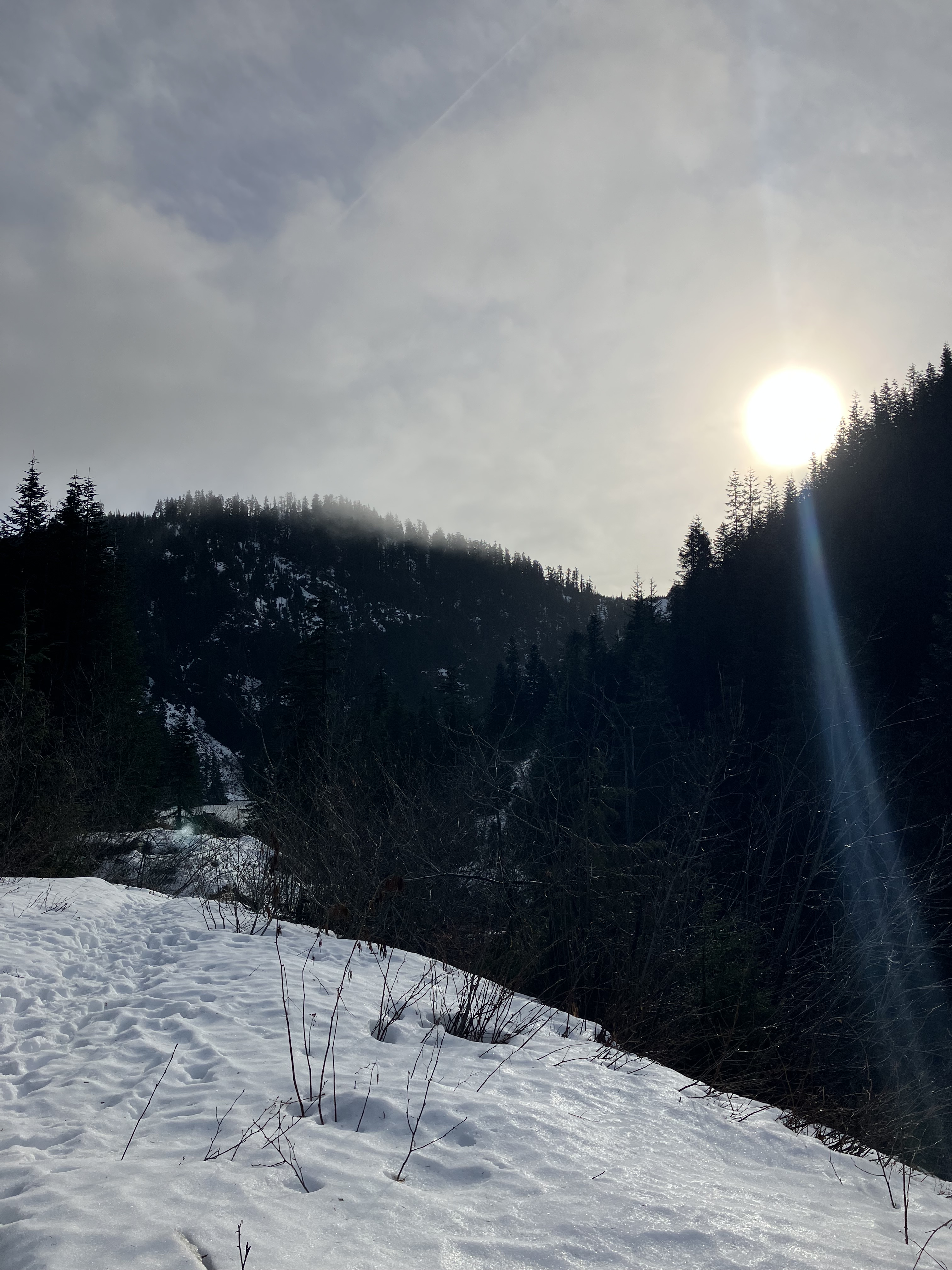
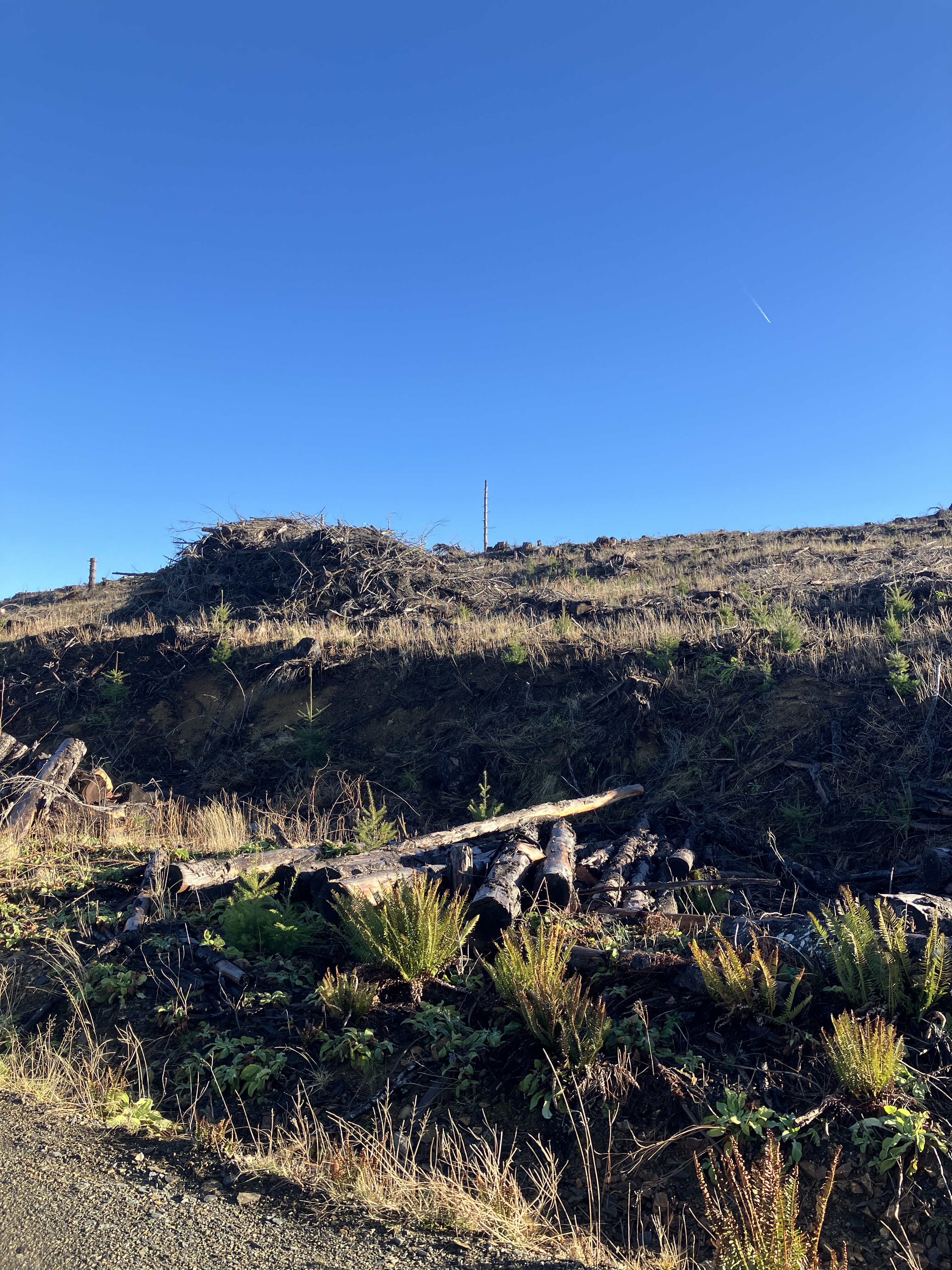
There’s a lot of winter wonderland to enjoy at the start of the new year. I’ve been trying to get into the mountains on a weekly basis for some snow shoeing and nature observation. One week I’ll be in 6″ of fresh powder, and the next, and ice coated shell melted back to mountain’s edge. This trip, I looked at the transition from clear cuts in the tree farm, vs. the BLM land just beyond that I can gain access to on foot. Val and I took a beautiful calm day after a weekend of rainstorms to see what was left of our first big snow of the year. It was a dramatic melt back from what I had seen the week before. This is the epic change one can experience in The Cascades. Fresh powder does not usually last long here in our rainforest mountains. But just a few hundred feet below the freezing point, a different world stands as testament to our consumer demand here in The Pacific Northwest and beyond.
Washington State is a timber resource provider, though these days, we’re cutting young wood to make laminated products, so the age of a tree is moot. Gone are the days of big timber logs in this part of the world, through just a few hours north in British Colombia, old growth is still being cut to provide building materials in The US and abroad. Millions of board feet are shipped to Asia every day, carrying off the biomass of one ecology, to support the destruction of ecology elsewhere- what progress. I see the signature of human devastation each time I enter the tree farm for recreational activity, and though I deeply appreciate the access, what I witness in resource management can be gut wrenching. After cutting and hauling off the younger trees, the GMO plantation replant is followed by herbicide application (multiple times) and then the spreading of treated sewage from our nearby cities. This last more recent part of tree farming offers the land a boost of nitrogen, along with a spreading of forever chemicals across the landscape to pollute our soil and water.
Clear cuts are sometimes hard to imagine unless you have been to them. Hundreds of acres are often cut at once. The replanted trees are funded by green wash carbon credits. Whenever you see “more than a millions trees planted” on some packaging unrelated to forests, it’s a harmful consumer company trying to make people feel better about their disconnect from the environment. Most, if not all the trees planted are in tree farms, where they will be cut for profit, never allowed to grow into mature trees. Where else do you think all these trees are magically being planted? You think there are new forests protected to old growth age? No, there are no new forests going in, unless it’s to cover up industrial pillaging in Superfund sights where people have no other option but to release toxic land from development because of pesky EPA rules, which will soon be buried for the sake of progress. Apartheid raised South African Musk and his space penis will see to that.
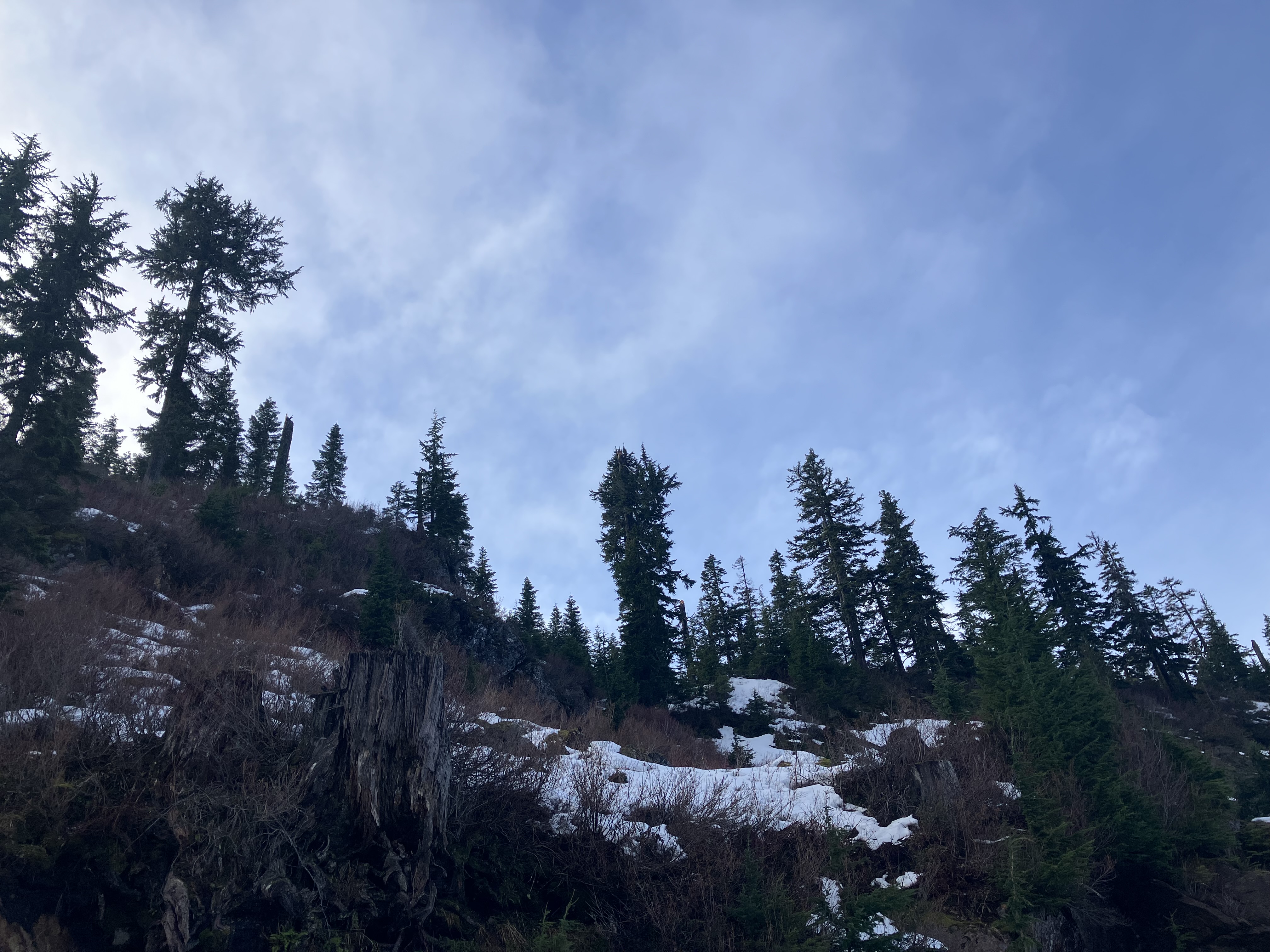
We are all asleep at the wheel when it comes to the real goings on in our environment, and that’s worked for generations of cancer victims, fatal neurological disorders, and an endless list of other environmentally caused human conditions that end in early death. Sorry to flush the dreams folks, but we’ve been flushing mother nature down the toilet for so long now, caring is too late. Take in the pollution- your body is, every day. Future generations will be filled with chemicals that rewrite our very DNA, and not for the better. Healthcare will not treat the preexisting conditions we find ourselves in thanks to industry under sight. Who cares? Drill baby drill! Cut baby cut! The precious few spaces left trying to recover form man’s misuse will not be enough wild space to save us from ourselves. This is the legacy I look at each time I transition from the cutting, into the “protected” land just beyond. It was still cut in the 1970s, and only remains uncut now because of elevation, slope, and scree piles that would shatter the trees if they were felled.
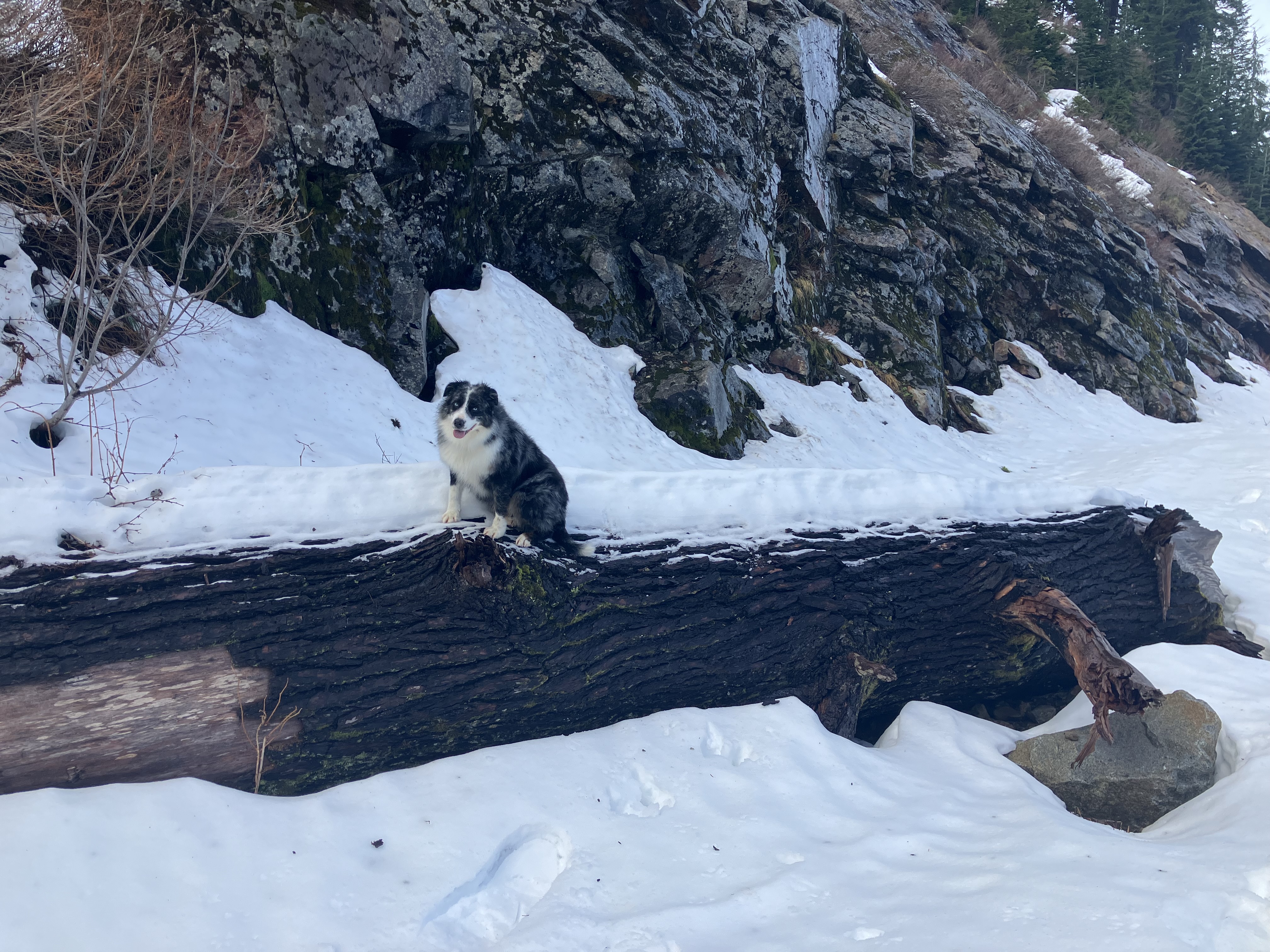
It’s hard to get a read on how big these alpine Douglas firs are, but I put valley on a fallen trunk along one of the trails in the BLM land to try to show you the girth of these old growth trees, which, because they are alpine scree trees, grow much slower, and are way older than their bulking size would have you believe. Still, you can see stumps from the legacy of logging that got into every forest they could reach- and may again if we have reason for it. During WWII, a whole sections of Olympic National Park was given over to logging for the air and space industry. In the quick stroke of a pen, any part of our ecological fabric can be torn apart, and sometimes, no pen is needed, just a trusty saw and some ego trying to prove dominion over all things- like the bible says. It’s a loosing battle for all of us in the end. Our heritage of consumption will have us all in the pot boiling soon. The hottest year is yet to come, and people will slow cook to death for our mishandling of the planet. This mishandling is perpetuated now by corporate bodies who say profits over people and we all cheer, seeing out meager money investments grow on a passing screen. Thanks booming economy.
When we watch Lord of The Rings, Wicked, Star Wars, or any other good vs. evil saga, how do we miss the part about us being the bad guys to our own environment? I know it’s not always easy to sort good and bad- watch any Miyazaki film and you’ll learn this. Our fire of industry has run away with nature, forcing her into “natural resources” instead of complex habitat for life- our lives. We don’t care if our streams and creeks are cemented underground so we can build a new affordable housing complex. We scoff at clean water protection because it hinders space travel. Who cares if the birds are dying? Yet we are pissed eggs got so expensive. Still, no one asks why-good bye critical thinking. We’re learning not to question any more, or follow the money, or even leave our homes to go outside when there is a new episode streaming. So we sit in Plato’s cave and stuff our faces with cheap eatings- courtesy of highly processed crap. Just reach for your Ozempic and carry on. WAKE UP PEOPLE! This is the end of life as we know it, the next great extinction caused by US. We are still buried in ignorance, or more likely, denial. What can we do with such a thing as this industrial complex of military design? How can each of us stop buying in? Getting an electric car is not the answer.
Our first step is admitting there’s a problem, then making a small list of the top 3 things we can do to change our pattern of consumption.
Walk away from bulk buying stores and online shopping.
Embrace carpools, public transit, and drive less.
Get off social media.
Then reeducate yourself-
Learn about the real cost of your consumption.
Investigate global resources and how you use them. (smart technology is especially bad)
Exercise your buying power locally.
The tech world is caught up in AI and bitcoin- it takes more resources than we have left for human kind to power these ideas. The companies developing tech know this, and are already taking legal action to protect their industries at the cost of local neighborhoods and towns. Meanwhile we get on these platforms and use them to do the work we should be doing for ourselves. Brain rot is the word of the year folks. Our bodies are rotting too- like the piles of slash and unwanted wood product cut by the machines in our tree farms, we too pile up and rot in far away places like Gaza and Ukraine. But a New Year’s Eve terrorist attack in New Orleans becomes the headliner for a week while we forget about the world terror inflicted on everyone daily. Fear of famine grips one part of the world, while another worries about rescheduling a football game. Yes folks, this is our path as American consumers. Once our right to protest has been knocked down for security reasons, we’re left silenced, in our online cages, like pods in The Matrix. We’ve all taken the red pill and happily gone back to sleep. Heart disease will get us before any terrorist in this country. But for children, guns are the number one killer. WAKE UP!
I stand looking over The Snoqualmie Valley from the edge of The Central Cascades, standing on recently clearcut land overlooking thousands of acres of tree farm, and beyond that, towns and cities stretching to Puget Sound. Washington State is less densely populated than a lot of other regions in our country, but it’s the home of tech industry. People here are lured into a false sense of security, surrounded by snow covered mountains and lush green stretching in all directions. North of us is British Colombia and Alaska, frontiers of ecological adventure and wilderness we are not worried about loosing. Tar Sands and The Arctic National Wildlife Refuge are forgotten as we sip our hot coffee and tap away at our screens. When someone shoots up a school, we share thoughts and prayers, but cannot conceive of what pain brought an individual to such murderous rage. We cannot understand why summer smoke clogs our cities, fills our lungs, and takes years off our lives. It would not occur to most of us that we are no longer thriving, because just day to day surviving has become the norm for so many. Without time to sit and reflect, we’ve all been caught up in the hamster wheel of making enough money, earning a living, paying our dues.
The opportunity to take time outside, driving to access the wilds, this is privilege. To sit here typing out what we’re all missing adds to my place of power, to see, reflect, and share. I’m only reaching a few people with these words, and shutting down a few more who don’t want to acknowledge the truth in my rant- that we’re all caught up in something we can’t seem to get out of. Small steps. There are so many little things each of us can do in our quest for change. This first, and most simple, is to turn away from the screen and go outside. Even if you live in a congested city, go outside and look up, look around, where is the nearest green space? Where do the birds fly? How many ants crawl across the pavement at your feet? How many rats live in the wall? I lived in NYC, on Manhattan Island, and still there was nature all around. Remember, people are part of nature, we are animals too. Our development is like all animal construction, only ours remains out of sync with what the natural world constrains, until climate change redistributes the energy we’ve massed back into geologic time, and our little blip of harm will come to naught in the grand scheme of the universe, which we have no power over at all.
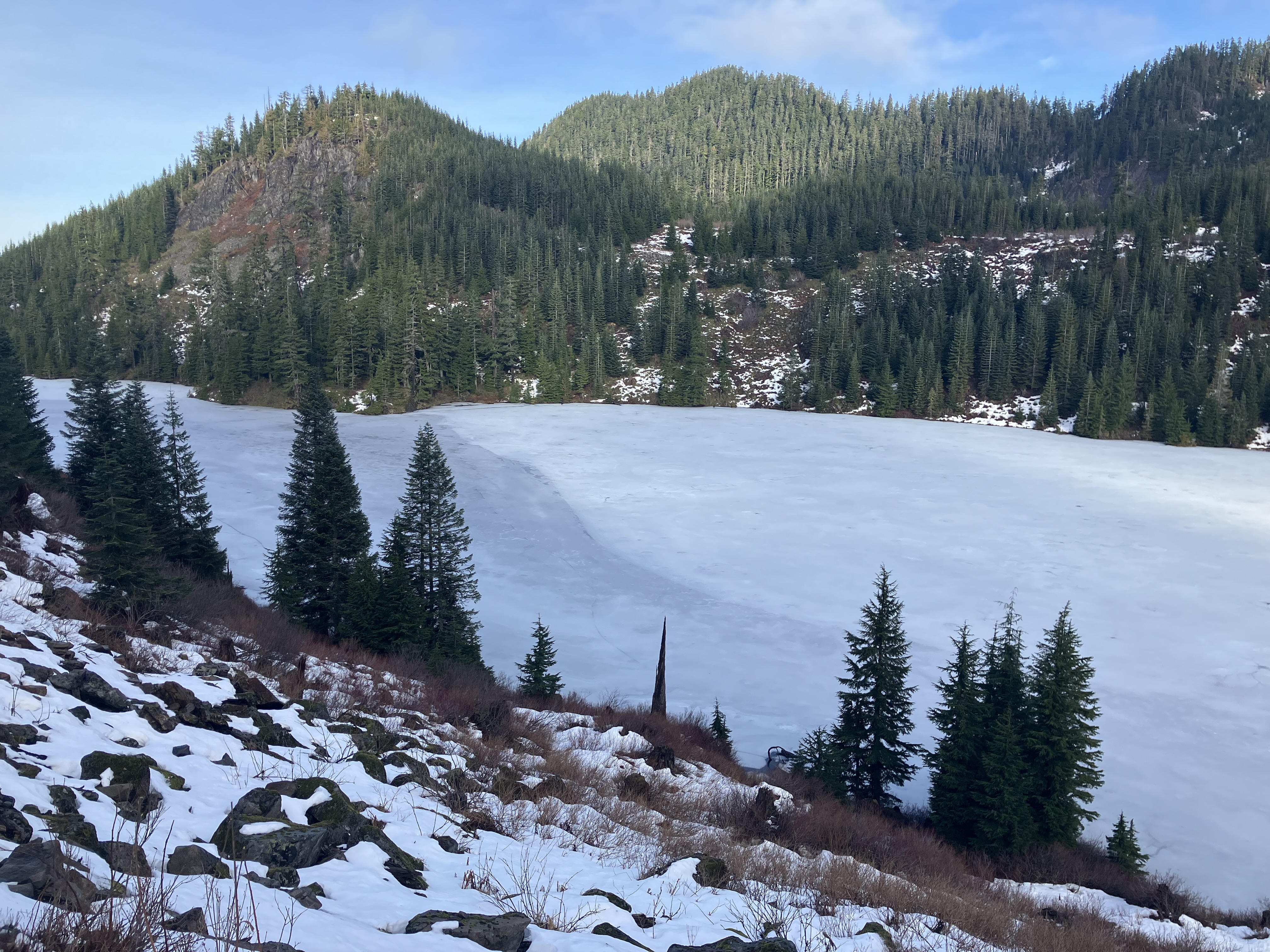
As I walked around the frozen lake at alpine elevation, I was struck by the two tone color of the ice. It was a momentary mystery for my monkey brain to grapple with. Why was one part of the lake darker than the other? Then I took a bit of time to study my surroundings, watched the light shifting across the peaks, and it came to me. A mountain’s shadow was keeping part of the lake colder and denser than the part in sun. A mere shadow, cast from a great peak. Then I noticed the cracked ice along shore and wondered what caused that change in the lake’s surface. Again, nature revealed herself through observation. A light breeze picked up and gently swayed the surrounding trees, the sound of a wild forest signing. I thought of how tremendous a storm might come roaring through this open landscape and realized wind would push the ice up against shore, cracking the edges as pressure built up. Another mystery solved by taking in all the surrounding inputs, even when they were not present. It’s time traveling. Nature is so complex, yet we humans keep trying to put her into compartmentalized measurements of timber feet, tones of minerals extracted, and how much energy can be sucked from her corps once we drill deep down and pump her full of chemicals to make the taking easier on our machines.
The winds of change are coming, slowly pushing back on our hubris, reminding us how little control we have in our lifetime, yet reflecting on the abuse we’ve inflicted on ourselves and each other though greed. It’s not about stability any more, it’s about how much profit we can squeeze out of every measurable thing- human life, natural resources, stocks and bonds, company productivity, energy consumption. The Colorado River is not enough water for The Southwest States. Our agricultural land is now toxic with treated sewage, polluting the best food growing soil left in our nation, and we’re exporting it abroad for profit, instead of feeding our own people. We cut the forests down to build cheap goods that will end up in land fills, so we can buy more. Influencers are busy telling us what fast fashion to buy today, or what new streaming garbage to watch. Listen to this hip podcast and worry about true crime. True crime is our tune out on mother nature. Once it’s gone, we can’t easily bring it back. We don’t think in lifetimes to come, only how big our money market account grew this year, and how we can dodge taxes, penalties, and regulations to get the best deal.
As I’ve said many times before- we can’t eat, drink, or breath money. When the smoke, microplastics, and forever chemicals fully integrate into our bodies, we will rejoin nature prematurely, with no buy out to rescue us from our own neglect. This is the living contract we all sign at birth, to live in the world with all we make of it. Our paradise is lost, and our health and happiness are the cost of doing business. I do not see an easy brake from this world of consumption, but I do see a way to slow it, turn away from some of it when I can, and at least see what we have done in this country, and know where we’re headed based on the behavior we demonstrate day to day. The birds are still outside singing, the insects still carry on, and what plants are allowed to grow do, though few will ever reach the epoch that came before human industrial money making took what was enough and culled plenty into scarcity for all.
The chickens remain healthy, alert, plump, and laying there more modest schedule of 3-5 a day from a lock of about 30 hens, 20 of which, are mature layers, and ten are at various stages of young poullet, which is at little to no production through this part of winter, which is just fine, because I’d prefer them putting their energy into growing a strong body and taking the time to to do. Most broiler bird breeds, especially the industrially developed verities, are often too heavy for their legs and hips, becoming crippled in the final weeks of maturity for the fried chicken chains and frozen food sections of the world. Does this make it a well fed world?
These “fat birds” as I love to call the chicken flock, walking down to the coop each morning to feed the crew. They come running into the gravel drive and encircle me as we move as an undulating mass, towards the grain shed, where I will scoop out one glorious serving of golden grain, grit, and mineral mix from Scratch and Peck Farm. This modest home flock are my little experiment in animal husbandry. I’ve been breeding towards dual purpose Ayem Cemani base stock birds that are good free range soil scratches and crucially, self aware ground birds with the good sense to keep an eye on the sky. Black iridescent feathers are as striking as any corvid, which does seem to fend off many of the smaller aerial predators. To see this flock come together in a mob of darting beaks and talons even puts off the pair of cotton patch geese who outweigh the hens by double and tower over them with snake neck dexterity.
Our debonair rooster, Dragon, remains king of the roost, and guards the flock with his life, always the first to cry out warning signals, standing out in the open alone to face off with eagles and hawks that might alight on a nearby branch and stay too long. The yard guard that’s most vocal against aerial assault is Valentine. She’s running up and down the upper pasture, growling her territorial warning right back at a piping eagle or chirping accipiter. The chickens have learned to heed her alert barks and duck into the barn or hay shed, under the hay trailer or into the coop. Owls are the nocturnal threat, including at first light in the morning, when I’m glad the birds are shut away, else they begin an early wander into the open field to glean, and hear nothing of death upon silent wing. We lost our goslings this way last spring, 2024, when I discovered that the plucky little babes could slip through the chain link gate, and happily did so, straying off without any parental protection- their only protection.
The geese still have a lot to teach me, and I’m working hard to upgrade their accommodations to better insulate both the nesting female and her cantankerous offspring. Current renovations include chicken wire lined gate, solid board lower walls, and at least two nesting cubbies. This breed is relatively passive, but during the nesting months, which will start in late winter into early spring, I try to avoid getting into tight spaces with the geese, keeping food and water right inside the gate so I don’t get wing beaten or pecked by vigilant parents. A flock of two is still a flock, and these two geese remain great teachers and social creatures with great boundary skills.
In another flock all together, pregnant ewes await their afternoon alfalfa feeding before settling down to chew cud and grow lambs. January is the start of possible drop, which will continue through early May. Most of these lambs should be born in the next few months, but the first years are sometimes later in Spring, which is fine, it just spreads out the lambing season, but with this small flock, that’s not a big deal. I’m overwintering 10 ewes this year, 2 more than I’d planned because of demand and great genetics in this most recent generation. 4 first years are in this flock. I wanted to see the range this new ram could throw, and some of them will certainly lamb this year. The biggest ewe lamb, Pacific, is already grown to the size of the second year ewes. She’s got longer legs, but a good meat sheep build and quick bulk up, but size it not everything.
Her mother, a 4 year old ewe born on the property, had a great build too, but dropped only single lambs. Pacific is the first of her size and growth rate, which is the meat sheep pasture to carcass gain this breed is known for, so I’m hoping she lambs this year. If she drops twins, she’s a keeper, even with the longer legs. Trait selection can be tricky, and with an armature eye and such a small flock of genetics to select from, there is a lot of personal preference I put into selecting each sheep. Personality, handleability, and good parenting are all traits my sheep must have. I also try to keep to the main breed standards by sticking with hair sheep, a good carcass growth on pasture, short legs to keep them in the electric mesh fencing, and even small heads for ease of birthing. These are some of many traits to think about when breeding animals, and a good shepherd knows the individual habits and mannerisms of every member of their flock to better the herd’s long term thriving and surviving.
Gill is still also getting occasional flock visits. Out temperate winter climate at the end of 2024 has kept the grass growing slowly, still offering some quick grazing delight, and fresh greens to pregnant ewes. When there is a stop in the rain, I let the girls out for a stretch and a little veg while Gill does his rounds scent marking and visually reconnecting with changes on the landscape in his territory. A fallen branch becomes a good marking post, the deer leg bone he likes to chew remains where he left it on a good viewpoint in the field. The sheep circle across the grassy hillside. Eventually, I’ll ask Valley to help me round up the herd, returning them to the barn for an evening of laze and graze in their dry shavings with four walls to keep out the chilly night air. These sheep really do live the life, and share it gracefully with me, the dogs, the birds, cats, and all the wild critters that keep this cooperative collective of living organisms thriving and jiving.
It was a late fall day and I had a bucket of native plants that needed a new home. A few days earlier I’d been on my driveway pulling up all the young alder trees to re-home them away from main thruways. Now I had a combination of canopy and understory plants that were ready to put back in the soil in there forever home. I’d been eyeing one of my worm cities as a possible location. It had some good legacy stumps and banked fertility in some piled compost of sheep barn bedding which had been cooking down for over a year and was ready to host new plantings. I was going to shovel the whole thing into the bed of my truck to transport across the property to another raised bed that needed some topsoil. Then I thought about how much work that would be, and decided to bring the plants there and make a nice tree island.
A tree island is my name for a small cluster of trees holding a little island forest habitat, surrounded by open pasture. One might call it a grove, but I like the idea of an island of raised habitat on the landscape. To prep the “bed” I turned the surrounding soil up onto the old pile until there was a substantial mound. Then I planted the shorter understory plants on the south side, mulching them with some shavings. It’s important to keep track of young plantings if you can. I use bright orange flagging tape to show where things are. I also snuck a couple of oaks in for long term growth. On the north side of the mound I transplanted the red alders from the road. They are already over head height in stature, and will easily keep above the smaller plantings as everything sets. It certainly transformed a muddy stack into a beautiful bed of young native plantings that are sure to add layers of vegetation, diversity in ecology, and change in terrain for the eye, to name a few benefits of establishing a tree island.
This is also a berm, well drained in flood months, yet mulched to keep summer sun off the soil. More layers of animal bedding that is nitrogen cold, will be spread in lower outer rings to be turned into more compost as soil builds. alders will be thinned and even pleachered to allow sunlight north of the mound where other swales and more established tree islands are set and growing for a decade. The south facing hillside gently slopes on the north end of the property, so I’ve planned sun isles through the future standards that will litter the upper pasture and main living area of the land. Oaks will eventually be harvested for wood heat, some acorn production similar to native hazel, and savanna silvopasture with deciduous nut and fruit trees dominating the canopy.
This tree island will host 20-30 years of alder and oak growth, while hosting long term hedge and shrub species for pollination and further starvation food wildlife habitat. Our chickens will use the young stands as shelter and as summer clutch rearing habitat until chickens are phased out of restoration plans for EEC Forest. Though chickens are a jungle fowl, avian flu and other bird carried pathogens in our area might cause the necessary culling of flocks if infected. Leafhopper will comply with any state mandates, but if our animals are slaughtered, we will not plan future production livestock and phase towards total rewilding sooner in the 60 year lifetime plan of my direct work with this landscape, in hopes of cleaner air, soil, and water for future generations of all living things.
These tree islands will thrive and grow with or without human tending, in a succession stand of oak savanna, the most successful forest in this soil, with the glacial till drainage, and sloping topography. Layers of slide alder, hazel, and in seasonally flooded areas of the land, willow to root long term understory deciduous drought resistant hundred year canopy return. There are enough maturing trees already on sight to produce native coniferous species as long as current climate allows. That’s where I try not to scry the future few hundred years with too much confidence. Soil building takes thousands of years, in which time, for this rather active geologic web of tectonic sudden upheaval and strata volcanic presence invites. Paring that with exponential climate instability with the not so subtle storms of wind and water, drought and fire to uncharted ferocity akin to fears of AI.
The weather is happening in real time, and when it’s privatized by that shadow cabal known as prosperity to the few at the cost of the many, we’d all earn some ancestral wisdom in looking up at the sky, watching the light, clouds, wind, and colors of seasonal shifts and nature’s language of entropy, which is usually experienced by us as slow and uneventful- most of the time. Hopefully the trees survive into some forest cover, and nuts offer food source that even humans can eat. This tree is fire friendly, drought tolerant, and could fend off blackberry with chemical warfare. They are spaced well from the long term establishment of understory shrubs planted in the island ecology. Mock orange and service berry are drought tolerant, also friends of fire, and offer food, materials, and medicine. Together, these plant companions will establish a long term cooperative adaptation, and provide layers of abundance and regeneration for the landscape through all of nature’s change.
Because of our wonderful temperate climate here in Western Washington, even in December, the mycology of the landscape is awake and thriving. Most mushrooms are not edible, but there is still so much to learn from our fungal friends. I took a walk around the property and photographed what was growing on around the land here at EEC Forest Stewardship. This Helvella lacunosa is a wonderful example of a common winter mushroom you night find in the woods or across the pasture. Though they are not recommended for eating, they are an unusual shape (though not for the family) Helvellaceae. Note the stem shape, it’s actually chambered within those ridges, making the identity of this mushroom rather easy. I love sharing the common nae of this mushroom, “Elfin Saddle”.
Other mushrooms are not so easy to identify, and are often small and overlooked, especially in grassy terrain. These modest little Hygrocybe marginata is recognizable to those with a discerning eye. Waxy cap mushrooms are named for their texture and feel. This species has a bright orange cap, and is not edible, but these little guys are working hard to decompose plant matter to enhance the soil for future growing.
One of my favorite little guys to see popping up are in the mycena genus. These mushrooms sometimes come in bright colors like pink or teal green, but more often, you’ll see cream colors like this. These are Saprotrophic mushrooms, meaning they oxidize electrons from donors in the plant and soil community to obtain energy. The chemical complexities of mushrooms is a long rabbit hole to go down here, but for those interested in the chemical breakdowns fungi provide, the internet is full of complex diagrams like this. I’m not a chemist, but let’s just say that mushrooms play a crucial role in soil and plant health by unlocking and exchanging many hard to get chemicals in the environment. Without fungal activity, much of the complex ecological structures like forests and even desert sand would be missing key ingredients to support life.
You’ll often find communities of different mushrooms together in one place. This speaks to the diverse range of chemical decomposition each mushroom offers the soil and plant life around it. When you see one mushroom, take a moment to look around, there are probably others nearby. I would like to see more studies on the communal relationships between different species of mushroom in the environment. So far, we’re still working to even map some of the DNA in mushrooms and discovering that certain families we groups mushrooms into are way off from the actual DNA signatures they present. Humans have an endless quest to understand nature. If mushrooms are any indication, we are still clueless about mush of the mycological world, or it’s crucial role in nature. It concerns me that with such limited understanding, we the people still impose vast changes on our environment to suit our own short term needs.
Some mushrooms are hard to identify, especially after aging. Old mushrooms are usually brown and mushy, almost completely unidentifiable. People like to send me pictures of mushrooms and ask what kind they are. Rarely, I can ID them, most of the time I make broad speculations- and say so, because mushrooms are a huge, complex family tree, and the subspecies change a lot, because new DNA research is starting to show us just how expansive and diverse the mushroom kingdom is. I made an educated guess that the white mushroom pictured above might be in the Pholiota family. Then I went a little deeper to see if I could track down a specific species and hit the usual DNA roadblock. It’s very common to not know a mushroom in the field. Many species can only be narrowed down though a microscope. You look at spore prints to see the unique shapes produced by that species to get a better idea of who it is. I’m not at that level of ID, and certainly not with just a picture to go on.
What I can say is that if you want to use photos to go deep, you need pictures of the cap, stem, gill structure, surrounding material you see the mushroom growing in, and specific location it was found. Then be prepared to just not know. As I mentioned earlier, mushroom DNA research is letting us know that we really know nothing about mushrooms. That’s fine by me, because I really just like to do a bit of foraging and basic ID in the field. That’s still a lifetime of learning. With just over a decade of wandering around in an attempt to get to know them, my mushrooming skills help me know what’s edible in my specific bioregion and no where else. That’s another thing about mushrooms, they may look similar in other parts of the world, but are rarely the same family you know back home.
Sometimes we completely miss a mushroom right under our feet. This decaying brown group of fungi looks like typical Marasmius oreades, but I would not bet on it, knowing how much a mushroom can change as it ages. In my quest to identify this species, I ran across a great little site with a specific entry on lawnmower mushrooms. It’s always fun to see what others are learning in the field. Though no mowing goes on here, the sheep can easily spread spores as they graze about. Animals often carry spores on their fur. I often see a trail of fruiting fungi along animal paths in the woods. It’s a fun detail to note when you are mushroom hunting. Remember that fungi can be very toxic, so wash hands if you do handle them. If you are unsure, just leave them where they are. It’s ok to just take a picture and move on. You probably won’t get a clear ID, but just taking a little time on the world wide web to look at what’s out there is worth the time and learning.
My hunting mentor invited me to be his support on a black powder late deer season hunt. This window of four days allows one final chance at a deer before the season is over. It’s short and sweet, so you have to use all the waning daylight you can to be in the field. I took my shotgun to watch for grouse, but my main mission was to learn from my mentor. Time in the field with this accomplished sportsman is worth it, and a rare gift of his time with me. We were in The Snoqualmie Tree Farm for the whole hunt. Though we did not find any deer or grouse, many good things happened, including a lot of learning for me. Thanks to the people who take time to teach and offer opportunity for others to learn.
The weather played a big part in making our hunt difficult. This may surprise some, because the sky was clear and the sun was out- but blacktail deer sleep away bright days, and become more nocturnal. They get too hot in the sun with those warm winter coats coming on. Rain and clouds are what bring these deer out, so we saw very little activity, in fact, none. No deer showed it’s self the entire four days we were out, and we were covering lots of ground. My mentor thought it might also be the uptick in chemicals being used on the tree farm grounds. They spray herbicides in the young plantings, and spread treated sewage everywhere. The deer are repelled by these unnatural applications in their landscape. We could not find any brows or tracks in these chemically altered spaces. My mentor ever said he might stop coming here to hunt because of the disruption.
The views of our surrounding mountain ranges was quite magnificent. I’d not seen a good panorama of The Olympics for a while. In one of our spots, we were high enough to see just above the teenage plantings to our west. I spent some time scrambling along a recently logged off ridge line to get a picture. While picking my way through slash and slope, I picked up on a fresh set of deer tracks that went in the direction my mentor had gone. He would pick a place to hunt and I would stay on the opposite side of the road from where he went in. That way, he would know what direction I was in, and I stayed out of his hunting ground. Black powder guns don’t have a long range, but having a plan on where everyone is to keep out of each other’s line of fire is an important part of safe hunting. If my mentor wanted to change position, he would first meet me back at the truck at our planned check in time, and then make a new plan so we were always on the same page in the field.
My hunt for grouse was fruitless. There was not a bird in sight where we were. Was there any wildlife at all? Yes! We had an amazing encounter with a young bobcat. While checking out a quarry for deer- “a quarry?” you ask, yes, a quarry, where deer will sometimes look for mineral deposits in the exposed layers of earth; Wes saw movement just before I picked up on it- I was driving. We stopped the truck and watched a bobcat slink across the road and into the woods. That’s usually how you see a bobcat, briefly crossing the road. But this cat did not go too far. Moments later, as we got out to look around, the cat popped back out on the road and gave us another show. We began to observe the animal together, noting its dark morph and unusual behavior. My mentor guessed it was a young animal that had not learned to fear people yet. The encounter was magical.
Bobcats have amazing camouflage. Can you see it in the picture above? It’s crossing a log right to left, about center in this photo. I only knew it was there because I’d watched it moving for a while. My mentor and I were happy to stand and observe the animal for as long as it chose to be around us. You might be wondering why we didn’t hunt it. Well, we didn’t want to. Bobcats are not good eating, and the pelt market is not something I wish to participate in. We had our small game license, and could have harvested this cat, but that was not our intention. We were appreciating the opportunity to observe and learn form a shy, mysterious animal. The cat seemed to pick up on our intentions, and came out a few more times to show off it’s unusual dark morph and how athletic it was. I got a great series of photos as it ran away down the road.
It was a gift to watch the bobcat for so long. Sometimes it’s good to pause in a hunt to let nature show you a few things. I was glad my mentor wanted to take the time with me to watch. That was a special moment for both of us, and we cherished it. Time in the woods can slow way down. Each day there was a series of adventures. There had been a recent wind storm that knocked down a lot of trees. Many roads were impassible, which shrunk our hunting options, but there was still much ground to cover, so we did some driving, a lot of scouting (looking for recent tracks or brows) and my mentor took a few walks into recent clear-cuts in hopes of getting a deer up. They usually lay down to rest during sunny days, so you have to go into the open places and try to spook one up from it’s lay. My mentor is in his 70s, and though he is still in good shape relative to his age, he went slow, and had to take breaks between each wander. The relaxed nature of this rhythm helped me relax and enjoy the days too. I was often on a road keeping a safe distance while watching for a grouse. Not even a wing beat was heard.
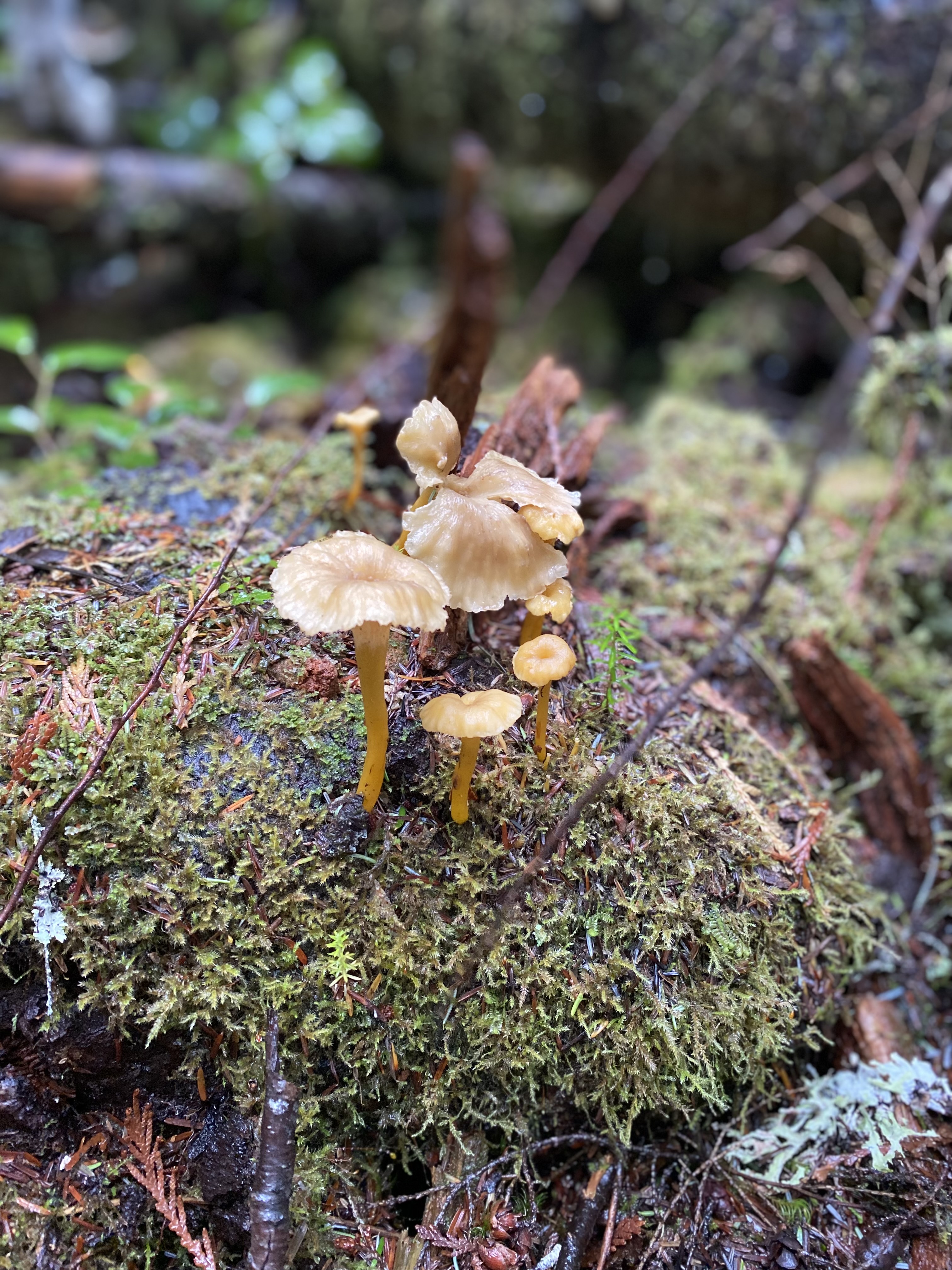
I did find mushrooms, chantrelles were on the menu each night when we got home in the dark. This year, mushrooms have been off the hook in these woods. I would carefully hunt the ground, keeping a sharp lookout for any golden treasures, and I usually found them, quietly waiting on the edge of a tree line, or half buried under the needled of a fir tree. It was wonderful foraging, and rewarding to find some almost everywhere we went.
The golden light towards the end of each day was also beautiful to watch. Though on our last evening out, the weather was changing, and a thick mist rose up from the valley below to blanket us as the light faded. My mentor was a little frustrated, because it closed our last day of hunting a little earlier than we had hoped. Once the light is gone, even if the hunting hour is not over yet, you can’t shoot what you can’t sight in. Though the mist was welcome earlier in the evening, as a motivator to move the deer around, it soon became our shut out. I sat and documented the change in light as the fog set in.
Things got dark and still faster than we realized. As I waited, I thought about how quickly the conditions change in the higher elevations where we were. Even with the influx of moisture, the deer remained illusive and we ended out last evening without harvesting any animals, but I still got a handful of mushrooms.
When my mentor came out of the hunt to rejoin me at the truck, I was amazed at how well he blended into the landscape with the added shroud of mist. I took a few photos to show how hard it is to see someone in this kind of situation, burning the images into my memory. Late season black powder does not require hunter orange. You can see why knowing exactly where your hunting buddy is prevents confusion or worse, a fatal shot at someone. Never point a gun at something you can’t see clearly. There was a moment when my mentor’s movement first caught my eye, that I thought he was a deer in the low light and poor visibility. I continued to sit still with my gun across my lap, sorting the visuals that told my brain one thing, while my wisdom said remain still and just watch.
Hunting has taught me a lot about what our eyes perceive, versus what is really before us. For the rest of my life, I know I’ll have moments like this, thinking I see one thing, when it’s really something else quite different. Learning not to react with sudden impulse in these situations is a key safety skill. What a lesson that day. Again, so much gratitude to my mentor for inviting me on the experiential learning adventures. Of course, I’m also there as additional brute strength in case there was a deer harvested. Having a buddy to help get it out is always good. Though we did not receive a deer in this hunt, I got some priceless in the field dirt time with a man I have a deep love and respect for. I hope to pass these experiences on in my own mentoring, and look forward to more time with others in the hunt. So much gratitude for all the opportunities to learn and be with good teachers, who are also continuing to learn.