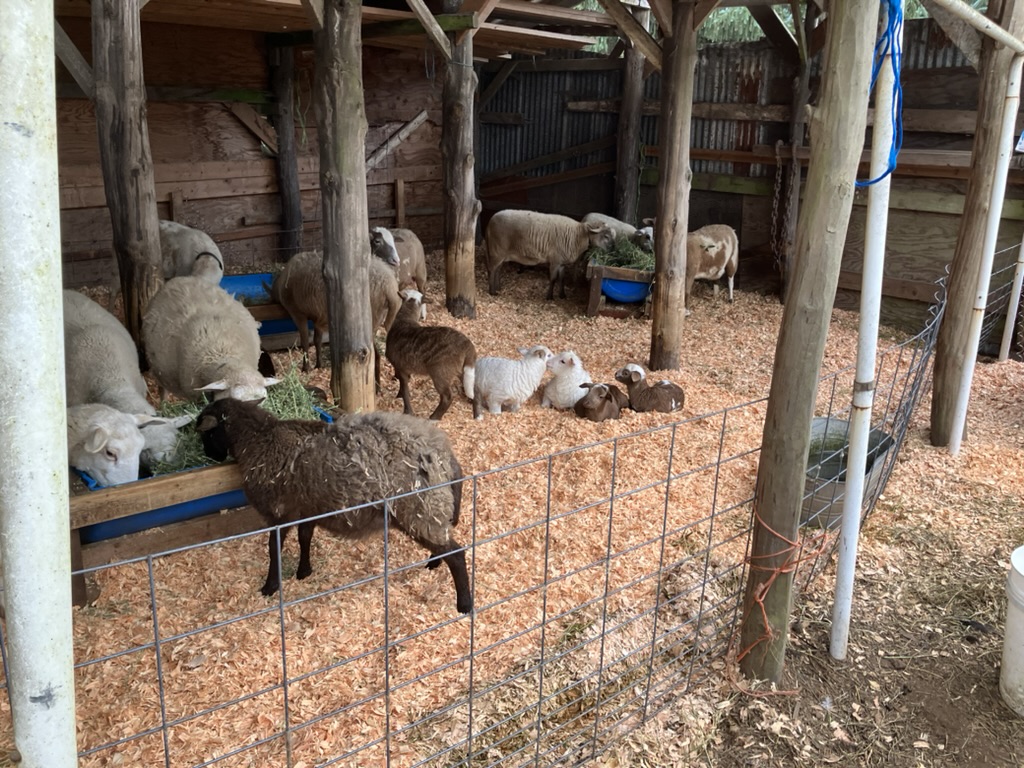
Ideally, you get twins from all your ewes each year, but I don’t grain my animals, so they are bound to what the land can offer them during the growing season. In lean years, I’ll have leaner lambing, which fits into nature’s natural cycle. If I was beholden to industrialized expectations, I’d be graining my animals year round, and hoping for triplets or even quads from my ewes. The extra lambs would be bottle fed, and I’d have to be raising tens more animals, which would certainly not be sustainable on my acreage. Industrial systems don’t care about the land, the animals are being fed by costly inputs that will fatten the carcasses, and build maximum gain from each animal, but the outputs, like manure, become unwieldy pollutants, full of the chemicals used to grow the corn and soy fed to the animals. This conversion from plant to meat is a horrible payback- madness actually. If our stock market reflected the losses on crops fed to meat animals, it would have crashed a long time ago. I’m not n economist, but I do see the inequities of industrial corn and soy, and what that cost to produce earns back in meat sales. It’s not a winning bet folks, but it keeps the fast food industry and your cheaper frozen food sections of the grocery store profitable at one end of the scale.
Since we live in a finite world, to gain somewhere means taking from somewhere else. Here in North America, we rarely experience loosing something noticeable, materials are available, but becoming more expensive every day. We’ve gotten quiet about groceries, because we can still order same day delivery, and stream shows on our screens without too much complaint. We the consumers are most adaptable- able to swipe what we don’t want, and receive hundreds of suggestions in our feeds. There will always be something on sale, always a perceived discount from a club card, and even the good old coupons for those who prefer more tangible savings. Here’s the secret- you were already paying too much to begin with, and even with sales and discounts, you’re going to pay more in future. That’s exponential growth in a nutshell, but it’s a one way street- with your costs going up, but your pay stagnating. Welcome to corporate slavery, where you are beholden to investors from an elite “cabal” of money market account controllers. But what does this have to do with lamb love? Liz, are you starting to click bait us with your blog titles? No, because these lambs are beholden to ecological indicators, not stock dividends.
When we can participate in cycles of the natural world, we can better our investment portfolio for long term sustainability. When we can tend literal gardens, instead digital ones, we’ll have the food we need, and abundance to share and barter. When our minds transcend legal tinder, and dive into the waters of community involvement and cultural cultivation, we’ll find a wellspring of initiative, opportunity, and abundance in what’s already growing around us. How can you grow something? Even ideas count in this ecological economy. I’ve seen so many people get involved, then invest in their own systems of production for the better, stronger community involvement, production on holistic scale, enjoyed and encouraged by other like minded producers on limited scale within the bounds of finite resources. And guess what? When more invest in this way of life, it grows in value- just like stocks, but in tangible wealth- food, village, friends, health, and other basic needs being met together. Why is this hard for us today? Because corporate profits rely on individual need and want- rather than collective. If we have public transportation, we don’t need cars. We’d then have less traffic, affordable infrastructure, and less need to go away from the village to get what we need to survive.
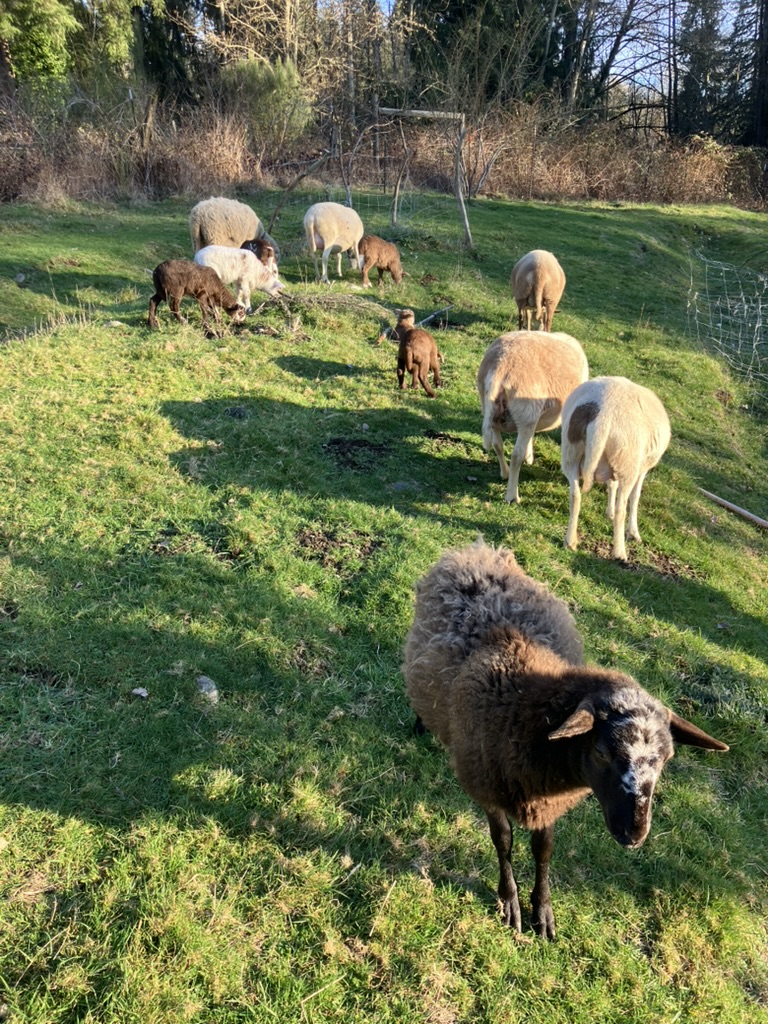
When I first started raising small ruminants on my farm, I had to calculate how many animals the land could support, and it took several years, through several different seasonal cycles, to know the capacity of the space and what would keep the ecology in balance. There are plenty of pasture calculators online, but they do not have seasonal drought and flood data for my area, much less the traits of my breeds in play. I’ve talked many times about the living system that we’re working with here on the land. Pasture rotation is crucial for holistic management, and though I live in a temperate rainforest, we don’t get a lot of rain in summer, and without irrigation in the pastures, I am beholden to the rains for production. The industrial world ignores nature’s fluctuation, fitting everything into a nice data point to be logged in a spread sheet of statistical data that brings predictable structure to our corporate overlords, thus making their investments infallible. That’s how our investments keep growing- from one pot to the next in consolidated money market accounts promising a certain percentage gain. That’s the greatest myth holding up our economy to this day- exponential growth.
I can’t keep growing my herd every year, I have finite constraints in production- as does the whole living world. But money can keep appearing, more wealth, consolidated in the top 1% of people on this earth. While most of us watch our slice of the pie dwindle- which is what’s happening on the planet, out ecology- it keeps getting smaller, depleted nutrients in the soil- less nutrition in our food, less water, less affordable places to live, a world of scarcity. What if we could find enough? What would that look like? Here at Leafhopper Farm, the production part of EEC Forest Stewardship, we’re working towards balance, not profit. What is enough sheep for the land? What is an affordable amount of alfalfa to buy for the winter? How few animal can we keep, and how large a herd can we grow? I’ve spent the last ten years trying to answer these questions, and the numbers change every season. I can keep buying some inputs and produce more to sell, broadening the market for hyper local meat, or shrink down to just a few animals for myself, removing the need to buy hay, and returning the production to a sustainable closed cycle, but that’s not the current intention here at the farm. I want to produce enough to sell to my community- creating a food source that is ethical and without chemicals. I also fight to keep my pricing affordable, and make sure I can donate a few lambs to non-profits as well, keeping abundance in the system.
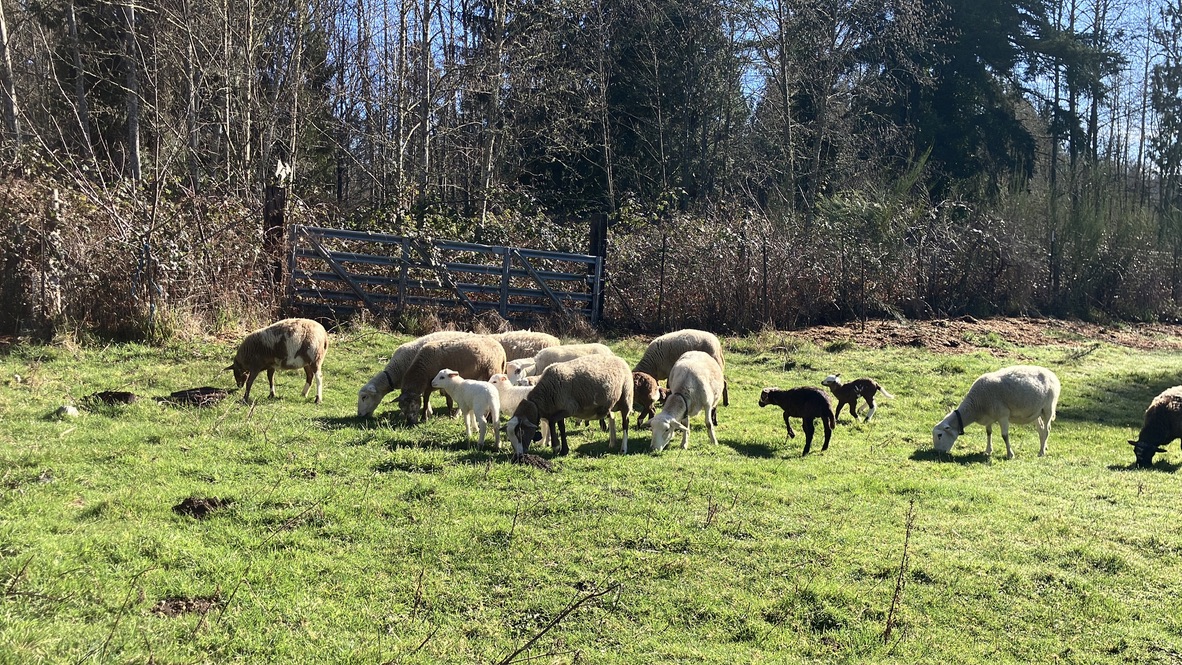
It’s February, and the sheep are grazing, getting alfalfa, and lambing. The most abundant rejuvenation of the herd happens at the most dormant time of the land’s seasonal cycle. I would struggle to raise this many lambs without hay, bedding, and LGDs to watch the flock and keep predators at bay. This system pays for it’s self, why can’t industrial systems be held to the same requirements? If they were, we’d have less options for purchase, and a lag in competition would stagnate the markets. Nature does not operate on these principals. It rests sometimes, not caring about growth, but pausing when there is not enough light, water, or soil to grow. Nature knows its limitations, and will self correct if the balance tilts too far off center. We see trees drop their leaves and slow sap production, flowers go dormant, bulbs sleeping under the ground till warmer weather triggers renewal. We humans are prone to sleeping more when there is less light in the sky, and other mammals go into full hibernation, slowing their biorhythms through the cold dark months. What if we treated our economy similarly? How would that look?
I’m coming at all this from the farm, where there are finite obligations to producing ethical food. What if the world moved in this direction? How can you as a consumer take a step in this direction? Buy local when you can, look for seasonal options in your diet, learn a craft and contribute, volunteer in your community, and get face to face with others, in person. These are simple steps to regrowing our village connection, holistic living, and mental rejuvenation. Just being outside can improve quality of life- in most places. I’ll always note that outside access is a privilege, and nice outside space with green belts, wilderness, or even a playground, can be hard to locate in highly industrialized societies. We were pushed into factories and corporate offices- where we’re still obligated to return today. Where can you undermine these systems? How can you tune out, unplug, or unsubscribe from online addiction? I’m heading out to the pasture now, to move the herd, muck out stalls, and feed the dogs. It’s another beautiful day in paradise, made possible by friends, family, clients, and the plants and animals of this restoration operation. Gratitude to the living world, it’s abundance, the lessons we learn and share together, and those willing to read these reflections. Thank you all.

 EEC Forest Stewardship