
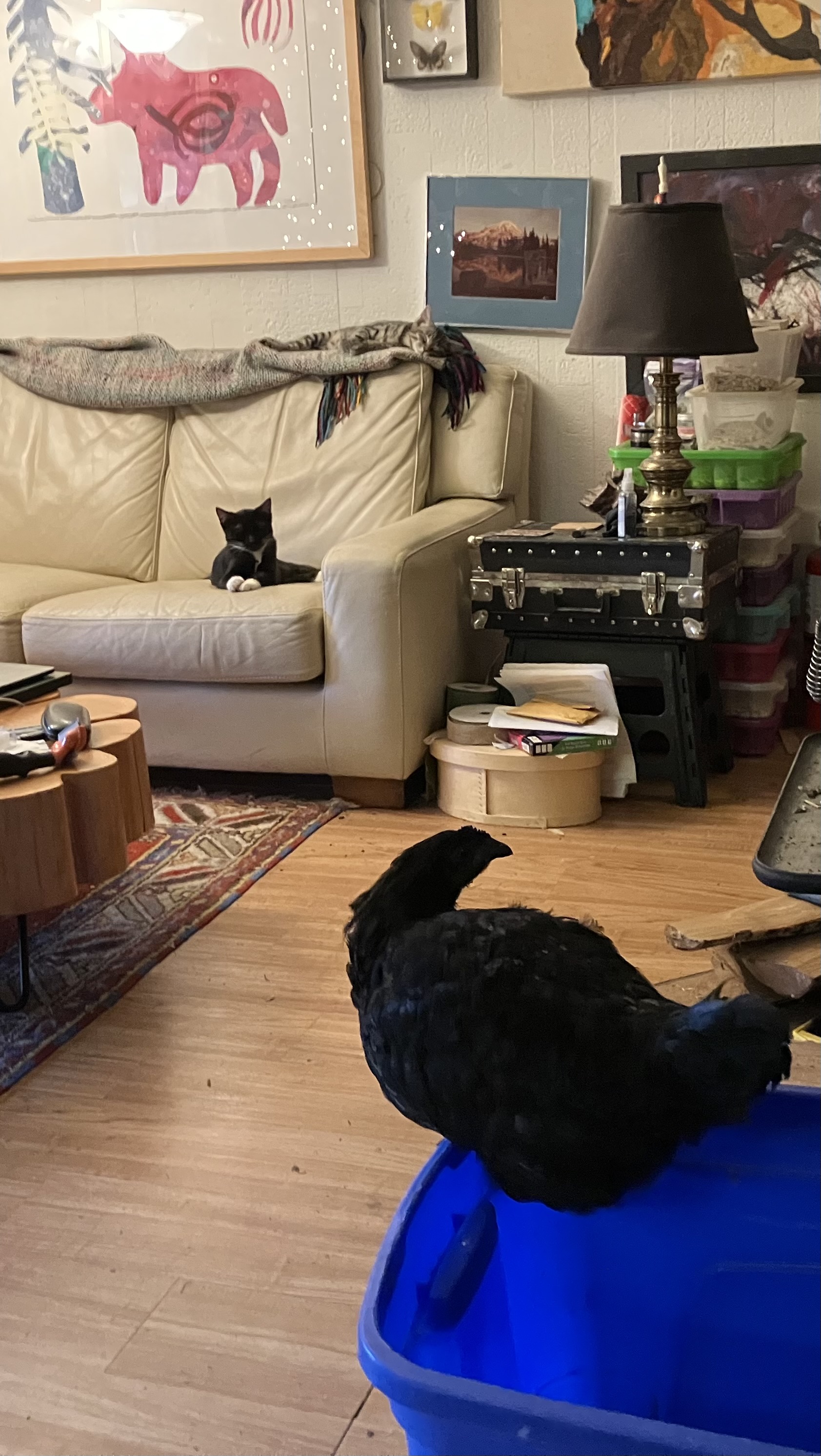
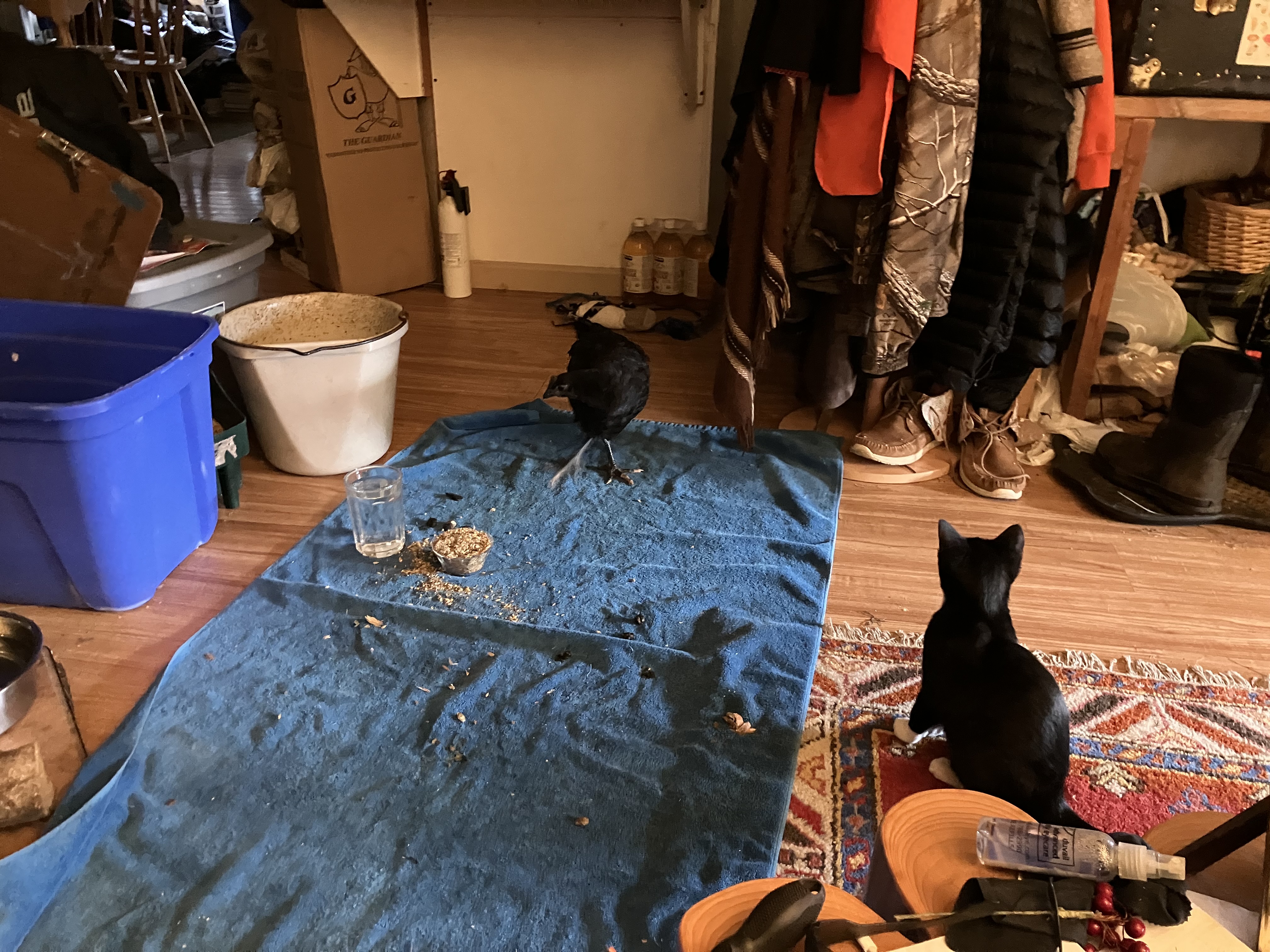
The opposite is true in this situation, one of the young Cemani roosters had been roughed up by our enthusiastic Kangals, survived, and found temporary reprieve as he recovered, in the house, with the kittens. We’d had a bought of below freezing temperatures, and the bruised chicken had not been able to get enough grain, causing a drop in weight, and a need for some R&R. A temporary bin home was set up, with water, unlimited grain, and fresh dry bedding, near the woods stove. For the kittens, it was a chance to learn bird manners, leaving the rooster to perch and inspect his feline housemates. After a few days of close contact, all the animals were at peace together in the living room. I was even able to put out a towel for the bird so he could stretch and move about a bit as he grew stronger. It’s the first time I’ve hosted a maturing bird in the house like this- weather compelled the indoor housing, and right in the middle of things helped me keep a good eye on his improvement, and offer the fast growing young felines some stimulation and restraint training, which they took to quite well.
Training animals when they are young is crucial to getting manners and safe handling throughout the animal’s lives with people. I’ve talked about the importance of domesticity in domestic. All animals on the farm are well domesticated, and have a few social ques built in with their upbringing. The rams would be my only exception, they are intact males for breeding, though they are handleable enough- with great care, to be moved by hand when necessary. The chickens are not prone to being picked up, but if I lift them off their roost at night, or need to pick one up to help them, like in this example, the animal should acclimate to the process without struggle (when done properly). That last part is key. If I don’t get the right grip and balance in the hold, the animal might feel unbalanced or vulnerable to the contact and struggle, which means flailing of wings, claws, teeth, hooves, and in short, peril to the handler- that’s me. I sometimes wear gloves, and often have long sleeves and pants on. Birds like to be supported under the keel- and if you don’t know what that is, don’t pick up a bird. Sheep need head directing, so I place a hand under the chin of the animal to point it in the right direction while the other hand is on the rump, pushing the animal forward. The kittens are still being lifted by the scruff of the neck, then cradled against the chest. Your skill in handling will reflect in the temperament of your animal.
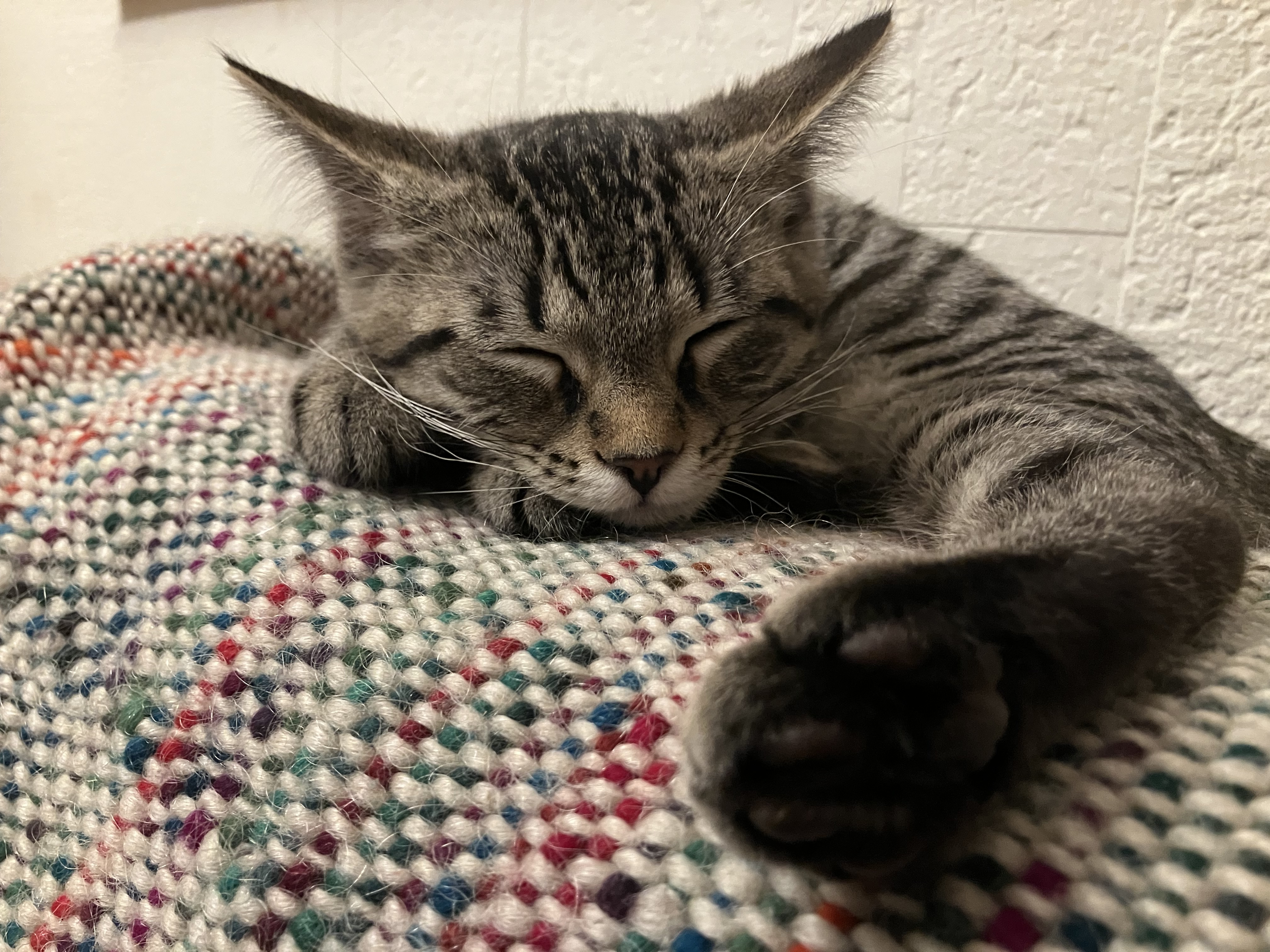
Animals will reflect our intentions back at us. The chicken in the house would become vocal if I walked by or stood up. The bird was tracking my movement and action and would move away if I came to close when he was out on his towel. By the end of his stay inside, I knew he was ready to return to the coop when he began straying off around the house, pecking around. I knew if he was that mobile, he felt good enough to return to his flock. The kittens are still inside learning house rules like, “not on the table” and “out of the kitchen”, to name a few. I have a taxidermy goose in the living room, complete with fake sedges and dirt ground at it’s webbed feet. This would be a playground for kittens, but a few days of “off” and “leave it” have led the cats to ignore it all together. Now, I would not trust them with it long term without my oversight, but in future, they will leave it alone, knowing it’s not their territory to be in. I claim things- it’s great practice in boundaries. The couch is mine, kitchen, table surfaces, shoes, books, even bowels with human food in them left on the ground. The training continues, but for the most part, these kittens are picking up on the communications fast.
Not everything works out well in basic training. Kittens are energetic, and knocked over a heavy object the other day in their romping around. Said object fell onto light, breakable objects, and chaos ensued. Gladly, both kittens were ok, but the vulnerable glass objects were shattered. You win some, you loose some. I did not get angry at the cats- I did hurry to put them away so they would not get into the glass shards, but it was not their fault for roaming and playing. As an animal handler, that’s your hardest job to remember- it’s not the animal’s fault. These creatures are in the moment, and we have a hard time joining them there. Both parties can be frustrated. That’s another tell to the handler that the animal needs a break- and the person, also an animal, too. I like to use the term handler, because people only have so much control. Take that lesson and hold it close. We’re hands on with animals- and at one time physical domination was thought by most, to be the only way to keep domestication. Times have changed, and the world of animal communication is at hand.
My kittens may not reason out the complex dialogue of language I’m offering, but they do get one animal telling another to back off- leave a place, or simply leave something alone. Koban, my young Kangal LGD is learning this lesson well. He’ll be 130lbs when full grown, and I already strain a bit to move him off with one hand, if I need to. “Off” is a crucial word he has to respond to. When I walk into his pasture with food, he could leap up and knock me down, but he does not, instead, he sits, because he was taught at a very early age that, when he’s excited, he should sit. And folks, he does. There will be future challenges around this, so I have to earn his respect by remaining consistent and fair. Animal handlers have to give a fair ask to get a positive response. Koban know he will get to eat, but he must first sit and wait- all my dogs do this. I also have to give him a clear release command to eat. He’ll wait patiently, but I can’t ask him to do that all day, that would not be fair. I can keep him engaged with training while he is eating, pick up the bowl of kibble for a moment, then put it back down, pet him all over, including his feet and belly while he’s standing. Soon, I’ll clip his nails, brush him, and even pick up his back end while he eats. Not all the time, and now through his entire meal, but I will disrupt him with handling and closeness around food, because that keeps him docile and easy going while he eats.
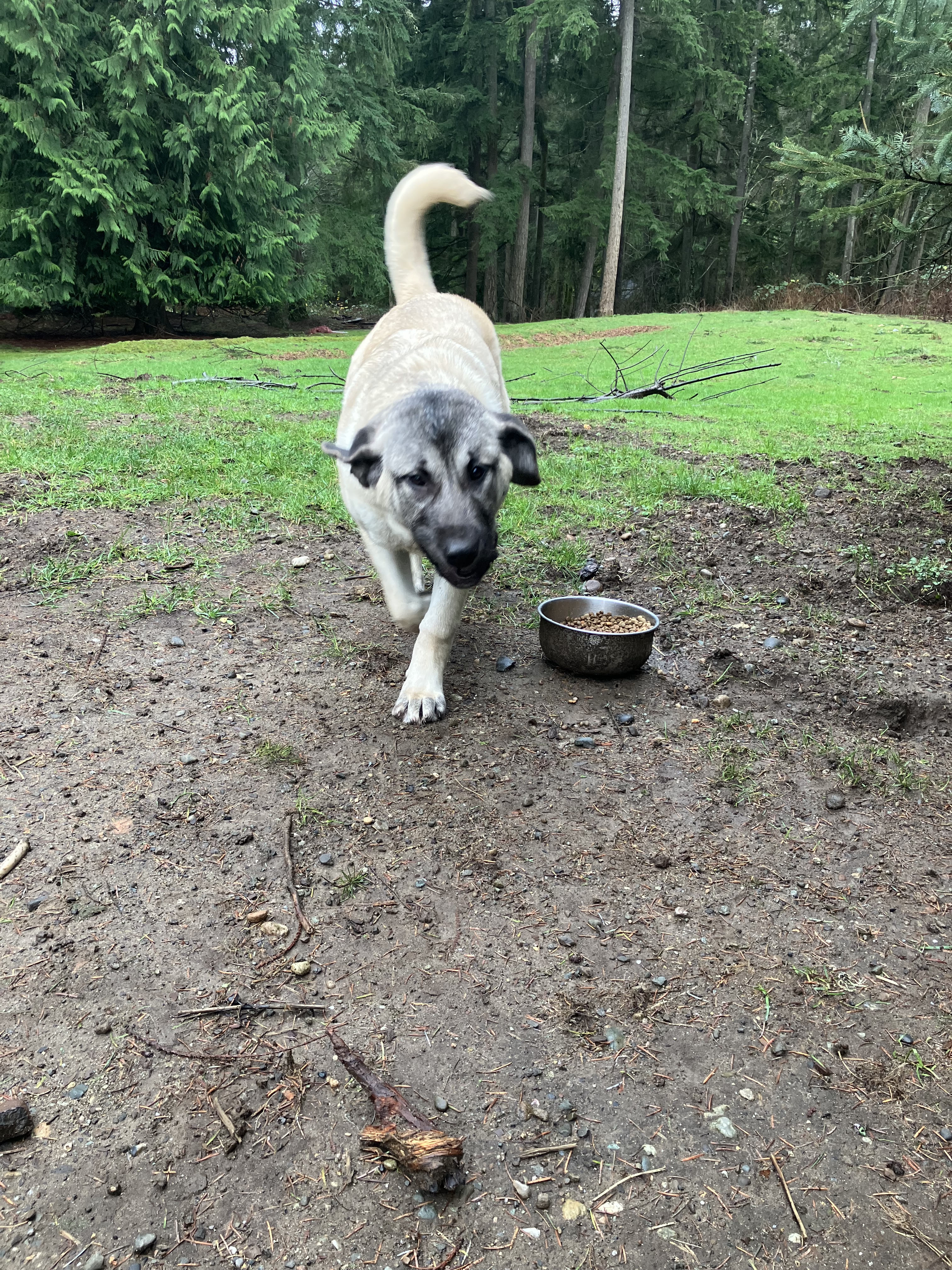
Koban will even come get pets while he’s eating, showing that his relationship to his food is non-aggressive, he’s not worried, which would become fear, which becomes a bite when someone gets too close. Instead, he’s chill, attentive, and confidant- without being overt. Does he still occupationally jump up in excitement when I come in with his food? Yes, but he’s learning, and when undesirable behavior happens, it’s a perfect training moment to remind him of what’s wanted. “Down” followed by “good down” when he does it- remember to reflect back a positive response to positive behavior- and be specific. “Good dog” is amorphous- connecting “down” with “good down” reinforces the behavior asked for.
What happens when the desired behavior does not manifest? It’s not the animal’s problem- it’s you. Maybe you were unclear, certainly the animal needs more training, try backtracking to a behavior they do offer and step off it into the next behavior, try again, or perhaps, and this is often true with my Kangal, give the animal more time to complete the desired behavior after you ask for it. It’s never a good idea to repeat a command- they heard it the first time, repeating it confuses them. Well, she’s making that sound again and gesturing, I thought it meant one thing, but she keep saying it so it must not really mean anything. Pro tip- drop “no” from your animal handling vocabulary. It’s not a desired behavior, it’s overused, and becomes the first numb word in any animal’s own vocabulary. “Sit”, sit”, “sit”, “sit”- becomes the voice of adults in The Peanuts Cartoons. With my Aussie cattle dog, I will physically move her into a sit if she “ignores” me, and then say, “good sit” to reinforce the desired behavior.

Not all animals are created equally- there are many limitations depending on species you’re working with. Val is a high functioning breed- she could know thousands of words, most I didn’t actively teach her. She is very independent, so commands are sometimes more like suggestions, but she does know when she’s not offering the desired behavior- and how. Still, I’m responsible, I chose to get a high functioning, independent breed that’s known for being strong willed, but also very devoted to those who earn it. There are days when I can tell she’s not having me lead the day, but she does come around most of the time, especially because she’s food motivated. The chicken in my living room right now, remains at the other end of that functioning scale. It can’t understand the limitations of a towel, not pooping when it needs to, or that my house plants are not a viable salad bar. So it’s not left in the living room unattended. Proper boundaries for animals and people makes for a much happier domestic life.
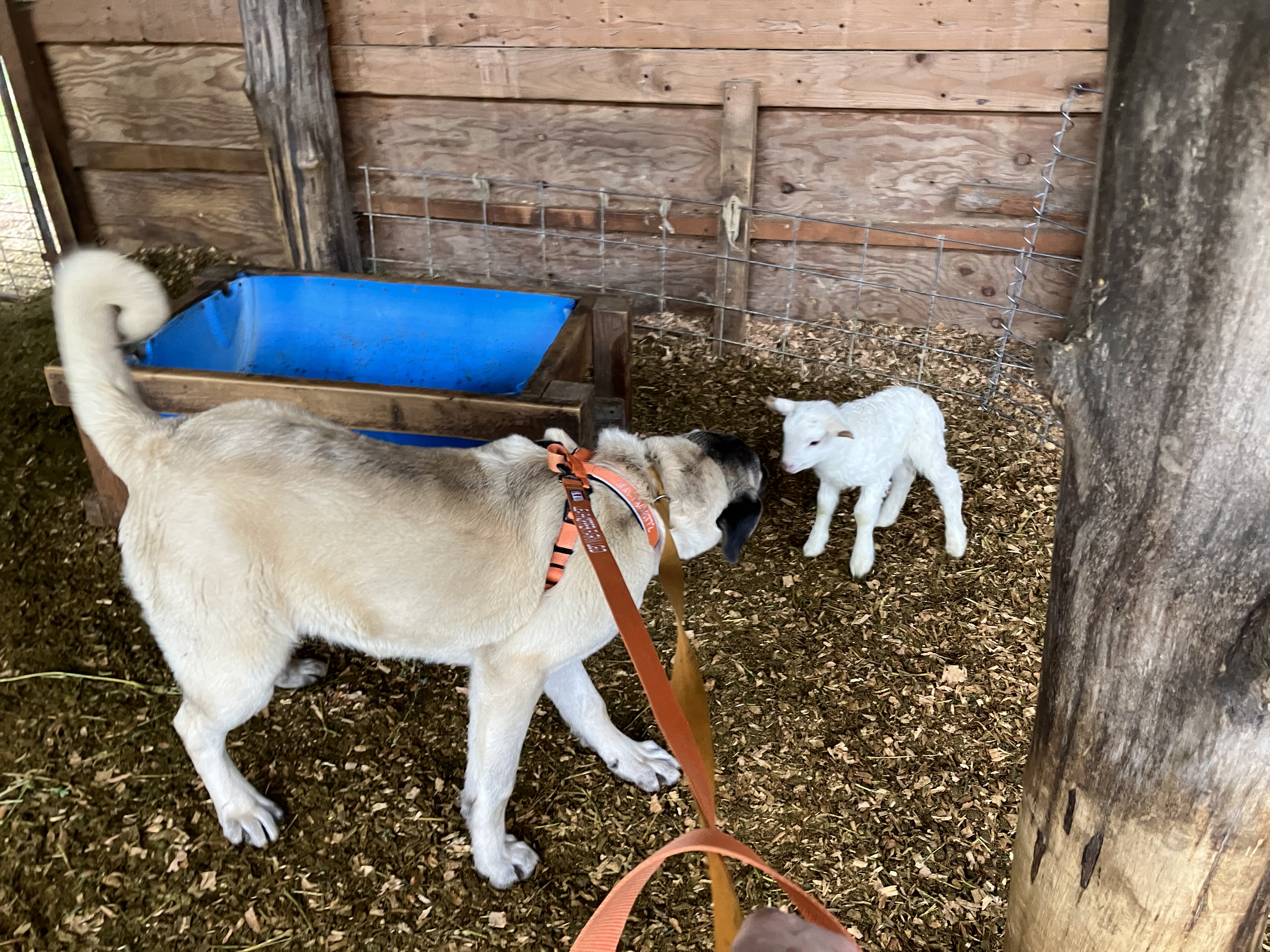
Soon the chicken will go back outside to rejoin the flock, and the cats will continue their house training, while Val looks on from the covered porch, awaiting her next meal. Down at the barn, the ewes allow me to attend them in lambing- what trust! Koban is taking a lesson from Gill in how to meet and greet the new members of the flock- animals can and do “train” other animals. I am so thankful for Gill’s ability to assist in showing Koban what his role is on the farm. When it’s time for patrol, Gill takes the lead, but he’s letting Koban bark more, as the pup find his adult dog voice. Maybe Gill is having a little laugh listening to his young pack mate’s mewling whine evolve into a guttural howl, before rounding out in one or two deep throated barks. Koban takes it all in stride, but he is soon due for a teenage breakdown, where he’ll be growing so fast, his brain will literally shut off many of his learning functions, just to keep up with the body as it matures. Again, I have to be aware of this and not come down on him too hard when he rebels. Find the good behavior where you can. It’s a never ending learning journey, and one I’m deeply grateful to have experience with. Gratitude to all the animals I work with, learn form, and try to teach, or at least, sway towards domestic behavior when I can.

 EEC Forest Stewardship