
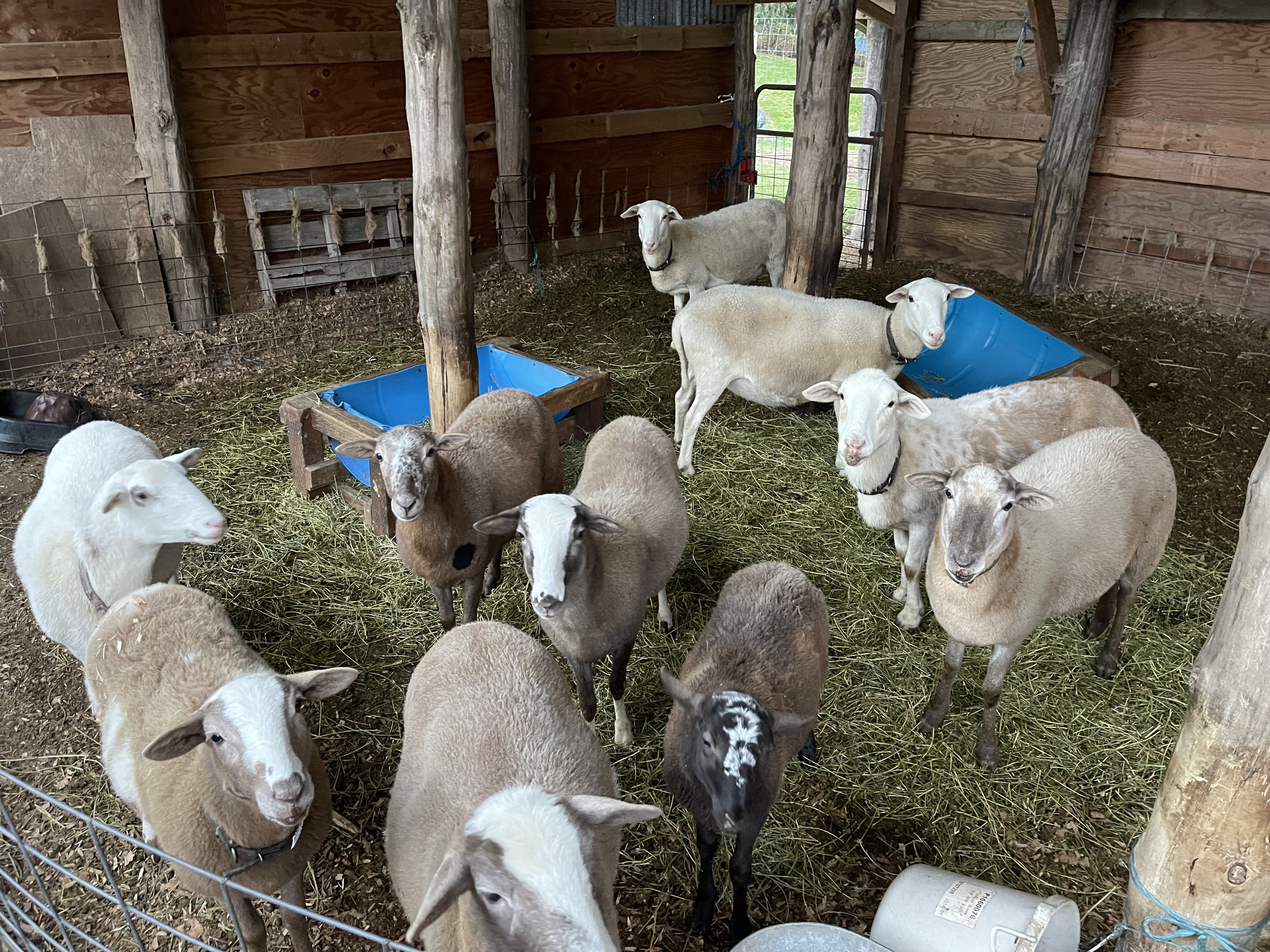
Did you know that sheep can get chickenpox? Well, it’s not quite the same virus, but similar, and contagious to humans. No, I did not get it, I used gloves and a lot of bleach to clean and keep things sterile through the infection. When I first got home from a recent trip, I went to check the flock and found them all with sores on their mouths and flipped out. After a long talk with my sheep mentor, I got on the internet and scared myself a bit more. How did the pox get into my farm? I don’t have other animals coming and going, and not a lot of visitors from other farm yards. Well, I’ll get to how I think it came into the farm, but first, a little more about this zoonotic disease.
Parapoxvirus affect vertebrates, and can jump from animals to people, so you have to handle it with caution. ORF stands for contagious ecthyma, also known as contagious pustular dermatitis, or sore mouth. It’s endemic in farmyards around the world, and commonly infects herds that have not yet been exposed. Luckily, it’s not fatal, unless you have young lambs, which were not dropping when this infection occurred in late Fall. I’d also finished my culling, so thankfully, none of my economic plans were interrupted. Typical infection causes one or two sores on the mouth, but my gals were eating alfalfa together out of the feeders, which, when the ewes dig down through the twiggy material to get to the leaves, prick their faces with micro-scratches, which then get secondary infection from the ORF. It made the noses of some of my gals look hideous for about a week.
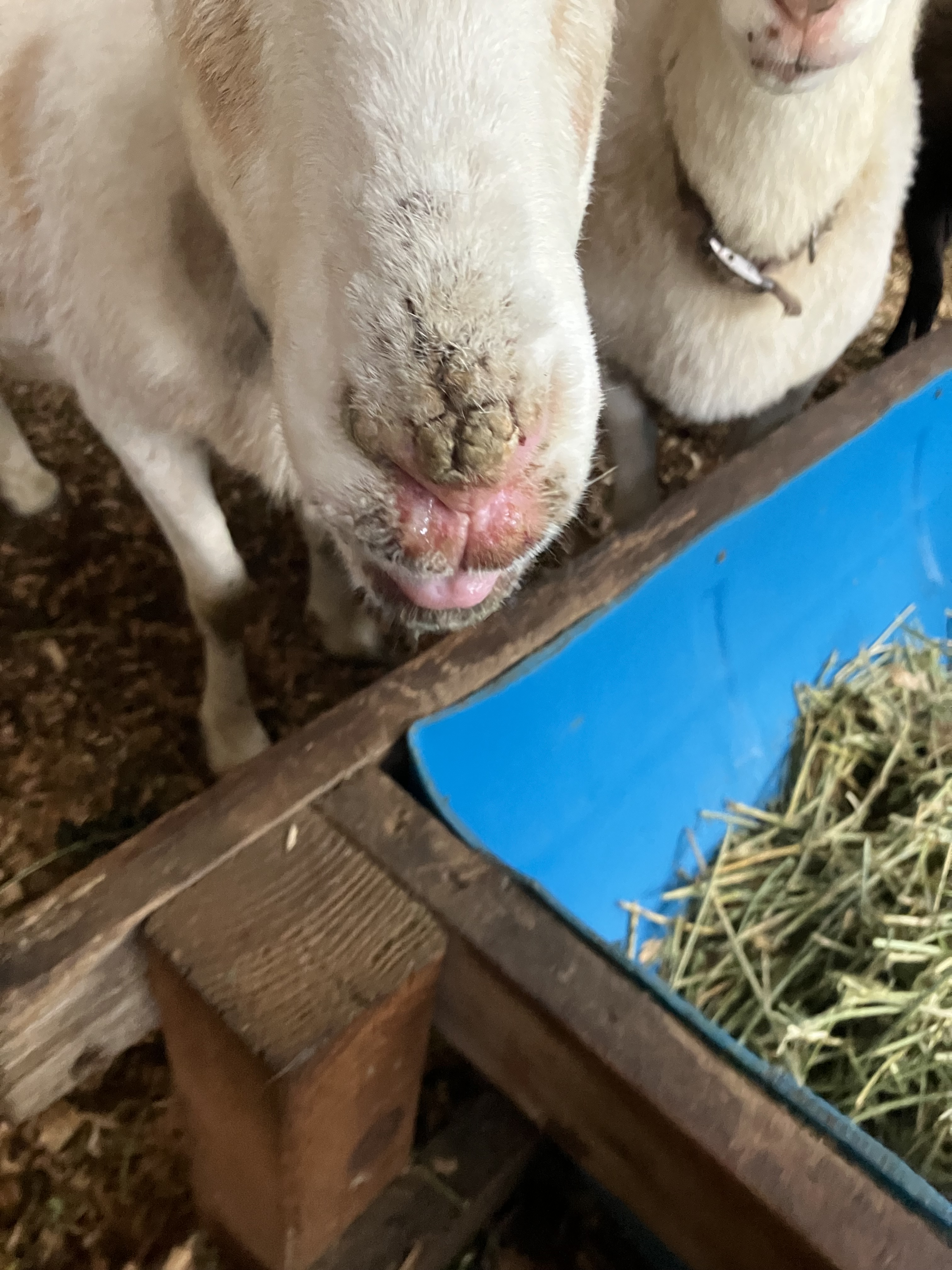
As soon as I knew what I was dealing with, I got everyone out of the barn and away from the feeders. Then I fed everyone on fresh ground each day for the next two weeks until the infection resolved. I had a very well established local vet practice out to see things and make sure OLF was the virus I was dealing with. The vets complimented the overall health of my herd, and said there was not much they could do, the virus naturally resolves its self within a week. Once infected, the sheep have a natural immunity after that. The doctor assured me there was nothing I had done wrong to get the infection, that it could have come in on my shoes after a trip to the feed store, or on any surface touched by someone with the virus on feed sacks, mineral blocks, etc. I asked if it could come in on farm yard pumpkins and they said that was possible. I’d purchased a bulk load of post Halloween pumpkins from our local grocery store as treats for the animals, and shortly after those were fed to the sheep, they got OLF.
That’s the only think I could think of to fully explain the infection and timing. The virus spreads fast once infection occurs, and I had not been to the feed store within the week before I left. The vets were least suspicious of the pumpkins, and said it was not likely they were the culprit, so I did a little experiment. My rams were in a separate pen and not infected. They had not received any pumpkin. So, I had one left, and cut it up for them. Two days later… OLF. The rams had it, from the pumpkin- but that’s still only a hypothesis, so I can’t be 100% sure, but it was present in the rams right after exposure to the pumpkin. Here’s why this is a serious concern. If pox virus is on pumpkins that people take home and handle to carve, people will get OLF. I wonder how often this happens, and parents don’t connect the dots, thinking their kid is just having a reaction to something mundane, not a farmyard virus. This is scary folks, think about it.
How did the pumpkins get the virus? Well, we use animal manure to fertilize a lot of agricultural fields. Usually, the manure is kept in a liquid form and sprayed onto fields before planting. Other times livestock is moved through the fields to glean and graze, dropping their manure as they move around, and then that’s tilled in before the next planting. Either way, manure carrying the virus came in contact with the pumpkins, and was carried to my farm. I’ll not be feeding pumpkins to my livestock again. It’s haunting me now, because I wonder if it could be in hay too, or the alfalfa from the fields, or the grain. Anything growing in the soil where the virus is can have it, hence, it’s endemic in farmyards. I don’t know how more people don’t end up with it, but also wonder if it’s even being diagnosed. The pustules clear up in a week, and if you aren’t working on a farm with livestock, you might have a hard time connecting your infection with OLF.
This is not an article to send everyone with a blister to their doctors asking about OLF. It is an exercise in awareness- awareness that viruses are rampant, they are in our food industry, and without good oversight, inspections, and USDA engagement, the public won’t know what’s going on. Guess what? Our current administration has fired a lot of the USDA inspectors and oversight in our food web, so we’re in the dark about a lot that’s going on back on the farms. My vets confirmed this, and they are seeing a heck of a lot out there, especially on dairy farms, so folks, wake up. Wash anything you buy that was grown in a field. Be very cautious about sharing scraps of veggies with your animals. Dogs and cats can get this too- any vertebrate. Perhaps why we don’t see it more in people is due to its self vaccinating state as a virus that once you’ve had, you don’t get again. Wish COVID was like that.
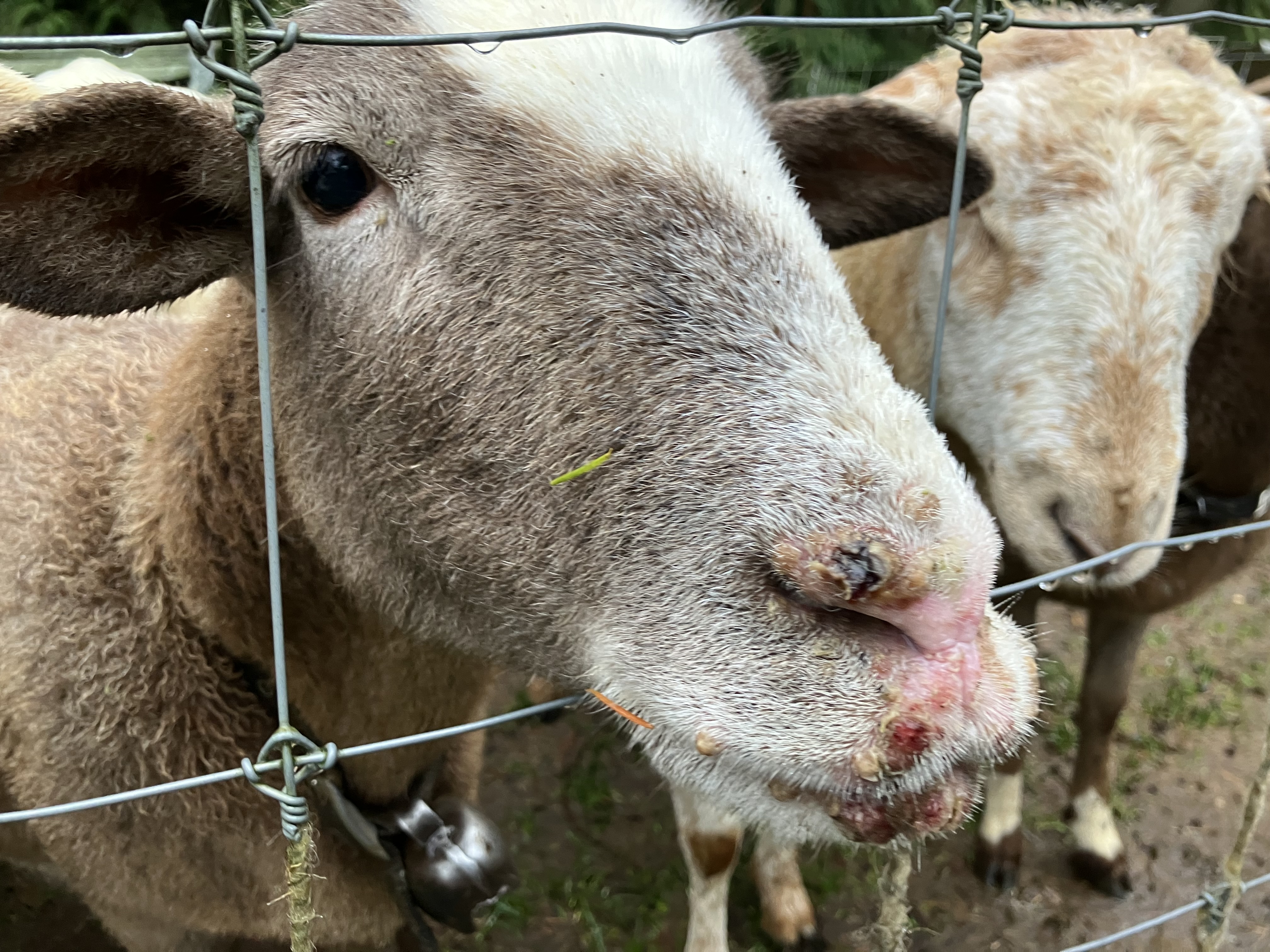
It was so scary to see my ewes sick like this- a first time for me in ten years of sheep raising at Leafhopper Farm. The sour mouth made it uncomfortable to eat, but the ladies kept at it, especially once the alfalfa was in the field, on fresh ground each day. Normally, feeding on the bare earth is not good, but for an infected flock, moving them around the pasture to eat off clean dirt is much better than putting their heads in feed bins where the prickles of the stems cut their sensitive faces. When they are not breaking out with pustules, the feed bins are fine to eat out of. After the infection cleared up, the gals were back in the barn with fresh bedding and clean feed bins. They were quarantined for two weeks, with no additional culling or processing, because an infected carcass can still spread the virus, so don’t slaughter during an outbreak. I am so glad I’d already done my culling earlier in the fall, so this outbreak did not directly affect my profit line. I could see this being a major issue in larger operations where there is not as much oversight. Again, USDA is limping along with no real inspectors left to see that livestock is clean and safe. This should be keeping us all up at night.
I can’t say that a lack of USDA inspection caused my outbreak, but the vets confirmed infections of all kinds are up in the livestock world, and to be extra cautious with exposure. Luckily, Leafhopper Farm has a closed flock, meaning we don’t bring in new animals each year. Our breeding ram was sources in 2021 from a registered flock in the next county, so I can trace him back to his breeder and her flock. Since he’s been here for going on 4 years, I consider him well established and not exposed to any outside breeding. No other sheep or goats come to the land for any reason. This is one way to help keep a flock healthy and safe from exposure, but unless you’re cleaning your boots every time before you go to the barn, you could be bringing in something. I’ve now taken to having one pair of muck boots for the barn only, and do not wear any other shoes down there, but sometimes, when I’m walking by in other shoes, I still forget and walk in to add extra water, etc. So my biosecurity is a work in progress.
I’m still haunted by this virus, though it’s common and endemic, I’ll now have it in the soil here forever, though the vets assured me it was already here in the environment, as most viruses are, and that potential stress might have brought out the infection in my flock. I can’t think of any major stress these sheep could have been through in recent months, I still blame the pumpkins. Now, in January, it was like a dream. The ewes and rams cleared up, and there is no sign of the virus left in the flock, but it’s still around, so I’m washing hands, cleaning things with bleach, and keeping a sharp eye out as lambs get ready to drop. The young are the most susceptible, but there is not an active breakout in the herd now, so lambing season should go smoothly. I could vaccinate the lambs against OLF, but the vets explained that the adults now have immunity, so the lambs should be ok. My herd is not large enough to need vaccination, and getting OLF gives that immunity for the foreseeable future, so I’ll hope that with good clean bedding and healthy ewes, the lambs will stay healthy too.
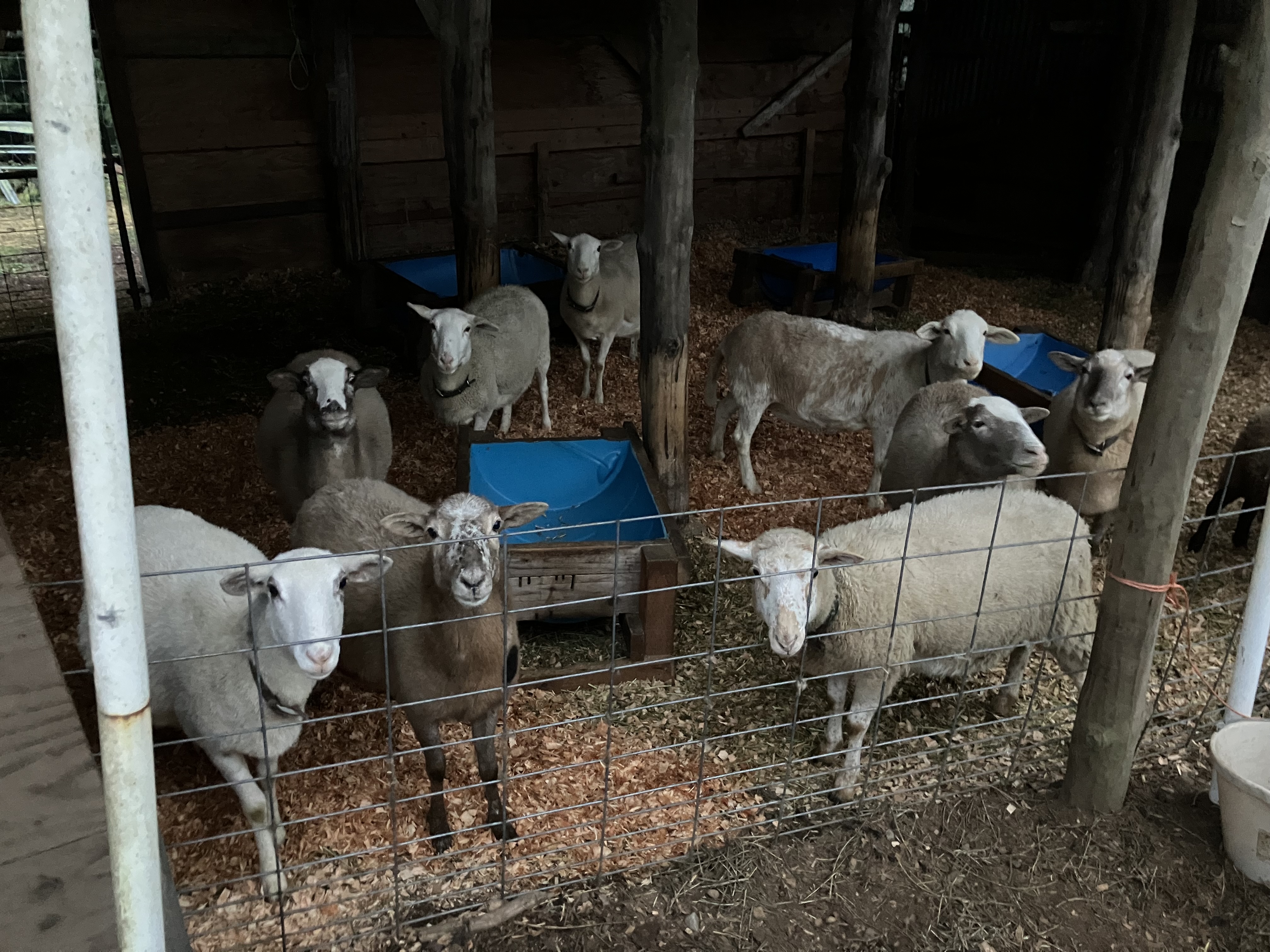
It can sometimes be very embarrassing for livestock operations to have a breakout of disease, but also not uncommon. I was horrified that I had somehow neglected my animals or shown some kind of bad practice. The vets assured me I had done nothing wrong, and that this happens to most sheep herds. Has it happened to yours? My sheep mentor told me about her breakouts, which happen every 7-10 years. That’s how long it takes for immunity to drop enough for another round of infection to take hold. With this in mind, I’ll be less surprised if I get another breakout in a few years. It will be in the barn and around the landscape forever. That’s a sobering thought, because it also means a child playing in the field where the sheep graze could still become infected. That goes for children playing in any field where manure has gone, even composted manure, because viruses stay on surfaces a long time. It cannot be spread from human to human- thank goodness! To find out more, read the CDC description here.
It was not easy writing this post, I wanted to be honest about what happened, but not panic my clients, as no meat sold this year was in any way affected by this outbreak. I’ll have a full report on lambing soon, and hope to have a safe and healthy herd moving forward. Future outbreaks can occur, and I will know what I’m dealing with in future, but what a learning experience. I’m thankful for the vets that came and assured me the animals were ok and that I did nothing wrong. I’m grateful to the ewes, who took the whole thing in stride and managed to not get me sick during the outbreak. Thanks to my mentor for keeping me calm, friends who were supportive, and family for listening to my heartbreak. I’m so glad things are back to normal here now, and that all the animals are healthy and back to thriving on the landscape. Stay tuned for a lambing update soon. No one had dropped yet, but we’re in the final weeks of gestation, which is always an exciting time.

 EEC Forest Stewardship