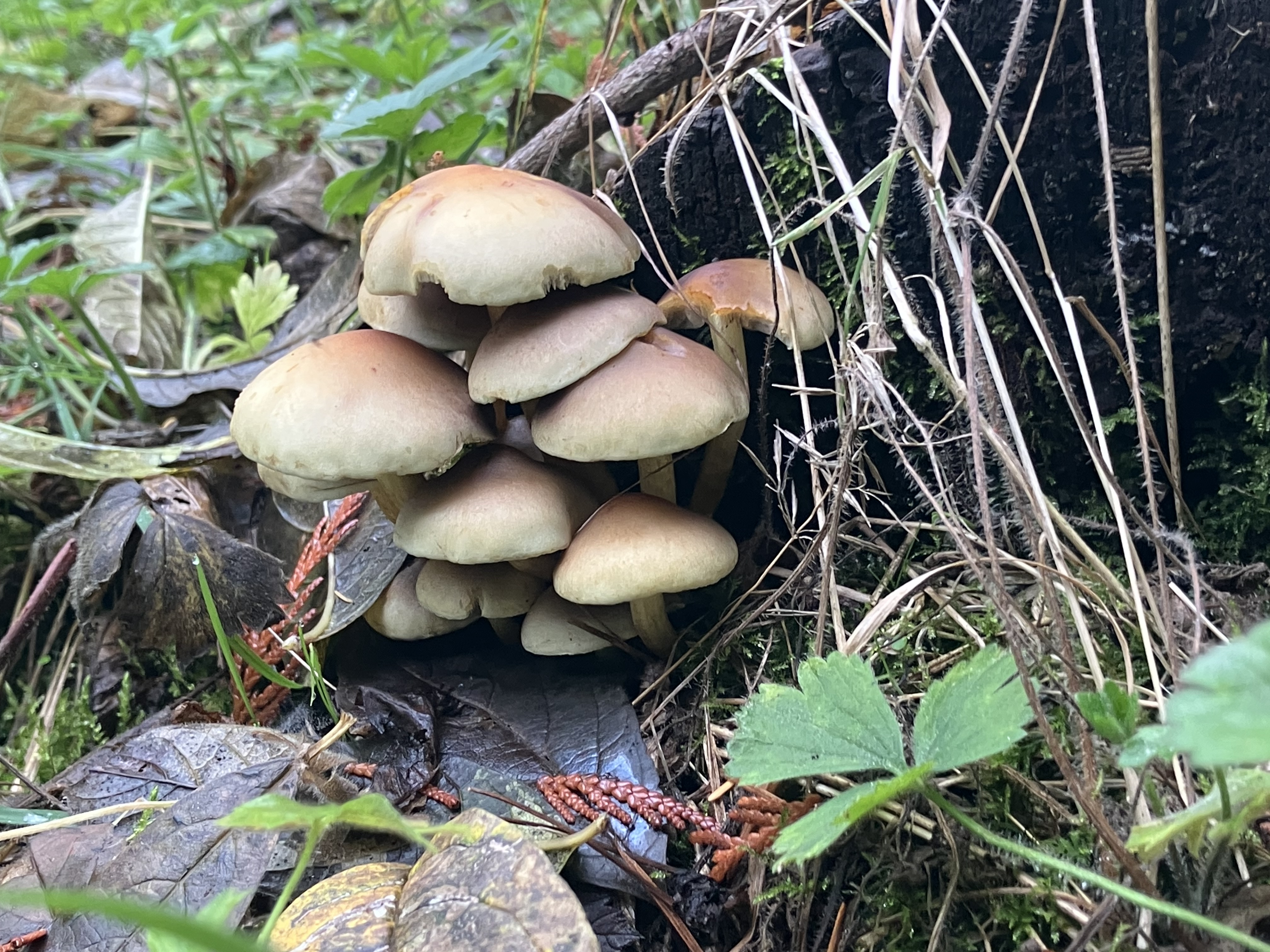
The fungi are blooming at EEC Forest Stewardship as the rains settle in and temperatures drop. These sulfur tufts or Hypholoma are common on stumps and logs in temperate climates. This particular fruiting is happening on a log that was inoculated with shiitake spores many years ago. I noted that several of these old inoculated logs were covered in Hypholoma this Fall, 2025.
Gymnopilus or Pholiota?
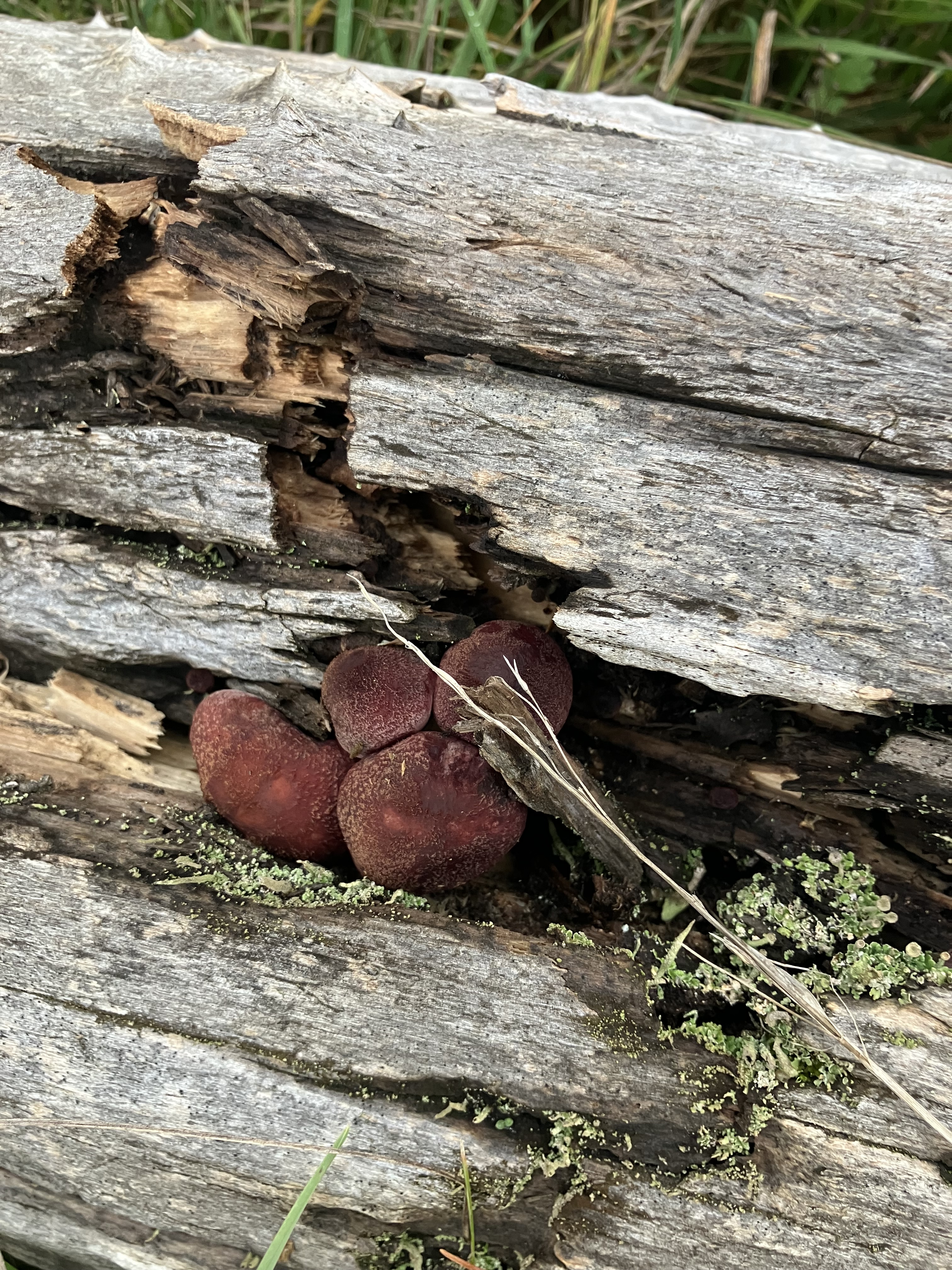
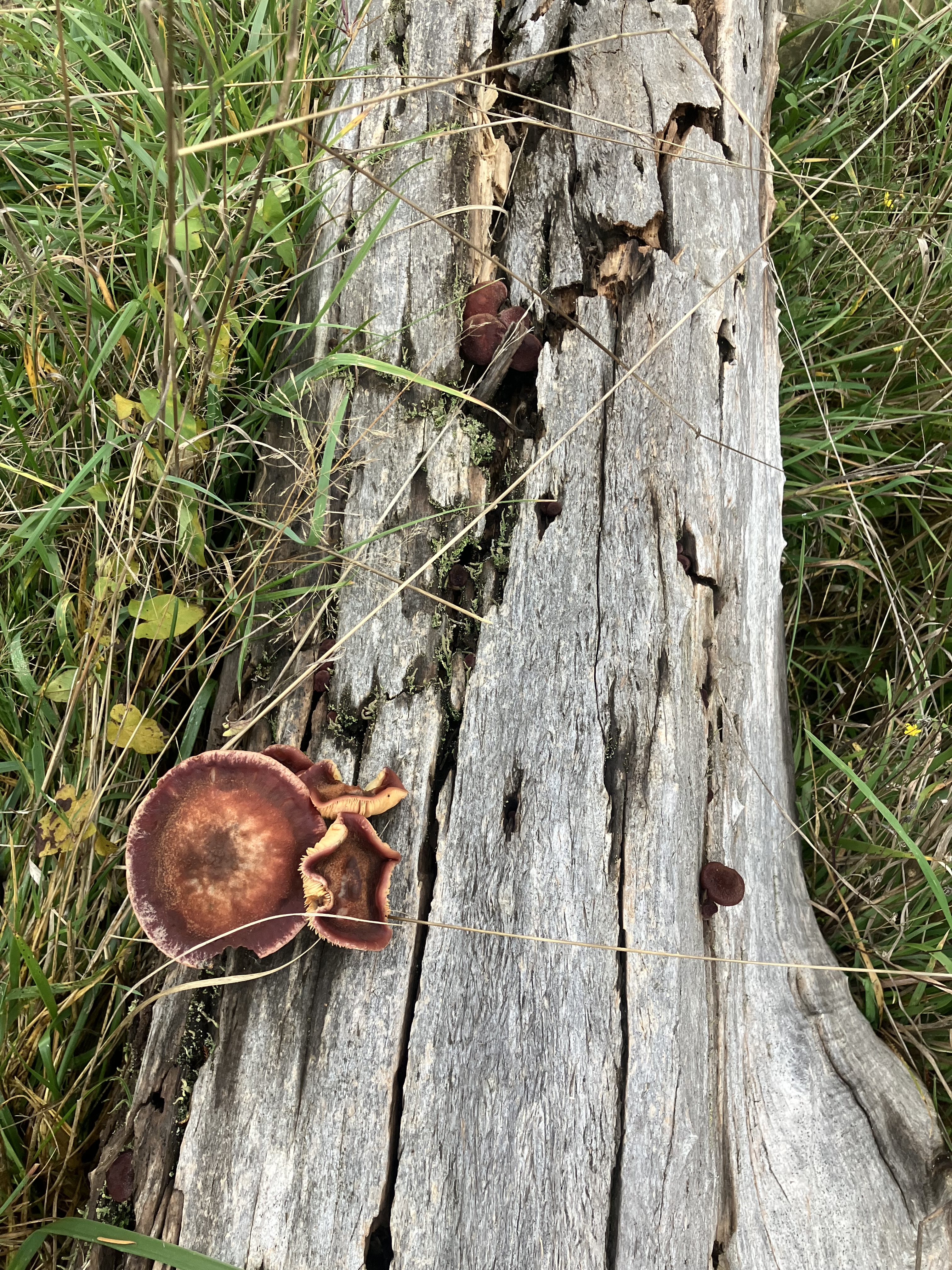
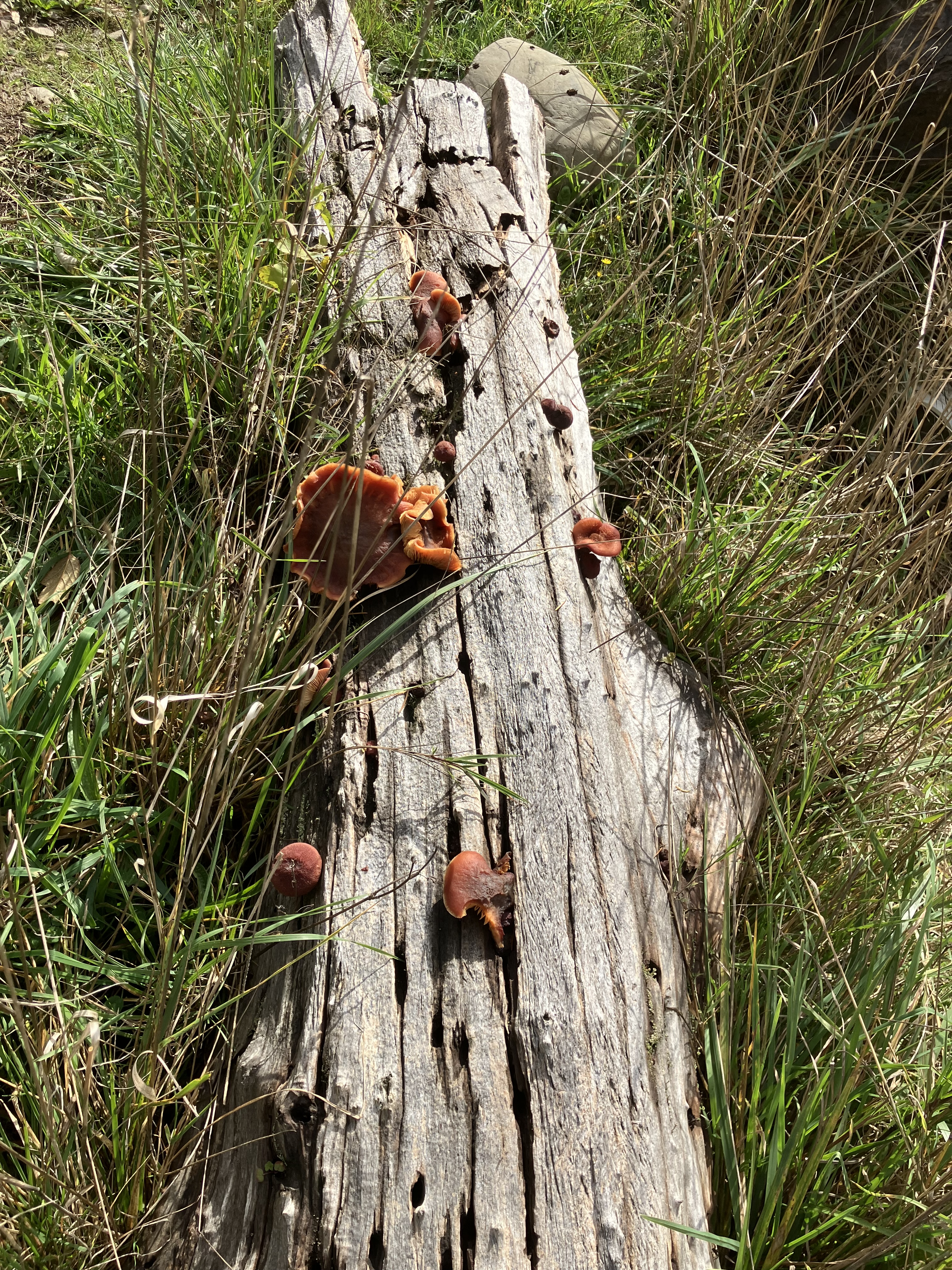
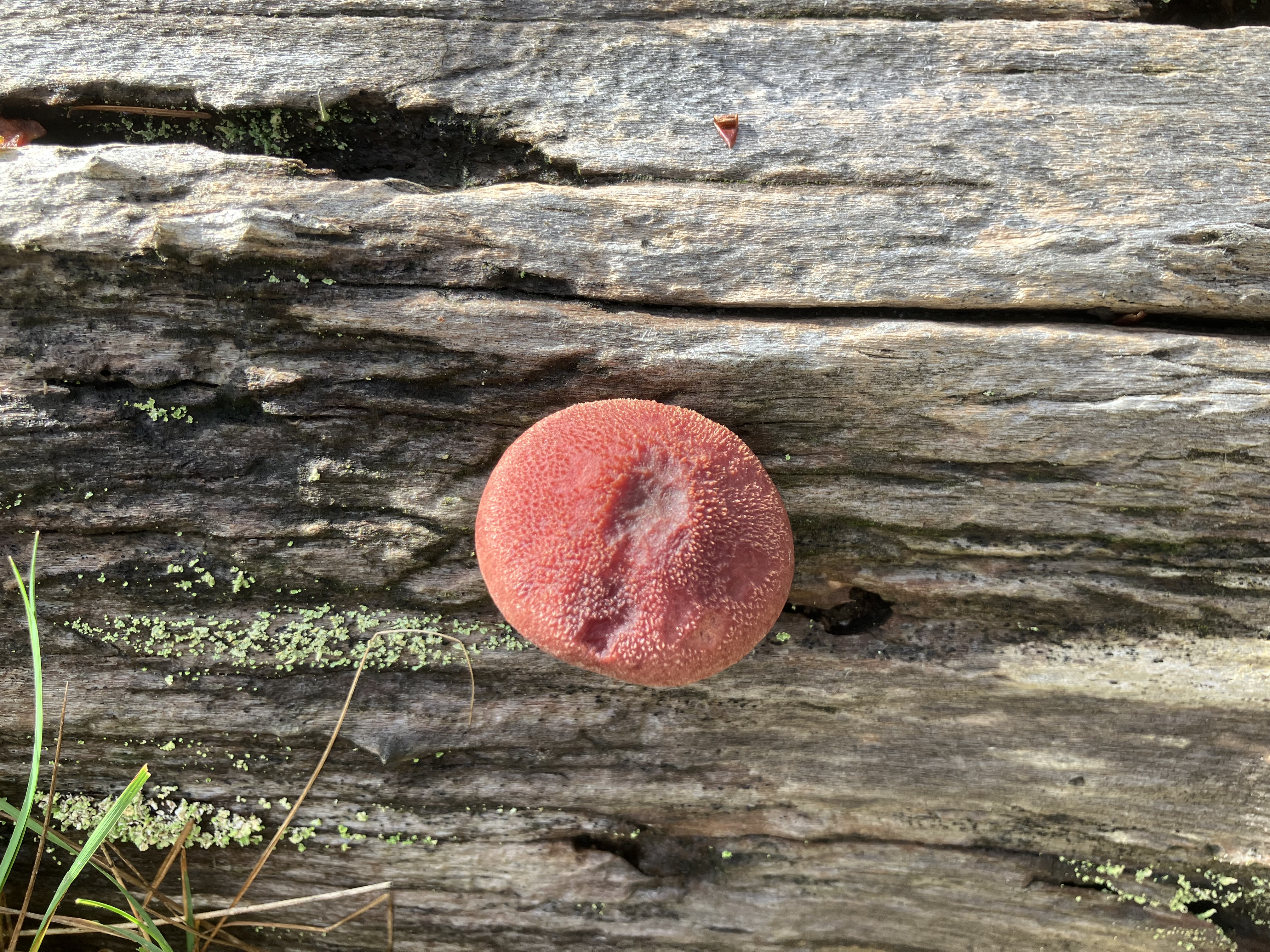
Sometimes the coolest looking shrooms pop up out of the logs around here and I really have a lot of learning to do. Mushrooming is a hobby for me, so I try to keep the quest fun by allowing my self to acknowledge that sometimes, I just don’t know what kind of mushroom I’m meeting. The bristly looking red mushroom above was giving me a little trouble. At first I thought it was a Jack-o-lantern, but then it had that texture on the cap, so I dug a little deeper into species and found several other leads. By now, I figured the only way to really know was spore prints and a microscope, so I took a step back and continue my wonder. I used to do a lot more spore analysis, but have put the hobby part of this adventure front and center, thus allowing some limitations in this field of knowing. Mushroom knowledge is changing every day as we do more DNA gene sequencing and spend more time in the field getting specimens to study- and that’s the job of mycologists. Yay science!
When I’m walking around in the landscape at EEC Forest Stewardship, I do try to capture images of fruiting mushrooms for a land journal of species I keep for personal record, but getting the exact ID on each bloom I encounter is not the object of my observations, just seeing them their and recording presence can be enough. This brown mushroom could be easily missed in the first photo far left, but it’s size caught my eye, and the unique ring of texture around the cap.
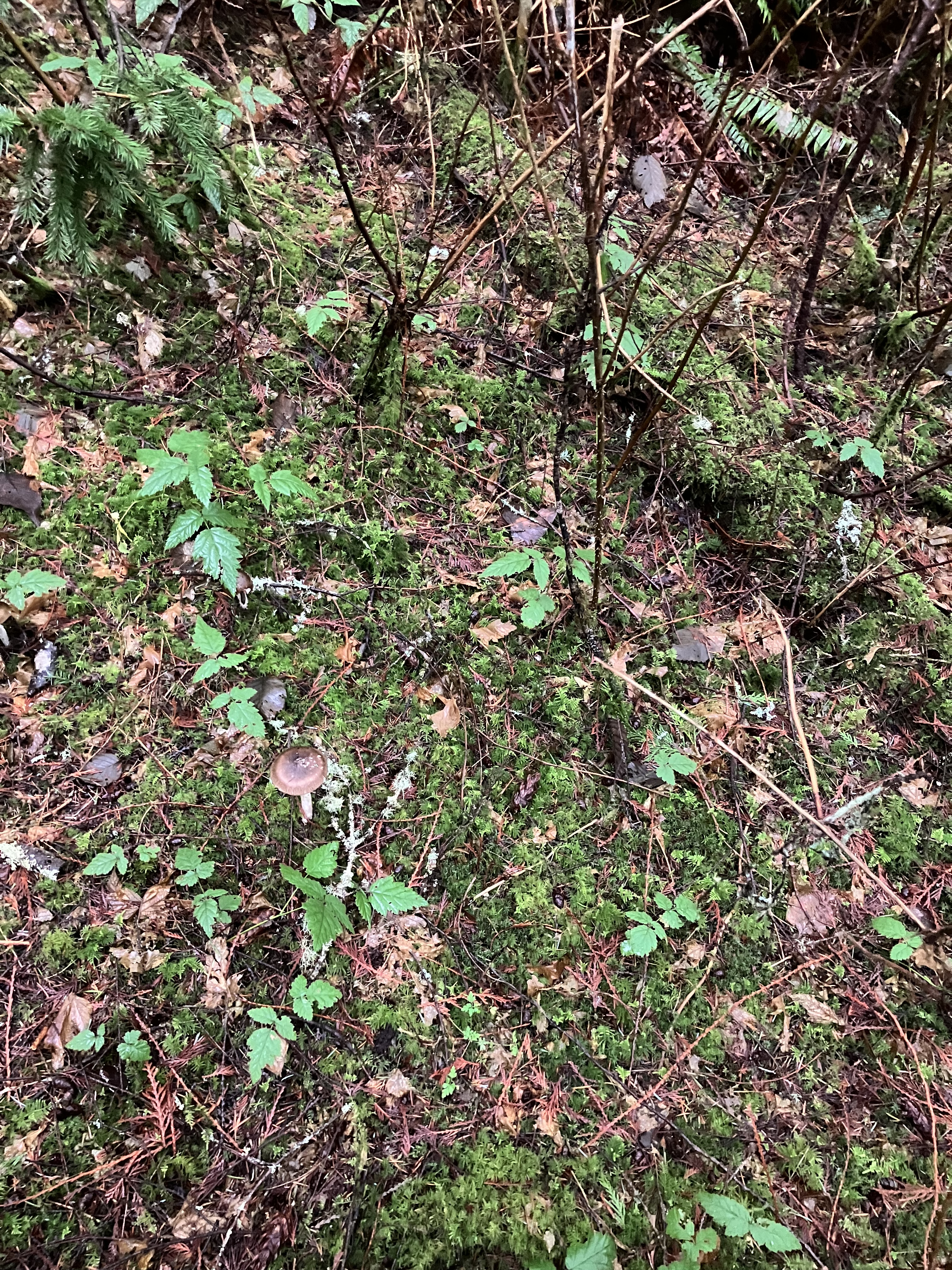
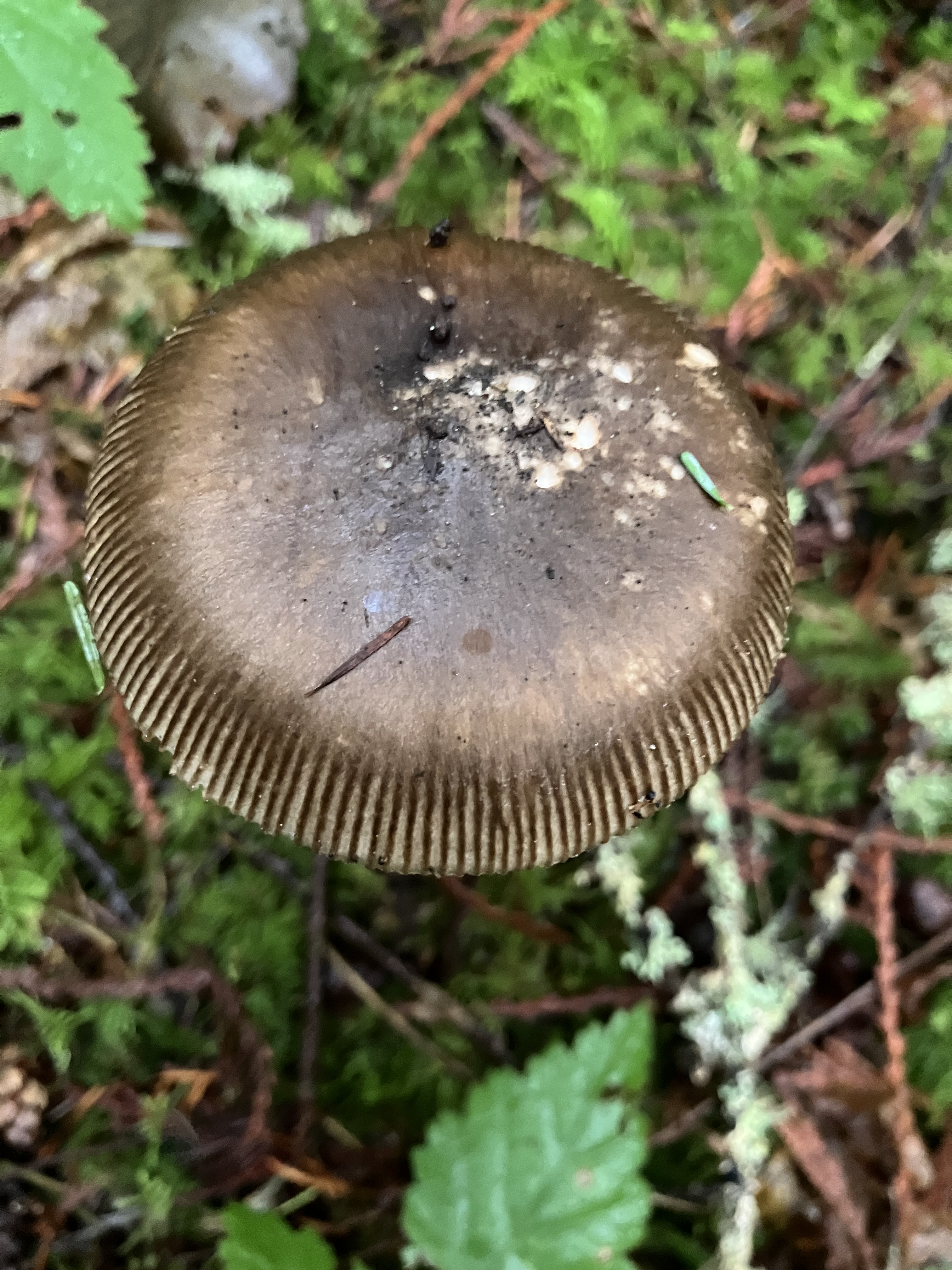
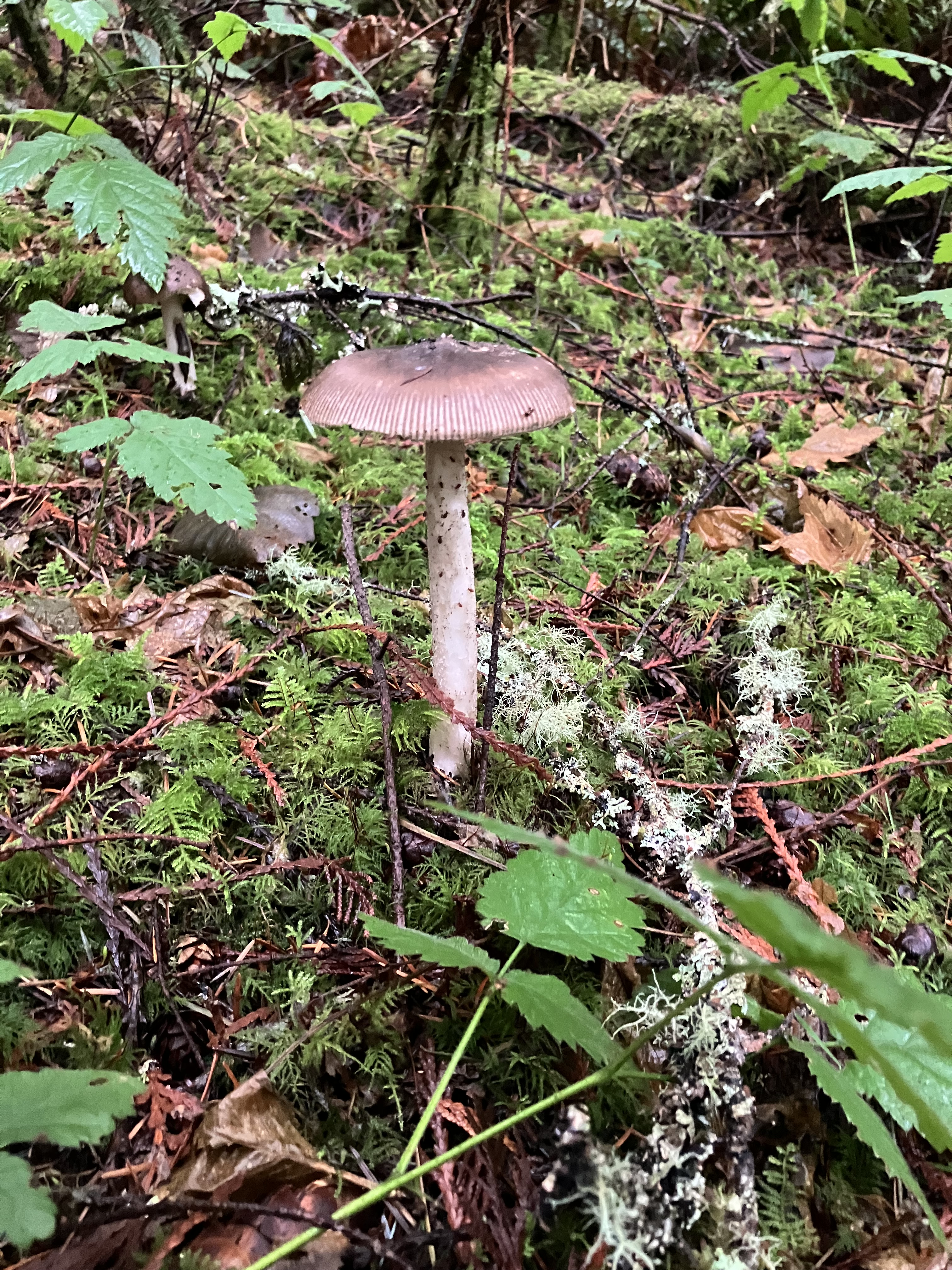
The stipe was too tall and thin for a russula, and that ribbed pattern around the cap was fascinating. Also- the color of this mushroom seemed to change with the light- as you can see, the shot from more directly above shows a more yellow/brown cap, where the shot from the side, far right, is almost mahogany. Still, as I looked on at the stipe (stem) of the mushroom, I kept getting Agaricus vibes. Later at home, as I began crafting this blog and sitting down with my computer, I began my typical online search using PNW Pictorial Key for Mushrooms. It’s worth sitting down with this guide when you have a chance. I’ve found most of the species I’m looking for when I really take the time. It took me scrolling through each gilled mushroom family until I got to Amanitaceae. This is a large branch of the mushroom community, which includes A. Vaginatae, known for having “grisettes”, that patterning on the edge of the cap. That name also refers to a cheap gray wool fabric, in 17th century France, that was worn by working class women. I then went on a journey through the life of a Grisette, and thank the mushroom world for this history lesson. Check out Madam du Barry to find out more.
So, mushrooms of EEC Forest Stewardship- I love tangents! I’ll also not soon forget grisette, or this pattern on a mushroom. This could be an edible type of fungus, but because it can also resemble toxic varieties, I leave it alone. Remember- a brave mushroomer is a dead one This is an old adage I deeply appreciate, and repeat often. This healthy fear of what could also be is important when deciding to harvest and eat a mushroom, and I would advise against it, unless you are with a mycologist who can confirm with absolute certainty. Know that the kind of certainty you might want could involve a microscope and some sharp eyes, not easy testing in the field. Pictures are your best bet for ID, but even I often fail to get all the angles needed to confirm physical traits- in this case, no picture of the underside of the cap for gill confirmation. The details of physical characteristics in the attachment of gill to stem matters.
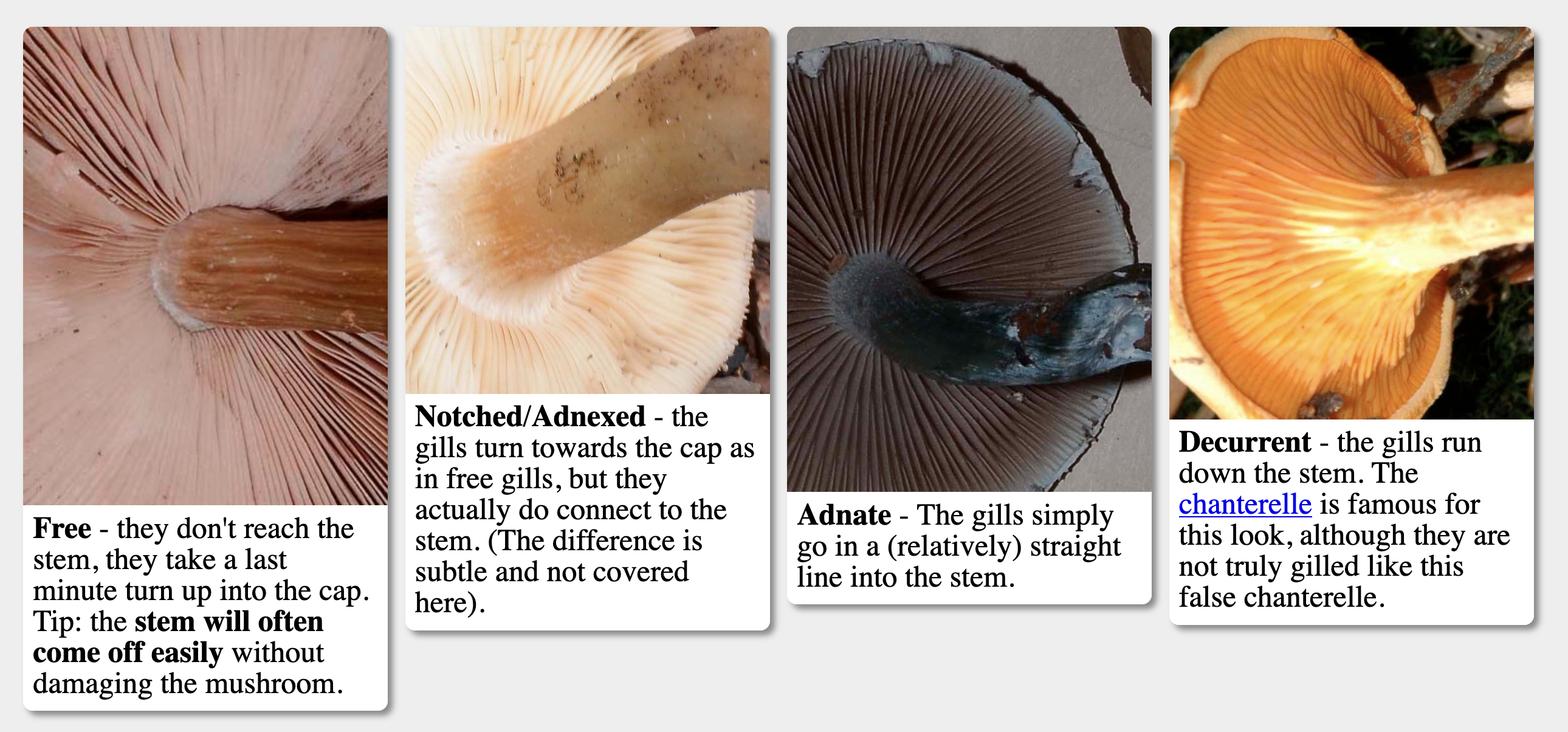
This is another direct reference from the PNW Pictorial Key. Please picture all sides of a mushroom for better identification, and even through I don’t do many spore prints now, I recommend trying it a few times to get a little dirt time in knowing how. Note the last mushroom example above- the false chantrelle. As noted, the true chantrelle is not gilled. Veined mushrooms are easy to spot once you know the difference, until you find toothed fungus, jellies, slime molds, puffballs, and a list of diverse shaped, consistencies, and colors that boggles the mind. They grow in almost any conditions, but are most prolific in woodlands, where carbon dense branches and logs need help decomposing back into the soil to promote rich growth and abundance in vegetation, cultivating rich habitat for all life. Mycology is the system of redistribution of resources through a network of root like structures binding soil and plant in a superhighway of nutrient corridors for consumption and production we humans have a hard time fully understanding, but could appreciate if we sat with our living surroundings more. Wake up!
The
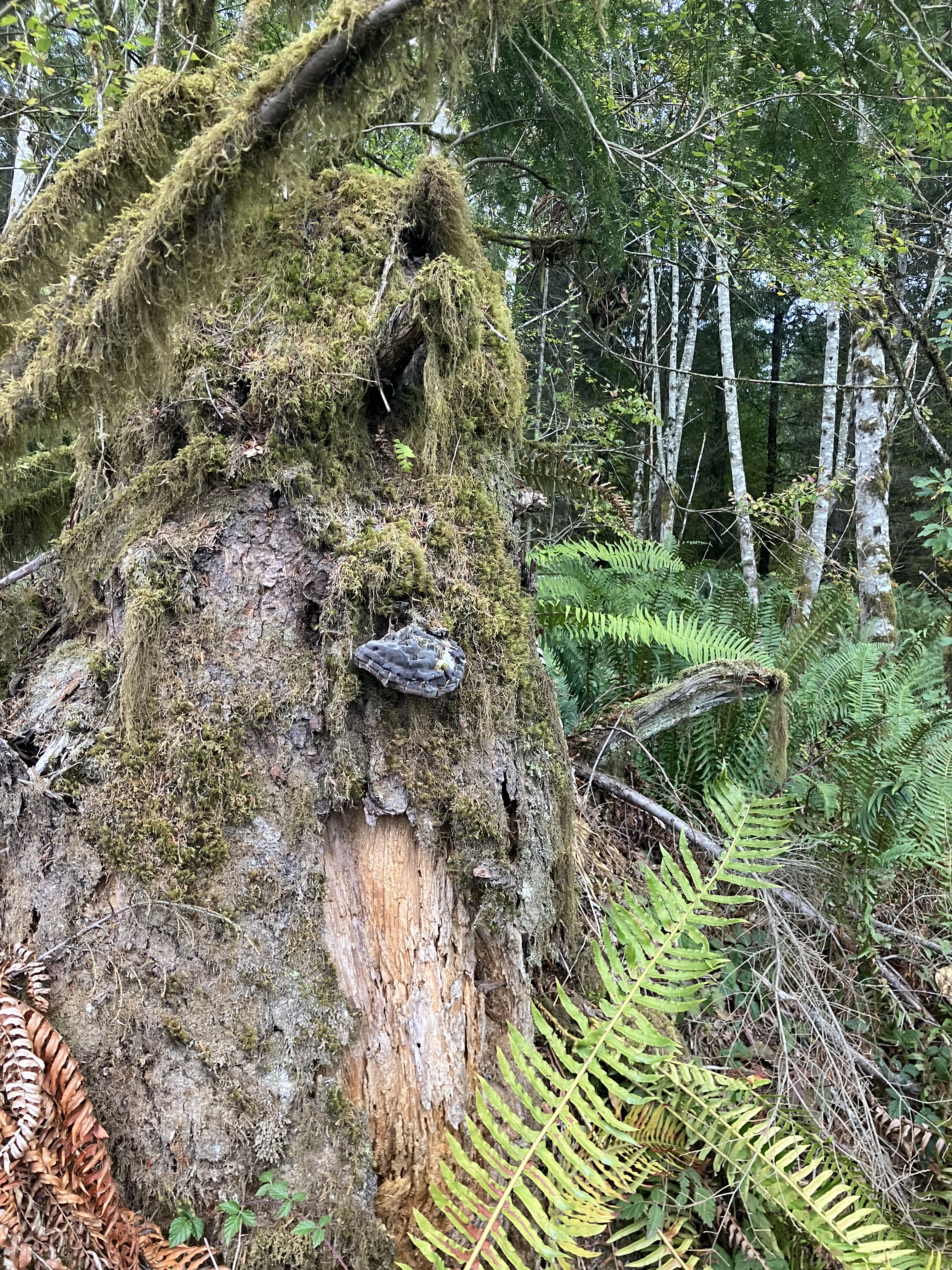
Polypores are crucial wood decomposers in an ever growing temperate rainforest. Most of the elder trees have been cut, especially in the landscape that includes EEC. The Weyerhaeuser Company, a European Colonial Legacy of extraction industry, built, literally, on the timber feet of old growth canopy that had not been present in Europe since Roman Occupation. A legacy of ecological genocide continues today throughout The Americas, but mushrooms never stop trying, following their own original instructions to help transform through decomposition. On an old growth stump, lasting reminder of the tremendous forest that once stood, this Sitka Spruce elder hosts a bracket fungus of some kind. It could be a red belted conk. Age is making the ID of this fungus among us difficult, but it’s a legacy of decomposition vital to forest health. In an old growth temperate rainforest, their are countless kinds of mushrooms, which reflects the complexity of mature forests. We humans cannot recreate these systems with all our fancy tech and scientific studies- through we are starting to get an inkling of all the layers involved.
For monoculture tree plantations, fungal invasion is a constant battle. Some mushrooms do kill trees, but usually only when a tree is already compromised in some way. When I read about laminated root rot taking out whole forest groves, I wonder why there is surprise at this when all the trees have the same genetic makeup. That same GMO technology can also develop resistant strains, but with monoculture, there is always a lack of genetic diversity for future health in a forest. As long as we continue to choose profit and industrial production, we’re hurting our ecological survival as a species. Don’t be fooled by green wash, your product placement ads often have promises of planting trees (in a plantation where they will be cut), or “sustainably harvested” (after the rainforest was cut and cleared to plant the palm oil trees). In short, if it’s mass produced, it’s hurting out environment; from food to clothing, furniture, and electronics, everything made today for our addictive consumer culture huts us by destroying the very environment we rely on to survive as a species. Please don’t buy in!
Mycology can help us see the rebound in the environment, and tell us what’s out of balance too. Mushrooms are actively trying to decompose all kinds of matter in the environment, from toxic fuel spills to harmful pathogens, mycology is on the job 24/7 to keep the soil healthy, as well as send vital nutrients across the environment to aid plants in need. These often overlooked, and certainly underappreciated fungal friends are important players in the health of global ecology, so next time you see a mushroom, say hello, and take some time to get to know the fungus among us doing it’s job to clean up and enhance habitat for all.

 EEC Forest Stewardship