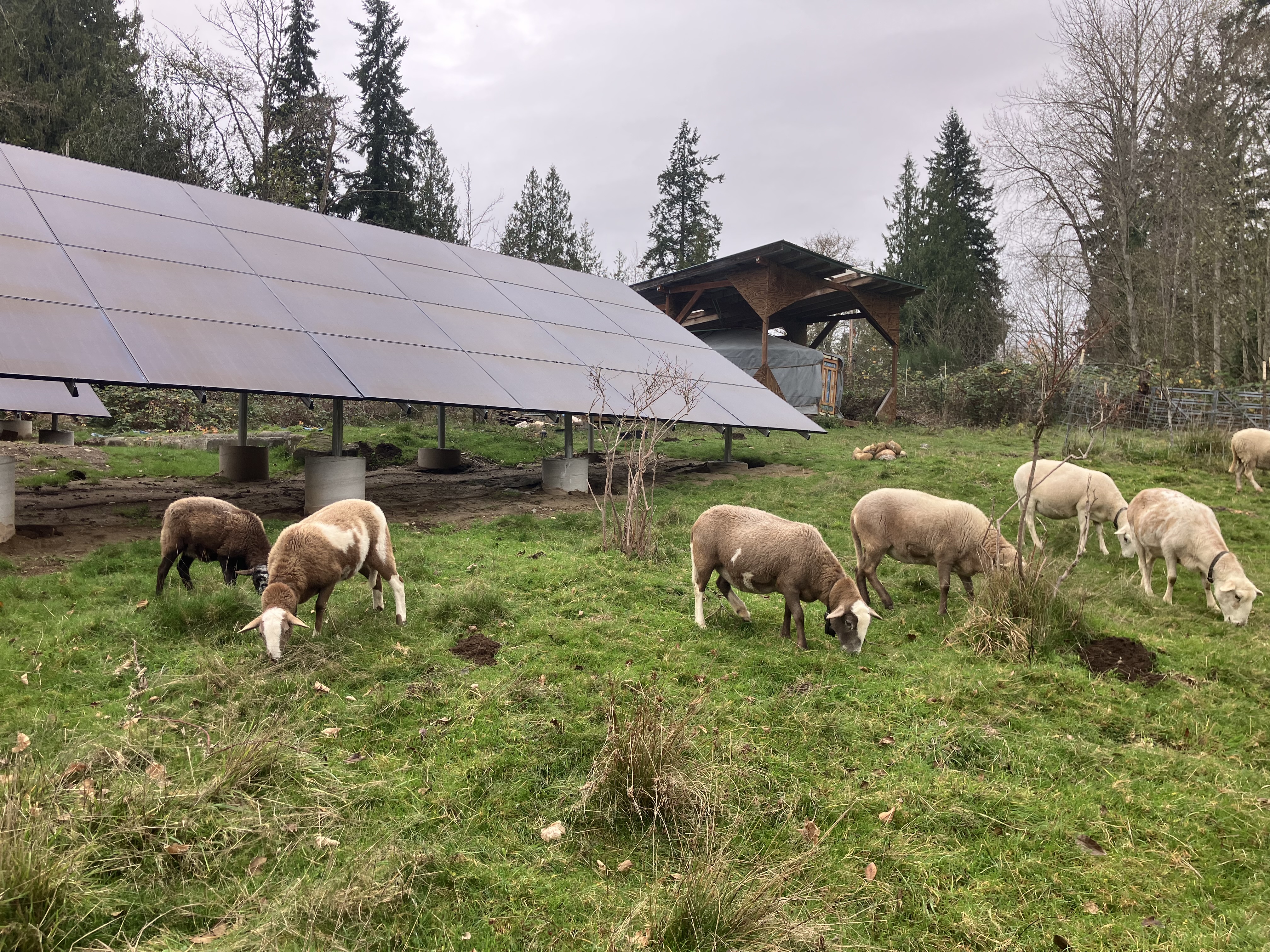
Cascade Katahdins graze on a dry day at EEC Forest Stewardship. Even in the total cloud cover, our new photovoltaic system is catching rays and banking green energy for our endeavors. It’s late November, and our flock is starting to show signs of pregnancy, just as winter sets in. There is still fodder to graze in these pastures, though fruit has fallen, and leaves too. Blackberry is still leafed out, and the sheep brows those hedges and edges for extra protein. Alfalfa will carry them to term, and nurse new lambs by next year. It’s good to see this condition in the ewes as they start to put most of their energy into growing the next generation for Leafhopper Farm.
Our LGD Kangals hold up security 24/7. I sleep soundly at night, knowing my team of alert K9s watches and listens intently, and vocalizes a stark warning to wildlife, which has learned the through routs out of the way of our well fenced livestock boundaries. The creek offers over 200′ of open throughway with restoration plantings of native species, creating habitat and a through way for wildlife moving from The Snoqualmie Valley and River, up into the Puget Lowlands and Cascade Foothills. These transitional zones allow access through human development, with intention to re-wild and retreat from over time. Eventually, our back field will be completely replanted with native understory, and the deciduous nut trees will have reached mature canopy to shelter future forests to come. Slowly, the human tending will become more and more passive, with some harvesting and replanting to fill in ecological gaps caused by human initiated extraction and removal of resident people, and biomass.

What I notice the most in this landscape is the missing top soil. There is a good compost layer around these barns from decades of domestic stock, but soil takes hundreds of thousands of years to build up and create real growing conditions for ancient vegetation. Glaciers cut through much of this area in the past tens of thousands of years, so the topsoil was relatively young, by geologic standards, but for First Nations, the land had become fertile and abundant with all the animals roaming the land, quick seeding and germination of plants as shallow glacial lakes turned into marshes and river systems carved out of melting ice and alluvial buildup. The landscape that hosts EEC Forest Stewardship, resides on a slope just below an area that started as a glacial lake and then filled in over time to become a wetland with spring fed overflow into what is now called Weiss Creek.
In the 1950s, the next generation of dairy farmers in and around The Snoqualmie Valley ventured further up hill from the already claimed bottom land to seek out new homesteads to raise their own cattle. My neighbors The Boards, and the previous, and original owners of the property I bought both came from Oklahoma in the 30s to work in the dairy barns until they had enough money to start their own herds or buy a plot to settle on. The Board’s yellow cow barn still stands, empty of cows for almost 20 years, and certainly not a milking barn past EPA regulations in the 1970s. When I first moved up to the farm, I bought two calves from Mr. Board to fill my freezers and host work parties. We had cookouts, grill fests, set some good fencing, planted trees, built new dwellings and habitat for birds and beasts, and feasted of a neighbor’s beef. What a foundation!

The flocks are fabulous, through a little monochrome. I’m not in it for a look, really, but there are some breed standards to follow, for health and harmony. I select for temperament and build, health and natural foraging behavior. You’ll see the chickens working the land, gleaning bugs, looking for opportunity across the rich earth. Sometimes this looks like a raid into my garden, which is not ideal, but it helps me design better plantings to dissuade the flock from my crops. The problem is the solution- I will continue to stand by that motto. The geese harvest is about to start, with gander on the menu for winter feasting rituals. I’ll look forward to dining on the rich drippings with dressing and fruit compote. The pears that remain chilled are softening up to make flavorful pies and fillings for seasonal baking. Oh, what a larder to celebrate! This is what such a lifestyle can offer with a little seasonal production, time in the dirt, tending, and harvest to storage for just the right time. Fruit wines are being bottled, and the hens finish molting, slow their laying cycle, and rest up through the long nights.
It was 50F in late November 2025 when I went to do night check- a ritual of final water and feeding, eyes on the animals to make sure they are OK, and good nights. I let Gill free to roam, his leg is holding with older and wiser lifestyle changes. Gill is showing his age, and we’ll monitor his comfort and health through this colder wet season to make sure his quality of life remains stellar. Koban is alert and observant, testing- as a good Kangal does while learning, but responsive to my commands, at least for now. I’m expecting the 2 y/o fall apart after I get all his manners programed. I say programed because these primitive dogs have most of their knowledge through instinct that is over 5,000 years in the making. Right now, Koban and Gill are loose with the ewes at night. There have been no problems, but I know this is a short term learning window. When the lambs drop, Koban will not be loose with the sheep, or able to reach the young ones for the next year. He will have a lot of supervised loose time with the lambs, but never alone. I see what he sneaks with Valley sometimes, nipping her and knocking her down- she is a smart bitch, and knows to stay down and still when he hassles her, but I’m there to intervene. I do not leave Val alone with Koban.

Keeping a watchful eye on things is necessary for the system to run well. I just got back from a 10 day trip back east, and need to watch what’s happening upon my return. I see a young rooster starting to via for pecking order, he should be culled. His red eye is another cull trait- as they tend to be more aggressive and become egg breakers over time (this is my observation with my own flock- experiences may differ). The beautiful plumage of this bird will be saved for craft and tool making- including flies for top water fishing. Black iridescent feathers are valued in decorative feather fashion. If you are interested, contact me. The flock continues to develop its own characteristics, and I plan to introduce some more fresh genetics in the coming years to keep health a priority. Line breeding can be done well, but not for too long before certain unwanted traits establish. The red comb and waddle is not ideal, but remains a dominate gene in chickens, and so, without more Ayam Cemani genetics, we’ll eventually have all red comb birds.
With one breeding pair of Cotton Patch Geese, there is less worry about genetics, but no plan of forming a flock out of two at this time. I continue to learn about these birds, what they need, and what it would look like to establish a breeding flock to support this well adaptive heritage animal. It’s traits are favorable, from shy temperament to relatively quiet self, unlike most geese breeds. This bird is smaller, but takes little grain to keep plump. They muck up the water, but put down great fertilizer for the grounds. They are smart, clean, and keep away from the other animals, mindfully moving about the landscape and staying out of trouble. I like them, but am not yet embracing a flock plan. The mess is a little trouble with more than two. I would put the offspring into a rotational grazing pen for the warm months, letting the mature pair roam free. That will involve some added work, but would then maintain a more hygienic habitat for all the geese, and a targeted grazing path for birds to work more diligently for the farmer. I love having a mobile bird system along hedge edges in the warm months to keep back the root sappers and weeds. It’s also an easily fenced off area for reseeding after the birds are concentrated along the strip. More to come on that project in future.
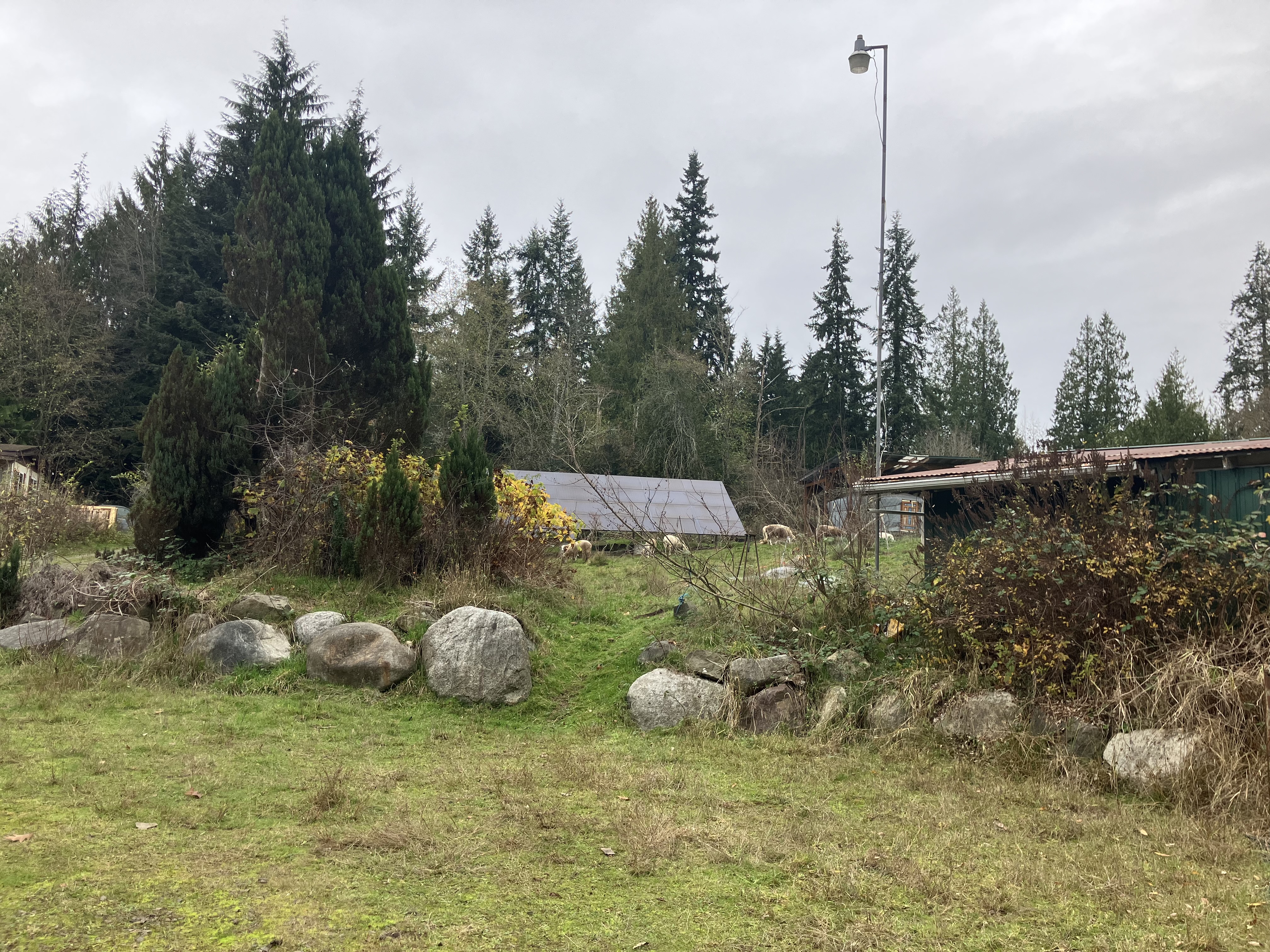
Growing a mix of plants in layers for livestock and human use, as well as restoring native plant varieties that should be present in this ecosystem, the landscape slowly returns to full abundance. The edge spaces, like this rock retaining wall around a parking area direct runoff towards the pond and off the gravel drive, and hold the slope for a setting hedge of mixed use shrubs like mock orange pollination species, hard hack material and pollinator, Saskatoon, thimble berry, cypress, willow, Nootka rose, and more. I hope to establish several more understory varieties like bear berry, trailing blackberry, and black cap raspberry. The chickens are in this shrubbery all year round. The sheep brows through from time to time, gleaning their own vetches and broad leaf forage. Layering creates wonderful abundance, and layering the animal systems adds to returning complex ecological cooperation that best supports long term survival and diversity in a thriving temperate rainforest environment.
No matter how many forbs and hay grasses established here, there will not be enough elk and deer, grouse and band tailed pidgin to produce the restoration power that can undo human logging, railroad track laying, damming, and generally depredation of the natural world to fill pockets far from ground zero in this land abuse, cloaked in limited connection to place, as in, none. Trappers had moves through these forests and lake shores for a few hundred years before the logging corporations came for the timber. Most industry had already devoured the entire East Coast reserves, Upper Midwest hardwoods, and Rocky Mountain pines. Timber barons wanted spruce and fir for construction across America. By the early 1900s, small logging towns like Duvall sprung up, and railroads took milk to pasteurization on its way into Seattle, Tacoma, and Olympia. Further south in Washington State, mining of coal had sped up development of the North Pacific corner of an established western most part of The United States.

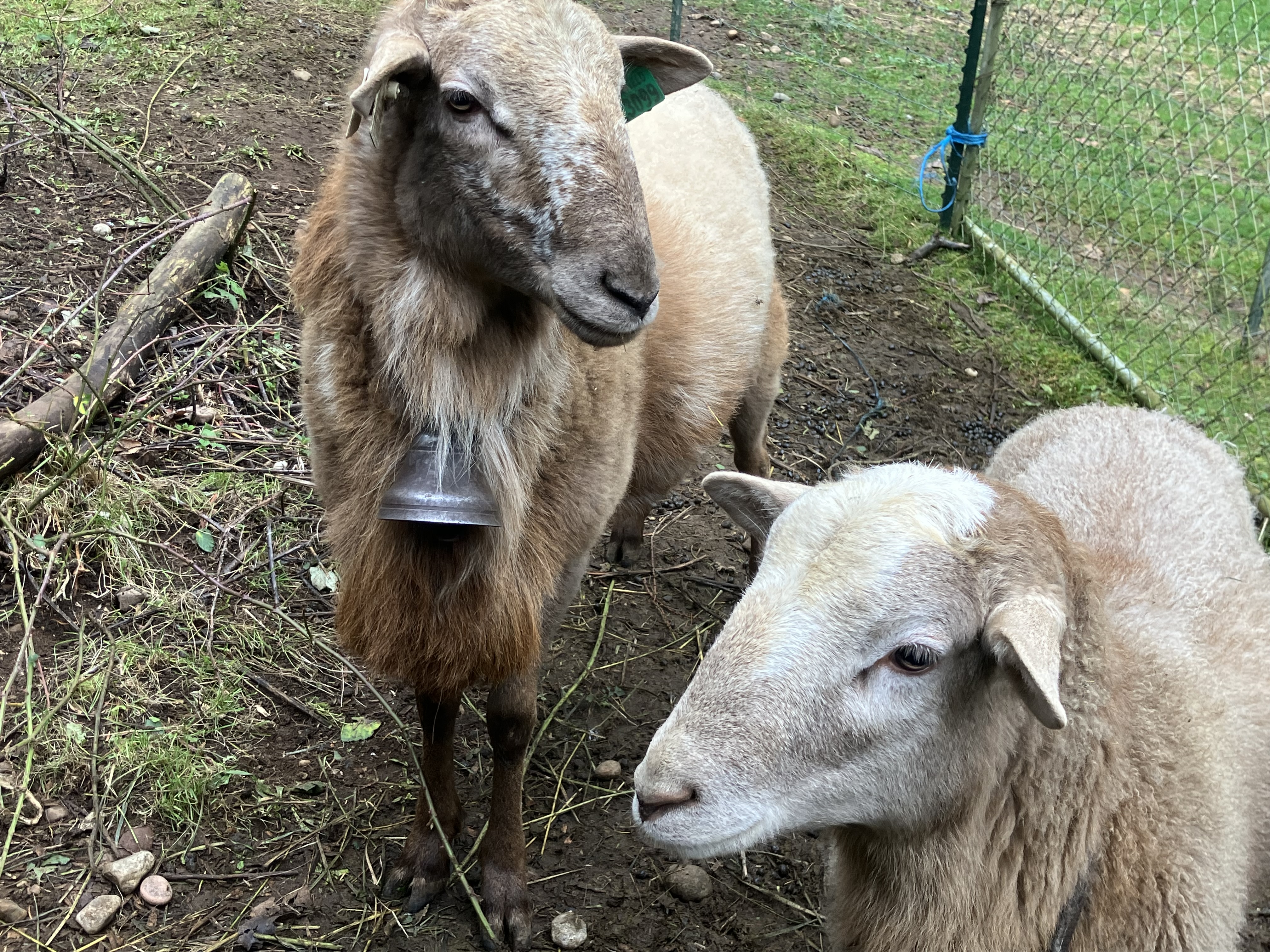

So here, at the end of a long stretch from Europe to North America, through the generations of colonization and settlement, homesteading and surviving across time and space, this final generation of such a legacy is striving to return nature to place, living in some reverence of connection, sharing this experience and setting the table to share sustenance and abundant fruits from one woman’s labor, and her team work with sheep, chickens, geese, dogs, cats, bugs, mushrooms, people, and restoration farming on small scale, manageable scale for one or a few people, this place thrives and re-wilds in a mimic of what could be again in future, helping to restore and regenerate in this great space and time.
The rams are in their own enclosure and settling down for a quiet winter retreat. They enjoy hay and the blackberry stand within their enclosure. The pair is getting on without too much drama. Okie certainly makes his dominance known during their feeding, but there is plenty of space and fodder for both. I’ll look forward to seeing how our home bred ram lamb Quinn out of Lickity-Split and Okie matures. Keeping a second ram for a few seasons to line breed some genetic is not unusual, but will demand keeping two herds through the breeding season next year. We’ll see how that goes. I’m hoping to pair him with unbred ewes early next spring while Okie waits for Fall rut and his mature ewes. I can always plan like this when Winter is setting in, but next Spring, lambing will determine a lot of what the warm season produces. These are not even planted seeds yet, just plans in my herd book notes.
Livestock continue to play a major role in restoration farming here at EEC Forest Stewardship, and our eggs and lamb continue to feed local friends and neighbors, passing on the abundance here at Leafhopper Farm. Gratitude to all the patience the animals show me, and their importance work to till soil, enrich pasture, and turn vegetation into rich clean protein. May the manure and browsing act as some replacement for elk and deer that once roamed these lands by the millions. May the flocks mimic the millions of birds that once flew over these hills, thriving in The Snoqualmie Valley below during migration. These modest domesticated livestock system pales in comparison, but the fertility is returning with each year of smart rotation and responsible husbandry. Perhaps in another few hundred years, elk, geese, and even wolves might have a place back in this dynamic landscape.

 EEC Forest Stewardship