Whenever I travel back to New England to visit family and friends, it’s like going to another country. The United States is a young nation on the world stage, but certainly well colonized by the Europeans that flocked here for a chance to start a new life, or in many cases, exploit the natural resources that were already devastated back in Europe. The history is deep- for colonial history, and though the first nation Abenaki had been living in the area for thousands of years, they had been hit with the early viruses that swept through The Americas when the Spanish first arrived a few hundred years before. That’s why the landscape along The Eastern Seaboard seemed empty when European colonists arrived. Millions of people had already died, leaving some of the best village sites available. The European ships found deep natural harbors, anchored, and came ashore to settle The New World without a clue as to who was already living there. Plymouth is on the south shore of Massachusetts, “At the Great Hill”, which is the meaning of the state’s namesake, also a tribe of First Nation people living in and around what is Boston today. The North Shore, where Rowley was founded in 1639, was the home of the Naumkeag people. They were marsh folks, enjoying the abundance of tidal mud flats, oak islands full of turkey, deer, geese, and ducks, as well as endless seafood from the shore and Atlantic Ocean beyond. They called the area “fishing place” or “eel-land”. Names that speak to the important food resources of the area and why they were settled by the tribes.
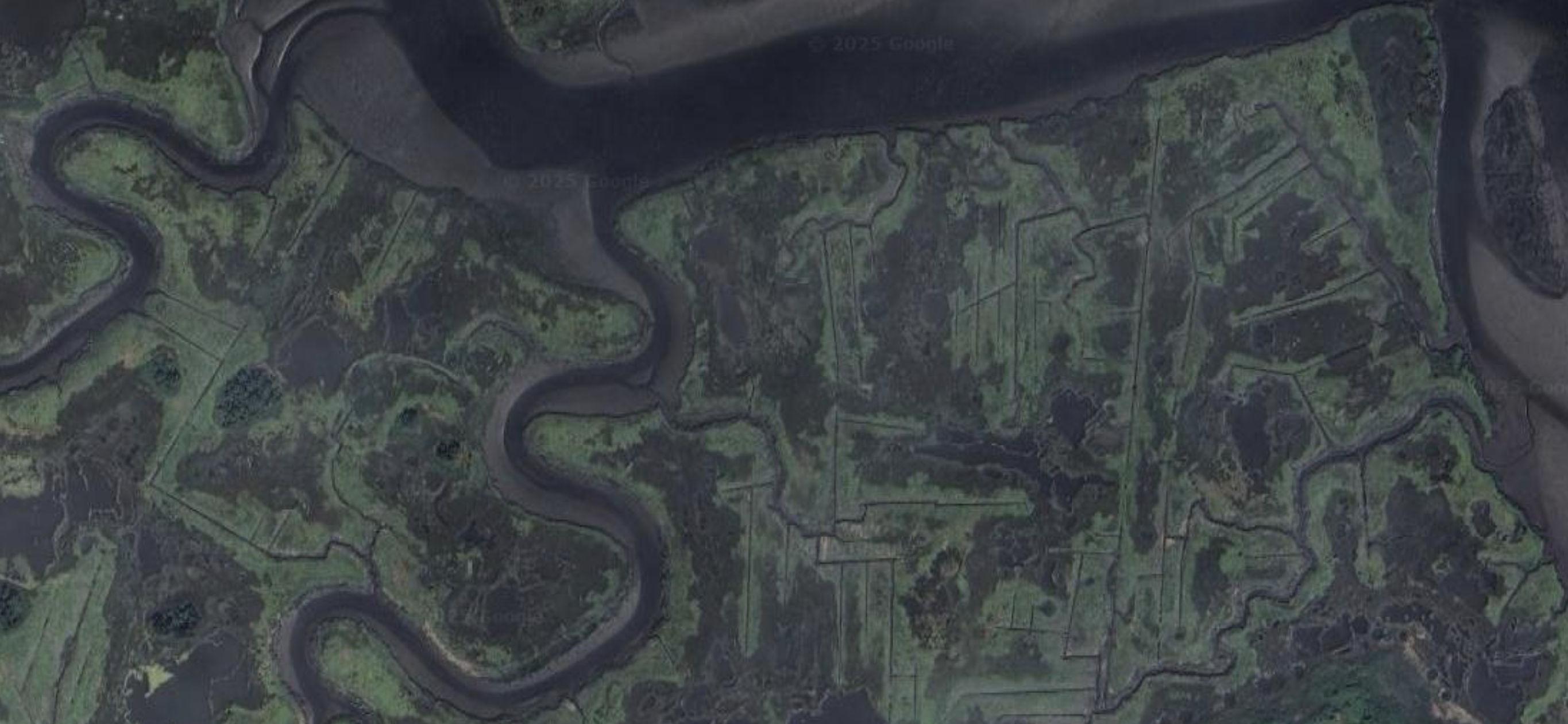
Today, Rowley, and the surrounding area where my family lives, is known as The Great Marsh. Most of the land around our home is protected conservation land, open to the public, allowing access to the tide flats for shellfish harvesting, kayaking, and walking trails to enjoy the splendor of this wild place. During some high tides, much of this area is flooded by brackish water, covering the causeways that we drive to get in and out from our dwelling. These access roads are ancient, with petrified wood below the rock and gravel used to maintain the county road today. In the 1600-1700s, the area was drained by tenacious farmers who wanted to cut and harvest the marsh grasses to feed livestock and thatch buildings. You can still look at aerial views of the landscape here to see the drainage canals and ditches cut through the marsh to keep the land dry enough to drive carts onto, though draft horses wore wooden mud shoes to keep them from sinking in the mud.
When the tides are up, like after the full moon on my recent visit, we try to time our entrance and exit from the marsh to avoid flooding. Still, an adventure through the tides as they change can happen, and that’s why my parent’s drive cars with high clearance. In rare cases, the tides are too deep for any vehicle, thus you have to wait out the flooding on whatever side you’re caught on. Luckily, tides are predictable, so we’re rarely stuck. Watching the water slowly cover the fields, mudflats, and causeway is a meditation of sorts. The water pours over the landscape slowly, but within half an hour, the grass is gone, and a glass mirror of liquid reflects sky. What a magical moment, ending as quickly as it started as the tide changes, and the waters head back out to sea. Our home sits at the edge of this transition zone, and, though my step-father did stay on the land during The 1991 Perfect Storm, he was not concerned, even when the waves were breaking ten feet from the door. Our little island in the marsh is over twelve feet above sea level, with another barrier island further out, sheltering us from the full force of Atlantic storms.
I’ve never been strongly connected to Ocean or shore spaces, but our family home in Rowley is a beautiful place to visit and take in. Sitting in the living-room watching the tides go in and out is a fun past time in our home. With a book in my lap, I read, pausing occasionally to take in the changing landscape around me. In an afternoon, the view will go from golden fields of slat hay to an inland sea, pushing rack up onto the edges of raised oak islands, the trees a testament to enough shore for sustained roots down into the thick marine clay. In the next 50 years, this whole area will succumb to rising sea levels, but for today, the house is safe, and our little island in the marsh remains a haven for family and friends. Below is the view from my reading perch, looking out when the tide is out, and when it’s in and flooding.


These tidal islands are full of mystery, and exploring them can be a challenge, because they are covered in poison ivy, ticks, biting flies, and sink holes out on the mud flats. You can be walking along on the grassy plane, then suddenly fall into a cut through the marsh from draining, which was covered by the long grass that tends to fold over after the floods. It’s such a mysterious place, Lovecraft wrote a short story about the area, using the marsh as a menacing presence over the small fictional town of Innsmouth. Haunting tails abound, and indeed, one of the unfortunate women who was hanged as a witch in famous Salem, came from Rowley, and the marsh. Margaret Scott had married a struggling marsh farmer, who later died, leaving her destitute with her brood of starving children. She would stand out on Rout 1, the first highway and toll road in America, begging passers by for alms and charity. If they refused her, she would curse at them, which was later used against her as testimony to her wickedness as a servant of the devil. Hang her for the inconvenience of being poor and having hungry mouths to feed.
The Great Marsh is no place to be caught on foot in bad weather, and if you don’t pay attention to the tides, you might find yourself marooned on one of the little oak islands for hours. Wading in can be very dangerous, with rip currents pulling you out to sea, thick mud to hold you fast in the flats, and sharp shellfish cutting at your shoes and legs as you trudge through the pungent sulfur smelling sludge. I’ve explored these muddy expanses with and without chest waders, and many do ford the marsh to harvest some of the best clams, oysters, and mussels available. Because the marsh is protected, it’s waters remain healthy, with little agricultural runoff, and no industrial waste to jeopardize the health of the place. There is a local oyster-man who has established rafts of cultivated shellfish for commercial sale. We are excited to support his venture, as shellfish filter and clean the marshes, making the landscape healthier for wildlife and people. The marsh is an important flyway for many birds on migration, and wildlife refuges are established throughout the marsh to protect vulnerable species. There is still some well regulated hunting, but only archery for deer and turkey. The Marsh has some of the best black duck hunting in the state, and, with permission, our family lets hunters come through on the weekends during the season. Dogs are required to fetch the birds out of the muddy flats.

Pictured above is the high tide mark from the back porch of the house. The water is quite close, but no surf crashes, just a slow seep of tidal flats soaking up to the edges of the rack, where phragmites reeds mark the edge of brackish flow. The mature hardwood trees also signal the edge of freshwater growth, and I did not notice any major losses due to rising ocean levels- yet. As I said before, inevitably, this are will one day be uninhabitable, but for now, it’s a spectacular place to visit and enjoy. I recommend The Rough Meadows if you do plan a visit, this Audubon stewarded trail system offers clearly marked routs through the marsh to keep you safe. The area is full of marsh views, oak forest expanse, and wonderful birding. Just make sure to check for ticks when you are done- and don’t stray from the paths unless you want to encounter some poison ivy- trust me, I learned the hard way more than once!
So much gratitude to The Chandler Family for making The Great Marsh accessible to the public, protecting the habitat, and seeing a clear vision of conservation and public use hand in hand. Acknowledgment of the original people who lived and tended this place- and their legacy, which continues today. Let us not forget that the First Nation People continue to live and thrive around us, and we, as guests in their homelands, can offer respect, support, and space to listen and learn about the places we now also call home. Thank you to the marsh, it’s beauty, lessons of change, and rewilding. It will always be a special place to come home to.

 EEC Forest Stewardship