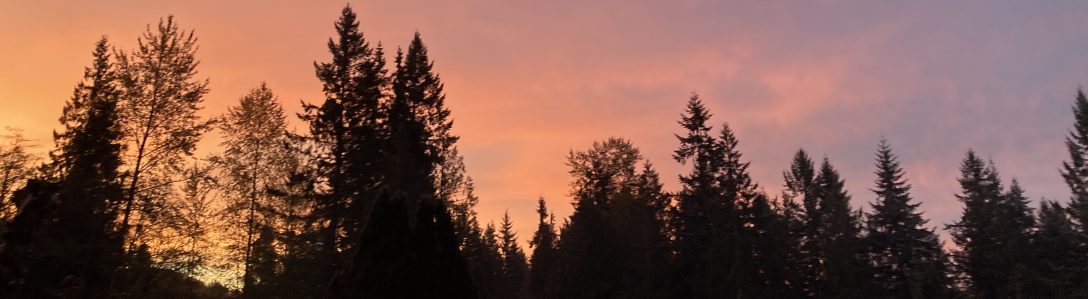

Often, when visiting the active commercial timber industry near my home, dramatic transitions from row crop trees to desolate clear cuts across the hillside. These edges are stark and formidable. What goes on each side of these patches is predictable. Near streams, there are a few older trees, but mostly third or forth growth, planted in the 1970s or later, after stream buffers were finally introduced to save what was left of our water table after a century of apocalyptic extraction across this landscape. Truly, corperate greed stripped the whole west coast of its forests, where the largest trees in the world still grow, as token individuals, with a few park groves for toursists, and one or two National Parks, where the landscape was still stripped by early colonial extraction for economic addiction we’re still not facing as a Democratic society today, but the forest, no where was I- oh yes, extraction. Our need for paper products, cheap pulp based furniture- your IKEA is old growth from Lithuania and Romania. I’ve seen the videos of 4′ diameter hard woods being trucked into pulp mills that ship raw materials to IKEA manufacturers. They’re opening up another store just up the street- let’s go get some Swedish Meatballs!
I’ve never been in one of those stores, and hope you all stop going if you can, because the belief in bulk super stores as non-invasive to the planet’s destruction is long gone. I’m still shopping at COSTCO- it’s local. Ha! Just be aware that nothing is cheap- it’s just out of site, at the other end where I’m standing in clear cuts that stretch up and down ridge-lines just at the edge of sight. You can see the cities that are consuming, just at the horizon. Sprawl has eaten away at the forests from Puget Sound to The Issaquah Highlands. The map below is a great example of the edges of wilderness continually pushed back to make room for more human development. Washington state is the most populated state after California, with the least amount of land compared to its western counterparts. Seattle is the largest city, and it’s completely developed as a major metropolitan area, with tendrils grasping vital connection routs of trade and transport along I90- the only east west highway out of Western Washington. The city of Issaquah was bound by landscape, and even still, headed up into the hills to continue development. I’ve driven up onto the steep neighborhoods on the west side of town, and I would not want to be up there in the great earthquake that’s due any day now. The Highlands took a plateau of commercial timber land and made it into a heck of a development, doubling the city’s population in one swoop. Yay tax base! Woe traffic.
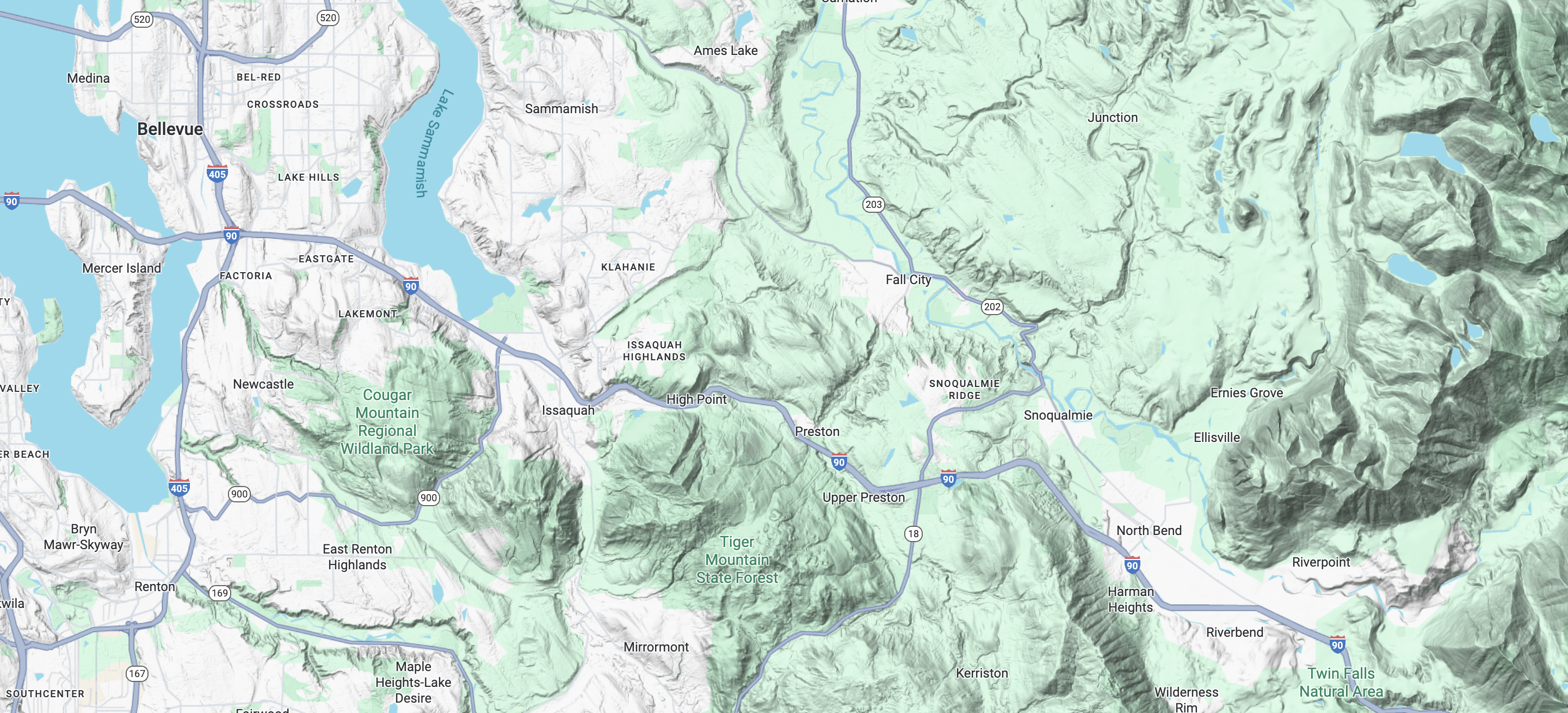
The little town of Snoqualmie had a similar problem, and didn’t want to build in the flood plane, so they went up on a ridge and plopped a whole new town which is still building sprawling apartment complexes and town houses. This is the west side of The Snoqualmie River, where more commercial timber lands lay. All of the old growth temperate rainforest is gone, and with the onset of poured concrete foundations and petroleum blacktop roads, won’t be growing back for centuries to come. In the map below I lay out my home in red, the tree farm where active timber harvesting is going on in pink, and the yellow area is fast developing what’s left of wilderness in the buffer between monumental urban concrete, and forest- not natural forest, but recognized tree production and our watershed.
That purple area holds Tolt Reservoir, Seattle’s drinking water. It’s also the water table replenishment for all the wells in the yellow area, including EEC Forest Stewardship. The tree farm uses herbicides to keep its young conifer plantations free of deciduous plants that might compete with the timber. Then, as the commercial forest matures, they thin the plantings and spread bio solids (treated sewage) to add nutrients to encourage the forest growth. Most of the biomass is taken out at each cutting- being the timber board feet sold for profit, and must be replaced to keep soil for more plantings. The historical 10,000 acre commercial tree farm has been in operation as a row cut plantation for 150 years. Only in the last 50, has chemical herbicide been used, along with GMO trees. In the last 20 years, biosolids have been added continuously- along with the heavy metals and prescription drugs that can’t be affordably removed from the city’s sewage. These treatments on the land will end up in our water, the soil, and us.
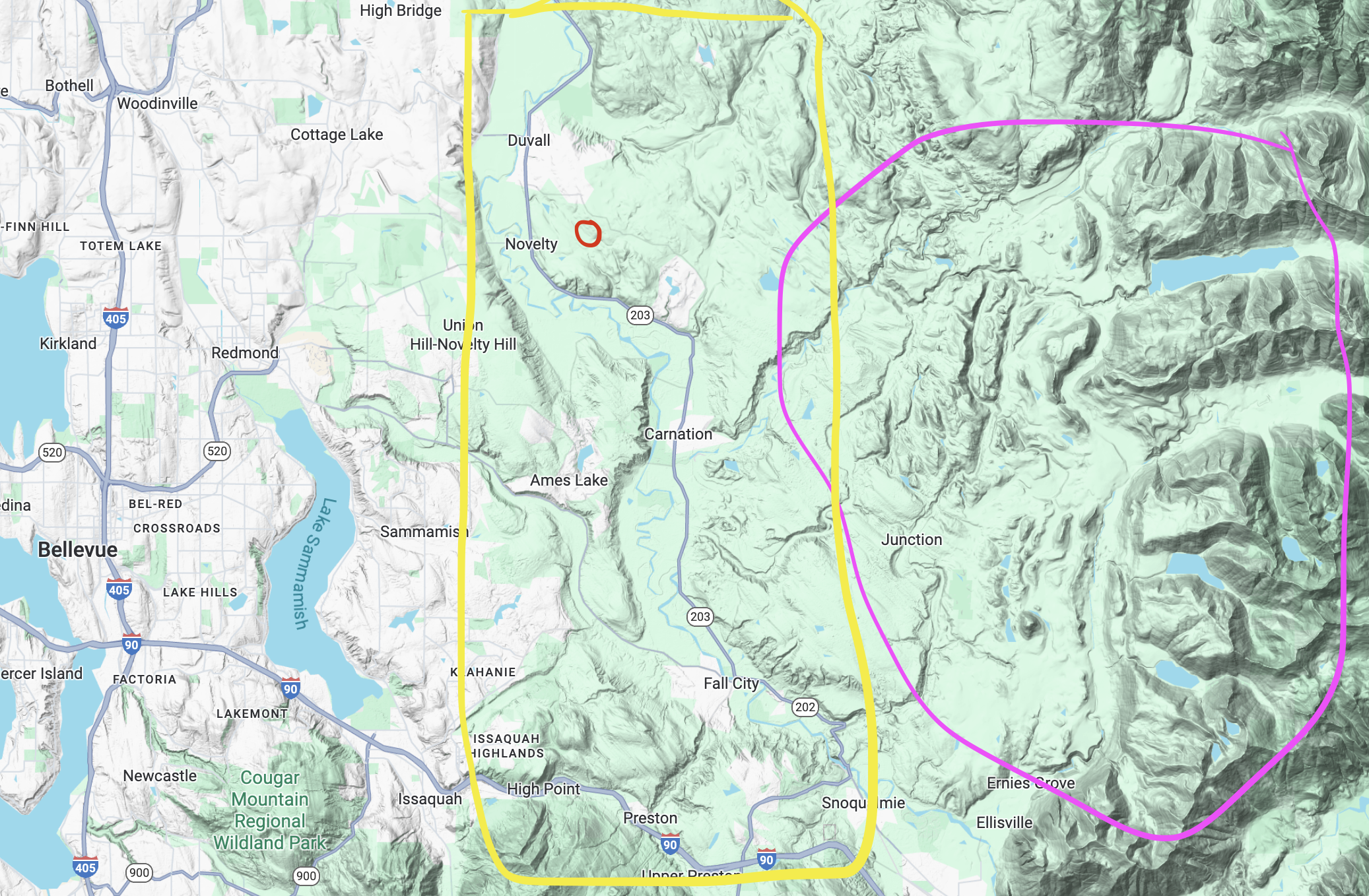
The transition zones between these areas is hard to see on the ground, but from satellite, you can see the high density development on the west, fade to agricultural centers in The Snoqualmie Valley, where Carnation and Fall City are, into commercial timber plantations, which are being harvested quite heavily in the higher elevations right now- look for the brown splotches far east along the reservoir at the top, and down through two main alpine lakes- Calligan and Hancock. The following pictures of clear cuts and groves is from the south part of that lineup- across from the ridge where the popular Mt. Si resides. The word “Junction” in the middle of both maps, is the heart of the tree farm. This is where the chemicals and sewage are being spread, and it will come down the hillsides and into our streams, rivers, and ocean shores. I don’t understand why we think there is any disconnect, but perhaps hard edges make us thing there is a separation.

The southern most part of the tree farm is a little less known to me, so I’ve taken some time to explore this tip of the forest, where the access road was recently taken out. There is still a way to drive around, but I wanted to take the walk in and enjoy a less accessible area of the plantation. It was cut up, yet there were still some groves left, mainly along wetland areas in the low spots, which should have larger setbacks, in my opinion, and I’ll explain why further on in this reflection. The logging roads are still open enough to make walking easy. So I hiked up the hillside from SLC Lake’s outflow and came over the ridge-line into what I knew would be a recently logged off section of the landscape. It’s always hard to get full pictures of the vast scale in these harvest terrains, but in the satellite image above, it’s the brown spot to the right of Ernie’s Grove. It’s almost the size of Old Town Snoqualmie. Three ridges are cleared, and I walked about two miles through it and still didn’t get to the far side. This is typical now in cutting method, and to their credit, the plantations get new trees in ASAP, then spray, then spray again before the saplings establish fully.


In this bottom panorama, everything behind me not in this photo (except the edges) is clearcut. Before us in the landscape is a recently replanted stand. The older trees below are on a small stream. They are second growth, and span about 50′, offering the bare minimum buffer of 25′ on each side of the year round water source. With only 25′ of forest on either side, the taller trees are left vulnerable to windfall, and so, the edges of all these buffers are usually lost in storms. I’ve seen it enough on this plantation to know it’s common knowledge, yet the buffers remain minimal and to not account for windfall enough. I went down into one of these buffers to mushroom hunt. Intact forest is the best place to find boletes, and I was hopeful some might be popping up in these buffer groves. I’m at about 3200′ of elevation, so the dominate tree planted in these forests is Noble Fir. Looking along streams and creeks is good, because you know there is a year round source of dampness for the mycology to thrive in. This lichen was also happening in the forest, and I was struck by the light pink something pinning off it. I believe it is in the family Icmadophilaceae.

Further on along the edge between the stream buffer and clearcut, I began to notice a familiar sight along the stark barren transition zone- a lot of trees were toppled over in the same direction on the edge of the small woods. When a whole forest of trees is cut, any left standing are suddenly vulnerable to the elements. Where a community of trees once stood together to bare the winds and rains, the cover is gone, and those left on the edge of nature’s fury cannot take the blustery winds and soft wet soil, saturated by runoff form the bare earth in the clear-cuts. This hearkens back to the earlier comment in this writing, where I think more buffer should be allocated. Wind-blow is a think in the timber industry, and can be accommodated for in cutting plans, but apparently, it does not matter in the stream buffer zones. Heck, the plantation can file for insurance claims with windfall, so why not encourage it? That’s what appears to be happening in our tree farm folks, so file that one away with the other “how to exploit local natural resources for profit”. Our wold banking group that wrote the referenced windfall article above really knows how to exploit our environment for money.


Why would the timber industry try to protect these buffer forests to keep the wild water clean and safe? Because people are not up there thinking about it, or seeing the destruction, so they get away with it. It may be just a few trees in the big picture, but it’s also our water, soil, and future survival. These “stewardship” practices are doing mother nature no favors. It’s about dollars and cents- which we can’t eat, drink, or breath. My photos don’t fully capture the destruction of windfall in this small stream buffer stand of trees. In another few decades, as we continue to lower the water table with our overuse of aquifers, the stream here will go seasonal, and the buffer zone will be eliminated, so these trees will get cut again in another generation, and no one will know or care that the stream is gone. We’ll still be buying cheap furniture and ordering more cardboard delivery packages with impunity. Hurray for same day delivery!
It difficult to write some times, with the writing already on the wall for all to see- if you look, but I’ll keep on observing, wandering, and embracing edge spaces in an attempts to be one witness in the woods. These are not pristine groves, or romantic old growth spots, but they are the edge right next to my home, where abusive industrial practices play out behind a thin green screen of forest products. You the consumer will keep on buying what you cannot trace back to the source, and the tree farm will keep offering jobs to low wage earners while plucking the last meat from the bones of our ecological home. More sewage and herbicides in everyone’s water. Just make sure you put your forests into legacy stewardship, for the future logging generations to come- machine operators, not lumberjacks- just so you know. It’s amazing to witness how much we want to romanticize some Paul Bunyan Americana. Good old boys slinging saws and axes, but it’s logging trucks and machine harvesters running rampant in our industrial forests today. The gravel roads are the legacy, and that’s where to find some good fungus, so let’s go!


While walking along the logging roads, especially on the more shaded parts, I saw some wood ear fungi, related to morel. This black specimen- a less common color in the fungal kingdom, is edible, but not choice. You’ll most likely encounter it on gravel roads around Western Washington, but I do have some fruiting up from a large leaf maple fall at EEC. Many cultures use this fungus medicinally. I just enjoy finding it on the trail and taking note of where flushes occur. Since it needs wood, I think bark and logs buried under the gravel roads host the mycelia. Substrates can be hard to sort, making some identification difficult. All mushrooms have required substrates to bloom, and knowing those habitat limitations helps with ID. Mushrooms thrive on the edges of decay, from leaves to rotting trees, these fungal fascinations break down harder chemical compounds, returning them to the soil for other vegetation to grow from. Without mushrooms, our forest floors would be deep in undigested organic matter, unable to release its minerals back into soil, thus, no new soil would be made, and plants would find it very difficult to grow.
As I continued along the edge of the road though the clear cuts, another familiar fungal friend was up and waving hello from the side lines. Clavarioid fungi look like corals, which, in these dense lichen, moss beds, and liverworts do look a lot like reefs. Their bright colors also add a splash in that sea of green. These mushrooms were blooming along the edge of the road cut, under the canopy skirt of fir trees. I believe these mushrooms also like a little light, and need edges where light can come through the trees, hitting the forest floor. Many corals are edible, but not considered a culinary must, so I usually leave them where I find them, appreciating the sculpture park vibe these unusually shaped beings offer in back country settings.

Regardless of what’s growing on in the soil, mushrooms will abound. They can break down diesel fuel, harmful bacteria, and even filter out unwanted heavy metals. Perhaps they can help in mitigating the sludge and chemicals spread through our woods, wetlands, and watersheds by industrial timber companies to scrape what’s left of our natural resources from the landscape. Mushrooms will thrive in most environments, even the polluted ones. But don’t think mushrooms are a cure all. Once they break down harmful chemicals, they store that material in their own flesh, and when that breaks down, the materials go back into the soil too. Unless to dig them out and remove them, the toxins are still where the mushroom fruited. Even if the chemicals are neutralized, they are still present, and, like many forever chemicals, they don’t go away.
If people wish to claim responsibility, which is most unusual, we could recognize these forever chemicals and try not to buy them, or produce them. But REI still sells gore-tex, so we’re still buying and releasing forever chemicals into our environment to keep dry. Oh, outdoor box store is having a sale- let’s go! I want matching rain pants, ok! These chemicals don’t just hurt nature- as though people were separate- it hurts us too. Here’s something to chew on- these forever chemicals are in the sewage, because they are in us, and the biosolids being spread in our forests, are also spread in our farmland. It’s a win win for chemical producers and food production- no wait. We the people are getting cancer! I wish RFK would focus on this for his health care reform, then we might get some where in making America healthy again. If our soils and water found in edge spaces, near our development and sprawl, are not cared for, the pollution we’re pumping out, will wash right back in to haunt us, like London’s Great Stink. With childhood vaccines on the wane, serious illness could soon be stalking our own quiet neighborhood streets, taking us back to the great times of cholera and measles. I’m not kidding- measles is in King County Washington in 2025.
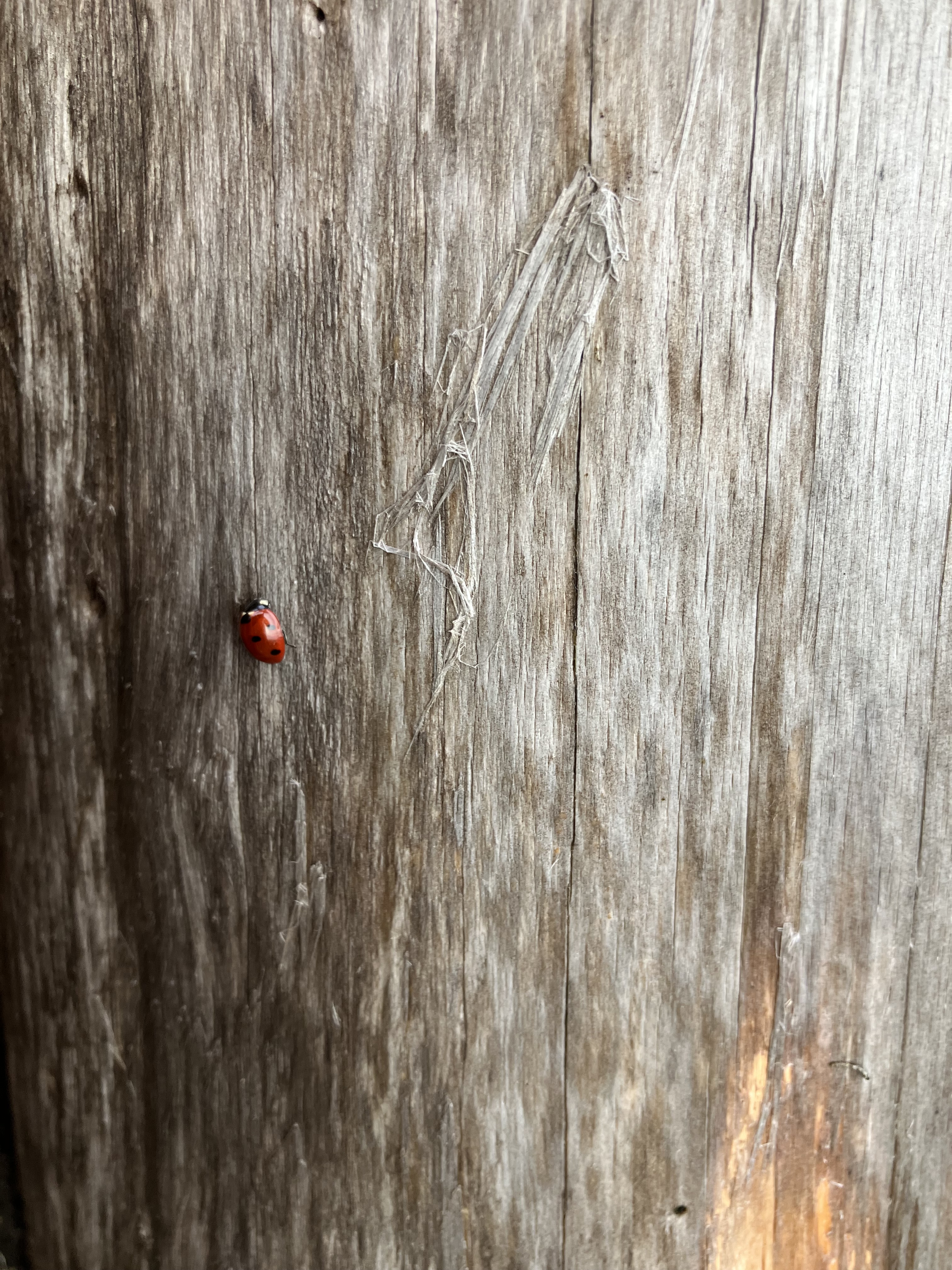
We’ll let this edge crawling ladybird walk us out- there’s always a bright spot somewhere, and in this clear cut, I found a lone ladybird making its way up a second cut stump. This bright red glimmer on a grey deadpan view brought tidings of nature’s restorative way, reminding me that the natural world will recover from whatever out little monkey minds come up with, though we may not survive the evolution. Bugs, mushrooms, and the weather will persist, long after you and I return to the soil from whence we came. Gratitude to all the lessons in nature guiding us. May we have the time and patience to listen, observe, and take in the great world all around us. To the new growth, and old spoke of that wheel on fire rolling down the road.

 EEC Forest Stewardship