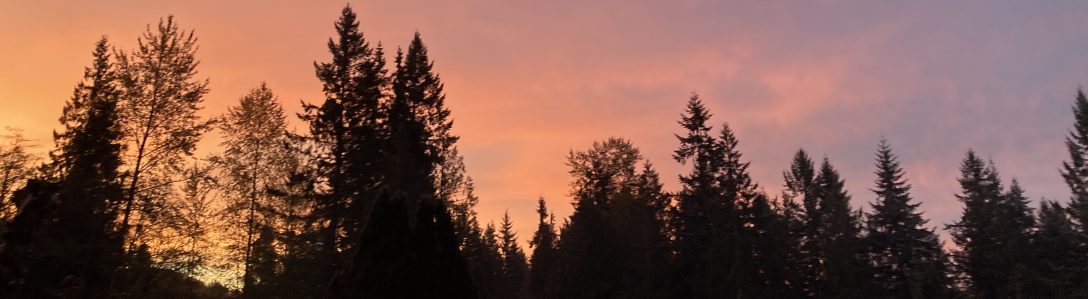
Our first meetup was at Moss Lake outside Duvall, WA. It’s a King County Park where you can enjoy a natural lake with beaver activity, a range of forest types from hemlock dominate to fir monoculture. There are some more established woods around the water, but further into the forest you’ll hit The Snoqualmie Tree Farm, which hosts plantations of Douglas Fir trees. We stayed on the main gravel trail around the lake, but saw and learned a lot about our local ecology.

Shelter 101- find a good hollow stump to climb into, then stuff with leaves for insulation and enjoy a dry, warm rest. This stump was a great teaching moment for natural shelter in the forest. Two people could fit in there comfortably with the addition of debris. It took us only a few minutes of searching to find this dry spot to shelter in an emergency. What can you find in the woods to shelter under?
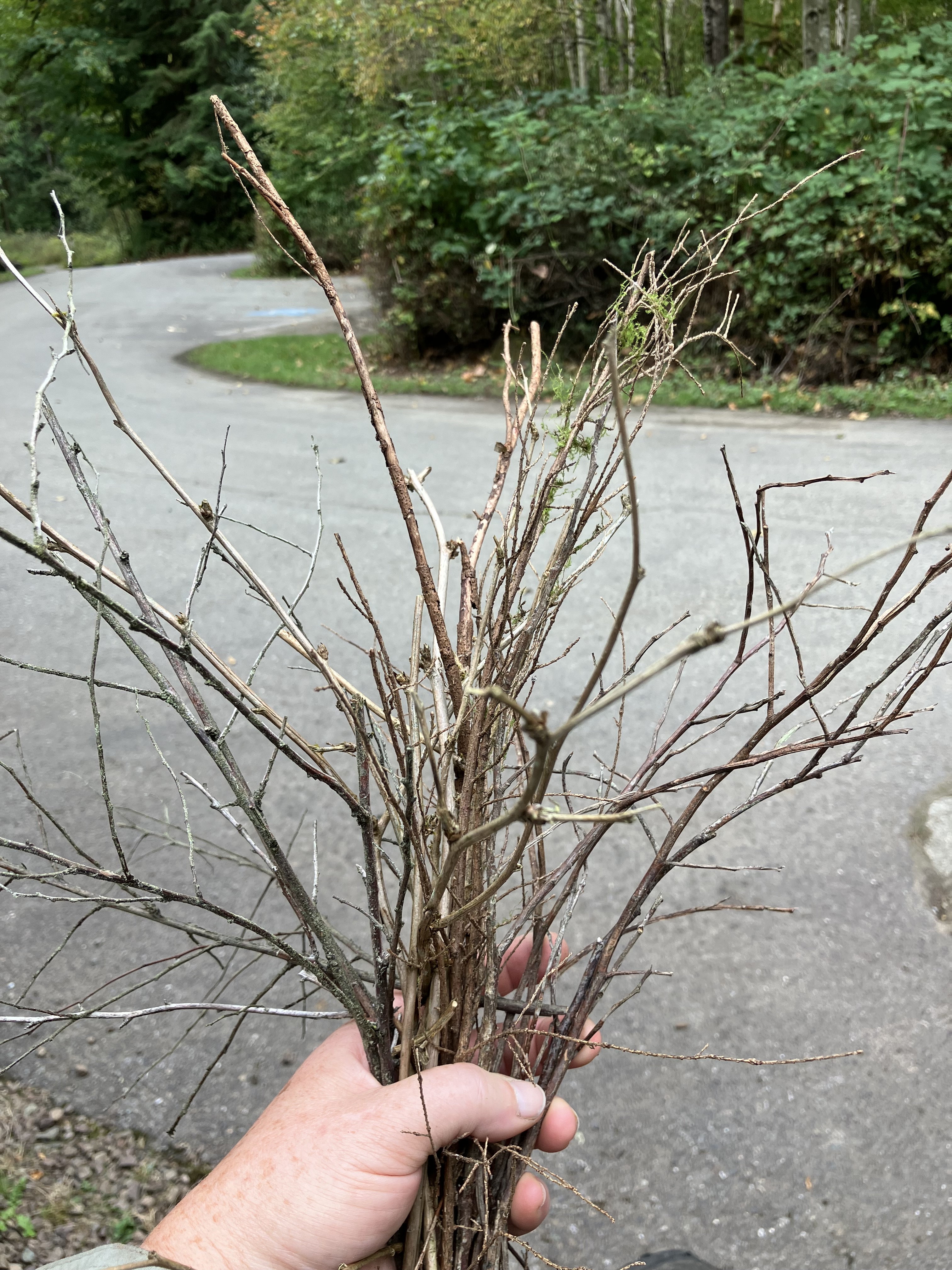
fire making 101- find dry, snapping sticks form low hanging brush and trees- from left to right: snow berry, salmon berry, hemlock tree, and red huckleberry. We found these tinder materials in the parking lot in less than a minute of searching. You want to find off the ground dead stuff if you can. All of these branches were dead, but still attached to the live plants, harvesting dead wood off a living plant should not harm it, in fact, your doing the plant a favor by pulling off the dead stuff so the living can thrive more. It’s also removing a potential fire hazard. Note- fully dead standing wood should be left alone. Snags, as the standing dead wood is called, become crucial habitat for wildlife.
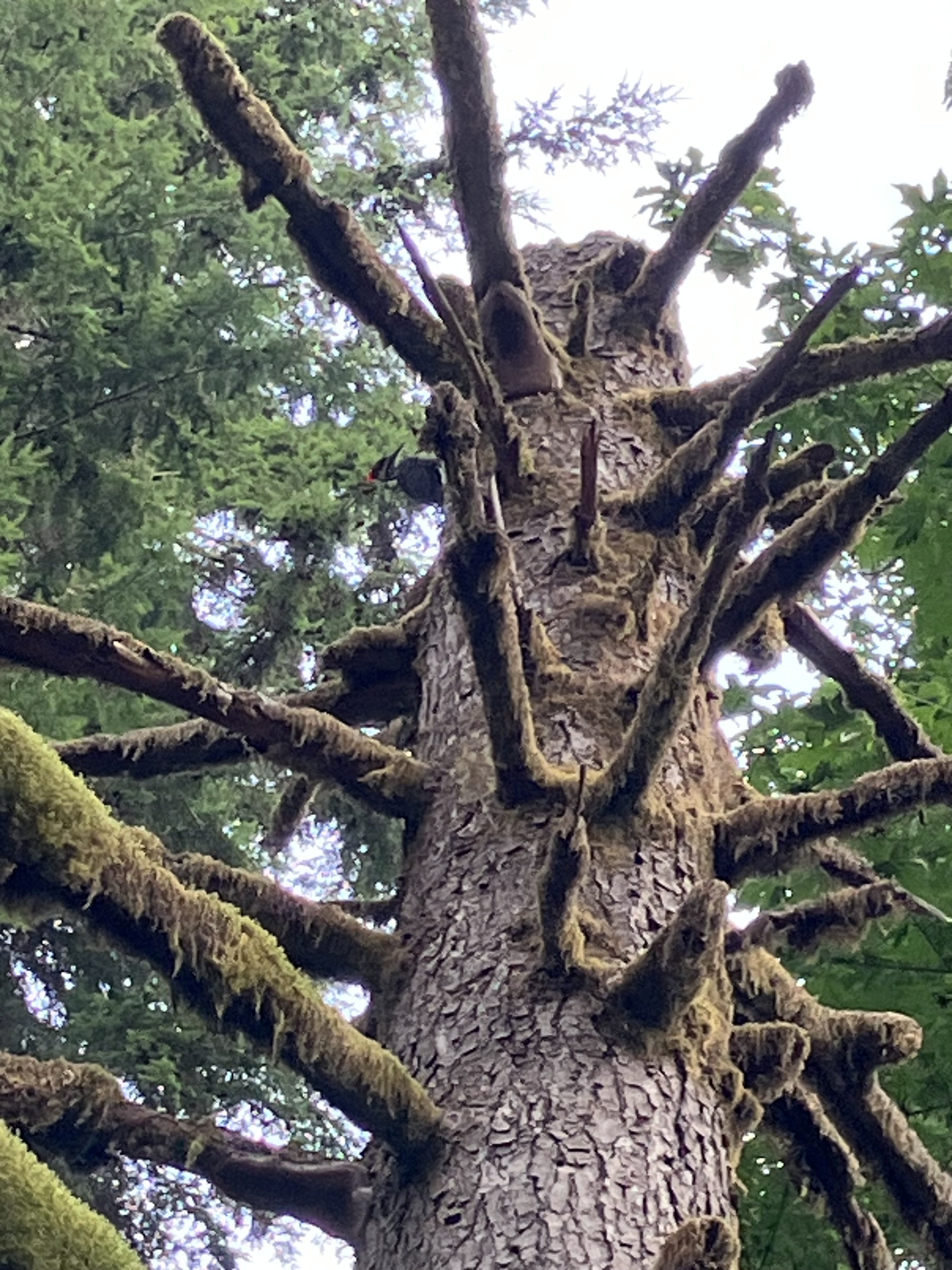
We ran into this Palliated Woodpecker on down the trail. We heard it excavating in this standing dead hemlock before we saw it. What can you hear in the woods before you see it? Why is the bird above pecking at the tree? What else lives in standing dead trees? Dead standing wood can also offer good fingermark materials, especially the burned out ones. You can find dry charcoal and tinder in these hollowed out stumps.

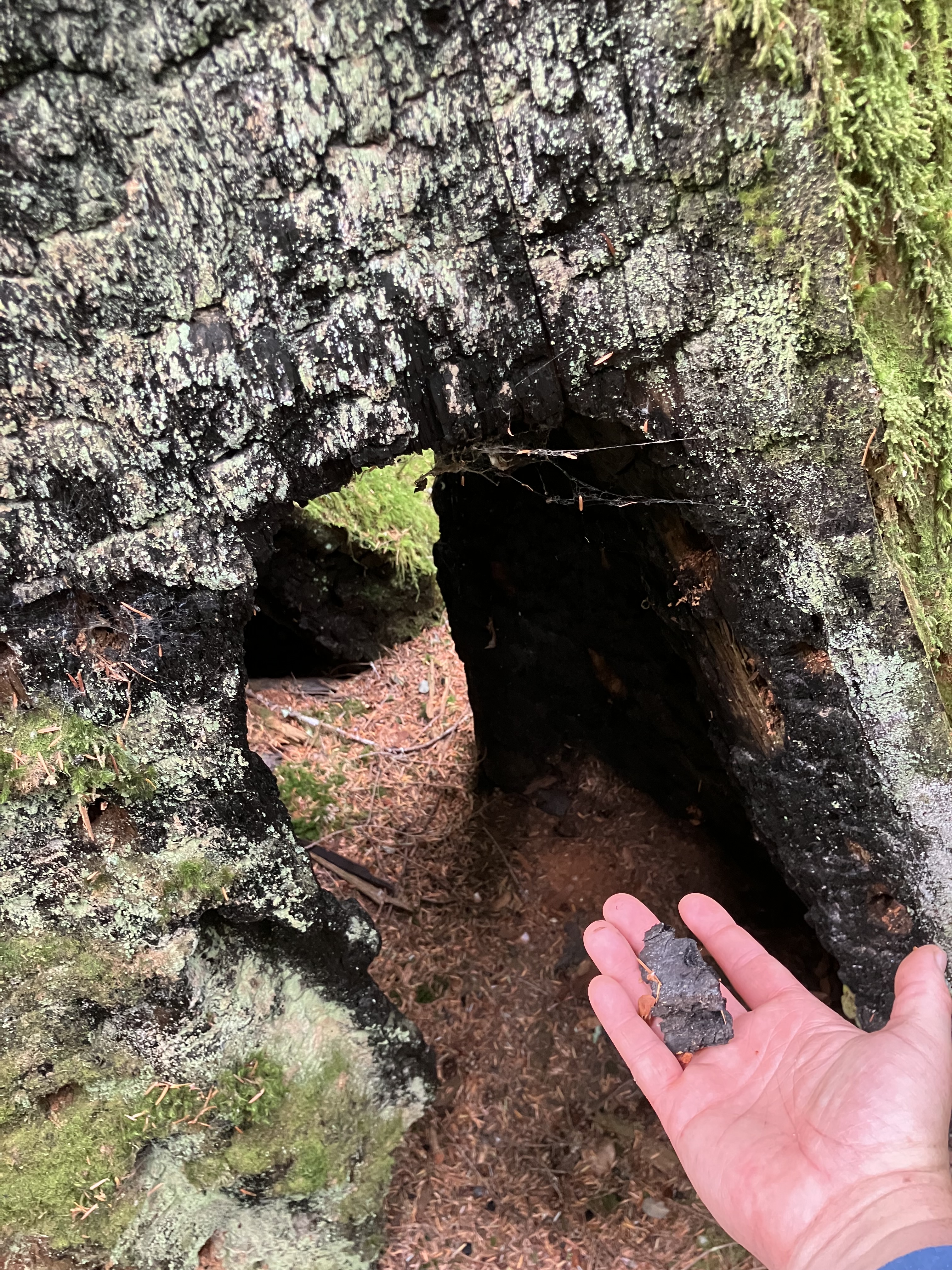
The punky (rotted) wood smolders, but that can help extend your coal while you are building up your fire. The charcoal will light, and help get a small fire going. Just make sure all your starting materials are dry. The rotted wood was actually in a still living tree, so fire materials come from many places in the woods, look around and see. What kind of tinder materials can you find?
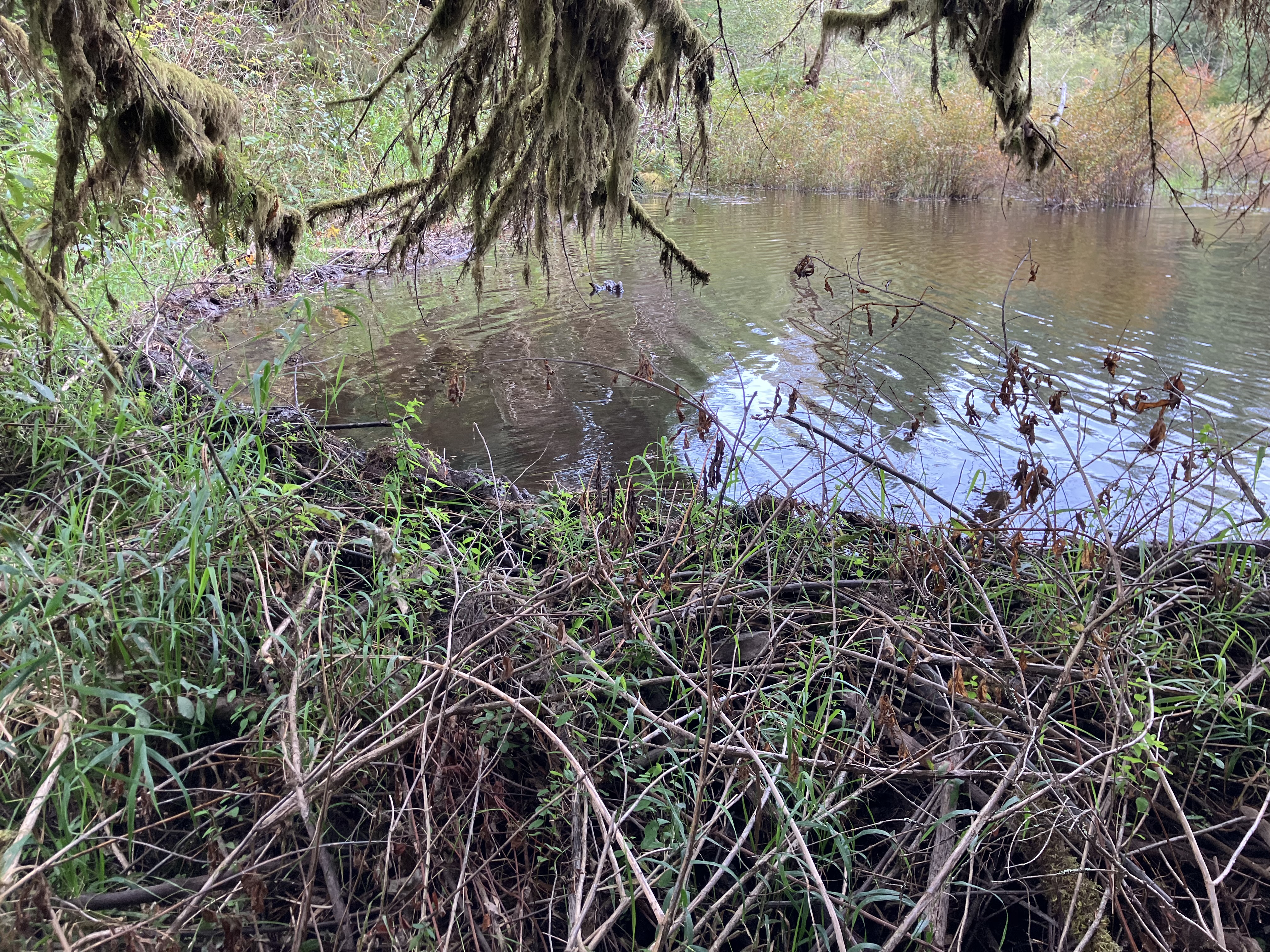
water 101- active beaver dam on Moss Lake. A great example of why wild water is not safe to drink, even in a more pristine area. Beaver fever is the colloquial name for giardia. You don’t want to get it- trust me. Always filter your water or boil. If we have fire, and a metal container of any kind, we can safely treat our water to drink. Note- boiling does not remove heavy metals or some dangerous chemicals that can get into our water. You’ll need a life straw or other high end filtration system to safely treat polluted water. Luckily, Moss Lake is not considered polluted, so you’re mainly concerned with pathogens that are easy to boil off with a little time and patience. A metal cup, pot, or water bottle is a crucial one of the 10 essentials for your day pack or overnight kit.

Near water you will often find special plants that only grow in wet places. Lichens like Usnea are a great example of this. These wispy hanging strings are an important wild first aid for cuts- this is wound packing material with anti-microbial properties. You can harvest some and keep it in your first aid kit for emergencies. Bonus, usnea is also a good fire tinder. Where have you seen this lichen in the woods? Do you know it by another name?
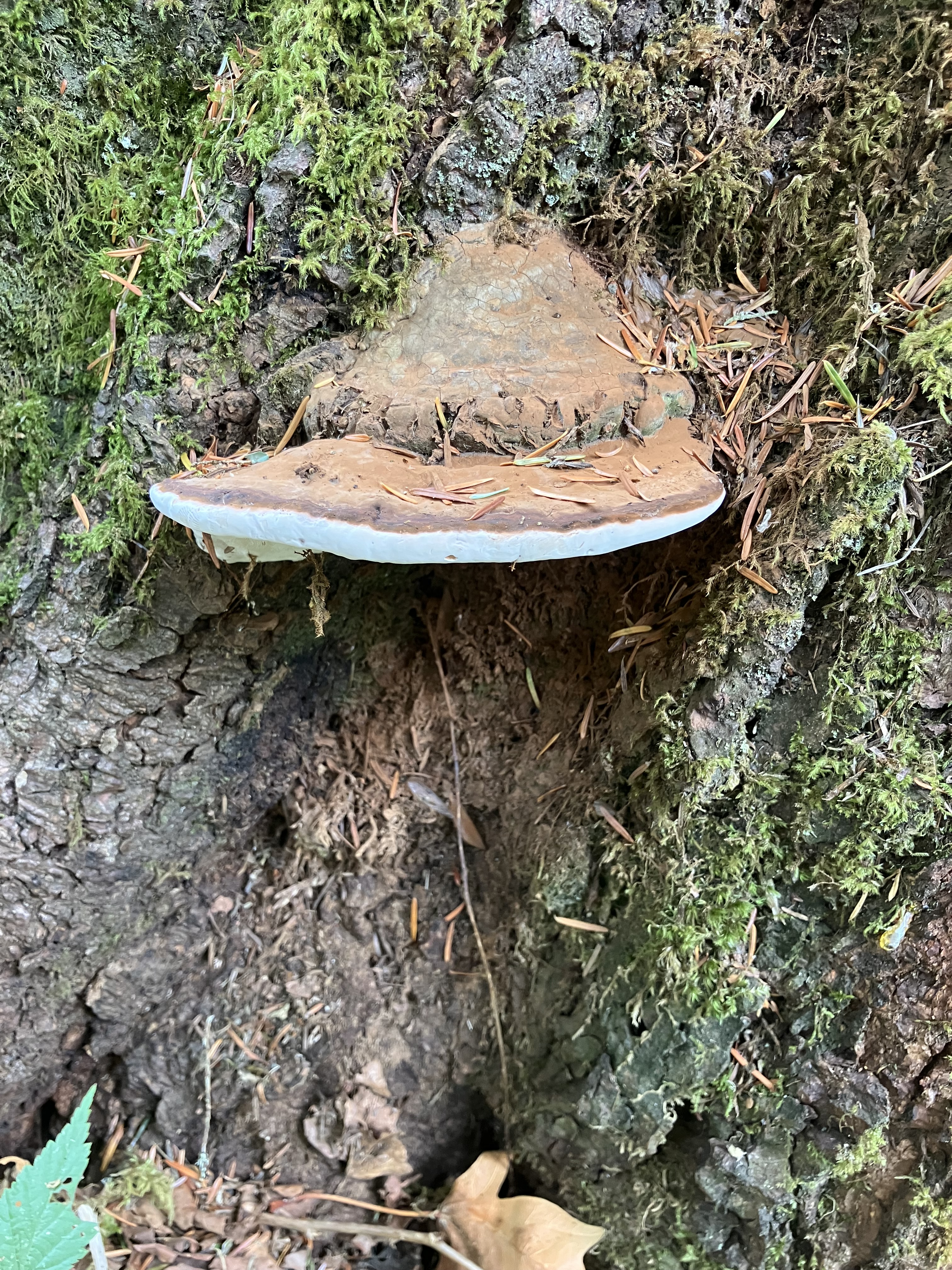
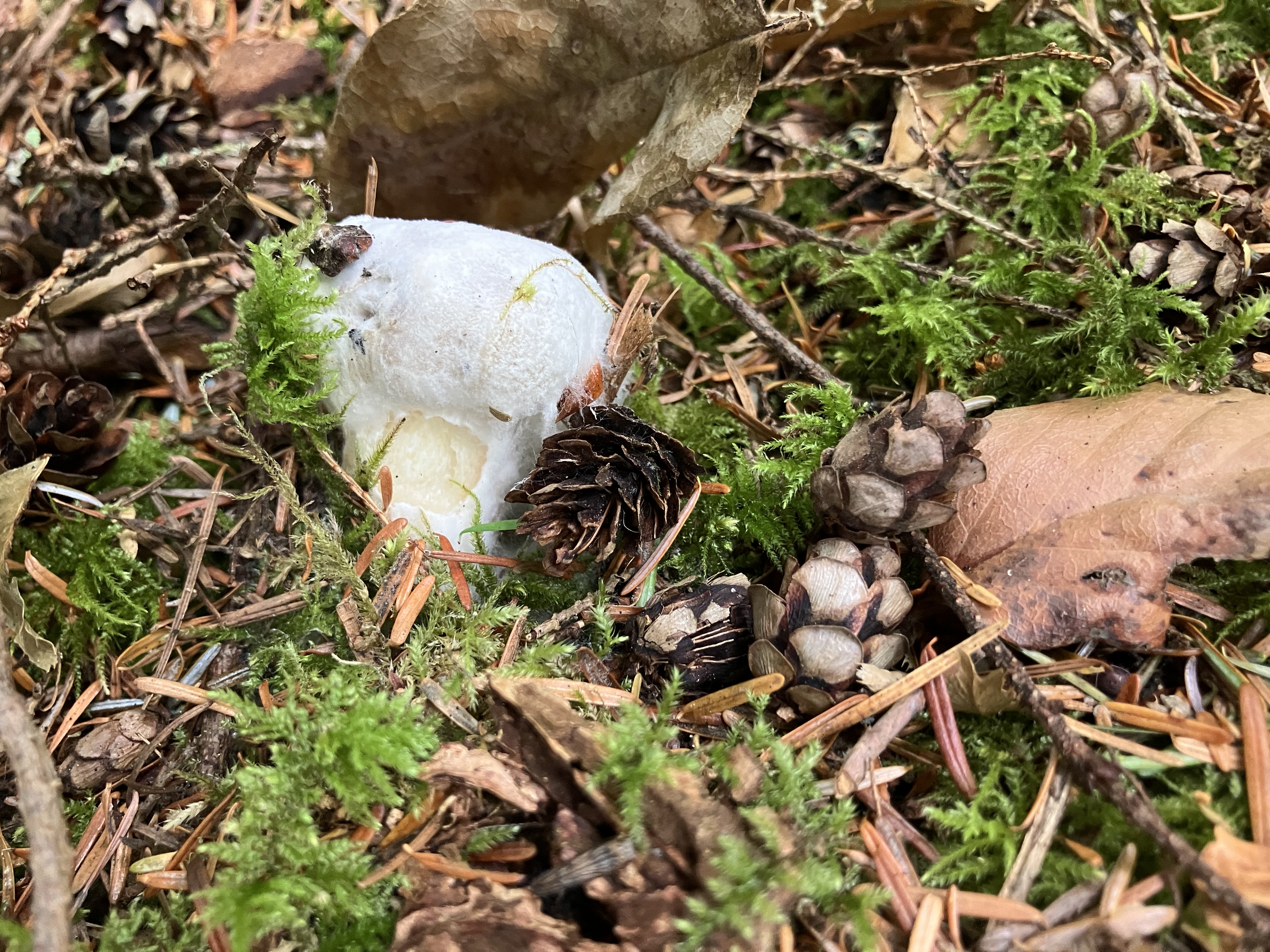

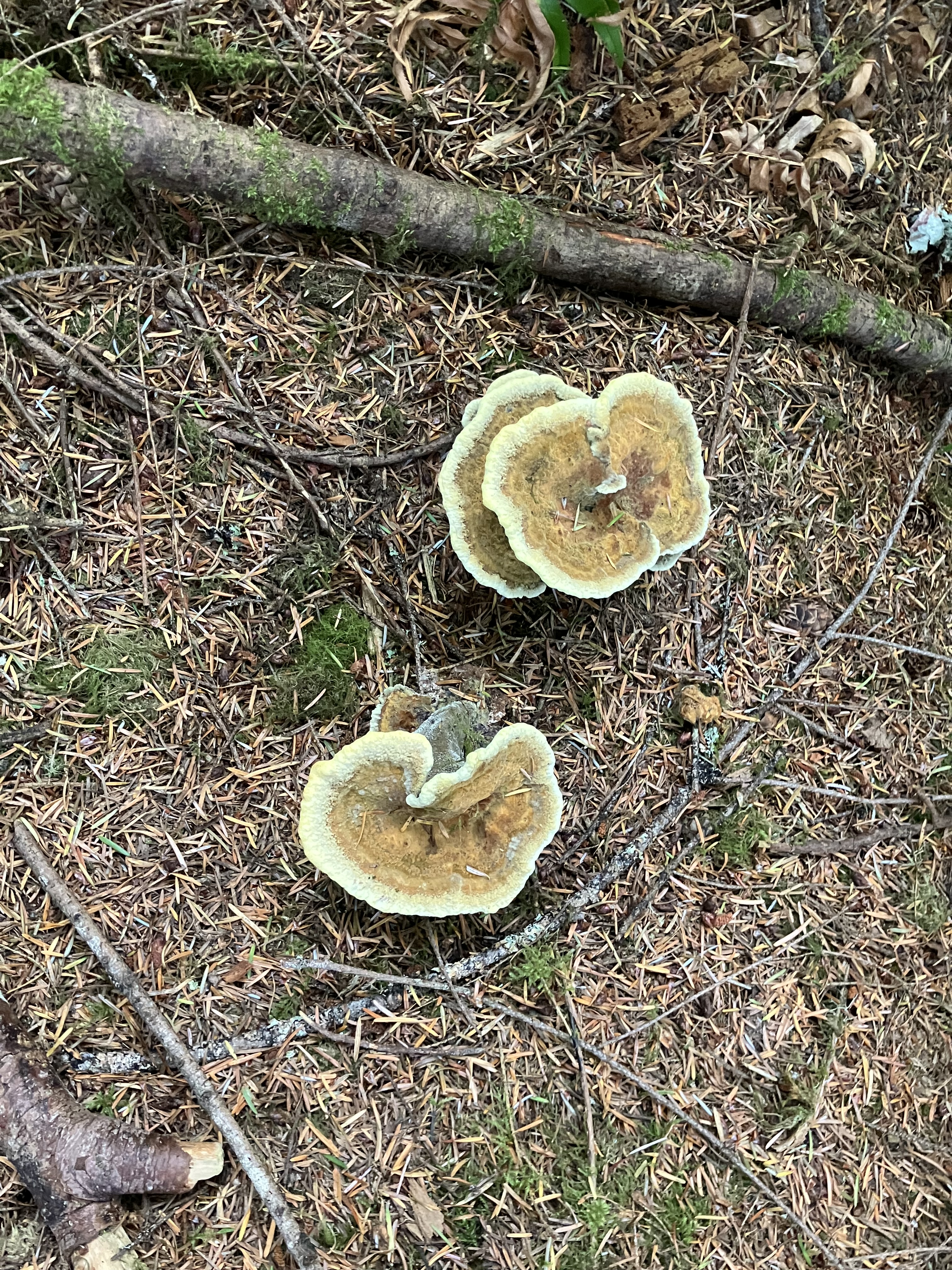
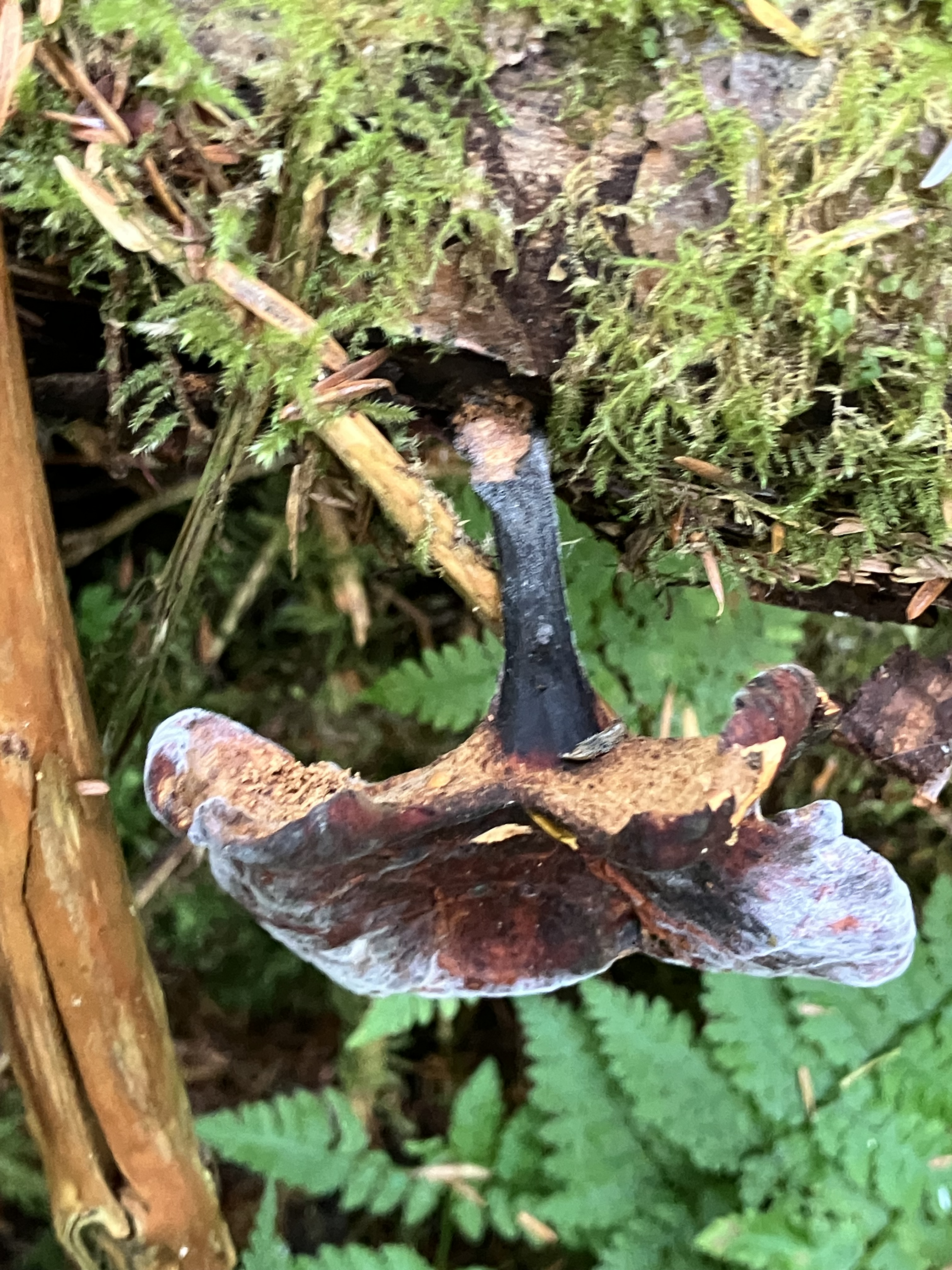
Mushrooms 101- we’re not here to pick edible anything, we’re just looking at what’s blooming on the landscape as we move towards The Mushroom Spring here in Western Washington. The chantrelles were not out yet in these woods, but there were some fungal friends popping up to say “hi”. Most were polypore– wood eating mushrooms, which are not too helpful for hunger. Again, we’re not eating these, but documenting who is out in the woods at this time. It’s still a little dry for many mushroom species, but fruiting happens year round in these woods. You might get lucky if you have a look. The one Xerocomellus chrysenteron we found- a bolete, was a sign of what might come to this area in future. Though again, we’re just talking species, not what to eat. Another fungal highlight from our wander was finding a Dyer’s Polypore– that yellow looking one bottom left in the gallery above. There’s always so much to learn from these amazing mushroom teachers. Keep your eyes peeled as the forests get wetter this fall, there’s a lot more fruiting out in the woods than just berries. What kinds of mushrooms have you found around town?
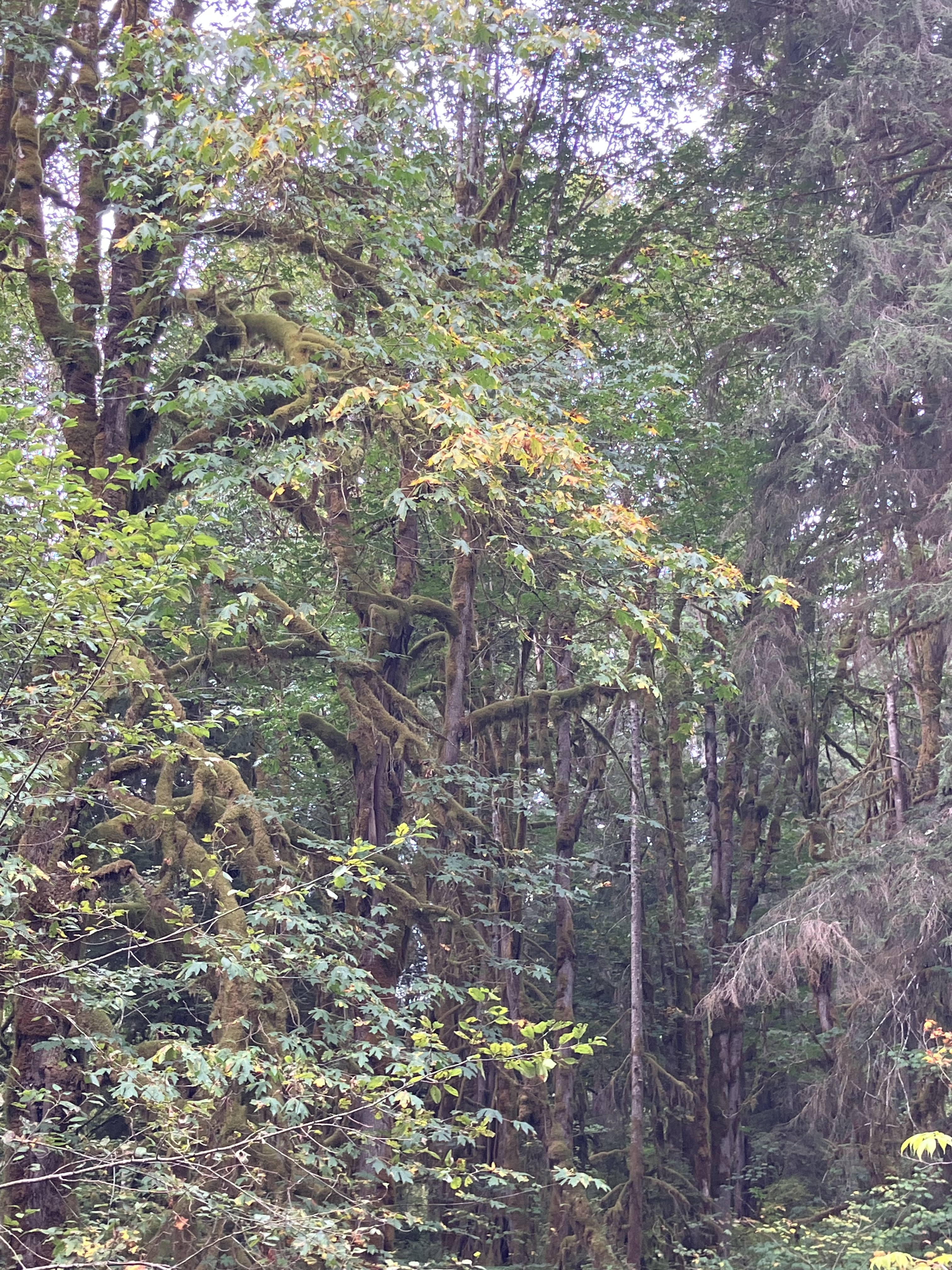
There was a great looking stand of big leaf maples in one corner of the park where I would head in late fall to build a debris shelter. Marking these places for later use is always helpful. Forests will offer many different opportunities throughout the year. Each season brings change to the woods. What do you see now that won’t be there in a few more weeks? Hint- they fall, from trees, and we love to pile them up to jump into. Try climbing into a pile of them to keep warm.
The woods at Moss Lake are diverse, and we looked at three main types in our location. Can you spot some major differences between the three groves below?
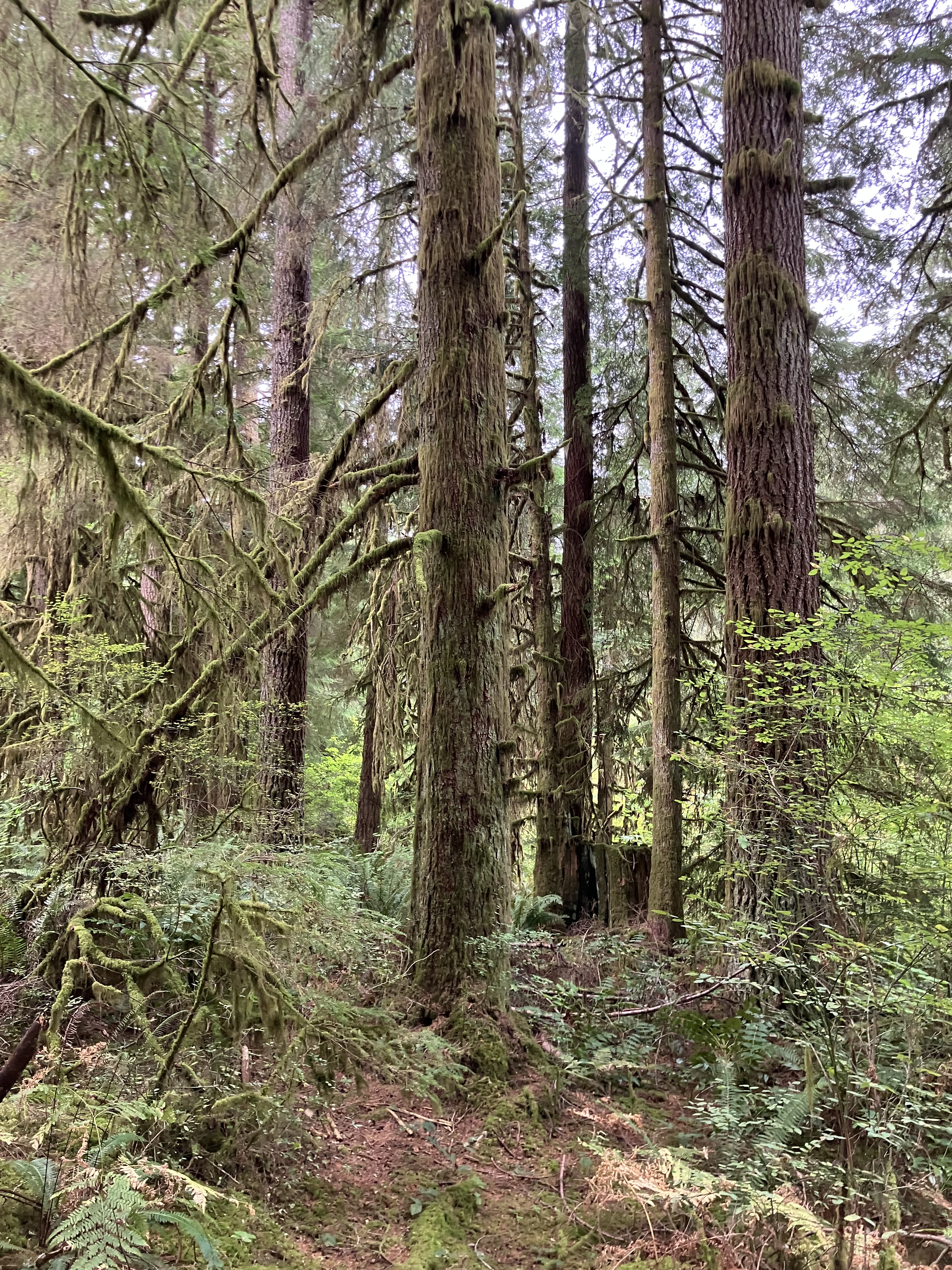
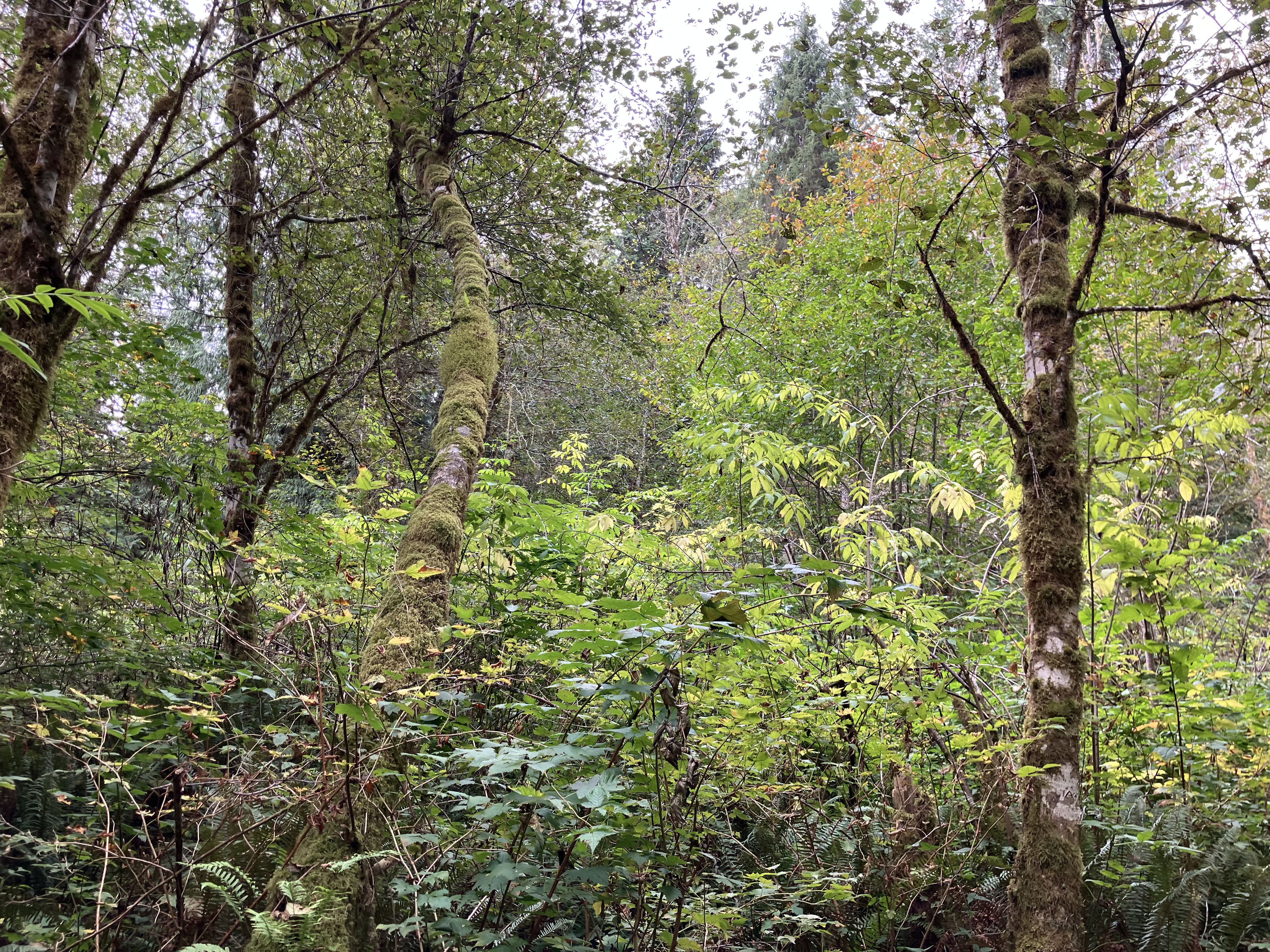
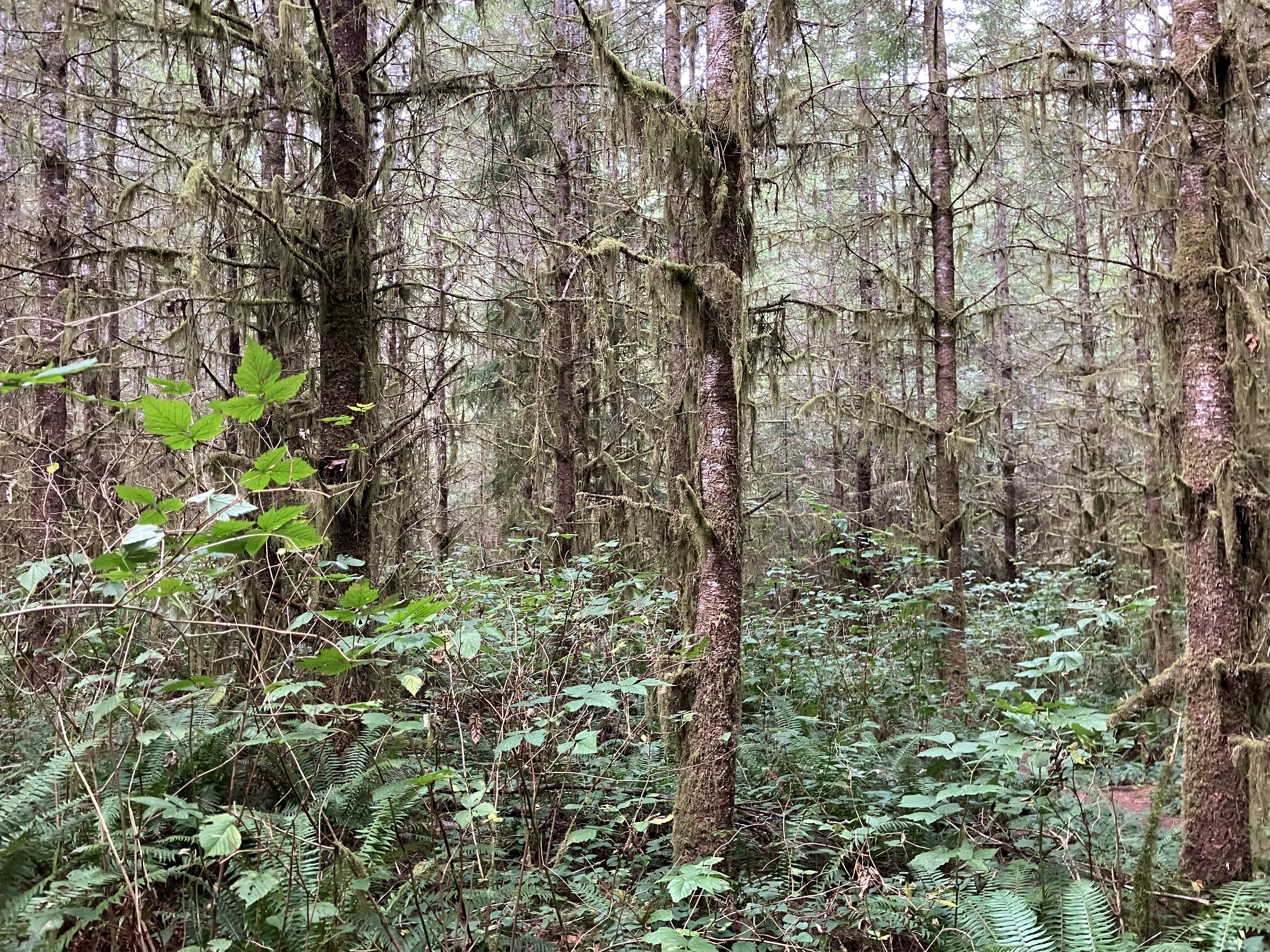
The first stand is a typical third growth forest of mostly hemlock and Douglas fir. These woods will have a mediocre understory, usually dominated by sword fern and some deciduous shrubs like huckleberry and vine maple. They are still heavily altered by humans through logging, burning, and ground compaction that will not let more sensitive species reestablish. Still, there is some diversity in tree age, and opportunity for more understory to develop in time. The second forest type above, in the middle photo, is a common alder and cottonwood mix. This forest is young, and has a lot more understory established. Why might that be? I like these forests for medicine, fruits, and usually, nearby water. Why is water usually nearby these stands? The third forest type is what you’ll most likely be running into where forests are “managed”. Mono-cultures are an easy way to replant timber forests. You pick the best wood products species- Douglas fir, and plant as much as you can all at once. This makes thinning easy, and will get you standardized size and growth in a woodlot, but it’s unhealthy for the ecology, even with a little more diversity in the understory right now. Eventually, these evergreens will grow tall, shading out the understory and limiting what can grow. Chantrelles favor these kinds of woods, but wildlife tends to avoid them. What kind of forest can be found near you? How old are the trees there?
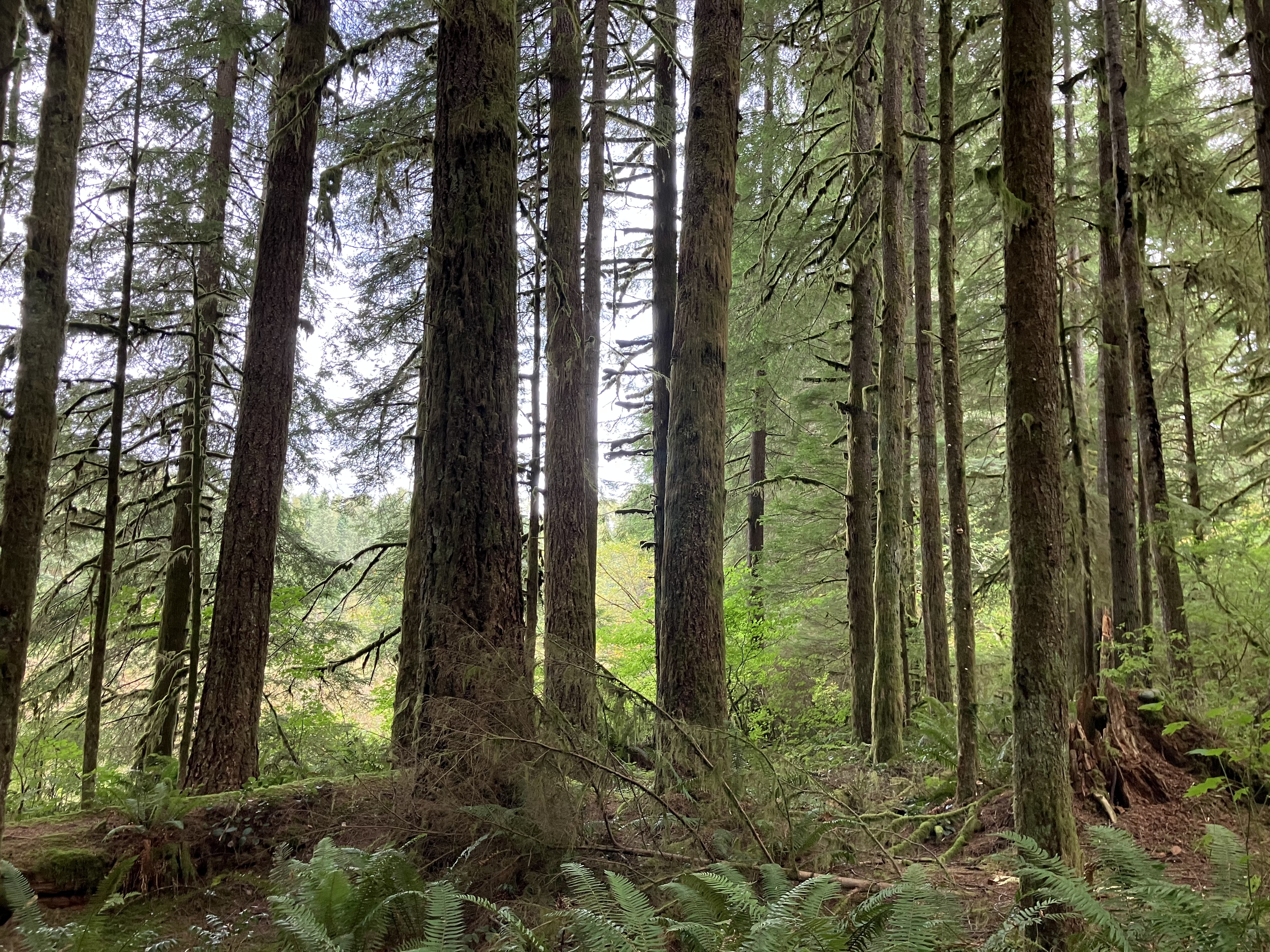
Our lessons at Moss Lake were many, with a few put down in this blog for those who missed the meet up. There was some plant ID, some fire making, shelter finding, and landscape reading. My guess is, this forest was left alone after the big timber trees got taken out, leaving the hemlocks to fend for themselves. Most of the woods around this lake are hemlock dominate. Loggers leave them because they are a less valued wood in the timber markets, being too soft and prone to twisting when milled into building materials. I have heard from timber framers, that you can work with hemlock wood when it’s still wet, but expect the beams to warp as they dry in place. That’s my best guess as to why this area was overlooked for more logging, and why is was easier to get the land protected and put into a county park. Gratitude to this place and the public assess. It was a great location for access and learning, and I am thankful to King County Parks for keeping this place open and available.

 EEC Forest Stewardship