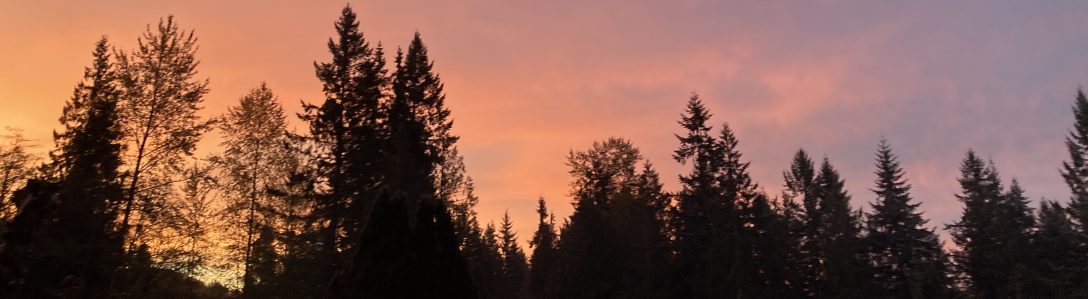

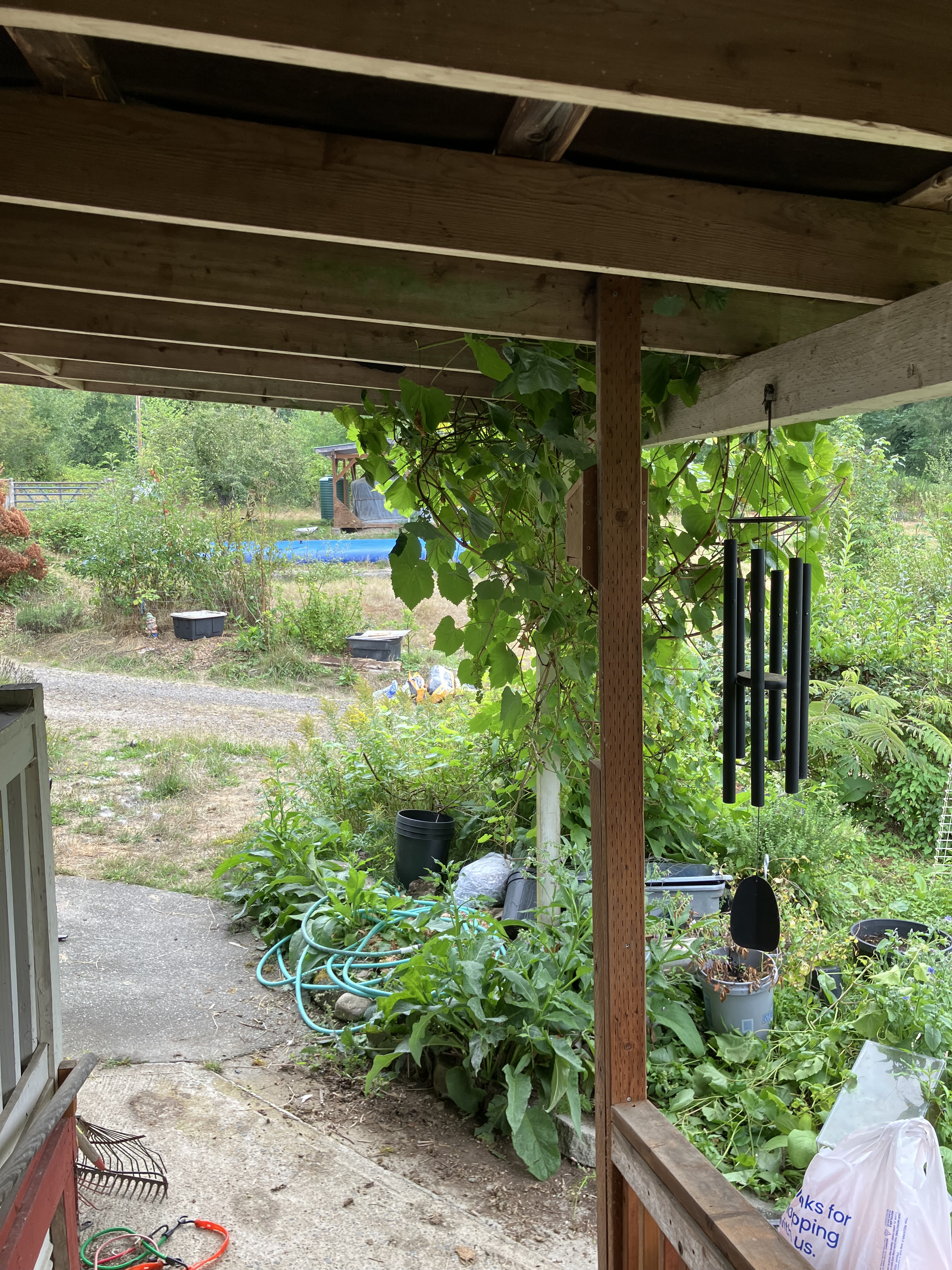
There is so much bounty in late summer here at EEC Forest Stewardship. We’ve been sharing the harvest with neighbors and friends, and receiving as well. Cucumbers and radishes from a neighbor’s amazing garden, baked goods and jam from other friends who came and picked blackberries, and more of the berries themselves, a fine crop this year, and good return for all the struggle keeping them from overtaking the landscape. There were rains in August, which set off another growing spree, and seed germination in any bare soil. I’m cutting back the grape arbor for a second time, watching the final maturity on the fruit, to harvest before birds, insects, and mold moves in. The weather is cooling off enough to invite mildew, so cutting back the new leafy growth on this plant will help ventilate the grapes to repel unwanted spoiling.

The fruit trees are having a mast year. I’ve been gathering early shed fruit from the ground and feeding the sheep a welcome treat. Why gather fallen fruit that is not ripe? It still rots and sends out a smell that tells bears to come and get it. By gleaning the dropped fruit early, you stay ahead of the bears and birds, preventing unwanted guests in your orchard. I was at a neighbor’s backyard, gathering plumbs last night, and taught them this savvy oversight to protect the trees and fruit crop. Bears like to climb up in fruit trees, and since most cultivar verities are dwarf, they don’t have branches strong enough to hold a heavily laden fruit crop and the bear at the same time. Bearing the bear becomes impossible, and branches break, causing the loss of part of that year’s crop, as well as future fruit from that hard grown branch, and much more for the tree’s long term health and balance. The devil in the details! I always talk about this, and it’s where a sort of evil can creep in over time. In the form of production and viability loss. But I can digress into tree health, fruit tree lifespan, grafting to salvage, and on and on, but this blog post is about bounty, and there’s a lot to eat.
It’s great to invite others for some evening pick your own. This year has produced enough bounty for 3 blackberry harvests over a month and a half. The right warmth and full sun brought on the flush of sweet reward, considering the aggressive nature of this Colonial introduced species. I’ll reflect on the fact that all this fruit is Colonially introduced, even the hybrid crabapples (far left below), are a far cry from q̓aʔxʷ. That’s Lushootseed for Pacific Crabapple. Pacific crabapple trees were prized by tribes as a late summer, early fall food crop. They preserved them in watertight boxed underwater! The advanced technology there is astounding, removing oxygen from the slightly cooked fruit for preservation. Let’s see ya carve or weave a water tight container, then fill it with the slightly cooked crabapples, and store it for a late winter food source. No plastic or complex global trade to meet basic needs, though the fruit was traded widely and often eaten with animal grease. Now, could the crabapples feed the cities of today, no, never. Well, maybe if we concentrated all our efforts on regenerative, climate resilient food growing and stepped back from our screens a little more. With population as it is, due in huge part to industrial processes that make more in the short term, but cost dearly in the tailing arc of human existence, we’re overtaxing what there is of this finite life.
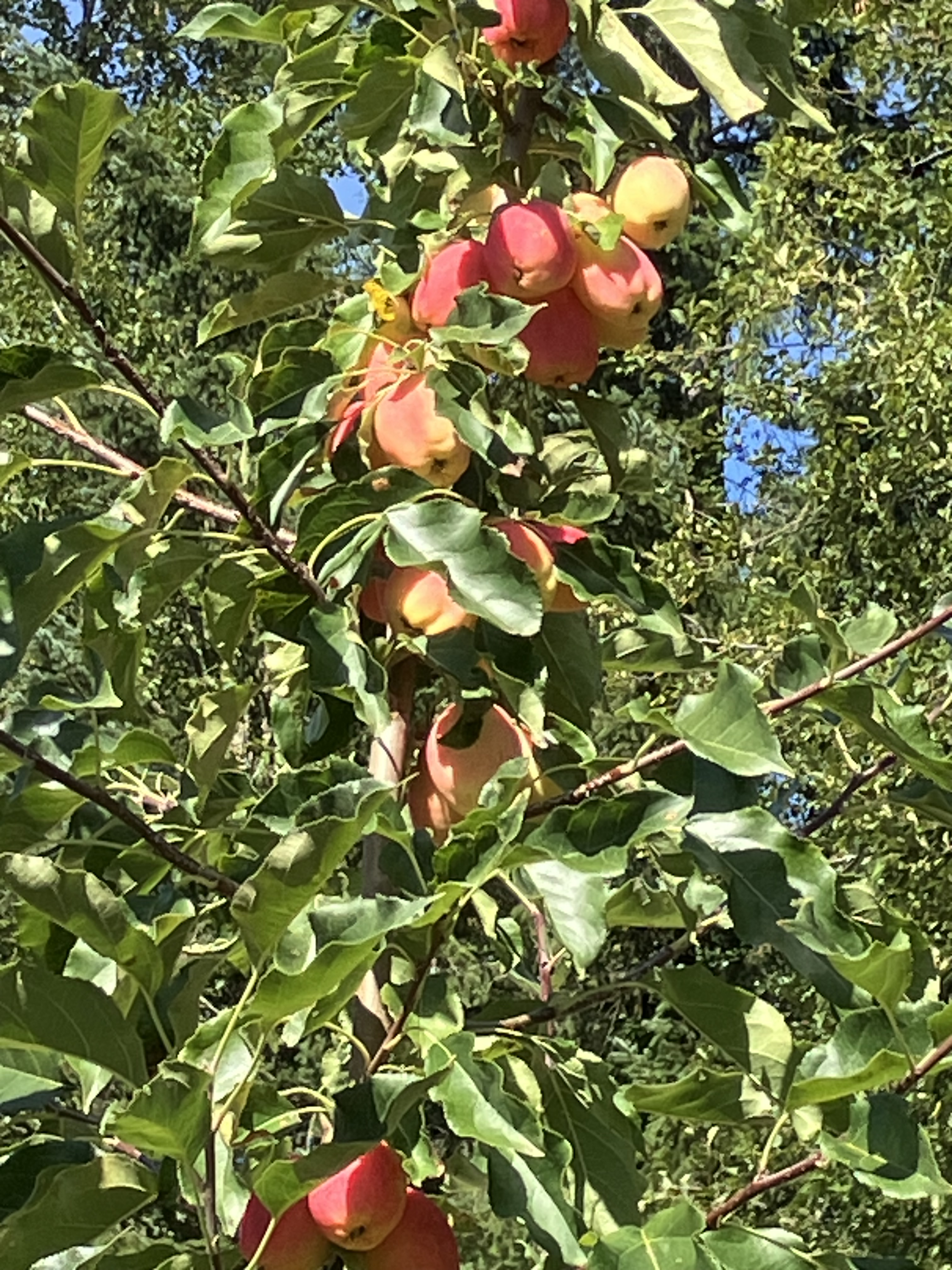
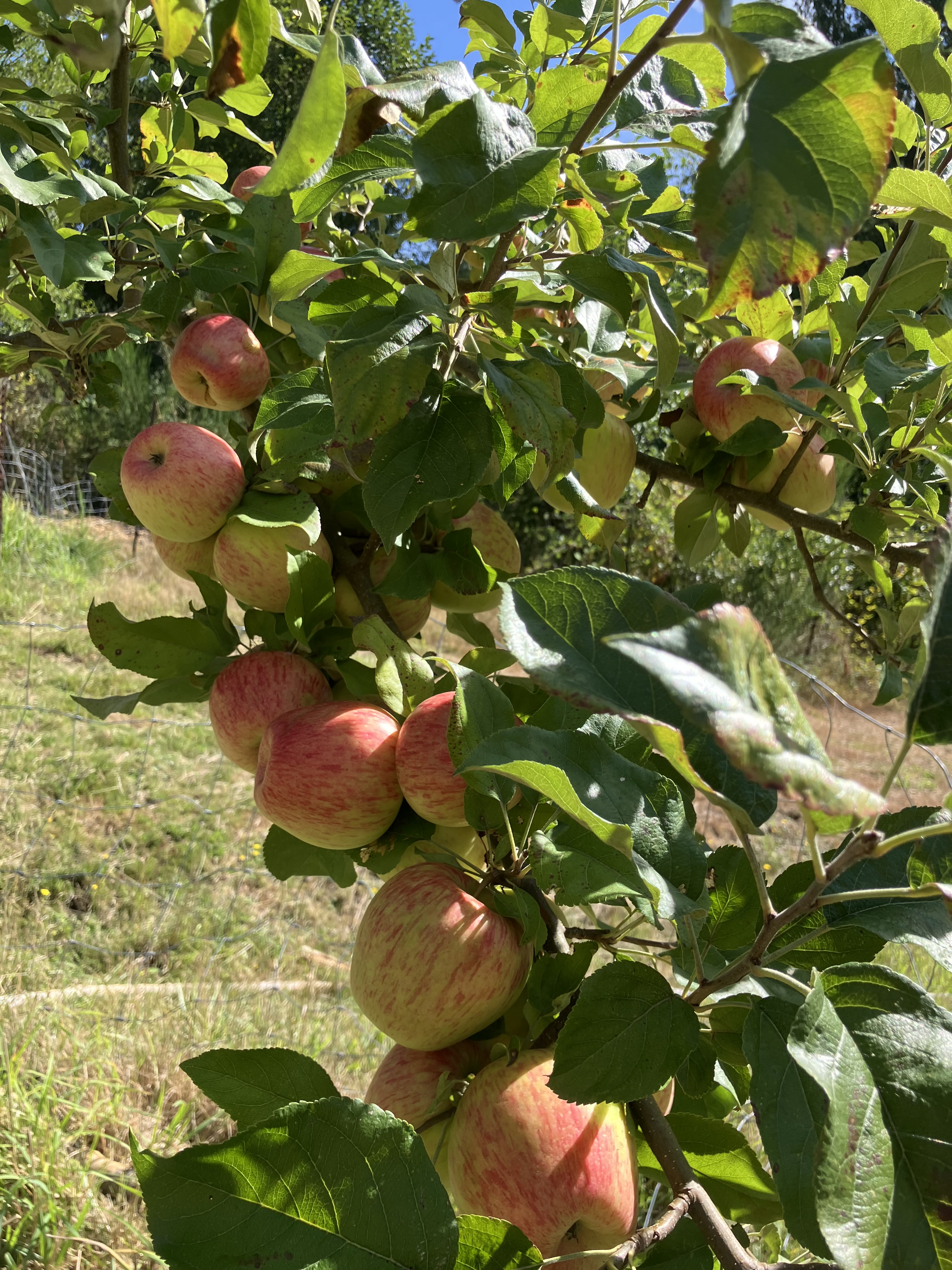
We’re cooked. But maybe not in my lifetime, so I keep tending the fruit treed, planting berry bushes, and slowly bringing more Pacific crabapples into the mix. They don’t need the irrigation, pruning, or protection that the orchard of cultivar’s demands. I am glad to pick fruit the size of my fist, rather than the size of a pea. This Colonially developed fruit is a big payoff for my troubles, but without a dehydrator, glass jars, and freezer, I’m left with little time to scarf down all that I grow and share. The sheep, chickens, and geese get the fallen fruit, and what I can’t glean for eating or jam. Such bounty for my perceived labors and time, but maybe not for all of us, and maybe not available for everyone. The gratitude for this pleasure at crafting, labor of love that give back abundance in food and connection to place, this is the paradise spoken of in some holy books, but at great cost to many others in this whole.
Once there were uncountable salmon runs that fed the people who lived here for thousands of years. Enough berries, fish, elk and deer, birds, and endless forests, camas fields, all tended and lived with by intelligent, well established people. I took a deep dive on Nancy J. Turner’s work in finding a living presence of traditional land care practices up in British Colombia. The same species and practices were happening in Washington too, because First Nations didn’t have the same boundaries white men drew up when mapping “unexplored” land. Ecology linked the people in the greater landscape of this west coast, with inland trading and exchange, which was laced into a much greater framework that connected all the continents of what is today, know as The Americas. Again, pulling the wheels of my mind back to abundance and the bounty of this year’s harvest.
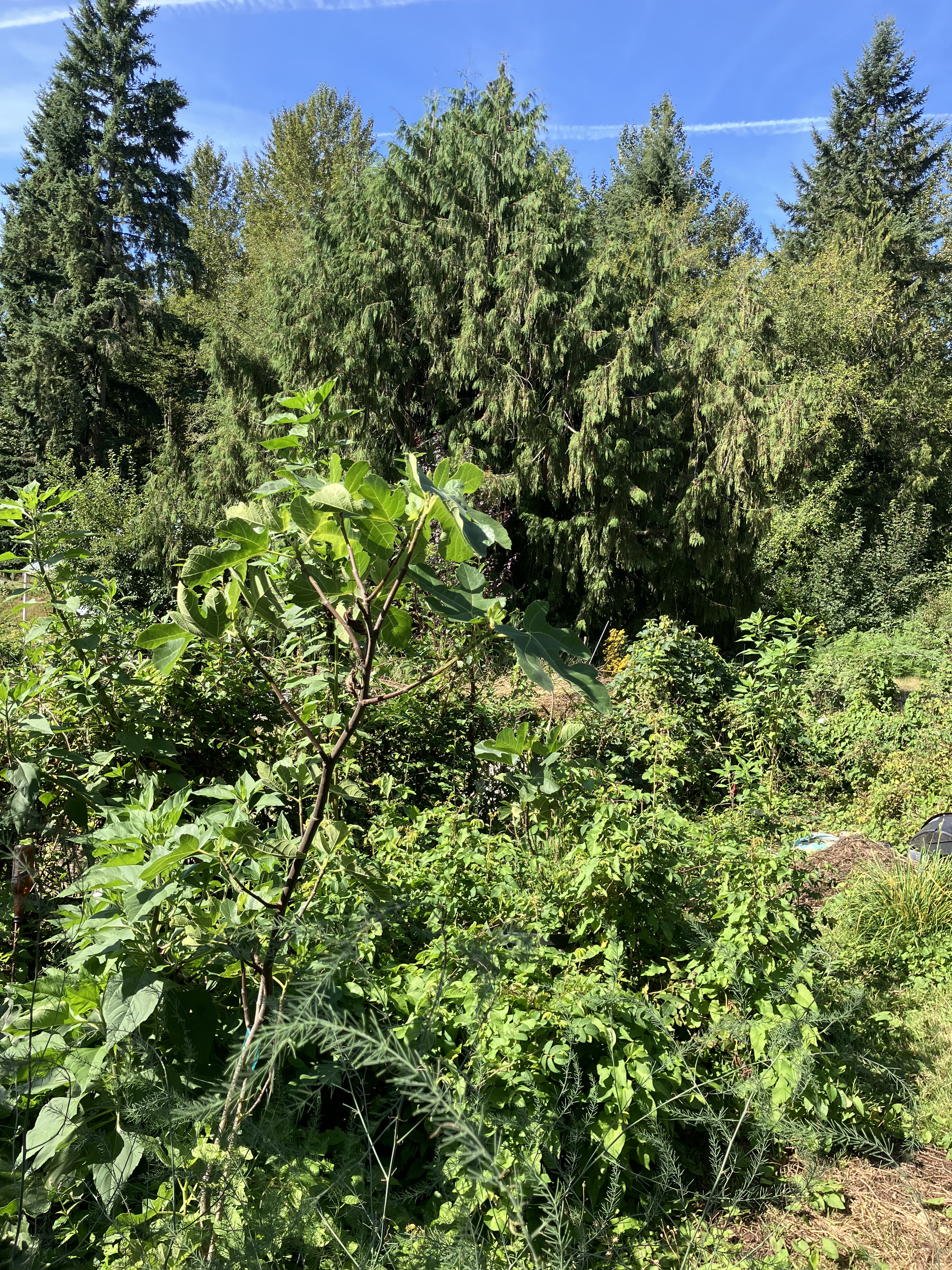
Here in the home garden, there is still a struggle with bindweed, an type of abundance I am not so excited about. The morning glory continues its vie for supremacy, yet with a half day of pulling, I can get ahead enough to let other plants shine. Figs planted last fall are now established and expanding their branches. Sunflowers are about to unfold their discs of sun worship, and native roses, berry bushes, and pollinator shrubs like mock orange, slowly morph from root stock to viable plant on the scene. Future understory champions to fill in the forest recovery effort. There’s a black cap raspberry making a jump to second story level after three years of coaxing into a stable south west corner of the garden. It’s teaming up with a swamp gooseberry to overtake a decorative snowball Viburnum, which is native to Asia. Still, towering above it all in the background is x̌payac, the life tree for tribal peoples of this area, still used for countless articles, from clothing to those water tight boxes to store crabapples. Yes, it took a lot of time and effort to make a box that was air tight and durable for food storage, but what are we doing today? Plastic air tight containers of forever chemicals, which are killing us, and making the future generations sick. I can’t avoid thinking about the microplastics in our food now, even these beautiful fruit trees many of us dreamed of planting in our own orchards, if we were so lucky. Anyway, that does sometimes keep me up at night.
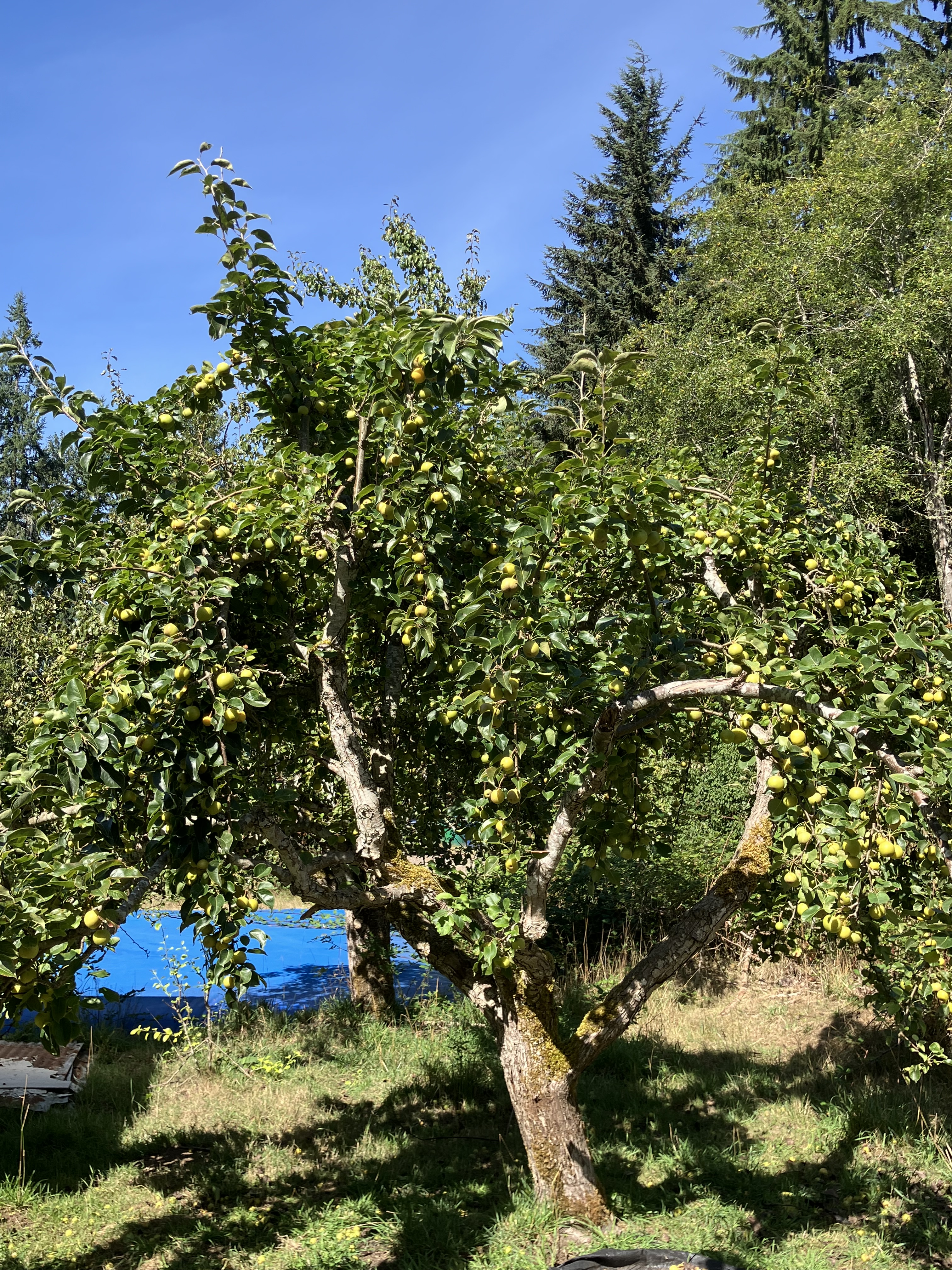
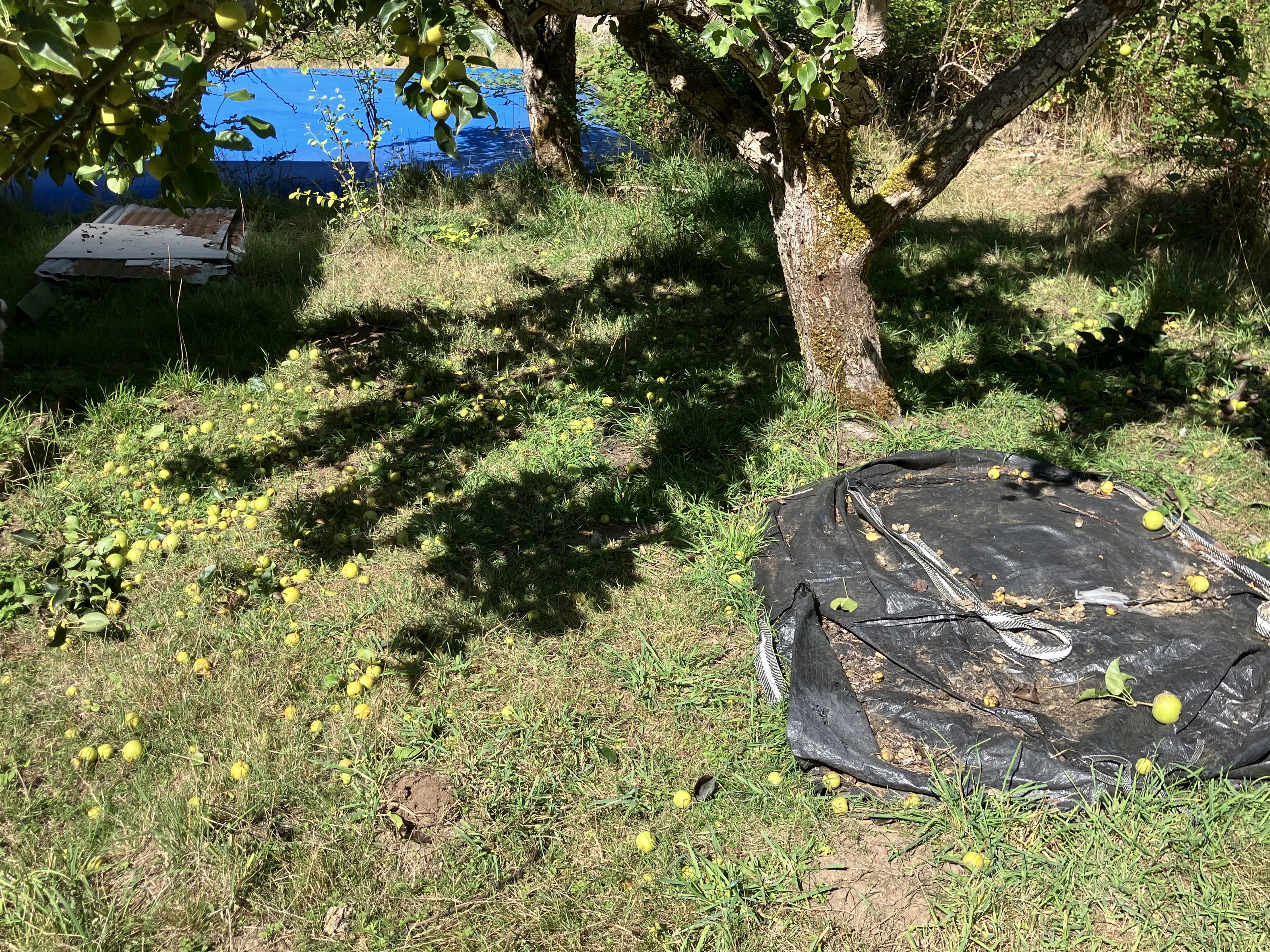
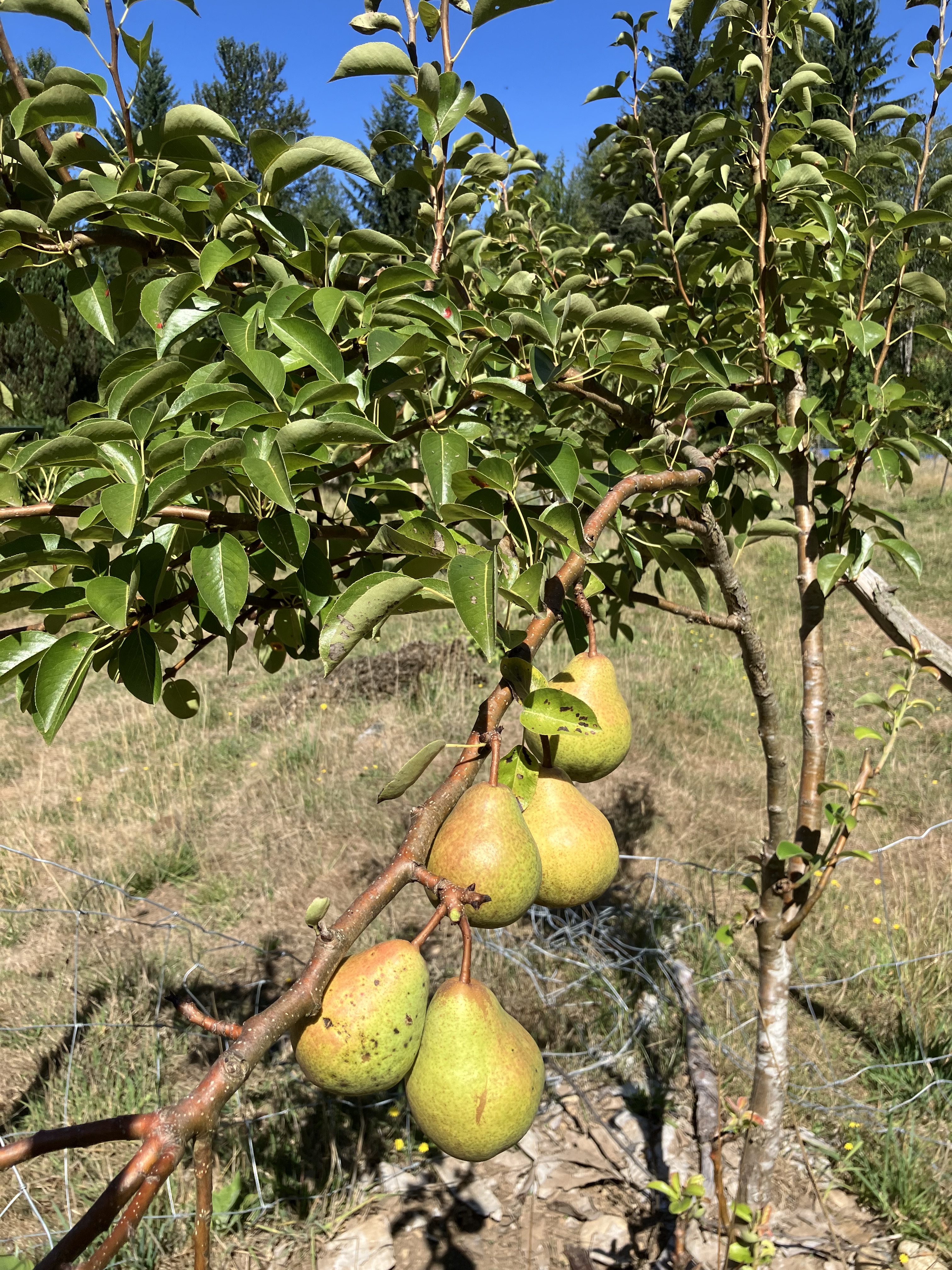
I want to tie back to that bear climbing into fruit trees, and breaking branches. There is something rather smart in the animal’s culling of branches. He naturally prunes the fruit tree. Last summer, a black bear climbed into one of the pear trees and had a feast. he took all the fruit, and took down several of the tree’s branches. As I stand and look at my pear tree this year, at the same time, there is still tons of fruit on the tree, and in fact, it shed a few overburdened branches last week on its own. To help prevent more cracking branches, I’ve done a few shakes of the pear tree to let some of the fruit fall to save branches. I know I can’t eat all the Asian pears on this tree, and the early falling stuff is not ripe, but the sheep will enjoy them, and I’ll get more mature fruit from what’s left- if the bear does not come through again. One thing to point out- I don’t have to do any of this management on my native fruit bearing species- like that crabapple I’ve been going on about, but then again, q̓aʔxʷ would not put out so much soft, fleshy fruit that my culture, and pallet prefer. Gratitude for all the choices in food I get to make here at EEC Forest Stewardship, and all the people who get to share in this modest bounty.

 EEC Forest Stewardship