
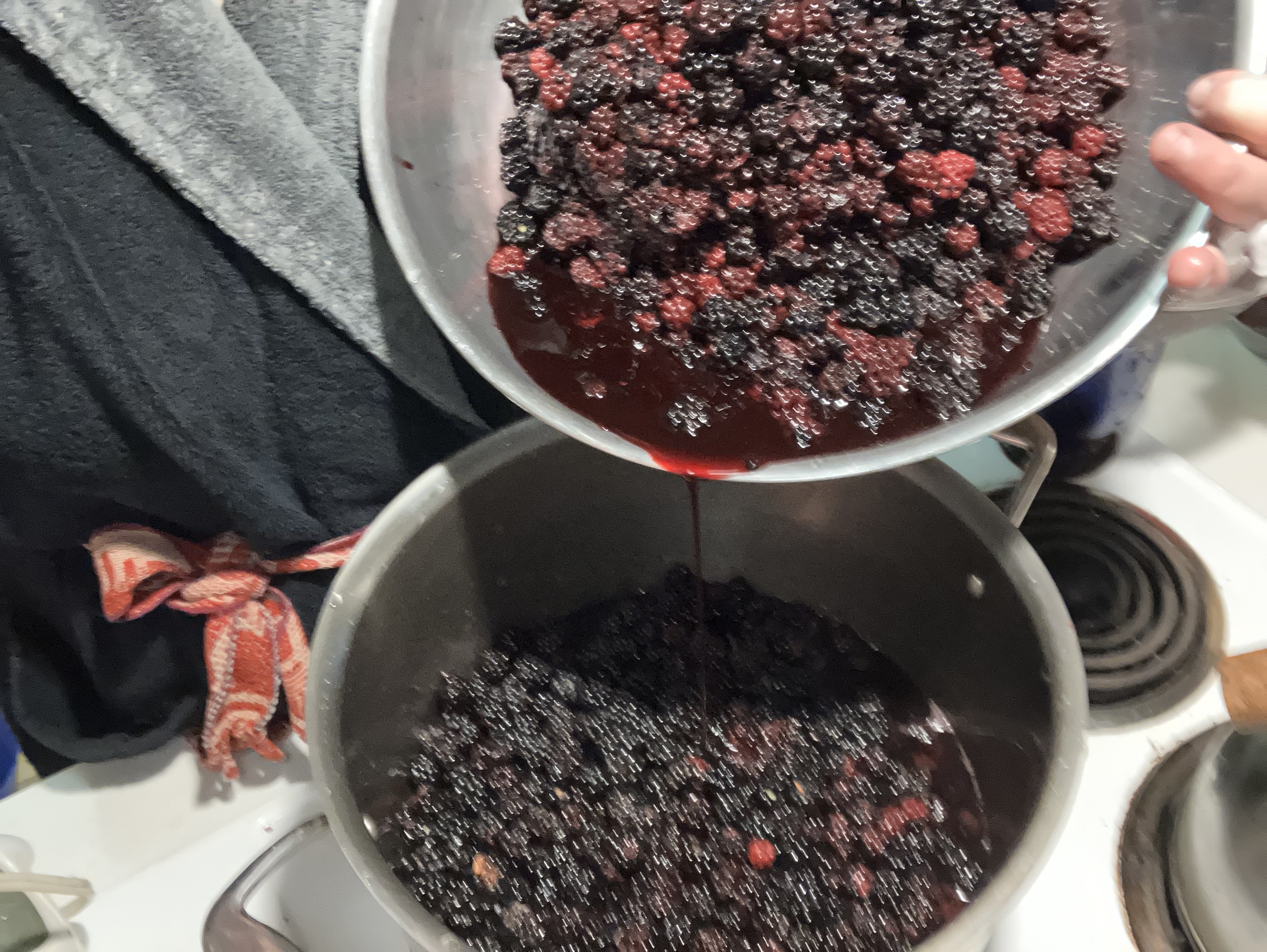
The last two weeks of August have signaled the start of fruit harvest. Blackberries have been particularly abundant this year, and as I’ve been cutting back the bramble cane, I’ve picked fruit from the invasive hedges of Armenian Blackberry on the fence lines around the property. There is a sweet reward from all that bramble, and I’ve been taking full advantage of this corp for many years. This year, 2025, was the best yet, with about 60lbs of fruit picked and crushed, then heated and strained into two five gallon carboys for fall fermentation. Blackberry wine is divine, and I look forward to bottling the end of summer sweetness to uncork in the cold dark winter to celebrate, letting a little of that summer warmth pour into our festive cups.
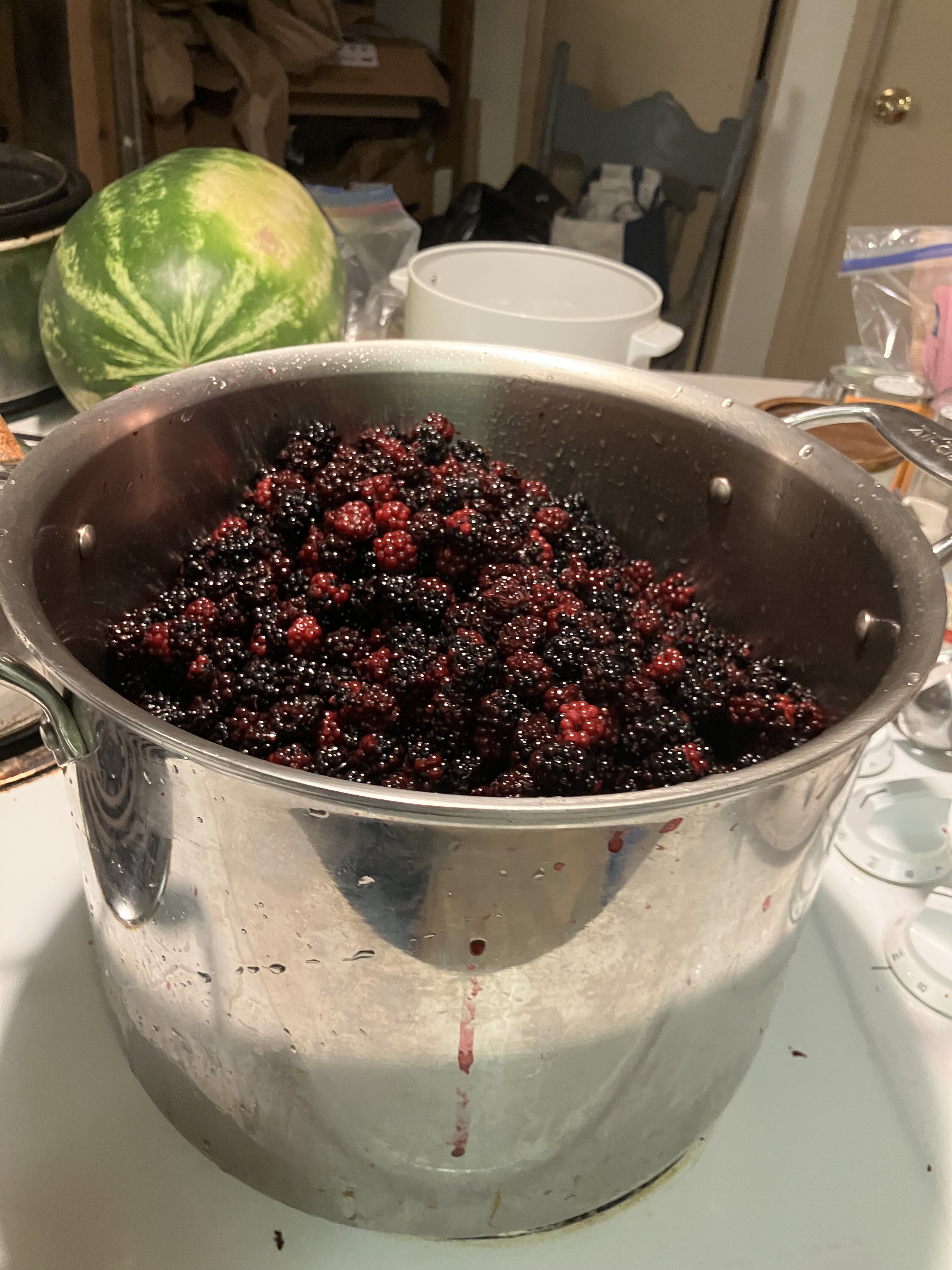
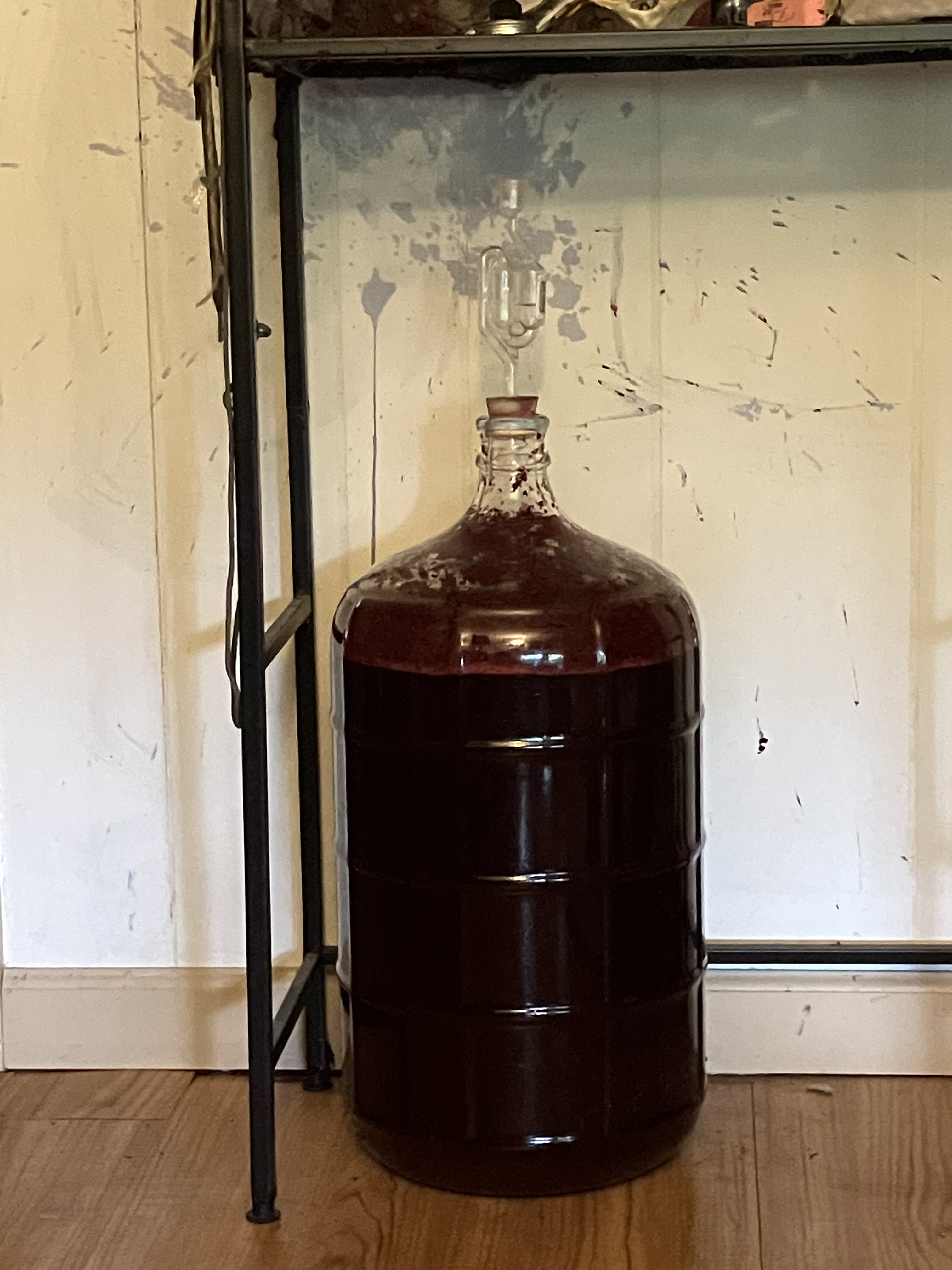
wine making is an active craft, from harvest to bottling, each step takes hours of prep and execution- not to mention the clean up. During the first fermentation of alcohol, berries need additional sugar to feed the yeast enough for chaptalization, turning the glucose into alcohol. So, the additional 10lbs of sugar in each carboy are not there to sweeten the wine, but to feed the yeast for higher alcoholic content. The first three days of fermentation, oxygen is allowed into the jugs to multiply the yeast. After that, each carboy has an airlock to allow gas out, but no oxygen in. Ethanol and carbon dioxide are released during fermentation, so there has to be an escape rout for the gasses, but you don’t want air in, so the lock is a must for wine making. I am comforted by the slow bubbling noises during winter evenings, in fact, last winter when I bottled the wine and the airlocks went silent, it took me a few days to get used to the silence.
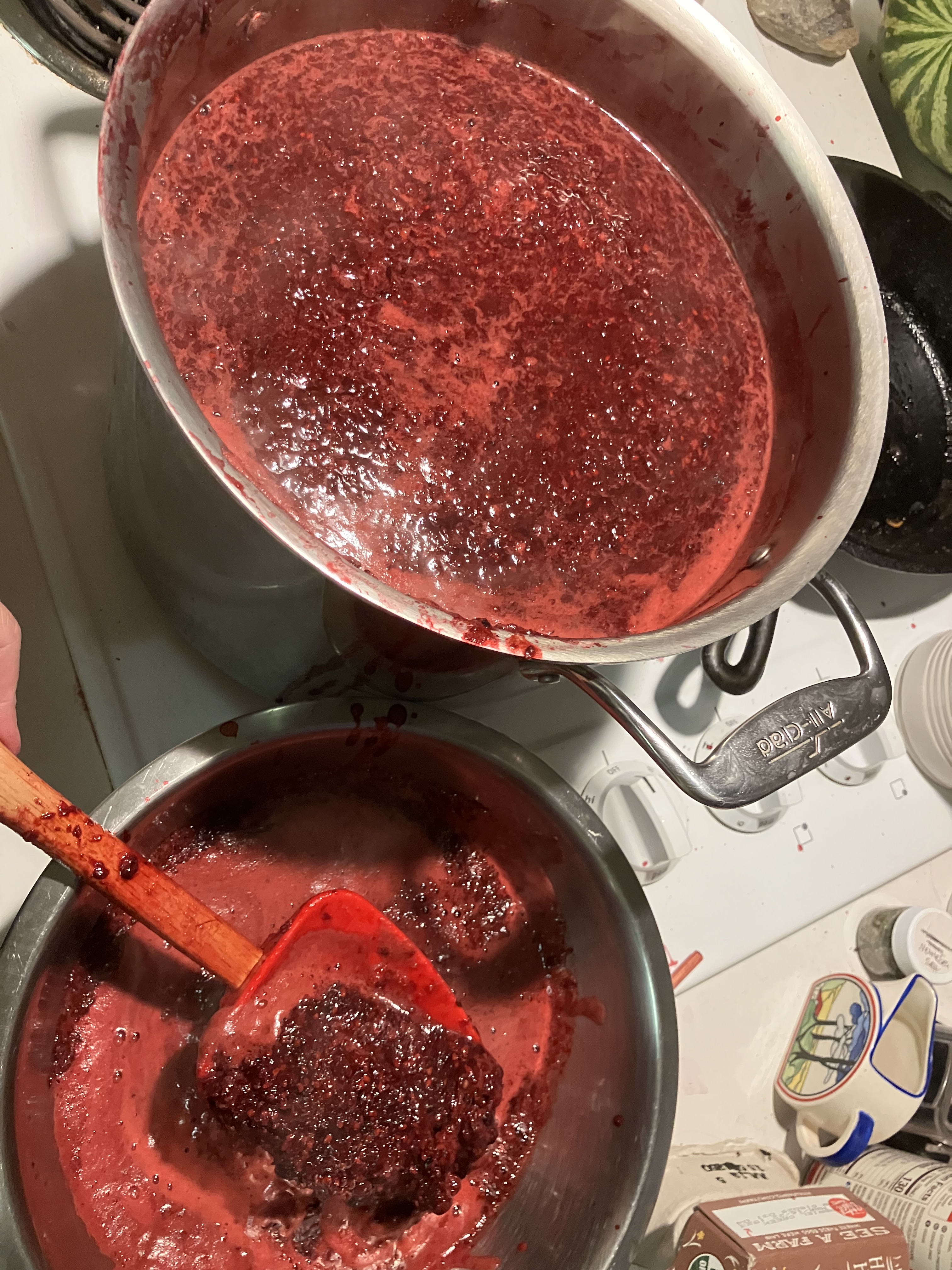
While cooking the fruit before fermentation starts, I take time to skim off froth and sift out some of the seeds. In my first batch, I did a lot of sifting. In the second batch, I only skimmed froth, and left most of the seeds through this first step in fermentation. After 2-3 months, I’ll rack the wine, sifting out all the fruit pulp and seeds, then let the liquid ferment another 2-3 month before bottling. It’s good to get the sediment out of the wine before final fermentation, otherwise you’ll have a lot of gross lee in your wine, which can develop funky flavors in time. Still, I like having the whole fruit in the wine for the first few months of wine making. It invites more fine lees into the wine, for complex flavors like nuts, honey, or bread in the taste, the dead yeast cells are included in this fine sediment that you might like in your wine. I’m not quite that advanced in my wine making skills yet, but every year I learn a little more, which then improves my wine making. I hope to have one of my most comprehensive batches in 2026.

Home-brewing is an important craft at Leafhopper Farm. Our two main crops for wine production are dandelions and blackberries, both endemic species here, and most of North America. They are considered light fruit wines, with lower alcohol count, and best served cold with a charcuterie platter. I’m also a fan of room temperature blackberry wine with stews or crispy goose. Combining the terrior of fruit from our land with the meat from our sheep makes for an incredible pairing. I also like to lay a few bottles down each year to keep for a few years, just to compare flavors over time. Blackberry wine can fortify nicely, if kept cool. I’ll often have at least one bottle pop in the summer due to warm temperatures in the house when the outside temps get into the 90s. It makes aging wine a bit of a challenge. I’m thinking seriously about building a root cellar to protect the vintages as I get more productive. No, I don’t plan to ever start selling wine from Leafhopper Farm, but it will feature with our lamb for friends and family.
As I wipe up all the spilled juice and sugar from the kitchen floor and cabinets, I think of the taste to come and don’t mind the mess. Home brewing is not simple, and you make a lot of mess, but the outcome is superb, unless your wine goes south due to a bad fungus infestation or what I call sock flavor getting in. This is caused by unwanted bacteria that can get into the wine if your tools aren’t sterile, or oxygenation happens late in fermentation. All sorts of problems can arise in brewing, any fermentation really, so ideally, you do a lot of experimentation and learn what works and what doesn’t. I’m now 15 years into wine making, and have so much to understand. Life long learning for sure! I’m glad to get a drink out of this schooling from time to time. I will say that at this point in my wine making journey, I bottle more success than bitterness.

 EEC Forest Stewardship