
It’s mid August here at EEC Forest Stewardship and the fruit and nuts are on. Though chestnut harvest will happen later this fall, it’s great to see so many burrs forming on the ever growing branches of these hard wood masterpieces. They are flanked by blackberry understory, which I’ve been harvesting by the bucket loads this summer. Though this bramble is usually a foe to be hacked back, it also gifts us with a fine crop each year, and our Cascade Katahdins love browsing the lush leaves of this invasive plant. I’ve been reflecting deeply on this vegetation, and find it’s trying to tell us something crucial about our environment- plant trees. When a shade of continuous overstory comes back, the blackberry goes away. It cannot live in an evergreen forest, and so, plant back the rainforest and remove the blackberry. Even with the slow return of the trees, I find myself cutting a lot of cane in late summer, after the flowers have bloomed for the pollinators and ripe berries are picked. First year cane can go any time, and I have to cut it back anyway, to reach the older growth where the berries are. Nothing cut goes to waste mind you- even if it sits on the ground where it drops and decomposes, the dead carbon material and green manure are wonderful for the soil. Remember the old permaculture adage- the problem is the solution.
Dearth comes in late summer. Dry, crisp leaves accompany the yellow brittle grasses in the pasture. Almost all the flowers have wilted into fruit or dropped off the stem. Nectar death stalks the pollinator community. Shallow rooted vegetation withers into obscurity as the dust clouds up with any disturbance on the moon dust surface of exposed soil. When the rains do return, they will carry these exposed micro materials away in their currents, robbing the soil of it’s fertility for future generations. This is where the blackberry tried to protect the landscape by reaching out tall stocks of cover with broad leaves that spread to defuse heavy rain and shade out the punishing UV rays that bake the soil into oblivion. Look under a bramble patch some time and the soil below is mulched and cool. Layering vegetation, even invasives, are better than parched soil. Where trees offer shade, and dense bramble crops up around the tree’s skirts, a lot of restoration is taking place.
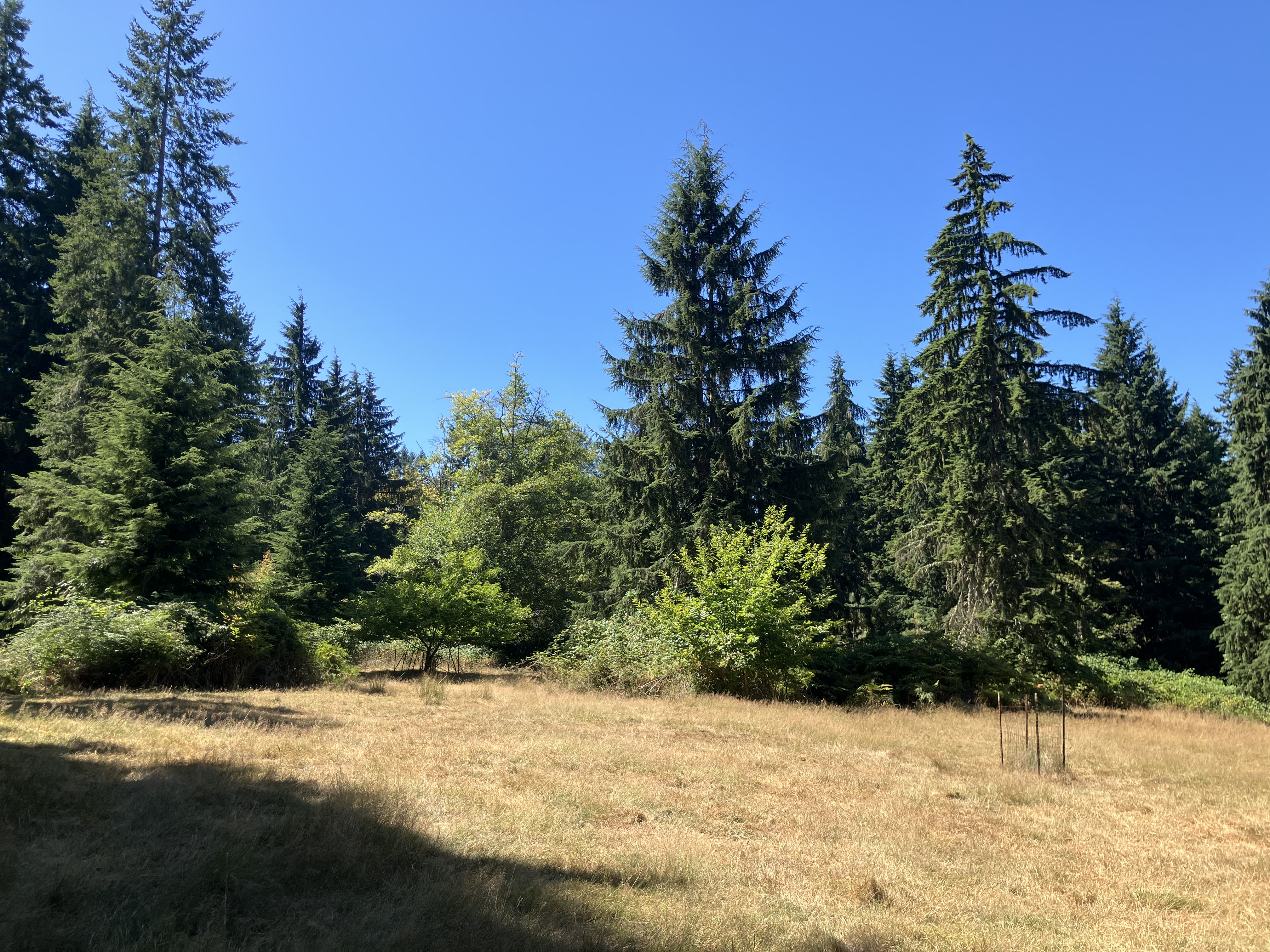
There is still lush green on the trees and shrubs that scatter about the Savannah in the farm’s “back 40” pasture. It’s the furthest from the house and high activity parts of the land. Still, I can drive through 3 gates and be there, and a fine bridge over Weiss Creek gives me full access without much trouble to mother nature’s home. I do not drive back there in winter, when the ground is soft and vulnerable to erosion. Late summer is the best time to be driving back there, usually to carry water to the sheep. I’ve also pulled and bagged the few remaining Canada and bull thistle starting to seed out, and picked the shredded tarp from a fencing project out of the grass before it becomes horrid microplastics… too late. I began this pasture’s restoration planting with chestnuts because there was space for the large trees to mature, and adequate healthy soil to support nut production. There is no irrigation for these trees, so their development is slow going. The actual harvest remains minuscule, especially in hot dry years. At least the rains are returning tomorrow. An expected half inch or more will be enough to help support these young nuts to maturity. The trees are growing up beautifully, and as they spread their canopy and shade out the hot sun, their roots will retain more of the moisture from the soil, and hopefully, better nut crops will come in time.
Blackberry may not be the best companion planting for a nut orchard. I’m certainly not encouraging it long term, but the relationship has been mutual enough for now, with some heavy handed help. I do pull the cane off the trees every few years to prevent them from overtaking the canopy. It’s rewarding to harvest the berries before taking down the lattice of spiked netting. My sheep clamor around the new salad bar eagerly. They love blackberries too, and get the low hanging fruit early in the season. While trimming, I take a closer look at my young nut trees and make sure they are all growing up healthy. This year I will be pruning the chestnuts for the first time. They are all well established now, with 5 out of eight of the original plantings surviving and thriving- that’s about what you can expect from grafted varieties in Western Washington. I have also planted a couple of seed germinated American Chestnuts, but they have not taken off, and I fear the blight will have them in the end. Most commercial nut trees have to be grafted, and the same goes for fruit trees. Berry cane does not have the same challenge. You can bury a cut stock in fall and expect a new plant to grow the following spring. If only our prized nut and fruit trees could to the same.

It’s hard to fully picture the long term environmental change that will happen with the establishment of a nut grove canopy in this field. Eventually, all the brown grassy parts of the picture above will be shaded by mature nut trees like the colossal chestnut above. It will tower high above, dropping a layer of leaf litter each fall that will slowly change the chemical composition of the soil below. I’m planning to seed clover this fall to add more nitrogen fixing around the base of the trees. The sheep will also like that diversity in their grazing diet. Livestock are spreading a layer of cold manure each year to boost soil fertility. They play an important part in the restoration of this landscape by providing an on site conversion of vegetation where it grows back to the soil in pelleted time release abundance in place. How often do we cut the vegetation from the land and take it away? The sheep are butchered and sent off to local family tables, so that abundance is lost to the land, but future generations that are born here retain enough of the cycle to keep things vibrant and in balance on this modest 10 acres. The alfalfa inputs brought here supplement what is taken by providing a dense manure I pick out of the barn each year and spread in the garden beds, orchards, and other productive parts of the farm. Organic material is crucial to maintaining soil. Carbon rich debris like the berry cane or animal bedding are a key part of soil building, and EEC does it by the truckload.
After so much labor, it’s nice to just wander the hedges picking berries and admiring the chestnut burrs as they grow. At the end of summer, bottling the blackberries in a home made wine that will be laid down until winter, when the cork pops and summer’s sweet delight pours into the cold dark winter nights. Sharing a glass with friends and family in front of a fire with chestnuts roasting. This is the image I hold as I pick fruit in the hot afternoon, or when I am pulling bramble down and get poked in the thumb, and even when I sweat in the hot sun cutting cane or shoveling manure onto the hedges where more fruit will grow for years to come. This is the lifestyle I pour my effort into, and from where I stand in the nut grove today, it’s a job well done.


 EEC Forest Stewardship