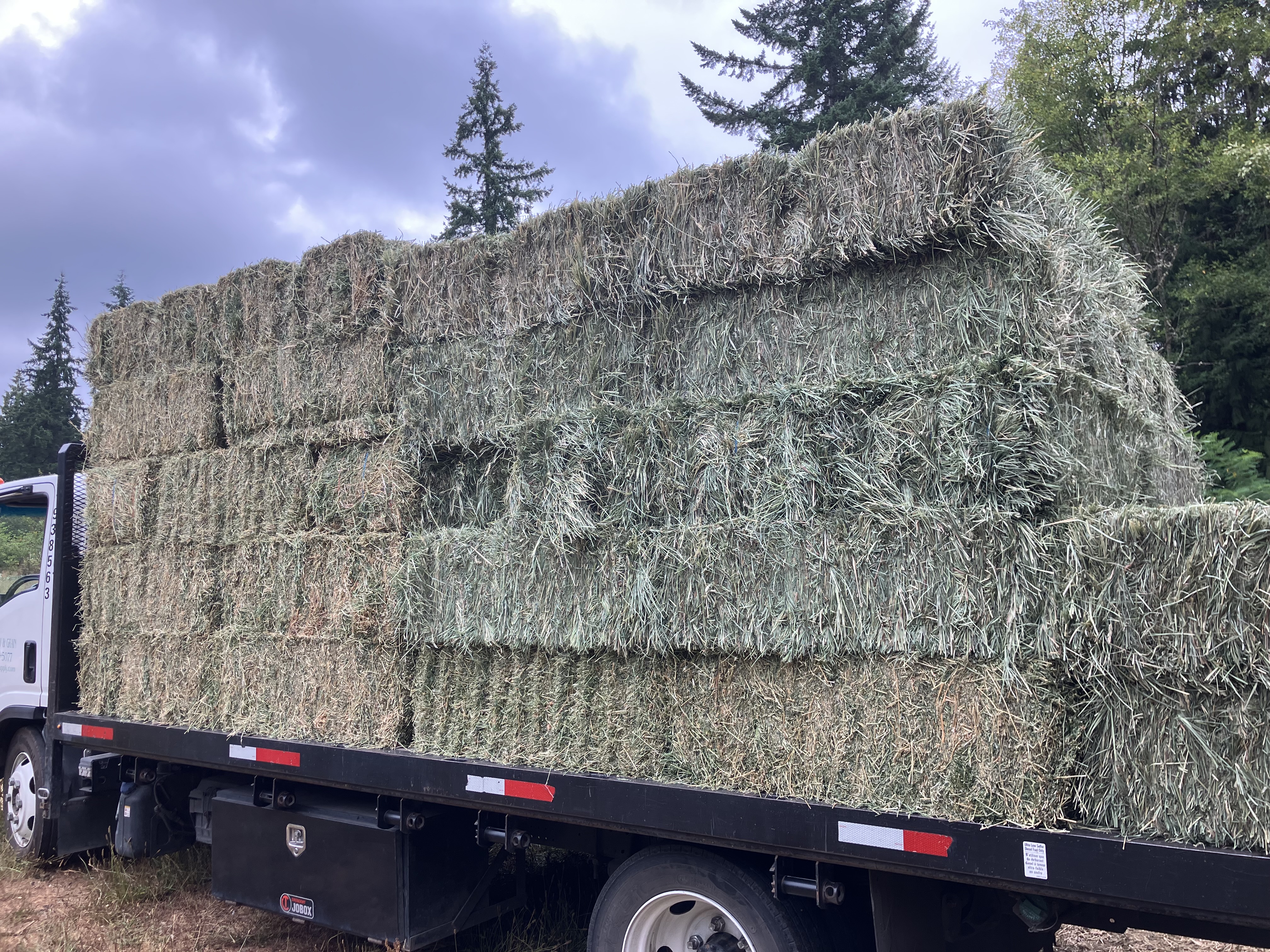
We’ve been cleaning out the barn and prepping the pallets for the annual hay delivery. My usual order is three tons of alfalfa, but because of drought, I ordered an extra 2 tons of orchard grass, in case the pastures can’t recover in time for more grazing this summer. I have about three acres of pasture left, and it won’t hold the flock through another month and a half of the forage they need. I am putting all the cut blackberry into their pasture for extra feed, but if rains don’t return till late September, I’ll have to start supplementing the flock with bought hay, which is never great. Earlier this spring, I wrote about the ewes all dropping singles this year. Well I’m glad they did, because if we had twice as many lambs, we’d already be well out of grazing on this property and having to slaughter early. Local hay can be cheap at the right time, but it’s still more than this farm’s budget and holistic philosophy hope for. I’m going to have to start making stricter choices about the size of flock to remain in balance with what a drought summer can offer.
Hedgerows are setting in, and will offer a lot of vertical forage as they mature. I’ll be reseeding with clover and vetch to diversify grazing and improve diversity in plant life and animal diet. The composted bedding and sheep manure can be spread right onto the ground from the barn after a few months of drying out- so I can easily fork it into the truck and onto the edges. Katahdin sheep manure is nitrogen low, a cold manure that can go right onto the land without burning the plants. This makes it easy to spread on the landscape wherever a little fertilizer is needed. The edges of the property, where hedges are establishing over time, are an easy place to bank up manure compost for future planting. By next spring, I can direct plant into these beds along the fence line and grow another layer of vegetation for future browsing and harvesting.
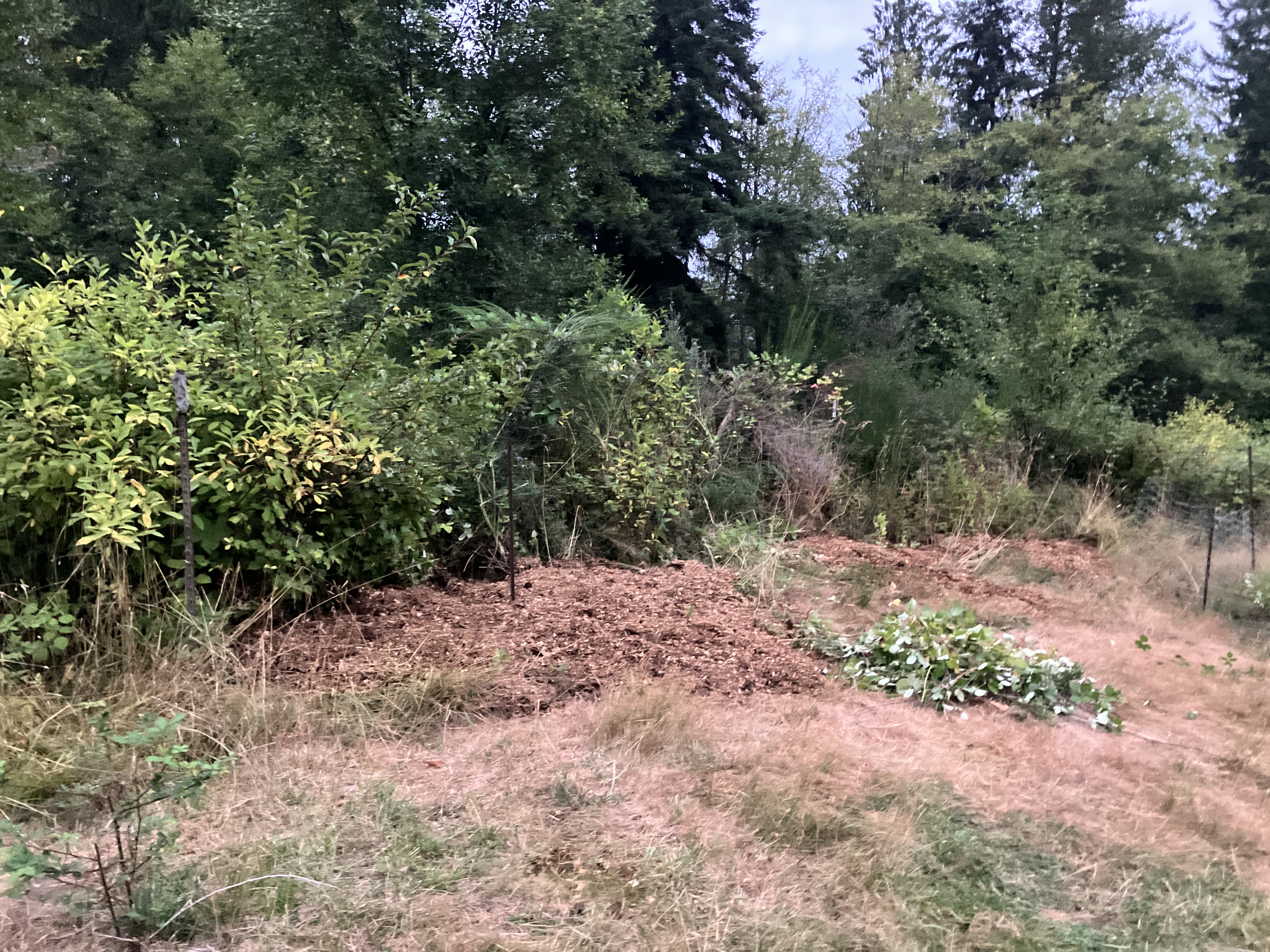
The hedgerow fence line pictured above includes cherry, twin berry, blackberry, apple, plum, rose, scotch broom, alder, and trailing blackberry. A spread of clover and vetch in the fall will prep this expanded planting area for future shrub and small tree plantings. By slowly plating in from the edges, you turn a pasture back into a forest. These fence line edges won’t expand much more, because the orchard- future food forest with intentional cultivar plantings will continue for at least a few more generations, if fruit trees are needed, if not, the space should be reclaimed by natural forest over time. Oaks can be planted for a savanna recovery from open, somewhat barren pasture scapes that were certainly overgrazed and underappreciated in the last few generations, since their inception at the turn of last century. The heat and drought of our future Puget Lowlands will demand fire resistant, drought resistant ecology, something hemlocks and many red cedars will not survive in as forests evolve. Will this property grow its own alfalfa one day? No, forest canopy and water retention for fire resiliency is the key at EEC Forest Stewardship.
Hay deliveries are crucial to year round livestock operations on this farm. When sheep are scaled out of the restoration timeline, poultry will become a focus, and much of the two largest pasture spaces will have been planted in enough to allow a temperate rainforest her time to recover- several generations of human lifetimes. How many of us can stand in a forest and know our grandparents were alive at it’s planting? How many generations can to trace back in a place? I’m the first of my family to come to and settle on The Pacific Coast. Shepherding goes back though, and droving in Scotland. Perhaps clearcuts of great forests feels ancestral too. How many generations back did my ancestors cut down the oaks in their homelands? Were they also accosted by conquerors, Roman legions that burned the forests to destroy native people in those isles that had lived with the oak for centuries. I cannot weave directly into any first nations of The Americas, but I can trace back along the frayed lines of settlers and spillover from over populated European feudal legacy. Was I talking about hay?
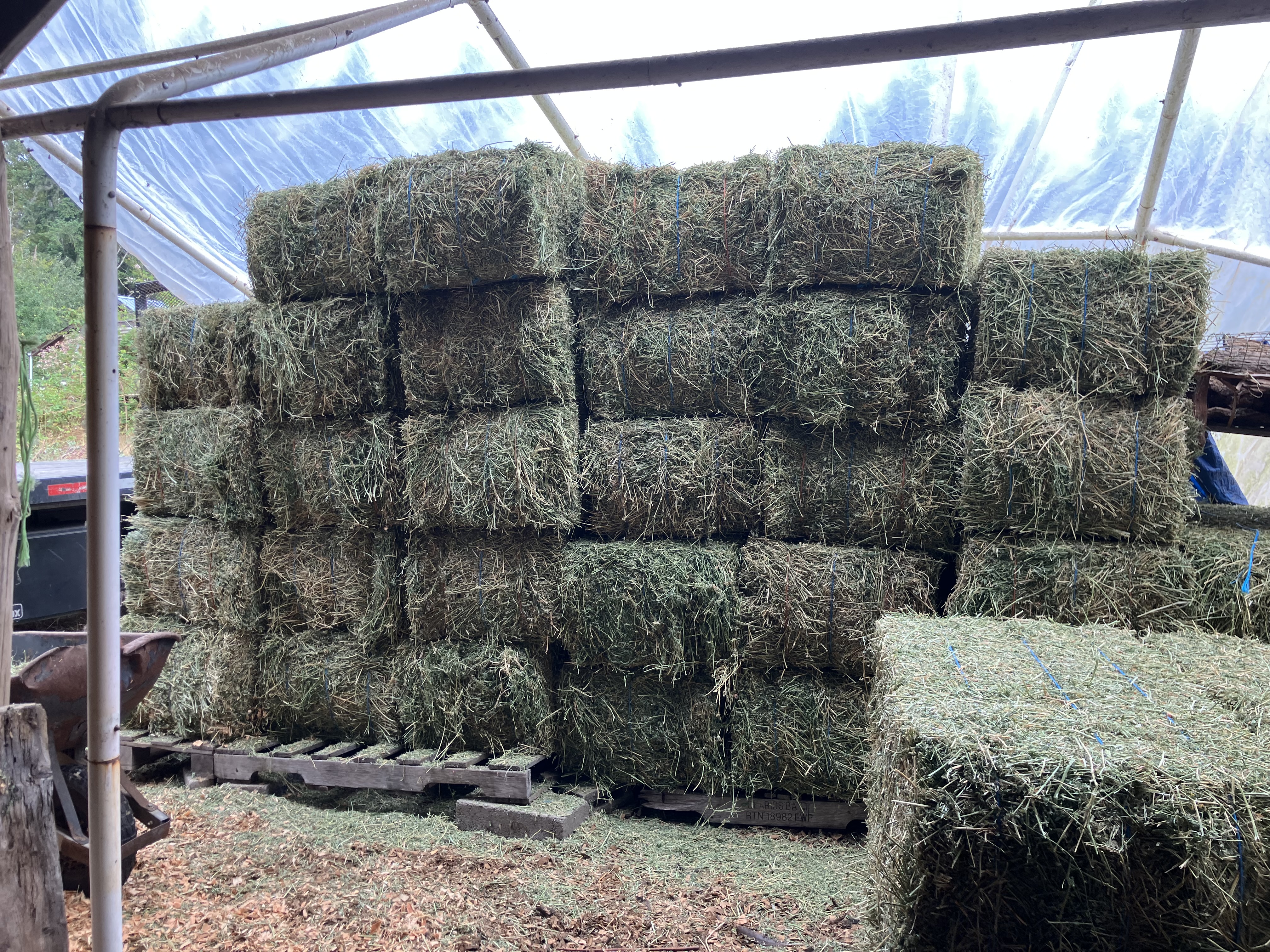
3 tons of alfalfa, there are two stacked here, a first time for Leafhopper Farm’s sheep barn. This temporary greenhouse plastic extension has remained steadfast and true through almost five years. I’m impressed, and recommend this simple building method to expand your barn’s dry cover with little cost and effort. I still tarp this alfalfa for protection against UV rays and opportunistic chickens looking for nesting sites or legume gleaning through the bales. Since I ordered an extra two tons, I had to find more space for the hay this year, thus the rush to get the barn cleaned out, my usual late summer access is blocked by this beautiful winter feed for pregnant ewes.
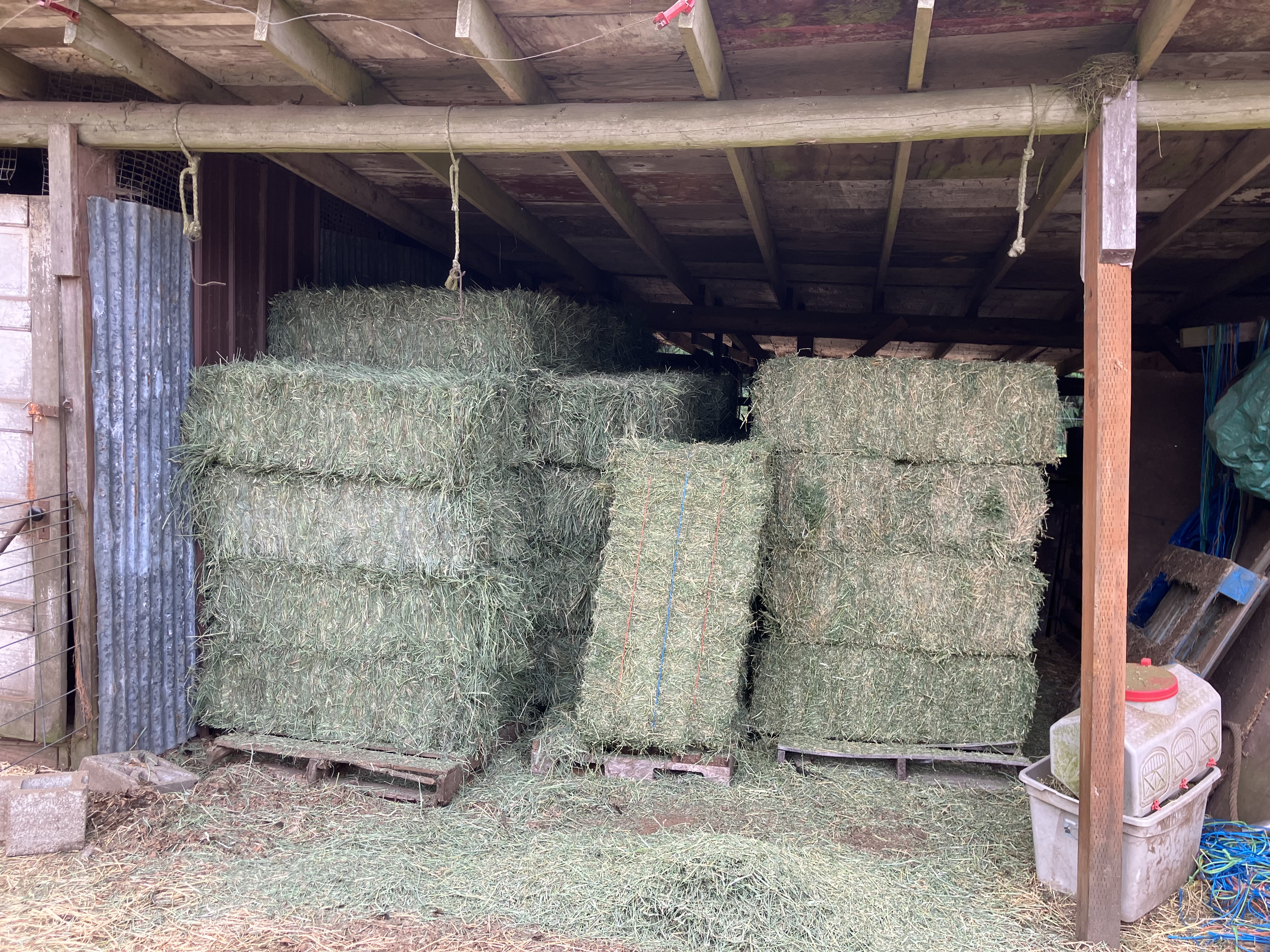
In the traditional hay barn, I put the two tons of orchard grass, much of which will be eaten by the overwintering rams. That’s right, two this year. Okie is our resident ram from Canfield Farms in Snohomish. His offspring from this year’s lambing, 2025, has shown a promising future breeding ram in Quinn, out of Lickity Split. He has short legs, a sturdy, long back, and mild temperament. Another prospect for quick growth and good frame is “Q”, first born this year and already the size of his dam, the largest ram lamb this year. Size is not always the most favored trait in sheep, but that’s up to the breeder. I look for short legs, long backs, and gentle temperament. There are also breed standards, like no horns, completely shed fleece, and ideally an average of two lambs with each breeding. Those standards should be reached within the genetics of this Katahdin flock. Their winter diet of alfalfa ensures enough good protein for gestation and early life. My ewes produce fantastic milk from well preserved body fat put on during their overwintering in the barn and generous feeding of the precious alfalfa stacked in these barns. This delivery is on par with my firewood stacking. Summer harvest becomes winter larder for the cold days and long nights to come. Or perhaps, to better align with the temperatures of climate change- a larder to get us through the drought of fall and keep up with winter’s cold dark edge.

 EEC Forest Stewardship