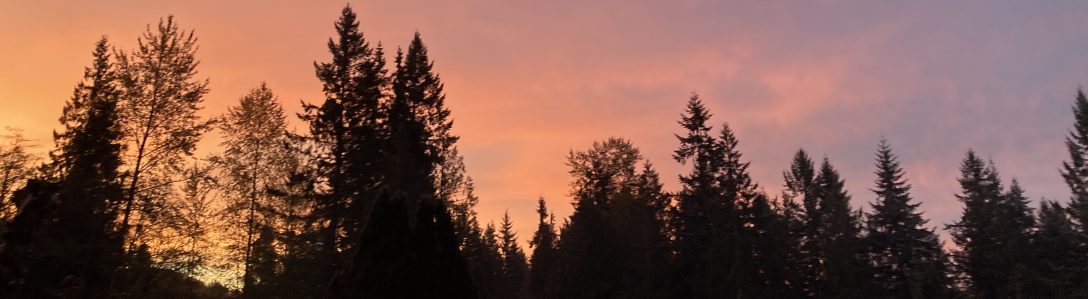
Western Washington is a place known for dense temperate rainforest. but in late summer, and even by mid July, the weeks without substantive precipitation takes it’s toll on an already dry trend for our bioregion. The winter rains for two years have been thinning out, I’ve watched a couple of our dry cycles come and go, but the overlapping effects of harsh dry heat without dampness or shade bakes the land and evaporates crucial hydration that plants and animals desperately need. Today the creek that graces this landscape for a little over 300 feet of its journey down to The Snoqualmie River, is slowed to a trickle, and we’ve still got two dry months of summer left. It’s the driest I’ve experienced this place since moving here in 2008. I’m watching large, well established trees turning brown. The drought stress has been mounting for years, as the winter rains shrink in length and scope. Dusty soil can’t take in water quickly, and our rain events are getting harder and shorter, where everything comes down at once, instead of the slow winter trickle of continuous revitalization this complex ecology needs to survive.
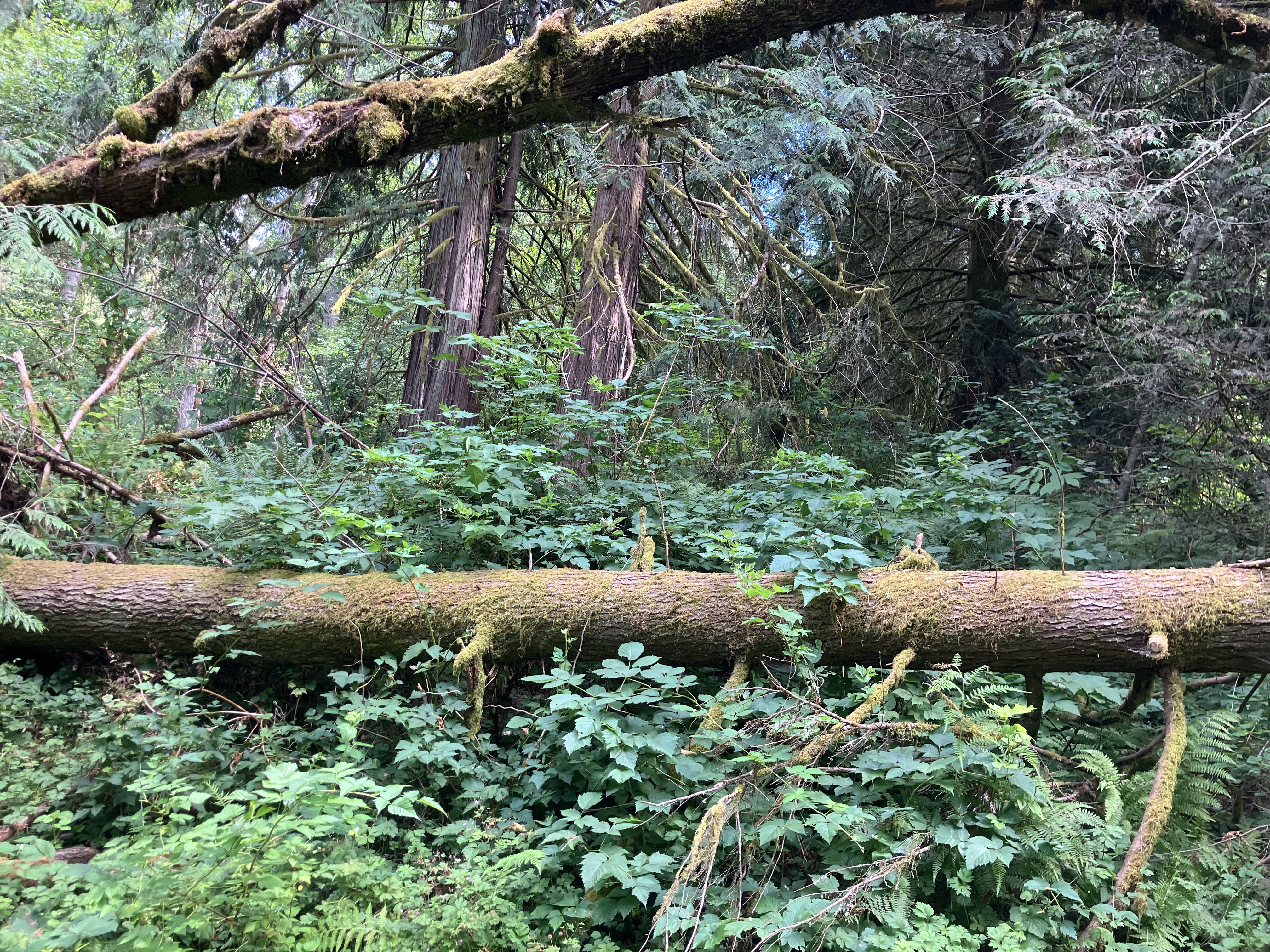
Pictures I’ve taken at the end of July show a stark difference between areas of intact canopy with shade and replanted understory, vs. areas that remain pasture with little canopy or diverse understory. Some of the forest stands are without understory replanting, and reflect the desolation of summer drought where trees stand alone and vulnerable. Root systems without proper ground cover and the mesh and tangled branches of brush and understory plants that build the many layers of an intact rainforest ecosystem. Some might call such debris a fire hazard, but where there is good mulch and layering in the woods, water will remain in the soil, keeping fire low and slow as it burns through. It would be easy to lite the dry grass and scorched earth where there is no shade or cover for the ground, but where the shade and layers of vegetation remain, the soil is damp to the touch, and none of the green plants will catch a flame.
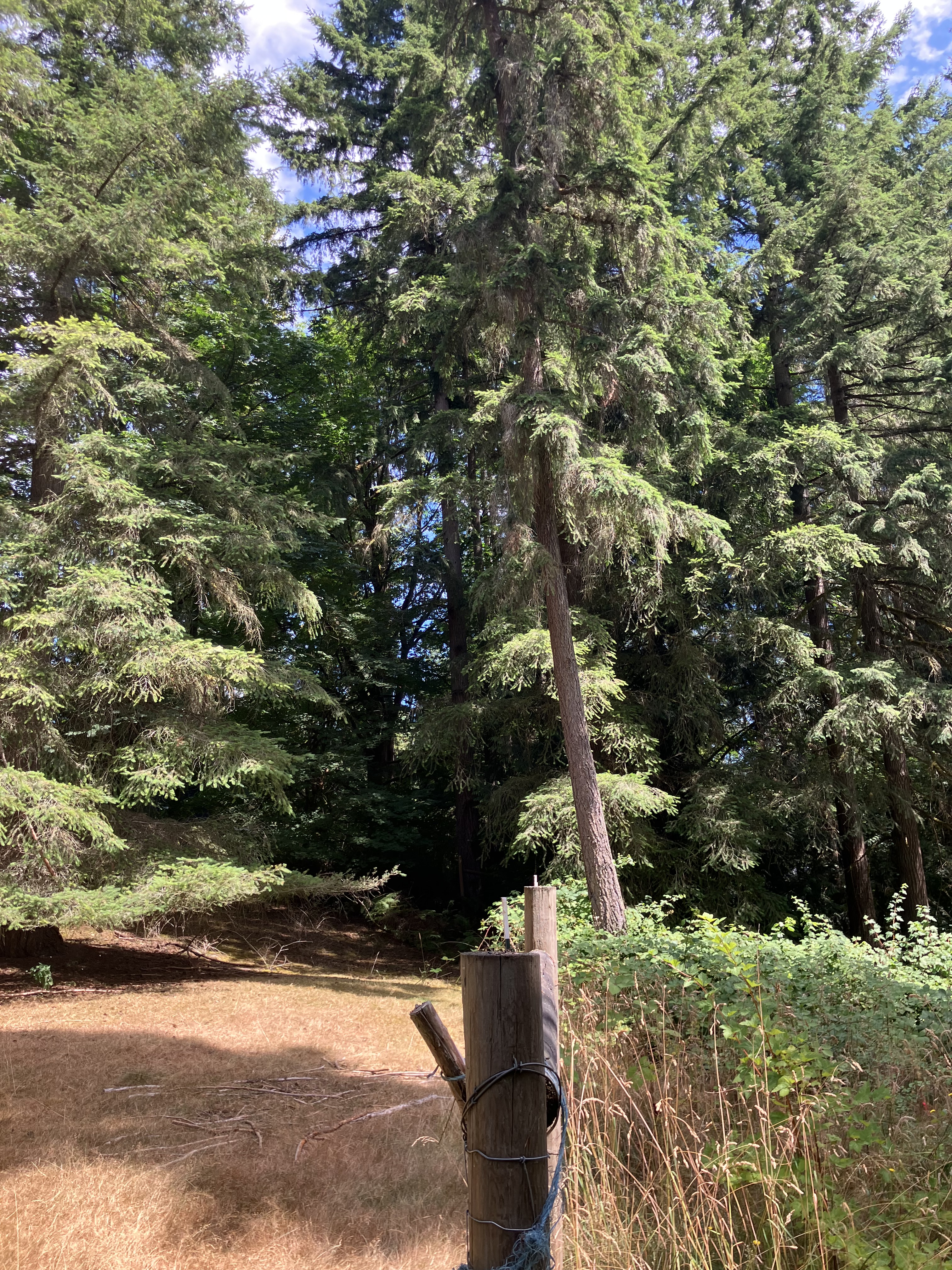
The gate where our upper pasture meets the creek wildlife corridor is a stark demonstration of grazed space compared to stream buffer habitat without grazing. The planted space on the right is still establishing, with a lot of blackberry trying to return, but a fast growing forest with understory is returning, and will shade out the bramble and return more nutrients and moisture to the soil. Pictures below show other parts of this replanting that are established and the growth continues.

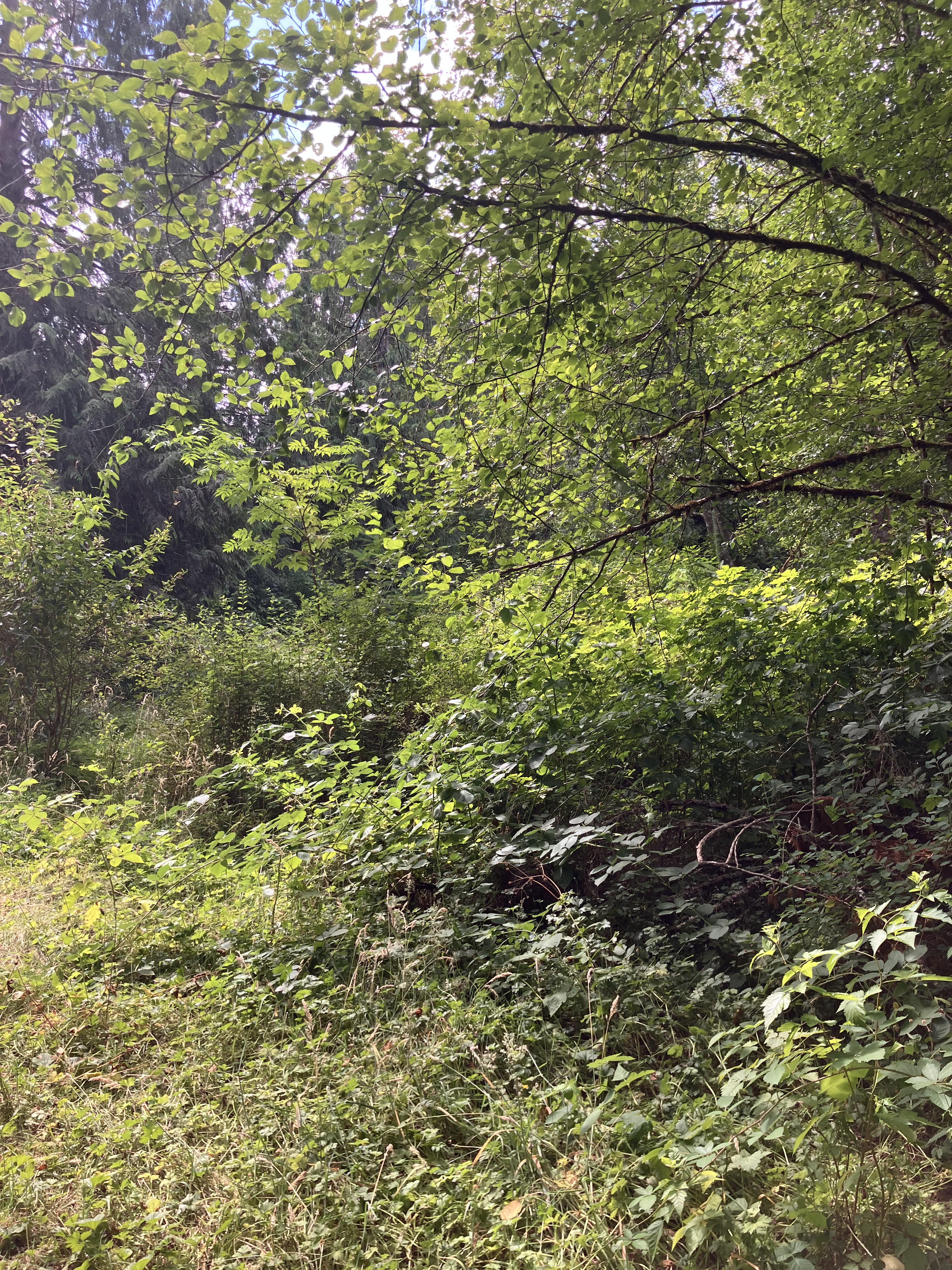
This riparian area and surrounding stream buffer remain lush and green, thanks in part to being in a low lying area where the creek runs through. Shade remains another strong protector of the soil and low growing vegetation in the woods. This habitat has an established forest present to offer an umbrella of protection to younger growing trees in the nursery below. Within the upper pasture, there are two protected groves being replanted, there is still a lot of canopy to replace for total shade protection, but the young trees are reaching for the sky and creating small communities of other understory plants as they grow. Hazel and alder, wild rose and elderberry begin stitching together edges and hedgerows to bring vertical growth and more brows into tended spaces. The long term over-story of these replanted savannas is white oak. Because of an oak’s slow growth, I’ve scattered big leaf maple, hazel, and a few chestnuts in for deciduous companionship and leaf debris build up for more good soil. The tannin in the oaks will one day push out the other trees and shrubs so the oaks will have enough space as they establish. Succession is crucial in forest planning, the trees you plant today will not be the forest one-hundred years from now- what does that grove look like? Because of the continued summer drought in our region, I see oak savanna as the long term evolution of this forest- a lot like central California.


Our pastures already look like something out of a dry prairie, and it’s not a great look for what should be temperate rainforest. In these dry times, I think very hard about replanting more forest sooner, to help keep the ground wet, but there has to be enough soil to hold the trees and establish the understory. A wise forester once told me to bring the forest in from the edges, slowly transitioning from where the forest is already established. This continues to be the best working restoration action so far, with young trees slowly woven in at the edges where taller trees offer shade and some protection from the elements. Edges are great places to see the most diversity in a landscape, where sun can still reach the ground, abundance germinates. Where there are no edges or canopy protection, the ground becomes quite vulnerable, and the livestock has to come off this moon dust ground in the same way they have to come off wet ground to prevent erosion. There will not be enough rain in the next few weeks to bring back our grasses.
The landscape has about another month of vegetation for the sheep, then we’ll be forced to put them back in the barn on hay. I’ve already ordered this year’s tonnage and I’m getting two extra tons of hay to tide the flock over. I’m irrigating the fruit trees and gardens to keep valuable cultivars alive. People do not often thing of Western Washington as arid, but the following photos show a landscape without water. The upper pasture is resting now, until a good winter rain revives the vegetation. In the mean time, these grasses lay dormant in the dust and heat. If animals were left on these lands, the roots would be killed and the ground churned up into fine particulates that would blow away in the slightest breeze. That’s what happened in The Midwest, where I come from originally.


We are well educated about The Dust Bowl in Oklahoma. It’s why you have a conservation district wherever you live in The US today. In Western Washington, we tilled up all the trees, burned the slash, and set cattle upon the landscape. The topsoil ran off the hillsides and down into our waterways. To this day, dredging is required to keep the shipping channels open in and around Puget Sound. Over ten feet of the topsoil is gone now, and the trees trying to grow here today are pressing down into about 12-16″ of soil, then stonewalled by glacial compacted clay below. When a larger tree is blown over in the replanted forests of today, we note the pancake like shape of the root ball. Yes, the older trees are failing and falling over because they do not have enough topsoil to root down into. Future windstorms will teach us hard lessons about our disruption to this ecosystem. I’ll keep piling on the manure rich compost, chop and drop vegetation control, and rotational grazing for soil regeneration. 10-20 new trees and shrubs are planted here each year, and more to come. The brittle grasslands will one day be shaded out by a multi-layered canopy of oak, maple, fir, and much much more. Gratitude for all the growth in these forests, and the billions of small things thriving below our feet each and every day.

 EEC Forest Stewardship