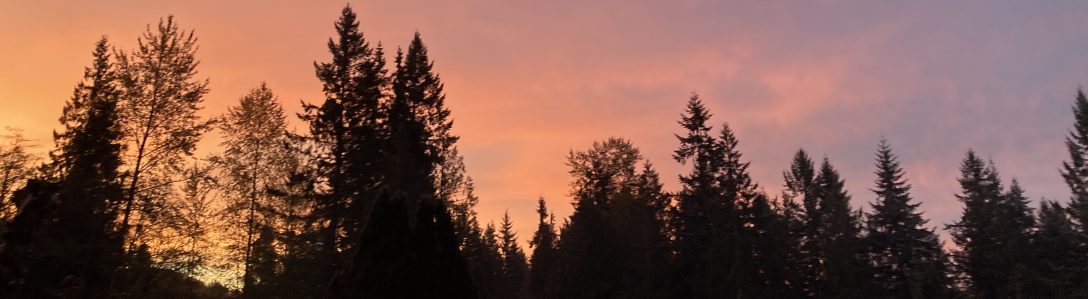

Pilchuck is a name most people living in or near Snohomish County know well. Apparently, it comes from Chinook Jargon– a pigeon language developed for trading. The Lushootseed language, endemic in the area, calls the mountain bellybutton, or bəlalgʷəʔ. Like an alter risen into sky, this beautiful lone peak was thrust up by the great Cascadia Plate, her quartz monzonite granite exposed to the elements as wanting feet and hands scramble to reach her 360 views. In mid-June, the snow above prevented summiting, which was never the goal of this day’s adventure. The journey rather than destination, but we drove up 3,000 feet to park at the trail head, so we were already at the destination when we started. The vast base of this peak is still actively logged, and the familiar monoculture stands of Douglas fir surround the lower section of this majestic peak. From the trailhead up, you’re lost in a mixed coniferous sub-alpine slope, with talus edges and a few lone older growth giants. There is subtle evidence of clear cutting old growth long ago. A hundred years later, the legacy stumps are shrouded in new trees, well on their way to old growth standing, by our country’s legal definitions. Because it’s a popular public trail, this part of The Bake Snoqualmie National Forest is protected from logging, for now.
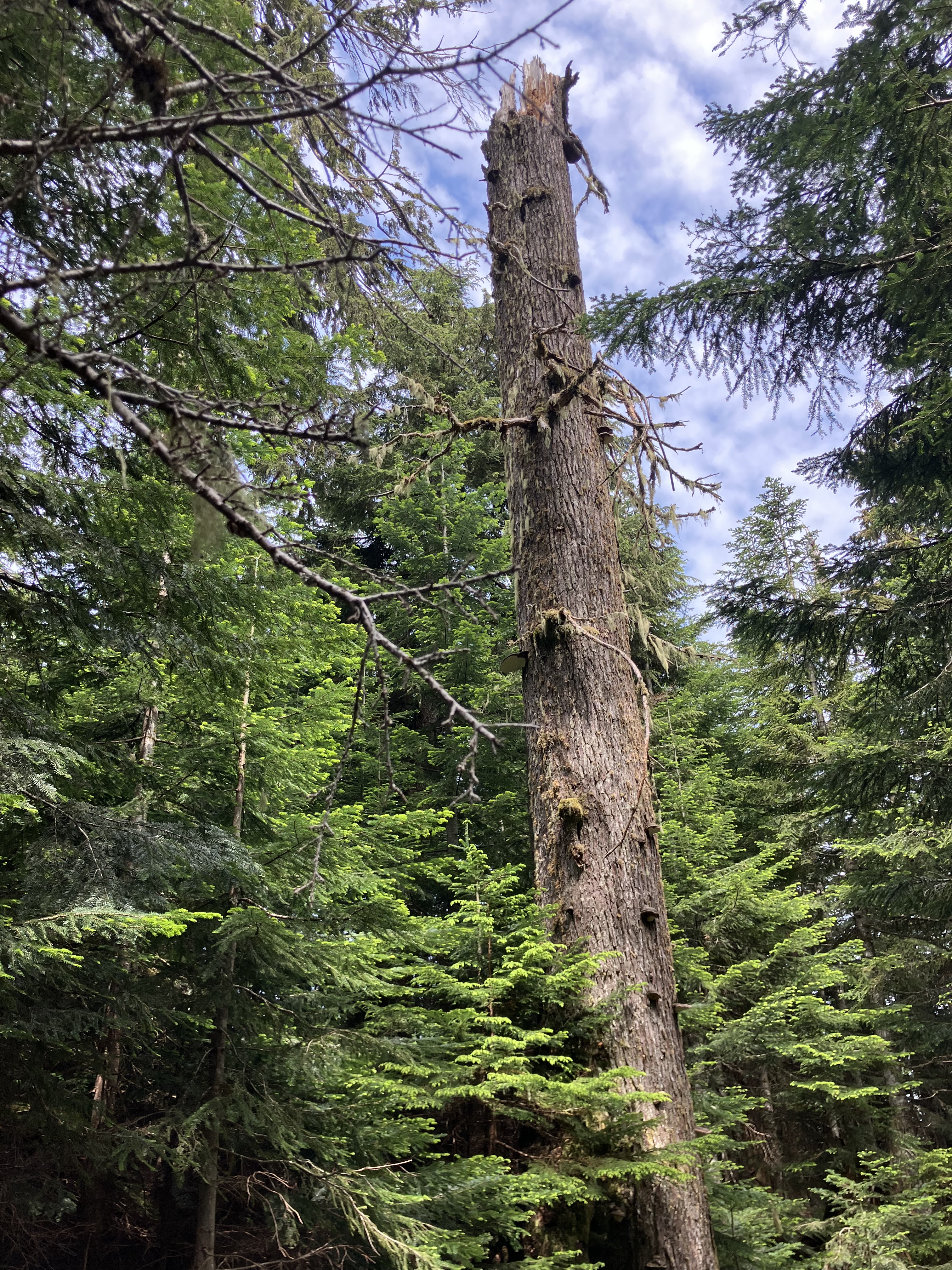
As my legs carried me up through familiar Cascadian landscape, I heard a woodpecker feeding it’s young in an old hemlock snag, a Clark’s nutcracker silently watched from above as the noisy brood cried out. There are so many layers to a naturally regenerating forest, from the understory of vine maple and younger tree nursery, ground species like sword fern, huckleberry, and oval leaf blueberry gave way to hellebore and heather as we climbed higher. Thick mossy forest floor cradled fallen trunks and glacial till, which held the trail in a sheltered embrace. Above 4,000 feet, the stunted mountain hemlock dominated a sparse treeline where massive scree fields of white rock asked our feet to scramble up a red stained trail through the fallen debris. Some salmon berry clung to the shaded edges of the rocky slope, while a few braver rhododendron and silver firs hold their own where the soils allow. The ecology of The Cascade Mountains is complex and ever changing through the elevations. Our observations of this biodiversity were as breathtaking as the mountain its self.
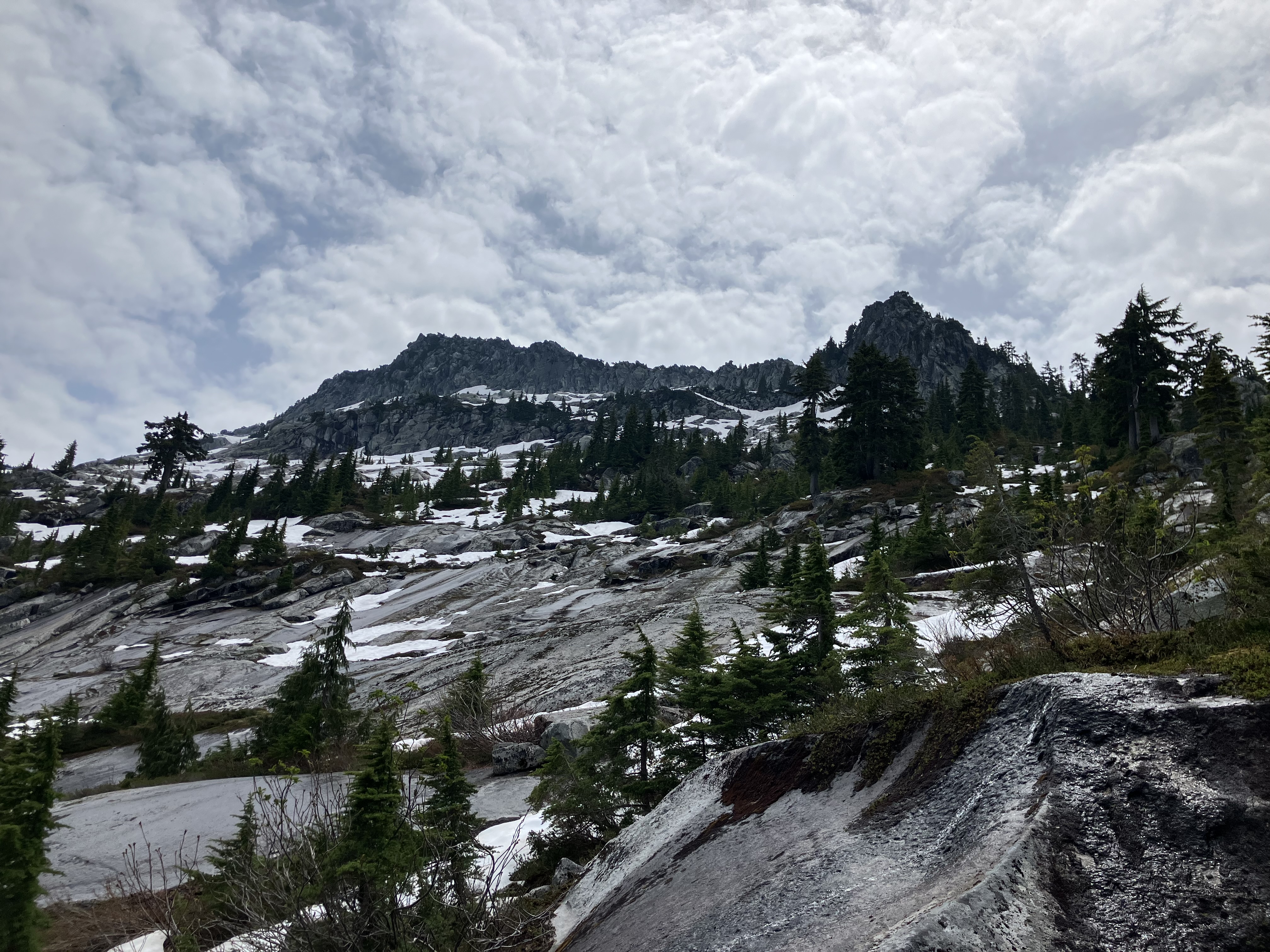
As we mounted the trail’s accent towards the peak, most of the herbaceous lush landscape relented to craggy mountaintop sparsity. No soil and the harsh exposure to bitter cold and biting winds keep the barren rockscapes clear. Water still finds a way down these steep slopes, cascading from melting snow still piled high in the sheltered crevices of this boulder field. We chose to turn back at the base of these impressive falls, drinking in the vastness of this alpine landscape. Lines of trees along natural granite retaining walls offer little cover. The final ridge of Pilchuck beckons to those wishing that panoramic view, but haze in the valley cut short the vision on this day, so we did not miss much. Drawn in by the sound of splashing wild water, a breeze of cool mountain air flushed us back down from the exposed mountainside back down into the evergreen forests below. A lone pika alarmed in her harsh sequels as we scrambled back down the boulders and melt water muck below. I will say, the forest rangers are keeping this trail in great condition, with signs of recent boardwalk construction along the delicate wet meadows of this alpine habitat. It will be another few weeks before most of the wildflowers bloom.
The natural beauty of this hike was like so many of my hikes in The Cascades of Western Washington, gorgeous, with wildlife observation, new plants to think about and try to ID later with a field guide, and plans for future exploration of the area- out of season, like we did on this day. In summer, when the snow has melted and wildflowers bloom, the crowds will descend on Mt. Pilchuck for an easy hick with a view. Considering only half the parking lot was full on this partly cloudy June morning was a sign we were visiting at the best time to avoid crowds. I can see this peak being a nightmare to approach during the high summer influx of tourists and weekend warriors from nearby Seattle. I would not recommend this hike to families with small children or people with any impaired movement. The trail has some scrambling points with larger granite stones and steep steps to get up and down. There is a nearby easier hike with a view of the peak from a lower lake. I might enjoy that one next time just for a different view and experience.
When I set an intention to visit a place on our public lands in and around my home, there is a mindset of reverence for the original people who once tended and thrived with these forests and mountainscapes. I look at the devastation colonial extraction culture brought to these wild places and give thanks for those lands that are now protected from such extraction, but overcrowded with people eager to make it to the top for another 360 view. If we were more mindful of our encroachment, and took more time to reflect on what once was, will be, and should be in future regarding our connection to these special places, we might have more relationship with these beautiful places. We might then look at the less beautiful places and reflect on how we take care of all the land, not just high peaks or sandy beaches. The industrial runoff and septic overflow washing into our waterways is still happening. Commercial timber operations are still going on just up the road and out of view of the majestic peak you’re trying to get a picture of. These abuses to the landscape are even present at the Mt. Pilchuck trailhead, where erosion from foot traffic has demanded the construction of massive rock filled causeways to keep all the scrambling feet and hands from pulling apart the very trail they travel.
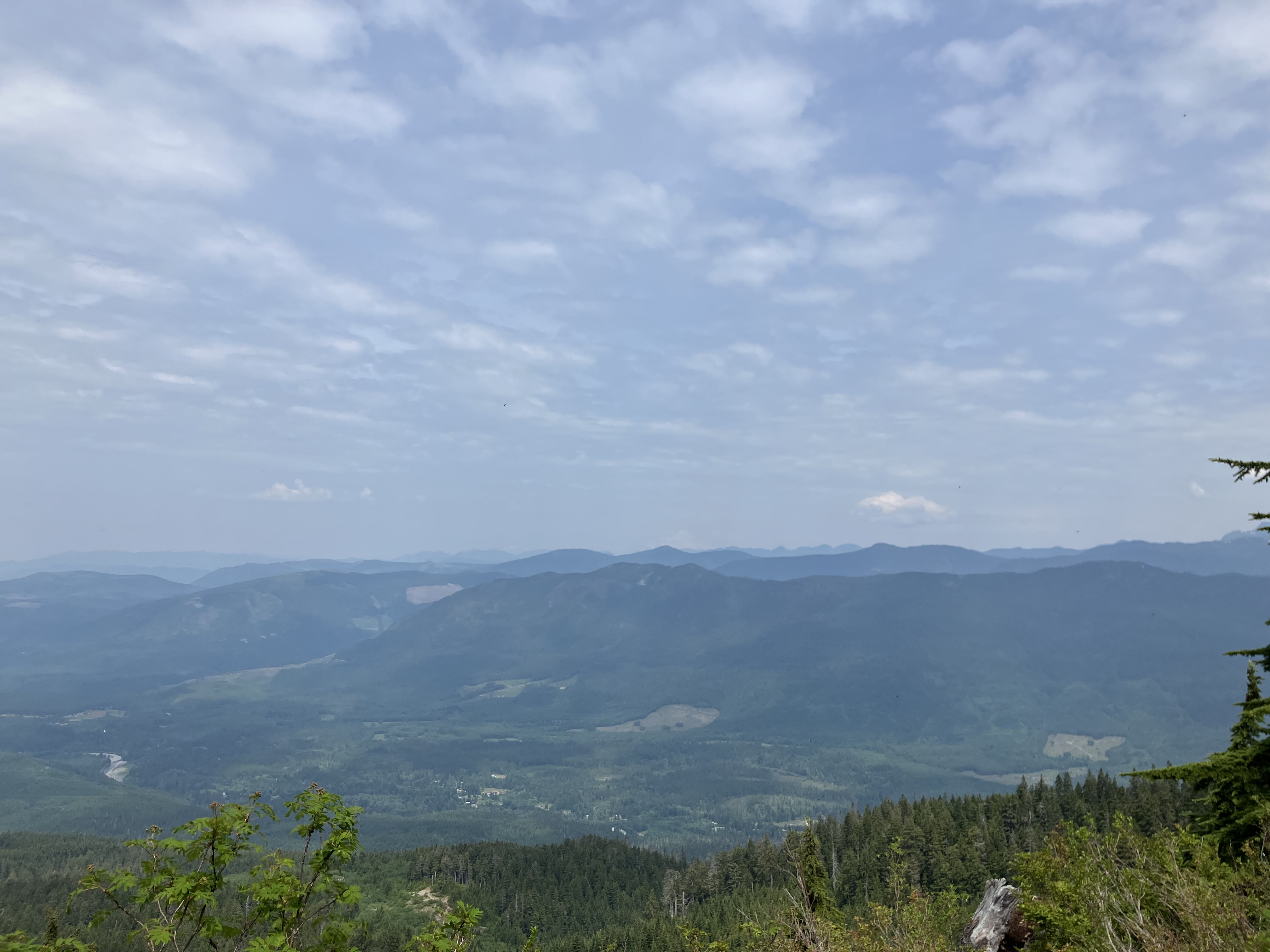
Looking down into the valleys below as we climbed, I took note of the clearcuts, development, and highway cuts along the rivers where town build ups string along the bottom land cleared long ago for European settlement. This mountain is protected because it’s remote, but was still logged in the early days of colonialism. The legacy of a few trails to high craggy peaks will not replace the endless clearing of temperate rainforest, but it might give a small glimpse into what could be if we showed better stewardship and maybe took a picture from the road instead of getting to the top for that selfie. Still, a good hike up and back down again in The Cascade Mountains is part of why I choose to call this area home. Access to so much public land, well maintained trails, and incredible biodiversity is not easy to find in this chaotic extraction world we live in today. Such a blessing to have the time, health, and appreciation for this place and the ability to explore it for the rest of my life.

 EEC Forest Stewardship