Even the rocks, which seem to be dumb and dead as the swelter in the sun along the silent shore, thrill with memories of stirring events connected with the lives of my people, and the very dust upon which you now stand responds more lovingly to their footsteps than yours, because it is rich with the blood of our ancestors, and our bare feet are conscious of the sympathetic touch.
from ‘siʔaɬ‘s 1854 Oration ver. 1
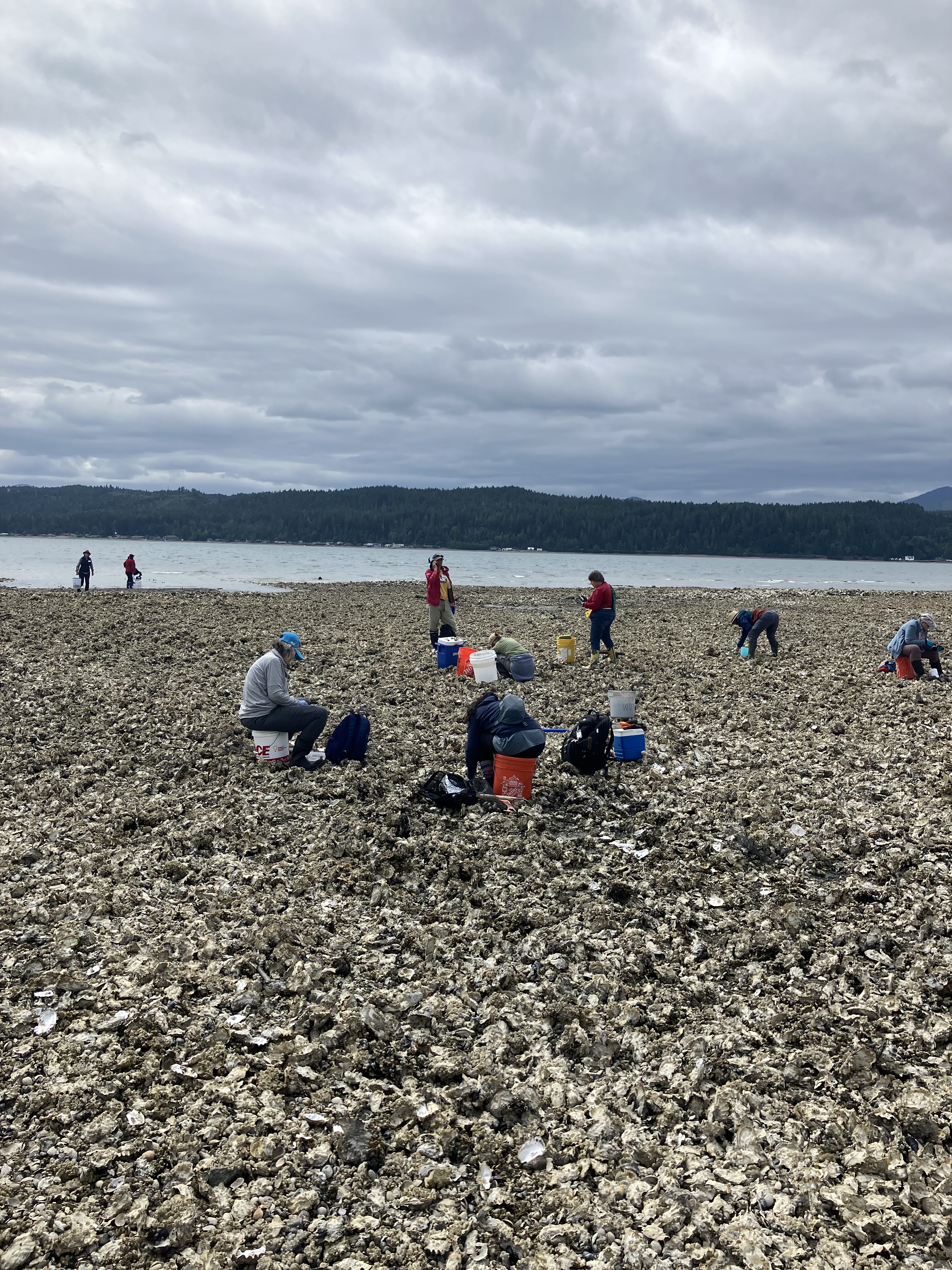
I was thinking so much about these words from siʔaɬ (Chief Seattle), walking over a bed of non-native oysters planted here by Japanese and American scientists trying to keep the oyster industry in Washington alive over 100 years ago. The introduction was very successful, yet the native oysters of the region were suddenly being out competed by this invasive species. In much the same way First Nations in and around Puget Sound were colonized, this beach in Hood Canal became endemic with Pacific Oysters. Walking in black muck boots, I felt the crunch and smash of shell and crustaceans with every step. It was low tide, and the best way to dig for clams and harvest oysters on the beach. I was participating in this harvest with Washington Outdoor Women, an organization I will be instructing with later in the fall. Today, we were participants with the other women in the field learning about bivalves and legal harvesting. Our instructors were WDFW shellfish experts, also all women, who guided us in the legal, safe, and ethical harvesting of clams and oysters. I was there to harvest wild food and work with other women in the field.
There was endless learning for this landlocked Oakie- I’ve never dug for clams in my life. I have shucked oysters, in The Netherlands, but they were bought and brought home, not harvested in the wild and shucked on the beach. The experience was positive, with a lot of support and comradery. There was also some deep reflection on what brought us to this place and what it meant to the native people and native sea life still present, but silent to our rakes and knives. When I’d first arrived at the beach, I lit some sage and asked permission to be there, thanking the ancestors who cared for this place, thanking the tribal people still present and carrying the memories of deep connection with these lands. I gave tobacco as a token of exchange for the food I would harvest that day. There are all small things in the greater picture of colonial decimation caused by thoughtless taking, but that mindset can change to one of reverence and gratitude over time. My actions would attempt to stitch some acknowledgment into frame.
40 eager women swept down into the rocky terrain with shovels, rakes, and sunglasses. I was glad to be supporting the group learning about the ecology, history, and protections on these beaches. It was still through a colonial lens, but tribal histories were acknowledged, colonial impact was spoken into our learning, and yet, no one was hindered from harvesting. Why should it? I am still sitting with that question. In the moment, I was comfortable putting my rake in the sand because I was there to learn and share. I gave all the clams and cockles I gathered to others at the end of the day. There was a set limit of 40 clams we could take. The oysters had to be shucked on the beach, the shells left behind to keep building the reef for future oyster growth. Native oysters did inhabit the reef, though the Pacific were there to stay. We were limited to 16 oysters each. This activity, and the history around me was palpable. My rake pulled up sea worms, sand shrimp, and small crabs. I could not grasp the number of small things I killed in my quest to dig clams. I acknowledged the slaying out loud, recognizing that in the very act of living, we are killing- and dying too.

Maybe this experience gave me a little more insight into the words of siʔaɬ as he warned the colonizers of their shortsightedness. Even in the 1800s, he could see the colonial disconnect between people and place, the inherent sickness in naming nature the other, disassociating from or dominating of that other. I’ve sat by a wild creek in the mossy understory of oaks back in Scotland, perhaps there my feet touched something sympathetic. Why not at Rendsland Creek here in Washington? But didn’t it? Didn’t I feel sympathy through my actions and recognize that connection? This could be a step in solistalgia, moving towards recognition and retelling for The Southern Lushootseed speaking people like siʔaɬ. I recognize the change, and consequences of colonial influence on this landscape. Shucking oysters in the middle of a shell reef, I wonder what this place would look like if the native oysters could return, why they aren’t and what my place here represents. Then I eat from the land, in that moment, hearing the sizzle on cast-iron, a gas stove cooking the harmful Vibrio bacteria that thrives in shallow warm water. Many new to the area colonists became very sick and died eating shellfish from these waters, hard lessons were learned. Not enough to stop people coming to Seattle and wanting oysters.
This abundance came at a cost. Out time harvesting for an afternoon negligible to the population of Pacific Oysters proudly proclaiming their place on the landscape. I know most of the women at the workshop would not come back to this beach again, but they might be digging somewhere else soon. We all will eventually. In standing on this reef in the here and now, I am still seeing the world through a lens of privilege in being a white woman in a place subjugated by people like me looking for money and place- just place, or place to be a part of? I choose to be a part of, and in being a part of, I take in as much of the picture as I can grasp, which is still far short of the thousands of years Lushootseed people have been a part of this place. How do I exist here now? Though a willingness to learn, accept, and still be a part of. Gratitude for the change to walk on this earth, to eat from it’s bounty, to share such abundance with others, and to keep acknowledging those who came before with a sympathetic touch.

 EEC Forest Stewardship