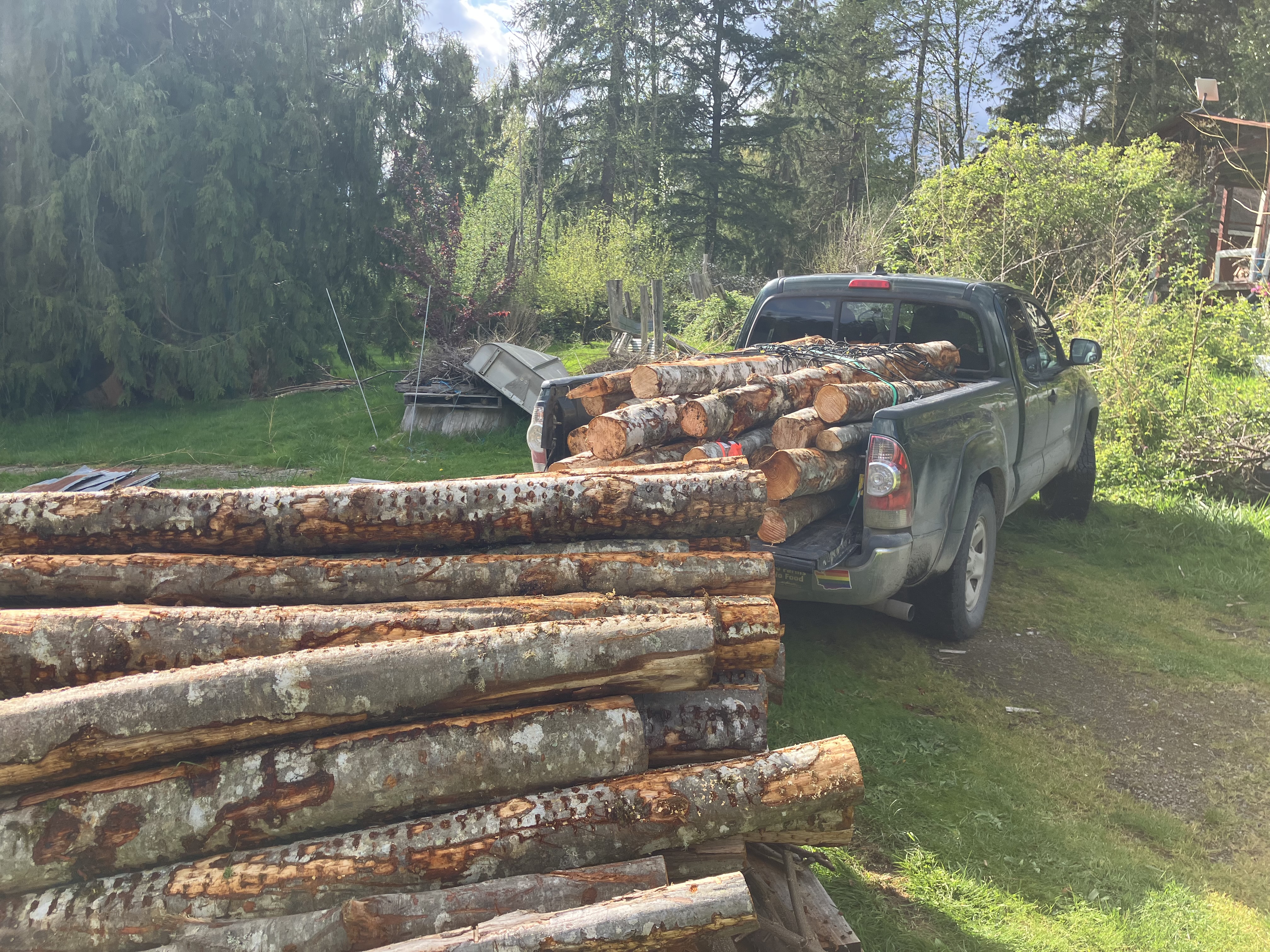
As the weather warms up, more time outside and more daylight abounds. I’m taking weekly trips into The Snoqualmie Tree Farm to hike, fish, and gather firewood. This last task, wood gathering, is a regular gym workout and stock of fuel for the coming Winter. The tree farm lays aside some of the harvest for recreational pass holders to cut and haul for personal use each year. Seasonal harvesting from these specific piles are allowed in Spring and Fall. The wood has to be cut, to fit in the truck bed, about 10-12′. I haul the logs home to buck in a place with quicker access to emergency assistance if something happens while operating the chainsaw. These lengths are heavy, so I use a lot of smart lifting and counter levering to load and unload. Still, this is that free gym workout with winter heat pay out.
Hearth and home are one to me. Anywhere I can sit with flames on a cold day or dark night offers some of the best comfort I know. Learning that the energy to induce that flame and heat, comes from years of sun energy growing the tree can be hard to grasp. Comprehending this cycle, we realize how basic an exchange of combustion for heat sustains most needs. When wood burning becomes more than hearth, to aid industry and mass production, the balance of sun, wood, and heat fall out of alignment. To heat all the homes in this valley with wood heat, we would need all the wood harvested in the tree farm, and more. How do we acknowledge, much less live within the constraints of our natural world? Our own shortsightedness, to see nature as mere object, will be humanities downfall as a species, so get outside please. The natural world is not a things sitting on a shelf, to be looked at, taken from, and used at will, for convenience. Our convenience is killing us. Wood smoke could one day be the death of me, but it won’t be for sitting around a fire, it will be because I work outside, and wildfire smoke has become almost a yearly occurrence.
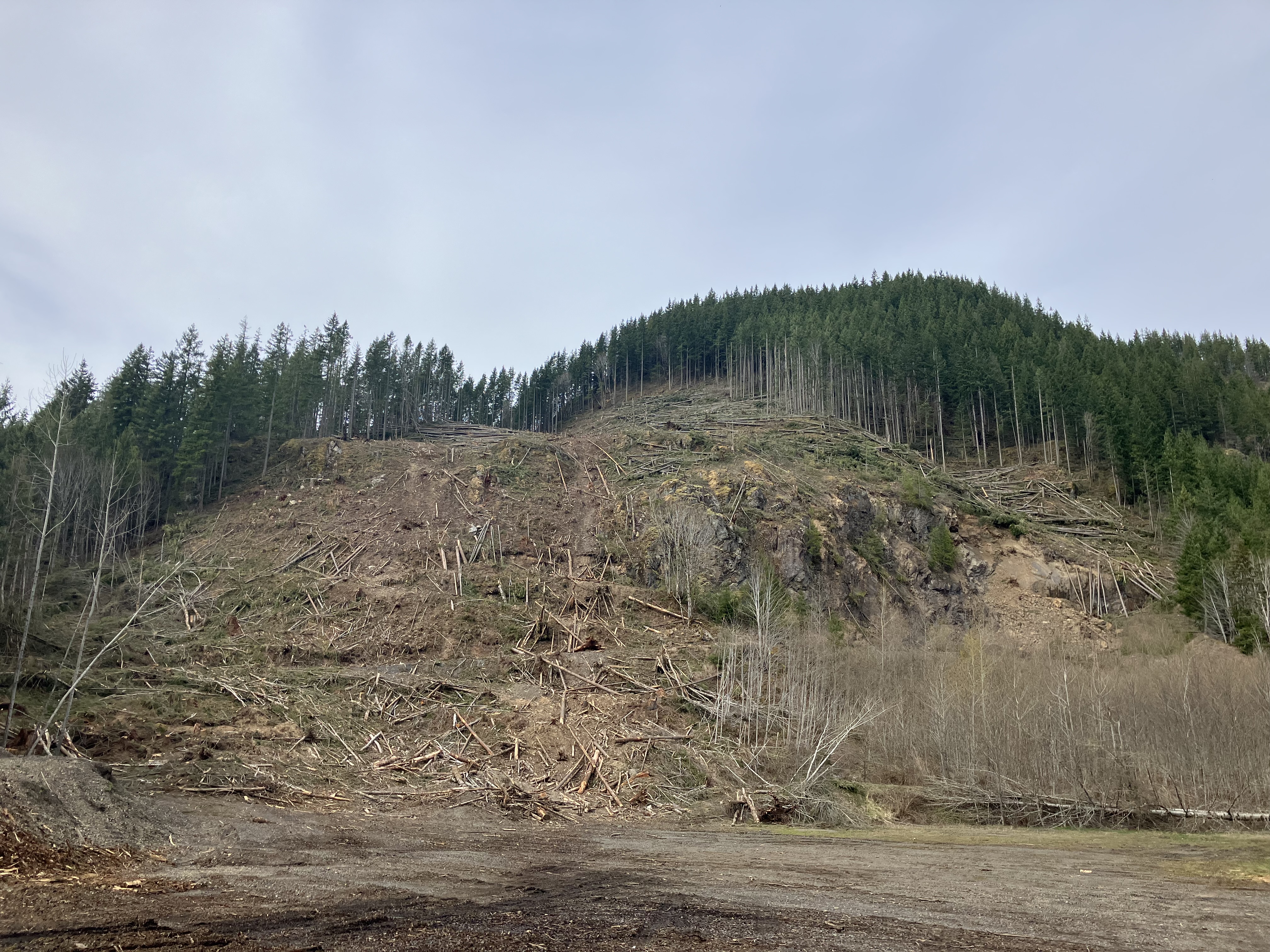
Thinning the commercial forests is imperative to prevent hot, fast fires that destroy the landscape. Wildfire in an environment that evolved with it over millions of years, would have the balance of animals and plants to allow a healthy water table and reasonable grazing to keep down fuel. Slow burns would scorch the landscape in a wildfire, but not destroy the land utterly. Within a year new vegetation springs up, and the old trees easily survive a ground fire with low temperatures, thus preserving the forest canopy. Clear-cutting, an industrial concept, scrapes all the trees off the landscape at once, even on slopes where erosion threats are high. The cut pictured above is only starting, the full cutting will include both the right and left stands on this hillside. Note the age of these trees, like the others I bring home- they are all under 30 years of growth, maybe even 20. It’s not a well aged forest at all, the industry needs chip board and laminates, not timber for construction. The age of epoxy is here, so wood products can come from young growth, allowing for more product in a shorter time- or does it?
Humans like to convince ourselves we can get more from less. The fact is, nature remains in balance at all times, so taking all the trees away, released huge amounts of carbon back into the atmosphere, and the climate will adjust to less living vegetation by accommodating drought and fire to burn off all the excess. We are the collateral of our own actions, and we’ll learn responsibility whether we like it or not. To survive this change, adaptation will be imperative. Small local action is necessary for thriving through these dramatic and sometimes violent changes. Stepping back from online shopping and streaming entertainment or social media is a first great set of challenges. After that, you’ll have time for social connection with friends and neighbors, work that truly feeds your gifts and therefor, your joy. There is also the practice of letting go. Things are not needs, and convenience kills. In taking firewood on as a need, prioritizing that need, winter heat, accepting the time and physical work to produce it, and the time in tending fire through the cold months, I ground myself to a more basic rhythm dictated by survival instead of convenience. Survival is not a convenience, but a hard won gift from this earth.
At the same time, I love hot water on tap, water that turns on at a facet head, and the filters that keep sediment out of the shower head. I’ll enjoy this convenience while it lasts, but also remain attentive to hauling water, gauging rain catchment, and planning for what will happen after the well runs dry, or more likely and earthquake takes out the well bore. The hauling I do is minimal because of smart rain catchment and collection points. The setup of firewood on the land echos similar principals of design that are the premise of permaculture, but also the foundations of comfort in this life. Convenience and comfort are two different things; we would do well to mark this and learn the differences for the sake of our species. What does that look like? Where can you make a reduction in your consumption? Where can you make a quality of life choice?
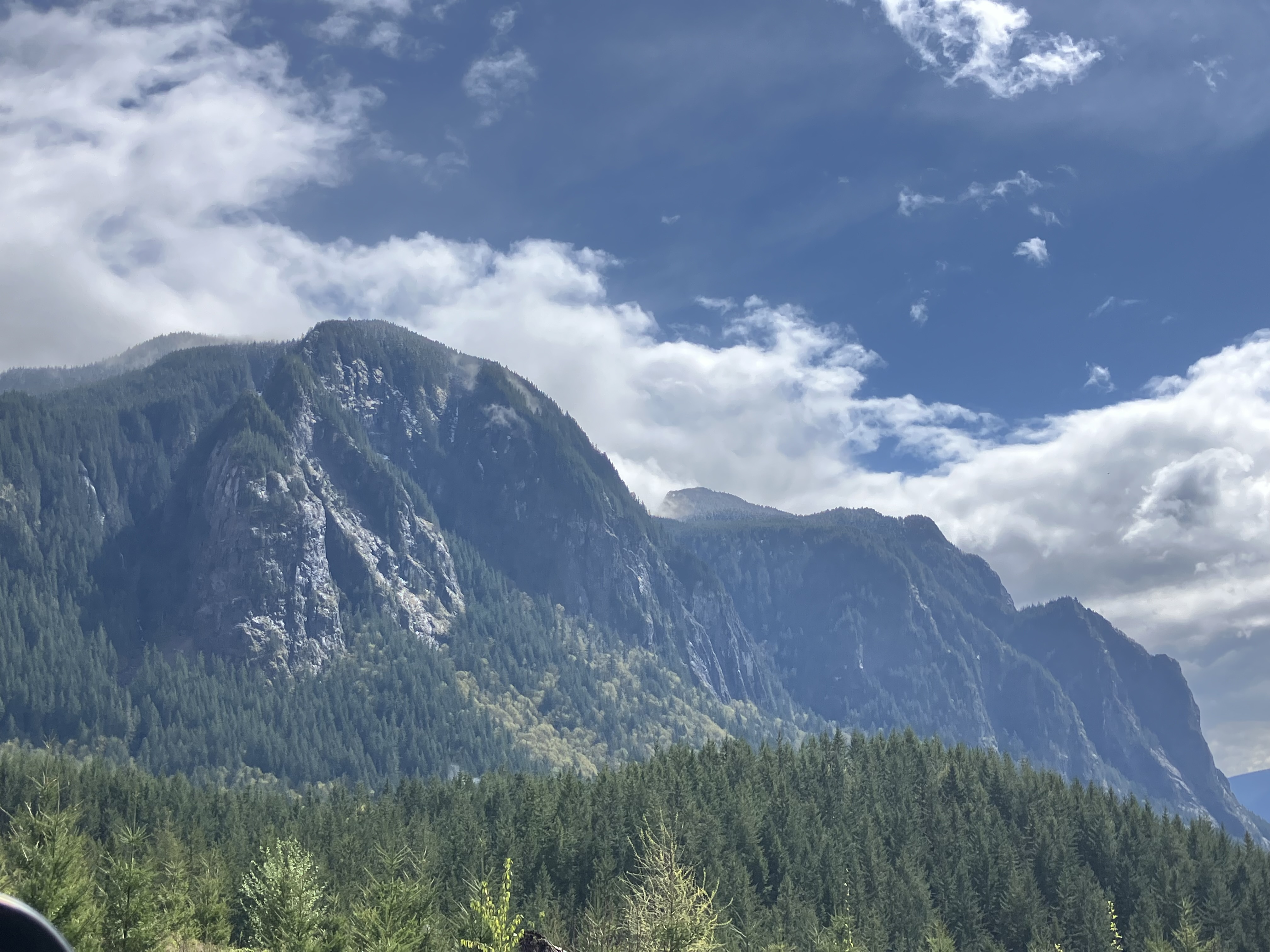
Within and around the tree farm where I harvest my firewood, there are many avenues of beauty and awe. Though much of the acreage is in active logging cycles, which is a far cry from sustainable, a few old growth trees continue to grow, and token ridge lines like Mt. Si, are kept “pristine” for public viewing. More often, the timber industry forest ridges look like the landscape pictured below, taken in the tree farm, on a mountain side not facing public view. The taller trees left on this mountainside, are along a creek with what was once federal setback laws, now abolished and left to state regulation. Luckily, in Washington State, there are standards, but minimal at best. I have seen evidence of cutting much closer to wild waters in this tree farm, and with current state funding crippled by withheld federal dollars, there will be more abuse and less oversight in these commercial industries. This is another reason I come to the tree farm, to have some oversight of the surrounding forests and waterways that make up my habitat- our habitat as a species.
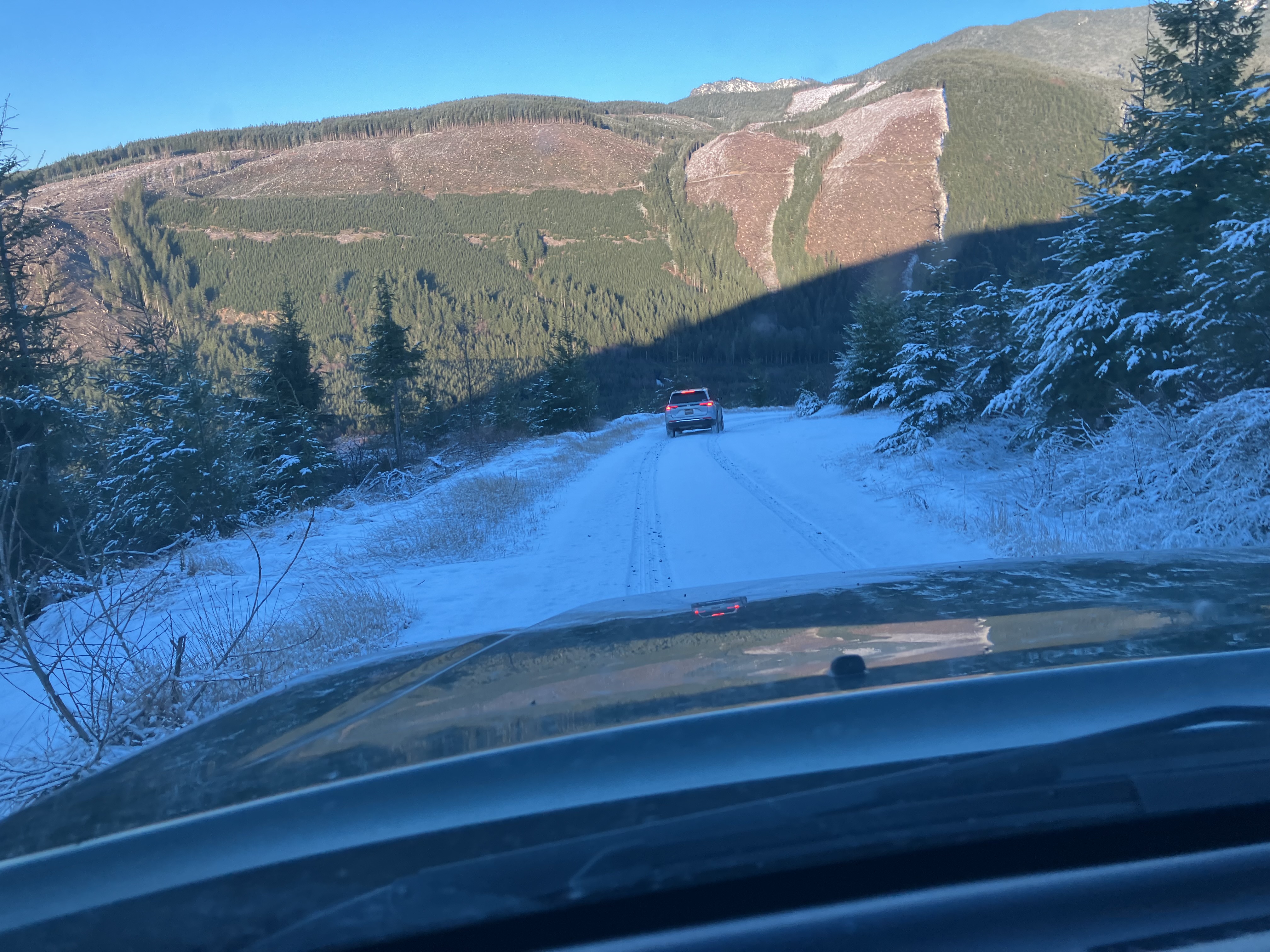
If we are not looking beyond our neighborhoods, into the greater landscape that makes up our water systems, ecological framework, and wildlife habitat, we are ignoring our very survival. When I drive up into the mountains beyond my town to collect a heat source for the winter months, I am looking at my drinking water sources, checking wildlife activity and presence in the woodlands that will later produce food for my table, and sustain a complex web of life that I rely on for my existence. Eyes in the woods witness the toll planted mono-cultures and continued cutting have done to the creeks and rivers, filling them with sediment, blocking the fish and other marine life that once thrived here. I see the forest of young trees being cut, never reaching a ripe old age, there are no stands of old growth anywhere for miles, just a few stand alone trees, which cannot support wildlife like the endangered Marble Murrelet, which needs square miles of old growth forests to properly nest and thrive. We took that away from the birds, but also ourselves.
As I cut and stack wood, looking around the clearcut that provides this fuel for my winter hearth, I wonder at the ease machines clear these trees, grabbing with metal claw, a saw slipping through fibers of hard grown sun energy now being harvested by a fossil fuel energy that took even more time to create. Perhaps that’s the missing link for mankind, time, and the geologic time we’re just a blip in. This encourages me to step back into my work, hauling the sun energy imbued in this wood back home for hours of bucking and splitting- using more fossil fuel energy to amass enough cords to heat my home next season. In my own backyard, I plant willow, alder, and hawthorn for a future of small wood harvesting, without any machines, to one day heat my home with material harvested closer to hearth and home. Always working towards a smaller footprint, thinking of a future where my mules and I pack a load of firewood from only a few miles at most, on foot, or hoof, to heat as ancestors have heated centuries ago. In reaching for this relationship with forest and fire, I hope to weave part of my ancestry’s quality of life back into my own.

 EEC Forest Stewardship