
It’s time for an update on our resident Ram, Oakie. The other day, my Mom was surprised to hear I overwinter a ram. It struck me that I have not talked more about the husbandry planning here at EEC Forest Stewardship. A lot of thinking goes into livestock, like planning out any garden, crop fields, or timber lot, one has to know soil productivity for growth of maximum pasture to feed the most animals- simple math really, or not. What kind of animals? What kind of ground? How much supplement is needed? Weather patterns, pollution, climate change, and on through till we finally realize what a complex system already thrives dynamically through the ages without our interference- but not at the maximum yield for human induced money profit. But what of the ram Liz? Ok, let me say, it’s not ideal to keep any intact male animals larger than a goose as domestic stock in your day to day routine. I have raised a few buck goats, kept them for a few years, and then, when I first shifted to sheep, I would get a ram lamb with my starter flock, with the intention of slaughtering him and getting another seasonal ram lamb the following year, and so on. This is an easy way to keep fresh genetics, and avoid handling rams throughout the year- because it can be a real safety constraint. Oakie is my fourth overwinter ram, he’s the second genetic strain from Canfield Farm, and his genetics are showing great improvement to the flock so far.
I’m planning to build a more permanent structure for the rams to accommodate having two or three overwintered to perpetuate starter flocks and long term genetic diversity. Oakie is a great foundational sire, and I look forward to seeing the family tree grow. The current rams lambs I’m looking to overwinter, include “Q”, and “Quinn”. The later is a serious long term contender, because he has the short legs and long back structure, with mild temperament I appreciate in my rams. It’s a top quality I breed for to keep my flock safe to handle; capitol definition of domestic. “Q” is a little less quiet in nature, but still manageable on the scale of ram lamb handling- they are springy young ones, with a lot of vitality to grow into.


The flock development has been up and down with community needs. There is one listed right now for sale, available May 2025. It includes the other dark brown male lamb, pictured above to the left of “Q”, out front. Behind him, the two year old ewe, Opal, and her female lamb from this year, Quartz. The trilogy is well socialized and Opal will be a great lead ewe for the flock over time. She and her daughter are distant enough genetically to keep a good mix in the genes for several years as this flock develops over time, or the group will make a great summer feast of the lawn and fill the freezer with good local meat. All of these animals have been bred, born, and raised here at EEC with good pasture grazing and forest edge browsing on native vegetation of The Central Cascades.
Managing these feeding cycles is an ongoing quest for maximum yield and restoration enhancement. The old vision of clearing the land for open pasture was guided by the outdated model of maximum solar gain for seasonal growth, rotating crops through the growing season and tilling the ground between seeding. This method might be best in some situations, but in most soil, tilling breaks up the complex nutrient highways built by the living microbes within a soil network. Science is just now beginning to see the incredible production of intact soil systems in agricultural sights that have shifted to organic growing and no till methods of restorative farming.
In my decade of close relationship with restoration on a landscape that was once old growth rainforest, clearcut, farmed intensively to clear most of the flat land for cultivation of field crops, and animal grazing. Often, there is stunning dynamic change on this landscape, the sloped topography is sometimes illusive, especially as understory begins to return. Earthworks have also helped terrace the landscape to slow entropy and sequester water. Returning the complex layers of temperate rainforest, with the biomass layers to tend old growth trees will take many generations to come- thousands of years. To dive a little deeper, I looked up “pasture production equestion” -with the spelling error, and this was the second hit after the Penn State article referenced above.


All of these factors are constantly changing in the greater equation of human management. Mother nature has been honing a much more complex set of frankly, unimaginably complex systems of evolution she’s been studying and working on for millions of years- billions if you begin to fold in universal scale. Let’s get real, people are mere apes in the scheme of nature as a whole. Yes we’re invented tools, like so many other animals, and yes we took those tools to the next level, but to what end of success, merit, and true richness for all? Well, if you think it’s not about you, keep scrolling this screen with no intention. If you have intention, may it be for the good of all, or nothing. Separating ones self leads to death. Maybe that’s the road, but not for a thriving world. That’s the direction I hope to step towards with each day’s adventure. How can we put that into a binary framework- I don’t know, I’m just a shepherd, but AI still can’t fully map Mother Nature’s complexities. I keep using her as a strong indicator of the life vibe in our survival. But then there’s Oakie and his place on this small acreage that will not support an intact rainforest alone.
In my lifetime that’s left, another 50 years or more if I’m lucky, the livestock systems at EEC will shift, canopy will continue to return, and one day, sheep will no longer graze these hills. Oakie is a legacy of a few more decades at most, and he will see ten more years if he’s lucky, five would be more likely, because younger rams will out-compete him for dominance, and he will be too old to protect himself in the herd. My humane care of each animal prioritizes quality of life. That’s the covenant of keeping these little lives in this restoration system. Within the next 20 years, the landscape will have enough growth to host wildlife needed to keep most of the forest thriving and healthy. By then, hopefully, this forest will have survived a good natural fire. That may sound terrifying, and most likely will be, but the chances are growing with each drought our region encounters.

The sheep graze back most of the fire hazard. Woody debris breaks down into compost quickly, retaining a lot of surface water. Low hanging skirts on trees shade their roots, keeping the wet soil around their bases to deflect slow, low burn temperatures that would normally move through a natural burn area. In the picture above, The sheep have had access to the foreground to brows back, but above, in the background, another layer of understory bramble awaits their dining pleasure. Other areas of understory are fenced off, allowing the restored native plantings a chance to set and protect vulnerable soils, rooting the terrain in place for longer, slower growing trees a place to take hold. So, what governs these sheep on the landscape, and the future of rams at Leafhopper Farm goes far beyond mere pasture production economies. When we branch out and truly measure the full potential of these lifecycle in the context of restoration, rather than limited sheep production, we have opportunity to fully incorporate more of the rich, diversity of ecology to the best of it’s ability after millions of years of evolution.
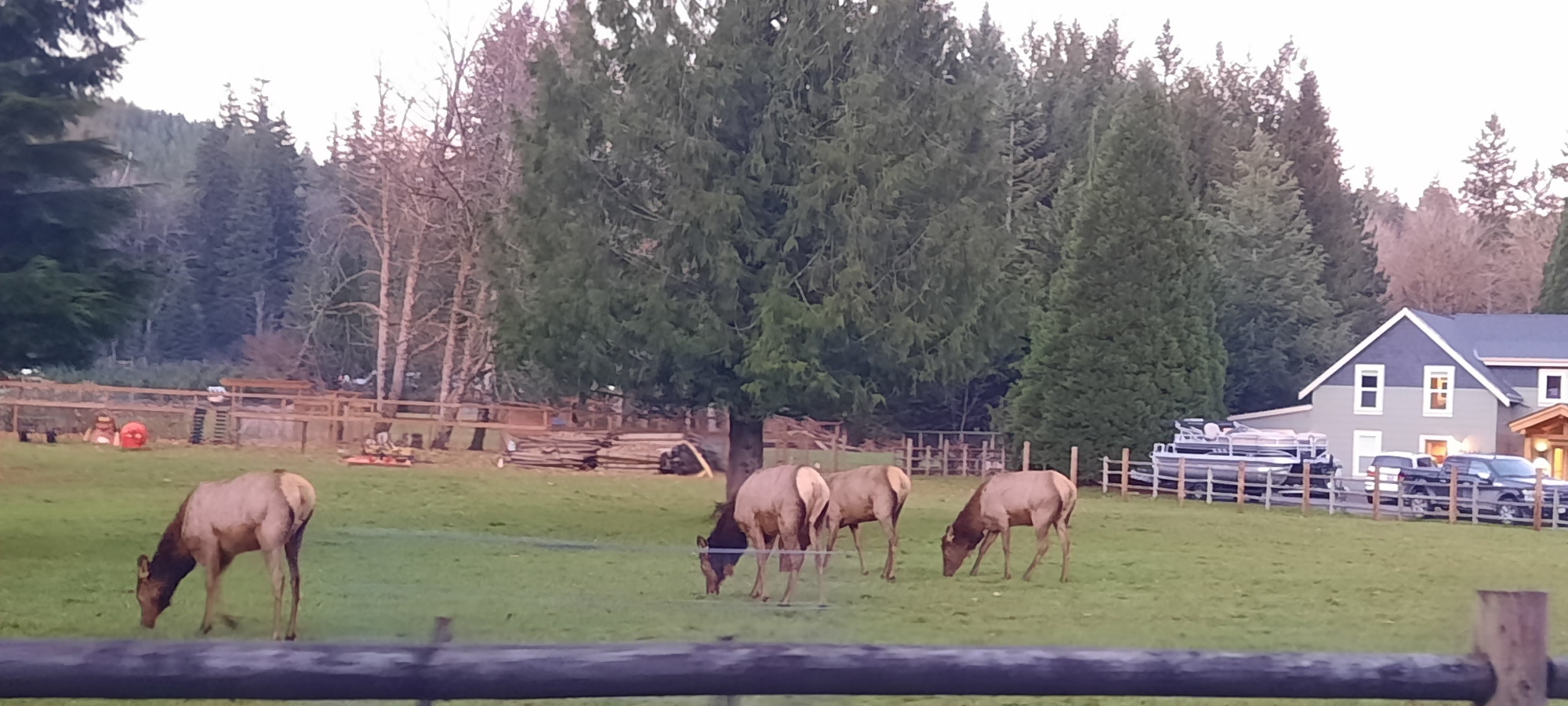
If we began to plan for elk to return, inviting them with good willow, young alder, and diverse understory for good browsing, they will have a place to return to. With all the development that continues to push them out, removing the complex systems they evolved in to simple golf courses and horse and cattle lots, the elk shrink away and disappear forever. There are elk in The Snoqualmie Valley, and their numbers have grown to outpace the limited habitat left in the area. They are pressed out of the agricultural river valleys and out of the livestock pastures, including the ones I have fenced here at EEC, but the long term plan here is for their return. Wildlife cannot survive without place, and in these more rural acreages, especially in water ways that are crucial to a healthy ecology across the region, public and private land owners should be doing their best to restore the land for native species so they can continue to adapt with the greater ecological changes facing our planet today.

Oakie is doing his part in restoration here at EEC Forest Stewardship by eating his way through the landscape. His genetic gift to the herd will continue to produce healthy lambs that grow up strong on the vegetation that grows here where they live. The complex micro level of biology between the ruminant’s gut and green plant matter builds the incredible unseen biome of bacteria and enzymes that keep soil alive and capable of growing all this important biomass- from our food crops to our animal feeds. It’s also the living soil that supports all life on earth, including the precious temperate rainforest that we’re trying to restore. The sheep may never fully understand that important role, but their presence is imperative to the restoration of this ecosystem. Gratitude for their original instructions to eat veg and build meat for us to eat. Thanks to all the growth and learning going on in this place.

 EEC Forest Stewardship