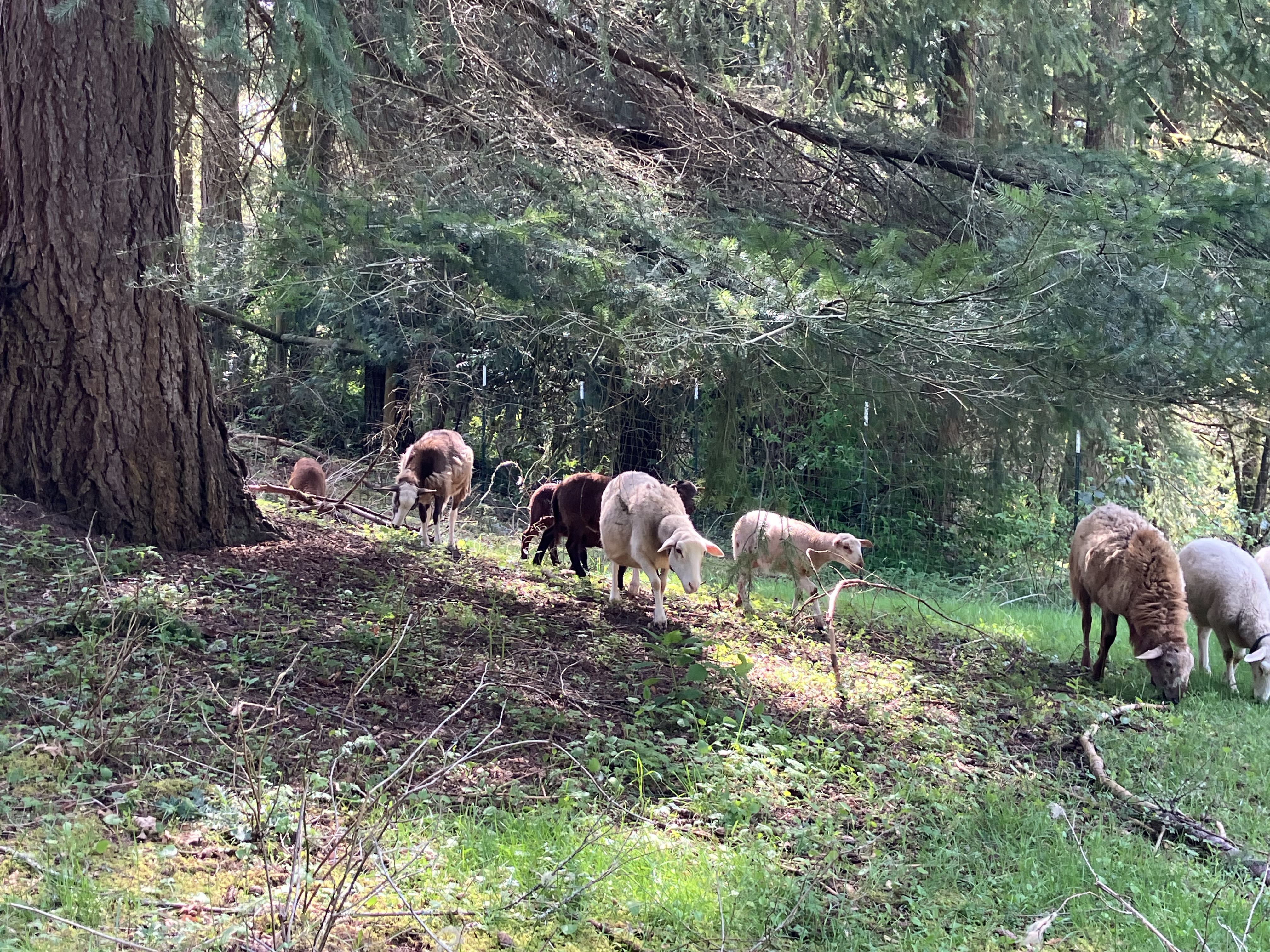
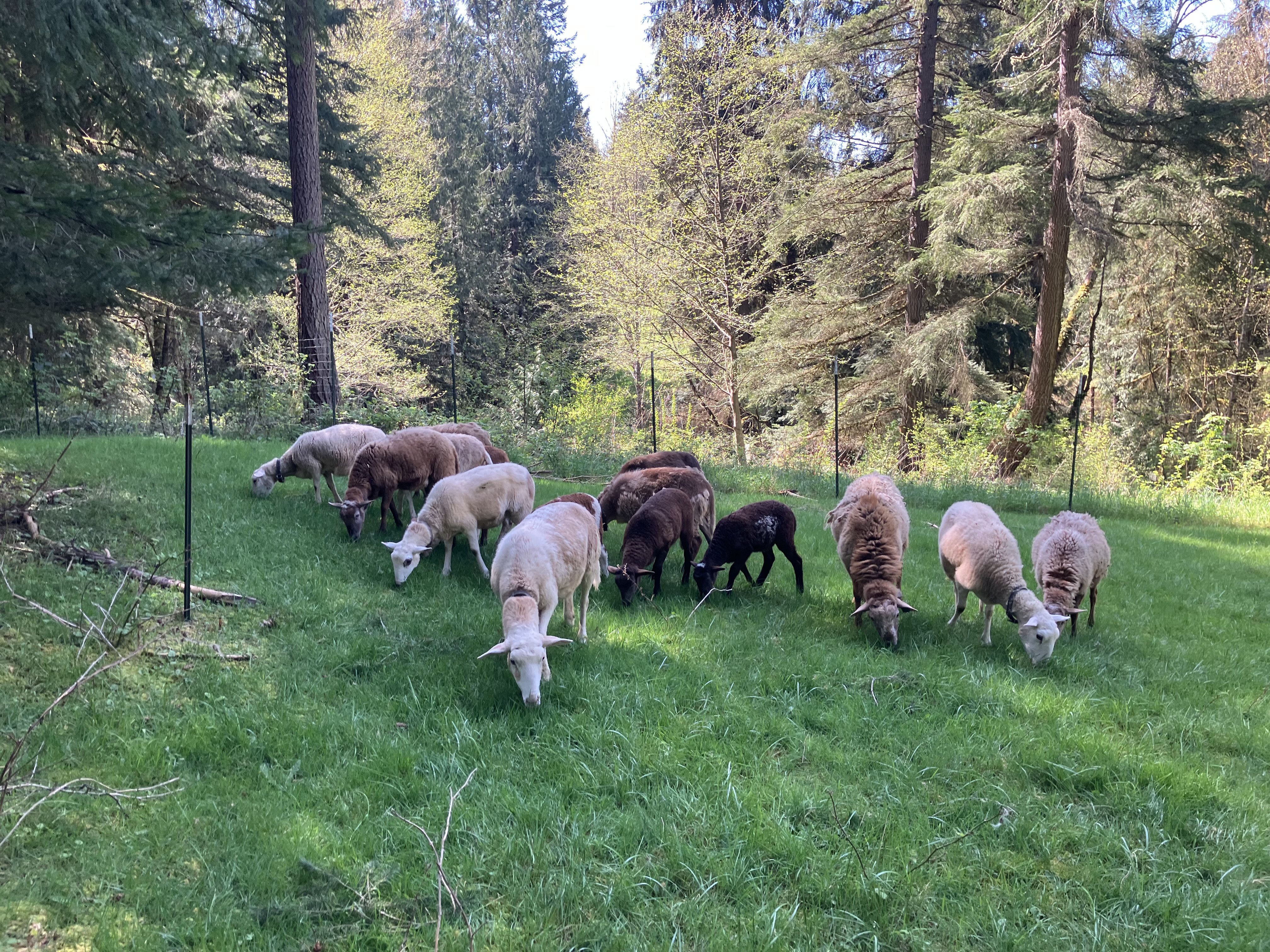
The whole flock got an afternoon on fresh greens across the landscape here at EEC Forest Stewardship. We’re about to have another round of lambs drop, the last due by mid May at the latest. Okie, our ram, had a great cover rate in the herd again this year, and his second batch of lambs show good health and mild temperament. All are eager to get some new grass and mixed vetch and broad leaf shrubs into what has been a winter diet of alfalfa. The land is bright and awakening with buds and tender leafy greens, which are perfect feasting for lambs and nursing ewes. The landscape is still tender after winter’s dormancy, so grazing is limited each day and the sheep are still enjoying a supplement of alfalfa. Full time rotational grazing will start in a few more weeks, one all the lambs are dropped and the temperatures remain above 40F. So far, the Spring of 2025 has been mild and sunny. This is not ideal, because we need rain. Moderate drought conditions are currently affecting our region, with the summer outlook even more dry.
The sheep want to be on fresh pasture, and they call from the barn with passion when I come down to check water and feed. It’s important to watch grazing impact in the early days of pasture growth, and the forest floor is vulnerable, with most of the young tree seedlings germinating right now. This is why certain parts of the forest understory are fenced off completely, otherwise the sheep would graze away all the young growth. These browsing sheep love taking broad leaf snacks from the shrubs and trees, as well as grass and vetch. If they graze away all the young growth, it will be harder for the ground cover to remain thick and healthy. This is the dance year to year with grazing. Things are so different through each season. Last Spring I was able to constantly have grass and keep grazing. This year, things are lush, but fragile. I’ll be culling more sheep earlier this year, and planning to buy hay sooner.
In time, the number of sheep in our Cascade Katahdin flock will shrink to make way for recovering forests. This year, the lambing is low- where usually each ewe has twins, this year is all singles. One of my oldest ewes had a stalled birth, in which her lamb died before birth and both animals were lost. It was a rough lesson in letting an older ewe breed. I’d planned to cull her last Fall, but decided not to, and now I’ve learned that lesson. It’s the journey through farming, there can be hard losses in a very real living world. I would struggle to handle all the failures on a much larger scale. I don’t want to grow callous to it either. Leaning into instinct with farming has never led me too far off the mark. There are no rule books to follow with nature’s adaptation. I’ve remained attentive to the subtle changes in weather each year. It was a pleasant surprise to have the mild summer we encountered in 2024, but I don’t think we’ll get the same generous rains in 2025.
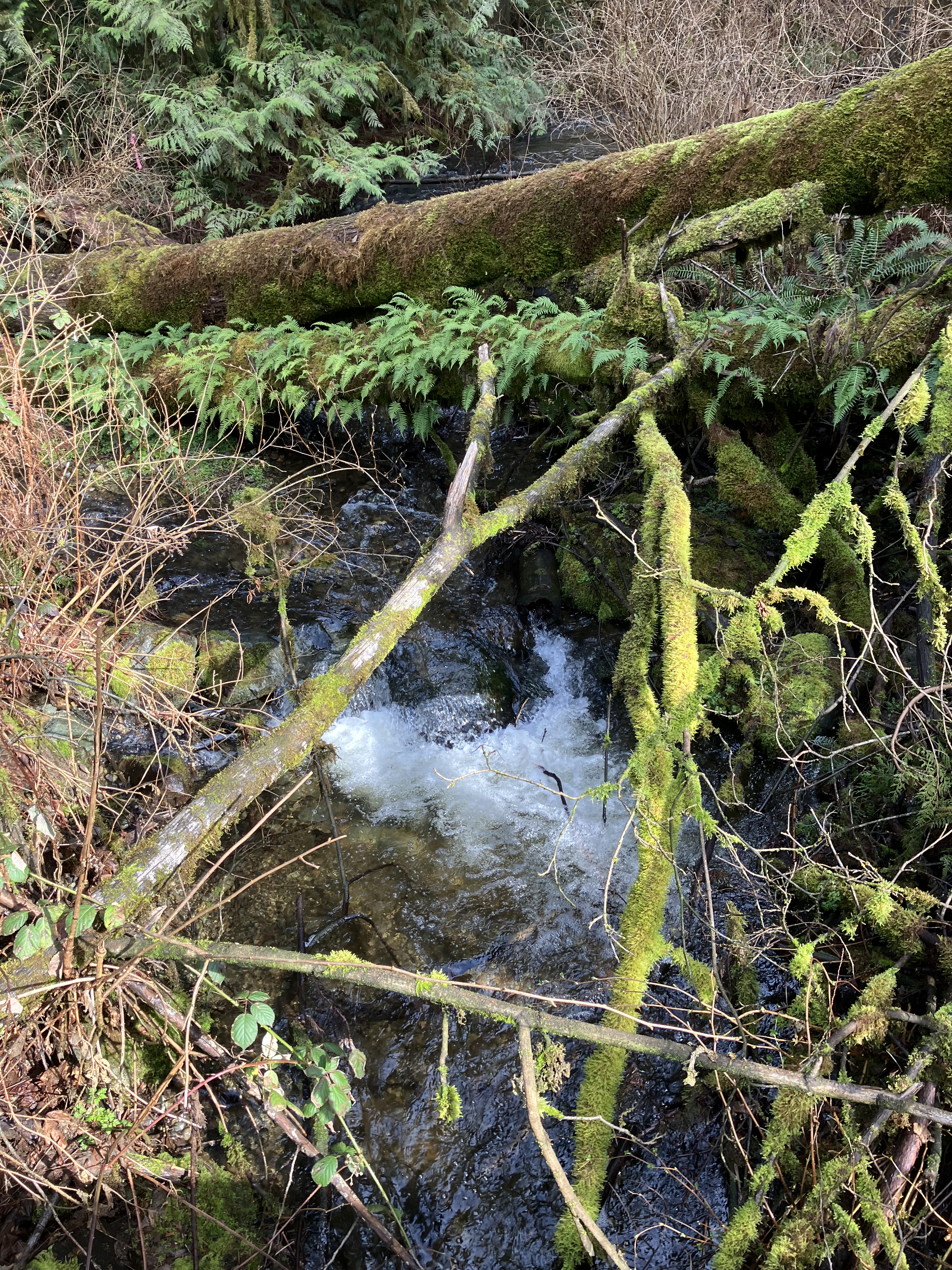
Right now there is good sun, lots of new growth, and plenty of hungry mouths mowing the lawn and keeping the shrubs trimmed back. With the right amount of mobile fencing and conscious rotation, the pastures here at Leafhopper Farm will continue to supply wonderful local lamb, eggs, and chicken on small scale to friends and neighbors here in Western Washington. Much gratitude to the animals, plants, and people coexisting on this wild and wonderful earth. May we continue to work towards small scale, local production for the people by the people. May the sacred waters that keep all live conscious continue to bring us quenching relief when we are in need of life giving hydration that is safe to drink.

 EEC Forest Stewardship