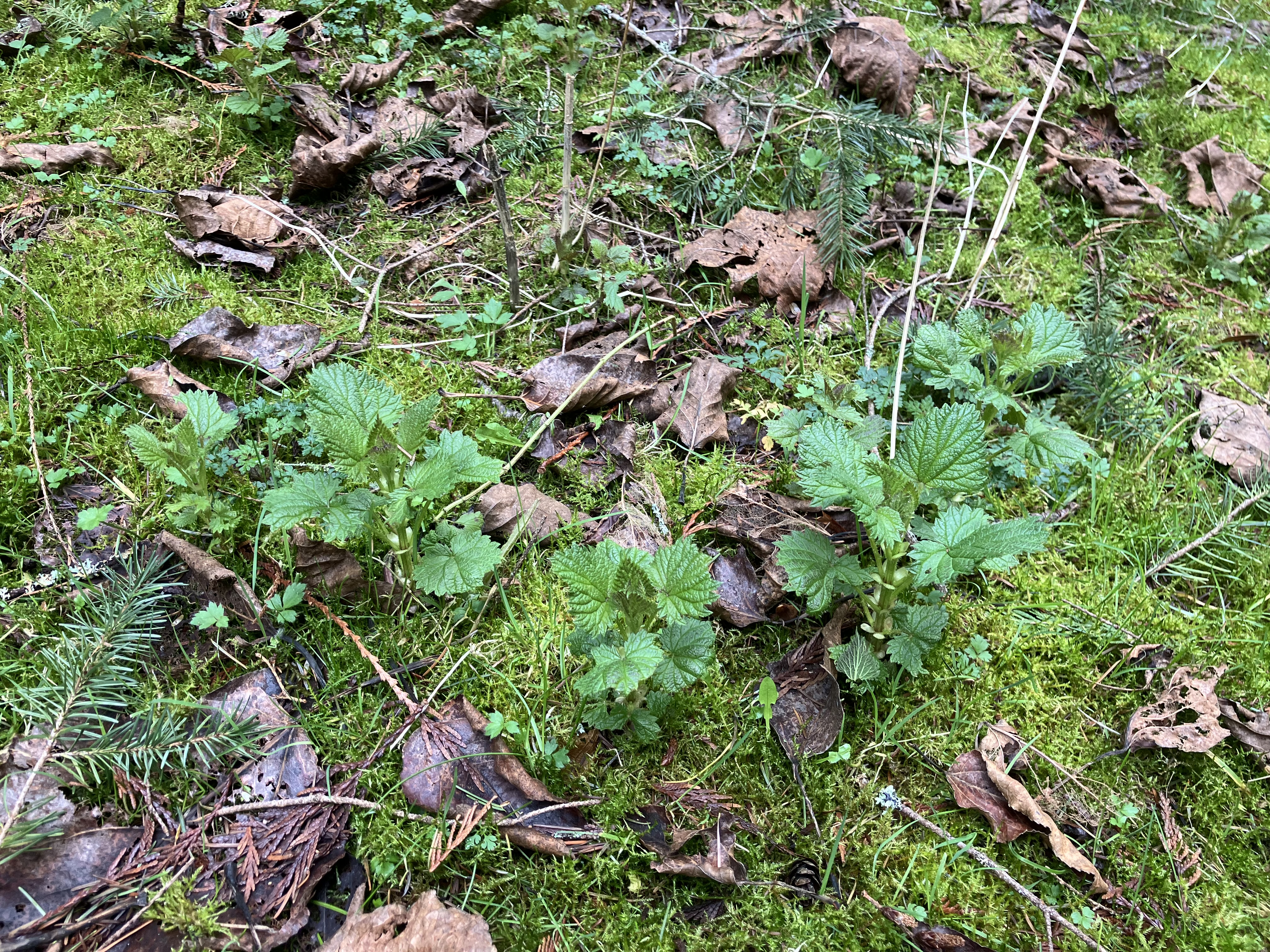
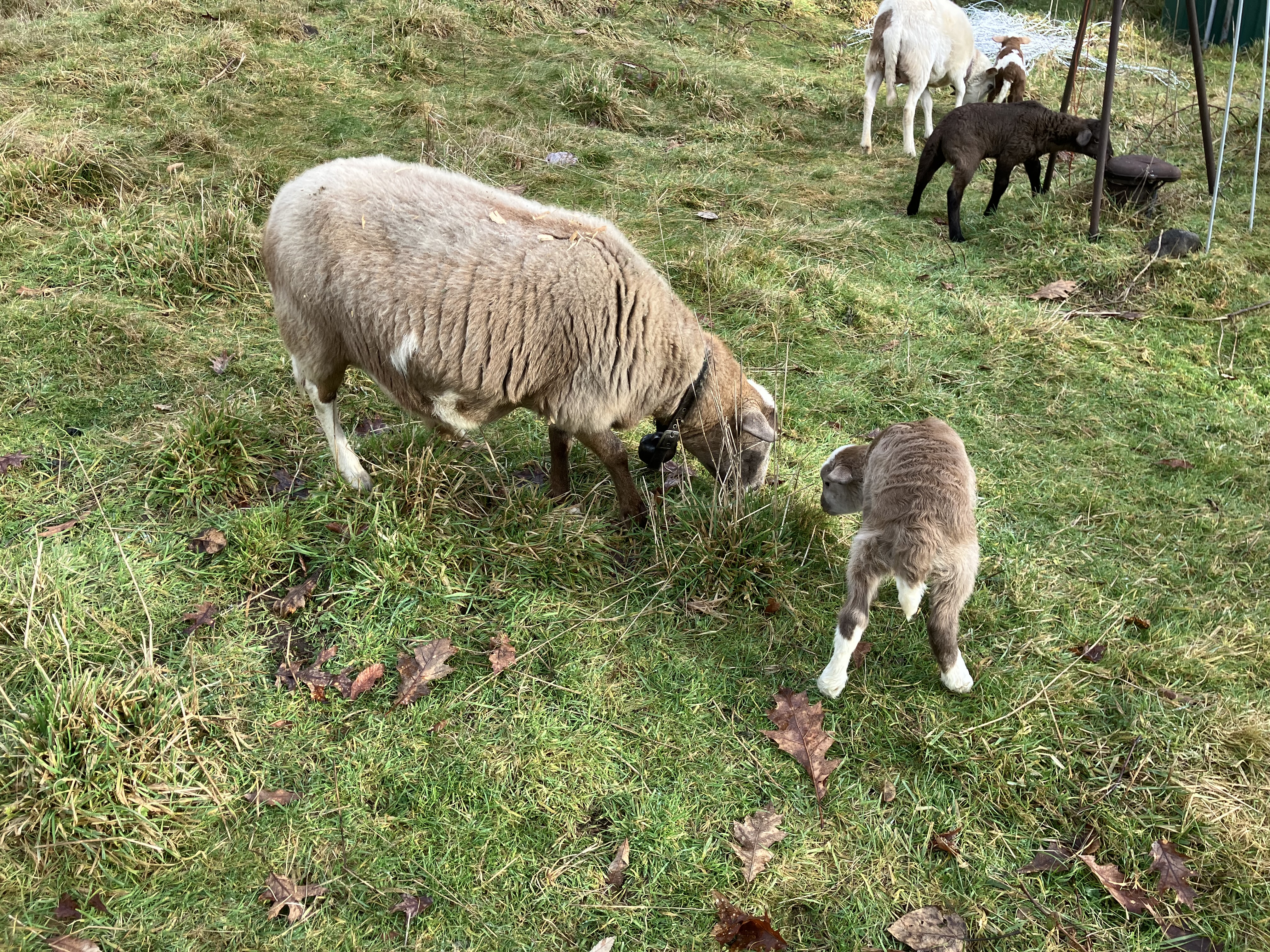
We’re embracing spring here at EEC Forest Stewardship! The lambs are growing fast and all are out on pasture when it’s not raining to eat up the fresh young growth as temperatures rise and the sun stays longer and longer. I harvested my first nettle last week, and made pesto- so fresh and delicious. Stinging nettle is one of the healthiest greens out there to enjoy. I advise at least blanching it first before eating, but you can carefully crush up leaves and eat fresh if you like. Fresh is best! I can’t wait for the dandelions to start popping- I mix the wild flowers with nettle to make fritters, and it’s the best spring food ever from the land. This is such a time of budding abundance, red flowering currant is leafing out, oso berry is already in full bloom, and tulips have popped up in the garden, letting me know trillium and Solomon’s seal is not far behind.
Last week, mid March, I finished getting all my native plant root stock in the ground, literally working till 7:30pm, dusk, and as the spring rains were coming in. Wet soil is great for planting, and all these future trees and shrubs are happy to root down and take hold. Two new species on the land are golden current and tamarack. Both are found on the east side of the state, in our sage step ecology, but are now adapting to climate change and being sold by conservation groups on the west side- the wet side of The Cascades. Why? Because it’s drying out here in the summer, and getting much hotter. Our cooler temperate loving species are beginning a slow retreat, and we’re planting adaptable species now to avoid total ecological collapse. This change seems slow now, but to plants and animals which evolved over millions of years of slow change, the speed up time is making it impossible to shift in time to survive. Take a note folks, it’s going to happen for us too.

This year is already looking dry, but the grass is still growing, so we’ll keep running sheep and developing good pasture practices to move in step with nature’s changing ways. Humans used to be mobile, moving from place to place in small tribal groups through the seasons. We lived lightly on the landscape, and moved to always have fresh food on hand. Today, staying put has put a huge strain on nature, which is not given the chance to recover from our use of its finite resources. This is the single biggest detriment we’ve imposed on our living world, and such behavior will not be without consequences. Fold in ten generations of industrial progress and there is now enough pollution in the air, soil, and water, that we’re poisoning ourselves with dividends of microplastics, heavy metals in our drinking water, and soil that pulls up all the industrial chemicals into our food. Yum yum! Since there is no mass testing for these poisons, we’re ingesting them in higher and higher doses, leading to all those jumps in cancer rates that will get us all in the end. We can’t jump ship in this lifetime, and the guys who dream of colonizing other planets are not thinking about the residues from their rockets in their own children’s food and drink, much less their own. WAKE UP!
In other news, there’s an update on an experiment I did last fall involving moss removal to see what might spring up from the soil if the dense mass of non-vascular plant matter was taken out. I made a few squares in a patch of the pasture to see what would happen over time. Now, over a year later, I’m back to see what’s been growing on.
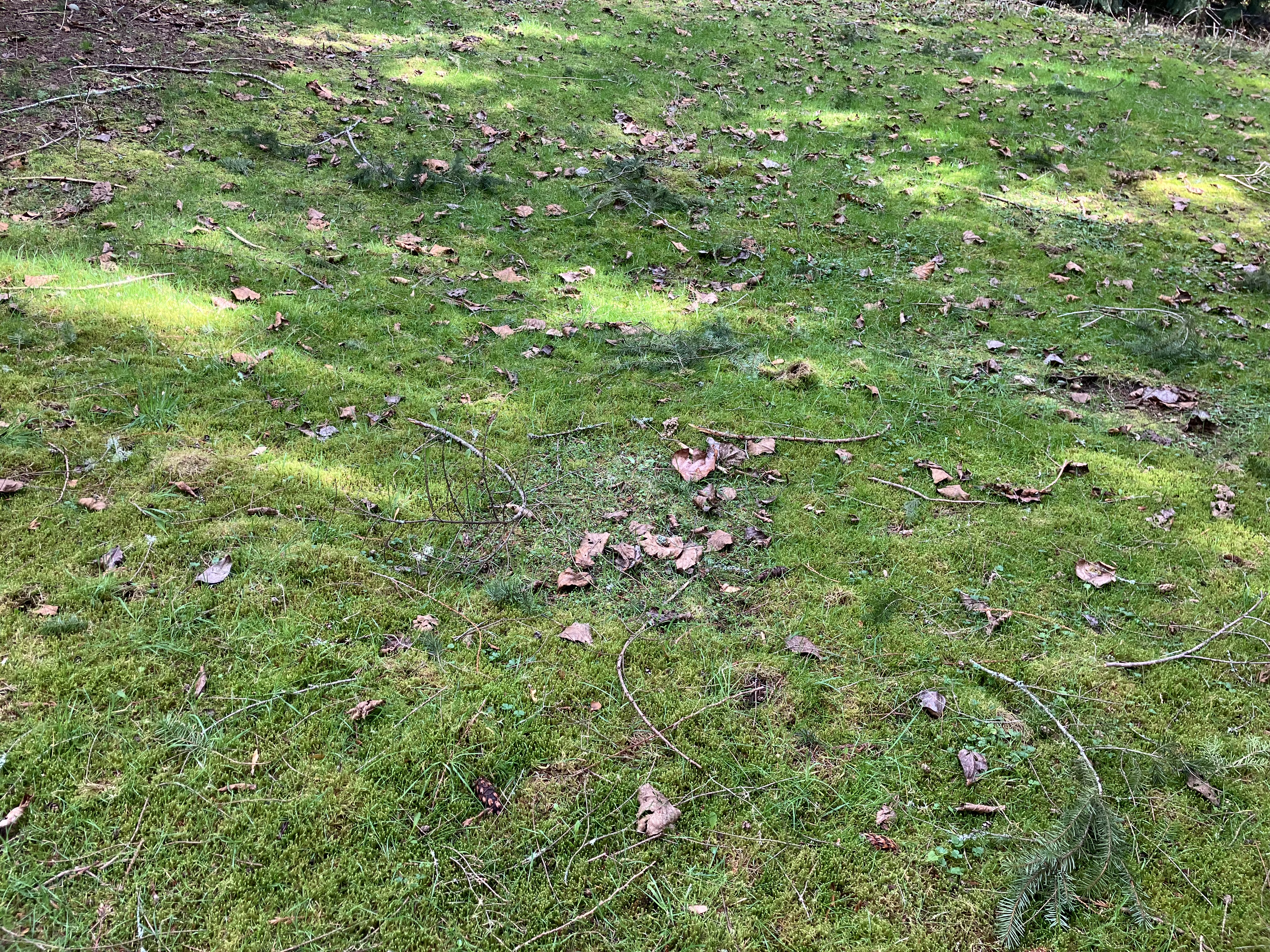
In fact, a lot- mostly invasives though, they are so opportunistic. I’ve documented fox glove, bugleweed, trailing buttercup, crane’s bill, and more. It’s still early days for this experiment, and the sheep have not been in to graze yet- they love to eat most of the invasives listed, but it’s good awareness to see what happens when you make space for growth and see the unwanted come in first. Invasives are good at filling a void, that’s how they invade. What will help keep them out in the long run is an intact forest canopy and time. This area will remain pasture for now, so the sheep can help me keep things under control, but in future, when this area is replanted as forest in a few more decades, we’ll use oak and pine to weed out the unwanted species. The good news is, sheep can’t eat moss, but they can eat the other weeds growing in. I’m not planning on peeling up all the moss in these woods, that would be like trying to keep a forest floor uncluttered. Another observation I made, was that leaf debris seemed to linger in the non-mossy spots. That’s a great way to keep debris on the ground to break down, amend, and rebuild soil.
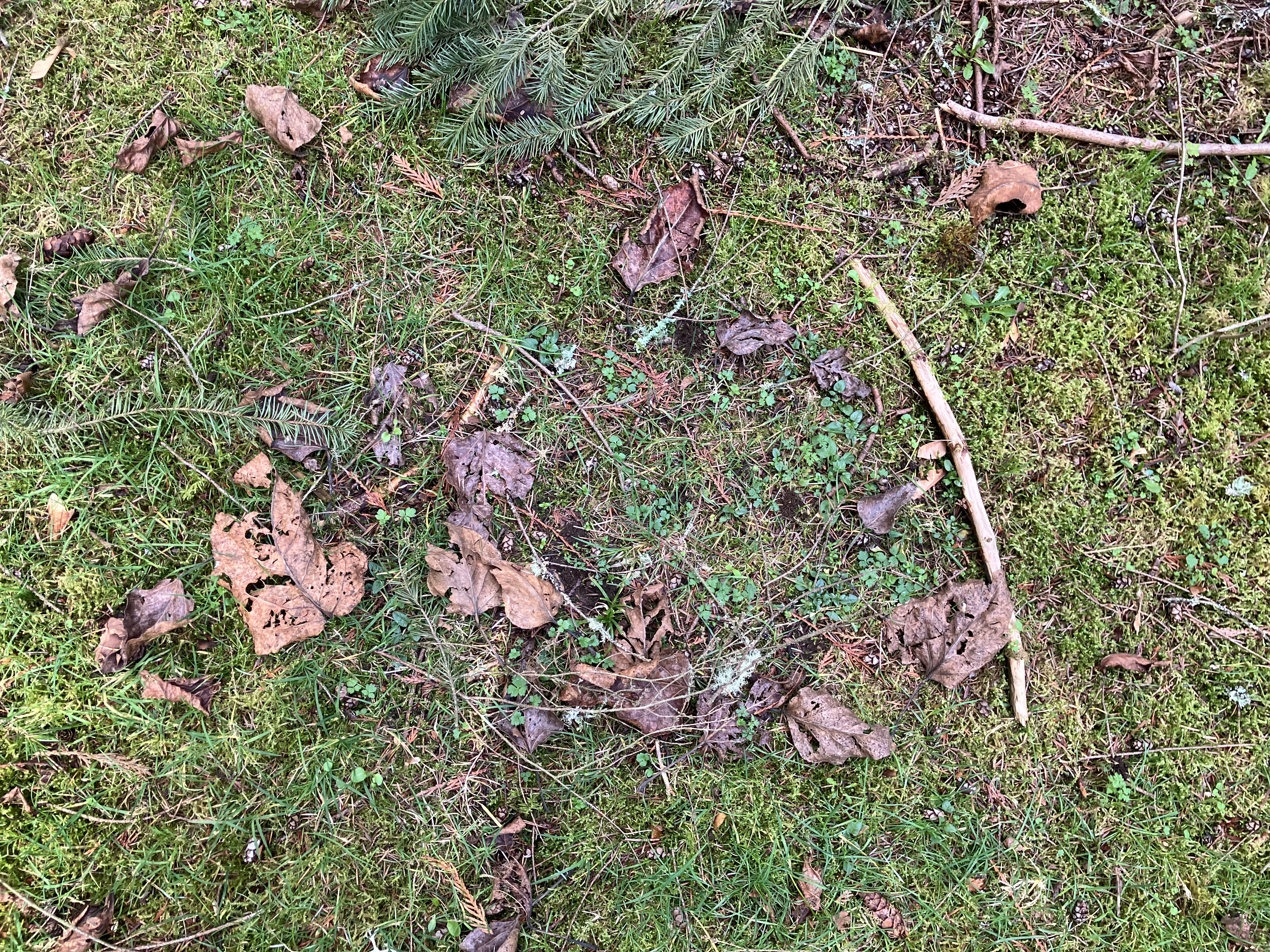
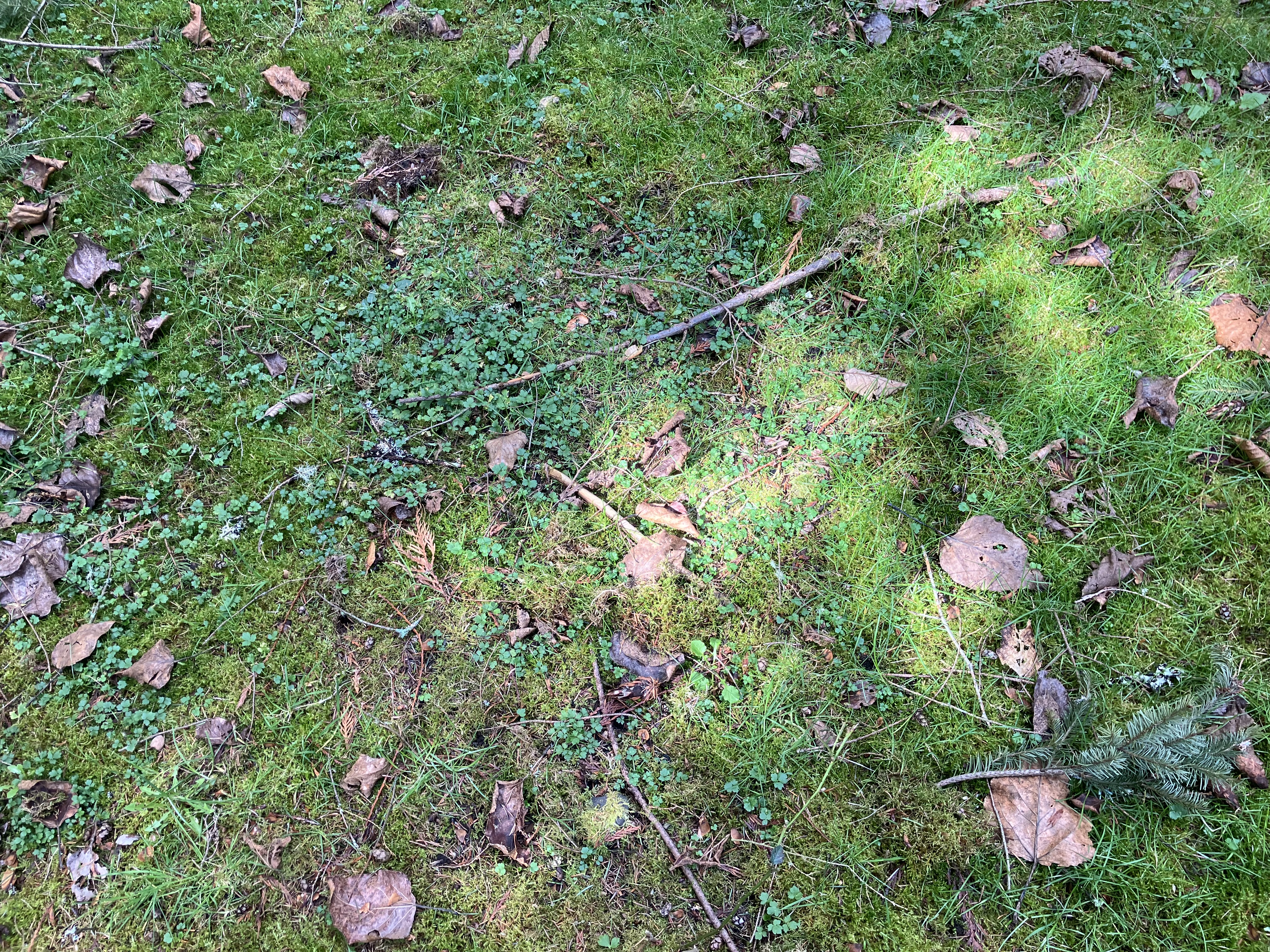
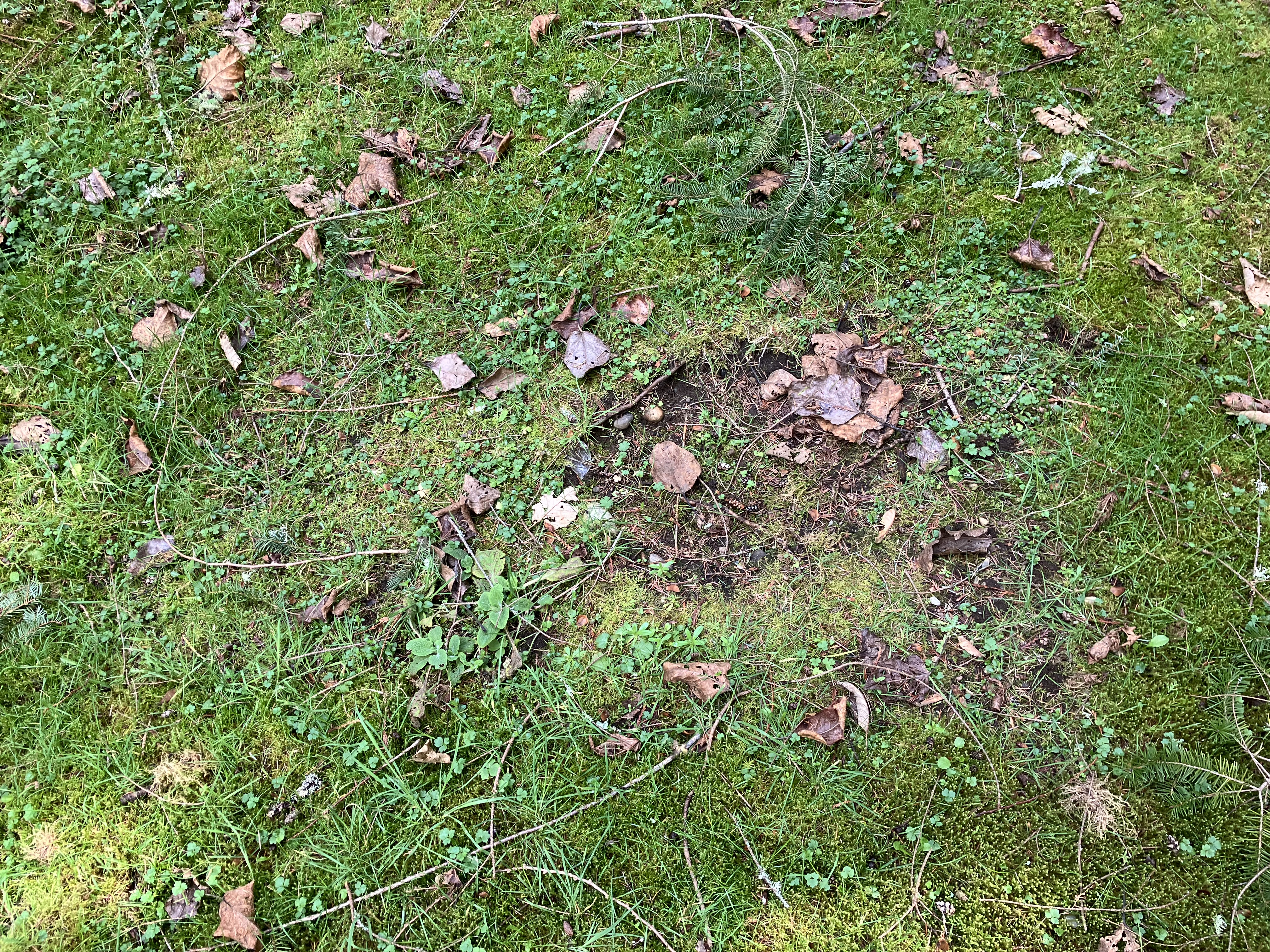
I had hoped that removing some moss would let grass come in, but there is not enough sunlight to encourage the grass, so it’s on to seeding in better natives in these patches, to see if we can set the ground with more diversity. The good news is, nettle will grow here, and just a few feet away from these patches, it is. Hopefully, we’ll spread some nettle seed here in the fall, and see if some pops up next spring.
Nettle is our best wild crop at EEC. It’s nutritious, a great soil amendment, and easy to chop and drop, allowing the plant to whither and become edible for the sheep. Though considered a weed plant by many, here at EEC, we let the nettle thrive for human and animal feed. It also a good tell for healthy soil. It’s mapping out some of the best places for future replanting. In the mean time, we’ll embrace our nettle friends and feast on fresh spring greens in thanks for winter’s release. Remember to only harvest edible plants from safe areas- roadsides are toxic, urban waterways are also compromised. Public parks are usually chemically treated to look good, so don’t pick there, and check to make sure patches in your neighborhood are not being sprayed before you harvest.
If we stopped using chemicals today, the future generation would thank us, and have access to so much more healthy food from healthy soil. Perhaps then cancer rates might start to go down too. At EEC Forest Stewardship, we use NO chemicals on our land. I have a small applicator of neem oil for garden pests, and I do amend the soil with the farm livestock manure and tree shaving bedding. Our chickens eat a totally certified organic diet, and the sheep get winter alfalfa, which is not certified organic, but is from a no spray farm on the east side of The Cascades, which has it’s hay checked each cutting for nutritional yield and quality. I’ve also used vinegar on some tenacious weeds along the driveway. Other than that and the passive exhaust pollution of occasional vehicles, 2 stroke engine maintenance machines which run minimally, and environmental pollution like smoke and acid rain, the land is organic- as organic as can be without costly certification. If I had 400 acres like this it would be wroth the certification, but a modest less than 10 acres is not worth the cost to USDA Organic cert.
Instead, I invite patrons to visit the farm in person, see what goes on, look at our feed, animals, and landscape, and then make their own choice about health and safety. This is not to say that Organic Certification is unworthy, for larger farms, it’s amazing, and cost effective, but on small neighborhood farms, just visit and ask what’s being used to maintain the land, feed the animals, and restore local ecology. If all us small acre farms worked towards good restoration farming practices, we’d improve the land for everyone and everything living on it. Ask your farmers what practices they use, and if you can’t ask them, ask the vendor selling their goods. If you still can’t get an answer, it might be smart to find another place that can and buy from them. It’s ideal to see practices first hand, and any farm worth it’s production should let you in to see what’s going on. Farm tours are the best, and are often offered at seasonal times in hand with pumpkin patches or you pick establishments. Take the tours when offered and be ready with good questions. When we’re connected to food, place, and people, we have a greater community resiliency in the face of great change, which is on it’s way folks. Find a farmer and make a friend today.

 EEC Forest Stewardship