There’s a warmer breeze blowing in from the south as March swings us into Spring here at EEC Forest Stewardship. Val watches the ravens going back and forth through the forest, building a nest and keeping a low profile. I’ve also been hearing a great horned owl nearby, also marking out nesting territory. Predator birds tend to set up in the family way earlier in the season, to get a head of their neighboring prey animals, which will start nesting up in a few more weeks. Here on the land, soil has loosened up after winter’s harsh grip, letting loos and preparing for new germination and growth activation in plants all around. It’s a great time to be transplanting and seeding out cold hardy crops like spinach and carrots. I picked up an order of native plants from a local conservation district plant sale and got to sinking the little rootlets before the next rains come. The order included some drought tolerant species like larch and ponderosa pine. In ten years, the native plants have shifted with the projections of climate change. I’m thankful to start rooting in more of these more resilient species here at EEC.
The larches are a first time planting here, along with incense cedar, more commonly seen down in Oregon and California. This is the future of our forests and things dry out in summer and freeze up in winter. The more dramatic shifts will demand plants adapt quickly, more quickly then they’ve ever adapted before, and the plants are not keeping up. I’ve celebrated the first sightings of naturally reseeded native trees on the landscape in March of 2025- in our fenced protected area of habitat in the lower pasture. The seedling western hemlock and red cedar are a first in over 50 years for this landscape, and it’s an exciting signal of nature’s resiliency- if we just give her space and time.
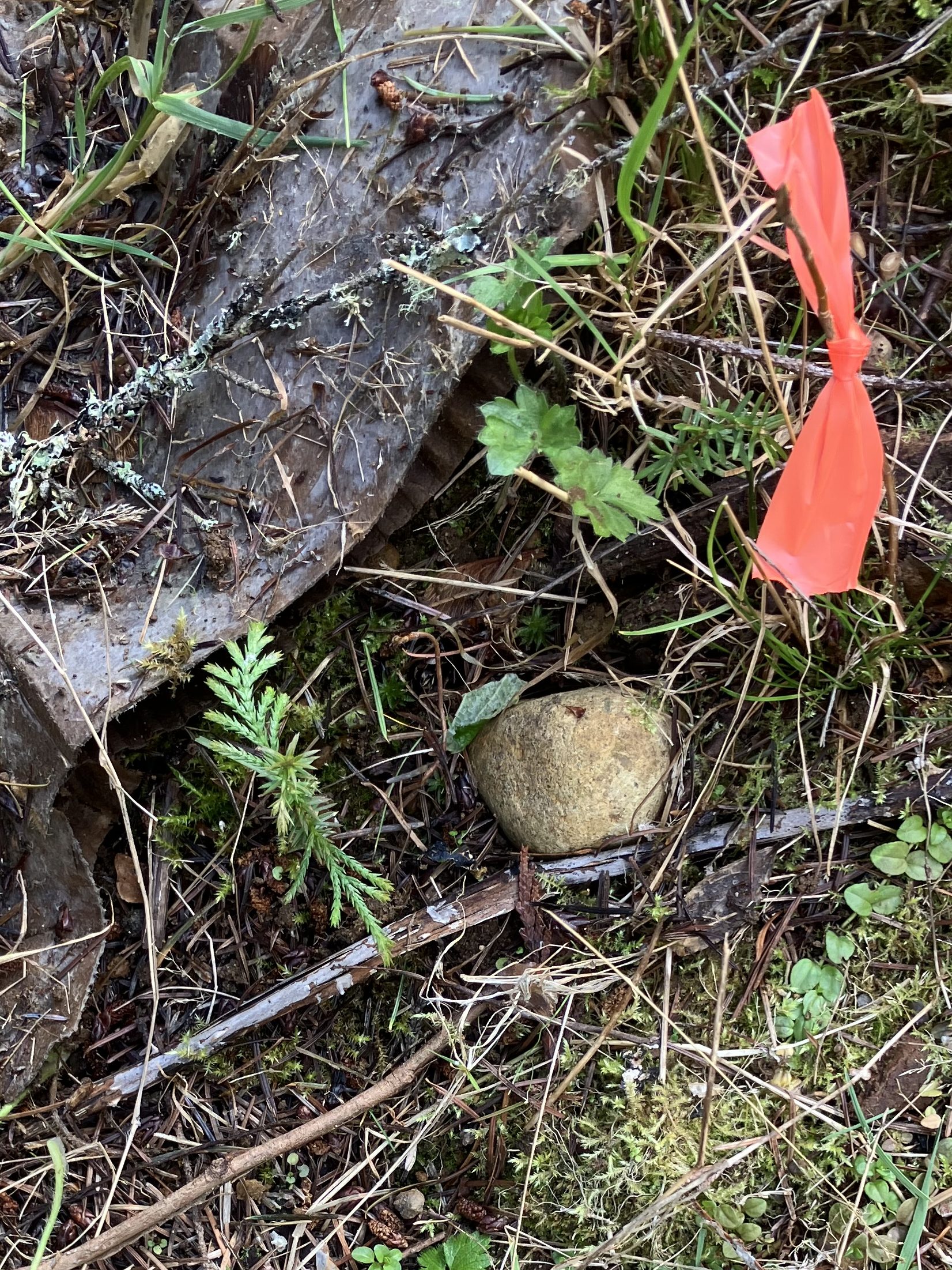
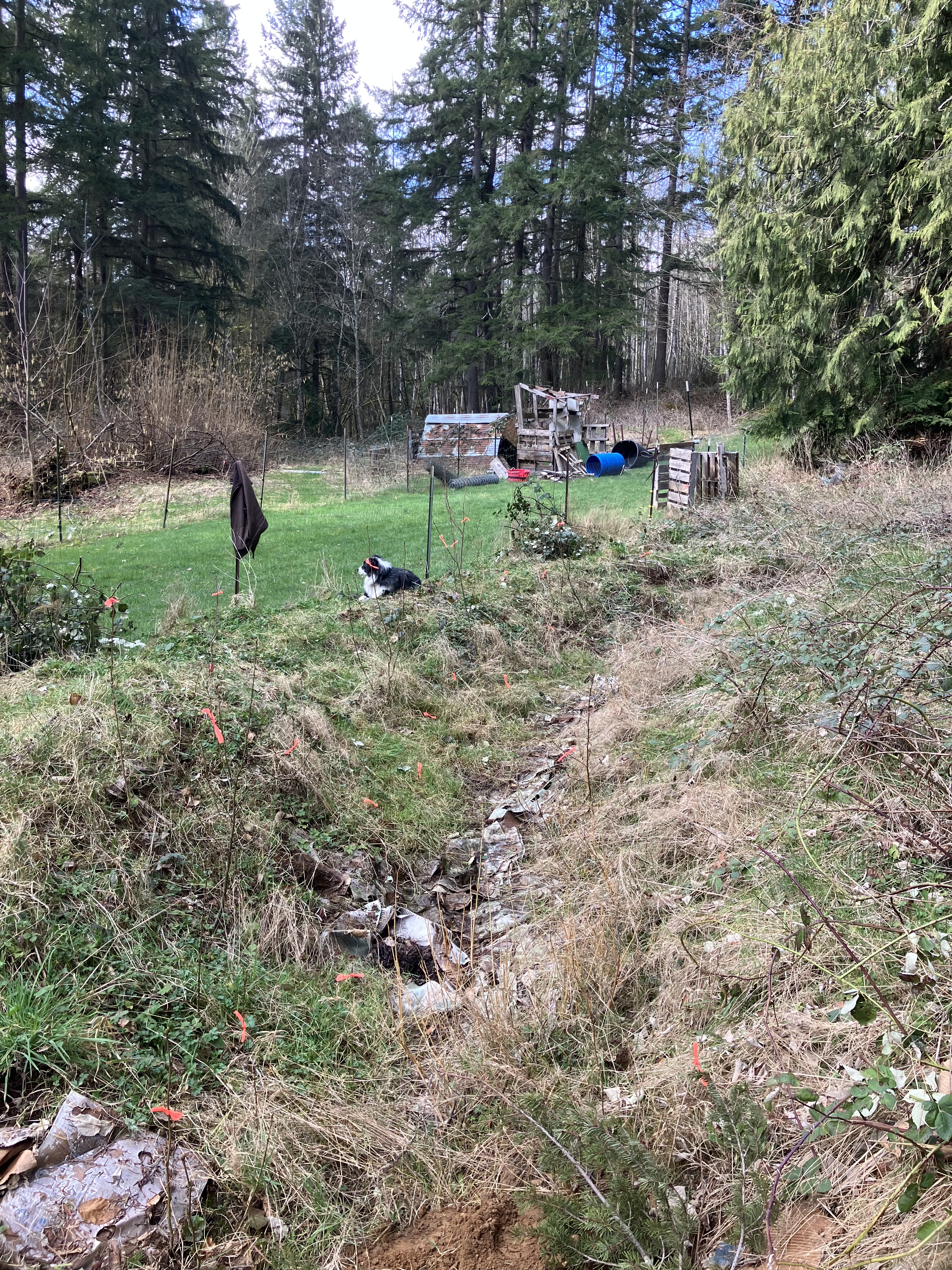
There is also an orange flagged planting of a native slide alder, which will be a great understory companion to the evergreen natives as they slowly grow. This activity is happening in the bottom of a swale, where recently disturbed soil invited the seeds to germinate from the surrounding, more mature grove nearby. Why has it taken 50 years to see this usually annual occurrence in an in-tacked forest? In two words- livestock degradation. This pasture has been so heavily grazed- especially in the decades leading up to my purchase of the property. When I first came to this landscape, there was evidence of tree bark stripping by starving animals- an often occurrence in properties where people age out of their ability to fully care for their animals, but can’t let go. Cows and horses stayed on the land for too long, stripping it of all ground cover- from sword fern to seedlings of all kinds, these pastures have not been given the time or space to renew themselves, until now.
I took a few hours this week to clear out the last patch of blackberry in a recently fenced off habitat restoration area in this middle pasture. There is already a second fenced space next door, where pigs, goats, and sheep had all helped to fully clear the space during the first few years of my stewardship here. This new space was hand cleared of blackberry over time, then replanted initially with more deciduous and understory varieties, and now, I’m putting in a couple of evergreen trees and a few current shrubs to diversify this planting even more.
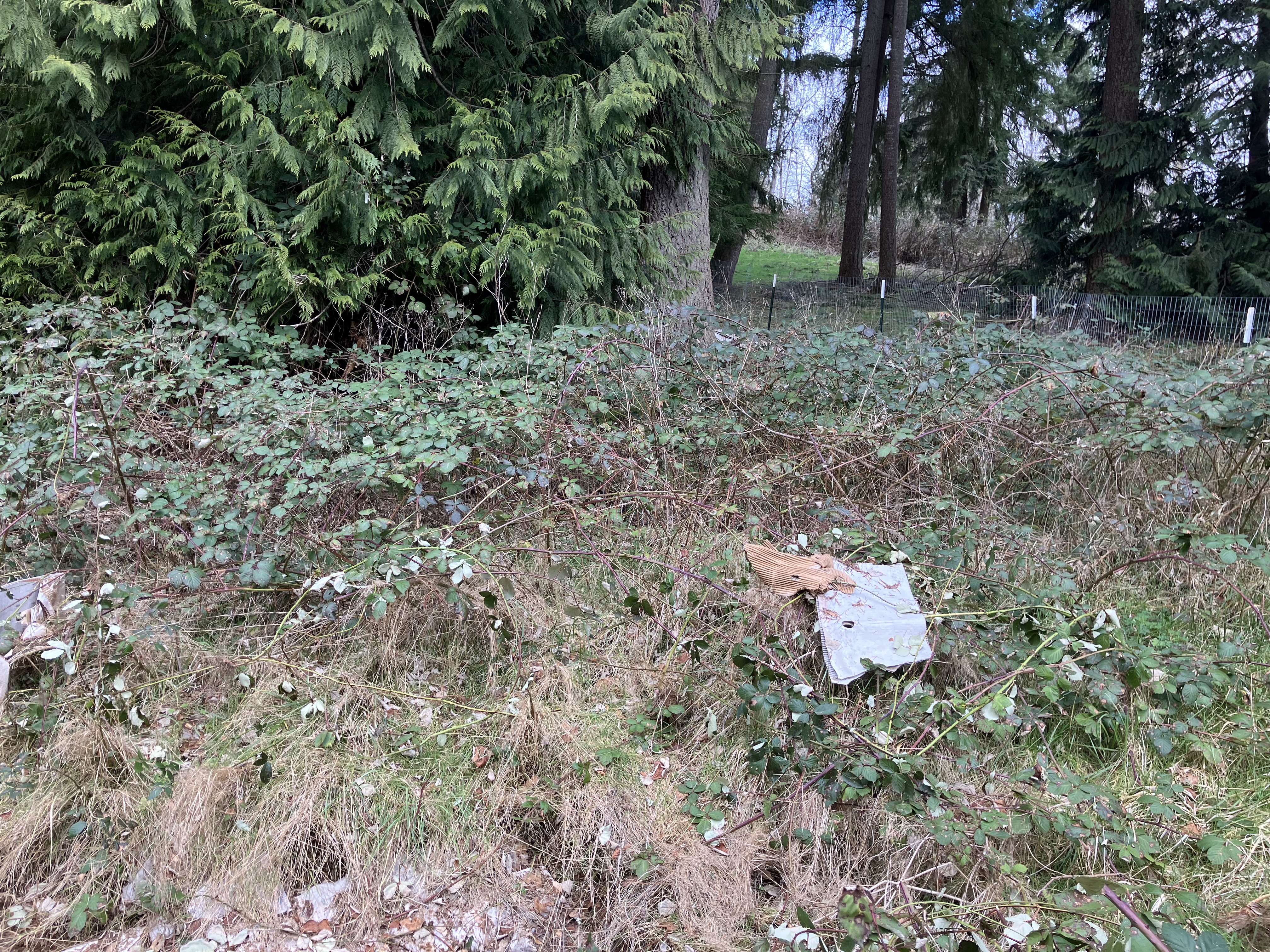
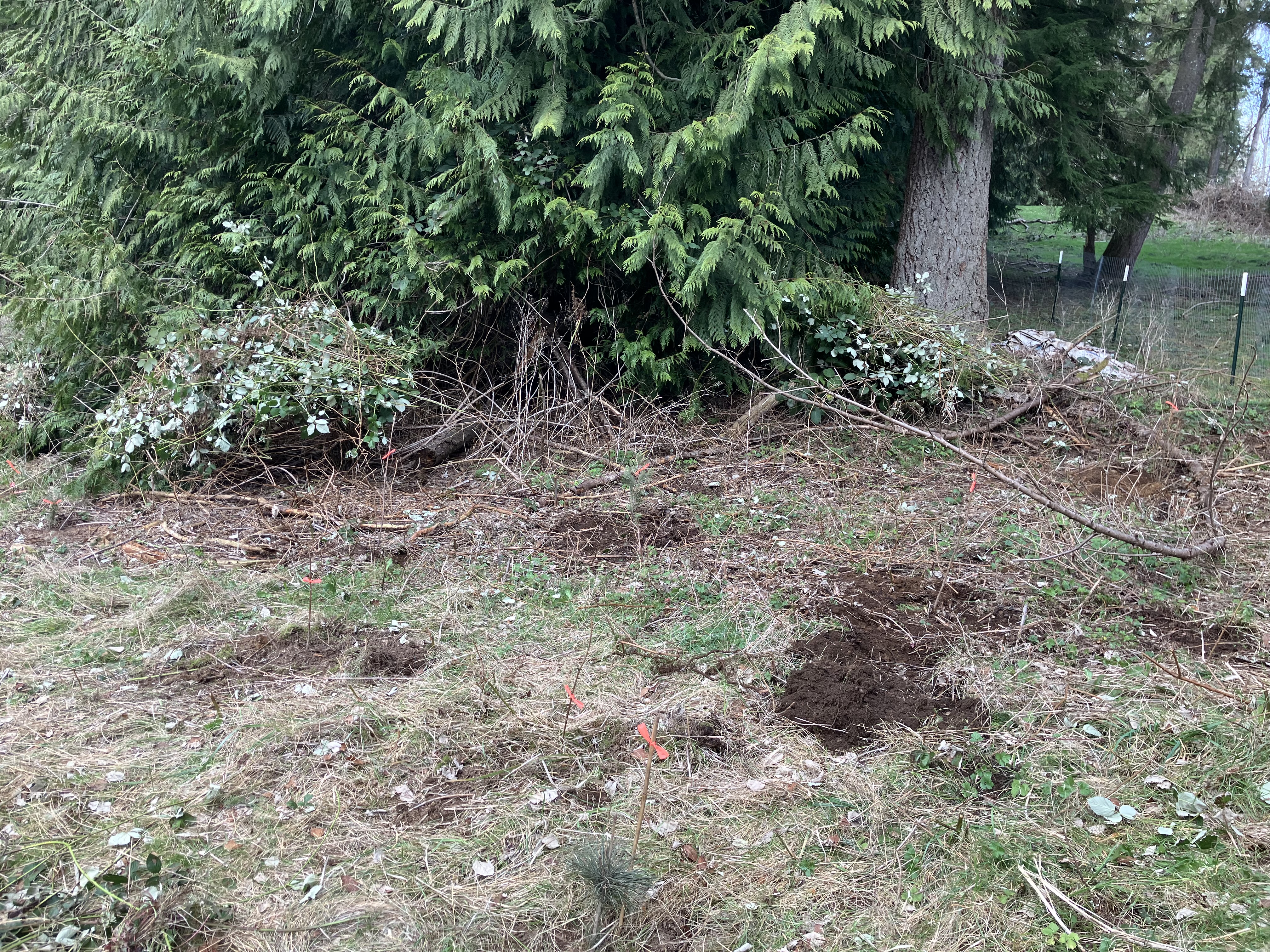
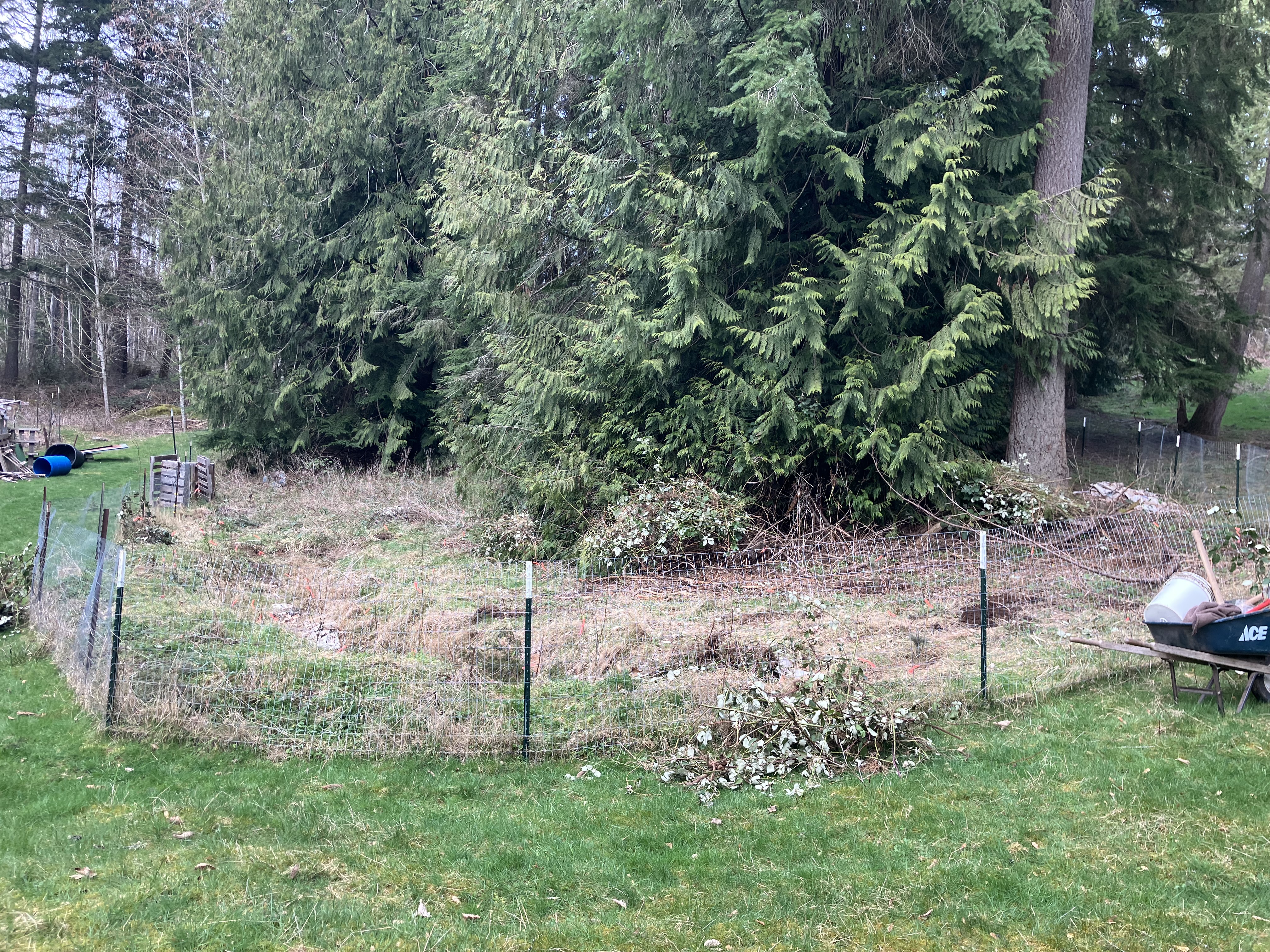
It’s always hard to fully capture the work done, and this final clearing took about 4 hours, with an additional two for replanting and flagging of already established native plantings from a few years before. It was a very rewarding project that I’ve been looking forward to. It marks a final major blackberry hurdle in this pasture, and sets up the restoration in this area for the long term. I’ll have to keep weeding out the space over the years, until the plantings fully establish, but then, like the wildlife habitat corridor at the creek, this space will fill in and also become self-sufficient as a regenerative forest, still leaning in the temperate rainforest direction, but with a new mix of adaptable species that will help keep this forest healthy in the long term climate shift projections.

 EEC Forest Stewardship