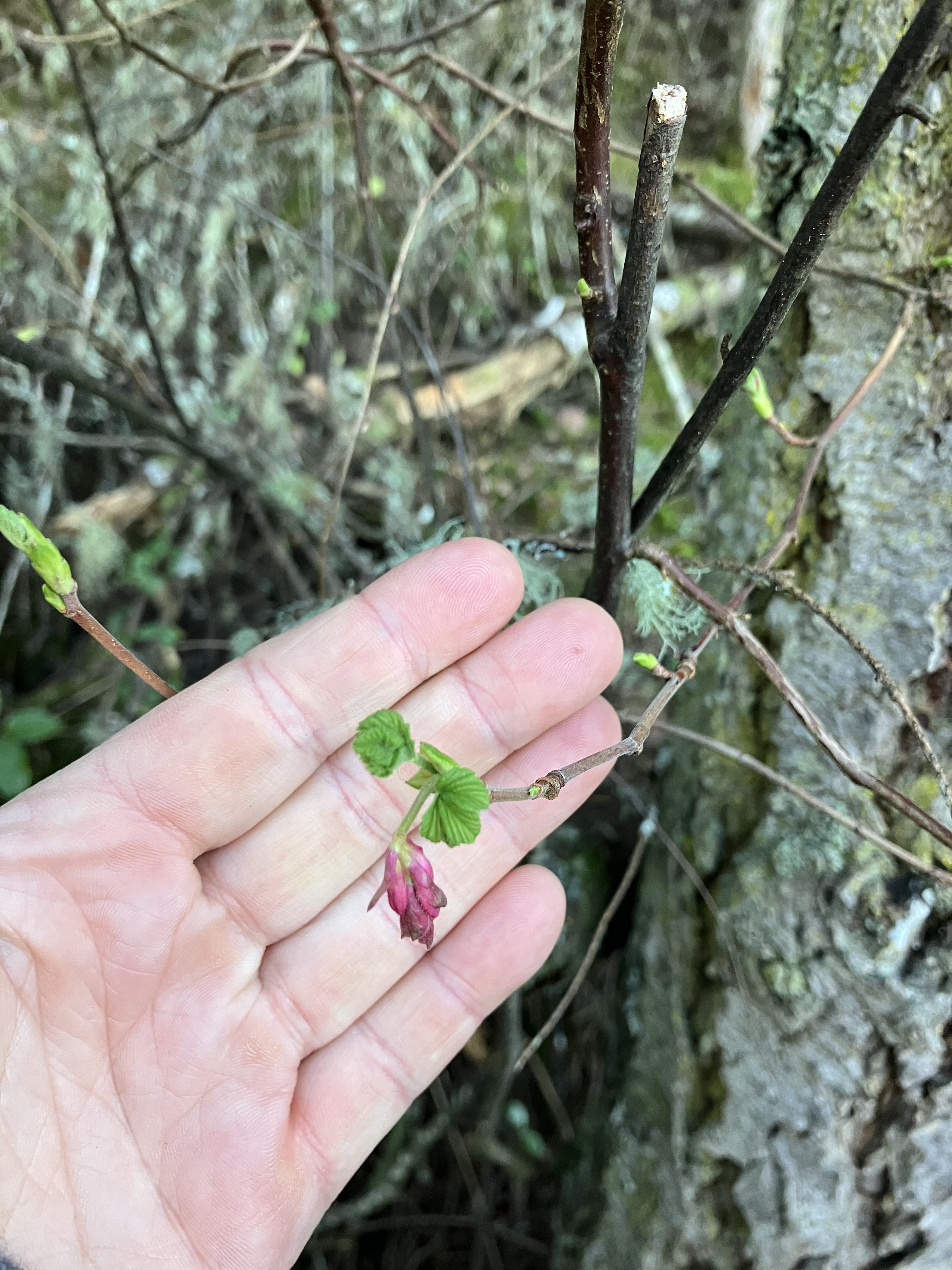
At sea level, flowers are blooming on The Pacific Coast of Western Washington. This red flowering currant Ribes sanguineum was blossoming out in the afternoon sunlight on Whidbey Island in mid February. Our temperate climate does offer an early spring, along with evergreen trees, which keep a thick, lively forest active and growing year round. Like the mushrooms, which can fruit at any time if micro-conditions are right, many of the native plants in this area are opportunistic. Erigeron glaucus was blooming on the path edge at Rosario Point. This ground was well drained, south facing, and backed by a reflector wall of higher growing vegetation, which sheltered it from wind. It’s also rooted in at the seaside- hence the common name, seaside daisy. These small reminders of warmer times to come are a welcome sight when back at home, a few hundred feet higher in elevation, ice and snow still grip the ground.

Such beauty in small things, and slowing down helps to catch a glimpse of these warm places and well lit spaces. Greater sea scapes with turquoise blue water and dark velvet pine stretch gnarled branches over gently rippling sunlit cove.
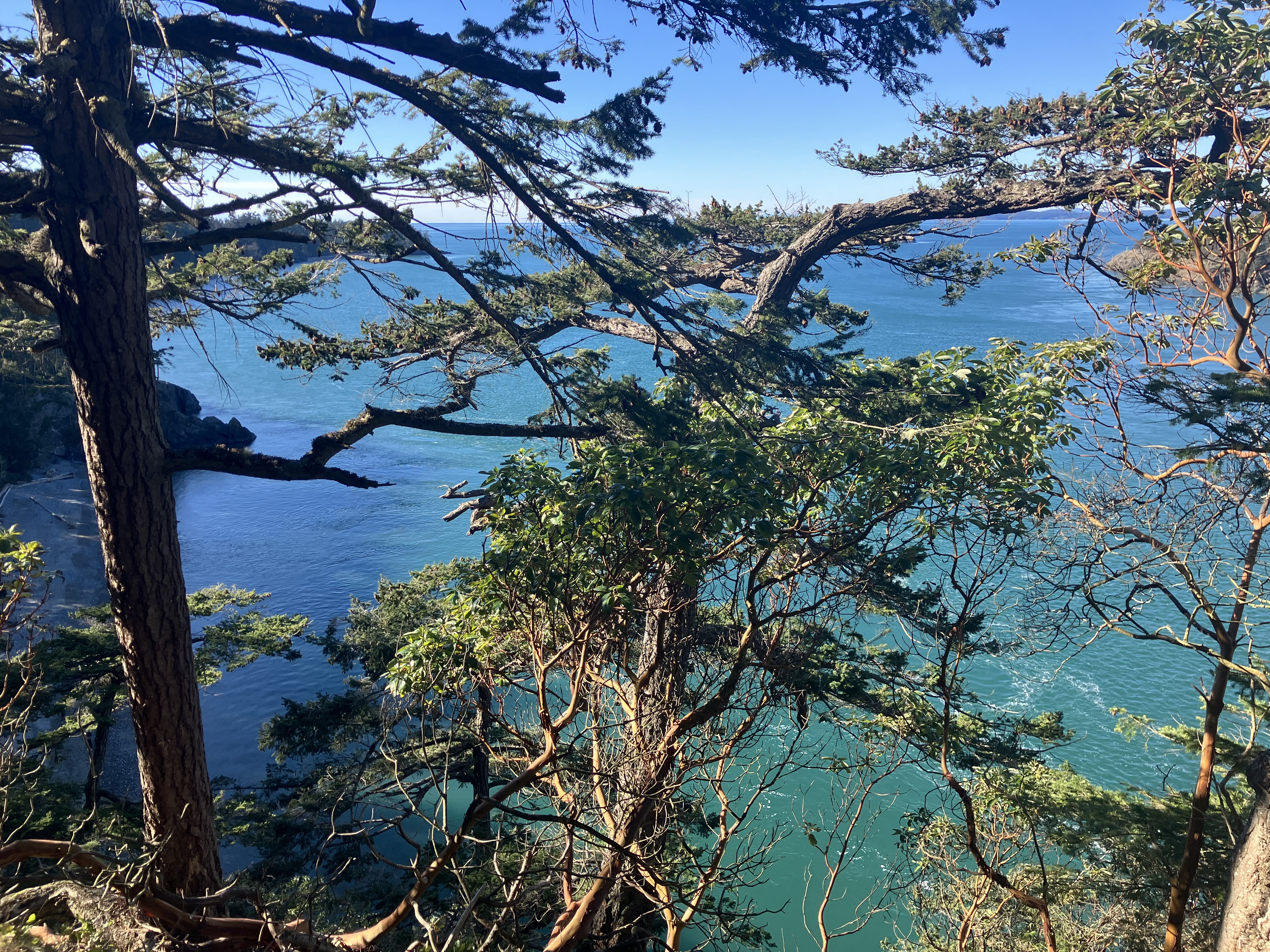
There are actual shore pines on the shore. It’s great to see longer evergreen needled true pines in these coastal forests. Manzanita trees also weave unique shed bark trunks and branches in Arizona desert shades of burnt orange and clay brown, which pop against the cool waters below. That afternoon sun dancing off the currents, flickering shadows under the canopy of waxy emerald leaves and broom branches of craggy fir and shore pine. Layers of flowing tide, our movement through these framed moments, like the coast of Greece, islands with rocky shores, gulls crying off across the bay, yet flitting chickadees from the forest call us back to Pacific latitudes, a great rainforest towering at our backs bridge two worlds of ancient sea bed, upheavals in the rock layers now holding these towering trees onto the island’s thin skin. Erosion plucks at every glacial deposit, cracking into even the most stoic sediment. Volcanic signatures building fresh layers of time out of the fissures in these active tectonics that shape our western shore. Rooted deep beneath these living trees, the ground rumbles with future upheaval on the way, but for today, the forests doze on stable pitch.
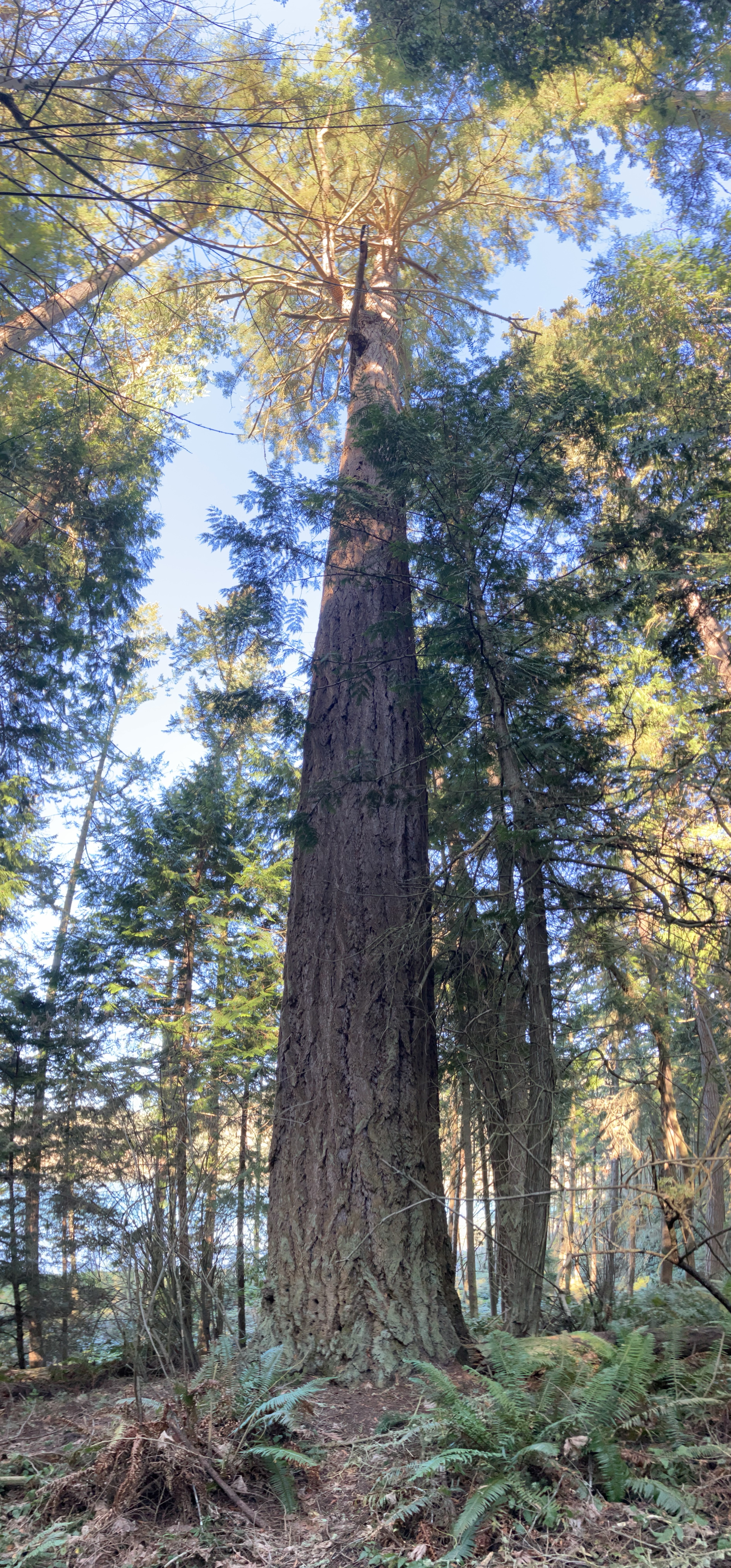
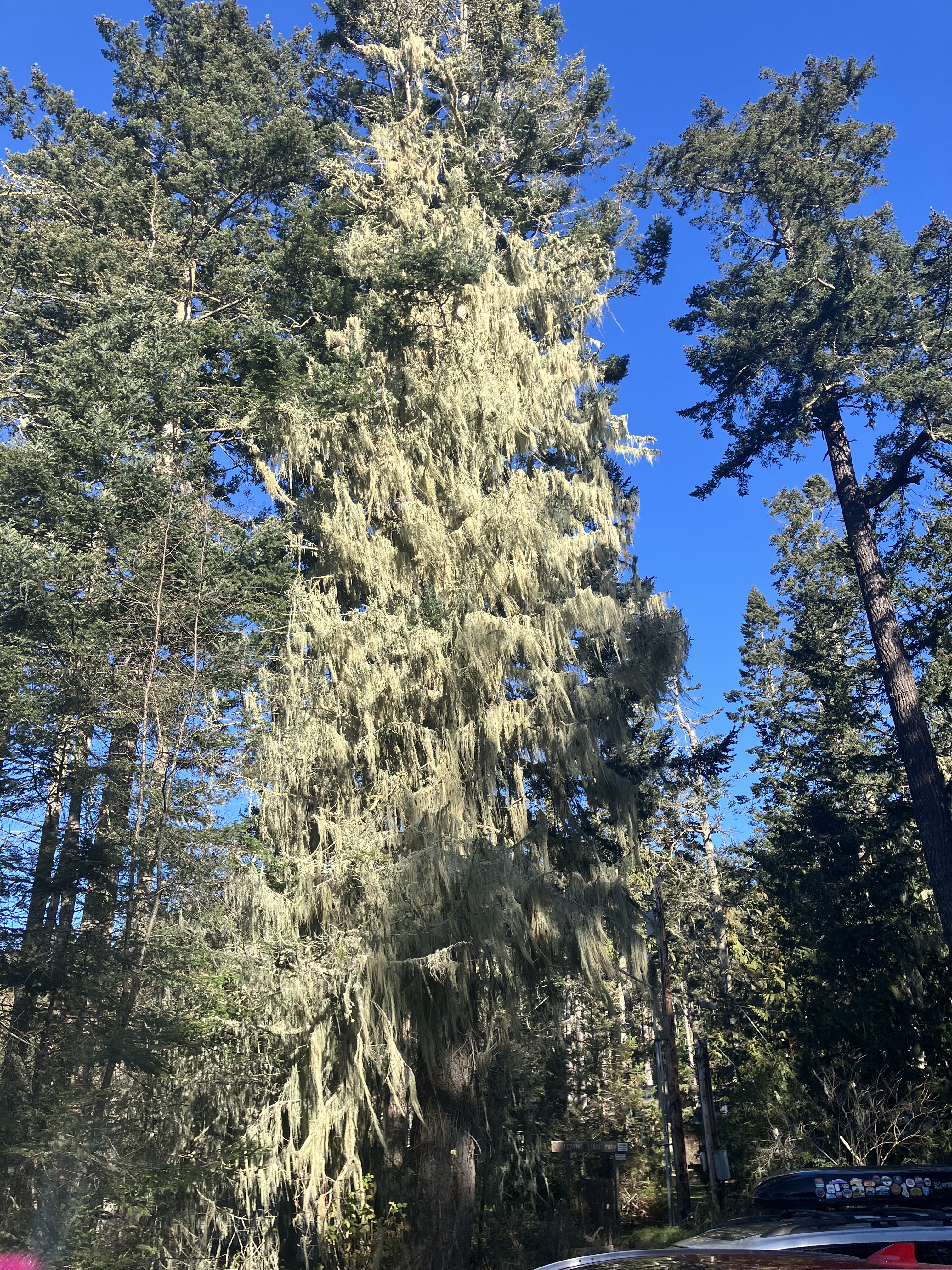
It’s very hard to take a picture of giant trees, but this attempt invites some token perspective of size. Towering up over 120 feet into the air, this centurion of age will live a long, full life- one of the few older growth protected trees left to enjoy. Note the large bases of each branch high above- these several feet thick, mature branches are what the critically endangered marbled murrelet needs to land and nest on for the success of the species. This rare bird is endangered because there are not enough old growth trees with the size and literal girth needed for proper nesting. It’s one of countless man made detriments to our own home, which can only be remedied in another hundred years of letting the forest regrow- which we are not doing, so the birds will go extinct. The birds can’t just nest in a token tree at the park, like the one pictured above; they need at least 500 acres of intact mature forest. Outside of a few national parks, that are still not recovered to mature old growth in most areas due to initial clear cutting, there are no forests dedicated to old growth maturity.
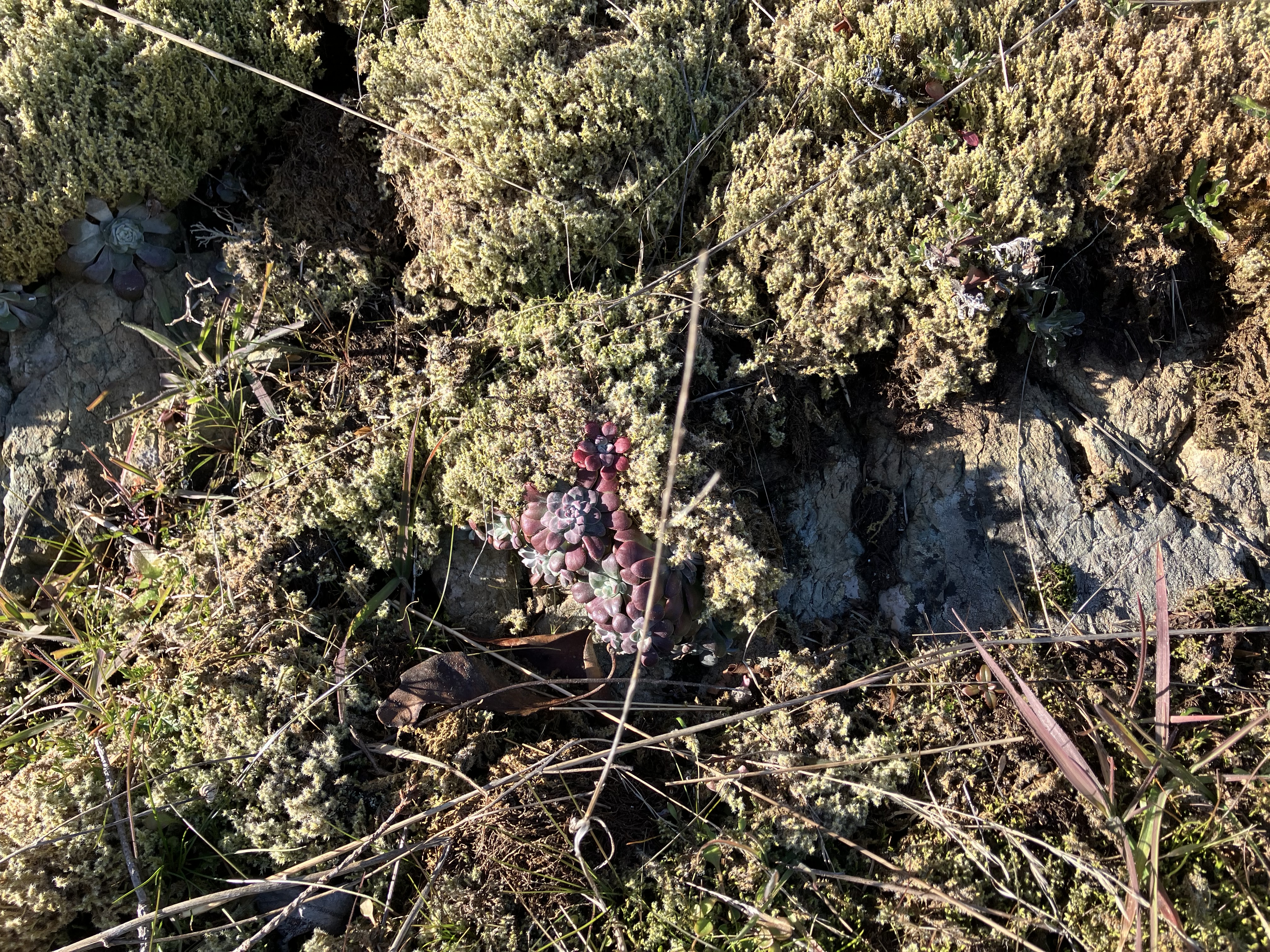
Most of the environment is made up of mini worlds- micro climates where niche species take up residence and make a splendid home. These colorful sedums Sedum spathulifolium were a rare treat to see in the wild. They were not flowering, but certainly set off the rocky outcrops around one of the island points. Washington has a ton of moss species too. Bryophytes are not my strong suit, but I appreciate learning the sometimes very subtle differences between species when I can. Red stemmed feathermoss is one of our more common ground cover mosses, along with Usnea– a lichen of important medicinal healing. The Usnea is most often found in trees. Pictured below is a rather exaggerated case of this medicinal lichen in a tree at Rosario Point. There are several beard lichens in the Usnea family, all are great back country emergency wound packing material. Thankfully, we did not need any on this enjoyable trip.
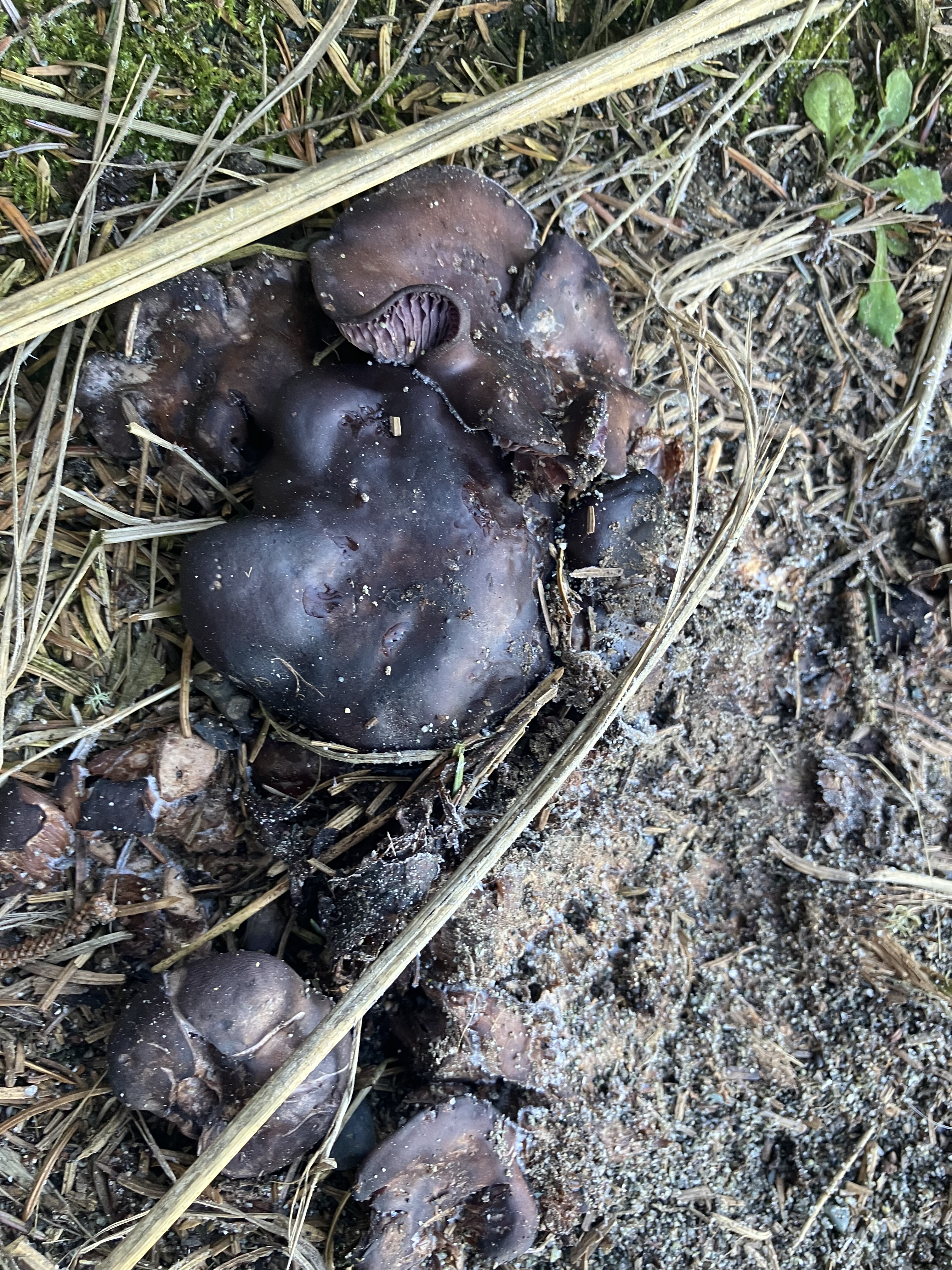
Of corse, no trip into the wilds of Western Washington is complete without a good mycological find. I only took this one photo, and handled them without disrupting the bloom, so no stipe observation or knowledge of spore print. Purple gills are some what rare, and the cool to the touch wax cap sent me towards a couple of guesses- Pseudoomphalina angelesiana or perhaps Leptonia subviduense. They felt meaty, but were fruiting in a sandy, not so familiar coastal ecology, so I consider this mushroom still a stranger to enjoy through observation only. There are endless lessons in the fungal world, along with the rest of nature- endless in details of complexity. I enjoy dipping into some of that knowledge, and connecting with new mysteries for future investigation.
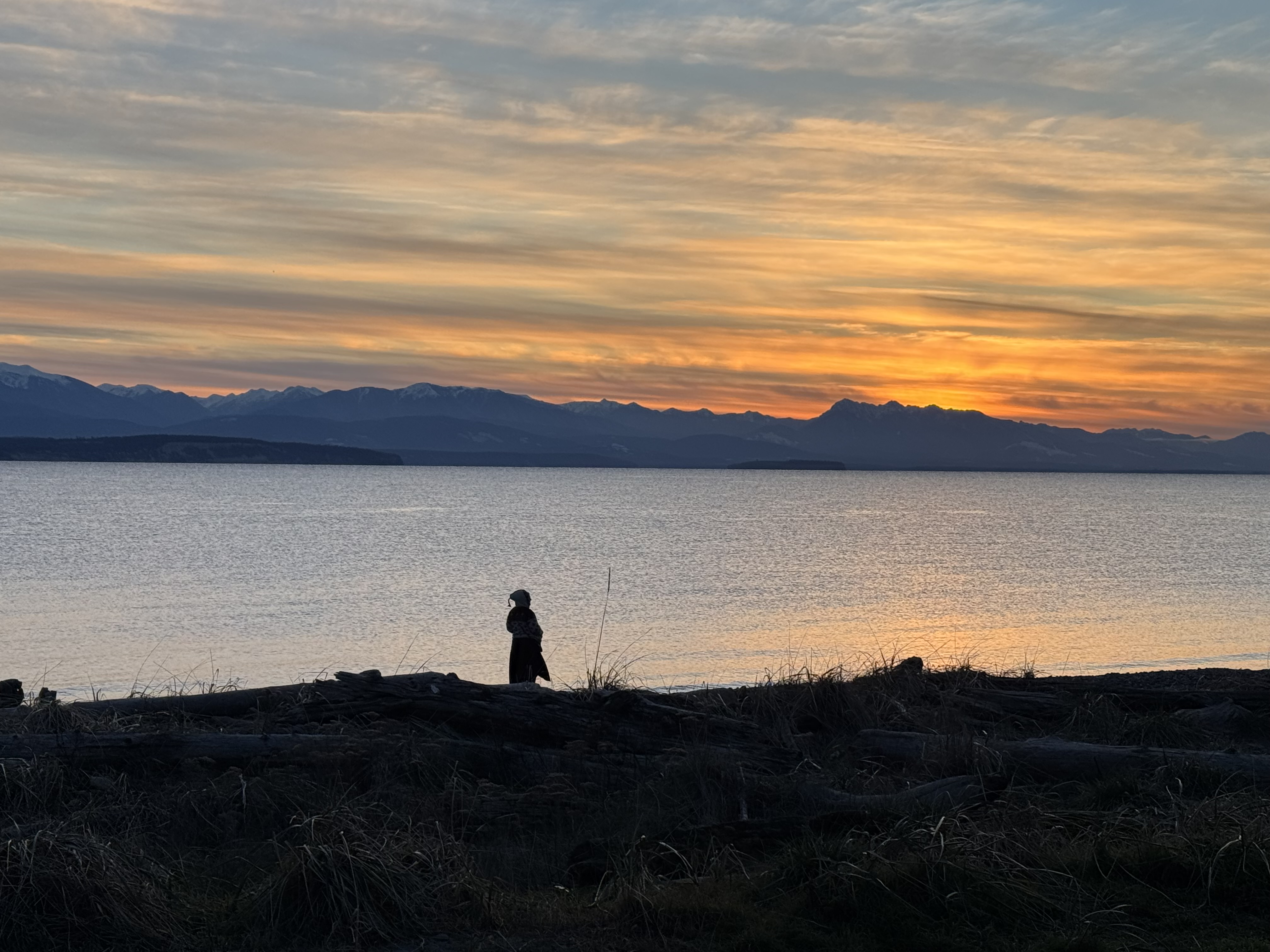
By the end of the day, trekking around Whidbey Island had been full of signs of spring and sunny reminders of the warmth to come. While at home, the buds were just starting to grow, full flowers unfurled, and the ocean’s vast expanse, framed by majestic tectonic uplift; brought the full picture of Western Washington’s dynamic ecological orchestration into view.

 EEC Forest Stewardship