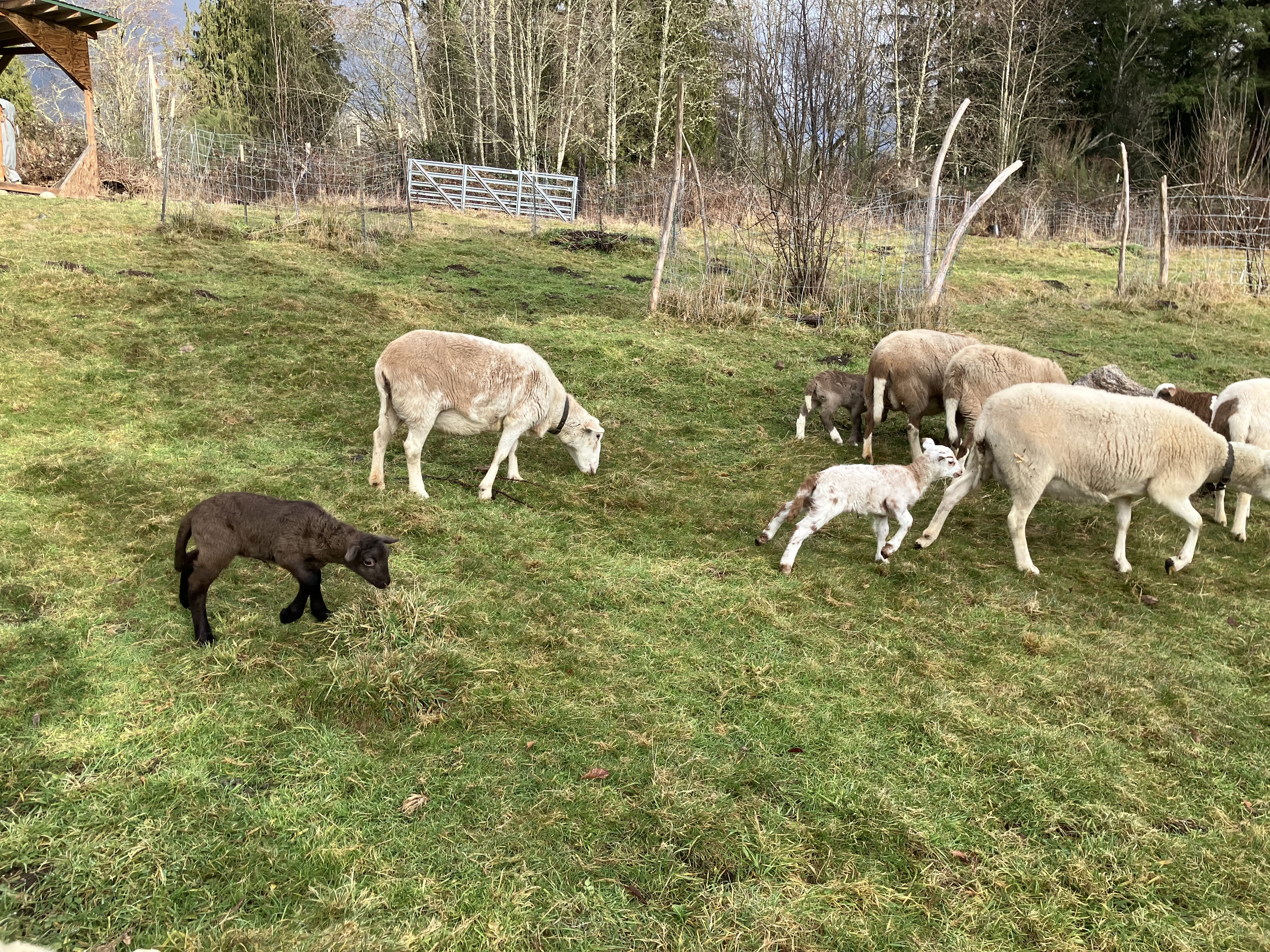
The year of “Q” is off to a strong, healthy start- thankfully, that’s the norm with our wonderful flock of Cascade Katahdins, now in their 6th year at Leafhopper Farm, restoring topsoil and fertility to EEC Forest Stewardship for the long term forest canopy yet to come. Each new year, a different naming letter is chosen to keep track of sheep through the generations. This year’s names include Quasar, Quinn, Quartz, and “Q”, the gadget lab guy from James Bond, pictured above in dark brown. Leaping away with the rest of the flock is speckled Quasar. She’s a lively young ewe lamb with a very curly neck fleece. Something unique to the lambing this year is singles. All the babes born so far are single lambs- from mothers who usually drop twins. This leads me to believe the ewes were not properly flushed when breeding started in the fall of 2024. Flushing means to give the ewes more food so they put on a better condition weight, thus upping ovulation fertility by 10-20%. I’ve never really thought about purposely fattening up my ewes for breeding, the breeding season starts in late summer, when pasture this year was green and lush. In past years, if we had a bad summer drought, I’d be haying the ewes in August, and they would still have good weight on and drop twins, but this year, for some reason, the ewes are dropping singles.
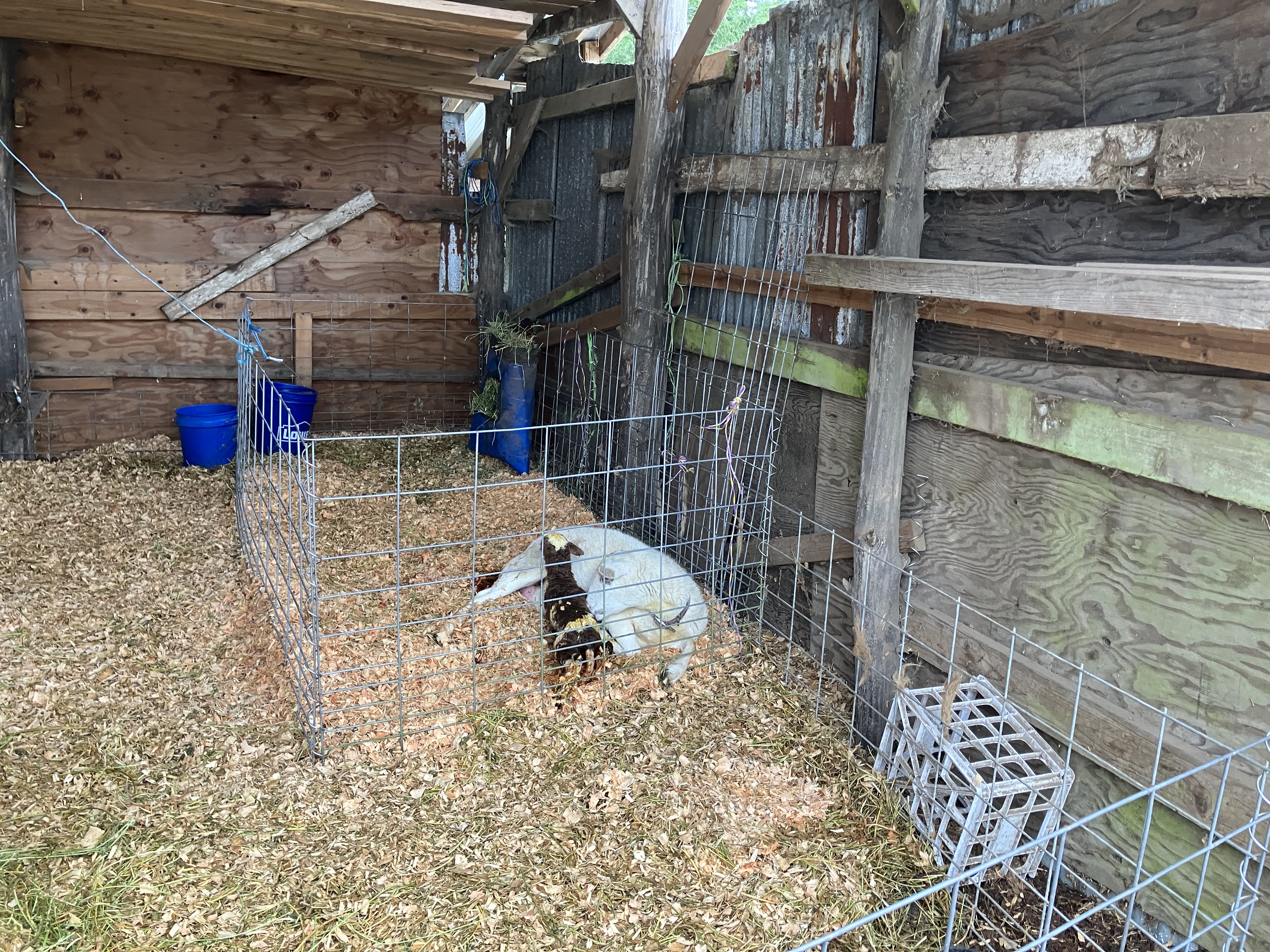
Our most recent lamb as of Feb 20th, 9:30am is Quartz out of Opal, pictured above right after birth. I was there from the start of this ewe’s labor, and am deeply honored to witness the whole experience, from start to finish. Opal has had both her lambings with me present, and it’s truly amazing to support her in this vulnerable time. She was cuing me in about nearing labor with swollen vulva and that morning, while I was feeding, she began actively ground pawing and pacing in the barn. I’m always excited when this behavior starts, and ran back to the house for fresh towels. When a new lamb drops, it’s helpful to wipe off their face and main body to help warm them up faster and awaken them. I do still put them right back with mom so she can lick them down and bond.
I’ll note here that the other ewe in this video is Hattie, our eldest lady in the flock, and the last from the original herd that came from the east side when I first invested in Katahdins. She is not Opal’s mom (who is also in the flock), but she knew what was going on, and tuned in. I might be anthropomorphizing- it does happen, but it looks like Hattie is really attending Opal’s labor. The old matriarch is also pregnant, so she might also just be hormonally attracted to the situation- or both.
I separated the ewe in labor so she could have access to food and water, space and fresh bedding. Giving a ewe space is helpful, but not crucial to a smooth birth. Katahdins have excellent birthing and mothering skills. This is a big part of why I love this breed. Surprisingly, not all sheep are good at birthing or mothering. We’ve pushed sheep to make more lambs at a time, stressing their bodies and shortening their lives- I would also argue, this tactic for profit max from finite nature gives the ewe a lower quality of life. Sheep are certainly more stressed in large, industrial flocks. Mothering skills are not needed because bottle “mommies” (large tanks of heated powder milk replacement) can feed all the lambs that don’t take to a mom, are not able to get enough from a ewe with two teats trying to feed six, or some other causality in the race to make more lambs. This kind of profit driven nature is nothing more to me than bad breeding. Karahdins are known for being fertile, but I only ask two lambs from a ewe as the ideal. That’s the number of teats a ewe has, and that’s the best design for her womb.
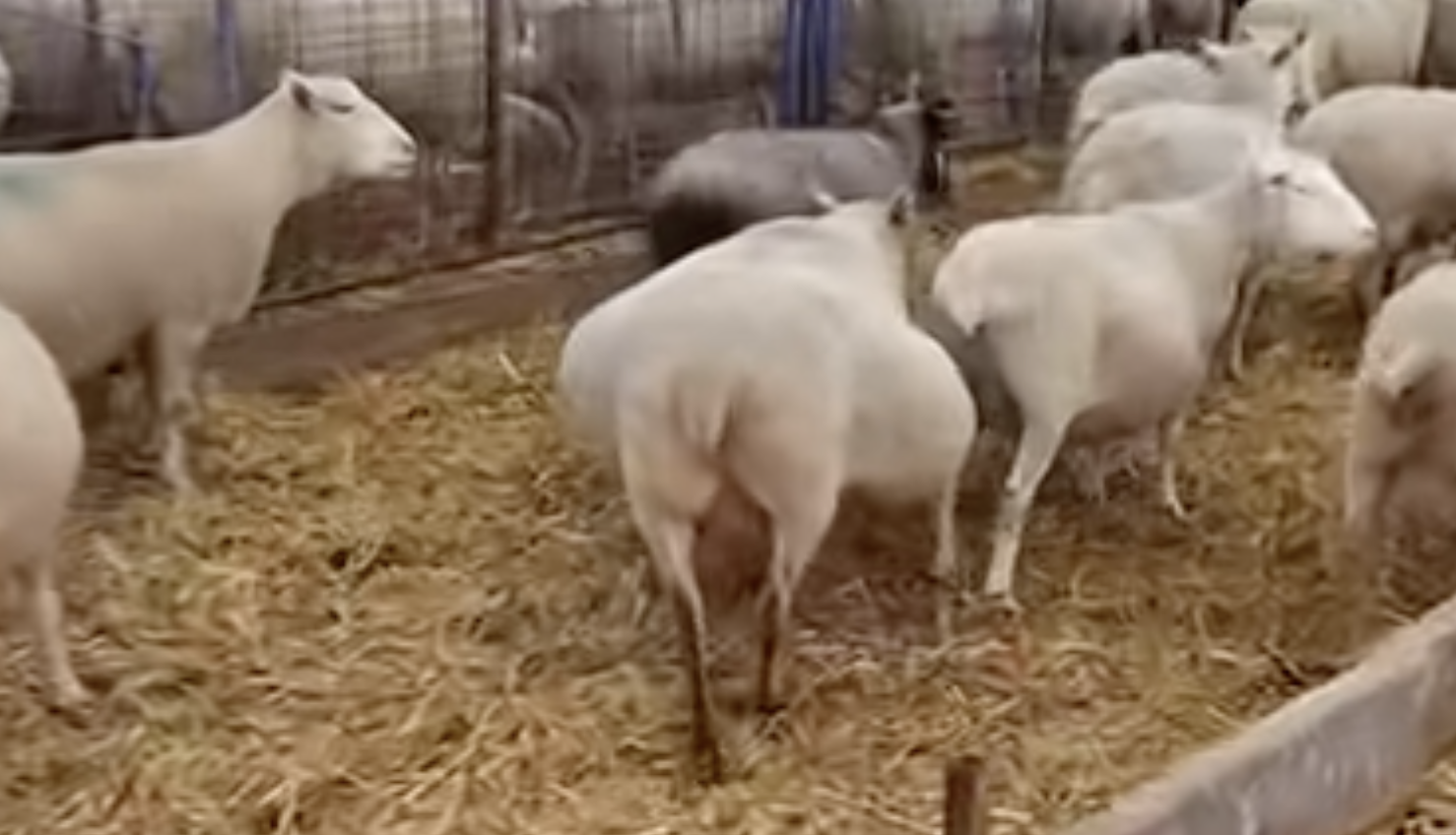
The ewe pictured above is not a Katahdin, and not from this farm, but they are wool sheep in an industrial operation pushing for the most lambs possible. I’ve watched some of the drama this farm faces during a very stressful lambing season, but they make money to support the costly industrial expenses linked to this method of agricultural production. Yes, this system feeds more people, but at what true cost to the people and animals involved? A hundred small acreage farms like mine would have to exist to replace this production, but if they were all working like mine, and we could cost share hay, localize pasture rotation and land restoration plans, as well as connecting more people directly to their food, and not sending truckloads of animals to big slaughter houses and feed lots, the world could be a better place, with regenerative nature a passive return. We have a long way to go for this vision to reach the shelves at your local supermarket, but again, that’s not the vision. Super box stores do not connect you to your food or local restoration farming. They never will.
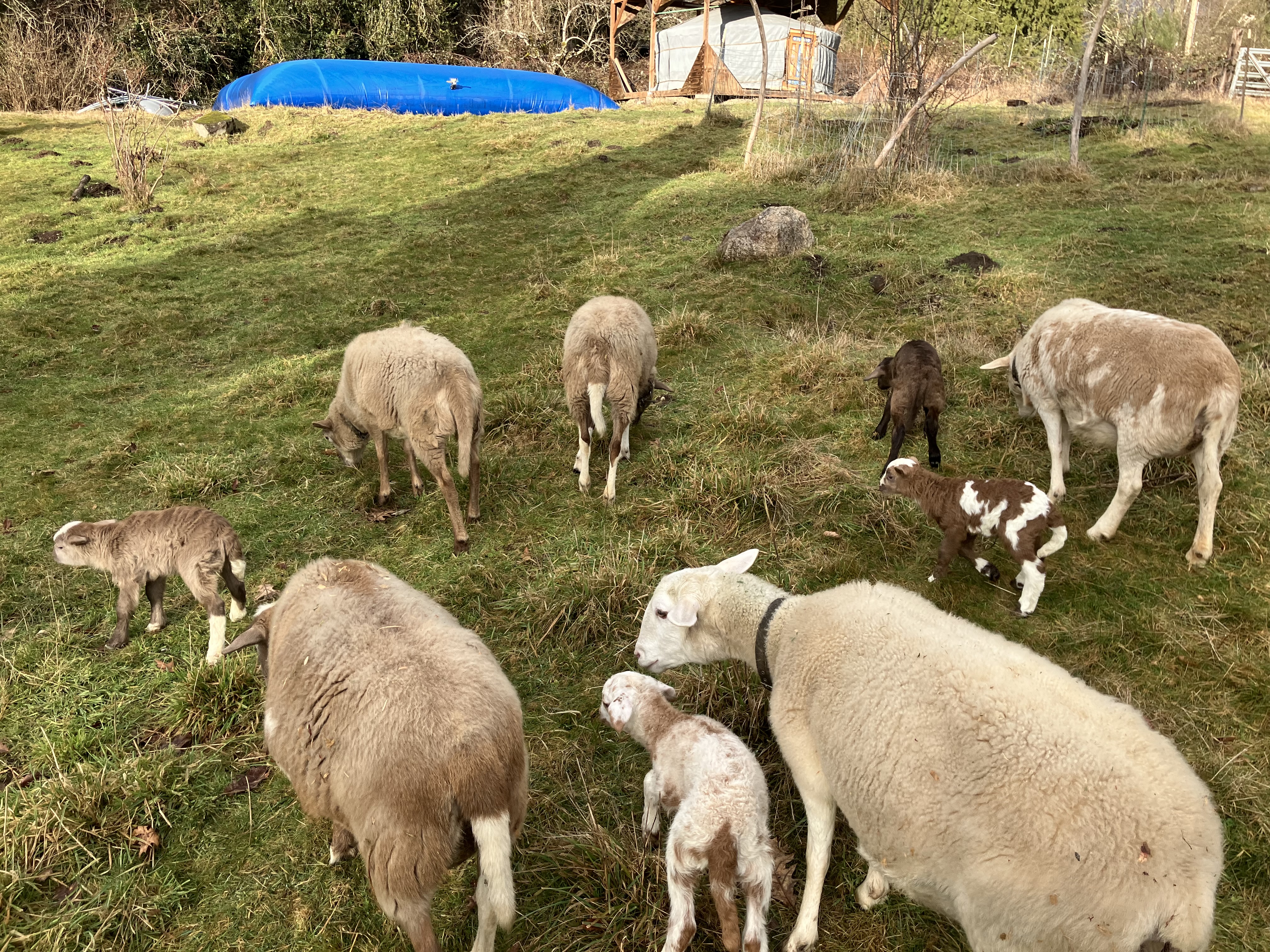
Leafhopper Farm will sell lambs again in the fall of 2025. Two are already spoken for, and we hope the ewes produce at least another four. We do keep a wait list, which is the best way to secure a lamb. Annual subscriptions take priority, so please let me know if you want to be a yearly buyer- that’s the most helpful way to invest in this small scale operation. We don’t ask for deposits, because until the lambing season is done, we can’t promise numbers. Don’t count the chicks before hatching and all that smart farm talk. The single lambs will be much bigger this year, so prices are going up a little bit. I’ll have full details in another update this summer. For now, the exciting lambing season continues in leaps and bounds.

 EEC Forest Stewardship