The ewes held out till a greatly appreciated change in weather brought temperatures up out of the teens and back into the just above freezing optimal environment for lambing to begin. It’s been a later season than expected, though I put the ram out a little early this year. Timing is liminal in nature, unbound by hours, days, or breeding calendar expectations. Industrial commercial farming has invented controls through chemical and physical forces, which do constrain timing and success- at the cost of much effort and expense, still it’s profit driven, and will work long enough to get a pay out in the short run. We do the same thing with people, treating them as numbers with risk and return priority. The US conservative government knows more people means more debt slaves to capitalize on, and if they are born out of unwanted pregnancies due to the oppression of women, they are more likely to be debtors, held in the private prison system, or any number of other predatory money making abuse schemes inflicted on the many by a select few. But This is about lambing, so let’s get back to counting sheep.
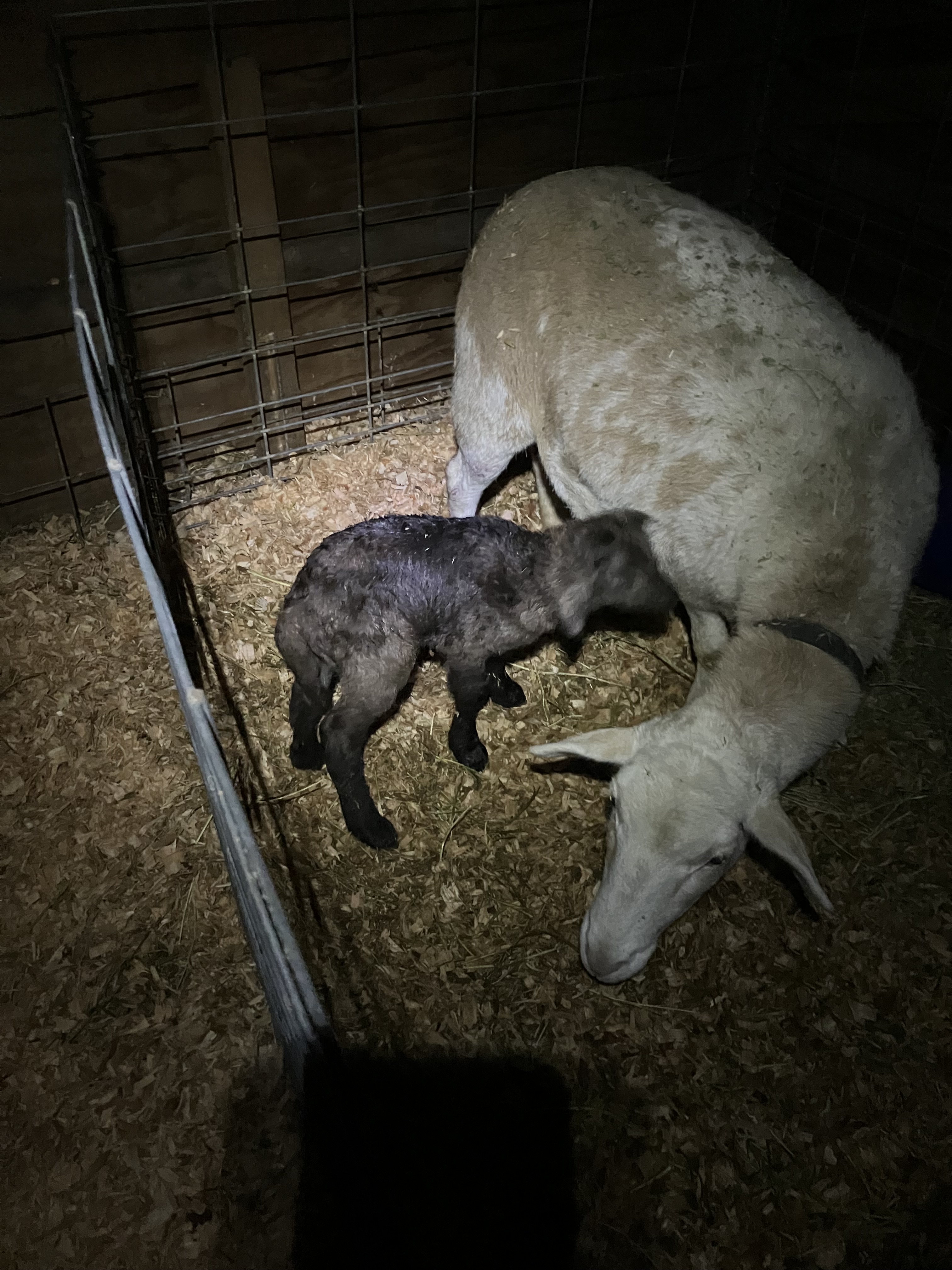
The first lamb born at EEC this year is “Q”. He’s a healthy, dark brown single. It was a bit of a surprise, his dame usually throws twins, but she has skipped the past two years, so it was a celebration of her rekindled fertility. The following day, more vulvas were swelling up, signaling imminent labor in the flock. Once lambing starts, the hormonal signal moves through the whole barn, and ewes who are around the same time of pregnancy, drop together. I
t was by chance I canceled some weekend travel plans, and was there to fully drop in with the ewes. Katahdins are great mothers, and usually have smooth deliveries when they go down. Early signs of labor include continually pawing the ground, rubbing against things with their sides, and laying down. Being with the ewes to observe these behaviors reassures me of the ewe’s health and well-being throughout delivery. I’m on hand to assist and aid in connecting the ewe with her new lamb. I’m also watching to make sure the afterbirth is fully passed out of the birth canal, and that no second lamb is stuck. Other observations at the birth include seeing the new lamb suckle successfully, take in the colostrum, and that the ewe bonds well to her baby.
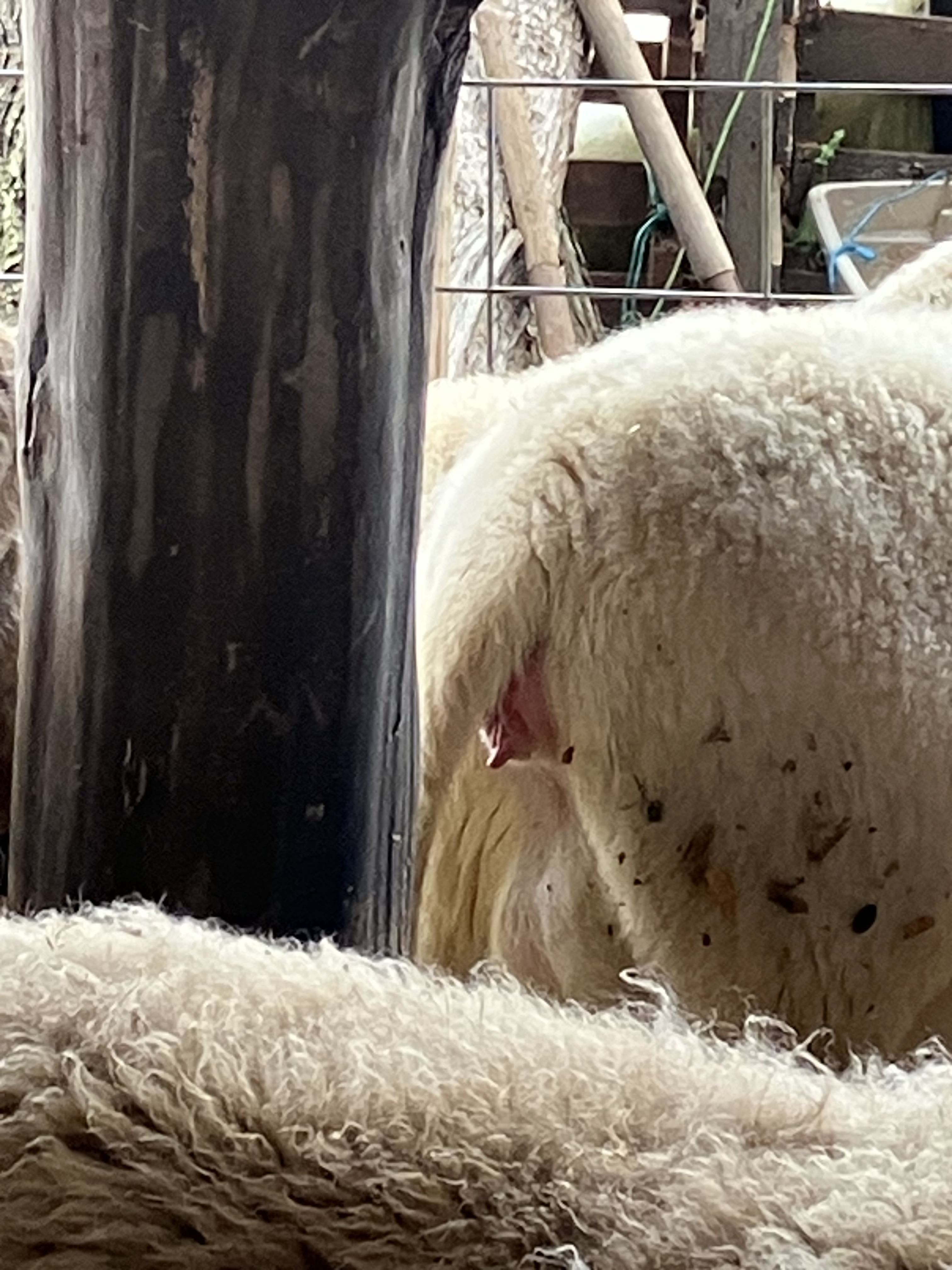
For the first round of lambing, the veteran ewes lead the charge. All three moms bonded right up to their single lambs and passed their afterbirths in a timely manner. I was a little concerned about one ewe who was so large, I actually did a check on her uterus to make sure there was no second lamb stuck. She was empty, so I sat back in relief and watched new born babies awakening into the world for the first time.
The ewes murmur to their lambs even in utero, so the babies know their mom’s unique voice when they are born. Here, Lupita cleans her lamb while making the murmur noise to link sight, sound, touch, and smell between the two beings. There are a ton of hormones going on too, along with many other chemical reactions we can’t see, and barely begin to understand. I’m sure a lot of mothers are smiling as they read this, knowing only too well how complex birthing really is, and the lifelong bond between mother and child. Though sheep are more herd driven than family bound, they do often stick together in family groups within the larger flock. The Leafhopper Farm Cascade Katahdin flock is so small, all the ewes are related in one way or another, so the flock is also fully family. Industrial flocks of thousands, often with many important individuals brought together to form vast herds, fracturing the familiar structure within them. EEC Forest Stewardship incorporates sheep in the restoration forest as place holders for the vast elk and deer herds that colonial expansion eradicated over a hundred years ago. Now our modest flock of sheep browses it’s way through select forest groves and across rotating pastures within a tight grazing landscape, turning vegetation into manure compost and quality clean meat for the community.
The sheep will slowly be phased out in another decade or so, as the goats were before them. We’re slowly rewilding the landscape, transitioning intensive farming into reforested mix of native and climate adaptive species with a focus on food, medicine, and materials people need to live lightly on the landscape. I remember this long term vision every moment I’m working with the sheep on this land. Our relationship, shepherd and flock, stretches back thousands of years in evolutionary history. Domestication of plants and animals allowed humans to build great civilizations, though I sometimes doubt the disruption in nature’s balance which has led to where we are today- an abusive race of people to our planet, even as some try to live lightly where they can. It’s a loosing battle against time, but these little lambs aren’t concerned with such vast concepts. A shepherd should be ignorant too, but an educated woman in 2025 can’t help but see the discrepancies and sigh. Instincts cannot be denied.
Speaking of instinct, Gill, our LGD Kangal is on duty too. He loved lambing time, and eagerly yelps when he hears a ewe in labor. To quiet him down, and sooth everyone involved, he comes into the barn to help. This lets him bond with the new lambs, and clean up the smell of blood so predators are not attracted to the birthing pens.
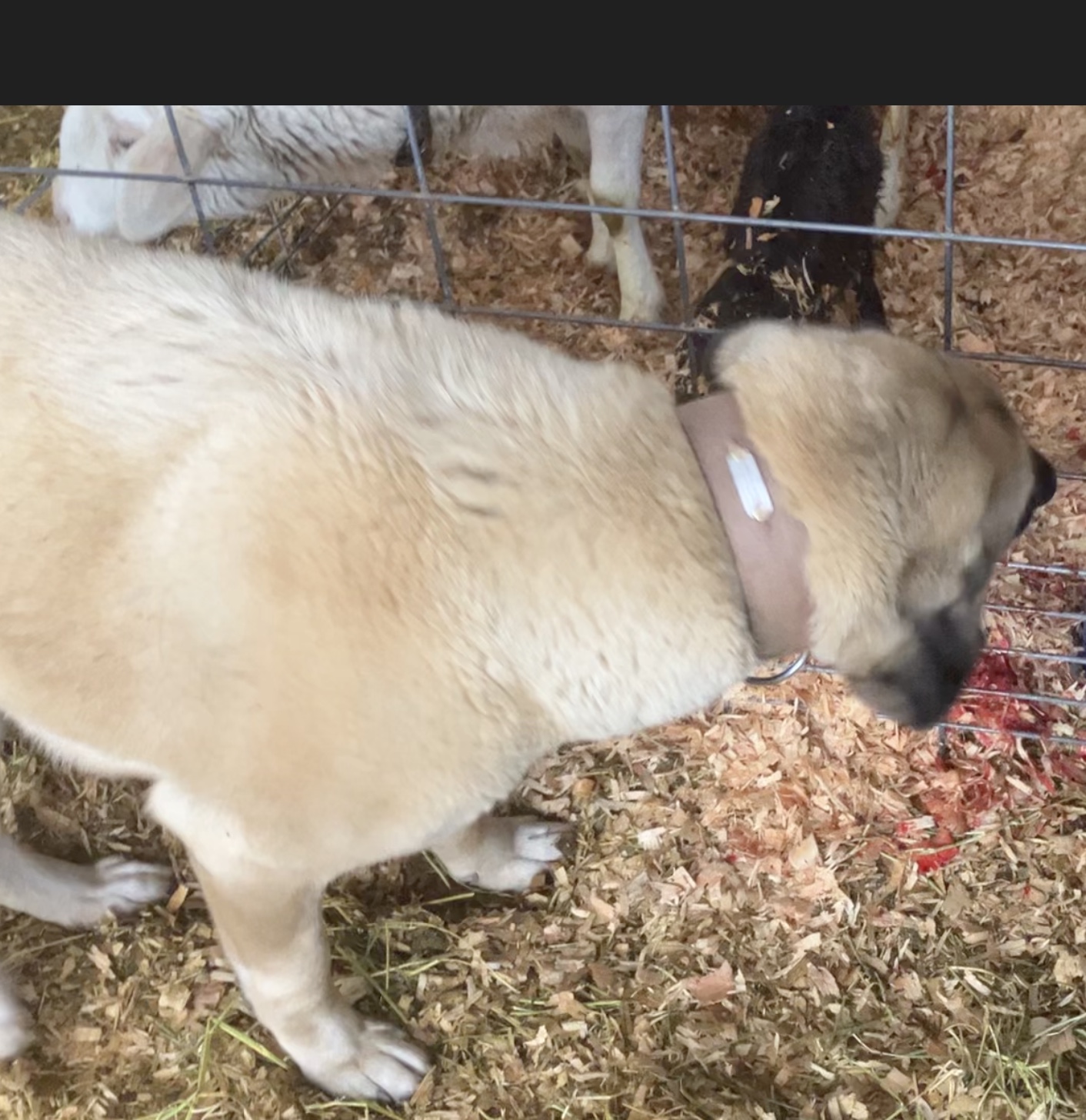
If a ewe does not eat her placenta after giving birth, I give it to Gill. He appreciates the rare delicacy of nutrient dense feasting. Still, his sensitive being knows the difference between snack bits and new lamb. He’s never harmed the newborns, and is allowed to stick around by the vulnerable ewes, who often butt away other curious ewes. He’s sleeping with the flock for the next few months, keeping watch and supporting the flock as he always does. What an amazing partner in this sheep venture.
Two more lambs come at the same time within 36 hrs. of the first drop. Also singles out of ewes who usually drop twins, I’m starting to realize I’m in an off year of production, most likely caused by overfeeding the ewes just before breeding. This happened because we had a mild summer with lots of rain, which gave the pastures a lushness, which lasted well into fall. Usually, in late summer the land dries up, and new growth slows down till the fall rains return. The ewes are naturally slimmed down, which encourages more regular ovulation with higher egg release, resulting in better chances of twins.
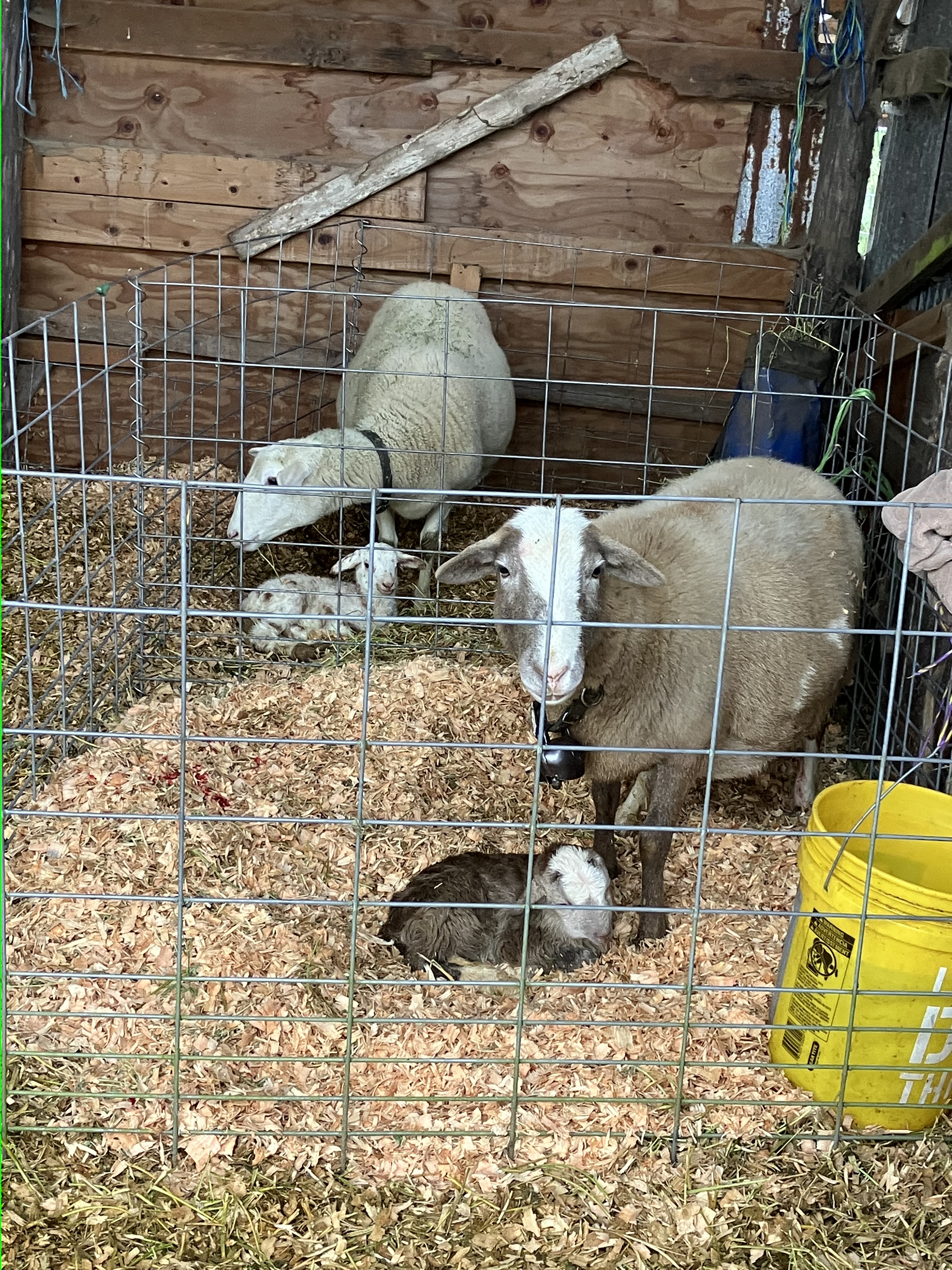
Overeating may have hindered fertility this year, but every lamb has been large and healthy, which will mean good weight on the bone come slaughter time in the fall. The two ram lambs are looking good, both brown. The single ewe lamb is a splatter of brown freckles on white. She also has a high count of wool in her coat, but she’s got a large frame, and might be a keeper for carcass size in future lambs. It’s really too early to tell much out of this bunch, but they are all healthy and content in the barn, with healthy happy mums feeding them ample milk from productive udders. That’s plenty of wins in the agricultural world here at EEC.

 EEC Forest Stewardship