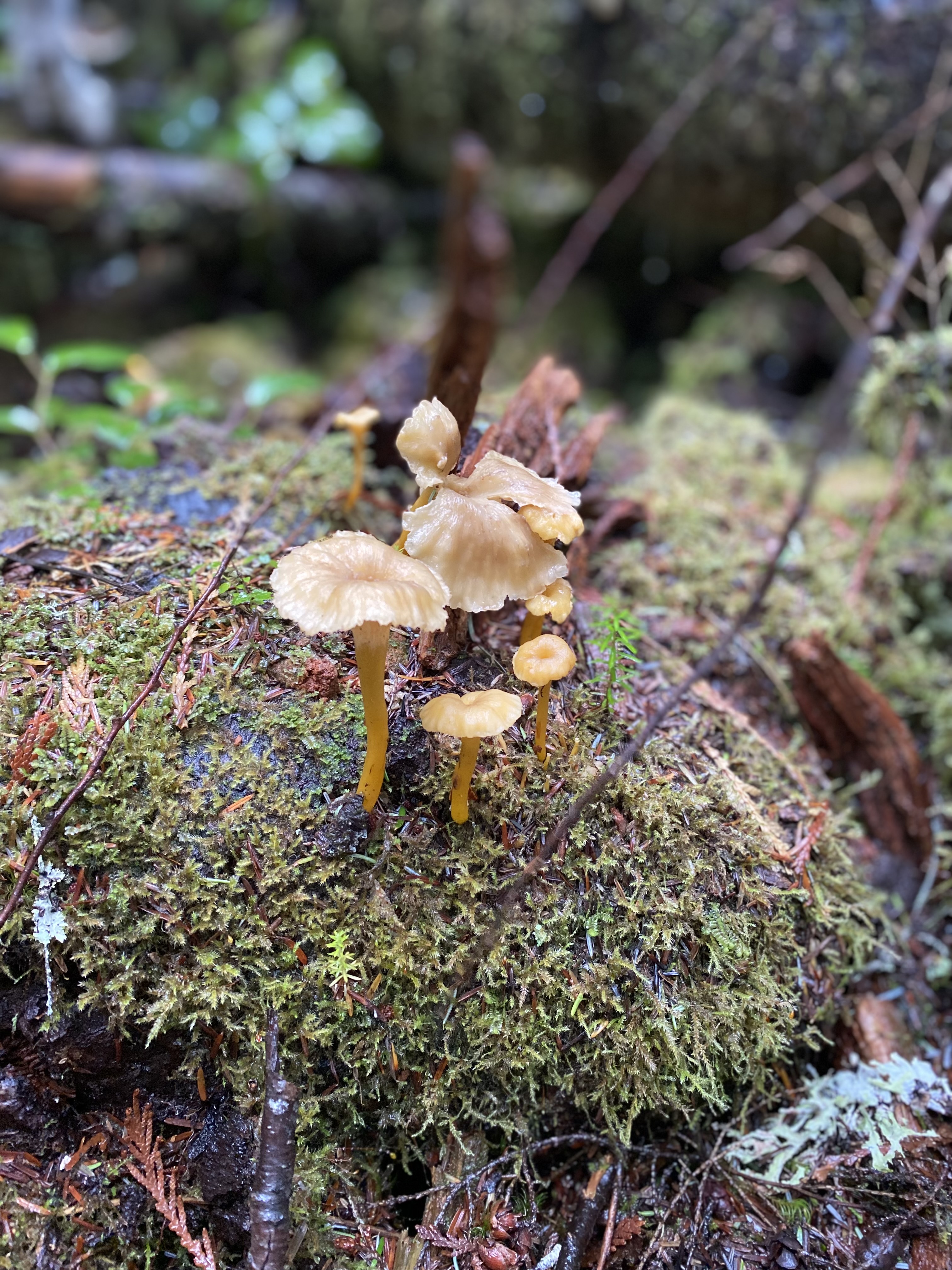
Winter chantrelles are a thing folks- this is a great picture of the species in a group also reflecting age stages. The floppy torn caps are older, and larger, while the bright yellow smaller fruits are young and ideal for harvesting. This species is often overlooked as a harvestable culinary mushroom, but it’s got the chantrelle subtle flavor typical of the family, and is most often fruiting December through February at lowland elevations free of frost. I’ve often found them on rotting stumps in large numbers. They were clumping up on large branches in a second growth buffer for The Snoqualmie River. I often note larger specimens in more mature forests along rivers. Perhaps it is the combination of forest age and nutrient dense floodplain soils that offer mushrooms a chance to maximize habitat conditions. Imagine what our bounty of wild food could be if we allowed nature her time and space to regenerate.
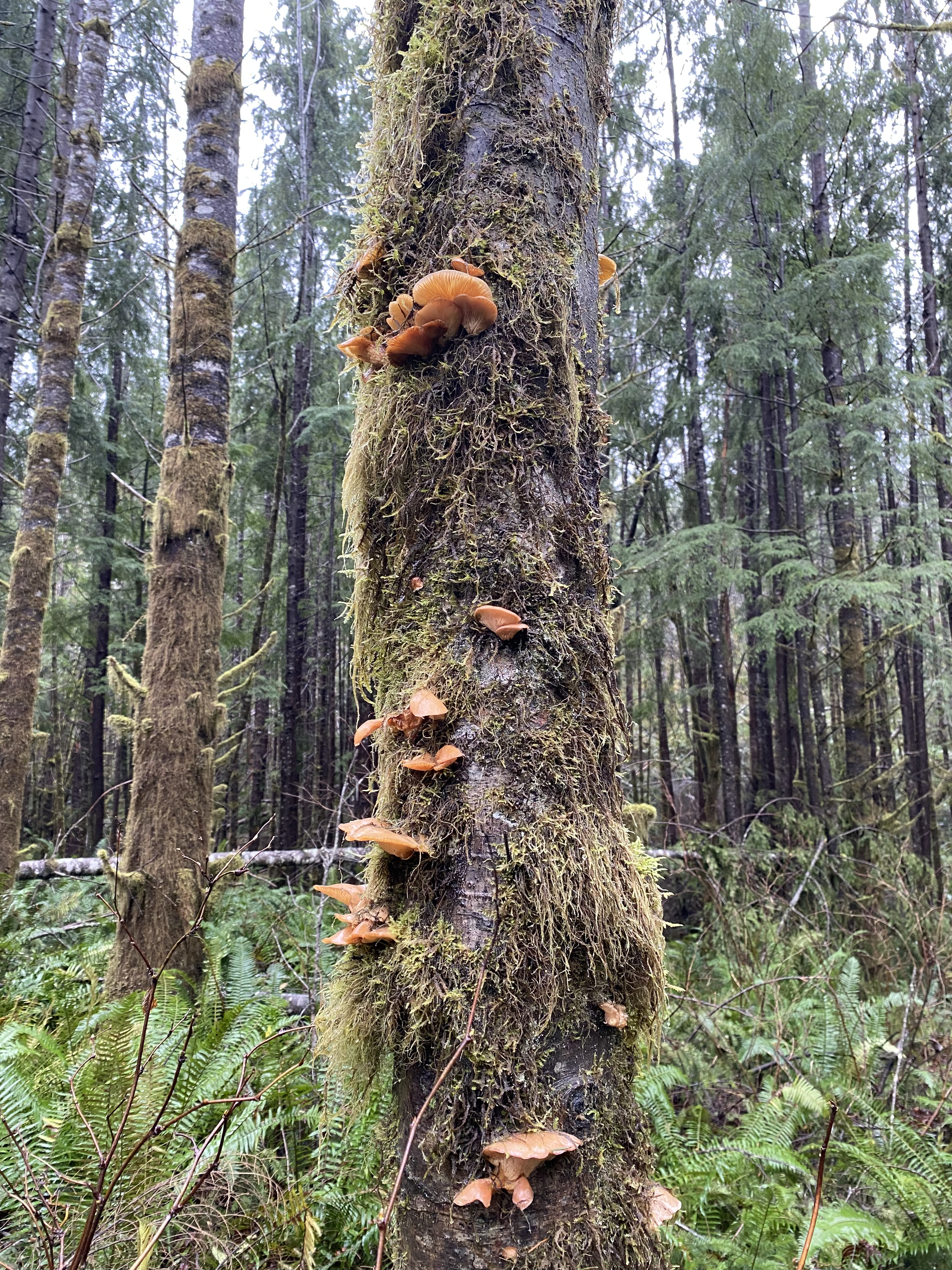
Winter oysters are also available in the woods during the cold dark times of year. They can be cream colored or blue-grey. These specimens are lighter in color, but also older, and blanching. They are growing on alder. I’ve also seen them fruiting on birch. They are a shelf mushroom. Even if a heavy freeze comes, this species will hold it’s meaty flesh together and remain edible through it’s fruiting. These mushrooms usually bloom in larger standing dead groves, and are usually plentiful where present. Note fruiting locations, as they will continue during optimal conditions in the wood for many years. Even after alder snags fall to the ground, oysters will still fruit off them for a few more years, until the wood is too broken down and leeched for their needs. When the environment signals change, a mushroom rely on future spores to regenerate in new parts of the forest to maintain the species. The past generations decline and disappear, allowing the space to change and regenerate. Imagine if a mushroom tried to keep in place and remain decomposing the landscape. Inputs would have to be brought in to maintain the mushroom habitat, completely disrupting the natural cycle and degrading overall production capacity.
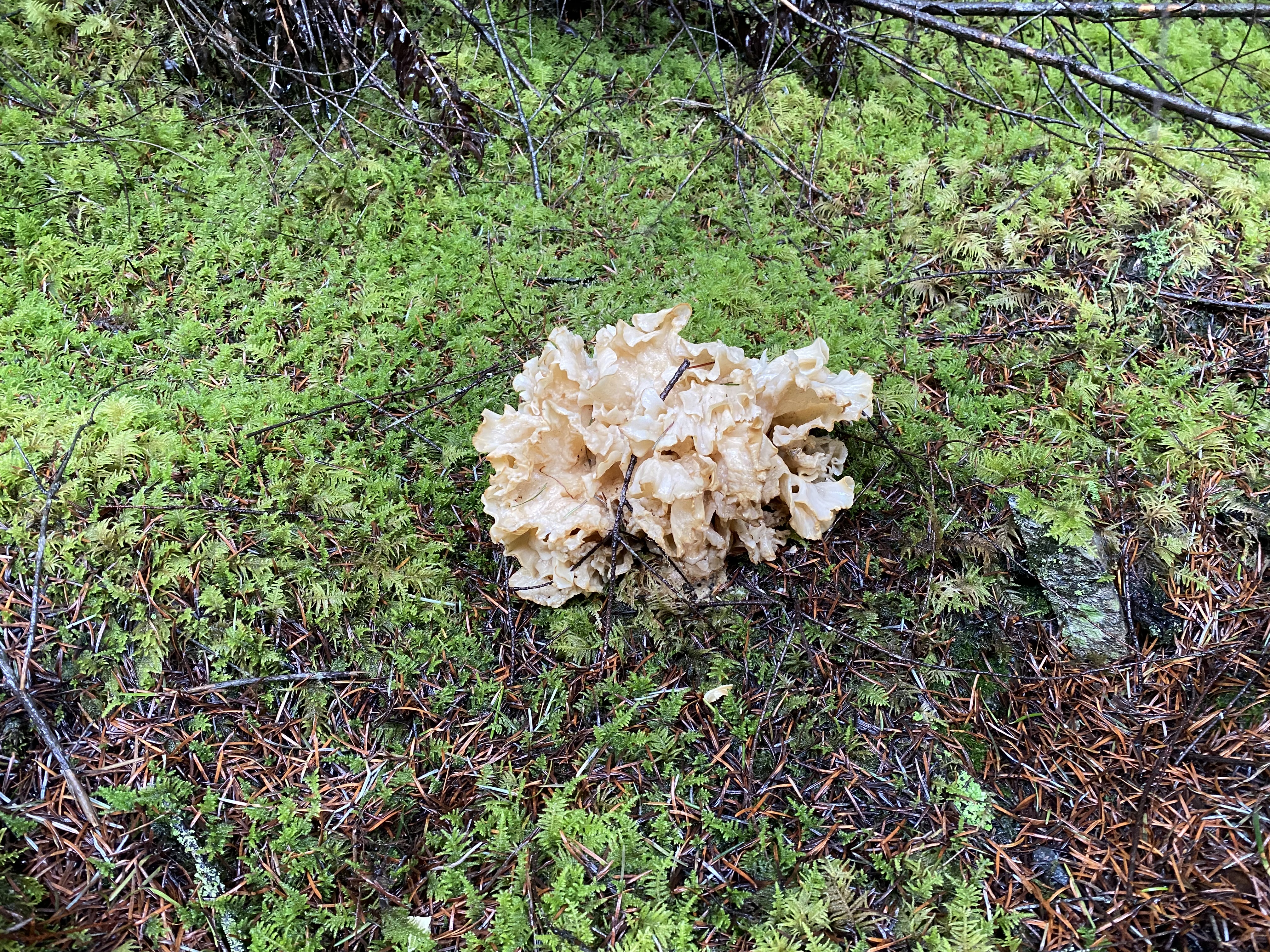
This noodle mushroom, also known as the cauliflower mushroom Sparassis, grows up from the root of surrounding fir trees. It’s parasitic, but not aggressive in a grove. This one was past it’s prime, but still a good find in winter- it would have been fresh a few hours ago. The fruit of some mushroom species can spoil fast, but with no way of timing wild flushes, getting eyes in the woods and dirt time seeking the fungi friends makes for the best opportunity in harvest success. Sparassis is edible, and does taste like egg noodles, but you have to spend some time carefully cleaning them. Their basidiocarp grows around anything it comes in contact with while forming on the ground- needles, twigs, moss- and you’ll need to cut those bits out before cooking. This mushroom is meaty and nutritious, but very subtle in flavor, so add plenty of veggies, savory broth, and flavor to bring out the best culinary experience when eating.
All three of these mushroom varieties are great edible delights to hunt in the woods. They also have no poisonous look alike, but like I always say, if you are going to go hunt mushrooms to eat, go with someone who knows and do not take chances. A brave mushroomer is a dead mushroomer, so stick to what you know. My mentee- who also took and shared these pictures while we were out, took the photos to help her ID the mushrooms and learn, but we chose not to harvest any, and that was fine. I’m picky about what I’ll pick in the wild, both to conserve what is there, and because I want fresh food. With mushrooms, fresh is always best.
Gratitude to the fungal kingdom, the ecology that supports it, the cooperation of the life that surrounds us, and our place within it. So much good food if we keep tending wildness.

 EEC Forest Stewardship